 Instrument for nursing consultation with adolescents: construction and validity
Abstract
Objective To build and validate an Instrument for Adolescent Nursing Consultation (ICEA), providing care and health promotion.
Methods This is a methodological study, carried out in three stages: survey of scientific literature on healthy adolescent behaviors; development of the first version of ICEA based on the Health Promotion Model; instrument content and appearance validity with judges. For instrument evaluation, the Content Validity Index >0.78 and Cronbach’s alpha ≥80.0% were used.
Results All the instrument requirements achieved an agreement among judges of over 0.78%. All judges indicated that the instrument addresses important items for adolescent health and that it serves as guidance support for nurses during nursing consultations with adolescents, in addition to being considered valid in terms of structure, objective and relevance. Regarding judges’ assessments of the instrument, an Overall Content Validity Index of 0.917 and a Cronbach’s alpha for the entire instrument of 0.958 were obtained.
Conclusion ICEA presented evidence of content and appearance validity consistent with its purpose; therefore, it represents an innovation in adolescent care that can be used in the context of Primary Healthcare, providing this population with access to services and health promotion.
Keywords
Nursing care; Adolescent health; Health promotion; Office nursing; Validation study
Resumo
Objetivo Construir e validar um Instrumento para Consulta de Enfermagem ao Adolescente (ICEA), propiciando o cuidado e a promoção da saúde.
Métodos Estudo metodológico, realizado em três etapas: levantamento da literatura científica sobre comportamentos saudáveis do adolescente; elaboração da primeira versão do ICEA fundamentado no Modelo de Promoção da Saúde; validação do conteúdo e aparência do instrumento com os juízes. Para avaliação do instrumento, utilizaram-se o Índice de Validação de Conteúdo >0,78 e o alfa de Cronbach ≥80,0%.
Resultados Todos os requisitos do instrumento alcançaram concordância entre os juízes superior a 0,78%. Todos os juízes apontaram que o instrumento aborda itens importantes para a saúde do adolescente e que serve como suporte de orientação aos enfermeiros durante as consultas de enfermagem ao adolescente, além de ser considerado válido quanto à estrutura, objetivo e relevância. Em relação às avaliações dos juízes sobre o instrumento, obtiveram-se um Índice de Validade de Conteúdo Global de 0,917 e o alfa de Cronbach para todo o instrumento de 0,958.
Conclusão O ICEA apresentou evidências de validade de conteúdo e aparência consoantes com sua finalidade; portanto, representa uma inovação no cuidado ao adolescente que poderá ser utilizado no contexto da Atenção Primária à Saúde, propiciando o acesso dessa população aos serviços e à promoção da saúde.
Descritores
Cuidados de enfermagem; Saúde do adolescente; Promoção da saúde; Enfermagem ambulatorial; Estudo de validação
Resumen
Objetivo Elaborar y validar un Instrumento para Consulta de Enfermería a Adolescentes (ICEA), para el cuidado y la promoción de la salud.
Métodos Estudio metodológico realizado en tres etapas: recopilación de literatura científica sobre comportamientos saludables de los adolescentes, elaboración de la primera versión del ICEA fundamentado en el Modelo de Promoción de la Salud y validación del contenido y de la apariencia del instrumento por jueces. Para el análisis de los datos, se utilizó el Índice de Validez de Contenido >0,78 y el alfa de Cronbach ≥80,0 %.
Resultados Todos los requisitos del instrumento alcanzaron una concordancia superior a 0,78 % entre los jueces. Todos los jueces señalaron que el instrumento aborda ítems importantes para la salud de los adolescentes y que sirve como apoyo orientativo para los enfermeros durante las consultas de enfermería a adolescentes, además de haber sido considerado válido respecto a la estructura, el objetivo y la relevancia. Con relación a las evaluaciones de los jueces sobre el instrumento, se obtuvo un Índice de Validez de Contenido global de 0,917 y un alfa de Cronbach de todo el instrumento de 0,958.
Conclusión El ICEA presentó evidencias de validez de contenido y apariencia de acuerdo con su fin; por lo tanto, representa una innovación en el cuidado de los adolescentes que podrá ser utilizado en el contexto de la Atención Primaria de Salud y permitirá el acceso de estas personas a los servicios y a la promoción de la salud.
Descriptores
Cuidados de enfermería; Salud del adolescente; Promoción de la salud; Enfermería de consulta; Estudio de validación
Introduction
Nursing practices have evolved over time in line with science and health technologies. In Brazil, from the 1970s onwards, nurse and professor Wanda de Aguiar Horta encouraged the use of nursing theories in the academic and healthcare fields, basing professional practice on a theoretical framework, which gave rise to the Nursing Process, which currently follows five distinct stages: history taking and physical examination; problem identification; diagnosis; prescription; and nursing development.(1,2)
This process is an intellectual nursing tool that should guide the team’s actions, allowing comprehensive care to be provided.(3) As part of this systematized care, nursing consultation stands out, an activity exclusive to nurses established by Law 7,498/86 and used in the work process through guidance, information and actions, in order to decide on a care plan, including health promotion for individuals, families and communities.(2)
Adolescents are one of the population groups in which nurses have a strong presence, through educational activities and nursing consultations. Adolescence includes people aged between 10 and 19 years old, and is a phase rich in discoveries and experiences, accompanied by biological, psychological and social changes.(4,5) Thus, the creation of an instrument that can direct nursing consultations to adolescents with a focus on health promotion is a technological invention that envisions care for adolescents with their active participation.
In a scoping review carried out, no instrument for nursing consultation was found that highlights health promotion for adolescents.(6) Furthermore, health promotion is an essential strategy for children’ and youth populations’ well-being that meets the Sustainable Development Goals, aiming to reduce vulnerabilities and offer tools and skills to improve children’s and adolescents’ lives.(7)
In this context, Nola Pender’s Health Promotion Model (HPM) is included, a theory focused on positive motivations aimed at preventing health problems, assisting nurses in caring for people’s health and providing a better level of health.(8) Thus, this research aimed to develop an instrument for nursing consultation with adolescents based on HPM, considered a reference to support the construction of policies and science in nursing, since it identifies the factors capable of influencing healthy development, motivating people to adopt health-promoting behaviors.(9)
In view of such considerations, the development of a technology was outlined that systematizes and guides the nursing consultation stages with adolescents, encouraging the adoption of health-promoting habits, understanding that nurses have opportunities to develop these actions, notably in primary care, being possible the integration with other sectors and other healthcare professionals.
Considering the above, this study aimed to construct and validate an Instrument for Adolescent Nursing Consultation (In Portuguese, Instrumento para Consulta de Enfermagem ao Adolescente - ICEA), providing care and health promotion.
Methods
This is methodological research that focuses on the construction and validity of an instrument for nursing consultation with adolescents. The validity of a construct, in this case, an instrument, aims to make it valid and reliable, ensuring quality and credibility when assessed by experts.(10,11)
The construction and validity stages took place between February and November 2023, at different times, namely: survey of scientific literature on healthy adolescent behaviors; preparation of the first version of ICEA based on Nola Pender’s HPM,(12)which is structured in five parts; and finally instrument validity with judges.(13-15)
Thus, survey of scientific literature was prepared based on an integrative literature review(16) that sought to identify the behaviors that adolescents should adopt to promote their health, in order to signal important points about care, aiming at health promotion. This review was constructed based on the PICo strategy, in which the Population (P: adolescents), the Phenomenon of Interest (I: healthy behaviors) and the Context (Co: health promotion) were identified.(17)
The search took place between January and April 2023 in the Latin American and Caribbean Literature in Health Sciences (LILACS), EMBASE, Medical Literature Analysis and Retrieval System (MEDLINE) – via PubMed and in the virtual library Scientific Electronic Library Online (SciELO) databases. Thus, in the search for studies, the Health Sciences Descriptors (DeCS) and Medical Subject Headings (MeSH) were used, which were Adolescent Health, Health Promotion, in addition to their synonyms, according to the databases. Initially, 779 studies were found and, after selection, 15 studies were eligible to compose the research sample. The research identified the main behaviors that can promote adolescent health, and it was observed that these should be encouraged in the most diverse care and attention environments.(17)
HPM helps nurses understand how people can be motivated to achieve their health, and is structured in three dimensions: individual characteristics and experiences; feelings and knowledge about the specific behavior to be achieved; and desirable health-promoting behavior.(12) Based on these dimensions, in addition to the results of the integrative review, the first version of the instrument was developed, presented in five parts, following the theoretical framework: adolescent identification; characteristics, individual experiences and previous related behavior, personal, biological, psychological and sociocultural factors; feelings and knowledge about specific behavior; desirable health-promoting behaviors; and action plan procedural assessment.
This structuring was done in order to align the axes that make up Nola Pender’s HPM with the Nursing Process stages (nursing assessment; nursing diagnosis; nursing planning; nursing implementation; and nursing evolution), enabling nurses to improve interactions with adolescents and obtain information necessary to identify health status, record it and subsequent decision-making.(2,12,18,19)
After the first version of ICEA was prepared, it was submitted to judges (professionals with experience in the area of construction and/or application of the aforementioned technology) to proceed with content validity, which demonstrates the value it represents to the construct and also appearance validity to assess clarity and understanding of the language represented in the instrument.(11)
The inclusion criteria for selecting these judges used defined parameters(20) that confer a maximum score of 10 points, with nurses who obtained a minimum score of 5 points, distributed among academic training, scientific production and practice in adolescent health, being eligible to be judges. Those who responded after the stipulated deadline or submitted the material with incomplete assessment were excluded from the study. The search for professionals was carried out through the Lattes Platform on the Brazilian National Council for Scientific and Technological Development (In Portuguese, Conselho Nacional de Desenvolvimento Científico e Tecnológico - CNPq) website, using the filters “Nursing” and “Adolescent Health”. These selected nurses indicated other nurses who also included themselves as evaluators, a technique known as network or snowball sampling.(10)
From this, 42 judges were found, who were invited to participate in the research by means of an invitation letter sent by email. Those who agreed to participate received the Informed Consent Form, the first version of ICEA and an assessment instrument for it. This first version was subdivided into five parts, respecting the Nursing Process stages and Nola Pender model’s structuring elements. The part related to nursing assessment contained 39 items related to the approach to healthy behaviors with adolescents.
A deadline of up to 30 days was established for returning the instrument assessment form. This analyzed the structure, objective and relevance of items based on a questionnaire adapted by the authors(21). It contained initial information about judge characterization, followed by items to assess the developed technology. A Likert-type scale was used with four response options: (1) inadequate; (2) partially adequate; (3) adequate; and (4) fully adequate. After each item, there was space for judges to record suggestions for modifications and improvements. A total of nine judges returned in a timely manner and with all items completed, making up the sample for this study. A round of assessment was carried out with these participants, considering that the pertinent suggestions were fully accepted, and those not included were justified by the feasibility and purpose of the instrument.
For the analysis, judges’ responses were entered into a database in Microsoft Excel 2020, and were analyzed by observing the scores assigned to each item. The relevance of items was obtained by applying the Content Validity Index (CVI), and items with a CVI greater than 0.78 were considered valid, i.e., an agreement greater than 78% among judges. To assess the questionnaire’s internal consistency, Cronbach’s alpha was calculated, with the ideal value being greater than or equal to 0.8.(22)
The study was approved by the Universidade do Estado do Rio Grande do Norte Research Ethics Committee, with approval under Opinion 5.901.545 and Certificate of Presentation of Ethical Consideration 64220422.0.0000.5294. All ethical procedures were followed during the research.
Results
The instrument developed followed the items that make up the Nursing Process, having the specificity of contemplating Nola Pender’s HPM. Moreover, the healthy behaviors that supported the construction of the referred instrument were derived from the integrative review carried out; among them, physical activity, healthy eating, life planning, spirituality, leisure activities, sexual health, body hygiene, mental health, sleep and rest stand out.
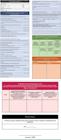
Initially, space was provided for identification of adolescents, followed by the field of individual characteristics and experiences, which considers personal, biological, psychological and sociocultural aspects, contemplating the nursing history of this adolescent. The following section continued with specific feelings and behaviors, at which point adolescents and nurses, together, listed health behaviors to be modified or maintained. In the fourth point, they established the desirable health-promoting behaviors and the plan to execute them. Finally, corresponding to the fifth phase of the Nursing Process, a date was set for a new consultation, thus maintaining space for the return assessment of how this action plan was implemented.
After the instrument was constructed, the content validity stage was carried out with the participation of nine judges. Among participants, the minimum age was 32 years and the maximum was 44 years (with an average of 37 years). There was a predominance of females (six participants), and regarding academic background, seven had a doctoral degree. All were nursing professors; among these, six worked in direct care for adolescents in healthcare services and eight had knowledge about the construction of instruments or scales. Thus, all judges had experience in the area of adolescent health and six developed research in the area (Table 1).
Concerning judges’ assessments of the instrument, an Overall CVI of 0.917 and Cronbach’s alpha for the entire instrument of 0.958 were obtained. All judges indicated that the instrument addresses important items for adolescent health and that it serves as guidance support for nurses during nursing consultations with adolescents, in addition to having been valid in terms of structure, objective and relevance, as shown in Table 2.
The first version of the instrument that was sent to judges was subdivided into five parts, according to the stages of Nola Pender’s HPM. This format was approved by judges and maintained in the final version (Appendix 1). Within the item related to adolescent identification and the subitems related to health behaviors to be adopted, most of their items were approved with a CVI greater than or equal to 0.78, except for the mental health subitem, with a CVI of 0.67. These values are described in Table 3.
Some recommendations were made and accepted during the identification stage, such as including adolescents’ social name, address, and sex. Within the subitems related to health-promoting behaviors, the following changes or inclusions were requested and accepted: replacing the term church with religion; reformulating the question about the food composition of the main meals; reformulating the question about family conflicts and support network in case of violence; including a question about how the relationship with the partner is; providing greater clarity in the question about body hygiene. In relation to the mental health subitem, assessed by judges with a below-average CVI, it is necessary to clarify the changes that were requested by judges, in order to improve the approach to this topic. The first of these was to reformulate the question that, in the first version, was “How have you tried to manage and control emotional changes?”, and after validity became “How do you behave when you are sad?”. Another request made by judges and implemented was the inclusion of the question “Have you ever tried to hurt yourself?”. Moreover, a flowchart for forwarding mental health demands was requested at the end of the instrument, an addition that was not made by the researchers due to the specificities of the psychosocial support network in each municipality or region. Therefore, each professional will be able to act in this field according to the services available.
Discussion
The characteristics of judges who contributed to instrument assessment show that they have experience in the area of adolescent health, whether in care or teaching, and also have knowledge about instrument validity. This aspect is highlighted in the literature, as judges’ assessment will give quality to the construct, observing validity and reliability.(10,11)
In this process, the choice of evaluators is fundamental, since content validity contributes to the scientific nature of the instrument; in this case, intended for nursing consultation, observing fundamental points to direct care to adolescents, since, in the care of this public, it is essential to consider the multiplicity of aspects that influence their health, going beyond the prevention of illness, in the search for health promotion.(18,23)
Healthcare for adolescents represents a challenge, as they are a social group that undergoes important and major psychobiological transformations linked to social involvement.(4) Furthermore, it is possible to highlight the commitment of nursing to adolescents’ health and development, recognizing that they are responsible for various actions directed at them, from identifying problems and needs to formulating solutions and making decisions.(24)
Thus, the instrument construction and validity were developed with the aim of providing comprehensive care to adolescents, facilitating nursing consultations with a focus on health promotion. Thus, the instrument was able to assist in this process, directing nursing care with a consequent improvement in quality of care.(25)
During the content validity stage of the proposed instrument, all judges stated that the instrument could serve as guidance support for nurses during consultations focused on promoting adolescent health, confirming the purpose of the instrument.
HPM explores biopsychosocial processes that motivate individuals to adopt healthy behaviors.(13) Research involving healthcare professionals and adolescents showed that, when addressing health promotion with this group, dialogue should be developed in order to provide guidance and gain trust. This study recommended reinforcing actions on sexual and reproductive health, self-knowledge and protagonism in actions aimed at maintaining healthy behaviors.(26)
The technology under discussion contemplates the various dimensions of care and involves these perspectives of communication, suggesting aspects that may motivate reflection and, from this, encourage the adoption of healthy behaviors in adolescents. This statement was corroborated by judges, when all agreed with the instrument content and appearance, highlighting the relevance of the items portrayed in consultation, addressing relevant aspects that should be reinforced with adolescents.
In this regard, it is observed that the instrument offers structured and systematized information that allows raising various personal, family and adolescent development aspects, life context and health, elements that can identify points to be modified, with guidance and negotiations between nurses and adolescents leading to health-promoting behaviors.(9)
The second version is enriched with a collective perspective, as it includes modifications to each item, according to judges’ suggestions, such as the insertion of some terms in the item referring to the identification of adolescents, with the aim of improving the approach to them, since the intention is for care to be centered on the person, considering their personal, family and social life context. Analyzing all aspects related to adolescents is fundamental for promoting health and comprehensive care, going beyond the prevention of risk behaviors, involving aspects linked to the development of socio-emotional skills, protection against violence, access to basic living conditions, housing, education, leisure, health, among others.(27)
In the section involving health behaviors to be adopted by adolescents, the changes requested were to improve the questions, making them clearer to subjects to whom they are directed. This fact can be explained by the need for a better understanding of their health needs so that they can be leading figures in actions aimed at promoting health. It is argued that adolescents should be active agents of their own change, effectively participating in the actions implemented for their comprehensive development.(28)
As for mental health, it is known how important it is to discuss this topic among schoolchildren, as recent studies emphasize the need for actions to promote mental health among adolescents, given that the prevalence of psychological distress in this population has increased.(29) Regarding the non-inclusion in the instrument of a mental health referral flowchart proposed by one of judges, it is worth noting that ICEA seeks to promote adolescent health in a comprehensive manner. Furthermore, the instrument was designed to guide nursing work in adolescent health in different practice settings throughout the country, and the referral flow for mental healthcare services may vary depending on the local reality.
Regarding the other instrument items that presented borderline CVI, in all of them, there were suggestions from judges for reorganization of items, and these were accepted, which improves the instrument organization. These items were adolescent identification, work and study, personal and family background, spirituality, sexual health, hygiene, eating habits and physical examination. The importance of aligning these items as requested is explained by the need to develop strategies anchored in the recognition of adolescents’ behaviors resulting from biological maturation, social dimensions and relationships with peers and the environment.(28)
In the other topics of the instrument, no changes were requested, showing that they are consistent with the nursing consultation stages, as defined by the literature and reinforcing that HPM makes it possible to build a solid base for nurses’ clinical practice, allowing for planning, implementation of interventions and assessment of actions.(30)
Another positive aspect of the instrument that deserves to be highlighted is the fact that judges did not have any difficulty in understanding it. In addition, one judge requested that the instrument be incorporated into healthcare services and that the validity process be completed, reaffirming the need for an instrument in this configuration.
The validity evidence of ICEA presents opportunities for nurses in the context of Primary Healthcare, as they can direct nursing consultations to adolescents, improving skills, strengthening bonds, supporting decision-making and stimulating critical thinking, since adolescents are in a phase of human development of recognized vulnerability, characterized by several changes or behaviors related to lifestyle that can be seen as protective or risk factors for diseases.(31)
As a limitation of this study, we highlighted the difficulty in finding judges with expertise and availability to assess the instrument in the requested period, resulting in a small sample, although representative, as it was constituted by a number that is considered adequate according to the theoretical framework adopted.(22)
On the other hand, the construction and validity of this instrument allowed us to understand how the Nursing Process and Nola Pender’s HPM are interconnected, and reinforces the importance of applying this model as a theoretical-methodological resource that guides nursing consultations. Given its originality and need for nursing practice, we believe in its contribution to clinical care management for adolescents, to teaching and, consequently, to advancing knowledge in nursing science.
Conclusion
Based on the process of constructing the instrument and the results of its assessment, it is considered that ICEA presented evidence of content and appearance validity consistent with its purpose, representing an innovation in adolescent care. This evidence of validity can drive nurses’ actions, with a view to improving the care provided and, thus, helping adolescents adhere to health-promoting habits. Its use in the context of Primary Healthcare is therefore encouraged, impacting the improvement of adolescents’ access to services and providing new possibilities for health promotion actions and interventions.
Acknowledgements
We would like to thank the expert judges who participated in this research and collaborated in the refinement of the Instrument for Nursing Consultation with Adolescents.
Appendix 1
References
- 1 Lima SG, Spagnuolo RS, Juliani CM, Colichi RM. Nursing consultation in the family health strategy and the nurse's perception: grounded theory. Rev Bras Enferm. 2022;75(4):e20201105.
- 2 Crivelaro PM, Posso MB, Gomes PC, Papini SJ. Consulta de enfermagem: uma ferramenta de cuidado integral na atenção primária à saúde. Braz J Dev. 2020;6(7):49310-21.
- 3 Canêjo MI, Silva TM, Lima AP. Registros de enfermagem nas consultas de puericultura. Enferm Foco. 2021; 12(2):216-22.
- 4 Brasil. Ministério da Saúde. Proteger e cuidar da saúde de adolescentes na atenção básica. 2nd ed. Brasília (DF): Ministério da Saúde; 2018. 233 p.
- 5 Paula JA, Melo MC, Amorim TV, Salimena AM, Paiva AC, Nascimento RC. Subjetividades de adolescentes face à promoção da saúde: contribuições para a enfermagem. Rev Cuid. 2020; 11(1):e895.
- 6 Almeida IF, Oliveira CL, Muniz EA, Dutra FC, Almeida Júnior EG, Queiroz MV. Cuidado de enfermagem na perspectiva da promoção à saúde do adolescente: revisão de escopo. RECIMA21. 2022; 3(10):1-14.
-
7 Organização das Nações Unidas (ONU). As Nações Unidas no Brasil. Brasília (DF): ONU; 2024. [citado 2025 Mar 29]. Disponivel em: https://brasil.un.org/pt-br
» https://brasil.un.org/pt-br - 8 Monteiro PV. Programa de intervenções educativas para prevenção de IST/HIV entre adolescentes e jovens. Fortaleza: Universidade Estadual do Ceará; 2017.
- 9 Santi DB, Nogueira IS, Baldissera VD. O modelo de Nola Pender para promoção da saúde do adolescente: revisão integrativa. REME Rev Min Enferm. 2023;27:1507.
- 10 Polit DF, Beck CT. Fundamentos de pesquisa em enfermagem. 9th ed. Porto Alegre: Artmed; 2019.
- 11 Pasquali L. Psicometria: teoria dos testes na psicologia e educação. 5th ed. Petrópolis: Vozes; 2013.
- 12 Pender NJ, Murdaugh CL, Parsons MA. Health promotion in nursing practice. 8th ed. Indianapolis: Pearson; 2018.
- 13 Dantas SL. Construção e validação de instrumento para consulta de enfermagem à puérpera fundamentada na teoria do autocuidado [thesis]. Fortaleza: Universidade Estadual do Ceará; 2020.
- 14 Keszei AP, Novak M, Streiner DL. Introduction to health measurement scales. J Psychosom Res. 2010;68(4):319-23.
- 15 Pittman J, Bakas T. Measurement and instrument design. J Wound Ostomy Continence Nurs. 2010;37(6):603-7.
- 16 Mendes KD, Silveira RC, Galvão CM. Use of the bibliographic reference manager in the selection of primary studies in integrative reviews. Texto Contexto Enferm. 2019;28:e20170204.
- 17 Almeida IF, Almeida Júnior EG, Marques JF, Queiroz MV. Comportamentos saudáveis na adolescência e seus impactos na promoção da saúde: revisão integrativa. Contribuciones a Las Ciencias Sociales. 2023;16(11):26167-80.
- 18 Muniz EA, Queiroz MV, Pinheiro PN, Silva MR, Moreira TM, Oliveira EN, et al. School Nursing Guide for student health promotion: construction and validity. Rev Bras Enferm. 2023;76(1):e20220260.
-
19 Conselho Federal de Enfermagem. Resolução n° 736, de 17 de janeiro de 2024. Dispõe sobre a implementação do Processo de Enfermagem em todo contexto socioambiental onde ocorre o cuidado de enfermagem. Disponível em: https://www.cofen.gov.br/resolucao-cofen-no-736-de-17-de-janeiro-de-2024/
» https://www.cofen.gov.br/resolucao-cofen-no-736-de-17-de-janeiro-de-2024/ - 20 Borges JW. Relação interpessoal no cuidado de enfermagem: elaboração e validação de um instrumento por meio da Teoria de Resposta ao Item [tese]. Fortaleza: Universidade Estadual do Ceará; 2016.
- 21 Teixeira E, Medeiros HP, Nascimento MH. Referenciais metodológicos para validação de tecnologias cuidativo-educacionais. In: Tecnologias cuidativo-educacionais: uma possibilidade para o empoderamento do(a) enfermeiro(a)? Porto Alegre: Moriá; 2014. p. 113-27.
- 22 Alexandre NM, Coluci MZ. Validade de conteúdo nos processos de construção e adaptação de instrumentos de medidas. Ciênc Saúde Coletiva. 2011;16(7):3061-8.
- 23 Santos JS, Neill S, Mello DF. Adolescent mothers, self-care and childcare: content validation of an event history calendar. Rev Esc Enferm USP. 2023;57:e20220314.
- 24 Cassiani SH, Dias BM, Romero BE, Rivera J. El papel de los profesionales de enfermería en el desarrollo y atención de la salud adolescente en Honduras. Rev Panam Salud Publica. 2024;48:e25.
- 25 Andrade IA, Guimarães TM, Costa ÍM, Costa NC, Camelo RM, Lima FM. Construção e validação de instrumento de consulta de enfermagem para pessoas com hemofilia. Cogitare Enferm. 2021;26:e74467.
- 26 Rocha JM, Pitombeira MG, Eleutério BL, Queiroz MV, Caprara A, Jorge MS. Diálogos entre os serviços de saúde e a escola: articulação necessária para promoção da saúde do adolescente. RECIMA21. 2022;3(8):e381765.
- 27 Silva RF, Engstrom EM. Atenção integral à saúde do adolescente pela atenção primária à saúde no território brasileiro: uma revisão integrative. Interface (Botucatu). 2020;24:e190548.
- 28 Torres FA, Leite PL, Pereira LM, Leite JC, Silva MR, Machado LD. Comportamentos de promoção da saúde de adolescentes escolares. Rev Enferm UFSM. 2022;12:e54.
- 29 Souza TT, Almeida AC, Fernandes AD, Cid MF. Promoção em saúde mental de adolescentes em países da América Latina: uma revisão integrativa da literatura. Ciênc Saúde Coletiva. 2021;26(7):2575-86.
- 30 Cardoso RB, Caldas CP, Brandão MA, Souza PA, Santana RF. Healthy aging promotion model referenced in Nola Pender's theory. Rev Bras Enferm. 2022;75(1):e20200373.
- 31 Molina-Avilez DL, Guzman-Ortiz E, Hernandez-Gonzalez K, Escamilla-Puertos MA. Perspectivas de enfermería en atención primaria y promoción de salud en los adolescentes durante la pandemia. Index Enferm. 2023;32(1):e14326.
Edited by
-
Associate Editor:
Rafaela Gessner Lourenço (https://orcid.org/0000-0002-3855-0003) Universidade Federal do Paraná, Curitiba, PR, Brasil

 Thumbnail