 USE OF GROUNDED THEORY IN NURSING RESEARCH FOCUSED ON WOMEN'S HEALTH
ABSTRACT
Objective: to analyze nursing pu. blications focused on women's health that used Grounded Theory as a methodological framework.
Method: an integrative literature review, conducted in five stages, namely: formulation of the research question; literature search; data evaluation; study analysis; and presentation of results. The search was conducted in March 2024 in the MEDLINE/PubMed, Biblioteca Virtual em Saúde, Embase and Web of Science databases. Nursing studies focused on women's health that used Grounded Theory as a methodological framework, available in full and published in any language between 2019 and 2023 were included.
Results: it was found that information regarding theoretical saturation, use of memos, and diagrams were not reported in all the studies analyzed. The studies explored complex phenomena such as violence against women, aspects related to childbirth/postpartum period and care management, elements of maternal-infant nursing, as well as gynecological and psychiatric care.
Conclusion: the results of the studies analyzed in this review provided a robust theoretical foundation for clinical practice as well as insights into the development of public policies focused on women's health, particularly in contexts of vulnerability.
DESCRIPTORS:
Grounded Theory; Nursing; Women's health; Qualitative research; Methodological research in nursing
RESUMO
Objetivo: analisar as publicações de enfermagem na área de saúde da mulher que utilizaram a Teoria Fundamentada nos Dados como referencial metodológico.
Método: revisão integrativa da literatura, realizada em cinco etapas, a saber: elaboração da questão de pesquisa; busca na literatura; avaliação dos dados; análise dos estudos e apresentação dos resultados. A busca ocorreu em março de 2024, nas bases de dados MEDLINE/PubMed, Biblioteca Virtual em Saúde, Embase e Web of Science. Foram incluídos estudos de enfermagem na área de saúde da mulher que empregaram a Teoria Fundamentada nos Dados como referencial metodológico, disponíveis na íntegra e publicados em qualquer idioma no período de 2019 a 2023.
Resultados: verificou-se que informações referentes à saturação teórica, utilização de memorandos e diagramas não foram relatadas em todos os estudos analisados. Os estudos exploraram fenômenos complexos como a violência contra a mulher, aspectos relacionados ao parto e pós-parto e à gestão do cuidado, elementos da enfermagem materno-infantil, além da assistência ginecológica e psiquiátrica.
Conclusão: os resultados dos estudos analisados forneceram uma base teórica robusta para a prática clínica e subsídios para o desenvolvimento de políticas públicas direcionadas à saúde da mulher, em especial em contextos de vulnerabilidade.
DESCRITORES:
Teoria fundamentada nos dados; Enfermagem; Saúde da mulher; Pesquisa qualitativa; Pesquisa metodológica em enfermagem
RESUMEN
Objetivo: analizar publicaciones de enfermería en el área de la salud de la mujer que utilizaron la Teoría Fundamentada en Datos como marco metodológico.
Método: revisión integradora de la literatura, realizada en cinco etapas, a saber: elaboración de la pregunta de investigación; búsqueda de literatura; evaluación de datos; análisis de estudios y presentación de resultados. La búsqueda se realizó en marzo de 2024, en las bases de datos MEDLINE/PubMed, Biblioteca Virtual em Saúde, Embase y Web of Science. Se incluyeron estudios de enfermería en el área de la salud de la mujer que utilizaron como marco metodológico la Teoría Fundamentada, disponibles íntegramente y publicados en cualquier idioma entre 2019 y 2023.
Resultados: se encontró que no todos los estudios incluían información sobre saturación teórica, uso de memorandos y diagramas. Los estudios exploraron fenómenos complejos como la violencia contra la mujer, aspectos relacionados con el parto y el posparto y la gestión del cuidado, elementos de la enfermería maternoinfantil, además de la atención ginecológica y psiquiátrica.
Conclusión: los resultados de los estudios analizados proporcionaron una base teórica sólida para la práctica clínica y apoyo para el desarrollo de políticas públicas orientadas a la salud de las mujeres, especialmente en contextos vulnerables.
DESCRIPTORES:
Teoría fundamentada en datos; Enfermería; Salud de la mujer; Investigación cualitativa; Investigación metodológica en enfermería
INTRODUCTION
Qualitative studies provide insights into how individuals perceive complex issues such as health, illness, death, access to services, and social inequities. Grounded Theory (GT) is a methodological framework used in qualitative research. Developed by sociologists Barney Glaser and Anselm Strauss in the United States in the 1960s1-2, it focuses on interpreting meanings, events, experiences, and realities in order to provide explanations based on the understanding of the actions of individuals or groups in specific contexts, particularly when facing challenges or social situations3.
This methodological framework supports research grounded in ongoing and comparative analysis of data drawn from the experiences of social actors and their key aspects. This approach fosters connections with other theoretical frameworks and further expands knowledge, particularly in the fields of nursing and healthcare, thus providing a guide for a deeper understanding of specific phenomena4.
It is important to highlight that, due to differences in methodological perspectives, three primary approaches have emerged. While Glaser adopted an objectivist approach, Strauss, in collaboration with Juliet Corbin, introduced additional data analysis techniques and a perspective grounded in symbolic interactionism5. Additionally, sociologist Katy Charmaz developed her own Grounded Theory version, referred to as Constructivist Grounded Theory (CGT), which underscores the significance of the social construction of reality6.
The application of Grounded Theory in nursing research focused on women's health can offer a deeper understanding of the unique experiences, needs, and challenges women encounter across various life stages7. By understanding women's experiences through this approach, researchers can design interventions that foster autonomy, empowerment, and informed decision-making about their health and well-being7-8. Furthermore, it enables a holistic and integrated approach to understanding and addressing the complex health challenges women face, fostering collaboration with other disciplines and healthcare professionals8.
Among the studies already conducted using this framework, notable examples include review studies in the areas of child health9 and elderly health10, studies focused on family-centered care11, research carried out with family members living with chronic conditions12, as well as a bibliometric review7. The latter sought to explore the application of Grounded Theory in women's health research conducted within graduate programs in Brazil, revealing that the most explored topics were oncological, obstetric, and gynecological nursing7.
Considering this situation, the following questions arise: How do nursing studies focused on women's health use Grounded Theory as a methodological framework? Do studies with this population continue to focus on reproductive, gynecological, and illness-related issues? What evidence has been produced with a focus on women's health? Faced with these questions, the present study aims to analyze nursing publications focused on women's health that used Grounded Theory as a methodological framework.
METHOD
This is an integrative literature review structured in five stages: formulation of the research question; literature search; data evaluation; study analysis; and presentation of results13.
The research question was formulated using the PVO strategy, which stands for Population (P), Variable (V), Outcome (O). In this context, “P” refers to Grounded Theory, “V” to nursing, and “O” to women's health. Thus, the following question was formulated: “What is the profile of nursing research focused on Women's Health that used Grounded Theory as a methodological framework?”.
The search for studies was conducted by the main researcher of this study in March 2024 through the Federated Academic Community (Portuguese Acronym: CAFe), encompassing the educational institution with which the researchers are affiliated. The following electronic databases were selected: BVS (Biblioteca Virtual de Saúde), EMBASE, MEDLINE/PubMed (National Library of Medicine) and Web of Science. The descriptors were defined according to the Health Sciences Descriptors (Portuguese Acronym: DeCs), as follows: “Teoria Fundamentada”, “Enfermagem”, “Saúde da mulher” were used in the BVS electronic database; the EMTREE terms “grounded theory”, “Nursing”, “women's health” were used in the EMBASE electronic database and in the Medical Subject Headings (MeSH); in addition, the terms “Grounded Theory”, “Nursing”, “Women's Health” were used in the other databases.
The search strategy used the Boolean operator “AND” to associate the descriptors, as shown in Table 1.
Search strategy used in the integrative review. Campo Grande, Mato Grosso do Sul, Brazil, 2024. (n=237)
The inclusion criteria for selecting studies were as follows: nursing studies that used Grounded Theory as a methodological framework focused on women's health, available in full and published in any language from 2019 to 2023. The time frame was chosen due to the large volume of retrieved publications that were not relevant to the study's objective, as well as the desire to focus on more recent research. Publications such as letters to the editor, reviews, editorials, expert opinions, book reviews, monographs, dissertations, and theses, among other non-indexed documents, were excluded. Duplicate articles were counted only once.
The study screening process followed the guidelines of the Preferred Reporting Items for Systematic Reviews and Meta-Analyses (PRISMA)14, and the referred steps are outlined in Figure 1.
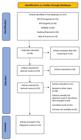
PRISMA flowchart (adapted) based on the studies identified during the stages of integrative review. Campo Grande, Mato Grosso do Sul, Brazil, 2024.
The results were entered into the Web Rayyan application to help organize and select the articles, using the blinding tool. Titles and abstracts were reviewed first, followed by full-text articles, with both researchers conducting the review concurrently. In cases of disagreement, a third reviewer was consulted to resolve the issue during the study inclusion process, which occurred with only one article. Furthermore, the Zotero software was used for reference management.
After the final sample of articles was compiled, information was extracted using an instrument developed by the main author, which included the following variables: article title, authors, country, year of publication, name of the journal, methodological aspects of the study, Grounded Theory approach used, topic addressed, and conclusions. Subsequently, a synthesis of the materials and methods, key findings, and authors' recommendations was conducted.
As this is a review, the study did not require approval from the Research Ethics Committee. However, the authors' ideas were respected in accordance with copyright law, and the ethical aspects of the primary studies included in the review were carefully examined.
RESULTS
14 original articles were included in this study, and their characterization is presented in Chart 1.
Regarding the methodology described in the studies analyzed, five used a theoretical framework - two applied Symbolic Interactionism26-27, and the others used the Intersectionality Theory20, the Relational Autonomy24, and Edgar Morin's Complex Thought21. For data collection, two studies applied participant observation and individual interview18,21, while the others were based on in-person individual interviews15-17,19-20,22-23,25,27-28, online26,28 or phone-based24 interviews.
Regarding the methodological details, all studies conducted sampling; eleven described the use of saturation, and seven identified the development of sample groups. Constant comparison, along with memos, diagrams, and software, was not applied consistently across all the articles.
The studies included in this review focused on key issues in women's health, with particular emphasis on five research studies examining violence against women19-20,22,26-27. These studies highlighted the profound and lasting impact of domestic violence on women’s health, well-being, and family relationships.
Three studies focused on nursing care management were also selected15,18,21, highlighting the role of nurses in addressing the unique needs of the mother-child dyad and promoting maternal autonomy through focused care.
Three studies, in turn, emphasized aspects of obstetric care16-17,28, highlighting the holistic approach as essential for challenging the biomedical perspective on care during labor and the postpartum period. Breastfeeding25 and psychiatric nursing24 were topics addressed in two studies, which emphasized that social support is crucial both for helping mothers cope with postpartum anger and for managing early weaning.
Another study addressed gynecological nursing23, examining the factors that increase the risk of Sexually Transmitted Infections in Black women and the factors influencing their sexual development.
DISCUSSION
The use of Grounded Theory (GT) as a methodological framework in nursing studies focused on women’s health impacts knowledge production within the profession. This is because the development of middle-range theories fosters advancements in the theoretical foundations of the field, as well as in the way care is conceptualized and provided3,29.
One of the studies included in this review failed to specify the approach used, contrasting with another study30 where 60 % of the articles failed to present it. It is important to note that, although the various approaches within Grounded Theory share some common methodological elements, clearly specifying the approach used in a study is crucial. This clarification provides guidance to researchers on key aspects, including literature review, data coding, and the philosophical perspective adopted.
Regarding the theoretical framework, more than half of the studies analyzed in this review failed to specify it in their method. Among those that did, Symbolic Interactionism (SI) was the most used. It is important to emphasize that the use of a theoretical framework is essential to guide the analysis and interpretation of data in Grounded Theory, ensuring the quality and relevance of the theory developed2,6.
In the context of data analysis, the fact that all studies clearly defined their coding methods contributed to a deeper and more interactive understanding of the phenomenon under study29. However, the use of memos was not described in all the studies analyzed. It is important to note that the use of memos serves as a record for theory formulation, allowing researchers to critically reflect on the data collected and analyze emerging ideas and possible codes5. Similarly, the absence of a description regarding the use of diagrams hinders the ability to visualize and fully understand the relationships and interactions between categories, subcategories, and themes.
Nursing publications aimed at women's health that used Grounded Theory as a methodological framework focused on complex situations and emerging issues in the field, such as domestic/marital violence19,22,26-27, as well as gender-based violence20. The use of Grounded Theory in these studies enabled a deep, contextualized understanding of the phenomena, gave voice to the victims, and provided theoretical insights to support the development of policies and interventions.
Another complex issue addressed was care management15,18,21, particularly the challenges associated with providing care during the pregnancy and postpartum periods. The findings emphasized the importance of a comprehensive and humanized approach within the context of Primary Health Care (PHC).
Reproductive health is a global priority, as highlighted by the World Health Organization (WHO), which emphasizes the need to reduce maternal mortality and improve maternal and child health15. The use of Grounded Theory in these studies revealed its ability to capture the complexity of care practices and the dynamic relationships among those involved, providing a deep and contextualized understanding of both the care and management processes.
It is worth noting that the findings from studies on nursing care management focused on maternal and child health conducted in both Angola15 and Brazil18,21, showed several key convergences. These included strong emphasis on the importance of person-centered care, grounded in scientific evidence, and the systematic organization of care.
Obstetric care, particularly the care provided during childbirth17,28 and its subsequent impact on women16, were also themes explored in the studies analyzed. The results consistently highlighted the need for holistic, woman-centered care that is less interventionist. They also highlighted the importance of respecting women's preferences and implementing practices that support a humanized childbirth experience, aiming to minimize the physical and emotional impact of childbirth on women's lives.
Two other studies24-25 explored emotional and practical aspects of the postpartum period, revealing the complexity and challenges mothers face during this time. The emotions experienced are often linked to unmet expectations and a lack of recognition and support. These findings highlighted the need for healthcare interventions that address not only biological aspects but also the biopsychosocial factors involved. Regarding early weaning25, cultural, social, and personal factors were identified as contributing to feelings of guilt and burden among mothers, underscoring the importance of a sensitive and supportive approach throughout the process.
Finally, one of the studies analyzed23 explored the complex intersections of race, gender, and sexuality that influence the sexual health of Black women in the United States. The methodological approach used in the study revealed how the internalization of stereotypes and the experience of discrimination impact the sexual health of these women.
The limitations of this study include the selection and combination of descriptors, which may have narrowed the search for publications, as the field of women’s health encompasses specific subareas and themes. Consequently, studies that used descriptors related to more specific areas such as oncological nursing, sexual health, among others, were not considered in this review. Furthermore, methodological elements that were not identified in the primary studies analyzed may have been used by the researchers but were not described in the article. Nevertheless, the results obtained provide valuable insights to guide future research using Grounded Theory, with a focus on women’s living and health conditions.
CONCLUSION
Nursing publications focused on women's health that used Grounded Theory as a methodological framework explored complex phenomena such as violence against women, aspects related to childbirth/postpartum period and care management, maternal-infant nursing elements, in addition to gynecological and psychiatric care. The results of the analyzed studies provided a robust theoretical foundation for clinical practice and valuable insights into the development of public policies focused on women's health, especially in vulnerable contexts. The applicability of these findings to nursing practice underscores the value of this methodology in deepening our understanding of women's experiences and, ultimately, in proposing effective and compassionate solutions.
The absence of key elements related to the methodological framework in the analyzed articles highlights the need for future studies to fully describe all stages of the framework, ensuring the reliability and validity of the developed theories.
Grounded Theory, as a methodological framework addressing women's health needs, encompasses aspects that require a broader perspective on public policies, the right to health, and human rights. This field of knowledge has been shaped by struggles and advancements in social rights, which led to the creation of the Comprehensive Women's Health Care Program and were further expanded with the establishment of the Brazilian Unified Health System.
ACKNOWLEDGMENT
To the Fundação Universidade Federal de Mato Grosso do Sul, the Coordination for the Improvement of Higher Education Personnel - Brazil (Portuguese Acronym: CAPES), and the Group of Nursing and Public Health Study, Research, and Care (Portuguese Acronym: NEPAESC).
REFERENCES
- 1. Strauss A, Corbin J. Pesquisa qualitativa: técnicas e procedimentos para o desenvolvimento de teoria fundamentada. 2nd ed. Porto Alegre, RS(BR): Armed; 2008.
-
2. Santos JLGD, Cunha KSD, Adamy EK, Backes MTS, Leite JL, Sousa FGMD. Análise de dados: comparação entre as diferentes perspectivas metodológicas da Teoria Fundamentada nos Dados. Rev Esc Enferm USP [Internet]. 2018 [cited 2024 Apr 15];52:e03303. Available from: https://doi.org/10.1590/S1980-220X2017021803303
» https://doi.org/10.1590/S1980-220X2017021803303 -
3. Dantas CDC, Leite JL, Lima SBSD, Stipp MAC. Grounded theory - conceptual and operational aspects: A method possible to be applied in nursing research. Rev Lat Am Enfermagem [Internet]. 2009 [cited 2024 Jul 08];17(4):573-9. Available from: https://doi.org/10.1590/S0104-11692009000400021
» https://doi.org/10.1590/S0104-11692009000400021 -
4. Solano LC, Miranda FAND, Enders BC, Sousa FGMD. Pelo avesso: dialogando sobre a Teoria Fundamentada nos Dados. Rev Enferm UERJ [Internet]. 2018 [cited 2024 May 04];26:e28047. Available from: https://www.e-publicacoes.uerj.br/enfermagemuerj/article/view/28047
» https://www.e-publicacoes.uerj.br/enfermagemuerj/article/view/28047 - 5. Charmaz, K. Construção da teoria fundamentada: guia prático para análise quantitativa. Costa JE, translator. Porto Alegre, RS(BR): Artmed; 2009. 272 p.
-
6. Metelski FK, Santos JLGD, Cechinel-Peiter C, Fabrizzio GC, Schmitt MD, Heilemann M. Teoria Fundamentada Construtivista: características e aspectos operacionais para a pesquisa em enfermagem. Rev Esc Enferm USP [Internet]. 2021 [cited 2024 Apr 15];55:e03776. Available from: https://doi.org/10.1590/S1980-220X2020051103776
» https://doi.org/10.1590/S1980-220X2020051103776 -
7. Costa MCMDR, Lima SP, Santos LMC, Silva E, Erdmann AL. Teoria fundamentada nos dados em pesquisas na saúde da mulher: estudo bibliométrico. Rev Enferm UFPE on line [Internet]. 2013 [cited 2024 Jul 08];7(Spec):1531-8. Available from: https://periodicos.ufpe.br/revistas/revistaenfermagem/article/view/11644
» https://periodicos.ufpe.br/revistas/revistaenfermagem/article/view/11644 -
8. Mairink APAR, Gradim CVC, Panobianco MS. O uso da metodologia qualitativa da Teoria Fundamentada nos Dados na pesquisa em enfermagem. Esc Anna Nery [Internet]. 2021 [cited 2024 May 10];25(3):e20200494. Available from: https://doi.org/10.1590/2177-9465-EAN-2020-0494
» https://doi.org/10.1590/2177-9465-EAN-2020-0494 -
9. Mariz LS, Marinho JI. Produção científica e a teoria fundamentada nos dados na prática de enfermagem com crianças na atenção primária em saúde. Rev Interdiscipl Saúde [Internet]. 14 de abril de 2020 [cited 2024 May 07];7(Único):792-808. Available from: https://doi.org/10.35621/23587490.v7.n1.p792-808
» https://doi.org/10.35621/23587490.v7.n1.p792-808 -
10. Mesquita KO de, Goyanna NF, Gomes GB, Freitas CASL, Lacerda MR. Grounded Theory nos estudos sobre saúde do idoso: revisão integrativa. Kairós-Gerontologia [Internet]. 2015 [cited 2024 May 01];18(3):155-72. Available from: https://revistas.pucsp.br/index.php/kairos/article/view/26648
» https://revistas.pucsp.br/index.php/kairos/article/view/26648 -
11. Gomes JS, Girardon-Perlini NMO, Coppetti LDC, Dalmolin A. Teoria fundamentada nos dados como referencial metodológico para pesquisas com famílias na enfermagem brasileira/ Grounded theory as a methodological reference for research with families in brazilian nursing. Ciênc Cuid Saúde [Internet]. 2017 [cited 2024 Jul 1];16(4):39467. Available from: http://periodicos.uem.br/ojs/index.php/CiencCuidSaude/article/view/39467
» http://periodicos.uem.br/ojs/index.php/CiencCuidSaude/article/view/39467 -
12. Barreto MS, Garcia-Vivar C, Marcon SS. Methodological quality of Grounded Theory research with families living with chronic illness. Int J Afr Nurs Sci [Internet]. 2018 [cited 2024 May 05];8:14-22. Available from: https://doi.org/10.1016/j.ijans.2018.01.001
» https://doi.org/10.1016/j.ijans.2018.01.001 -
13. Whittemore R, Knafl K. The integrative review: Updated methodology. J Adv Nurs [Internet]. 2005 [cited 2024 Mar 03];52(5):546-53. Available from: https://doi.org/10.1111/j.1365-2648.2005.03621.x
» https://doi.org/10.1111/j.1365-2648.2005.03621.x -
14. Page MJ, McKenzie JE, Bossuyt PM, Boutron I, Hoffmann TC, Mulrow CD, et al. The PRISMA 2020 statement: An updated guideline for reporting systematic reviews. BMJ Brit Med J [Internet]. 2021 [cited 2024 Jun 09];372:160. Available from: https://doi.org/10.1136/bmj.n160
» https://doi.org/10.1136/bmj.n160 -
15. Simão AMS, Santos JLG, Erdmann AL, Mello ALSF, Backes MTS, Magalhães ALP. Management of prenatal nursing care at a Health Center in Angola. Rev Bras Enferm [Internet]. 2019 [cited 2024 Apr 04];72 Suppl 1:129-36. Available from: https://doi.org/10.1590/0034-7167-2017-0685
» https://doi.org/10.1590/0034-7167-2017-0685 -
16. Khisa AM, Nyamongo IK, Omoni GM, Spitzer RF. A grounded theory of regaining normalcy and reintegration of women with obstetric fistula in Kenya. Reprod Health [Internet]. 2019 [cited 2024 Apr 06];16(1):29. Available from: https://doi.org/10.1186/s12978-019-0692-y
» https://doi.org/10.1186/s12978-019-0692-y -
17. Jackson MK, Schmied V, Dahlen HG. Birthing outside the system: The motivation behind the choice to freebirth or have a homebirth with risk factors in Australia. BMC Pregnancy Childbirth [Internet]. 2020 [cited 2024 Apr 02];20(1):254. Available from: https://doi.org/10.1186/s12884-020-02944-6
» https://doi.org/10.1186/s12884-020-02944-6 -
18. Amorim TS, Backes MTS. Managing nursing care to puerperae and newborns in primary healthcare. Rev Rene [Internet]. 2020 [cited 2024 Apr 04];21e43654. Available from: https://doi.org/10.15253/2175-6783.20202143654
» https://doi.org/10.15253/2175-6783.20202143654 -
19. Carneiro JB, Gomes NP, Estrela FM, Paixão GPDN, Romano CMC, Mota RS. Unveiling the strategies used by women for confronting marital violence. Texto Contexto Enferm. 2020 [cited 2024 Apr 03];29:e20180396. Available from: https://doi.org/10.1590/1980-265X-TCE-2018-0396
» https://doi.org/10.1590/1980-265X-TCE-2018-0396 -
20. Tomm-Bonde LN, Schreiber R, MacDonald M. Putting On and Taking Off the Capulana: A Grounded Theory of How Mozambican Women Manage Gender Oppression. Glob Qual Nurs Res [Internet]. 2021 [cited 2024 Apr 03];8. Available from: https://doi.org/10.1177/23333936211051701
» https://doi.org/10.1177/23333936211051701 -
21. Amorim TS, Backes MTS, Carvalho KMD, Santos EKAD, Dorosz PAE, Backes DS. Gestão do cuidado de Enfermagem para a qualidade da assistência pré-natal na Atenção Primária à Saúde. Esc Anna Nery [Internet]. 2022 [cited 2024 Apr 04];26:e20210300. Available from: https://doi.org/10.61164/rsv.v6i1.1809
» https://doi.org/10.61164/rsv.v6i1.1809 -
22. Carneiro JB, Gomes NP, Campos LM, Estrela FM, Webler N, Santos JLGD, et al. Theoretical-explanatory model of the care provided to women in situations of violence in primary health care. Texto Contexto Enferm . 2022 [cited 2024 Apr 04];31:e20200639. Available from: https://doi.org/10.1590/1980-265X-TCE-2020-0639
» https://doi.org/10.1590/1980-265X-TCE-2020-0639 -
23. Crooks N, King B, Tluczek A. Being fast or cautious? Sociocultural conditions influencing the sexual pathways of Black females in the United States. BMC Womens Health [Internet]. 2022 [cited 2024 Mar 31];22(1):69. Available from: https://doi.org/10.1186/s12905-022-01644-x
» https://doi.org/10.1186/s12905-022-01644-x -
24. Ou CHK, Hall WA, Rodney P, Stremler R. Seeing Red: A Grounded Theory Study of Women’s Anger after Childbirth. Qual Health Res [Internet]. 2022 [cited 2024 Apr 05];32(12):1780-94. Available from: https://doi.org/10.1177/10497323221120173
» https://doi.org/10.1177/10497323221120173 -
25. Alves TRDM, Silva GWDS, Lopes TRG, Santos JLGD, Temoteo RCDA, Miranda FAND, et al. Vivências de mães no desmame precoce: uma teoria fundamentada nos dados. Rev Gaúcha Enferm [Internet]. 2023 [cited 2024 Apr 04];44:e20220290. Available from: https://doi.org/10.1590/1983-1447.2023.20220290.pt
» https://doi.org/10.1590/1983-1447.2023.20220290.pt -
26. Batista VC, Gomes NP, Teston EF, Barreto MDS, Virgens IDR, Vieira VCDL, et al. Family relationships in the context of marital violence: A theory based on constructivist data. Texto Contexto Enferm . 2023 [cited 2024 Apr 04];32:e20230041. Available from: https://doi.org/10.1590/1980-265X-TCE-2023-0041en
» https://doi.org/10.1590/1980-265X-TCE-2023-0041en -
27. Batista VC, Barreto MDS, Gomes NP, Prado E, Padoin SMDM, Godoy FJD, et al. Descortinando as relações familiares a partir do contexto de violência doméstica: uma Teoria Fundamentada nos Dados. Rev Esc Enferm USP [Internet]. 2023 [cited 2024 Apr 03];57:e20230009. Available from: https://doi.org/10.1590/1980-220X-REEUSP-2023-0009pt
» https://doi.org/10.1590/1980-220X-REEUSP-2023-0009pt -
28. Weckend M, McCullough K, Duffield C, Bayes S, Davison C. Failure to progress or just normal? A constructivist grounded theory of physiological plateaus during childbirth. Women Birth [Internet]. 2023 [cited 2024 Apr 03];37(1):229-39. Available from: https://doi.org/10.1016/j.wombi.2023.10.003
» https://doi.org/10.1016/j.wombi.2023.10.003 -
29. Santos JLGD, Erdmann AL, Sousa FGMD, Lanzoni GMDM, Melo ALSFD, Leite JL. Perspectivas metodológicas para o uso da teoria fundamentada nos dados na pesquisa em enfermagem e saúde. Esc Anna Nery [Internet]. 2016 [cited 2024 Jul 8];20(3):e20160056. Available from: https://www.scielo.br/j/ean/a/jnYPGmsXtXWd3KMtCWjqJbt/?lang=pt
» https://www.scielo.br/j/ean/a/jnYPGmsXtXWd3KMtCWjqJbt/?lang=pt -
30. Medeiros APD, Guedes Dos Santos JL, Erdmann RH. A teoria fundamentada nos dados na pesquisa em administração: evidências e reflexões. Rev Ciênc Adm [Internet]. 2019 [cited 2024 May 04];21(54):95-110. Available from: https://doi.org/10.5007/2175-8077.2019.e60548
» https://doi.org/10.5007/2175-8077.2019.e60548
NOTES
-
FUNDING INFORMATION
This paper was carried out with the support of the Coordination for Improvement of Higher Level Personnel (Coordenação de Aperfeiçoamento de Pessoal de Nível Superior, CAPES), Brazil - Funding Code 001.
-
TRANSLATED BY
Agência Latintrad - Leonardo Parachú.
-
DATA AVAILABILITY
The data used in this integrative review are publicly available in the databases consulted, as described in the Methods section. All sources are open access and properly referenced in the article.
Edited by
The data used in this integrative review are publicly available in the databases consulted, as described in the Methods section. All sources are open access and properly referenced in the article.