 The relationship between the medical entities and Bolsonarism during the Bolsonaro administration (2019 to 2022)
ABSTRACT
Bolsonarism is a neo-fascist movement and ideology resulting from a crisis of hegemony, whose social base lies in the upper middle class, also reproducing itself in the medical profession with the emergence of a neo-fascist current in the fight against the More Doctors Program between 2013 and 2018. This paper aims to describe the relationship between the medical profession and its main entities - the Federal Council of Medicine (CFM) and the Brazilian Medical Association (AMB) - with Bolsonarism during the Bolsonaro administration (2019-2022), identifying the contradictions between the political currents fighting for hegemony within the medical movement. This is a qualitative, descrip-tive, and exploratory study within the framework of historical and dialectical materialism. The specific data collection techniques were Indirect Documentation (bibliographic and documentary research) and unsystematic, participant, individual and real-life Intensive Direct Observation. For data analysis, Meaning Condensation and Hermeneutics-Dialectics were used. In the pre-pandemic period, a centripetal movement was observed in medical entities led by neo-fascist and neoliberal currents in their support for the federal government. Subsequently, the contradictions generated by the denialist handling of the pandemic led to fractures between AMB and CFM, and between these and their respective memberships, a disjunction that persists to this day.
KEYWORDS
Medicine; Medical societies; Fascism; Pandemics; COVID-19.
RESUMO
O bolsonarismo é um movimento e ideologia neofascistas resultados da crise de hegemonia, cuja base social radica na alta classe média, reproduzindo-se também na categoria médica com a emergência de uma corrente neofascista na luta contra o Programa Mais Médicos entre 2013 e 2018. O objetivo aqui é descrever as relações da categoria médica e suas principais entidades - Conselho Federal de Medicina (CFM) e Associação Médica Brasileira (AMB) - com o bolsonarismo durante o governo Bolsonaro (2019-2022), identificando as contradições entre as correntes políticas que disputam a hegemonia do movimento médico. Trata-se de pesquisa qualitativa de caráter descritivo e exploratório nos marcos do materialismo histórico e dialético. As técnicas específicas de coleta de dados foram as pesquisas bibliográfica e docu-mental e a Observação Direta Intensiva assistemática, participante, individual e na vida real. Já enquanto técnica de análise de dados, utilizaram-se a Condensação de Significado e a Hermenêutica-Dialética. Na fase pré-pandêmica, observou-se um movimento centrípeto das entidades médicas dirigidas pelas correntes bolsonarista e neoliberal em seu apoio ao governo federal. Posteriormente, as contradições geradas pela condução negacionista da pandemia motivaram fraturas entre AMB e CFM e destas com suas bases, disjuntiva que perdura até hoje.
PALAVRAS-CHAVE
Medicina; Sociedades médicas; Fascismo; Pandemia; Covid-19.
Introduction
Brazil has been experiencing, since 2013, a crisis characterized in Gramscian terms as a ‘crisis of hegemony’ or ‘organic crisis’1, which, according to Poulantzas2, opens the possibility of establishing a state of exception, which, in turn, can assume the ‘regime forms’ of Bonapartism, military dictatorship, or fascism. Boito Júnior3 identifies a set of elements and a dynamic that distinguish the pre-fascist crisis of hegemony present in the Brazilian conjuncture. Among these elements, he highlights: 1) a crisis of hegemony within the ‘power bloc’; 2) a crisis of representativeness of bourgeois parties; 3) a situation of defeat for the workers’ and popular movement, which nevertheless remains active; and 4) the constitution of an intermediate class as an active and reactionary social force. The interaction between these elements leads to a dynamic culminating in the political confiscation of the reactionary social force of the middle classes by the bourgeois class fractions seeking to restore their hegemonic dominance within the ruling bloc. Thus, it can be concluded that the contemporary Brazilian crisis is not a consequence, but the fundamental cause of the political radicalization to the right that gave birth to a neo-fascist mass movement, co-opted by international financial capital and the Brazilian big bourgeoisie associated with it, electing Jair Bolsonaro in 2018.
The category ‘neo-fascism’ implies the recognition of continuities and differences in relation to classical fascism. In analyzing its class nature, Hobsbawm4 identifies the intermediate social classes, especially the petty bourgeoisie, as its elementary social base, mobilized by social resentment over the loss of status. Fascism would differ from other political expressions of the extreme right because of its permanent appeal to the mobilization of the masses from the bottom up: fascists would be the revolutionaries of the counter-revolution.
Poulantzas5 converges with Hobsbawm in this characterization, but takes as a heuristic key the category of ‘support class’: classes and fractions that do not compose the power bloc and whose support for it is sustained: 1) in a process of ideological illusions, in which the State does not take any politically appreciable measures in favor of its interests, but only some minor compromises; 2) in the fear, founded or imagined, of the power of the working class, a factor that may be exclusive to its support for classes that, eventually, harm its interests, but to a lesser degree, real or supposed, than the proletariat would. Such support is based on the particular ideological illusion of ‘power fetishism’: on certain occasions, belief in a State above the class struggle and that could serve its interests against those interests of the power bloc; on others, belief in a State as guardian of the status quo, against the conquest of power by the working class.
Regarding the differences between classical fascism and neo-fascism, Boito Júnior3 highlights that the latter, in the Brazilian case, emerged in the semi-periphery of the imperialist system while the former was restricted to central countries; it is a reactionary mass movement predominantly of the upper middle class, and not of the petty bourgeoisie; it is directed against the democratic and popular movement, and not against a socialist and communist mass movement with a vocation for the revolutionary seizure of state power; and it came to power co-opted by international finance capital and the fraction of the Brazilian bourgeoisie integrated into it, not by an expansionist national bourgeoisie. Both, however, provide services to bourgeois factions, but without being reduced to passive instruments.
This characterization of Bolsonarism is of decisive importance. Medeiros and Araújo Júnior6, while admitting the characterization of this movement as ‘far-right’, criticize its vagueness and, therefore, the failure to recognize its specificity within this broader political field. Concomitantly, they reject the category ‘right-wing populism’, because it maintains the same inaccuracy and allows for false symmetries with a supposed ‘left-wing populism’, serving to delegitimize all political currents that question the principles of liberal democracy, sacralized and hypostatized as a universal value, in a historical re-edition of the category ‘totalitarianism’, which emerged after the Second World War with its false equivalence between fascism and Stalinism.
The characterization of Bolsonarism as a ‘neo-fascist’ political current, in addition to greater conceptual precision and explanatory power, has strategic and tactical implications and the potential to shield attempts to normalize Bolsonarism in the political scene, as has already been seen in editorials of the corporate media with the expression ‘moderate Bolsonarism’. It is inconceivable to think of a ‘moderate fascism/neo-fascism’6(3). [emphasis in the original].
Therefore, Bolsonarism is a neo-fascist political movement that seeks to establish a state of exception and that includes a ‘neo-fascist ideology’ with heterogeneous and contradictory elements, but which enabled the attraction of other class fractions and social segments (such as marginalized mass workers under the influence of fundamentalist Christian churches), highlighting: anti-PT/anti-communism, militarism/armamentism and the cult of violence, neoliberalism, anti-politics and anti-system discourse, moral conservatism, homophobia, Christian fundamentalism, anti-feminism and misogyny, racism, anti-indigenism, anti-environmentalism, anti-globalism and scientific denialism7.
Medeiros and Araújo Júnior6 describe the process of political radicalization to the right of the majority of the medical profession and their adherence to Bolsonarism (including unrestricted support for Operation Lava Jato and the overthrow of the Dilma Rousseff government) as a reaction to initiatives guaranteeing the right to health, such as the launch of the More Doctors Program (PMM). Recalling Donnangelo’s8 reflections on the different ideological subsystems within the medical profession and Campos’9 reflections on the political currents within the medical movement and the hegemony of the neoliberal current since the 1980s, the authors argue that, between 2013 and 2018, in the context of the emergence of the Brazilian neo-fascist movement, a neo-fascist or bolsonarist medical current erupted and consolidated. This current is characterized by the radicalization of its liberal/neoliberal ideology, a programmatic convergence that enables eventual alliances with the traditional neoliberal current in different entities, but:
It is in the field of political praxis that the neo-fascist/bolsonarist current distinguishes itself and distances itself from the neoliberal one [...]. Much more than by conservatism, this new current is actually marked by its profound reactionary nature. In tune with the political activism of the middle classes in contexts of crisis of hegemony and fascization, this praxis is marked by: 1) discursive ferocity, the violence of words, and argumentative degradation; 2) extreme ideologization; 3) permanent mobilization through street actions and other bold agitation and propaganda tactics on social media, in physicians’ offices, and in other workplaces; 4) the construction of alliances with fundamentalist religious sectors and far-right Brazilian organizations; and 5) by establishing a relationship of representation with branches of the State’s repressive apparatus (Operation Lava-Jato and, later, the Armed Forces) and by legitimizing state authoritarianism (typical of the elitism of colonial and slave-owning heritage that marks Brazilian society in the preservation of social inequalities) in the fight against its declared enemies: the PT and other organizations in the democratic and popular field. This would justify the endorsement of the Bolsonaro Government’s denialist health policy and the support of some of its members for the coup-mongering adventures of Bolsonarism6(12).
This article derives from a doctoral thesis whose general objective was to understand the relationships between Bolsonarism and the medical profession and their reflections on health policy in the context of the contemporary crisis of hegemony10. Thus, the specific objective of this article is to describe the relationships of the medical profession and its main entities - the Federal Council of Medicine (CFM) and the Brazilian Medical Association (AMB) - with Bolsonarism during the Bolsonaro government (2019-2022), identifying the contradictions between the political currents that dispute the hegemony of the medical movement.
Material and methods
This is a qualitative, descriptive, and exploratory study within the framework of historical and dialectical materialism. Data collection was primarily carried out through document analysis of the CFM’s ‘Jornal Medicina’ and the ‘Jornal da Associação Médica Brasileira’ (Jamb). Regarding the former, the period from January 2019 to October 2023 was considered (issues 287 to 344, except for issues 289 and 313, which are absent from the website), covering the Bolsonaro government and the first months of Lula’s third term11. The analysis included the editorial, the ‘President’s Word’ column, and the ‘Politics and Health’ section of each issue, seeking to highlight texts and fragments relevant to the research objective. Similarly, regarding Jamb, issues 1409 to 1426 were collected, covering the editorial, the ‘President’s Word’, and articles that encompassed the relevant themes12.
Other primary sources were the report of the Parliamentary Commission of Inquiry (CPI) on the pandemic13, public notes and resolutions of the CFM, and journalistic articles that contextualize the period. The selection of these materials sought to complementarily obtain documentarily relevant data identified by Intensive Unsystematic Direct Observation, participant, individual and in real life carried out by the researcher who, by virtue of being a physician, followed the debates of the category. There was no participation of human beings.
The data were analyzed using the Meaning Condensation technique, which, according to Araújo Jr.14, allows the abbreviation of meanings found in a condensed format without losing their essence, making it possible to transform long texts into short notes. The interpretation and critique of the texts was carried out using Hermeneutics-Dialectics as developed by Minayo15. In short, this method of analysis seeks to locate the speech of social actors in their context in order to better understand it. This understanding starts from the interior of the speech/text and ends in the field of historical and totalizing specificity that produces the speech/text.
Thus, the most significant passages from the texts were selected, all of which were directly quoted and their Natural Units underlined in the original text of the doctoral thesis10. In this article, they are presented in table format containing the condensed meanings attributed to each Natural Unit and the meaning critically attributed by Dialectical Hermeneutics. They directly express the positions of the entities of the medical profession, their ideology and values, or they do so in a veiled manner.
Results and discussion
The relationship between the medical profession and Bolsonarism during the Bolsonaro administration went through two distinct phases, with the COVID-19 pandemic serving as a watershed moment. The chronology of the main events is summarized in table 1.
Bolsonaro government, medical entities, pandemic and political crisis in Brazil: chronology of events
In the pre-pandemic phase, a centripetal movement was observed among entities led by the two prevailing political currents in the medical movement (the bolsonarist and the neoliberal) in their support of the federal government, with free access to the Ministry of Health and political support for the then minister Luiz Henrique Mandetta, when there was relative stability, unity, and convergence between the Brazilian Medical Association (AMB) and the Federal Council of Medicine (CFM). In a second stage, the contradictions generated by the denialist handling of the pandemic caused fractures, both between the AMB and the CFM, and between their leadership and their bases; political rearrangements occurred in the relations between the medical currents and between these and the ruling bloc, leading to a relative weakening of the neo-fascist current.
The pre-pandemic period
Table 2 presents some natural units extracted from primary sources from this period and the meaning attributed to them using the technique of Meaning Condensation and Hermeneutics-Dialectics. The complete set of material can be found in the thesis that originates this article10.
Results of the analysis of natural units extracted from primary sources from the pre-pandemic period and the meaning attributed to them for understanding the relationships between the medical entities and Bolsonarism during the Bolsonaro government (2019 to 2022), Brazil, 2026
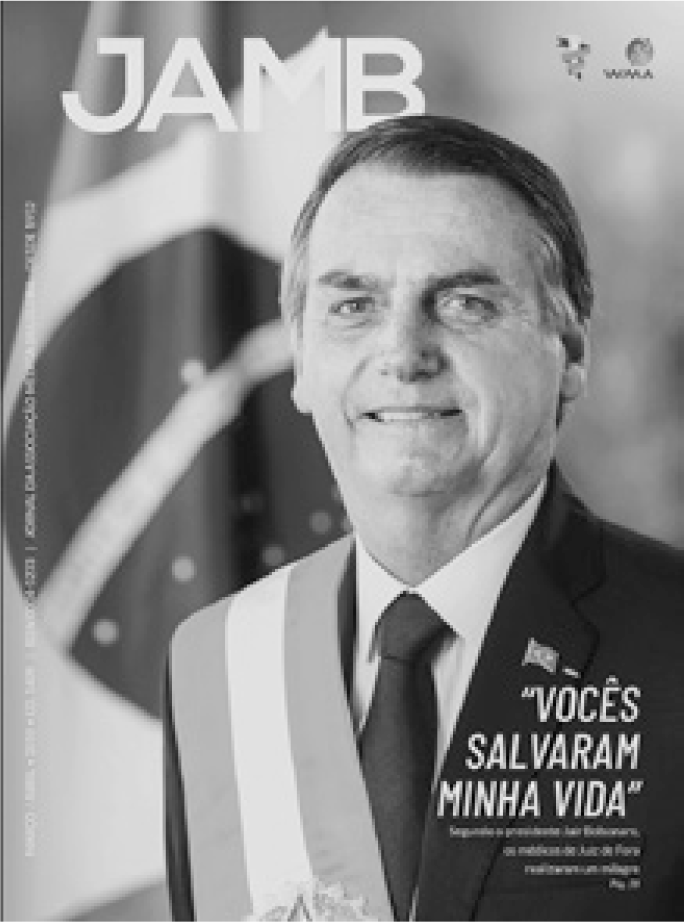
While the CFM, led by the neoliberal current, mediated the publicizing of its political support through the entity’s agenda, the political-ideological link with the new government was explicit in the case of the AMB. Its leadership was already exercised by the bolsonarist current6. The first issue of Jamb in 2019 featured a photo of Jair Bolsonaro on the cover (figure 1) and included an extensive article dedicated to revisiting the actions of the doctors from the Santa Casa de Misericórdia de Juiz de Fora (MG) in the controversial episode in which the then-candidate was the target of an attack12. Thus, the aim was to discursively identify the reader with that team and, thus, affectively link them to Bolsonaro, fueling the characteristic cult of personality that marks fascism.
The centripetal force of Bolsonarism, however, also attracted the CFM, whose president, converging with other conservative social sectors, criticized the harm reduction strategy in the approach to drugs endorsed by the Brazilian Psychiatric Reform, legitimizing the abstinence-centered strategy and the greater participation of asylums and therapeutic communities - many of these operated by evangelical groups11. Lending a supposedly scientific veneer to prohibitionism and the ideology of the war on drugs - a loan that would also occur to scientific denialism in the pandemic - this position legitimized the moral conservatism and religious fundamentalism of Bolsonarism. A topic of strong popular appeal, this endorsement allowed this ideology to gain adherents where the Workers’ Party (PT) had greater penetration, especially among marginalized workers.
Another article reports on the presentation to the President of the Republic of the new Medical Code of Ethics and the agenda of the autarchy (State career, Revalidation of diplomas, accreditation of medical schools), reinforcing the free movement of the medical corporation in the government. In the following two editions, the demand for the revalidation of diplomas for the practice of medicine in the country stands out, a flank on which the entity maintained its opposition to the PMM. Already in July, the cover was occupied by the government announcement of the program that was intended to replace it and partially meet the demand for a State medical career: the Doctors for Brazil Program (PMpB)11.
In turn, the AMB even more vehemently criticized the permanence of the PMM, a result of the need for political accommodations with mayors and health secretaries, its regulation through ordinary law - requiring review by the National Congress, and the delay in the implementation of the PMpB. Thus, in tune with Bolsonaro’s anti-communism, its president wrote:
The More Doctors Program turned out to be a Cuban government-funded program, and the US included Cuba on its list of human trafficking countries, citing More Doctors as one of the reasons12.
The situation involving the PMM and the PMpB is quite revealing of those two characteristics that Poulantzas5 attributes to the status of the supporting classes, according to which the support they provide to the ruling bloc is based both on the fear, imaginary or real, of the power of the working class (explicit in the recurring negative references to Cuba within the opposition to the PMM), as well as on ideological illusions fueled by certain compromise measures. The PMpB, partially embracing the demand for a civil service career from the medical profession, fulfills exactly this role. Considering that Bolsonaro’s candidacy had already been co-opted by international big finance3 and was implementing a neoliberal restoration program, radicalizing the logic of fiscal austerity, there would never have been room for that demand. But, as it guaranteed certain concessions (such as the impossibility of foreign doctors without validated diplomas participating in it, thus reducing pressure on the job market), the new program fueled the illusion that this was ‘their government’, which explains the resilient loyalty to it even after the debacle of the pandemic.
Another good example is the vetoes that the President of the Republic applied to the possibility of revalidating diplomas, by private institutions, of doctors trained abroad. “At the request of the CFM, President Jair Bolsonaro vetoed a section of the law that deals with the revalidation of foreign diplomas”11, the organization celebrated. The identification with the president becomes even more evident in JAMB, in the article ‘The Chaos is Over’12. The dramatic, almost messianic tone, and the salvationist image with which the President of the Republic is invested converge with the vocabulary used by the vice-president of the entity, very similar to what usually makes up the discursive repertoire of Jair Bolsonaro and his supporters, reinforcing the identification with him, the feeling of representation and the cult of his leadership. The article aptly illustrated the polarization that was then occurring between the executive and legislative branches, whereby neo-fascist activists sought to harass the Speaker of the House, Rodrigo Maia, of the Democrats (DEM), revealing the anti-establishment and anti-political elements of Bolsonaro’s ideology.
In this sense, the interview with the then Secretary of Labor Management and Health Education (SGTES), Mayra Pinheiro, is instructive. She gained notoriety as head of the Ceará Doctors’ Union (2013 to 2018) and became visible in the context of the arrival of the first Cuban exchange physicians in Fortaleza, when the act promoted by local doctors, in which they shouted “Slaves! Slaves!” against the foreigners, had national repercussions, prompting numerous news articles condemning the action for racism and xenophobia. She would later become known by the nickname ‘Captain Chloroquine’ due to her unwavering defense of the government’s strategy for confronting COVID-19. A candidate for federal deputy for the Liberal Party in 2022, she symbolizes the political radicalization movement of the category and its link to Bolsonaro’s ideology. In the interview, in addition to the usual criticisms of the PMM, she announced the completion of the project that would become the PMpB and praised the performance of the AMB, revealing the relationship of representation with the entity and the organic connection with the Bolsonaro faction that led it.
The second half of 2019 was marked by the end of the CFM’s administration, which began in 2014, and the election of new council members, who would serve until September 2024, and, based on these, the new leadership, which would continue until April 2022. The movement of continuity and renewal stands out, indicating a process of political composition. The difference in tone and explicitness of the political discourse between the CFM and AMB, more radicalized in the latter, indicated, beyond institutional specificities, the political differences in the groups leading the respective entities, with greater weight given to neoliberal and bolsonarist currents, respectively6. The successive defeats against the PMM motivated divisions among the leadership of the medical movement and a political mismatch between the CFM and AMB16. This culminated in the emergence of a neo-fascist current in the leadership of the latter entity, capable of better expressing the political resentment and revolt of the category, as well as its alignment with Bolsonaro and the Bolsonaro government6. The political composition of the new CFM administration allowed for overcoming this misalignment between the two entities through the presence of emblematic leaders from the previous AMB administration (2011-2017) as their representatives among the council members, enabling unity between the two entities in the following months, which would have implications for the CFM’s positions, especially during the COVID-19 pandemic.
The period during and after the pandemic
Table 3 presents natural units extracted from primary sources from this period and the meaning attributed to them:
Results of the analysis of natural units extracted from primary sources from the pandemic period and the meaning attributed to understanding the relationships between the medical entities and Bolsonarism during the Bolsonaro government (2019 to 2022), Brazil, 2026
In the first weeks, the CFM ratified the encouragement of hygiene and social isolation11. On March 24, 2020, however, the President of the Republic made a controversial statement in which he accused the press of provoking hysteria, minimized the seriousness of the disease, condemned the actions of governors and mayors who encouraged social isolation, established the false dichotomy between protecting the economy and jobs and protecting life, and began his campaign to promote chloroquine/hydroxychloroquine for the early treatment of the disease.
The governmental crisis between Jair Bolsonaro and his Minister of Health, Luiz Henrique Mandetta, was then taking hold. Mandetta maintained social isolation as a health strategy, rejecting his boss’s denialism. The outcome was the minister’s dismissal on April 16th, a crisis that deepened with Sérgio Moro’s resignation from the Ministry of Justice nine days later, the first major schism within the government’s neo-fascist ranks. Mandetta was replaced by oncologist Nelson Teich, partner at Teich Health Care - a medical services consultancy - and informal consultant to Bolsonaro’s 2018 election campaign. The new minister, in turn, would be dismissed just 29 days later for also disagreeing with the president on issues such as the use of chloroquine and isolation measures. General Eduardo Pazuello then took over, remaining in office between May 16, 2020, and March 23, 2021, determined to align the Ministry of Health with the president’s dictates.
Mandetta (DEM) was not directly linked to the medical movement, and therefore was not an organic representative of any of its currents. During the fight against the implementation of the PMM, he acted as an intermediary with the medical entities that were then dominated by the neoliberal current. As a parliamentarian and, later, as Minister of Health, the DEM’s partisan role of representing the interests of the agrarian bourgeoisie and large landowners in the political arena placed him within the orthodox neoliberal camp and the restoration of neoliberalism in the context of Dilma Rousseff’s impeachment. However, his traditional form of parliamentary politics did not characterize him as a member of the Bolsonaro core within the Bolsonaro government. Therefore, in his relationship with medical entities, his style and political practice were not those of the neo-fascist medical current that had recently emerged. His downfall, immediately followed by that of Nelson Teich, a figure without any leadership within the medical profession or in other social forces, opened space for the neo-fascist medical current to find refuge in the Ministry of Health under the management of General Pazuello. Pazuello had no connection whatsoever with the medical profession until then and appeared as a mere representative of the President of the Republic. His administration, however, would give greater prominence to the neo-fascist medical current and enable a phenomenon typical of the process of fascization of the middle classes - the relationship of representation with a branch of the repressive apparatus of the State, in this case the Armed Forces2.
Given the turbulence of those months, the CFM’s silence regarding Jair Bolsonaro’s attitude in the first half of 2020, during the first epidemic wave, is striking. What is perceived is a subtle and veiled endorsement of Bolsonaro’s political tactics, whether by giving a scientific veneer to the off-label use of chloroquine and hydroxychloroquine through the controversial opinion no. 4/2020, or by directing its criticism at parliamentarians and governors, this time for the flank opened by the attempts of some of these actors to make the revalidation process and the hiring of doctors trained abroad more flexible to deal with the pandemic.
The infamous opinion17 remained in effect throughout the pandemic, contradicting studies that demonstrated the lack of evidence for the use of chloroquine, hydroxychloroquine and other drugs (which came to be known as the ‘COVID kit’). Thus, the conduct of professionals such as those who were part of the ‘Brazil Overcoming COVID Movement’ was supported, as pointed out in the CPI report13, which investigated the holding of a presidential event where this movement was the protagonist and in which members of the CFM and AMB participated. This movement boosted government propaganda for the so-called ‘early treatment’, disseminating experiences considered successful and critical of ‘traditional science’, which was supposedly subordinated to ideological and economic interests in medical societies16. This is revealing of the conspiratorial logic that mixes scientific denialism with anti-political and anti-system discourse, fundamental elements of the Bolsonaro ideological universe.
According to Dias, Lima and Lobo16(99),
Members of these groups originate from local medical movements, of a conservative and religious nature, as is the case of the ‘There Is Still Good’ movement in Ceará, which opposes the decriminalization of abortion.
They also recall that the CPI revealed a meeting with the President of the Republic, arranged by the doctor Osmar Terra, which was attended by representatives of the ‘Doctors for Life COVID-19 Association’, including representatives from the CFM, fulfilling the role of a ‘parallel cabinet’ to the Ministry of Health to support the denialist agenda16.
This support prompted criticism of the CFM and the AMB from scientific entities and medical specialty societies, based on robust studies widely disseminated in renowned journals, which pointed not only to the lack of evidence of benefits from early treatment but also to evidence of its potential harm. This was the case with the Brazilian Society of Infectious Diseases (SBI) in December 2020, whose position resonated widely in the national press and generated a strong reaction from supporters of Jair Bolsonaro, including the AMB and the CFM, to the point that several other entities publicly joined the SBI.
What emerges from this episode is that the growing contradiction between scientific denialism within Bolsonarism and the most elementary scientific principles of medicine was generating cleavages within the medical profession and its entities, through which an incipient, fragile, but impactful process of ‘disaffection’ was developing, similar to that described by Poulantzas18 in relation to classes, class fractions and population segments during the period of fascism established in Italy and Germany in the interwar period.
This process would deepen in the first half of 2021, with the second pandemic wave, the various indications of crimes committed13 during the healthcare chaos in Manaus, and Bolsonaro’s opposition to vaccines. This further exacerbated divisions within the medical profession. The neoliberal current, articulated around medical specialty societies, reorganized itself around the defense of vaccination, politically converging with the then-governor of São Paulo, who sought to politically capitalize on the development of CoronaVac by the Butantan Institute in partnership with a Chinese laboratory. In January, a letter signed by six former presidents and 14 former council members of the CFM demanded a public statement clearly opposing the government’s denialist line.
The CFM’s omission did not go unnoticed by the national press. Media outlets highlighted the relationships between council members and the federal government, such as the case of gynecologist Raphael Câmara, Secretary of Primary Health Care, whose ties to the Minister of Women, Family and Human Rights, Damares Alves, were well-known. Investigating the party affiliation of the council members with the Superior Electoral Court (TSE), it was learned that, of the 28 effective council members, 16 belonged to parties supporting the government in the National Congress, such as the Social Liberal Party (PSL), DEM, Brazilian Democratic Movement (MDB), National Mobilization Party (PMN), Solidarity, Podemos, and Novo. Of particular note are José Hiran da Silva Gallo, treasurer and future president of the council from April 2022, affiliated with the MDB; Florentino de Araújo Cardoso Filho, former president of the AMB (2011 to 2016), affiliated with Novo; and Emmanuel Fortes Silveira Cavalcanti, 3rd vice-president, an avid defender of the false early treatment and affiliated with PSL19.
The disaffection within the category was reflected in the AMB, whose new board, sworn in in January 2021 under the hegemony of the neoliberal current, sought to abandon the explicitly pro-government orientation, aiming to realign the entity both with part of the category’s base and with the specialty societies.
Thus, a disjunction arose between the CFM and the AMB, which became explicit in two episodes. The first was the fall of General Pazuello from the Ministry of Health and the appointment of physician Marcelo Queiroga, with the explicit support of the CFM, contrasting with the discretion of the AMB. The second was the most important political event of 2021: the work of the CPI on the pandemic in the Senate, in the face of which the CFM remained silent (except for its defense of the pro-Bolsonaro physician Nise Yamaguchi), while the AMB openly supported it in several situations, such as in the crimes revealed in the Prevent Senior case.
A prime example of this dilemma was the disagreement within the National Commission for the Incorporation of Technologies in the SUS (CONITEC) regarding the contraindication of the so-called ‘COVID kit’ at the end of 2021. Those who opposed its release included: the AMB, the National Supplementary Health Agency (ANS) and the National Health Surveillance Agency (ANVISA), the National Health Councils (CNS), the National Council of Health Secretaries (CONASS), the National Council of Municipal Health Secretaries (CONASEMS), and the Secretariats of Science, Technology, Innovation and Strategic Inputs in Health (SCTIE) and Health Surveillance (SVS). Those in favor of releasing the kit included the Executive Secretariat of the Ministry of Health and the Secretariats of Indigenous Health (SESAI), Primary Health Care (SAPS), Specialized Health Care (Saes), and Management of Work and Education in Health (SGTES), as well as the CFM12.
The fact reveals the resistance of the technical staff of different MS secretariats and regulatory agencies, illustrating the passive resistance that Poulzantas had already pointed out and which, gradually, “provoked a certain isolation of the established fascism in the classes and class fractions where it had gained support”18(63). Although, here, neo-fascism did not establish itself as a regime of exception, it is this gradual divorce that is perceived between part of the health professionals and Bolsonarism. And it was to circumvent this resistance and materialize a parallelism of the networks and transmission belts of power2 that the bolsonarists formed a ‘parallel cabinet’ composed of doctors, politicians and businessmen, which acted against the technical guidelines of the MS to advise the presidency of the Republic in the denialist conduct of the pandemic, without formal investiture in public positions13.
Also significant was the silence of the CFM regarding the leak of data from doctors who, in January 2022, participated in a public hearing to defend the right of children aged 5 to 11 to be immunized against COVID-19, a right that Bolsonaro supporters sought to obstruct. The AMB, on the other hand, publicly condemned the event12. These differences were expressed in the inauguration of the new CFM board in April 2022, which would maintain its alignment with Bolsonaro20, and whose ceremony the AMB participated in only virtually11.
Furthermore, AMB would mobilize around the ‘Alliance for Brazil’, an articulation that brought together representative entities of big business (banks, industry, commerce) to enable the construction of a ‘third way’ for the 2022 elections. Faced with the disruptive consequences of the bolsonarist political line for public health and, more broadly, for the consolidation of a hegemonic domination by the ruling bloc, an alternative from the traditional right was sought that could stabilize the political crisis while serving the interests of the fraction of international financial capital and its associates in the country. The supposedly ‘centrist’ candidacy sought to overcome the political polarization between bolsonarists and PT supporters, discursively operating a false symmetry whereby Lula da Silva would be the left-wing version of Jair Bolsonaro’s extremism, but this operation failed spectacularly.
Neither entity made any mention of the election results or the coup-like events that followed the election and culminated in the attempted coup of January 8, 2023, although the then-interim president of the CFM shared images celebrating the acts in the Three Powers Square21. At one of the most critical moments in the country’s history, no reference to the defense of democracy or the exercise of citizenship permeated her publications, words under which the appeal for political mobilization of the category had become habitual during the impeachment of former President Dilma Rousseff, for example. The reason for this omission was certainly the deep division within the category, representing an obstacle for the boards to make their positions explicit, risking alienating significant portions of their base and seeing the ascendancy of the political currents to which they were linked weaken.
Final considerations
After an initial phase of convergence and unity within the medical movement following the defeat of the common enemy in the 2018 elections, the ‘Bolsonarization’ of health policy and its contradictions, especially in the handling of the COVID-19 pandemic, generated deep divisions between the AMB and the CFM, and between these and their bases, demonstrating the oscillating character typical of the middle classes.
The research did not include other entities, such as the National Federation of Physicians (FENAM), the National Association of Resident Physicians (ANMR), and the Brazilian Medical Federation (FMB), which may limit a more comprehensive understanding of the medical category. Nor was it the objective of this article to analyze the corporation’s movements during Lula’s third term, which could shed light on aspects of the previous period. These limitations necessitate further research based on the categories of Poulantzas2,5,18, Donnangelo8, and Campos9.
Initially, although the two main medical entities converged on the most cherished corporate agendas, such as opposition to the revitalized PMM during Lula’s third term, defense of the revalidation of foreign diplomas for the practice of medicine, and opposition to the opening of new courses, what was observed after 2022 was the continuation of the disjuncture that originated in the pandemic. This is indicated by the re-election of the AMB leadership in 2023 with 63.5% of the votes12 against the neo-fascist current and, in 2024, the elections for CFM councilors and a new board, with a bolsonarist majority. What is emerging on the political horizon of the category is the maintenance of the dispute between the neoliberal and Bolsonaro currents for the leadership of the medical movement, with points of convergence in the opposition to the PT and in their common programmatic roots.
However, the degree to which its radicalization and alignment with neo-fascism will continue, or whether a process of disaffection will deepen, will certainly depend on the outcome of the hegemonic crisis, which persists despite the electoral defeat of Bolsonarism and the legal setbacks of Jair Bolsonaro. The pandemic and its denialist handling have undermined the hegemonic function of health policy; in other words, the ‘Bolsonarization’ of health policy was decisive for the electoral defeat of the Brazilian neo-fascist movement. Nevertheless, international financial capital and the Brazilian bourgeoisie integrated into it continue to use the neo-fascist threat to harass the broad-front government, and Bolsonarism could be rehabilitated, since it is not a passive instrument.
The fact is that the condition for the defeat of the neo-fascist medical current is the defeat of Bolsonarism in the class struggle, which requires not only the rhetorical defense of democracy in the abstract, but, as history demonstrates, the mass mobilization of democratic and anti-fascist forces around a program that can attract part of the middle classes and other social sectors that form the base of Bolsonarism through concrete economic gains. This does not mean neglecting the ideological struggle; on the contrary, it implies demanding punishment for the crimes of the pandemic: memory and justice are instruments in the fight against the neo-fascist threat.
Acknowledgments
My thanks and tribute to Professor Dr. José Luiz do Amaral Corrêa de Araújo Júnior, supervisor of the doctoral thesis from which this article derives, who passed away on March 26, 2025. I also thank Professor Ma. Daniele Andrade de Carvalho for her support, criticism, and suggestions regarding the text.
Financial support:
Data availability:
The research data is contained in the manuscript itself
References
-
1 Bianchi A. Revolução passiva e crise de hegemonia no Brasil contemporâneo. Rev Outubro [Internet]. 2017 [acesso em 2025 nov 11];(28):27-35. Disponível em: http://outubrorevista.com.br/wp-content/uploads/2017/04/02_Bianchi_2017.pdf
» http://outubrorevista.com.br/wp-content/uploads/2017/04/02_Bianchi_2017.pdf - 2 Poulantzas N. Fascismo e ditadura: a III internacional face ao fascismo. Porto: Portucalense; 1972.
-
3 Boito Júnior A. O caminho brasileiro para o fascismo. Cad CRH. 2021;34:e021009. DOI: http://dx.doi.org/10.9771/ccrh.v34i0.35578
» http://dx.doi.org/10.9771/ccrh.v34i0.35578 - 4 Hobsbawn E. A era dos extremos: o breve século XX 1914-1991. 2ª ed. São Paulo: Companhia das Letras; 1995.
- 5 Poulantzas N. Poder político e classes sociais. São Paulo: Unicamp; 2019.
-
6 Medeiros HGD, Araújo Júnior JLAC. A radicalização política à direita da categoria médica e sua adesão ao bolsonarismo de 2015 a 2018. Physis. 2025;35(1):1-21. DOI: https://doi.org/10.1590/S0103-73312025350139pt
» https://doi.org/10.1590/S0103-73312025350139pt -
7 Medeiros HGD, Araújo Júnior JLAC. Os reflexos do bolsonarismo sobre políticas de saúde da mulher e os direitos sexuais e reprodutivos. Trab Educ e Saúde. 2024;22:e02811259. DOI: https://doi.org/10.1590/1981-7746-ojs2811
» https://doi.org/10.1590/1981-7746-ojs2811 - 8 Donnangelo MCF. Medicina e sociedade: o médico e seu mercado de trabalho. 2ª ed. São Paulo: Hucitec; 2011.
- 9 Campos GWS. Os médicos e a política de saúde: entre a estatização e o empresariamento. A defesa da prática liberal da Medicina. 2ª ed. São Paulo: Hucitec; 2006.
-
10 Medeiros HGD. O bolsonarismo, a categoria médica e a política de saúde no contexto da crise de hegemonia contemporânea [tese na Internet]. Recife: Instituto Aggeu Magalhães, Fundação Oswaldo Cruz; 2024 [acesso em 2025 nov 18]. 299 p. Disponível em: https://arca.fiocruz.br/items/28625548-b277-4dae-8bdb-37a3ec4c83fc
» https://arca.fiocruz.br/items/28625548-b277-4dae-8bdb-37a3ec4c83fc -
11 Jornal Medicina [Internet]. Brasília, DF: Conselho Federal de Medicina. XXXIV-XXXVIII, nº 287-344, 2019-2023. [acesso em 2025 nov 18]. Disponível em: https://portal.cfm.org.br/bb_publicacoes/jornal-medicina
» https://portal.cfm.org.br/bb_publicacoes/jornal-medicina -
12 Jornal da Associação Médica Brasileira [Internet]. São Paulo (SP): Associação Médica Brasileira. nº 1409-1426, 2019-2023 [acesso em 2025 nov 18]. Disponível em: https://amb.org.br/jamb/
» https://amb.org.br/jamb/ -
13 Senado Federal (BR), Comissão Parlamentar de Inquérito da Pandemia Instituída pelos Requerimentos nº 1.371 e 1.372, de 2021. Relatório Final [Internet]. Brasília, DF: Senado Federal; 2021 [acesso em 2025 nov 18]. Disponível em: https://www12.senado.leg.br/noticias/arquivos/2021/10/26/relatorio_final-26102021-12h40-1.pdf
» https://www12.senado.leg.br/noticias/arquivos/2021/10/26/relatorio_final-26102021-12h40-1.pdf - 14 Araújo Jr JLC. Health sector reform in Brazil, 1995-1998: An health policy analysis of a developing health system [tese]. Leeds: University of Leeds, Nuffield Institute for Health; 2000.
- 15 Minayo MCS. O desafio do conhecimento: pesquisa qualitativa em saúde. 14ª ed. São Paulo: Hucitec; 2014.
-
16 Dias HS, Lima LD, Lobo MSC. Do ‘Mais Médicos’ à pandemia de Covid-19: duplo negacionismo na atuação da corporação médica brasileira. Saúde Debate. 2021;45(Esp 2):92-106. DOI: https://doi.org/10.1590/0103-11042021E207
» https://doi.org/10.1590/0103-11042021E207 -
17 Conselho Federal de Medicina (BR). Parecer CFM nº 4/2020, de 16 de abril de 2020. Considerar o uso da cloroquina e hidroxicloroquina, em condições excepcionais, para o tratamento da COVID-19 [Internet]. Brasília, DF: Conselho Federal de Medicina; 2020 [acesso em 2025 nov 20]. Disponível em: https://sistemas.cfm.org.br/normas/visualizar/pareceres/BR/2020/4
» https://sistemas.cfm.org.br/normas/visualizar/pareceres/BR/2020/4 - 18 Poulantzas N. A propósito do impacte popular do fascismo. In: Macciocchi MA, organizador. Elementos para uma análise do fascismo. Lisboa: Livraria Bertrand; 1977. p. 59-69.
-
19 Martins L. Secretário de Pazuello com cadeira no CFM é o elo entre o bolsonarismo e a classe médica. Intercept Brasil [Internet]. 2021 fev 8 [acesso em 2025 nov 20]. Disponível em: https://www.intercept.com.br/2021/02/08/raphael-camara-secretario-de-pazuello-e-elo-entre-bolsonarismo-e-cfm/
» https://www.intercept.com.br/2021/02/08/raphael-camara-secretario-de-pazuello-e-elo-entre-bolsonarismo-e-cfm/ -
20 Lara B. Novo presidente do CFM acredita que Bolsonaro ‘se desdobrou’ no enfrentamento à pandemia. Intercept Brasil [Internet]. 2022 abr 23 [acesso em 2025 nov 25]. Disponível em: https://www.intercept.com.br/2022/04/29/novo-presidente-cfm-bolsonaro-se-desdobrou-na-pandemia/
» https://www.intercept.com.br/2022/04/29/novo-presidente-cfm-bolsonaro-se-desdobrou-na-pandemia/ -
21 Lara B. Ministério da Saúde cobra ação do CFM contra médicos antivacina após órgão contribuir para caos da pandemia. Intercept Brasil [Internet]. 2023 mar 30 [acesso em 2025 nov 25]. Disponível em: https://www.intercept.com.br/2023/03/30/cfm-cobrado-pelo-ministerio-da-saude-contra-medicos-antivacina/
» https://www.intercept.com.br/2023/03/30/cfm-cobrado-pelo-ministerio-da-saude-contra-medicos-antivacina/

 Source: Author