 Integrative and complementary healthcare practices for hypertension: a summary of recommended clinical guidelines
Abstract
Objective Identifying the main uses of integrative and complementary healthcare practices (ICPHPs) in managing systemic arterial hypertension in adults.
Methods Evidence summary. With eligibility criteria for the clinical guidelines from the Grading of Recommendations, Assessment, Development and Evaluation system and others that addressed ICPHPs hypertension, with no language or date restrictions. Medline, Embase and Scopus were the databases consulted. The Appraisal of Guidelines for Research and Evaluation II tool was used for risk of bias assessment, focusing on methodological rigor. The results were then summarized narratively, grouping the recommendations by outcome and analyzing commonalities and differences between the included guidelines.
Results Eight clinical guidelines were included in this evidence summary, selected from 560 records initially identified. The most common interventions were meditation, yoga, breathing techniques, tai chi and mindfulness, with a positive impact on blood pressure, stress control and patients’ quality of life. Most guidelines recommended these practices for hypertension control, based on moderate quality evidence with a strong recommendation.
Conclusion The results of this summary indicate that HCPs are effective and safe strategies in the complementary management for hypertension, suggesting a more holistic and less medicalized approach to managing the condition.
Keywords
Clinical Practice Guide; GRADE Approach; Integrative and Complementary Health Practices; Hypertension; Evidence- Based Policy
Resumo
Objetivo Identificar os principais usos das práticas integrativas e complementares em saúde (PICS) no manejo da hipertensão arterial sistêmica em adultos.
Métodos Trata-se de uma síntese de evidências. Os critérios de elegibilidade incluíram diretrizes clínicas que utilizam o sistema Grading of Recommendations, Assessment, Development and Evaluation e que abordaram PICS para hipertensão, sem restrições de idioma ou data. Foram consultadas as fontes de informação Medline, Embase e Scopus. O risco de viés foi avaliado com a ferramenta Appraisal of Guidelines for Research and Evaluation II, focando o rigor metodológico das diretrizes. A síntese dos resultados foi realizada de forma narrativa, agrupando as recomendações por desfecho e analisando convergências e divergências entre as diretrizes incluídas.
Resultados Foram incluídas oito diretrizes clínicas nesta síntese de evidências, selecionadas a partir de 560 registros inicialmente identificados. As intervenções mais comuns foram meditação, ioga, técnicas de respiração, tai chi e mindfulness, com impacto positivo sobre a pressão arterial, o controle do estresse e a qualidade de vida dos pacientes. A maioria das diretrizes recomendou essas práticas para o controle da hipertensão, baseando-se em evidências de qualidade moderada e com forte recomendação.
Conclusão Os resultados desta síntese indicam que PICS são estratégias eficazes e seguras no manejo complementar da hipertensão, sugerindo uma abordagem mais holística e menos medicalizada no tratamento da condição.
Palavras-chave
Guia de Prática Clínica; Abordagem GRADE; Práticas Integrativas e Complementares em Saúde; Hipertensão; Política Informada por Evidências
Resumen
Objetivo Identificar los principales usos de las prácticas integrativas y complementarias en salud (PICS) en el manejo de la hipertensión arterial sistémica en adultos.
Métodos Se trata de una síntesis de evidencia. Los criterios de elegibilidad incluyeron guías clínicas que utilizan el sistema Grading of Recommendations, Assessment, Development and Evaluation y que abordaban PICS para la hipertensión, sin restricciones de idioma o fecha. Se consultaron las fuentes de información Medline, Embase y Scopus. El riesgo de sesgo se evaluó utilizando la herramienta Appraisal of Guidelines for Research and Evaluation II, centrándose en el rigor metodológico de las guías. La síntesis de los resultados se realizó de forma narrativa, agrupando las recomendaciones por desenlace y analizando convergencias y divergencias entre las guías incluidas.
Resultados Se incluyeron en esta síntesis de evidencia ocho guías clínicas, seleccionadas de 560 registros identificados inicialmente. Las intervenciones más comunes fueron meditación, yoga, técnicas de respiración, tai chi y mindfulness, con un impacto positivo en la presión arterial, el control del estrés y la calidad de vida de los pacientes. La mayoría de las guías recomiendan estas prácticas para el control de la hipertensión, basándose en evidencia de calidad moderada y con una recomendación fuerte.
Conclusión Los resultados de esta síntesis indican que las PICS son estrategias efectivas y seguras en el manejo complementario de la hipertensión, sugiriendo un enfoque más holístico y menos medicalizado en el tratamiento de la enfermedad.
Palabras clave
Guía de Práctica Clínica; Enfoque GRADE; Prácticas Integrativas y Complementarias en Salud; Hipertensión; Política Basada en Evidencia
Literature review based study, which does not require a Research Ethics Committee approval.:
Introduction
Systemic hypertension represents a major challenge for Brazil’s Unified Health System (SUS), accounting for 19% of the system’s demands in 2017 (1). As the leading risk factor for cardiovascular disease and mortality in Brazil, hypertension has an impact on healthcare resources. In 2019, SUS alone (2) had an estimated expenditure of Int$ 581 million. Despite the reduction in age-adjusted mortality rates attributed to hypertension between 1990 and 2017, total deaths increased by 53%, largely due to demographic aging (1). SUS has been implementing strategies to deal with hypertension, especially by offering cost-free medication and multi-professional team support in primary care (2).
In this context, integrative and complementary health practices (ICHP) have been gaining ground in hypertension management and are considered valuable tools for fostering comprehensive health care. However, their introduction in SUS, which is mostly linked to traditional biomedicine, is still incipient (3). The National Policy for Integrative and Complementary Practices in SUS (NPICP) emerged as a cornerstone for the incorporation of ICHP into SUS, in line with health promotion guidelines (4). Among health professionals, especially nurses, there is a growing interest in ICHP, where 37% report having been trained and 14% use these practices in the management of hypertension (5). Techniques such as auriculotherapy and bloodletting – a practice derived from acupuncture – are often used to address contributing factors for hypertension such as anxiety and stress. These approaches can contribute to higher patient treatment compliance, as well as fostering a more holistic, patient-centered care.
Numerous factors influence the use of ICHP in hypertension management. Educational level, anxiety, gender and individual beliefs about the disease are important predictors for ICHP implementation (6,7). The most commonly used practices among hypertensive patients include use of medicinal plants, garlic and auriculotherapy (5,6,8). Although potential benefits are promising, the adoption of ICHP is still limited, which points to the need for further integration of such practices in SUS.
To ensure a robust evaluation of clinical guidelines, the GRADE (Grading of Recommendations, Assessment, Development and Evaluation) system has been widely adopted to assess the quality of evidence and recommendations (9,10). GRADE provides a systematic approach that considers the overall quality of studies, consistency of findings and potential biases, categorizing evidence into four levels (high, moderate, low and very low) and classifying the quality of recommendations as strong, weak or conditional (10). This approach integrates the best available literature with patient preferences and clinical experience.
The purpose of this study has been to determine the most widely recommended uses of ICHP in hypertension management in adults, based on a summary of available GRADE clinical guidelines.
Methods
In this study, we present a summary based on a brief review for healthcare technology assessment (11). This brief review employs methodological simplifications to summarize the best available evidence in a short timeframe, and is especially useful in contexts that require timely responses to support clinical or healthcare policy decision-making. We have opted for a fast-track review in light of the political need to provide consistent and up-to-date evidence in the short term to subsidize discussions on ICHP in SUS. Among the changes implemented are the precise and objective definition of a research question, a focus on secondary studies (such as clinical guidelines), use of specific tools for critical appraisal, as well as an optimized data extraction and analysis process (carried out by a reviewer and revised by another, with a consensual resolution of discrepancies).
Eligibility Criteria
The selection criteria we used in our summary for this study were clinical guidelines that: used the GRADE system to assess the quality of the evidence and recommendations; addressed the use of ICHP (apitherapy; aromatherapy; art therapy; ayurveda; biodance; bioenergetics; family constellation; chromotherapy; circular dance; geotherapy; hypnotherapy; homeopathy; laying on of hands; anthroposophical medicine/anthroposophy applied to healthcare; traditional Chinese medicine - acupuncture; meditation; music therapy; naturopathy; osteopathy; ozone therapy; medicinal plants - phytotherapy; chiropractic; reflexotherapy; reiki; shantala; integrative community therapy; flower therapy; social thermalism/crenotherapy; yoga) in hypertension management (blood pressure ≥130/80 mmHg or use of antihypertensive drugs) in adults (≥18 years); were available in any language, regardless of the date of publication. Choosing guidelines based on the GRADE system serves the robustness and transparency of method. The inclusion of guidelines without language or date restrictions aimed to broaden the scope and representativeness of the recommendations analyzed.
Sources
We searched for clinical guidelines in Medline (via Pubmed), Embase and Scopus. These databases have a wide reach in healthcare and biomedical sciences and are recognized for their quality and scope of the journals indexed. Other databases, such as LILACS or Web of Science, were not included due to overlapping content and fewer exclusive clinical guidelines. The selection of these sources sought to optimize the efficiency of the search without compromising the scope of the results.
Research Strategies
Table 1 shows our research strategy employed in identifying clinical guidelines on the use of ICHP in hypertension management. The strategy combined keywords associated with the words such as “hypertension”, “guidelines” and “GRADE system”, which were adjusted according to the specifics of each source. We used Boolean operators and descriptors specific to each platform in order to maximize sensitivity and specificity retrieving relevant information.
Screening criteria
We have selected our guidelines in two steps. Firstly, with the screening of studies’ titles and abstracts according to the predefined eligibility criteria by two independent reviewers. Discrepancies were settled by consensus. In our study’s second step, a reviewer assessed all potentially eligible records in detail, with a subsequent check by a second reviewer to ensure eligibility. A PRISMA flow chart was drawn up to illustrate the screening process.
Data Gathering
The data from the included guidelines was extracted by a reviewer using a standardized spreadsheet, while a second reviewer verified the extracted information.
Data Set
The data included: year of publication, country of origin, target population (type of hypertension), ICHP investigated, outcomes analyzed, use of ICHP recommendations, evidence quality (high, moderate, low or very low) and quality of recommendation (strong or weak).
Assessment of studies’ risk of bias
In order to assess the risk of bias in the included guidelines, we relied on the “methodological rigor” section of the Appraisal of Guidelines for Research and Evaluation II (AGREE II) tool (12). This section comprises eight separate items which were assessed individually by a reviewer and verified by another.
The reviewers classified the answers as “yes”, “partially” or “no”, considering: (i) the use of systematic methods in the research of evidence; (ii) clarity in criteria for the evidence assessment; (iii) explicit description of the strengths and limitations of the evidence included; (iv) transparency in issuing recommendations; (v) explicit consideration of benefits, risks and adverse health effects in the recommendations presented; (vi) a direct relationship between recommendations and evidence; (vii) peer reviewed process prior to publication; and (viii) documented procedures for periodically updating guidelines. Upon consideration, the discrepancies between the reviewers were resolved via consensus. Based on the assessment results, it was possible to measure the methodological rigor and overall quality of the included guidelines.
Summary Methods
The included guidelines’ recommendations were analyzed in descriptively, considering the guidelines’ methodological quality and the quality of the evidence supporting each recommendation. They were grouped by outcome, with an emphasis on convergences and divergences amongst guidelines.
Conclusion Assesment
Guideline confidence was determined by the AGREE II tool, assigning the highest priority to guidelines with a low risk of bias, i.e. those that answered “yes” to most of the methodological rigor criteria. Guidelines with the highest number of “yes” answers were classified as high confidence, while those with answers evenly split between “yes”, “partially” and “no” were classified as moderate confidence, and those with a predominance of “partially” and “no” answers were considered low confidence. The quality of the evidence and the strength of the recommendations were directly obtained from the GRADE system guidelines, thus allowing for a more precise interpretation of the recommendations. The recommendations were combined in a qualitative way, seeking balance based on a critical analysis of the available body of evidence.
Results
Results from each step of the hypertension guideline assessment for the evidence summary are presented in Figure 1. On October 9th, 2024, a total of 560 records had been identified in the databases. After removing 117 duplicates, 443 studies remained for screening. Out of these, 402 were discarded based on their titles and abstracts, resulting in 41 full-text studies. Upon assessment using the eligibility criteria, 33 studies were excluded, leaving 8 studies included in our summary (13-20).
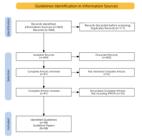
Flowchart identifying guidelines on hypertension and the use of integrative and complementary health practices (ICPHPs)
Table 2 presents the clinical guidelines related to hypertension, comprising different geographical contexts and ICHP. These studies spanned accross different countries and contexts, such as Brazil, Spain, India, Japan, Taiwan, the United States and other low- and middle-income nations. The target population included adults with hypertension and different cardiovascular risks. Other types of hypertension (secondary, gestational, white coat or malignant) were not specified, suggesting a greater interest in primary hypertension. Treatments include transcendental meditation, yoga, relaxation techniques and biofeedback. The outcomes ranged from lower blood pressure to stress control and improved quality of life.
Table 3 presents a critical assessment of the clinical guidelines included in this summary. Most of the guidelines assessed used appropriate systematic methods for researching evidence. There has been significant variation in the presentation of evidence selection criteria. Most guidelines failed to provide a clear description of the evidence’s strengths and limitations. Only three guidelines provided a thorough and clear description of the methods used to formulate their recommendations. Most guidelines adequately considered health benefits, risks and side effects when formulating their recommendations. The connection between recommendations and evidence was explicitly demonstrated in almost all guidelines. Independent expert review was a common practice in the guidelines. The most recent guidelines provided clear procedures for their updating.
Table 4 summarizes the recommendations for ICHP in the clinical guidelines for the management of hypertension. Guided slow breathing, yoga, mindfulness, tai chi and meditation are recommended strategies for controlling blood pressure in hypertensive individuals (quality of evidence: moderate; strength of recommendation: strong). Relaxation techniques such as meditation, yoga and breathing exercises have been found to improve stress and anxiety management (quality of evidence: moderate; strength of recommendation: strong). Approaches that promote well-being and autonomy, such as yoga, meditation, spirituality and religion, stood out for their impact on well-being ( evidence quality: moderate; strength of recommendation: strong). Music therapy, biofeedback and self-help groups also show promising results (evidence quality: low; strength of recommendation: weak).
Discussion
Our brief review’s findings indicate that clinical guidelines on the management of hypertension suggest that meditation, yoga, tai chi and breathing techniques are associated with improvement in blood pressure management and the general well-being of patients. Critical analysis of these guidelines revealed significant variations in the degree of clarity in the wording of the recommendations and in the description of the strengths and limitations of the evidence. Despite these differences, most of the guidelines were consistent in their assessment of health benefits and risks, highlighting the potential of ICHP as complementary approach to hypertension management.
The main limitations of this study include the exclusion of clinical guidelines that have not adopted the GRADE system, which may have led to the absence of relevant documents based on other evaluation systems. Method quality might vary among the guidelines included, due to inconsistencies in evidence selection criteria and in formulation of recommendations, which might occur in interpretation biases in the results biases into the interpretation of the findings (21,22). Our study might also be limited by omitting guidelines not indexed in the databases used, which might have resulted in a narrower scope of analysis. Publication bias is a critical concern in ICHP, as studies with positive results tend to get published more frequently than those with negative results, which can skew the assessment of the actual effectiveness of these measures (23).
Our summary points to the benefits of meditation, yoga, tai chi, breathing exercises and mindfulness in hypertension management, evidencing their positive impact on managing blood pressure and patients’ overall well-being. Meditation for hypertension patients over 60 and yoga for hypertension patients under 60 significantly reduce systolic and diastolic blood pressure (24). Both transcendental meditation and mindfulness-based stress reduction have been found to produce significant results in lowering blood pressure (25). Physiological factors for these benefits may be related to associated lower stress levels and improved self-regulation promoted by these activities, as well as relaxation and a reduced level of sympathetic activity, thereby resulting in better cardiovascular control (26, 27). It is worth noting that ICHP promote greater patient engagement with their own health, favoring a more holistic and less medicalized approach to healthcare, which can contribute to long-term adherence to treatment (28). These findings underline the importance of considering ICHP as a viable and complementary option to traditional pharmacological approaches in hypertension management.
ICHP’ potential to promote the well-being and autonomy of hypertensive patients is another relevant aspect highlighted in this review. Interventions such as yoga and meditation have been found to have a positive impact on hypertension management, as well as improving quality of life and general well-being (29,30). By allowing patients to actively participate in managing their healthcare, these practices promote a greater sense of autonomy and control over their condition, which can reduce sole dependency on pharmacological solutions (31,32). By fostering emotional and mental balance, these interventions can contribute to reducing symptoms associated with stress and anxiety, factors often correlated with hypertension (33, 34). This more comprehensive approach to treatment, involving physical, mental and spiritual aspects, is in line with a patient-centered healthcare paradigm, promoting not just symptom relief, but a transformation in lifestyle that improves both physical health and psychological well-being.
Further studies will require more rigorous and standardized clinical assessments of ICHP in hypertension. A systematic review shows that current clinical guidelines make little mention of these practices, pointing to an important gap in educating professionals and patients (35). We suggest that new clinical guidelines use systematic and transparent methods, preferably the GRADE system, to improve the overall quality of the recommendations. In Brazil, academic research indicates the positive impacts of techniques such as yoga, acupuncture and meditation on reducing blood pressure, but reinforces the need for more robust methods and larger samples (36). We therefore recommend that future research adopt rigorous designs, such as randomized clinical trials, with representative samples. Further studies should also investigate the impact of ICPH on long-term outcomes, such as treatment compliance, quality of life and cost-effectiveness, in order to provide comprehensive and sustainable evidence for clinical practice.
To sum up, this brief review indicates that HCPs have proven beneficial in managing hypertension, both in terms of managing blood pressure and improving patients’ overall well-being. Despite variations in methodological quality among guidelines, the evidence suggests that interventions such as meditation, yoga, tai chi and mindfulness are effective and safe strategies to complement conventional therapies. These findings underline PICS’ effectiveness as a promising approach to comprehensive hypertension care, with the potential to improve patients’ well-being and autonomy.
-
Peer review administrator
Izabela Fulone https://orcid.org/0000-0002-3211-6951
-
Peer reviewers
Pedro Henrique Brito da Silva https://orcid.org/0000-0003-3552-0439,
-
Data availability
No database and/or analytical key codes were produced in this research, apart from the illustrations already available in the manuscript.
-
Use of generative artificial intelligence
This paper has been drafted with the help of Elicit (https://elicit.com/) and GPT-4o Model (https://chatgpt.com/). All the references cited in this text have been checked in full and each citation has also been checked to ensure the accuracy and originality of the statements made using generative artificial intelligence.
-
Protocol registration
Our protocol for this evidence synthesis is available at the Open Science Framework repository: https://osf.io/q3sbw/. We have not noticed any significant changes between the protocol as it is and this version of the manuscript.
-
Funding
Brazilian Health Ministry: Projeto FIOCRUZ-VPGDI-014-FIO-20.
References
- 1 Nascimento BR, Brant LCC, Yadgir S, Oliveira GMM, Roth G, Glenn SD, et al. Trends in prevalence, mortality, and morbidity associated with high systolic blood pressure in Brazil from 1990 to 2017: estimates from the “Global Burden of Disease 2017” (GBD 2017) study. Population health metrics. 2020;18(Suppl 1):17.
- 2 Curado D, Gomes DF, Silva TBC, Almeida P, Tavares NUL, Areda CA, et al. Direct cost of systemic arterial hypertension and its complications in the circulatory system from the perspective of the Brazilian public health system in 2019. PLoS One. 2021;16(6):e0253063.
- 3 Magalhaes F, Santos D, Martins G, Barbosa J, Riquieri M, Cordeiro M, et al. The access to complementary and integrative health practices in public health system in Brazil. Eur J Public Health. 2020;30(Supplement_5):ckaa166.518.
- 4 Silveira RdPR, Cristianne Maria Famer. Verdades em (des)construção: uma análise sobre as práticas integrativas e complementares em saúde. 2020;29:e180906.
- 5 Wickert DC, Dallegrave D, Piexak DR, Mello M, Corcini L, Schimith MD. Integrative and complementary practices in health, nurses’ profile and care provided to people with hypertension: a mixed study design. Rev Lat Am Enfermagem. 2023;31:e3914.
- 6 Rocha Anjos de Oliveira F, Ferreira Pinto G, Rodrigues Nicacio RA, de Mattos M, da Silva Santos DA, Alves de Olinda R, et al. Factors associated with the use of Complementary and Integrative Practices by hypertensive and diabetic patients: 10.15343/0104-7809.202145463470. O Mundo da Saúde. 2021;45:463-70.
- 7 Osamor PE, Owumi BE. Complementary and alternative medicine in the management of hypertension in an urban Nigerian community. BMC Complement Altern Med. 2010;10:36.
- 8 Lucius K. Integrative Medicine in the Management of Hypertension. Integrative and Complementary Therapies. 2022;28(5):240-50.
- 9 Neumann I, Pantoja T, Peñaloza B, Cifuentes L, Rada G. [The GRADE system: a change in the way of assessing the quality of evidence and the strength of recommendations]. Rev Med Chil. 2014;142(5):630-5.
- 10 Terracciano L, Brozek J, Compalati E, Schünemann H. GRADE system: new paradigm. Curr Opin Allergy Clin Immunol. 2010;10(4):377-83.
- 11 Silva MT, Silva END, Barreto JOM. Rapid response in health technology assessment: a Delphi study for a Brazilian guideline. BMC Med Res Methodol. 2018;18(1):51.
- 12 Brouwers MC, Kho ME, Browman GP, Burgers JS, Cluzeau F, Feder G, et al. AGREE II: advancing guideline development, reporting and evaluation in health care. CMAJ. 2010;182(18):E839-42.
- 13 Barroso WKS, Rodrigues CIS, Bortolotto LA, Mota-Gomes MA, Brandão AA, Feitosa ADM, et al. Brazilian Guidelines of Hypertension - 2020. Arq Bras Cardiol. 2021;116(3):516-658.
- 14 Royo-Bordonada MA, Lobos Bejarano JM, Villar Alvarez F, Sans S, Pérez A, Pedro-Botet J, et al. [Statement of the Spanish Interdisciplinary Cardiovascular Prevention Committee (CEIPC for its Spanish acronym) on the 2012 European Cardiovascular Prevention Guidelines]. Clinica e investigacion en arteriosclerosis : publicacion oficial de la Sociedad Espanola de Arteriosclerosis. 2013;25(3):127-39.
- 15 Royo-Bordonada MA, Lobos Bejarano JM, Villar Alvarez F, Sans S, Pérez A, Pedro-Botet J, et al. Statement of the Spanish Interdisciplinary Cardiovascular Prevention Committee (CEIPC for its Spanish acronym) on the 2012 European Cardiovascular Prevention Guidelines. Neurologia. 2016;31(3):195-207.
- 16 Shah SN, Munjal YP, Kamath SA, Wander GS, Mehta N, Mukherjee S, et al. Indian guidelines on hypertension-IV (2019). J Hum Hypertens. 2020;34(11):745-58.
- 17 Umemura S, Arima H, Arima S, Asayama K, Dohi Y, Hirooka Y, et al. The Japanese Society of Hypertension Guidelines for the Management of Hypertension (JSH 2019). Hypertens Res. 2019;42(9):1235-481.
- 18 Unger T, Borghi C, Charchar F, Khan NA, Poulter NR, Prabhakaran D, et al. 2020 International Society of Hypertension Global Hypertension Practice Guidelines. Hypertension. 2020;75(6):1334-57.
- 19 Wang TD, Chiang CE, Chao TH, Cheng HM, Wu YW, Wu YJ, et al. 2022 Guidelines of the Taiwan Society of Cardiology and the Taiwan Hypertension Society for the Management of Hypertension. Acta Cardiologica Sinica. 2022;38(3):225-325.
- 20 Whelton PK, Carey RM, Aronow WS, Casey DE, Jr., Collins KJ, Dennison Himmelfarb C, et al. 2017 ACC/AHA/AAPA/ABC/ACPM/AGS/APhA/ASH/ASPC/NMA/PCNA Guideline for the Prevention, Detection, Evaluation, and Management of High Blood Pressure in Adults: A Report of the American College of Cardiology/American Heart Association Task Force on Clinical Practice Guidelines. Hypertension. 2018;71(6):e13-e115.
- 21 Scott J, Howard B, Sinnett P, Schiesel M, Baker J, Henderson P, et al. Variable methodological quality and use found in systematic reviews referenced in STEMI clinical practice guidelines. Am J Emerg Med. 2017;35(12):1828-35.
- 22 Sinha MK, Montori VM. Reporting bias and other biases affecting systematic reviews and meta-analyses: a methodological commentary. Expert Rev Pharmacoecon Outcomes Res. 2006;6(5):603-11.
- 23 Shekelle PG, Morton SC, Suttorp MJ, Buscemi N, Friesen C. Challenges in systematic reviews of complementary and alternative medicine topics. Ann Intern Med. 2005;142(12 Pt 2):1042-7.
- 24 Park SH, Han KS. Blood Pressure Response to Meditation and Yoga: A Systematic Review and Meta-Analysis. J Altern Complement Med. 2017;23(9):685-95.
- 25 Goldstein CM, Josephson R, Xie S, Hughes JW. Current perspectives on the use of meditation to reduce blood pressure. Int J Hypertens. 2012;2012:578397.
- 26 Lucini D, Malacarne M, Solaro N, Busin S, Pagani M. Complementary medicine for the management of chronic stress: superiority of active versus passive techniques. J Hypertens. 2009;27(12):2421-8.
- 27 Pal GK, Ganesh V, Karthik S, Nanda N, Pal P. The effects of short-term relaxation therapy on indices of heart rate variability and blood pressure in young adults. Am J Health Promot. 2014;29(1):23-8.
- 28 Adams J. Complementary and Integrative Medicine and Patient Self-Management of Health. Complementary medicine research. 2017;24(4):205-6.
- 29 Wolff M, Sundquist K, Larsson Lönn S, Midlöv P. Impact of yoga on blood pressure and quality of life in patients with hypertension - a controlled trial in primary care, matched for systolic blood pressure. BMC Cardiovasc Disord. 2013;13:111.
- 30 Cramer H. The Efficacy and Safety of Yoga in Managing Hypertension. Exp Clin Endocrinol Diabetes. 2016;124(2):65-70.
- 31 Pa B, Varne SR. Effects of yogic practices on polypharmacy. Indian Journal of YOGA Exercise & Sport Science and Physical Education. 2023;8(1):1-10.
- 32 Kennedy JE, Abbott RA, Rosenberg BS. Changes in spirituality and well-being in a retreat program for cardiac patients. Altern Ther Health Med. 2002;8(4):64-6, 8-70, 2-3.
- 33 Kretchy IA, Owusu-Daaku FT, Danquah SA. Mental health in hypertension: assessing symptoms of anxiety, depression and stress on anti-hypertensive medication adherence. International journal of mental health systems. 2014;8:25.
- 34 Kalhornia Golkar M, Banijamali S, Bahrami H, Hatami H, Ahadi H. Effect of spiritual therapy on blood pressure, anxiety and quality of life in patients with high blood pressure. J Kermanshah Univ Med Sci. 2014;18(8):e74039.
- 35 Ng JY, Gilotra K. Complementary medicine mention and recommendations are limited across hypertension guidelines: A systematic review. Complement Ther Med. 2020;50:102374.
- 36 Wickert DC, Schimith MD, Dallegrave D, Marques Gama D, Caetano da Silva LM, Rossato Badke M. Práticas integrativas e complementares para hipertensão: tendências da pós-graduação brasileira. Revista Recien - Revista Científica de Enfermagem. 2021;11(35):185-96.
Edited by
-
Editor-in-chief
Jorge Otávio Maia Barreto https://orcid.org/0000-0002-7648-0472
-
Scientific editor
Everton Nunes da Silva https://orcid.org/0000-0001-8747-4185
-
Associate editor
Daniela Fernanda dos Santos Alves https://orcid.org/0000-0002-0891-518X
No database and/or analytical key codes were produced in this research, apart from the illustrations already available in the manuscript.

