
 Performance of Public Defender’s Offices: Dimensions, Indicators and Associated Factors
Abstract
Public defender’s offices are institutions that work to guarantee access to justice through legal assistance, promote human rights and offer legal aid to vulnerable populations. Evaluating the performance of public defender’s offices is a complex task, but it is necessary to ensure adequate provision of the services offered and to provide greater benefits to the service users. This research aimed to identify the performance of public defenders and public defender’s offices, how it is measured and the factors associated with this performance. To this end, a review of scientific studies was carried out using the PRISMA protocol. The results allowed the systematization of indicators and factors associated with the performance of the two dominant dimensions of public defender’s offices: internal output and user satisfaction. Each dimension was categorized in relation to the different groups, with institutional, individual, subjective and objective perspectives. Next, all the indicators used in the literature to measure the performance of public defenders and public defender’s offices were presented and discussed. Finally, the research presents the explanatory factors associated with performance. The paper highlights the main theoretical, managerial and social contributions of the reviewed studies and offers a research agenda for future studies on the topic.
Keywords
Public defender’s office; performance; legal assistance; user satisfaction
Resumen
Las defensorías públicas son instituciones que actúan para garantizar acceso a la justicia, promover los derechos humanos y la defensa de los derechos de las poblaciones vulnerables. Evaluar el desempeño de las defensorías públicas es una tarea compleja, pero necesaria para asegurar la adecuada prestación de los servicios ofrecidos y brindar mayores beneficios a los usuarios. La presente investigación tuvo como objetivo identificar el desempeño de las defensorías públicas y de los defensores públicos, cómo se mide y qué factores están asociados a ese desempeño. Para ello se realizó una revisión de estudios científicos utilizando el protocolo Prisma. Los resultados permitieron sistematizar indicadores y factores asociados al desempeño de las dos dimensiones dominantes del desempeño de las defensorías públicas: producción interna y satisfacción de los usuarios. Cada dimensión fue categorizada en relación a diferentes grupos, con enfoques institucionales, individuales, subjetivos y objetivos. A continuación, se presentaron y discutieron todos los indicadores utilizados en la literatura para medir el desempeño de las defensorías públicas y de los defensores. Finalmente, la investigación presenta factores explicativos asociados al desempeño. El artículo destaca los principales aportes teóricos y sociales de los estudios revisados y ofrece una agenda de investigación para futuros estudios.
Palabras clave
Defensoría pública; desempeño; asistencia jurídica; satisfacción del usuario
Resumo
Defensorias públicas são instituições que atuam para garantir acesso à justiça por meio da orientação jurídica, promover direitos humanos e viabilizar a defesa gratuita dos direitos das populações vulneráveis. Avaliar o desempenho das defensorias é uma tarefa complexa, mas necessária para garantir uma prestação adequada dos serviços oferecidos e para conferir mais benefícios à população usuária. A presente pesquisa teve como objetivo identificar o desempenho de defensores e defensorias públicas, como ele é mensurado e quais fatores estão a ele associados. Para isso, foi realizada uma revisão de estudos científicos com utilização do protocolo Prisma. Os resultados permitiram a sistematização de indicadores e de fatores associados ao desempenho das duas dimensões dominantes de desempenho de defensorias públicas: produção interna e satisfação dos usuários. Cada dimensão foi categorizada em relação aos diferentes grupos, com focos institucional, individual, subjetivo e objetivo. Em seguida, foram apresentados e discutidos todos os indicadores utilizados na literatura para mensuração do desempenho de defensores e defensorias públicas. Por fim, a pesquisa traz os fatores explicativos associados ao desempenho. O artigo evidencia as principais contribuições teóricas, gerenciais e sociais dos estudos revisados e oferece uma agenda de pesquisa para estudos futuros sobre o tema.
Palavras-chave
Defensoria pública; desempenho; assistência jurídica; satisfação do usuário
Introduction1
Public defender’s offices are institutions whose purpose is to guarantee access to justice through legal assistance, promote human rights and act in the comprehensive defense of the rights of vulnerable populations (Aguiar-Aguilar, 2021; Moreira, 2019).
In Brazil, approximately 80% of the population meets the eligibility criteria for services by state and district public defenders, which highlights the significance of the work of these institutions (Esteves et al., 2024). Furthermore, according to a survey conducted in 2019, the Brazilian public defender’s office was the institution of the justice system best rated by society. Among the survey respondents, 45% reported knowing of the existence and performance of public defender’s offices; 59% said they trusted the institution; and 38% rated it as excellent or good (AMB; FGV; Ipespe, 2019).
Although public defender’s offices exist in many countries, they are particularly prominent in Latin America, especially due to its several transitions from authoritarian regimes to democratic contexts and changes in the respective countries’ criminal justice systems (Aguiar-Aguilar, 2021; Buta, 2021).
Investigating the performance of public defender’s offices is important, since the adequate performance of these institutions potentially implies satisfactory provision of legal aid services to vulnerable populations. Thus, understanding the performance of public defender’s offices highlights the possibility of pragmatic, theoretical and, especially, social contributions.
In this context, the theoretical construct “performance” can assume different facets, including organizational and individual conceptions, each of which has a specific focus. Among the different perspectives of the concept of organizational performance (Richard et al., 2009), it is possible to conceive it as the effectiveness of the organization (Souza; Proença; Soares, 2022), which corresponds to the achievement of its purposes and objectives (Andersen; Boesen; Pedersen, 2016). In addition, the concept of individual performance is key, defined as the performance achieved by individuals in the organization, evaluating the expected results and those actually presented (Lotta, 2002).
Although organizational and individual performances constitute different approaches, there are relationships between these perspectives, especially considering that the organization’s performance depends on the individual contribution of each professional involved (Abualoush et al., 2018) - though improvements in individual performance do not necessarily imply improvements in organizational performance (DeNisi; Smith, 2014).
Unlike private organizations, for which institutional survival depends on the evaluation of performance (Souza; Proença; Soares, 2022), public organizations present specific complexities regarding the definition and measurement of outputs and results (Andrews; Boine; Mostafa, 2017).
There are some proposals in the literature for performance indicators related to public defender’s offices, including those developed by the Brazilian Federal Public Defender’s Office (Buta; Gomes; Lima, 2020). Even so, studies are still nascent, especially due to the difficulty of measuring the performance of legal assistance and the complexity of objectively defining what constitutes effective or efficient performance (Kocivar et al., 1973; Worden, 1991).
Given this context, this study addresses the performance of public defender’s offices and seeks to answer the following question: how can the performance of public defenders and public defender’s offices be measured and what factors influence this performance? Thus, the general goal of the study is to identify the performance of public defenders and public defender’s offices, how it is measured and what factors are related to it. To achieve this objective, we carried out a literature review on the performance of public defender’s offices. The research analyzed publications in journals from the first seminal work on the subject, in 1973, until July 2024.
Research that focuses on improving the provision of services by public defender’s offices is relevant, considering their direct work on behalf of vulnerable populations. Therefore, empirical investigation is needed, both with an internal focus on managerial aspects and an external focus on the results delivered to society (Buta; Gomes; Lima, 2020; Vieira, 2021).
We organized the paper into four sections, in addition to the introduction. The next section presents the theoretical framework, with key concepts on the performance of public defender’s offices. Next, we present the methods used in the literature review. Subsequently, we discuss the results. Finally, based on the review, we offer an agenda for future research.
1. Performance of Public Defender’s Offices
Administration of Justice, as a field of research, consists of a set of concepts and techniques that aim to investigate management procedures related to resources, knowledge and institutions at different levels of the justice system and their relationship from a social perspective. It can be categorized into four main themes: innovation, performance, governance and legitimacy (Guimaraes; Gomes; Guarido Filho, 2018).
Studies on organizational performance are relevant to maximizing results and productivity. Investigating the performance of an organization, therefore, presupposes the establishment of conceptual premises that allow the development of research. To measure a given issue or phenomenon, it is necessary to categorize performance - which can assume different perspectives and approaches - and develop the respective indicators and related factors.
Thus, given the multidimensional nature of the performance construct, we consider the concept as linked to the efficiency and best practices of an institution, enabling a comparison between national and international institutions (Guimaraes; Gomes; Guarido Filho, 2018) and allowing for better provision of services offered by the organization evaluated based on results and policies produced by the institution (Buta; Gomes; Lima, 2022).
Since the 2000s, there has been an increase in studies on the performance of judicial courts (Guimaraes; Guarido Filho; Luz, 2020). Despite the emphasis on studies aimed at the Judiciary (Madeira, 2014), it is important to emphasize that the justice system includes other institutions that perform essential and relevant duties, such as public defender’s offices, public prosecutor’s offices and police organizations. Thus, it is necessary to promote research on the Administration of Justice in order to enable contributions to the justice system, filling existing gaps, which are even more noticeable with respect to public defender’s offices (Buta, 2021; Buta; Gomes; Lima, 2020; Madeira, 2014).
Usually, the activities carried out by public defender’s offices are linked to work in the criminal and infraction areas (Worden, 1991; Zane; Singer; Welsh, 2021), but this can be expanded to other areas, such as family, health, civil and labor, as observed in some countries, such as Mexico (Aguiar-Aguilar, 2021; Fix-Fierro; Suárez-Ávila, 2015) and Brazil (Buta; Teixeira; Fernandes, 2022; Vidal, 2014). Additionally, public defender’s offices aim to protect individuals who do not have the financial means to afford private lawyers (Tura, 2013). In some countries, public defender’s offices also provide services to vulnerable populations arising from non-financial situations, sometimes described as organizationally vulnerable, such as the elderly, the disable, children, the LGBTQ+ community, indigenous peoples, women in situations of domestic violence and incarcerated individuals (Azhar-Graham; Gallo, 2021; Luiz Leonardo; Gardinal, 2020).
From this perspective, the public defender’s office is an institution that represents and protects the rights of vulnerable social sectors, and carries the burden of challenging Government itself in certain situations (Buta; Teixeira; Fernandes, 2022). This can occur through judicial, extrajudicial, individual, collective, national and international work, depending on the functions of public defender’s offices in each country.
It is also important to emphasize that awareness of the existence of public defender’s offices and the work carried out by these institutions is essential, especially so that vulnerable populations can request legal aid (Tura, 2013). Without awareness of the functions of public defender’s offices, the work they perform and the ways to access the institution, vulnerable individuals may be left without assistance, which is why it is important to disseminate information regarding these institutions to the population.
2. Method
We performed a literature review based on the PRISMA protocol - Preferred Reporting Items for Systematic Reviews and Meta-Analyses, which incorporates a checklist of 27 items and three activities in the selection of studies: identification, screening and inclusion. One of the strengths of the PRISMA protocol is its transparency and procedural reliability (Page et al., 2021). According to the PRISMA flowchart, no previous literature reviews on the performance of public defender’s offices were identified, and no methods other than database searches were used, such as websites searches and citation tracking (Page et al., 2021).
We searched the Scopus, Web of Science, Science Direct, Spell and SciELO databases. The first three databases were chosen because they are relevant and complete in relation to the research of scientific publications (Zhu; Liu, 2020). The other two were chosen because of the relevance of the phenomenon in Latin America, with emphasis on Brazil. The searches targeted the titles, keywords and abstracts of the publications with the following key terms: “public attorney” OR “public lawyer” OR “public defender’s office” OR “public defender” OR “public defense”.
The terms used in the search were chosen to encompass as many publications related to public defender’s offices as possible, without indicating a time frame or terms linked to the concept of “performance” that could restrict the results. Furthermore, all publications, regardless of their language, included a translation into English. Thus, considering that the search was directed at titles, keywords and abstracts, the terms selected allowed for the identification of relevant publications regardless of the search’s primary language.
The search for publications was carried out in August 2024, and a total of 1,218 publications was initially obtained, with 670 results in the Scopus database, 339 in the Web of Science, 47 in Science Direct, 95 in Spell and 67 in SciELO. After excluding publications considered non-scientific, we reduced the findings to, respectively, 549, 277, 34, 95 and 66 publications, totaling 1,021. We suppressed duplicate publications, resulting in 789 publications to be screened in the next stage. To select the publications that would be relevant to the review, we applied the inclusion and exclusion criteria for publications, following the guidelines of the PRISMA protocol. Table 1 indicates the inclusion and exclusion criteria used.
Finally, after the screening process, we selected 42 publications. Figure 1 presents the entire selection process. After an initial bibliometric analysis of the general characteristics of the publications identified and selected for the study, we grouped the publications into different dimensions related to the work of public defender’s offices.

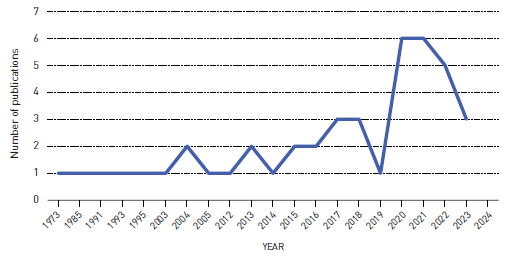
Although the performance of public defender’s offices has been a subject of investigation since the 1970s, 1980s and 1990s, albeit timidly, there has been an increase in scientific research since 2012, with at least one publication in all subsequent years and a peak in 2020 and 2021 (with six publications in each). This context highlights the current relevance of the topic.
As of August 2024, no publications on the performance of public defender’s offices has been identified. However, that does not mean that there was no research on these institution; it only indicates that the research available was not linked to this specific object of study. Graph 1 shows the evolution of the number of publications on the performance of public defender’s offices.

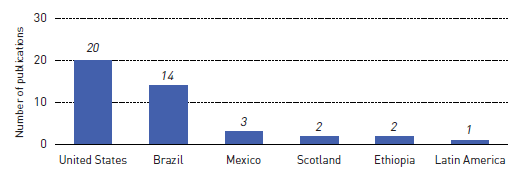
There is an emphasis in our results on publications on the performance of public defender’s offices in the United States and Brazil, which account for approximately half and one-third of the studies, respectively. In addition, to a lesser extent, there exist studies in Mexico (Aguiar-Aguilar, 2021; Fix-Fierro; Suárez-Ávila, 2015; Juárez Ortiz, 2019), Scotland (Goriely, 2003; Tata et al., 2004), Ethiopia (Gurmessa, 2018; Tura, 2013) and a comparative study of Latin American countries (Buta, 2021). This result does not mean that there are no publications on public defender’s offices in countries other than these, but only that we did not find studies meeting the adopted criteria. Graph 2 shows the number of publications according to country.

Additionally, we found publications across 37 different journals. Five journals contained two articles each, while the remainder presented only one publication. The journals that most address the topic are linked precisely to the countries in which there were more studies found: the United States and Brazil. Table 2 shows the number and years of publications in the journals that most discuss the topic.
Review of the studies allowed for the systematization of themes that indicate related factors and dimensions of the performance of public defender’s offices. We present the analyses and discussions of the results below. The research uses the expression “dimension” to indicate themes representative of the performance of public defender’s offices. In addition, the term “indicator” refers to the elements of performance measurement. Finally, we use the expression “related factors” as issues that potentially affect performance.
3. Results
3.1. Defining the Performance of Public Defender’s Offices
According to the results identified in the literature, the performance of public defender’s offices is a multidimensional theme, including the quantity of services provided, the quality of services provided and the political impact of their actions.
In general, the performance of public defender’s offices can be understood as the ability to fulfill their functions efficiently, providing quality services to users (Buta; Gomes; Lima, 2020; Vieira, 2021). The focus of the performance of public defender’s offices, therefore, is centered on attention and deliveries to service users, considering the institutions’ mission.
Due to its multidimensional nature, measuring the performance of public defender’s offices offers challenges, including a lack of standardization of indicators, difficulty in collecting accurate data and the need to consider regional and institutional specificities.
To assess the performance of public defender’s offices, it is important to consider the ongoing training of public servants, as well as the strategic allocation of public defenders. Furthermore, implementation of management practices is relevant and needs to be considered from the perspective of institutional autonomy, highlighting transparency and connection to the mission, vision and values of public defender’s offices (Buta; Teixeira; Fernandes, 2022; Faustino; Batitucci; Cruz, 2023; Nóbrega, 2023; Vidal, 2013).
Among the research identified, the proposal for a performance index for the Brazilian Federal Public Defender’s Office (DPU) stands out. It considers, as indicators of institutional performance, the number of cases, the number of services, success rate, access, quality of service, congestion, processing time, extrajudicial proceedings and time in service units (Buta; Gomes; Lima, 2020).
The number of cases category encompasses the number of existing judicial procedures, while the number of services provided is linked to the number of users served. The success category is related to the outcome of users’ demands. In turn, access corresponds to access to justice made possible by public defender’s offices. The quality of service represents the satisfaction of those assisted with the service (Buta; Gomes; Lima, 2020).
The congestion and processing time categories refer to the number of cases in the DPU and the duration of cases. In parallel, extrajudicial action refers to the services of public defender’s offices performed outside the jurisdictional sphere. Finally, the time in service units includes the user’s waiting time and the duration of the service (Buta; Gomes; Lima, 2020).
In addition, theoretical research identified the following dimensions of performance of Brazilian public defender’s offices: efficiency, speed, effectiveness, quality, independence and access (Vieira, 2021).
Efficiency is linked to productivity and can be measured by the number of judicial and extrajudicial proceedings. Speed represents the duration of the process, considering the time between receiving the demand and taking action. Effectiveness is linked to the trust category and addresses the perceptions of users and participants in the justice system (Vieira, 2021).
In turn, quality represents the merit of demonstrations and success in achieving the desired result. Independence means institutional autonomy and is related to allocation of public resources and interaction with government agencies. Finally, access represents the scope of the action and considers the number of public servants and the number of services provided (Vieira, 2021).
However, the two studies mentioned (Buta; Gomes; Lima, 2020; Vieira, 2021) are related to the specific Brazilian reality (the former refers to the Brazilian Federal Public Defender’s Office and the latter relates to the State, District, and Federal Public Defender’s Offices of Brazil), which may not correspond to the reality of public defender’s offices in other countries. Thus, it is important to consider a global context to define the dimensions of the performance of these institutions.
This literature review aims to define dimensions, indicators, and performance factors of public defender’s offices in any national context, because the dimensions refer to aspects that broadly relate to legal assistance, such as user satisfaction and productivity. The spatial scope, therefore, goes beyond the Brazilian context by including research on public defender offices at a global level.
Nevertheless, it is important to emphasize that the general research proposal should be analyzed with caution, particularly given the specificities surrounding public defender’s offices in different countries. Even within a single country, divergences may exist among the various national public defender institutions and the operations of their distinct areas of practice.
In Brazil, for instance, the Federal Public Defender’s Office addresses specific matters, such as social security issues, whereas the State and District Public Defender’s Offices are responsible for other domains, including domestic violence and inheritance law.
Moreover, State and District Public Defender’s Offices themselves differ from one another, especially with regard to their institutional structures and challenges. In terms of staffing, Brazil’s 2024 National Public Defender’s Office Survey indicated that the Public Defender’s Office of the State of Rio de Janeiro, established in 1954, has 772 public defenders, whereas the Public Defender’s Office of the State of Amapá, established in 2019, has 56 public defenders (Esteves et al., 2024). These disparities influence both the perception and the assessment of institutional performance.
The Public Defender’s Office of the State of Amazonas, for example, faces significant challenges in ensuring access to justice for riverside communities, which can only be reached via river transport, given that the population’s access is limited to transportation by boat. This reality is not necessarily applicable to other analogous institutions, such as the Public Defender’s Office of the Federal District or that of the State of Goiás.
Thus, an analysis must be conducted to assess the compatibility between the performance criteria identified in the literature review and the specific context of the public defender’s office under investigation, with the aim of adapting any proposed measurement criteria to the organization’s operations.
Defining and measuring performance in public defender’s offices is essential for improving the services provided and ensuring access to justice for vulnerable populations. In the next section, we present reflections on performance dimensions of public defender’s offices.
3.2. Performance Dimensions of Public Defender’s Offices
After conceptualizing the performance of public defender’s offices, the literature review identified two dimensions related to this theoretical construct, which we present together with the theoretical reference basis in Table 3.
Regarding the “production” dimension, discussions began in the 1970s, with an initial focus on the number of solutions proposed and work performed. This dimension continues to be discussed in the literature, with the inclusion of new criteria, such as time, effort and success rate.
Productivity indicators refers to cases under the responsability of public defenders (Buta; Gomes; Lima, 2020; Vidal, 2013; Worden, 1991). More than the number of cases under the responsibility of public defenders (demand), one must analyze the number of motions filed on behalf of the user, the time spent to resolve issues, the effort in developing cases (Aguiar-Aguilar, 2021; Worden, 1991) and the number of legal counseling services provided to users (Buta; Gomes; Lima, 2020; Vidal, 2014).
It is possible that a single case handle by a public defender may require several procedural motions and various legal consultations. For example, a child support lawsuit may require an initial petition, closing arguments, and appeal, in addition to several in-person or virtual consultations to clarify the user’s legal questions.
It is important, however, to consider that excessive caseload, with more cases directed to defenders than would be appropriate, is a negative aspect that impairs the performance of the work carried out, including in relation to tasks that go beyond usual activities, such as administrative management of staff and service optimization through the implementation of new ideas or technologies, among other tasks not directly related to legal aid (Vidal, 2013; Welch, 2004). Thus, one must pay attention to this quantitative aspect (Jaffe, 2018), especially to ensure a reasonable number of cases under the responsibility of the public defender (Aguiar-Aguilar, 2021; Campbell; Henderson, 2022).
It is necessary to measure production based on the work developed by the entire team of a public defender’s office, including defenders and collaborators in general. Furthermore, depending on a public defender’s office functions, it is necessary to consider judicial and extrajudicial actions (Alves Silva, 2017; Buta; Gomes; Lima, 2020; Faustino; Batitucci; Cruz, 2023; Vidal, 2014), individual and collective work (Alves Silva, 2017; Buta; Gomes; Lima, 2020; Vianna; Burgos, 2005) and national and international actions (Alves Silva, 2017), as is the case of the Brazilian Public Defender’s Office, which encompasses all these aspects.
The diverse activities of the Brazilian Public Defender’s Office may be included within the overarching objective of promoting the fundamental rights of the most vulnerable segments of the population, whether through individual or collective action, in judicial, extrajudicial or international contexts (Bastos, 2023). The aim, therefore, is the protection of the population’s human rights and the promotion of access to justice (Braga; Liberato, 2021).
Analyzing the number of complaints and services, as well as the time and effort dedicated to resolving them, is important to understand the performance of the public defender’s office, especially when considering that this institution is responsible for providing services to a significant number of individuals. In addition, time is an important criterion, whether for analyzing a case or for making the necessary referrals, which is linked to the speed of the measures taken (Buta; Gomes; Lima, 2020; Vidal, 2013).
In addition, input indicators (qualitative aspect), which consider the substance of the decision and how favorable it was, stand out (Aguiar-Aguilar, 2021; Buta; Gomes; Lima, 2020; Worden, 1991), even if there is no complete success of the claim presented, but partial gains or less unfavorable situations (Sharma; Stolzenberg; D’Alessio, 2022; Zane; Singer; Welsh, 2021). In the reality of public defender’s offices, obtaining a partially favorable result such as the reduction of a criminal penalty, even if there is no acquittal, constitute success, in some way, especially when it is a case in which a complete victory is impossible or difficult to achieve. In this sense, not only the result is considered, but also the strategies used and the paths taken to achieve the objective and the user’s interests (Kocivar et al., 1973).
Considering the strategic path used - and not only the results - is important to analyze the performance of public defender’s offices (Davies; Worden, 2017), especially when considering that the cases under the responsibility of the institution are not chosen but rather received due to the need for institutional action resulting from the vulnerability of the user. There is no selection of cases with the greatest chance of sucess.
In summary, based on previous studies that dealt with the “production” dimension, the performance of public defender’s offices can be defined as the number of cases analyzed, statements prepared and services provided, considering the time spent, the outcome of the case and the number of professionals involved in the work.
Regarding the “user satisfaction” dimension, literature indicates that the first publication appeared in the 1970s, with an increase in the number of discussions in the last ten years (with at least one publication per year). Although the discussions began a considerable time ago, this dimension has been consolidated more recently. User satisfaction is clearly important because it assesses the degree of satisfaction with the services provided, considering that public defender’s offices work to protect the rights of vulnerable populations. Thus, feedback and opinions from users of these institutions’ services are important.
The perception of quality in the provision of public services varies according to users’ expectations and personal experiences (Butkus et al., 2023). Thus, improving the provision of services in the public sector involves identifying users’ desires and needs and improving their satisfaction with the services received (Nor et al., 2022), notably when considering the uniqueness of public organizations and the importance of the user’s perspective (Witesman; Silvia; Child, 2022).
The user-centered focus allows assessments and solutions to be built based on opinions of the service recipients, who are aware of their needs and difficulties (Hagan, 2019; Toohey et al., 2019).
It is important to establish dialogues with groups in vulnerable situations, so that social participation and the perception of users regarding the public defender’s action plan support the confirmation and reformulation of institutional priorities (Vieira; Radomysler, 2015).
Thus, user satisfaction is important for institutional performance (Buta; Gomes; Lima, 2020; Moore et al., 2020; Tata et al., 2004; Vidal, 2013), including the perception that the user is being heard (Kocivar et al., 1973) and that the public defender analyzes the specific case, uses time efficiently and alerts the user about possible outcomes (Campbell et al., 2015).
It is important to emphasize that, in a context of case overload, as well as constant pressure and stress (Joe, 2020; Ogletree, 1995; Sharma; Stolzenberg; D’Alessio, 2022), the full availability of the public defender does not always meet the user’s expectations (Tata et al., 2004).
Thus, it is important to enable regular communication between the public defender and the user, considering mode, accessibility and empathy (Aguiar-Aguilar, 2021; Moore et al., 2020). Satisfaction is also related to the fact that the user understands the legal and procedural terms and how the justice system works (Tata et al., 2004; Tura, 2013).
Research on people-centered legal services is a promising topic for study in the field of access to justice, especially due to the dialogue between administrators and users, which allows for planning and improvements in the provision of public services (Nóbrega, 2023; Torlig; Gomes; Lunardi, 2023). Specifically in relation to public defender’s offices, it is relevant to identify the user’s point of view regarding the provision of legal assistance (Buta; Silva Filho, 2016).
Institutional initiatives must take into account barriers to access to justice, which include financial, cultural, racial, geographic and gender issues, among others that affect vulnerable populations (Persch; Leal; Darolt Júnior, 2023; Torlig; Gomes; Lunardi, 2023).
In short, the user satisfaction dimension considers that performance of public defender’s offices is conceptualized as the level of satisfaction of the population served by these institutions in terms of availability, ease of access and communication, considering the expectations and needs of users and facilitation of access to justice.
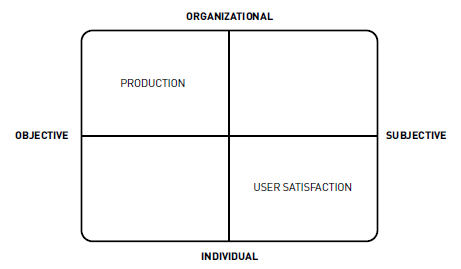
Analyzing the results of the literature review, it is possible to systematize the performance dimensions of public defender’s offices into two groups: the first focused on the organizational perspective, with dimensions that are linked to the performance of public defender’s offices as organizations; and the second focused on the individual perspective, with dimensions related to the activity of public defenders and staff.
Regarding the organizational perspective, the related measures must be implemented within the scope of public defender’s offices, encompassing the “production” dimension. Regarding the individual perspective, the measures are directed at the professionals who constitute public defender’s offices, encompassing the “user satisfaction” dimension. On the one hand, the production dimension has an institutional focus, precisely because it requires analyses at the organizational level of public defender’s offices. On the other hand, the user satisfaction dimension is focused on the individual, since it relates to public defender’s office staff and the users of the institution.
Furthermore, it is possible to categorize the dimensions into objective and subjective perspectives. The objective dimension represents results achieved through measurements, while the subjective dimension reflects individuals’ perception of the outputs developed. In this sense, the “production” dimension is included in the objective category, given its focus on the decisions drafted and services provided. The “user satisfaction” dimension reflects the subjective perspective, as it considers users’ understanding and opinions.
The “user satisfaction” dimension was categorized from a subjective perspective, intended to reflect users’ perceptions. The existence of satisfaction and trust scales is not unknown, which, despite presenting measurements of objective criteria, are linked to the perception rather than the measurement of the result itself. Figure 2 highlights the dimensions identified according to organizational, individual, objective and subjective elements.
The “production” dimension reflects the indicators “number of requests and services”; “time to analyze the case and take action”; and “number of actions whose results meet the request presented”. The former indicator includes actions and support at the individual, collective, judicial, extrajudicial, national and international levels. The latter can be measured in terms of days/hours, to enable the analysis of the time elapsed between receipt of the request and the initiation of action. The third indicator corresponds to the success of the public defender’s office’s performance, reflecting total or partial success, as well as the rejection of the request.
In turn, the “user satisfaction” dimension encompasses the indicators “number of channels available for user service”; “number of user complaints”; and “number of days between user request and response from the public defender’s office”. The first indicator covers the accessibility of public defender services, which includes in-person and remote services (telephone or messaging apps) and considers potential user obstacles (digital exclusion, visual/hearing impairment, among other issues). The second highlights the quality of the information provided by public defender’s offices, reflected in the number of complaints filed, especially to the respective ombudsman offices, bodies formally responsible for receiving user complaints. The third indicator represents the regularity of communication between the user and the public defender’s office, in particular, those communications involving information provided to the user about their case. Table 4 shows the relationship between these dimensions and their respective performance indicators.
The measurement indicators enable detailed analyses for each of the dimensions, encompassing proposals identified in the literature review that contribute to the provision of legal assistance. The model presented, therefore, provides support for identifying the performance of public defender’s offices and alternatives for measuring it, without excluding additional details for each indicator.
The quantitative and qualitative dimensions of public defenders’ performance are relevant, as they allow for the assessment of both the end users’ perception of legal aid services and the internal productivity of public defender’s office staff. In turn, performance indicators break down these dimensions to enable more detailed analyses of public defense service delivery - through either quantitative or qualitative research.
In the next section, we present considerations on the factors associated with the performance of public defender’s offices at the individual and institutional levels.
3.3. Factors associated with the Performance of Public Defender’s Offices and Public Defenders
The reviewed publications highlight the main factors associated with the performance of public defenders. These factors identified were: experience/training of public defenders (Aguiar-Aguilar, 2021; Ang; Blajer de la Garza, 2021; Eagly et al., 2022), guarantee of institutional structure (Gottlieb; Arnold, 2021; Kocivar et al., 1973), salary of public defenders and employees (Anderson; Heaton, 2011; Changhai; Sonin, 2017; Fix-Fierro; Suárez-Ávila, 2018; Roach, 2017), autonomy of the institution (Anderson; Heaton, 2011; Buta; Teixeira; Fernandes, 2022; Fix-Fierro; Suárez-Ávila, 2015; Joe, 2020; Juárez Ortiz, 2019; Kocivar et al., 1973; Ogletree, 1995; Snellenburg, 1985), workload (Aguiar-Aguilar, 2021; Buta; Gomes; Lima, 2020; Jaffe, 2018; Vidal, 2014; Welch, 2004) and support staff (Gottlieb; Arnold, 2021; Kocivar et al., 1973).
Regarding training, the literature points out the need for public defenders to stay up-to-date in their knowledge, as well as ongoing training and improvement to perform their duties (Ang; Garza, 2021). Thus, regular training of public defenders is important for professional improvement, which generates a positive impact on institutional activities (Aguiar-Aguilar, 2021; Ang; Blajer de la Garza, 2021; Buta; Teixeira; Fernandes, 2022; Buta; Guimarães; Akutsu, 2020; Changhai; Sonin, 2017; Eagly et al., 2022; Fix-Fierro; Suárez-Ávila, 2015, 2018; Kocivar et al., 1973; Ogletree, 1995; Welch, 2004).
In turn, at the institutional level, conditions of physical infrastructure are an important factor in the performance of defenders and public defender’s offices (Kocivar et al., 1973), especially in relation to the service space and offices (Fix-Fierro; Suárez-Ávila, 2015; Vidal, 2014). Additionally, the development of action protocols (Eagly et al., 2022) and technological systems capable of facilitating the work developed by public defenders can assist in the activities carried out (Vidal, 2014), including the collection of information, which helps to monitor work and analyze risks, errors, and results (Metzger; Ferguson, 2015).
Salary is another factor that impacts the performance of public defender’s offices, especially considering that low pay is not compatible with the complexity and difficulty of the work (Anderson; Heaton, 2011; Changhai; Sonin, 2017; Davies; Worden, 2017; Roach, 2017). Furthermore, it is necessary to consider the comparison of public defenders’ remuneration with earnings in other, similar public careers - especially in relation to prosecutors (Fix-Fierro; Suárez-Ávila, 2018) and judges (Huang; Chen; Lin, 2010).
The literature also indicates a positive association between performance and institutional autonomy. Some studies emphasize that it is important for public defender’s offices to have functional autonomy from other public institutions (Juárez Ortiz, 2019; Snellenburg, 1985), especially the Legislative, Executive and Judicial Branches, to avoid political interference in the institution’s work (Anderson; Heaton, 2011; Buta; Teixeira; Fernandes, 2022; Joe, 2020; Kocivar et al., 1973; Ogletree, 1995). Such autonomy is especially relevant when the public defender’s office has the power to litigate against the State, which further reinforces the need to protect the institution against political repercussions.
Some studies draw attention to the need for caution regarding the autonomy of public defender’s offices, since this prerogative does not necessarily lead to a maximization of performance (Buta; Gomes; Lima, 2020). This prerogative can make supervision by other institutions and society difficult, a situation that may enable priorities not compatible with improving legal assistance (Buta; Teixeira; Fernandes, 2022; Cunha, 2020).
Therefore, it is important to monitor the activities of public defender’s offices, precisely in order to ensure accountability (Buta; Teixeira; Fernandes, 2022; Worden, 1991). As with the public prosecutor’s offices, public defender’s offices must be responsible for managing their resources and maintaining direct dialogue with the Legislative Branch to obtain the budgetary resources necessary to provide public services (Patton, 2017).
Greater autonomy of public defender’s offices may create distance between this institution and political representatives responsible for distributing public resources, since their dependence would tend to decrease (Buta; Teixeira; Fernandes, 2022). Autonomy, therefore, must ensure the adequate performance of public defender’s offices and, at the same time, guarantee that there is sufficient budget allocation for their activities (Buta; Teixeira; Fernandes, 2022), without resulting in institutional isolation (Buta, 2021; Buta; Guimarães; Akutsu, 2020).
Some studies indicate that it would be advisable to have a fixed budgetary percentage to cover the costs of public defender’s offices (Patton, 2017), since the existence of sufficient budgetary allocations is essential for the performance of institutional activities (Aguiar-Aguilar, 2021; Davies; Worden, 2017; Eagly et al., 2022; Jaffe, 2018; Joe, 2020; Ogletree, 1995).
Dispute over budget is a complex phenomenon that also affects financial contributions to other organizations, making the situation even more challenging. It is important, however, to consider the medium- and long-term cost-benefit of investing in public defender’s offices, especially when considering the reduction of State expenses, such as in cases of unduly arrested individuals who are then released (Goriely, 2003; Gottlieb; Arnold, 2021; Jaffe, 2018).
Autonomy, therefore, is an important theoretical construct in the performance of public defender’s offices, as it represents a condition for the work carried out by these institutions in terms of freedom of activities.
In turn, cooperation with other institutions, including those outside the justice system, is a favorable factor for the performance of public defender’s offices, since it allows the institution to occupy spaces, encourage education on rights and promote human rights, and establish partnerships with collectives, social movements, universities and other public or private organizations (Azhar-Graham; Gallo, 2021; Buta; Guimarães; Akutsu, 2020; Carvalho; Rocha, 2020; Galeb et al., 2022; Gurmessa, 2018; Welch, 2004).
Thus, collaboration with different actors expands the scope of public defender’s office activities and supports adaptation to the complexity required in certain situations, such as when working with experts and technicians on specific topics (Aguiar-Aguilar, 2021; Eagly et al., 2022; Fix-Fierro; Suárez-Ávila, 2015; Joe, 2016; Welch, 2004).
Regular work among public defenders, judges and prosecutors helps consolidate a relationship of trust and, consequently, creates a cooperative environment. Despite this, care is necessary to ensure that close relationships between the different actors do not undermine the institutional functions of public defender’s offices by blurring the private and public spheres or creating family ties (Garau; Babo, 2022).
Each of these professions has specific duties that may present conflicting interests. For example, the objectives of the public defender’s office may diverge from those of the public prosecutor’s office. It is also possible that motions filed by the public defender be denied. In this sense, any personal relationships among the professionals involved may interfere with their public duties.
Furthermore, among the factors related to the performance of public defender’s offices highlighted in the literature review, support staff and workload are components in Brazil’s 2024 National Public Defender’s Office Survey (Esteves et al., 2024), corresponding, respectively, to the categories of staff structure and functional performance. In Brazil, both factors appear to be important in influencing the performance of public defender’s offices.
In the Brazilian context, regarding support staff, 81.8% of public defenders consider the support personnel structure to be inadequate or entirely insufficient for carrying out institutional activities. This percentage has not shown statistically significant variation when compared to public defenders’ perceptions since 2014 (Esteves et al., 2024). A study conducted by the Brazilian Ministry of Justice indicated that, in 2015, 79.8% of state and district public defenders perceived the staffing structure of public defender’s offices as inadequate (Ministério da Justiça, 2015).
Moreover, workload is also a significant factor in the Brazilian context. In 2015, 83.3% of public defenders in Brazil reported that the amount of work under the responsibility of public defender’s offices was excessive (Ministério da Justiça, 2015).
The number of services provided by Brazilian public defender’s offices has shown continuous growth, except for 2020, during the COVID-19 pandemic. In 2023, Brazilian public defender’s offices reached a historic milestone of 24,635,990 services rendered, representing a 12.6% increase compared to the figure recorded in 2022 and a 594.5% increase relative to the volume reported in 2003. An increase was also observed in the number of motions (17,888,963 in 2023) and in the number of new lawsuits (2,341,090 in 2023), reflecting a significant workload.
Regarding workload, some studies indicate that there must be a reasonable number of demands directed at the public defender, especially so that activities are carried out carefully and thoroughly (Aguiar-Aguilar, 2021; Jaffe, 2018; Sharma; Stolzenberg; D’Alessio, 2022). This situation is sensitive given the usual overload of activities linked to the services provided by public defenders, which affects the fulfillment of the public defender’s duties (Joe, 2020; Ogletree, 1995).
In the Brazilian context, the multiplicity of functions of public defender’s offices (individual, collective, judicial, extrajudicial, national and international) and the different areas of service provision (criminal, civil, administrative, health, among others) intensify the workload of defenders, since there is a wide range of duties to be performed by them. The plurality of public defender’s office duties is reflected in Brazil’s 2024 National Public Defender’s Office Survey, in which the category of functional performance encompasses the criteria of services provided, cases generated, official letters issued, requests issued, procedural statements, collective actions filed, out-of-court settlements made, actions before international bodies for the protection of human rights, calls received via call center and services provided by the Ombudsman’s Office (Esteves et al., 2024).
It is also important to highlight that, following Constitutional Amendment 45/2004, state public defender’s offices acquired functional and administrative autonomy, as well as the authority to initiate their own budget proposals (Silva; Flauzina, 2021). Constitutional Amendment 74/2013 extended these provisions to district and federal public defender’s offices. In this way, the new institutional profile conceived for the public defender’s office ensured prerogatives similar to those granted to the judiciary and the public prosecutor’s office, such as security of tenure (Buta; Guimarães; Akutsu, 2020). Regarding the support team, the adequacy of the personnel structure is relevant, especially regarding the number of public defenders and employees. Thus, despite the central role of public defenders in the work of public defender’s offices, the existence of professionals who support implementation of activities is important for the work to be carried out effectively (Gottlieb; Arnold, 2021; Kocivar et al., 1973).
The support team must include legal professionals and collaborators from other areas, such as social workers (Gottlieb; Arnold, 2021). Table 5 summarizes the findings in the reviewed literature and shows the factors associated with the performance of public defenders (individual level) and public defender’s offices (organizational level).
The literature identifies different factors related to the performance of public defenders, which involve personal aspects of the professional, as well as issues linked to the profession, such as workload, salary and technical support. In addition, the review identified institutional elements that affect the performance of public defender’s offices, such as the organizational structure, independence of action and collaborative work with other institutions.
Conclusion
Public defender’s offices are institutions that provide legal aid for vulnerable populations. The social and legal relevance of public defender’s offices demands improvement of their activities, notably to provide high-quality public service that benefits vulnerable populations.
The existence of public defender’s offices cannot, therefore, be merely formal to justify, in an illusory way, the guarantee of defense of the rights of vulnerable populations. It is necessary to guarantee the structuring and improvement of an institution that can perform its functions adequately, ensuring continuous improvement in performance.
This paper systematizes the literature related to the research object and suggests categorizationing of two dimensions of performance of public defender’s offices, grouped into institutional and personal focuses, which allow for further investigation into improving service provision.
The production dimension refers to productivity variables. Number of motions, legal assistance and time to analyze the case are important indicators of performance of public defender’s offices. The user satisfaction dimension considers whether users are satisfied with the services provided. The number of user complaints and communications is relevant to improving people-centered legal services.
The research presents theoretical and social contributions to advance the identified discussions, as it provides ways to identify and measure performance, which has the potential to improve legal aid. These contributions can provide support for practical changes in public defender’s office activity.
The literature on the performance of public defender’s offices presents discussions related to the identified dimensions, but it continues to lack complementary studies to advance scholarship in the field and to deepen the discussions.
Despite having been a topic of discussion for decades (with greater scientific production in the last ten years), further research is required, especially in countries other than the United States, which accounts for half of the studies identified. There are research gaps, for example, in investigating the performance of public defender’s offices in areas other than criminal law. Furthermore, specific research in different areas of practice should be considered, since public defender’s offices have a wide range of institutional functions. For example, indicators that work for the civil area may not apply to collective litigation, since there exist distinct particularities to those fields. As such, specific analysis for each type of activity or area is required.
As a research agenda, regarding the “production” dimension, future studies can offer performance indicators for the number of cases, statements and services, considering the time required to take action, through triangulation of data from the public defender’s offices and related organizations. Future research can also analyze whether the existence of centers specialized in certain issues makes difference in institutional performance (for example, centers for domestic violence against women, the prison system and racial equality).
Finally, regarding the “user satisfaction” dimension, it is important to produce research on metrics to measure user satisfaction, especially regarding the population’s perception of the legal aid provided by public defender’s offices. These studies should identify the needs and desires of users, as well as barriers to access to justice.
REFERENCES
-
AGUIAR-AGUILAR, Azul A. Gaining Access to Justice: A Subnational Study of Public Defender Offices in Mexico. Mexican Law Review, Mexico City, v. 13, n. 2, p. 35-62, 2021. DOI: https://doi.org/10.22201/iij.24485306e.2021.2.15089
» https://doi.org/https://doi.org/10.22201/iij.24485306e.2021.2.15089 -
ABUALOUSH, Shadi et al The Role of Knowledge Management Process and Intellectual Capital as Intermediary Variables Between Knowledge Management Infrastructure and Organization Performance. Interdisciplinary Journal of Information, Knowledge, and Management, Santa Rosa (California), v. 13, p. 279-309, 2018. DOI: https://doi.org/10.28945/4088
» https://doi.org/https://doi.org/10.28945/4088 -
ALVES SILVA, Franklyn Roger. Legitimação não tradicional da ação penal - a tutela de bens jurídicos por outras instituições públicas. Revista Brasileira de Direito Processual Penal, Porto Alegre, v. 3, n. 1, p. 367-404, Mar. 11th, 2017. DOI: https://doi.org/10.22197/rbdpp.v3i1.27
» https://doi.org/https://doi.org/10.22197/rbdpp.v3i1.27 -
ANDERSEN, Lotte Bøgh; BOESEN, Andreas; PEDERSEN, Lene Holm. Performance in Public Organizations: Clarifying the Conceptual Space. Public Administration Review, v. 76, n. 6, p. 852-862, Nov. 2016. DOI: https://doi.org/10.1111/puar.12578
» https://doi.org/https://doi.org/10.1111/puar.12578 -
ANDERSON, James M.; HEATON, Paul. How Much Difference Does the Lawyer Make? The Effect of Defense Counsel on Murder Case Outcomes. SSRN Electronic Journal, Jul 13th, 2011. DOI: https://doi.org/10.2139/ssrn.1884379
» https://doi.org/https://doi.org/10.2139/ssrn.1884379 -
ANDREWS, Rhys; BOYNE, George; MOSTAFA, Ahmed Mohammed Sayed. When Bureaucracy Matters for Organizational Performance: Exploring the Benefits of Administrative Intensity in Big and Complex Organizations. Public Administration, [s.l.], v. 95, n. 1, p. 115-139, Mar. 2017. DOI: https://doi.org/10.1111/padm.12305
» https://doi.org/https://doi.org/10.1111/padm.12305 -
ANG, Milena; BLAJER DE LA GARZA, Yuna. Vulnerability, Due Process, and Reform in Modern Mexico. Constitutional Political Economy, [s.l.], v. 32, n. 3, p. 346-375, Sept. 2021. DOI: https://doi.org/10.1007/s10602-020-09305-7
» https://doi.org/https://doi.org/10.1007/s10602-020-09305-7 -
ASSOCIAÇÃO DOS MAGISTRADOS BRASILEIROS (AMB); FUNDAÇÃO GETULIO VARGAS (FGV); INSTITUTO DE PESQUISAS SOCIAIS, POLÍTICAS E ECONÔMICAS (IPESPE). Estudo da imagem do Judiciário brasileiro Rio de Janeiro: AMB/FGV/IPESPE, 2019. Available at: https://justica.fgv.br/sites/default/files/2024-12/estudo_da_imagem_do_judiciario_brasileiro.pdf Accessed on: 31 Jul. 2025.
» https://justica.fgv.br/sites/default/files/2024-12/estudo_da_imagem_do_judiciario_brasileiro.pdf -
AZHAR-GRAHAM, Amina; GALLO, Carina. Reimagining Public Defense Advocacy in Times of Covid-19: Lessons from a Task Force. Current Issues in Criminal Justice, [s.l.], v. 33, n. 1, p. 126-130, 2021. DOI: https://doi.org/10.1080/10345329.2020.1840914
» https://doi.org/https://doi.org/10.1080/10345329.2020.1840914 - BASTOS, Alberto Luiz. Proteger, transformar, emancipar: os três papéis da defensoria pública no direito brasileiro. Revista da Defensoria Pública RS, Porto Alegre, v. 1, n. 32, p. 100-121, 2023.
-
BRAGA, Lívia Martins Nunes; LIBERATO, Gustavo Tavares Cavalcanti. Defensoria Pública como garantia institucional dos direitos fundamentais de pessoas em situação de vulnerabilidade. Revista da Defensoria Pública da União, Brasília, n. 15, p. 115-134, 14 Jun. 2021. DOI: https://doi.org/10.46901/revistadadpu.i15. p115-134
» https://doi.org/https://doi.org/10.46901/revistadadpu.i15. p115-134 - BRASIL. Ministério da Justiça. IV diagnóstico da Defensoria Pública no Brasil Brasília, DF: Ministério da Justiça, 2015.
-
BUTA, Bernardo Oliveira. The Autonomy of Public Defender’s Offices: A Systematic Comparison between Latin American Countries. International Journal of Public Sector Management, v. 34, n. 5, p. 586-601, 28 Jun. 2021. DOI: https://doi.org/10.1108/IJPSM-09-2020-0241
» https://doi.org/https://doi.org/10.1108/IJPSM-09-2020-0241 -
BUTA, Bernardo Oliveira; GOMES, Adalmir de Oliveira; LIMA, Carolina Menezes. Proposta de um índice de desempenho para a Defensoria Pública da União. Revista Direito GV, São Paulo, v. 16, n. 2, e1959, 2020. DOI: https://doi.org/10.1590/2317-6172201959
» https://doi.org/https://doi.org/10.1590/2317-6172201959 -
BUTA, Bernardo Oliveira; GUIMARÃES, Tomas Aquino; AKUTSU, Luiz. Governance in the Brazilian Federal Public Defender’s Office. International Journal for Court Administration, Williamsburg, v. 11, n. 1, p. 4, 21 Jan. 2020. DOI: https://doi.org/10.36745/ijca.273
» https://doi.org/https://doi.org/10.36745/ijca.273 -
BUTA, Bernardo Oliveira; SILVA FILHO, Antonio Isidro. Assistência jurídica gratuita: serviços da Defensoria Pública da União na ótica da abordagem integradora da inovação. Revista do Serviço Público, Brasília, v. 67, n. 3, p. 377-406, 30 Sept. 2016. DOI: https://doi.org/10.21874/rsp.v67i3.1040
» https://doi.org/https://doi.org/10.21874/rsp.v67i3.1040 -
BUTA, Bernardo Oliveira; TEIXEIRA, Marco Antonio Carvalho; FERNANDES, Antonio Sergio Araujo. Quando a autonomia é necessária para o desempenho: defensoria pública do Brasil. Revista de Administração Pública, Rio de Janeiro, v. 56, n. 4, p. 488-507, Jul. 2022. DOI: https://doi.org/10.1590/0034-761220220047
» https://doi.org/https://doi.org/10.1590/0034-761220220047 -
BUTKUS, Mindaugas et al Measuring Quality Perception of Public Services: Customer-Oriented Approach. Engineering Management in Production and Services, Bialystok, v. 15, n. 2, p. 96-116, 1 Jun. 2023. DOI: https://doi.org/10.2478/emj-2023-0015
» https://doi.org/https://doi.org/10.2478/emj-2023-0015 -
CAMPBELL, Christopher M.; HENDERSON, Kelsey S. Bridging the Gap between Clients and Public Defenders: Introducing a Structured Shadow Method to Examine Attorney Communication. Justice System Journal, [s.l.], v. 43, n. 1, p. 26-52, 2 Jan. 2022. DOI: https://doi.org/10.1080/0098261X.2021.2011494
» https://doi.org/https://doi.org/10.1080/0098261X.2021.2011494 -
CAMPBELL, Christopher et al Unnoticed, Untapped, and Underappreciated: Clients’ Perceptions of Their Public Defenders. Behavioral Sciences & the Law, [s.l.], v. 33, n. 6, p. 751-770, Nov. 2015. DOI: https://doi.org/10.1002/bsl.2182
» https://doi.org/https://doi.org/10.1002/bsl.2182 - CARVALHO, Anna Karoline Cavalcante; ROCHA, Renata Rodrigues de Castro. Análise da atuação da Defensoria Pública do Estado do Tocantins para a promoção da educação em direitos humanos. Revista Humanidades e Inovação, Palmas, v. 7, n. 19, p. 114-126, 15 Dec. 2020.
-
CHANGHAI, Long; SONIN, Vadim. The Criminal Legal Aid in China. Law Enforcement Review, Omsk, v. 1, n. 2, p. 175-183, 2017. DOI: https://doi.org/10.24147/2542-1514.2017.1(2).175-183
» https://doi.org/https://doi.org/10.24147/2542-1514.2017.1(2).175-183 -
CUNHA, Alexandre dos Santos. Public Defenders’ Offices in Brazil: Access to Justice, Courts, and Public Defenders. Indiana Journal of Global Legal Studies, Bloomington, v. 27, n. 1, 2020. DOI: https://doi.org/10.2979/indjglolegstu.27.1.0273
» https://doi.org/https://doi.org/10.2979/indjglolegstu.27.1.0273 -
DAVIES, Andrew Lucas Blaize; WORDEN, Alissa Pollitz. Local Governance and Redistributive Policy: Explaining Local Funding for Public Defense. Law & Society Review, Cambridge, v. 51, n. 2, p. 313-345, Jun. 2017. DOI: https://doi.org/10.1111/lasr.12266
» https://doi.org/https://doi.org/10.1111/lasr.12266 -
DENISI, Angelo; SMITH, Caitlin E. Performance Appraisal, Performance Management, and Firm-Level Performance: A Review, a Proposed Model, and New Directions for Future Research. Academy of Management Annals, Valhalla, v. 8, n. 1, p. 127-179, Jan. 2014. DOI: https://doi.org/10.5465/19416520.2014.873178
» https://doi.org/https://doi.org/10.5465/19416520.2014.873178 - EAGLY, Ingrid et al Restructuring Public Defense After Padilla. Stanford Law Review, Stanford, v. 74, n. 1, p. 1-86, Jan. 2022.
- ESTEVES, Diogo et al Pesquisa Nacional da Defensoria Pública 2024. Brasília, DF: Defensoria Pública da União, 2024.
-
FAUSTINO, Marcella Raphaella; BATITUCCI, Eduardo Cerqueira; CRUZ, Marcus Vinícius Gonçalves da. Defensorias públicas: caminhos e lacunas no acesso à justiça. Revista Direito GV, São Paulo, v. 19, e2314, 3 Apr. 2023. DOI: https://doi.org/10.1590/2317-6172202314
» https://doi.org/https://doi.org/10.1590/2317-6172202314 - FIX-FIERRO, Héctor; SUÁREZ-ÁVILA, Alberto Abad. El servicio profesional de carrera en la defensoría pública en México. Política y Gobierno, Mexico City, v. 25, n. 2, p. 301-338, 2018.
-
FIX-FIERRO, Héctor; SUÁREZ-ÁVILA, Alberto Abad. Hacia una defensa pública de calidad. El nuevo diseño institucional de las Defensorías Públicas en las entidades federativas de la República Mexicana. Revista Mexicana de Derecho Constitucional, [s.l.], n. 32, p. 157-200, Jan.-Jun. 2015. DOI: https://doi.org/10.1016/j.rmdc.2016.03.006
» https://doi.org/https://doi.org/10.1016/j.rmdc.2016.03.006 -
GALEB, Anna Carolina Murata et al O acesso à justiça de mulheres atingidas no caso Rio Doce. Revista Direito e Práxis, Rio de Janeiro, v. 13, n. 4, p. 2122-2157, Dez. 2022. DOI: https://doi.org/10.1590/2179-8966/2021/56303
» https://doi.org/https://doi.org/10.1590/2179-8966/2021/56303 -
GARAU, Marilha Gabriela Reverendo; BABO, Michelle Nascimento. O fazer judicial e as moralidades da defesa pública: o “procedimentalizar” e as relações com a “família judicial”. Dilemas: Revista de Estudos de Conflito e Controle Social, Rio de Janeiro, v. 15, n. 1, p. 201-223, 2022. DOI: https://doi.org/10.4322/dilemas.v15n1.34660
» https://doi.org/https://doi.org/10.4322/dilemas.v15n1.34660 -
GORIELY, Tamara. Evaluating the Scottish Public Defence Solicitors’ Office. Journal of Law and Society, Cardiff, v. 30, n. 1, p. 84-101, Mar. 2003. DOI: https://doi.org/10.1111/1467-6478.00247
» https://doi.org/https://doi.org/10.1111/1467-6478.00247 -
GOTTLIEB, Aaron; ARNOLD, Kelsey. The Effect of Public Defender and Support Staff Caseloads on Incarceration Outcomes for Felony Defendants. Journal of the Society for Social Work and Research, Chicago, v. 12, n. 3, p. 569-589, Sept. 2021. DOI: https://doi.org/10.1086/712924
» https://doi.org/https://doi.org/10.1086/712924 -
GUIMARAES, Tomas Aquino; GOMES, Adalmir Oliveira; GUARIDO FILHO, Edson Ronaldo. Administration of Justice: An Emerging Research Field. RAUSP Management Journal, São Paulo, v. 53, n. 3, p. 476-482, 9 Jul. 2018. DOI: https://doi.org/10.1108/RAUSP-04-2018-010
» https://doi.org/https://doi.org/10.1108/RAUSP-04-2018-010 -
GUIMARAES, Tomas Aquino; GUARIDO FILHO, Edson Ronaldo; LUZ, Bruno Batista de Carvalho. Courts as Organizations: Governance and Legitimacy. BAR - Brazilian Administration Review, Maringá, v. 17, n. 4, e200032, 2020. DOI: https://doi.org/10.1590/1807-7692bar2020200032
» https://doi.org/https://doi.org/10.1590/1807-7692bar2020200032 -
GURMESSA, Nurilign Mulugeta. The Right to Representation by Criminal Defense Counsel in Ethiopia: A Critical Analysis. Criminal Law Forum, [s.l.], v. 29, n. 3, p. 435-473, Sept. 2018. DOI: https://doi.org/10.1007/s10609-018-9349-8
» https://doi.org/https://doi.org/10.1007/s10609-018-9349-8 -
HAGAN, Margaret. Participatory Design for Innovation in Access to Justice. Daedalus, Cambridge, v. 148, n. 1, p. 120-127, Jan. 2019. DOI: https://doi.org/10.1162/DAED_a_00544
» https://doi.org/https://doi.org/10.1162/DAED_a_00544 -
HUANG, Kuo-Chang; CHEN, Kong-Pin; LIN, Chang-Ching. Does the Type of Criminal Defense Counsel Affect Case Outcomes? A Natural Experiment in Taiwan. International Review of Law and Economics, [s.l.], v. 30, n. 2, p. 113-127, Jun. 2010. DOI: https://doi.org/10.1016/j.irle.2009.09.005
» https://doi.org/https://doi.org/10.1016/j.irle.2009.09.005 -
JAFFE, Samantha. “It’s Not You, It’s Your Caseload”: Using Cronic to Solve Indigent Defense Underfunding. Michigan Law Review, Ann Arbor, v. 116, n. 8, p. 1465-1500, 2018. DOI: https://doi.org/10.36644/mlr.116.8.its.not
» https://doi.org/https://doi.org/10.36644/mlr.116.8.its.not - JOE, Irene Oritseweyinmi. Structuring the Public Defender. Iowa Law Review, v. 106, n. 1, p. 113-180, 15 Nov. 2020.
- JOE, Irene Oritseweyinmi. Systematizing Public Defender Rationing. Denver University Law Review, Denver, v. 93, n. 2, p. 389-429, Jan. 2016.
-
JUÁREZ ORTIZ, Guadalupe Irene. La impronta del ethos inquisitorial en la defensa especializada en adolescentes en el modelo acusatorio. Estudios Socio-Jurídicos, Bogotá, v. 21, n. 2, p. 51-72, 2019. DOI: https://doi.org/10.12804/revistas.urosario.edu.co/sociojuridicos/a.7834
» https://doi.org/https://doi.org/10.12804/revistas.urosario.edu.co/sociojuridicos/a.7834 - KOCIVAR, Carol et al The Right to Effective Counsel: A Case Study of the Denver Public Defender. Denver Law Review, Denver, v. 50, n. 1, p. 45-100, Jan. 1973.
-
LOTTA, Gabriela Spanguero. Avaliação de desempenho na área pública: perspectivas e propostas frente a dois casos práticos. Revista de Administração de Empresas (RAE), São Paulo, v. 1, n. 2, p. 1-12, Dec. 2002. DOI: https://doi.org/10.1590/s1676-56482002000200012
» https://doi.org/https://doi.org/10.1590/s1676-56482002000200012 - LUIZ LEONARDO, César Augusto; GARDINAL, Aline Buzete. O papel da defensoria pública como instrumento de efetivação do acesso à justiça aos vulneráveis. Revista Direito Público, Brasília, v. 17, n. 91, p. 143-165, 3 Mar. 2020.
-
MADEIRA, Lígia Mori. Institutionalisation, Reform and Independence of the Public Defender’s Office in Brazil. Brazilian Political Science Review, São Paulo, v. 8, n. 2, p. 48-69, Sept. 2014. DOI: https://doi.org/10.1590/1981-38212014000100011
» https://doi.org/https://doi.org/10.1590/1981-38212014000100011 -
METZGER, Pamela; FERGUSON, Andrew Guthrie. Defending Data. Southern California Law Review, Los Angeles, v. 88, n. 5, p.1057-1123, Jul. 2015. DOI: https://dx.doi.org/10.2139/ssrn.2279203
» https://doi.org/https://dx.doi.org/10.2139/ssrn.2279203 -
MOORE, Janet et al Attorney-Client Communication in Public Defense: A Qualitative Examination. Criminal Justice Policy Review, [s.l.], v. 31, n. 6, p. 908-938, Jul. 2020. DOI: https://doi.org/10.1177/0887403419861672
» https://doi.org/https://doi.org/10.1177/0887403419861672 -
MOREIRA, Thiago de Miranda Queiroz. Disputas institucionais e interesses corporativos no sistema de justiça: impasses na criação da defensoria pública nos estados. Dados, Rio de Janeiro, v. 62, n. 4, e20170071, 2019. DOI: https://doi.org/10.1590/001152582019196
» https://doi.org/https://doi.org/10.1590/001152582019196 -
NÓBREGA, Vitor. Propostas de melhorias pela gestão por processos ao atendimento de unidade da defensoria pública. Gestão.org, v. 21, n. 1, p. 1-24, 3 Aug. 2023. DOI: https://doi.org/10.51359/1679-1827.2023.247411
» https://doi.org/https://doi.org/10.51359/1679-1827.2023.247411 -
NOR, Rojikin et al Organizational Commitment and Professionalism to Determine Public Satisfaction through Good Governance, Public Service Quality, and Public Empowerment. International Review on Public and Nonprofit Marketing, [s.l.], v. 19, n. 1, p. 191-217, Mar. 2022. DOI: https://doi.org/10.1007/s12208-021-00297-0
» https://doi.org/https://doi.org/10.1007/s12208-021-00297-0 -
OGLETREE, Charles J. An Essay on the New Public Defender for the 21st Century. Law and Contemporary Problems, Durham, v. 58, n. 1, p. 81-95, 1995. DOI: https://doi.org/10.2307/1192169
» https://doi.org/https://doi.org/10.2307/1192169 -
PAGE, Matthew J. et al The PRISMA 2020 Statement: An Updated Guideline for Reporting Systematic Reviews. BMJ, [s.l.], v. 372, n. 71, 29 Mar. 2021. DOI: https://doi.org/10.1136/bmj.n71
» https://doi.org/https://doi.org/10.1136/bmj.n71 - PATTON, David E. The Structure of Federal Public Defense: A Call for Independence. Cornell Law Review, Ithaca, v. 102, n. 2, p. 335-411, 2017.
- PERSCH, Hudson Carlos Avancini; LEAL, Tamires de Assis; DAROLT JÚNIOR, Rubens. Da utopia à realidade do acesso à justiça: as benesses processuais trazidas pela pandemia da covid-19 nos distritos de Porto Velho-RO. Revista Científica FAEMA, Ariquemes, v. 14, n. 1, p. 137-151, 4 Apr. 2023. DOI: https://doi.org/10.31072/rcf.v14i1.1248
-
RICHARD, Pierre J. et al Measuring Organizational Performance: Towards Methodological Best Practice. Journal of Management, v. 35, n. 3, p. 718-804, 6 Feb. 2009. DOI: https://doi.org/10.1177/0149206308330560
» https://doi.org/https://doi.org/10.1177/0149206308330560 -
ROACH, Michael A. Does Raising Indigent Defender Pay Rates Improve Defendant Outcomes? Evidence From New York. Applied Economics Letters, [s.l.], v. 24, n. 14, p. 1025-1030, 16 Aug. 2017. DOI: https://doi.org/10.1080/13504851.2016.1248281
» https://doi.org/https://doi.org/10.1080/13504851.2016.1248281 -
SHARMA, Madhuri; STOLZENBERG, Lisa; D’ALESSIO, Stewart J. Evaluating the Cumulative Impact of Indigent Defense Attorneys on Criminal Justice Outcomes. Journal of Criminal Justice, [s.l.], v. 81, Jul. 2022. DOI: https://doi.org/10.1016/j.jcrimjus.2022.101927
» https://doi.org/https://doi.org/10.1016/j.jcrimjus.2022.101927 -
SILVA, Érika Costa da; FLAUZINA, Ana Luiza Pinheiro. A defensoria pública no Brasil: gênero, raça e poder. Revista Direito Público, Brasília, v. 18, n. 98, p. 292-323, 30 Jul. 2021. DOI: https://doi.org/10.11117/rdp.v18i98.5309
» https://doi.org/https://doi.org/10.11117/rdp.v18i98.5309 -
SNELLENBURG, Sidney C. The Normative Case for Indigent Defense Systems. American Journal of Criminal Justice, [s.l.], v. 10, n. 1, p. 22-40, 1 Sept. 1985. DOI: https://doi.org/10.1007/BF02888874
» https://doi.org/https://doi.org/10.1007/BF02888874 - SOUZA, Claudemir José de; PROENÇA, Odair de; SOARES, Thiago. Desempenho organizacional e ferramentas de gestão: uma análise das publicações e agenda de pesquisa. Revista Estudos e Pesquisas em Administração, Rondonópolis, v. 6, n. 1, 1 May 2022. DOI: https://doi.org/10.30781/repad.v6i1.12693
- TATA, Cyrus et al Does Mode of Delivery Make a Difference to Criminal Case Outcomes and Clients’ Satisfaction? The Public Defence Solicitor Experiment. Criminal Law Review, London, p. 120-136, 2004.
-
TOOHEY, Lisa et al Meeting the Access to Civil Justice Challenge: Digital Inclusion, Algorithmic Justice, and Human-centered Design. Macquarie Law Journal, Sydney, v. 19, p. 133-156, 3 Sept. 2019. DOI: https://doi.org/10.2139/ssrn.3438538
» https://doi.org/https://doi.org/10.2139/ssrn.3438538 - TORLIG, Eloísa; GOMES, Adalmir; LUNARDI, Fabrício. Acesso à justiça: um guia epistemológico para pesquisas futuras. Lex Humana, Petrópolis, v. 15, n. 3, p. 225-244, 27 Apr. 2023.
-
TURA, Husen. Indigent’s Right to State Funded Legal Aid in Ethiopia. International Human Rights Law Review, [s.l.], v. 2, n. 1, p. 120-150, 5 Jun. 2013. DOI: https://dx.doi.org/10.2139/ssrn.2274188
» https://doi.org/https://dx.doi.org/10.2139/ssrn.2274188 -
VIANNA, Luiz Werneck; BURGOS, Marcelo Baumann. Entre princípios e regras: cinco estudos de caso de Ação Civil Pública. Dados, Rio de Janeiro, v. 48, n. 4, p. 777-843, Dec. 2005. DOI: https://doi.org/10.1590/s0011-52582005000400003
» https://doi.org/https://doi.org/10.1590/s0011-52582005000400003 -
VIDAL, Josep Pont. A Defensoria Pública do Estado do Pará: uma observação sistêmica da capacidade institucional. Revista de Administração Pública, Rio de Janeiro, v. 48, n. 3, p. 667-694, Jun. 2014. DOI: https://doi.org/10.1590/0034-76121174
» https://doi.org/https://doi.org/10.1590/0034-76121174 -
VIDAL, Josep Pont. Uma observação autorreferencial na Defensoria Pública do Estado do Pará. AOS - Amazônia, Organizações e Sustentabilidade, Belém, v. 2, n. 1, p. 85-98, 19 Jun. 2013. DOI: https://doi.org/10.17800/aos.v2i1.53
» https://doi.org/https://doi.org/10.17800/aos.v2i1.53 -
VIEIRA, Guilherme Gomes. Indicadores de desempenho da Defensoria Pública: reflexões teóricas e agenda de pesquisa. Revista da Defensoria Pública do Distrito Federal, Brasília, v. 3, n. 3, p. 11-25, 15 Sept. 2021. DOI: https://doi.org/10.29327/2193997.3.3-2
» https://doi.org/https://doi.org/10.29327/2193997.3.3-2 -
VIEIRA, Vanessa Alves; RADOMYSLER, Clio Nudel. A defensoria pública e o reconhecimento das diferenças: potencialidades e desafios de suas práticas institucionais em São Paulo. Revista Direito GV, São Paulo, v. 11, n. 2, p. 455-478, Dec. 2015. DOI: https://doi.org/10.1590/1808-2432201520
» https://doi.org/https://doi.org/10.1590/1808-2432201520 -
WELCH, Jennifer. Defending against Deportation: Equipping Public Defenders to Represent Noncitizens Effectively. California Law Review, Berkeley, v. 92, n. 2, p. 541-589, Mar. 2004. DOI: https://doi.org/10.2307/3481431
» https://doi.org/https://doi.org/10.2307/3481431 -
WITESMAN, Eva M.; SILVIA, Chris; CHILD, Curtis. The Enduring Role of Sector: Citizen Preferences in Mixed Markets. Journal of Public Administration Research and Theory, Lawrence, v. 32, n. 4, p. 765-780, 15 Sept. 2022. DOI: https://doi.org/10.1093/jopart/muac005
» https://doi.org/https://doi.org/10.1093/jopart/muac005 -
WORDEN, Alissa Pollitz. Privatizing Due Process: Issues in the Comparison of Assigned Counsel, Public Defender, and Contracted Indigent Defense Systems. Justice System Journal, [s.l.], v. 15, n. 1, p. 390-418, May 1991. DOI: https://doi.org/10.1080/23277556.1991.10871136
» https://doi.org/https://doi.org/10.1080/23277556.1991.10871136 -
ZANE, Steven N.; SINGER, Simon I.; WELSH, Brandon C. The Right to a Good Defense: Investigating the Influence of Attorney Type across Urban Counties for Juveniles in Criminal Court. Criminal Justice Policy Review, [s.l.], v. 32, n. 2, p. 162-192, Mar. 2021. DOI: https://doi.org/10.1177/0887403420903376
» https://doi.org/https://doi.org/10.1177/0887403420903376 -
ZHU, Junwen; LIU, Weishu. A Tale of Two Databases: The Use of Web of Science and Scopus in Academic Papers. Scientometrics, [s.l.], v. 123, n. 1, p. 321-335, Apr. 2020. DOI: https://doi.org/10.1007/s11192-020-03387-8
» https://doi.org/https://doi.org/10.1007/s11192-020-03387-8
-
1
The authors are grateful for the valuable suggestions received from Bernardo Oliveira Buta, Cleber Francisco Alves and Fabrício Castagna Lunardi, who contributed to the improvement of the text.
-
Como citar este artigo
VIEIRA, Guilherme Gomes de; GOMES, Adalmir Oliveira. Performance of Public Defender’s Offices: Dimensions, Indicators and Associated Factors. Revista Direito GV, São Paulo, v. 21, e2531, 2025. https://doi.org/10.1590/2317-6172202531
-
Declaração de Disponibilidade de Dados
O conjunto de dados deste artigo está disponível no SciELO Dataverse da Revista Direito GV, no link: https://doi.org/10.48331/SCIELODATA.IR2CKB.
O conjunto de dados deste artigo está disponível no SciELO Dataverse da Revista Direito GV, no link: https://doi.org/10.48331/SCIELODATA.IR2CKB.

 Source: Research data based on
  Source: Research data.
 Source: Research data.
 Source: Research data based on the reviewed studies.