
 Scientific production on ankyloglossia in Brazilian speech-language-hearing journals: A scientometric analysis
ABSTRACT
Purpose: to analyze the scientific literature on ankyloglossia in Brazilian speech-language-hearing journals, identify gaps, and direct future research to improve clinical practices.
Methods: Brazilian speech-language-hearing journals, including discontinued titles - DIC, CEFAC, ACR, CoDAS, JSBFa, RACPF, and RSBFa -, were manually searched in April 2024, with no date or language restrictions. Title, authors, institutional affiliation, state, year of publication, descriptors, and thematic classification were extracted. Data were analyzed using tables, graphs, and figures.
Literature review: of the 6,513 articles found, 32 were read in full. CEFAC had 19 articles, CoDAS eight, ACR and DIC two each, and JSBFa one, with an average of two to three publications per year and a peak of seven in 2020. RACPF and RSBFa did not return any articles published on the topic. Regarding geographic distribution, São Paulo led with 18 articles, followed by Rio Grande do Norte, Pernambuco, and Paraná, with two articles each. The most frequent descriptors were "lingual frenulum," "breastfeeding," and "ankyloglossia," and the themes included assessment, impact on breastfeeding, and analysis tools.
Conclusion: despite a slight increase in publications, national research on ankyloglossia remains limited, indicating the need for greater regional and institutional coverage.
Keywords:
Lingual Frenum; Ankyloglossia; Speech-Language Pathology; Scientific Publication Indicators
RESUMO
Objetivo: analisar a produção científica sobre anquiloglossia em revistas brasileiras de Fonoaudiologia, identificar lacunas e direcionar futuras pesquisas para aprimorar práticas clínicas.
Métodos: realizou-se busca manual, em abril de 2024, nas revistas de Fonoaudiologia brasileiras, incluindo os títulos descontinuados: DiC, CEFAC, ACR, CoDAS, JSBFa, RACPF, RSBFa, sem restrições de data ou idioma. Foram extraídos título, autores, vínculo institucional, estado, ano de publicação, descritores e classificação temática. A análise dos dados foi realizada por meio de tabelas, gráficos e figuras.
Revisão da Literatura: de 6.513 artigos encontrados, 32 foram lidos na íntegra. A revista CEFAC apresentou 19 artigos, CoDAS oito, ACR e DiC dois cada, e JSBFa um, com média de duas a três publicações anuais e pico de sete em 2020. As revistas RACPF e RSBFa não retornaram artigo publicado dentro do tema. Em relação à distribuição geográfica, São Paulo liderou com 18 artigos, seguido por Rio Grande do Norte, Pernambuco e Paraná, com dois artigos cada. Os descritores mais frequentes foram “freio lingual”, “amamentação” e “anquiloglossia”, cujos temas foram avaliação, impacto na amamentação e instrumentos de análise.
Conclusão: apesar de ligeiro aumento nas publicações, a pesquisa nacional sobre anquiloglossia ainda é limitada, indicando a necessidade de maior abrangência regional e institucional.
Descritores:
Freio Lingual; Anquiloglossia; Fonoaudiologia; Indicadores de Produção Científica
INTRODUCTION
The World Health Organization (WHO) recommends exclusive breastfeeding for up to 6 months of life1. According to the Brazilian Ministry of Health guidelines, suckling refers specifically to the provision of human milk to an infant, regardless of the method of administration, while breastfeeding also encompasses the emotional aspects and the bond established between mother and baby as feeding takes place. The success of this practice, however, depends directly on the functional and harmonious development of the stomatognathic system, responsible for integrating sucking, swallowing, and breathing. The interrelationship between these three functions begins in the intrauterine life, around the 32nd gestational week, when the fetus already has sucking and swallowing reflexes, mediated by the reticular formation of the brainstem2. In this sense, breastfeeding is intrinsically linked to adequate neuromotor development.
The development of the sucking pattern in fetuses and infants is a progressive process crucial for feeding and oral development. Sucking is divided into two stages: suckling and sucking. The first stage involves a licking pattern, beginning in the 16th gestational week and generally extending until the 6th month after birth3. The second stage represents a more mature pattern, developing from the 26th gestational week onward. It is characterized by the coordination of sucking, swallowing, and breathing, with the active participation of the tongue, lower lip, jaw, and hyoid bone4. Hence, exclusively breastfeeding positively impacts the infant’s stomatognathic system3. The complexity of the tongue's embryological formation highlights its functional importance from intrauterine life, being crucial for efficient breastfeeding and the development of the stomatognathic system.
The main structure involved in the sucking process is the tongue, which is essential for the proper functioning of orofacial functions, such as sucking, swallowing, and breathing. Its development begins at the end of the 4th gestational week, with the emergence of a median triangular prominence at the base of the primitive pharynx - the first sign of tongue formation. In the 5th week, a pair of lateral lingual prominences develops, expanding to form the anterior two-thirds of the tongue. Simultaneously, a protuberance called the copula arises from the second pharyngeal arch, which is later covered by an elevation derived from the third and fourth pharyngeal arches, called the hypopharyngeal eminence, which gives rise to the posterior third of the tongue5.
Proper tongue development requires that subsequent phases occur correctly. Thus, after the previous phase, the ventral surface of the tongue attaches to the floor of the mouth. When tongue attachment is complete, the anterior part of this process usually regresses, leaving only a filament of tissue that later forms the lingual frenulum. However, a failure in the apoptosis of this filament of tissue can lead to ankyloglossia, a congenital condition that affects males more frequently and has a variable prevalence6. Regarding breastfeeding, this condition can cause functional impairments for both the child and the mother, especially due to difficulty in latching on correctly, possibly causing pain during breastfeeding, low milk production, and, eventually, the mother's decision to discontinue breastfeeding.
The physiology of sucking in infants is based on a complex interaction between negative and positive pressures. Negative pressure is generated by the downward movement of the tongue and jaw, creating a vacuum responsible for extracting breast milk and directing it to the oral cavity. Positive pressure occurs when the tongue compresses the nipple against the palate, promoting active milk ejection. Imaging studies, especially ultrasound, indicate that positive pressure plays a secondary role to negative pressure7,8. Therefore, the balance between these two pressures is essential for effective breastfeeding and for preventing difficulties during this process.
The role of an interdisciplinary team is another essential aspect to consider, especially in the diagnosis and management of ankyloglossia9. Dentists and speech-language-hearing pathologists stand out among the professionals trained to identify changes in the lingual frenulum. The latter is responsible for evaluating it with specific protocols, involving visual inspection of the lingual frenulum, analysis of movements, and investigation of orofacial functions related to sucking, chewing, swallowing, and speech10. Dental surgeons, in turn, perform procedures such as frenectomy or frenotomy when indicated. After surgery, speech-language-hearing pathologists play a fundamental role in the rehabilitation of stomatognathic system functions, whereas dental surgeons determine the initiation of speech therapy, based on the healing process11. This interdisciplinary approach ensures a safer, more reliable approach essential for a favorable prognosis.
Professionals qualified to work in this area must follow the updated evidence and scientific advances that support appropriate practices for the assessment, identification, and accurate diagnosis of ankyloglossia.
In this sense, scientometrics, a methodology for quantitatively analyzing scientific production, allows us to understand the dynamics of knowledge in a given field. This approach identifies trends, gaps, and patterns in publications, as well as indicators such as the number of articles, most productive authors, collaboration networks, recurring keywords, and journals with the highest concentration of studies. Such data contribute to mapping the scientific scenario of the investigated topic and guide the development of future research, especially in underexplored or controversial areas, strengthening scientific production and improving professional practices12. However, its application is still incipient in Brazilian studies.
Thus, this scientometric review aimed to analyze the scientific production on ankyloglossia in Brazilian speech-language-hearing journals, identifying gaps, and directing future research to improve clinical practices.
METHODS
This research uses a scientometric approach to analyze the scientific literature on ankyloglossia in Brazilian speech-language-hearing journals. It used the study by Donthu et al.13 as a reference and included the following steps: formulation of the research question, collection of relevant data, processing and organization of the data, quantitative analysis, interpretation of the results, and discussion of the analyzed data.
Data source and research strategy
All speech-language-hearing journals in Brazil were manually searched in April 2024. This scientometric study included the four currently publishing journals: Audiology-Communication Research (ACR), created in 2013; Communication Disorders, Audiology, and Swallowing (CoDAS), created in 2013; Current Evidence on Feeding, Audiology, and Communication (CEFAC), created in 2006; and Communication Disorders (DIC), created in 1986. Older journals, recovered over the years, include the Revista de Atualização Científica Pró-Fono (RACPF), created in 2005; the Jornal da Sociedade Brasileira de Fonoaudiologia (JSBFa), created in 2011; and the Journal of the Brazilian Society of Speech Language Pathology (RSBFa), created in 2007. In 2011, RACPF transitioned to JSBFa, which in turn was replaced by the CoDAS in 2013 - the same year when RSBFa was replaced by ACR. There was no delimitation regarding language. No filter for the year of publication was included.
Eligibility criteria and article selection
Two researchers (MNM and RCFE) conducted the literature review independently through manual searches, counting the articles in all journals. Inclusion criteria: original articles, case reports, and brief communications whose titles included "lingual frenulum," "lingual frenum," "ankyloglossia," "tongue-tie," and "tongue-tie test". Exclusion criteria: review articles, letters to the editor, reviews, conference proceedings, and editorials. The abstracts and methods of other articles addressing topics such as the stomatognathic system, oral motor therapy, suction therapies, tongue, and related topics were also analyzed, but were discarded if the main topic was not directly related to the research focus. In cases of disagreement, a third researcher (MJSM) was consulted for decision-making.
Data extraction
After reading the selected articles in full, the extracted data were entered into Google Forms and later converted into a spreadsheet using Google Sheets. The metadata were categorized based on the following items: title, authors, institutional affiliation, state, date (year), journals, descriptors, and thematic classification. Under the heading "thematic classification," the selected publications were classified according to the following themes:
1. Assessment tool.
2. Lingual frenulum assessment.
3. Frenotomy versus breastfeeding.
4. Impact on breastfeeding.
5. Impact on speech.
6. Impact on chewing.
7. Impact on sucking.
8. Impact on breathing.
9. Comprehensive care for the condition (interventions, speech-language-hearing therapy, and family support for children with ankyloglossia).
10. Website about lingual frenulum.
Data analysis
The collected metadata were organized and distributed in Google Sheets. Each piece of research-related metadata was entered into columns in a table, facilitating information visualization and management. The metadata were structured in segments for analysis, with each set of information allocated to a separate page corresponding to the metadata collected. This organization allowed for a more systematic and targeted analysis, ensuring greater clarity in interpreting the results.
Furthermore, graphs provided by the spreadsheet were generated using information such as publication dates, journals, descriptors, and thematic classification. The descriptors were applied to WordClouds.com to generate a word cloud. Data on states and institutions were entered into mapChart.net for analysis. Next, an online graphic design platform (Canva), where various types of visual materials can be created, was used to locate the logos and coats of arms of a maximum of three institutions that produced the most articles on the map. Moreover, the topic of authors was analyzed using the Vosviewer platform (version 1.6.18), which creates a collaboration network. Finally, the Mendeley reference manager was used.
To improve organization in the cloud, the study simplified terms entered into WordClouds.com, such as "lingual frenulum," to the exact term found in the Health Science Descriptors (DeCS) - i.e., in this case, "lingual frenum." The word "baby" was also replaced with the term "infant." For the same reason, articles published in other languages had their descriptors translated into Brazilian Portuguese.
LITERATURE REVIEW
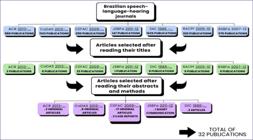
The manual selection process identified 41 publications related to the proposed topic among the 6,513 articles published in all the analyzed journals. Nine of these were excluded because they did not meet the previously established inclusion criteria. Thus, 32 articles remained for full reading and scientometric analysis (Figure 1). The 32 publications on ankyloglossia found in the four Brazilian speech-language-hearing journals were organized in Table 1, including information such as title, authors, year of publication, journal, descriptor, and study type, aiming at efficient and systematic data localization.
Analysis of publications by journal
The CEFAC Journal had the highest number of publications related to the research topic, with 17 original articles and two case reports included in the scientometric analysis. The CoDAS Journal had eight publications, the ACR and DIC Journals had two publications each, and the JSBFa had only one article, classified as a short communication, published in 2012.
Analysis of publications by year
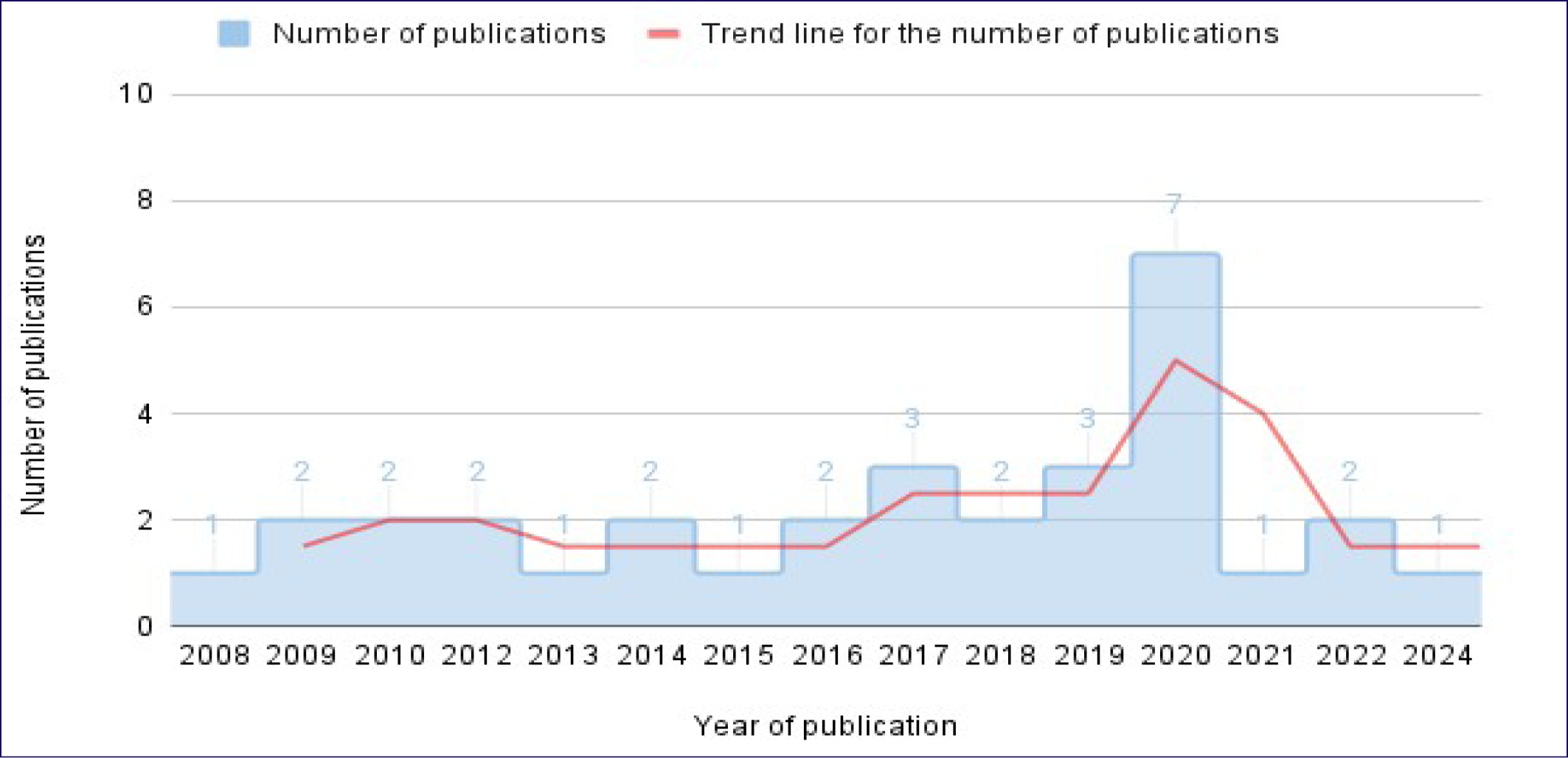
Figure 2 shows that the first publication on the topic occurred only in 2008. There was, then, an increase in production related to the topic from 2017 onwards, with a greater concentration of publications in 2020, followed by a decline until the present day.

Analysis of publications by states and institutions
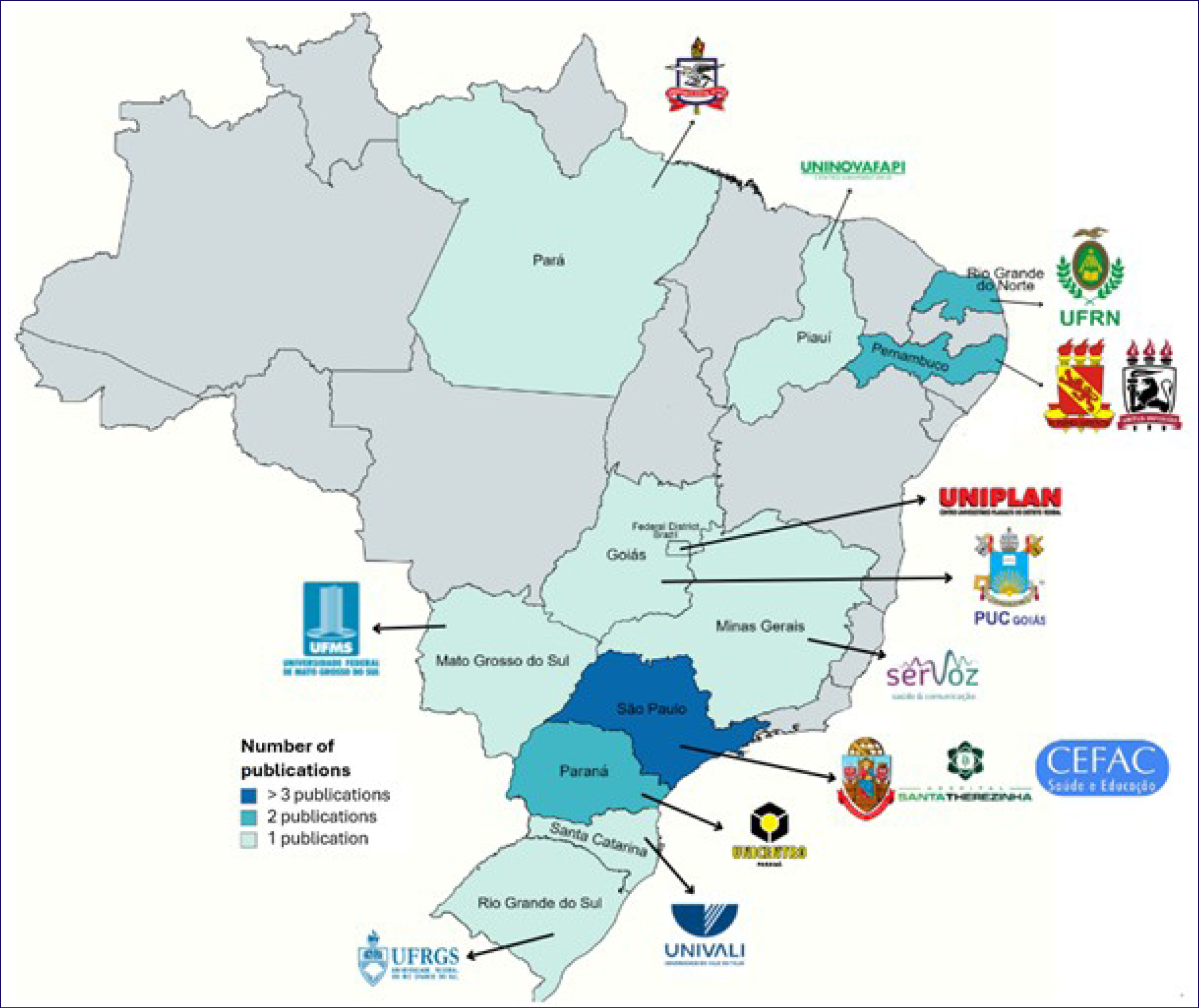
Regarding the number of publications by Brazilian states, as shown in Figure 3, São Paulo has 18 articles, making it the state that publishes the most on ankyloglossia. Paraná, Pernambuco, and Rio Grande do Norte each have two articles. The other states (Rio Grande do Sul, Santa Catarina, Mato Grosso do Sul, Minas Gerais, Goiás, Distrito Federal, Piauí, and Pará) each published only one study. The figure also shows the institutions linked to the main authors of the articles. São Paulo has six such institutions (USP - University of São Paulo, Santa Therezinha Hospital, CEFAC - Center for Specialization in Clinical Speech-Language Pathology, FCMSCSP - Faculty of Medical Sciences, Santa Casa de São Paulo, UB - Brazil University, and UNICAMP - State University of Campinas); hence, the three with the most links to date are represented.

Illustrative image of the states, number of publications, and institutions linked to the main authors with the highest number of publications
Analysis of descriptors
The research found 150 descriptors, shown in Figure 4, based on which a page in Google Sheets separated the quantity of each descriptor, which were inserted into WordClouds.com. "Lingual Frenum" was the descriptor that appeared the most in the articles (32), followed by "Breastfeeding" (14), "Ankyloglossia" (11), and "Speech-Language Pathology" (10).

Analysis of thematic classifications
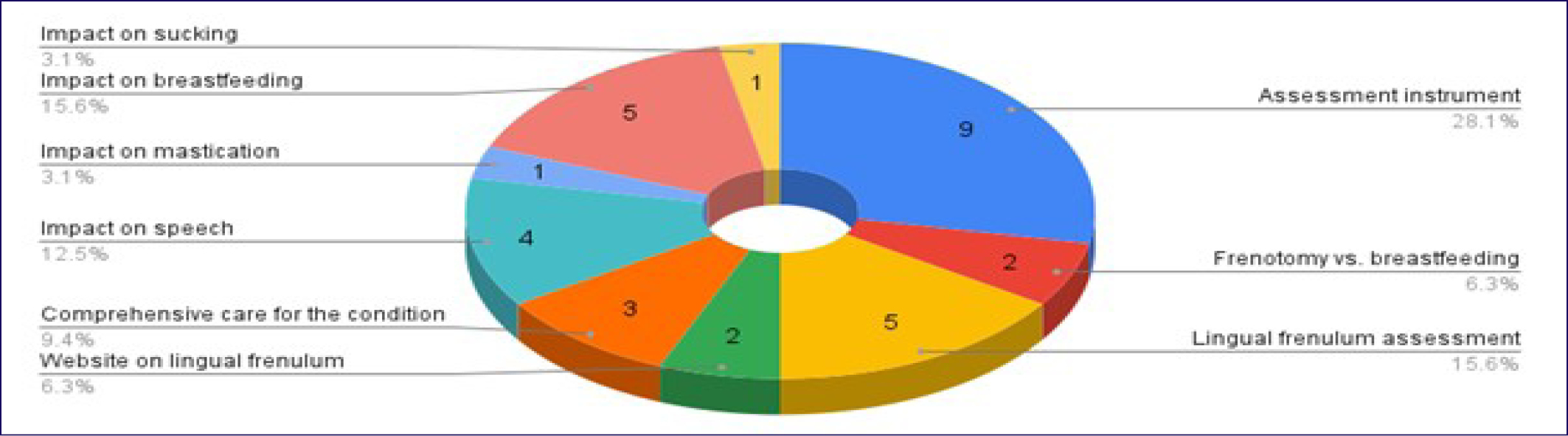
The articles were sorted by theme to better systematize and capture the research findings. Thus, studies that discussed tongue-tie testing or any instrument that assessed the lingual frenulum were placed under the heading "Assessment Instrument," and so on. Nine publications were found on assessment instruments, five on the impacts of the lingual frenulum on breastfeeding, and five on the assessment of the lingual frenulum itself, as shown in Figure 5.

Analysis of the author network
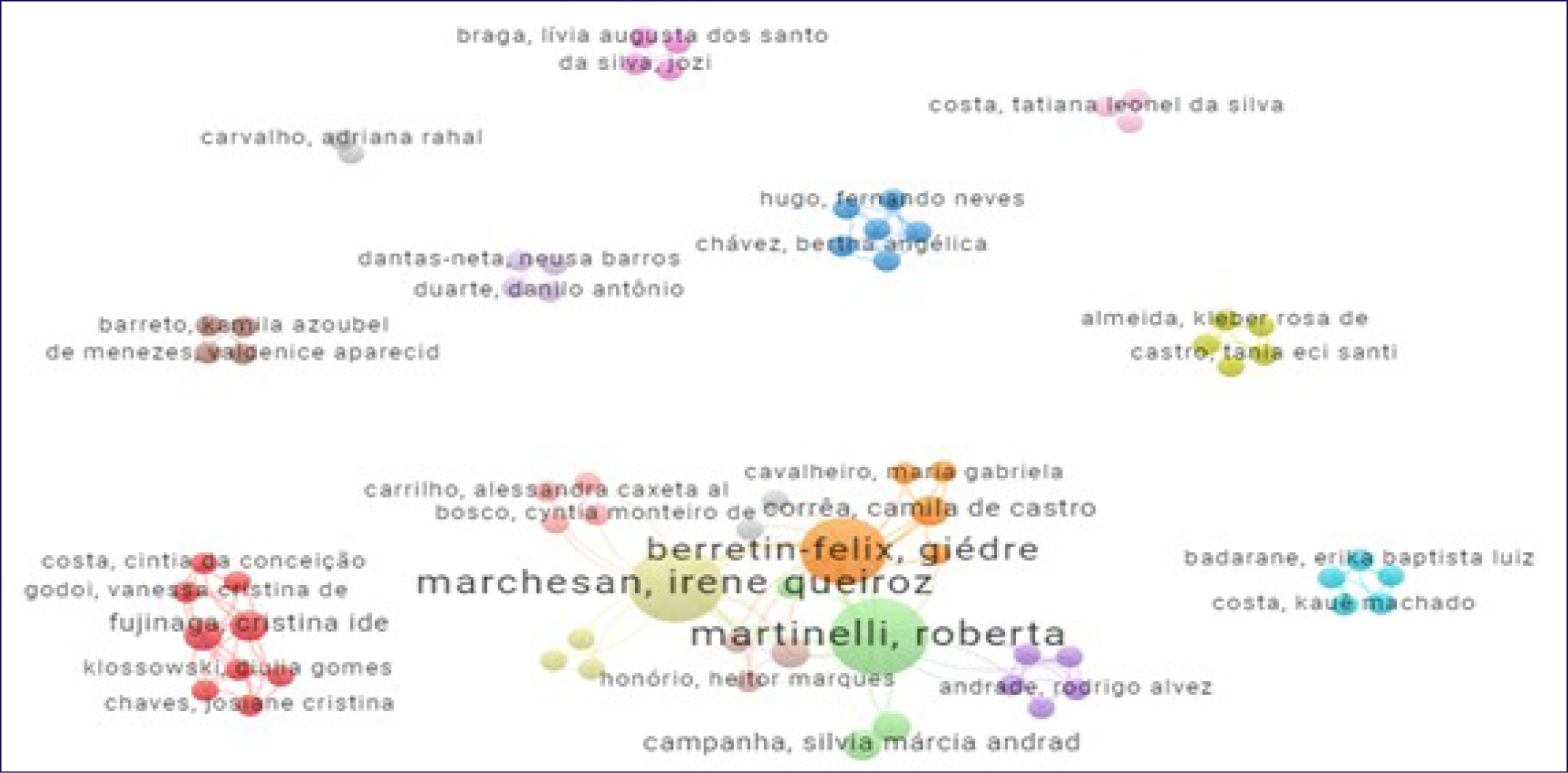
A network of research authors and co-authors was constructed (Figure 6). The connections between them, known as clusters, are established when collaboration occurs in the joint publication of a scientific document. The strongest points refer to the individuals who have published the most on the topic, often appearing linked to each other in the figure.

Brazilian scientific production on ankyloglossia: Scientometric analysis and trends
This scientometric analysis addresses the scientific literature on ankyloglossia in Brazilian speech-language-hearing journals. The tongue plays a fundamental role in stomatognathic system development, which ankyloglossia can impair from the earliest years of life, with long-term impacts. However, within the established inclusion criteria, the first study on the topic was only published in 2008. It is worth noting that the RACPF, currently known as CoDAS, and the RSBFa, currently known as ACR, did not publish any articles related to the topic.
DIC, the second largest in number of articles and the oldest among those analyzed, had only two studies that met the research criteria, one published in 2018 in the state of São Paulo and another in 2019 in Paraná, corresponding to less than 1% of the total publications.
The four Brazilian speech-language-hearing journals published an average of two articles per year on ankyloglossia between 2009 and 2014, while in 2015, there was only one publication. Brazilian Federal Law No. 13.002/201446, enacted on June 23, 2014, mandated the implementation of the Lingual Frenulum Evaluation Protocol for Infants (Tongue-Tie Test)18, which raised expectations of an increase in scientific publications on the topic. However, this significant growth was only observed in 2020, the year marked by the onset of the COVID-19 pandemic, with a total of seven articles published. In that same year, the Brazilian Institute of Geography and Statistics (IBGE) estimated that approximately 8.7 million people worked remotely in Brazil, which may explain the increase in scientific production47. Thus, the pandemic period boosted publications related to ankyloglossia.
CEFAC Journal stands out for its largest number of publications, totaling 2,110 articles, and is also the journal with the most studies on the lingual frenulum. The journal presented a network of authors who stood out for the volume of collaborative work (Figure 6). Most of their articles were published in CEFAC, as seen in Table 1. The most prominent authors in the collaborative networks include Roberta Martinelli, Irene Marchesan, and Giédre Berretin-Felix, two of whom have institutional affiliations with the University of São Paulo (USP), the institution with the most publications.
The creation and validation of the Lingual Frenulum Evaluation Protocol for Infants (Tongue-Tie Test) is a milestone in these authors' research. It is therefore not surprising that the work of Martinelli, Marchesan, and Berretin-Felix is so frequently found in the literature, given the impact of their contributions on the topic18,24.
In the institutional scenario, São Paulo has concentrated most of the studies on ankyloglossia, notably the CEFAC Journal. Furthermore, the University of São Paulo (USP) and the Pontifical Catholic University of São Paulo (PUC-SP) are recognized as the largest speech-language-hearing academic centers in Brazil, contributing significantly to scientific production.
The most frequent descriptors identified in the word cloud were "Lingual Frenum", "Breastfeeding", and "Ankyloglossia", reflecting their relevance for understanding this malformation and its impact on newborn feeding.
The publications were read in full and classified thematically to understand their approaches over time. The most recurring themes involved the creation, application, validity, and comparison of lingual frenulum assessment instruments14,17,20-25,35-37,41. Another prominent topic was the impact of ankyloglossia on breastfeeding, with divergences in the literature: four articles highlighted the need for further studies to draw conclusions with robust scientific evidence, while others confirmed the association between ankyloglossia and breastfeeding difficulties25,33,34,38,43.
This disparity indicates the lack of studies using methods guided by the new pyramid of scientific evidence, which values not only the type of studies in the field but also their methodological quality48. The pyramid of scientific evidence is a hierarchy that classifies studies and evidence by their quality and reliability in answering research questions49. Systematic reviews, with or without meta-analysis, were removed from the top of the pyramid and are considered a way to analyze this evidence. This study did not consider systematic literature reviews. Following this new classification, this study considered only case studies29,31,42,45 and cohort studies14-27,28,30,32-41,43,44.
This review identified findings correlating ankyloglossia with speech, demonstrating compensation strategies employed by speakers with short frenulum to adapt and minimize speech incomprehensibility15,26,31,32. Regarding chewing, the findings demonstrate that ankyloglossia interferes with tongue movements, negatively impacting the masticatory process16. As for sucking patterns, newborns with ankyloglossia tend to perform prolonged and frequent sucking sequences, which can cause fatigue during breastfeeding. This excessive effort is associated with the onset of pain and nipple lesions in lactating women16,45. The conclusion is that it is necessary to understand the different impacts of ankyloglossia on stomatognathic system functions to guide more appropriate and targeted therapeutic interventions.
Articles were found that covered everything from diagnosis to post-frenotomy therapy, including case reports42. One of these studies followed a baby for 6 months, documenting their breastfeeding difficulties; it was classified as an example of comprehensive care for the condition19,29,42.
Additionally, two articles addressed content aimed at creating information for parents, professionals, and interested parties, highlighting guidance available on websites, including legal aspects and other relevant information28,29. A descriptive cross-sectional study on access to health information on the Internet interviewed 1,828 individuals, of whom 80% reported using the Internet as their primary source of health information50. This finding reinforces the importance of disseminating clear, objective, and evidence-based information.
In international literature, a bibliometric study analyzing the global panorama of ankyloglossia in newborns highlighted that the assessment of the impact of frenotomy on breastfeeding is the most referenced topic51. In contrast, the analysis conducted in this study found that the predominant focus of articles published in Brazilian speech-language-hearing journals is lingual frenulum assessment. This suggests that, globally, international researchers have been primarily concerned with the consequences of frenotomy for breastfeeding, while Brazilian researchers still focus their efforts on developing and validating protocols that justify the indication for the surgical procedure.
Although ankyloglossia is a recurring topic in speech-language-hearing discussions, this analysis reveals a clear scarcity of publications on the subject in Brazilian journals specializing in the field. This suggests that Brazilian speech-language-hearing pathologists may be choosing to publish their work in international journals or in national ones that are not specialized in speech-language-hearing pathology. The lack of recent randomized studies limits the development of sound clinical protocols and prevents a broader understanding of the implications of ankyloglossia, particularly regarding breastfeeding. Given the essential role of breastfeeding in child development and the potential harms associated with ankyloglossia, further research must be conducted to fill these gaps.
CONCLUSION
This research found that, despite a slight increase in publications over the years, the number of studies on ankyloglossia remains limited in the four journals analyzed. Published papers focus primarily on aspects related to assessment. Thus, there is a lack of research addressing the impact of ankyloglossia on the development of the oral sensorimotor system, breastfeeding, and, later, speech, as well as its psychosocial implications. Geographically, publications are concentrated in São Paulo, indicating the need for greater regional and institutional coverage.
REFERENCES
-
1 WHO [Webpage on the Internet]. Guideline for complementary feeding of infants and young children 6-23 months of age ISBN 978-92-4-008187-1; 2023 [accessed on 12 Apr 2025]. Available at: https://www.who.int/publications/i/item/9789240081864
» https://www.who.int/publications/i/item/9789240081864 - 2 Junior WM, Santos TM. Anatomia e fisiologia da lactação: papel do bebe/sucção. In: Carvalho MR, Gomes CF, editors. Amamentação: bases científicas. 4. ed. [s.l.]: Guanabara Koogan, 2016. ch. 1, p. 6-30.
- 3 Gomes CF, Oliveira K. Anatomia e fisiologia do sistema estomatognático: reflexo de sucção e ordenha da mama. In: Carvalho MR, Gomes CF, editors. Amamentação: bases científicas. 4. ed. [s.l.]: Guanabara Koogan, 2016. ch. 2, p. 31-66.
- 4 Hernandez AM. Sucção e deglutição - aspectos neurofisiológicos: estruturas envolvidas. In: Levy DS, Almeida ST, editors. Disfagia Infantil. 1. ed. [s.l.]: Thieme Revinter, 2017. p. 3-11. ISBN 8567661838.
- 5 Campos B, Susanibar F, Carranza CA, Oliveira NCM. Embriologia do sistema estomatognático. In: Susanibar F, Marchesan IQ, Ferreira VJA, Douglas CR, Parra D, Dioses A, editors. Motricidade orofacial: fundamentos neuroanatômicos, fisiológicos e linguísticos. 1. ed. Ribeirão Preto: Book Toy; 2015. p. 23-60.
-
6 Azambuja IZ, Tostes MA, Portela MB. Anquiloglossia em bebês: da embriologia ao tratamento - uma revisão de literatura. Revista Científica do CRO-RJ. 2023;7(3):13-24. https://doi.org/10.29327/244963.7.3-3
» https://doi.org/10.29327/244963.7.3-3 -
7 Geddes DT, Chadwick LM, Kent JC, Garbin CP, Hartmann PE. Ultrasound imaging of infant swallowing during breast-feeding. Dysphagia. 2010;25(3):183-91. https://doi.org/10.1007/s00455-009-9241-0 PMID:19626366.
» https://doi.org/10.1007/s00455-009-9241-0 -
8 Ramsay DT, Kent JC, Hartmann RA, Hartmann PE. Anatomy of the lactating human breast redefined with ultrasound imaging. J Anat. 2005;206(6):525-34. https://doi.org/10.1111/j.1469-7580.2005.00417.x
» https://doi.org/10.1111/j.1469-7580.2005.00417.x -
9 Maciel Y, Sobrinho ARS, Carvalho ILD, Medrado JGB, Oliveira JCS. Diagnosticando a Anquiloglossia por meio da extensão universitária em Odontologia. REUPE. 2020;5(2):19-25. https://doi.org/10.56148/2675-2328reupe.v5n2.20.pp19-25
» https://doi.org/10.56148/2675-2328reupe.v5n2.20.pp19-25 -
10 Cavalcante GMF, Motta PP, Amorim BJL. The competence of the speech therapist in the diagnosis of ankyloglossia in neonates. Rev. Foco. 2023;16(10):e3324. https://doi.org/10.54751/revistafoco.v16n10-0788
» https://doi.org/10.54751/revistafoco.v16n10-0788 -
11 Scarano A, Di Giulio R, Gehrke SA, Di Carmine M, Bugea C, Lorusso F et al. Orofacial-myofunctional therapy after lingual frenectomy in patient with tongue-tie: A systemic postural approach with Mézières method and postural bench. Eur J Paediatr Dent. 2023;24(3):201-6. https://doi.org/10.23804/ejpd.2023.18855 PMID: 37668462.
» https://doi.org/10.23804/ejpd.2023.18855 -
12 Parra MR, Coutinho RX, Pessano EFC. A brief look for scientometrics: Origin, evolution, trends and contribution for to science teaching. Revista Contexto & Educação. 2019;34(107):126-41. https://doi.org/10.21527/2179-1309.2019.107.126-141
» https://doi.org/10.21527/2179-1309.2019.107.126-141 -
13 Donthu N, Kumar S, Mukherjee D, Pandey N, Lim WM. How to conduct a bibliometric analysis: An overview and guidelines. J Bus Res. 2021;133:285-96. https://doi.org/10.1016/j.jbusres.2021.04.070
» https://doi.org/10.1016/j.jbusres.2021.04.070 -
14 Brito SF, Marchesan IQ, Bosco CM, Carrilho ACA, Rehder MI. Frênulo lingual: classificação e conduta segundo ótica fonoaudiológica, odontológica e otorrinolaringológica. Rev. CEFAC. 2008;10(3):343-51. https://doi.org/10.1590/S1516-18462008000300009
» https://doi.org/10.1590/S1516-18462008000300009 -
15 Braga LAS, Silva J, Pantuzzo CL, Motta AR. Prevalência de alteração no frênulo lingual e suas implicações na fala de escolares. Rev. CEFAC. 2009;11(3):378-90. https://doi.org/10.1590/S1516-18462009000700014
» https://doi.org/10.1590/S1516-18462009000700014 -
16 Silva MC, Costa MLVCM, Nemr K, Marchesan IQ. Frênulo de língua alterado e interferência na mastigação. Rev. CEFAC. 2009;11(3):363-9. https://doi.org/10.1590/S1516-18462009000700012
» https://doi.org/10.1590/S1516-18462009000700012 -
17 Marchesan IQ. Protocolo de avaliação do frênulo da língua. Rev. CEFAC. 2010;12(6):977-89. https://doi.org/10.1590/S1516-18462010000600009
» https://doi.org/10.1590/S1516-18462010000600009 -
18 Martinelli RL de C, Marchesan IQ, Rodrigues A de C, Berretin-Felix G. Protocolo de avaliação do frênulo da língua em bebês. Rev. CEFAC. 2012;14(1):138-45. https://doi.org/10.1590/S1516-18462012000100016
» https://doi.org/10.1590/S1516-18462012000100016 -
19 Marchesan IQ, Martinelli RLC, Gusmão RJ. Frênulo lingual: modificações após frenectomia. J Soc Bras Fonoaudiol. 2012;24(4):409-12. https://doi.org/10.1590/S2179-64912012000400020
» https://doi.org/10.1590/S2179-64912012000400020 -
20 Martinelli RLC, Marchesan IQ, Berretin-Felix G. Protocol for infants: Relationship between anatomic and functional aspects. Rev. CEFAC. 2013;15(3):599-610. https://doi.org/10.1590/S1516-18462013005000032
» https://doi.org/10.1590/S1516-18462013005000032 -
21 Witwytzkyj LP, Cordeiro MC, Coelho TTT. Clinical analysis of proposed classification of the lingual frenulum by index and percentage. Rev. CEFAC. 2014;16(2):537-45. https://doi.org/10.1590/1982-0216201421112
» https://doi.org/10.1590/1982-0216201421112 -
22 Martinelli RLC, Marchesan IQ, Berretin-Felix G. Longitudinal study of the anatomical characteristics of the lingual frenulum and comparison to literature. Rev. CEFAC. 2014;16(4):1202-7. https://doi.org/10.1590/1982-0216201499133
» https://doi.org/10.1590/1982-0216201499133 -
23 Nascimento LS, Soares VSS, Costa TLS. Tongue-Tie Test: Situational diagnosis about the applicability of the protocol in newborns in Distrito Federal. Rev. CEFAC. 2015;17(6):1889-99. https://doi.org/10.1590/1982-021620151768915
» https://doi.org/10.1590/1982-021620151768915 -
24 Martinelli RLC, Marchesan IQ, Lauris JR, Honório HM, Gusmão RJ, Berretin-Felix G. Validity and reliability of the Neonatal Tongue Screening Test. Rev. CEFAC. 2016;18(6):1323-31. https://doi.org/10.1590/1982-021620161868716
» https://doi.org/10.1590/1982-021620161868716 -
25 Marcione ESS, Coelho FG, Souza CB, França ECL. Anatomical classification of lingual frenulum in babies. Rev. CEFAC. 2016;18(5):1042-9. https://doi.org/10.1590/1982-0216201618522915
» https://doi.org/10.1590/1982-0216201618522915 -
26 Suzart DD, Carvalho ARR. Speech disorders related to alterations of the lingual frenulum in schoolchildren. Rev. CEFAC. 2016;18(6):1332-9. https://doi.org/10.1590/1982-0216201618621715
» https://doi.org/10.1590/1982-0216201618621715 -
27 Fujinaga CI, Chaves JC, Karkow IK, Klossowski DG, Silva FR, Rodrigues AH. Lingual frenum and breast feeding: Descriptive study. Audiol., Commun. Res. 2017;22:e1762. https://doi.org/10.1590/2317-6431-2016-1762
» https://doi.org/10.1590/2317-6431-2016-1762 -
28 Almeida KR, Leal TP, Kubo H, Castro TES, Ortolani CLF. Lingual frenotomy in a newborn, from diagnosis to surgery: A case report. Rev. CEFAC. 2018;20(2):258-62. https://doi.org/10.1590/1982-0216201820212917
» https://doi.org/10.1590/1982-0216201820212917 -
29 Martinelli VLC, Martinelli RLC, Marchesan IQ, Berretin-Felix G, Souza SRS. Design and development of the "Neonatal Tongue Screening Test" website. Rev. CEFAC. 2017;19(2):260-4. https://doi.org/10.1590/1982-021620171923917
» https://doi.org/10.1590/1982-021620171923917 -
30 Martinelli RLC, Marchesan IQ, Berretin-Felix G. Posterior lingual frenulum in infants: Occurrence and maneuver for visual inspection. Rev. CEFAC. 2018;20(4):478-83. https://doi.org/10.1590/1982-0216201820410918
» https://doi.org/10.1590/1982-0216201820410918 -
31 Cavalheiro MG, Corrêa CC, Berretin-Felix G, Maximino LP. Interchange of ankyloglossia for the evolution of the phonological framework: Clinical case. Distúrb. Comun. 2018;30(4):785-90. http://dx.doi.org/10.23925/2176-2724.2018v30i4p785-790
» http://dx.doi.org/10.23925/2176-2724.2018v30i4p785-790 -
32 Martinelli RLC, Marchesan IQ, Berretin-Felix G. Compensatory strategies for the alveolar flap [?] production in the presence of ankyloglossia. Rev. CEFAC. 2019;21(3):e10419. https://doi.org/10.1590/1982-0216/201921310419
» https://doi.org/10.1590/1982-0216/201921310419 -
33 Karkow IK, Pankiw PM, Godoi VC, Costa CC, Fujinaga CI. The lingual frenulum and its relation with breastfeeding: Understanding of a health team. Distúrb. Comun. 2019;31(1):77-86. http://dx.doi.org/10.23925/2176-2724.2019v31i1p77-86
» http://dx.doi.org/10.23925/2176-2724.2019v31i1p77-86 -
34 Campanha SMA, Martinelli RLC, Palhares DB. Association between ankyloglossia and breastfeeding. CoDAS. 2019;31(1):e20170264. https://doi.org/10.1590/2317-1782/20182018264 PMID: 30810632.
» https://doi.org/10.1590/2317-1782/20182018264 -
35 Martinelli RLC, Marchesan IQ, Berretin-Felix G. Tongue position for lingual frenulum assessment. Rev. CEFAC. 2020;22(1):e0120. https://doi.org/10.1590/1982-0216/20202210120
» https://doi.org/10.1590/1982-0216/20202210120 -
36 Fraga MRBA, Barreto KA, Lira TCB, Menezes VA. Diagnosis of ankyloglossia in newborns: Is there any difference related to the screening method? CoDAS. 2021;33(1):e20190209. https://doi.org/10.1590/2317-1782/20202019209 PMID: 33950147.
» https://doi.org/10.1590/2317-1782/20202019209 -
37 Dutra MRP, Araújo AGF, Xavier CCS, Holanda NSO, Lima JCS, Pereira SA. Quality indicators of hearing screening and evaluation of neonatal lingual frenulum. CoDAS. 2020;32(3):e20180179. https://doi.org/10.1590/2317-1782/20202018179 PMID: 32578835.
» https://doi.org/10.1590/2317-1782/20202018179 -
38 Rech RS, Chávez BA, Fernandez PB, Silva DDF, Hilgert JB, Hugo FN. Presence of ankyloglossia and breastfeeding in babies born in Lima, Peru: A longitudinal study. CoDAS. 2020;32(6):e20190235. https://doi.org/10.1590/2317-1782/20202019235 PMID: 33503211.
» https://doi.org/10.1590/2317-1782/20202019235 -
39 Lima ALX, Dutra MRP. Influence of frenotomy on breastfeeding in newborns with ankyloglossia. CoDAS. 2021;33(1):e20190026. https://doi.org/10.1590/2317-1782/20202019026 PMID: 33950144.
» https://doi.org/10.1590/2317-1782/20202019026 -
40 Rizatto AJP, Corrêa CC, Martinelli RLC, Berretin-Felix G. Website Babies Portal: Updates and evaluation of the contents regarding orofacial functions. Audiol., Commun. Res. 2020;25:e2274. https://doi.org/10.1590/2317-6431-2019-2274
» https://doi.org/10.1590/2317-6431-2019-2274 -
41 Campanha SMA, Martinelli RLC, Palhares DB. Position of lips and tongue in rest in newborns with and without ankyloglossia. CoDAS. 2021;33(6):e20200069. https://doi.org/10.1590/2317-1782/20202020069 PMID: 34190809.
» https://doi.org/10.1590/2317-1782/20202020069 -
42 Nogueira JS, Gonçalves CAB, Roda SR. Frenotomy: From assessment to surgical intervention. Rev. CEFAC. 2021;23(3):e10420. https://doi.org/10.1590/1982-0216/202123310420
» https://doi.org/10.1590/1982-0216/202123310420 -
43 Vilarinho S, Dantas-Neta NB, Duarte DA, Imparato JCP. Prevalence of ankyloglossia and factors that impact on exclusive breastfeeding in neonates. Rev. CEFAC. 2022;24(1):e5121. https://doi.org/10.1590/1982-0216/20222415121
» https://doi.org/10.1590/1982-0216/20222415121 -
44 Santos HKMPS, Cunha DA, Andrade RA, Silva MG, Araújo ACS, Martinelli RLC et al. Effects of lingual frenotomy on breastfeeding and electrical activity of the masseter and suprahyoid muscles. CoDAS. 2023;35(2):e20210262. https://doi.org/10.1590/2317-1782/20232021262 PMID: 37098939.
» https://doi.org/10.1590/2317-1782/20232021262 -
45 Cunha BML, Badarane EBL, Sousa Filho PVM, Costa KM, Silva Filho M. Dysfunctional suction dynamics in newborns with ankyloglossia. CoDAS. 2024;36(2):e20230054. https://doi.org/10.1590/2317-1782/20232023054 PMID: 39536166.
» https://doi.org/10.1590/2317-1782/20232023054 -
46 Presidência da República. LEI nº Nº 13.002, de 20 de junho de 2014. Obriga a realização do Protocolo de Avaliação do Frênulo da Língua em Bebês. [s.l.], 2014. Available from: https://www.planalto.gov.br/ccivil_03/_ato2011-2014/2014/lei/l13002.htm Accessed on 19 August 2024.
» https://www.planalto.gov.br/ccivil_03/_ato2011-2014/2014/lei/l13002.htm -
47 Góes GS, Martins FS, Nascimento JAS. O trabalho remoto e a pandemia: o que a pnad covid- 19 nos mostrou: Carta de conjuntura. IPEA. 2021;(50):1-16. Available at: https://repositorio.ipea.gov.br/bitstream/11058/10472/6/CC_50_mt_trabalho_remoto_e_a_pandemia.pdf Accessed on April 2024.
» https://repositorio.ipea.gov.br/bitstream/11058/10472/6/CC_50_mt_trabalho_remoto_e_a_pandemia.pdf -
48 Murad MH, Asi N, Alsawas M, Alahdab F. New evidence pyramid. Evid Based Med. 2016;21(4):125-7. https://doi:10.1136/ebmed-2016-110401
» https://doi:10.1136/ebmed-2016-110401 -
49 Mota DM, Kuchenbecker RS. Considerations on the use of scientific evidences in times of a pandemic: The case of COVID-19. Vigil Sanit Debate. 2020;8(2):2-9. https://doi.org/10.22239/2317-269x.01541
» https://doi.org/10.22239/2317-269x.01541 -
50 Moretti FA, Oliveira VE, Silva EMK. Access to health information on the internet: a public health issue? Rev Assoc Med Bras. 2012;58(6):650-8. https://doi.org/10.1590/S0104-42302012000600008
» https://doi.org/10.1590/S0104-42302012000600008 -
51 Nunes LMN, Bonelli JM, Antunes LS, Antunes LAA. Global panorama of ankyloglossia in newborns: A bibliometric analysis. SciELO Preprints. 2023. https://preprints.scielo.org/index.php/scielo/preprint/view/6025 Accessed on 19 August 2024.
» https://preprints.scielo.org/index.php/scielo/preprint/view/6025
-
A study conducted at the Center for Swallowing and Dysphagia Studies of the Instituto de Saúde de Nova Friburgo, Universidade Federal Fluminense (ISNF/ UFF), Nova Friburgo, RJ, Brazil.
-
Financial support: Nothing to declare
-
Data sharing statement
All data recorded in the article may be shared, including the metadata collection form and bibliometric results, immediately after publication. The data may be used indefinitely.
All data recorded in the article may be shared, including the metadata collection form and bibliometric results, immediately after publication. The data may be used indefinitely.



 Link to interactive access: