 Hooked by the tongue: buccal parasitism of Moenkhausia spp. (Ostariophysi: Acestrorhamphidae) by Paracymothoa astyanaxi (Isopoda: Cymothoidae)
Abstract
Parasite-host interactions are shaped by environmental and biological factors, leading to diverse host impacts ranging from tissue damage to physiological impairments. The Tocantins-Araguaia basin, particularly the Upper Rio Tocantins region, harbors remarkable fish diversity and endemism, making it a critical area for parasitological research. Here, we report the first record of parasitism by isopods of the genus Paracymothoa in Moenkhausia species (M. aurantia and M. goya) from the Upper Rio Tocantins basin. The parasites (Paracymothoa astyanaxi) were located in the buccal cavity and frequently associated with visible lesions, including tongue amputation, a known outcome of their trophic behavior. This finding contributes to the understanding of parasitic diversity associated with Moenkhausia and underscores the relevance of parasitological surveys in Neotropical freshwater systems. It also provides insights into local ecological pressures and supports the development of conservation strategies for endemic ichthyofauna in biodiversity-rich and ecologically sensitive areas.
Keywords:
Freshwater; Upper River Tocantins; Crustacea; Ectoparasite; host-parasite interaction
Resumo
Interações parasito-hospedeiro são influenciadas por fatores ambientais e biológicos, podendo resultar em diversos impactos para o hospedeiro, desde danos teciduais até prejuízos fisiológicos. A bacia do Tocantins-Araguaia, em especial o Alto Rio Tocantins, abriga alta diversidade e endemismo de peixes, tornando-a relevante para estudos parasitológicos. Aqui, registramos pela primeira vez o parasitismo por isópodes do gênero Paracymothoa em espécies de Moenkhausia (M. aurantia e M. goya) desta bacia. Os isópodes (Paracymothoa astyanaxi) estavam alojados na cavidade bucal, frequentemente associados a lesões visíveis, incluindo amputação da língua, um efeito conhecido do comportamento trófico desses crustáceos. O achado contribui para o conhecimento da diversidade parasitária em Moenkhausia e reforça a relevância de levantamentos parasitológicos em sistemas Neotropicais de água doce. Além disso, fornece insights sobre pressões ecológicas locais para fomentar estratégias de conservação da ictiofauna endêmica em áreas biodiversas e ecologicamente sensíveis.
Palavras-chave:
Água doce; Alto Rio Tocantins; Crustacea; Ectoparasita; interação hospedeiro-parasita
Parasites can negatively affect their hosts through multiple mechanisms, including tissue damage and physiological impairments (Yamano et al., 2011). Parasitism rates are modulated by both host traits and environmental conditions (Arostegui et al., 2018). Habitat variation within ecosystems directly influences host-parasite dynamics by altering host distribution patterns and potentially restructuring food-web interactions (Smith, 2001). This complex interplay of biotic and abiotic factors not only governs parasitic relationships but also contributes to the unique biodiversity observed in the Tocantins-Araguaia basin.
The Tocantins-Araguaia drainage represents the largest river system entirely contained within Brazilian territory (Dagosta & Pinna, 2019). Originating in the Central Plateau's Cerrado biome, its headwaters serve as a critical hydrological resource. The system's biogeographic complexity permits division into three distinct regions: Upper Tocantins, Lower Tocantins, and Araguaia (Dagosta & Pinna, 2019). Recognized as a hotspot of aquatic endemism, this ecoregion faces escalating anthropogenic threats, with the Upper Tocantins basin exhibiting particularly high fish diversity and endemism (91 species; Chamon et al., 2022).
Among this rich ichthyofauna, Characiformes emerge as a dominant component, representing one of the most diverse and widespread Neotropical fish groups (Fricke et al., 2025). Within this order, Moenkhausia Eigenmann, 1903 comprises approximately 84 valid species distributed across South American drainages (Fricke et al., 2025). Although the species currently assigned to Moenkhausia do not form a monophyletic group (e.g., Melo et al., 2024), the genus is usually diagnosed by an exclusive combination of traits, including: biserial premaxillary teeth, pentacuspid maxillary teeth, complete lateral line with perforated scales, scaled caudal fins, and 11 dorsal-fin rays (ii+9) (Eigenmann & Myers, 1917). Their vibrant coloration and peaceful demeanor make Moenkhausia species commercially valuable in the ornamental trade (Marinho & Dagosta, 2023). Also, most species exhibit restricted distributions, being endemic to single basins or drainages (e.g., Marinho & Dagosta, 2023), rendering them particularly vulnerable to local environmental conditions. This microendemism influences ecological adaptations, including dietary specialization (Silva & Hahn, 2009; Tófoli et al., 2010; Caldatto et al., 2023) and parasite susceptibility.
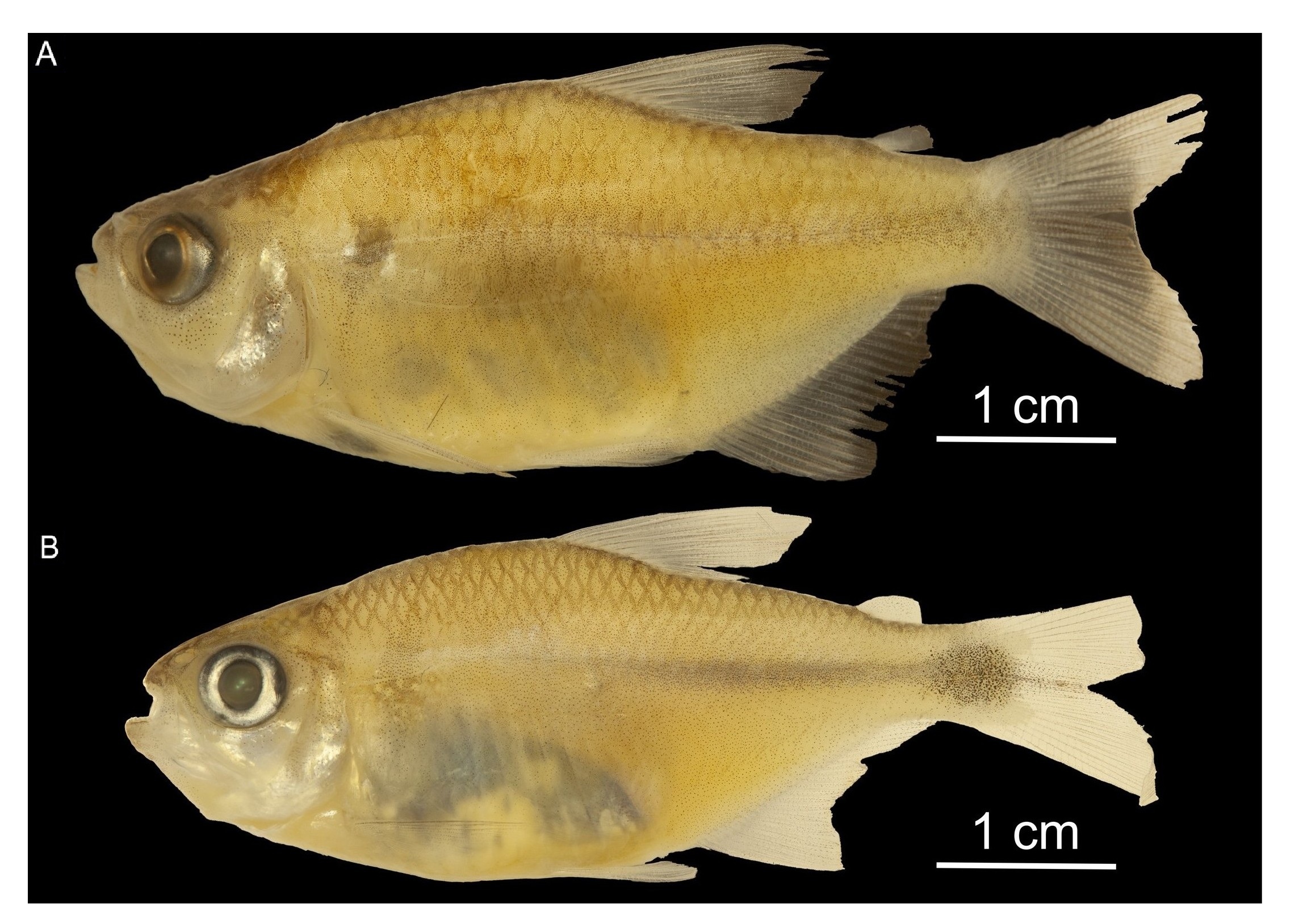
Parasitism in Moenkhausia remains poorly documented, with reports limited to M. intermedia Eigenmann 1908 and M. costae (Steindachner 1907) in the Jaguaribe River basin (Falkenberg et al., 2024). Among 18 parasite taxa recorded in this basin, only two represent crustaceans such as Ergasilidae and Lernaeidae, (Falkenberg et al., 2024). Notably, no parasitological studies exist for Moenkhausia species in the Tocantins-Araguaia system, and only one register of a crustacean fish parasite is known for the system (Michelan et al., 2023). Here, we report the first cases of parasitism in Moenkhausia aurantia Bertaco, Jerep & Carvalho 2011, a species with a relatively broad distribution across the Upper Tocantins and São Francisco basins (in the states of Goiás, Minas Gerais, and the Federal District, Brazil), and Moenkhausia goya Deprá Azevedo-Santos, Vitorino Júnior, Dagosta, Marinho & Benine 2018, a species endemic to the Upper Tocantins (Goiás and Federal District) (Figure 1). Although Paracymothoa parasitism has been documented in other Neotropical fish species, this represents the first record for both Moenkhausia aurantia and M. goya, as well as the first reported case for any Moenkhausia species in the Upper Tocantins basin, underscoring significant gaps in our understanding of regional host-parasite dynamics.

Analyzed specimens of (A) Moenkhausia aurantia (CIUnB 2064); (B) Moenkhausia goya (CIUnB 2143).
Fish were collected between November 2022 and January 2024 using dip nets and seine nets. Specimens were euthanized with eugenol, fixed in formalin, and preserved in 70% ethanol. Hosts are deposited in the Ichthyological Collection of the University of Brasília (CIUnB), and parasites are cataloged in the Aquatic Invertebrates Collection (CIAq: CIAaq-80001). Ectoparasites were screened following Eiras et al. (2000), with detailed examination of the oral and branchial cavities. Hosts were identified using taxonomic keys and original species descriptions; parasites were identified based on Lemos de Castro & Loyola-Silva (1985) and Luque et al. (2013).
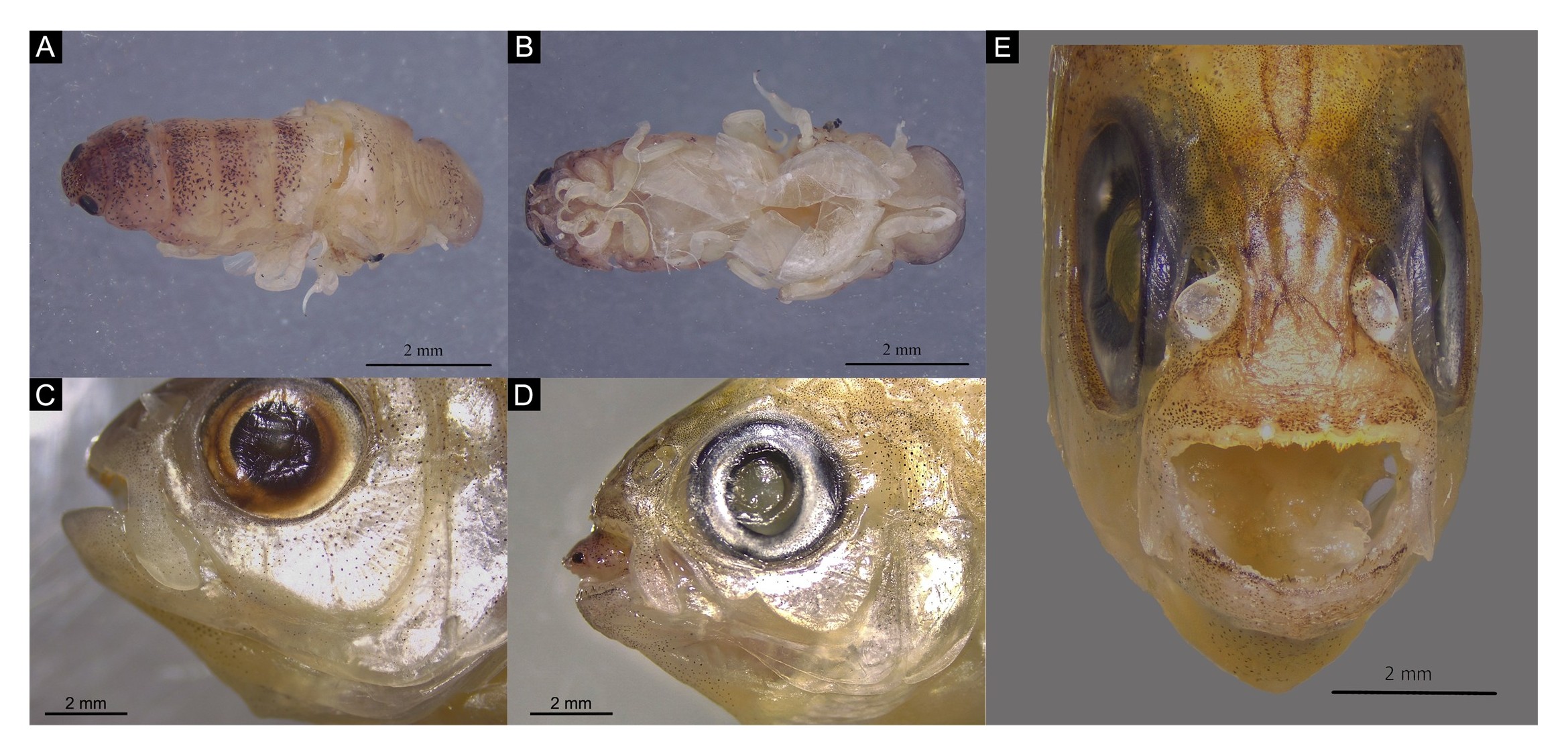
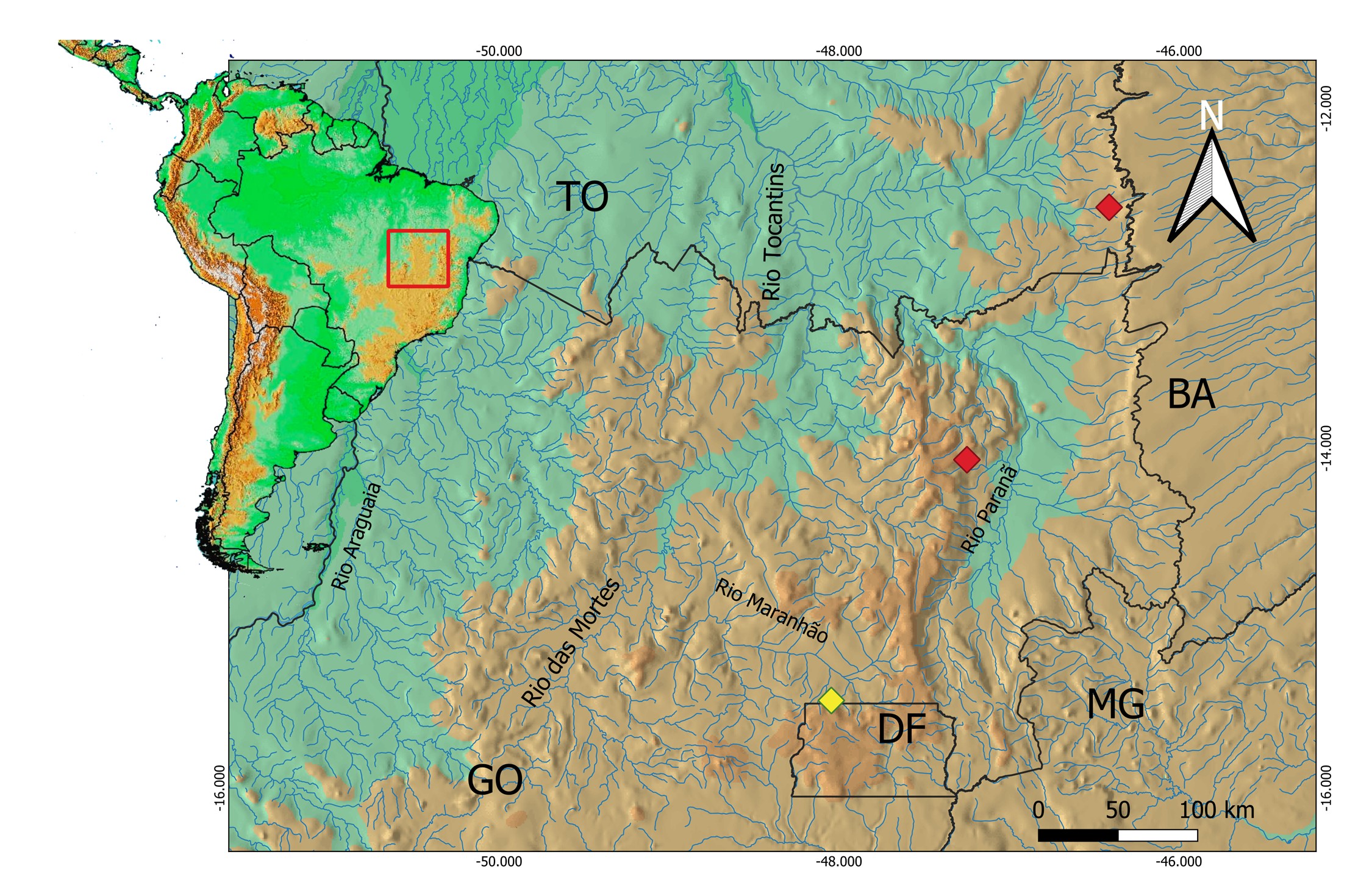
We documented two M. aurantia specimens parasitized by Paracymothoa astyanaxi Lemos de Castro, 1955 (Figure 2A-B). One individual from Aurora do Tocantins (GO) hosted a buccal isopod (Figure 2C); another from Alto Paraíso de Goiás (GO) showed characteristic lesions. A M. goya specimen from Brasília (DF) exhibited complete tongue loss (Figure 2D), a pathognomonic sign of Paracymothoa spp, which was also observed in M. aurantia (Figure 2E). All affected fish displayed ventral oral protrusions, suggesting consistent parasite-induced pathology. These records demonstrate P. astyanaxi broad distribution in the Upper Tocantins (Figure 3). A total of 158 M. aurantia and six M. goya specimens were examined. In M. aurantia, the prevalence was 1.27% (2/158), with a mean intensity of 1.0 and mean abundance of 0.013. In M. goya, the prevalence was 16.7% (1/6), with a mean intensity of 1.0 and a mean abundance of 0.167 (see Material Examined).

Examined specimen of Paracymothoa astyanaxi and lesions caused by the parasite. (A) Dorsal view of Paracymothoa astyanaxi (CIAq-80001); (B) Ventral view; (C) Prominent ventral region of oral cavity in Moenkhausia goya (CIUnB 2143); (D) Presence of a Paracymothoa astyanaxi individual in oral cavity of Moenkhausia aurantia (CIUnB 2064); (E) Damage by tongue amputation of Moenkhausia aurantia (CIUnB 2064).
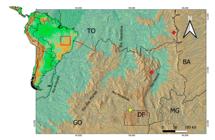
Sampling sites of recorded parasitism events in the Upper Tocantins. Red diamond- Moenkhausia aurantia; Yellow diamond - Moenkhausia goya. Black lines: division of South America countries and Brazilian States (abbreviations). Main rivers indicated.
The Cymothoidae family comprises approximately 380 species of parasitic isopods (Ahyong et al., 2011), predominantly marine, but with freshwater representatives in South America, Africa, and Asia. Tropical regions harbor their peak diversity, and all species in the family are obligate parasites of fish (Smith et al., 2014). Cymothoids exhibit site specificity, attaching to oral cavities, gills, or perforating host tissues (Lemos de Castro & Loyola-Silva, 1985), often causing severe mechanical damage. In addition to these mechanical impacts, representatives of the family Cymothoidae also cause significant physiological changes in the host fish. Such damage results from the action of the pereopods (prehensile appendages), which compress the tongue region causing its atrophy. The parasite thus assumes a replacement trophic function, feeding directly on material ingested by the host. This condition compromises not only fish feeding and respiration, but can also increase its vulnerability to predation, especially in small-sized species (Abilhoa, 2007; Gomiero et al., 2012).
This first record of P. astyanaxi parasitizing Moenkhausia in the Upper Tocantins underscores the need to investigate parasitic interactions in biodiverse ecosystems. Documentation is particularly crucial for aquarium trade species, since South American tetras are globally traded (Geller et al., 2020), with wild-caught specimens often harboring parasites (Plaul et al., 2018). Also, Neotropical freshwater systems host rich crustacean parasite diversity (e.g., Oliveira et al., 2024), warranting comprehensive study.
This study provides insights into the parasite fauna of Neotropical freshwater fishes, particularly for Moenkhausia species in the Upper Tocantins basin. Documenting these host-parasite interactions is essential for advancing our understanding of coevolutionary dynamics and ecological networks in freshwater ecosystems. Moreover, these results carry conservation implications, as anthropogenic pressures continue to threaten aquatic biodiversity. The observed pathological effects of parasitic crustaceans on host fitness (Tavares-Dias et al., 2014) underscore their potential role as bioindicators of ecosystem health and regulators of fish community structure. Our findings emphasize the urgent need to integrate parasitological data into conservation planning for the Tocantins-Araguaia basin and other Neotropical freshwater systems facing similar environmental challenges.
Examined Material
-
Moenkhausia aurantia- All from Brazil. CIUnB 2144, 1 examined, 36,25mm SL, Tocantins, Aurora do Tocantins municipality, rio Tocantins basin, Rio Monteiro, 12°34'50.5”S 46°24'37.2”W; CIUnB 2064, 157 examined, 44,32mm-25,58mm SL, Goiás, Alto Paraíso de Goiás municipality, rio Tocantins basin, Riacho Indaiá (Antropizado), 14°03'59.71”S 47°14'49.37”W.
-
Moenkhausia goya- All from Brazil. CIUnB 2143, 1 examined, 45,75mm SL, Brazil, Distrito Federal, Brasília municipality, rio Tocantins basin, Rio Palma, 15°29' 02.4”S 48°02' 42.0”W. CIUnB 1865, 2 examined, 39.47-46.50mm SL, Brazil, Distrito Federal, Brasília municipality, rio Tocantins basin, Córrego do Ouro, 15 30 41.88”S 47 55 47.96”W. CIUnB 2278, 1 examined, 41.21mm SL, Brazil, Distrito Federal, Brasília municipality, rio Tocantins basin, Riacho Palmeira, 15°31'44.3”S 47°44'27.1”W. CIUnB 378, 2 examined, 32.86-34.06mm SL, Brazil, Distrito Federal, Brasília municipality, rio Tocantins basin, Rio do Sal, 15°30'17.0”S 48°10'36.6”W.
-
Paracymothoa astyanaxi- All from Brazil. CIAq-80001, 1 examined, Tocantins, Aurora do Tocantins municipality, rio Tocantins basin, Rio Monteiro, 12°34'50.5”S 46°24'37.2”W
Acknowledgements
We gratefully acknowledge financial support from the Fundação de Amparo à Pesquisa do Distrito Federal, and Universidade de Brasília. This work was also supported by the Programa de Pós Graduação em Zoologia (PGZOO) and the Coordenação de Aperfeiçoamento de Pessoal de Nível Superior (CAPES). We extend our thanks to the Comparative Vertebrate Anatomy Laboratory (LACV) and the Bentos Laboratory (LABENTOS) at the Universidade de Brasília for their technical support. English grammar and style were corrected and refined using Jenni AI and DeepSeek.
Data availability
Data will be made available on request.
-
How to cite:
Firmino A, Vital A, Nayara R, Slobodian V. Hooked by the tongue: buccal parasitism of Moenkhausia spp. (Ostariophysi: Acestrorhamphidae) by Paracymothoa astyanaxi (Isopoda: Cymothoidae). Rev Bras Parasitol Vet 2025; 34(4): e007525. https://doi.org/10.1590/S1984-29612025063
-
Financial support
This research was financed by Fundação de Amparo à Pesquisa do Distrito Federal (FAPDF #00193-00000834/2021-00, including scholarships to AF and RN), Coordenação de Aperfeiçoamento de Pessoal de Nível Superior (CAPES, including social demand scholarships to AF), Universidade de Brasília, grants DPG 003/2024 (to AV) and DPI/BCE 01/2025.
-
Ethics declaration
Specimens were collected under Licenses #70092-2, #70092-4, #77491-1, #77491-5, #77491-6, issued by the Chico Mendes Institute for Biodiversity Conservation (ICMBio). The authors declare that this work represents original research, and all analyses were conducted exclusively by the research team. The procedures and management involving fishes were approved by the “Comissão de Ética no Uso de Animais” (CEUA) from UnB, under protocol number 81/2019.
References
- Abilhoa V. Aspectos da história natural de Astyanax scabripinnis Jenyns (Teleostei, Characidae) em um riacho de floresta com araucária no sul do Brasil. Zoologia 2007; 24: 997-1005. http://doi.org/10.1590/S0101-81752007000400016.
-
Ahyong ST, Lowry JK, Alonso M, Bamber RN, Boxshall GA, Castro P, et al. Subphylum Crustacea Brünnich, 1772. In: Zhang ZQ, editors. Animal biodiversity: An outline of higher-level classification and survey of taxonomic richness. Zootaxa 2011; 3148(1): 165-191. http://doi.org/10.11646/zootaxa.3148.1.33
» http://doi.org/10.11646/zootaxa.3148.1.33 -
Arostegui MC, Hovel RA, Quinn TP. Schistocephalus solidus parasite prevalence and biomass intensity in threespine stickleback vary by habitat and diet in boreal lakes. Environ Biol Fishes 2018; 101(3): 501-514. http://doi.org/10.1007/s10641-018-0719-1
» http://doi.org/10.1007/s10641-018-0719-1 -
Caldatto AM, Dias RM, Ferreira A. Diet of Moenkhausia bonita (Benine, Castro & Sabino 2004) (Characiformes: Characidae) in streams in the basin of rio Formoso, Brazilian Midwest. Biota Neotrop 2023; 23(2): e20221388. http://doi.org/10.1590/1676-0611-bn-2022-1388
» http://doi.org/10.1590/1676-0611-bn-2022-1388 -
Chamon CC, Serra JP, Camelier P, Zanata AM, Fichberg I, Marinho MMF. Building knowledge to save species: 20 years of ichthyological studies in the Tocantins-Araguaia River basin. Biota Neotrop 2022; 22(2): e20211296. http://doi.org/10.1590/1676-0611-bn-2021-1296
» http://doi.org/10.1590/1676-0611-bn-2021-1296 -
Dagosta FCP, Pinna M. The fishes of the Amazon: distribution and biogeographical patterns, with a comprehensive list of species. Bull Am Mus Nat Hist 2019; 2019(431): 1-163. http://doi.org/10.1206/0003-0090.431.1.1
» http://doi.org/10.1206/0003-0090.431.1.1 -
Eigenmann CH, Myers GS. The american Characidae. Mem Mus Comp Zool̈ogy Harv Coll [online] 1917 [cited 2025 April 1]; 43(5): 1-550. Available from: https://www.biodiversitylibrary.org/page/4372811
» https://www.biodiversitylibrary.org/page/4372811 - Eiras JC, Takemoto RM, Pavanelli GC. Métodos de estudo e técnicas laboratoriais em parasitologia de peixes Maringá: Eduem; 2000.
-
Falkenberg JM, De Lima VMM, Yamada FH, Ramos TPA, Lacerda ACF. Changes in parasite communities of fishes from an intermittent river in the Brazilian semi-arid, after a major interbasin water transfer. Aquat Ecol 2024; 58(3): 895-916. http://doi.org/10.1007/s10452-024-10112-7
» http://doi.org/10.1007/s10452-024-10112-7 -
Fricke R, Eschmeyer WN, Van der Laan R. Eschmeyer's catalog of fishes: genera, species, references [online]. San Francisco: California Academy of Sciences; 2025 [cited 2025 April 1]. Available from: http://researcharchive.calacademy.org/research/ichthyology/catalog/fishcatmain.asp
» http://researcharchive.calacademy.org/research/ichthyology/catalog/fishcatmain.asp - Geller IV, Garcia DAZ, Yabu MHS, Pereira AD, Ferraz JD, Fernandes AGJ, et al. Aquarismo no Brasil: do simples ao complexo e o descarte de espécies não nativas. Bol Soc Bras Ictiol 2020; 131(1): 33-52.
-
Gomiero L, Souza U, Braga F. Condition factor of Astyanax intermedius Eigenmann, 1908 (OSTEICHTHYES, CHARACIDAE) parasitised by Paracymothoa astyanaxi Lemos de Castro, 1955 (CRUSTACEA, CYMOTHOIDAE) in the Grande River, Serra do Mar State Park - Santa Virgínia Unit, São Paulo, Brazil. Braz J Biol 2012; 72(2): 379-388. http://doi.org/10.1590/S1519-69842012000200020 PMid:22735147.
» http://doi.org/10.1590/S1519-69842012000200020 - Lemos de Castro A, Loyola-Silva J. Isopoda. In: Schaden R, editor. Manual de identificação de invertebrados límnicos do Brasil Brasília: CNPq/MCT; 1985. p. 1-20.
-
Luque JL, Vieira FM, Takemoto RM, Pavanelli GC, Eiras JC. Checklist of Crustacea parasitizing fishes from Brazil. Check List 2013; 9(6): 1449-1470. http://doi.org/10.15560/9.6.1449
» http://doi.org/10.15560/9.6.1449 -
Marinho MMF, Dagosta FCP. On a new colorful species of Moenkhausia (Characiformes: Characidae) from the upper Rio Madeira basin at the Chapada dos Parecis, Brazil, with comments on its conservation and putative biogeographic history. J Fish Biol 2023; 103(5): 1122-1128. http://doi.org/10.1111/jfb.15513 PMid:37562847.
» http://doi.org/10.1111/jfb.15513 -
Melo BF, Ota RP, Benine RC, Carvalho FR, Lima FC, Mattox GM, et al. Phylogenomics of Characidae, a hyper-diverse Neotropical freshwater fish lineage, with a phylogenetic classification including four families (Teleostei: characiformes). Zool J Linn Soc 2024; 202(1): zlae101. http://doi.org/10.1093/zoolinnean/zlae101
» http://doi.org/10.1093/zoolinnean/zlae101 -
Michelan G, Hasuike WT, Cavalcanti LD, Lehun AL, Silva JOS, Takemoto RM. First record of two Copepoda species parasitizing Colomesus tocantinensis (Tetraodontiformes: Tetraodontidae) in the Tocantins-Araguaia basin, Brazil. Rev Bras Parasitol Vet 2023; 32(3): e006523. http://doi.org/10.1590/s1984-29612023030 PMid:37255181.
» http://doi.org/10.1590/s1984-29612023030 -
Oliveira MSB, Esteves-Silva PH, Prestes L, Wosiacki WB, Tavares-Dias M. Ectoparasite crustaceans of ten fish species from the upper Araguari River in northern Brazil. An Acad Bras Cienc 2024; 96(Suppl 1): e20231253. http://doi.org/10.1590/0001-3765202420231253 PMid:39082592.
» http://doi.org/10.1590/0001-3765202420231253 - Plaul SE, Laube PFA, Montes MM, Topa PE, Martorelli SR, Barbeito CG. Dermocystidiosis induced by the parasite Dermocystidium sp. in the ornamental fish Paracheirodon axelrodi. Bull Eur Assoc Fish Pathol 2018; 38(2): 73-78.
-
Silva MR, Hahn NS. Influência da dieta sobre a abundância de Moenkhausia dichroura (Characiformes, Characidae) no reservatório de Manso, Estado de Mato Grosso. Iheringia Ser Zool 2009; 99(3): 324-328. http://doi.org/10.1590/S0073-47212009000300016
» http://doi.org/10.1590/S0073-47212009000300016 -
Smith NF. Spatial heterogeneity in recruitment of larval trematodes to snail intermediate hosts. Oecologia 2001; 127(1): 115-122. http://doi.org/10.1007/s004420000560 PMid:28547162.
» http://doi.org/10.1007/s004420000560 -
Smith NJ, Bruce NL, Hadfield KA. Global diversity of fish parasitic isopod crustaceans of the family Cymothoidae. Int J Parasitol Parasites Wildl 2014; 3(2): 188-197. http://doi.org/10.1016/j.ijppaw.2014.03.004 PMid:25180163.
» http://doi.org/10.1016/j.ijppaw.2014.03.004 -
Tavares-Dias M, Araújo CSO, Barros MS, Viana GM. New hosts and distribution records of Braga patagonica, a parasite cymothoidae of fishes from the Amazon. Braz J Aquat Sci Tech 2014; 18(1): 91-97. http://doi.org/10.14210/bjast.v18n1.p91-97
» http://doi.org/10.14210/bjast.v18n1.p91-97 -
Tófoli RM, Hahn NS, Alves GH, Novakowski GC. Uso do alimento por duas espécies simpátricas de Moenkhausia (Characiformes, Characidae) em um riacho da Região Centro-Oeste do Brasil. Iheringia Ser Zool 2010; 100(3): 201-206. http://doi.org/10.1590/S0073-47212010000300003
» http://doi.org/10.1590/S0073-47212010000300003 -
Yamano H, Yamauchi T, Hosoya K. A new host record of Ichthyoxenus amurensis (Crustacea: Isopoda: Cymothoidae) from the Amur bitterling Rhodeus sericeus (Cypriniformes: Cyprinidae). Limnology 2011; 12(1): 103-106. http://doi.org/10.1007/s10201-010-0325-1
» http://doi.org/10.1007/s10201-010-0325-1
Edited by
-
Assistant Editor:
Marcos Tavares Dias