
 Educational game on prevention and early diagnosis of type 2 diabetes mellitus for students
ABSTRACT
Introduction: Type 2 Diabetes Mellitus (T2DM) is a rapidly growing global health emergency. According to the International Diabetes Federation (IDF), the disease affected 10.5% of the adult population worldwide in 2021, with an estimated increase of 45% by 2045. However, diagnosis is still delayed and approximately 44.7% of cases remain undiagnosed. The increasing prevalence is attributed to socioeconomic, environmental and genetic factors, as well as limited access to healthcare and inadequate training of healthcare professionals for early diagnosis. In this context, it is essential to develop educational tools that meet the needs of the current generation of health students, who often use digital technologies.
Objective: The objective of the game was to develop and validate a self-guided educational game about type II Diabetes Mellitus for health students, with the aim of contributing to the dissemination of information about the disease.
Method: This study involved the creation of an educational game about the prevention and early diagnosis of type II diabetes. The game was developed from September 2023 to August 2024, based on the ADDIE instructional design model and an integrative literature review. The content was validated by experts and the game was created in 2D. Its usability was evaluated by 16 undergraduate health students from a health sciences college using a questionnaire and the MSGUI serious game evaluation tool. Data were analysed using Jamovi software, version 2.3.28, with Cronbach’s alpha applied to assess the reliability of responses.
Results: The “Mellitus!” game is a platform-based game divided into six modules covering topics ranging from epidemiologic definitions to strategies for diagnosis and management of type II DM. Students interacted with scenarios simulating real-life situations and rated the experience as positive, highlighting the clarity and relevance of the information provided. Analysis revealed a Cronbach’s alpha of 0.76, indicating good acceptability of the game.
Conclusion: This study developed and validated an educational game for health science students. Results confirmed its effectiveness, with 75% reporting increased curiosity and 93% stating that the questions enhanced learning. More than half expressed interest in the game, highlighting its potential for ongoing updates in digital education.
Keyword:
diabetes mellitus; early diagnosis; professional training; interprofessional education; experimental games
RESUMO
Introdução: O diabetes mellitus tipo 2 (DM2) é uma emergência global de saúde em rápido crescimento. De acordo com a Federação Internacional de Diabetes (IDF), a doença afetou 10,5% da população adulta mundial em 2021, com uma estimativa de aumento de 45% até 2045. No entanto, o diagnóstico continua sendo tardio. O aumento da prevalência tem caráter multifatorial, como o acesso limitado aos serviços de saúde e a formação inadequada dos profissionais da área para o diagnóstico precoce. Nesse contexto, é essencial desenvolver ferramentas educacionais que atendam às necessidades da atual geração de estudantes da saúde, que frequentemente utilizam tecnologias digitais.
Objetivo: Este estudo teve como objetivos desenvolver e validar um jogo educativo sobre o DM2 para estudantes de saúde, visando contribuir para a disseminação de informações sobre a doença.
Método: O artigo envolveu a criação de um jogo educativo sobre prevenção e diagnóstico precoce do diabetes tipo 2 e foi desenvolvido entre setembro de 2023 e agosto de 2024, baseado no modelo de design instrucional ADDIE. Especialistas validaram o conteúdo, e o jogo foi criado em 2D. Estudantes de graduação em saúde verificaram a usabilidade do jogo por meio da ferramenta de avaliação de jogos sérios MSGUI. Na análise dos dados, utilizou-se o software Jamovi, versão 2.3.28, e aplicou-se o alfa de Cronbach para avaliar a confiabilidade das respostas.
Resultado: O jogo “Mellitus!” é um jogo de plataforma dividido em seis módulos, abordando desde definições epidemiológicas até estratégias para diagnóstico e manejo do DM2. Os estudantes interagiram com cenários que simulavam situações reais e avaliaram a experiência como positiva, destacando a clareza e a relevância das informações fornecidas. A análise revelou um alfa de Cronbach de 0,76, indicando boa aceitação do jogo.
Conclusão: Este estudo desenvolveu e validou um jogo educativo para discentes de ciências da saúde. Os resultados confirmaram sua eficácia, com 75% dos participantes relatando aumento na curiosidade e 93% afirmando que as questões do jogo aprimoraram o aprendizado. Mais da metade demonstrou interesse contínuo no jogo, destacando seu potencial para atualizações contínuas na educação digital.
Palavras-chave:
Diabetes Mellitus; Diagnóstico Precoce; Capacitação Profissional; Educação Interprofissional; Jogos Experimentais
INTRODUCTION
Diabetes mellitus (DM) is a metabolic disorder characterised by reduced insulin activity or secretion due to environmental and genetic factors1. This hormonal change raises blood glucose, causing hyperglycaemia1),(2. Without early diagnosis, the course of the disease can cause micro and macrovascular damage to several organs2.
The World Health Organisation (WHO) and the American Diabetes Association (ADA) classify DM into two subtypes: type I DM, which affects insulin production, and type II DM, characterised by resistance to the hormone’s action1),(3),(4. Type II DM accounts for more than 90% of global cases, with increasing prevalence due to lifestyle habits5.
Type II DM is currently the fastest growing global health emergency of the 21st century2),(3. According to data from the 10th edition of the International Diabetes Federation (IDF), 10.5% of the population will be affected by 2021, with 537 million cases in adults aged between 20 and 79 years2. IDF estimates indicate a 45% increase in cases over forthcoming years, possibly reaching 783 million by 2045, especially in developing countries2),(3. Despite the exponential growth, the disease is still diagnosed late and it is estimated that approximately 44.7% of people living with DM are undiagnosed6),(7.
In Brazil, which ranks sixth in terms of DM prevalence, there are 15.7 million cases and this could rise to 23.2 million by 20452),(8, with the northeast region reporting the highest prevalence in the country, with 10.5% of the population affected9. In line with the global trend, DM is also underdiagnosed in Brazil, where there is an estimated underdiagnosis rate of over 30% for the disease7),(8.
This panorama reflects the interaction of socio-economic, demographic, environmental and genetic factors, as well as the difficulty in accessing health services and the lack of knowledge about the clinical condition of DM and its symptoms. Furthermore, there is a lack of adequate training for health professionals to disseminate information in order to identify early diagnosis and guide appropriate management6),(10),(11. Therefore, educational strategies are essential for reducing risk factors and identifying manifestations early8),(12.
In addition, there is a current predominance of students from generations Y and Z in educational institutions, who are accustomed to digital technologies13),(14, favouring the integration of education and technology15),(16. In this sense, the inclusion of educational digital games in health care training settings can stimulate students’ interest, creativity and memory, and is a valuable tool that acts as new teaching and learning strategies16 for the educational process 17),(18.
Despite the growth of the electronic games market, few are aimed at training in health care17),(18. There is a gap in the supply of digital platforms for prevalent diseases15),(17),(18 such as DM. Only one game was found on the subject, “Heróis do diabetes” (Diabetes Heroes). Nonetheless, compared to “Mellitus”, this game has a different objective. Its purpose is to teach children between the ages of 7 and 12 about the management of the disease, improving care and knowledge about the disease by the patients themselves.19 Thus, with a view to interprofessional and self-instructional education on the prevention and early diagnosis of DM, an educational game was developed for health students, encouraging the use of technology in medical training and enabling future professionals to face the growing prevalence of the disease.5),(17
METHOD
An interprofessional self-instructional educational game was developed in the distance learning modality to build knowledge about the prevention and early diagnosis of type II Diabetes Mellitus for health care students based on the problem-based learning (PBL) methodology used by the educational institution.
The study began in September 2023 and ran until August 2024. It was conducted at a medical school, which was chosen because it specialises in undergraduate health care courses and Master’s courses using PBL methodology. Furthermore, the institution has a teaching hospital with an interprofessional team of excellence in the prevention and care of Diabetes Mellitus, favouring the exchange of information and discussions on the subject.
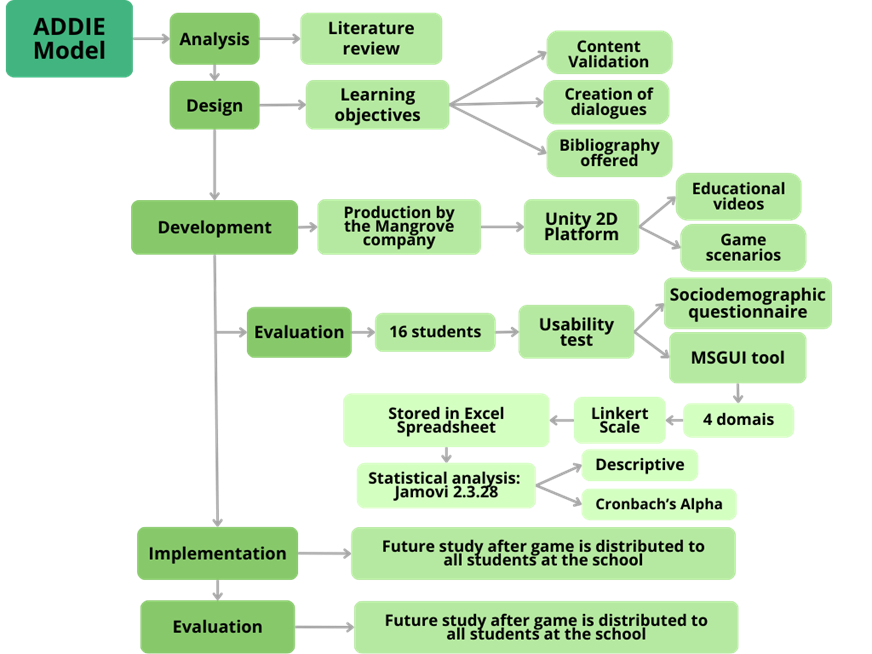
The methodological approach was based on the ADDIE20 instructional design model, as this tool enables the systematic planning and development of learning processes. The stages of analysis, design and development were followed. The implementation and evaluation stages will be conducted at a later date, when the game is made available to the university’s students, and will form part of a new study in which the retention of knowledge in the short and long term will be evaluated. (Flowchart 1)
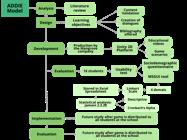
The analysis stage involved research in the health literature, in the BVS, Scielo, Pubmed and Cochrane databases, and the educational needs of the target audience on the subject of type II DM were listed in order to define the study design. The literature was researched using the publication years 2018-2023, using the keywords diabetes mellitus, early diagnosis, professional training, interprofessional education and experimental games.
During the design phase, the learning objectives to be achieved during the game were defined, using Bloom’s revised taxonomy as a guide21. In developing the game, questions were created based on the information gathered during the design phase. The content of the game, the activities to be implemented and the forms of assessment were developed according to the principles of dialogic language for self-instructional materials.
During development, the game’s content was validated with the supervisors of this study, who are teachers at the educational institution and specialists in the central theme. In addition, fictitious dialogues and learning questions were created to be used in the game, and educational videos on the subject were recorded by the study participants. The group of researchers and experts met remotely via the Cisco Webex Meetings platform and in person on the university campus. The game was developed on the Unity platform in 2D and implemented on the educational institution’s games platform. The technical production was executed by a specialist games production company.
The validation stage involved the application of questionnaires divided into two sections. Section 1 was made up of structured questions about sociodemographic and academic characteristics, familiarity with electronic games and the language and central theme of the game by the students who were the subjects of the research. Section 2 used the instrument for evaluating the usability of serious games (MSGUI)22) with questions on a 5-point Likert scale: strongly disagree, disagree, neither agree nor disagree, agree and strongly agree, so that the selected students could give their opinion on the pedagogical experience provided, the usability, playability and design of the game.
The researchers began recruiting students from all the institution’s health courses after the study was approved by the ethics committee, represented by the registration number of the Certificate of Presentation for Ethical Appraisal (CAAE) 74087723.4.0000.55. Those who had experience in digital games and were willing to take part in the validation of the game’s usability were identified. Of these, 16 undergraduates were selected, 2 from each of the health courses (Physical Education, Nursing, Pharmacy, Physiotherapy, Medicine, Nutrition, Dentistry and Psychology), in which half of the students evaluated the game using smartphones and the other half using tablets or computers.
In this validation stage, the students evaluated aspects of the inherent ease of the game, for example: font size, ease of reading, sharpness of the avatars, quality of the colour palette and contrast, immersive environment, ease and difficulty in passing levels.
Participants were recruited in person at the institution’s campus, from Monday to Friday, during normal working hours. The selected undergraduates were informed about the objectives of the project, the instruments used, the voluntary nature of their participation and the confidentiality of the information and anonymity, following the ethical principles of Resolution 510/16 of the National Health Council (CNS). The students who agreed to take part signed an informed consent form in order to continue the research, with the application of the game usability validation tool (MSGUI).22) There is no conflict of interest related to this research.
The data collected was transcribed and stored in an Excel® spreadsheet. The programme used for statistical analysis was Jamovi version 2.3.28. The descriptive analyses of the study variables were presented in frequency distribution, using measures of average rank, mean, standard deviation and maximum and minimum values for each component of the questionnaire, as well as for each domain and the overall result. Tables were also drawn up showing the absolute and relative frequencies for each degree of the Likert scale used. Subsequently, Cronbach’s Alpha was applied to each domain individually and to the instrument as a whole, considering an RM between 0.70 and 0.90 as the reliability criterion for the responses.
RESULTS
A self-instructional and interprofessional educational game was developed to build knowledge about the prevention and early diagnosis of type II diabetes mellitus, aimed at healthcare students.
“Mellitus!” is a platform game and was formulated based on contextualised learning objectives inserted into a fictitious scenario to simulate situations that health students will face in their practical activities, so that the fundamentals of prevention and early diagnosis of type II DM can be applied effectively by future professionals.
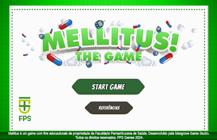
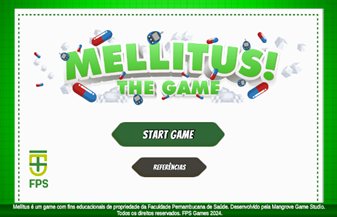
The game opens with the home screen (Figure 1). This is followed by a video introducing the content of the game, which emphasises the role of the institution in encouraging the prevention and early diagnosis of type II DM, and the importance of creating the game as a way of training future health professionals in caring for the disease.
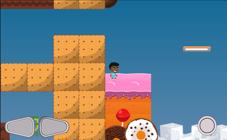
The game begins straight after the video is played. It involves the students needing to complete challenges in order to progress to the next level. The layout of the game (Figure 2) was developed in a playful way, with sweets represented at the bottom of the screen, symbolising a risk to the player’s health. If, during the course of the game, the player touches any of these sweets, they must return to the initial phase of the challenge.
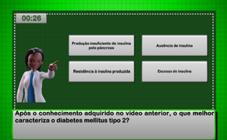
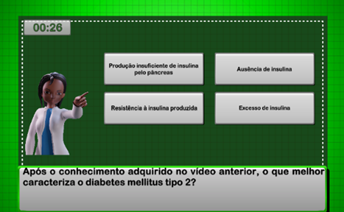
After completing the challenge, a narrated animation is shown, presenting a fictitious scenario on the subject, which represents a situation experienced in practice by students and health professionals. Following the animations, the students are directed to the questions in the first phase of the game (Figure 3), in order to consolidate the knowledge acquired from the video, fulfilling the objective of the module.
The game was structured into 6 modules, aligned with the specific learning objectives, divided into the following themes: introduction and definitions, epidemiology and impact of the disease, risk factors, clinical manifestations and complications, diagnosis and treatment. Each module includes an explanatory video on the corresponding topic, filmed by the project participants. The videos were produced in a language accessible to the general public, and for accessibility they feature a translation window in Brazilian Sign Language (Libras), with the image of an interpreter translating the spoken content, as well as subtitles.
All the questions in the game follow the same format pattern, consisting of a statement with a question and four alternatives, of which there are three incorrect and only one correct, which answers the question correctly. After answering the questions, the player will be directed to a page that indicates whether the answer was correct or incorrect and will immediately receive feedback.
If the student gets the question right, they will have the option of accessing references related to the topic covered and then continuing the game or proceeding immediately to the next stage. If the answer is incorrect, the student will be informed of the error and will have the opportunity to acquire the necessary knowledge to answer the question correctly, through the list of references provided, remaining at the centre of the learning process. After finishing all the videos and answering all the questions correctly, the student completes the game.
Once completed, an instrument was used to validate the usability of the game, with evaluative questions for the selected students to give their opinions on the pedagogical experience provided, the usability, playability and design of the game.
The study sample consisted of 16 students from the different health courses at the institution (Physical Education, Nursing, Pharmacy, Physiotherapy, Medicine, Nutrition, Dentistry and Psychology), 2 (12.5%) from each course. The age range of the participants was a minimum of 20 and a maximum of 44, with a median of 21. 62.5% of the participants were female.
As for familiarity with electronic games, 75% of the sample said they played games frequently. Among those who play, the most prevalent frequency was 1-3 times a week (37.5%), followed by 3-5 times a week (18.7%). With regard to the type of electronic game they mostly played, 62.5% said they used games for entertainment purposes and 18.7% said they used games for both entertainment and educational purposes.
As for the experience with the game, there was general agreement from the participants on all the interfaces evaluated. The instrument had a Cronbach’s Alpha coefficient of 0.7615, indicating adequate reliability for the research results. In addition, all the dimensions and assertions showed values that attested to the reliability of the answers obtained (Table 1).
DISCUSSION
This study set out to create and validate a self-instructional interprofessional educational game focused on the prevention and early diagnosis of type II DM for healthcare students. As pointed out in the literature, the development and validation of educational games has proved to be a promising strategy for health education15),(18. According to Benevides (2023)23 the integration of interprofessional knowledge promotes an integrative environment in the development of essential health competences, especially in a self-instructional setting, which offers an accessible and more dynamic learning experience13),(16.
The relevance of this initiative is even more evident given the growing prevalence and global impact of DM22),(8. The IDF (2021)2 also emphasises that developing countries such as Brazil are particularly susceptible to this alarming growth. In this respect, early diagnosis of DM2 is essential for the effective management of the disease and the prevention of serious complications4),(5. Studies indicate that early identification allows for timely interventions, as well as being essential for reducing the impact of the disease on overall health2),(4),(5.
Considering the academic context as an ally in the process of mitigating diseases such as type II DM, the integration of digital technologies in teaching, such as the use of educational games,16),(17) seeks not only to increase student engagement and interest, but also to improve their training to deal with the complex challenges related to recognising clinical conditions and diseases13),(14),(16. The study by Nascimento et al (2019)15 suggests that games stimulate cognition by providing new ways of understanding information, consolidating learning. Therefore, the creation of this game aims to fill an existing educational gap, especially in specific digital resources for health education, as evidenced in the study by Gorbanev (2018)18.
Active learning is the methodology that puts the student at the centre of the educational process. In this context, educational games stand out as effective tools for promoting this methodology, since through them the student not only receives information passively, but is stimulated through creativity and innovation, encouraging the development of skills and autonomy in the learning process.24
Regarding the impact of using educational technologies, Carvalho (2018)16 emphasises that gamification promotes deeper learning, facilitating the assimilation of theoretical knowledge and the development of practical and reflective skills. These aspects are fundamental for training students, especially in relation to issues such as type II DM, which is a current health problem2. In line with the literature, the study participants reported that the videos and activities proposed in the game contributed significantly to their learning, making the content more relevant and accessible.
In addition, the students agreed that the game stimulated their interest in the subject, in line with contemporary educational trends, which respond to the preferences of today’s generations, who are used to the constant use of digital technologies13),(14. This transformation was analysed by Tamoto’s (2020)14 study of 113 medical students, which pointed to the need for educational strategies that keep pace with technological innovations and promote engaging teaching methods.
Furthermore, the students highlighted the effective interaction between the content and the playful approach, which used design, videos and images in an engaging way, as positive points of “Mellitus!”. The importance of this interface is corroborated by the study by Gorbanev et al (2018)18, which highlighted the combination of verbal and visual communication in educational games as a tool that improves memorisation and makes learning more enjoyable. In this sense, in line with the literature, the game was effective in sparking curiosity and deepening interest in the subject.
One possible limitation of the game is the logistical challenges associated with accessing the internet and using mobile devices to engage in the activity. Additionally, the user’s familiarity with games can influence the tool’s effectiveness. The game also presupposes prior knowledge about type II DM, since its purpose is to reinforce previously learnt concepts. Another issue to consider is the constant updating of guidelines in diabetes management, which can make some parts of the game obsolete over time.
Long-term knowledge retention and the practical application of the information were not assessed, so it is not possible to determine whether the learning acquired through the game is effectively retained in the long term.
CONCLUSION
Virtual educational games have become established as valuable tools in the education and training of students and health professionals, by using innovative and interactive approaches that stimulate active learning.
Analysing the results revealed that the tool was well received by the participants. As in the literature, the study indicated that these games are effective in the educational process of health students, demonstrating adequate functionality and thematic relevance, as well as the ability to promote the active search for knowledge.
Incorporating educational games into academic training has proved to be an effective strategy for engaging students and providing a more dynamic learning experience. Gamification, combined with the self-instructional nature of the game, favours the development of skills related to the recognition, proper diagnosis and management of Type II Diabetes Mellitus, a condition of growing importance in clinical practice, especially given the global increase in cases of the disease.
Despite the identification of logistical limitations related to internet access and the use of mobile devices, the digital format of the game allows for continuous updates and adaptations, ensuring its relevance in the face of advances in the disease.
The study therefore highlights the importance of incorporating innovative methodologies and digital technologies into health education, providing future professionals with training that encourages self-instructional and interprofessional learning. Future studies could assess the long-term impact of the tool, as well as its applicability in different educational and clinical contexts, expanding the potential of educational games in the development of professional competences and evaluating their effectiveness.
Given the positive results, the game’s interactive and fun approach as a tool for training students, and the students’ engagement in the research, the “Mellitus!” game was incorporated into the educational institution’s games platform, guaranteeing its permanent and continuous access for future generations of students. We therefore recommend that this strategy be used with the same objective for the general public and health professionals who deal with diabetic patients.
References
-
1 Rodacki M, Teles M, Gabbay M, Montenegro R, Bertoluci M. Classificação do diabetes. São Paulo: Sociedade Brasileira de Diabetes; 2022 [acesso em 5 abr 2023]. Disponível em: Disponível em: https://diretriz.diabetes.org.br/classificacao-do-diabetes/
» https://diretriz.diabetes.org.br/classificacao-do-diabetes/ -
2 International Diabetes Federation. The diabetes atlas. 10th ed. Brussels: IDF; 2021 [acesso em 6 abr 2023]. Disponível em: Disponível em: https://www.diabetesatlas.org
» https://www.diabetesatlas.org -
3 ElSayed NA, Aleppo G, Aroda VR, Bannuru RR, Brown FM, Bruemmer D, et al. Introduction and methodology: standards of care in diabetes - 2023. Diabetes Care. 2022;12;46:S1-4 [acesso em 4 abr 2023]. Disponível em: Disponível em: https://diabetesjournals.org/care/issue/46/Supplement_1
» https://diabetesjournals.org/care/issue/46/Supplement_1 -
4 ElSayed NA, Aleppo G, Aroda VR, Bannuru RR, Brown FM, Bruemmer D, et al. Classification and diagnosis of diabetes: standards of care in diabetes - 2023. Diabetes Care . 2022;46:S19-S40 [acesso em 4 abr 2023]. Disponível em: Disponível em: https://diabetesjournals.org/care/article/46/Supplement_1/S19/148056/2-Classification-and-Diagnosis-of-Diabetes
» https://diabetesjournals.org/care/article/46/Supplement_1/S19/148056/2-Classification-and-Diagnosis-of-Diabetes -
5 ElSayed NA, Aleppo G, Aroda VR, Bannuru RR, Brown FM, Bruemmer D, et al. Obesity and weight management for the prevention and treatment of type 2 diabetes: standards of care in diabetes - 2023. Diabetes Care . 2022;46:S128-S139 [acesso em 3 abr 2023]. Disponível em: Disponível em: https://diabetesjournals.org/care/article/46/Supplement_1/S128/148043/8-Obesity-and-Weight-Management-for-the-Prevention
» https://diabetesjournals.org/care/article/46/Supplement_1/S128/148043/8-Obesity-and-Weight-Management-for-the-Prevention -
6 ElSayed NA, Aleppo G, Aroda VR, Bannuru RR, Brown FM, Bruemmer D, et al. Facilitating positive health behaviors and well-being to improve health outcomes: standards of care in diabetes - 2023. Diabetes Care . 2022;46:S68-S96 [acesso em 6 abr 2023]. Disponível em: Disponível em: https://diabetesjournals.org/care/article/46/Supplement_1/S68/148055/5-Facilitating-Positive-Health-Behaviors-and-Well
» https://diabetesjournals.org/care/article/46/Supplement_1/S68/148055/5-Facilitating-Positive-Health-Behaviors-and-Well -
7 Melo SP da S de C, Barreto MNS de C, Souza NP de, Lira PIC de, Cesse EÂP. Determinantes socioeconômicos do diabetes mellitus em um contexto de desigualdades no nordeste brasileiro. Revista Eletrônica Acervo Saúde. 2021;13(5):e6863 [acesso em 6 abr. 2023]. Disponível em: Disponível em: https://acervomais.com.br/index.php/saude/article/view/6863
» https://acervomais.com.br/index.php/saude/article/view/6863 -
8 Organização Pan-Americana da Saúde. Número de pessoas com diabetes nas Américas mais do que triplica em três décadas. Opas; 11 nov 2022 [acesso em 6 abr. 2023]. Disponível em: Disponível em: https://www.paho.org/pt/noticias/11-11-2022-numero-pessoas-com-diabetes-nas-americas-mais-do-que-triplica-em-tres-decadas
» https://www.paho.org/pt/noticias/11-11-2022-numero-pessoas-com-diabetes-nas-americas-mais-do-que-triplica-em-tres-decadas -
9 Macedo JL, Oliveira AS da SS, Pereira IC, Reis ER, Assunção M de JSM. Epidemiological profile of diabetes mellitus in northeastern Brazil. Res Soc Dev. 2019;8(3):e2883826 [acesso em 6 abr 2023]. Disponível em: Disponível em: https://rsdjournal.org/index.php/rsd/article/view/826
» https://rsdjournal.org/index.php/rsd/article/view/826 -
10 ElSayed NA, Aleppo G, Aroda VR, Bannuru RR, Brown FM, Bruemmer D, et al. Diabetes technology: standards of care in diabetes- 2023. Diabetes Care . 2022;46:S111-S127 [acesso em 4 abr 2023]. Disponível em: Disponível em: https://diabetesjournals.org/care/article/46/Supplement_1/S111/148041/7-Diabetes-Technology-Standards-of-Care-in
» https://diabetesjournals.org/care/article/46/Supplement_1/S111/148041/7-Diabetes-Technology-Standards-of-Care-in -
11 Blonde L, Umpierrez GE, McGill JB, Reddy SS, Berga SL, Bush M, et al. American Association of Clinical Endocrinology Clinical Practice Guideline: developing a diabetes mellitus comprehensive care plan - 2022 update. Endocr Pract. 2022; 28(10):923-1049 [acesso em 06 abr 2023]. Disponível em: Disponível em: https://www.endocrinepractice.org/article/S1530-891X(22)00576-6/fulltext
» https://www.endocrinepractice.org/article/S1530-891X(22)00576-6/fulltext -
12 Siqueira TV, Nascimento JSG, Oliveira JLG, Regino DSG, Dalri MCB. Utilização do serious game como estratégia educacional inovadora para aprendizagem da ressuscitação cardiopulmonar: revisão integrativa. Rev Gaúcha Enferm. 2020;41:e20190293 [acesso em 6 abr 2023]. Disponível em: Disponível em: https://www.scielo.br/j/rgenf/a/fvknfCpndHtQtZQb6fjXqKG/?lang=pt#
» https://www.scielo.br/j/rgenf/a/fvknfCpndHtQtZQb6fjXqKG/?lang=pt# -
13 Rech IM, Viêra MM, Anschau CT. Geração Z, os nativos digitais: como as empresas estão se preparando para reter esses profissionais. Revista Tecnológica. 2017;6(1):152-66 [acesso em 06 abr 2023]. Disponível em: Disponível em: https://uceff.edu.br/revista/index.php/revista/article/view/223
» https://uceff.edu.br/revista/index.php/revista/article/view/223 -
14 Tamoto P, Gati R dos S, Rondina JM, Brienze SLA, Lima AR de A, André JC. Aprendizagem da geração millennial na graduação médica. Revista de Bioética. 2020;28(4):683-92 [acesso em 06 abr 2023]. Disponível em: Disponível em: http://www.scielo.br/scielo.php?script=sci_arttext&pid=S1983-80422020000400683&tlng=pt
» http://www.scielo.br/scielo.php?script=sci_arttext&pid=S1983-80422020000400683&tlng=pt -
15 Nascimento ZDC, Agnani JAT, Lima DHCA, Duque TB, Lima LC, Bruno RS. Validação de um jogo educativo virtual para estudantes de medicina [trabalho de conclusão de curso]. Recife: Faculdade Pernambucana de Saúde; 2019 [acesso em 4 abr 2023]. Disponível em: Disponível em: https://tcc.fps.edu.br/jspui/bitstream/fpsrepo/562/1/Valida%C3%A7%C3%A3o%20de%20um%20jogo%20educativo%20virtual%20para%20estudantes%20de%20medicina%20%28TCC%29%20vers%C3%A3o%20final
» https://tcc.fps.edu.br/jspui/bitstream/fpsrepo/562/1/Valida%C3%A7%C3%A3o%20de%20um%20jogo%20educativo%20virtual%20para%20estudantes%20de%20medicina%20%28TCC%29%20vers%C3%A3o%20final -
16 Carvalho GR. A importância dos jogos digitais na educação [trabalho de conclusão de curso]. Niterói: Universidade Federal Fluminense; 2018 [acesso em 06 abr 2023]. Disponível em: Disponível em: https://app.uff.br/riuff/bitstream/handle/1/8945/TCC_GABRIEL_RIOS_DE_CARVALHO%20(1).pdf;jsessionid=23DE9D64DD0019B3B6DE28ECBA7D6223?sequence=1
» https://app.uff.br/riuff/bitstream/handle/1/8945/TCC_GABRIEL_RIOS_DE_CARVALHO%20(1).pdf;jsessionid=23DE9D64DD0019B3B6DE28ECBA7D6223?sequence=1 -
17 Sobreira ESR, Viveiro AA, d’Abreu JVV. Aprendizagem criativa na construção de jogos digitais: uma proposta educativa no ensino de ciências para crianças. Tecné, Episteme y Didaxis. 2018;44:71-88 [acesso em 4 abr 2023]. Disponível em: Disponível em: http://www.scielo.org.co/scielo.php?script=sci_arttext&pid=S0121-38142018000200071&lng=en&nrm=iso
» http://www.scielo.org.co/scielo.php?script=sci_arttext&pid=S0121-38142018000200071&lng=en&nrm=iso -
18 Gorbanev I, Agudelo-Londoño S, González RA, Cortes A, Pomares A, Delgadillo V, et al. A systematic review of serious games in medical education: quality of evidence and pedagogical strategy. Med Educ Online. 2018;23(1):e1438718 [acesso em 06 abr 2023]. Disponível em: Disponível em: https://www.tandfonline.com/doi/citedby/10.1080/10872981.2018.1438718?scroll=top&needAccess=true&role=tab
» https://www.tandfonline.com/doi/citedby/10.1080/10872981.2018.1438718?scroll=top&needAccess=true&role=tab -
19 Sparapani VdC, Della Torre G, Cardoso CFS, Rossi A, Tamayo M, Lima M, et al. A video game for Brazilian T1D children about self-management: design and usability evaluation. JMIR Diabetes. 2021;6(4):e30927 [acesso em 06 abr 2023]. Disponível em: Disponível em: https://pmc.ncbi.nlm.nih.gov/articles/PMC9631520/
» https://pmc.ncbi.nlm.nih.gov/articles/PMC9631520/ -
20 Lotthammer KS, Da Silva JB, Ferenhof HA. A importância do desenho instrucional para o sucesso de cursos online: uma revisão sistemática. Revista EDaPECI. 2018;18(2):7-23 [acesso em 06 abr 2023]. Disponível em: Disponível em: https://dialnet.unirioja.es/servlet/articulo?codigo=6711193
» https://dialnet.unirioja.es/servlet/articulo?codigo=6711193 -
21 Ferraz AP do CM, Belhot RV. Taxonomia de Bloom: revisão teórica e apresentação das adequações do instrumento para definição de objetivos instrucionais. Gest Prod. 201017(2):421-31. doi: https://doi.org/10.1590/S0104-530X2010000200015.
» https://doi.org/https://doi.org/10.1590/S0104-530X2010000200015 - 22 Schmidt JDE. MSGUI: um instrumento para avaliação de usabilidade em jogos sérios para dispositivos móveis [dissertação]. Passo Fundo: Universidade de Passo Fundo; 2017 [acesso em 25 set 2024].
-
23 Benevides R, Miranda ES, Abrahão AL, Pereira S. Educação Interprofissional nos cursos da área da saúde de uma universidade pública. Saúde em Debate. 2023;47(139):905-17. doi: https://doi.org/10.1590/0103-1104202313913.
» https://doi.org/https://doi.org/10.1590/0103-1104202313913 -
24 Silva JB, Gilvandenys LS, Castro JB. Gamificação como estratégia de aprendizagem ativa no ensino de Física. Revista Brasileira de Ensino de Física. 201941(4):1-9 [acesso em 06 abr 2025]. Disponível em: Disponível em: https://www.scielo.br/j/rbef/a/Tx3KQcf5G9PvcgQB4vswPbq/?format=pdf⟨=pt
» https://www.scielo.br/j/rbef/a/Tx3KQcf5G9PvcgQB4vswPbq/?format=pdf⟨=pt
Research data is available in the body of the document.

 Source: Prepared by the authors. Recife, 2024.
 Source: Prepared by the authors. Recife-PE, 2024.
 Source: Prepared by the authors. Recife-PE, 2024.
 Source: Prepared by the authors. Recife-PE, 2024.