 The use of social media in the Brazilian electoral campaigns of 2018 and 2022
Abstract:
Motivated by the increasing digitalization of political campaigns over the past decade, this article aims to analyze the strategic use of social media in Brazil’s 2018 and 2022 presidential election campaigns, focusing on the candidates who advanced to the second round in both contexts: Jair Bolsonaro (2018 and 2022), Fernando Haddad (2018), and Lula (2022). The study examined posts published on Facebook and Twitter during the electoral period, highlighting post frequency, publication formats, and engagement rates. The research employed both quantitative and qualitative data, enabling the generation of a comparative diagnosis that explores the effects of these campaigns on digital engagement and political communication. The study found different patterns of social media use in the four campaigns, especially in terms of posting frequencies and style, as Bolsonaro opted for a lower frequency and amateur aesthetic, while Lula and Haddad opted for higher frequencies and visual professionalization, offering reflections on electoral strategies, their limitations and potential impacts for democracies.
Keywords:
electoral marketing; social media; political marketing; Brazilian elections
Resumo:
Motivado pelo contexto da crescente digitalização das campanhas políticas eleitorais na última década, este artigo tem como objetivo analisar o uso estratégico das mídias sociais nas campanhas eleitorais presidenciais brasileiras de 2018 e 2022, com foco nos candidatos que foram para a disputa em segundo turno em ambos os contextos: Jair Bolsonaro (2018 e 2022), Fernando Haddad (2018) e Lula (2022). Para isso, foram analisadas publicações, em diversos formatos, postadas no Facebook e Twitter durante o período eleitoral, destacando padrões de atuação, formatos de publicações e níveis de engajamento. A pesquisa usou de técnicas quantitativas e qualitativas para coleta de dados, o que possibilitou gerar um diagnóstico comparativo, explorando os efeitos dessas práticas de campanha no engajamento digital e na comunicação política. O estudo encontrou diferentes padrões na utilização das redes sociais, sobretudo em termos de frequências e estilos de publicação, com Bolsonaro optando por frequências baixas e uma estética amadora e Lula e Haddad optando por frequências altas e um estilo profissionalizado, trazendo reflexões sobre as diferentes estratégias eleitorais, suas limitações e impactos democráticos.
Palavras-chave:
marketing eleitoral; redes sociais; marketing político, eleições brasileiras
Introduction
The use of digital media in electoral campaigns has become an increasingly prominent object of study in both the international and Brazilian literature, gaining relevance from the 1990s onwards, when the internet became more accessible and widespread. Until 2008, however, the internet had a more limited role in electoral campaigns, mostly used to disseminate candidate’s profiles and proposals through official websites (Braga; Carlomagno, 2018). However, with the advent of Web 2.0, the rise of online platforms, and the emergence of social media, digital tools reached a new dimension, enabling interactive dynamics between candidates and voters, as in Barack Obama’s campaign, which became a reference point for this change in political communication (Gomes et al., 2009; Harris; Lock, 2010).
In this context, Facebook was initially the main digital platform in the subsequent electoral campaigns, followed a few years later by Twitter, expanding interaction spaces and the ways in which campaign content could be shared (Cervi; Sinderski; Verner, 2021; Lilleker; Koc-Michalska, 2013; Rossini et al., 2016). Social media brought greater interactivity to electoral campaigns, as well as a more dynamic relationship between candidates and voters, and content segmentation, making it possible to direct specific messages to different groups, meeting their demands in customized ways. As highlighted by Nickerson and Rogers (2014), the use of Big Data in electoral campaigns enables a deeper analysis of voters’ behaviors and preferences, resulting in more precise segmentation, as well as highly personalized communication strategies, with stronger potential for engagement and persuasion.
In Brazil, the use of social media in electoral campaigns gained relevance from 2010 onwards, becoming a significant channel of communication contesting traditional media, such as television and radio. Many studies have sought to understand how this dynamic has emerged in different Brazilian electoral campaigns. Rossini et al. (2016), for instance, examined the 2014 presidential elections, investigating the communication strategies of Aécio Neves (PSDB), Dilma Rousseff (PT) and Marina Sila (PSB) on Facebook. Freire (2022) analyzed the use of social media in Jair Bolsonaro’s (PSL) 2018 campaigns, emphasizing the impact of image building and message dissemination on voter mobilization. Marques, Aquino e Miola (2014), on the other hand, focused on understanding the phenomenon in legislative campaigns, highlighting the effectiveness of digital communication via Twitter in increasing political engagement for federal deputies of the 54th Legislature. In this direction, Cervi, Sinderski e Verner (2021), investigated the use of Twitter by Mayoral candidates of the Brazilian capital cities during the country’s 2020 municipal elections.
These studies share the perception that there has been an acceleration in the use of social media for electoral purposes in Brazil during the last decade, driven mainly by the increase in the number of internet users in the country. Official data indicate that, in 2021, around 90% of Brazilian households had internet access. Beyond that, Brazil ranks among the five countries with the highest numbers of internet users, behind China, India, the United States and Indonesia (Barbosa, 2022) establishing itself as the largest internet user in Latin America.
The present study seeks to analyze the use and social media strategies adopted by candidates during the second round of the Brazilian presidential elections of 2018 and 2022. The focus is on the Facebook and Twitter campaigns of Jair Bolsonaro (PSL - 2018), Fernando Haddad (PT - 2018, Luiz Inácio Lula da Silva (PT - 2022) and Jair Bolsonaro (PL - 2022). In 2022, those platforms had approximately 135 million accounts in the country. The analysis includes different post formats, such as texts, pictures and videos, allowing for a broad evaluation of the strategies employed. Its specific objectives are to describe and compare the candidates’ performances in terms of engagement, follower base, posting schedule, production and format distribution; to explore the similarities and differences between the 2018 and 2022 social media campaigns; and to examine how the use of social media in the studied cases relates to the main findings described by the literature.
The selection of the 2018 and the 2022 electoral contexts for the present article is justified by the intensification of the country’s digital transformation, marked by the ample adoption of social media in the political sphere. Furthermore, the 2018 elections, which resulted in the election of Jair Bolsonaro, from the Social-Liberal Party (PSL), over the candidate from the Worker’s Party (PT), Fernando Haddad, took place in the midst of a highly polarized and institutionally unstable political context in Brazil. This context was particularly influenced by the impeachment of the president Dilma Rousseff (PT), and the imprisonment of the ex-president Lula (PT), who was barred from participating in the electoral race after being declared ineligible. The 2022 elections, in turn, occurred in the context of the global COVID-19 pandemic, and constituted the most tightly disputed electoral race since the country’s redemocratization. The presidential election was decided by a margin of tenths of a percentage point, with Lula (PT), whose previous ineligibility sentence had been annulled, obtaining 50.9% of the valid votes, beating Jair Bolsonaro (PL), now in the Liberal Party, receiving 49.1% of the votes.
In this regard, understanding electoral marketing strategies through social media in the contexts of high instability and ideological polarization provides a basis for future investigations and reflections on new dynamics of power in virtual environments and their implications for democracy. These virtual environments are characterized by the use of advanced microtargeting and neuromarketing tools, employing psychographic data from voters to tailor messages in order to maximize their emotional impact, fostering the development of “virtual social bubbles”, the manipulation of public discourse, and the further increase in political polarization.
Theoretical background
Political marketing involves the use of marketing tools and concepts by political organizations to achieve their political goals (Lees-Marshment et al., 2019), generally, the creation, communication and delivery of promises with voters, stakeholders and society (Hughes; Dann, 2009). Likewise, electoral marketing can be defined as the utilization of marketing techniques in the period prior to the elections to obtain votes (Porto et al., 2021). Finally, digital electoral marketing is characterized by the use of electronic devices and the internet as tools to establish a direct communication channel with the electorate, being quicker and less expensive than traditional tools (Penteado, 2011; Silva; Ferreira Júnior, 2013).
Social media stands out among the best tools used to promote closer connections between candidates and the electorate, emerging with the promise of horizontal communication. While traditional marketing channels are unidirectional, social media marketing introduces constant interactions between voters and candidates, or voters and other voters, which points towards the possibility of horizontal communication and the development of deeper connections between voters and candidates (Muñoz; García; Ripollés, 2017). This, in turn, points towards another plethora of possibilities, such as an increase in political mobilization and debates (Penteado, 2011), as well as the opening of feedback mechanisms (Assaad; Gómez, 2011).
Still, as promising as those possibilities are, studies on the subject show a different reality, as politicians do not seem to adopt a horizontal communication approach (Muñoz, García; Ripollés, 2017; Penteado, 2011). Rather, the rise of social media seems to have resulted in a hybrid communication system, in which politicians use social media to communicate with journalists but retain a vertical communication model with the electorate (Muñoz; García; Ripollés, 2017). Yet, this does not mean that social media is not affecting the way in which politicians interact with the electorate, they definitely are. Evidence to that is one of the most recent phenomena in Electoral Marketing, the adoption of livestreaming.
Livestreaming is an alternative method of video sharing. In general, traditional video platforms can be understood as repositories of pre-recorded and compressed video files, which are made accessible on demand by users. Meanwhile, livestreaming platforms compact and transmit media in real time (Lippens, 2010), enabling spectators to watch the content while it is being produced.
Platforms also enable the implementation of highly personalized tactics, based on advanced methods of data collection and analysis focused on user’s daily lives. This process, allied with the development of an increasingly sophisticated data industry and market has allowed for the adoption of robust microtargeting techniques, improving the capacity of engagement and persuasion in the political environment (Chester; Montgomery, 2017). Microtargeting can be interpreted as “creating finely honed messages targeted at narrow categories of voters based on data analysis ‘garnered from individuals’ demographic characteristics and consumer and lifestyle” (Gorton, 2016, p. 62). In other words, this means that “candidates have the means to learn about voter’s characteristics and ideology and can narrowly target voters according to these characteristics without the information being transmitted to other members of the electorate” (Prummer, 2020, p. 1).
These arguments are reinforced by Nickerson and Rogers (2014) who highlight the changes caused by technology and big data in the development of electoral campaigns. They point out that, in the recent past, campaigns used simple heuristics to draw the voters’ profile, which is unlike what happens contemporarily, for, with the use of digital data, it is possible to obtain much broader information about each individual, resulting in more segmented and targeted campaigns.
Electoral advertising has become so personalized that it has sparked many debates both in literature and society and, many authors, such as Ward (2018), Gorton (2016), Borgesius et al. (2018) and Prummer (2020), have commented on ethics of these strategies, as well as their potential implications for democracy. Microtargeting is a practice that raises many questions related to privacy and other personal rights; after all, the technique itself involves the collection of personal data, a topic that has been debated for years, resulting in many regulatory initiatives around the globe.
However, it is important to note that the risks of microtargeting and segmentation go far beyond privacy concerns. For instance, Chester and Montgomery (2017) mention the possibility of psychographic, neuromarketing, and emotion-based targeting, which utilizes data analysis to tailor electoral messages as to produce the greatest psychological impact, reaching the voter at an emotional level. A similar example is found in Ward (2018), who refers to the use of behavioral microtargeting, which is the tailoring of targeted messages to exploit voters’ fears, biases, hopes and fantasies (even those the voters are unaware of) in order to trigger specific reactions.
Although those techniques are indeed effective, they may also pose risks to democracies, as the architecture behind social media has been often interpreted as playing a central role in the contemporary concepts of social bubbles and echo chambers. The structure of social media commonly results in a digital environment where users and groups are primarily exposed to a single perspective and every opposite view is rejected (Chul-Han, 2022). Microtargeting has been associated with an increase in political polarization (Prummer, 2020) and can even be used to manipulate individuals (Borgesius et al., 2018).
When analyzing the Brazilian case, Freire (2022) reinforces the concerns raised by the literature. The author argues that the evolution of this dynamic has challenged the original idea that technology and social media would make democracy more representative, inclusive and revitalize the public sphere. This is because the formation of social bubbles fosters political polarization by hindering dialogue and interactions with opposing views. In the same vein, in the author’s view, campaigns are a process no longer limited to the pre-electoral period, they are persistent, alive, and seek to adopt strategies of spectacle and emotional engagement with the voter. This process has led, in the Brazilian context, to the emergence of populist, binary and “memetized” strategies, reigniting the debate over crowds and mass psychology, as highlighted by Cesarino (2019).
Methodology
This article studies the use of electoral marketing on social media in Brazil. It applies a multiple-case study methodology, examining how two of the most popular social media platforms in the country, Facebook and Twitter, were used by the presidential campaigns during the second round of the Brazilian elections of 2018 and 2022 (Jair Messias Bolsonaro, 2018; Fernando Haddad, 2018; Luíz Inácio Lula da Silva, 2022; and Jair Messias Bolsonaro, 2022). The option to focus on the second round of the elections was made because it represents a more focused and decisive moment of the electoral race, symbolizing a direct confrontation between the candidates, in contrast to the first round, which involves a bigger number of contenders.
To address the objectives of the study, the research opted to collect and codify all posts available on each candidates’ social media profiles that dated from the second round of each respective election, including original posts, reposts and replies, together with their metadata (date and number of interactions). This process originally occurred in 2023, but all the data was recollected, updated and refined in November and December of 2024. In total, the study collected 3,141 posts, distributed in accordance with Table 1. The entire collection and codification process was carried out manually by the researchers using a spreadsheet, no software tools were used for data collection, extraction or codification.
The analysis was centered around candidates’ personal profiles, excluding third-party accounts, as well as the official political party page. This decision was made because personal profiles represent a more direct and intimate connection between candidates and voters, and it also avoids potential noise caused by the electoral race for local governors, which happens simultaneously with the presidential elections.
The codification process was conducted inductively, without using pre-established categories. Every post was labeled in reference to its publication date, following the format “day-number”, in which “number” represents the order of publication on that specific day (i.e., first, second, third…). Following this step, each post was assigned a code corresponding to their formats of publication, which were based on the platforms themselves.
On Facebook, posts were codified as Texts, Pictures, Videos, or Livestreams. This was made in accordance with the main visual element of the publication. Posts containing an image or video together with a caption were categorized as “Picture” or “Video”, meaning that the “Text” category was used for posts that only contained plain texts, with no other visual element. An additional category, “Other”, was included to represent formats with low individual usage rates, such as audio files and external links. Posts were categorized as external links only if they included a clickable visual element, i.e., the mere presence of a link in the caption or post body was not sufficient to categorize the post as an external link, even if it could be interpreted as its main element. This was done in order to maintain a greater consistency throughout the codification process, since, in many posts, identifying the main element would require a higher degree of subjectivity.
On Twitter, in addition to the previously mentioned categories, the categories of “Retweets” and “Replies” were added. Retweets serve as a way to share posts from other accounts and were commonly used by the candidates. Replies, on the other hand, serve as responses to other users’ tweets. Replies are a special case of tweet, for they only appear on the feed of users who follow all of the involved accounts, and, consequently, they tend to generate much fewer interactions. For this reason, replies were categorized in two distinct ways. Replies to tweets from other users received their own specific category, “Reply”, while replies to candidates own tweets were classified normally, i.e., as Texts, Pictures or Videos, since they only involve one account and, hence, appear to every follower of the candidate. It is also important to note that livestreams on Twitter were categorized whenever the use of Periscope or Twitter Broadcast services was identified, even when they appeared as links, since, unlike external links, these services were directly integrated to the platform, being accessible within Twitter itself, and, as such, they were considered an integral part of the post.
Finally, all posts had their interaction numbers added to the spreadsheet, and notes were taken with additional comments regarding the publications, such as the production standard, functioning as basis for the discussion of the results.
Results
The 2018 Elections
On October 26, 2014, with 51.64% of the valid votes (TSE, 2021), Dilma Rousseff (PT) was re-elected President of Brazil, in what was considered the most tightly disputed election since the country’s redemocratization process. Still, Dilma’s presidency did not last, for in August 2016, Dilma was impeached and removed from her duties as president. Following Brazilian law, this meant that her vice-president, Michel Temer (MDB), would assume the position until the next electoral cycle. Temer, however, did not run for re-election, which meant that the 2018 cycle would be contested by different candidates. In the second round, those were Jair Messias Bolsonaro (PSL) and Fernando Haddad (PT).
Fernando Haddad represented the previous governments, coming from the same political party as the last elected president, Dilma Rousseff (2010 and 2014), as well as her predecessor, Luiz Inácio Lula da Silva (2002 and 2006). As such, Haddad carried the legacy of the past four elections, one of both success and controversy. Jair Bolsonaro, on the other hand, represented the exact opposite, a candidate with no connection to previous governments and which was affiliated with a much less traditional party, PSL. Bolsonaro benefited from the image of a political “outsider”, someone who, despite several lower-level mandates, was considered a new face in regard to presidential elections. Despite having much less access to traditional media, Bolsonaro had been rapidly rising in popularity, partially due to his success on social media, where he had a much larger follower base than his opponent. Bolsonaro and Haddad ran highly antagonistic campaigns, a fact evident in their campaign strategies.
The first round of the 2018 Brazilian Presidential Elections took place on October 7, 2018, and ended with Jair Bolsonaro (PSL) in first place with 46.03% of the valid votes, followed by his opponent Fernando Hadad (PT), with 29.28% of the electorate (TSE, 2021). According to the Brazilian Constitution, Article 77, §2, Bolsonaro and Haddad would need to participate in a second round of voting, which was scheduled to October 28, giving the candidates three weeks to reach an absolute majority. During these 21 days, the candidates posted a combined total of 1,416 times across the two platforms, 584 times on Facebook and 832 times on Twitter, generating an approximate total of 65,316,000 interactions, 48,654,500 and 16,661,500, respectively.
Table 2 summarizes basic information about each candidate’s profile on the platforms studied, including number of followers, posts published, total interactions and average interactions per post and per follower.
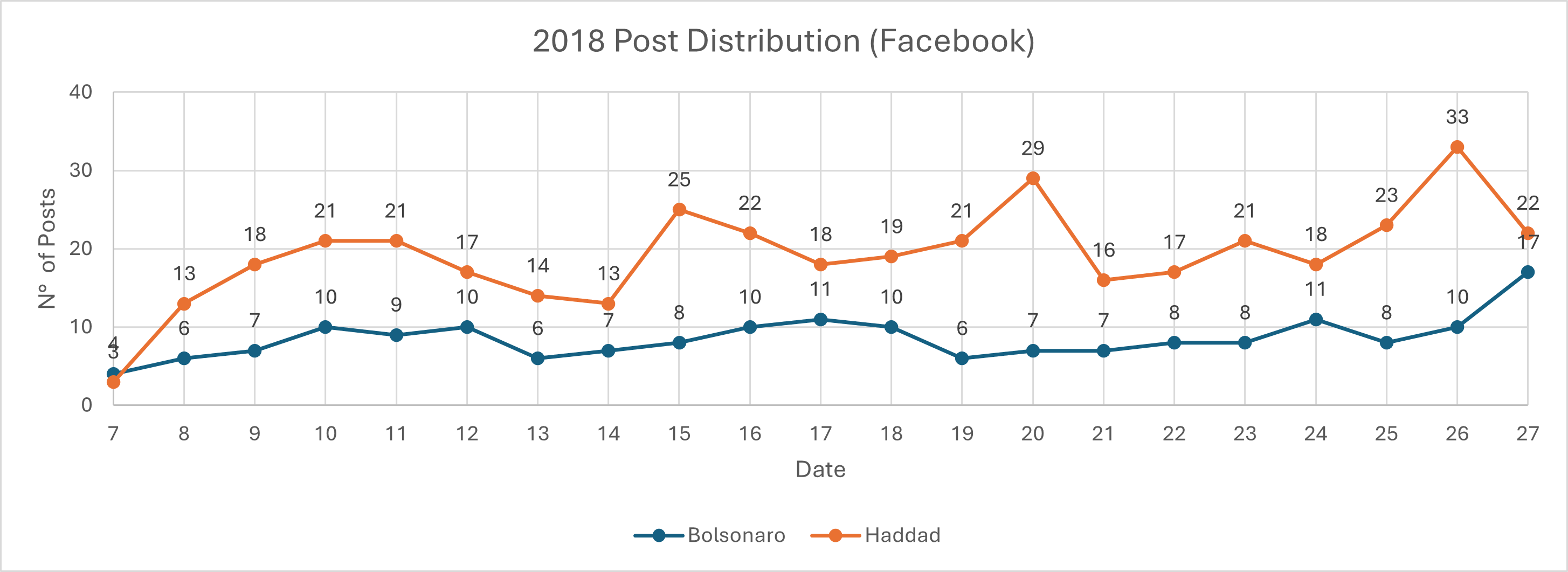
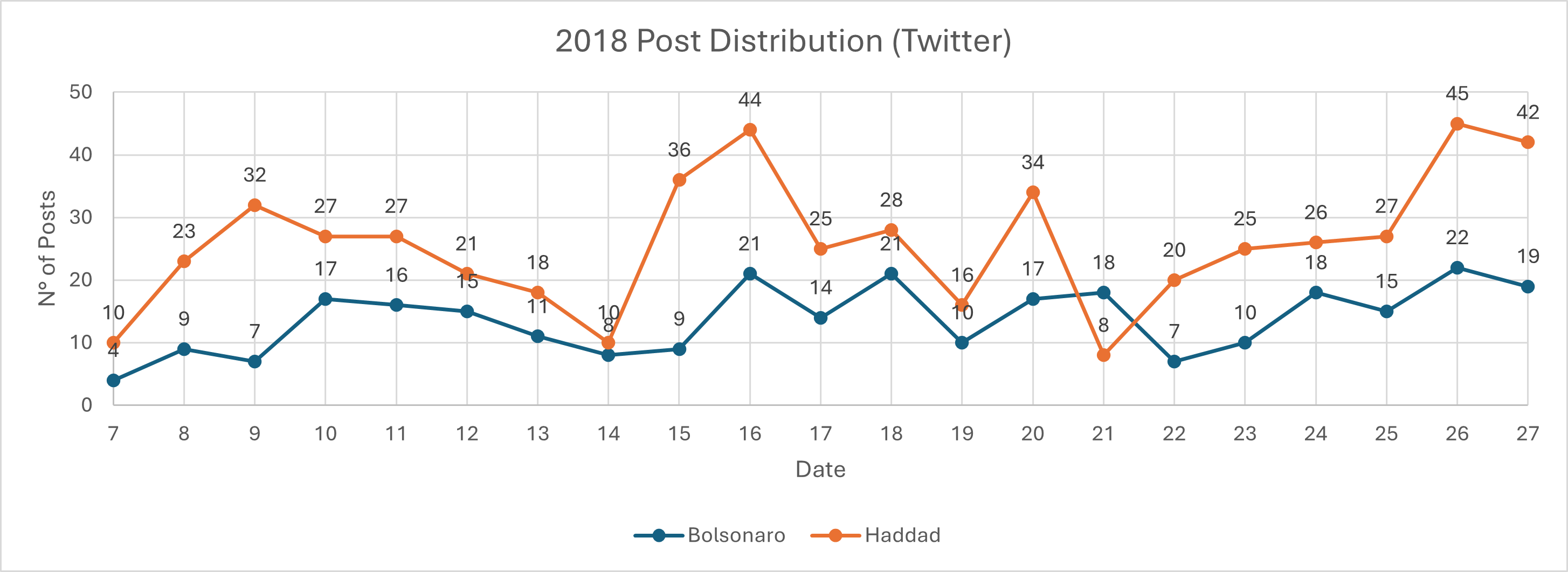
One of the most significant differences between the two candidates is already evident in Table 2. Bolsonaro had a much bigger follower base, especially at the beginning of the second round, contributing to his higher average of interactions. Nevertheless, this difference did not halt Haddad from being the most active candidate on social media, as evidenced by his larger number of posts, which justifies his higher number of interactions per user. Graphs 1 and 2 illustrate each candidate’s post distribution (number of posts over time) for each of the social media platforms.
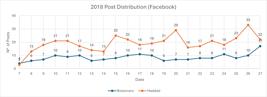
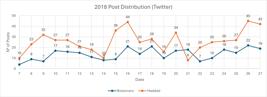
Both candidates made the effort to post every day, with varying degrees of consistency. However, there was no indication that any of the campaigns followed a strict posting schedule. On the contrary, especially on Twitter, the data suggests that they both had a considerable degree of flexibility in regard to how many posts they would share each day. Beyond that, neither of the candidates showed a particular preference for either of platforms studied, with the higher use of Twitter being likely attributed to its inherent nature as a microblogging platform. Still, another important aspect of the post distribution is related to the different formats each candidate used to convey their messages. In that sense, Table 3 illustrates the distribution of posts divided by format.
Haddad and Bolsonaro had distinct format distribution patterns on the two social media platforms, implying that the candidates followed different strategies for each of the studied networks. In Haddad’s case, this difference is immediately noticeable, as his most used format on Twitter (Text) was also his least used format on Facebook. In Bolsonaro’s case, this difference is less apparent, since Text was his most used format on both profiles. Yet, it is worth noting the absence of the Live format on Twitter, which only appeared as External Links to the candidate’s YouTube channel, as well as a lower use of Videos on Twitter than on Facebook.
These differences in platform use can be understood in light of the literature, since, as demonstrated by Kreiss, Lawrence and McGregor (2017), different platforms are perceived and used in different ways by electoral campaigns in order to better leverage their unique characteristics and audiences. It can be stated that the choice of platform itself can influence which strategy will be used and which content will be produced.
That said, it is also important to highlight Bolsonaro’s use of the reply and retweet tolls, which accounted for 20% of his posts on Twitter. In general, such tools were used to answer voters or share messages from other accounts, demonstrating the candidate’s intention to interact with his followers in a horizontal fashion, and promoting a sense of closeness between him and his electorate. At times Bolsonaro would use the reply function simply to respond “good morning” to a specific voter, which reinforced his image as an ordinary citizen. In Haddad’s case, this tool was not used as frequently, and his most interactive posts were his livestreams, but, even then, many were focused on reproducing “in-real-life” events and interviews, resulting in limited interaction with his viewers.
The 2022 Elections
The 2022 Brazilian elections were a natural continuation to the previous cycle, not only due to being the subsequent presidential elections, but also because they shared many characteristics, bringing forth the same dichotomies and political topics. Jair Bolsonaro ran for re-election, only now representing a different political party, the Liberal Party (PL), while Luiz Inácio Lula da Silva ran for the same party as Haddad, the Workers’ Party (PT). Polarization permeated the entire Brazilian political landscape in the years between the elections. During his mandate, Bolsonaro was targeted by over 150 impeachment requests (Amaral, 2023) and even changed political parties, governing for more than two years with no affiliation whatsoever. Yet, unlike Dilma Rousseff, Bolsonaro’s impeachment’s requests were never brought to a vote, and, consequently, he was able to complete his mandate and run for re-election.
Still, in spite of the controversies, Bolsonaro’s popularity remained high, especially online, where he enjoyed an even larger follower base, reaching 15 million followers on Facebook, and 9.4 on Twitter. As such, Bolsonaro was still a very strong candidate for the 2022 elections. On the PT’s side, however, the candidate was no longer Haddad, but the ex-president Luiz Inácio Lula da Silva. Lula had originally been PT’s candidate of choice in 2018 but was eventually replaced after being declared ineligible due to his alleged involvement in a corruption case. This time, however, was able to dispute the election, as his previous conviction had been annulled by the Brazilian Supreme Court. Lula was a popular and well-known candidate and had already been elected for president twice in his political career in 2002 and 2008, leaving office with an approval rating of 87% according to an IBOPE research in 2010 (Bonin, 2010).
The first round of the Brazilian Presidential Elections of 2022 took place on October 2nd, 2022, and ended with Luiz Inácio Lula da Silva (PT) in first place with approximately 48.43% of the valid votes, followed by Jair Messias Bolsonaro (PL), with around 43.2% of the electorate (TSE, 2021). As in 2018, this meant that candidates would have to participate in a second round of voting, which was scheduled to take place on October 30, giving them four weeks to reach an absolute majority.
Together, Bolsonaro and Lula posted an added total of 1,725 times across Facebook and Twitter, 576 times on the former and 1,149 on the latter, generating an approximate total of 85,353,200 interactions, or 47,635,800 and 37,717,400 respectively. Table 4 summarizes the main information about each of the candidates, including the number of followers, posts and interactions.
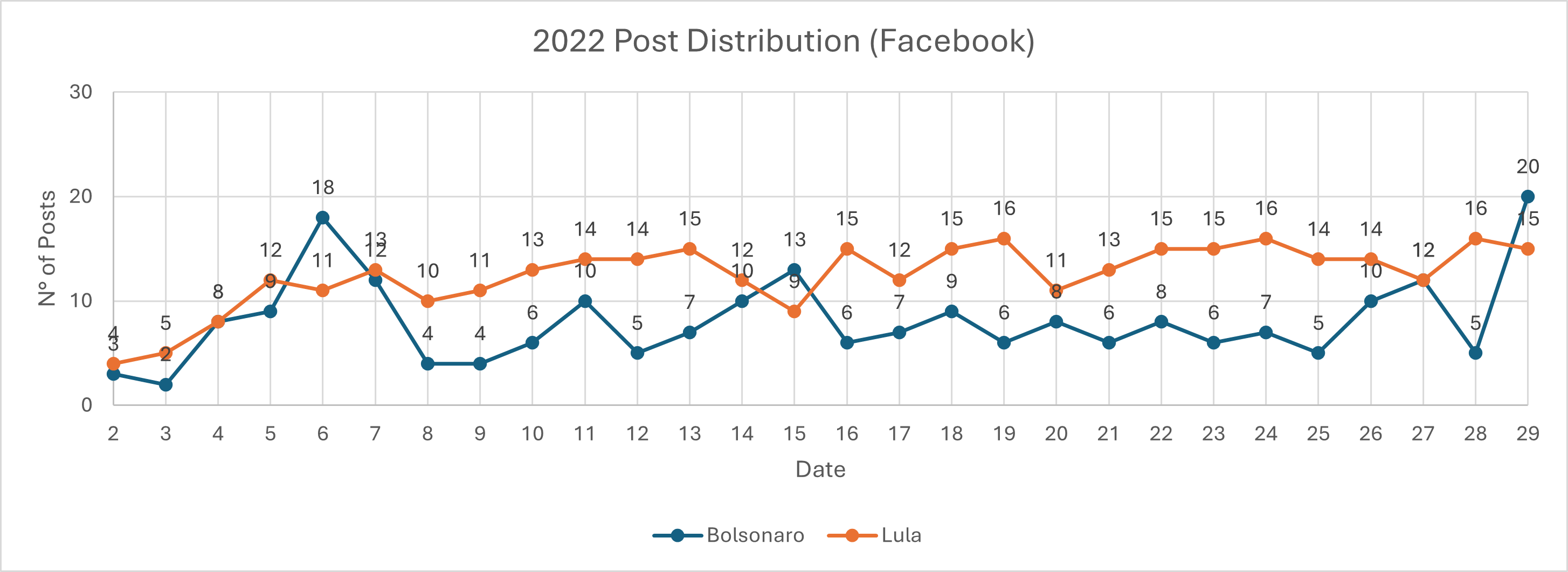
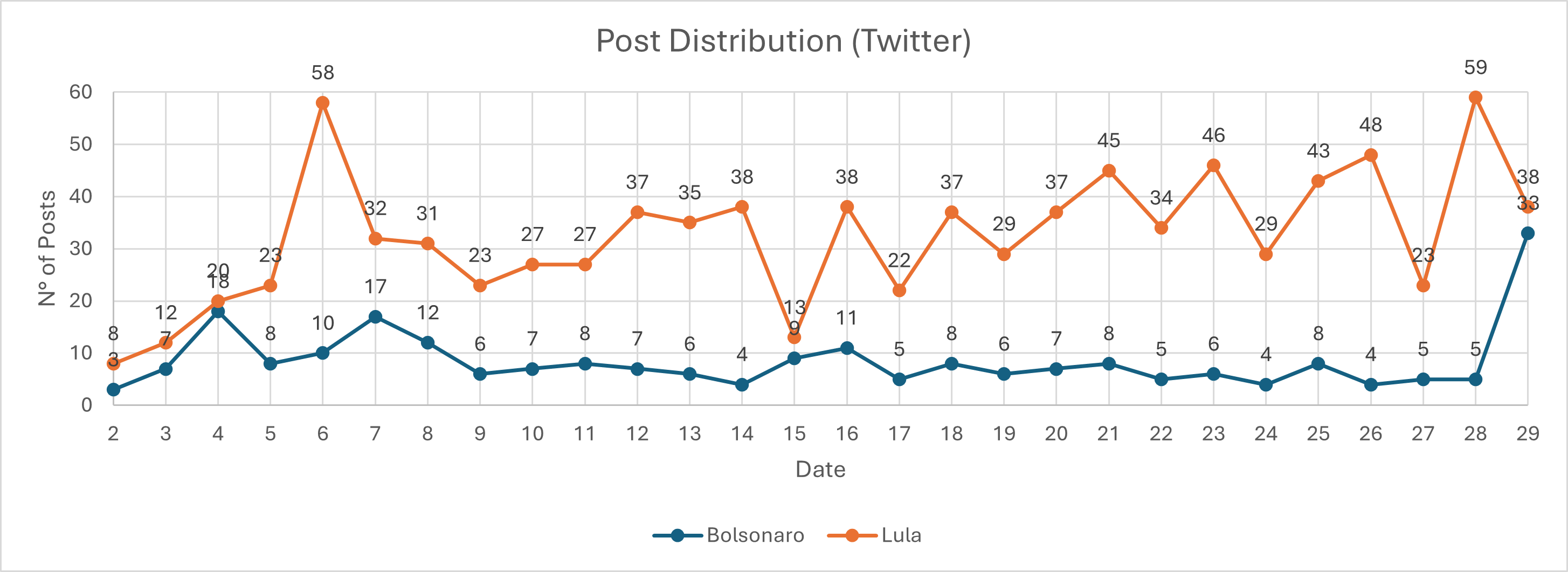
Many aspects of the 2018 elections were replicated in 2022, especially in terms of followers and number of posts. Bolsonaro had a much larger follower base than Lula, which explains his much larger number of interactions per post. However, like Haddad before him, this did not prevent Lula from being the most active candidate of the two, especially on Twitter, which explains his higher number of interactions per followers. Graphs 3 and 4 illustrate each candidate’s posting frequency on Facebook and Twitter.
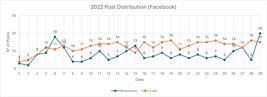
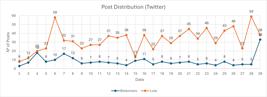
Both candidates made the effort to post every day, with no apparent rule concerning a specific number of posts per day. Regarding Bolsonaro, the candidate’s posting frequency was lower in 2022 when compared to 2018, dropping from an average of 8.6 to 8.1 on Facebook, and from 13.7 to 8.5 on Twitter. Although this reduction was not drastic, it was still enough to result in a lower total of posts during the 2022 cycle, despite the longer campaign period.
Another notable aspect of the post distribution was Lula’s preference for posting on Twitter rather than on Facebook. On this topic, although all candidates posted more frequently on Twitter than on Facebook, this difference was usually small and could easily be explained by Twitter’s nature as a microblogging platform. In Lula’s case, however, the disparity between the two platforms is much larger, as the candidate posted nearly four times more on Twitter, implying the possibility of a deliberate strategic decision.
Beyond that, it is also important to note the different formats used by each on both social media platforms, which is illustrated in Table 5.
When compared to 2018, the overall distribution of posts on Twitter was kept relatively similar, with texts remaining the most common format on the platform. On Facebook, however, even though Lula’s campaign was quite similar to Haddad’s, with the exception of a reduced number of livestreams in favor of videos, there were significant changes on Bolsonaro’s case.
First, the candidate’s most used format in the previous campaign, Text, was his least used format in 2022, accounting for less than 1% of his posts. This, however, can be explained by the logistics of platforms themselves and aligns with recent content trends, which have also experienced a rise in video posts at the expense of text-based ones (Gomez, 2023). In fact, in the studied cases, there were even several instances of texts being converted into pictures, such as directly posting a screenshot from posts on other platforms, which indicates a preference for posts with visual elements.
Second, there was also a noteworthy increase in Bolsonaro’s use of the Livestream format, when compared to 2018, now accounting for more than half of the candidate’s posts. This shift reflects a change in the candidate’s social media campaign strategy, which, in 2022, focused almost entirely on broadcasting “in-real-life” events.
Discussion
In a cross-case analysis, one of the first apparent aspects is the difference in size between the candidates’ profiles, with Bolsonaro’s metrics being considerably higher than either Haddad or Lula in the two social media platforms, both in terms of followers and interactions averages. In that regard, the collected data implies that both Lula and Haddad attempted to mitigate this gap by keeping a higher social media presence and activity. To better explain this, Table 6 illustrates the candidates’ average number of posts per day on the two studied platforms.
At this point, it is important to mention that keeping an increased number of posts may not have been the most effective strategy for the PT candidates. In fact, a study on the 2010 U.S. elections by Xenos, Macafee and Pole (2015) found that posting frequency had a negative correlation with user interactions, as the time elapsed between posts is essential in increasing the number of responses.
These findings are strongly supported by the broader Social Media Marketing literature, as Salazar (2017), Aydin, Uray and Silahtaroglu (2021), Iqbal Khan, Bilal and Ahmad (2020) and Shay and Van Der Horst (2019) were able to identify a negative correlation between posting frequency and public reception, engagement rates, and reach, with the two first authors recommending fewer than one post per day on Facebook and between one to three posts per day on Twitter.
One of the reasons for this is that social media algorithms distribute posts based on engagement rates, which are calculated by dividing the number of interactions by the total number of followers (CFI team, 2015), or, in Twitter’s case, the number of post views (Huang, 2024). Since posts need time to reach their audience, posting at too short intervals (freshness) limits followers’ ability to absorb and interact with all the content (Xenos; Macafee; Pole, 2015), thereby diluting interactions and reducing engagement rates and account reach.
In the Brazilian case, it is possible to observe this phenomenon in practice. Table 7 presents the engagement rates of the four campaigns across both social media platforms. Note that for the purpose of this study, Twitter engagement rates do not include posts categorized as Replies, as this type of content is only distributed to accounts that follow both profiles involved in the exchange, and, therefore, are based on a different follower base than other categories of posts. It is also important to mention that the numbers presented are approximations, since they do not account for fluctuations in the number of followers. Furthermore, this study also uses the number of followers as a proxy for the number of views on Twitter, since this data is not readily available on the candidates’ profiles.
Regarding the table, it is worth noting that comparing engagement rates should be done with caution and skepticism, since engagement rates are influenced by many different factors, such as publication format (Oberlo, 2024). Profile size also impacts engagement rates, demonstrating a negative correlation with the number of followers. In general, larger profiles tend to have lower engagement rates (Oberlo, 2024).
Consequently, it was expected that Bolsonaro would have lower engagement rates in all the cases studied. However, the opposite is true in 3 out of the 4 comparisons presented, suggesting a possible dilution of interactions on the PT’s candidates’ profiles.
The only exception is Haddad’s profile on Facebook, which had an average engagement rate around 30% higher than Bolsonaro. Yet, this was the platform in which Haddad had around ten times fewer followers than his opponent, and, consequently, the biggest expected engagement advantage, especially considering that his average of interactions per user on the platform was nearly 300% greater.
Nevertheless, engagement rates are not the only reason why excessive posting can be problematic. As demonstrated by Maity, Gajula and Mukherjee (2018) and Bode (2016), excessive posts are one of the main reasons why users opt to unfollow an account, meaning that it can also hurt follower growth. Although the data collected does not provide any evidence to support or deny this claim, and all the candidates experienced an overall growth, it is possible that the excessive number of posts resulted in a lower follower increase for the profiles studied.
Still, as a counterpoint, it is important to mention that all the candidates studied posted well above what is normally recommended in the digital marketing literature, but that does not necessarily mean that this was entirely misguided. Electoral marketing is a very specific marketing scenario, which, as explained by Grandi, Marins and Falcão (1992) and Porto et al. (2021), is strongly oriented by short-term goals and directly seeks to secure votes. This, in turn, implies that spreading a message quickly might be more important to electoral marketing than consistent long-term growth and follower retention.
When analyzing Obama’s 2012 presidential campaign in the United States, Gerodimos and Justinussen (2015) found that Obama’s posting frequency on Facebook averaged around 2 to 3 posts per day, substantially lower than any of the Brazilian candidates studied. However, when analyzing Obama’s posting frequency on Twitter, a study conducted by the Pew Research Center in 2012 (Pew Research Center, 2012) indicated that the candidate averaged 29 posts per day, that is, 17 on his presidential account and 12 on his campaign account, well above the previously mentioned recommendations.
As discussed, these numbers are in line with what was found on Bolsonaro’s profile in 2018, which averaged 13.5 posts per day. Similar numbers were also observed by Buccoliero et al. (2018) in their analysis of Trump’s 2016 campaign (13.5 posts per day) and by Savoy and Wehren (2022) in their analysis of Biden’s 2020 campaign (13.6 posts per day), indicating that, thus far, such averages represent an international standard for successful campaigns. Even on Facebook, both Trump (2016) and Biden (2020) had averages close to 7 posts per day, as evidenced by Davis (2017) and the CrowdTangle’s (Roose, 2022) report available on the New York Times, an average similar to Bolsonaro’s.
In this sense, it is possible to argue for a higher posting frequency in electoral marketing than what is recommended for traditional digital marketing. Nevertheless, it is important to find a balance so to avoid potential drawbacks caused by excessive posting. During the 2018 and 2022 campaigns, Bolsonaro appeared to be more aligned with successful international cases than Lula and Haddad.
Regardless, beyond the number of posts, another topic that deserves special attention is the production style, or aesthetic, of the posts, which varied significantly across the analyzed campaigns. The most notable style was Bolsonaro’s 2018 campaign, which had a distinct homemade and amateurish aesthetic, especially on Facebook, where videos and livestreams were more common. These often seemed to be recorded using cell phone cameras without stabilization, resulting in considerable camera shaking and even some abrupt movements. Moreover background noise was often very present, including breathing and side conversations. In some cases, the posts had even more strikingly amateurish characteristics, such as obscured lenses and videos that were difficult to see or hear. In one instance, there was a 15-minute livestream broadcasted at a 90-degree angle. In another video, the candidate delivered a speech over the phone while standing in front of a clothesline, while another person held a second phone, which, based on the audio, was apparently being used for sound feedback and as a way for the candidate to monitor his audience’s reactions. Figure 1 exemplifies one of these moments.
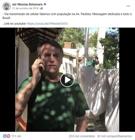
There is a clear contrast between Bolsonaro’s homemade aesthetic and other professional aspects of his campaign, such as the posting frequency aligned with international cases and the distribution of formats closely matching his audience’s preferences. This suggests that, as proposed by Pinheiro (2021), Bolsonaro’s (2018) amateur production style may have been a deliberate, strategic choice. This aesthetic proved effective, as demonstrated by both the electoral results and his popularity on social media.
This is not the first time that an amateur-style campaign on social media led to electoral victory. Enli (2017) described the same phenomenon in Donald Trump’s election in 2016 in the United States. According to the author, social media electoral marketing represents an opportunity for non-traditional candidates to succeed in the electoral process, often by using alternative styles of communication. Furthermore, she explained that, on social media, it is possible to challenge professionalism using amateurism, and that the amateur style may reinforce the candidate’s profile as a genuine political outsider. Kuś (2020) also points out that, during the 2016 U.S. Elections, Trump would embrace content produced by his followers, often retweeting posts published by his amateur supporters, which according to the author, gives voice to ordinary citizens and strengthens the community building aspect of social media electoral marketing.
Conversely, Bolsonaro’s amateur aesthetic was not as prominent in 2022 as it had been in 2018, with very few moments being similar to the one shown in Figure 9. In 2022 there was a substantial increase in the candidate’s proportion of livestreams, raising from 5% to nearly 50% on Facebook. In 2022, most of the content posted on the platform consisted of speeches, debates, public or political events, and press conferences, and, as a result, there was no clearly defined aesthetic like in the previous cycle.
This increase in the number of livestreams may have been driven by new trends on social media, or by a deliberate strategy to humanize his campaign and better connect with the electorate, in a similar fashion to the candidate’s use of retweets and replies in 2018. It is even possible that some of those events had been planned with the primary or secondary intention of generating digital content. On the other it is also possible that the higher focus on livestreaming “in-person” is an indication that the candidate paid less attention to social media in 2022, prioritizing other aspects of his campaigns and using broadcasts as a fast and accessible way to keep his accounts active and engaged. This second option could also explain the candidate’s reduction in posting frequency and the lower use of direct interactions with his followers.
Still, both possibilities can be justified by a strategic rationale, as unlike in 2018, the candidate entered the second round in 2022 at a voting disadvantage compared to his opponent, despite having a clear advantage on social media. Thus, the emphasis on in-person events and livestreams can be seen as both an attempt to capitalize on his digital advantage, and as an attempt to better expand his reach beyond the online environment.
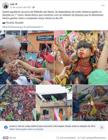
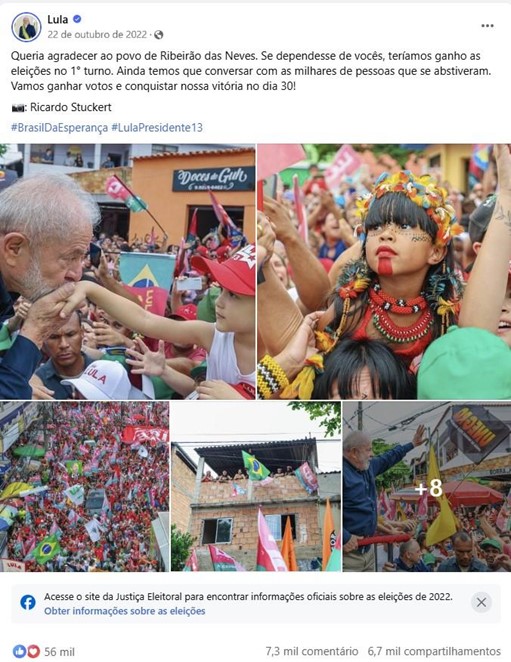
Nevertheless, regarding the other candidates, Lula’s campaign in 2022 was highly professionalized, following a style unlike Bolsonaro in 2018. In general, his pictures seem to have been posted in higher resolutions and usually included links to his professional photographer’s page. Furthermore, his videos were often recorded in studio settings, and, even if they were not, they were typically edited with custom thumbnails and templates, slow motions, visual effects, scene transitions, and added subtitles. In fact, even Lula’s text posts seem to have been professionally managed, as many of them included the hashtag “#EquipeLula” (“#TeamLula”), indicating that the post was likely not published by the candidate himself, but rather by his marketing team. Figure 2 exemplifies one of Lula’s professionalized posts.
On a similar note, when analyzing the 2016 U.S. elections, Enli (2017) explains that electoral marketing on social media exhibits both a trend and a countertrend, regarding the professionalization and de-professionalization of campaigns. According to the author, Trump’s opponent Hillary Clinton followed the professionalization trend, evidencing the coexistence of both styles. As evidenced by Enli and Naper (2016), during Obama’s 2012 campaign, only 1% of the candidates’ tweets were signed by him, with his initials: “bo”, meaning that most of his tweets were written by his staff, similar to what this study has found in Lula’s tweets.
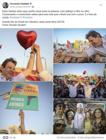
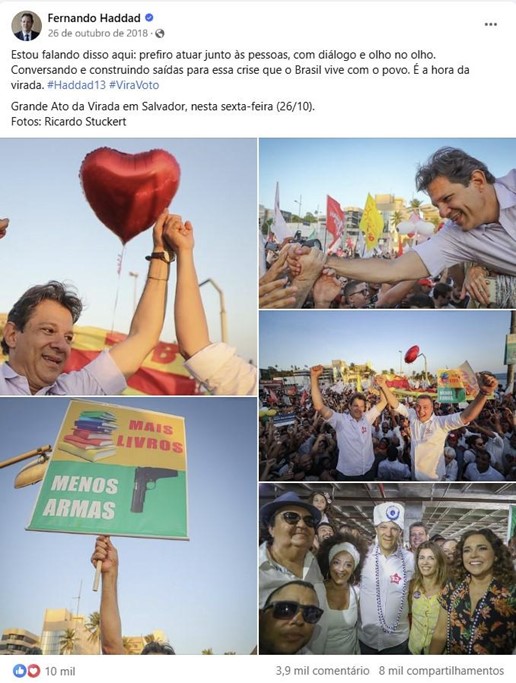
This professionalized visual identity was already present in Haddad’s campaign in 2018, which also leaned much more toward professionalization than amateurism. In stylistic terms, the main difference between Haddad and Lula is that Lula’s campaign managed to be more consistent in regard to quality. There are moments in Haddad’s campaign where posts appear to be less professionalized. However, within the collected data, it is not possible to affirm that these fluctuations in quality were a deliberate decision, as they may simply reflect the natural improvement and evolution of social media techniques, becoming only noticeable in hindsight. Most of Haddad’s pictures were also high resolution, taken by the same professional photographer and often edited, indicating a professionalized visual identity. As such, both professional and amateur styles could be found in the Brazilian cases. See Figure 3.
Conclusions
This article sought to investigate the use of electoral marketing in social media in Brazil. The study concluded that Bolsonaro (2018) used his social media profile as one of his main campaign tools. He adopted a minimalist perspective, publishing a smaller number of posts and favoring texts over other formats. A notable aspect of his campaign was its amateur aesthetic, particularly evident in his videos and broadcasts, which often included gaffes and technical issues, apart from being generally recorded in common household settings, which implied a strategic decision used to build the candidate’s profile as a political outsider. Bolsonaro also stood out for his interactions with voters, frequently employing tools such as retweets and replies to engage with his followers.
Haddad adopted a different approach. With a much smaller follower base, he opted to maintain a higher level of online activity, posting much more frequently than his opponent. However, this strategy was likely not ideal, as his posting frequency ended up much higher than what is recommended in the literature, as well as what is observed in international cases, possibly contributing to lower engagement rates. In terms of aesthetic, Haddad employed a more professional style. The candidate also made a more conservative use of social media’s interactive tools, resulting in a campaign that more closely resembled the traditional format.
Lula’s profiles started considerably behind Bolsonaro’s in terms of follower base and engagement, an issue he attempted to mitigate by maintaining a higher posting frequency. The candidate prioritized text-based posts on Twitter, but videos were his most common format on Facebook. Lula employed the most professional style among the candidates studied, even more consistently than his predecessor.
Lastly, Bolsonaro’s 2022 campaign was mostly similar to its 2018 counterpart. The candidate began the electoral period with a much larger follower base than his opponent, opting for a minimalist approach to social media. In fact, Bolsonaro reduced his posting frequency, resulting in a lower number of posts. The candidate still favored texts on Twitter, but on Facebook his favored formats were now videos and livestreams, which were now different. Instead of the amateur aesthetic, his livestreams were now focused on sharing his “in-real-life” events, meaning that they no longer had a consistent aesthetic pattern.
Therefore, it is possible to identify significant differences in the social media electoral marketing strategies adopted by the candidates in the 2018 and 2022 elections. In 2018, the two contestants, Haddad and Bolsonaro, were lesser-known figures, while in 2022, Lula and Bolsonaro were both former presidents. Inevitably, Bolsonaro could no longer benefit from the image of a “common citizen” or “political outsider”, as it would be entirely incompatible with his position as incumbent president. Thus, although social media had allowed Bolsonaro to use a professional amateurism strategy in 2018, this approach was not sustainable in the long term, and the candidate failed to readapt. As ex-president, Lula’s professional aesthetic proved to be more harmonic with the overall discourse.
As such, lessons on the dos and don’ts of social media electoral marketing can be drawn from the Brazilian case, including, but not limited to, ideal posting frequency, format distribution, online campaign tone, consistency, production and aesthetic strategies and the creativity enabled by social media platforms.
Finally, it is worth noting that this research was limited to only two social media platforms, Facebook and Twitter, which represents but a small fraction of the platforms available to politicians and electoral marketing professionals. As such, although these results offer a general impression of social media electoral marketing, is it unclear how the studied strategies are applied in other platforms. Further research is needed to interpret electoral strategies in other networks, especially those that do not share the same characteristics, such as YouTube, Instagram and TikTok, as well as those focused on peer-to-peer interactions, such as WhatsApp and Telegram.
In this sense, this article proposes the following topic for future studies: (a) the effects of microtargeting and discourse aggressiveness on the deepening of political polarization; (b) the use of amateur aesthetics to humanize candidates and increase online engagement; (c) Big Data, privacy and the use of emotionally appealing techniques for political and electoral marketing purposes.
References
-
AMARAL, Luciana. Bolsonaro acumulou 158 pedidos de impeachment; Câmara acabará de arquivá-los hoje. CNN BRASIL, 30 jan. 2023. Available at: Available at: https://www.cnnbrasil.com.br/politica/bolsonaro-acumulou-158-pedidos-de-impeachment-camara-acabara-de-arquiva-los-hoje/ Accessed on: 18 feb. 2023.
» https://www.cnnbrasil.com.br/politica/bolsonaro-acumulou-158-pedidos-de-impeachment-camara-acabara-de-arquiva-los-hoje/ -
ASSAAD, Waad; GÓMEZ, Jorge Marx. Social network in marketing (social media marketing) opportunities and risks. International Journal of Managing Public Sector Information and Communication Technologies (IJMPICT), v. 2, n. 1, p. 13-22, 2011. Available at: Available at: https://airccse.org/journal/mpict/papers/0911ijmpict02.pdf Accessed on: 18 feb. 2023.
» https://airccse.org/journal/mpict/papers/0911ijmpict02.pdf -
AYDIN, Gokhan; URAY, Nimet; SILAHTAROGLU, Gokhan. How to engage consumers through effective social media use - Guidelines for consumer goods companies from an emerging market. Journal of Theoretical and Applied Electronic Commerce Research, v. 16, n. 4, p. 768-790, 2021. Available at: Available at: https://www.mdpi.com/0718-1876/16/4/44 Accessed on: 18 feb. 2023.
» https://www.mdpi.com/0718-1876/16/4/44 -
BARBOSA, Andressa. Brasil já é o 5º país com mais usuários de internet no mundo. Forbes, 30 out. 2022. Available at: Available at: https://forbes.com.br/forbes-tech/2022/10/brasil-ja-e-o-5o-pais-com-mais-usuarios-de-internet-no-mundo/ Accessed on: 18 feb. 2023.
» https://forbes.com.br/forbes-tech/2022/10/brasil-ja-e-o-5o-pais-com-mais-usuarios-de-internet-no-mundo/ -
BODE, Leticia. Pruning the news feed: unfriending and unfollowing political content on social media. Research & Politics, v. 3, n. 3, p. 1-8, 2016. Available at: https://journals.sagepub.com/doi/epub/10.1177/2053168016661873 Accessed on: 18 feb. 2023.
» https://doi.org/10.1177/2053168016661873 -
BOLSONARO, Jair Messias. - Via transmissão de celular falamos com população na Av. Paulista. Mensagem dedicada a todo o Brasil! Brasília, 21 out. 2018. Facebook: @JairMessiasBolsonaro Available at: Available at: https://web.facebook.com/share/v/1EySmxttLa/ Accessed on: 1 feb. 2023.
» https://web.facebook.com/share/v/1EySmxttLa/ -
BONIN, Robson. Popularidade de Lula bate recorde e chega a 87%, diz Ibope. G1, Brasília, 16 dez. 2010. Available at: Available at: https://g1.globo.com/politica/noticia/2010/12/popularidade-de-lula-bate-recorde-e-chega-87-diz-ibope.html Accessed on: 18 feb. 2023.
» https://g1.globo.com/politica/noticia/2010/12/popularidade-de-lula-bate-recorde-e-chega-87-diz-ibope.html -
BORGESIUS, Frederik J. Z.; MÖLLER, Judith; KRUIKEMEIER, Sanne; FATHAIGH, Ronan; IRION, Kristina; DOBBER, Tom; BODO, Balazs; VREESE, Claes de. Online political microtargeting: promises and threats for democracy. Utrecht Law Review, v. 14, n. 1, p. 82-96, 2018. Available at: Available at: https://utrechtlawreview.org/articles/10.18352/ulr.420 Accessed on: 18 feb. 2023.
» https://utrechtlawreview.org/articles/10.18352/ulr.420 -
BRAGA, Sérgio; CARLOMAGNO, Marcela. Eleições como de costume? Uma análise longitudinal das mudanças provocadas nas campanhas eleitorais brasileiras pelas tecnologias digitais (1998-2016). Revista Brasileira de Ciência Política, Brasília, n. 26, p. 7-62, 2018. Available at: Available at: https://www.scielo.br/j/rbcpol/a/HShqCWG3ghZ7SrdPwPGMprq/ Accessed on: 18 feb. 2023.
» https://www.scielo.br/j/rbcpol/a/HShqCWG3ghZ7SrdPwPGMprq/ -
BUCCOLIERO, Luca; BELLIO, Elena; CRESTINI, Giulia; ARKOUDAS, Alessandra. Twitter and politics: Evidence from the US presidential elections 2016. Journal of Marketing Communications, v. 26, n. 1, p. 88-114, 2018. https://www.tandfonline.com/doi/full/10.1080/13527266.2018.1504228 Accessed on: 18 feb. 2023.
» https://www.tandfonline.com/doi/full/10.1080/13527266.2018.1504228 -
CERVI, Emerson Urizzi; SINDERSKI, Rafaela; VERNER, Afonso. Até tu, prefeito! Sobre quando as redes sociais on-line chegam às eleições municipais. Política & Sociedade, Florianópolis, v. 20, n. 49, p. 73-103, 2021. https://periodicos.ufsc.br/index.php/politica/article/view/84606 Accessed on: 18 feb. 2023.
» https://periodicos.ufsc.br/index.php/politica/article/view/84606 -
CESARINO, Letícia. Identidade e representação no bolsonarismo. Corpo digital do rei, bivalência conservadorismo-neoliberalismo e pessoa fractal. Revista de Antropologia, São Paulo, v. 62, n. 3, p. 530-557, 2019. [online]. DOI: 10.11606/2179-0892.ra.2019.165232. Available at: Available at: https://revistas.usp.br/ra/article/view/165232 Accessed on: 18 feb. 2023.
» https://doi.org/10.11606/2179-0892.ra.2019» https://revistas.usp.br/ra/article/view/165232 -
CFI TEAM. Engagement Rate. Corporate Finance Institute. 2015. Available at: Available at: https://corporatefinanceinstitute.com/resources/valuation/engagement-rate/ Accessed on: 15 dez. 2024.
» https://corporatefinanceinstitute.com/resources/valuation/engagement-rate/ -
CHESTER, Jeff; MONTGOMERY, Kathryn C. The role of digital marketing in political campaigns. Internet Policy Review, v. 6, n. 4, p. 1-20, 2017. DOI: 10.14763/2017.4.773. Available at: Available at: https://policyreview.info/articles/analysis/role-digital-marketing-political-campaigns Accessed on: 15 dez. 2024.
» https://doi.org/10.14763/2017.4.773» https://policyreview.info/articles/analysis/role-digital-marketing-political-campaigns - CHUL-HAN, Byung. A expulsão do outro: sociedade, percepção e comunicação hoje. 1. ed. Petrópolis: Editora Vozes, 2022.
-
DAVIS, Jack. Presidential campaigns and social networks: How Clinton and Trump used Facebook and Twitter during the 2016 election. Senior Theses (Bachelor of Arts) - Political Science and International Studies. Dominican University of California, 2017. DOI: 10.33015/dominican.edu/2017.POL.ST.01. Available at: Available at: https://scholar.dominican.edu/senior-theses/75/ Accessed on: 15 dez. 2024.
» https://doi.org/10.33015/dominican.edu/2017.POL.ST.01» https://scholar.dominican.edu/senior-theses/75/ -
ENLI, Gunn. Twitter as arena for the authentic outsider: exploring the social media campaigns of Trump and Clinton in the 2016 US presidential election. European Journal of Communication, v. 32, n. 1, p. 50-61, 2017. https://doi.org/10.1177/0267323116682802. Available at: Accessed on: 15 dez. 2024.
» https://doi.org/10.1177/0267323116682802 - ENLI, Gunn; NAPER, Anja Aaheim. Social media incumbent advantage: Barack Obama’s and Mitt Romney’s tweets in the 2012 US presidential election campaign. In: BRUNS, A.; ENLI, G.; SKOGERBØ, E.; LARSSON, A. O.; CHRISTENSEN, C. (eds.). The Routledge companion to social media and politics. New York, London: Routledge, 2016. p. 364-377.
- FREIRE, Stefanie Matos. Utilização da internet e redes sociais nas eleições presidenciais: análise do caso brasileiro em 2018. 2022. Dissertação (Mestrado em Ciências Sociais) - Universidade Estadual Paulista (Unesp), São Paulo, 2022.
-
GERODIMOS, Roman; JUSTINUSSEN, Jákup. Obama’s 2012 Facebook campaign: political communication in the age of the like button. Journal of Information Technology & Politics, v. 12, n. 2, p. 113-132, 2015. DOI: 10.1080/19331681.2014.982266 Available at: Available at: https://www.tandfonline.com/doi/full/10.1080/19331681.2014.982266 Accessed on: 15 dez. 2024.
» https://doi.org/10.1080/19331681.2014.982266» https://www.tandfonline.com/doi/full/10.1080/19331681.2014.982266 -
GOMES, Wilson; FERNANDES, Breno; REIS, Lucas; SILVA, Tarcizio. “Politics 2.0”: a campanha online de Barack Obama em 2008. Revista de Sociologia e Política, Curitiba, v. 17, n. 34, p. 29-43, 2009. DOI: 10.1590/S0104-44782009000300004. Available at: Available at: https://www.scielo.br/j/rsocp/a/gFnR7qWvytkqpKF9ctQyj3w/ Accessed on: 15 dez. 2024.
» https://doi.org/10.1590/S0104-44782009000300004» https://www.scielo.br/j/rsocp/a/gFnR7qWvytkqpKF9ctQyj3w/ -
GOMEZ, Vitória. Lopes. Mais vídeos e menos textos: Pesquisa aponta mudança nas redes sociais. Olhar Digital, 15 dez. 2023. Available at: Available at: https://olhardigital.com.br/2023/12/15/internet-e-redes-sociais/mais-videos-e-menos-textos-pesquisa-aponta-mudanca-nas-redes-sociais/ Accessed on: 15 dez. 2024.
» https://olhardigital.com.br/2023/12/15/internet-e-redes-sociais/mais-videos-e-menos-textos-pesquisa-aponta-mudanca-nas-redes-sociais/ -
GORTON, William A. Manipulating citizens: How political campaigns’ use of behavioral social science harms democracy. New Political Science, v. 38, n. 1, p. 61-80, 2016. DOI: 10.1080/07393148.2015.1125119. Available at: Available at: https://www.tandfonline.com/doi/abs/10.1080/07393148.2015.1125119 Accessed on: 15 dez. 2024.
» https://doi.org/10.1080/07393148.2015.1125119» https://www.tandfonline.com/doi/abs/10.1080/07393148.2015.1125119 - GRANDI, Rodolfo; MARINS, Alexandre; FALCÃO, Eduardo. Voto é marketing, o resto é política. São Paulo: Edições Loyola, 1992.
-
HADDAD, Fernando. Estou falando disso aqui: prefiro atuar junto às pessoas, com diálogo e olho no olho. Conversando e construindo saídas para essa crise que o Brasil vive com o povo. É a hora da virada. #Haddad13 #ViraVoto Brasília, 26 out. 2018. Facebook: @FernandoHaddad Available at: Available at: https://web.facebook.com/share/p/19CpuZrn5W/ Accessed on: 1 feb. 2023.
» https://web.facebook.com/share/p/19CpuZrn5W/ -
HARRIS, Phil; LOCK, Andrew. “Mind the gap”: the rise of political marketing and a perspective on its future agenda. European Journal of Marketing, v. 44, n. 3/4, p. 297-307, 2010. DOI: 10.1108/03090561011020435.
» https://doi.org/10.1108/03090561011020435 -
HUANG, Neo. Calculadora de taxa de engajamento do Twitter. Calculadora Ultra, 10 mar. 2024. Available at: Available at: https://www.calculatorultra.com/pt/tool/twitter-engagement-rate-calculator.html#gsc.tab=0 Accessed on: 15 dez. 2024.
» https://www.calculatorultra.com/pt/tool/twitter-engagement-rate-calculator.html#gsc.tab=0 -
HUGHES, Andrew; DANN, Stephen. Political marketing and stakeholder engagement. Marketing Theory, v. 9, n. 2, p. 243-256, 2009. Available at: https://journals.sagepub.com/doi/10.1177/1470593109103070. Accessed on: 15 dez. 2024.
» https://doi.org/10.1177/1470593109103070 -
IQBAL KHAN, Shahid; BILAL, Ahmad Raza; AHMAD, Bilal. Who will land and stay? Page-specific antecedents of news engagement on social media. Online Information Review, v. 44, n. 5, p. 1013-1025, 2020. DOI: https://doi.org/10.1108/OIR-12-2019-0375.
» https://doi.org/10.1108/OIR-12-2019-0375 -
KREISS, Daniel; LAWRENCE, Regina G.; MCGREGOR, Shannon C. In their own words: Political practitioner accounts of candidates, audiences, affordances, genres, and timing in strategic social media use. Political Communication, v. 35, n. 1, p. 8-31, 2017. DOI: 10.1080/10584609.2017.1334727. Available at: Available at: https://www.tandfonline.com/doi/abs/10.1080/10584609.2017.1334727 Accessed on: 15 dez. 2024.
» https://doi.org/10.1080/10584609.2017.1334727» https://www.tandfonline.com/doi/abs/10.1080/10584609.2017.1334727 -
KUŚ, Rafał. Building a Trump nation: the rhetoric of President Donald J. Trump on Twitter. Zarządzanie Mediami - Media Management, v. 8, n. 4, p. 391-405, 2020. DOI: 10.4467/23540214ZM.20.041.12645. Available at: Available at: https://ejournals.eu/en/journal/zarzadzanie-mediami/article/building-a-trump-nation-the-rhetoric-of-president-donald-j-trump-on-twitter Accessed on: 15 dez. 2024.
» https://doi.org/10.4467/23540214ZM.20.041.12645» https://ejournals.eu/en/journal/zarzadzanie-mediami/article/building-a-trump-nation-the-rhetoric-of-president-donald-j-trump-on-twitter - LEES-MARSHMENT, Jennifer; CONLEY, Brian; ELDER, Edward; PETTITT, Robin; RAYNAULD, Vincent; TURCOTTE, André. Political marketing: principles and applications. 3. ed. Londres: Routledge, 2019.
-
LILLEKER, Darren G.; KOC-MICHALSKA, Karolina. Online political communication strategies: MEPs, e-representation, and self-representation. Journal of Information Technology & Politics, v. 10, n. 2, p. 190-207, 2013. DOI: 10.1080/19331681.2012.758071. Available at: Available at: https://www.tandfonline.com/doi/abs/10.1080/19331681.2012.758071 Accessed on: 15 dez. 2024.
» https://doi.org/10.1080/19331681.2012.758071» https://www.tandfonline.com/doi/abs/10.1080/19331681.2012.758071 -
LIPPENS, A. Fecheyr. A review of HTTP live streaming. 2010. Available at: Available at: http://files.andrewsblog.org/http_live_streaming.pdf Accessed on: 11 jun. 2025.
» http://files.andrewsblog.org/http_live_streaming.pdf -
LULA. Queria agradecer ao povo de Ribeirão das Neves. Se dependesse de vocês, teríamos ganho as eleições no 1° turno. Ainda temos que conversar com as milhares de pessoas que se abstiveram. Vamos ganhar votos e conquistar nossa vitória no dia 30! Brasília, 22 de out. 2022. Facebook: @Lula Available at: Available at: https://web.facebook.com/share/p/169GkMkoVS/ Accessed on: 1 feb. 2023.
» https://web.facebook.com/share/p/169GkMkoVS/ -
MAITY, Suman Kalyan; GAJULA, Ramanth; MUKHERJEE, Animesh. Why did they #unfollow me? Early detection of follower loss on Twitter. In: FORTE, Andrea; PRILLA, Michael; VIVACQUA, Adriana. Proceedings of the 2018 ACM International Conference on Supporting Group Work. New York: Association for Computing Machinery, 2018. p. 127-131. DOI: 10.1145/3148330.3154514. Available at: Available at: https://dl.acm.org/doi/proceedings/10.1145/3148330 Accessed on: 15 dez. 2024.
» https://doi.org/10.1145/3148330.3154514» https://dl.acm.org/doi/proceedings/10.1145/3148330 -
MARQUES, Francisco Paulo Jamil Almeida; AQUINO, Jakson Alves de; MIOLA, Edna. Parlamentares, representação política e redes sociais digitais. Opinião Pública, Campinas, v. 20, p. 178-203, 2014. DOI: 10.1590/1807-01912014202178. Available at: Available at: https://www.scielo.br/j/op/a/FwKK5gtccVg97DBbDZJXnYH/ Accessed on: 15 dez. 2024.
» https://doi.org/10.1590/1807-01912014202178» https://www.scielo.br/j/op/a/FwKK5gtccVg97DBbDZJXnYH/ -
MUÑOZ, Laura A.; GARCÍA, Silvia M.; RIPOLLÉS, Andreu C. Political leaders in (inter)action. Twitter as a strategic communication tool in electoral campaigns. Tripodos, v. 39, p. 71-90, 2017. DOI: 10.51698/tripodos.2016.39.71-90. Available at: Available at: https://tripodos.com/index.php/Facultat_Comunicacio_Blanquerna/article/view/381 Accessed on: 15 dez. 2024.
» https://doi.org/10.51698/tripodos.2016.39.71-90» https://tripodos.com/index.php/Facultat_Comunicacio_Blanquerna/article/view/381 -
NICKERSON, David W.; ROGERS, Todd. Political campaigns and big data. Journal of Economic Perspectives, v. 28, n. 2, p. 51-74, 2014. DOI: 10.1257/jep.28.2.51. Available at: Available at: https://www.aeaweb.org/articles?id=10.1257/jep.28.2.51 Accessed on: 15 dez. 2024.
» https://doi.org/10.1257/jep.28.2.51» https://www.aeaweb.org/articles?id=10.1257/jep.28.2.51 -
OBERLO. Average Facebook engagement rate. Oberlo, 2024. Available at: Available at: https://www.oberlo.com/statistics/average-facebook-engagement-rate Accessed on: 15 dez. 2024.
» https://www.oberlo.com/statistics/average-facebook-engagement-rate -
PENTEADO, Claudio Luis de Camargo. Marketing político na era digital: perspectivas e possibilidades. Revista USP, n. 90, p. 6-23, 2011. DOI: 10.11606/issn.2316-9036.v0i90p6-23. Available at: Available at: https://revistas.usp.br/revusp/article/view/34009 Accessed on: 15 dez. 2024.
» https://doi.org/10.11606/issn.2316-9036.v0i90p6-23» https://revistas.usp.br/revusp/article/view/34009 -
PEW RESEARCH CENTER. How the presidential candidates use the web and social media. Pew Research Center, 15 feb. 2012. Available at: Available at: https://www.pewresearch.org/journalism/2012/08/15/how-presidential-candidates-use-web-and-social-media/ Accessed on: 18 feb. 2023.
» https://www.pewresearch.org/journalism/2012/08/15/how-presidential-candidates-use-web-and-social-media/ -
PINHEIRO, Wesley Moreira. Do conteúdo amador ao tradicional: análise do alcance e do engajamento de Bolsonaro e Lula em mídia social. Revista Temática, João Pessoa, v. 17, n. 12, p. 79-94, 2021. DOI: 10.22478/ufpb.1807-8931.2021v17n12.61564. Available at: Available at: https://periodicos.ufpb.br/index.php/tematica/article/view/61564 Accessed on: 18 feb. 2023.
» https://doi.org/10.22478/ufpb.1807-8931.2021v17n12.61564» https://periodicos.ufpb.br/index.php/tematica/article/view/61564 -
PORTO, Rafael B.; MOURA, Alcino F.; ARAGÃO, Lívia M.; BORGES, Carla P. Electoral marketing from the perspective of behavioral psychology: Effect on voters and voting in executive and legislative positions. Brazilian Journal of Marketing, v. 20, n. 4, p. 423-454, 2021. DOI: 10.5585/remark.v20i4.18570. Available at: Available at: https://periodicos.uninove.br/remark/article/view/18570 Accessed on: 18 feb. 2023.
» https://doi.org/10.5585/remark.v20i4.18570» https://periodicos.uninove.br/remark/article/view/18570 -
PRUMMER, Anja. Micro-targeting and polarization. Journal of Public Economics, v. 188, p. 104210, 2020. DOI: 10.1016/j.jpubeco.2020.104210. Available at: Available at: https://www.sciencedirect.com/science/article/abs/pii/S0047272720300748 Accessed on: 18 feb. 2023.
» https://doi.org/10.1016/j.jpubeco.2020.104210» https://www.sciencedirect.com/science/article/abs/pii/S0047272720300748 -
ROOSE, Kevin. Trump still miles ahead of Biden in social media engagement. New York Times, 22 out. 2022. [Recuperado em: 18 feb. 2023]. Available at: Available at: https://www.nytimes.com/2020/10/22/technology/trump-facebook.html Accessed on: 18 feb. 2023.
» https://www.nytimes.com/2020/10/22/technology/trump-facebook.html -
ROSSINI, Patrícia; BAPTISTA, Érica; OLIVEIRA, Vanessa; SAMPAIO, Rafael. O uso do Facebook nas eleições presidenciais brasileiras de 2014: A influência das pesquisas eleitorais nas estratégias das campanhas digitais. Fronteiras - Estudos Midiáticos, v. 18, n. 2, p. 145-157, 2016. DOI: 10.4013/fem.2016.182.04. Available at: Available at: https://revistas.unisinos.br/index.php/fronteiras/article/view/fem.2016.182.04/5493 Accessed on: 18 feb. 2023.
» https://doi.org/10.4013/fem.2016.182.04» https://revistas.unisinos.br/index.php/fronteiras/article/view/fem.2016.182.04/5493 -
SALAZAR, Juan Manuel Rojas. Inverted u-shaped impact of social media posting frequency on engagement and sentiment ratio. Empirical Quests for Management Essences, v. 1, n. 3, p. 1-15, 2017. Available at: Available at: https://researchberg.com/index.php/eqme/article/view/31 Accessed on: 18 feb. 2023.
» https://researchberg.com/index.php/eqme/article/view/31 -
SAVOY, Jacques; WEHREN, Marylène. Trump’s and Biden’s styles during the 2020 US presidential election. Digital Scholarship in the Humanities, v. 37, n. 1, p. 229-241, 2022. DOI: 10.1093/llc/fqab046. Available at: Available at: https://academic.oup.com/dsh/article-abstract/37/1/229/6272924 Accessed on: 18 feb. 2023.
» https://doi.org/10.1093/llc/fqab046» https://academic.oup.com/dsh/article-abstract/37/1/229/6272924 -
SHAY, Ronen; VAN DER HORST, Morgan. Using brand equity to model ROI for social media marketing. International Journal on Media Management, v. 21, n. 1, p. 24-44, 2019. DOI: 10.1080/14241277.2019.1590838. Available at: Available at: https://www.tandfonline.com/doi/full/10.1080/14241277.2019.1590838 Accessed on: 18 feb. 2023.
» https://doi.org/10.1080/14241277.2019.1590838» https://www.tandfonline.com/doi/full/10.1080/14241277.2019.1590838 -
SILVA, Luciano Timoteo da; FERREIRA JÚNIOR, Achiles Batista. Marketing político e sua importância através das mídias sociais. Revista Temática, João Pessoa, v. 9, n. 8, p. 1-12, 2013. Available at: Available at: https://periodicos.ufpb.br/ojs/index.php/tematica/article/view/21645 Accessed on: 18 feb. 2023.
» https://periodicos.ufpb.br/ojs/index.php/tematica/article/view/21645 -
TSE. Resultados das eleições. 2021. Available at: Available at: https://www.tse.jus.br/eleicoes/resultados-eleicoes Accessed on: 18 feb. 2023.
» https://www.tse.jus.br/eleicoes/resultados-eleicoes -
WARD, Ken. Social networks, the 2016 US presidential election, and Kantian ethics: applying the categorical imperative to Cambridge Analytica’s behavioral microtargeting. Journal of Media Ethics, v. 33, n. 3, p. 133-148, 2018. DOI: 10.1080/23736992.2018.1477047. Available at: Available at: https://www.tandfonline.com/doi/abs/10.1080/23736992.2018.1477047 Accessed on: 18 feb. 2023.
» https://doi.org/10.1080/23736992.2018.1477047» https://www.tandfonline.com/doi/abs/10.1080/23736992.2018.1477047 -
XENOS, Michael A.; MACAFEE, Timothy; POLE, Antoinette. Understanding variations in user response to social media campaigns: A study of Facebook posts in the 2010 US elections. New Media & Society, v. 19, n. 6, p. 826-842, 2015. DOI: 10.1177/1461444815616617. Available at: Available at: https://journals.sagepub.com/doi/10.1177/1461444815616617 Accessed on: 18 feb. 2023.
» https://doi.org/10.1177/1461444815616617» https://journals.sagepub.com/doi/10.1177/1461444815616617
Data availability
In the case of qualitative data, the RBCP does not require the publication of original data for ethical reasons, especially concerns regarding the anonymity of research subjects.
-
Editors
Debora Rezende de AlmeidaRebecca Neaera Abers

 Source: compiled by the authors
 Source: compiled by the authors
 Source: Compiled by the authors
 Source: Compiled by the authors
 Source:
  Source:
  Source: