 The bouncing mechanics of an olympic runner: a case report
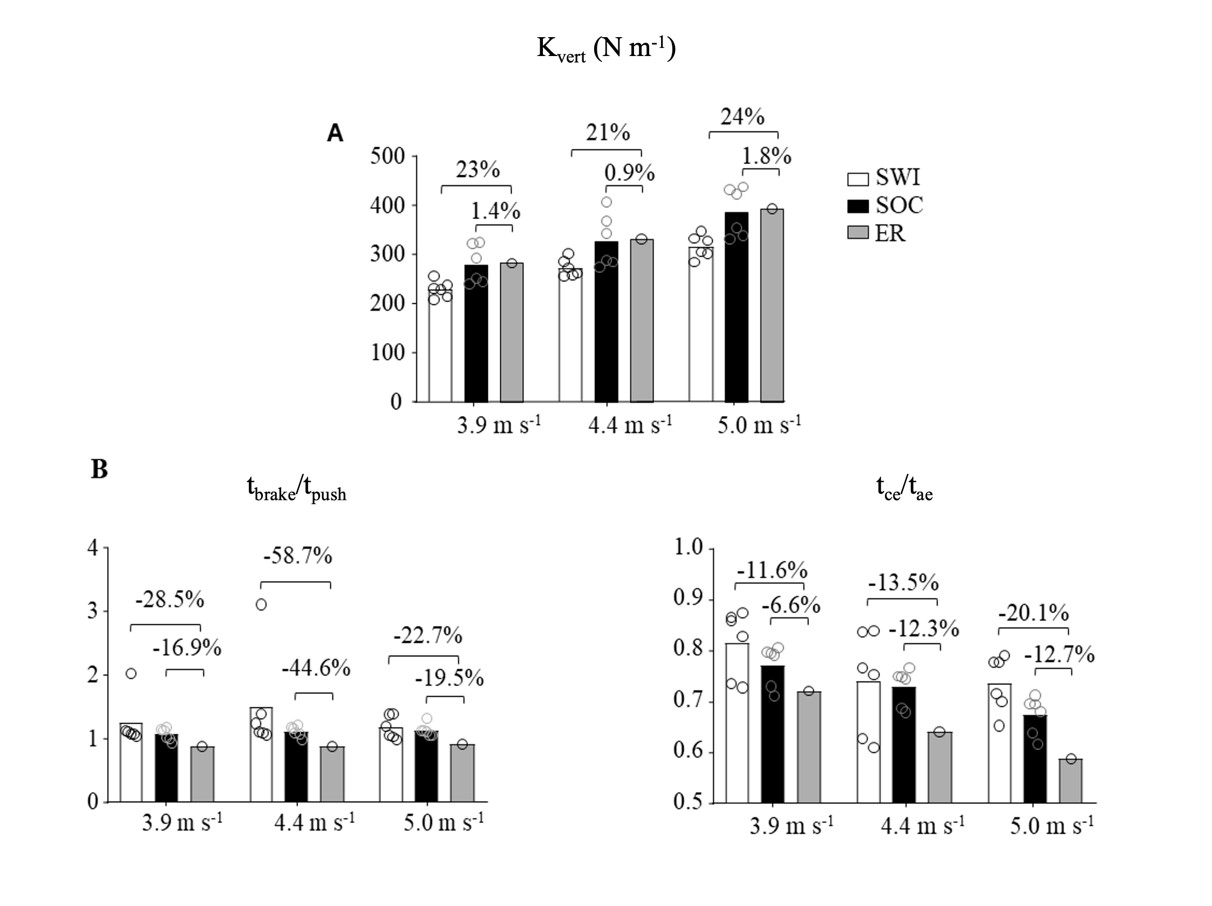
This study examines the running mechanics of an elite marathon runner (ER) compared to swimmers (SWI) and soccer players (SOC) at speeds of 3.9, 4.4, and 5.0 m·s−1. ER consistently showed 22–25% higher vertical stiffness (kvert) than SWI and 4–6% higher than SOC, linked to greater peak forces and reduced vertical displacement. ER’s lower tce/tae and tbrake/tpush ratios suggest efficient transitions and enhanced energy conservation. Unlike SWI and SOC, who showed less stiffness and longer braking times, ER’s running pattern reveals adaptations for energy efficiency and endurance, particularly in rebound mechanics. These traits underscore unique biomechanical strategies that differentiate endurance athletes from those with other sports backgrounds.
Keywords:
Vertical stiffness; Sports background; Marathon runner; Running biomechanics
 Thumbnail
 Thumbnail
 Thumbnail