
 Systematic Review of Observational Studies on the use of Erlotinib and Gefitinib in the Treatment of Non-Small Cell Lung Cancer
ABSTRACT
Introduction: Evaluating the use of drugs on a large scale is part of the technology lifecycle. Since the introduction of gefitinib and erlotinib for the treatment of non-small cell lung cancer into the National Health System of Brazil in 2013, no reviews with real-world data have been published.
Objective: To evaluate data on the efficacy, safety, quality of life, and adherence of erlotinib and gefitinib in the treatment of non-small cell lung cancer based on a systematic review of observational studies.
Method: A systematic review protocol was registered. MEDLINE, EMBASE, Cochrane, LILACS and CINAHL were searched for evidence. Two investigators selected the studies, extracted the data and assessed the methodological quality independently. The risk of bias was assessed using the Joanna Briggs Institute list of critical appraisal items for cohort and cross-sectional studies.
Results: Eight cohort studies were included. Higher median overall survival and progression-free survival were observed for gefitinib and erlotinib compared to chemotherapy. The studies showed a low incidence of adverse events, good quality of life and high adherence rates among patients taking the drugs evaluated. When assessing the risk of bias, it was noticed that all the studies had some type of bias or unmet quality criteria.
Conclusion: Clinical benefit was identified in a real-world context for the drugs gefitinib and erlotinib incorporated into Brazil’s National Health System.
Key words:
Erlotinib Hydrochloride; Gefitinib; Lung Neoplasms/drug therapy; Treatment Outcome; Systematic Review
RESUMO
Introdução: A avaliação da utilização de medicamentos em larga escala compõe o ciclo de vida da tecnologia. Desde a incorporação de gefitinibe e erlotinibe para o tratamento do câncer de pulmão de células não pequenas no Sistema Único de Saúde, em 2013, nenhuma revisão com dados de mundo real foi publicada.
Objetivo: Avaliar dados de efetividade, segurança, qualidade de vida e adesão ao uso de erlotinibe e gefitinibe no tratamento do câncer de pulmão de células não pequenas a partir de uma revisão sistemática de estudos observacionais.
Método: O protocolo da revisão sistemática foi registrado. Foram realizadas buscas das evidências nas bases MEDLINE, EMBASE, Cochrane, LILACS e CINAHL. Dois pesquisadores selecionaram os estudos, extraíram os dados e avaliaram a qualidade metodológica de forma independente. O risco de viés foi avaliado utilizando a lista de itens para avaliação crítica do Instituto Joanna Briggs para estudos de coorte e estudos transversais.
Resultados: Foram incluídos oito estudos de coorte e identificadas medianas superiores de sobrevida global e sobrevida livre de progressão para gefitinibe e erlotinibe em comparação à quimioterapia. Os estudos apontaram baixa frequência de eventos adversos, boa qualidade de vida e alta taxa de adesão entre os pacientes em uso dos medicamentos avaliados. Na avaliação do risco de viés, notou-se que, em todos os estudos, existia algum tipo de viés ou critérios de qualidade não atendidos.
Conclusão: Identificou-se o benefício clínico em contexto de mundo real dos medicamentos gefitinibe e erlotinibe incorporados no Sistema Único de Saúde.
Palavras-chave:
Cloridrato de Erlotinib; Gefitinibe; Neoplasias Pulmonares/tratamento farmacológico; Resultado do Tratamento; Revisão Sistemática
RESUMEN
Introducción: La evaluación del uso de medicamentos a gran escala forma parte del ciclo de vida de la tecnología. Desde la introducción de gefitinib y erlotinib para el tratamiento del cáncer de pulmón de células no pequeñas en el Sistema Único de Salud del Brasil en 2013, no se han publicado revisiones con datos del mundo real.
Objetivo: Evaluar los datos sobre la eficacia, seguridad, calidad de vida y adherencia al uso de erlotinib y gefitinib en el tratamiento del cáncer de pulmón no microcítico a partir de una revisión sistemática de estudios observacionales.
Método: Se registró un protocolo de revisión sistemática. Se realizaron búsquedas de evidencia en MEDLINE, EMBASE, Cochrane, LILACS y CINAHL. Dos investigadores seleccionaron de forma independiente los estudios, extrajeron los datos y evaluaron la calidad metodológica. El riesgo de sesgo se evaluó mediante la lista de ítems de evaluación crítica del Instituto Joanna Briggs para estudios de cohortes y transversales.
Resultados: Se incluyeron ocho estudios de cohortes. Se observaron medianas de supervivencia global y supervivencia libre de progresión mayores con gefitinib y erlotinib en comparación con la quimioterapia. Los estudios mostraron una baja incidencia de acontecimientos adversos, buena calidad de vida y altas tasas de adherencia entre los pacientes que tomaban los fármacos evaluados. Al evaluar el riesgo de sesgo, se observó que todos los estudios presentaban algún tipo de sesgo o criterios de calidad que no se cumplían.
Conclusión: Se identificó beneficio clínico en un contexto del mundo real para los fármacos gefitinib y erlotinib incorporados al Sistema Único de Salud del Brasil.
Palabras clave:
Clorhidrato de Erlotinib; Gefitinib; Neoplasias Pulmonares/tratamiento farmacológico; Resultado del Tratamiento; Revisión Sistemática
INTRODUCTION
Lung cancer (LC) is an important public health problem. According to estimates of the International Agency for Research on Cancer (Iarc), LC is the neoplasm with the highest mortality (18.7%) and the most incident worldwide (12.4%)1. In Brazil, for each year of the triennium 2023-2025, 18,202 new cases of LC in men and 14,540 in women were estimated2.
One of the most common histologic subtypes of LC is lung carcinoma, a type of non-small cells lung cancer (NSCLC)3. Currently, surgery and neoadjuvant cytotoxic chemotherapy are the main options of treatment for the initial disease stages (I, II and IIIa). However, due to late diagnosis, patients are diagnosed with locally advanced or metastatic disease (stage IIIb or IV) more frequently, making surgery impossible, and eventually causing low survival4.
For decades, advanced or metastatic cases of NSCLC were treated with cytotoxic chemotherapy. With best understanding of the physiology and characteristics of potential molecular cancer targets, it was possible to identify specific molecules and develop targeted new strategies to inhibit the growth and tumor progression and less damage to healthy cells5.
The epidermal growth factor receptor - EGFR is a receptor of tyrosine kinase (TK), whose signaling plays a key role in maintaining and growth of epithelial tissues6. The super-expression arising from the mutation of the gene EGFR is associated with the pathogenesis, proliferation and metastasis of several solid tumors found in 30% of the cases of metastatic NSCLC.
Gefitinib and erlotinib are among the drugs of the therapeutic class of tyrosine kinase inhibitors (TKI) EGFR8. The Brazilian Health Surveillance Agency (Anvisa) approved erlotinib to treat NSCLC and pancreatic cancer in 20069. In 2010, gefitinib was the first molecular target therapy approved in Brazil to treat patients with advanced stage NSCLC10. In 2013, both drugs were incorporated by the National Commission of Incorporation of Technologies (Conitec) into the list of treatments offered by the National Health System (SUS)9,10, and recommended by the Diagnostic and Therapeutic Guidelines of Lung Cancer11.
The life-cycle technology comprehends the assessment of a large scale technology since its initial stages12. After SUS incorporated gefitinib and erlotinib, Conitec did not publish any review of the data that showed the additional benefit to Brazilian patients. Because of the uncertainty related to the use of these drugs, it is relevant to design a scenario of actual benefits, effectiveness and safety and evaluate adherence and quality-of-life associated with TKI to treat NSCLC.
The objective of the present study is to evaluate the effectiveness, safety, adherence and quality-of-life (QoL) related to erlotinib and gefitinib to treat NSCLC through a systematic review of real-world-based observational studies.
METHOD
The protocol of systematic review was registered at the International Prospective Register of Systematic Reviews (PROSPERO)13, code CRD42022337969.
The research question was: “Do adult patients with NSCLC treated with gefitinib or erlotinib present the same results observed in randomized clinical trials (RCT) when treated in clinical environment?”
The eligibility criteria were: Population - adult patients with advanced or metastatic NSCLC, with EGFR activating mutations in first-line treatment and monotherapy; Intervention - erlotinib or gefitinib; Comparison - chemotherapy, placebo or supportive care; Outcomes - Overall survival (OS), progression-free survival (PFS), adverse events (AE), adherence and QoL; Types of studies - observational studies (retrospective cohort, prospective cohort or cross-sectional) published from January 2014 to March 2023 in Portuguese, English and Spanish. The cut-off period was the date SUS incorporated the two drugs in their drug list.
Abstracts from congresses, studies analyzing QoL with unvalidated instruments or analyzing outcomes with brain injuries only have been excluded.
The following electronic databases utilized for the study were: MEDLINE via PubMed, EMBASE, Cochrane Library, Latin American and Caribbean Health Science Literature (LILACS), Cumulative Index to Nursing and Allied Health Literature (CINAHL), Brazilian Digital Library of Thesis and Dissertations (BDBTD) and Portal de Periódicos Capes.
A comprehensive and reasonable search strategy was devised for each database with indexed data, synonyms and variations, revised before the search following the recommendations of Peer Review of Electronic Search Strategies (PRESS). Search strategies are presented in Supplement1.
The studies retrieved were migrated to Covidence platform. After excluding duplicates, two independent reviewers screened the articles by reading titles and abstracts. The studies selected were fully read by two reviewers to check compliance with eligibility criteria and the remaining articles were submitted to data extraction, also performed by two reviewers. Whether discrepancies have been found in any stage, a third reviewer analyzed the study. The entire selection process was documented and presented according to the flowchart recommended by the guidelines of Preferred Reporting Items for Systematic Reviews and Meta-Analyses (PRISMA)14.
The following information have been obtained: author, year of publication, countries, study design, sample size, age of the participants, type of intervention (dosage, frequency, duration), effectiveness (OS e PFS), AE (frequency and types), adherence and health-related QoL.
The Joanna Briggs Cohort and Cross-Sectional critical appraisal tools15 were applied to evaluate the risk of bias. Two independent reviewers analyzed the methodological quality of the studies and discrepancies were resolved by a third reviewer.
Despite being included in the original protocol, the meta-analysis was not performed due to the heterogeneity of the studies and data collected; however, a narrative synthesis with summarized results in descriptive analyzes was presented.
RESULTS
9,765 publications were retrieved from the databases. After removing the duplicates, 7,715 articles were screened by two reviewers by reading titles and abstracts, and 48 publications remained for full reading and eventually ten observational studies were included (Figure 1). The main exclusionary reason (60.5%) was how the results were presented: the authors reported the result by pharmacologic group, combining the results of different TKI (gefitinib, erlotinib, afatinib, osimertinib, among others).
The study of Rusdi et al.16 was excluded from the ten studies that would be submitted to data extraction due to discrepancies in the two tables of survival data of the comparator; it was not possible to contact the authors to clarify which data was correct. The study of Jiang et al.17 was also excluded because the results of AE of the group receiving chemotherapy were obtained from the combination of patients who received first or second line treatment, inconsistent with the eligibility criteria.
Eight prospective (n=6) or retrospective (n=2) cohort studies published between 2015 and 2020 were eventually reviewed. Five studies reported OS18-22, four, PFS18,20,21,22, three, AE18,20,21, two, adherence to treatment23,24 and one, QoL25 (Table 1).
The sample size ranged between 62 and 38,100. Not all the studies reported age and biological sex. Of the four that reported age, the range was 46-80.8 years with predominance of men. The participants had histological results of adenocarcinoma, squamous cells carcinoma and large cells carcinoma, stages III or IV.
The use of gefitinib predominated in the studies included that analyzed outcomes of effectiveness or safety or both, reaching a little more than 6,200 participants. Only two studies18,19 included results of 1,500 participants who received erlotinib. The comparator comprehended platinum derivatives (carboplatin, cisplatin), pemetrexed, bevacizumab, gemcitabine, vinorelbine and docetaxel.
Some type of bias or unmet quality criteria were detected for all the studies (Figure 2) in the analysis of risk of bias. The items that least met the criteria of analysis of risk of bias were characterization of the sample as representative of the target-population, detailed description of the study participants and if the data analysis was proportional to the sample identified.

For OS and PFS, all the studies presented median of survival in months. One study alone expressed the effect of the treatment as a hazard ratio (HR). HR was 1.56 (CI 95% 1.50 to 1.62; p < 0.0001)19 in the comparison between gefitinib and platinum. Due to the lack of number of events which would allow to calculate other HR, it was not possible to conduct a meta-analysis for the studies that reported this outcome.
In the study with the larger number of participants19, the median of OS was 19.4 months (CI 95% 18.8 to 19.9 months), 17.5 months (CI 95% 16.3 to 18.6 months) and 11.4 (CI 95% 11.1 to 11.7 months) in the groups gefitinib, erlotinib and chemotherapy with platinum derivatives, respectively.
The median of PFS in the study with large number of participants18 was 10.4 months (CI 95% 8.9 to 11.3 months), 12.2 months (CI 95% 9.1 to 17.3 months), 5.6 months (CI 95% 5.1 to 6.3 months) and 4.9 months (CI 95% 4.5 to 5.3 months) in the groups gefitinib, erlotinib, pemetrexed and bevacizumab, respectively.
Table 2 shows that the use of gefitinib or erlotinib presented median OS higher than the comparator group in three of the five studies analyzed. However, Schuette et al.20 identified a slight difference in benefit of chemotherapy (18.1 months; CI 95% 15.1 to 23.5 months), compared to gefitinib (17.4 months; CI 95% 14.7 to 20.4 months). In the present study, carboplatin (45.5%), cisplatin (33.9%), pemetrexed (28.2%), gemcitabine (22.9%), and vinorelbine (22.7%) predominated. Wang et al.21 reported positive effect for docetaxel (10.0 months; CI 95% not-informed) when compared to the results of the group receiving gefitinib and there was EGFR wild-type (7.0 months; CI 95% not-informed). However, this effect was not observed when the results of the group who received docetaxel were compared with the group who received gefitinib and mutation of EGFR (19.0 months; CI 95% not informed).
In the study of Wu et al.22, OS was slightly higher in the pemetrexed + cisplatin (17.3 months; CI 95% not informed) group, when compared to gefitinib (15.7 months; CI 95% not informed). Attention should be given to the sample size (11 participants in the group gefitinib and 23 in the group chemotherapy).
Of the four studies which analyzed PFS, in three, better results for gefitinib or erlotinib (Table 2) have been identified. The only exception was noticed in the study of Wu et al.22, which had a small sample size.
Brat et al.18 described the predominance of AE among participants who received erlotinib (43.6%) or gefitinib (27.7%). The severity or type of AE was not informed. Among the participants of the study by Wang et al.21 who received gefitinib, 25.7% presented grade I diarrhea and 5.4%, grade III and 9.5% developed skin rash grade III. In the group receiving docetaxel, grade I myelosuppression (41.9%) and grade IV (16.3%), nausea, vomit or diarrhea with severity not informed (51.2%). In the study of Schuette et al.20, 239 AE have been reported in the group who received gefitinib, 20 of them classified as grade III, including cardiac ischemia/infarction, diarrhea and cystitis. The authors, however, did not report the number of AE in the control group.
Table 3 presents the summary of the results of the studies which analyzed the rate of adherence and QoL associated with the treatment with gefitinib and erlotinib.
The two studies which analyzed the adherence to the treatment involved only patients in use of erlotinib23,24. In both studies, the rate of adherence was considered high according to the methodologies utilized.
The only study which evaluated QoL25 enrolled patients who received gefitinib and erlotinib. The results indicated better results for the participants in treatment with gefitinib after four and 12 weeks of treatment.
DISCUSSION
Only observational studies have been enrolled in the present systematic review conducted since 2014 to analyze the effectiveness and safety of gefitinib and erlotinib compared with the data of RCT, utilized to support SUS decision to incorporate these drugs.
In 2013, the recommendation of incorporation of gefitinib was based on PFS data obtained from two phase III RCT26,27 and two systematic reviews with meta-analysis28,29. The medians of PFS ranged from 9.2 months26 to 10.8 months27 in the group receiving gefitinib, and from 5.4 months27 to 6.3 months26 in the group receiving chemotherapy. These results are similar to the present review, whose medians of PFS ranged from 9.6 to 11.0 months in the group of gefitinib and 4.9 months to 8.7 months in the group of chemotherapy.
The medians of OS were presented in one study alone27, 30.5 months for the group gefitinib and 23.6 for the group of chemotherapy without significant statistical difference. At that time, phase III RCT of the drugs have not been finalized yet and, therefore, these data were not utilized for evaluation. In the present review, the medians of OS ranged from 19.0 to 19.6 months in the group of gefitinib, well below the results obtained in RCT, but still favoring the use of technology compared to standard chemotherapy.
Likewise, the incorporation of erlotinib was based on PFS obtained from two phase III RCT30,31 and two systematic reviews28,32. The medians of PFS ranged from 9.533 to 13.7 months (CI 95% 10.6 to 15.3)31 in the group of erlotinib, compared to 4.6 months (CI 95% 4.2 to 5.4)29 to 6.0 months (CI 95% 5.4 to 6.7)32 in the group of chemotherapy, with reduction of 63% and 84% of the risk of progression. One study alone analyzed PFS for erlotinib and the result was comparable to the RCT (12.2 months in the intervention group versus 5.6 in the control group)18.
The study EURTAC30 did not present significant statistical difference in OS with the use of erlotinib or chemotherapy (HR 1.04; CI 95% 0.65 to 1.68, p = 0.87). As OS medians have not been calculated, it was not possible to compare with the present review.
After SUS had included erlotinib and gefitinib, other RCT were published33-40. One study found median OS of 34.9 months for gefitinib36. The others reported lower results compared with what was utilized to include the drug33,34,36,39. In none of them, a statistically significant difference has been found among the groups33,34,36,38,39. The results of PFS of the studies evaluating gefitinib were close to what was accepted for the decision to include, except one33, which reached results lower than the group receiving gefitinib (median of 5.8 months).
Three RCT reported OS data on the use of erlotinib35,37,40. The patients enrolled in the study of Yue et al.40 were followed up for five years with median OS higher than observational studies included in the present review and better results than estimated by Rosell et al.30, utilized when the drugs were included.
PFS was close to previous findings according to the study of Wu et al.37. But, Lee et al.35 found results of PFS lower than reported by the RCT and observational studies utilized to include the drugs. No reasons for that difference have been found.
The frequency of AE and severe AE associated with erlotinib and gefitinib in the studies included in the systematic review can be considered low, especially if compared with chemotherapy. The main AE reported in the studies were unable to be compared to the events described in Conitec reports due to lack of control of the factors associated in the observational studies.
As these drugs act through the same molecular pathway, they can cause similar AE when administered to treat EGFR positive NSCLC and their different profiles of toxicity result from chemical and pharmacokinetic structural differences41. Skin rash and diarrhea are among the most frequent AE of these drugs34-35,39, because of their role as maintenance and growth of epithelial tissues. Additionally, liver AE occur by different mechanisms42. Therefore, the results found were similar to the expected.
When the drugs were included, treatment-related adherence rate and QoL for gefitinib and erlotinib9-10 were unavailable. It is essential to understand what is the impact these drugs can cause to create conditions of treatment that will bring ideal clinical benefit. The results reported by the patient should be considered when the decision about the treatment is to be taken because they reflect their health condition43.
Notwithstanding different methodologies, the rate of adherence of the studies included was above 85%, a high rate44. Adherence to the treatment is an important proxy to reach favorable outcomes in oncology45. Poor adherence, in addition to favor negative results, brings social and economic toll to individuals and health systems46. Joret et al.44 indicate that the economic burden of not using oral medications as TKI for patients with NSCLC is high and suggest the implementation of systematic interventions strategies to enhance adherence and continuous treatment.
The results of QoL reached in the present review point out improvement and prolonged maintenance of symptoms control, reflecting in satisfactory outcomes reported by the patients. Overall, data on QoL are underestimated or sub-notified in RCT involving patients with NSCLC47. Satisfactory reporting of QoL is an important tool to support clinical decision taking and processes of evaluation of lifecycles of technologies included in health systems48.
The present systematic review followed a strict methodology and the protocol was registered prospectively at the platform PROSPERO, with a reasonable and comprehensive search strategy, resulting in a large number of references to be screened to minimize the risk of leaving apart relevant studies.
Grey literature was searched and no additional studies or specific for the Brazilian population were found. The limitations of this review are: a) the heterogeneity of the studies’ populations, impeding comparative analyzes and meta-analysis; b) the low number of adverse events contributed to the inaccuracy of effect size estimation; c) observational studies present potential confounding factors, requiring additional methodological rigor in its design. Overall, all the studies included had some type of bias or unmet quality criteria, but the Joanna Briggs’ tool fails to offer a overall risk of bias, which does not allow a comparative analysis among them.
It is important to monitor the technologies included in any health system to maintain the process of evaluation of health technologies. Observational studies play a key role in this process to evaluate the effectiveness and safety and evaluation of adherence to treatment and QoL.
CONCLUSION
The comparison between the data of observational studies with RCT published before and after the inclusion of the drugs showed that both are clinically beneficial for PFS, but not for OS. The frequency of AE was low and safety profile was similar to RCT.
Adherence to treatment and QoL identified herein are relevant since they indicate high adherence and improvement of QoL of patients using gefitinib, even if for prolonged time.
The present review with real-world studies raised important issues when compared to data that were utilized to support Conitec in their decision to include technologies, erlotinib and gefitinib. Only partial data of efficacy reported in the studies were available at the time, strengthening the relevance of the present analysis.
References
-
1 Bray F, Laversanne M, Sung H, et al. Global cancer statistics 2022: GLOBOCAN estimates of incidence and mortality worldwide for 36 cancers in 185 countries. CA Cancer J Clin. 2024;74(3):229-63. doi: https://doi.org/10.3322/caac.21834
» https://doi.org/10.3322/caac.21834 -
2 Santos MO, Lima FCDS, Martins LFL, et al. Estimativa de incidência de câncer no Brasil, 2023-2025. Rev Bras Cancerol 2023;69(1):e-213700. doi: https://doi.org/10.32635/2176-9745.RBC.2023v69n1.3700
» https://doi.org/10.32635/2176-9745.RBC.2023v69n1.3700 -
3 Bender E. Epidemiology: the dominant malignancy. Nature. 2014;513:S2-3. doi: https://doi.org/10.1038/513S2a
» https://doi.org/10.1038/513S2a -
4 Valerio TS, Emmerick ICM, Sobreira da Silva MJ. Factors associated with late-stage diagnosis and overall survival for lung cancer: an analysis of patients treated in a Brazilian hospital and a US-hospital from 2009 to 2019. Cancer Epidemiol. 2023;86:102443. doi: https://doi.org/10.1016/j.canep.2023.102443
» https://doi.org/10.1016/j.canep.2023.102443 -
5 Lima VCCD, Baldotto C, Terra RM, et al. Year in review 2018: lung cancer. Braz J Oncol. 2018;14(49):e-20180007. doi: https://doi.org/10.5935/2526-8732.20180007
» https://doi.org/10.5935/2526-8732.20180007 -
6 Abdelgalil AA, Al-Kahtani HM, Al-Jenoobi FI. Erlotinib. In: Brittain H, editor. Profiles of drug substances, excipients and related methodology. London: Academic Press; 2020. p. 93-117. doi: https://doi.org/10.1016/bs.podrm.2019.10.004
» https://doi.org/10.1016/bs.podrm.2019.10.004 -
7 Skoulidis F, Heymach JV. Co-occurring genomic alterations in non-small-cell lung cancer biology and therapy. Nat Rev Cancer. 2019;19(9):495-509. doi: https://doi.org/10.1038/s41568-019-0179-8
» https://doi.org/10.1038/s41568-019-0179-8 -
8 Mathias C, Prado GF, Mascarenhas E, et al. Lung cancer in Brazil. J Thorac Oncol. 2020;15(2):170-5. doi: https://doi.org/10.1016/j.jtho.2019.07.028
» https://doi.org/10.1016/j.jtho.2019.07.028 - 9 Agência Nacional de Vigilância Sanitária (BR). Relatório de recomendação da Comissão Nacional de Incorporação de Tecnologias no SUS - Erlotinibe para câncer de pulmão de células não pequenas. Brasília, DF: Ministério da Saúde; 2013.
- 10 Agência Nacional de Vigilância Sanitária (BR). Relatório de Recomendação da Comissão Nacional de Incorporação de Tecnologias no SUS - Gefitinibe para câncer de pulmão de células não pequenas em primeira linha. Brasília, DF: Ministério da Saúde ; 2013.
-
11 Ministério da Saúde (BR), Secretaria de Atenção Especializada à Saúde. Portaria nº 957, de 26 de setembro de 2014. aprova as diretrizes diagnósticas e terapêuticas do câncer de pulmão [Internet]. Diário Oficial da União, Brasília, DF. 2014 set 29 [acesso 2022 set 20]; Seção 1:59. Disponível em: Disponível em: http://bvsms.saude.gov.br/bvs/saudelegis/sas/2014/prt0957_26_09_2014.html
» http://bvsms.saude.gov.br/bvs/saudelegis/sas/2014/prt0957_26_09_2014.html -
12 Kirwin E, Round J, Bond K, et al. A conceptual framework for life-cycle health technology assessment. Value Health. 2022;25(7):1116-23. doi: https://doi.org/10.1016/j.jval.2021.11.1373
» https://doi.org/10.1016/j.jval.2021.11.1373 -
13 University of York. Centre for Reviews and Dissemination. New York: University of York; 2019. PROSPERO - International prospective register of systematic reviews. 2023. [acesso 2023 ago 31]. Disponível em: Disponível em: https://www.crd.york.ac.uk/prospero/display_record.php?ID=CRD42022337969
» https://www.crd.york.ac.uk/prospero/display_record.php?ID=CRD42022337969 -
14 Moher D, Liberati A, Tetzlaff J, et al. Principais itens para relatar revisões sistemáticas e meta-análises: a recomendação PRISMA. Epidemiol Serv Saúde. 2015;24(2):335-42. doi: https://doi.org/10.5123/S1679-49742015000200017
» https://doi.org/10.5123/S1679-49742015000200017 -
15 Munn Z, Moola S, Lisy K, et al. Methodological guidance for systematic reviews of observational epidemiological studies reporting prevalence and cumulative incidence data. Int J Evid Based Healthc. 2015;13(3):147-53. doi: https://doi.org/10.1097/XEB.0000000000000054
» https://doi.org/10.1097/XEB.0000000000000054 -
16 Rusdi F, Iskandar H, Hardjianti T, et al. The one year survival rate of lung adenocarcinoma patients treated with chemotherapy or targeted therapy. Enferm Clin. 2020;30(Supl. 4):456-60. doi: https://doi.org/10.1016/j.enfcli.2019.10.120
» https://doi.org/10.1016/j.enfcli.2019.10.120 -
17 Jiang SX, Walton RN, Hueniken K, et al. Real-world health utility scores and toxicities to tyrosine kinase inhibitors in epidermal growth fator receptor mutated advanced non-small cell lung cancer. Cancer Med 2019;8(18):7542-55. doi: https://doi.org/10.1002/cam4.2603
» https://doi.org/10.1002/cam4.2603 -
18 Brat K, Bratova M, Skrickova J, et al. Real-life effectiveness of first-line anticancer treatments in stage IIIB/IV NSCLC patients: data from the Czech TULUNG Registry. Thorac Cancer 2020;11(11):3346-56. doi: https://doi.org/10.1111/1759-7714.13679
» https://doi.org/10.1111/1759-7714.13679 -
19 Chung CH. EGFR tyrosine kinase inhibitor therapy for lung cancer treatments and their clinical outcomes: a cohort study in Taiwan. Oncol Lett. 2019;18(6):6090-100. doi: https://doi.org/10.3892/ol.2019.10942
» https://doi.org/10.3892/ol.2019.10942 -
20 Schuette W, Schirmacher P, Eberhardt WE, et al. Treatment decisions, clinical outcomes, and pharmacoeconomics in the treatment of patients with EGFR mutated stage III/IV NSCLC in Germany: na observational study. BMC Cancer. 2018;18(1):135. doi: https://doi.org/10.1186/s12885-018-4032-3
» https://doi.org/10.1186/s12885-018-4032-3 -
21 Wang XY, Zhou EX. Translational research on epidermal growth factor receptor gene mutations in targeted therapy for patients with advanced non-small cell lung cancer. J Int Trans Med. 2015;3(4):248-52. doi: https://doi.org/10.11910/2227-6394.2015.03.04.04
» https://doi.org/10.11910/2227-6394.2015.03.04.04 -
22 Wu JY, Yu CJ, Shih JY. Effectiveness of treatments for advanced non-small-cell lung cancer with exon 20 insertion epidermal growth factor receptor mutations. Clin Lung Cancer. 2019;20(6):e620-30. doi: https://doi.org/10.1016/j.cllc.2019.06.018
» https://doi.org/10.1016/j.cllc.2019.06.018 -
23 Hess LM, Louder A, Winfree K, et al. Factors associated with adherence to and treatment duration of erlotinib among patients with non-small cell lung cancer. J Manag Care Spec Pharm. 2017;23(6):643-52. doi: https://doi.org/10.18553/jmcp.2017.16389
» https://doi.org/10.18553/jmcp.2017.16389 -
24 Timmers L, Boons CC, Moes-Ten Hove J, et al. Adherence, exposure and patients’ experiences with the use of erlotinib in non-small cell lung cancer. J Cancer Res Clin Oncol; 2015;141(8):1481-91. doi: https://doi.org/10.1007/s00432-015-1935-0
» https://doi.org/10.1007/s00432-015-1935-0 -
25 Wei YF, Huang WT, Liu TC, et al. Factors associated with improvement in symptoms and quality of life for first-line EGFR-tyrosine kinase inhibitor treatment in patients with EGFR-mutated non-small-cell lung cancer a multicenter prospective SMILE study. J Cancer. 2019;10(17):4151-8. doi: https://doi.org/10.7150/jca.30507
» https://doi.org/10.7150/jca.30507 -
26 Mitsudomi T, Morita S, Yatabe Y, et al. Gefitinib versus cisplatin plus docetaxel in patients with non-small-cell lung cancer harbouring mutations of the epidermal growth factor receptor (WJTOG3405): an open label, randomized phase 3 trial. Lancet Oncol. 2010;11(2):121-8. doi: https://doi.org/10.1016/S1470-2045(09)70364-X
» https://doi.org/10.1016/S1470-2045(09)70364-X -
27 Maemondo M, Inoue A, Kobayashi K, et al. Gefitinib or chemotherapy for non-small-cell lung cancer with mutated EGFR. N Engl J Med. 2010;362(25):2380-8. doi: https://doi.org/10.1056/NEJMoa0909530
» https://doi.org/10.1056/NEJMoa0909530 -
28 Gao G, Ren S, Li A, et al. Epidermal growth factor receptor-tyrosinekinase inhibitor therapy is effective as first-line treatment of advanced non-small-cell lung cancer with mutated EGFR: a meta-analysis from six phase III randomized controlled trials. Int J Cancer. 2012;131(5):e822-9. doi: https://doi.org/10.1002/ijc.27396
» https://doi.org/10.1002/ijc.27396 -
29 Wang F, Wang LD, Li B, et al. Gefitinib compared with systemic chemotherapy as first-line treatment for chemotherapy-naive patients with advanced non-small cell lung cancer: a meta-analysis of randomised controlled trials. Clin Oncol (R Coll Radiol). 2012;24(6):396-401. doi: https://doi.org/10.1016/j.clon.2011.09.013
» https://doi.org/10.1016/j.clon.2011.09.013 -
30 Rosell R, Carcereny E, Gervais R, et al. Erlotinib versus standard chemotherapy as first-line treatment for European patients with advanced EGFR mutation-positive non-small-cell lung cancer (EURTAC): a multicentre, open- label, randomised phase 3 trial. Lancet Oncol. 2012;13(3):239-46. doi: https://doi.org/10.1016/S1470-2045(11)70393-X
» https://doi.org/10.1016/S1470-2045(11)70393-X -
31 Zhou C, Wu YL, Chen G, et al. Erlotinib versus chemotherapy as first-line treatment for patients with advanced EGFR mutation- positive non-small-cell lung cancer (OPTIMAL, CTONG-0802): a multicentre, open- label, randomised, phase 3 study. Lancet Oncol. 2011;12(8):735-42. doi: https://doi.org/10.1016/S1470-2045(11)70184-X
» https://doi.org/10.1016/S1470-2045(11)70184-X -
32 Paz‐Ares L, Soulières D, Melezínek I, et al. Clinical outcomes in non-small-cell lung cancer patients with EGFR mutations: pooled analysis. J Cell Mol Med. 2010;14(1-2):51-69. doi: https://doi.org/10.1111/j.1582-4934.2009.00991.x
» https://doi.org/10.1111/j.1582-4934.2009.00991.x -
33 Han JY, Park K, Kim SW, et al. First-SIGNAL: first-line single-agent iressa versus gemcitabine and cisplatin trial in never-smokers with adenocarcinoma of the lung. J Clin Oncol. 2012;30(10):1122-8. doi: https://doi.org/10.1200/JCO.2011.36.8456
» https://doi.org/10.1200/JCO.2011.36.8456 -
34 Inoue A, Kobayashi K, Maemondo M, et al. Updated overall survival results from a randomized phase III trial comparing gefitinib with carboplatin-paclitaxel for chemo-naïve non-small cell lung cancer with sensitive EGFR gene mutations (NEJ002). Ann Oncol. 2013;24(1):54-9. doi: https://doi.org/10.1093/annonc/mds214
» https://doi.org/10.1093/annonc/mds214 -
35 Lee SM, Khan I, Upadhyay S, et al. First-line erlotinib in patients with advanced non-small-cell lung cancer unsuitable for chemotherapy (TOPICAL): a double-blind, placebo-controlled, phase 3 trial. Lancet Oncol. 2012;13(11):1161-70. doi: https://doi.org/10.1016/S1470-2045(12)70412-6
» https://doi.org/10.1016/S1470-2045(12)70412-6 -
36 Patil VM, Noronha V, Joshi A, et al. Phase III study of gefitinib or pemetrexed with carboplatin in EGFR-mutated advanced lung adenocarcinoma. ESMO Open. 2017;2(1):e000168. doi: https://doi.org/10.1136/esmoopen-2017-000168
» https://doi.org/10.1136/esmoopen-2017-000168 -
37 Wu YL, Zhou C, Liam CK, et al. First-line erlotinib versus gemcitabine/cisplatin in patients with advanced EGFR mutation-positive non-small-cell lung cancer: analyses from the phase III, randomized, open-label, ENSURE study. Ann Oncol. 2015;26(9):1883-9. doi: https://doi.org/10.1093/annonc/mdv270
» https://doi.org/10.1093/annonc/mdv270 -
38 Yoshioka H, Shimokawa M, Seto T, et al. Final overall survival results of WJTOG3405, a randomized phase III trial comparing gefitinib versus cisplatin with docetaxel as the first-line treatment for patients with stage IIIB/IV or postoperative recurrent EGFR mutation-positive non-small-cell lung cancer. Ann Oncol. 2019;30(12):1978-84. doi: https://doi.org/10.1093/annonc/mdz399
» https://doi.org/10.1093/annonc/mdz399 -
39 Tada H, Mitsudomi T, Misumi T, et al. Randomized phase III study of gefitinib versus cisplatin plus vinorelbine for patients with resected stage II-IIIA non-small-cell lung cancer with EGFR mutation (IMPACT). J Clin Oncol. 2022;40(3):231-41. doi: https://doi.org/10.1200/JCO.21.01729
» https://doi.org/10.1200/JCO.21.01729 -
40 Yue D, Xu S, Wang Q, et al. Updated overall survival and exploratory analysis from randomized, phase II EVAN study of erlotinib versus vinorelbine plus cisplatin adjuvant therapy in stage IIIA epidermal growth factor receptor+ non-small-cell lung cancer. J Clin Oncol. 2022;40(34):3912-7. doi: https://doi.org/10.1200/JCO.22.00428
» https://doi.org/10.1200/JCO.22.00428 -
41 Peters S, Zimmermann S, Adjei AA. Oral epidermal growth factor receptor tyrosine kinase inhibitors for the treatment of non small cell lung cancer: comparative pharmacokinetics and drug drug interactions. Cancer Treat Rev. 2014;40:917-26. doi: https://doi.org/10.1016/j.ctrv.2014.06.010
» https://doi.org/10.1016/j.ctrv.2014.06.010 -
42 Takeda M, Okamoto I, Fukuoka M, et al. Successful treatment with erlotinib after gefitinib related severe hepatotoxicity. J Clin Oncol. 2010;28:e273-4. doi: https://doi.org/10.1200/JCO.2009.26.5496
» https://doi.org/10.1200/JCO.2009.26.5496 -
43 Anatchkova M, Donelson SM, Skalicky AM, et al. Exploring the implementation of patient-reported outcome measures in cancer care: need for more real-world evidence results in the peer reviewed literature. J Patient Rep Outcomes. 2018;2(1):64. doi: doi: https://doi.org/10.1186/s41687-018-0091-0
» https://doi.org/doi: https://doi.org/10.1186/s41687-018-0091-0 -
44 Joret R, Matti N, Beck M, et al. Medication adherence and persistence among patients with non-small cell lung cancer receiving tyrosine kinase inhibitors and estimation of the economic burden associated with the unused medicines. J Oncol Pharm Pract. 2022;28(5):1120-9. doi: https://doi.org/10.1177/10781552211012452
» https://doi.org/10.1177/10781552211012452 -
45 Verbrugghe M, Verhaeghe S, Lauwaert K, et al. Determinants and associated factors influencing medication adherence and persistence to oral anticancer drugs: a systematic review. Cancer Treat Rev. 2013;39(6):610-21. doi: https://doi.org/10.1016/j.ctrv.2012.12.014
» https://doi.org/10.1016/j.ctrv.2012.12.014 -
46 Ghiggia A, Bianco A, Castelli L, et al. Adherence to oral chemotherapy: evidence from a randomised clinical trial. Eur J Cancer Care. 2021;30(1):e13336. doi: https://doi.org/10.1111/ecc.13336
» https://doi.org/10.1111/ecc.13336 -
47 Salomone F, Di Costanzo F, Pecoraro G, et al. Health-related quality of life is underestimated and underreported in phase III clinical trials in NSCLC. Lung Cancer. 2022;174:36-44. doi: https://doi.org/10.1016/j.lungcan.2022.10.003
» https://doi.org/10.1016/j.lungcan.2022.10.003 -
48 Van Der Weijst L, Lievens Y, Schrauwen W, et al. Health-related quality of life in advanced non-small cell lung cancer: a methodological appraisal based on a systematic literature review. Front Oncol. 2019;9:715. doi: https://doi.org/10.3389/fonc.2019.00715
» https://doi.org/10.3389/fonc.2019.00715

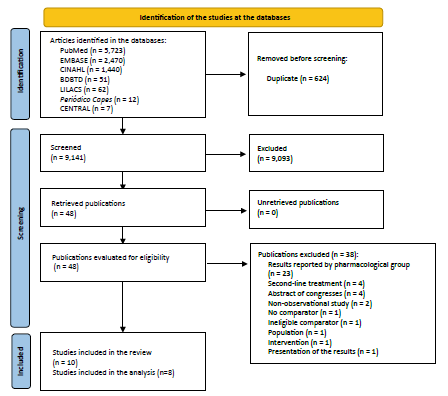 Source: Adapted from PRISMA