
 Physical Activity and Functional Capacity of Breast Cancer Patients: Prospective Cohort Study
ABSTRACT
Introduction: Women with breast cancer may experience a decrease in physical fitness, fatigue, and muscle weakness after oncological treatment.
Objective: To analyze changes in the level of physical activity (PA) and functional capacity of patients since the diagnosis of breast cancer and after surgical treatment.
Method: Prospective cohort study including women with indication of curative surgery for breast cancer. Patients were assessed at the beginning of the study and after breast cancer surgery. To assess self-reported PA, the IPAQ was used, and functional capacity was measured using three physical tests: a 30-second sit-to-stand test, a two-minute step test, and handgrip strength. The comparison of variables before and after surgical treatment was performed using the Wilcoxon test, and the effect size was evaluated using Cohen’s D.
Results: A total of 655 women were included, with the majority in the age range ≤ 59 years old (62.9%), 49.6% with advanced clinical stage ≥ IIB, and 48.9% undergoing surgery as their first oncological treatment. After surgical treatment, there was a reduction in the level of total PA, walking, and moderate intensity PA (p < 0.001 and Cohen’s D = 0.31; 0.50; 0.15, respectively), as well as handgrip strength (p < 0.001; Cohen’s D = 0.38). An increase in aerobic capacity and lower limb resistance performance was observed (p < 0.001 in both tests, Cohen’s D = 0.23 and 0.39, respectively).
Conclusion: Breast cancer patients showed an increase in aerobic capacity and lower limb resistance. However, they experienced a reduction in handgrip strength and a significant decrease in PA levels, particularly in walking, with a substantial impact on their physical well-being.
Key words:
Breast Neoplasms/surgery; Functional Status; Physical Fitness; Exercice Test
RESUMO
Introdução: Mulheres com câncer de mama podem apresentar diminuição da aptidão física, fadiga e fraqueza muscular após tratamento oncológico.
Objetivo: Analisar alteração no nível de atividade física (AF) e na capacidade funcional de pacientes entre diagnóstico do câncer de mama e após tratamento cirúrgico.
Método: Estudo de coorte prospectivo incluindo mulheres com indicação de cirurgia curativa para câncer de mama. As pacientes foram avaliadas no início do estudo e após cirurgia do câncer de mama. Para avaliar AF autorreferida, foi utilizado o IPAQ, e a capacidade funcional foi aferida mediante três testes físicos: teste de sentar e levantar de 30 segundos, marcha estacionária de dois minutos e força de preensão palmar (FPP). O teste de Wilcoxon comparou as variáveis pré e pós-cirurgia e o D de Cohen, o tamanho do efeito.
Resultados: Foram incluídas 655 mulheres, a maioria na faixa etária ≤59 anos (62,9%), 49,6% em estadiamento clínico avançado (≥IIB), e 48,9% foram submetidas à cirurgia como primeiro tratamento oncológico. Após tratamento cirúrgico, houve redução dos níveis de AF total, caminhada, AF de intensidade moderada (p < 0,001 e D de Cohen = 0,31; 0,50; 0,15, respectivamente), e da FPP (p < 0,001; D de Cohen = 0,38). Foi observado aumento do desempenho da capacidade aeróbica e resistência de MMII (p < 0,001 em ambos os testes, D de Cohen = 0,23 e 0,39, respectivamente).
Conclusão: As pacientes apresentaram aumento nos níveis de capacidade aeróbica e resistência de MMII. Entretanto, tiveram redução da FPP e diminuição nos níveis de AF de caminhada.
Palavras-chave:
Neoplasias de Mama/cirurgia; Estado Funcional; Aptidão Física; Teste de Esforço
RESUMEN
Introducción: Las mujeres con cáncer de mama pueden experimentar una disminución de la aptitud física, fatiga y debilidad muscular después del tratamiento oncológico.
Objetivo: Analizar los cambios en el nivel de actividad física (AF) y la capacidad funcional de las pacientes entre el diagnóstico de cáncer de mama y después del tratamiento quirúrgico.
Método: Estudio de cohorte prospectivo que incluyó a mujeres con indicación de cirugía curativa para el cáncer de mama. Las pacientes fueron evaluadas al inicio del estudio y después de la cirugía de cáncer de mama. Para evaluar la AF autorreportada, se utilizó el IPAQ y se midió la capacidad funcional mediante tres pruebas físicas: una prueba de sentarse y levantarse durante 30 segundos, una caminata estacionaria de dos minutos y la fuerza de agarre manual (FAM). La prueba de Wilcoxon comparó las variables pre e poscirurgía, y la prueba D de Cohen, el tamaño del efecto.
Resultados: Se incluyeron 655 mujeres, la mayoría menores de 60 años (62,9%), el 49,6% con un estadio clínico avanzado ≥ IIB y el 48,9% sometidas a cirugía como primer tratamiento oncológico. Después del tratamiento quirúrgico, se observó una reducción en los niveles de AF total, de caminata y AF de intensidad moderada (p < 0,001 y D de Cohen = 0,31; 0,50; 0,15, respectivamente), así como en la FAM (p < 0,001; D de Cohen = 0,38). Se observó un aumento en el rendimiento de la capacidad aeróbica y la resistencia de las extremidades inferiores (p < 0,001 en ambas pruebas, D de Cohen = 0,23 y 0,39, respectivamente).
Conclusión: Las pacientes con cáncer de mama mostraron un aumento en la capacidad aeróbica y la resistencia de las extremidades inferiores. Sin embargo, experimentaron una reducción en la FAM y una disminución significativa en los niveles de AF, especialmente en la caminata, con un impacto sustancial en su bienestar físico.
Palabras clave:
Neoplasias de la Mama/cirugía; Estado Funcional; Aptitud Física; Prueba de Esfuerzo
INTRODUCTION
Breast cancer is the most incident malignant neoplasm in women, except non-melanoma skin cancer in all the Brazilian regions and worldwide1. The estimates of the Global Cancer Observatory (Globocan) produced by the International Agency for Research on Cancer (Iarc), indicated 2.3 million new cases of breast cancer in the whole world in 20222. For each year of the triennium 2023-2025, 73,610 thousand new breast cancer cases are estimated in Brazil3.
In 2022, 665,684 women died of breast cancer, the main cause of death in the female population1,4. Mortality is directly associated with the diagnosis of tumor staging and type of treatment offered2,4.
Breast cancer treatment is divided in two modalities, local, consisting in surgery and radiotherapy and systemic, as chemotherapy, hormone therapy and biological therapy5. Due to the aggressiveness of the disease and treatment, adverse effects as cardiac dysfunction, weight loss, bone loss, lymphedema, arthralgia, fatigue, cognitive dysfunction may occur, in addition to breast cancer relapse or metastasis5,6,7,8. These conditions may compromise women’s quality-of-life for a long period or lifelong, which directly affects their activities of daily and professional life7,8.
According to the World Health Organization (WHO), physical activity (PA) is defined “as any bodily movement produced by skeletal muscles that requires more energy expenditure than at rest”9. It recommends at least 150 to 300 minutes of moderate aerobic activity per week or 75 to 150 minutes of intense aerobic activity for 18-64 years adults9. According to “Instituto Brasileiro de Geografia e Estatística (IBGE)”, 40.3% of the Brazilian adult population are classified as insufficiently active and 47.5% of the female population, insufficiently active10.
Many studies have shown and concurred with the association of practice of regular PA and reduction of cancer risk and mortality6,11,12. PA and physical fitness are modified variables of the human being and show positive effects in reducing the symptoms, response to oncologic treatment, quality-of-life and survivorship of women with breast cancer9.
The present study aims to analyze the levels of PA in work, transportation, home and leisure and the level of functional capacity of patients with breast cancer at diagnosis and from one to four years postsurgical treatment.
METHOD
Prospective cohort study with women diagnosed with breast cancer (ICD-10 International Classification of Diseases and Related Health Problems13 (C50)), aged 18 years or older with indication of curative surgery for breast cancer at “Hospital do Câncer III” of the National Cancer Institute (HC III/INCA) from April 4, 2016 to October 31, 2018. This study is part of the project “Influence of physical activity on quality-of-life, complications of the treatment and prognosis of women with breast cancer registered at HC III/INCA”.
The exclusion criteria of the original project were women with cancer history, in use of gait support and poor clinical, psychological or emotional conditions to respond to the questionnaires. The patients who accepted to join, signed the Informed Consent Form (ICF). INCA’s Institutional Review Board (IRB) approved the study, report number 1,400,320 (CAAE (submission for ethical review): 51100615.7.0000.5274) in compliance with Directive 466/1214 of the National Health Council.
Based on the participants of the original study, the women who were not submitted to PA evaluation at the study enrollment and one to four years post breast cancer surgery have been excluded. In addition, following the guidelines of International Physical Activity Questionnaire (IPAQ), the participants who exceeded 960 min/week of PA were excluded from the analysis15.
The evaluations conducted during the first consultation at the clinical oncology service or pre-surgery at the mastology service and from one year post-surgery (one to four years) were utilized. The long version of IPAQ and three tests of functional capacity were applied in the two time points.
IPAQ is an international tool, translated and validated for the Brazilian population16 whose objective is to estimate the time during which PA was exerted in the last week or an atypical week. The results can be categorized as low, moderate and high PA according to the practice at work, transportation, home and leisure and time spent seated13.
Individuals classified by IPAQ as low PA are insufficiently active, as high level, sufficiently active but individuals with moderate level can be sufficiently or insufficiently active according to WHO9,15.
The handgrip strength test, 2-minute step test and 30 second sit-to stand test in that order were applied to analyze the functional capacity, according to the recommendations and standards of the Senior Fitness Test16.
The 2 minute step test is an alternative of the 6 minute walk test and measures the individual’s aerobic capacity; the patient marches in place for two minutes and the number of steps is logged16,17.
Before and after the 2 minute step test, dyspnea and fatigue were analyzed by the modified Borg Dyspnea Scale and blood pressure through digital sphygmomanometer. Oxygen saturation and heart rate were checked with wrist oxymeter16,17. These parameters allowed to contraindicate the tests and avoided exposing the patients to potential complications.
The handgrip strength, also utilized as global health parameter was measured with digital dynamometer Smedley Takei III (Yagami Co Ltd., Tokyo, Japan). The patient was guided to exert handgrip strength three times, registered in kilogram-force (kgf), and the mean of the three values was utilized in the analysis18.
The 30 second sit-to-stand test evaluates the resistance of lower limbs, the patients were guided to sit and stand from a regular chair with the arms crossed at shoulder height. The participants repeated the test as much as possible to the command of the reviewer for 30 seconds and the total number of repetitions was logged16.
Sociodemographics (age, race/skin color, marital status, work relationship at the diagnosis, family income, alcohol use in the last 30 days, current tobacco use) and clinic (arterial hypertension, diabetes, body mass index, menopausal status, clinical condition and first treatment performed) were collected additionally from physical and electronical charts and enrollment interview to characterize the study population.
Measures of central tendency, dispersion and frequency described the sociodemographic and clinical characteristics of the population. The normality distribution test of Kolmogorov-Smirnov examined if variables are normally distributed. The non-parametric tests were presented as median and minimum and maximum range. The Wilcoxon test compared these variables and Cohen’s D test to evaluate the effect size. According to Cohen19, an effect size D = 0.10 to 0.29 is small, D = 0.30 to 0.49, medium and D = 0.50 to 1.0, large. Values of p < 0.05 were statistically significant. The Statistical Package for Social Sciences (SPSS)20 version 21.0 was utilized for the study’s analyzes.
RESULTS
The original study evaluated 1,075 women, 119 of which were not eligible, totaling 956 patients, but 301 participants were excluded for missing data of self-reported PA or more than 960 min/week self-reported PA, reaching a final sample of 655 patients. The number of participants of each test was different due to contraindications, for instance, arterial hypertension, drop of peripheral oxygen saturation, pain or some type of physical or emotional problem when the test was performed which impeded the application of the questionnaires and physical evaluation (Figure 1).
The majority of the study population were aged ≥ 59 years (62.9%), 64.0% claimed they were non-White, 50.5% were not living with spouse when they were interviewed, 56.3% had more than eight years of education and 57.4% had no work relationship. 74.0% did not use alcohol in the last 30 days and 92.7% claimed they did not smoke or quit smoking (Table 1).
The clinical characteristics revealed that 47.6% had arterial hypertension, 17.9% had diabetes, 73.7% were overweight or obese, 65.0% were in menopause, 49.6% at advanced clinical staging ≥ IIB, and surgery was the first treatment performed (48.9%) (Table 2).
The evaluation of the level of PA before and one to four years after surgical treatment revealed a statistically significant reduction of total PA, walking and moderate PA (p < 0.001; Cohen’s D = 0.31; 0.50; 0.15, respectively), despite an increase of strong activities (p < 0.001; Cohen’s D = 0.15) and leisure (p < 0.001; Cohen’s D = 0.15) (Table 3).
The patients improved the aerobic fitness and endurance of lower limbs after surgery treatment according to the evaluation of functional capacity (p < 0.001 for both tests, Cohen’s D = 0.23 and 0.39, respectively), although the handgrip strenght declined after surgery (p < 0.001; Cohen’s D = 0.38) (Table 3).
DISCUSSION
The objective of the study was to evaluate the levels of PA and functional capacity of women with breast cancer at the diagnosis and one to four years after surgical treatment. An increase of aerobic fitness and endurance of lower limbs, reduction of handgrip strength and level of PA of walking were noticed.
Mazo et al.21 applied the set of Senior Fitness Test16 to develop normative values for Brazilian healthy women in the age-range of 60-69 years who practiced PA for at least six months21. This test classified the physical fitness of 60-69 aged women who repeated at least 12.5 times the sit-to-stand test as very good. Compared to the present study, despite most of the patients were aged 59 years or younger, they were able to keep the number of repetitions of sit-to-stand test similar to what was found (13 repetitions) for older women.
According to Rikli and Jones22, due to physiological issues, physical fitness tends to decline from 60 years onward. The mean of 13.8 repetitions of the sit-to-stand test and mean of 85.9 steps per minute in the 2 minute in-place test was found for the healthy population aged 60-69 years. These data were similar to what was found in the present study, when women performed 13.0 repetitions and walked 90.8 steps, respectively, which suggests that this population, although younger, is as physically fit as an older population, a concerning scenario.
A prospective observational study performed by Grusdat et al.23 with 79 women with mean age of 54.6 years (±9.5) who had breast cancer, evaluated the handgrip strength in three time points: before, one week later and three months after breast cancer treatment.
These patients were submitted to four types of treatment: surgery alone, surgery and chemotherapy and radiotherapy or surgery and radiotherapy. The means of handgrip strength were 31.9 kgf, 28.0 kgf and 27.8 kgf respectively, revealing post treatment reduction.
A Germany study with healthy women and age-range of 50-54 years presented mean of 32.5 kgf and identified that values below 26.6 kgf were considered at risk of reducing muscle function24. The patients of the present study - median of 19.8 kgf (3.8-32.3) - revealed damaged muscle strength since diagnosis through post-surgery if compared with the two aforementioned studies.
The study of Ortiz et al.25 enrolled 89 breast cancer survivors from Texas and Puerto Rico, USA, with mean age of 55.5 years (±10.0), who submitted to treatment for at least three months and sedentary behavior (did not perform regular physical exercises). The mean of handgrip strength of these patients was 10.3 (±9.4) kgf, mean of 11.60 (±3.1) repetitions of the sit-to-stand test and low level of moderate and vigorous PA with mean of 76.5 (±183.5) metabolic equivalent of the task (MET) min/week by IPAQ.
A median of 19.8 kgf (3.8-32.3) of handgrip strength post-surgery for the present study was found and despite the decline of strength, it was even higher than the patients investigated by Ortiz et al.25. Furthermore, the number of repetitions of the sit-to-stand test was similar to the present study [13.0 (5.0-30.0) repetitions]. The patients analyzed presented reduction of the levels of moderate PA [at diagnosis: 1,695.0 (0,0-19,560.0) and post-surgery: 1,160.0 (30.0-16,037,0)], however, in this period, vigorous intensity PA improved [at diagnosis: 0.0 (0.0-25,200.0) and post-surgery: 960.0 (120.0-20,160.0)].
A cross-sectional study conducted by Zainordin et al.26 with 95 women who completed oncologic treatment for at least six months, 63 with breast cancer and 32, gynecological cancer, identified that women with breast cancer had mean age of 51.2 (±6.9) years, most of them classified as low level of PA (74.6%) and none of them presented high level of PA according to IPAQ. In addition, when the two groups were evaluated together, a total mean MET of 403.5 (±332.7) min/week was found. Despite the author had evaluated a group with more than one type of cancer and the current study had evaluated only women with breast cancer, the results herein revealed higher PA level at diagnosis and from one to four years post-surgery when compared to these authors26.
The study of Tami-Maury et al.27 carried out in USA included 127 women who completed the first treatment for breast cancer, surgery, radiotherapy, chemotherapy or hormone therapy. These women were submitted to a 3-month protocol of exercises with 12 sessions of moderate to high intensity.
The mean age of the population was 59.6 (±10.7); upon completion of the exercise program, it has been identified that the women increased the time dedicated to moderate to vigorous PA (172.8 vs. 344.6; p = 0.01), improvement of the performance of the sit-to-stand test [12.5 (±4.2) vs. 14.9 (±5.2); p = 0.01] and the distance covered in the 6 minute in-place test increased (427.8 vs. 469.9; p = 0.01)27.
The implementation of a program of physical exercise for women submitted to breast cancer treatment was positive and improved the PA and their functional capacity and can be encouraged in breast cancer treatment centers to prevent the decline in these domains.
The strength of the present study was the robust sample with 655 women investigated, indicating good power to analyze the results. The study team was trained for two weeks to apply the IPAQ, physical tests and approach to the patients with standard collecting forms to minimize potential information bias. The questions addressed current data or of the previous week, minimizing possible memory bias.
The main limitation was the clinical, physical or emotional contraindication to perform functional tests, resulting in different number of participants in each test but the sample size was satisfactory.
The questionnaire IPAQ evaluates PA across many dimensions as leisure, work, home activities and transportation. Despite its subjective evaluation nature, it is the most utilized to assess the dimensions of daily PA. Another possible study limitation were two evaluations in two specific time points because it is not possible to know whether the patients initiated, kept or discontinued the physical exercises between these two moments.
CONCLUSION
Women with breast cancer submitted to surgery treatment at HC III/INCA improved the levels of aerobic fitness and endurance of lower limbs, had reduced handgrip strength and great decline of levels of PA, specifically the walk test since diagnosis until one to four years post-surgery. These findings highlight the importance of comprehensive approaches for rehabilitation and physical support of these patients during and after breast cancer treatment to keep satisfactory quality-of-life.
References
-
1 Instituto Nacional de Câncer [Internet]. Rio de Janeiro: INCA: [data desconhecida]. Conceito e Magnitude; 2022 set 16. [acesso 2024 jan 25]. Disponível em: Disponível em: https://www.gov.br/inca/pt-br/assuntos/gestor-e-profissional-de-saude/controle-do-cancer-de-mama/conceito-e-magnitude
» https://www.gov.br/inca/pt-br/assuntos/gestor-e-profissional-de-saude/controle-do-cancer-de-mama/conceito-e-magnitude -
2 Bray F, Laversanne M, Sung H, et al. Global cancer statistics 2022: GLOBOCAN estimates of incidence and mortality worldwide for 36 cancers in 185 countries. CA Cancer J Clin. 2024;74(3):229-63. doi: https://doi.org/10.3322/caac.21834
» https://doi.org/10.3322/caac.21834 -
3 Santos MO, Lima FCS, Martins LFL, et al. Estimativa de incidência de câncer no Brasil, 2023-2025. Rev Bras Cancerol. 2023;69(1):e-213700. doi: https://doi.org/10.32635/2176-9745.RBC.2023v69n1.3700
» https://doi.org/10.32635/2176-9745.RBC.2023v69n1.3700 -
4 Costa LDLN, Sardinha AHL, Verzaro PM, et al. Mortalidade por câncer de mama e condições de desenvolvimento humano no Brasil. Rev Bras Cancerol. 2023;65(1):e-12050. doi: https://doi.org/10.32635/2176-9745.RBC.2019v65n1.50
» https://doi.org/10.32635/2176-9745.RBC.2019v65n1.50 -
5 Instituto Nacional de Câncer [Internet]. Rio de Janeiro: INCA: [data desconhecida]. Tratamento; 2022 set 16. [atualizado em 2022 set 26; acesso 2024 jan 25] Disponível em: Disponível em: https://www.gov.br/inca/pt-br/assuntos/gestor-e-profissional-de-saude/controle-do-cancer-de-mama/acoes/tratamento
» https://www.gov.br/inca/pt-br/assuntos/gestor-e-profissional-de-saude/controle-do-cancer-de-mama/acoes/tratamento -
6 Seixas RJ, Kessler A, Frison VB. Atividade física e qualidade de vida em pacientes oncológicos durante o período de tratamento quimioterápico. Rev Bras Cancerol. 2010;56(3):321-30. doi: https://doi.org/10.32635/2176-9745.RBC.2010v56n3.1480
» https://doi.org/10.32635/2176-9745.RBC.2010v56n3.1480 - 7 Diettrich S. Eficacia de um programa de atividade fisica nos niveis de fadiga em pacientes em tratamento de cancer de mama [dissertacao]. Campo Grande: Universidade de Brasilia, Programa Multiinstucional em Ciencias da Saude; 2007.
-
8 Ganz PA, Hahn EE. Implementing a survivorship care plan for patients with breast cancer. J Clin Oncol. 2008;26(5):759-67. doi: https://doi.org/10.1200/JCO.2007.14.2851
» https://doi.org/10.1200/JCO.2007.14.2851 - 9 World Health Organization. Guidelines on physical activity and sedentary behaviour. Geneva: World Health Organization; 2020.
- 10 Instituto Brasileiro de Geografia e Estatística. Pesquisa nacional de saúde: 2019: percepção do estado de saúde, estilos de vida, doenças crônicas e saúde bucal: Brasil e grandes regiões. Rio de Janeiro: IBGE; 2020.
-
11 Dieli-Conwright CM, Courneya KS, Demark-Wahnefried W, et al. Aerobic and resistance exercise improves physical fitness, bone health, and quality of life in overweight and obese breast cancer survivors: a randomized controlled trial. Breast Cancer Res. 2018;20(1):124. doi: https://doi.org/10.1186/s13058-018-1051-6
» https://doi.org/10.1186/s13058-018-1051-6 -
12 Hiraoui M, Al-Haddabi B, Gmada N, et al. Effects of combined supervised intermittent aerobic, muscle strength and home-based walking training programs on cardiorespiratory responses in women with breast cancer. Bull Cancer. 2019;106(6):527-37. doi: https://doi.org/10.1016/j.bulcan.2019.03.014
» https://doi.org/10.1016/j.bulcan.2019.03.014 - 13 Organização Mundial da Saúde. CID-10: Classificação Estatística Internacional de Doenças e problemas relacionados à saúde. São Paulo: Edusp; 2008.
- 14 Conselho Nacional de Saúde (BR). Resolução n° 466, de 12 de dezembro de 2012. Aprova as diretrizes e normas regulamentadoras de pesquisas envolvendo seres humanos. Diário Oficial da União, Brasília, DF. 2013 jun 13; Seção I:59.
-
15 Matsudo S, Araújo T, Matsudo V, et al. Questionário internacional de atividade física (IPAQ): estudo de validade e reprodutibilidade no Brasil. Rev Bras Ativ Fis Saúde. 2001;6(2):05-18. doi: https://doi.org/10.12820/rbafs.v.6n2p5-18
» https://doi.org/10.12820/rbafs.v.6n2p5-18 - 16 Rikli RE, Jones CJ. Functional fitness normative scores for community-residing adults, ages 60-94. JAPA. 1999;6:160-79.
- 17 Pedrosa R, Holanda G. Correlação entre os testes da caminhada, marcha estacionária e TUG em hipertensas idosas. Braz J Phys Ther 2009;13(3):252-6.
-
18 Oldervoll LM, Loge JH, Lydersen S, et al. Physical exercise for cancer patients with advanced disease: a randomized controlled trial. Oncologist. 2011;16(11):1649-57. doi: https://doi.org/10.1634/theoncologist.2011-0133
» https://doi.org/10.1634/theoncologist.2011-0133 - 19 Cohen J. Statistical power analysis for the behavioral sciences 2. ed. Hillsdale: Lawrence Erlbaum Associates, Publishers; 1988.
-
20 SPSS®: Statistical Package for Social Science (SPSS) [Internet]. Versão 21.0. [Nova York]. International Business Machines Corporation. [acesso 2024 mar 9]. Disponível em: Disponível em: https://www.ibm.com/br-pt/spss?utm_content=SRCWW&p1=Search&p4=43700077515785492&p5=p&gclid=CjwKCAjwgZCoBhBnEiwAz35Rwiltb7s14pOSLocnooMOQh9qAL59IHVc9WP4ixhNTVMjenRp3-aEgxoCubsQAvD_BwE&gclsrc=aw.ds
» https://www.ibm.com/br-pt/spss?utm_content=SRCWW&p1=Search&p4=43700077515785492&p5=p&gclid=CjwKCAjwgZCoBhBnEiwAz35Rwiltb7s14pOSLocnooMOQh9qAL59IHVc9WP4ixhNTVMjenRp3-aEgxoCubsQAvD_BwE&gclsrc=aw.ds -
21 Mazo GZ, Petreça DR; Sandreschi PF, et al. Normative values of physical fitness for Brazilian elderly woman aged 60-69 years. Rev Bras Med Esporte. 2015;21(4):318-22. doi: https://doi.org/10.1590/1517-869220152104134470
» https://doi.org/10.1590/1517-869220152104134470 -
22 Rikli RE, Jones CJ. Development and validation of criterion-referenced clinically relevant fitness standards for maintaining physical independence in later years. Gerontologist. 2013;53(2):255-67. doi: https://doi.org/10.1093/geront/gns071
» https://doi.org/10.1093/geront/gns071 -
23 Grusdat NP, Stäuber A, Tolkmitt M, et al. Routine cancer treatments and their impact on physical function, symptoms of cancer-related fatigue, anxiety, and depression. Support Care Cancer. 2022;30(5):3733-44. doi: https://doi.org/10.1007/s00520-021-06787-5
» https://doi.org/10.1007/s00520-021-06787-5 -
24 Steiber N. Strong or weak handgrip? normative reference values for the german population across the life course stratified by sex, age, and body height. PLoS One. 2016;11(10):e0163917. doi: https://doi.org/10.1371/journal.pone.0163917
» https://doi.org/10.1371/journal.pone.0163917 -
25 Ortiz A, Tirado M, Hughes DC, et al. Relationship between physical activity, disability, and physical fitness profile in sedentary latina breast cancer survivors. Physiother Theory Pract. 2018;34(10):783-94. doi: https://doi.org/10.1080/09593985.2018.1424978
» https://doi.org/10.1080/09593985.2018.1424978 -
26 Zainordin NH, Karim NA, Shahril MR, et al. Physical activity, sitting time, and quality of life among breast and gynaecology cancer survivors. Asian Pac J Cancer Prev. 2021;22(8):2399-408. doi: https://doi.org/10.31557/APJCP.2021.22.8.2399
» https://doi.org/10.31557/APJCP.2021.22.8.2399 -
27 Tami-Maury IM, Liao Y, Rangel ML, et al. Active living after cancer: adaptation and evaluation of a community-based physical activity program for minority and medically underserved breast cancer survivors. Cancer. 2022;128(2):353-63. doi: https://doi.org/10.1002/cncr.33904
» https://doi.org/10.1002/cncr.33904
-
FUNDING SOURCES
Natasha Catalano Silva is a recipient of scientific initiation of “Fundação de Amparo à Pesquisa do Estado do Rio de Janeiro (Faperj)”. Further, she received a scientific initiation scholarship from INCA for the present study. Anke Bergmann and Luiz Claudio Santos Thuler were recipients of research productivity scholarship of the National Council of Scientific and Technological Development (CNPq).

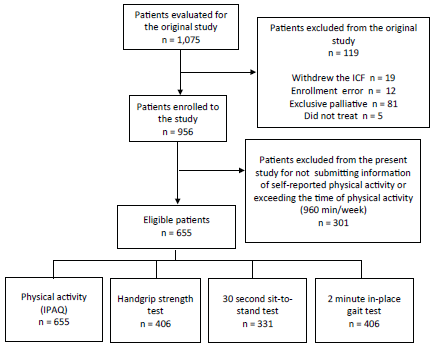 ICF = Informed Consent Form; INCA = National Cancer Institute; IPAQ = International Physical Activity Questionnaire.