 NAVIGATING TRANSITION: UNVEILING DRIVERS IN BRAZIL’S CIRCULAR ECONOMY SHIFT
ABSTRACT
As consumption grows and natural resources dwindle, it is essential to rethink business models by aligning them with the principles of the circular economy (CE). This study analyzes the key drivers that can guide an effective transition to CE in industry, particularly considering the distinction between the two categories of companies regarding proactiveness in using circular business models (CBMs), if “native” or “adopter” companies. A group decision-making (GDM) model was applied to analyze and compare the opinions of experts focusing on the Brazilian industry. The results suggest that while industry practitioners are more focused on practical and tangible issues, scholars tend to consider a broader range of variables and contexts, thus resulting in distinct interpretations of the drivers. The discrepancies provide valuable insights for business managers, policymakers, and regulatory bodies that support the formulation of more effective and comprehensive strategies to promote a successful shift toward CE in Brazil.
RESUMO
À medida que o consumo cresce e os recursos naturais se tornam escassos, torna-se imperativo repensar os modelos de negócio, alinhando-os com os princípios da economia circular (EC). Este estudo procura analisar os principais fatores motivadores que servem de guia para uma transição eficaz da indústria para a EC, particularmente considerando a distinção entre as duas categorias de empresas quanto à proatividade com que aderem a modelos de negócio circulares (MNC), se são empresas “nativas” ou “adotantes”. Para tanto, foi aplicado um modelo de tomada de decisão em grupo (GDM) para analisar e comparar as opiniões de especialistas com foco na indústria brasileira. Os resultados sugerem que, embora os profissionais da indústria estejam mais focados em questões práticas e tangíveis, os especialistas académicos tendem a considerar uma gama mais ampla de variáveis e contextos, resultando assim em interpretações distintas dos fatores determinantes. No entanto, as discrepâncias fornecem informações valiosas para gestores empresariais, formuladores de políticas e órgãos reguladores que apoiam a criação de estratégias mais eficazes e abrangentes para promover uma mudança bem-sucedida em direção à EC no Brasil.
Palavras-chave:
economia circular; modelo de negócios circular; motivadores; tomada de decisão em grupo; indústrias brasileiras
RESUMEN
A medida que crece el consumo y los recursos naturales escasean, se vuelve imperativo repensar los modelos de negocio, alineándolos con los principios de la economía circular (EC). Este estudio analiza los impulsores clave que pueden guiar una transición efectiva a la CE en la industria, considerando particularmente la distinción entre las dos categorías de empresas con respecto a la proactividad en el uso de modelos de negocio circulares, si son empresas “nativas” o “adoptantes”. Para ello, se aplicó un modelo de toma de decisiones grupales (GDM) para analizar y comparar las opiniones de expertos enfocados en la industria brasileña. Los resultados sugieren que, aunque los profesionales de la industria se centran más en cuestiones prácticas y tangibles, los expertos académicos tienden a considerar una gama más amplia de variables y contextos, lo que da lugar a diferentes interpretaciones de los factores determinantes. Aun así, las discrepancias brindan información valiosa para los gerentes empresariales, los formuladores de políticas y los organismos reguladores que apoyan la formulación de estrategias más efectivas e integrales para promover un cambio exitoso hacia la EC en Brasil.
Palabras clave:
economía circular; modelo de negocio circular; motivadores; toma de decisiones grupales; industrias brasileñas
INTRODUCTION
Integrating a business model based on the concept of circular economy (CE) can provide incentives for activities focused on reducing waste and negative environmental impact, in addition to addressing the issue of the depletion of natural resources and creating opportunities for growth for new businesses, with a more competitive and current economic model (Han et al., 2022; Perotti et al., 2023; Silva, 2019). Furthermore, giving value to eco-efficiency, as a result of there being consumers who are more demanding and more concerned with the well-being of future generations, and, consequently, reaping the gains related to the image of sustainability, are major drivers of the transition process from linear (produce–use–dispose model) to circular business models (CBMs) (Guarnieri et al., 2023; Kühl et al., 2023; Wang et al., 2022).
CBMs aim to eliminate waste, optimize resources, and improve the design of products and/or processes (innovation) from the perspective of the triple bottom line (social, economic, and environmental) (Försterling et al., 2023; Kühl et al., 2023; Leitão et al., 2024). This sustainable innovation procedure occurs due to two main approaches: reactive – coming from external pressure from different stakeholders, such as customers, suppliers, investors, and government, especially through laws and regulations; or proactive – based on the initiative of internal company staff (Roy et al., 2020). However, organizations still need to understand which factors can enhance and/or facilitate the process of effective CBM adoption (Centobelli et al., 2020; Försterling et al., 2023; Henry et al., 2020).
The drivers for the transition to a CE may vary depending on the origin of the CBM. The literature shows that companies can be categorized into two groups in terms of their proactiveness in using a CBM. The first group consists of “adopters,” i.e., companies that base their structure and business model on the principles of linear economy, but work to transition to CBM. In these cases, the companies’ primary driver to move toward a CBM refers to economic factors instead of social aspects of sustainability (Rovanto & Bask, 2021; Henry et al., 2020). The companies in the second group are the “natives,” which are companies that were founded based on the sustainable principles of the CE (Rovanto & Bask, 2021; Urbinati et al., 2020). The context plays an important role in explaining the differences between native and adopter companies, from their productive resources to the objectives of their stakeholders. According to Uvarova et al. (2023), CE principles can be implemented differently in each company, depending on the products, the industry, and specific characteristics. Therefore, we identified the first research gap related to the importance of verifying the relationship between the drivers of CBM adoption and the origin of the CBM within the company, whether this business model emerges within a native or an adopter company. A granular understanding of these differences is essential to tailor transition-accelerating strategies—for instance, targeted incentives for adopters (often economically motivated) versus systemic support for natives (grounded in circular design principles). This provides a framework for context-specific CE policies and practices (Rovanto & Bask, 2021), reinforcing the significance of this study.
Furthermore, several studies reinforce that the drivers for CBM adoption can change depending on the company’s sector of activity and/or country of coverage (Guarnieri et al., 2023; Munaro & Tavares, 2023; Salim et al., 2019; Silva et al., 2023). Many developing countries still appear to be entrenched in the linear model, although some are seeking ways to transition to CBM to bolster the economy and improve the population’s living conditions (Bag et al., 2021; Silva & Morais, 2021). Brazil, in particular, has been motivated by its international commitment to the UN 2030 Agenda and the Sustainable Development Goals (SDGs), prompting investment in sustainable processes and initiatives.
However, Guarnieri et al. (2023) state that CE is still in its embryonic phase in Brazil compared to developed countries. The Brazilian Centre for International Relations (2020) undertook a study that highlights the main challenges related to CE in the country, among which are the systemic challenge of recycling and remanufacturing by-products in industry; a mindset still stuck in the traditional way of production and consumption, in addition to the lack of incentives and government clarity. This signals the need to define legal and regulatory frameworks that promote a business environment suitable for the circular process, with the necessary incentives and financing initiatives for sustainable innovation.
Although many industries in Brazil already engage in activities related to CE, there is difficulty in associating these initiatives with a more structured and systemic transition, thereby making it necessary to analyze the organizational, social, and economic issues related to this process (Confederação Nacional da Indústria [CNI], 2019; Guarnieri et al., 2023). Thus, a research question arises: which drivers influence CBM adoption by adopter or native companies in the Brazilian industry?
Understanding the drivers for CBM adoption is a complex task, largely due to the significant number of stakeholders involved (Zolfani et al., 2023). Models that consider multiple decision-makers are essential for supporting all parties involved, especially in complex situations. These models facilitate a learning process that considers different and conflicting viewpoints and plans mitigation actions to address the problem (Fontana et al., 2023; Salehi et al., 2024). Group Decision- Making (GDM) can be viewed as the task of consolidating and aggregating the preferences or opinions that a group of decision-makers expresses regarding a particular situation or problem (Salehi & Fontana, 2024; Zhang et al., 2019). In their literature review, Lugo et al. (2023) noted that several studies have employed a data-based approach using focus groups on CE-related topics. However, they observed that these studies still rely on non-numerical data, and converting these perceptions into numerical data is crucial for supporting technical decision-making. This research fills this gap.
Therefore, we proposed a GDM approach to analyze the key drivers for CBM adoption in the context of the Brazilian industry, considering both “adopter” and “native” companies. The methodology employed in this research addresses critical knowledge gaps by first conducting an extensive literature review and then consulting two groups of experts—scholars and industry practitioners—using the nominal group technique, a suitable method for evaluating complex issues with diverse viewpoints. Finally, the results obtained from the knowledge-based decisions of experts in these groups are compared pairwise (Salehi & Fontana, 2024). The outcomes of the numerical analysis of these experts’ perceptions will provide technical support for policymakers, aiding them in developing more assertive public policies that align with the profile of each company and the country’s context.
LITERATURE REVIEW
A company’s process of transition to a circular economy (CE) requires the creation of new business models, which can be understood as how an organization creates, delivers, and captures value (Försterling et al., 2023; Kolpinski et al., 2023; Urbinati et al., 2020). Unlike linear business models, in which value generation occurs only economically, in CBMs, contributions must also cover environmental and social areas. Thus, the concept of a CBM consists of how a company engages in CBM, and the terminology is often used as a synonym for CE (Assmann et al., 2023; Rovanto & Bask, 2021).
Rovanto and Bask (2021) consider CBM as the application of CE at the micro level, i.e., at the company level, with economic, environmental, and social implications, taking into account its influences and interactions within supply chains and in regional and global contexts. A CBM relates to an organization’s value proposition, value creation and delivery, and value capture elements that aim at a CE (Neligan et al., 2023). Therefore, CBM involves the processes of recycling, reprocessing, reuse, or similar terms, related to the reprocessing and reuse of materials, mitigating the resource scarcity problems and helping to create value for the firm (Bag et al., 2020; Bag et al., 2021). Urbinati et al. (2020) further propose that the level of adoption of a CBM can vary along two dimensions: the first concerns adopting circularity concepts so that value is delivered to customers, while the second refers to the extent to which the organization develops ways to reorganize its internal activities and integrate its suppliers into CE initiatives. Many companies are making efforts to transition from a linear business model to implementing a CBM (adopters), while others seek to adopt the concept from when they first conceive their business (natives). Notwithstanding, it is still unclear what path companies follow to carry out this transition toward CE (Centobelli et al., 2020).
Several studies have discussed drivers and barriers to CBM adoption, such as Aloini et al. (2020), Assmann et al. (2023), Geissdoerfer et al. (2023), Giorgi et al. (2022), Neligan et al. (2023), and Upadhyay et al. (2022). This research analyzes these drivers in greater depth, identifying and categorizing them based on a systematic literature review (SLR) that follows the methodology proposed by Snyder (2019). Articles published from 2017 to 2023 that addressed drivers for the CBM adoption were consulted.
In general, previous studies categorize the drivers into internal and external factors and/ or economic, environmental, social, and technical/organizational dimensions (Barboza et al., 2022; Guarnieri et al., 2023; Jabbour et al., 2020; Raspini et al., 2022). In this research, drivers were categorized into four dimensions – social, environmental, economic, and organizational – inspired by literature review articles such as Aloini et al. (2020), Mehmood et al. (2021), Munaro and Tavares (2023), Salim et al. (2019), and Wuni (2023) (see Table 1).
Table 1 was prepared considering only applied articles, i.e., literature review articles were not considered. Although the literature states that companies adopt CBMs to respond to environmental and competitive pressures (Han et al., 2022), the results in Table 1 show that the environmental aspect seems to be the least influential dimension for companies to adopt CBM, even though it is an aspect of the triple bottom line of sustainability and, therefore, of the CE concept. Moreover, drivers differ significantly depending on the sector and type of business model (Bocken et al., 2022; Stempfle et al., 2022), as well as the external (country context) and internal resources available, as automation, digitalization, and artificial intelligence (AI) tools (Perotti et al., 2023; Pizzi et al., 2022; Sjödin et al., 2023).
To sum up, despite the enormous contribution of these studies, there is still a need for further research to determine the degree of influence of such drivers on adopting CE in Brazil. Furthermore, no references were found that consider a comparative assessment between adopter and native companies, especially considering group decision-making (GDM) approaches.
METHODOLOGY
This study employed a mixed (quali-quantitative) methodological approach, which provides broader, better quality, and more comprehensive knowledge on the researched topic, from which an analysis of the key drivers for the CBM adoption was made considering the distinction between native and adopter companies in the context of Brazilian industry. Thus, following the model proposed by Fontana et al. (2023) adapted to the research problem of this study, the drivers, summarized in Table 1, were evaluated from a perspective of group decision-making (GDM) to analyze and compare the opinions of experts focusing on the Brazilian industry.
The increasing complexity of real-world problems has created a situation in which a single decision-maker may not be able to consider all relevant aspects of a decision or may not have all the necessary information (Yue et al., 2024). Thus, group decision-making (GDM) presents itself as a more appropriate approach, where different perceptions and preferences about the problem are considered and aggregated in the analysis (Meng & Chen, 2021). There are several GDM methods in the literature (Meng & Chen, 2021; Yue et al., 2024; Zhang & Chen, 2021; Zhou et al., 2022).
Here, we opted for the nominal group technique (NGT), which consists of an individual assessment by experts (here considered as decision-makers). The main motivation for choosing the NGT in this research is that it is a structured GDM method designed to facilitate the generation of ideas and decision-making systematically and equitably. The term “nominal group” means that the meeting of the decision-makers is only nominal, and interaction between them is omitted. Thus, a questionnaire is prepared and provided to each individual separately, without verbal interaction with others (experts) (Salehi et al., 2024; Salehi & Fontana, 2024). Thus, each decision-maker will give their opinion on the issue addressed independently and free from influence (Fontana et al., 2023). According to Salehi et al. (2024), the NGT is considered a useful and appropriate method for problem situations that need to be investigated in detail, where there are a large number of alternatives (here, the drivers).
Nominal Group Technique (NGT)
Experts evaluated the drivers (Table 1) considering the Brazilian context of both native and adopter companies. We propose the following question: Taking into account the particularity of native or adopter companies, do you consider these factors drivers for CBM adoption in the Brazilian industry? The level of agreement associated with each driver was assessed using a 5-point Likert scale, from 1 (totally disagree) to 5 (totally agree) and zero for “not applicable.” An electronic self-administered questionnaire was sent to experts selected through convenience sampling, using social networks like LinkedIn® and identifying authors from the SLR.
Data analysis seeks to determine the position of each driver, following Eq. (1) (Fontana et al., 2023).
Where:
c represents a driver;
i represents a linguistic value (Likert scale);
wci is the number of experts who associated the ith linguistic value with the cth driver;
NVi is the numerical value associated with the ith linguistic value;
wT is the total number of experts in each group.
Then, the results were compared in pairs, using two approaches: (a) non-weighted – the opinion of experts is considered with equal relevance; and (b) weighted – the experts’ opinion is weighted by their experience and education degree. For this, we used the same approach as Fontana et al. (2023), as shown in Table 2.
Experts’ profile
The experts are people who work directly in business assessment and decision-making to solve problems related to the transition to CE in the Brazilian context. Thus, two groups were considered:
-
(g1) Scholars who work at universities located in Brazil – who carry out research and scientific studies on topics related to CE, sustainability, and environment management but who do not work directly in solving problems faced in industries.
-
(g2) Brazilian industry practitioners (directors, managers, coordinators, etc.) – who work directly in business assessment and decision-making to solve problems related to the transition to CE.
The opinion of managers who work in the industrial area is important because they are the decision-makers in the process of adopting concepts, while scholars present a more robust theoretical view regarding the topic. Although partnerships between academia and industry for studies like this are possible, in Brazil, there is still a culture of little dialogue between these parties. Therefore, we consider it relevant to analyze these groups separately.
Table 3 summarizes the experts’ profiles, showing that scholars had higher qualifications and more years of experience compared to practitioners.
Burton et al. (1977) analyzed the impact of group size on the quality of answers and participant satisfaction with the outcomes obtained, specifically focusing on nominal groups. They identified that the optimal number of participants for ensuring quality and satisfaction was 10 experts. When this number is exceeded, both quality and expert satisfaction with the outcomes obtained decrease. According to the authors, this can be explained by the fact that in larger groups, time management with deadlines and participation becomes more challenging, leading to attention dispersion and frustration among the experts. Moreover, the opinions of these two groups of experts were then compared and analyzed to identify similarities and differences between the drivers applied to these two types of companies (adopters and natives) (Rovanto & Bask, 2021). Six scenarios were collectively and exhaustively defined based on the definitions of the NGT about weighted and non-weighted opinions. It is important to mention that these six scenarios are all the possible combinations when we use the NGT and the notion of adopter and native companies:
-
Adopter companies: Comparison of the non-weighted (Scenario S1) and weighted (Scenario S2) opinions of the two groups of experts for adopter’ companies;
-
Native companies: Comparison of the non-weighted (Scenario S3) and weighted (Scenario S4) opinions of the two groups of experts for native companies;
-
Native versus adopter companies: Comparison of the non-weighted opinions of scholars (Scenario S5) and industry practitioners (Scenario S6) on native and adopter companies.
Analysis of these scenarios allows a holistic view of the problem. Moreover, decisions concerning sustainable issues involve conflicting objectives and viewpoints. Thus, approaches dealing with the perception of more stakeholders can provide a more complete picture of the situation (Fontana et al., 2023). The results are presented in the next section.
RESULTS
Adopter companies
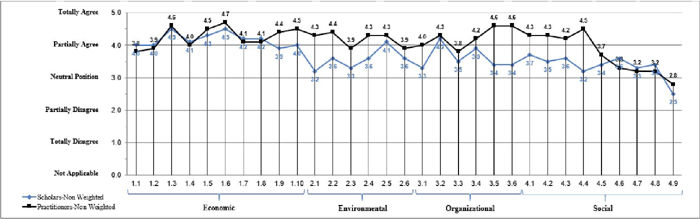
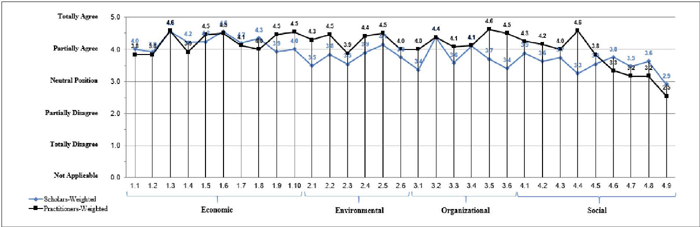
Considering the data analyzed, Figures 1 and 2 present the results of scenarios S1 and S2, respectively, which refer to the assessment of scholars and industry practitioners regarding adopter companies in the drivers listed in Table 1.


When analyzing the results by dimension, attention is drawn to the low relevance attributed by both groups to environmental factors and some of the social factors compared to the other dimensions. The analysis of results considering the experts’ opinion, weighed according to their experience and education, led to a greater approximation in the classification percentage of the drivers, leading to greater convergence between decision-makers in the evaluation for almost all factors. It is also observed that environmental factors have a lower classification than other drivers for both groups of experts. This suggests that developing strategies that put environmental issues at the forefront is a CE strategy that is little used in the adopter companies’ transition process to CE.
Analyzing the drivers specifically in the economic dimension, we observed that 1.3, 1.5, and 1.7 had the most significant impact on CBM adoption, while drivers 1.2, 1.4, and 1.6 were considered less influential for CE adoption. Furthermore, factors 1.2, 1.4, and 1.5 generated greater divergence between the groups: scholars considered driver 1.2 as less significant, while practitioners assigned a lower classification for the last two (1.4 and 1.5). Regarding similarities between groups of experts, driver 1.4 showed the lowest similarity (30%), while drivers 1.3 and 1.10 showed the highest similarity (70%).
In the environmental dimension, driver 2.5 was considered to have the greatest impact in terms of its application, in addition to showing greater similarity in evaluations (80%), while factors 2.1 and 2.3 appear to have a low influence on the transition. Driver 2.4 showed the least similarity (30%), where practitioners consider it relevant and scholars do not.
In the organizational dimension, a greater disparity in evaluations is noticed, in which scholars attributed a less significant influence to this dimension compared to practitioners. As for the similarities between the groups, driver 3.6 clearly presents the lowest similarity (20%), while drivers 3.3 and 3.5 present the highest similarity in evaluations (60%).
Finally, the social dimension presented a behavior similar to that described in the organizational dimension, with practitioners attributing greater impact to the drivers than scholars did. The similarities between the groups were lower for drivers 4.1, 4.3, and 4.6, with only 30% agreement, and for driver 4.4, where agreement was just 20%. As for the driver with the highest similarity, both groups agreed that public policies, government initiatives, and consumers’ environmental concerns facilitate CBM adoption, as reflected in drivers 4.2 and 4.8, which reached 70% and 80% agreement, respectively.
Native companies
Figures 3 and 4 present the results of scenarios S3 and S4, respectively, which refer to Native companies.


In relation to these results, the disparity between the assessments of environmental factors and some of the organizational and social factors draws attention. In general, practitioners considered the drivers to be more significant compared to scholars. As in the previous evaluation, the experts’ opinions weighted by their experience and degree are more homogeneous, leading to greater convergence in most results.
In the economic dimension, we observed that, according to the groups’ assessment, factors 1.3, 1.5, and 1.6 have the greatest impact. Regarding the similarity of drivers, 1.1 and 1.9 have the lowest (30%), while driver 1.6 presented the highest degree of similarity (80%). Factors 1.3, 1.4, 1.5, and 1.7 showed considerable similarity, with 70% agreement between the groups. It is noteworthy that, in the opinion of both groups, the potential to develop new CBMs appears to be a driver more associated with native companies compared to adopter companies, which focus more on the financial aspect.
In the environmental dimension, driver 2.6 showed the least similarity (20%), while driver 2.5 showed the highest similarity (50%), also standing out as the most relevant driver for native companies in this dimension. For evaluators, native companies seem to be more willing to adopt CE concepts with the aim of taking care of the environment and reducing environmental impacts by making better use of technologies and innovations in products and processes.
For the organizational dimension, items 3.2 and 3.4 showed the greatest similarity (70%) and relevance. While drivers 3.5 and 3.6 showed the least similarity (20%). Finally, in the social dimension, the driver that stood out with the greatest similarity was 4.5, while factors 4.3 and 4.4, in turn, showed the lowest similarity (20%) between the groups.
Adopter versus native companies
This section sets out to compare the drivers for adopter and native companies in the opinion of scholars (S5) and practitioners (S6), as results summarized in Figures 5 and 6, respectively.
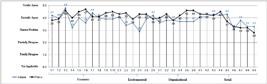

Taking into account the evaluations of the scholars (Figure5) regarding the application of the drivers for the native and adopter companies, we see a greater approximation regarding the influence on the transition of both of them, although there is still a slight tendency toward greater influence of the natives. In terms of economic drivers, the most significant were 1.3 and 1.6 for native and 1.5 for adopter companies, while the least significant were 1.9 and 1.2 for natives and adopters, respectively. In the environmental dimension, driver 2.5 stood out as having the greatest impact for both natives and adopters, while 2.3 presented a lower level of agreement among adopters and 2.1 among natives. In the organizational dimension, the most influential driver was 3.2, both for native and adopter companies. While only 3.1 stood out as having less impact for natives, adopters still had 3.4 and 3.5. Finally, in the social dimension, driver 4.2 presented a greater degree of significance for adopters, while for natives, these factors were 4.3 and 4.5. As for the least influential factor, 4.9 was considered for both adopters and natives.
Regarding practitioners’ perception, many of the drivers seem to have greater influence on the transition of native companies than in the application to the adopters. Considering the economy dimension, the most significant drivers were 1.3 and 1.6 for natives, and also 1.3 for adopters; while the least influential were 1.1 and 1.2 for natives, and 1.4 for adopters. In the environmental dimension, driver 2.2 stood out as having the greatest impact, while factors 2.3 and 2.6 had a lower impact for natives. While for adopters, the most significant factor was 2.6 and the one with the least impact was 2.4. In the organizational dimension, the most influential drivers for natives were 3.5 and 3.6, while 3.3 stood out as having less impact. For adopters, driver 3.1 had a lower impact, while 3.3 and 3.4 had a greater degree of application. Finally, in the social dimension, driver 4.4 presented a higher level of significance for natives, while for adopters these factors were 4.3 and 4.5. For the least influential factors, 4.9 was considered for natives and 4.6 for adopters.
To sum up, Table 4 provides a general analysis, summarizing the convergence of the most and least influential drivers, as well as those presenting significant divergence, which require greater attention in decision-making.
The next section presents the main discussion points regarding the results reported here, relating them to the emerging literature.
DISCUSSION
Economic drivers as a primary motivation for CBM adoption
Our findings confirm that economic incentives are a primary driver for CBM adoption among companies, aligning with previous studies (Mehmood et al., 2021; Wuni, 2023). Both groups of experts agree that increasing market share, enhancing corporate reputation, and fostering economic growth are crucial motivators. However, our study expands upon this literature by showing that these factors are perceived as more influential in native companies than in adopters. While Rovanto and Bask (2021) suggested that native companies are structurally more prepared for circular business models (CBMs), our results indicate that economic drivers remain central even when circularity is embedded from the outset. This nuance highlights the necessity of further investigating whether economic incentives are as pivotal in native companies in the long run or if they transition toward more intrinsic sustainability-driven motivations.
The role of environmental and organizational factors in adoption
A divergence in perspectives emerged regarding the environmental and organizational dimensions. In contrast to industry professionals, academic experts exhibited lower confidence in the environmental dimension’s role in CBM adoption, particularly concerning regulatory influences. This finding aligns with Jabbour et al. (2020), who noted that regulatory enforcement in Brazil remains inconsistent, limiting its effectiveness as a CBM driver. However, our study adds to the literature by identifying waste reduction as a particularly influential factor, driven by Brazil’s evolving regulatory landscape (Guarnieri et al., 2023; Silva and Morais, 2021). This suggests that regulatory frameworks may need to be more effectively enforced and supported to bridge the gap in perception between academics and industry professionals.
Similarly, organizational agility and internal restructuring are key factors in CBM adoption (Castro-Lopez et al., 2023). Our findings highlight a significant divergence in expert opinions, with academics attributing less importance to organizational factors than industry professionals. This discrepancy suggests that academic perspectives may underappreciate the operational complexities and dynamic capabilities required for CBM implementation. Jabbour et al. (2020) emphasize that the transition to CBM demands changes in corporate structures, interdepartmental collaboration, and employee skill sets. Our study builds upon this by demonstrating that industry professionals place greater emphasis on the need for communication and training within firms, particularly for native companies, where CBMs are integrated from the outset.
The limited influence of social factors and the need for market-driven pressure
Social drivers were consistently ranked as less influential in CBM adoption, particularly regarding consumer demand and market pressure. While political incentives such as state subsidies were acknowledged as motivators (Rabêlo and Melo, 2018), there was little consensus among experts on the broader impact of environmental laws and regulations. This supports the argument made by Jabbour et al. (2020) that regulatory influence in Brazil lacks the robustness observed in other countries. However, our findings extend this discussion by identifying a potential shift: international market pressures, particularly from developed countries demanding circular products from Brazil, could become a more significant driver (Guarnieri et al., 2023). This suggests that while domestic regulatory enforcement remains inconsistent, external pressures may increasingly shape CBM adoption in Brazilian firms.
Guide for policymakers
This study refines the existing literature by emphasizing three critical aspects of CBM adoption: (1) economic drivers remain fundamental but may evolve differently for native and adopter companies, (2) the gap between academic and industry perceptions highlights the need for stronger regulatory enforcement and organizational adaptation, and (3) social factors currently play a limited role, but external market pressures may alter this landscape. By consolidating these findings, our discussion contributes to a more nuanced understanding of CBM adoption dynamics, offering insights for both scholars and practitioners navigating the transition toward a circular economy. Jabbour et al. (2020) still suggest that governments in emerging countries should develop policies that facilitate this transition towards CE practices.
Based on our findings, we have developed a structured policy framework to guide policymakers in fostering Circular Business Model (CBM) adoption. This framework is categorized into five key areas, as illustrated in Figure 7. These categories align with the primary economic, environmental, and organizational drivers identified in our study, ensuring a coherent connection between theoretical insights and practical recommendations.

-
Incentives: Given the strong economic motivations driving CBM adoption, we recommend targeted financial measures. For adopters—who typically require upfront capital to retrofit linear systems—recommended initiatives include: tax credits for investments in circular processes, subsidized loans for equipment upgrades, and grants for pilot projects. In contrast, native companies—whose needs revolve around scaling—can benefit from R&D tax incentives for circular design innovations and export subsidies for sustainable products. Moreover, aligning these financial instruments with Sustainable Development Goal (SDG) 9 (Industry, Innovation, and Infrastructure) can further drive sustainable industrialization.
-
Regulations: Here, we propose the enforcement of stricter regulations mandating waste reduction and resource efficiency, supported by stronger compliance mechanisms. For adopter companies, a phased implementation of waste reduction targets (e.g., a 10% annual improvement in material efficiency) coupled with auditing support is recommended. For native companies, whose operations are already CE-embedded, stricter lifecycle accountability measures—such as mandatory product passports—can ensure transparency and traceability. These regulatory strategies align with SDG 12 (Responsible Consumption and Production), promoting sustainable business practices across the board.
-
Research and Development (R&D): Bridging the gap between academic research and industrial application is essential to accelerating CE innovations. We recommend the creation of dedicated R&D funds and the fostering of public-private partnerships to support the commercialization of circular solutions. Specifically: for adopter companies, funding should focus on applied research for transitioning from linear to circular models (e.g., recycling infrastructure); for native companies, support should prioritize breakthrough innovations (e.g., biomaterials development) through collaborative partnerships. These efforts support SDG 17 (Partnerships for the Goals), encouraging synergies among academia, industry, and government.
-
Campaigns: Market-driven pressures, especially from international stakeholders, are emerging as influential factors in CBM adoption. To capitalize on this trend, we recommend national awareness campaigns that educate consumers on the benefits of circular products, thereby strengthening market demand for sustainable goods. Adopters should focus on B2B campaigns emphasizing cost savings and efficiency gains from circular practices (e.g., industrial symbiosis case studies), while natives should invest in consumer-facing branding efforts (e.g., eco-label promotions) to reinforce their market position. These initiatives support SDG 13 (Climate Action) by promoting environmentally responsible consumer behavior.
-
Training: Organizational agility and structural adaptation are key enablers of successful CBM implementation. To enhance industry readiness, we advocate for capacity-building initiatives such as workforce reskilling programs focused on circular supply chain management for adopters, and executive training on scaling circular business models and adhering to international standards for natives. These programs contribute to SDG 8 (Decent Work and Economic Growth), ensuring that professionals are equipped with the skills needed to lead the circular transition.
This framework acknowledges that one-size-fits-all solutions are inadequate for CBMs. By combining universal SDG-aligned objectives (e.g., waste reduction) with tools tailored to firm typologies, it enables policymakers to craft coherent yet flexible intervention strategies. Simultaneously, it helps businesses manage their transitions in ways that reflect their specific operational contexts. The proposed differentiation ensures both native and adopter companies receive targeted support while advancing systemic progress toward a circular economy.
CONCLUSIONS
This article set out to assess the most significant drivers for Circular Business Model (CBM) adoption by both adopter and native companies within the Brazilian industry, with a focus on environmental, economic, organizational, and social dimensions. In doing so, we made four main contributions.
First, we introduced a novel approach to evaluating the drivers influencing CBM adoption in the Brazilian industry, using a Group Decision-Making (GDM) perspective. This approach takes into account the multifaceted and often conflicting nature of the issue, reflecting the diverse viewpoints of those involved in academic research and industrial strategy. Second, the implementation of this model can assist policymakers, shareholders, managers, and industry leaders in crafting strategies that more effectively guide companies in adopting CBMs, particularly when considering the differences between companies that still operate under a linear model and those newly established within a circular framework. Third, the insights gained from this research can be used by policymakers and regulatory bodies to develop more effective policies and strategies that support Brazil’s transition to a Circular Economy (CE). Specific recommendations include the introduction of financial incentives and stringent regulations with achievable targets for companies transitioning to CE, alongside the provision of funds for research and development to encourage innovative solutions tailored to the local contexts of Brazilian companies. Additionally, targeted training programs in CE practices across various economic sectors and public awareness campaigns promoting the benefits of purchasing from circular companies are essential steps. Finally, this study may serve as a valuable resource for managers involved in various areas of CE, particularly those interested in strategy studies that incorporate formal decision-making and consider the perspectives of multiple stakeholders. Moreover, it provides scientific guidance for decision-making, offering useful and reliable information for researchers aiming to deepen their understanding of the key drivers for CBM adoption.
This study was limited to the Brazilian context. Future research should explore several unresolved questions and emerging issues to enhance our understanding and facilitate the wider adoption of CE. It is crucial to investigate the perspectives and roles of public agents and civil society representatives, particularly how government policies and public awareness campaigns influence corporate behavior. Understanding these dynamics will offer a more comprehensive view of the drivers for CE adoption, highlighting the importance of both top-down and bottom-up approaches in promoting sustainable practices.
Also, achieving the scalability of different CBMs across various sectors is essential for identifying the most effective strategies for widespread adoption. Comparative studies across industries and regions can illuminate the contextual factors that influence scalability, such as regulatory environments, market conditions, and cultural attitudes. This research will help identify which models are most effective in specific contexts, enabling targeted and efficient implementation.
Additionally, conducting longitudinal studies to evaluate the long-term economic impacts of CBM adoption is a critical area for further exploration. These studies can provide insights into the sustainability and profitability of such models over time, analyzing cost savings, revenue streams, and market competitiveness to determine the economic viability of CE practices.
Finally, exploring the role of emerging technologies such as blockchain, the Internet of Things (IoT), and artificial intelligence (AI) in facilitating the transition to CE is vital. These technologies have the potential to enhance resource efficiency and traceability, presenting both new opportunities and challenges. Understanding how they can be integrated into circular practices will be crucial for future advancements, driving innovation and improving the effectiveness of circular economy initiatives.
ACKNOWLEDGEMENTS
The authors thank the Coordination for the Improvement of Higher Education Personnel (CAPES, Coordenação de Aperfeiçoamento de Pessoal de Nível Superior),, Federal University of Pernambuco (UFPE, Universidade Federal de Pernambuco), and all survey respondents.
-
FUNDING
This research was funded by Coordination for the Improvement of Higher Education Personnel - Brazil (CAPES, Coordenação de Aperfeiçoamento de Pessoal de Nível Superior), grant number 001, and Federal University of Pernambuco (UFPE, Universidade Federal de Pernambuco) - Edital pesquisador PROPG nº 09/2023.
-
Evaluated through a double-anonymized peer review.
-
The Peer Review Report is available at this link
REFERÊNCIAS
-
Aloini, D., Dulmin, R., Mininno, V., Stefanini, A., & Zerbino, P. (2020). Driving the transition to a circular economic model: A systematic review on drivers and critical success factors in circular economy. Sustainability, 12(24), 10672. https://doi.org/10.3390/su122410672
» https://doi.org/10.3390/su122410672 -
Assmann, I. R., Rosati, F., & Morioka, S. N. (2023). Determinants of circular business model adoption: A systematic literature review. Business Strategy and the Environment, 32, 6008-6028. https://doi.org/10.1002/bse.3470
» https://doi.org/10.1002/bse.3470 -
Bag, S., Yadav, G., Dhamija, P., & Kataria, K. K. (2021). Key resources for industry 4.0 adoption and its effect on sustainable production and circular economy: An empirical study. Journal of Cleaner Production, 281, 125233. https://doi.org/10.1016/j.jclepro.2020.125233
» https://doi.org/10.1016/j.jclepro.2020.125233 -
Bag, S., Yadav, G., Wood, L. C., Dhamija, P., & Joshi, S. (2020). Industry 4.0 and the circular economy: Resource melioration in logistics. Resources Policy, 68, 101776. https://doi.org/10.1016/j. resourpol.2020.101776
» https://doi.org/10.1016/j. resourpol.2020.101776 -
Barboza, L. L., Bertassini, A. C., Gerolamo, M. C., & Ometto, A. R. (2022). Valores organizacionais como suporte para a economia circular e a sustentabilidade. RAE-Revista de Administração de Empresas, 62(5), e2021-0331. https://doi.org/10.1590/S0034-759020220509X
» https://doi.org/10.1590/S0034-759020220509X - Bocken, N. M. P., Harsch, A., & Weissbrod, I. (2022). Circular business models for the fastmoving consumer goods industry: Desirability, feasibility, and viability. Sustainable Production and Consumption, 30, 799-814.
-
Brazilian Centre for International Relations. (2020). Economia circular: Os desafios do Brasil. https://www.cebri.org/br/doc/24/economia-circular-os-desafios-do-brasil/
» https://www.cebri.org/br/doc/24/economia-circular-os-desafios-do-brasil/ -
Burton, G., Pathak, D. S., & Zigli, R. M. (1977). Using group size to enhance the decision- making ability of nominal groups. In Academy of Management Proceedings, 1977(1), 52-56. https://doi.org/10.5465/ambpp.1977.4976792
» https://doi.org/10.5465/ambpp.1977.4976792 -
Castro-Lopez, A., Iglesias, V., & Santos-Vijande, M. L. (2023). Organizational capabilities and institutional pressures in the adoption of circular economy. Journal of Business Research, 161, 113823. https://doi.org/10.1016/j.jbusres.2023.113823
» https://doi.org/10.1016/j.jbusres.2023.113823 -
Centobelli, P., Cerchione, R., Chiaroni, D., Vecchio, P. Del, & Urbinati, A. (2020). Designing business models in circular economy: A systematic literature review and research agenda. Business Strategy and the Environment, 29(4), 1734-1749. https://doi.org/10.1002/bse.2466
» https://doi.org/10.1002/bse.2466 -
Confederação Nacional da Indústria. (2019). Pesquisa sobre economia circular na indústria brasileira. https://www.portaldaindustria.com.br/publicacoes/2020/4/pesquisa-sobre-economia-circular-2019/
» https://www.portaldaindustria.com.br/publicacoes/2020/4/pesquisa-sobre-economia-circular-2019/ -
Fontana, M. E., Levino, N. A., Guarnieri, P., & Salehi, S. (2023). Using group decision-making to assess the negative environmental, social and economic impacts of unstable rock salt mines in Maceio, Brazil. The Extractive Industries and Society, 16, 101360. https://doi.org/10.1016/j.exis.2023.101360
» https://doi.org/10.1016/j.exis.2023.101360 -
Försterling, G., Orth, R., & Gellert, B. (2023). Transition to a circular economy in Europe through new business models: Barriers, drivers, and policy making. Sustainability, 15(10), 8212. https://doi.org/10.3390/su15108212
» https://doi.org/10.3390/su15108212 -
Geissdoerfer, M., Santa-Maria, T., Kirchherr, J., & Pelzeter, C. (2023). Drivers and barriers for circular business model innovation. Business Strategy and the Environment, 32(6), 3814-3832. https://doi.org/10.1002/bse.3339
» https://doi.org/10.1002/bse.3339 -
Giorgi, S., Lavagna, M., Wang, K., Osmani, M., Liu, G., & Campioli, A. (2022). Drivers and barriers towards circular economy in the building sector: Stakeholder interviews and analysis of five European countries policies and practices. Journal of Cleaner Production, 336, e130395. https://doi.org/10.1016/j.jclepro.2022.130395
» https://doi.org/10.1016/j.jclepro.2022.130395 -
Guarnieri, P., Bianchini, A., Rossi, J., Silva, L. C. e, Trojan, F., Lizot, M., & Vieira, B. de O. (2023). Transitioning towards a circular economy under a multicriteria and the new institutional theory perspective: A comparison between Italy and Brazil. Journal of Cleaner Production, 409, 137094. https://doi.org/10.1016/j.jclepro.2023.137094
» https://doi.org/10.1016/j.jclepro.2023.137094 -
Han, D., Konietzko, J., Dijk, M., & Bocken, N. (2022). How do companies launch circular service business models in different countries? Sustainable Production and Consumption, 31, 591-602 https://doi.org/10.1016/j.spc.2022.03.011
» https://doi.org/10.1016/j.spc.2022.03.011. -
Henry, M., Bauwens, T., Hekkert, M., & Kirchherr, J. (2020). A typology of circular start-ups: An analysis of 128 circular business models. Journal of Cleaner Production, 245, 118528. https://doi.org/10.1016/j.jclepro.2019.118528
» https://doi.org/10.1016/j.jclepro.2019.118528 -
Jabbour, C. J. C., Seuring, S., Jabbour, A. B. L. de S., Jugend, D., Fiorini, P. D. C., Latan, H., & Izeppi, W. C. (2020). Stakeholders, innovative business models for the circular economy and sustainable performance of firms in an emerging economy facing institutional voids. Journal of environmental management, 264, 110416. https://doi.org/10.1016/j.jenvman.2020.110416
» https://doi.org/10.1016/j.jenvman.2020.110416 -
Kolpinski, C. von, Yazan, D. M., & Fraccascia, L. (2023). The impact of internal company dynamics on sustainable circular business development: Insights from circular startups. Business Strategy and the Environment, 32(4), 1931-1950. https://doi.org/10.1002/bse.3228
» https://doi.org/10.1002/bse.3228 -
Kühl, C., Skipworth, H. D., Bourlakis, M., & Aktas, E. (2023). The circularity of product-service systems: The role of macro-, meso- and micro-level contextual factors. International Journal of Operations & Production Management, 43(4), 619-650. https://doi.org/10.1108/IJOPM-01-2022-0055
» https://doi.org/10.1108/IJOPM-01-2022-0055 -
Leder, N., Kumar, M., & Rodrigues, V. S. (2023). Influencing factors driving collaboration in circular business models. International Journal of Logistics Research and Applications, ahead-of-print, 1-24. https://doi.org/10.1080/13675567.2023.2254258
» https://doi.org/10.1080/13675567.2023.2254258 -
Leitão, F. O., Paiva, E. L., Guarnieri, P., & Monteiro, L. C. (2024). Circularidade como capacidade dinâmica: Uma revisão e uma agenda para uma transição circular. RAE-Revista de Administracao de Empresas, 64(3), e2023-0084. https://doi.org/10.1590/S0034-759020240306x
» https://doi.org/10.1590/S0034-759020240306x -
Lugo, S. D. R., Kimita, K., & Nishino, N. (2023). Characteristics of decision process towards circular food economy: A review. Cleaner Logistics and Supply Chain, 7, 100104. https://doi.org/10.1016/j.clscn.2023.100104
» https://doi.org/10.1016/j.clscn.2023.100104 -
Mehmood, A., Ahmed, S., Viza, E., Bogush, A., & Ayyub, R. M. (2021). Drivers and barriers towards circular economy in agri‐food supply chain: A review. Business Strategy & Development, 4(4), 465-481. https://doi.org/10.1002/bsd2.171
» https://doi.org/10.1002/bsd2.171 -
Meng, F., & Chen, S. M. (2021). A framework for group decision making with multiplicative trapezoidal fuzzy preference relations. Information Sciences, 577, 722-747. https://doi.org/10.1016/j. ins.2021.07.045
» https://doi.org/10.1016/j. ins.2021.07.045 -
Munaro, M. R., & Tavares, S. F. (2023). A review on barriers, drivers, and stakeholders towards the circular economy: The construction sector perspective. Cleaner and Responsible Consumption, 8, 100107. https://doi.org/10.1016/j.clrc.2023.100107
» https://doi.org/10.1016/j.clrc.2023.100107 -
Neligan, A., Baumgartner, R. J., Geissdoerfer, M., & Schöggl, J.-P. (2023). Circular disruption: Digitalisation as a driver of circular economy business models. Business Strategy and the Environment, 32(3), 1175-1188. https://doi.org/10.1002/bse.3100
» https://doi.org/10.1002/bse.3100 -
Perotti, F. A., Dhir, A., Ferraris, A., & Kliestik, T. (2023). Investigating digital technologies’ implementation in circular businesses: Evidence from the going circular path. Journal of Management & Organization, 30(3), 421-451. https://doi.org/10.1017/jmo.2023.60
» https://doi.org/10.1017/jmo.2023.60 -
Pizzi, S., Leopizzi, R. & Caputo, A. (2022). The enablers in the relationship between entrepreneurial ecosystems and the circular economy: The case of circularity.com, Management of Environmental Quality, 33(1), 26-43. https://doi.org/10.1108/MEQ-01-2021-0011
» https://doi.org/10.1108/MEQ-01-2021-0011 -
Rabêlo, O. S., & Melo, A. S. S. A. (2018). Drivers of multidimensional eco-innovation: Empirical evidence from the Brazilian industry. Environmental Technology, 40, 2556. https://doi.org/10.1080/ 09593330.2018.1447022
» https://doi.org/10.1080/ 09593330.2018.1447022 -
Raspini, J. P., Bonfante, M. C., Cúnico, F. R., Alarcon, O. E., & Campos, L. M. (2022). Drivers and barriers to a circular economy adoption: A sector perspective on rare earth magnets. Journal of Material Cycles and Waste Management, 24(5), 1747-1759. https://doi.org/10.1007/s10163-022-01424-7
» https://doi.org/10.1007/s10163-022-01424-7 -
Rovanto, I. K., & Bask, A. (2021). Systemic circular business model application at the company, supply chain and society levels: A view into circular economy native and adopter companies. Business Strategy and the Environment, 30(2), 1153-1173. https://doi.org/10.1002/bse.2677
» https://doi.org/10.1002/bse.2677 -
Roy, V., Silvestre, B. S., & Singh, S. (2020). Reactive and proactive pathways to sustainable apparel supply chains: Manufacturer’s perspective on stakeholder salience and organizational learning toward responsible management. International Journal of Production Economics, 227, 107672. https://doi.org/10.1016/j.ijpe.2020.107672
» https://doi.org/10.1016/j.ijpe.2020.107672 -
Salehi, S., & Fontana, M. E. (2024). Knowledge-based decisions for asset management of urban water infrastructure in Iran and Brazil using a nominal-based multi-criteria group decision method. International Journal of Management Science and Engineering Management, 1, 1-15. https://doi.org/10.1080/17509653.2024.2356154
» https://doi.org/10.1080/17509653.2024.2356154 -
Salehi, S., Fontana, M. E., Tscheikner-Gratl, F., Herrera, M., Sadiq, R., & Mian, H. R. (2024). A fuzzy group decision-making model for Water Distribution Network rehabilitation. Urban Water Journal, 21(3), 364–379. https://doi.org/10.1080/1573062X.2023.2295310
» https://doi.org/10.1080/1573062X.2023.2295310 -
Salim, H. K., Stewart, R. A., Sahin, O., & Dudley, M. (2019). Drivers, barriers and enablers to end- of-life management of solar photovoltaic and battery energy storage systems: A systematic literature review. Journal of Cleaner Production, 211, 537-554. https://doi.org/10.1016/j.jclepro.2018.11.229
» https://doi.org/10.1016/j.jclepro.2018.11.229 -
Silva, V. P. da. (2019). Economia circular: Um novo valor para negócios sustentáveis. RAE-Revista de Administração de Empresas, 59(3), 222. https://periodicos.fgv.br/rae/article/view/79720
» https://periodicos.fgv.br/rae/article/view/79720 -
Silva, W. D. O., Fontana, M. E., Almeida, B. M. J. de, Marques, P. C., & Vidal, R. (2023). Analyzing the attractiveness of businesses to receive investments for a creative and innovative transition to a circular economy: The case of the textile and fashion industry. Sustainability, 15(8), 6593. https://doi.org/10.3390/su15086593
» https://doi.org/10.3390/su15086593 -
Silva, W. D. O., & Morais, D. C. (2021). Transitioning to a circular economy in developing countries: A collaborative approach for sharing responsibilities in solid waste management of a Brazilian craft brewery. Journal of Cleaner Production, 319, 128703. https://doi.org/10.1016/j.jclepro.2021.128703
» https://doi.org/10.1016/j.jclepro.2021.128703 -
Sjödin, D., Parida, V., & Kohtamäki, M. (2023). Artificial intelligence enabling circular business model innovation in digital servitization: Conceptualizing dynamic capabilities, AI capacities, business models and effects. Technological Forecasting and Social Change, 197, e122903. https://doi.org/10.1016/j.techfore.2023.122903
» https://doi.org/10.1016/j.techfore.2023.122903 -
Snyder, H. (2019). Literature review as a research methodology: An overview and guidelines. Journal of Business Research, 104, 333-339. https://doi.org/10.1016/j.jbusres.2019.07.039
» https://doi.org/10.1016/j.jbusres.2019.07.039 -
Stempfle, S., Roselli, L., Carlucci, D., Leone, A., Gennaro, B. C. de, & Giannoccaro, G. G. (2022). Toward the circular economy into the olive oil supply chain: A case study analysis of a vertically integrated firm. Frontiers in Sustainable Food Systems, 6, e1005604. https://doi.org/10.3389/fsufs.2022.1005604
» https://doi.org/10.3389/fsufs.2022.1005604 -
Upadhyay, A., Kumar, A., & Akter, S. (2022). An analysis of UK retailers’ initiatives towards circular economy transition and policy-driven directions. Clean Technologies and Environmental Policy, 24, 1209-1217. https://doi.org/10.1007/s10098-020-02004-9
» https://doi.org/10.1007/s10098-020-02004-9 - Urbinati, A., Rosa, P., Sassanelli, C., Chiaroni, D., & Terzi, S. (2020). Circular business models in the European manufacturing industry: A multiple case study analysis. Journal of Cleaner Production, 274, 122964.
-
Uvarova, I., Atstaja, D., Volkova, T., Grasis, J., & Ozolina-Ozola, I. (2023). The typology of 60R circular economy principles and strategic orientation of their application in business. Journal of Cleaner Production, 409, e137189. https://doi.org/10.1016/j.jclepro.2020.122964
» https://doi.org/10.1016/j.jclepro.2020.122964 -
Wang, Y., Fan, D., Fung, Y. N., & Luo, S. (2022). Consumer-to-consumer product exchanges for original fashion brands in the sharing economy: Good or bad for fashion knockoffs?. Transportation Research Part E: Logistics and Transportation Review, 158, 102599. https://doi.org/10.1016/j.tre.2021.102599
» https://doi.org/10.1016/j.tre.2021.102599 -
Wójcik-Karpacz, A., Karpacz, J., Brzezinski, P., Pietruszka-Ortyl, A., Ziębicki, B. (2023). Barriers and drivers for changes in circular business models in a textile recycling sector: Results of qualitative empirical research. Energies, 16, 490. https://doi.org/10.3390/en16010490
» https://doi.org/10.3390/en16010490 -
Wuni, I. Y. (2023). Drivers of circular economy adoption in the construction industry: A systematic review and conceptual model. Building Research & Information, 51(7), 816-833. https://doi.org/10.1 080/09613218.2023.2211689
» https://doi.org/10.1 080/09613218.2023.2211689 -
Yue, C., Huang, R., Towey, D., Xian, Z., & Wu, G. (2024). An entropy-based group decision-making approach for software quality evaluation. Expert Systems with Applications, 238, 121979. https://doi.org/10.1016/j.eswa.2023.121979
» https://doi.org/10.1016/j.eswa.2023.121979 -
Zhang, H., Dong, Y., Chiclana, F., & Yu, S. (2019). Consensus efficiency in group decision making: A comprehensive comparative study and its optimal design. European Journal of Operational Research, 275(2), 580-598. https://doi.org/10.1016/j.ejor.2018.11.052
» https://doi.org/10.1016/j.ejor.2018.11.052 -
Zhang, Z., & Chen, S. M. (2021). Optimization-based group decision making using interval-valued intuitionistic fuzzy preference relations. Information Sciences, 561, 352-370. https://doi.org/10.1016/j.ins.2020.12.047
» https://doi.org/10.1016/j.ins.2020.12.047 -
Zhou, X., He, J., & Yang, C. (2022). An ensemble learning method based on deep neural network and group decision making. Knowledge-Based Systems, 239, 107801. https://doi.org/10.1016/j.knosys.2021.107801
» https://doi.org/10.1016/j.knosys.2021.107801 -
Zolfani, S. H., Görener, A., & Toker, K. (2023). A hybrid fuzzy MCDM approach for prioritizing the solutions of resource recovery business model adoption to overcome its barriers in emerging economies. Journal of Cleaner Production, 413, 137362. https://doi.org/10.1016/j.jclepro.2023.137362
» https://doi.org/10.1016/j.jclepro.2023.137362
Edited by
-
Guest editors:
Susana Carla Farias Pereira, Simone Sehnem, Ana Beatriz Lopes de Sousa Jabbour, Valentina Gomes Haensel Schmitt e Fanny Saruchera