
 Race and color in contemporary Brazil, political opportunism and historical trends
ABSTRACT
This article examines the data published by IBGE on the racial/color composition of Brazil from 1872 to 2022, highlighting the historical trends in the growth of white, brown, and black racial groups. Three main trends are identified: a process of whitening from the late 19th century to the 1960s, the continuous growth of the brown population in relation to both the black and the white population from the 1960s to the 1990s, and the gradual increase of black and brown populations with a decline in the white population from 1991 onwards. The argument is that these trends are mainly due to racial reclassification influenced by ideological factors − the way in which the Brazilian nation is predominantly defined in each period − rather than demographic changes or public policies − such as those that have benefited blacks and browns from the present century onwards.
KEYWORDS:
Race; color; Brazil; racial reclassification; censuses
RESUMO
Neste artigo, exponho os dados publicados pelo IBGE sobre a cor e a raça/cor da população brasileira no período de 1872 a 2022 para examinar as tendências históricas do crescimento dos grupos raciais branco, pardo e preto. Três tendências são observadas. A primeira, entre o final do século XIX e os anos 1960, um processo de embranquecimento; a segunda, dessa última data censitária até a última década do século XX, é de crescimento contínuo da população parda em detrimento tanto da população branca, quanto da preta; a terceira, que se inicia em 1991, é o crescimento paulatino da população preta e da parda e o declínio constante da população branca. Meu argumento é que essas tendências se devem principalmente a movimentos de reclassificação racial da população, portanto mais a fatores ideológicos - o modo como a nação brasileira é preponderantemente definida em cada período - e menos a fatores demográficos, ou a incentivos de políticas públicas, como as que beneficiaram pretos e pardos a partir do presente século.
PALAVRAS-CHAVE:
Raça; cor; Brasil; reclassificação racial; censos
Introduction
Brazil has undergone significant changes in its racial composition. In 1940, the population was 63.5% white, 21.2% brown (parda), and 14.8% black. By 1980, these figures had changed to 51.8% white, 42.5% brown, and 5% black, and in 2022, to 43.5% white, 45.3% brown, and 10.2% black (see graph 1). These shifts have sparked debate among demographers, sociologists, and intellectuals about their implications. Following the 2022 census, some political columnists rushed in to celebrate the fact that the brown population had overtaken the white population, interpreting it as an evidence of Brazil’s mixed-race nature and a proof of the bankruptcy of racial “identitarianism” ((Lamounier 2023; Gomes 2023; Magnoli 2023)). Black intellectuals, in turn, took the same fact only as the growth of the black population (which is composed of black and brown people). There were also suspicions that public policies for blacks encouraged the increase in the brown population out of political opportunism.
This article explores these trends in the context of contemporary discussions about color and colorism, race and racism, self- and hetero- racial classification, and racial quota fraud. The theoretical framework is based on social science studies of ethnicity and race.
First, I will examine these demographic changes and propose possible explanations, whether they are strictly demographic or rooted in the ongoing political, social, and cultural processes in Brazilian society over the last century. Next, I will discuss how the state has incorporated ethnicity, race, and color into its legal system to adjudicate political disputes over rights and citizenship. Then, I will focus on political discourses of social agents and how they reinterpret this legal framework and deal with changes in racial identities. Finally, I suggest that the black mobilization in recent years, in addition to creating a sense of ethnic community (of common origins and experiences), explains the recent growth of the self-declared black population, definitively undermining the foundations of the whitening ideology and also allowing for the growth of the self-declared brown population.
I therefore reject both the idea that the increase in self-declared brown people is merely an opportunistic adaptation to benefits from racial policies, known as Afro-convenience or Afro-opportunism (Dias & Tavares Júnior 2018), and the suggestion of a supposed return to the concept of a moreno Brazil (Freyre, 1933; Ribeiro, 1995).1
The Dynamics of Racial Classification Over the Last 150 Years
Before analyzing the trends shown in Graph 1, it is important to note that the Brazilian Institute of Geography and Statistics (IBGE) has changed its methods of data collection, categories, and issues related to racial classification over the past 150 years.2
Until the 1991 census, racial identity was recorded using a multiple-choice question, “What is your color?”. From 1872 to 1960, census takers completed the question without asking the interviewee; from 1980 onwards, they read the question, provided options, and recorded the response. However, the question was often answered by one household member on behalf of the others. Since 1991, the question has been “your color/race is...?”. Here are the categories used in the censuses:
-
1872: white, black, brown (pardo), caboclo3
-
1890: white, black, half-cast, caboclo
-
1940: white, black, yellow, other
-
1950: white, black, brown, yellow
-
1960: white, black, brown, yellow, índio
-
1980: white, black, brown, yellow
-
1991-2022: white, black, brown, yellow, indigenous
In 1940, the “other” category was reclassified as “brown” (pardo), and in Graph 1, “half-cast” from 1890 is also relabeled as “pardo” (brown). Several factors mitigate the impact of these changes. For instance, the categories “white” and “black” have remained consistent, and self-classification continues to be mediated by one household member on behalf of the others. Moreover, the introduction of “race” in the censuses has not dropped the term “color”. However, there was a significant change: both 19th-century censuses used the “caboclo” category, unlike later censuses. This means the 19th-century data for “white”, “black”, and “brown” groups exclude 4% to 9% of the population, while 20th and 21st-century data include at least 99%.
Until 1940, the “pardo”(brown) category was quite ambiguous. The Brazilian Institute of Geography and Statistics (IBGE) referred to “caboclo” as individuals of indigenous descent, whether mixed-race or not, while “pardos” were mixed-race individuals of African descent. However, in 1890, the category “half-cast” replaced “brown” As observed, in 1940, these two categories were unified under “others.” This trend continued in subsequent censuses, where only those living in indigenous villages were considered to be Indians or Indigenous.
Despite these changes, the general trends remain clear: first, the growth of the white population from 1872 to 1940, its relative stability until the 1960s, and its decline to the present; second, the regular decrease in the black population until 1991, followed by an inversion in this trend, with a continuous growth to date; third, the decline in the brown population until 1940, its rapid growth until 1991, and slow growth in the 21st century, albeit fluctuating in the 2000 census. The yellow (Asian) and indigenous populations have never exceeded 1% since 1940 and are analyzed separately.


Graph 1 shows 1940 as a pivotal year for the reversal of white and brown population growth, suggesting that the one grew to the detriment of the other, and 1991 as the year when the black population’s decline was reversed, first to the detriment of the brown population, and then to the detriment of the white population. When considering only white and non-white populations, the trends are clearer: white population growth began in the 20th century, while its decline started in the 21st century (Graph 2).
The Meaning of Racial Categories
An important observation is the meaning of the term “color” during this period. Ethnographic research conducted in Brazil from the 1930s to the 1960s (Pierson, 1945; Wagley, 1952; Azevedo, 1953; Harris, 1956; Hutchinson, 1957; Zimmermann, 1952) indicates that the term “color” was used to group people based on physical appearance, as categorized by the scientific racism prevalent from the late 19th to early 20th century. This included attributes like skin color, hair texture, and the shape of the nose and lips, as well socioeconomic status, including education, financial and social resources, and social networks. “Color” thus reflected the shift from the old classification system of imperial Brazil, where social status and family origin determined social hierarchy, to one based on racial conceptions. In other words, social quality was replaced by color.
From the 1991 Census onwards, when the color/race category was introduced, IBGE (2008) noted that new dimensions such as culture, ancestry, and politics were added to the way Brazilians spontaneously classified themselves racially. Many people began to identify as black or brown due to their family background or political choice (see Graph 3).
While differential vegetative growth trends among color groups may not have significantly affected their growth, three migratory movements influenced demographic dynamics nationally and regionally and, therefore, they must be noted: (1) Foreign immigration between 1870 and 1940, concentrated in the Southeast and South of Brazil; (2) internal migration from the Northeast to the North (during the rubber boom) and to the Southeast and South between 1940 and 1990; (3) Migration of farmers from the Southeast and South to the Midwest and North. It is important to consider how these movements may have impacted the dynamics of racial reclassification.
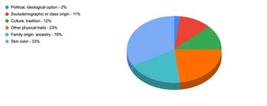
1991 Census: New Dimensions Added to the Way Brazilians Spontaneously Classified Themselves Racially.
When examining how the Brazilian population is racially classified or identifies itself, three interconnected theoretical concepts emerge: color, race, and ethnicity. Let’s briefly distinguish these analytically.
Color in 20th-century Brazil merged the hierarchical notion of quality with the scientific racist notion of race. Race became a term used by black political movements from the 1920s onward to demand full citizenship rights. Ethnicity is a purely academic category referring to a social group that identifies with a common cultural tradition, fostering a sense of community belonging.
From Brazil’s historical context, we learn that race has served several purposes: (a) to classify people with the aim of oppressing and dehumanizing them, as seen in 19th-century racist theories and practices; to organize people for political struggles for rights, as exemplified by black social movements; (c) to keep people organized and mobilized to secure civil and political rights, as seen in contemporary social movements.
Whether through census classification or social struggles, racial, ethnic, or ethno-racial groups can be defined externally by others (hetero-classification) or internally by their own members (self-classification). These groups are identified by physical and physiognomic markers, cultural traditions, origins, ancestry, or an imagined political destiny.
Understanding the social processes driving racial reclassification trends is complex, as it involves numerous individual decisions that change over time and vary across geographical spaces, social classes, age groups, and genders. Trends in social reclassification result from changes in declarations of color or color/race, which can sometimes be contradictory. However, ethnographic studies provide some interpretive clues.
1870 to 1940: The significant influence of large-scale foreign immigration and the reclassification of light-skinned browns as whites are evident. This period saw “whitening” in two senses: the replacement of the native population of African origin with European labor around and after Abolition, and the cultural and social whitening of light-skinned browns. Florestan Fernandes (1965), following Lowrie (1942), Amaral (1947), and Mortara (1961, 1950) referred to these phenomena. Additionally, during this time, Brazil aimed to be seen as a white nation, and interviewers often prioritized the socio-economic status of respondents over their phenotypical traits.
1940 to 1991: Guided by ethnographies from the Unesco Project (Maio, 1999; Wagley, 1952; Azevedo, 1953; Bastide & Fernandes, 1955), this period saw a reduction in people identifying as black or white, with an increase in those identifying as brown. This shift reflects the height of the belief that Brazil was a miscegenated country living in a racial democracy, where race or color was deemed unimportant. Individuals with indigenous or black ancestry tended to identify as brown, even if dark-skinned, while lighter-skinned mulattos or half-casts of lower social status preferred to identify as brown rather than white. Interviewers also tended to classify socio-economically better-off black individuals as brown.
From 1991 Onwards: Censuses from this period captured a trend influenced by black political organizations: both blacks and browns are identified as black (negro), emphasizing African ancestry and Afro-Brazilian culture as something to be publicly acknowledged and politically valued. Notably, the white population has gradually decreased, while the brown population has increased, reaching 43% in the 2022 census. This trend coincides with the attainment of social rights by those identifying as black (both black and brown). Recent studies (Silva, 2024; Maia, 2019; Silva & Reis, 2012; Schwartzman, 2009; Sansone, 2004; Miranda, 2015) support this interpretation.
State and Citizenship in 21st Century Brazil
In a relatively long historical process of struggle, over the past sixty years and through three federal constitutions, the Brazilian state has developed a tripartite approach to regulating and legislating on social and legal disputes involving ethnic and racial identities. This approach addresses three key areas: the first refers to the indigenous community and the demarcation of their territories.
In a relatively long historical process of struggle, over the past sixty years and through three federal constitutions, the Brazilian state has developed a tripartite approach to regulating and legislating on social and legal disputes involving ethnic and racial identities. This approach addresses three key areas: the first refers to the indigenous community and the demarcation of their territories; the second refers to quilombola (Maroon) communities and their territorial rights; the third refers to black and brown individuals and their right to benefit from the quota system for access to federal universities and public sector employment.
For indigenous and quilombola communities, state assistance involves recognizing ethnic communities, which are groups to which individuals have a sense of belonging, often tied to a specific territory or culture. Legal verification investigates the historical existence of these communities and determines individual membership. The key questions are: does such a quilombo or ethnic group exist historically, and do individuals X or Y belong to this community?
In contrast, the racial quotas for federal university admissions and public sector jobs operate differently. Here, individuals self-declare their membership in a racial group without necessarily referencing a territorial or community basis. The accuracy of this self-declaration is verified by a commission appointed for this purpose. However, either because such a commission has not been set up, or because it decides that there is an error or flaw in the individual racial self-classification, a public debate has emerged in Brazil about racial fraud, sometimes referred to as “identity by afro-convenience,” where individuals deliberately change their racial classification solely to benefit from the state’s racial policies.
This debate must be understood in the context of recent developments in Brazilian social sciences regarding racial classification. Two key findings have emerged:
-
Inconsistency between self-classification and hetero-classification: studies have statistically demonstrated persistent inconsistencies between how individuals classify themselves and how others classify them (Bailey & Telles, 2006; Telles & Lim, 1998).
-
Racial inequality measurement: research shows that racial inequality is better measured by hetero-classification than by self-classification.
For example, Telles and Lim (1998: 496) used data from the 1995 DataFolha survey to show that the consistency of classification varies significantly:
-
Whites: 89% consistency (11% self-declared whites classified as brown by interviewers)
-
Browns: 71% consistency (20% self-declared browns classified as white, 9% as black by interviewers)
-
Blacks: 58% consistency (40% self-declared blacks classified as brown, 2% as white by interviewers)
-
Bailey (2009: 50) compared these results with two other surveys:
-
Ceap/DataUff 2000: 77% consistency for whites, 60% for browns, 56% for blacks.
-
Pesb 2002: 78% consistency for whites, 74% for browns, 51% for blacks.
These findings highlight how classification criteria can vary depending on the classifier (whether the interviewer or the interviewee), influenced by social position and racial ideology.
The findings of Telles and Lim (1998: 473), which subsequently had significant practical and legal implications, indicate what is the most accurate measure of racial inequality in Brazil:
We found that the estimate of white-nonwhite income inequality in Brazil is greater when interviewer classification is used than when self-classification is used. We believe that interviewer classification is a more appropriate method for determining racial inequality because the perceptions of others about one’s race weigh more heavily than self-classification in determining labor market outcomes. Our results also demonstrate that interviewer-classified race explained racial differences in income much better than did self-classified race, further suggesting that interviewer classification is preferable for measuring racial discrimination.
These findings were used by Daniela Ikawa (2008: 129-130) in her defense of affirmative action in Brazilian universities. Ikawa proposed a framework for implementing racial quotas to mitigate fraud. Justice Ricardo Lewandowski referenced Ikawa’s suggestions in his vote in favor of maintaining UnB’s quota policy, which was unanimously upheld by the justices. Ikawa states:
Identification should primarily be performed by the individual themselves, in order to avoid external identifications aimed at negative discrimination and to strengthen the recognition of difference. However, given the moderate degree of miscegenation (by phenotype) and the uncertainties it generates - there is [...] a consistency level of 79% between self-identification and identification by others - this identification does not need to be done exclusively by the individual. To prevent potential fraud in identification regarding the obtaining of benefits and to outline the right to redistribution as narrowly as possible [...], some additional mechanisms can be used such as: (1) the development of forms with multiple questions about race (to verify the coherence of self-classification); (2) the requirement of signed declarations; (3) the use of interviews [...]; (4) the requirement of photos; and (5) the formation of committees after the candidate’s self-identification. The possibility of selection by committees is the most controversial alternative presented [...]. This classification can be accepted under the following conditions: (a) the committee’s classification must be done after the candidate’s self-identification as black (black or brown) to prevent the predominance of third-party classification; (b) the judgment should be based on phenotype and not ancestry; (c) the group of candidates competing for separate slots should consist of all those classified by a panel (by photo or interview) as black or brown, in the combinations: brown-brown, brown-black, or black-black; (d) the committee should be composed taking into account racial diversity, economic class, sexual orientation, and gender, and should have short mandates. (Author’s emphasis)
The understanding of the Federal Supreme Court, followed by the Public Prosecutor’s Office from then on when the 2012 Quotas Law was enacted, was that only the observation of racial phenotype should be taken into account by the verification commissions. The theoretical premise is that, since the notion of race in Brazil is sustained almost exclusively by phenotypes, only those individuals classified by others as brown or black would suffer the rigors of racial prejudice and discrimination and would consequently have their life opportunities objectively curtailed. In other words, the quotas would be aimed at correcting forms of racial discrimination, not properly ethnic, and would therefore not require a subjective feeling of racial belonging. The Federal Government’s normative orientation to create commissions to verify self-definition of color/race in order to fill racial quotas in public tenders came about in 2014.
Racial Ideologies in Brazil
The American nations that formed from the 18th century onwards, including the United States in 1776 and Spanish and Portuguese America between 1813 and 1822, first imagined themselves as white extensions of the European culture, or as mixed-race nations resulting from the crossing of European and Amerindian peoples, or European, Amerindian, and African peoples.
In Brazil, racial ideologies of whitening, racial mixing, and even blackness (the latter in the mid-20th century) influenced national identity in an uneven but consistent way. While others have thoroughly explored these ideologies (Ventura, 1991; Schwarcz, 1993), I will briefly illustrate how they permeated social thinking in the 20th century, coexisting and influencing each other in a sometimes complex manner.
For a long time, imagining Brazil as a white nation, as the product of European colonizers and immigrants transplanting themselves to the tropics, was the predominant view among intellectuals. And this to such an extent that, in 1936, Sérgio Buarque de Holanda (2012 [1936]: 1) wrote in Roots of Brazil :
Bringing from distant countries our ways of living together, our institutions, our ideas, and trying to maintain all this in an environment that is often unfavorable and hostile, we are still today outcasts in our own land.
Simultaneously, the idea of a mixed-race Brazil, a social and ethnic democracy, was celebrated by Gilberto Freyre (1986 [1933]: 278) in The Masters and the Slaves (1933):
Every Brazilian, even the light skinned fair-haired one, carries about him on his soul, when on soul and body alike − there are many in Brazil with the mongrel mark of the genipap − the shadow, or at least the birthmark, of the aborigine or the Negro. Along the seaboard, from Maranhão to Rio Grande do Sul, it is chiefly the Negro.
When, in 1954, Guerreiro Ramos in his Cartilha de um Aprendiz de Sociólogo [A Beginner’s Guide for a Sociologist], asserted that Brazilians are black, he was simply reflecting an ideology that was already gaining traction among Abolicionist Brazilian intellectuals. Joaquim Nabuco (2010: 166) had similarly noted:
The noble and aristocratic opponents of Mr. Dantas, almost all descendants of plantation owners and farmers, when they arrived at the windows of the Chamber and saw one of these popular demonstrations, not discovering tall hats or overcoats, but, at a glance, feet on the ground and shirt sleeves, would only say: ‘That’s worthless, it’s the scoundrel’. Maybe, but that’s what our people are, people with their feet on the ground and their shirtsleeves, and they’re not white.
Guerreiro Ramos, however, introduced our ideology of blackness, distinct from Freyre’s mulattoism or the concept of a moreno Brazil. He emphasized the centrality of blackness in Brazilian identity:
Since the black person is defined as a normal ingredient of the country’s population, as Brazilian people, it is meaningless to talk about the problem of the black person purely economically, detached from the general problem of the disadvantaged classes or pauperism. Black people are our people in Brazil. They are not a foreign component of our demography. On the contrary, it is its most important demographic matrix.” (Ramos, 1995: 200, author’s emphasis)
This ideology of blackness, however, only gained prominence in the last decade of the 20th century, following an international trend towards viewing Brazil as a multiracial and multiethnic country. Multiculturalism thus ended up making the coexistence of different racial or ethnic identities, based on old national ideologies, more visible. Brazilian blackness is no longer just nationalist, as envisioned by Guerreiro Ramos (Bastide, 1961), but is now clearly ethnic-racial. Today, there are two ways of being black in Brazil: the ethnic way that involves self-declaration of color/race as a social and political identity, and the phenotypical way where one is perceived as black by others without necessarily identifying as black themselves. This creates a gap where the mulatto (self-declared brown or not) exists, evolving from an “epistemological obstacle” (Oliveira, 1974) to a political dilemma (Campos, 2013).
Fraud, Afro-Opportunism, and Transraciality
As we discussed earlier, the legal framework established in the 21st century was based on the knowledge available in the 2010s about the Brazilian racial classification system, informed by social research conducted between 1930 and the early 2000s. These frameworks reflect historical processes such as whitening, racial democracy as the product of a supposed nationwide miscegenation, and the nationalist blackness advocated by black social movements. These historical processes have generated ideologies and sensitivities that, in a certain way, continue to intersect and influence our present.
Within this historical context, accusations of fraud and Afro-opportunism have emerged against individuals who change their racial category, regardless of whether they have phenotypes traditionally considered black. Essentially, without having been fully racialized − meaning their humanity systematically reduced to the notion of race during their socialization process − these individuals redefine themselves racially. By doing so, they position themselves as potential beneficiaries of public policies aimed at historically racialized populations. This transit illustrates the different ways in which racialization unfolds and multiplies in a racial formation.
Racialization, a term coined by Frantz Fanon (1952) within the context of his libertarian humanism, has been used in historiography and sociology to denote the dehumanization and imposition of racial identities on people, social groups, and populations subjected to social and colonial subordination. However, as observed in racial formation processes, these individuals, groups, or populations can re-signify their assigned race, transforming it into a symbolic instrument to combat oppression. To describe this complex and dialectical process of racial imposition and assumption, Omi and Winant (1994: 109) coined the concept of racial formation, which they define as: “The process of race making, and its reverberations throughout the social order, is what we call racial formation. We define racial formation as the sociohistorical process by which racial identities are created, lived out, transformed, and destroyed”.
Accusations of fraud and Afro-opportunism are somewhat reminiscent of the phenomenon of “passing” in the United States, where light-skinned blacks, raised as blacks, leave their communities to live as whites elsewhere. In Brazil today, the reverse occurs: people raised as white begin to identify as brown or black within their own communities, manipulating or reinterpreting historical and contemporary racial classification criteria.
Brubaker (2015) discussed the case of Rachel Dolezal, a white woman raised as such, who relocated to live as a black political activist. Dolezal’s behavior was strongly condemned by the American black community when it became public. Also in this case, the change of racial identity was perceived as an affront and an attempt to gain political advantage. Brubaker wonders why transgender identity is accepted while transracial identity is rejected. However, his explanation does not seem convincing to a Brazilian audience, particularly to black activists who have long argued that African ancestry, when phenotypically visible, should guide black identity in Brazil. Brubaker states:
Prevailing understandings of the supra-individual objectivity of racial identity - as distinguished from the individual subjectivity that constitutes gender identity - help to explain the widely shared view that racial identity cannot be changed or chosen” (Brubaker, 2015: 19).
In the case of gender reassignment, the issue is the conscious acceptance that sex is not binary (as it is socially defined) and that people can transition based on their subjectivity and sexual constitution. Conversely, in the United States, race is seen as defined by ancestry and thus socially fixed. Any change in racial classification is seen as a normative and conceptual break. But what about Brazil? Here, transraciality is a recurring and socially accepted phenomenon as the criteria for racial allocation shift with social dynamics, even if it is observed only within families and interracial couples. Thus, the debate around racial fraud seems confined to discussions of individual opportunism and the manipulation of racial classification criteria for personal gain.
The debate centers on whether it is politically expedient for black movements today to adhere to a definition of blackness that includes those who classify themselves as black or brown, ignoring their socialization. This approach aims to construct a political and ethnic black identity, where browns become blacks, while whites may also redefine themselves as brown. However, for racial policies to be effective, the current legislation must be respected, which means focusing on how individuals are racially classified by others, regardless of their socialization and political subjectivity. This has led to efforts to theorize and re-categorize the brown group for public policy purposes (Souza, 2020).
Although racial classification is currently central to political discussions about racial quotas, its fluidity, ambiguity, and dynamics have been discussed in Brazil since the beginning of our demographic and ethnic-racial studies. It is crucial to investigate the reasons behind the recent increase in individuals identifying as black and brown, to the detriment of those who declare themselves white, as seen in Graph 4, which uses PNAD data from the first quarter of each year between 2014 and 2023. If this shift is not due to Afro-opportunism motivated by public policies and new life opportunities for the legally recognized black population (which includes blacks and browns), but rather a movement predating these racial policies, what could be driving it?

My suggestion is that this is a longer-term historical process with two key components. The first is national in nature, recognizing and valuing a hybrid and multiracial heritage. This includes the Freyrian and modernist ideology that we are not merely a European transplant but a racially and culturally hybrid people. The second key component is a recent element − and perhaps more influent: the recovery of the cultural dignity of our African and Indigenous origins. Today’s black and indigenous political movements have made significant efforts in this regard, emphasizing their ethnic character rather than, as in the past, their role in forming Brazilian nationality
What leads me to view this process of classificatory redefinition beyond its opportunistic impulse is that it is precisely in the South − the region of Brazil with the most significant demographic stock of European origin − where the growth of people identifying as brown is greatest. This indicates a shift away from solely recognizing European descent. Meanwhile, the number of people identifying as black is increasing both in regions where the African slave labor population was historically significant and where the brown population was prevalent (see Table 2). In fact, the decline in the relative importance of whites is mainly in the South and the Southeast, with the growth of browns concentrated in the South, while the black population is increasing across all regions.
If my hypothesis is correct, the recent rise in self-declared blacks may indeed be influenced by public policies ensuring life opportunities. However, the growth in self-declared browns probably also involves a rejection of social whiteness − the idea that being literate and middle class equates to being white, a notion now seen as false and even racist.
Finally, a clarification on indigenous people and quilombolas. For both populations, self-definition (i.e., community and ethnic belonging) prevails for obtaining minority rights, rather than phenotypes requiring external verification. Consequently, the growth of these populations is likely due to new opportunities provided by public policies, including affirmative action. For instance, the indigenous population grew by 89% between 2010 and 2022 (IBGE 2023), partly because for the first time those identifying as part of an indigenous community (self-declaration) were counted, even without the requirement of being villagers. As for the quilombola population, also counted for the first time in the 2022 Census, 1,327,802 people identified as such, making up 0.65% of the country’s resident population.
Conclusions
Over the last 150 years, Brazil has undergone significant demographic changes regarding the racial composition of its population. Drawing from census and PNAD data, from the late 1800s to the 1960s, there was a noticeable trend towards “whitening.” However, from the 1960s until the end of the 20th century, there was a continuous rise in the brown population, overshadowing the white population. Since 1991, this trend has further evolved with a gradual increase in the black and brown communities, coupled with a steady decline in the white population.
These changes cannot be explained by the differential natural population growth among racial groups, nor by changes in the census question measuring color and color/race, or by the use of hetero- or self-classification. Although the whitening trend at the beginning of these 150 years can be partially explained by demographic factors, mainly the large wave of European immigration, the most plausible explanation for the continuation of this trend is that interviewers tended to whiten the population. Similarly, the subsequent self-declaration of color and race/color, usually made by only one household member, seems to have reinforced the tendency to deny whiteness. To explain such changes over this long period, shifts in the constellation of Brazilian racial ideologies - whitening, miscegenation, black identity - seem more important than the material incentives created in the last twenty years by public policies to combat racial inequalities. It is essential for my interpretation to consider that these national ideologies coexisted and still coexist throughout this long period; therefore, I preferred to call them a constellation, unable to supplant one another, recently accommodating themselves somewhat into a vague ideal of multiraciality.
While “Afro-opportunism” − self-identification as black or brown to benefit from racial quotas − may play a role in specific contexts, it’s unlikely to single-handedly alter long-term historical trends.
Finally, there’s a significant increase in the indigenous population, attributed partly to the introduction of self-declaration, which replaced the previous criterion of considering only villagers as indigenous, and enhanced political and ethnic organization within this community.
References
- AMARAL, Raul J. 1947. O negro na população de São Paulo S.l.
- AZEVEDO, Thales de. 1953. Les élites de couleur dans une ville brésilienne Paris, Unesco.
-
BAILEY, Stanley & TELLES, Edward. 2006. “Multiracial versus collective black categories: Examining census classification debates in Brazil”. Ethnicities, (6)1: 74-101. https://doi.org/10.1177/146879680606.
» https://doi.org/10.1177/146879680606 -
BAILEY, Stanley et al 2013. “Measures of ‘race’ and the analysis of racial inequality in Brazil”. Social Sciences Research, (42)1: 106-119. https://doi.org/10.1016/j.ssresearch.2012.06.006.
» https://doi.org/10.1016/j.ssresearch.2012.06.006 -
BASTIDE, Roger. 1961. “Variations sur la négritude”. Présence Africaine (36): 7-17. http://www.jstor.org/stable/24347923
» http://www.jstor.org/stable/24347923 -
BRUBAKER, Rogers. 2015. “The Dolezal affair: race, gender, and the micropolitics of identity”. Ethnic and Racial Studies, 39(3): 414-448. DOI:10.1080/01419870.2015.1084430.
» https://doi.org/10.1080/01419870.2015.1084430 -
CAMARGO, Alexandre P. R. 2009. “Mensuração racial e campo estatístico nos censos brasileiros (1872-1940): Uma abordagem convergente”. Boletim do Museu Paraense Emílio Goeldi em Ciências Humanas, 4(3): 361-385. https://www.scielo.br/j/bgoeldi/a/QdfttwCdT5hvcTLdFMndfXn/?format=pdf&l ang=pt
» https://www.scielo.br/j/bgoeldi/a/QdfttwCdT5hvcTLdFMndfXn/?format=pdf&l ang=pt -
CAMPOS, Luiz Augusto. 2013. “O pardo como dilema político”. Insight Inteligência, (63): 80-91. https://inteligencia.insightnet.com.br/pdfs/63.pdf
» https://inteligencia.insightnet.com.br/pdfs/63.pdf -
CARVALHO, José Alberto Magno de; WOOD, Charles H. & DRUMOND, Flávia Cristina Andrade. 2004. “Estimating the stability of census-based racial/ethnic classifications: The case of Brazil”. Population Studies, (58):3, 331-343, DOI: 10.1080/0032472042000.
» https://doi.org/10.1080/0032472042000 - DIAS, Gleidson & TAVARES Junior, Paulo (orgs.). 2018. Heteroidentificação e cotas raciais: dúvidas, metodologias e procedimentos Canoas, IFRS campus Canoas.
- DUARTE, Paulo. 1947. “Negros do Brasil”. O Estado de São Paulo, 16 abr. 1947 e 5 e 17 abr. de 1947, p. 6.
- FERNANDES, Florestan. 1965. A integração do negro na sociedade de classes São Paulo, Dominus Editora.
- GOMES, Wilson. 2023. “O Brasil pardo detectado pelo IBGE contra o Brasil negro dos identitários”. Folha de S.Paulo, 26 dez. 2023.
- GUIMARÃES, Antonio S. A. 1999. Racismo e antirracismo no Brasil São Paulo, Editora 34.
- HARRIS, Marvin. 1956. Town and country in Brazil Nova York, Columbia University Press.
- HUTCHINSON, Harry. 1957. Village and plantation life in Northeastern Brazil Seattle, University of Washington Press.
- IBGE 2008. Pesquisa das características étnico-raciais da população Rio de Janeiro, Diretoria de Pesquisas, Coordenação de População e Indicadores Sociais.
- IKAWA, Daniela. 2008. Ações afirmativas em universidades Rio de Janeiro, Lumen Juris.
- LAMOUNIER, Bolívar. 2023. “Esse Brasil lindo e trigueiro 2”. O Estado de São Paulo, 30 dez. 2023.
-
LOWRIE, Samuel. 1942. “The negro element in the population of Sao Paulo, a Southernly State of Brazil”. Phylon, (4): 398-416. https://doi.org/10.2307/271593.
» https://doi.org/10.2307/271593 - MAGNOLI, Demétrio. 2023. “A fraude da raça”. Folha de S.Paulo, 29 dez. 2023.
-
MAIA, Suzana. 2019. “Espaços de branquitude: segregação racial entre as classes médias em Salvador, Bahia”. Século XXI - Revista de Ciências Sociais, 9(1), 253-282. https://doi.org/10.5902/2236672536942.
» https://doi.org/10.5902/2236672536942 -
MAIO, Marcos Chor. 1999. “O projeto Unesco e a agenda das ciências sociais no Brasil dos anos 40 e 50”. Revista Brasileira de Ciências Sociais, (14)41: 141-158. https://doi.org/10.1590/S0102-69091999000300009.
» https://doi.org/10.1590/S0102-69091999000300009 - MORTARA, Giorgio. 1950. Estudos sobre a composição da população do Brasil segundo a cor Rio de Janeiro, IBGE.
- MORTARA, Giorgio. 1961. “Desenvolvimento da população preta e parda no Brasil”. Contribuições para o estudo da demografia no Brasil Rio de Janeiro. IBGE, pp. 198-206.
- NABUCO, Joaquim. 2010. “O erro do imperador”. Joaquim Nabuco Essencial São Paulo, Penguin-Companhia.
- NOBLE, Mellissa. 2000. Shades of citizenship: race and the census in modern politics Stanford, California, Stanford University Press.
- OLIVEIRA, Eduardo de. 1994. “O mulato como obstáculo epistemológico”. Argumento, 65-73.
- OMI, Michael & WINANT, Howard. 1994. Racial formation in the United States: From the 1960s to the 1990s Nova York, Routledge.
- PIERSON, Donald. 1945. Brancos e pretos na Bahia, estudo de contacto racial São Paulo, Companhia Editora Nacional.
- SANSONE, Livio. 2004. Negritude sem etnicidade: o local e o global nas relações raciais, culturas e identidades negras no Brasil Salvador/Rio de Janeiro, EDUFBA.
- SCHWARCZ, Lilia Moritz. 1993. O espetáculo das raças; Cientistas, instituições e questões raciais no Brasil (1870-1930) São Paulo, Companhia das Letras.
-
SCHWARTZMAN, Luisa Farah. 2009. “Seeing like citizens: Unofficial understandings of official racial categories in a Brazilian University”. Journal of Latin American Studies, (41)2: 221-250. doi:10.1017/S0022216X09005550.
» https://doi.org/10.1017/S0022216X09005550 - SILVA, Marcelle. 2024. Quando eles nos veem: percepções de processos de racialização entre pretos e pardos no Rio de Janeiro Rio de Janeiro, Tese de doutorado em Sociologia), Universidade do Estado do Rio de Janeiro, Instituto de Estudos Sociais e Políticos. 2024.
-
SILVA, Graziella Moraes & REIS, Elisa. 2012. “The multiple dimensions of racial mixture in Rio de Janeiro, Brazil: From whitening to Brazilian negritude”. Ethnic and Racial Studies, 35(3): 382-399. https://doi.org/10.1080/01419870.2011.589524.
» https://doi.org/10.1080/01419870.2011.589524 -
SOUZA, Marcilene Garcia de. 2020. “Bancas de aferição, fraudes e seus desafios na educação superior e nos concursos públicos”. Revista Educação em Debate, Fortaleza, (42)83: 85-97. http://repositorio.ufc.br/handle/riufc/58150
» http://repositorio.ufc.br/handle/riufc/58150 -
TELLES, Edward and LIM, Nelson. 1998. “Does it matter who answers the race question racial classification and income inequality in Brazil”. Demography, (35)4: 465-474. https://doi.org/10.2307/3004014.
» https://doi.org/10.2307/3004014 - VENTURA, Roberto. 1991. Estilo tropical: história cultural e polêmicas literárias no Brasil, 1870-1914 São Paulo, Companhia das Letras.
- WAGLEY, Charles. 1952. Race and class in Rural Brazil Paris, Unesco.
- ZIMMERMAN, Ben. 1952. “Race relations in the Arid Sertão”. In: WAGLEY, Charles. Race and class in rural Brazil Paris, Unesco, pp. 82-115.
-
1
“Brasil moreno” is a concept that seeks to embrace and celebrate Brazil’s mixed-race heritage and cultural diversity. Despite an initial positive reception, Gilberto Freyre’s concept has faced criticism, since it glosses over the persistent racial inequalities and injustices in Brazilian society.
-
2
For a more detailed discussion of the history of censuses, see Carvalho, Wood, and Andrade (2004), Camargo (2009), and Mellissa Nobles’ book (2000).
-
3
This is the term formerly used for indigenous communities. Afterward “índios” (Indians) was adopted, and then “indígenas” (Indigenous).
-
Authorship contribution:
not applicable.
-
Funding:
CNPq, PQ Senior fellowship. This study was financed in part by the Coordenação de Aperfeiçoamento de Pessoal de Nível Superior - Brasil (CAPES) - Finance Code 001.
-
English version revised by Lenita Maria Rimoli Pisetta.

 Primary Data Source: IBGE - Demographic Censuses
 Data Source: IBGE - Demographic Censuses
 Primary Data Source:
  Primary Data Source: IBGE, PNAD 2014-2023.