 Psychological Effects of Rapid Weight Loss in Brazilian Jiu-jitsu Athletes
Abstract
Rapid Weight Loss (RWL) is a technique used by athletes in combat sports to obtain competitive advantages and it is defined by a 3-5% average reduction of body mass in a short period. This investigation aimed to verify the existence of any differences between Brazilian Jiu Jitsu athletes who can or cannot perform RWL, and if it influences psychological parameters. Participants were 17 male athletes with an average of 25 years. The STAI Inventory, Beck Depression Inventory, Stroop Colors and Words Tests and GO/NO-GO were used in 3 sessions (baseline and RWL sessions). There were differences only between groups in the inhibitory control [p=0.014]. It is concluded that weight loss does not alter athletes' psychological parameters; although inhibitory control has an impact on strategy.
Keywords:
weight loss; martial arts; emotions; cognition; inhibitory control
Resumo
Perda Rápida de Peso (PRP) é a redução em média de 3-5% da massa corporal em um curto período utilizada por atletas de modalidades de combate para obter vantagens competitivas. Objetivou-se verificar se há diferenças entre atletas de Brazilian Jiu-Jitsu que conseguem ou não realizar PRP, e se esta influencia parâmetros psicológicos. Participaram 17 atletas do sexo masculino, com idade média de 25 anos. Utilizou-se o Inventário IDATE, Inventário de Depressão de Beck, Testes Stroop Cores e Palavras e GO/NO-GO em 3 sessões (linha de base e sessões de PRP). Houve diferença apenas entre grupos no controle inibitório [p=0,014]. Conclui-se que a perda de peso não altera parâmetros psicológicos de atletas; o controle inibitório tem impacto na estratégia.
Palavras-chave:
redução de peso; artes marciais; emoções; cognição; controle inibitório
Body mass reduction, practiced by athletes such as judokas, MMA (Mixed Martial Arts) fighters, jiu-jitsu competitors, weightlifters and jockeys, aims to fit into specific weight classes or gain competitive advantages (Berkovich et al., 2016; Brandt et al., 2018; Durguerian et al., 2016; Wilson et al., 2014). In pursuit of potential advantages over lighter opponents or to compete in lower categories, combat sport practitioners and professional athletes often engage in rapid weight loss (RWL) strategies. RWL involves reducing body mass by an average of 3-5% over a short period by means of dietary changes, fluid intake reduction, energy expenditure, sweat-inducing strategies, increased physical activities, sauna use and wearing plastic clothing during training. It may also include extreme measures like laxatives and diuretics (Berkovich et al., 2016; Coufalová et al., 2013; Franchini et al., 2012; Hall & Lane, 2001; Malliaropoulos et al., 2019; Seyhan, 2018).
Rapid weight loss is the subject of numerous studies and shows high prevalence in combat sports, with rates ranging from 50-90% among athletes in sports like judo, greco-roman wrestling, kickboxing, karate, boxing and taekwondo (Coufalová et al., 2013; Franchini et al., 2012; Artioli et al., 2008; Malliaropoulos et al., 2019; Santos-Junior et al., 2019; Seyhan, 2018). Such practice is present regardless of gender or weight class but is influenced by an athletes' competitive level and starting age of use of said technique. International-level athletes who start rapid weight loss earlier have a tendency to more frequently engage in this practice and use even more aggressive methods (Coufalová et al., 2013; Franchini et al., 2012; Artioli et al., 2008; Malliaropoulos et al., 2019; Santos-Junior et al., 2019; Seyhan, 2018).
Athletes typically begin losing body mass 1 to 6 weeks before competition, with timing varying in accordance to the sport, percentage of body mass to be lost, methods used, and combat discipline (Berkovich et al., 2016; Kons et al., 2017; Seyhan, 2018). Research on the characteristics of athletes practicing RWL shows that body mass management begins between the ages of 12 and 16 (Seyhan, 2018; Berkovich et al., 2016; Kons et al., 2017; Yarar et al., 2019). Hot baths with magnesium sulfate salts are also used, combined with periods of wrapping in hot towels or bed linens before immersion to maximize body mass loss through sweat-induced dehydration (Connor & Egan, 2019).
It is worth noting that while some athletes have moderate knowledge of the effects of rapid weight loss (reaction time and injury risk), few are aware of cardiovascular risks, bone density issues and hormonal imbalances (Malliaropoulos et al., 2019). Coaches and trainers are the most influential figures in body mass management, followed by family members. Health professionals are considered, by athletes, to have the least influence on a RWL process (Artioli et al., 2008; Berkovich et al., 2016).
Regarding rapid weight loss among Brazilian Jiu-Jitsu (BJJ) athletes, dietary and fluid intake restriction are the main strategies for weight reduction (Souza & Abreu, 2017; Santos-Junior et al., 2016). However, this practice is less prevalent in BJJ compared to other sports, like judo (Silveira et al., 2013). The weigh-in immediately before the match complicates the strategy, as it can impair performance and pose health risks (Santos-Junior et al., 2016).
In a different direction, literature has indicated that weight fluctuation processes can affect individuals' emotional and cognitive aspects while rapid weight loss may lead to changes in such aspects. Psychological alterations often relate to negative mood profiles and a reduction in positive mood states, along with heightened perceptions of conflict/pressure and emotional stress (Durguerian et al., 2016; Fortes et al., 2018; Nascimento-Carvalho et al., 2018).
Executive functions, crucial for daily activities and social life, consist of supramodal skills that control cognitive processes and modulate behavioral responses (Rossi et al., 2019). Literature offers various concepts to describe executive functions, which include cognitive abilities like attention, working memory, inhibitory control, set-shifting, planning, fluency, self-regulated learning, metacognition and behavioral regulation (Cirino et al., 2018). Inhibitory control, a cognitive function vital for athletic performance, plays a key role in training open-skill sports (Wang et al., 2013).
With this in mind, this study aims to identify differences between Brazilian Jiu-Jitsu (BJJ) athletes who can and cannot lose weight as well to determine whether rapid weight loss affects psychological parameters.
Method
Participants
The study sample consisted of 17 male BJJ athletes with an average age of 25.7 ± 5.7 years. The selection was based on convenience, meeting the following criteria of having: a systematic training routine, a competitive history at the regional or national level in the two years prior to the study, a minimum blue belt ranking and experience with pre-competition weight loss. Regarding training profile, all participants were returning to training after the pandemic period.
Two groups were formed: an Experimental Group (EG, n=9) comprised of athletes who managed to lose 3-5% of their weight during a controlled two-week weight management experiment and a Control Group (CG, n=8) with athletes who attempted, but failed, to reach the initial 3% weight loss goal within the specified timeframe.
The study was approved by the Research Ethics Committee involving humans of the Tropical Medicine Center (NMT) at UFPA, with CAEE number 27789119.6.0000.5172 and approval number 3.890.280. Participants confirmed their involvement by signing an Informed Consent Form.
Instruments
State-Trait Anxiety Inventory (STAI): it is divided into the categories Trait Anxiety (A-Trait) and State Anxiety (A-State). Each scale contains 20 statements. For A-Trait, participants describe how they generally feel, while for A-State, they indicate how they feel at a given moment. The scales follow a 1-4 Likert format. For A-State, responses are: absolutely not, a little, quite a lot, and very much so. For A-Trait, responses are: almost never, sometimes, often, and almost always (Biaggio & Natalício, 1977).
Beck Depression Inventory: This self-assessment measure contains 21 items that cover symptoms and attitudes. Responses range from 0 to 3, with participants choosing the statement that best describes them over the last week. The items address sadness, pessimism, feelings of failure, self-blame, suicidal thoughts, crying spells, irritability, social withdrawal, indecision, body image distortion, work inhibition, sleep disturbances, fatigue, loss of appetite, weight loss, somatic concerns, and decreased libido. Beck et al. (1996) proposed cutoff points that depend on the study's objectives: less than 10 = no or minimal depression; 10 to 18 = mild to moderate depression; 19 to 29 = moderate to severe depression; 30 to 63 = severe depression (Gorenstein & Andrade, 1996).
Stroop Color and Word Test: this test has three cards: a pre-test card with color recognition ("X" printed in black, blue, green, and pink), a training card with incongruent color-word pairs and a stimulus card with four columns, each containing 28 items. The task measures reading and interference, where the word and color are incongruent. The number of correct responses (correct responses minus errors) and the time taken are recorded (Castro et al., 2000).
GO/NO-GO Task: Participants are required to respond quickly and accurately to a series of stimuli (GO signal), building a strong tendency to respond. In some subsets of the test, a NO-GO signal indicates that no response should be made. The score is calculated based on commission errors (proportion of responses that were not successfully inhibited) and omission errors (failure to respond to the GO signal) (Wright et al., 2014).
In order to measure body mass, a digital scale (Incoterm, 28010, Brazil) was employed. This scale has a capacity of 150 kg and accuracy of 100 grams. Measurements were conducted following specific standardization procedures (Freitas-Junior, 2018).
Procedures
All participants filled out an anamnesis questionnaire that collected general identification information, health status, medication use, and sports routine details. The following research instruments were then used: the Pre-Competition Weight Loss Questionnaire (Artioli, 2008), State-Trait Anxiety Inventory (Biaggio & Natalício, 1977), Beck Depression Inventory (Gorenstein & Andrade, 1996), Stroop Color and Word Tests (Castro et al., 2000; Strauss, Sherman & Spreen, 2006), and GO/NO-GO task (Wright et al., 2014). Testing was conducted in a private space with a table and chair at the athletes' training location before training sessions began.
The study was divided into three phases: baseline (Experiment 1), a 3% weight loss, and up to a 5% weight loss (Experiment 2). In Experiment 1, emotional and cognitive assessments of all participants were conducted, followed by an attempt to lose 3% of body weight within a week. Experiment 2 began once the 3% weight loss was achieved, leading to a second assessment. During the second week, athletes lost up to 5% of their body weight, with a third assessment conducted at the end of the week (Figure 1). For the second and third assessments, only the STAI, Beck Inventory, Stroop Test, GO/NO-GO task and weekly body mass measurements were administered. Figure 1 shows the experimental design, outlining the three phases of data collection and the instruments used.

Statistical Analysis
The results were analyzed using SPSS version 22. Initially, data normality was assessed to determine the appropriate statistical tests. For Experiment 1, ANOVA was used to identify differences between groups, with a significance level set at p < 0.05. In Experiment 2, repeated-measures ANOVA was used for parametric data, while the Kruskal-Wallis test was employed for non-parametric data to identify differences between testing sessions.
Results
Participant Characterization
Selected participants displayed the following characteristics: age (25.66 ± 5.77), body mass (83.22 ± 4.33), age of starting practice of jiu-jitsu in years (13.2 ± 5.1), age of beginning competing in years (14.66 ± 3.51), maximum weight lost (8.07 ± 3.97), average weight lost per competition (4.14 ± 1.59), time used to lose weight in weeks (2.35 ± 1.04), and age at which they started practicing weight loss in years (19.85 ± 4.77).
Competitive Experience
All participants had regional-level competitive experience with medals. Among the athletes, 33% reported participating in national-level competitions without winning medals, while 46% reported participation with medals. At the international level, 27% of athletes competed without winning medals, while 20% did win at least one.
Experiment 1: Differences between groups (baseline)
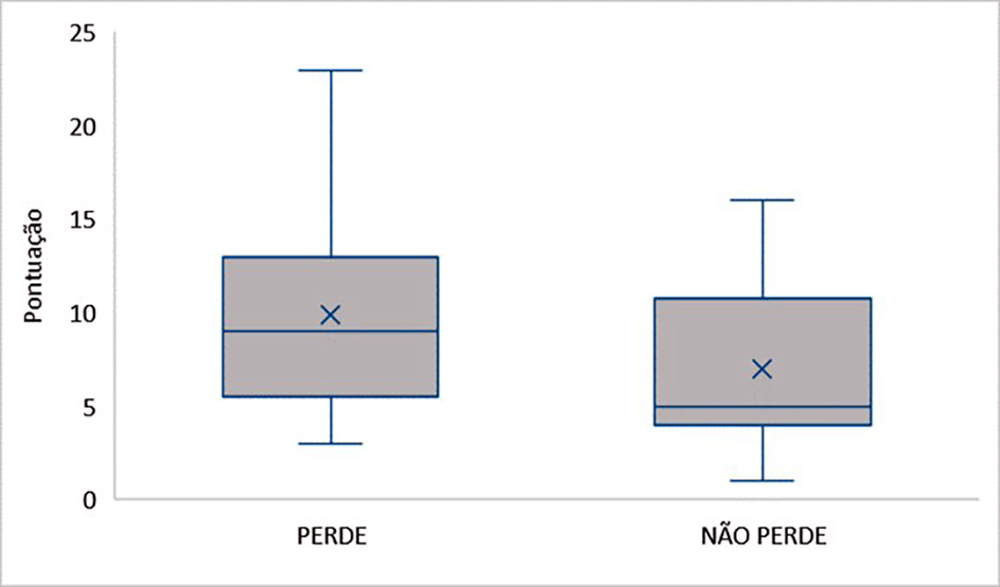
Statistical analysis of the State-Trait Anxiety Inventory did not reveal statistically significant differences between the groups for Trait [F(1, 15) = 1.859, p = 0.193] or State [F(1, 15) = 0.261, p = 0.617] when comparing the group that managed to lose weight with the group that did not. The data from the Beck Depression Inventory also showed no significant difference in the statistical test comparing the weight loss and non-weight loss groups [F(1, 15) = 1.126, p = 0.305]. Figure 2 graphically illustrates the differences between groups in Trait Anxiety scores from the State-Trait Anxiety Inventory (STAI). Figure 3 displays the differences between groups in the results of the Beck Depression Inventory.


The results obtained in the Stroop Color and Word test by comparing the two groups did not show significant differences in relation to time (Card 1 [F(1,15)=0.208,p=0.655], Card 2 [F(1,15) )=1.233,p=0.284], Card 3 [F(1,15)=0.464,p=0.506]) and the number of errors ([F(1,15)=1.081,p=0.315]; [F( 1.15)=0.513,p=0.497]; [F(1,15)=0.497,p=0.49. The GO/NO-GO task showed a significant difference between the groups, with a greater number of commission errors, that is, errors in retaining the answer [F(1,15)=7.669,p=0.014] in the group that was unable to complete the weight loss. Considering errors of omission [F(1,15)=0.713,p=0.412], no significant differences were found.
Figure 4 presents the outcomes of the Stroop Color and Word Test, highlighting differences in cognitive inhibition processes, as well as the results of the GO/NO-GO task, indicating group differences.

Results from the Stroop Color and Word Test (Cards 1, 2, and 3) and the GO/NO-GO task, including omission and commission errors, between groups.
Experiment 2: Body mass loss sessions
When analyzing the data obtained from repeated measures after all three stages of the study (baseline, 3%, and 5% weight loss), no statistically significant differences were found across the three sessions for State Anxiety [F(2, 24) = 0.0159, p = 0.984]. Similarly, the Beck Depression Inventory score analysis showed no statistically significant differences across the three weight loss sessions [H(2) = 1.808, p = 0.405]. Figure 5 presents the results for the state anxiety and depression variables.

The results from the Stroop Color and Word Test in repeated measures among those who lost weight showed no significant time differences for Card 1 [F(2, 24) = 1.250, p = 0.304], Card 2 [F(2, 24) = 1.378, p = 0.271] and Card 3 [F(2, 24) = 0.986, p = 0.388]. Additionally, no differences were identified regarding the errors made on Card 1 [H(2) = 0.926, p = 0.629], Card 2 [H(2) = 0.926, p = 0.629] and Card 3 [H(2) = 4.108, p = 0.128].
No statistically significant differences were observed across all three weight loss sessions for omission errors [H(2) = 0.520, p = 0.771] or commission errors [H(2) = 0.244, p = 0.885] in the GO/NO-GO task. Figure 6 graphically illustrates the outcomes related to inhibitory control, assessed through the Stroop Color and Word Test and the GO/NO-GO task.

Results of the Stroop Color and Word Test (Cards 1, 2, and 3) and the GO/NO-GO task, including omission and commission errors, across sessions.
Discussion
Based on the data analysis from this study, it was found that losing up to 5% of body mass does not affect the psychological aspects of Brazilian jiu-jitsu athletes, whether emotional or cognitive. However, there is a difference between athletes who can successfully carry out rapid pre-competition weight loss (RWL) strategies and those who cannot.
In both experiments (1 and 2), no statistically significant differences were observed in the State-Trait Anxiety Inventory (STAI) and Beck Depression Inventory results between the groups (LOSE vs. NOT LOSE) or between weight loss sessions. This aligns with Coswig et al. (2019), who found no significant differences between winning and losing MMA athletes in weight loss and regain using the Profile of Mood States (POMS) scale (McNair et al., 1992). The tension and depression subscales showed no significant variations, consistent with the present study. The POMS scale includes 42 simple mood indicators divided into six subscales: tension (T), depression (D), anger (A), vigor (V), fatigue (F), and confusion (C) (McNair et al., 1992). Coswig et al. (2019) noted that weight regain after weigh-in could affect the performance on these scales.
Other studies using the POMS scale have identified increases in the tension, depression, anger and fatigue subscales, as well as a decrease in the vigor subscale, potentially leading to feelings of energy loss and low motivation (Fortes et al., 2018; Nascimento-Carvalho et al., 2018). The tension subscale reflects anxiety-like symptoms and changes with RWL (Fortes et al., 2018).
In Nascimento-Carvalho et al.'s (2018) study with eight MMA, jiu-jitsu, and Muay Thai athletes, increases were seen in the anger, vigor, and fatigue subscales after RWL. Data was collected at two moments, 14 days and 1 day before competition weigh-ins. The authors suggested that the proximity of competition might impact mood variation.
In Hall and Lane's (2001) study with boxers who lost 5.16% of their body mass, participants reported poor performance against their expectations, in addition to increases in negative mood subscales such as tension, anger, and fatigue. Horswill et al. (1990) noted changes in the depression subscale among experimental group athletes after a 6% body mass loss due to reduced carbohydrate intake. Choma's (1995) study with three RWL sessions showed an increase in tension and depression subscales during the second weight loss session, returning to baseline after rehydration.
Degoutte et al. (2006) assessed judo athletes across three sessions and observed an increase in the tension subscale after a 5% weight loss. These findings were similar to those of Koral & Dosseville (2009) and Fortes et al. (2018), but the authors acknowledged that proximity to competitions may influence mood subscale results.
The discrepancy between the present results and the literature may be due to the methods used for assessing anxiety and depression. Differences in instrument sensitivity could also be a factor, as the literature often used mood evaluation scales like the Profile of Mood States (McNair et al., 1992) and Brunel Mood Scale (Rohlfs et al., 2008). In this study, specific instruments were used to assess anxiety and depression symptoms.
In the present study, weight loss was divided into 3% and 5% sessions over two weeks. This approach differs from the methods used in other research, where studies examined only a few days of weight loss (Degoutte et al., 2006; Coswig et al., 2019) or up to 4 weeks before competitions (Koral & Dosseville, 2009; Fortes et al., 2018; Horswill et al., 1990) with up to a 6% weight loss, creating a more acute or intense stressor.
Our results showed a difference in the executive function of inhibitory control between athletes who managed to lose weight and those who couldn't. The athletes who failed to lose weight made more errors on the GO/NO-GO task, indicating difficulty inhibiting the tendency to respond (GO) when asked to withhold their response. In Experiment 2, no statistically significant differences were found after the 3% and 5% weight loss sessions.
Studies suggest that the cognitive function of inhibitory control is influenced and benefited by sports practice. Inhibitory control is the ability to suppress internal (thoughts) or external (motor) responses that have a strong tendency to occur or have already begun (Bari & Robbins, 2013). It also involves the capacity to inhibit distracting stimuli (Fuentes et al., 2014). As noted, inhibitory control can benefit sports practice, particularly in open-skill sports that require greater executive control (Wang et al., 2013).
Results of the Stroop test showed no significant differences in either experiment. Camarço et al. (2016) conducted a study with two MMA athletes with different weight losses and obtained similar results, finding no significant differences in response time between the two athletes. However, Athlete 1 (with a 9.1% weight loss) had more errors compared to Athlete 2 (with a 5.3% weight loss), especially before competition. It is worth noting that the generalizability of Camarço et al.'s (2016) study is limited due to its small sample size.
Giles et al. (2019) identified that calorie restriction combined with moderate exercise impairs cognitive tests that evaluate the executive functions of task-switching and response inhibition. These findings differ from the present research, where losing up to 5% of body weight did not affect inhibitory response functions. Giles et al. (2019) conducted two phases six days apart of each other, one with and one without calorie restriction. In both conditions, participants underwent sustained aerobic exercise (cycling, running and treadmill walking), and both cognitive and mood tests were administered while participants exercised on a treadmill at 40-65% of their VO2 peak. This discrepancy in results may be due to experimental design. In our study, progressive weight loss was assessed and tests were conducted without physical exercise, unlike the study cited.
Results from the GO/NO-GO task showed significant differences only in Experiment 1, where comparisons were made between the group that could lose weight and the group that could not. Athletes who could not lose weight made more errors in inhibiting their response when presented with the NO-GO signal, indicating an impairment in the executive function of inhibitory control, which could affect their ability to continue the weight loss process.
Studies on bariatric patients have found similar results. Kulendran et al. (2017) identified that the surgical procedure and behavioral impulsivity measures predicted reduced body weight. Another study, involving 61 patients evaluated before and one year after bariatric surgery, found that better pre-operative inhibitory control predicted a higher percentage of weight loss, concluding that inhibitory control predicts and is associated with post-surgical weight loss. This pattern could also apply here, as inhibitory control is essential for voluntary weight loss (Walø-Syversen et al., 2021).
It is important to note that this research was conducted during the COVID-19 pandemic, which compromised athletes' training ability due to necessary social distancing measures. There is a need to delve deeper into the relationship between inhibitory control and weight loss capacity in athletes using this strategy. The results suggest that not all athletes attempting weight loss will be successful, as many variables are at play, including the executive function of inhibitory control.
Also important to emphasize is that rapid weight loss above 5% of body mass over a short period can cause several health and mood issues, including dehydration, reduced plasma volume, increased cardiovascular disease risk, reduced ability to self-regulate body temperature, bone loss, hormonal imbalance and suppressed immune capacity (Artioli et al., 2016).
Different perspectives on rapid pre-competition weight loss strategies can be found in literature. Artioli et al. (2016) advocate banning this strategy from combat sports, considering the health risks and the fact that RWL cycles are used to gain unfair advantages in competitions, forcing other athletes to manage their weight as to avoid being disadvantaged against larger athletes who used this practice. This creates a risky culture. Conversely, Davis (2017) argues that RWL studies provide little to no solid evidence that the strategy improves or worsens performance or poses health risks, noting that studies presenting alarming data involve losses greater than 5% of body mass, which is traditionally used. This study found that losing up to 5% of body mass does not affect cognitive or emotional parameters, but athletes with better inhibitory control performance tend to be more successful in weight loss.
Conclusion
It is concluded that rapid weight loss of up to 5% of body weight does not alter emotional parameters, such as anxiety levels and depressive symptoms, or cognitive parameters in athletes. However, it is possible that cognitive functions can be decisive in the weight loss process. Specifically, inhibitory control may be related to success or failure in weight cutting. Recognizing this assists in evaluating the necessity of using rapid weight loss as a strategy for gaining competitive advantages and determining if alternative strategies would be more effective for achieving success.
Future research should delve deeper into the role of inhibitory control in athletes who cut weight to better understand whether this function can predict success in the rapid weight loss process.
References
-
Artioli, G. G. (2008). Estudo sobre perda rápida de peso no judô: prevalência, magnitude, métodos e efeitos sobre o desempenho Dissertação de Mestrado, Escola de Educação Física e Esporte, Universidade de São Paulo. https://doi.org/10.11606/D.39.2008.tde-12042010-152116
» https://doi.org/10.11606/D.39.2008.tde-12042010-152116 -
Artioli, G. G., Saunders, B., Iglesias, R. T., & Franchini, E. (2016). It is Time to Ban Rapid Weight Loss from Combat Sports. Sports medicine (Auckland, N.Z.), 46(11), 1579-1584. https://doi.org/10.1007/s40279-016-0541-x
» https://doi.org/10.1007/s40279-016-0541-x -
Bari, A., & Robbins, T. W. (2013). Inhibition and impulsivity: behavioral and neural basis of response control. Progress in neurobiology, 108, 44-79. https://doi.org/10.1016/j.pneurobio.2013.06.005
» https://doi.org/10.1016/j.pneurobio.2013.06.005 -
Berkovich, B. E, Eliakim, A., Nemet, D., Stark, A. H., & Sinai, T. (2016). Rapid weight loss among adolescents participating in competitive judo. International Journal of Sport Nutrition and Exercise Metabolism, 26(3), 276-284. https://doi.org/10.1123/ijsnem.2015-0196
» https://doi.org/10.1123/ijsnem.2015-0196 - Beck, A. T. (1996). Manual for the beck depression inventory-II. Psychological Corporation, 82.
- Biaggio, A M. B., Natalício, L., & Spielberger, C. D. (1977). Desenvolvimento da forma experimental em português do Inventário de Ansiedade Traço-Estado (IDATE) de Spielberger. Arquivo brasileiro de psicologia aplicada 29(3), 31-44.
-
Brandt, R., Bevilacqua, G. G. G. G., Coimbra, D. R. D. R., Pombo, L. C. L. C., Miarka, B., & Lane, A. M. A. M. (2018). Body Weight and Mood State Modifications in Mixed Martial Arts: An Exploratory Pilot. Journal of Strength and Conditioning Research, 32(9), 2548-2554. https://doi.org/10.1519/JSC.0000000000002639
» https://doi.org/10.1519/JSC.0000000000002639 - Camarço, N. F., Sousa Neto, I. V., Nascimento, D. C., Almeida, J. A., Vieira, D. C. L., Rosa, T. S., … & Prestes, J. (2016). Salivary nitrite content, cognition and power in Mixed Martial Arts fighters after rapid weight loss: a case study. Journal of Clinical and Translational Research, 2(2), 63-69.
-
Castro, S. L., Cunha, L. S., & Martins, L. (2000). Teste Stroop Neuropsicológico em Português. Laboratório de Fala da Faculdade de Psicologia da Universidade do Porto. http://www.fpce.up.pt/labfala
» http://www.fpce.up.pt/labfala -
Cirino, P. T., Ahmed, Y., Miciak, J., Taylor, W. P., Gerst, E. H., & Barnes, M. A. (2018). A framework for executive function in the late elementary years. Neuropsychology, 32(2), 176-189. https://doi.org/10.1037/neu0000427
» https://doi.org/10.1037/neu0000427 -
Choma, C. W. (1995). The effect of rapid weight loss on cognitive function in collegiate wrestlers [Master’s thesis, Ithaca College]. Ithaca College Digital Commons http://digitalcommons.ithaca.edu/ic_theses
» http://digitalcommons.ithaca.edu/ic_theses -
Connor, J., & Egan, B. (2019). Prevalence, Magnitude and Methods of Rapid Weight Loss Reported by Male Mixed Martial Arts Athletes in Ireland. Sports, 7(9), 206. https://doi.org/10.3390/sports7090206
» https://doi.org/10.3390/sports7090206 -
Coswig V.S., Miarka B., Pires D.A., da Silva L.M., Bartel C. & Del Vecchio F.B. (2019). Weight Regain, but not Weight Loss, Is Related to Competitive Success in Real-Life Mixed Martial Arts Competition. International Journal of Sport Nutrition and Exercise Metabolism, 29(1), 1-8. https://doi.org/10.1123/ijsnem.2018-0034
» https://doi.org/10.1123/ijsnem.2018-0034 - Coufalová, K., Prokešová, E., Malý, T., & Heller, J. (2013). Body weight reduction in combat sports. Archives of Budo, 9(4), 267-272.
-
Davis, P. (2017). Comment on: “It is Time to Ban Rapid Weight Loss from Combat Sports”. Sports Medicine, 47(8), 1673-1675 https://doi.org/10.1007/s40279-017-0713-3
» https://doi.org/10.1007/s40279-017-0713-3 -
Degoutte, F., Jouanel, P., Bègue, R. J., Colombier, M., Lac, G., Pequignot, J. M., & Filaire, E. (2006). Food restriction, performance, biochemical, psychological, and endocrine changes in judo athletes. International Journal of Sports Medicine, 27(1), 9-18. https://doi.org/10.1055/s-2005-837505
» https://doi.org/10.1055/s-2005-837505 -
Durguerian, A., Bougard, C., Drogou, C., Sauvet, F., Chennaoui, M., & Filaire, E. (2016). Weight Loss, Performance and Psychological Related States in High-level Weightlifters. International Journal of Sports Medicine, 37(3), 230-238. https://doi.org/10.1055/s-0035-1555852
» https://doi.org/10.1055/s-0035-1555852 - Fortes, L. S. , Lira, H. A. A. S., Andrade, J., Oliveira, S. F. M., Paes, P. P., Vianna, J. M. , & Vieira, L. F. (2018). Mood response after two weeks of rapid weight reduction in judokas. Archives of Budo, 14, 125-132.
-
Franchini, E., Brito, C. J., & Artioli, G. G. (2012). Weight loss in combat sports: physiological, psychological and performance effects. Journal of the International Society of Sports Nutrition, 9(1), 52. https://doi.org/10.1186/1550-2783-9-52
» https://doi.org/10.1186/1550-2783-9-52 - Freitas-Junior, I. F. (Org) (2018). Padronização de medidas antropométricas e avaliação da composição corporal CREF4/SP.
- Fuentes, D., Malloy-Diniz, Leandro F., Camargo, C. H. P. de, & Cosenza, R. M. (2014). Neuropsicologia. teoria e prática Artmed.
-
Giles, G. E., Mahoney, C. R., Caruso, C., Bukhari, A. S., Smith, T. J., Pasiakos, S. M., ... & Lieberman, H. R. (2019). Two days of calorie deprivation impairs high level cognitive processes, mood, and self-reported exertion during aerobic exercise: A randomized double-blind, placebo-controlled study. Brain and Cognition, 132, 33-40. https://doi.org/10.1016/j.bandc.2019.02.003
» https://doi.org/10.1016/j.bandc.2019.02.003 - Gorenstein, C., & Andrade, L. (1996) Validation of a Portuguese version of the Beck Depression Inventory and the State-Trait Anxiety Inventory in Brazilian subjects. Brazilian Journal of Medical and Biological Research, 29(4), 453-457.
-
Hall, C. J., & Lane, A. M. (2001). Effects of rapid weight loss on mood and performance among amateur boxers. British Journal of Sports Medicine, 35(6), 390-395. https://doi.org/10.1136/bjsm.35.6.390
» https://doi.org/10.1136/bjsm.35.6.390 - Horswill, C.A., Hickner, R. C., Scott, J. R., Costill, D. L., & Gould, D. (1990). Weight loss, dietary carbohydrate modifications, and high intensity, physical performance. Medicine & Science in Sports & Exercise, 22(4), 470-476.
-
Kons, R. L., Da Silva Athayde, M. S., Follmer, B., & Detanico, D. (2017). Methods and Magnitudes of Rapid Weight Loss in Judo Athletes over Pre-Competition Periods. Human Movement, 18(2), 49-55. https://doi.org/10.1515/humo-2017-0014
» https://doi.org/10.1515/humo-2017-0014 -
Koral, J. & Dosseville, F. (2009). Combination of gradual and rapid weight loss: effects on physical performance and psychological state of elite judo athletes. Journal of Sports Sciences, 27(2), 115-20. https://doi.org/10.1080/02640410802413214
» https://doi.org/10.1080/02640410802413214 -
Kulendran, M., Borovoi, L., Purkayastha, S., Darzi, A., & Vlaev, I. (2017). Impulsivity predicts weight loss after obesity surgery. Surgery for Obesity and Related Diseases, 13(6), 1033-1040. https://doi.org/10.1016/j.soard.2016.12.031
» https://doi.org/10.1016/j.soard.2016.12.031 -
Malliaropoulos, N., Rachid, S., Korakakis, V., Fraser, S. A., Bikos, G., Maffulli, N., & Angioi, M. (2019). Prevalence, techniques and knowledge of rapid weight loss amongst adult British judo athletes: a questionnaire based study. Muscles, Ligaments and Tendons Journal, 7(3), 459-466. https://doi.org/10.11138/mltj/2017.7.3.459
» https://doi.org/10.11138/mltj/2017.7.3.459 - McNair, D. M., Lorr, M., & Droppleman, L. F. (1992). Revised manual for the Profile of Mood States San Diego, CA: Educational and Industrial Testing Services.
-
Nascimento-Carvalho, B., Mayta, M. A. C., Izaias, J. E., Doro, M. R., Scapini, K., Caperuto, E., … & Sanches, I. C. (2018). Cardiac sympathetic modulation increase after weight loss in combat sports athletes. Revista Brasileira de Medicina Do Esporte, 24(6), 413-417. https://doi.org/10.1590/1517-869220182406182057
» https://doi.org/10.1590/1517-869220182406182057 -
Rossi, M., Nibali, M. C., Torregrossa, F., Bello, L., & Grasso, G. (2019). Innovation in Neurosurgery: The Concept of Cognitive Mapping. World Neurosurgery, 131, 364-370. https://doi.org/10.1016/j.wneu.2019.06.177
» https://doi.org/10.1016/j.wneu.2019.06.177 -
Rohlfs, I. C. P. de M., Rotta, T. M., Luft, C. D. B., Andrade, A., Krebs, R. J., & Carvalho, T. (2008). A Escala de Humor de Brunel (Brums): instrumento para detecção precoce da síndrome do excesso de treinamento. Revista Brasileira De Medicina Do Esporte, 14(3), 176-181. https://doi.org/10.1590/S1517-86922008000300003
» https://doi.org/10.1590/S1517-86922008000300003 -
Santos-Junior, R. B., Bernardi, B. B., McAnulty, S. R., Utter, A. C., & Souza-Junior, T. P. (2016). Prevalence, Magnitude, Methods, And Symptoms Related To Weight Loss In Athletes of Brazilian Jiu-Jitsu (2016). Medicine and Science in Sports and Exercise, 48(5S), 915. https://doi.org/10.1249/01.mss.0000487740.82828.fc
» https://doi.org/10.1249/01.mss.0000487740.82828.fc -
Santos-Junior, R. B., Utter, A. C., McAnulty, S. R., Bittencourt Bernardi, B. R., Buzzachera, C. F., Franchini, E., & Souza-Junior, T. P. (2019). Weight loss behaviors in Brazilian mixed martial arts athletes. Sport Sciences for Health, 16, 117-122. https://doi.org/10.1007/s11332-019-00581-x
» https://doi.org/10.1007/s11332-019-00581-x -
Seyhan, S. (2018). Evaluation of the Rapid Weight Loss Practices of Taekwando Athletes and Their Effects. Journal of Education and Training Studies, 6(10), 213. https://doi.org/10.11114/jets.v6i10.3663
» https://doi.org/10.11114/jets.v6i10.3663 - Silveira, M. K. S., Mazzoccante, R. P., Souza, I. C., Olher, R. R., Mendes, L. V., Asano, R. Y., & Sotero, R. C. (2013). Perda de peso no período pré-competitivo de atletas de judô e jiu jitsu. Revista brasileira de nutrição esportiva, 7(41), 256-262.
-
Souza, C. K. S., & Abreu, E. S. (2017). Considerações sobre o comportamento de competidores de judô e jiu-jitsu para rápida perda de peso pré-competição. DEMETRA: Alimentação, Nutrição & Saúde, 12(1), 5-20. https://doi.org/10.12957/demetra.2017.22327
» https://doi.org/10.12957/demetra.2017.22327 - Strauss, E., Sherman, E. M., & Spreen, O. (2006). A compendium of neuropsychological tests: Administration, norms, and commentary (3ª ed.). Oxford University Press.
-
Yarar, H., Türkyilmaz, R., & Eroglu, H. (2019). The Investigation of Weight Loss Profiles on Weight Classes Sports Athletes.International Journal of Applied Exercise Physiology, 8(4), 62-68. https://doi.org/10.26655/IJAEP.2019.12.7
» https://doi.org/10.26655/IJAEP.2019.12.7 -
Walø-Syversen, G., Kvalem, I. L., Kristinsson, J., Eribe, I. L., Rø, Ø., Brunborg, C., & Lindvall Dahlgren, C. (2021). Preoperative inhibitory control predicts weight loss 1 year after bariatric surgery. European Eating Disorders Review, 29(1):123-132. https://doi.org/10.1002/erv.2801
» https://doi.org/10.1002/erv.2801 -
Wang, C. H., Chang, C. C., Liang, Y. M., Shih, C. M., Chiu, W. S., Tseng, P., Hung, D. L., Tzeng, O. J., Muggleton, N. G., & Juan, C. H. (2013). Open vs. closed skill sports and the modulation of inhibitory control. PloS one, 8(2), e55773. https://doi.org/10.1371/journal.pone.0055773
» https://doi.org/10.1371/journal.pone.0055773 -
Wilson, G., Drust, B., Morton, J. P. J. P., & Close, G. L. G. L. (2014). Weight-making strategies in professional jockeys: implications for physical and mental health and well-being. Sports Medicine, 44(6), 785-796. https://doi.org/10.1007/s40279-014-0169-7
» https://doi.org/10.1007/s40279-014-0169-7 -
Wright, L., Lipszyc, J., Dupuis, A., Thayapararajah, S. W., & Schachar, R. (2014). Response inhibition and psychopathology: A meta-analysis of Go/No-Go task performance. Journal of Abnormal Psychology, 123(2), 429-439. https://doi.org/10.1037/a0036295
» https://doi.org/10.1037/a0036295
-
Data Availability Statement
The data supporting the findings of this study can be requested from the corresponding author upon reasonable request.
-
Funding information
Coordination for the Improvement of Higher Education Personnel - CAPES.
-
This article was extracted from the first author’s doctoral thesis.
The data supporting the findings of this study can be requested from the corresponding author upon reasonable request.