
 THE SEQUENTIAL LEARNING METHOD AND THE DEVELOPMENT OF CHILDREN WITH ADHD
ABSTRACT
This article investigated how contact with nature affects the biopsychosocial development of children with Attention Deficit Hyperactivity Disorder (ADHD). The study was qualitative, exploratory, and descriptive, based on literature and field research. It followed the principles of the Sequential Learning Method proposed by Joseph Cornell. Field research was conducted with a group of children diagnosed with ADHD who were regularly enrolled in a municipal public school in the municipality of Crato, state of Ceará, and who were between the ages of 7 and 12 at the beginning of the study. The activities were carried out in the Public Use Zone (ZUP) of the Araripe-Apodi National Forest (FLONA), in the Riacho do Meio Ecological Park, and at Sítio Pinheiros, in the municipality of Barbalha. Technical procedures included observation, recording in guides and field journals, and data interpretation. It was a multiple-case study conducted through socioenvironmental intervention. The study showed that, through direct contact with nature, in addition to children experiencing genuine experiences, they presented a minimization of specific ADHD symptoms at the time of the intervention. They also demonstrated better cognitive development (greater knowledge and understanding) and socio-affective development (improved communication skills, teamwork, values, and self-perceptions).
Keywords:
Experiences with nature; ADHD; biopsychosocial development
RESUMO
O objetivo do artigo é investigar como o contato com a natureza afeta o desenvolvimento biopsicossocial de crianças com Transtorno do Déficit de Atenção e Hiperatividade (TDAH). O estudo é qualitativo, exploratório e descritivo, baseado em pesquisa bibliográfica e de campo, seguindo os princípios do Método de Aprendizado Sequencial, proposto por Joseph Cornell. A pesquisa de campo foi desenvolvida com um grupo de crianças que apresentaram laudo com TDAH, na faixa etária de 7 a 12 anos, que, no início da pesquisa, estavam matriculadas regularmente em escola pública municipal da cidade de Crato - CE. As atividades foram realizadas na Zona de Uso Público (ZUP) da Floresta Nacional do Araripe-Apodi (FLONA), no Parque Ecológico Riacho do Meio e no Sítio Pinheiros, na cidade de Barbalha. Como procedimentos técnicos, foram utilizados a observação, registros em guias e em diários de campo e a interpretação dos dados. Trata-se de um estudo de caso múltiplo, realizado por meio de intervenção socioambiental. O estudo evidenciou que, por meio do contato direto com a natureza, além de as crianças vivenciarem experiências genuínas, apresentaram a minimização de sintomas pontuais, no TDAH, no momento da intervenção como também um melhor desenvolvimento dos aspectos cognitivos (maior conhecimento e compreensão) e socioafetivos (habilidades de comunicação, convívio em equipe, valores e autopercepções).
Palavras-chaves:
Vivências com a natureza; TDAH; desenvolvimento biopsicossocial
RESUMÉN.
El objetivo de este artículo es investigar cómo el contacto con la naturaleza afecta el desarrollo biopsicosocial de los niños con trastorno por déficit de atención e hiperactividad (TDAH). El estudio es cualitativo, exploratorio y descriptivo, basado en la investigación bibliográfica y de campo, siguiendo los principios del Método de Aprendizaje Secuencial, propuesto por Joseph Cornell. La investigación de campo se desarrolló con un grupo de niños que presentaron un informe con TDAH, de entre 7 y 12 años, quienes, al inicio de la investigación, estaban matriculados regularmente en una escuela pública municipal de la ciudad de Crato - CE. Las actividades se realizaron en la Zona de Uso Público (ZUP) del Bosque Nacional Araripe-Apodi (FLONA), en el Parque Ecológico Riacho do Meio y en SítioPinheiros, en la ciudad de Barbalha. Como procedimientos técnicos se utilizaron la observación, registros en guías y diarios de campo e interpretación de datos. Se trata de un estudio de caso múltiple, realizado a través de la intervención socioambiental. El estudio mostró que, a través del contacto directo con la naturaleza, además de que los niños vivieran experiencias genuinas, presentaban una minimización de síntomas puntuales del TDAH, en el momento de la intervención, así como un mejor desarrollo de aspectos cognitivos (mayor conocimiento y comprensión) y socio-afectivos (habilidades comunicativas, trabajo en equipo, valores y autopercepciones).
Palabras-clave:
Experiencias con la naturaleza; TDAH; desarrollo biopsicossocial.
Introduction
Attention Deficit Hyperactivity Disorder (ADHD) is one of the most common neurodevelopmental disorders in childhood, occurring across different cultures, with a prevalence of approximately 5% in children and 2.5% in adults, and being more common in males (Oliveira et al., 2015). Although its etiology is not fully understood, it is multifactorial in nature and involves evident neurological dysfunctions as well as a strong genetic and hereditary basis. Environmental factors also play a role (Faraone & Larsson, 2019), particularly those related to disadvantaged psychosocial and family conditions, low socioeconomic status, parental education level, housing structure, and parental unemployment (Keilow et al., 2020).
Children with ADHD primarily exhibit hyperactivity, impulsivity, and inattention, which are considered core symptoms of the disorder. They also exhibit deficits in social and/or peer interaction and emotional functioning, exacerbating academic, social, and behavioral difficulties. School is one of the most common contexts in which ADHD manifests (Lopes, 2004). The literature highlights the association of ADHD with poor academic performance, increased retention, and increased referrals for support from Special Education (Loe & Feldman, 2007). Children with ADHD often have difficulty with emotional and social interactions. They frequently display anger and frustration and have difficulty identifying emotions. This can make it difficult for them to initiate and maintain relationships with peers, causing them to become unpopular and even victims of exclusion (Oliveira et al., 2015). This is largely due to a lack of understanding of these behaviors.
There are currently two types of interventions available for treating ADHD: pharmacological and behavioral. According to Rohde and Halpern (2004) and Andrade et al. (2011), stimulant medications, such as methylphenidate, are typically presented in the literature as the first-line intervention for ADHD. However, Barkley and Cataldo (2008) argue that ADHD treatment should not be limited to pharmacological therapy; psychological counseling, academic, or occupational support are also essential in some clinical situations.
In addition to the aforementioned interventions, other strategies for minimizing ADHD symptoms should not be ruled out, including contact with nature, as highlighted in a study by Damasceno (2019). While recognizing the role of pharmacological intervention and/or psychological support in some cases, contact with nature and the Sequential Learning Method are complementary approaches that can be preventive (Louv, 2015; Kuo & Taylor, 2004; Damasceno, 2019), contributing positively to the development and learning of children with ADHD. Contact with nature has the advantages of being widely accessible in or near schools, being free of cost and side effects, and being non-stigmatizing (Kuo & Taylor, 2004).
Regular, prolonged time spent in nature promotes children's healthy development in countless ways. Schools are one place where children with ADHD can regularly experience green spaces, which complement medication and behavioral treatments (Taylor & Kuo, 2011). Children are beings of nature; therefore, we must change our habit of overvaluing indoor or enclosed spaces and favor daily contact with the outside world/nature (Tiriba, 2010). Therefore, fostering this contact is essential for children's mental health and integral development, regardless of who promotes it: family members, teachers, or professionals from other fields, such as psychology.
According to Heinsius (2008), human development stems from multiple influences, including species, culture, historical moment, social group, and individual characteristics. However, four general domains of development have been identified: cognitive, social, affective, and motor. All of these aspects can be experienced through contact with nature.
Development is defined as lasting changes in how an individual relates to their environment. According to Bronfenbrenner (1996), a person's development is affected by the ecological environment, which is understood through different related structures: the microsystem, mesosystem, exosystem, and macrosystem. Therefore, the importance of interaction with nature for individual development must be considered, a topic explored by the Sequential Learning Method proposed by Joseph Cornell. This method enhances individuals' interaction with nature, promoting learning and the development of values and feelings that contribute to social transformation (Cornell, 2008).
The importance of Sequential Learning Method lies in its ability to guide people to become more sensitive and loving toward experiences involving direct contact with nature. It promotes sensitivity and educates the senses through enjoyable games and activities. Mendonça (2008), who introduced the method to Brazil, states that this type of contact affects the experience, body, and soul, preparing individuals to act in accordance with their feelings.
Sequential Learning Method comprises playful games and activities that follow a four-step sequence: awakening enthusiasm, focusing attention, direct experience, and sharing inspiration. These stages are carried out in a fun way, gradually shifting from a state of excitement to one of focused attention and engagement with nature and the emotions evoked by the experience (Cornell, 2008). Thus, the purpose of this article was to investigate the effects of contact with nature on the biopsychosocial development of children with ADHD.
Method
The study was based on qualitative research, using an exploratory and descriptive strategy. According to Malhotra (2016), this strategy is suitable for assessing group characteristics. It was a multiple-case study conducted through a socio-environmental intervention. Field research was conducted with a group of children diagnosed with ADHD.
The study population consisted of children diagnosed with ADHD from public schools in the municipality of Crato, state of Ceará. The sample included only urban students, totaling eleven children. Six of these children comprised the intervention group (IG), who participated in the nature intervention. The other five children comprised the control group (CG) and did not participate in the nature activities. After the study was completed, however, the CG was invited to participate in nature activities.
The small number of children in the sample is justified by the need for more in-depth observation required by a qualitative study, and because we worked with children with ADHD outdoors, to ensure their safety, given their characteristics. Furthermore, the municipality's population diagnosed with ADHD is very small—only 18 children—which makes the sample size representative.
The sample is non-probabilistic and intentionally composed. It is characterized by at least one point of similarity between participants (Debus, 2004; Barros & Lehfeld, 2011). In this case, the similarity is a shared ADHD diagnosis. Inclusion criteria included being between 7 and 12 years old at the beginning of the study, having a formal ADHD diagnosis, and being regularly enrolled in a public municipal school. Eleven children met the listed criteria. The exclusion criteria were being an adolescent subject, studying at a municipal school in a rural area, and not having a duly signed informed consent form. Considering these criteria, seven individuals were excluded from the initial group.
This research adheres to the ethical principles outlined in Resolution No. 466/2012 of the National Health Council, which establishes guidelines and standards for studies involving human subjects. The research was submitted to the Research Ethics Committee (COEP) of the University of Vale do Taquari (Univates)5, which issued an opinion (Coep/Univates) No. 2.504.020. The project is registered with Plataforma Brasil, a federal government agency that manages these issues, under No. 11197612.1.00005310.
The activities took place in the caatinga of the Araripe-Apodi National Forest (FLONA) in Ceará. This area is a Public Use Zone (ZUP), consisting of areas altered by humans that still have characteristics similar to those of natural areas. This ZUP has a visitor center with public services, primarily aimed at facilitating recreation and leisure, and promoting environmental education. The ZUP allows visitors to observe the Cariri Valley, the Araripe sub-plateaus and slopes, and the features of the humid forest and cerrado. There are trails of varying difficulty and length in this environment, thus catering to a wide range of interests (ICMBio, 2016). Experiences were also held at the Riacho do Meio Ecological Park and Sítio Pinheiros, in Barbalha, a municipality in the Cariri region of Ceará characterized by high ecological significance.
To accompany the research subjects during their experiences with nature, the participant observation technique was used. Records of the senses, movements, speech, perceptions, and everything else observable during the intervention were kept in a field journal (FJ). “The qualitative analyst observes everything: what is or is not said, gestures, looks, swaying, body movement, hand gestures, and the faces of those speaking or not speaking because everything can be imbued with meaning [...]” (Demo, 2012, p. 33). According to Martins (2013, p. 32), one reports in the FJ “[...] what occurred, when it occurred, in relation to what or whom it occurred, who said it, what was said, and what changes occurred in the context.”
The application team was composed of seven people: the researcher (identified in the FJ reports as P1) and six scholarship holders/undergraduates in the Physical Education degree program at the Federal Institute of Ceará (IFCE). The students received prior training to qualify them for the activities and are identified in the FJ reports as B1 to B6.
Each intervention began with what we call loving contact with nature, consisting of a moment of free exploration of the space. With each intervention, this moment was designed to intensify interaction to observe whether it generated affection and persistence. After the thirty-minute loving contact with nature, we moved on to the activities proposed for the stages of the Sequential Learning Method. Some of these activities were adapted according to the three main characteristics of ADHD: distractibility, hyperactivity, and impulsivity.
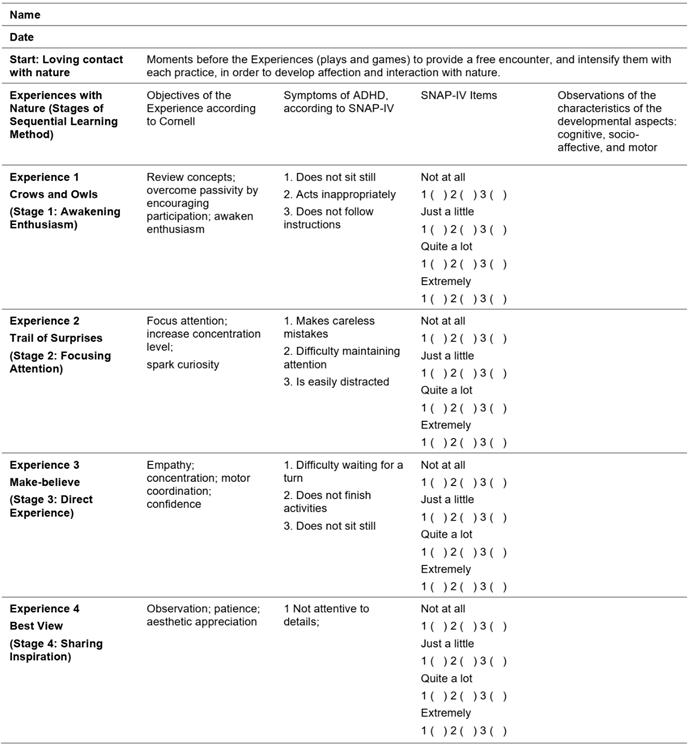
Observation guides were developed to monitor the progress of the subjects during the experience, considering cognitive and socio-affective aspects. These guides included the activities and their objectives, as well as items from the SNAP-IV6 to evaluate the severity and prevalence of ADHD symptoms. The adapted experiences enabled us to observe the intensity of the symptoms of the disorder. Others were created using aspects assessed by the WISC-IV7 test as a reference.
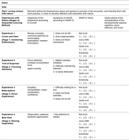
Box 1illustrates a day of activities. Eight guides were used, one for each of the eight meetings, with four activities each, following the stages of the Sequential Learning Method. Each participant received a separate guide. After a three-month interval, the activities were repeated to compare with the initial phase and assess potential changes. In total, sixteen meetings and their respective guides took place.
Results and Discussion
The activity of loving contact with nature at the beginning of the encounters proved to be quite meaningful for the children. Loving contact allowed them to awaken and develop their senses through contemplation and interaction with birds and the lightness of butterflies, the diverse textures of plants, and the varied sounds and smells of nature. According to Araújo et al. (2019), children are enchanted by nature and form bonds of affection with it. Free contact with nature is so extraordinary that its absence was described by Richard Louv (2015) as a Nature-deficit disorder.
During their loving contact with nature, children commonly expressed their joy through free activities. They hugged and climbed trees, rolled on the ground, and lay down to gaze at the sky. They explored spaces, and, as they discovered new things, they discovered themselves, as evidenced by field journal entries.
SI1, in her first contact with nature that day, showed attentiveness to the stimuli she perceived. She walked around a lot and seemed to already have favorite spots. Apparently, she had no trouble maintaining her attention, though she occasionally showed interest in what the other children were doing. She remained silent during the activity [...] she knew the names of the plants and colors. SI1 seemed to feel very comfortable during this time (Field Journal, P1).
SI5's hyperactivity was less prevalent than usual this time. He continued going to places where there was someone. However, at the end of the loving contact, he paused and observed his surroundings as he walked (Field Journal, B5).
SI2, during the loving contact, had no difficulty maintaining concentration and was able to carry out the activity somewhat silently. Unlike on other days, he talked more during loving contact and was closer to the other children. During these moments, he usually kept his distance. He remained focused on what he was observing. I believe this is happening because he is more integrated with the group (Field Journal, B2).
During each meeting, the children became more spontaneous in their interactions with nature, more confident, and more comfortable with their peers and adult team members. It was observed that free exploration sparked their curiosity. According to Louv (2015), playing outdoors enhances children's senses, which are limited indoors. Other accounts from the field journal attest to how naturally they began to enjoy the activities.
I once again explained to SI3 what should be done during the loving contact, and he immediately said he already knew. I was impressed by how much fun he had during the irrigation activity. He took off his shirt and threw himself on the wet grass, seemingly unconcerned about getting wet or dirty. After I called him, he found a place to lie down and stayed there until the first activity began. Today, he demonstrated a strong connection with nature (Field Journal, P1).
SI4 showed comfort in the new environment and interacted affectionately with the dogs there. As usual, she showed affection toward nature. She smelled the flowers and observed every detail of the place. In my opinion, she performed very well during loving contact, showing curiosity about everything she saw (Field Journal, B4).
It was found that being outdoors and in contact with nature particularly stimulates children's development, leading to the idea of extending the thirty-minute intervention to allow for greater exploration of space and nature and consequently stimulate the children's senses further.
Despite the importance of children having contact with nature, it was found that they lacked this contact in their schools. School activities take place in classrooms or on concrete patios. According to Figueiredo (2015), the amount of time children spend indoors may be related to adults' difficulty managing their children's time. Furthermore, teachers' lack of contact with nature may also affect this situation.
Early childhood education aims to teach us how to care for the Earth, says Tiriba (2010, p. 2), who believes that children should have daily contact with the sun, fresh air, water, clay, and sand. Therefore, children and nature should have natural contact in school environments so that children can experience “[...] their first sensations, impressions, and feelings of living.”
The children's accounts reveal the significance of their direct contact with the natural environment and its elements. This contact enabled them to form a connection with nature, as evidenced by their engagement with the proposed activities. They gradually demonstrated a sense of belonging to these places, as evidenced by their statements.
It's so good to run around in this big world (SI6).
Did you see me climb the tree? It was awesome! (SI3).
I saw the little soldier from Araripe, so beautiful! (SI5).
Auntie, I'm so happy when I'm here looking at nature with my friends (SI4).
These children's accounts brought to mind a statement by the creator of the Sequential Learning Method: “Nature is of endless beauty [...] its splendor extends across infinite space and manifests itself in innumerable worlds. Yet, for us, its most extraordinary gift is its determination to teach us about ourselves” (Cornell, 2008, p. 181). Genuine forms of interaction with others emerge from this learning about oneself, as evidenced by the observation report.
Today, we planned for the children to sit farther apart and observe nature more calmly and attentively. However, when I saw SI3 and SI5 walking hand in hand, I realized that we had achieved another objective: improving these children's socialization skills. SI3 could not focus on observing nature that day; he was focused on his friends instead (Field Journal, B3).
The social domain is one of the developmental dimensions observed throughout the interventions. Initially, situations involving high levels of aggression or relationship difficulties were observed. However, it was observed throughout the meetings that activities in the natural environment stimulate socio-affective exchanges by placing children in situations where they may need each other.
Social skills promote social and intellectual development in childhood, state Del Prette et al. (2016). Social skills are defined as the set of behaviors that individuals use to foster healthy and productive relationships with others (Del Prette & Del Prette, 2005).
Following this loving interaction with nature, activities related to the four stages of the Sequential Learning Method began, as outlined in the Activity and Observation Guide (Box 1). Aspects of development, including cognitive, social, affective, and motor development, were explored and/or encouraged.
Stage 1 aimed to spark enthusiasm. Among other experiences related to this stage, the activity called ‘Mr. Snail’ was designed to stimulate auditory perception, attention, and gross and fine motor coordination. This activity created a joyful atmosphere, promoting interaction, self-recognition, and recognition of the group as a whole, which is the goal of this stage of the method. The children were very engaged and enjoyed exploring their body language.
First, the children went in search of Brazilwood seeds. While collecting them, they explored the space and created their own games and toys with whatever they found. Machado (2016) says that the perfect toy for a child is nature itself. This is perhaps because children experience joy when playing by deconstructing objects and transforming them into toys—into something different and new.
Then, they talked about snails and drew them in the air and on the ground with their hands and feet. Then, they sang a song about a Mr. Snail. Then, they performed the movements to the music, sometimes slowly and sometimes quickly. The activity concluded with a return to calm. They made drawings of snails on which they could paint and glue Brazilwood seeds they had collected.
Observations of how the children acted, interacted, and carried out the activities, as well as what they said and did not say, were recorded in the Field Journal, in order to monitor the emerging transformations in the subjects throughout the research.
SI2, at the beginning of the activity (in the third meeting), did not seem excited about it. However, he decided to participate and interacted a little with the other children, but said he preferred running games [...] In the seventh meeting, when the same activity was carried out again, he said he enjoyed it and felt happy when asked what he thought of the experience. The first time, he seemed not to understand the activity, and I noticed he was embarrassed to sing and do the movements. The second time, he completed the activity with little difficulty, although he was still a bit shy. While drawing the snail, I noticed that he applied a lot of force when drawing the line close to the circle. However, he finished the activity successfully, unlike the first time. At the end of the activity, he was proud of his work, as I was (Field Journal, B2).
From the third to the seventh meeting, SI2 showed improvement. He began to act appropriately during the activity and follow the facilitator's instructions. Despite his significant learning difficulties and challenges with activities related to cognitive development, he demonstrated progress in this area within his limitations.
During Mr. Snail's initiation, I observed SI4 interacting well. While participating in the activity, she sang the song as if she remembered it. She was the first to draw the snail on the floor when asked to do so. She seemed to enjoy performing the body movements, especially the ones where she lined up and ran quickly to the music. She had no difficulty with fine motor coordination and used her creativity to complete the spiral that formed the snail's face. SI4 had no difficulty understanding the instructions for the activity. She performed everything with joy and concentration (Field Journal, B4).
When the music for the task was played, as it had been on several previous occasions, SI1 apparently remembered some parts. However, she frequently glanced at her mates, undoubtedly to ensure she was doing it correctly. This behavior appeared several times. During the practical part, she actively participated in the task, demonstrating good social skills. However, when the game sped up, she had difficulty keeping up. She managed to complete the drawing correctly. When gluing the seeds to the paper, she was told to start from the inside out. Since she could not do so, we explained it again. However, she only managed to complete the task correctly when she saw her mate doing it and imitated her (Field Journal, B1).
The subjects demonstrated engagement during this activity, which, among other things, aids motor and cognitive development. These types of activities are often underutilized in children's daily lives. Although they became agitated at one point, their agitation was characterized by excitement rather than hyperactivity. They gradually demonstrated greater calm and concentration after becoming more agitated.
According to Piorski (2016), the materiality of play opens pathways that lead to substantial imagination. The materials used in play reach children's senses, producing sensory impressions. During play, it was observed that nature, at its own pace, stimulated dimensions of the cognitive and socio-affective development of the children participating in the intervention. The activities became more natural between the first and last meetings, which is related not only to contact with nature, but also to the social interaction provided in this environment.
One of the objectives of Stage 2 is to focus attention. With this goal in mind, two activities were chosen: ‘Where the Animals Live’ and ‘Retelling the Story.’ The first activity focuses on cognitive flexibility and decision-making, and motor skills, which were explored using a ball. The facilitator called out the name of an animal, and the children identified whether it was terrestrial, aquatic, or aerial. In each round of the game, the children were whispered a location where the animal likely lived. The facilitator called out the name of an animal and tossed the ball upward. If the animal lived in the location they had been told or heard, they ran to catch the ball. In another variation of the activity, the children were asked to name aquatic animals. If they named a correct animal, the facilitator tossed the ball from one to the other until no one knew any more names, and so on. Field journal notes reveal what was observed.
SI2, in the ‘Where the Animals Live’ activity, followed the instructions, did not rush, and had no difficulty paying attention or waiting his turn. He got every question right, such as identifying which animal was from the earth; he answered, ‘horse,’ and so on. I noticed that the more correct answers he gave, the more enthusiastic and joyful he became. There was also a second stage in which he understood the activity. He seemed very happy and willing to participate during the activity. SI2 is usually very shy and introverted, but he always says that he loves coming to the project (Field Journal, B2, emphasis added). This activity was very enriching for SI4 because she participated extensively; she prefers calmer activities. She was always attentive to every movement and eager to participate. Her memory and attention were exercised extensively. On rare occasions, she became frustrated when she did not catch the ball before her peers. Overall, SI4 achieved the objective of the experience (Field Journal, B4).
During this experience, the children learned through memory exercises, attention, play, body use, and exploration of the senses. The activity fostered enthusiasm and movement. Their level of involvement indicated their progress in various aspects of development. Play is an ecological experience through which children take ownership of their surroundings, becoming aware of them and using the perception-action-information cycle (Figueiredo, 2015).
The other activity in stage 2, ‘Retell the Story,’ aimed to evaluate vocabulary and attention, as well as measure word knowledge and learning skills, long-term memory, linguistic development, logical sequence of events, decision-making, and auditory and visual perception. A story was told that established connections with elements of nature. The children listened attentively. Then, they were asked to retell the story using cardboard sheets and pictures. The sequence in which they understood the story was observed. At the end, they presented their work and retold the story.
SI4 understood what was expected of him. He assembled his cardboard without rushing and arranged the pictures in the correct sequence. When it was time to retell the story, he did so easily, recalling phrases from the text and the order of events. He demonstrated good cognitive, socio-affective, and motor development. He remembered what to do, easily participated in the storytelling activity, and completed the tasks with agility (Field Journal, B4).
SI2 does not make mistakes out of carelessness; rather, he genuinely has difficulty. He can only pay a little attention to details and has difficulty organizing tasks. During the storytelling, he sat and listened, but he had difficulty keeping track when it came time to paste the pictures according to the story. Several retellings, verse by verse, were necessary for him to understand and paste the pictures correctly. During the dynamic stage, when he was supposed to retell the story based on what he had pasted, SI2 did not understand the objective. Even with the mediator explaining it again, he said what was in the picture. He still did not understand and repeated what was in the images (Field Journal, B2).
Through this activity, it became clear that SI2's silence did not necessarily mean he was paying attention. At times, his inattention symptoms were quite apparent. In addition to being diagnosed with ADHD, SI2 was diagnosed with cognitive impairment through psychological testing. His inattention was evident when an activity required significant mental effort. Nevertheless, he approached the activities in his own way. Each participant performed the activity uniquely.
In ‘Retell the Story,’ SI6 paid close attention to the story. When it was time to cut out the figures and arrange them in the correct order, he got most of them right. The most interesting part, however, was when he presented his cardboard figures to retell his story. He showed pride and included new elements that enriched the story (Field Journal, B6, emphasis added).
As the experience progressed, SI6, who had previously rushed through activities, became more interested and began completing them, demonstrating greater interest. It was observed that his self-esteem gradually increased.
In the ‘Retell the Story’ activity, SI3 had difficulty following the order when pasting the pictures. Some were forgotten, and others were placed out of sequence. He made careless mistakes and did not pay attention to certain details. I had to read the story sentence by sentence, repeating each sentence more than once, so he could notice the connection between an image and the part of the story I was telling him. When he finished, however, he looked at his cardboard, narrowed his eyes, and said it was all wrong. He said he wanted to do it again. I told him there wasn't enough time, and he became upset. He complained to Researcher 1, who told him that there was no right or wrong and that the important thing was for him to participate in the activity. Researcher 1 also said that when he retold the story, he could do it however he wanted. As a result, his retelling was interesting, albeit not in the order the facilitator had told it. He was quite happy to tell it, though. In his own way, he achieved the objective of the activity (Field Journal, B3, emphasis added).
The two experiences explored decision-making, memory use, organization, and aspects related to the cognitive domain. They demonstrated that children develop at different paces and all go through the balancing process. Wadsworth (1996) describes this process as a self-regulatory mechanism necessary for children to efficiently interact with their environment. The children interacted with nature and played an active role by organizing and reconstructing the information they received during the two activities. When their time requirements were respected, it likely reflected positively on their self-esteem.
Considering the notes from the Field Journal and the observations about the children's development during the interventions, recorded in each child's individual guide, it became clear that each child developed within their limitations. Favorable results were found, considering the complexity of the activities and the fact that the children had ADHD, as well as some comorbidities.
These activities explored the cognitive aspect of development, in which the children were not very resourceful. Allowing the children to express themselves and act freely according to their abilities led to greater self-confidence and facilitated the emergence of their unique potential.
The ‘Trail of Surprises’ activity, from Stage 03, aimed to focus attention, increase concentration, and spark curiosity. The experience took place on a long trail surrounded by a wide variety of trees and other plants, strewn with dry leaves, twigs, and rocks, allowing children to see the ground and the objects hidden there. A cordon was placed along the trail. Children would pass through one side, and on the other, various objects were hidden at different heights (in trees, under foliage, or behind rocks).
The children, walking along the trail, with breaks in between, tried to locate as many objects as possible (but without touching them). When they reached the end of the section, they whispered to the facilitator how many objects they had seen. The facilitator revealed to each child how many objects had been hidden. If they had not found them all, they were encouraged to walk the trail again.
SI3 made no mistakes, demonstrated great concentration, interest in finding the objects, and was able to report what he found. I believe that, since he was alone, he was able to concentrate well on the activity. In other activities, SI3 was easily distracted by what others were doing (Field Journal, B3).
The first time SI6 walked the trail, he had great difficulty finding the objects and became irritable. The facilitator then told him that he could do the trail again and that he should look up and pay more attention to the ground. The second time, he found almost all the objects, which really engaged him in the activity. When he finished, he was proud and asked to go again (Field Journal, B6).
SI6 is a child who usually becomes sad and sullen when things do not go his way, due to his difficulty managing frustration. However, when he was able to complete an activity, his motivation level increased considerably, and his frustration level decreased. Throughout the process, SI6 gradually became more accepting when he did not achieve his goals. Regarding SI1:
SI1 was very agitated at the beginning of the ‘Trail of Surprises,’ walking fast and wanting to cross the line. Researcher 1 told her to slow down and carefully look for objects. Each time she found an object, she cried out in satisfaction. In the end, she jumped up and down, proclaiming that she had found everything and pointing to where the objects were. Because of her agitation, I thought she would not find anything, but I was wrong. But, to my pleasant surprise, she found almost everything (Field Journal, B1).
Children diagnosed with ADHD often have difficulty concentrating or paying attention to details. However, during this experience, it was observed that the children maintained a high level of attention and concentration. They were curious and delighted by each object they encountered. Clearly, the environment and the stimuli generated by this experience were conducive to this behavior.
According to Neuenfeldt (2016), activities involving direct contact with nature stimulate children's interest and provide access to sensations and emotions. When these experiences are shared, they enhance development, which is a significant aspect for children with ADHD. Experiences in nature foster awareness of environmental issues and one's own potential, as well as the development of new motor patterns.
This environmentally sensitive behavior was observed during the Trash Hunt, corresponding to Stage 4. The activity was designed to foster environmental awareness and concentration, allowing children to explore the natural environment, connect with each other, and develop sensitivity and subtle observation skills.
The children were led on a silent exploration of the forest, instructed to use all their senses and be alert for objects that did not belong there. Each child carried a bag to store any trash they found. At the end of the walk, the children shared their impressions of the experience while the facilitator discussed the importance of caring for the planet. Observations in the Field Journal indicate that:
SI2 took the walk to get to know the trail and the natural environment very attentively. Every time he found trash, he immediately picked it up and asked, “Is this trash, right?” I sensed that SI2 was deeply connected to and concerned about nature. He said that nature is beautiful and that trash does not belong there. He also said he enjoyed the walk because he felt relieved and free while hiking. When we were in the circle and the facilitator asked him what he thought of the activity, he said he enjoyed it because it was easy to find the trash since he paid close attention (Field Journal, B2).
SI2 has learning difficulties because he has ADHD and a cognitive deficit, which affects his performance in activities. Therefore, when he succeeds at something that requires attention and cognitive processes, his self-esteem increases. He demonstrates this when he says that he completed the activity because he paid attention.
SI4 often demonstrates confidence when talking about certain topics. This behavior is consistent with that of a child without ADHD and with comorbidities, as evidenced by his medical report. This behavior became increasingly frequent throughout the process. Regarding SI5, observations indicate the following:
I noticed that when he felt challenged, he became quite enthusiastic and completed the activity. However, when it came time to share, he acted as if he were competing to see who could find the most trash. I did not think he connected with nature while searching for trash. I told him that part was over and that he should just walk the trail. Although he was reluctant at first, I gradually saw him slow down and enjoy it (Field Journal, B5).
The data indicate that the participants understood the proposal and reflected on their environmental behavior. Throughout the interventions, they were observed throwing trash on the ground and uprooting plants. However, they gradually demonstrated changes in this regard, as evidenced by their statements.
I'll tell my classmates at school that it is wrong to litter because we, as well as the plants and animals, could die as a result.
I do not throw trash on the ground anymore!
If we do not take care of nature and throw trash in rivers, everything could die. We will never see the Araripe soldier again, right?
The results indicate that the experiences generated environmental reflections that can alter children's behaviors, corroborated by the research of Cheng and Monroe (2012), who found that a family's perceived value of nature affects interest in environmentally friendly behaviors. According to Fjørtoft (2001), interactions with nature generate respect and responsibility for it, as well as generating more frequent social interactions between peers and adults. This behavior was quite evident throughout the intervention process using the Sequential Learning Method. During this period, the children were able to establish closer social bonds with each other and with the surrounding world.
The experiences fostered diverse learning, resulting from the use of the body, the senses, and experience, understood, as Larrosa (2002) points out, as that which passes through us, happens to us, and touches us. It is not what is happening or what touches. Therefore, experience was the primary element in the transformations experienced by children in nature. This encounter between humans and non-humans demonstrates what ecological vision advocates: “[...] a worldview that conceives of the world as an integrated whole, not a collection of dissociated parts” (Capra, 2006, p. 25). According to Capra (2006), children were able to experience themselves as a particular thread in the web of life, where all living beings have essential value.
Final Considerations
Throughout the interventions, the changes experienced by each child became clear. Some gained confidence, overcoming distrust. Others overcame shyness, gaining self-confidence. Introspection gave way to a sense of freedom. Most importantly, their affective bonds were strengthened. They overcame many small challenges individually and collectively. These aspects highlight the contributions of contact with nature and the Sequential Learning Method to education and psychology. As researchers working with children with ADHD, we joyfully experienced unexpected moments.
Different aspects of the children's development blossomed. Our goal was not to teach them to learn or perform activities perfectly. Rather, the goal was to encourage the children to explore the natural environment with greater calmness, affection, and safety, and observe how this influenced their development. To this end, the research team explored the senses and created opportunities for experiences that could generate pleasure and enchantment. This awakened what was genuine about each child, which is perhaps often undervalued by school, their family, and society.
Children with ADHD often lack confidence. However, experiences of direct contact with nature have enabled these children to feel at peace with themselves, their peers, and their surroundings. This has fostered their socio-affective and cognitive development. Therefore, we can reaffirm Mendonça's (2015) conclusion that “[...] sensitive experience with the natural world can help us become more powerful and capable of transforming the world by acting in favor of life” (p. 18). This conclusion underscores the Sequential Learning Method's contribution to children's unique and integral expression.
One challenge related to nature experiences with children with ADHD is understanding how these activities could aid their cognitive and socio-affective development and minimize the intensity of their symptoms. By observing the participants in this study, we observed their active participation in the activities, which proved to be of great significance to them. This observation leads us to hypothesize that the key may be identifying these children's strengths rather than their difficulties and then allowing nature to do its work. This hypothesis allows for a potential shift in educational and psychological theory. Cornell (2008, p. 32) comments that “[...] after a successful sequence of sequential learning, each person subtly experiences a feeling of unity with nature, a new and pleasant perception, and a deep empathy for all forms of life.”
For Pires (2011), living with nature, immersing oneself in it, and experiencing it fosters a more harmonious relationship by bringing about delicacy and sensitivity, which alter the connection between nature and the individual. The relationship that the children involved in the research established with nature allowed for the creation of new socio-affective bonds with the natural world. Thus, each child's world expanded.
By triangulating the data collected and recorded in the guides regarding the application of the Sequential Learning Method, cross-referencing them with SNAP-IV symptoms, field journal notes, and children's statements, it is possible to conclude that, through direct contact with nature, not only did the children experience genuine experiences, but also a reduction in specific ADHD symptoms was observed during the intervention, as well as the development of cognitive (increased knowledge and understanding) and socio-affective aspects (communication skills, teamwork, values, and self-perception). This conclusion highlights the importance of expanding intervention spaces in education and psychology by opening classrooms and offices to natural environments.
Through activities that sparked enthusiasm, encouraged concentration, promoted active participation, and fostered inspiration sharing, children connected with themselves, their peers, and nature. They realized they were more fully aware of the possibilities of existence. Children with ADHD experienced their limits expanding through the use of their senses, freedom, and creativity. Acceptance and empathy certainly played a role in this expansion.
Research exploring the Sequential Learning Method with children with ADHD demonstrated the expansion of the intervention group's existential territories. According to the ecosophical perspective of psychoanalyst, psychiatrist, and philosopher Felix Guattari (1991), new existential territories can emerge from the interconnection of subjectivity, social relationships, and the environment. The Sequential Learning Method provoked this emergence, as evidenced by the reports, observations, and analytical reflections presented. The children's relationships with themselves, with nature, with peers, and with tutors (and also with teachers and family members, as additionally identified through interviews) were altered for the better.
Other energies permeated the children's bodies, which are both biological and cultural. These energies were amplified through experiences of contact with nature. Inspired by ecosophy, Mazzarino (2021, p. 28) writes, “[...] earth-body, stone-body, cloud-body, fauna-body, flora-body, human-body, water-body. So many other interdependent life-bodies form biological, social, cultural, existential, psychic, spiritual, and other ecosystems.”
The Sequential Learning Method enables individuals to take an active role in their experiences with nature, fostering the development of attention, intuition, and sensitivity. These qualities have gradually eroded due to the growing disconnect between people and nature, as Mendonça (2012, p. 63) has noted. “If we are unable to relate to the humanity within each person, our perception of nature, with all its delicacy, as the ultimate territory of the senses, becomes more distant.”
Educators and mental health professionals should be mindful of ‘poetic listening’ and openness to non-linear human territorialities when acting as facilitators of human development, as noted by Barcelos and Silva (2007). This approach values imagination. Children with ADHD are nonlinear and have demonstrated the ability to expand their existential territories when given the freedom to explore open spaces.
As early as the 1990s, Guattari wrote about the progressive deterioration of nature, social relations, and the psyche. He saw the need for an ethical-political articulation of the three ecological registers as a planetary stance traversed by lines of sensitivity and complex perception. Adopting Guattari's ecosophical perspective enables us to examine the devices of subjectivity formation to reconstruct human praxis, resingularizing individuals and collectives and reinventing ways of being and being in groups, including the relationship between the subject and the body.
When Guattari (1991), with his ecosophical approach, proposes breaking down totalizing frameworks to create new existential configurations, exploring new softnesses based on heterogenesis—respect for differences and solidarity. This approach inspires reflection on the creative autonomy potential for educators and psychology professionals working with children with ADHD. This article presents the possibility of reconfiguration through softness.
References
- Andrade, C. R. M., Silva, W. A. P., Belizário Filho, J. F., & Silveira, J. C. C. (2011). Transtorno de déficit de atenção e hiperatividade (TDAH). Revista Médica de Minas Gerais, 21(4), 873-880.
- Araújo, J. F., Britz, K. L., Oliveira, D. F., Souza, J. S., & Fofonka, L. (2019). Os benefícios de brincar ao ar livre: criança, natureza e educação ambiental.Educação Ambiental em Ação, 21(80).
- Barcelos, V., & Silva, I. S. (2007). Saberes, sabores e devorações - para uma educação ambiental antropofágica e pós-moderna. In A. M. Preve& G. Corrêa(Orgs.), Ambientes da ecologia: perspectivas em política e educação(pp. 65-85). Santa Maria: Editora UFSM.
- Barkley, R. A., & Cataldo, R. (2008). Transtorno de déficit de atenção/hiperatividade: manual para diagnóstico e tratamento(3a ed.). Porto Alegre: Artmed.
- Barros, A. J. P., &Lehfeld, N. A. S. (2011). Projeto de pesquisa: propostas metodológicas (20a ed). São Paulo: Vozes.
- Bronfenbrenner, U. (1996). A ecologia do desenvolvimento humano: experimentos naturais e planejados Porto Alegre: Artes Médicas.
- Capra, F. (2006). A teia da vida:uma nova compreensão cientifica dos sistemas vivos São Paulo: Cultrix.
- Cheng, J., & Monroe, M. (2012). Connection to nature: children’s affective attitude toward nature. EnvironmentandBehavior, 44(1), 31-49.
- Cornell, J. (2008). Vivências com a natureza: novas atividades para pais e educadores São Paulo: Aquariana.
- Damasceno, M. M. S. (2019). Educação ambiental vivencial e o desenvolvimento cognitivo e socioafetivo de crianças com TDAH (Tese de Doutorado). Universidade do Vale do Taquari.
- Debus, M. (2004). Manual para excelencia em lainvestigación mediante grupos focales. In E.Esperidião. (Ed.), Reflexões sobre a utilização do grupo focal como técnica de pesquisa(pp. 85-99).São Paulo: Fundação Editora de UNESP.
- Del Prette, Z. A. P., & Del Prette, A. (2005). Psicologia das habilidades sociais na infância: teoria e prática São Paulo: Vozes .
- Del Prette, Z. A. E., Freitas, L. C., Bandeira, M., & Del Prette, A. (2016). Inventário de habilidades sociais, problemas de comportamento e competência acadêmica para crianças - SSRS: manual de aplicação, apuração e interpretação Porto Alegre: Casa do Psicólogo.
- Demo, P. (2012). Metodologia científica em ciências sociais São Paulo: Atlas.
- Faraone S. V., Banaschewski, T., Coghill, D., Zheng, Y., Biederman, J., Bellgrove, M. A Newcorn, J. H., Gignac, M., Al Saud, N. M., Rohde, I. M. L. A., Yang, L., Cortese, S., Almagor, D., Stein, M. A., Albatti, T. H., Aljoudi, H. F., Alqahtani, M. M. J., Asherson, P., Crunelle, C. L., ... Wang, Y. (2021). The world federation of ADHD international consensus statement: 208 evidence-based conclusions about the disorder. Neuroscience and Biobehavioral Reviews, 128, 789-818.
- Faraone, S. V., & Larsson, H. (2019). Genetics of attention deficit hyperactivity disorder. Molecular Psychiatry, 24(4), 562-575.
-
Figueiredo, A. (2015). Interação criança-espaço exterior em jardim de infância (DoctoralDissertation). Universidade de Aveiro. http://hdl.handle.net/10773/14081
» http://hdl.handle.net/10773/14081 - Fjørtoft, I. (2001). The natural environment as a playground for children: the impact of outdoor play activities in pre-primary schoolchildren. Early Childhood Education Journal, 29(2), 111-117.
- Guattari, F. (1991). As trêsecologias Campinas: Papirus.
- Heinsius, A. M. (2008). Desenvolvimento psicomotor e construção do sujeito. In C. A. M. Ferreira, A. M. Heinsius, & D. R. Barror. (Orgs.), Psicomotricidade escolar(pp. 112-135). Rio de Janeiro: Wak.
-
ICMBio. (2016). O Instituto Chico Mendes da Biodiversidade Brasília, DF: ICMBio. Recuperado de:http://www.icmbio.gov.br/portal/
» http://www.icmbio.gov.br/portal/ - Keilow, M., Wu, C., & Obel, C. (2020). Cumulative social disadvantage and risk of attention deficit hyperactivity disorder: results from a nationwide cohort study. SSM - Population Health, 10,100548.
- Kuo, F. E., & Taylor, A. F. (2004). A potential natural treatment for attention-deficit/hyperactivity disorder: evidence from a national study.American journalofpublichealth,94(9), 1580-1586.
- Larrosa, J. (2002). Notas sobre a experiência e o saber de experiência. Revista Brasileira de Educação, (19), 20-28.
- Loe, I., & Feldman, H. (2007). Academic and educational outcomes of children with ADHD. Journal of Pediatric Psychology, 32(6), 643-654.
- Lopes, J. (2004). A hiperatividade Coimbra: Quarteto.
- Louv, R. (2015). Last child in the woods:saving our children from nature-deficit disorder Ottawa: Algonquin.
-
Machado, A. L. (2016). Brincando com os 4 elementos da natureza. Educando Tudo Muda Recuperado de:http://www.educandotudomuda.com.br/tag/e-book-brincando-com-os-quatro-elementos-da-natureza/
» http://www.educandotudomuda.com.br/tag/e-book-brincando-com-os-quatro-elementos-da-natureza/ - Malhotra, N. (2016). Pesquisa de marketing:uma orientação aplicada (4a ed.). São Paulo: Bookman.
- Martins, R. X. (2013). Metodologia de pesquisa: guia de estudos. Lavras: UFLA.
- Mazzarino, J.(2021). Ecosofia NAT:design para a comunicação ambiental Iguatu: Quipá.
- Mendonça, R. (2008). Prefácio à edição brasileira. InJ.Cornell. Vivências com a natureza 1: guia de atividades para pais e educadores (3a ed., pp. 11-15). São Paulo: Aquariana .
- Mendonça, R. (2012). Meio ambiente & natureza São Paulo: Senac.
- Mendonça, R. (2015). Atividades em áreas naturais São Paulo: Ecofuturo.
- Neuenfeldt, D. J. (2016). Educação ambiental e educação física escolar:uma proposta de formação de professores a partir de vivências com a natureza (Tese de Doutorado). Universidade do Vale do Taquari.
- Oliveira, L., Pereira, M., Medeiros, M., & Serrano, A. (2015). PHDA: O que há de novo no DSM-5? Revista Portuguesa de Pedagogia, 49(2), 75-94.
- Piorski, G. (2016).Brinquedos do chão:a natureza, o imaginário e o brincar São Paulo: Peirópolis.
- Pires, A. C. T. (2011). Criança e natureza:uma relação de sensibilidade e encantamento (Monografia). Instituto Superior de Educação Vera Cruz.
- Rohde, L. A., & Halpern, R. (2004). Transtorno de déficit de atenção/hiperatividade: atualização. Jornal de Pediatria, 80(2), 61-70.
- Taylor, A. F., & Kuo, F. E. (2011). Could exposure to everyday green spaces help treat adhd? evidence from children’s play settings. Applied Psychology: Health and Well-Being, 3(3), 281-303.
-
Tiriba, L. (2010). Crianças da natureza [Anais].1ºSeminário Nacional: Currículo em Movimento - Perspectivas Atuais, Brasília, DF. http://portal.mec.gov.br/docman/dezembro-2010-%20pdf/7161-2-9-artigo-mec-criancas-natureza-lea-tiriba/file
» http://portal.mec.gov.br/docman/dezembro-2010-%20pdf/7161-2-9-artigo-mec-criancas-natureza-lea-tiriba/file - Wadsworth, B. (1996). Inteligência e afetividade da criança (4a ed.). São Paulo: Enio Matheus Guazzelli.
-
1
Acknowledgments - This study was supported by the Coordination for the Improvement of Higher Education Personnel (CAPES) - Financing Code 001.
-
5
At the time of submission, it was called Univates University Center.
-
6
SNAP-IV assesses symptoms of attention deficit/hyperactivity disorder in children and adolescents.
-
7
Wechsler Intelligence Scale for Children (WISC) assesses intellectual and cognitive performance in children.
-
2
Federal Institute of Education, Science and Technology of Ceará (IFCE), Juazeiro do Norte Campus, Ceará, Brazil. Professor of courses Physical Education and Mathematics; Graduate Program in Environment (PPGMA); Professional Master's in Inclusive Education. Email: siqueiramonica@ifce.edu.br
-
Data Availability Statement
The data supporting the findings of this study can be requested from the corresponding author upon reasonable request.
The data supporting the findings of this study can be requested from the corresponding author upon reasonable request.

 Source: The authors (2019).