
 Analysis of Sustainable Business Models in the Brazilian Industrial Sector: Proposal of a Framework
Abstract
Despite the numerous discussions in the literature about the integration of Sustainable Business Models (SBMs) in companies, particularly in the industrial sector, there is still a lack of a unified and applicable model for these businesses. Therefore, to address this gap, this research aims to propose a framework for the development of SBMS within the context of the Brazilian industrial sector. This study analyzed sustainable practices in the Brazilian industrial sector based on a sample of 75 industrial companies. The questionnaire used consisted of a 5-point Likert scale, and its structure was developed around archetypes. For data analysis, exploratory factor analysis (EFA) and confirmatory factor analysis (CFA) were employed. Based on these analyses, a theoretical model was developed consisting of four factors: Factor 1 – Stakeholder Relationship; Factor 2 – Sustainable Production and Consumption; Factor 3 – Minimizing and Recycling Resource Use; and Factor 4 – Value Creation. The confirmatory factor analysis showed that all indicators have significant coefficients (p < 0.001) and high Z-values, suggesting that the data fit the theoretical structure. Thus, the proposed model is valid, and the latent factors are well represented by the indicators. This research presents new perspectives on the application of Sustainable Business Model (SBMS) development in the context of the Brazilian industry, addressing the identified gap. As a result, the study contributes to enriching scientific knowledge and strengthens the the practical application of these business models.
Keywords
sustainable business model; industry; application; framework; multivariate analysis
Resumo
Apesar das inúmeras discussões na literatura sobre a integração de Modelos de Negócios Sustentáveis (MNS) nas empresas, particularmente no setor industrial, ainda há uma falta de um modelo unificado e aplicável para esses negócios. Portanto, para abordar essa lacuna, esta pesquisa tem como objetivo propor uma estrutura para o desenvolvimento de MNS no contexto do setor industrial brasileiro. Este estudo analisou práticas sustentáveis no setor industrial brasileiro com base numa amostra de 75 empresas industriais. O questionário utilizado consistia numa escala Likert de 5 pontos, e a sua estrutura foi desenvolvida em torno de arquétipos. Para a análise dos dados, foram empregadas a análise fatorial exploratória (AFE) e a análise fatorial confirmatória (AFC). Com base nessas análises, foi desenvolvido um modelo teórico composto por quatro fatores: Fator 1 – Relação com as partes interessadas; Fator 2 – Produção e consumo sustentáveis; Fator 3 – Minimização e reciclagem do uso de recursos; e Fator 4 – Criação de valor. A análise fatorial confirmatória mostrou que todos os indicadores têm coeficientes significativos (p < 0,001) e valores Z elevados, sugerindo que os dados se encaixam na estrutura teórica. Assim, o modelo proposto é válido e os fatores latentes são bem representados pelos indicadores. Esta pesquisa apresenta novas perspectivas sobre a aplicação do desenvolvimento do Modelo de Negócio Sustentável (MNS) no contexto da indústria brasileira, abordando a lacuna identificada. Como resultado, o estudo contribui para enriquecer o conhecimento científico e fortalece a aplicação prática desses modelos de negócios.
Palavras-chave
modelo de negócio sustentável; indústria; aplicação; estrutura; análise multivariada
Introduction
The intertwining of industry and sustainability has become a crucial point of discussion in the contemporary business landscape and in scientific knowledge. As the world faces environmental challenges, companies are being driven to redesign their business models (BMs) to incorporate practices that positively contribute to both the environment and society. Various internal and external motivations lead companies to reassess their role, such as external pressures exerted by stakeholders to reduce environmental impact (Preghenella & Battistella, 2021).
The adoption of sustainability requires the modification of practices or the business model. In this context, for companies to adopt a sustainable strategy, it is essential to redesign the value proposition and thus transition from a conventional business model to one focused on sustainability (Preghenella & Battistella, 2021).
Definitions of SBMs are aligned concerning the proposition of sustainable value (environmental, social, and economic) for stakeholders, considering the environment and society as primary stakeholders (Bocken et al., 2014). Shakeel et al. (2020) add that a sustainable business model integrates the perspectives of multiple stakeholders, seeks value creation (both monetary and non-monetary), and has a long-term perspective.
This process of transitioning from the traditional business model to the Sustainable Business Model (SBMs) requires modifications to the company's practices. Bocken et al. (2014) propose a set of archetypes for the sustainable business model, which can be adopted individually or in an integrated manner. Later, Ritala et al. (2018) reviewed this model, empirically testing it in companies that are part of the Standard & Poor's 500 (S&P 500).
Although the literature has advanced discussions on SBMs from different perspectives, a decade after Bocken et al. (2014) study, there is still no unified model (Karuppiah et al., 2023). Thus, pressures exerted by stakeholders, environmental urgency, and regulatory compliance require companies to adopt a new stance, especially in the industrial sector.
This scenario becomes even more challenging in industries located in emerging countries, where complex challenges arise that are not found in developed countries (Quashie et al., 2024). Hluszk et al. (2024), in their study of Latin American industries, including Brazil, highlight several points that indicate a low level of materiality and pose challenges for society. Among the main findings, the authors mention the neglect of social issues, the early stage of studies that quantify environmental impacts, yet emphasize strong adherence to the ESG concept and theme.
Manufacturing companies are considered highly polluting, accounting for approximately 30% of total emissions (Maldonado-Guzmán and Garza-Reyes, 2020). Although the literature presents a set of categorizations, such as the nine archetypes (Bocken et al., 2014; Ritala et al., 2018) and the taxonomy comprising forty-five circular economy business model patterns (Lüdeke-Freund et al., 2018), the industrial sector requires a holistic analysis of SBMs. Many companies still encounter difficulties due to a lack of clarity regarding SBMs (Karuppiah et al., 2023). In this regard, these authors identify several research gaps on the topic, leading to the following question: How can a reference framework be structured to develop Sustainable Business Models (SBMs) in the Brazilian industrial context? Thus, this research aims to propose a framework for the development of SBMSs in the Brazilian industrial context.
From this perspective, there arises a need to explore new industrial business models that not only promote economic growth but also ensure environmental and social sustainability, positioning the industrial sector as a key player in this transition. Additionally, this research contributes to understanding the role of industry in the Sustainable Development Goals (SDGs), specifically SDG 9 – Industry, Innovation, and Infrastructure (Martins et al., 2020).
The study is structured into five sections. The introduction provides the context of the research. The second section presents the theoretical framework. Section 3 details the study’s methodology. The results and discussions are explored in Section 4. Finally, the concluding remarks and implications of the research are presented.
The sustainable business model and the importance of sustainability in the context of the brazilian industrial sector
The concept of a business model has developed significantly and continuously since the 1990s (Ghaziani & Ventresca, 2005; Taran et al., 2015) and has gained consensus in the literature as the means by which a company proposes, creates, delivers, and captures value in order to generate revenue and achieve competitive advantage (Chesbrough & Rosenbloom, 2002; Richardson, 2005; Taran et al., 2015).
Innovation was later integrated into the concept (Vils et al., 2017), and other tools were proposed for the development of the field, such as the Business Model Canvas, which allows for the planning, organization, and creation of a business model through nine elements: value proposition, customer segments, customer relationships, channels, key partners, key activities, key resources, cost structure, and revenue streams (Osterwalder & Pigneur, 2010).
The integration of new approaches into the business model has allowed the literature to evolve toward a perspective in which the economic, environmental, and social aspects of society are considered. This has facilitated the development and discussion of the concept of a sustainable business model within the academic community (Shakeel et al., 2020; Preghenella & Battistella, 2021).
Lüdeke-Freund & Dembek (2017) discussed this theme as an emerging and integrative field that both depends on and transcends established domains, considering its process of institutionalization across academic, industrial, and governmental spheres. This evolution stems from advancements in specific beliefs and foundational concepts, research-guiding resources and tools, promoting authorities, and the community of researchers and professionals.
In this context, other concepts have begun to contribute to the discussion, such as the circular business model (Lewandowski, 2016; Lüdeke-Freund et al., 2019), the product-service system business model (Reim et al., 2015; Yang & Evans, 2019), and models focusing on digitalization (Parida & Wincent, 2019; Teixeira & Tavares-Lehmann, 2021).
According to Geissdoerfer et al. (2018a), sustainable business models must maintain a long-term perspective and incorporate proactive management of multiple stakeholders to create both monetary and non-monetary value. For Preghenella & Battistella (2021), it is essential that sustainability-oriented business models integrate the proposition, delivery, and capture of sustainable value be it economic, environmental, or social while engaging with stakeholders in the company's business to ensure long-term prosperity.
In line with the evolution of this theme, Bocken et al. (2014) identified eight archetypes of sustainable business models, namely: (1) maximizing material and energy efficiency; (2) closing resource loops; (3) substituting with renewable and natural processes; (4) delivering functionality instead of ownership; (5) adopting a leadership role; (6) promoting sufficiency; (7) adapting to society and the environment; and (8) developing sustainable solutions at scale.
Ritala et al. (2018) built upon the initial proposal of the archetypes, categorizing them into environmental, social, and economic categories, while expanding the categorization with the addition of archetype (9) inclusive value creation, which addresses the need to include previously unaddressed segments and encompasses trends such as the growing number of peer-to-peer and sharing models.
The archetypes represent an initial effort to broaden research related to SBMs and enable the identification of emerging themes in the field, such as awareness of the adoption of SBMs, the role of technological advancement, and the level of innovation in this process. Overall, they foster a common language connecting research and practice, as they describe groupings of mechanisms and solutions for SBMs. Furthermore, organizations can utilize the archetypes, either individually or in combination, as a tool for constructing SBMs or for modifying existing sustainable business models (Bocken et al., 2014; Ritala et al., 2018).
Geissdoerfer et al. (2018a) argue that the archetypes proposed by Bocken et al. (2014) and expanded by Ritala et al. (2018) represent guiding strategies for the process of innovating sustainable business models. Shakeel et al. (2020) note that this classification serves as an important starting point for integration into sustainable innovation in SBMs.
Beard and De Giacomo (2025) recognize that the sustainable business model archetypes proposed by Bocken et al. (2014) constitute one of the main theoretical and practical contributions to structuring sustainable value creation. This contribution was later reinforced by the empirical application of Ritala et al. (2018), who demonstrated their usefulness as a tool for large-scale comparative analysis. Through this, these authors analyze the prevalence of different archetypes in small and medium-sized enterprises, highlighting that, although they have become a relevant foundation for research and practice, the archetypes have limitations in capturing the diversity and evolution of sustainable business models (SBMs). Therefore, the study suggests the need for conceptual advances and the formulation of new models capable of better reflecting contemporary sustainability dynamics, while acknowledging the fundamental contribution of archetypes as a starting point (Beard & De Giacomo, 2025).
Building on the initial SBM archetypes proposed by Bocken et al. (2014) and updated by Ritala et al. (2018), the literature has presented new approaches that complement and expand these contributions. Breuer et al. (2018) propose principles that guide the integration of sustainability into business models, criteria for assessing their environmental, social, and economic impacts, and tools that provide practical methods for their design and implementation. Geissdoerfer et al. (2018b) show how SBMs and supply chains can be integrated to enable the Circular Economy (CE). In this way, the authors contribute by proposing a conceptual framework that links business model design decisions with supply chain management practices, aiming to close resource loops, reduce waste, and generate environmental, social, and economic value. Lüdeke-Freund et al. (2018) develop a taxonomy of 45 SBM patterns distributed across five main value creation categories and 11 groups, supporting sustainability-oriented innovation. Gao & Li (2020) apply a framework to the bike-sharing sector, highlighting the adaptation of SBMs in emerging industries. López-Nicolás et al. (2021) explore innovative sustainability-oriented models, pointing to pathways for business transformation through innovation processes. Finally, Agwu & Oftedal (2025) propose a new approach that integrates paradox theory with sustainable innovation, showing how sustainable value can be generated while moving away from unsustainable business practices. Together, these studies demonstrate how the field has diversified, consolidating more contextual, applied, and integrative approaches.
Ogrean & Herciu (2020) take a different stance regarding studies seeking to expand SBMs through new patterns, frameworks, and applications. Rather than advancing modeling, the authors develop a constructive critique of the use of archetypes as the predominant reference in the field, arguing that these structures, although useful for organizing and guiding models, limit the understanding of sustainability to normative and functionalist approaches. Thus, the authors propose an epistemological reorientation centered on a global ethical perspective, which considers SBMs as contingent, contextual, and multilevel constructions capable of responding to the complex and dynamic challenges of contemporary sustainability. This approach does not reject archetypes but highlights their limits as a dominant conceptual foundation and indicates pathways for a more critical and integrative theoretical evolution in the field.
From this perspective, Abdelkafi et al. (2023) analyze archetype-based sustainable business model structures and argue that merely combining economic, environmental, and social patterns does not, by itself, guarantee the construction of SBMs. Beyond this limitation, the authors introduce the concept of “truly sustainable business models,” based on contingency and systems theory, and propose a model for genuinely sustainable SBMs composed of three levels: (i) the internal coherence of the business model as a system; (ii) the broader system in which it operates (user/customer scope and geographic coverage); and (iii) internal and external contingency factors that vary over time. The model guides sequential verification and continuous review of the SBM, making it clear that combining patterns is a necessary but not sufficient condition for achieving true sustainability.
Regarding the industrial context, it is important to note that, initially, companies in this sector adopted reactive strategies concerning sustainable development, largely driven by regulation and policy. In contrast to this scenario, over the years, many companies have begun to employ proactive measures directed toward sustainability. It is essential to recognize that providing sustainable value to a wide range of stakeholders, particularly those associated with the industrial context, is necessary. These stakeholders, in turn, must broaden their perspectives to address the environmental, social, and economic challenges faced by society. Supporting this view, scientific research on sustainable business models has shown a steady increase in recent years (Agwu & Bessan, 2021).
In general, when seeking a business context that encompasses sustainability, the actions taken by companies imply, to some extent, mutual influence among them; that is, they influence each other which poses a challenge to balancing environmental, social, and economic dimensions. The different approaches to sustainable business models in the literature result in a certain level of confusion in many organizations willing engage in this process. Emerging studies with a focus on industry can help clarify this situation (Agwu & Bessan, 2021).
Consequently, case studies are emerging in various industrial sectors, particularly in developed countries. One example is the study by Sah & Hong (2024), conducted in the sugar industry in Taiwan, which identified challenges and opportunities associated with sustainable business models that incorporate the circular economy. The authors cite challenges such as the complexity of supply chains, the lack of standardized regulations and guidelines, and the need for stakeholder collaboration. As opportunities, they highlight innovation and the development and implementation of new sustainable technologies, as well as the opening of new markets for circular products.
Another example is the study conducted by Arı & Dursun (2024), who developed an application framework to evaluate aircraft models in the aviation industry, considering that the transportation sector is one of the most polluting and faces challenges in reducing gas emissions. The research highlights the need for the sector to find a balance between mobility use, economic growth, and sustainability issues. Therefore, these studies demonstrate that even in developed countries, numerous obstacles remain still faced, as well as the main benefits that the adoption of SBMs can bring to these industries.
The adoption of sustainability-oriented business models is still at a relatively early stage in developing countries, and the industrial community in these countries faces many challenges related to implementation. For this reason, emerging countries should receive priority attention in the development of research and the practice of SBMs. This emphasis can significantly contribute to achieving the Sustainable Development Goals (SDGs), and the role of innovations related to SBMs can help the industry advance in this area (Karuppiah et al., 2023).
In this scenario, advancements associated with Industry 4.0 (I4.0) and the ways in which innovation can contribute to it are gaining increasing popularity among academia, industry professionals, and government. The integration of sustainability paradigms becomes particularly important in this context (Khan et al., 2023). The convergence of contemporary digital technologies and innovation in Industry 4.0 can positively contribute to the creation of sustainable industrial value, further bridging the environmental, social, and economic dimensions within this segment (Bonilla et al., 2018).
Studies on the integration of Industry 4.0 and sustainability have recently advanced, including investigations into the importance of technologies associated with I4.0 and the incorporation of green process innovation for sustainability performance (Liu & De Giovanni, 2019); technological improvements arising from I4.0 that enhance energy efficiency (Chen et al., 2021); types of sustainable open innovation based on the principles of I4.0 (Mubarak et al., 2021); and digital technologies that support open innovation (Adamides & Karacapilidis, 2020).
Khan et al. (2023) systematically reviewed the literature to identify the types of innovations enabled by I4.0 and how they impact sustainability and sustainable development. The authors provided important evidence of how SBMSs can contribute to ensuring that such innovations and sustainability impacts are positive and transformative, such as the use of digital technology in realign the proposition, delivery, and capture of value for a waste industry company seeking sustainable operational methods, thereby adding economic value to recycling by promoting the recovery of non-biodegradable materials and supporting the local community through social innovation.
The Brazilian organizational landscape is still underdeveloped with regard to sustainability; however, some advancements have been observed in recent years. Brazilian companies continue to struggle to integrate sustainable practices into their management systems (Cazeri et al., 2018; Martins et al., 2020). This issue has been the focus of researchers, policymakers, and decision-makers (Cagno et al., 2019).
Martins et al. (2020) analyzed experts' perceptions regarding the contributions of the Brazilian industrial sector to sustainable development. The authors point out that Brazil has undertaken some actions, whether sporadic or planned, in a more advanced manner, characterized by increased productivity and technological modernization, or in less advanced actions, more closely related to promoting sustainable consumption and engaging with small businesses.
Initial studies, such as that by Morioka and De Carvalho (2015), analyzed the Brazilian industrial sector based on the SBM archetypes of Bocken et al. (2014), conducting case studies in five companies. The results showed that, although each company predominantly reflected one archetype, they were not confined to a single model, highlighting the complexity and adaptability of SBMs in the Brazilian context. More recent studies, such as Maffini (2023), which applied the archetypes of Bocken et al. (2014) along with the updates proposed by Ritala et al. (2018) using a quantitative approach, identified a positive relationship between sustainable innovation and the degree of innovation in the business models of Brazilian industrial companies. Thus, the Brazilian industrial sector not only adapts international archetypes to its particularities but also demonstrates both the potential for expansion and the limits of their applicability. Accordingly, the evidence points to opportunities for future research that explore different approaches and adopts more robust quantitative techniques than those used to date.
In this regard, other studies advance the understanding of how the Brazilian industrial sector has incorporated sustainable innovation practices into its business models. Kneipp et al. (2021) show that companies with a higher degree of innovation in their business models tend to adopt sustainable practices in a more strategic and systemic manner, although they remai influenced by competitive and structural pressures. Kneipp et al. (2023) highlight that internationalization enhances the sustainable innovation process, driving the adoption of more robust practices in products, processes, and organizational structures. These findings suggest that, while facing challenges in consolidating sustainability in management, the Brazilian industrial sector has been progressing in the implementation of sustainable solutions in response to the institutional, structural, and social specificities of emerging contexts.
After this brief theoretical foundation on the sustainable business model and the importance of sustainability in the industrial sector, particularly in the Brazilian context, the next section discusses the methodological procedures adopted in the present study.
Method
This study proposes the development of a framework for sustainable business models in the context of the Brazilian industry. This will be carried out using a quantitative approach to ensure a holistic and detailed understanding of the topic.
The quantitative phase involved the collection and analysis of data on sustainable practices in the Brazilian industry. For this purpose, the sample for this study was selected from the contact database created by the Innovation and Sustainability research group, which includes 14,031 Brazilian industrial companies from various sectors. The data collection instrument was a questionnaire adapted from Kneipp (2016), consisting of an ordinal scale of five points (Likert scale) and divided into four main sections. For this research, only the variables from section three were analyzed, which correspond to the archetypes identified by Bocken et al. (2014) and Ritala et al. (2018), as detailed in Table I.
The questionnaire was made available to the companies in the database via Google Forms during the data collection period from July 2020 to September 2022. The final sample consisted of companies that effectively received, responded to, and returned the correctly filled questionnaires, resulting in a final sample of 75 companies.
For data analysis, two statistical techniques from multivariate data analysis were employed. First, an exploratory factor analysis (EFA) approach was used to investigate the structure of the data and identify potential underlying factors, as this analysis allows the exploration of correlations among a large number of variables by grouping them into factors. Subsequently, confirmatory factor analysis (CFA) was used to validate and confirm the factor structure identified in the EFA, following the research steps shown in Figure 1. This procedure was adopted to ensure the replicability and robustness of the factors identified in the exploratory analysis (Hair et al., 2009).

In this sense, the steps for conducting the EFA followed the guidelines described by Hongyu (2018). This resulted in five steps: (i) the sample consisted of more than 50 observations, deemed adequate for the analysis; (ii) the initial assessment included checking the results of the Kaiser-Meyer-Olkin (KMO) test and (iii) Bartlett's test of sphericity to ensure the feasibility of factoring the data matrix. The Measures of Sampling Adequacy (MSA) were calculated for all variables, with values above 0.6 indicating greater adequacy of the variables for factor analysis (Hair et al., 2009).
To evaluate the reliability of the scales, (iv) Cronbach's Alpha internal consistency coefficient was employed, with values close to 1 indicating greater reliability, having a lower limit of 0.70 (Hair et al., 2009). The factor loadings and communalities were determined using (v) the Maximum Likelihood method with Varimax rotation.
Thus, this research, based on the aforementioned methods, presents new perspectives on the development of sustainable business models (SBMs) in the context of the Brazilian industry, contributing to scientific knowledge and strengthening the practice of these businesses. The next section will present the results and discussion arising from the data analyses.
Presentation and discussion of results
In this section, the main findings of this study are presented, divided into three main topics: exploratory factor analysis, confirmatory factor analysis, and the proposal of a framework for sustainable business models in the context of the Brazilian industry.
Exploratory factor analysis
According to Table II, it can be observed that the p-value is less than 0.001, which implies the rejection of the null hypothesis. Thus, there is a significant correlation between the variables, indicating that the correlation matrix is not an identity matrix. The rejection of the null hypothesis suggests that the variables are suitable for factor analysis. There are significant correlations among the variables, justifying the application of dimensionality reduction methods such as factor analysis. Therefore, Bartlett's Test of Sphericity indicates that the variables have significant correlations with each other and are appropriate for factor analysis.
To determine the adequacy of the sampling for exploratory factor analysis, the Kaiser-Meyer-Olkin (KMO) Measure of Sampling Adequacy was calculated, as shown in Table III.
Based on these data, the global KMO value is 0.869, indicating adequate sampling for factor analysis, confirming that the sampling is suitable for identifying the underlying factors. Regarding the individual indicators, all KMO values are above 0.7, suggesting an acceptable a sampling adequacy. Specifically, indicators such as Var05 (0.937), Var07 (0.927), and Var08 (0.921) demonstrate excellent adequacy.
Table IV presents the reliability statistics of the scale measured by Cronbach's alpha, a coefficient of internal consistency that assesses the cohesion among items in a scale. Consequently, the coefficient indicated a value of 0.912, revealing excellent internal consistency. Therefore, the items in the scale consistently measure the same underlying construct, reinforcing the reliability of the scale used. This result indicates that the scale is reliable and suitable for the research, capable of producing consistent and replicable results.
Table V presents the factor loadings of the research variables. It is important to note that the uniqueness indicates the variance of each variable that is not explained by the factors.
Based on the data, four factors were identified, each with its respective variables, correlated through factor loadings. These are, respectively: Factor 1: Strong influences are observed in Var07 (Substitution of Products by Services), Var08 (Well-Being of Stakeholders), Var10 (Community Integration and Stakeholders), and Var11 (Interaction with Stakeholders).
Factor 2: strong influences for Var03 (Supply Chain), Var04 (Eco-efficiency; Product/Service with Fewer Resources), Var06 (Innovation in Products and Processes), Var09 (Actions for Sustainable Consumption), and Var14 (Sustainable Solutions: Socio-Environmental Benefits).
Factor 3: strong influences for Var01 (Energy Efficiency), Var02 (Water Efficiency), and Var05 (Reuse and Transformation of Waste). Factor 4: Strong influences in Var12 (Sharing Mechanisms) and Var13 (MaxSustainability: Incubators and Platforms). The analysis of uniqueness reveals that most variables exhibit low uniqueness, indicating that the majority of the variance of these variables is explained by the extracted factors, suggesting that the factor model is effective in representing these variables. However, variable 07 exhibits high uniqueness, indicating that a large portion of its variance is not explained by the factors, suggesting that this variable may not be well represented by the factor model. As a result of this finding, it was decided to remove it from the model. Furthermore, this model indicates that the varimax rotation helped clarify the factor loadings, allowing for an easier interpretation of the variables associated with each factor.
In light of the findings, a theoretical model was constructed based on the four factors and classified according to the variables allocated to each factor, namely, Factor 1: Relationship with Stakeholders; Factor 2: Sustainable Production and Consumption; Factor 3: Minimizing Resource Use and Recycling; Factor 4: Value Creation.
Considered as a starting point for Sustainable Business Models (SBMs), archetypes can be used by companies, in combination, as a tool to modify their business models, driving sustainable innovations (Bocken et al., 2014; Ritala et al., 2018). Following the initial configuration by Bocken et al. (2014), Ritala et al. (2018) advanced nine archetypes, grouped into environmental, social, and economic dimensions. Maffini (2023) applied the model based on these authors' archetypes in Brazilian industries and identified a positive and significant effect between sustainable innovation practices and SBMs. However, the consolidation of a framework in the Brazilian context remains underexplored in the literature. In Brazil, the industrial sector has been implementing sustainable actions, some sporadic and others planned, but there are opportunities for continuous improvement (Martins et al., 2020). Thus, the SBM represents an organized approach to consolidating sustainable purpose.
Confirmatory factor analysis
After constructing a theoretical model through exploratory factor analysis, validation is required. In this regard, to test whether the relationships between the observable variables and their latent factors are consistent with theoretical expectations, Table VI presents the confirmatory factor analysis (CFA) of the factor loadings. Thus, each factor in the table represents a theoretical construct, and the indicators associated with these factors represent observable variables expected to be measured from these constructs.
The confirmatory factor analysis of the factor loadings presented above indicates that all indicators have significant coefficients (p < 0.001) and high Z values. This suggests that the data support the theoretical factor structure, confirming that the indicators are appropriate measures of the underlying factors. Therefore, the measurement model is valid, and the latent factors are well represented by their respective indicators.
To validate the proposed model, the confirmatory factor analysis corroborated the following factors: Factor 1 – Relationship with Stakeholders; Factor 2 – Sustainable Production and Consumption; Factor 3 – Minimizing Resource Use and Recycling; and Factor 4 – Value Creation.
Factor 1. Relationship with Stakeholders includes the archetypes "Adopting a Leadership Role to Ensure Stakeholder Well-Being" and "Reorienting the Business Toward Society/Environment," which are essential to the value proposition of the SBM (Bocken et al., 2014; Ritala et al., 2018). However, the "Archetype 7 - Delivering Functionality Instead of Ownership," based on the premise of the Product-Service System (PSS), was not confirmed by the statistical model used in this research and was therefore removed from the proposed model. This aspect can be partially explained by the level of maturity of the Brazilian industry with regard to sustainability (Kolling et al., 2022). In a survey of the Brazilian agricultural machinery sector, Kolling et al. (2022) found that socio-environmental issues are not a priority for the sector, and there are obstacles, particularly cultural ones, that sustain this behavior. Thus, the "customer interface" (Boons and Lüdeke-Freund, 2013) may help motivate customers to take responsibility for their consumption and stimulate cultural change among consumers.
Factor 2. Sustainable Production and Consumption, is directly associated with SDG 12 – Responsible Consumption and Production, incorporating sustainable practices that benefit society and the environment, which are considered the key stakeholders (Stubbs & Cocklin, 2008; Bocken et al., 2014).
Factor 3. Minimizing Resource Use and Recycling encompasses a set of practices related to increasing water and energy efficiency, as well as processes for reusing and transforming waste into raw materials and/or other products. These practices are directly aligned with the concept of circular economy (Ghisellini et al., 2016).
Factor 4. Value Creation, refers to the sharing of resources, knowledge, ownership, and wealth generation (Ritala et al., 2018). Although this practice is not widely adopted by large corporations (Ritala et al., 2018), it proved to be significant in the Brazilian context in this study.
Therefore, in the Brazilian industrial context, the model proposed by Bocken et al. (2014) and Ritala et al. (2018) required a new adjustment of practices within the factors. Thus, it can be inferred that the context and sector has specific characteristics that influence the results. This reinforces the importance of this study for the literature on SBMs.
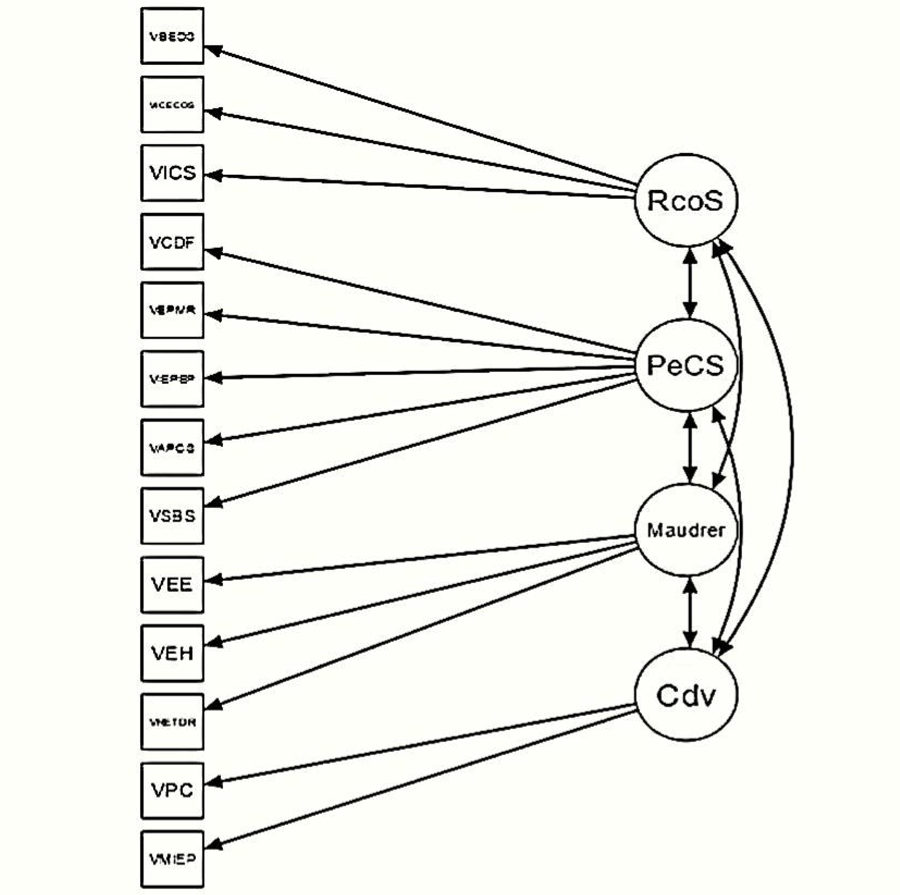
Figure 2 illustrates a structural equation model (SEM) through a path diagram. This diagram provides a visual representation of the relationships between the latent factors and their respective indicators, as well as the relationships among the factors themselves.

The model includes four latent factors, represented by circles: RcoS (Relationship with Stakeholders), PeCS (Sustainable Production and Consumption), Maudrer (Minimizing Resource Use and Recycling), and Cdv (Value Creation). Unidirectional arrows indicate the factor loadings of the indicators on the latent factors, while the bidirectional arrows between the latent factors represent correlations among these factors.
This diagram confirms the theoretical factor structure, illustrating how the indicators relate to the latent factors and the interrelationship among these factors. The analysis of the significance of the coefficients, as shown previously, validates that the indicators are appropriate for measuring the theoretical constructs and that the model is statistically significant.
Furthermore, this analysis provides a practical foundation for understanding how different components of the business model interact and influence one another, offering valuable insights for improving and optimizing business practices in the industry.
Proposition of a framework for the sustainable business model in the brazilian industrial context
Based on the results of the exploratory and confirmatory factor analyses, as well as the international literature on the topic, it was possible to develop a framework for SBMs in the Brazilian industry, as illustrated in Figure 3. The framework integrates four main factors distributed across the three dimensions of sustainability: Stakeholder Relationships (social dimension), Sustainable Production and Consumption and Minimizing Resource Use and Recycling (environmental dimension), and Value Creation (integration of the economic, social, and environmental dimensions). Each factor is composed of specific, empirically validated indicators, providing a theoretical model capable of assessing and guiding improvements in the sustainability of the Brazilian industry.

This model not only provides a structured and empirically validated view of the elements that constitute a sustainable business but also serves as a basis for future research and managerial practice. The implementation of this framework can help industries effectively guide their sustainability strategies, promoting a balance between economic performance, environmental responsibility, and social impact. The following section details the factors and their respective indicators to provide a clearer understanding of the proposed model.
Relationship with stakeholders
Factor 1 – Stakeholder Relationship encompasses the variables Var08 (stakeholder well-being), Var10 (community and stakeholder integration), and Var11 (stakeholder interaction). Its main contribution to the transition from traditional business models to sustainable business models (SBMs) lies in repositioning and consolidating stakeholders as co-creators of value, such that organizational performance is no longer restricted to customers or shareholders but depends on collective well-being, community integration, and continuous interaction among all stakeholders. Previous studies, such as Stubbs and Cocklin (2008), have already highlighted that organizational success is linked to stakeholder well-being in a broad sense, including society and the environment, emphasizing that strategic planning must incorporate social and environmental objectives as an inseparable part of value creation in SBMs.
In this regard, it is crucial to consider all stakeholders, not just customers as part of the SBM (Lüdeke-Freund & Dembek, 2017). Freudenreich et al. (2020) expand the theoretical understanding by arguing that the business model should be conceived as a portfolio of values co-created with multiple stakeholders. Complementarily, Velter et al. (2021) demonstrate that multistakeholder integration in sustainable innovation processes benefits from mediation tools that facilitate the collective alignment of responsibilities and commitments. Thus, as a fundamental characteristic, stakeholder engagement, both internal and external, requires key principles of partnership, participation, communication, and consultation (Goni et al., 2021).
In more recent studies, these perspectives have gained even greater support and attention, as Karuppiah et al. (2023) emphasize the need for cooperation among stakeholders as a critical element for SBM viability.
Consequently, this factor highlights that organizational sustainability is not limited to internal practices but is directly linked to stakeholder well-being, the creation of interaction mechanisms, and community integration, which are essential for achieving the triple bottom line (Bocken et al., 2014; Ritala et al., 2018). Additionally, this factor contributes by emphasizing the social dimension often neglected in the literature and of low practical applicability in companies (Scarpellini, 2021; Missimer & Mesquita, 2022; Annarelli et al., 2024) — by demonstrating that the relationship with internal and external stakeholders, as co-creators of value, is a central pillar for strengthening this dimension within SBMs.
Sustainable production and consumption
Factor 2 – Sustainable Production and Consumption incorporates the variables Var03 (supply chain), Var04 (eco-efficiency), Var06 (product and process innovation), Var09 (actions for sustainable consumption), and Var14 (sustainable solutions and socio-environmental benefits). In alignment with Sustainable Development Goals 9 and 12, which address industry, innovation and infrastructure, and responsible consumption and production, respectively, this factor reinforces the role of industry as an innovative and responsible production agent. It highlights the capacity to engage customers through processes, more innovative and sustainable products, or active communication channels to foster more sustainable and resilient thinking, in which awareness emerges as a starting point for strengthening the relationship between companies and consumers toward sustainability.
From this perspective, industries can adopt sustainable innovations at three levels product, process, and organizational—and develop sustainable marketing strategies through external communication capable of raising consumer awareness and promoting sustainable production and consumption (Klewitz & Hansen, 2014; Bezerra et al., 2020).
Recent studies support these insights, showing that involving consumers as active participants in sustainability practices not only reduces the gap between intention and sustainable consumption behavior but also provides input for companies to innovate in products, processes, and marketing strategies, using technologies that enhance efficiency and promote more sustainable solutions while simultaneously strengthening consumer awareness and engagement (de Oliveira et al., 2022). In this context, the availability of eco-friendly products, sustainable packaging, and perceived affordable pricing, for example, stimulates the intention toward conscious consumption and represents key factors for the cultural change required (Yadav et al., 2024). Thus, production itself plays a central role in the awareness process, as the provision of sustainable products, the use of eco-friendly packaging, and the establishment of accessible prices not only expand consumer choice but also serve as strategic and educational mechanisms that encourage conscious consumption and accelerate the necessary cultural shift.
Minimizing resource use and recycling
Factor 3 – Minimizing Resource Use and Recycling integrates the variables Var01 (energy efficiency), Var02 (water efficiency), and Var05 (waste reuse and transformation). This factor aligns with the principles of the circular economy and reinforces the industry’s capacity to generate value along the value chain through sustainable practices that strengthen operational sustainability, promote innovation in processes and products, and consolidate strategies capable of driving the transition to more circular business models. Accordingly, practices such as reverse logistics, the transformation of waste into by-products, and the use of technologies to optimize energy and water consumption are fundamental for transitioning to a sustainable business model (SBM). These approaches are consistent with the principles of the circular economy, which aim to eliminate waste and promote the continuous circulation of materials and products, based on the fundamental 3R principles: reduce, reuse, and recycle (Ghisellini et al., 2016). In this context, Galvão et al. (2024) emphasize the importance of energy efficiency and waste management as drivers of industrial transformation, while Karkou et al. (2024) advance the discussion on water efficiency by proposing a conceptual framework that guides reuse practices and strategies that increase circularity in water use.
In the Brazilian context, Ginko et al. (2025) note that although reuse and recovery practices bring clear gains in efficiency and competitiveness, obstacles persist related to the lack of regulatory incentives, limited investment capacity of companies, and insufficient infrastructure. Complementarily, Mainardi et al. (2025) highlight that implementing the circular economy in the country requires coordination between public policies and corporate strategies to overcome institutional and cultural barriers that hinder the dissemination of these practices.
Therefore, Factor 3 emerges as a strategic axis capable of integrating energy, water, and waste into a circular logic. Its consolidation demonstrates not only the practical feasibility of the circular economy in the national industry but also its theoretical contribution, by showing that the adaptation of international archetypes is applicable and coherent in the Brazilian context, thereby strengthening sustainable industrial competitiveness through this logic.
Value creation
Factor 4 – Value Creation comprises the variables Var12 (sharing mechanisms) and Var13 (maximizing sustainability benefits in incubators and platforms). Its main contribution lies in guiding industrial companies to create integrated value, economic, social, and environmental, through solutions that promote social, technological, and sustainable innovation, highlighting the strategic role of sharing mechanisms and incubators as drivers of these innovation axes. The central definition of a sustainable business model (SBM) rests on the concept of “value” (Nosratabadi et al., 2019), which, although initially focused on sustainability issues, has evolved to generate lasting benefits for stakeholders, by considering long-term impacts (Shakeel et al., 2020).
For industrial companies, transforming social and environmental impacts into economic value represents a strategic challenge (Schaltegger et al., 2011), which can be addressed through the mobilization of intangible assets, establishing a corporate strategy (Goni et al., 2021). Mechanisms such as crowdsourcing, a collaborative practice involving multiple stakeholders enable industries to identify creative ideas, develop innovative solutions, and consequently enhance their innovation capacity (Feller et al., 2012).
In this context, Agwu and Oftedal (2025) highlight that embracing paradoxes and pursuing innovation in business models is crucial for overcoming unsustainable practices while simultaneously strengthening economic, social, and environmental value, which must operate in an integrated manner within these models. Var13, which seeks to maximize sustainability benefits in incubators and platforms, demonstrates that these innovation environments can generate value across all three dimensions, fostering technological, social, and sustainable innovation, while ensuring that the benefits created are widely shared among all stakeholders (Circule & Uvarova, 2022). Thus, these factors underscore the role of incubators and platforms as strategic innovation environments capable of articulating multiple benefits and sustaining value creation processes.
Conclusions
This research presents a framework for the development of Sustainable Business Models (SBMs) in the Brazilian industrial context. After applying a set of statistical techniques, a theoretical model was developed based on four factors, which are: Factor 1 – Relationship with Stakeholders; Factor 2 – Sustainable Production and Consumption; Factor 3 – Minimizing Resource Use and Recycling; and Factor 4 – Value Creation. In Factor 1, the variable related to the archetype "Delivering Functionality Instead of Ownership" was not confirmed, suggesting a perspective for future investigations in the Brazilian industrial context.
Based on the findings, a framework for SBMs in the Brazilian industrial context was proposed, encompassing the following elements: Relationship with Stakeholders; Sustainable Production and Consumption; Minimizing Resource Use and Recycling; and Value Creation. The research provides theoretical and managerial contributions. According to the literature, no studies were found that propose a framework for the SBM based on the archetypes proposed by Bocken et al. (2014) and Ritala et al. (2018) in the Brazilian industrial context.
According to the results of this study, in the Brazilian industrial context, the sustainable business model (SBM) archetypes originally proposed in developed countries need to be reinterpreted and adapted to the specificities of an emerging context. Adoption tends to be selective and incremental, with companies implementing elements partially or in adapted forms, highlighting the need for flexibility. In this sense, companies combine components of the archetypes with locally innovative solutions, generating pathways not anticipated in the original models. Therefore, the SBM should be understood as a dynamic and adaptable concept, continuously evolves, reflecting how sustainability is operationalized in the Brazilian industry.
From this perspective, the four factors identified in the empirical application emerge as central contributions:
-
Factor 1 reinforces the social dimension of sustainable business models – often neglected in the literature and of limited practical applicability in companies – by demonstrating that internal and external stakeholders, as co-creators of value, reposition corporate sustainability toward collective well-being, continuous interaction, and community integration;
-
Factor 2, supported by SDGs 9 and 12, highlights that sustainable production and consumption not only promote responsible industrial practices but also serve as awareness-raising mechanisms, strengthening interaction between companies and consumers and encouraging cultural shifts toward sustainability;
-
Factor 3 demonstrates that the integration of energy efficiency, water efficiency, and waste reuse constitutes a strategic axis for sustainable industrial competitiveness, highlighting the viability of the circular economy in Brazil despite numerous implementation challenges. Its theoretical contribution lies in adapting international archetypes to the national context, thereby strengthening the capacity of industries to reconcile sustainability, innovation, and circularity as foundational elements of new business models;
-
Factor 4 guides industrial companies to integrate economic, social, and environmental benefits through technological, social, and sustainable innovation, consolidating the role of sharing mechanisms and incubators as strategic environments capable of sustaining continuous value-creation processes.
Thus, this research contributes to the literature on sustainable business models. At the managerial level, the proposed framework can serve as a guide for managers in implementing the SBMs in Brazilian industries and can also be replicated in other contexts and countries. Moreover, the integration of sustainability into industrial processes aligns with the SDGs (Sustainable Development Goals).
The limitations of this research are primarily related to the number of responding companies and the difficulty in obtaining data, which restricts the generalizability of the results. Additionally, there is a temporal limitation, as the study reflects the context and practices in place during a specific period and may not capture rapid changes in the industry or newly implemented sustainability policies. Future studies could test the archetypes and identify their variations in developing countries, comparing them with the framework proposed in this research. The application of the case study method is also recommended to analyze the archetypes in industrial companies. Finally, future research could assess the sustainability performance of companies that adopt the proposed framework.
References
-
Abdelkafi, N., Xu, J., Pero, M., Ciccullo, F., & Masi, A. (2023). Does the combination of sustainable business model patterns lead to truly sustainable business models? Critical analysis of existing frameworks and extensions. Journal of Business Economics, 93(4), 597-634. https://doi.org/10.1007/s11573-023-01140-0
» https://doi.org/10.1007/s11573-023-01140-0 -
Adamides, E., & Karacapilidis, N. (2020). Information technology for supporting the development and maintenance of open innovation capabilities. Journal of Innovation & Knowledge, 5(1), 29-38. https://doi.org/10.1016/j.jik.2018.07.001
» https://doi.org/10.1016/j.jik.2018.07.001 -
Agwu, U. J., & Bessant, J. (2021). Sustainable business models: a systematic review of approaches and challenges in manufacturing. Revista de Administração Contemporânea, 25(3). https://doi.org/10.1590/1982-7849rac2021200202.en
» https://doi.org/10.1590/1982-7849rac2021200202.en -
Agwu, U. J., & Oftedal, E. M. (2025). Embracing paradox and moving away from unsustainability through business model innovation. Sustainable Communities, 2(1), 2480363. https://doi.org/10.1080/29931282.2025.2480363
» https://doi.org/10.1080/29931282.2025.2480363 -
Annarelli, A., Catarci, T., & Palagi, L. (2024). The forgotten pillar of sustainability: development of the S-assessment tool to evaluate Organizational Social Sustainability. arXiv preprint arXiv:2404.04077. https://doi.org/10.48550/arXiv.2404.04077
» https://doi.org/10.48550/arXiv.2404.04077 -
Ari, E., & Dursun, M. (2024). An Integrated Bayesian Best-Worst Method and Consensus-Based Intuitionistic Fuzzy Evaluation Based on Distance from Average Solution Approach for Evaluating Alternative Aircraft Models from a Sustainability Perspective. Symmetry, 16(8), 1086. https://doi.org/10.3390/sym16081086
» https://doi.org/10.3390/sym16081086 -
Beard, M. N., & De Giacomo, M. R. (2025). Which sustainable business model archetypes are more prevalent? An analysis of small and medium-sized enterprises. Journal of Cleaner Production, 504, 145240. https://doi.org/10.1016/j.jclepro.2025.145240
» https://doi.org/10.1016/j.jclepro.2025.145240 -
Bezerra, M. C. da C, Gohr, C. F., & Morioka, S. N. (2020). Organizational capabilities towards corporate sustainability benefits: A systematic literature review and an integrative framework proposal. Journal of Cleaner Production, 247, 119114. https://doi.org/10.1016/j.jclepro.2019.119114
» https://doi.org/10.1016/j.jclepro.2019.119114 -
Bocken, N. M., Short, S. W., Rana, P., & Evans, S. (2014). A literature and practice review to develop sustainable business model archetypes. Journal of cleaner production, 65, 42-56. https://doi.org/10.1016/j.jclepro.2013.11.039
» https://doi.org/10.1016/j.jclepro.2013.11.039 -
Bonilla, S. H., Silva, H. R., Silva, M. T. da, Gonçalves, R. F., & Sacomano, J. B. (2018). Industry 4.0 and sustainability implications: A scenario-based analysis of the impacts and challenges. Sustainability, 10(10), 3740. https://doi.org/10.3390/su10103740
» https://doi.org/10.3390/su10103740 -
Boons, F., & Lüdeke-Freund, F. (2013). Business models for sustainable innovation: state-of-the-art and steps towards a research agenda. Journal of Cleaner production, 45, 9-19. https://doi.org/10.1016/j.jclepro.2012.07.007
» https://doi.org/10.1016/j.jclepro.2012.07.007 -
Breuer, H., Fichter, K., Lüdeke-Freund, F., & Tiemann, I. (2018). Sustainability-oriented business model development: Principles, criteria and tools. International Journal of Entrepreneurial Venturing, 10(2), 256-286. https://doi.org/10.1504/IJEV.2018.092715
» https://doi.org/10.1504/IJEV.2018.092715 -
Cagno, E., Neri, A., Howard, M., Brenna, G., Trianni, A., 2019. Industrial sustainability performance measurement systems: a novel framework. Journal of cleaner production, 230. https://doi.org/10.1016/j.jclepro.2019.05.021
» https://doi.org/10.1016/j.jclepro.2019.05.021 -
Cazeri, G. T., Anholon, R., da Silva, D., Ordoñez, R. E. C., Quelhas, O. L. G., Leal Filho, W., & de Santa-Eulalia, L. A. (2018). An assessment of the integration between corporate social responsibility practices and management systems in Brazil aiming at sustainability in enterprises. Journal of cleaner production, 182, 746-754. https://doi.org/10.1016/j.jclepro.2018.02.023
» https://doi.org/10.1016/j.jclepro.2018.02.023 -
Chen, M., Sinha, A., Hu, K., & Shah, M. I. (2021). Impact of technological innovation on energy efficiency in industry 4.0 era: Moderation of shadow economy in sustainable development. Technological Forecasting and Social Change, 164, 120521. https://doi.org/10.1016/j.techfore.2020.120521
» https://doi.org/10.1016/j.techfore.2020.120521 -
Chesbrough, H., & Rosenbloom, R. S. (2002). The role of the business model in capturing value from innovation: evidence from Xerox Corporation's technology spin-off companies. Industrial and corporate change, 11(3), 529-555. https://doi.org/10.1093/icc/11.3.529
» https://doi.org/10.1093/icc/11.3.529 -
Cirule, I., & Uvarova, I. (2022). Open innovation and determinants of technology-driven sustainable value creation in incubated start-ups. Journal of Open Innovation: Technology, Market, and Complexity, 8(3), 162. https://doi.org/10.3390/joitmc8030162
» https://doi.org/10.3390/joitmc8030162 -
de Oliveira, U. R., Gomes, T. S. M., de Oliveira, G. G., de Abreu, J. C. A., Oliveira, M. A., da Silva César, A., & Aprigliano Fernandes, V. (2022). Systematic literature review on sustainable consumption from the perspective of companies, people and public policies. Sustainability, 14(21), 13771. https://doi.org/10.3390/su142113771
» https://doi.org/10.3390/su142113771 -
Feller, J., Finnegan, P., Hayes, J., & O'Reilly, P. (2012). 'Orchestrating'sustainable crowdsourcing: A characterisation of solver brokerages. The Journal of Strategic Information Systems, 21 (3), 216-232. https://doi.org/10.1016/j.jsis.2012.03.002
» https://doi.org/10.1016/j.jsis.2012.03.002 -
Freudenreich, B., Lüdeke-Freund, F., & Schaltegger, S. (2020). A stakeholder theory perspective on business models: Value creation for sustainability. Journal of business ethics, 166(1), 3-18. https://doi.org/10.1007/s10551-019-04112-z
» https://doi.org/10.1007/s10551-019-04112-z -
Gao, P., & Li, J. (2020). Understanding sustainable business model: A framework and a case study of the bike-sharing industry. Journal of cleaner production, 267, 122229. https://doi.org/10.1016/j.jclepro.2020.122229
» https://doi.org/10.1016/j.jclepro.2020.122229 -
Galvão, A., Silva, M., & Souza, R. (2024). Circular economy and industrial sustainability: energy efficiency and waste management as vectors of transformation. Institute of Applied Economic Research. Retrieved from https://repositorio.ipea.gov.br/server/api/core/bitstreams/d52c091f-896a-4087-95d9-5e4cdaf75a9d/content
» https://repositorio.ipea.gov.br/server/api/core/bitstreams/d52c091f-896a-4087-95d9-5e4cdaf75a9d/content -
Geissdoerfer, M., Vladimirova, D., & Evans, S. (2018a). Sustainable business model innovation: A review. Journal of cleaner production, 198, 401-416. https://doi.org/10.1016/j.jclepro.2018.06.240
» https://doi.org/10.1016/j.jclepro.2018.06.240 -
Geissdoerfer, M., Morioka, S. N., de Carvalho, M. M., & Evans, S. (2018b). Business models and supply chains for the circular economy. Journal of cleaner production, 190, 712-721. https://doi.org/10.1016/j.jclepro.2018.04.159
» https://doi.org/10.1016/j.jclepro.2018.04.159 -
Ghaziani, A., & Ventresca, M. J. (2005). Keywords and cultural change: Frame analysis of business model public talk, 1975-2000. Sociological forum, 20, 523-559. https://doi.org/10.1007/s11206-005-9057-0
» https://doi.org/10.1007/s11206-005-9057-0 -
Ghisellini, P., Cialani, C., & Ulgiati, S. (2016). A review on circular economy: the expected transition to a balanced interplay of environmental and economic systems. Journal of Cleaner production, 114, 11-32. https://doi.org/10.1016/j.jclepro.2015.09.007
» https://doi.org/10.1016/j.jclepro.2015.09.007 -
Ginko, M. A., Stroparo, E. C., & Dall Agnol, L. (2025). Desafios, oportunidades e estratégias na implementação da economia circular nas indústrias brasileiras: Uma revisão bibliográfica. Revista Gestão & Sustentabilidade, 7(1), e15064. https://doi.org/10.36661/2596-142X.2025v7n1.15064
» https://doi.org/10.36661/2596-142X.2025v7n1.15064 -
Goni, F. A., Gholamzadeh Chofreh, A., Estaki Orakani, Z., Klemeš, J. J., Davoudi, M., & Mardani, A. (2021). Sustainable business model: A review and framework development. Clean Technologies and Environmental Policy, 23, 889-897. https://doi.org/10.1007/s10098-020-01886-z
» https://doi.org/10.1007/s10098-020-01886-z - Hair, J. F., Black, W. C., Babin, B. J., Anderson, R. E., & Tatham, R. L. (2009). Análise multivariada de dados Bookman editora.
-
Hluszko, C., Barros, M. V., de Souza, A. M., Huarachi, D. A. R., Ulloa, M. I. C., Moretti, V., ... & de Francisco, A. C. (2024). Sustainability in practice: Analyzing Environmental, Social and Governance practices in leading Latin American organizations' reports. Cleaner Production Letters, 100069. https://doi.org/10.1016/j.clpl.2024.100069
» https://doi.org/10.1016/j.clpl.2024.100069 -
Hongyu, K. (2018). Análise Fatorial Exploratória: resumo teórico, aplicação e interpretação. E&S Engineering And Science, 7 (4), 88-103. https://doi.org/10.18607/ES201877599
» https://doi.org/10.18607/ES201877599 -
Karkou, E., Teo, C. J., Savvakis, N., Poinapen, J., & Arampatzis, G. (2024). Industrial circular water use practices through the application of a conceptual water efficiency framework in the process industry. Journal of Environmental Management, 370, 122596. https://doi.org/10.1016/j.jenvman.2024.122596
» https://doi.org/10.1016/j.jenvman.2024.122596 -
Karuppiah, K., Sankaranarayanan, B., & Ali, S. M. (2023). A systematic review of sustainable business models: Opportunities, challenges, and future research directions. Decision Analytics Journal, 100272. https://doi.org/10.1016/j.dajour.2023.100272
» https://doi.org/10.1016/j.dajour.2023.100272 - Kneipp, J. M. (2016). Gestão estratégica da inovação sustentável e sua relação com o modelo de negócios e o desempenho empresarial (Doctoral dissertation, Universidade Federal de Santa Maria).
-
Kneipp, J. M., Gomes, C. M., Kruglianskas, I., Motke, F. D., & Frizzo, K. (2021). Sustainable innovation practices and the degree of innovation of business models in Brazilian industrial companies. World Journal of Science, Technology and Sustainable Development, 18(3), 221-238. https://doi.org/10.1108/WJSTSD-02-2021-0019
» https://doi.org/10.1108/WJSTSD-02-2021-0019 -
Kneipp, J. M., Reis Favarin, R., Eccel Pontelli, G., da Silva D'Avila, I., & Marques Kumer, I. (2023). Sustainability-oriented innovation practices and the business model of internationalized industrial companies. Journal of technology management & innovation, 18(3), 31-41. http://dx.doi.org/10.4067/S0718-27242023000300031
» http://dx.doi.org/10.4067/S0718-27242023000300031 -
Khan, I. S., Ahmad, M. O., & Majava, J. (2021). Industry 4.0 and sustainable development: A systematic mapping of triple bottom line, Circular Economy and Sustainable Business Models perspectives. Journal of Cleaner Production, 297, 126655. https://doi.org/10.1016/j.jclepro.2021.126655
» https://doi.org/10.1016/j.jclepro.2021.126655 -
Klewitz, J., & Hansen, E. G. (2014). Sustainability-oriented innovation of SMEs: a systematic review. Journal of cleaner production, 65, 57-75. https://doi.org/10.1016/j.jclepro.2013.07.017
» https://doi.org/10.1016/j.jclepro.2013.07.017 -
Kolling, C., de Medeiros, J. F., Ribeiro, J. L. D., & Morea, D. (2022). A conceptual model to support sustainable Product-Service System implementation in the Brazilian agricultural machinery industry. Journal of Cleaner Production, 355, 131733. https://doi.org/10.1016/j.jclepro.2022.131733
» https://doi.org/10.1016/j.jclepro.2022.131733 -
Lewandowski, M. (2016). Designing the business models for circular economy - Towards the conceptual framework. Sustainability, 8(1), 43. https://doi.org/10.3390/su8010043
» https://doi.org/10.3390/su8010043 -
Liu, B., & De Giovanni, P. (2019). Green process innovation through Industry 4.0 technologies and supply chain coordination. Annals of Operations Research, 1-36. https://doi.org/10.1007/s10479-019-03498-3
» https://doi.org/10.1007/s10479-019-03498-3 -
López-Nicolás, C., Ruiz-Nicolás, J., & Mateo-Ortuño, E. (2021). Towards sustainable innovative business models. Sustainability, 13(11), 5804. https://doi.org/10.3390/su13115804
» https://doi.org/10.3390/su13115804 -
Lüdeke-Freund, F., & Dembek, K. (2017). Sustainable business model research and practice: Emerging field or passing fancy? Journal of Cleaner Production, 168, 1668-1678. https://doi.org/10.1016/j.jclepro.2017.08.093
» https://doi.org/10.1016/j.jclepro.2017.08.093 -
Lüdeke-Freund, F., Carroux, S., Joyce, A., Massa, L., & Breuer, H. (2018). The sustainable business model pattern taxonomy-45 patterns to support sustainability-oriented business model innovation. Sustainable Production and Consumption, 15, 145-162. https://doi.org/10.1016/j.spc.2018.06.004
» https://doi.org/10.1016/j.spc.2018.06.004 -
Lüdeke-Freund, F., Gold, S., & Bocken, N. M. (2019). A review and typology of circular economy business model patterns. Journal of industrial ecology, 23(1), 36-61. https://doi.org/10.1111/jiec.12763
» https://doi.org/10.1111/jiec.12763 - Maffini, Clarissa A. (2023). Sustainability-oriented business models in Brazilian industrial companies. Dissertation. Federal University of Santa Maria.
-
Mainardi, F. H. B., Mendes, I., Silva, S. D., Marsoli, G. F., Oliveira, E. A., & Tagliaferro, E. R. (2025). The circular economy as a strategy for sustainable development in Brazil. Ibero-American Journal of Humanities, Sciences and Education (REASE), 11(6). https://doi.org/10.51891/rease.v11i6.19876
» https://doi.org/10.51891/rease.v11i6.19876 -
Maldonado-Guzmán, G., Garza-Reyes, J. A., & Pinzón-Castro, Y. (2021). Eco-innovation and the circular economy in the automotive industry. Benchmarking: An International Journal, 28 (2), 621-635. https://doi.org/10.1108/BIJ-06-2020-0317
» https://doi.org/10.1108/BIJ-06-2020-0317 -
Martins, V. W. B., Rampasso, I. S., Siltori, P. F., Cazeri, G. T., Anholon, R., Quelhas, O. L. G., & Leal Filho, W. (2020). Contributions from the Brazilian industrial sector to sustainable development. Journal of cleaner production, 272, 122762. https://doi.org/10.1016/j.jclepro.2020.122762
» https://doi.org/10.1016/j.jclepro.2020.122762 -
Missimer, M., & Mesquita, P. L. (2022). Social sustainability in business organizations: A research agenda. Sustainability, 14(5), 2608. https://doi.org/10.3390/su14052608
» https://doi.org/10.3390/su14052608 - Morioka, S. N., & de Carvalho, M. M. (2015, June). Exploring sustainable business models archetypes in Brazilian case studies. In 22nd EurOMA Conference: Operations Management for Sustainable Competitiveness, Neuchâtel, Switzerland.
-
Mubarak, M. F., Tiwari, S., Petraite, M., Mubarik, M., & Rasi, R. Z. R. M. (2021). How Industry 4.0 technologies and open innovation can improve green innovation performance?. Management of Environmental Quality: An International Journal, 32(5), 1007-1022. https://doi.org/10.1108/MEQ-11-2020-0266
» https://doi.org/10.1108/MEQ-11-2020-0266 -
Nosratabadi, S., Mosavi, A., Shamshirband, S., Zavadskas, E. K., Rakotonirainy, A., & Chau, K. W. (2019). Sustainable business models: A review. Sustainability, 11 (6), 1663. https://doi.org/10.3390/su11061663
» https://doi.org/10.3390/su11061663 -
Ogrean, C., & Herciu, M. (2020). Business models addressing sustainability challenges-Towards a new research agenda. Sustainability, 12(9), 3534. https://doi.org/10.3390/su12093534
» https://doi.org/10.3390/su12093534 - Osterwalder, A., & Pigneur, Y. (2010). Business model generation: a handbook for visionaries, game changers, and challengers (Vol. 1). John Wiley & Sons.
-
Parida, V., & Wincent, J. (2019). Why and how to compete through sustainability: a review and outline of trends influencing firm and network-level transformation. International Entrepreneurship and Management Journal, 15, 1-19. https://doi.org/10.1007/s11365-019-00558-9
» https://doi.org/10.1007/s11365-019-00558-9 -
Preghenella, N., & Battistella, C. (2021). Exploring business models for sustainability: A bibliographic investigation of the literature and future research directions. Business Strategy and the Environment, 30 (5), 2505-2522. https://doi.org/10.1002/bse.2760
» https://doi.org/10.1002/bse.2760 -
Quashie, R., Fugar, F. D., Antwi-Afari, P., & Ng, S. T. (2024). Evaluating the key competency skills of construction professionals for the attainment of circular construction in developing economies. Cleaner Production Letters, 6, 100060. https://doi.org/10.1016/j.clpl.2024.100060
» https://doi.org/10.1016/j.clpl.2024.100060 -
Reim, W., Parida, V., & Örtqvist, D. (2015). Product-Service Systems (PSS) business models and tactics-a systematic literature review. Journal of Cleaner Production, 97, 61-75. https://doi.org/10.1016/j.jclepro.2014.07.003
» https://doi.org/10.1016/j.jclepro.2014.07.003 -
Richardson, James E., The Business Model: An Integrative Framework for Strategy Execution (September 1, 2005). Available at SSRN: https://ssrn.com/abstract=932998 or http://dx.doi.org/10.2139/ssrn.932998
» https://ssrn.com/abstract=932998» http://dx.doi.org/10.2139/ssrn.932998 -
Ritala, P., Huotari, P., Bocken, N., Albareda, L., & Puumalainen, K. (2018). Sustainable business model adoption among S&P 500 firms: A longitudinal content analysis study. Journal of cleaner production, 170, 216-226. https://doi.org/10.1016/j.jclepro.2017.09.159
» https://doi.org/10.1016/j.jclepro.2017.09.159 -
Sah, A. K., & Hong, Y. M. (2024). Circular Economy Implementation in an Organization: A Case Study of the Taiwan Sugar Corporation. Sustainability, 16(17), 7865. https://doi.org/10.3390/su16177865
» https://doi.org/10.3390/su16177865 -
Scarpellini, S. (2022). Social impacts of a circular business model: An approach from a sustainability accounting and reporting perspective. Corporate Social Responsibility and Environmental Management, 29(3), 646-656. https://doi.org/10.1002/csr.2226
» https://doi.org/10.1002/csr.2226 -
Schaltegger, S., Lüdeke-Freund, F., & Hansen, E. G. (2011). Business cases for sustainability and the role of business model innovation: developing a conceptual framework. Centre for Sustainability Management (CSM), Leuphana Universität Lüneburg. https://dx.doi.org/10.2139/ssrn.2010506
» https://dx.doi.org/10.2139/ssrn.2010506 -
Shakeel, J., Mardani, A., Chofreh, A. G., Goni, F. A., & Klemeš, J. J. (2020). Anatomy of sustainable business model innovation. Journal of cleaner production, 261, 121201. https://doi.org/10.1016/j.jclepro.2020.121201
» https://doi.org/10.1016/j.jclepro.2020.121201 -
Sinkovics, N., Gunaratne, D., Sinkovics, R. R., & Molina-Castillo, F. J. (2021). Sustainable business model innovation: An umbrella review. Sustainability, 13(13), 7266. https://doi.org/10.3390/su13137266
» https://doi.org/10.3390/su13137266 -
Stubbs, W., & Cocklin, C. (2008). Conceptualizing a "sustainability business model". Organization & environment, 21 (2), 103-127. https://doi.org/10.1177/1086026608318042
» https://doi.org/10.1177/1086026608318042 -
Taran, Y., Boer, H., & Lindgren, P. (2015). A business model innovation typology. Decision Sciences, 46(2), 301-331. https://doi.org/10.1111/deci.12128
» https://doi.org/10.1111/deci.12128 -
Teixeira, J. E., & Tavares-Lehmann, A. T. (2021). The confluence of i. 4.0 technologies and new business models: a systematic literature review. International Journal of Innovation, 9(3), 664-689. https://doi.org/10.5585/iji.v9i3.20619
» https://doi.org/10.5585/iji.v9i3.20619 -
Velter, M. G. E., Bitzer, V., & Bocken, N. M. P. (2022). A boundary tool for multi-stakeholder sustainable business model innovation. Circular Economy and Sustainability, 2(2), 401-431. https://doi.org/10.1007/s43615-021-00103-3
» https://doi.org/10.1007/s43615-021-00103-3 -
Vils, L., Mazzieri, M., Rodrigues, G. V., Da Silva, A. R., & de Queiroz, M. J. (2017). Business model innovation: A bibliometric review. International Journal of Innovation, 5(3), 311-324. https://doi.org/10.5585/iji.v5i3.243
» https://doi.org/10.5585/iji.v5i3.243 -
Yadav, M., Gupta, R., & Nair, K. (2024). Time for sustainable marketing to build a green conscience in consumers: Evidence from a hybrid review. Journal of Cleaner Production, 443, 141188. https://doi.org/10.1016/j.jclepro.2024.141188
» https://doi.org/10.1016/j.jclepro.2024.141188 -
Yang, M., & Evans, S. (2019). Product-service system business model archetypes and sustainability. Journal of Cleaner Production, 220, 1156-1166. https://doi.org/10.1016/j.jclepro.2019.02.067
» https://doi.org/10.1016/j.jclepro.2019.02.067

 Sources: elaborated by the authors.
 Sources: Research data.
 Sources: elaborated by the authors.