
 COMPARISON OF TRAINING METHODS FOR IMPROVING REACTION TIME AND PUNCH FREQUENCY AT ELITE BOXERS
ABSTRACT
Boxing is a sports branch which requires dynamic and static features, and as such it serves as a basic for biomechanical analysis and it is closely related to high levels of kinetic variables development, which is distinguished from other types of sporting activities. Reaction speed and punch force are two important qualities in boxing. A successful performance is dependent on the speed at which the punch can be developed. Boxer training is organized on a modern training methodology, which includes classical and specific training methods as well as training tools. The aim of this study is to compare two different training methods for improving (RT) and punch frequency (PF) at elite Albanian boxers. The group in this study consisted by 16 elite Albanian boxers, divided by an experimental group and a control group. At the control group the basic boxing training was used, while to the experimental group, fit light training was applied used to collect data before and after training. The independent samples t-test was used to evaluate the data. The statistical significance at p < 0.05 was set. The conclusions from the results of this study are applying fit light method in elite Albanian boxers, a high intensity sport competition was very effective in reducing reaction time of arm and legs, increasing punch frequency, for the boxing players of our national team.
Keywords:
Opto jump; fit light training; reaction time; punch frequency; boxing
RESUMO
O boxe é um esporte que requer características dinâmicas e estáticas, e como tal serve como base para análise biomecânica e está intimamente relacionado a altos níveis de desenvolvimento de variáveis cinéticas, o que o distingue de outros tipos de atividades esportivas. Velocidade de reação e força do soco são duas qualidades importantes no boxe. Um desempenho bem-sucedido depende da velocidade em que o soco pode ser desenvolvido. O treinamento do boxeador é organizado em uma metodologia de treinamento moderna, que inclui métodos de treinamento clássicos e específicos, bem como ferramentas de treinamento. O objetivo deste estudo é comparar dois métodos de treinamento diferentes para melhorar (RT) e frequência de socos (PF) em boxeadores de elite Albanian. O grupo neste estudo consistiu em 16 boxeadores de elite Albanian divididos por um grupo experimental e um grupo de controle. No grupo de controle, o treinamento básico de boxe foi usado, enquanto para o grupo experimental, o treinamento leve foi aplicado para coletar dados antes e depois do treinamento. O teste t de amostras independentes foi usado para avaliar os dados. A significância estatística em p < 0,05 foi definida. As conclusões dos resultados deste estudo são: a aplicação do método Fit Light em boxeadores de elite Albanian, uma competição esportiva de alta intensidade, foi muito eficaz em: reduzir o tempo de reação dos braços e pernas, aumentando a frequência dos socos, para os boxeadores da nossa seleção nacional.
Palavras-chave:
Opto jump; treinamento leve; tempo de reação; frequência de socos; boxe
Introduction
Biomechanics is an interdisciplinary field which contributes to study the human movement in a scientific and analytical way. Boxing is a sports branch which requires dynamic and static features1, and as such it serves as a basic for biomechanical analysis and it is closely related to high levels of kinetic variables development, which is distinguished from other types of sporting activities, by different technical movements of arms2, to respond quickly to the opponent. Because boxing punches are brief actions and very dynamic, high level boxing performance requires well-developed muscle power in both upper and lower limbs3.
Reaction speed and punch force are two important qualities in boxing4. Successful performance is dependent on the speed at which the punch can be developed5. Punch force has a significant impact on the effect that the punch has on the opponent6, therefore punch frequency (PF), and boxing still plays also a very important role. In combat sports, such boxing, the sudden and rapid displacement of the body combined with simultaneous hand movements during defense and attack are factors related to reaction time (RT)7. Especially, visual reaction time is the determining factor in terms of performance level superiority in many sports branches and it is possible to improve it with training.
Visual motor reaction time (VMRT) is defined as the time required recognizing and responding to a sequence of appearing visual stimuli and often involves the ability to make quick and accurate response to a stimulus with movements of the hands8),(9. Vision is an important sense for controlling balance. The visual system provides people with information about the environment displayed because of the reflection of light from objects10. Vision is a critical part of human body balance which is used to gather information about the orientation of the body in space11.
There have been many studies on RT performance12),(13),(14),(15 and Punch Impact Force16),(17),(18),(19 for years, but only few studies compare the visual RT of boxers with different levels of competitive experience20. Understanding the RT presented by elite boxers when executing different types of techniques may be helpful for developing training programs to improve this ability during combats21. Although technique is likely to play a major role in a boxer’s punching ability, it is suggested that the force production capabilities of the neuromuscular system may also be a limiting factor, and it is important to highlight that, to date, there is a lack of experimental studies in both elite amateur and professional boxing16.
Boxer training is organized on a modern training methodology, which includes classical and specific training methods as well as training tools, focused with priority on the optimal preparation of the main types of preparation: general, special and specific, in the required ratios and modalities of boxing discipline and training period22.
Punching is a high-speed movement where muscular force is required to accelerate the arm17. Punching impact is perhaps the most important performance parameter in elite boxing. As a knockout is a frequent goal during a fight, boxers systematically use different training strategies to maximize strength-power capabilities and thus punching impact19. With striking force playing such a critical role in the success of full-contact combat sports such as mixed martial arts, taekwondo, and boxing, coaches and scientists must be able to track this performance metric accurately and reliably18. Therefore, theoretically, muscular strength as well as high rates of force development should be key factors affecting punch force application. However, there is a lack of detailed research describing the relationship between force production capacity and punch force17.
In the implementation of box, it takes several elements of main conditions, namely anaerobic endurance, strength, speed, accuracy, and mental elements that include courage and tenacity23, as well as cardiovascular endurance, muscle strength, flexibility, power, balance, coordination and response time. Most combat sports require a mix of technical strength, aerobic fitness, power and speed1. Boxer athletes require more speed and agility than wrestlers who tend to need endurance and flexibility24, the biomechanical conditions related to kinetic performance must be applied by the boxers, since they are crucial to the proper execution of the hitting movement to the target2.
Training status has recently been identified as an important factor for the development of strength during concurrent training, especially when resistance and aerobic training are performed within the same session (25. Most concurrent training studies have been performed on moderately trained and trained individuals, and there are still extremely few studies on highly trained athletes26. It is of outmost importance to examine populations with different training statuses because of existing differences in anthropometric, physiological, and biomechanical parameters25.
Neuropsychological study on the effects of boxing upon athletes' memory, suggested that exposure to 1 year of boxing training can impair the boxers' working memory, short-term memory, and long-term memory. Therefore, boxers should strengthen their head protection during training to avoid frequent impacts on the head (27.
The aim of this study is to identify two different training methods for assessment of reaction time (RT) and punch frequencies (PF) which are used by boxers. Another aim is to compare these two different training methods for improving RT and punch frequency (PF) of elite Albanian boxers.
Material and Methods
Study design
The investigation was conducted as a part of research activity in the field of movement sciences, especially in biomechanics applied in sports and boxing. This research is an experimental study using experimental and control group. Research experiments conducted in this article were approved by the Ethical Committee and responsible authorities of Sports University of Tirana, following all guidelines, regulations, legal and ethical standards, as required for humans, in accordance with the Declaration of Helsinki. All the participants have signed a voluntary participation agreement. Basic boxing training was given to the control group, and the pretest and posttest data were gathered, which were used to compare with the results taken from the experimental group. At the experimental group, fit light training was used to collect data before and after training.
Participants
16 elite Albanian boxers, part of the Albanian National Boxing team, who were actively regularly in boxing training for at least over 10 years, were recruited to contribute in the current study. Participants were randomly divided in experimental (n = 8) and control (n = 8) groups. In this study, was designed a 12-week controlled experiment according to the research purposes. The boxing group characteristics were age 21.78 ± 4.08 years old, weight 84.97 ± 12.55 (kg), height 1.84 ± 0.72 (m) and Body Mass Index (BMI) 25.4 ± 3.96 (kg/m2), respectively. All participants were knowledgeable about the study objectives, risk and benefits, that contribution was voluntary.
Instrument and Protocols
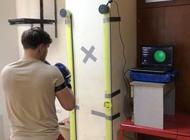
All data collection and analysis for this study were done in the Sports University of Tirana's licensed Biomechanics Laboratory using the Opto-jump equipment. The Opto-jump system is an optoelectronic analysis and measurement tool that helps coaches and researchers evaluate athletes' performance in competitive sports and to monitor their progress. It permits performing several kinds of tests and creating a database that permits comparing the athletes' measured biomechanical factors. This optical system is consisted by two tracks, receiver (RX) and transmitter (TX), and two cameras, which provide live images (figure 1), which are very important for the evaluation of movement, in addition to numerical data. The reaction time test protocol, which measures the interval between a visual and auditory stimulus and an athlete's movement, was employed in this investigation.
Procedure
Boxers wear official gloves, engaged in equal weight category, fighting in a timed contest (3 round x 3 min), followed with one minute interval between rounds. The boxers punched the rear (right or left) and 3 leads (left or right) with correct boxing position during each measurement situation. They measured a punch distance to the well pad, when lead arm was straight. All the participants were hydrated before the start of measurements, and they were examined at baseline: (the pre-test training programs interventions) and after 12 weeks (post-test training program interventions). Participants were informed not to receive any medications, caffeine or to implement any vigorous activity one day prior to assessing the measurements. The procedure in this study consists of three stages:
Pre-test measurements
In this phase, the pretest data of biomechanical variables for both experimental and control group were collected, with the hypotheses that the pretest data of the two groups data didn’t have a significant difference on average values.
Training methods
Two different training methods were used in this study: a) basic boxing training and b) fit-light training. Fit Light is an innovative reaction training system that trains and measures reflexes, cognitive body processes, extremity biomechanics, and reaction time using wireless light sensors. It may be used to train hand-eye coordination and endurance in any sport. This training system is designed to collect human performance data related to visual, cognitive and dynamic reactions. The Fit-light system records the performance and gives immediately feedback including: coordination, speed, reaction time and fitness level after every session. Fit light helps the athletes develop their visual and physical skills, improves coordination, balance, recovery time, and enables them to create a strong connection between the body and mind, because it is closely related to the coordination and decision-making skills. Fit light enables the athletes and trainers to make appropriate routine fitness conditioning and set achievable goals to improve health and fitness. Fit light enhances the athletes’ abilities prior to entering a real competition race. It can be used as a training system that helps the athletes to strengthen the connections between brain and body as well as to improve the development of reaction speed. The programs used are program sequence, Run programmed sequence and hand/eye coordination.
Training protocol
This stage includes: (1) both groups have a warm- up protocol: a 5 min self-paced run followed by 5 min of active all body limbs, stretching and specific movements. At the end of warm up period, an interval of 5 rest was applied. (2-a) The basic boxing training was used for the control group, (2-a), while (2-b) the fit light training was applied to the experimental group. The duration of the experiment was 12 weeks. The frequency of training is 3 times a week, 90 min each training session.
Post-test measurements
The data post-test for both groups was collected after two different training methods, and they were used to undergo through statistical procedures.
Statistical analysis
Standard statistical methods were used for calculations of means and standard deviations (SD). Absolute change frequencies and their respective percentages were calculated for biomechanical variables reaction time for arms and legs, as well as the punch frequency. The data analysis techniques include: (1) Kolmogorov-Smirnov test, - normality test to determine whether the data has a normal distribution, which corresponded to a normal distribution (p > 0.05) and (2) the Levenie’s test was applied to test the homogeneity of variation. The distribution of data (variance) of the experimental and control group was found homogenous, based on the Levenie’s test result, which showed a significance value of p>0.05. An independent samples t-test was conducted to determine whether there was a variable difference between pretest and posttest data in both groups. Data obtained from initial and final tests were analyzed statistically using SPSS version 20 program. Effect size calculations (Cohen’s d) were used to determine the meaning of the observed differences, with a significance level of 5% (p < 0.05).
Results
The descriptive statistics of anthropometric data for experimental and control group are given in Table 1. As can see from this table, the respective values for every parameter are approximately similar for age and height, with very small changes between other parameters, but not significant changes.
Table 2 shows the statistics and difference of biomechanical variables reaction time (RT) for upper limb (arms), reaction time (RT) for lower limbs (legs) measured in second; and punch frequency (PF), which presents the number of punches/secs, within each group of study: the experimental group and control group, taken from measurements during three rounds x 3 minutes in pre-test and post-test data.
Table 3 gives the statistics and difference of biomechanical variables reaction time (RT) for upper limb (arms), reaction time (RT) for lower limbs (legs) and punch frequency (PF) between two groups, experimental and control group, taken from each phase of measurements, and their respective rounds.
Table 4 reports the independent samples t-test results for the pre-test and post-test data for experimental and control group.
Discussion
Based on the results for the biomechanical variables reaction time (RT Arm) for upper limb, reaction time (RT Leg) for lower limbs and punch frequency (PF) between two groups, experimental and control group, are taken from each phase of measurements, and their respective rounds. From the comparisons of results of table 2 for the pair of variables within group of pre-test and post-test data for experimental and control groups, it can be concluded that for: The results of pre-test and post-test taken in each round for every biomechanical variable: RT Arm, RT Leg and PF, absolute change and respective percentage of change, as well as the average of percentage changes in three rounds taken in total.
The results reported in table 2 are related to the pre-test and post-test measurements within the same group of study. Reaction time (RT) arm for experimental group has changed considerably in average a value of 20.35%, compared to the value of 6.51 % average of the control group.
For the punch frequency (PF) variable, it is noticed that there is a considerable improvement in posttest data, in average value of 20.28% change, compared to the small increase with an average value of 4.20% change found in the control group.
The last variable reaction time (RT) leg compared for pre-test and post-test data in experimental group, gives a value of improvement 17.71% in average, showing for a steady increase in the values of this variable, compared to the increase of 6.38% at the other group.
Table 3 describes the results of pre-test and post-test data taken in each round within the same group of study. For the pre-test data, the results show for a small change in TR arm, the change of 1.04% is only a small insignificant change, which shows that both groups have started training under the same conditions, as far as the biomechanical parameters of evaluations are concerned. The post-test results lead to visible improvements of reaction time with 14.43% average value of percentage in three rounds together.
Regarding to the punch frequency, from the pre-test measurements, it can be seen that the respective values give an average of 0.68% change for this phase of study. Whilst the results for the post-test data PF, give an average difference in the value of 14.25%, almost in similar values improvement or close to TR arm post-test data.
The results for the third variable of RT for the lower limb, leg, show a very small percentage of 1.8 % average value, which results in a small difference between two groups, although it is negligible, and as such it doesn’t matter, that’s why the group will be considered to start the training phase without fundamental changes in the parameters that will be evaluated. The post-test results for RT leg give a clearer vision of the values that have changed, which taken as an average, show that this difference in average percentage changes in the three rounds is 11.98 and a significant change from baseline values of this variable.
The results for the independent samples t-test in table 4 have shown the significance through the Levenie’s test. Since the significance values for RT arm: p = 0.275 > 0.05, for PF: p = 0.100 > 0.05 and for RT leg: p = 0.305 > 0.05, respectively verified that the equal variances are not significant, this implies that equal variances assumed. The t-values and their respective significance for all parameters: t (7) = 0.562; p < 0.05; t (7) = -3.443, p = 0.001< 0.05, and t (7) = - 2.125 and p = 0.039 < 0.05, confirmed that all the differences between experimental and control groups are statistically significant. The results confirm that there is a significant difference between post-test data of the experimental group and the control group (p < 0.05).
From the comparison of the results taken from tables 2 and 3, it is noticed that the post-test results of the experimental group are much better than the control group; more specifically, the improvement in reaction time RT arm of the experimental group is 3.13 times; for punch frequency this improvement is 4.83 times and for RT leg the improvement is 2.78, by summarizing the experimental group in total 3.6 times better than the control group. This study revealed that the dominant right hand was faster compared to the non-dominant left hand for most elite Albanian boxers.
The results of this study are in accordance with previous research when studying simple RT28. The results of this study for skilled elite boxers are in line with the previous study, which showed that the level of experience has a significant effect on the visual motor RT of boxers and leads to a decrease in response time for both investigated types of punches, performed with both and right hands20. The results of this study are in accordance with another study which has reported that the right-hand RT improved significantly, and a week’s boxing training can be improved physical performance1. Another study which compared the visual simple RT performances of boxers and wrestlers has concluded that boxing training is more effective in shortening RT performance, compared to wrestling training7.
The results of this study are also consistent with those of other investigations. These studies have shown that RT presented by elite boxers differs according to the punch technique exerted and RT is crucial for successful performances in combat sports21 and that in daily training, attention should be paid to upper limbs strength and core strength, which is the only way for boxers to have a correct body posture when punching29. Another study examined the activity profile of high-level boxing performance had revealed that explosive boxers had higher effectiveness of head punches30.
Many coaches have to use different training techniques to improve performance in training and speed. Speed, agility and quickness (SAQ) exercise are a modern training system that results from the integration of various physical activities. The results of this study are in line with the previous study which reported that there was a significant effect between SAQ training on the speed of RT of the arms and legs23. In a boxing training program, the coordination between eyes and hands is a key factor required for different actions, and this may lead to an improvement in a player’s performance.
Thus, fit light training method plays an important role in improving the performance and physical health of elite Albanian boxers. Based on the data obtained, applying fit light training method is very effective in reducing reaction time for arms and legs, and in increasing punch frequency at elite Albanian boxers.
Conclusions
Fit Light is an innovative training system that improves reaction time, reflexes, cognitive body functions, and hand-eye coordination in sports. It records performance data and provides immediate feedback, enabling athletes and trainers to set achievable goals and enhance abilities before competition races. From the comparison of the basic boxing and fit light training methods for improving RT and punch frequency (PF) of elite Albanian boxers, it can be concluded that fit light training method was efficient in terms of biomechanical variables. The fit light training method is highly effective for training all boxers, including elite ones, in sports requiring speed, agility, flexibility, and quick reaction time, and as such it is advised for other sports which require rapid reflexes. The dominant right hand was found to be faster than the non-dominant left hand in most of Albanian elite boxers. This method reduces reaction time and increases punch frequency and can be applied to other sports by comparing control groups, because it helps athletes become better before they complete a real competition. By using another control group as a comparison, we expect and believe that this study will assist future research in proving and applying this training strategy in sport performance.
Limitations of the study
However, there are some limitations which need to be validated for future research. These limitations include: the size of the sample used, so it is necessary to involve a wider sample size, including boxers, kick boxers, and wrestling of different ages and weights, to see the results over a longer period of time and to reduce comparisons between them.
Acknowledgments:
We would like to thank all the elite boxers of our National Boxing team who participated in this study. We thank the coach and players of national boxing team, the researchers of Institute Scientific Research, Department of Individual Sports, Faculty of Movement Sciences, and Sports University of Tirana Biomechanics laboratory staff support for their assistance.
References
-
1 Çevik E, Tetik A, Kahriman S, Yetim S, Ünlü B, Önal C. Does once-a-week boxing training improve strength and reaction time? Int J Exerc Train Sci. 2019;5(2):88-92. DOI: https://doi.org/10.18826/useeabd.552086
» https://doi.org/10.18826/useeabd.552086 -
2 Taha SA, Alsubaie SA. Some major biomechanics factors and their link to vertical punch response speed from the bottom of the young boxing players. Rev Iberoam Psicol Ejerc Deporte. 2022;17(6):365-7. Available from: https://www.riped-online.com/articles/some-major-biomechanics-factors-and-their-link-to-vertical-punch-response-speed-from-the-bottom-of-the-young-boxing-play.pdf
» https://www.riped-online.com/articles/some-major-biomechanics-factors-and-their-link-to-vertical-punch-response-speed-from-the-bottom-of-the-young-boxing-play.pdf -
3 Chaabène H, Tabben M, Mkaouer B, Franchini E, Negra Y, Hammami M, et al. Amateur boxing: physical and physiological attributes. Sports Med. 2015;45(3):337-52. DOI: https://doi.org/10.1007/s40279-014-0274-7
» https://doi.org/10.1007/s40279-014-0274-7 -
4 Loturco I, Nakamura FY, Artioli GG, Kobal R, Kitamura K, Cal A, et al. Strength and power qualities are highly associated with punching impact in elite amateur boxers. J Strength Cond Res. 2016;30(1):109-16. DOI: https://doi.org/10.1519/JSC.0000000000001075
» https://doi.org/10.1519/JSC.0000000000001075 -
5 Čepulėnas A, Bružas V, Mockus P, Subačius V. Impact of physical training mesocycle on athletic and specific fitness of elite boxers. Arch Budo Sci Martial Arts. 2011;7(1):33-9. Available from: https://archbudo.com/view/abstract/id/10616
» https://archbudo.com/view/abstract/id/10616 -
6 House P, Cowan JL. Predicting straight punch force of impact. J Okla Assoc Health Phys Educ Recreat Dance. 2015;53(1). Available from: https://www.semanticscholar.org/paper/Predicting-Straight-Punch-Force-of-Impact-House-Cowan/f2b59cc75ed3a910ce1d3acf10baffbbdfaad73a
» https://www.semanticscholar.org/paper/Predicting-Straight-Punch-Force-of-Impact-House-Cowan/f2b59cc75ed3a910ce1d3acf10baffbbdfaad73a -
7 Dinçer N, Kılınç Z, Ilbak I. Comparison of visual simple reaction time performances of boxers and wrestlers. Pak J Med Health Sci. 2022;16(2):467-9. DOI: https://doi.org/10.53350/pjmhs22162467
» https://doi.org/10.53350/pjmhs22162467 -
8 Brinkman C, Baez SE, Quintana C, Andrews ML, Heebner NR, Hoch MC. The reliability of an upper- and lower-extremity visuomotor reaction time task. J Sport Rehabil. 2021;30(5):828-31. DOI: https://doi.org/10.1123/jsr.2020-0146
» https://doi.org/10.1123/jsr.2020-0146 -
9 Wilkerson GB, Colston MA. A refined prediction model for core and lower extremity sprains and strains among collegiate football players. J Athl Train. 2015;50(6):643-50. DOI: https://doi.org/10.4085/1062-6050-50.2.04
» https://doi.org/10.4085/1062-6050-50.2.04 -
Bendo A. The effect of proprioception training in biomechanical parameters [dissertation]. 2015:28-33. Available from: https://www.upt.al/images/stories/menu/Diseracioni%20Aida%20Bendo.pdf
» https://www.upt.al/images/stories/menu/Diseracioni%20Aida%20Bendo.pdf -
10 Bendo A, Skënderi D, Veveçka A. Effect of vision and orientation in human balance. J Multidiscip Eng Sci Technol. 2014;1(5):336-41. Available from: https://www.jmest.org/wp-content/uploads/JMESTN42350275.pdf
» https://www.jmest.org/wp-content/uploads/JMESTN42350275.pdf -
11 Gürses VV, Kamış O. The relationship between reaction time and 60 m performance in elite athletes. J Educ Train Stud. 2019;6(12a):64-9. DOI: https://doi.org/10.11114/jets.v6i12a.3931
» https://doi.org/10.11114/jets.v6i12a.3931 -
12 Özsari A, Çetin MÇ. The relationship between spiritual intelligence and happiness: research on hockey players. Spirit Psychol Couns. 2022;7(3):269-79. DOI: https://doi.org/10.37898/spc.2022.7.3.171
» https://doi.org/10.37898/spc.2022.7.3.171 -
13 Dondu U, Ilbak I, Arkasu M. Examination of the effects of autogenic training on the reaction time performance of the national badminton athletes. Pak J Med Health Sci. 2021;15(11):3181-4. DOI: https://doi.org/10.53350/pjmhs2115113181
» https://doi.org/10.53350/pjmhs2115113181 -
14 Ulysses FE, Ferreira de MF, Correia de CC, Huarte J. Reaction time and muscle activation patterns in elite and novice athletes performing a taekwondo kick. Sports Biomech. 2020;19(5):665-77. DOI: https://doi.org/10.1080/14763141.2018.1515244
» https://doi.org/10.1080/14763141.2018.1515244 -
15 Beattie K, Ruddock AD. The role of strength on punch impact force in boxing. J Strength Cond Res. 2022;36(10):2957-69. DOI: https://doi.org/10.1519/JSC.0000000000004252
» https://doi.org/10.1519/JSC.0000000000004252 -
16 Dunn EC, Humberstone CE, Franchini E, Iredale KF, Blazevich AJ. Relationships between punch impact force and upper- and lower-body muscular strength and power in highly trained amateur boxers. J Strength Cond Res. 2022;36(4):1019-25. DOI: https://doi.org/10.1519/JSC.0000000000003585
» https://doi.org/10.1519/JSC.0000000000003585 -
17 Lenetsky S, Uthoff A, Coyne J, Cronin J. A review of striking force in full-contact combat sport athletes: methods of assessment. Strength Cond J. 2022;44(1):71-83. DOI: https://doi.org/10.1519/SSC.0000000000000643
» https://doi.org/10.1519/SSC.0000000000000643 -
18 Loturco I, Pereira LA, Kobal R, Fernandes V, Reis VP, Romano F, et al. Transference effect of short-term optimum power load training on the punching impact of elite boxers. J Strength Cond Res. 2021;35(9):2373-8. DOI: https://doi.org/10.1519/JSC.0000000000003165
» https://doi.org/10.1519/JSC.0000000000003165 -
19 Yordanova Y, Petkova T, Kamburova K, Rasheva M, Simeonova K. Sport experience and visual motor reaction time of boxers. J Phys Educ Sport. 2023;23(5):1176-81. Available from: https://www.efsupit.ro/images/stories/may2023/Art146.pdf
» https://www.efsupit.ro/images/stories/may2023/Art146.pdf -
21 Loturco I, Franchini E, Cal CC, Kobal R, Gil S, et al. A comparative study of specific reaction time in elite boxers: differences between jabs and crosses. J Athl Enhanc. 2015;4(3). DOI: https://doi.org/10.4172/2324-9080.1000199
» https://doi.org/10.4172/2324-9080.1000199 -
22 Bushati S. Complex training methodology increases standard of amateurs boxing for senior. Eur J Multidiscip Stud. 2020;5(3):1-11. DOI: https://doi.org/10.26417/277dmq99i
» https://doi.org/10.26417/277dmq99i -
23 Akhmad I, Kamaruzaman S, Dewi R, Supraidi A, et al. The effect of SAQ training for 6 weeks on the speed of reaction of arms and legs in young boxer athletes. Linguist Antverp. 2021;(3):1700-6. Available from: http://digilib.unimed.ac.id/43613/4/Article.pdf
» http://digilib.unimed.ac.id/43613/4/Article.pdf -
24 Singh A, Singh A, Singh JS. Effect of a 6-week agility training program on performance indices of Indian taekwondo players. Saudi J Sports Med. 2017;17(3):139-43. Available from: https://www.sjosm.org/text.asp?2017/17/3/139/215916
» https://www.sjosm.org/text.asp?2017/17/3/139/215916 -
25 Petré H, Ovendal A, Westblad N, Ten Siethoff L, Rosdahl H, Psilander N. Effect of the intrasession exercise order of flywheel resistance and high-intensity interval training on maximal strength and power performance in elite team-sport athletes. J Strength Cond Res. 2023;37(12):2389-96. DOI: https://doi.org/10.1519/JSC.0000000000004556
» https://doi.org/10.1519/JSC.0000000000004556 -
26 Petré H, Hemmingsson E, Rosdahl H, Psilander N. Development of maximal dynamic strength during concurrent resistance and endurance training in untrained, moderately trained, and trained individuals: a systematic review and meta-analysis. Sports Med. 2021;51(5):991-1010. DOI: https://doi.org/10.1007/s40279-021-01426-9
» https://doi.org/10.1007/s40279-021-01426-9 -
27 Teng Y, Yu Q, Yu X, Zhan L, Wang K. Neuropsychological study on the effects of boxing upon athletes' memory. J Strength Cond Res. 2022;36(12):3462-7. DOI: https://doi.org/10.1519/JSC.0000000000003909
» https://doi.org/10.1519/JSC.0000000000003909 -
28 Chouamo AK, Griego S, Lopez F. Reaction time and hand dominance. J Sci Med. 2021;3(Spec Issue):1-12. DOI: https://doi.org/10.37714/josam.v3i0.66
» https://doi.org/10.37714/josam.v3i0.66 -
29 Qingsong W. Boxing speed and muscle scientific training. Rev Bras Med Esporte. 2022;28(2):82-4. DOI: https://doi.org/10.1590/1517-8692202228022021_0428
» https://doi.org/10.1590/1517-8692202228022021_0428 -
30 Rimkus L, Satkunskiene D, Kamandulis S, Bružas V. Lower-body power in boxers is related to activity during competitive matches. Int J Perform Anal Sport. 2019;19(3):342-52. DOI: https://doi.org/10.1080/24748668.2019.1609807
» https://doi.org/10.1080/24748668.2019.1609807

 Source: Authors