 Epidemiology of glomerular diseases in Northeastern Brazil from 2008–2024
Abstract
Introduction: Glomerulopathies are the third leading cause of dialysis-dependent chronic kidney disease (CKD) in Brazil and are most commonly diagnosed by kidney biopsy; however, data regarding the prevalence and epidemiological characteristics of glomerulopathies are scarce. The present article reports the results of an epidemiological survey of glomerular diseases in Northeast Brazil.
Methods: This retrospective study, based on kidney biopsy data from all states in Northeast Brazil (2008–2024), was conducted at a reference center for kidney pathology. Demographic data (age, sex, and ethnicity), clinical history, indications for kidney biopsy, and histopathological diagnoses were collected. Frequencies are presented as percentages, along with maps and charts.
Results: Data from 2,661 patients (median age, 31 years [interquartile range, 19–45 years]) were included in the study, with a slight female predominance (n = 1,533 [57.6%]). The indication for biopsy was identified in 85.9% of cases, with nephrotic syndrome being the most common (n = 1,075 [40.39%]). Lupus nephritis (LN) was the most frequent etiology (n = 876 [32.9%]), followed by focal segmental glomerulosclerosis (FSGS; n = 455 [17.1%]). The most common diagnosis among older adults was membranous nephropathy (n = 43 [18.8%]), whereas the most prevalent diagnosis among children was FSGS (n = 105 [24.5%]).
Conclusion: The profile of glomerulopathies reflects not only local biopsy indications but also the heterogeneity of the population of Northeast Brazil and its particular ethnic and socioeconomic characteristics. Glomerulopathies, such as LN, accounted for the majority of cases, indicating the influence of ancestral factors in this region.
Keywords:
Glomerulonephritis; Renal Insufficiency, Chronic; Epidemiology
RESUMO
Introdução: As glomerulopatias são a terceira principal causa de doença renal crônica (DRC) dependente de diálise no Brasil e são diagnosticadas mais comumente por meio de biópsia renal; no entanto, os dados referentes à prevalência e às características epidemiológicas das glomerulopatias são escassos. O presente artigo relata os resultados de um levantamento epidemiológico de doenças glomerulares no Nordeste do Brasil.
Métodos: Este estudo retrospectivo, baseado em dados de biópsias renais de todos os estados do Nordeste do Brasil (2008–2024), foi conduzido em um centro de referência em patologia renal. Foram coletados dados demográficos (idade, sexo e etnia), histórico clínico, indicações para biópsia renal e diagnósticos histopatológicos. As frequências são apresentadas em porcentagens, com a geração de mapas e gráficos.
Resultados: Foram incluídos no estudo dados de 2.661 pacientes (idade mediana de 31 anos; intervalo interquartil [IIQ],19–45), com leve predominância do sexo feminino (n = 1.533 [57,60%]). A indicação para biópsia foi identificada em 85,9% dos casos, sendo a síndrome nefrótica a mais comum (n = 1.075 [40,39%]). A nefrite lúpica (NL) foi a etiologia mais frequente (n = 876 [32,9%]), seguida pela glomeruloesclerose segmentar focal (GESF; n = 455 [17,1%]). O diagnóstico mais comum entre os idosos foi nefropatia membranosa (n = 43 [18,8%]), enquanto o diagnóstico mais prevalente entre as crianças foi GESF (n = 105 [24,5%]).
Conclusão: O perfil de glomerulopatias reflete não apenas as indicações locais para biópsia, mas também a heterogeneidade da população do Nordeste do Brasil e suas características étnicas e socioeconômicas particulares. Glomerulopatias, como a NL, representaram a maioria dos casos, indicando a influência de fatores ancestrais nessa região.
Descritores:
Glomerulonefrite; Insuficiência Renal Crônica; Epidemiologia
INTRODUCTION
Glomerulopathies are among the leading causes of chronic kidney disease (CKD) worldwide and tend to progress to renal replacement therapy more rapidly than other forms of CKD1,2,3. According to the 2023 Census of the Brazilian Society of Nephrology, 5% of patients are diagnosed with glomerulonephritis at the time of dialysis initiation, which makes it the third most frequent underlying condition, after arterial hypertension and diabetes mellitus3. Moreover, its true prevalence is likely to be higher, considering the large number of CKD cases of unknown etiology. The scarcity of data in many regions and limited access to kidney biopsy contribute to significant gaps in the understanding of the epidemiological characteristics of glomerular diseases4,5,6,7,8,9.
This significant limitation in the number of kidney biopsies performed in many regions of Brazil, particularly in those with poor socioeconomic indicators, has hindered the development of population-based studies. In Brazil, few studies have investigated the clinical and epidemiological characteristics of glomerulopathies using large samples7,10, and long-term outcomes and associated risk factors remain difficult to assess in cohort studies11. Recently, the first report from the nationwide prospective registry of kidney biopsies in Brazil provided new insights into the clinical and pathological characteristics of glomerulopathies in nearly 1,000 patients12. However, the data were primarily derived from large centers and were updated through 2021.
Despite having some of the highest CKD rates, the Brazilian Northeast (composed of the states of Maranhão, Piauí, Ceará, Rio Grande do Norte, Paraíba, Pernambuco, Alagoas, Sergipe, and Bahia) has been the subject of very few populationbased studies, specifically those restricted to the states of Bahia5 and Pernambuco8. This region has a high prevalence of factors that significantly influence the epidemiological profile of glomerular diseases, such as the ancestry of ethnic groups with a higher prevalence of associated genetic mutations13, as well as unfavorable socioeconomic conditions and a high incidence of infectious diseases10.
The present investigation aimed to characterize the epidemiology of glomerular diseases in a large sample of kidney biopsies performed in Northeast Brazil.
METHODS
A descriptive study investigating the characteristics of glomerular diseases in patients undergoing kidney biopsy at 10 tertiary referral centers in Northeast Brazil, distributed across the nine states of this region (namely, Hospital Universitário da Universidade Federal do Maranhão [São Luís, Maranhão], Hospital Universitário Lauro Wanderley [João Pessoa, Paraíba], Hospital Universitário Alcides Carneiro [Campina Grande, Paraíba], Hospital Universitário Onofre Lopes [Natal, Rio Grande do Norte], Hospital Universitário Professor Alberto Antunes [Maceió, Alagoas], Hospital Universitário da Universidade Federal do Piauí [Teresina, Piauí], Hospital Universitário da Universidade Federal do Vale do São Francisco [Petrolina, located on the Pernambuco–Bahia border], Hospital Universitário da Universidade Federal de Sergipe [Aracaju, Sergipe], Hospital Regional do Cariri [Cariri, Ceará], and Hospital Universitário de Lagarto [Lagarto, Sergipe]), was conducted between January 2008 and December 2024. Kidney biopsy samples were collected locally in the state of origin and sent for analysis and storage to the Immunofluorescence and Electron Microscopy Laboratory at the Hospital Universitário da Universidade Federal do Maranhão (São Luís, Brazil), a reference center for kidney biopsies serving the Federal University Hospitals within the Brazilian Hospital Network (EBSERH [Portuguese abbreviation]). All native kidney biopsies were analyzed, and transplant recipients and biopsies that did not contain renal cortex tissue were excluded.
Data used in this study were entered into the Electronic Biopsy Request System and into histopathological reports, including histopathological diagnosis, demographic data (age, sex, and ethnicity), and indications for kidney biopsy. Age was stratified as follows: ≤ 14 years (children and adolescents); 15–29 years (young adults); 30–59 years (adults); and ≥ 60 years (older adults). Indications for kidney biopsy were classified into six clinical syndromes: asymptomatic urinary abnormalities; nephrotic syndrome; nephritic syndrome; acute kidney injury; rapidly progressive glomerulonephritis; and CKD.
All kidney biopsies were analyzed using light microscopy (LM) and immunofluorescence (IF). However, only some cases underwent electron microscopy (EM), depending on the suspected etiology or when a diagnosis could not be established by LM/IF methods. For LM, kidney tissue was paraffin-embedded and stained with hematoxylin-eosin, Masson’s trichrome, periodic acid–Schiff (PAS), and methenamine silver. IF employed the direct technique on frozen tissue, using an antibody panel for immunoglobulins (IgA, IgG, IgM), complement fractions (C3, C1q), fibrinogen, and light chains. Inconclusive IF results were not considered in this analysis due to the low sample size or the absence of glomerular material (90 cases during the study period).
Ultrastructural analysis was performed using transmission EM after osmium fixation and resin embedding. As the EM procedure was not standardized across all participating centers, we chose not to describe it. When tissue was available, EM was performed in cases for which LM and IF were inconclusive.
Histological diagnoses were classified according to etiology, based on the predominant involvement identified in the biopsy and evaluated by the pathologist. In addition to conventional diagnoses of glomerular, tubulointerstitial, or vascular pathologies, the “Other Diagnoses” category primarily included genetic diseases of renal significance.
Data were tabulated and analyzed using R version 4.2.2 (R Core Team; R Foundation for Statistical Computing, Vienna, Austria). Data are presented in graphs and tables with absolute and relative frequencies. Missing data for each variable were disregarded when calculating frequencies. The significance level was set at 5% for all analyses. The chi-squared test was used to assess the association between the studied variables and sex and age.
The Research Ethics Committee of the Hospital Universitário da Universidade Federal do Maranhão approved this study (No. 4,750,825) and waived the requirement for informed consent.
RESULTS
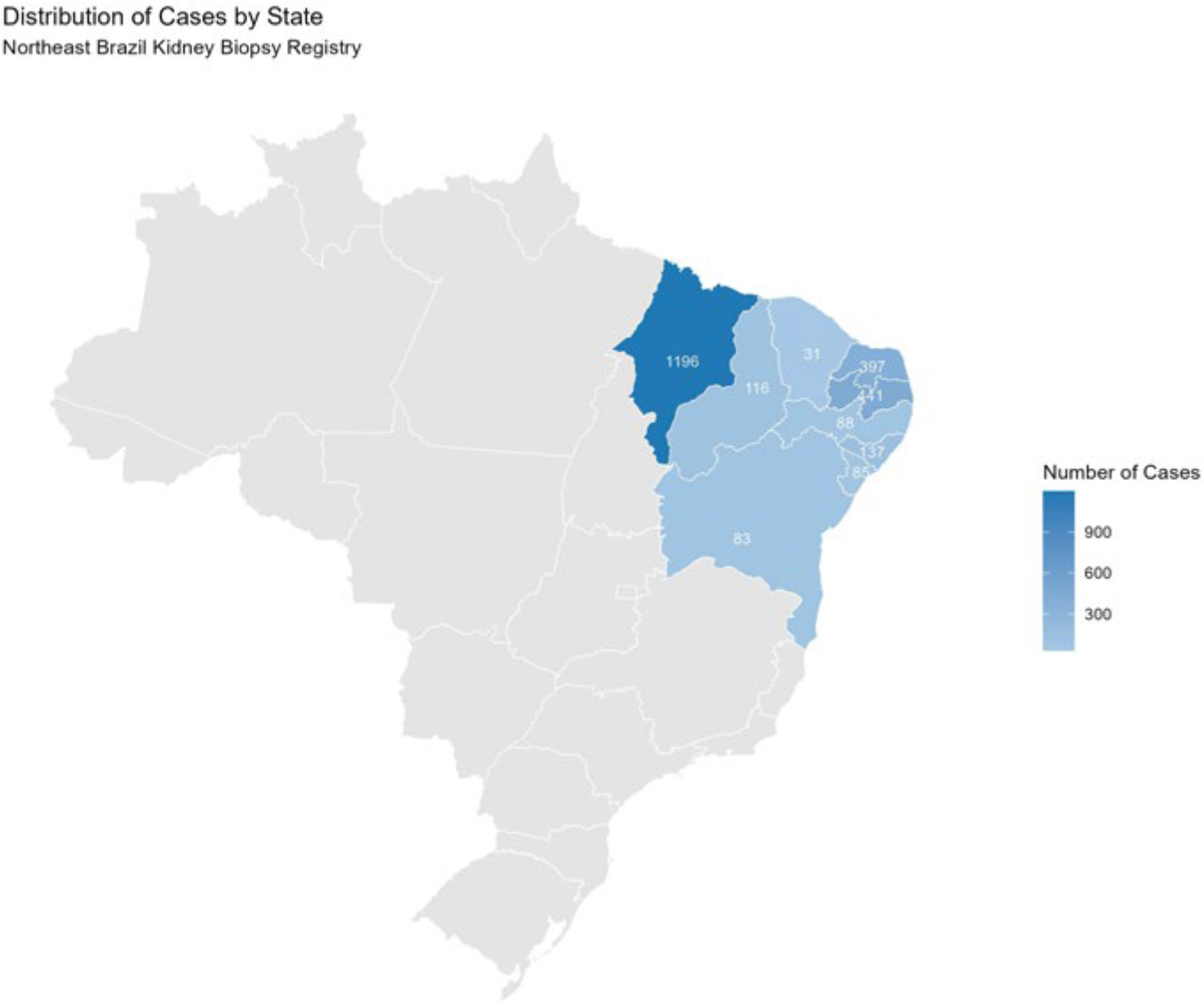
A total of 2,911 patients underwent native kidney biopsy at the participating centers over a 16-year period (Figure 1). Patients with inconclusive biopsies and those without renal tissue samples were excluded (n = 250). Ultimately, data from 2,661 kidney biopsies were included. Female patients predominated (n = 1,533 [57.6%]); the median age was 31 years (interquartile range [IQR], 19–45 years). Demographically, the cohort was distributed as follows: children and adolescents, n = 428 (16.24%); young adults, n = 807 (30.62%); adults, n = 1,171 (44.44%); and older adults, n = 229 (8.69%). Ethnicity was identified in 2,261 (84.96%) patients, with a predominance of non-Caucasians (n = 1,706 [75.45%]). EM was performed on 146 (5%) kidney biopsy samples, which were used as a diagnostic aid for certain pathologies.
Clinical indications for biopsy were identified in 85.9% of cases, with nephrotic syndrome being the most common (n = 1,075 [40.39%]). Variations in biopsy indications according to sex and age are summarized in Table 1.
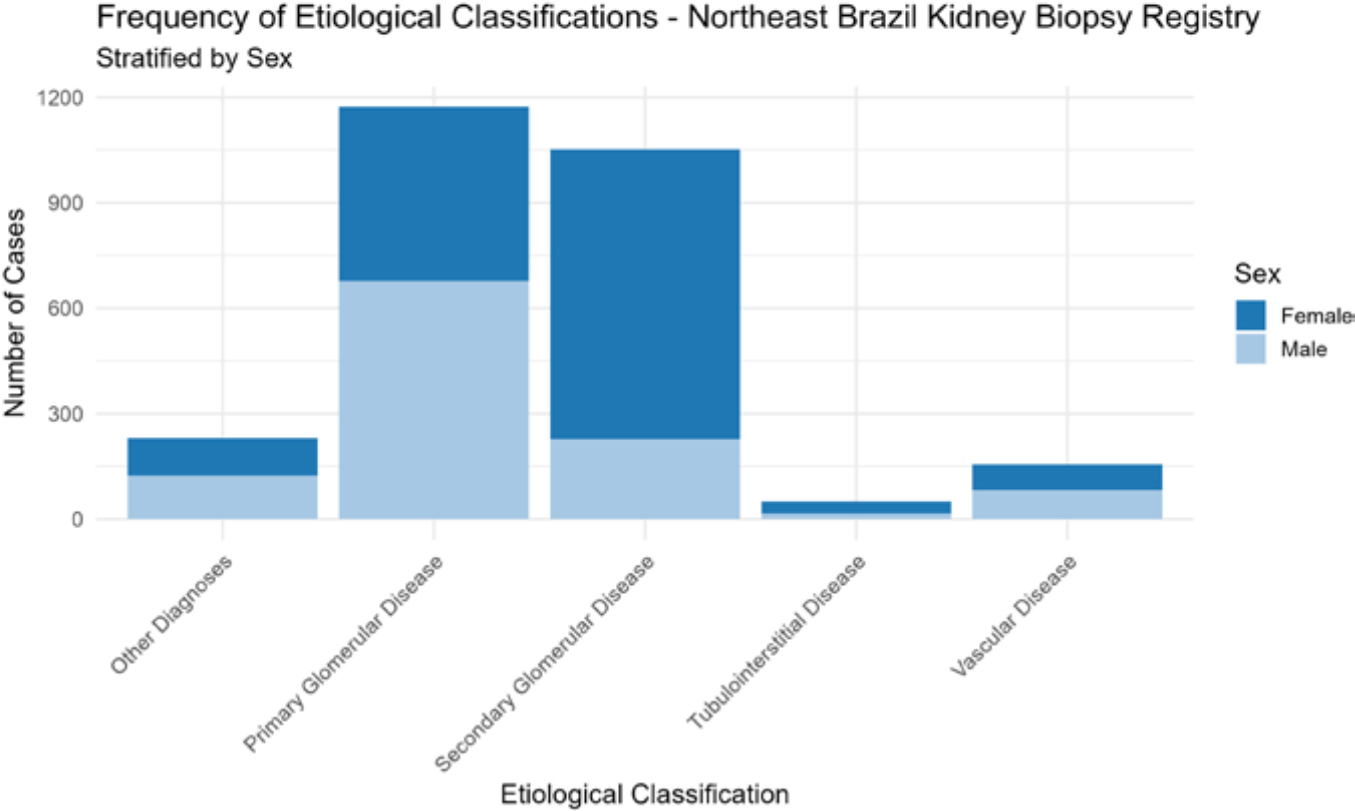
Primary glomerular disease occurred in 1,153 (43.32%) cases, and secondary glomerular disease occurred in 1,052 (39.53%) (Figure 2). Among the study population, lupus nephritis (LN) was the predominant diagnosis (n = 876 [32.9%]) and was more common among adult women (n = 725 [82.8%]) and and non-White individuals (n = 567 [64.7%]). Focal segmental glomerulosclerosis (FSGS) was the second most frequent diagnosis (n = 455 [17.1%]), affecting individuals with a median age of 25 years (IQR, 14–41.5 years). Among older adults, the most common diagnosis was membranous nephropathy (n = 43 [18.8%]), whereas among children, the most prevalent diagnosis was FSGS (n = 105 [24.5%]) (Table 2).
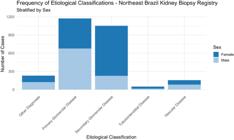
Classification of the etiology of kidney biopsy samples according to sex, Northeast Brazil (2008–2024).
Distribution of histopathological diagnoses in a kidney biopsy registry from Northeastern Brazil.
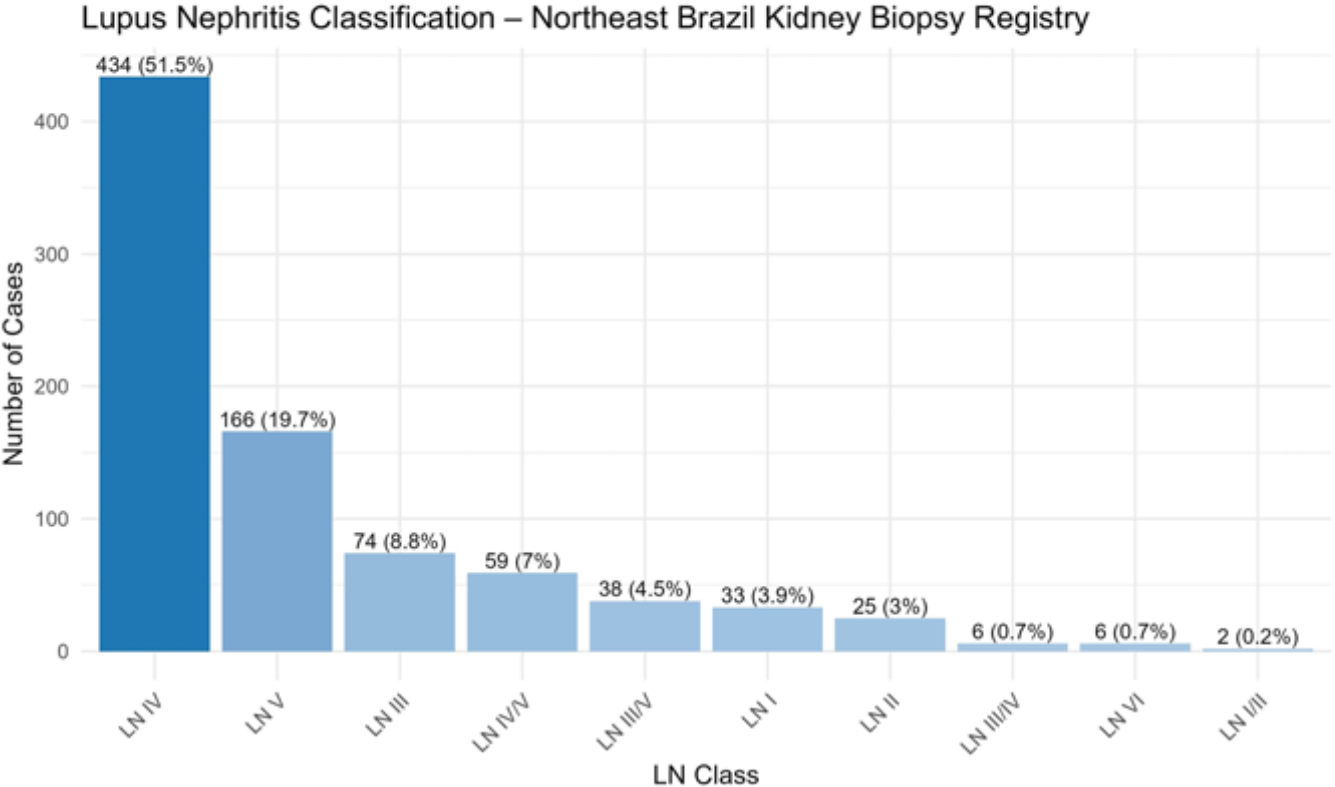
The distribution according to LN class exhibited a higher frequency of class IV (51.5%), followed by class V (19.7%) (Figure 3).
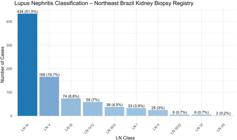
Frequency of lupus nephritis classes in kidney biopsy samples, Northeast Brazil (2008–2024).
Table 3 describes the main characteristics of the two most prevalent diagnoses in the study: FSGS and lupus nephritis. While FSGS showed a similar distribution across almost all age groups and among both sexes, lupus nephritis accounted for 89% of cases in the 15–59-year age group, with 83% being women. FSGS most commonly presented as nephrotic syndrome (72%), whereas lupus nephritis showed diverse clinical manifestations, including acute cases such as rapidly progressive glomerulonephritis in 6.2% of patients.
Demographic and clinical characteristics of the two most prevalent diagnoses in a kidney biopsy registry from the Northeast region of Brazil (2008–2024): focal segmental glomerulosclerosis and lupus nephritis.
DISCUSSION
Only a few studies have addressed the epidemiological characteristics of patients with glomerular diseases in the Northeast region of Brazil5,8. The specific sociodemographic characteristics of this region, in turn, make it important to develop kidney biopsy registries in this area as a benchmark for comparison with other regions of the country and even with populations in other parts of the world.
Due to the high cost and significant social impact of kidney diseases, countries such as Japan14 and Italy15 regularly maintain national registries of glomerular diseases, a practice that is difficult to implement in Brazil because it is a continental country with substantial sociodemographic variability across regions16,17. Using a large population-based approach, we characterized patients who underwent kidney biopsy at public hospitals in Northeast Brazil. Of the 2,911 patients initially selected, a diagnosis could not be established in 8.58%, a rate lower than those reported in other studies, which ranged from 12% to 16%4,5,10.
The sex distribution was similiar to that observed in the 2010 Brazilian Registry of Kidney Biopsies7. The affected patients were generally adults and young adults, similar to the demographic profile reported in other studies5,7,9,10, which could be explained by the prevalence of the main glomerular diseases in this age group, such as LN and FSGS18,19.
Collapsing glomerulopathy (CG) disproportionately affects individuals of African descent, a phenomenon largely attributed to the presence of APOL1 risk variants, which significantly increase susceptibility to developing this condition20. In addition to the genetic component, CG can be triggered by various environmental and clinical factors, including viral infections (HIV, parvovirus B19, and arboviruses), the use of certain medications, autoimmune diseases, neoplasms, ischemic events (such as thrombotic microangiopathy, peri-infarction lesions, and cholesterol embolism), and factors associated with kidney transplantation21. In the present study, 106 (4%) patients were diagnosed with CG. These findings reinforce the relevance of CG in the Brazilian setting and provide an estimate of the prevalence of this disease in the Northeast region of Brazil22.
Nephrotic syndrome was predominant among the elderly, with membranous nephropathy being the most common diagnosis in this group. Studies published in Brazil23 and the United Kingdom24 reported similar findings, contrasting with data published in the United States25 and Spain26, where acute kidney injury was the most common condition, and the most prevalent diagnosis was crescentic and pauci-immune glomerulopathy. However, the main indications for kidney biopsy in this age group are hematuria, asymptomatic proteinuria, nephrotic syndrome, rapidly progressive glomerulonephritis, acute kidney injury, or idiopathic CKD24,27. The association between membranous nephropathy and malignancy in the elderly population is well known28.
In Northeast Brazil5,7,8,9,10 and worldwide29,30,31, the primary indication for kidney biopsy is nephrotic syndrome32. The literature on nephrotic syndrome indicates that 60% to 70% of cases have a primary etiology, with FSGS and membranous nephropathy being the most common diagnoses among adult and older adult patients33, whereas minimal change disease and FSGS predominate among children and adolescents, representing 80% of cases34. LN was the most prevalent pathology among all other indications for kidney biopsy.
Primary glomerulopathy was more common than secondary glomerulopathy, with FSGS being the most prevalent among cases of primary glomerulopathy and LN among cases of secondary glomerulopathy. These findings are similar to those reported in several national studies4,5,7,8 and in studies from Latin America35,36,37. FSGS is the most common finding in the Americas, including the United States18 and Brazil7,10.
In Asia and Europe, immunoglobulin (Ig) A nephropathy is the most common primary glomerulopathy6,37. Although IgA nephropathy has shown a greater increase in prevalence over the past 15 years in Brazil7, it was identified in < 5% of the sample. This prevalence is lower than both the national estimate7 and the prevalence reported in another study conducted in the state of São Paulo (Brazil)4, which was approximately 10%. Compared with international studies, the reported incidence is even higher, ranging from 20% to 45%29,35,36,38. Factors related to colonization and ethnicity in the Northeast region, where there is a higher proportion of individuals of African descent—a population in which the prevalence of IgA nephropathy is lower39—, in addition to the lack of screening associated with delayed referral to a nephrologist and the criteria for biopsy indication applied in hospital services, may explain the reported results37. The high prevalence of LN may be related to the ethnic characteristics of the sample, with the majority of patients being of non-White ethnicity40.
The most prevalent histological types of LN were classes IV and V, a common finding reported in a review published in 201841. The predominance of these classes could be explained by the selection criteria, according to which kidney biopsy is generally performed in patients with more severe kidney involvement, which is typical of these classes.
A low incidence of post-infectious glomerulonephritis was observed, even though it is an important cause of glomerulopathy in underdeveloped countries, given that the Northeast is the poorest region in the country, where sanitary conditions may be precarious. This could be explained by its often benign course, with renal manifestations occurring late in the infectious process and often without an indication for kidney biopsy42.
The low prevalence of genetic diseases, such as Alport syndrome, can be explained by the lack of standardization of specific methods, such as molecular tests and EM43,44.
Primary arterial hypertension is not an indication for kidney biopsy, and the finding of hypertensive nephrosclerosis on kidney biopsy results is uncommon, occurring in 1%–3.5% of patients7,14,36, which is similar to the results of our study. Arterial hypertension is the second leading cause of CKD in Europe and the main cause in Brazil45.
Crescentic glomerulonephritis occurs mainly in secondary glomerulopathy (90%), with LN and pauci-immune disease being the most common etiologies, as reported in the literature46,47.
Limitations of the present study include the lack of integration among the systems used by participating centers, which made it difficult to access patient prognostic information from a single electronic medical record, as well as the absence of a standardized protocol for performing EM on most kidney biopsy samples. The absence of some demographic data was also noted, highlighting the need for integrated records between the centers.
This was the first multicenter study of its kind in the Northeastern region of Brazil to describe the clinical and epidemiological characteristics of patients with glomerulopathies. Our results lay the groundwork for the development of a future glomerulopathy registry for the region. The future development of a computational tool to optimize kidney biopsy requests could help standardize the information relevant to populationbased studies.
CONCLUSION
The presence of glomerulopathy was similar between males and females, with nephrotic syndrome being the most common indication for kidney biopsy. In contrast to most studies conducted in Brazil, LN was the most prevalent glomerulopathy, followed by FSGS. The findings of this study differ from records in southeastern and southern Brazil regarding the low prevalence of IgA nephropathy.. The profile of glomerulopathies reflects the indications for kidney biopsy and the heterogeneity of the Brazilian population, with diverse ethnic and socioeconomic characteristics. The results of this study may contribute to a better understanding of the epidemiology of glomerulopathies in Brazil.
Acknowledgments
The authors gratefully acknowledge the support of the Coordenação de Aperfeiçoamento de Pessoal de Nível Superior (CAPES), the Conselho Nacional de Desenvolvimento Científico e Tecnológico (CNPq), the Universidade Federal do Maranhão (UFMA), and the Empresa Brasileira de Serviços Hospitalares (EBSERH).
Data Availability
The datasets generated and/or analyzed during the current study are available from the corresponding author upon reasonable request.
Consent to participate
Use of Artificial Intelligence Tools
Ethical approval
Funding
REFERENCES
-
1. Boenink R, Bonthuis M, Boerstra BA, Astley ME, Montez De Sousa IR, Helve J, et al. The ERA Registry Annual Report 2022: epidemiology of Kidney Replacement Therapy in Europe, with a focus on sex comparisons. Clin Kidney J. 2025;18(2):sfae405. doi: https://doi.org/10.1093/ckj/sfae405. PubMed PMID: 40008269.
» https://doi.org/10.1093/ckj/sfae405 -
2. Johansen KL, Gilbertson DT, Li S, Li S, Liu J, Roetker NS, et al. US Renal Data System 2024 Annual Data Report: Epidemiology of Kidney Disease in the United States. Am J Kidney Dis. 2025;85(6):A8–11. doi: https://doi.org/10.1053/j.ajkd.2025.02.602. PubMed PMID: 40379355.
» https://doi.org/10.1053/j.ajkd.2025.02.602 - 3. Nerbass FB, Lima HDN, Strogoff-de-Matos JP, Zawadzki B, Moura-Neto JA, Lugon JR, et al. Censo Brasileiro de Diálise 2023. Braz. J. Nephrol. 2025;47(1):e20240081.
-
4. Malafronte P, Mastroianni-Kirsztajn G, Betônico GN, Romão Jr JE, Alves MAR, Carvalho MF, et al. Paulista Registry of glomerulonephritis: 5-year data report. Nephrol Dial Transplant. 2006;21(11):3098–105. doi: https://doi.org/10.1093/ndt/gfl237. PubMed PMID: 16968733.
» https://doi.org/10.1093/ndt/gfl237 -
5. dos-Santos WLC, Sweet GMM, Azevêdo LG, Tavares MB, Soares MFS, Melo CVBD, et al. Current distribution pattern of biopsy-proven glomerular disease in Salvador, Brazil, 40 years after an initial assessment. Braz. J. Nephrol. 2017;39(4):376–83. doi: https://doi.org/10.5935/0101-2800.20170069. PubMed PMID: 29319763.
» https://doi.org/10.5935/0101-2800.20170069 -
6. Oliveira CMJD, Costa RS, Vieira No OM, Dantas RAS, Moysés No M, Romão EA, et al. Doenças renais em pacientes idosos submetidos à biópsia percutânea de rins nativos. Braz. J. Nephrol. 2010;32(4):385–92. doi: https://doi.org/10.1590/S0101-28002010000400008. PubMed PMID: 21541453.
» https://doi.org/10.1590/S0101-28002010000400008 -
7. Polito MG, De Moura LAR, Kirsztajn GM. An overview on frequency of renal biopsy diagnosis in Brazil: clinical and pathological patterns based on 9617 native kidney biopsies. Nephrol Dial Transplant. 2010;25(2):490–6. doi: https://doi.org/10.1093/ndt/gfp355. PubMed PMID: 19633091.
» https://doi.org/10.1093/ndt/gfp355 -
8. Costa DMDN, Valente LM, Gouveia PADC, Sarinho FW, Fernandes GV, Cavalcante MAGM, et al. Comparative analysis of primary and secondary glomerulopathies in the northeast of Brazil: data from the Pernambuco Registry of Glomerulopathies - REPEG. Braz. J. Nephrol. 2017;39(1): 29–35. doi: https://doi.org/10.5935/0101-2800.20170005. PubMed PMID: 28355399.
» https://doi.org/10.5935/0101-2800.20170005 -
9. Crensiglova C, Rehme BB, Kinasz LRS, Chula DC, Nascimento MMD, Soares MFS. Frequency and clinical histological analysis of glomerular diseases in a tertiary hospital in southern Brazil. Braz. J. Nephrol. 2016;38(1):4 2–8. doi: https://doi.org/10.5935/0101-2800.20160007. PubMed PMID: 27049363.
» https://doi.org/10.5935/0101-2800.20160007 -
10. Thomé GG, Bianchini T, Bringhenti RN, Schaefer PG, Barros EJG, Veronese FV. The spectrum of biopsy-proven glomerular diseases in a tertiary Hospital in Southern Brazil. BMC Nephrol. 2021;22(1):414. doi: https://doi.org/10.1186/s12882-021-02603-8. PubMed PMID: 34903188.
» https://doi.org/10.1186/s12882-021-02603-8 -
11. Sales F, Carmo PVD, Huaira RMNH, Almeida NWGD, Lourenço MHT, Fernandes NMDS. Epidemiological profile and renal outcomes in a 25-year Brazilian cohort of glomerular diseases. J Bras Nefrol. 2025;47(4):e20240213. doi: https://doi.org/10.1590/2175-8239-jbn-2024-0213en. PubMed PMID: 40815784.
» https://doi.org/10.1590/2175-8239-jbn-2024-0213en -
12. Noronha IL, Ramalho RJ, Oliveira CMCD, Bahiense-Oliveira M, Barbosa FAM, Barros Neto JDR, et al. Implementation and first report of the Brazilian Kidney Biopsy Registry. Yang J, organizador. PLoS One. 2025;20(2):e0312410. doi: https://doi.org/10.1371/journal.pone.0312410. PubMed PMID: 39928634.
» https://doi.org/10.1371/journal.pone.0312410 -
13. Friedman DJ, Pollak MR. APOL1 nephropathy: from genetics to clinical applications. Clin J Am Soc Nephrol. 2021;16(2):294–303. doi: https://doi.org/10.2215/CJN.15161219. PubMed PMID: 32616495.
» https://doi.org/10.2215/CJN.15161219 -
14. Sugiyama H, Yokoyama H, Sato H, Saito T, Kohda Y, Nishi S, et al. Japan Renal Biopsy Registry and Japan Kidney Disease Registry: Committee Report for 2009 and 2010. Clin Exp Nephrol. 2013;17(2):155–73. doi: https://doi.org/10.1007/s10157-012-0746-8. PubMed PMID: 23385776.
» https://doi.org/10.1007/s10157-012-0746-8 -
15. Gesualdo L, Di Palma AM, Morrone LF, Strippoli GF, Schena FP, Italian Immunopathology Group, Italian Society of Nephrology. The Italian experience of the national registry of renal biopsies. Kidney Int. 2004;66(3):890–4. doi: https://doi.org/10.1111/j.1523-1755.2004.00831.x. PubMed PMID: 15327376.
» https://doi.org/10.1111/j.1523-1755.2004.00831.x -
16. Gonçalves HF, de Araújo JB. Evolução histórica e o quadro socioeconômico do Nordeste brasileiro nos anos 2000. Colóquio Rev Desenvolv Reg. 2015;12:193–204. doi: https://doi.org/10.26767/229.
» https://doi.org/10.26767/229 -
17. Instituto Brasileiro de Geografia e Estatística. Síntese de Indicadores Sociais Uma análise das condições de vida da população brasileira. Rio de Janeiro: IBGE; 2022 [cited 2026 Jun 16]. Available from: https://www.observatoriodasmetropoles.net.br/wp-content/uploads/2022/12/sintese-indicadores-sociais-ibge-2022.pdf
» https://www.observatoriodasmetropoles.net.br/wp-content/uploads/2022/12/sintese-indicadores-sociais-ibge-2022.pdf -
18. O’Shaughnessy MM, Hogan SL, Poulton CJ, Falk RJ, Singh HK, Nickeleit V, et al. Temporal and demographic trends in glomerular disease epidemiology in the Southeastern United States, 1986–2015. Clin J Am Soc Nephrol. 2017;12(4):614–23. doi: https://doi.org/10.2215/CJN.10871016. PubMed PMID: 28325866.
» https://doi.org/10.2215/CJN.10871016 - 19. Barros RT, Alves MAR, Dantas M, Kirsztajn GM, Santos YA. Glomerulopatias: patogenia, clínica e tratamento. São Paulo: Sarvier Editora; 2022.
-
20. Neves PD, Watanabe A, Watanabe EH, Narcizo AM, Nunes K, Lerario AM, et al. Idiopathic collapsing glomerulopathy is associated with APOL1 high-risk genotypes or Mendelian variants in most affected individuals in a highly admixed population. Kidney Int. 2024;105(3):593–607. doi: https://doi.org/10.1016/j.kint.2023.11.028. PubMed PMID: 38143038.
» https://doi.org/10.1016/j.kint.2023.11.028 -
21. Koirala A, Akilesh S, Jefferson JA. Collapsing glomerulopathy. Adv Kidney Dis Health. 2024;31(4):290–8. doi: https://doi.org/10.1053/j.akdh.2024.03.008. PubMed PMID: 39084754.
» https://doi.org/10.1053/j.akdh.2024.03.008 -
22. Campos MAG, Neves PDMDM, Cutrim ÉMM, Sodré AM, Carvalho JV, Wanderley DC, et al. Collapsing Glomerulopathy in Brazil: A Nationwide Descriptive Study. Nephrology (Carlton). 2025;30(12):e70158. doi: https://doi.org/10.1111/nep.70158. PubMed PMID: 41397399.
» https://doi.org/10.1111/nep.70158 - 23. de Oliveira CMJ, Costa RS, Vieira Neto OM, Dantas RAS, Moysés Neto M, Romão EA, et al. Renal diseases in the elderly underwent to percutaneous biopsy of native kidneys. J Bras Nefrol. 2010;32(4):379–85. PubMed PMID: 21541453.
-
24. Davison AM, Johnston PA. Glomerulonephritis in the elderly. Nephrol Dial Transplant. 1996;11(suppl 9):34–7. doi: https://doi.org/10.1093/ndt/11.supp9.34. PubMed PMID: 9050033.
» https://doi.org/10.1093/ndt/11.supp9.34 -
25. Moutzouris DA, Herlitz L, Appel GB, Markowitz GS, Freudenthal B, Radhakrishnan J, et al. Renal biopsy in the very elderly. Clin J Am Soc Nephrol. 2009;4(6):1073–82. doi: https://doi.org/10.2215/CJN.00990209. PubMed PMID: 19443626.
» https://doi.org/10.2215/CJN.00990209 -
26. Verde E, Quiroga B, Rivera F, López-Gómez JM. Renal biopsy in very elderly patients: data from the Spanish Registry of Glomerulonephritis. Am J Nephrol. 2012;35(3):230–7. doi: https://doi.org/10.1159/000336307. PubMed PMID: 22343659.
» https://doi.org/10.1159/000336307 -
27. Nair R, Bell JM, Walker PD. Renal biopsy in patients aged 80 years and older. Am J Kidney Dis. 2004;44(4):618–26. doi: https://doi.org/10.1016/S0272-6386(04)00944-8. PubMed PMID: 15384012.
» https://doi.org/10.1016/S0272-6386(04)00944-8 -
28. Lionaki S, Marinaki S, Panagiotellis K, Tsoumbou I, Liapis G, Vlahadami I, et al. Glomerular diseases associated with malignancies: histopathological pattern and association with circulating autoantibodies. Antibodies (Basel). 2020;9(2):18. doi: https://doi.org/10.3390/antib9020018. PubMed PMID: 32466285.
» https://doi.org/10.3390/antib9020018 -
29. Perkowska-Ptasinska A, Bartczak A, Wagrowska-Danilewicz M, Halon A, Okon K, Wozniak A, et al. Clinicopathologic correlations of renal pathology in the adult population of Poland. Nephrol Dial Transplant. 2017;32(suppl 2):ii209–18. doi: https://doi.org/10.1093/ndt/gfw365. PubMed PMID: 28339709.
» https://doi.org/10.1093/ndt/gfw365 -
30. Garau M, Cabrera J, Ottati G, Caorsi H, Gonzalez Martinez F, Acosta N, et al. Temporal trends in biopsy proven glomerular disease in Uruguay, 1990-2014. PLoS One. 2018;13(10):e0206637. doi: https://doi.org/10.1371/journal.pone.0206637. PubMed PMID: 30372492.
» https://doi.org/10.1371/journal.pone.0206637 -
31. Imtiaz S, Drohlia M, Nasir K, Salman B, Ahmad A. Analysis of renal diseases detected in renal biopsies of adult patients: a single-center experience. Saudi J Kidney Dis Transpl. 2017;28(2):368–78. doi: https://doi.org/10.4103/1319-2442.202788. PubMed PMID: 28352022.
» https://doi.org/10.4103/1319-2442.202788 -
32. Brkovic V, Milinkovic M, Kravljaca M, Lausevic M, Basta-Jovanovic G, Marković-Lipkovski J, et al. Does the pathohistological pattern of renal biopsy change during time? Pathol Res Pract. 2018;214(10):1632–7. doi: https://doi.org/10.1016/j.prp.2018.07.027. PubMed PMID: 30139556.
» https://doi.org/10.1016/j.prp.2018.07.027 - 33. Kodner C. Diagnosis and management of nephrotic syndrome in adults. Am Fam Physician. 2016;93(6):479–85. PubMed PMID: 26977832.
-
34. Tapia C, Bashir K. Nephrotic Syndrome. In: StatPearls. Treasure Island (FL): StatPearls Publishing; 2023 [cited 2023 Sep 26]. Available from: http://www.ncbi.nlm.nih.gov/books/NBK470444/
» http://www.ncbi.nlm.nih.gov/books/NBK470444/ -
35. Murugapandian S, Mansour I, Hudeeb M, Hamed K, Hammode E, Bijin B, et al. Epidemiology of Glomerular Disease in Southern Arizona: review of 10-year renal biopsy data. Medicine (Baltimore). 2016;95(18):e3633. doi: https://doi.org/10.1097/MD.0000000000003633. PubMed PMID: 27149502.
» https://doi.org/10.1097/MD.0000000000003633 -
36. Xu X, Ning Y, Shang W, Li M, Ku M, Li Q, et al. Analysis of 4931 renal biopsy data in central China from 1994 to 2014. Ren Fail. 2016;38(7):1021-30. doi: https://doi.org/10.1080/08 86022X.2016.1183443. PubMed PMID: 27193055.
» https://doi.org/10.1080/0886022X.2016.1183443 -
37. Schena FP, Nistor I. Epidemiology of IgA nephropathy: a global perspective. Semin Nephrol. 2018;38(5):435–42. doi: https://doi.org/10.1016/j.semnephrol.2018.05.013. PubMed PMID: 30177015.
» https://doi.org/10.1016/j.semnephrol.2018.05.013 -
38. Barrera-Herrera LE, López Panqueva RDP, Flórez Vargas AA, Andrade Pérez RE. The spectrum of glomerular disease between the years 2003 and 2015 in Columbia: a review of 12,613 cases. Rev Esp Patol. 2017;50(1):3–7. doi: https://doi.org/10.1016/j.patol.2016.07.006. PubMed PMID: 29179962.
» https://doi.org/10.1016/j.patol.2016.07.006 - 39. Oviasu E. IgA nephropathy (IgAN) presenting with the nephrotic syndrome. Trop Geogr Med. 1992;44(4):365–8. PubMed PMID: 1295149.
-
40. Carter EE, Barr SG, Clarke AE. The global burden of SLE: prevalence, health disparities and socioeconomic impact. Nat Rev Rheumatol. 2016;12(10):605–20. doi: https://doi.org/10.1038/nrrheum.2016.137. PubMed PMID: 27558659.
» https://doi.org/10.1038/nrrheum.2016.137 -
41. Wang H, le Ren Y, Chang J, Gu L, Sun LY. A systematic review and meta-analysis of prevalence of biopsy-proven lupus nephritis. Arch Rheumatol. 2018;33(1):17–25. doi: https://doi.org/10.5606/ArchRheumatol.2017.6127. PubMed PMID: 29900975.
» https://doi.org/10.5606/ArchRheumatol.2017.6127 -
42. VanDeVoorde 3rd RG. Acute poststreptococcal glomerulonephritis: the most common acute glomerulonephritis. Pediatr Rev. 2015;36(1):3–12, quiz 13. doi: https://doi.org/10.1542/pir.36.1.3. PubMed PMID: 25554106.
» https://doi.org/10.1542/pir.36.1.3 -
43. Sementilli A, Moura LA, Franco MF. The role of electron microscopy for the diagnosis of glomerulopathies. Sao Paulo Med J. 2004;122(3):104–9. doi: https://doi.org/10.1590/S1516-31802004000300006. PubMed PMID: 15448808.
» https://doi.org/10.1590/S1516-31802004000300006 -
44. Halat-Wolska P, Ciara E, Pac M, Obrycki Ł, Wicher D, Iwanicka-Pronicka K, et al. Molecular review of suspected alport syndrome patients: a single-centre experience. Genes (Basel). 2025;16(2):196. doi: https://doi.org/10.3390/genes16020196. PubMed PMID: 40004525.
» https://doi.org/10.3390/genes16020196 -
45. Kramer A, Pippias M, Noordzij M, Stel VS, Afentakis N, Ambühl PM, et al. The European Renal Association - European Dialysis and Transplant Association (ERA-EDTA) Registry Annual Report 2015: a summary. Clin Kidney J. 2018;11(1):108–22. doi: https://doi.org/10.1093/ckj/sfx149. PubMed PMID: 29423210.
» https://doi.org/10.1093/ckj/sfx149 -
46. Syed R, Rehman A, Valecha G, El-Sayegh S. Pauci-Immune Crescentic Glomerulonephritis: an ANCA-Associated Vasculitis. BioMed Res Int. 2015;2015:402826. doi: https://doi.org/10.1155/2015/402826. PubMed PMID: 26688808.
» https://doi.org/10.1155/2015/402826 -
47. Chen S, Tang Z, Xiang H, Li X, Chen H, Zhang H, et al. Etiology and outcome of crescentic glomerulonephritis from a Single Center in China: a 10-year review. Am J Kidney Dis. 2016;67(3):376–83. doi: https://doi.org/10.1053/j.ajkd.2015.07.034. PubMed PMID: 26388283.
» https://doi.org/10.1053/j.ajkd.2015.07.034