
 Can television news decolonize? Analysis of journalistic narratives from commercial broadcasters in the state of Roraima, Brazil
Abstract
In line with the premises of the decolonial academic-political project, this article reflects on how (and whether) audiovisual journalism by commercial broadcasters can constitute a possible space for the circulation of decolonial narratives, in order to contribute to the epistemic shift involving decoloniality. Through a literature review, a conceptual approximation between decolonial ideas and television journalism is carried out, in addition to providing the methodological basis for the analysis of 234 narrative units from television news programs from the four broadcasters in the northern state of Roraima, Brazil, that produce informative content. The results indicate that, despite journalism’s potential to contribute to the decolonial turn, most of the journalistic narratives analyzed do not allow for the deconstruction or questioning of the colonial matrices that reinforce the “condemned” status of the populations of the South.
Keywords
Coloniality; Television Journalism; Populations of the South; Decolonial Turn; Condemned
Resumo
Em atenção às premissas do projeto acadêmico-político decolonial, o artigo reflete sobre como (e se) o jornalismo audiovisual de emissoras comerciais pode se constituir como um espaço possível para a circulação de narrativas decoloniais, de modo a contribuir com o giro epistêmico que envolve a decolonialidade. Por meio de pesquisa bibliográfica, é realizada uma aproximação conceitual entre as ideias decoloniais e o telejornalismo, além de fundamentar o desenvolvimento metodológico para a análise de 234 unidades narrativas oriundas de telejornais das quatro emissoras do estado nortista de Roraima que produzem conteúdo informativo. Os resultados apontam que, apesar do potencial do jornalismo em contribuir com o giro decolonial, as narrativas jornalísticas analisadas, em sua maioria, não permitem desconstruir ou questionar as matrizes coloniais que reforçam a condição de “condenado” das populações do Sul.
Palavras-chave
Colonialidade; Telejornalismo; Populações do Sul; Giro Decolonial; Condenados
Resumen
Partiendo de las premisas del proyecto académico-político decolonial, este artículo reflexiona sobre cómo (y si) el periodismo audiovisual de las emisoras comerciales puede constituir un espacio potencial para la circulación de narrativas decoloniales, contribuyendo al cambio epistémico que engloba la decolonialidad. A través de una investigación bibliográfica, se establece una conexión conceptual entre las ideas decoloniales y el periodismo televisivo, también se desarrolla un método para el análisis de 234 unidades narrativas de noticieros de cuatro emisoras del estado de Roraima, Brasil, que producen contenido informativo. Los resultados indican que, a pesar del potencial del periodismo para contribuir al cambio decolonial, la mayoría de las narrativas periodísticas analizadas no permiten la deconstrucción ni el cuestionamiento de las matrices coloniales que refuerzan la condición de "condenada" de las poblaciones del Sur.
Palabras clave
Colonialidad; Periodismo; Poblaciones del Sur; Giro decolonial; Condenados
Introduction
Even after the independence of the former colonies, the colonial legacy continues to manifest as violence against knowledge, bodies, and ways of interpreting and experiencing reality. However, in recent decades, different fields of knowledge have sought to recognize the importance of reflecting on how their theories and practices are exclusionary, thus inquiring how to consider, in normative, educational, health, environmental, media, and other aspects, the populations and peoples that are still affected by coloniality today (Almeida; Sallet, 2022; Villanueva; Lima; Carrasco, 2023).
Decoloniality, as an academic-political project, emerges to clarify the coloniality of knowledge, power, and being, and to call for action in the present to transform reality. Its development occurs mainly from the experiences of Afro-diasporic and indigenous populations, locating race as one of the pillars for its problematization – therefore recognizing Eurocentrism as responsible for establishing it as a “category” of power in relation to white people (Bernardino-Costa; Maldonado-Torres; Grosfoguel, 2024). Some authors, such as Santos (2021), extend the mapping of victims of the colonial system to contemporary contexts, including refugees, the elderly, and women, and identify the inequalities imposed by the global economic order in the so-called countries of the South.
One of the criticisms of decolonial studies, as articulated by Bernadino-Costa, Maldonado-Torres, and Grosfoguel (2024), is that their ideas do not translate into social intervention, often remaining confined to dialogues between theorists and to academia. In this research, conducted as part of a postdoctoral internship at the Simón Rodríguez National Experimental University (Caracas/Venezuela), in the Philosophy and Human Sciences in Our America research line, we examine how audiovisual journalism can serve as a space for circulating decolonial narratives. According to studies by the Network of Researchers in Television Journalism in Brazil (Porcello, 2011; Vizeu, 2009), television journalism is like a public square as it has a social reference point, reflecting debates, problems, and identities that are part of everyday life in Brazil, a country where television has a large audience, reaching 93.3% of households through television sets and can be accessed by other devices via the internet (Loschi, 2025).
A literature review (Sousa; Oliveira; Alves, 2021) is used to understand the concept of decoloniality and promote connections with audiovisual journalism in the Brazilian context. Subsequently, we applied the methodological proposal for analyzing television journalism based on decolonial ideas (Oliveira Filho, 2025) to analyze 234 narrative units from four television news programs of commercial broadcasters in the state of Roraima.
Articulating decoloniality and television journalism
Decoloniality involves problematizing aspects linked to modern colonial domination that remain violently present in so-called third world and developing countries, such as racism, Eurocentrism, and scientism (Quijano, 2005; Walsh, 2009). Its approach extends beyond the theoretical field because, as an academic-political project, it aims at social transformation and liberation through knowledge, wisdom, and the resistance of peoples, whom it calls condemned, who were and remain victims of colonial oppression.
Decoloniality destabilizes the securities associated with the citizen-subject by challenging the normative and geopolitical aspects of colonial domination, including the rules and institutions that underpin the very notion of modern civilization. The condemned have the potential to question and be agents of change, even though society often minimizes their struggles and agendas (Maldonado-Torres, 2024; Fanon, 2008). Examples that affect Latin American countries include debates over resistance to land demarcation and indigenous worldviews, the recognition of structural racism, and domination through labor relations and racialized hierarchies (Kopenawa; Albert, 2023; Santos, 2022; Soares, 2024; Quijano, 2005).
Therefore, decoloniality represents a resistance movement in favor of something greater than the current vision of Western modernity, which is taken as a temporal narrative that presents it as a privileged space of civilization in opposition to other possible perspectives. Its principle is the search for another world order, guided by the “struggle to create a world where many worlds can exist, and where, therefore, different conceptions of time, space, and subjectivity can coexist and also relate productively” (Maldonado-Torres, 2024, p. 36, translated by the author).
For Maldonado-Torres (2024), the coloniality of knowledge (knowledge systems), being (identity and subjectivity of the subject), and power (cultural, racial, structural, and economic hierarchies) involve the naturalization of wars and the modalities of human differences that come to constitute, even if only partially, the modern experience. Subjectivity permeates all three dimensions, since the conception of the subject encompasses its location in time and space, as well as in power structures and culture. The subject is also relevant because it is the agent that connects these dimensions, constituting a field of struggle that must be controlled in order for a given order and worldview to remain stable (Maldonado-Torres, 2024). This understanding is reinforced by Quijano (2005), who highlights that the domination of intersubjectivity, culture, and knowledge is a form of control. It is in this sense that Walsh (2019), in a discussion related to interculturality, that is, through the appreciation of cultural differences, exchanges, and miscegenation, argues that such a paradigm has the potential to question the coloniality of power by making visible the colonial difference that makes perceptible and rearticulates in new policies of subjectivity a logical difference, making it critical.
One of the processes that allows decoloniality to become an action of transformation is the decolonial turn (Maldonado-Torres, 2024; Fanon, 2008), when the condemned person becomes aware of the violence and pressures of coloniality, opening their body to the decolonial attitude, questioning, and distancing themselves from the imperatives and norms imposed on them. In this dynamic, communication, as an interactional event limited to the experiences of its participants and susceptible to change in the self (Marcondes Filho, 2010), is a driving force, as it establishes dialogues on critical issues related to the collective experience. A movement that illustrates the decolonial turn, cited by Maldonado-Torres (2024), is Black Lives Matter, which, after the violent deaths of two black men in the United States in 2013 and 2014, stimulated the formation of anti-racist social movements in different parts of the world, raising awareness about the racist legacy linked to colonial practices and Eurocentrism.
Communication, based on decolonial ideas, implies considering a political position that encompasses the perspectives of condemned people who have historically been excluded from hegemonic communication processes, and is therefore open to acts of resistance and committed to freedom, in which “the plurality of voices, actors, and ideas overflows the consequences and updates of the colonial matrix in communication, characterized to this day by silencing, subalternization, dehumanization, and simplistic dichotomies” (Villanueva; Lima; Carrasco, 2023, p. 19, translated by the author). In this sense, we question how television journalism could, through its narratives, align with decolonial proposals.
First, we must recognize the place of reference of television journalism in Brazilian society, transcending an exclusively technological conception to reflect on its role as a producer of knowledge and interpretation of reality, contributing to the formation of viewers' worldview, the so-called pedagogical function (Vizeu, 2009). With the advancement of new technologies and participatory culture, the interaction of audiovisual journalistic narratives is expanding to other environments, audiences, and screens in the media ecosystem, such as social media and streaming platforms, broadening its reach and reinforcing its place of reference—even in a more diverse ecosystem in terms of supply, consumption, and circulation.
However, it should be noted that television journalism in Brazil has been influenced by the United States model, from the scenic design of news programs to news genres and formats. Television news programs from the early decades of Brazilian television, such as Repórter Esso, adapted from radio and the United States, and even Jornal Nacional, which is still broadcast today, originated in the Northern Hemisphere. However, there was no submission to the American way of doing television journalism. Kneipp (2008), in a study on the history of Brazilian television journalism, including interviews with journalists, reports on investigative street reporting, which is present in the Brazilian professional field but is practically nonexistent in the United States.
Drawing on Maldonado-Torres' (2024) dimensions of being, knowing, and power, we can consider that decoloniality in television journalism can be approached through two instances. The first comes from organizations that represent alternative media, far from the hegemonic commercial-private model that concentrates investment and television audiences in the country, whose editorial headquarters are located along the Rio-São Paulo axis (Oliveira Filho, 2021). These organizations are composed of associations involving marginalized peoples, such as quilombola communities, indigenous people, and immigrants, who try to escape the control that comes from the colonial/modern logic of communication. In this way, these populations not only contribute with testimonies, but also integrate the production process itself.
The second instance is linked to journalistic narratives, regardless of the organization responsible for their creation, and refers to a certain responsibility of media companies to consider their social functions and the populations that constitute their audiences in their production routines. Journalistic narratives, as a way of translating knowledge about the world, hierarchizing characters, and endowing them with intentions (Motta, 2013), have the potential to give visibility not only to those who are condemned, but also to their claims and the events in which they are involved. By presenting the experiences of people who have suffered from colonization, they establish processes of identification, an elementary attribute for decoloniality to materialize as a collective project.
Methodology
In a previous study (Oliveira Filho, 2025), we established methodological parameters for analyzing audiovisual journalistic narratives based on the decolonial academic-political project. In an initial movement, guided by Santos' (2021) studies on epistemologies and populations of the South, we sought to understand who the condemned subjects are, considering the sociocultural and historical realities of Latin America. These groups would be located on one side of what the author calls the abyssal line: beings considered subhuman, ontologically inferior to those endowed with human dignity. The subhuman side of the abyssal line is demarcated by colonial sociability, whose existence does not guarantee effective rights for individuals, who may even be subject to social fascism even in democratic societies.
In an expanded discussion during the COVID-19 pandemic, Santos (2021) segments the populations of the South into groups along abyssal lines that traverse their life experiences, with greater emphasis on those linked to capitalism, coloniality, and patriarchy. In particular, the populations affected by the racist-colonialist abyssal line draw our attention, as they are the main victims of domination linked to being, knowledge, and power, which permeate the experiences of time, space, and subjectivity of those condemned. These are: populations of African/Black descent, quilombola communities, indigenous peoples and gypsies, refugees, immigrants, and internally displaced persons. Other populations cited by Santos (2021), and which are considered in this study, are women, people with disabilities, the elderly, among others. The identification of these subjects by television news narratives calls for analytical caution, not only to reflect on how they are represented, but also on how intersectional characteristics (race, gender, and social class) offer new insights into the systems of domination that act on these subjects.
Contributions on journalistic narratives and television journalism dramaturgy (Motta, 2013; Coutinho, 2012) were also used in the methodological stage to reflect on narrative structures, observing how the populations of the South are portrayed, the narrative conflicts, and the intentions of those who speak. As a methodological proposal, we develop six analytical indicators to reflect on television news narratives from a decolonial perspective. The indicators are like questions to be asked of the object being analyzed (reports, news, documentaries, short videos on social media, etc.):
- Are people with different views on the subject addressed?
- Are populations of the South interviewed?
- Does the narrative lead to the production of meanings that enable awareness of the experience of the condemned in the world?
- Is it possible to understand the origins of social conflicts from aspects related to colonization?
- Does the narrative promote immersion in decolonial actions that may raise questions?
- Does the narrative allow for the deconstruction of stereotypical collective representations?
The indicators are not rigid; they should be seen as entry points for reflection on the audiovisual material under investigation. Furthermore, it should be considered that television journalism, aligned with the decolonial project, entails analyzing its potential contribution to the decolonial turn of the condemned—even if this process is lengthy and extends beyond the experiences captured in journalistic and media narratives.
In this research, we propose to analyze narratives from four television news programs from four commercial broadcasters organized in an affiliate system1 that have their own journalistic production in the state of Roraima, Brazil: Jornal de Roraima 1ª Edição – JRR1 (Rede Amazônica, affiliated with TV Globo), Cidade Alerta (TV Imperial, affiliated with Record TV), Tá na Hora Roraima (TV Norte, affiliated with SBT), and Band Cidade (Band Roraima, affiliated with Band). The rationale for selecting these programs is that, as public concessions, broadcasters, even commercial ones, provide a public service and are therefore committed to combating stigmatized discourse, especially in regions where it is more prevalent.
Roraima stands out as a rich space for analyzing decolonial aspects due to its sociocultural and political diversity: it is the Brazilian federal unit with the highest percentage of indigenous people and immigrants, 15.29% and 12.75% of the state's population, respectively (Instituto, 2025), in addition to the significant presence of riverside communities, resulting from the process of occupation along waterways. Despite this, it coexists with popular and conservative political support, which often includes positions that disadvantage these populations, registering the highest proportional vote per inhabitant in the country (69.57% in the first round, 76.08% in the second round) for the far-right candidate in the 2022 in-person elections, Jair Bolsonaro, who defended anti-immigration and anti-indigenous policies when he was president between 2019 and 2022 (Barretto Filho, 2020; Mendes; Menezes, 2019; Ramalho, 2022).
The content was collected from the digital platforms on which the broadcasters made the editions available, covering one week per newscast in April and May 2025. The editions were fragmented by narrative/informative unit, totaling 234 narrative units, including reports, lives, stand-ups, covered and dry notes, and institutional segments. The analysis constitutes an interpretive gesture by the researchers, grounded in the six indicators reported in the methodological stage.
Analytical experience in commercial television news programs in Roraima
In the first indicator, regarding the presence of people with different views on the subject, the news often presents only one side of the story, typically the "official" one, especially in police news. This can be explained by the predominance of live broadcasts among the news formats used, usually consisting of one interviewee (Graph 1).

One hypothesis that helps explain the data is a shortage of human resources in production, as it was common for the same reporter to make two or three live appearances per edition across three of the four television news programs. The absence of a plurality of voices compromises a deeper understanding of the events reported and limits the emergence of new ways of experiencing the world, a central aspect of the decolonial project (Maldonado-Torres, 2024).
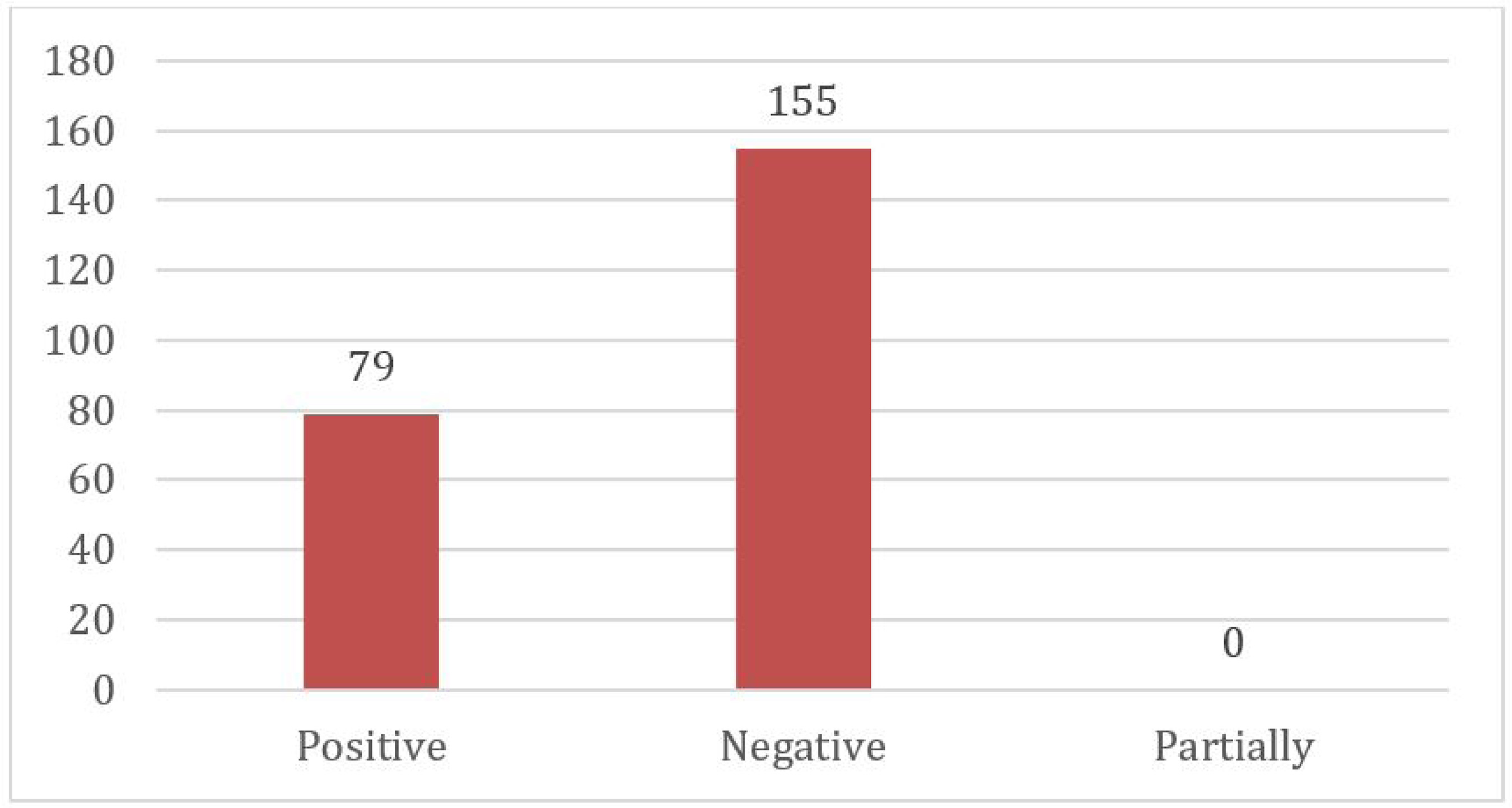
The second indicator assesses whether subjects from the South are interviewed. The act of speaking is identified as an important attribute to the decolonial attitude (Fanon, 2008), which can contribute to the awareness of the condemned about the oppressions arising from coloniality and even deconstruct stigmatized collective representations of these populations. This indicator considers subjects from populations affected by Santos' (2021) "racist-colonialist" abyssal line, as well as women, the elderly, people with disabilities, among others, included in the notion of condemned (Maldonado-Torres, 2024; Fanon, 2008).

In addition to the fact that most news reports do not promote the inclusion of Southern populations (Graph 2), in some cases, the condemned are not heard, even when the issues are related to their culture, such as a live news report on JRR1 on May 21 about a conflict involving health workers and indigenous peoples in the Yanomami indigenous territory. The reporter stated that the conflict began because the indigenous people were under the influence of a traditional drink called Caxiri. The statement not only questions traditions but also fails to include the perspectives of these peoples, who are positioned as aggressors in the narrative, in opposition to the notion of Western civilization.
It is noteworthy that, although condemned people appear in 79 news stories, in most cases, it is to reinforce their positions in the colonialist system. As in four news stories about Mother's Day broadcast by Cidade Alerta and Tá na Hora Roraima, all focused on consumption/capital, such as commercial expectations and gift options.
The third indicator encourages us to observe whether the narrative leads to the production of meanings that enable the formation of an awareness of the condemned people’s experience in the world (Graph 3).

Does the narrative lead to the production of meanings that enable awareness of the experience of the condemned in the world?
In the content analyzed, this awareness has the potential to emerge in narratives that address the experience of the condemned, such as those dealing with physical, economic, and symbolic violence that affect the most vulnerable populations, such as poverty and moral and sexual harassment, in addition to the difficulties faced by Venezuelan immigrants.
One news story in this regard was a report aired by Cidade Alerta on May 8 that interviewed the first quilombola person to graduate from a public university in Roraima. In her speech, the interviewee recounted the process of recognition as a black woman in university education and explained how the Eurocentric way of seeing the world affects society and limits not only action but also being and knowledge for people of African descent. In this way, the narrative renders visible the epistemic shift of the condemned woman, demonstrating an openness to questioning that results in new forms of thinking and self-perception, in relation to the concreteness of the decolonial turn (Maldonado-Torres, 2024). The report was also one of the few included in the following indicator (Graph 4).

Is it possible to understand the origins of social conflicts from aspects related to colonization?
The editions analyzed do not show concern with understanding the origins of the narrated social conflicts. The news items are often limited to facts, highlighting the superficiality of the narratives. In addition to the previously mentioned report, another positive case was a union leader's complaint, aired on May 7 on Cidade Alerta, about working conditions and low pay, which demonstrated the effects of capitalism on the condemned.
It is noteworthy that narrative alignment reflects the dominant economic system in Western societies. Another situation that illustrates this occurred in a report broadcast on April 24 on JRR1, about an institute dedicated to the re-education of those convicted by the courts. In it, blurred images of prisoners working in manual labor predominate. An interviewee involved in the project mentions that through work, they are resocialized, marking their insertion into the system of capitalist production relations as a central condition for achieving the status of "citizen." In summary, Quijano (2005) argues that capitalism is one of the pillars of modernity from a Eurocentric perspective. Although capital existed before capitalism, it was in America that it exercised control over labor, in close relation to the coloniality of power. In the same context, God is also another marker that is constantly invoked, in an analogy to the “cure” or status of “civilization” by Christian religions2.
The last two indicators show similar results (Graphs 6 and 7).


Does the narrative allow for the deconstruction of stereotypical collective representations?
In relation to Graph 5, immersion in decolonial attitudes that may raise questions, in reference to the first stage of the decolonial turn (Maldonado-Torres, 2024), is more frequent in news stories involving communities and social problems that, in the absence of access to basic rights such as health and education, carry out acts such as protests and the establishment of the journalistic event itself (Sodré, 2012) by the television news program to express the demand for social change to the authorities. This is what happened in a political commentary made by a brown man on Tá na Hora on May 19, about the delay in the investigation of the CPI das Terras (Land CPI) by the Legislative Assembly of Roraima state, which was investigating the irregular appropriation of public lands and land grabbing, including on indigenous lands.
One factor contributing to the high incidence of negative results on this indicator is that condemned individuals are not the main characters in most news stories. Therefore, their experiences do not play a leading role in the structuring of the narratives.
The last indicator demonstrates the limitations of television news programs in establishing processes for deconstructing stereotypical collective representations (Graph 6). In addition, stigmas are reinforced, mainly by associating certain groups and races with social problems, such as violence and welfare dependency. This is evident in news stories involving Venezuelan immigrants, whose population in Roraima has grown significantly since the mid-2010s due to the political and economic crises in Venezuela. The four television news programs analyzed emphasized the nationality of crime suspects when they were Venezuelan, reinforcing the stigmatized perspective of immigration and immigrants as a social problem (Sayad, 1998). When the suspects were Brazilian, their nationality was not mentioned in any of the news stories analyzed.
In narratives with a positive tone, nationality was often concealed, as in the Band Cidade report on May 23, which documented the visual transformation of a promotion winner by the broadcaster in partnership with a beauty studio. Although the video was over two minutes long, it did not mention, either in the reporter's text or in the interviewees' statements, that the winner was Venezuelan, referring to her only as a viewer. The immigrant was identified by her accent and appearance, which leads us to question why terms that characterize her situation as condemned, such as "immigrant" or "Venezuelan", were not used in a report that was not only positive but also had strong institutional ties to Band Roraima.
The results of the analysis, based on the six indicators, demonstrate a distancing from the decolonial project in the narratives of the four television news programs from private broadcasters in Roraima. The absence of a plurality of voices stifles the emergence of new perspectives on the events narrated, thereby preventing the decolonial approach from taking shape. The subjects that make up the populations of the South, despite giving interviews in 33% of the narrative units collected, they do not always appear in a position to contribute to the awareness of the condemned regarding the oppressions arising from coloniality—which is reflected in the near absence of positive occurrences in the last three indicators, which depend on complex and more structured narratives in order to rescue the origins of issues related to structural racism, xenophobia, ageism, and sexism, for example.
The populations of the South differ in how they are portrayed in the interviews. Black and brown people are more frequent in news stories dealing with urban infrastructure problems, violence, and popular culture. Some examples refer to the a news segment Fala Comunidade (JRR1), interviews with relatives of victims of physical and symbolic violence (occurring in all television news programs), and interviews with participants in the Norte Bumbás event, which took place in Manaus city with the presence of the Garantido and Caprichoso oxen, cultural heritage of Brazil originating in the city of Parintins, also in Amazonas state. However, the latter, which values a popular tradition rooted in Amazonian traditions, is subordinate to capital, as it is an event organized by the only broadcaster that provided journalistic coverage, TV Norte, through the TV news program Tá na Hora.
It is necessary to consider that the four television news programs are part of structures that keep colonialism alive in Roraima and, in a broader context, in a significant part of colonized countries. As mentioned, a considerable portion of the state's population is politically aligned with the oppressive positions of those condemned. The hegemonic media operate according to a logic embedded in capitalism for its maintenance: they reflect the legacy of the private/commercial model, which is predominant in Brazilian broadcasting. As a result, much of the content is produced with the audience and the consequent potential audience ratings in mind, which are determining factors in attracting public or corporate resources through advertising. Vizeu's (2006) concept of Presumed Audience supports this reflection by suggesting that journalists often anticipate their audience in their texts, which can reinforce prejudices, exclude certain publics, and stereotype others.
Therefore, the narratives analyzed lack a clear commitment to a political position that encompasses the demands of the condemned, which could contribute to the decolonial turn, as argued by Villanueva, Lima, and Carrasco (2023). In addition, they are not part of the production process itself. Of the four television news programs analyzed, only JRR1 is presented by a Black person. Indigenous people do not appear as reporters or presenters, even though, for more than a decade, the only undergraduate journalism course in the state has reserved a fraction of its places for indigenous students3 .
Conclusion
The proposal to bring the decolonial project and audiovisual journalism closer together is powerful, although it is not very evident in the case of the private television news programs analyzed in Roraima. In addition to interference from the financing model, it is considered that concerns about decolonization are not part of the editorial policies of the news programs. Production routines focused on factuality do not contribute to narrative productions that can untangle complex social structures, even though the broadcasters are located in a culturally and ethnically dynamic region.
It is evident that communication is necessary for the decolonial project to become a reality. However, it must be committed to the liberation and plurality of voices and actors, thereby allowing for the reinterpretation of the colonial matrix across different areas, including communication itself. Therefore, it must combat simplistic dichotomies, silencing, and dehumanization, recognizing other ways, including cognitive ones, of being in the world (Villanueva; Lima; Carrasco, 2023).
A final reflection is that the commitment to the decolonization of being, knowledge, and power entails a demand to examine the conditions of production, including those who produce the narrative. In addition to community broadcasters, audiovisual information projects conceived and designed by condemned people emerge as a potential media space to give concrete form to the transformative effect that governs decoloniality. These initiatives may be a path, yet to be traveled, to fill the gap identified in this research: the importance of condemned individuals not only composing narratives but also establishing a gesture of otherness with the aim of making other people aware of the effects of coloniality, in attention to the decolonial attitude and turn.
How to cite:
Funding:
XML Editing and Markup:
Inclusive Language:
Plagiarism Check:
1
2
3
Data Availability:
All data supporting this article are included in the body of the text.
References
- ALMEIDA, B.; SALLET, B. Acesso à justiça e decolonialidade: uma análise da situação do réu indígena no brasil. Rev. Direitos Sociais e Políticas Públicas, v. 10, n. 1, p. 95-126, 2022.
- BARRETTO FILHO, H. Trindade. Bolsonaro, Meio Ambiente, Povos e Terras Indígenas e de Comunidades Tradicionais: uma visada a partir da Amazônia. Cadernos de Campo, São Paulo, v. 29, n. 2, p. 1-9, 2020.
- BERNARDINO-COSTA, J.; MALDONADO-TORRES, N.; GROSFOGUEL, R. Decolonialidade e pensamento afrodiaspórico. In: BERNARDINO-COSTA, J.; MALDONADO-TORRES, N.; GROSFOGUEL, R. (Orgs.). Decolonialidade e pensamento afrodiaspórico Belo Horizonte: Autêntica, 2024, p. 09-26.
- COSTA, M. A institucionalização e o disciplinamento de crianças indígenas nas missões salesianas do Amazonas/Brasil (1923-1965). Rev. Brasileira de História da Educação, v. 21, n. 1, p. 1-26, 2021.
- COUTINHO, I. Dramaturgia do telejornalismo: a narrativa da informação em rede e nas emissoras de televisão de Juiz de Fora-MG. Rio de Janeiro: Mauad Editora, 2012
- FANON, F. Pele negra, máscaras brancas Tradução de Renato da Silveira. Salvador: EDUFBA. 2008.
- INSTITUTO BRASILEIRO DE GEOGRAFIA E ESTATÍSTICA (IBGE). Censo Demográfico 2022 Rio de Janeiro: IBGE, 2025.
- KNEIPP, V. Trajetória da formação do telejornalista brasileiro: as implicações do modelo americano. 2008. Tese (Doutorado) - Universidade de São Paulo, Programa de Pós-Graduação em Ciências da Comunicação, São Paulo, SP.
- KOPENAWA, D.; ALBERT, B. O Espírito da Floresta Tradução de Rosa Freire d'Aguiar. São Paulo: Companhia das Letras, 2023.
- LOSCHI, M. Internet chega a 74,9 milhões de domicílios do país em 2024. Agência IBGE, Rio de Janeiro, 24 jul. 2025.
- MALDONADO-TORRES, N. Analítica da colonialidade e da decolonialidade: algumas dimensões básicas. In: BERNARDINO-COSTA, J.; MALDONADO-TORRES, N.; GROSFOGUEL, R. (Orgs.). Decolonialidade e pensamento afrodiaspórico Belo Horizonte: Autêntica, 2024, p. 27-54.
- MARCONDES FILHO, C. O princípio da razão durante: o conceito de comunicação e a epistemologia metapórica. São Paulo: Paulus, 2010.
- MENDES, J. A.; MENEZES, F. Política migratória no Brasil de Jair Bolsonaro: “perigo estrangeiro” e retorno à ideologia de segurança nacional. Cadernos do CEAS: Revista crítica de humanidades, Salvador, n. 247, p. 302–321, 2019.
- MOTTA, L. G. Análise Crítica da Narrativa Brasília: Ed. UnB, 2013.
- OLIVEIRA FILHO, J. T. S. Teleperiodismo de frontera y decolonialidad: reflexiones teóricas y proposta para el análisis de narrativas. Razón y Palabra, v. 29, n. 122, p. 1–20, 2025.
- OLIVEIRA FILHO, J. T. S. Televisão regional no Brasil: uma proposta de sistematização de períodos históricos. Revista Brasileira de História da Mídia, v. 10, n. 1, p. 131-148, 2021.
- PORCELLO, F. Desafios, limites e possibilidades da rede de pesquisadores em telejornalismo. Brazilian Journalism Research, v. 7, n. 2, p. 43–57, 2011.
- QUIJANO, A. Colonialidade do poder, eurocentrismo e América. In LANDER, E. (Org.). A colonialidade do saber: Eurocentrismo e ciências sociais. Perspectivas latino-americanas. Buenos Aires: CLACSO, 2005. p. 227-278.
- RAMALHO, Y. Lula vence em apenas uma cidade de Roraima e Bolsonaro recebe maior percentual de votos do país no estado. g1 Roraima, Boa Vista, 31 out. 2022.
- SANTOS. B. O futuro começa agora São Paulo: Boitempo, 2021.
- SANTOS, G. The negacism and the deconstruction of racism in brazilian society. Research, Society and Development, v. 11, n. 7, p. 1-10, 2022.
- SAYAD, A. A imigração ou os paradoxos da alteridade São Paulo: Editora da USP, 1998.
- SOARES, M. Por que a demarcação de Terras Indígenas não avança? Entenda. Instituto Socioambiental, 21 fev. 2024.
- SODRÉ, M. Narração do fato: Notas para uma teoria do acontecimento. Petrópolis: Editora Vozes, 2012.
- SOUSA, A.; OLIVEIRA, G.; ALVES, L. A Pesquisa bibliográfica: princípios e fundamentos. Cadernos da Fucamp, v. 20, n. 43, p. 64-83, 2021.
- VILLANUEVA, E.; LIMA, V.; CARRASCO, H. E. Comunicação-decolonialidade: insurgências epistêmicas, teóricas e práticas. Rev. Latinoamericana de Ciencias de la Comunicación, v. 22, n. 42, p. 18-22, 2023.
- VIZEU, A. Telejornalismo: das rotinas produtivas à audiência presumida. In: VIZEU, A.; PORCELLO, F.; MOTA, C. (Orgs.). Telejornalismo: a nova praça pública. Florianópolis: Insular, 2006, p. 19-40.
- VIZEU, A. O telejornalismo como lugar de referência e a função pedagógica. Famecos, v. 16, n. 40, p. 77–83, 2009.
- WALSH, C. Interculturalidade e Decolonialidade do Poder: um pensamento e posicionamento "Outro" a partir da diferença colonial. Rev. Eletrônica da Faculdade de Direito da Universidade de Pelotas, v. 5, n. 1, p. 6-39, 2019.

 Source: authors, 2025.
 Source: authors, 2025.
 Source: authors, 2025.
 Source: authors, 2025.
 Source: authors, 2025.
 Source: authors, 2025.