
 The impacts of family farming cooperatives on the sustainability of their cooperatives in the municipalities of Umuarama and Dois Vizinhos, PR
Abstract
The process of globalization, which acts through its webs, permeates world trends, demanding new forms and alternatives of the organization from societies. The reality of the market and its economic and educational links also present new perspectives, potentialities and challenges, which require the effective participation of people in the search for viable economic and environmentally correct alternatives. In this context, family farming cooperatives present forms of mutual help in solving common concerns, creating opportunities from influencing their activities with cooperative members. Thus, this article aims to analyze the impacts of the actions of family farming cooperatives on the sustainability of rural producers in the municipalities of Umuarama and Dois Vizinhos, in Paraná state. To meet the aims, exploratory-descriptive research was used in the Web of Science database. The results move between four main focuses in the analyzed articles: farmers' perception, cooperative practices, quality of life, and management and satisfaction, which directly impact the sustainability of its members. According to the perception of the cooperative members of the two municipalities, cooperative practices are indifferent to their sustainability. Regarding the quality of life and management, cooperatives contribute to social involvement, interaction, integration, and solidarity among members, improve the quality of life and well-being of farmers, and involve members in decision-making in meetings and assemblies, generating sustainability over the quality of life and management. As for the indicator of the satisfaction of its members, the actions of cooperatives have a direct impact on sustainability since these actions are generating profitability and partnership with their members.
Keywords:
cooperativism; management; sustainable rural development
Resumo
O processo de globalização, que age por meio de suas teias, permeia as tendências mundiais, exigindo das sociedades novas formas e alternativas de organização. A realidade do mercado e os seus vínculos econômicos e educativos também apresentam novas perspectivas, potencialidades e desafios, que necessitam da participação efetiva das pessoas na busca de alternativas econômicas viáveis e ambientalmente corretas. Nesse contexto, as cooperativas de agricultura familiar apresentam formas de ajuda mútua na solução dos anseios em comum, criando oportunidades a partir da influência nas suas atividades junto aos cooperados. Assim, este artigo tem como objetivo analisar os impactos das ações de cooperativas de agricultura familiar na sustentabilidade dos produtores rurais nos municípios de Umuarama e Dois Vizinhos, no Paraná. Para atender aos objetivos, utilizou-se da pesquisa de tipo exploratório-descritivo na base Web of Science. Os resultados transitam entre quatro focos principais nos artigos analisados: percepção dos agricultores, práticas cooperativistas, qualidade de vida e gestão e satisfação, que impactam diretamente na sustentabilidade dos seus cooperados. De acordo com a percepção dos cooperados dos dois municípios, as práticas cooperativistas são indiferentes para a sua sustentabilidade. Sobre a qualidade de vida e gestão, as cooperativas contribuem para o envolvimento social, interação, integração e solidariedade entre os cooperados, melhora da qualidade de vida e do bem-estar dos agricultores e envolvem os cooperados na tomada de decisão em reuniões e assembleias, gerando a sustentabilidade sobre a qualidade de vida e gestão. Quanto ao indicador sobre a satisfação dos seus cooperados, as ações das cooperativas impactam diretamente na sustentabilidade, uma vez que estas ações estão gerando rentabilidade e parceria com seus cooperados.
Palavras-chave:
cooperativismo; gestão; desenvolvimento rural sustentável
Resumen
El proceso de globalización, el cual actúa a través de sus redes, permea las tendencias mundiales exigiendo a las sociedades nuevas formas y alternativas de organización. La realidad del mercado y sus vínculos económicos y educativos también presentan nuevas perspectivas, potencialidades y desafíos, que exigen la participación efectiva de las personas en la búsqueda de alternativas económicas viables y ambientalmente correctas. En este contexto, las cooperativas de agricultura familiar presentan formas de ayuda mutua en la solución de inquietudes comunes, generando oportunidades a partir de la incidencia de sus actividades con los cooperativistas. De esta forma, este artículo científico tiene como objetivo analizar los impactos de las acciones de las cooperativas de agricultura familiar en la sostenibilidad de los productores rurales en los municipios de Umuarama y Dois Vizinhos, en la provincia de Paraná. Para cumplir con los objetivos se utilizó la investigación exploratoria-descriptiva en la base de datos Web of Science. Los resultados transitan entre cuatro focos principales en los artículos analizados: percepción de los agricultores, prácticas cooperativistas, calidad de vida y gestión y satisfacción, impactando directamente en la sostenibilidad de sus asociados. Según la percepción de los cooperativistas de los dos municipios, las prácticas cooperativistas son indiferentes a su sostenibilidad. En cuanto a la calidad de vida y gestión, las cooperativas contribuyen a la participación social, interacción, integración y solidaridad entre los socios, mejoran la calidad de vida y el bienestar de los agricultores e involucran a los socios en la toma de decisiones en reuniones y asambleas, generando sostenibilidad sobre la calidad de vida y gestión. Respecto al indicador sobre la satisfacción de sus socios, las acciones de las cooperativas tienen un impacto directo en la sostenibilidad ya que estas acciones están generando rentabilidad y alianza con sus socios.
Palabras clave:
cooperativismo; administración; desarrollo rural sostenible
1 INTRODUCTION
It is known that a large part of the food on the Brazilian table comes from family agriculture, so this research is important for dealing with associativism and cooperativism in food production in family agriculture.
The cooperative is related to the process of cooperation, as it does not have a relationship of employment and salary, as the traditional private initiative, but a relationship of work and income, to the extent that there is no boss, but a group of people responsible for developing the rules. According to Meinen and Port (2012), cooperatives have, as a fundamental concept, more humanitarian values, and ideas than the private sector.
In the specificity of cooperatives, the member is, at the same time, the user, and the landlord/"owner" of his business, which makes him/her the main agent of the same contractual bond. This relationship can lead to a condition of inefficiency for the cooperative since, faced with choices of the most diverse for the directions of cooperative business, the cooperative member can elect his/her own gain or cost margins (Carneiro; Cherobim, 2011).
Changes in the economic environment and the industrialization of agriculture have motivated fundamental transformations in the structures of agricultural cooperatives, significantly increasing the level of production (Ortmann; King, 2007).
According to Abramovay et al. (1998), the search for rural development goes through the consolidation of family farming, because it represents a way to generate income and contributes to curbing the rural exodus.
The relevance of cooperatives in the aforementioned context, in which the proposition of this project is aligned, added to the issues identified as challenges for the sustainability of cooperative organizations, and that impact the sustainable rural/regional development of the regions where they operate, provides an opportunity for research.
From this point of view, this study presents the following research question: In what way do cooperative actions impact the sustainability of its family farm members in the municipalities of Umuarama and Dois Vizinhos, in Paraná state?
To this end, family farmers from the Umuarama region, northwestern Paraná, linked to the Cooperative of Rural Producers of Umuarama (COOPERU), and family farmers from the Dois Vizinhos region, southwestern Paraná, linked to two cooperatives, Cooperativa de Leite da Agricultura Familiar (CLAF), and Cooperativa Agropecuária Familiar Rural (COAFAR), were investigated.
This study can contribute to the theoretical/academic sphere and collaborate in demystifying the understanding of the importance of the actions of cooperatives for the professionalization of the management of these enterprises. And to be a propeller instrument for the development of its members as it evolves and can promote local development.
Therefore, this research is justified by the contributions to be generated both for the academic and scientific spheres, and for the cooperative segment and society, because, from a more detailed understanding of the relationship between cooperatives and their members, it is possible to improve sustainability management to meet internal and external demands, in addition to contributing to local and regional sustainable economic, social, and environmental development.
The choice of two municipalities in two regions of the state of Paraná, the northwestern region, in the municipality of Umuarama, and the southwestern region, in the municipality of Dois Vizinhos, is explained by the possibility of contributing to a better understanding of the management dynamics of popular cooperatives and the observation of elements that show the preservation, or not, of solidarity as the motivating principle of their existence.
Thus, it is faced with the need to understand the level of the cooperative's actions for sustainability, since the efficient management of the interest groups contributes to the organizational effectiveness, inspiring interdependence to its external environment. From the leveling of sustainable cooperative practices, the organization can define strategies that meet the needs, expectations, and demands of the interested parties.
2 LITERATURE REVIEW
2.1 FAMILY FARMING
According to Law n. 11,326/2006, known as the Family Farming Law, a family-run rural enterprise is defined as one that has an area of up to four fiscal modules, where the family, established there, has income predominantly derived from its own activities, where labor is also predominantly of family origin, and where the enterprise is managed by a family member. Between the division of urban and rural populations, about 13.8% of the Brazilian population is located in rural areas (Food and Agriculture Organization of the United Nations [FAO], 2017).
Knowing the importance of family farming, it is necessary to support the class in order to develop diversified, innovative, and dynamic agricultural systems. Obtaining, in this way, the increased availability of sustainably produced food suitable for consumption through healthy diets (FAO, 2017).
Agriculture must take into account the economic, environmental, and social dimensions to remain sustainable, hence the need for research that considers the sustainability aspect of agricultural activities, with agriculture as a fundamental basis for sustainable development (Melo; Cândido, 2013).
2.2 MAIN RESULTS OF RELATED WORK
Publications on family farming, sustainability, and cooperatives available on the Web of Science, and the CAPES Thesis Catalog were analyzed to identify the discussion of the terms in the Stricto Sensu programs.
The research approach is transversal, and the collection took place on April 8th, 2021, in the CAPES Theses Catalog and in the indexing bases.
The inclusion/exclusion parameters for the selection of articles were given with the following descriptors: Cooperative/Cooperativism; Sustainability; Family Agriculture; Marketer; Free Fair; and Indicators, in the period of 15 years.
From the research universe, the authors Baccar et al. (2020), Bisht, Rana and Ahlawat (2020), who focus on the variable 'perception of farmers,' observed that it is characterized by the variables present in the actions performed by the cooperative that promotes sustainability, understanding that farmers have the need to do local trade, thus, united and organized in cooperatives the business becomes economically viable. Castro, Rodríguez and Giagnocavo (2019) and Nascimento, Collado and Benito (2019) complement the study of the previous authors, presenting the challenges faced by family farmers and the importance of transitioning to an agricultural model that mitigates risks and avoids systemic collapse, balancing profitability with sustainability. According to Constanty and Zonin (2016), family farmers see the support of cooperatives as offering opportunities for sustainability, quality of life, and organization in the management process.
The second variable involves ‘cooperative practices’ with family farming families. According to Silva and Torres (2020), the cooperative becomes a great facilitator of sustainable practices, because it helps in the tasks of guiding farmers in the cultivation, supervision, financial organization, and management of their business. Still, it presents environmental education as one of the fundamental practices of cooperatives for their family farming members.
The third variable involves ‘quality of life and management,’ which is one of the key points for family farmers' association with cooperatives. Roos, Tidaker and Kallstrom (2019), in their research with Swedish farmers and cooperatives, used the RISE indicator that includes the main financial indicators, including the addition of indicators that capture a future for their land, generating greater relevance for the farmer to their participation with the cooperatives.
According to Fuentes-Acuña and Marchant (2016), family farming is an example of agriculture that corresponds to multiple traditional practices. With the association, Chilean farmers, according to research conducted by the authors, seek interventions that materialize in rural development plans and programs, assisting in the management processes of their productions. With the help of environmental education, simple management and management programs are applied to their areas, thus being able to understand the profitability of their actions, allowing for greater investment and financial return.
In time, in the opinion of Wojewódzka-Wiewiórska, Kłoczko-Gajewska and Sulewski (2019), the quality of life of farmers is a complex concept that cannot be described simply as an indicator, because in addition to the economic situation, living conditions and mental comfort are analyzed. Therefore, from the authors' research, it was observed that the quality of life of rural owners, belonging to the so-called "family farming," when cooperated with cooperatives focused on this niche, it is an important element in the issue of social sustainability, determining possibilities of sustainable development on their properties. Through this, the cooperative farmer has a better quality of life than the private one, who must seek the resolution of his problems in an isolated way.
The last variable highlighted involves the ‘satisfaction of the members of a family farmer cooperative. Medeiros et al. (2012) present in their research that family farming is an important factor in the Brazilian economy. In a survey of farmers in Cerejeiras, a municipality in the state of Rondônia, they concluded that they are totally satisfied with the results of their production after joining the cooperatives; however, satisfaction lies in the fact that they are managing to meet their basic needs and not in the fact that they know how to calculate whether they are making profits or losses in their activities.
In their research, Riedner et al. (2018) show that most participants declared themselves as belonging to family farming and associated with a cooperative, highlighting their satisfaction in participating, since, from the actions proposed by the cooperatives, they can develop daily activities in a more sustainable way.
Complementing, Hooks et al. (2017) make an analysis of the cooperative actions with the members, their perception in relation to the practices, and how they impact the satisfaction in belonging to the cooperative, defend, indicate, and help in the development of cooperatives, being this possible from the satisfaction indicator. Therefore, the cooperative has a key role in changing the business environment of family farming, making them knowledgeable about management practices, and thus being able to satisfy their personal and social needs.
The family farmer cooperative can be considered an effective way of structurally organizing sustainable rural development, with the family farmer as the primary actor in this process. Therefore, the cooperative contributes as an institution of strategic actions for survival and growth, organizing, mobilizing, and expanding possibilities and opportunities, prioritizing strategies aimed at rural family development and sustainability.
Therefore, the importance of cooperatives in the rural family context is evident, based on the perspectives of contributing to the dynamization of processes, social organization, managerial and economic information, as well as local development.
3 METHOD
This study had as its study actors the family farmers in the region of the municipality of Umuarama, linked to the Cooperative of Rural Producers of Umuarama (COOPERU), and in the region of the municipality of Dois Vizinhos, linked to the Cooperativa de Leite da Agricultura Familiar (CLAF), and the Cooperativa Agropecuária Familiar Rural (COAFAR).
In the present study, related to the nature, having as qualitative and quantitative study, the type of research, being exploratory descriptive, was applied that, according to Gil (2003), has its purpose to generate knowledge from truths and local interests to solve specific problems, to carry out a practical action, thus, it seeks to demonstrate whether the cooperative actions impact the sustainability of its family farming cooperative members in the municipalities of Umuarama and Dois Vizinhos, in the state of Paraná.
A total of 51 (fifty-one) rural producers participated in the study, taking into account the acceptance by the producer and knowledge that favored the extraction of data for the research, 30 producers from the municipality of Dois Vizinhos and 21 from Umuarama, which were approached at the time of delivery of their product to the cooperatives, individually. The difficulty of contact is justified by the Covid-19 pandemic. All access to the producers, as well as data collection, was carried out in loco, at the headquarters of the cooperatives themselves, located in the cities of Umuarama and Dois Vizinhos, in Paraná.
The instrument was composed of variables identified in the articles selected in the systematic literature review, plus others added by the researchers. The variables discussed in the articles are shown below.
To measbure the respondents' opinions, Likert scales were used for each of the questionnaire variables, considering the options: totally disagree; disagree; neither agree nor disagree; agree; totally agree; very satisfied; satisfied; not very satisfied; unsatisfied, and indifferent/don't know.
4 RESULTS AND DISCUSSION
This chapter presents the results of the survey conducted with farmers associated with the cooperatives COAFAR and CLAF in the municipality of Dois Vizinhos, and COOPERU in the municipality of Umuarama, both in the state of Paraná.
4.1 INTERVIEWEE PROFILE
Initially, the general profile of the interviewees is presented as shown in Table (1).
Thus, tracing a general profile of the farmers interviewed, in general, predominantly men aged 50 to 70 years old, with income of up to 3 minimum wages, education until high school, and married.
In the second block of questions, we sought to characterize the property of farmers as well as their actions and business practices, as shown in general in table (2).
As can be seen in table 2, question 7, which shows the data in a general way, 48% of the farmers in the cooperatives have properties of up to 5 hectares, 20% from 6 to 10 hectares, 16% from 11 to 15 hectares, 12% from 16 to 20 hectares, and only 2 farmers, corresponding to 4%, informed that their property has more than 20 hectares. Thus, it is clear the great importance of the cooperative's activities for small farmers, who account for the largest share of members.
In question 10, it was asked whether farmers supply their products to institutional programs and other markets; for this question, the farmer could select several alternatives that fit, obtaining a result as follows: 24% supply to open fairs, representing a total of 51 answers, 14% participate in PAA - Food Acquisition Program, PNAE - National School Acquisition Program and the Direct Purchase, corresponding to 30 answers per program, 12% informed that they trade with restaurants, bars, and snack bars, with 25 answers, 10% trade with supermarkets, markets and hotels, representing 20 answers each, and 4 answered that they do not supply, representing 2% of the respondents.
In question 11, the types of products sold were asked, and more than one option could be chosen; thus, it was found that 18% market vegetables, greens, and legumes, 11% seasonal/harvest fruits, 10% market tubers, cassava and roots, 10% cereal and grains (corn, soybeans, and wheat), 10% dairy products (milk and derivatives), 10% eggs, 7% baked goods, sweets and foodstuff, 7% pork, 5% honey, 3% meat and derivatives, 3% poultry and chicken, 3% sugar cane and derivatives, 2% juices, pulps and liquors, and 1% pasture, silage and hay. Thus, the diversity of products on the same property is verified, having 288 informed answers from a total of 51 farmers surveyed, and an average of 6 crops and cultivations per rural producer.
In the third block of questions, we sought information about membership in the cooperatives and length of membership, as shown in general in the table (3).
Table 3 shows the data grouped in general for the three cooperatives in the two municipalities surveyed. In question 12, regarding the association, 24% of the farmers are associated only with COAFAR, 10% are associated only with CLAF, 25% are associated with the two cooperatives in the municipality of Dois Vizinhos, and 41% are associated with COOPERU, in the municipality of Umuarama.
4.2 FARMERS' PERCEPTIONS
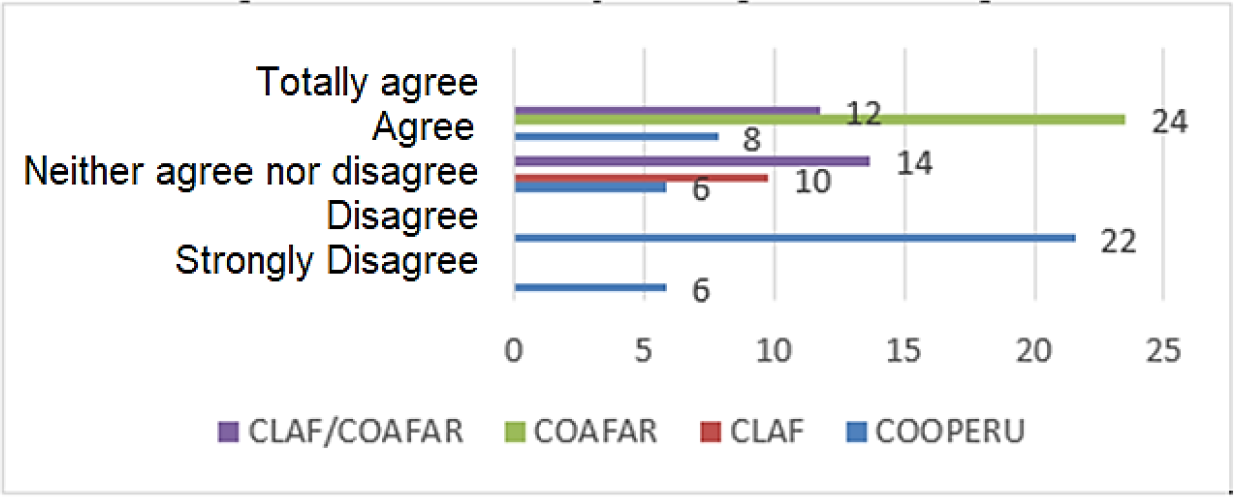
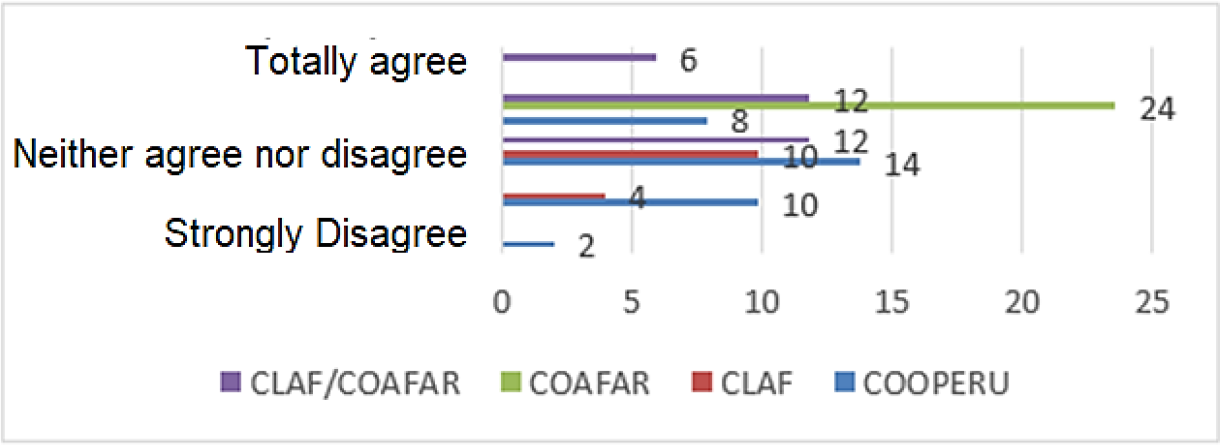
In question 13, the following was asked: In your opinion, do you, as a cooperative member, feel part of the cooperative? and the answers can be seen in chart 1.

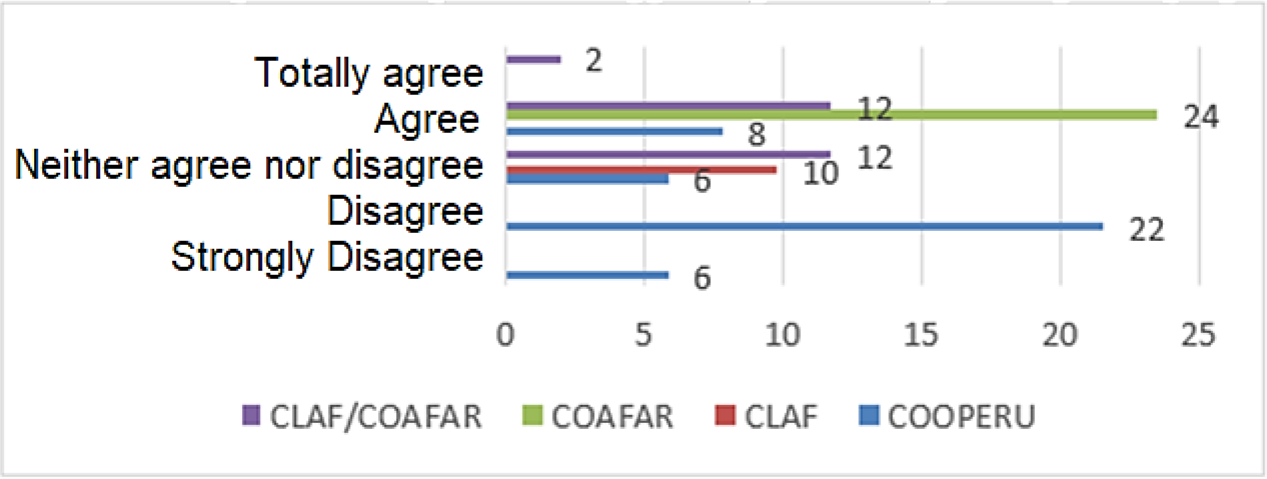
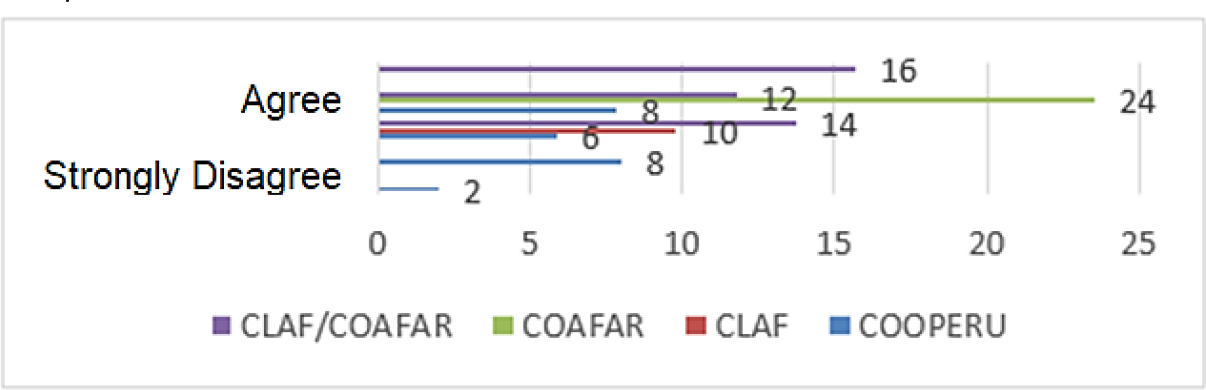
The COOPERU farmers show a more critical result regarding their cooperative, as they do not feel part of the cooperative, unlike CLAF and COAFAR farmers, who agree with the statement that they feel part of the cooperative. Next, we checked whether, in the farmers' opinion, cooperatives contribute to local and regional development, and the answers can be seen in chart 2.

Due to the feeling of belonging to a cooperative, the cooperative members of CLAF and COAFAR show better indicators, unlike the cooperative members of COOPERU, who show a critical result about this perception, which may be a reflection of not belonging to the cooperative, according to data found in question number 13. Similar characteristics were found in the work of Baccar et al. (2020) and Bisht, Rana and Ahlawat (2020).
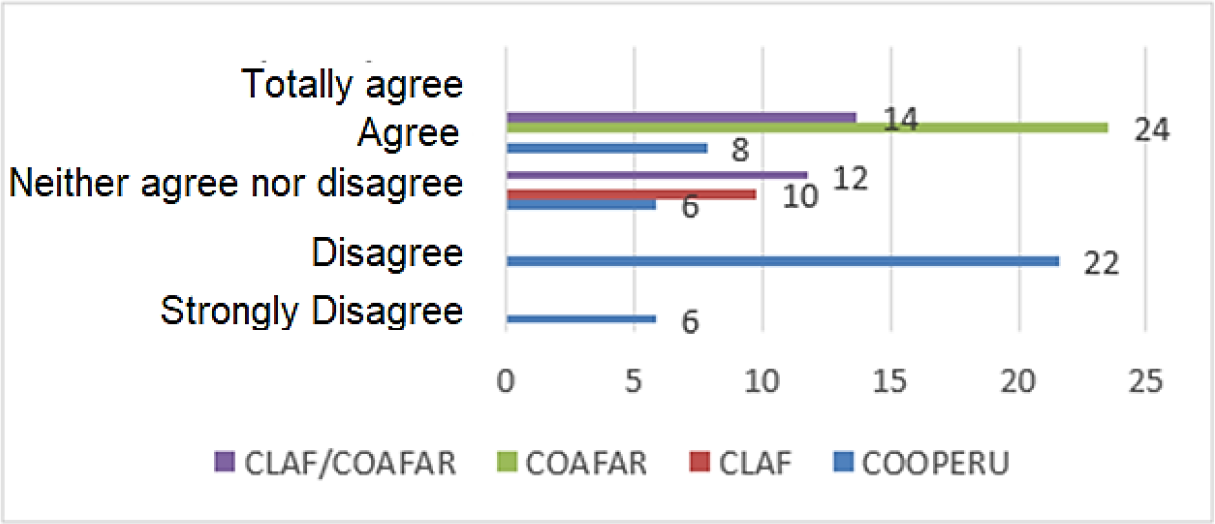
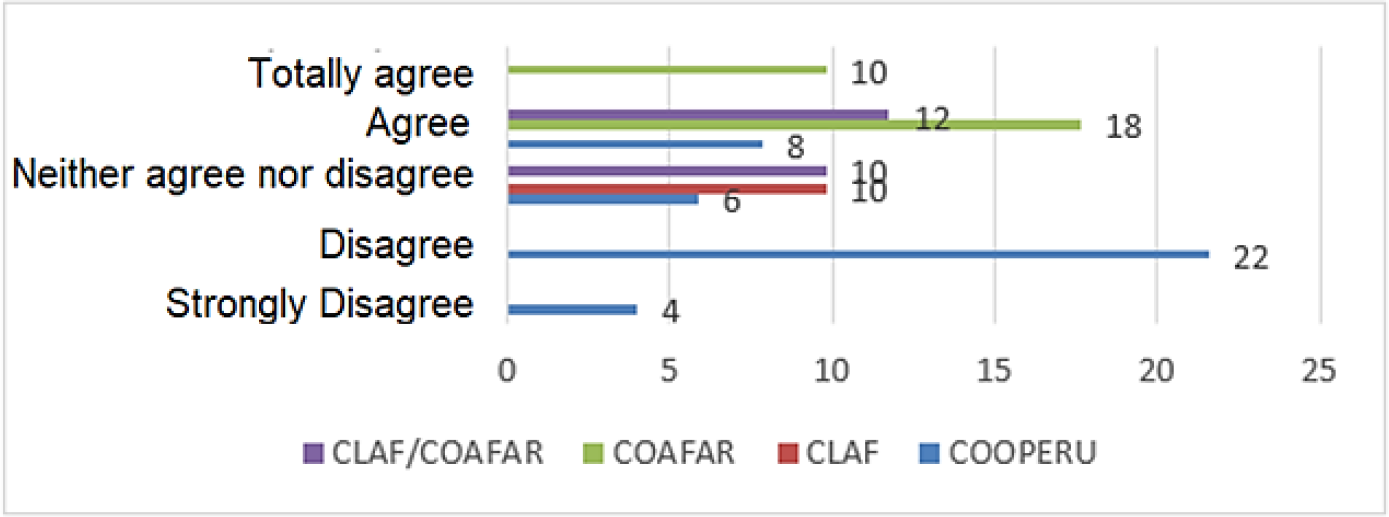
It was verified if the cooperatives support and strengthen family agriculture, according to the answers in chart 3.

The answers reinforce what was addressed in Nascimento, Collado and Benito (2019) research on the perception of the cooperatives' support to their cooperative members. As noted by the authors, if the support is feasible for the farmer, it is perceptive, otherwise, the perception is negative, as can be inferred from the data related to COOPERU, considering the dissatisfaction of the cooperative members.
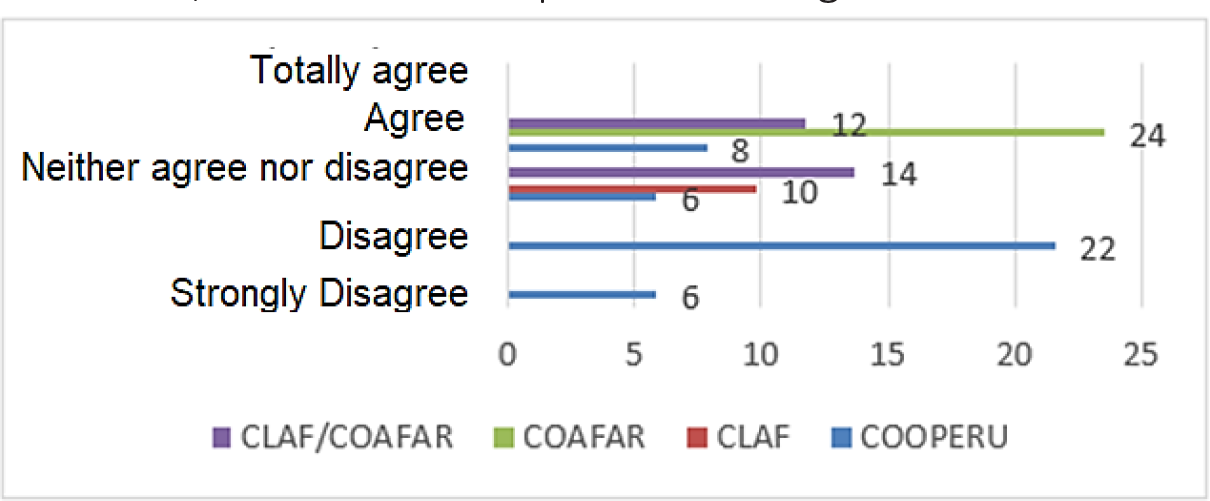
Question 16 investigates if the cooperatives encourage their members to seek knowledge, and the results are shown in chart 4:

The members of the cooperatives CLAF and COAFAR were able to realize that their cooperatives encourage their members to seek knowledge, some of them even mention training, courses, field days, and technical trips. COOPERU's members, on the other hand, showed a certain negativity regarding the perception that the cooperative encourages the search for knowledge, certainly as a reflection, once again, of not feeling like they are part of it.
Thus, farmers who feel part of the cooperative, who see the contribution to local and regional development, the strengthening of family farming, and the incentive to seek knowledge, feel more secure in the negotiation process of buying and selling their products, as observed in the case of the cooperatives in the municipality of Dois Vizinhos, CLAF and COAFAR. Different from the results shown by the members of Umuarama, from COOPERU, who show a greater disagreement regarding the security in relation to the negotiation process of buying and selling and the cooperative. This is a reflection of problems in the farmers' perception of the cooperative's actions. Similar cases were found in the research of Baccar et al. (2020), Bisht, Rana and Ahlawat (2020) and Nascimento, Collado and Benito (2019).
We asked if the cooperative is concerned about preserving the environment or, furthermore, if it develops actions to preserve the environment, for which we obtained the percentages shown in chart 5:
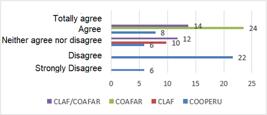
According to the literature surveyed, Castro, Rodríguez and Giagnocavo (2019) and Nascimento, Collado and Benito (2019) discuss the great challenges for cooperatives to make themselves perceived in their actions, policies, and even in their importance in the social environment in which they are inserted. In this study, this is evident when relating the data separately and observing that the farmers of COOPERU (Umuarama) have greater difficulty in realizing the importance of the cooperative, as well as its cooperative actions with the environment, knowledge, local and regional development, safety, training, and education for a more sustainable family farming.
Along with what Constanty and Zonin (2016) addresses, family farmers see the support of cooperatives as offering an opportunity for sustainability, quality of life, and organization in the management process, but as long as it favors them because when there is some clash or disagreement, there tends to be a certain process of denial of the perception of the cooperatives' actions.
Thus, a greater interaction, knowledge, and perception of the farmers associated with the cooperatives CLAF and COAFAR can be noticed, which is fully expected considering the number of years of association, the maturity of the relationship, and even the cooperative practices in the region, when compared to the initiatives observed in the municipality of Umuarama.
4.3 COOPERATIVE PRACTICES
In question 20, it was affirmed that cooperatives facilitate the purchase of equipment, machines, and utensils for production in general. The answers are shown in chart 6:
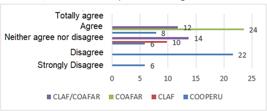
Cooperatives facilitate the purchase of equipment, machines, and utensils for production in general
The studies by Silva and Torres (2020) and Reyes et al. (2020) reveal data contrary to those found in this research. In the work of these authors, the cooperative members have a linear view of the cooperative practices developed by the cooperatives, unlike what was found in this question, in which the vast majority only agrees with the practices.
Question 21 states whether the cooperatives facilitate access to projects, credits, and financing, obtaining as a result the data in chart 7.

In general, a high percentage of respondents neither agree nor disagree, generating a certain indifference regarding the issue of access to projects, credit, and financing at the family farming cooperative. Respondents from the three cooperatives reported that they often seek access to credit at the Sicredi, Sicoob and Cresol credit unions.
The data highlight that cooperatives facilitate the negotiation power, allowing improvements in production and product quality, according to the farmers. It is necessary to draw attention to the answers of the cooperative members of COOPERU in relation to this item, regarding the variable 'I agree,' with the percentage of 55%; this is because the farmers have commercial practices only with the cooperative, hence the result so expressive; unlike the cooperative members of the municipality of Dois Vizinhos, whose satisfaction stems from the relationship and partnership with the cooperatives. Similar characteristics were observed in the works of Siwilva and Torres (2020), Reyes et al. (2020) and Galdeano-Gomez et al. (2017).
Reyes et al. (2020), when analyzing cooperatives in Japan, had the same perception as those found in this study, which should be taken into consideration and reference for the development and decision-making of its members. Galdeano-Gomez et al. (2017) presented evidence in his studies about the influence of cooperatives on family farming behavior, but this can be considered if there is a perception of farmers regarding the cooperative practices of the cooperative.
4.4 QUALITY OF LIFE AND MANAGEMENT
In question 37, farmers were asked to answer whether cooperatives contribute to greater social involvement among cooperative members, the answers to which are shown in chart 8.

Thus, there is a positive point regarding the social involvement provided by the cooperatives, given that most members agreed with the statement, which meets one of the pillars of sustainability which is the social aspect. Similar characteristics found in the answers to this question were observed in the works of Roos, Tidaker and Kallstrom (2019), Fuentes-Acuña and Marchant (2016) and Wojewódzka-Wiewiórska, Kłoczko-Gajewska and Sulewski (2019).
Therefore, cooperatives improve the quality of life and well-being of family farmers, with COOPERU's members showing a positive increase because in terms of quality of life and management they realize there is a greater acceptance of the cooperative. As for CLAF and COAFAR members, the perpetuation of cooperativism is observed since the members indicate the cooperative's actions in quality of life and management. The works of Roos, Tidaker and Kallstrom (2019), Fuentes-Acuña and Marchant (2016) and Wojewódzka-Wiewiórska, Kłoczko-Gajewska and Sulewski (2019). ratify what was found as answers to the question under analysis, understanding the importance of the cooperative with the cooperative member, thus improving their daily lives and quality of life.
In question 41, it was asked if the cooperatives favor the adoption of management practices, systems, and applications by the members, obtaining the answers shown in chart 9.

It can be observed that family farmers associated with COOPERU, when evaluating the cooperative's exclusive actions, always tend to disagree with the actions, while family farmers from the municipality of Dois Vizinhos, associated with COAFAR and CLAF, tend to make a regular evaluation of the cooperatives regarding the adoption of management practices, systems, and applications, revealing a lack in the cooperatives' administration and management towards their members.
In the last question of the block, number 42, it was asked if the cooperatives involve the members in the decision-making in meetings and assemblies. Chart 10 shows the data from the answers.

According to Wojewódzka-Wiewiórska, Kłoczko-Gajewska and Sulewski (2019), the quality of life of farmers is a complex concept that cannot be described simply as an indicator, because in addition to the economic situation, living conditions and mental comfort are analyzed. Therefore, from his research, it was observed that the quality of life of rural owners belonging to the so-called "family farming," when cooperated in family farming cooperatives, is an important element in the issue of social sustainability, thus determining the possibilities of sustainable development on their properties. Through these processes, the cooperative farmer shows a better quality of life than the private one, who must seek the isolated resolution of his/her problems.
4.5 SATISFACTION
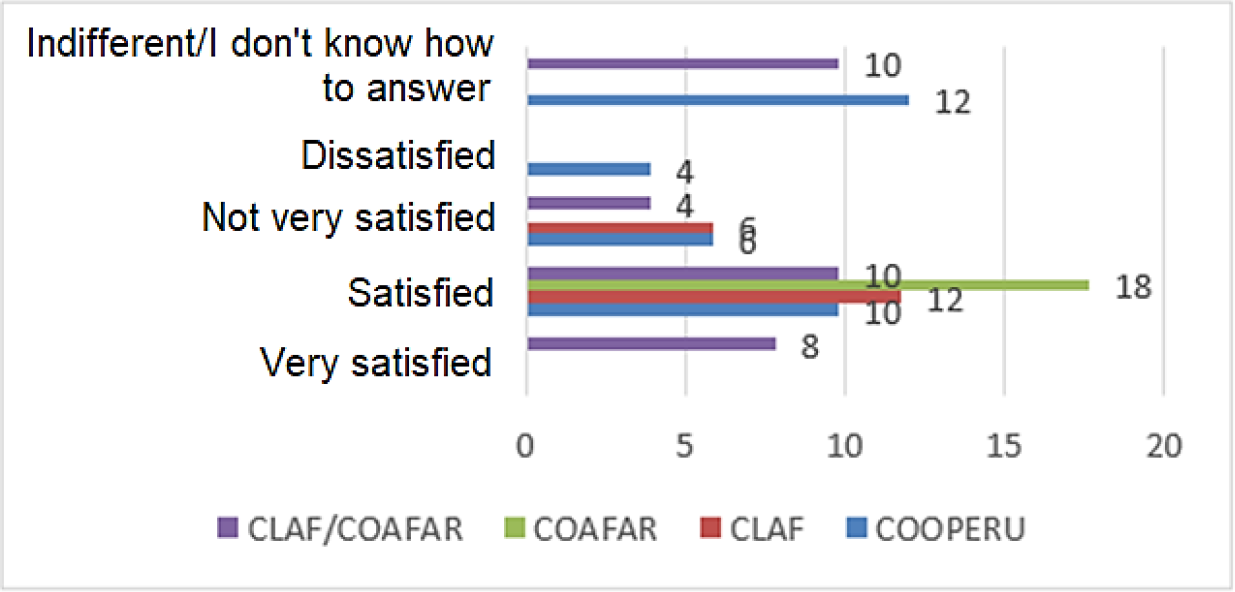
In the first question, number 43, the following was asked: does participating in the cooperative make me? The data are shown in chart 11.

In general, the result of the question under analysis can be classified as very positive, since most respondents declared themselves satisfied to participate in the cooperatives. However, it is known that this indicator is due to the farmers in the CLAF and COAFAR cooperatives, since COOPERU members oscillated triangularly between satisfied and dissatisfied, as a reflection of the first question of the survey regarding the feeling of belonging to the cooperative.
Chart 12 shows the data from the answers to question 45, which asked if the information obtained from the cooperative strengthens the decision-making process.

In general, family farmers associated with COOPERU, CLAF, and COAFAR are satisfied with their change in organization/management/information after joining the cooperative. Once again, COOPERU's members stand out by stating that they are satisfied with the work of the cooperative. Similar characteristics to those found in the answers to this question were observed in the works of Medeiros et al. (2012), Riedner et al. (2018) and Hooks et al. (2017).
Chart 13 shows the result of question 47, which asked how the cooperative's help in the sustainability process affects the farmer:
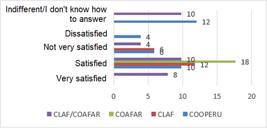
In question number 48, it was asked about the practices proposed by the cooperative. The data are shown in chart 14.
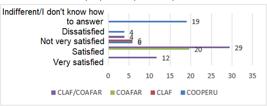
In assertion number 49, it was asked how the level of knowledge about sustainability after the association is, obtaining the following data as shown in chart 15:

As a whole, it was found that this data is worrisome, as most of the associated family farmers chose the variable indifferent/don't know how to answer about the growth of knowledge and profitability after their association. It may be that farmers are associated with the cooperatives only to market their products and are not able to measure their profitability (profit/loss). Regarding knowledge, the percentages obtained ratify the previous question about courses and training, highlighting the need for cooperatives to plan actions aimed at the formation and sustainable development of farmers.
Furthermore, the questionnaire asked if the members observed the possibility of family succession on their property, 75% said no, 20% said yes, and 5% that there might be family succession. All of them, when answering this question, affirmed that young people no longer want to stay in the rural area, due to the hard work, the lack of comfort, income, among others.
5 FINAL REMARKS
The farmers who were interviewed are from two regions of the state of Paraná, Umuarama - northwestern Paraná, and Dois Vizinhos - southwestern Paraná. Out of the grand total sample of 51 farmers, 75% are men and 25% are women, belonging to family farming, associated with family farming cooperatives.
Regarding the size of the rural property, 48% of the interviewees have properties of up to 5 hectares, 20% from 6 to 10 hectares, 16% from 11 to 15 hectares, 12% from 16 to 20 hectares, and only 2 farmers, corresponding to 4%, informed that their property has more than 20 hectares. Thus, we can see the importance of the cooperative for small farmers, who account for the largest share of members.
It was also found that 41% of the farmers have an income of up to 3 minimum wages, 24% from 4 to 6 minimum wages, 25% from 7 to 9 minimum wages, and 10% above 10 minimum wages. As for the level of education of the farmers surveyed, 10% have never studied, 35% have studied up to elementary school, 37% up to high school, 12% have done higher education, focused on the rural area, and only 6% have Master's/PhD level education.
The farmers supply their products to institutional programs and markets, obtaining a result as follows: 24% for open fairs, representing a total of 51 answers, 14% participate in PAA, PNAE, and the direct purchase, corresponding to 30 answers per program, 12% informed that they commercialize with restaurants, bars, and snack bars, with 25 answers, 10% commercialize with supermarkets, markets, and hotels, representing 20 answers each, and 4 answered that they do not supply, representing 2%.
As for the type of products sold, it was found that: 18% market vegetables, greens, and legumes, 11% seasonal/harvest fruits, 10% market tubers, cassava and roots, 10% cereal and grains (corn, soybeans, and wheat), 10% dairy products (milk and derivatives), 10% eggs, 7% baked goods, sweets and foodstuff, 7% pork, 5% honey, 3% meat and derivatives, 3% poultry and chicken, 3% sugar cane and derivatives, 2% juices, pulps and liquors, and 1% pasture, silage, and hay. Thus, the diversity of the same property is verified, obtaining 288 informed answers for a total of 51 farmers surveyed, an average of six crops and cultivations per rural producer.
As a summary, the following is a compilation of the variables studied in this paper compared to the results found in the survey with the farmers.
This paper aimed at analyzing the impacts of the actions of family farming cooperatives on the sustainability of rural producers in the municipalities of Umuarama and Dois Vizinhos, in Paraná state. To do so, the analysis was based on a questionnaire applied to the cooperative members who were willing to participate in the research.
Indeed, it was observed that the geographical region of the municipality of Dois Vizinhos is more oriented - and organized - towards cooperativism, so that the interaction of cooperatives with their members takes place in a more effective and direct way, via permanent contacts, meetings, training, technical assistance, assemblies, products and services, and others.
One can notice, in the block of questions about the perception of farmers and cooperative practices, that farmers in the municipality of Umuarama do not actively participate in the family farming cooperative. According to what was observed, the cooperative exists more in a documental form than in practice, and its actions are more restricted to the interests of its administrators than to the interests of its members. On the other hand, it is important to reinforce that the municipality is in a geographical region with a timid associative and cooperative culture, besides having few and limited initiatives in this segment, an organizational climate that does not favor the effective development of cooperative actions.
The southwest region portrays a greater absorption of the cooperativism and its practices, due to the migration and colonization of people from Rio Grande do Sul and Santa Catarina, in the last century, people who already came with a vision of implementing the cooperativism in the place. Of course, throughout the years, several institutions were helping in this process, such as credit unions, universities, and civil society sectors. Therefore, one can see that the big and strong cooperatives are in the west of Paraná.
The data gathered from the southwest region for the promotion and implementation of cooperativism are confirmed by the culture of its people, with more European characteristics (Germans, Italians, and Poles). On the other hand, the culture observed in the Northwest region, especially in the municipality of Umuarama, is nationalized, being mostly 'Paulistas' and northeasterners from Brazil.
Also, it was possible to observe that the farmers from CLAF and COAFAR, in Dois Vizinhos, market their products more to Institutional Programs (PAA, PNAE, and Direct Purchase), which are often indicated and registered via the cooperative. In Umuarama, all the research participants reported participating in a program called 'Sacolão do Produtor' to sell their products, which is managed by the city government and has the secondary support of the cooperative.
It was possible to observe, as before, that in the cooperative COOPERU, in the municipality of Umuarama, its practices are almost null, given the lack of interest/motivation of the farmers in approaching the cooperative due to administrative hindrances and by the cooperative's management that does not seem to strive to be closer to its members and provide them with services.
In the same sense, COOPERU develops actions that have fragile participation of cooperative farmers, such as, the 'Feira Faísca' - organic products fair. The participation of farmers in the PAA, PNAE, and Direct Purchase programs occurs without the direct intervention of the cooperative, they only use an available truck, but there is no management of products by the cooperative. On the other hand, it was observed that farmers do not understand the importance of the cooperative for their sustainability practices, economic, social, and environmental.
Regarding the environmental aspect of COOPERU, everyone reports the existence of the 'Lixo que Vale - Moeda Verde' project, which started with the family farming cooperative in partnership with a cooperative of recyclers from Umuarama, but which is now managed and cared for by a city government agency.
As CLAF and COAFAR farmers are better related to the cooperatives, they can realize the practices of cooperative actions and sustainability, which are accepted and worked on via the cooperative and through the technicians. Farmers deliver their products to the cooperative, which manages the sale and apportionment for participation in institutional programs. These cooperatives are considered partners of their members, who help each other in production, logistics, payment, market supply, product valuation, and profitability. As practices, one can mention the control of the cooperative members' products, delivery of the products to the cooperative, commercialization via the cooperative, training on environmental practices, and sustainability.
Regarding the farmers' perception of the cooperative's actions, a cooperative that is present in the daily life of its members, making technicians available to help them with their demands, contributing to local and regional development, with the distribution of surplus, investments, strengthening family farming, helping in the process of negotiating products, as well as developing actions that contribute to the environment and its preservation, has a positive impact on the sustainability of its members. However, it can be noted that COOPERU members do not feel impacted by these actions, unlike CLAF and COAFAR members.
With regard to the quality of life and management, the members observed whether the cooperatives contribute to social involvement, interaction, integration, and solidarity among the members, improve the quality of life and well-being of the farmers, help the survival of small farm cultures, whether they favor the adoption of management practices, systems, and applications by the members, and if they involve the members in decision-making in meetings and assemblies, generating sustainability over the quality of life and management. In this research, it was found that for COOPERU members these actions are indifferent to the sustainability process of their farmers; unlike CLAF and COAFAR members, who observed just the opposite.
As a suggestion for COOPERU, the need for the cooperative to gather its members and start the cooperativism process again is emphasized, with the reading of its statute, so that the farmers recognize themselves as cooperative members and, thus, can spread the cooperativism and add value to the cooperative and to their business, with the feeling of being part of it.
For the farmers in Dois Vizinhos, the CLAF and COAFAR cooperatives, more attention needs to be paid to the cooperative practices that have not been noticed by their members; therefore, as a suggestion, an assembly should be scheduled and presented to the members what the cooperative has been doing and contributing to the region, impacting sustainability.
Finally, it is suggested here that future studies should be conducted to investigate the perception of cooperatives in relation to their members, from the point of view of the same variables addressed in this study, given the lack of research and publications in this regard.
REFERENCES
- ABRAMOVAY, R. Agricultura familiar e desenvolvimento territorial. Reforma agrária, Rio Claro, v. 28, n. 1, p. 49, 1998.
- BACCAR, M., BOUAZIZ A., DOGUÉ, P., GAFSI, M., GAL, P. L. Sustainability Viewed from Farmers: perspectives in a resource-constrained environment. Sustainability, Basiléia, Suiça, v. 12, n. 20, p. 8671, 2020.
- BISHT, I. S., RANA, J. C., AHLAWAT, S. P. The Future of Smallholder Farming in India: some sustainability considerations. Sustainability, Basiléia, Suiça, v. 12, n. 9, p. 3751, 2020.
- CARNEIRO, L. M; CHEROBIM, A. P. M. S. Teoria de agência em sociedades cooperativas: estudo bibliométrico a partir da produção científica nacional. In: CONGRESSO BRASILEIRO DE CUSTOS-ABC, 18., Rio de Janeiro, 18 novembro, 2011. Anais [...]. Rio de Janeiro, 2011.
- CASTRO, A., RODRÍGUEZ, M. D. L., GIAGNOCAVO, C. Six Collective Challenges for Sustainability of Almería Greenhouse Horticu lture. International Journal of Environmental Research and Public Health, Basiléia, Suiça, v. 16, n. 21, p. 4097, 2019.
- CONSTANTY, H. F. P. H., ZONIN, W. J. Programa Nacional de Alimentação Escolar (PNAE) e sustentabilidade: o caso do município de Marechal Cândido Rondon. DMA - Desenvolvimento e Meio Ambiente, [s.l], v. 36, p. 371-92, abr. 2016.
- FOOD AND AGRICULTURE ORGANIZATION OF THE UNITED NATIONS [FAO]. The state of food and agriculture: innovation in family farming. Roma: FAO, 2017.
- FUENTES-ACUÑA, N. R.; MARCHANT, C. ¿ Contribuyen las prácticas agroecológicas a la sustentabilidad de la agricultura familiar de montaña? El caso de Curarrehue, región de la Araucanía, Chile. Cuadernos de Desarrollo Rural, [s.l], v. 13, n. 78, p. 35-66, 2016.
- GALDEANO-GOMEZ, E.; ZEPEDA-ZEPEDA, J. A.; VEGA-LÓPEZ, L. L.; PIEDRA-MUÑOZ, L. Family farm’s features influencing socio-economic sustainability: an analysis of the agri-food sector in southeast Spain. New Medit: Mediterranean Journal of Economics, Agriculture and Environment= Revue Méditerranéenne dʹEconomie Agriculture et Environment, [s.l], v. 16, n. 1, p. 50, 2017.
- GIL, A. C. O método fenomenológico na pesquisa em administração. Caderno de Pesquisa Pós-Graduação Imes, [s.l], v. 4, n. 8, p. 33-42, 2003.
- HOOKS, T., MACKEN-WALSH, A., McCARTHY, O., POWER, C. Farm-level viability, sustainability and resilience: a focus on cooperative action and values-based supply chains. Studies in Agricultural Economics, [s.l], v. 119, n. 3, p. 123-29, 2017.
- MEDEIROS, A. F. Q.; PORTO, W. S.; SOUZA, J. D.; OLIVEIRA, D. D. L. Control and assessment of performance in family agriculture from the perspective of sustainability of farmers. Custos e @gronegócios online, [s.l], v. 78986, n. 3, p. 154-71, 2012.
- MEINEN, E., PORT, M. O cooperativismo de crédito ontem, hoje e amanhã Brasília: Confebras, 2012.
- MELO, L. E. L., CÂNDIDO, G. A. O uso do método IDEA na avaliação de sustentabilidade da agricultura familiar no município de Ceará-Mirim - RN. Reunir: Revista de Administração, Contabilidade e Sustentabilidade, [s.l], v. 3, n. 2, p. 1-19, 2013.
- NASCIMENTO, F. S., COLLADO, Á. C., BENITO, R. M. Economía social y solidaria y agroecología en cooperativas de agricultura familiar em Brasil como forma de desarrollo de una agricultura sostenible. Revista de Economía Pública, Social y Cooperativa, [s.l], n. 98, p. 189-211, 2019.
- ORTMANN, G. F.; KING, R. P. Agricultural cooperatives I: history, theory and problems. Agrekon, [s.l], v. 46, n. 1, p. 40-68, 2007.
- REYES, S. R. C., MIYAZAKI, A.; YIU, E.; SAITO, O. Enhancing sustainability in traditional agriculture: indicators for monitoring the conservation of globally important agricultural heritage systems (GIAHS) in Japan. Sustainability, [s.l], v. 12, n. 14, p. 5656, 2020.
- RIEDNER, L. N., BERTOLINI, G. R. F., RIBEIRO, I., BRANDALISE, L. T. Avaliação da sustentabilidade da agricultura familiar no Oeste do Estado do Paraná, em propriedades produtoras de mandioca, considerando sua participação nas fecularias. Revista Metropolitana de Sustentabilidade, [s.l], v. 8, n. 1, [s.p], 2018.
- ROOS, E., TIDAKER, H., KALLSTROM, H. How well is farmers social situation captured by sustainability assessment tools? A Swedish case study. International Journal of Sustainable Development & World Ecology, [s.l], v. 26, n. 3, p. 268-81, 2019.
- SILVA, R. A., TORRES, M. B. R. Sustentabilidade e educação ambiental na agricultura familiar: o caso de uma cooperativa no semiárido potiguar. DMA - Desenvolvimento e Meio Ambiente, [s.l], v. 55, n. 1, p. 300-13, 2020.
- WOJEWÓDZKA-WIEWIÓRSKA, A.; KŁOCZKO-GAJEWSKA, A.; SULEWSKI, P. Between the social and economic dimensions of sustainability in rural areas - in search of farmers’ quality of life. Sustainability, [s.l], v. 12, n. 1, p. 148, 2019.

 Source: Elaborated by the authors, 2022.
 Source: Elaborated by the authors, 2022.
 Source: Elaborated by the authors, 2022.
 Source: Elaborated by the authors, 2022.
 Source: Elaborated by the authors, 2022.
 Source: Elaborated by the authors, 2022.
 Source: Elaborated by the authors, 2022.
 Source: Elaborated by the authors, 2022.
 Source: Elaborated by the authors, 2022.
 Source: Elaborated by the authors, 2022.
 Source: Elaborated by the authors, 2022.
 Source: Elaborated by the authors, 2022.
 Source: Elaborated by the authors, 2022.
 Source: Elaborated by the authors, 2022.
 Source: Elaborated by the authors, 2022.