 Growth dynamics of zucchini according to soil tillage in organic crop systems
ABSTRACT
Climate change threatens vegetable production in tropical regions, making sustainable practices essential. This study evaluated the growth, biomass allocation, and yield of zucchini cultivation in an organic system under two soil managements: No-Till Vegetable System (NTVS) and conventional tillage (CT). The experiment was conducted in 2020/2021 in Ipê, RS, Brazil, using a 2 × 6 (two soil tillage systems × six sampling dates) factorial in randomized blocks with four replications. Growth and biomass partitioning were assessed at 0, 15, 30, 45, 60, and 85 days after transplanting (DAT). Statistical analysis was performed. There was a significant interaction between tillage and evaluation date for dry biomass accumulation. Initial growth was greater under CT, likely due to short-term nutrient availability. However, NTVS promoted higher vegetative, reproductive, and total dry mass production from 30 DAT onward, reaching peaks of 132.67, 76.16, and 176.62 g/plant, respectively, compared to 91.46, 49.34, and 124.07 g/plant under CT. For both treatments, the maximum absolute growth rate occurred between 30-45 DAT, while the maximum relative growth rate was observed between 15-30 DAT. The yield of zucchini was higher under the NTVS (11.4 t/ha) compared to CT (7.7 t/ha).
Keywords:
Cucurbita pepo L.; agroecology; vegetable production; no-till systems; biomass partitioning
RESUMO
As mudanças climáticas ameaçam a produção de hortaliças em regiões tropicais, tornando essenciais as práticas sustentáveis. O objetivo deste estudo foi avaliar o cultivo, o crescimento, a partição de biomassa e a produtividade de abobrinha italiana em sistema orgânico sob dois manejos de solo: Sistema de Hortaliças em Plantio Direto (NTVS) e preparo convencional do solo (CT). O experimento foi conduzido em 2020/2021, em Ipê, RS, Brasil, utilizando um esquema fatorial 2 × 6 (dois sistemas de preparo do solo × seis datas de amostragem) em blocos ao acaso, com quatro repetições. O crescimento e a partição de biomassa foram avaliados aos 0, 15, 30, 45, 60 e 85 dias após o transplante (DAT). Realizou-se análise estatística dos dados. Houve interação significativa entre o manejo do solo e a data de avaliação para o acúmulo de biomassa seca. O crescimento inicial foi maior sob CT, provavelmente devido à disponibilidade imediata de nutrientes. Entretanto, o NTVS promoveu maior produção de massa seca vegetativa, reprodutiva e total a partir dos 30 DAT, atingindo picos de 132,67; 76,16 e 176,62 g/planta, respectivamente, em comparação a 91,46; 49,34 e 124,07 g/planta sob CT. Em ambos os tratamentos, a máxima taxa absoluta de crescimento ocorreu entre 30-45 DAT, enquanto a máxima taxa relativa de crescimento foi observada entre 15-30 DAT. A produtividade da abobrinha italiana foi superior no NTVS (11,4 t/ha) em comparação ao CT (7,7 t/ha).
Palavras-chave:
Cucurbita pepo L.; agroecologia; produção de hortaliças; sistemas de plantio direto; partição de biomassa
Many countries in tropical and subtropical regions are expected to be more vulnerable to climate change, with the intensification of extreme weather events, changes in the water regime, and rising temperatures being the main effects that will affect and harm their agricultural sectors. Vegetable production typically relies on conventional tillage and extensive input use, which can change soil chemical, physical and biologic properties, contributing to erosion and compaction (Cerdà et al., 2020). These factors can lead to a significant decline in soil quality which in turn affects crop growth (Ferreira Junior et al., 2023).
Several agricultural practices are thought to have a reduced impact on the environment, including organic production and soil conservation practices. Organic production systems act as a mechanism to enhance agrobiodiversity, increasing the complexity and resilience of agroecosystem (Ciaccia et al., 2019; Testani et al., 2019). In the same way, it becomes a feasible alternative to decrease the use of mineral fertilizers (Ferreira Junior et al., 2023), which is one of the greatest issues related to low yield on organic farming (Timsina, 2018).
The No-Till Vegetable Systems (NTVS), through no-till, crop rotation, incorporation of around 10 t/ha of biomass, and adequate nutrition (Diniz et al., 2017; Timm et al., 2024), contribute to carbon sequestration, reduce greenhouse gas emissions, and improve soil structure. Consequently, they enhance soil water infiltration and retention, promote nutrient cycling, reduce the risk of erosion, increase microbial biomass, and improve soil organic matter (Loss et al., 2015; Webler et al., 2016; Mauri et al., 2024), that are crucial for healthy crop growth (Watthier et al., 2022).
Growing crops without tilling the soil, using these residues as organic mulch, can reduce weeds competition, potentially reduce herbicide use (Branco et al., 2022; Silva et al., 2024). Additionally, the decomposition of cover crops residues improves nutrient cycling, with residual effects on subsequent cultivated plants.
Mauri et al. (2024) showed that the No-Till Vegetable System can improve the total porosity and improve physical attributes over time, enhance stocks of carbon (C) and nitrogen (N), especially in long-term no-till systems, increasing microbial biomass and presenting lower metabolic quotient, indicating improved microbial activity and reduced C-CO2 emissions.
Environmental and climatic factors directly affect crop yield by regulating essential physiological processes, including cell division, plant growth, and the photoassimilates allocation (Seeda et al. 2021). In zucchini (Cucurbita pepo L.), these processes are particularly sensitive to water availability and temperature, as they directly influence flowering, fruit set and fruit growth rate (Strassburger et al., 2011).
As a fast-growing, short-cycle crop, zucchini requires management practices that modify edaphoclimatic conditions (e.g., balanced fertilization, adequate irrigation, and soil cover) to optimize water and nutrient uptake, reduce thermal stress, and maximize photosynthetic efficiency (Amaro et al., 2021). These strategies promote higher fruit quality and increase crop yield.
Based on this discussion, it is evident that adaptations in vegetable production are essential to mitigate the effects of climate change and enhance the resilience of vegetable production systems. Accordingly, it can be inferred that the adoption of NTVS in zucchini cultivation may promote a more favorable biomass partitioning pattern and lead to increased productivity when compared to conventional soil management systems. Therefore, the aim of this study was to evaluate the growth, biomass allocation, and yield of zucchini under organic management in conventional and no-till systems.
MATERIAL AND METHODS
The experiment was conducted during the 2020/2021 season to evaluate zucchini cultivation on the Zanotto family’s organic farm, located in the municipality of Ipê, Rio Grande do Sul, Brazil (28°47'00.0"S, 51°17'00.0"W; 760 m altitude).
The climate is classified as Cfb according to Köppen (Alvares et al., 2013). It is a temperate climate with mild summers and evenly distributed rainfall throughout the year, with no dry season. The mean temperature of the warmest month does not exceed 22°C, and the annual precipitation ranges from 1,100 to 2,000 mm. During the experiment, the highest temperature recorded was 33.8°C on November 25, 2020, and the lowest was 6.8°C on November 5, 2020 (Figure 1). The total precipitation during the period was 291.1 mm.

Air temperature and precipitation recorded by INMET at the Caxias do Sul (RS) meteorological station during the zucchini cultivation period (October 14, 2020 to January 13, 2021).
The soil is classified as an Aluminic Ferralsol according to the WRB (FAO, 2015). This classification refers to clayey soils that are moderately to well-drained and derived from basalt. Soil samples were collected in March 2020 from the 20 cm layer to determine their chemical characteristics. The analysis revealed the following results: pH = 6.4; base saturation = 76.1%; clay content = 60%; cation exchange capacity (CEC) at pH 7.0 = 15 cmolc/dm3; organic matter = 3.3%; available phosphorus (P) > 100 mg/dm3; potassium (K) = 183.3 mg/dm3; sulfur (S) < 4.6 mg/dm3; calcium (Ca) = 7.6 cmolc/dm3; magnesium (Mg) = 3.4 cmolc/dm3; and aluminum saturation (Al³⁺) = 2%. Fertilization was applied to the entire area according to the results of the soil analyses.
In April 2020, soil preparation involved subsoiling and harrowing across the entire area. Subsequently, 1.0 t/ha of Niorg® - a fertilizer composed of manure and poultry litter (1.5% total N, 20% organic carbon, 25% moisture, pH 8.0, and CEC/C 17.0) was broadcast-applied along with 0.3 t/ha of gypsum. Following this, the soil was tilled again using subsoiling and harrowing at depths of 60 cm and 30 cm, respectively.
The experiment was conducted in a 2 × 6 factorial scheme (two soil tillage systems × six sampling dates), arranged in a randomized block design with four replications. Each experimental plot measured 144 m². The treatments combined two soil tillage systems: No-Till Vegetable System (NTVS) and Conventional Tillage (CT), with zucchini biomass sampling at six different times: 0, 15, 30, 45, and 60 days after transplanting (DAT), and at the end of the crop cycle (85 DAT).
The NTVS treatment involved the use of intercropped winter cover crops, specifically rye (Secale cereale L.) and black oat (Avena strigosa Schreb). The intercropping system consisted of a mixture of 80% oats and 20% rye, with a density of 80 kg/ha. Cover crop biomass was quantified 140 days after sowing (DAS) in a random area using a square sampling tool of 0.50 x 0.50 m (0.25 m2).
After sampling, the biomass was dried in a forced-air oven at 65°C for 72 hours. The cover crops produced 19 t/ha of dry mass. At 150 DAS (i.e., when the grains are at the milky stage of development), the cover crops were rolled with a heavy wooden log dragged by a tractor (Schimitt et al., 2019).
In contrast, the CT treatment involved leaving the area fallow during winter, allowing the growth of spontaneous vegetation, followed by soil preparation using two implements: a plow or leveler and a rotary hoe, prior to zucchini planting.
The transplant of zucchini (Cucurbita pepo cv. Antonella®) seedlings occurred immediately afterward, on October 14, 2020. Spacing was set at 1.0 × 1.0 m, resulting in a planting density of 10,000 plants/ha. Seedlings were produced in expanded polystyrene trays with 128 cells (30 mL). At the stage of three fully expanded leaves, the seedlings were transplanted. At 30 days after transplanting (DAT), a topdressing fertilization with 0.30 t/ha of Niorg® was applied to both CT and NTVS plots.
Cultural practices during zucchini growing cycle included controlling the pickleworm (Diaphania hyalinata) with neem oil application twice per cycle and managing spontaneous plants in CT plots with two mowings per cycle. Harvesting was performed daily, with fruits measuring 16 to 20 cm in length classified as marketable.
For growth determination and biomass partitioning, nine central zucchini plants were selected from each plot at 0, 15, 30, 45, 60, and 85 DAT. For the final evaluation, three plants per plot were used. Subsequently, the plants were separated into two fractions: vegetative (leaves and stems) and reproductive (flowers and fruits).
Moreover, the fractions were placed in paper bags and dried in an oven with forced air circulation at 65°C until a constant mass was reached.
From the dry biomass of each fraction dry mass partitioning was calculated (Hunt, 1990; Benincasa, 2003). Thereafter, we determined the vegetative structure dry mass (g/plant), reproductive structure dry mass (g/plant), total dry mass (g/plant), vegetative dry mass partitioning (%), reproductive dry mass partitioning (%), absolute growth rate (g/plant/day), relative growth rate (g.g/day), leaves dry mass vs. vegetative dry mass (%), stem dry mass vs. vegetative dry mass (%) (Hunt, 1990; Benincasa, 2003). The growth rate was calculated using the given equations:
(Equation 1) Absolute growth rate (AGR) (g/plant/day) = P2 - P1/t2 − t1
(Equation 2) Relative growth rate (RGR) (g.g/day) =[ln(P2) - ln(P1)]/t2 −t1
Where,
P1: Dry biomass production on the initial sampling day (g/plant)
P2: Dry biomass productionat on the final sampling day (g/plant)
t1 = Initial sampling date (days after transplanting)
t2 = Final sampling date (days after transplanting)
Statistical analyses were performed using RStudio® software (Version 4.2.2). The Shapiro-Wilk and Levene’s tests were applied to verify the assumptions of normality and homogeneity of variance, respectively. To evaluate the effects of the factors and their interaction, analysis of variance (ANOVA) was conducted using the F-test (p < 0.05). When a significant interaction was detected, regression analyses were performed.
RESULTS AND DISCUSSION
The accumulation of zucchini vegetative dry mass showed a significant interaction between soil tillage and evaluation date (Table 1) with a cubic model adjustment with an S-shaped behavior for both Conventional Tillage (CT) and No-Till Vegetable System (NTVS) (Figure 2A). Starting from 21 DAT, the NTVS surpassed the CT treatment, reaching its peak around 70 DAT (132.67 g/plant), while CT reached its highest point at 70 DAT (91.46 g/plant). For the CT treatment, the highest accumulation of vegetative biomass occurred between 0 and 15 DAT, being approximately 30 times greater than on the beginning of the period (0.16 to 4.86 g/plant), while for NTVS, this period occurred between 15 and 30 DAT, with a biomass increase of around 123 times (0.323 to 39.91 g/plant).
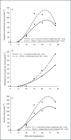
Dry mass accumulation of zucchini structures over days after transplanting (DAT) under two cultivation systems: conventional tillage (CT) and no-till vegetable system (NTVS). (A) Vegetative structure dry mass, (B) reproductive structure dry mass, and (C) total dry mass. The curves represent polynomial regression models fitted for each cultivation system. The equations (p > 0.05) and coefficients of determination (R2) are shown within each graph. CT: continuous line; NTVS: dashed line. Ipê-RS, UFRGS, 2020/2021.
Analysis of variance (ANOVA) F-values for the effects of sampling date, soil tillage system, and their interaction on zucchini dry mass variables (p < 0.05), with corresponding coefficients of variation (CV%). VSDM = vegetative structure dry mass. RSDM = reproductive structure dry mass. TDM = total dry mass. Ipê-RS, UFRGS, 2020/2021.
For reproductive dry mass, which also showed a significant interaction between the two factors (Table 1), both treatments exhibited quadratic behavior (Figure 2B). NTVS tended to accumulate more biomass from 35 DAT until the end of the experiment, reaching a maximum value of 76.16 g/plant, compared to 49.34 g/plant in the CT treatment. In both cases, the most significant increase in reproductive biomass occurred between 15 and 30 DAT, with an approximately 12.5-fold increase in CT (0.41 to 5.12 g/plant) and around a 6-fold increase in NTVS (0.835 to 4.94 g/plant). However, in absolute terms, the highest biomass gain was recorded between 60 - 85 DAT, with 25.35 g/plant for CT and 42.125 g/plant for NTVS.
Total dry mass likewise exhibited a significant interaction between sampling date and soil tillage system (Table 1). Both treatments exhibited a cubic growth pattern (Figure 2C). The NTVS treatment showed a trend of greater accumulation compared to CT starting at 18 DAT. Both curves demonstrated an initial slow growth phase during the first 30 days, followed by a period of rapid accumulation between 30 and 75 DAT, and finally a decline or plateau as they approached 90 DAT. The peak of dry mass accumulation occurred at 70 DAT for both treatments, reaching 124.07 and 176.62 g/plant for CT and NTVS, respectively. The greatest absolute accumulation occurred between 30 and 45 DAT in both treatments, reaching 41.38 g/plant in CT and 65.56 g/plant in NTVS. However, the highest relative increase was observed between 0 and 15 DAT, with biomass increasing by 22-fold in CT and 22.5-fold in NTVS.
The results obtained for dry matter accumulation in the vegetative and reproductive structures (Figure 2A), as well as in total dry mass (Figure 2C), showed that plants grown under NTVS accumulated greater dry matter in all organs compared to those grown under CT. The CT showed greater initial dry matter accumulation in all evaluated plant fractions, which may be directly associated with the type of soil tillage adopted.
In general, soil disturbance promoted by conventional tillage tends to favor, in the short term, a greater release of nutrients due to increased soil aeration, enhanced microbial activity, and accelerated decomposition of soil organic matter (SOM), resulting from the breakdown of soil aggregates (Loss et al., 2015;). This temporary increase in nutrient availability may have contributed to the greater plant growth observed during the early stages of development. However, in the long term, no-till systems play a key role in preserving and improving soil quality, as they reduce SOM mineralization and promote the accumulation of total organic carbon (TOC) (Comin et al., 2018; Loss et al., 2020), as well as improving soil fertility attributes and nutrient availability (Santos et al., 2017).
In addition, this practice favors the preservation of soil structure and aggregate stability (Loss et al., 2015; Comin et al., 2018), which stimulates root system development and increases the plant's ability to explore water and nutrients. Moreover, no-till also contributes to the maintenance of microbiological activity (Lange et al., 2015). This explains why, from 30 DAT onwards, plants grown under NTVS began to show greater dry biomass accumulation in the vegetative structure compared to plants grown under CT. Similarly, from 45 DAT onwards, this greater accumulation was also observed in the reproductive structure, resulting in a higher total dry mass accumulation under NTVS than under CT throughout the entire cycle. As evidence of this behavior, at 85 DAT, the NTVS reached a maximum estimated value of 76.16 g/plant for reproductive biomass, while CT reached 49.34 g/plant, representing an increase of over 50% relative to the conventional system. Consequently, the yield of zucchini was higher under the NTVS system (11.4 t/ha) compared to CT (7.7 t/ha).
Other factors associated with soil cover may also have positively influenced biomass accumulation in plants under NTVS. The mulch on the soil surface acts as a thermal regulator, capable of modulating heat exchange and, therefore, attenuating the soil temperature variation coefficient (Webler et al., 2016; Kader et al., 2017). This buffering role contributes to maintain soil moisture, in addition to providing more stable and suitable thermal conditions for plant development (Mauri et al., 2024). Moreover, the presence of mulch on the soil surface acts as a physical barrier capable of reducing incident solar radiation, which may directly affect the germination process of weed seeds (Schwartz-Lazaro et al., 2021; Nath et al., 2025).
Changes in the physical environment promoted by the mulch, such as the reduction of light, temperature, and fluctuations in soil moisture, can significantly modify the germination dynamics and establishment of weed seeds (Mauri et al., 2024). This mechanism may have been beneficial for zucchini cultivation under the NTVS system, since the lower population density of weed species simultaneously reduces intraspecific competition among them, resulting in greater availability of resources for the crop of interest.
On the other hand, soil disturbance in conventional systems can promote the reactivation of the weed seed bank, favoring an increase in the population of these species and, consequently, intensifying competition with the crop. Furthermore, the use of mulch derived from cover crops managed with a roller-crimper has proven to be an effective strategy for weed management, especially in organic zucchini production systems (Ciaccia et al., 2016). Corroborating these results, Nath et al. (2025) highlighted that the adoption of conservation practices, combined with the use of cover crops and herbicides, can effectively control weed species such as Cyperus rotundus, in addition to favoring increased agricultural productivity.
It is important to highlight that the straw of cover crops left on the soil surface can also exert a residual effect (Watthier et al., 2022) on the growth, dry matter accumulation, and biomass partitioning of zucchini plants. During the decomposition process of the straw, the nutrients contained in the plant tissues are gradually remineralized and returned to the soil, becoming available for uptake by the crop (Antonio et al., 2021). This nutrient cycling promoted by cover crops can contribute to the improvement of soil fertility and provide essential elements (Watthier et al., 2023) for the proper development of zucchini plants under NTVS conditions.
Corroborating this effect, Ginakes & Grossman (2021), evaluating different cover crop residue compositions under zone tillage in an organic production system of yellow crookneck squash (Cucurbita pepo var. torticollis Harz), observed fruit yields 1.6 times higher than the average yield considered standard for the species under conventional systems in 2019. These results were mainly attributed to the soil tillage strategy adopted in the experiment, which enhanced biomass nitrogen content while simultaneously providing high-quality cover crop residues that supported efficient nitrogen mineralization in the soil.
The absolute growth rate (AGR) is presented as a step plot (Figure 3B), which reflects the discrete intervals at which measurements were taken (15 days). This type of graph illustrates the AGR as constant within each time interval, highlighting abrupt changes between successive periods after transplanting. The highest daily growth was 4.04 g/plant/day for CT at 45 DAT, while for NTVS it was 7.3 g/plant/day at the same period (45 DAT). After the 45 DAT, the AGR started to decrease, reaching 0.54 and 0.06 g/plant/day at 85 DAT for CT and NTVS, respectively. It is possible to divide the AGR into three phases for both treatments. The first is a slow initial growth between 0 and 30 DAT, which corresponds to early development and the emission of vegetative structures. This is followed by a rapid growth phase from 30 to 60 DAT, corroborated by the increase in reproductive structures, with the emission of flowers and subsequently fruits. From 60 to 85 DAT, there is a decline in AGR, mostly related to fruit maturation and a reduction in vegetative activity, such as leaf senescence, which is also reflected in the total dry mass.

Relative (A) and absolute (B) growth rates of zucchini plants over days after transplanting (DAT) under two cultivation systems: conventional tillage (CT) and No-Till Vegetable System (NTVS). Growth rates were calculated based on total dry mass accumulation. CT: continuous line; NTVS: dashed line. Ipê-RS, UFRGS, 2020/2021.
Different fruit vegetables, such as zucchini and tomato, typically exhibit a similar AGR pattern to that observed in this study. Diniz et al. (2017), analyzing the effect of green manure doses on zucchini, reported that at a dose of 0 t/ha, the crop showed a comparable AGR behavior: a slow initial growth until 15 DAT, a peak between 30 and 45 DAT, followed by a decline in growth after 45 DAT until the end of the cycle. Similarly, Lopes et al. (2011) described the same trend for the tomato cultivar “SM-16” grown under different mulching conditions.
The relative growth rate (RGR) is also presented as a step plot graph (Figure 3A). In contrast to AGR, RGR shows an increasing phase from 15 to 45 DAT, with peaks of 0.21 g/g/day for CT and 0.19 g/g/day for NTVS at 30 DAT. Diniz et al. (2017), in a study on zucchini, also observed that the RGR reached its maximum value between 15 and 30 DAT. However, at 45 DAT, although both treatments show a decline, the reduction is less pronounced in NTVS, which reaches 0.11 g/g/day, compared to 0.07 g/g/day in CT. Moreover, this reduction in RGR might also be influenced by self-shading and the competition for resources within the plant, as canopy closure can limit photosynthetic efficiency in lower leaves (Malek et al., 2012; Llanos et al. 2015).
Despite the similar behavior between treatments, NTVS showed significantly higher daily growth between 30 and 45 DAT for AGR and a slighter decrease in RGR from 30 to 85 DAT when compared to CT. This increase can be attributed to the slower mineralization of organic matter from black oat and rye. These cover crops are characterized by high C:N and lignin:N ratios and elevated lignin content in their biomass, which slow down the decomposition process and hinder nutrient mineralization by soil microorganisms. However, this slower decomposition favors a more continuous and synchronized nutrient release, particularly nitrogen, contributing to plant growth at later stages (Giacomini et al., 2003; Watthier et al., 2023).
Watthier et al. (2022) observed that nitrogen release from cover crops like black oat and rye occurs gradually over time, with the decomposition process initially slow. Nitrogen mineralization peaks at different stages depending on the breakdown of the biomass, favoring a more synchronized nutrient release, especially after about 30 to 45 DAT. The gradual nutrient availability supports plant growth in the later stages of the crop cycle, contributing to sustained growth and improved yields. Similar findings were elucidated by Ferreira Junior et al. (2023) studying no-till broccoli production using different cover crop residues.
Therefore, it is important to highlight that the higher nitrogen availability in the CT system likely contributed to the observed initial growth rates, while the slower nitrogen release in NTVS could explain the more sustained growth in the later stages of the zucchini crop.
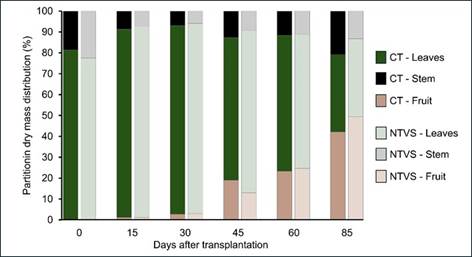
The dry mass partitioning (Figure 4), divided into leaves, stem, and reproductive structures (flowers + fruits), shows a similar pattern between CT and NTVS up to 30 DAT. The reproductive structures begin contributing to dry mass from 15 DAT (below 5%), but only gain significant participation from 45 DAT onward, reaching nearly 50% by 85 DAT, especially in NTVS.
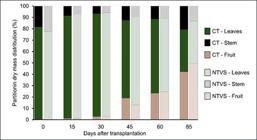
Partitioning of dry mass (%) among zucchini plant structures (leaves, stem, and fruit) over days after transplanting (DAT) under two cultivation systems: conventional tillage (CT) and No-Till Vegetable System (NTVS). The bars represent the relative distribution of dry mass in each plant organ over time for both systems. Ipê-RS, UFRGS, 2020/2021.
The dry mass partitioning between vegetative and reproductive structures is explained by the allocation of photoassimilates. During the vegetative phase, the stem acts as a source, storing photoassimilates for later use. As the crop transitions to the reproductive phase, particularly after 45 DAT, flowers and fruits become primary sinks for these photoassimilates. This is evident in both CT and NTVS treatments, where the reproductive phase accelerates photoassimilate mobilization. The stronger reproductive growth observed under NTVS can be attributed to a higher production of photosynthesizing organs, leading to more efficient photoassimilate distribution to the generative fraction.
The increased dry mass in the reproductive structures supports this notion, aligning with Strassburger et al. (2011), who highlighted the crucial role of stored photoassimilates in the stem during periods of high demand. The balance between energy accumulation and consumption is periodically adjusted by the plant. A greater capacity to produce photoassimilates also stimulates increased tissue differentiation (Fayad et al., 2019), which may have contributed, in this study, to the superior development of generative organs in plants under SPDH soil management.
CONCLUSIONS
The no-till vegetable system (NTVS) promoted greater biomass accumulation throughout the crop cycle compared to conventional tillage (CT). Although CT favored initial vegetative growth, NTVS supported superior long-term performance due to the maintenance of soil cover, which improved the microclimate and reduced weed competition. Additionally, NTVS enhanced biomass partitioning toward reproductive structures, resulting in higher yield. Therefore, under organic management, NTVS represents a more promising strategy for zucchini production than conventional soil tillage systems.
ACKNOWLEDGMENTS
This study was supported by Coordenação de Aperfeiçoamento de Pessoal de Nível Superior (CAPES) for the scholarship (nº 008898340001-08). The authors would like to thank Universidade de Caxias do Sul and the Zanotto Family for their partnership in carrying out this study.
REFERENCES
-
ALVARES, CA; STAPE, JL; SENTELHAS, PC; MORAES GONCALVES, JL; SPAROVEK, G. 2013. Koppen's climate classification map for Brazil. Meteorologische Zeitschrift 22: 711-728. https://doi.org/10.1127/0941-2948/2013/0507
» https://doi.org/10.1127/0941-2948/2013/0507 -
AMARO, GB; HANASHIRO, MM; PINHEIRO, JB; MADEIRA, NR; BORGES FAUSTINO, RME. 2021. Recomendações técnicas para o cultivo de abóboras e morangas Circular Técnica 175: Embrapa Hortaliças. 42p. Available at: Available at: https://www.infoteca.cnptia.embrapa.br/infoteca/bitstream/doc/1134117/1/CT-175-30ago2021.pdf Accessed onMay 18, 2022
» https://www.infoteca.cnptia.embrapa.br/infoteca/bitstream/doc/1134117/1/CT-175-30ago2021.pdf -
ANTONIO, NP; WATTHIER, M; SANTOS, RHS. 2021. Green manure and mineral fertilization: residual effect on dry matter production, nutrient extraction and nutrients recovery efficiency in two successive crops. Tropical and Subtropical Agroecosystems24. http://dx.doi.org/10.56369/tsaes.3673
» https://doi.org/10.56369/tsaes.3673 - BENINCASA, MMP. 2003. Análise de crescimento de plantas (Noções básicas). 2ed. Jaboticabal: FUNEP. 41p.
-
BRANCO, RBF; CARVALHO, F; OLIVEIRA, JP; ALVES, PLC. 2022. Strategies to terminate summer cover crops for weed management in no-tillage vegetable production in southeast Brazil. Weed Science70: 112-119. https://doi.org/10.1017/wsc.2021.58
» https://doi.org/10.1017/wsc.2021.58 -
CERDÀ, A; RODRIGO-COMINO, J; YAKUPOĞLU, T; DINDAROĞLU, T; TEROL, E; MORA-NAVARRO, G; ARABAMERI, A; RADZIEMSKA, M; NOVARA, A; KAVIAN, A; VAVERKOVÁ, MD; ABD-ELMABOD, SK; HAMMAD, HM; DALIAKOPOULOS, IN. 2020. Tillage versus no-tillage. Soil properties and hydrology in an organic persimmon farm in eastern Iberian peninsula. Water12: 1539. https://doi.org/10.3390/w12061539
» https://doi.org/10.3390/w12061539 -
CIACCIA, C; TORRE, A; FERLITO, F; TESTANI, E; BATTAGLIA, V; SALVATI, L; ROCCUZZO, G. 2019. Agroecological practices and agrobiodiversity: A case study on organic orange in southern Italy. Agronomy 9: 85. https://doi.org/10.3390/agronomy9020085
» https://doi.org/10.3390/agronomy9020085 -
COMIN, JJ; FERREIRA, LB; SANTOS, LH; PAULA KOUCHER, L; MACHADO, LN; SANTOS JUNIOR, ED; MAFRA, ÁL; KURTZ, C; SOUZA, M; BRUNETTO, G; LOSS, A. 2018. Carbon and nitrogen contents and aggregation index of soil cultivated with onion for seven years using crop successions and rotations. Soil and Tillage Research 184: 195-202. https://doi.org/10.1016/j.still.2018.08.002
» https://doi.org/10.1016/j.still.2018.08.002 -
DINIZ, ER; VARGAS, TO; GUEDES, AF; SANTOS, RHS; URQUIAGA, S; MODOLO, AJ. 2017. Doses of Crotalaria juncea: Residual effect on zucchini and maize crop in sequence to broccoli. Revista Ceres 64: 600-606. https://doi.org/10.1590/0034-737X201764060006
» https://doi.org/10.1590/0034-737X201764060006 - FAYAD, JA; ARL, V; COMIN, JJ; MAFRA, AL; MARCHESI, DR. 2019. Sistema de plantio direto de hortaliças: Método de transição para um novo modelo de produção. São Paulo: Expressão Popular, 431p.
-
FAO. World Reference Base for Soil Resources (WRB), sistema universal reconhecido pela International Union of Soil Science (IUSS) e FAO 2015. Available at: https://www.fao.org/soils-portal/data-hub/soil-classification/world-reference-base/en/ Accessed on November 12, 2024.
» https://www.fao.org/soils-portal/data-hub/soil-classification/world-reference-base/en/ -
FERREIRA JUNIOR, JJ; TORRES, JLR; CHARLO, HCO; ORIOLI JUNIOR, V; LOSS, A; BARRETO, AC. 2023. No-till broccoli production using different cover crop residues and nitrogen doses. Horticultura Brasileira 41: e2479. https://doi.org/10.1590/s0102-0536-2023-e2479
» https://doi.org/10.1590/s0102-0536-2023-e2479 - GIACOMINI, SJ; AITA, C; VENDRUSCOLO, ERO; CUBILLA, M; NICOLOSO, RS; FRIES, MR. 2003. Matéria seca, relação C/N e acúmulo de nitrogênio, fósforo e potássio em mistura de plantas de cobertura de solo. Revista Brasileira de Ciência do Solo2: 325-334.
-
GINAKES, P; GROSSMAN, JM. 2021. Extending cover crop benefits with zone till management in northern organic summer squash production. Agronomy11: 983. https://doi.org/10.3390/agronomy11050983
» https://doi.org/10.3390/agronomy11050983 -
HUNT, R. 1990. Basic growth analysis: Plant growth analysis for beginners(1st ed.). Springer. https://doi.org/10.1007/978-94-010-9117-6
» https://doi.org/10.1007/978-94-010-9117-6 -
KADER, MA; SENGE, M; MOJID, MA; NAKAMURA, K. 2017. Mulching type-induced soil moisture and temperature regimes and water use efficiency of soybean under rain-fed condition in central Japan. International Soil and Water Conservation Research 5: 302-308. https://doi.org/10.1016/j.iswcr.2017.08.001
» https://doi.org/10.1016/j.iswcr.2017.08.001 -
LANGE, M; EISENHAUER, N; SIERRA, CA; BESSLER, H; ENGELS, C; GRIFFITHS, RI; MELLADO-VÁZQUEZ, PG; MALIK, AA; ROY, J; SCHEU, S; STEINBEISS, S; THOMSON, BC; TRUMBORE, SE; GLEIXNER, G. 2015. Plant diversity increases soil microbial activity and soil carbon storage. Nature Communications6: 6707. https://doi.org/10.1038/ncomms7707
» https://doi.org/10.1038/ncomms7707 - LLANOS, HB; GUTIÉRREZ, CRC; GARCÍA CÁRDENAS, MG. 2015. Análisis de crecimiento funcional, acumulación de biomasa y translocación de materia seca de ocho hortalizas cultivadas en invernadero. Revista de Investigación e Innovación Agropecuaria y de Recursos Naturales2: 76-86.
-
LOPES, WA; NEGREIROS, MZ; DOMBROSKI, JLD; RODRIGUES, GSO; SOARES, AM; ARAÚJO, AP. 2011. Análise do crescimento de tomate “SM-16” cultivado sob diferentes coberturas de solo. Horticultura Brasileira29: 554-561. https://doi.org/10.1590/S0102-05362011000400019
» https://doi.org/10.1590/S0102-05362011000400019 -
LOSS, A; BASSO, A; OLIVEIRA, BS; KOUCHER, LP; OLIVEIRA, RA; KURTZ, C; LOVATO, PE; CURMI, P; BRUNETTO, G; COMIN, JJ. 2015. Carbono orgânico total e agregação do solo em sistema de plantio direto agroecológico e convencional de cebola. Revista Brasileira de Ciência do Solo 39: 1212-1224. https://doi.org/10.1590/01000683rbcs20140718
» https://doi.org/10.1590/01000683rbcs20140718 -
LOSS, A; FERREIRA, LB; GONZATTO, R; GIUMBELLI, LD; MAFRA, ÁL; GOEDEL, A; KURTZ, C. 2020. Efeito da sucessão ou rotação de culturas sobre a fertilidade do solo após sete anos de cultivo com cebola. Brazilian Journal of Development6: 16587-16606. https://doi.org/10.34117/bjdv6n3-507
» https://doi.org/10.34117/bjdv6n3-507 -
MALEK, MA; MONDAL, MMA; ISMAIL, MR; RAFII, MY; BERAHIM, Z. 2012. Physiology of seed yield in soybean: Growth and dry matter production. African Journal of Biotechnology11: 7643-7649. https://doi.org/10.5897/AJB11.3879
» https://doi.org/10.5897/AJB11.3879 -
MAURI, LVR; MENDONÇA, ES; BOLZAN, LJ; ANGELETTI, MP. 2024. Olericulture no-till system at mountain region: Physical and biological attributes of the soil. Applied and Environmental Soil Science 2024:8682240. https://doi.org/10.1155/2024/8682240
» https://doi.org/10.1155/2024/8682240 -
NATH, CP; KUMAR, N; DUTTA, A; HAZRA, KK; PRAHARAJ, CS; KUMAR, D; DIXIT, GP. 2025. Cover crop and herbicides can control purple nutsedge (Cyperus rotundus L.) and increase crop yields in conservation agriculture-based crop rotations. Crop Protection187: 106974. https://doi.org/10.1016/j.cropro.2024.106974
» https://doi.org/10.1016/j.cropro.2024.106974 -
SANTOS, LH; CANTON, L; VENTURA, BS; FERREIRA, GW; KURTZ, C; BRUNETTO, G; COMIN, JJ; LOVATO, PE; LOSS, A. 2017. Chemical properties in macroaggregates of a humic dystrudet cultivated with onion under no-till and conventional tillage systems. Revista Brasileira de Ciência do Solo41: e0160419. https://doi.org/10.1590/18069657rbcs20160419
» https://doi.org/10.1590/18069657rbcs20160419 - SCHIMITT, DR; SGROTT, EZ; MAZURANA, M; DAMBRÓS, RN. 2019. Máquinas e implementos utilizados e desenvolvidos no sistema de plantiodDireto de hortaliças (SPDH). In: FAYAD, JA; ARL, V; COMIN, JJ; MAFRA, AL; MARCHESI, DR. Sistema de plantio direto de hortaliças: Método de transição para um novo modelo de produção. São Paulo: Expressão Popular, p.227-237.
-
SCHWARTZ-LAZARO, LM; GAGE, KL; CHAUHAN, BS. 2021. Weed biology and ecology in agroecosystems. Frontiers in Agronomy3: 730074. https://doi.org/10.3389/fagro.2021.730074
» https://doi.org/10.3389/fagro.2021.730074 -
SILVA, CSR; ARAÚJO, ES; COSTA, LS; ARAÚJO, SN; SILVA JUNIOR, JB; ZIVIANI, MM; SILVA, MSRA; GUERRA, JGM; ESPINDOLA, JAA; PINHEIRO, ÉFM. 2024. No-till system organic vegetable production under green manure: effect on yield and soil properties. Organic Agriculture14: 231-244. https://doi.org/10.1007/s13165-024-00460-x
» https://doi.org/10.1007/s13165-024-00460-x -
SEEDA, A; ABOU EL-NOUR, EZ; ZAGHLOUL, S. 2021. Climatic changes and their effects on physiological and nutritional status of crop plants: importance and strategies. A review. Middle East Journal of Agriculture Research10: 866-936. https://doi.org/10.36632/mejar/2021.10.3.59
» https://doi.org/10.36632/mejar/2021.10.3.59 -
STRASSBURGER, AS; PEIL, RMN; FONSECA, LAD; AUMONDE, TZ; MAUCH, CR. 2011. Dinâmica de crescimento da abobrinha italiana em duas estações de cultivo. Acta Scientiarum. Agronomy 33: 283-289. https://doi.org/10.4025/actasciagron.v33i2.5952
» https://doi.org/10.4025/actasciagron.v33i2.5952 -
TESTANI, E; CIACCIA, C; CAMPANELLI, G; LETEO, F; SALVATI, L; CANALI, S. 2019. Mulch-based no-tillage effects on weed community and management in an organic vegetable system. Agronomy 9: 594. https://doi.org/10.3390/agronomy9100594
» https://doi.org/10.3390/agronomy9100594 -
TIMM, F; DUARTE, TS; NASCIMENTO, PC. 2024. Cover crops for no-tillage vegetable systems as a climate crisis mitigation strategy in organic Cucurbitaceae production. Pesquisa Agropecuaria Tropical 54: e79612. https://doi.org/10.1590/1983-40632024v5479612
» https://doi.org/10.1590/1983-40632024v5479612 -
TIMSINA, J. 2018. Can organic sources of nutrients increase crop yields to meet global food demand? Agronomy8: 214. https://doi.org/10.3390/agronomy8100214
» https://doi.org/10.3390/agronomy8100214 -
WATTHIER, M; ANTONIO, NP; OLIVEIRA, FS; SANTOS, RHS. 2022. Residual effect of green manure with different grass/legume ratios on the sequential cultivation of broccoli and brachiaria. Journal of Soil Science and Plant Nutrition22: 619-630. https://doi.org/10.1007/s42729-021-00683-x
» https://doi.org/10.1007/s42729-021-00683-x -
WATTHIER, M; PERALTA-ANTONIO, N; SOARES, MC; SANTOS, RHS. 2023. The mixture of legumes and gramineous as green manure and its effect on nutrient efficiency and soil solution characteristics in three successive crops. Journal of Soil Science and Plant Nutrition 23: 5798-5809. https://doi.org/10.1007/s42729-023-01440-y
» https://doi.org/10.1007/s42729-023-01440-y - WEBLER, G; ROBERTI, DR; DIAZ, MB; TEISCHRIEB, CA; ZWIRTES, AL; REINERT, DJ. 2016. Efeitos de uma camada de palha no comportamento térmico do solo. Ciência e Natura38: 7-10.
Data will be made available upon request to the authors.