Antagonistic activity of bacteria isolated from micropropagation of camu-camu
Abstract:
The micropropagation of camu-camu (Myrciaria dubia) faces significant challenges due to fungal contamination under in vitro conditions. This study investigated the potential of endophytic bacteria isolated from camu-camu as an alternative to chemical treatments for controlling contaminant fungi. The antagonistic activities of Bacillus subtilis, Enterobacter sp., Brevundimonassp., Bacillus sp., and Methylobacterium sp. against the fungi Colletotrichum spp.and Curvularia spp. were evaluated using diffusion and antibiosismethods. In the diffusion method, the pathogen was cultured over the antagonist culture,while in the antibiosis method, fungal growth inhibition was assessed through the production of thermostable metabolites. The experimental design was completely randomized (CRD), with five bacteria, two fungi, five replications, and analysis performed using R software. Results demonstrated that the diffusion method is effective in inhibiting the mycelial growth of Colletotrichum spp. and Curvularia spp., isolated from camu-camu micropropagation. Bacillus sp. exhibited the highest inhibition rates for both fungi, while Brevundimonassp. and Methylobacterium sp. were more effective against Curvularia spp., and Enterobactersp. against Colletotrichum spp. It is concluded that endophytic bacteria are a promising alternative for controlling contaminant fungi in camu-camumicropropagation, highlighting the potential of the diffusion method as an antagonistic action mechanism.
Index terms
microbial control; microorganisms; Myrciaria dubia; tissue culture
Resumo:
A micropropagação do camu-camu (Myrciaria dubia) enfrenta desafios significativos devido à contaminação fúngica em condições in vitro. Este estudo investigou o potencial de bactérias endofíticas isoladas do camu-camu como alternativa aos tratamentos químicos para o controle de fungos contaminantes. Foram avaliadas as atividades antagônicas das bactérias , Bacillus subtilis,Enterobacter sp., Brevundimonas sp., Bacillussp. e Methylobacterium sp. contra os fungos spp. e Colletotrichum,Curvularia spp., utilizando métodos de difusão e antibiose. No método de difusão, o patógeno foi cultivado sobre a cultura do antagonista, enquanto no método de antibiose foi avaliada a inibição do crescimento fúngico pela produção de metabólitos termoestáveis. O delineamento experimental foi inteiramente casualizado (DIC), com cinco bactérias, dois fungos, cinco repetições, e análise realizada no Software R. Os resultados demonstraram que o método de difusão é eficaz na inibição do crescimento micelial de Colletotrichum spp. e Curvularia spp.,isolados da micropropagação do camu-camu. Bacillus sp. apresentou as maiores taxas deinibição para ambos os fungos, enquanto Brevundimonas sp. Methylobacteriume sp.foram mais eficazes contra Curvulariaspp., e Enterobacter sp. contra Colletotrichum spp.Concluise que bactérias endofíticas são uma alternativa promissora para o controle de fungos contaminantes na micropropagação do camu-camu, destacando o potencial do método de difusão como mecanismo de ação antagônica.
Termos para indexação
controle microbiano; microrganismos; Myrciaria dubia; cultura de tecidos
Introduction
Camu-camuzeiro (Myrciaria dubia (Kunth) McVaugh) of the Myrtaceae family stands out among the native fruit trees of the Amazon due to its great economic potential, given its agro-industrial and pharmacological characteristics.
It includes high concentrations of ascorbic acid, mineral compounds such as potassium, calcium, magnesium, and sodium, as well as phenolic compounds (GRIGIO; DURIGAN; CHAGAS, 2019). It is known for its high vitamin C content, reaching 7,355.20 mg per 100 g of pulp (CHAGAS et al., 2015).
Another significant advantage is its antioxidant potential, which minimizes the risk of some chronic diseases, allowing its classification as a functional food (CHAGAS et al., 2012; FRACASSETTI et al., 2013).
However, the production of high-quality seedlings still represents an obstacle to the development of the crop. As a woody plant in the process of domestication, it presents low propagation rate through conventional methods such as grafting and cutting.
Additionally, the variability in vitamin C content through seed propagation hinders the uniformity and predictability of production (Lima et al., 2025). Thus, micropropagation emerges as strategic alternative for the cloning of superior genotypes with high productive potential (Araújo et al., 2021).
Micropropagation enables large-scale clonal multiplication with high genetic and phytosanitary uniformity, in addition to significantly contributing to genetic improvement programs (Zou et al., 2024). This technique allows for germplasm conservation and the propagation of promising lines, which is a fundamental aspect for species such as camu-camuzeiro (Xu et al., 2021).
Accordingly, in vitro methods such as organogenesis and somatic embryogenesis have shown promising results in genotypes of this species, aiming at increased productivity, fruit quality, and adaptability to climatic conditions (Araújo et al., 2021; Lima et al., 2025).
However, despite these advances, there is still no consolidated protocol for the species, which hinders its adoption on commercial scale. Therefore, it is recommended that existing protocols be refined according to each genotype, explant type, and concentrations of growth regulators (Araújo et al., 2021).
One of the main challenges faced during in vitro cultivation is microbial contamination, especially by phytopathogenic fungi present in tissues originating from tropical environments.
In addition, phenolic oxidation of explants compromises the viability of the plant material (Dorighello et al., 2020).
In this context, the application of beneficial microorganisms, such as endophytic bacteria with antagonistic activity, emerges as an innovative alternative. The Bacillus genus, for instance, has been widely studied for its production of antimicrobial metabolites and its ability to induce defense responses in plants (Lopes et al., 2021; Zou et al., 2024).
Thus, strengthening the production chain of camu-camuzeiro in the Amazon depends not only on the selection of promising genetic materials but also on the consolidation of in vitro propagation technologies that are safe, efficient, and economically viable.
Therefore, the present study aims to evaluate the in vitro antagonistic potential of bacteria isolated during the micropropagation of camu-camuzeiro in controlling contaminating fungi, using different antagonism methods.
Materials and Methods
The experiment was conducted in the Soil Microbiology Laboratory of the Brazilian Agricultural Research Corporation - EMBRAPA-RR from January to March 2023.
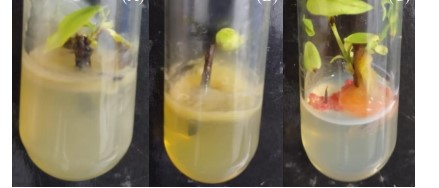
The endophytic bacterial isolates were obtained from microorganisms present in tissue culture, selected based on observation in test tubes, and chosen as the most frequent in camu-camuzeiro explants.
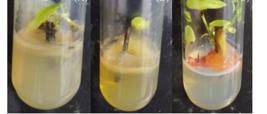
These microorganisms were previously isolated and identified in experiments conducted by Barreto (2023). The identification of fungi was performed according to the classification key described by Barnett and Hunter (1972) (Figure 1).
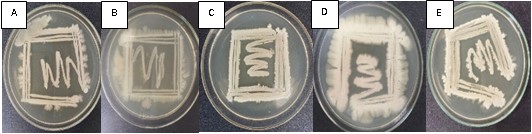
The antagonistic activities of Bacillus subtilis (17B), Enterobacter sp. (17C), Brevundimonas sp. (18J), Bacillus sp. (18K), and Methylobacterium sp. (18O) bacteria were tested against two fungal isolates, Colletotrichum spp. and Curvularia spp., using two different methods: diffusion and antibiosis (Figure 2A; Figure 2B; Figure 2C; Figure 2D; Figure 2E).

Antagonistic bacteria used in diffusion and antibiosis methods: Bacillus subtilis (17B), Enterobacter sp. (17C), Brevundimonas sp. (18J), Bacillus sp. (18K), and Methylobacterium sp. (18O)
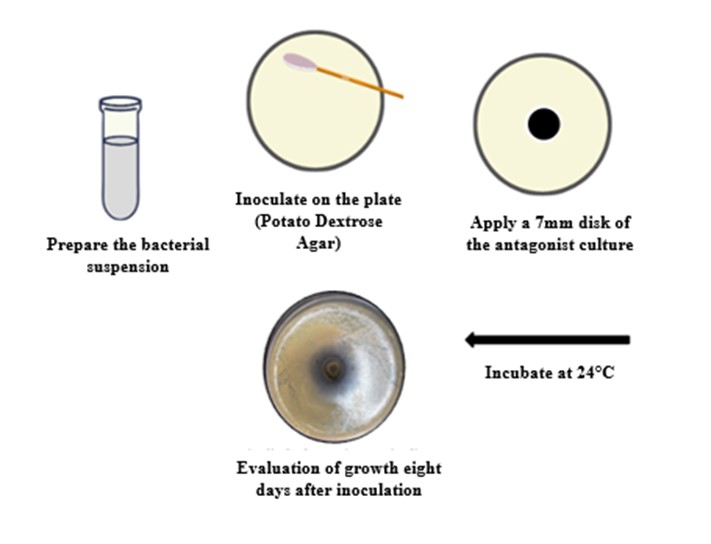
In the first method, the diffusion technique was used, which consists of the cultivation of the pathogen over the antagonist culture.
For this, a 7 mm disc of PDA (Potato Dextrose Agar) colonized by Colletotrichum spp. and Curvularia spp. was placed in the center of the Petri dish previously inoculated with the bacteria Bacillus subtilis (17B), Enterobacter sp. (17C), Brevundimonas sp.(18J), and Bacillus sp. (18K) (Figure 3).

In the second method, the inhibition of the growth of Colletotrichum spp. and Curvularia spp. was evaluated by the production of thermostable metabolites through antibiosis by Bacillus subtilis (17B), Enterobacter sp. (17C), Brevundimonas sp. (18J), Bacillus sp. (18K), and Methylobacterium sp. (18O) bacteria.
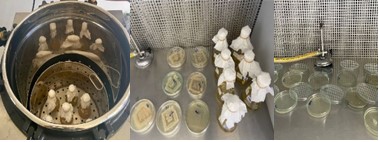
For this, Erlenmeyer flasks containing 50 ml of PDA were used, inoculated with the antagonistic strains, and incubated in a germination chamber for 48 hours. After this period, the Erlenmeyers were autoclaved at 121°C for 15 minutes and then maintained in a laminar flow chamber for solidification of the medium in an aseptic environment (Figure 4).
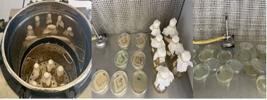
After the solidification of the medium, PDA discs colonized by Colletotrichum spp. and Curvularia spp. were placed in the center of the plates for subsequent growth evaluation.
As control treatment, PDA medium discs colonized by the Colletotrichum spp. and Curvularia spp. isolates were added to the center of Petri dishes containing PDA medium.
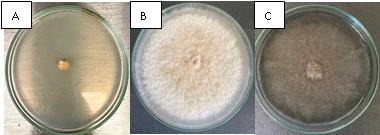
All treatments were conditioned in a growth chamber with constant temperature of 25°C and photoperiod of 12 hours (Figure 5A; Figure 5B and Figure 5C).
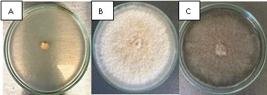
PDA medium discs (A) colonized by Colletotrichum spp. isolates (B) and Curvularia spp. (C) in the control treatment.
The evaluation consisted of measuring the average diameter of Colletotrichum spp.and Curvularia spp. colonies using a caliper for eight days after inoculation, during which one of the isolates in the control treatment reached the edges of the plates.
Subsequently, the percentage of inhibition (%I) of the treatments relative to the control was calculated using the following formula (RIUNGU et al., 2008):
Where %I: percentage of inhibition, C: average diameter of the control’s mycelial growth, and T: average diameter of the control’s mycelial growth.
The experimental design used was completely randomized (DIC), with two methods to evaluate antagonism and a control treatment; five bacteria (Bacillus subtilis, Entorobacter sp., Brevundimonas sp., Bacillus sp., Methylobacterium sp.); two fungi (Colletotrichum spp. and Curvularia spp.); and five repetitions. Data were subjected to the non-parametric Kruscal-Wallis test for the different antagonism tests and variance analysis for the diffusion method, F test (p < 0.05) of probability,and data were subjected to Tukey’s test (p≤ 0.05).
The analysis was performed using R software version 4.2.2 (R Development Core Team, 2024). Statistics and graphical representation were analyzed and generated by the AgroR package.
Results and Discussion
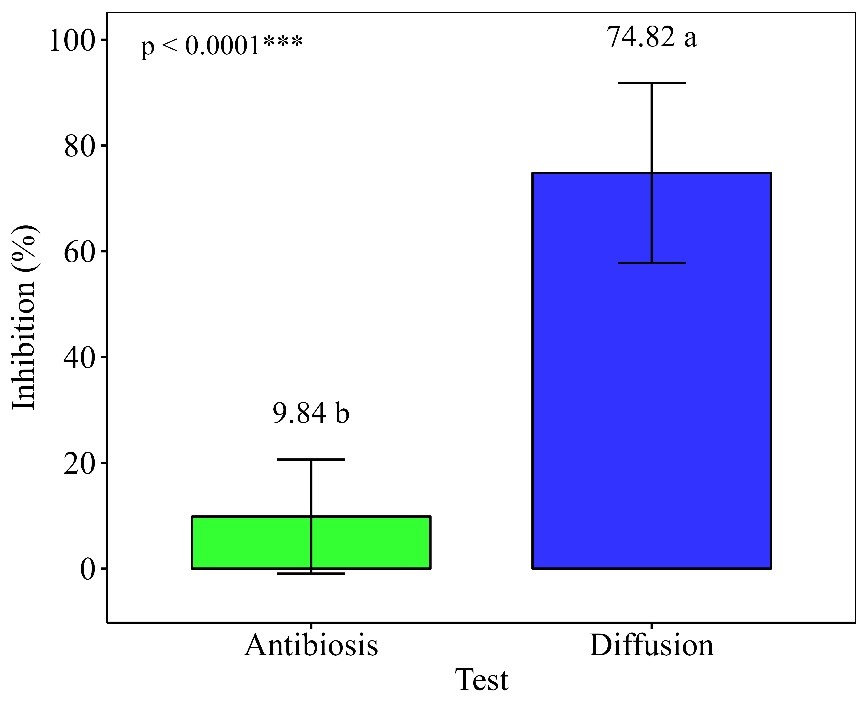
Statistical results showed a significant difference between the different antagonism methods by the Kruskal-Wallis test (p<0.0001***).
When using the diffusion method, bacteria Bacillus subtilis (17B), Enterobacter sp. (17C), Brevundimonas sp. (18J), Bacillus sp. (18K), and Methylobacterium sp. (18O) presented significantly higher inhibition averages of the fungi, with 74.82%, compared to the antibiosis method, which showed lower results with only 9.84% inhibition (Figure 6).

Action of endophytic bacteria Bacillus subtilis (17B), Enterobacter sp. (17C), Brevundimonas sp. (18J), Bacillus sp. (18K), and Methylobacterium sp. (18O) on contaminating fungi (Colletotrichum spp., Curvularia spp.) by the methods of antibiosis and diffusion isolated from the micropropagation of camu-camuzeiro. Lowercase letters differ significantly from each other by the Kruskal-Wallis test (p<0.05).
Previous studies by Arora et al. (2020) and Lopes et al. (2021) demonstrated that endophytic bacteria of the genera Bacillus sp., Brevundimonas sp., Enterobacter sp., and Methylobacterium sp. can act as bactericides, fungicides, insecticides, herbicides, and nematicides in direct contact (diffusion method) due to the production of hydrolytic enzymes that degrade cell wall components of other microorganisms.
These bacteria have antifungal metabolic characteristics, including lipopeptides from the surfactin, iturin, and fengycin families (LOPES et al., 2021). These results highlight the importance of these genera of endophytic as producers of antifungal compounds by the diffusion method.
Santoyo et al. (2019) and Santos-Torres et al. (2021) also highlighted the use of these microorganisms for biocontrol and plant growth promotion, as well as their capacity in phosphate solubilization.
Compared to the antibiosis test, these results evidence the high intraspecific variability of the isolates studied, highlighting the influence of methodology and the antagonistic potential of bacteria on the inhibition of phytopathogen structures.
The metabolites of these isolates had their antifungal activity altered after exposure to a temperature of 121°C for 15 minutes.
This differs from studies conducted by Zengerer et al. (2018), which discuss the genus Pseudomonas orientalis as a strain with metabolic versatility and genetic plasticity, characteristics that contribute to its high potential as antagonist in different biological control methods.
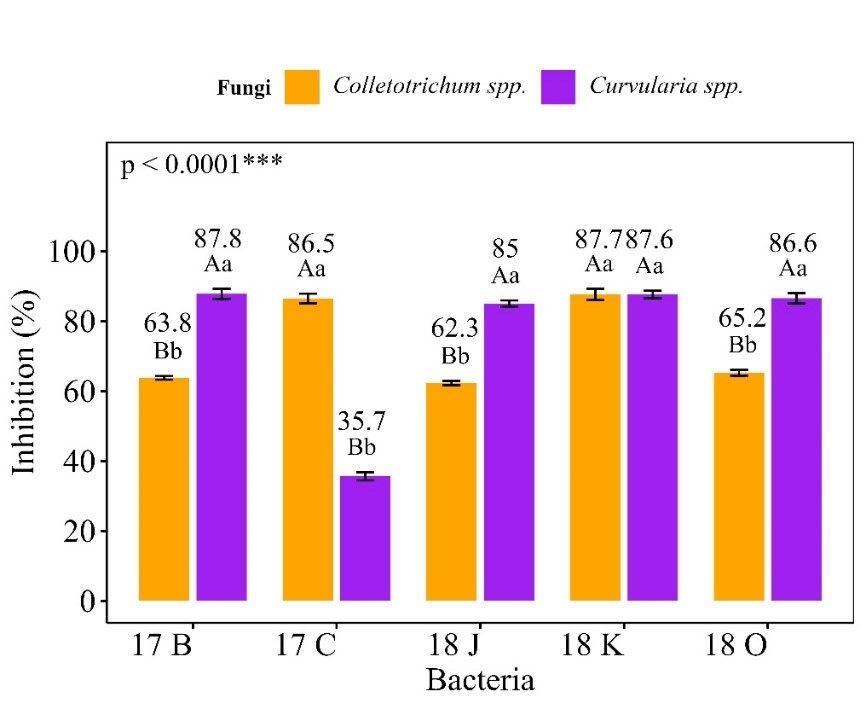
The results presented in the graph indicate significant inhibition of fungi Colletotrichum spp. and Curvularia spp. by different bacterial isolates Bacillus subtilis (17B), Enterobacter sp. (17C), Brevundimonas sp. (18J), Bacillus sp. (18K), and Methylobacterium sp. (18O).
The statistical analysis revealed p-value <0.0001, indicating statistically significant differences between treatments (Figure 7).
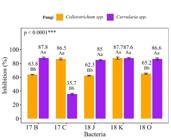
Antagonism tests of diffusion of endophytic bacteria (Bacillus subtilis (17B), Enterobacter sp. (17C), Brevundimonas sp. (18J), Bacillus sp. (18K), Methylobacterium sp. (18O)) on contaminating fungi (Colletotrichum spp., Curvularia spp.). Uppercase letters do not differ significantly from each other for different bacteria, lowercase letters do not differ significantly from each other for different fungi (p < 0.05) in the Tukey test.
Inhibition of Colletotrichum spp. ranged from 62.3% for Brevundimonas sp. (18J) to 87.7% for Bacillus sp. (18K). It was observed that the isolates Enterobacter sp. (17C) and Bacillus sp. (18K) were more effective in inhibiting Colletotrichum spp. with percentages above 85%. Isolates Bacillus subtilis (17B) 63.8%, Methylobacterium sp. (18O) 65.2%, and Brevundimonas sp. (18J) 62.3%, on the other hand, showed lower inhibition rates, significantly differing from the other strains for fungus Colletotrichum spp. (Figure 7).
Kazerooni et al. (2020), suggest that Enterobacter cloacae has potential to be used as biocontrol agent to suppress cucumber rot disease caused by Pythium aphanidermatum, where it significantly reduced disease incidence by 63% through direct contact. Consequently, the genus Enterobacter, in addition to presenting antifungal compounds, can be found in plant species endophytically.
Sánchez et al. (2014) noted that in diffusion tests with direct confrontation of fungal culture over antagonist culture, bacteria of the genus Bacillus sp. expressed the ability to inhibit the growth of Colletotrichum gloeosporioides with variations of 62% and 80%. Moreira et al. (2014) demonstrated that Brevundimonas sp. was able to inhibit approximately 60% of the mycelial growth of Colletotrichum spp., corroborating with the present study.
For fungus Curvularia spp., the results showed inhibition ranging from 35.7% to 87.8%. The isolate Enterobacter sp. (17C) presented the lowest inhibition rate with 35.7%, while the other isolates obtained the best inhibition results with 87.8%, 85%, 87.6%, and 86.6% for Bacillus subtilis (17B), Brevundimonas sp. (18J), Bacillus sp. (18K), and Methylobacterium sp. (18O) strains, respectively (Figure 7).
For the action of bacteria on fungi, the strain Bacillus subtilis (17B) showed significant difference in inhibition between Colletotrichum spp. (63.8%) and Curvularia spp. (87.8%), indicating that the strain Bacillus subtilis (17B) is more effective against Curvularia spp. than against Colletotrichum spp. Species of the genus Bacillus sp., such as Bacillus velezensis, were able to inhibit the growth of Botrytis cinerea when cultivated in vitro with inhibition rate of 72.23% (XU et al., 2021).
Various species of the genus Bacillus are important agents in disease control due to their metabolic versatility, which allows them to produce biologically active molecules capable of inhibiting plant pathogens or promoting plant development and systemic resistance (PANDIN et al., 2018). The efficacy of these agents can vary depending on the specificity of the target fungus, as seen in cases of pathogen inhibition such as Colletotrichum spp. and Curvularia spp.Corroborating the studies of Zengerer et al. (2018), the genus Brevundimonas sp.presents metabolic versatility and genetic plasticity, encompassing endophytic bacteria with high antagonistic potential.
Previous studies such as that by Poorniammal et al. (2009), which evaluated the antagonistic potential of bacteria such as Methylobacterium sp., showed that these bacteria can reduce the mycelial growth of Fusarium udum in diffusion tests, achieving an inhibition of over 58%.
Evaluating the action of the strain Enterobacter sp. (17C), it was possible to observe significant inhibition of Colletotrichum spp., reaching 86.5%. This result significantly differs from the inhibition rate observed for Curvularia spp., which was 35.7%.
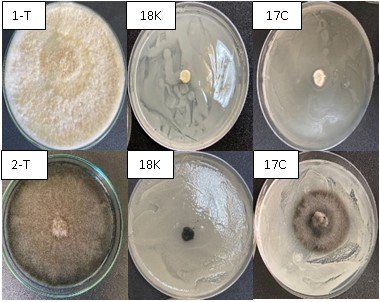
(Figure 7). These results can be observed in the morphological development of fungi cultivated in Petri dish (Figure 8-1-18-17; Figure 8-2-18-17).
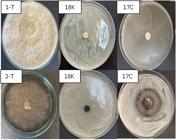
Antagonism of strains Enterobacter sp. (17C), Bacillus sp. (18K) between Colletotrichum spp. (1) and Curvularia spp. (2) after seven days of incubation in a growth chamber by the diffusion method (using the technique of fungal culture over antagonist culture) and control (T).
With this, it is possible to infer that there were variations in the sensitivity of the isolates of Curvularia spp. to the volatile metabolites produced by Enterobacter sp., given that there is high genetic variability among fungi, which may confer distinct characteristics. Similar results were conducted by Dariva et al. (2015), who confirmed that there was no inhibition of Fusarium solani mycelial growth by volatile metabolites produced by Bacillus Subtilis for the same reason.
Panigrahi et al. (2021) confirmed that Enterobacter cloacae inhibited the mycelial growth of contaminating fungi such as Rhizoctonia solani by 73.75%, where the results obtained, along with literature information, indicate that the antimicrobial constituents of the endophytic bacterium E. cloacae have potential to contribute to antimicrobial activity.
Kazerooni et al.(2020) demonstrated that Enterobacter cloacae can be used as a biocontrol agent to suppress cucumber rot disease caused by Pythium aphanidermatum, reducing disease incidence by 63%. These endophytic strains, in addition to producing antifungal and plant growth-promoting characteristics, offer various benefits to plants.
They can be considered environmentally safe, compatible, and effective in both the short and long term, helping plants to survive and resist various types of stresses (TIMMUSK et al., 2017).
Strains Brevundimonas sp. (18J) and Methylobacterium sp. (18O) show high inhibition for fungus Curvularia spp., differing from Colletotrichum spp. On the other hand, Bacillus sp. (18K) is highly effective against fungi Colletotrichum spp. and Curvularia spp., with inhibition rates above 87%.
Chen et al. (2008) identified 14 volatile antifungal compounds produced by Bacillus subtilis that inhibited the development of Curvularia lunata and Bipolaris sp. by up to 82.7%.
These compounds, along with other secondary metabolites such as antibiotics and phytohormones, promote plant growth, induce systemic resistance, inhibit pathogens, and increase nutrient bioavailability (ZHENG et al., 2015; ZOU et al., 2024).
Thus, species of Bacillus act in the inhibition of phytopathogens through different mechanisms, including competition for resources, and production of soluble antimicrobial compounds with antimicrobial properties (GUEVARA-AVENDAÑO et al., 2018). This diversity of actions makes Bacillus sp. valuable allies in the management of agricultural pests and diseases in the laboratory.
Accordingly, Salazar et al. (2017) showed that the fungicidal action of Bacillus amyloliquefaciens exhibited significant antifungal activity in vitro against Fusarium oxysporum, Fusarium avenaceum, and Mucor sp., causing cellular damage in various structures of these fungi.
Conclusion
The diffusion method proved to be an effective mechanism of antagonistic action compared to antibiosis.
All bacteria tested in the diffusion method exhibited significant antagonistic activity in inhibiting the mycelial growth of contaminating fungi Colletotrichum spp. and Curvularia spp.isolated from the micropropagation of camu-camuzeiro. Among the tested bacteria, Bacillus sp. showed the highest inhibition rates of mycelial growth for both fungi.
Brevundimonas sp. and Methylobacterium sp. showed better inhibition rates for Curvularia spp., while Enterobacter sp. had the best inhibition rate for Colletotrichum spp.
Therefore, the use of endophytic bacteria evaluated from camu-camuzeiro for biological control of contaminating fungi is recommended.
Future work can explore the production of bioproducts derived from endophytic bacteria for plant disease control in micropropagation, focusing on isolates from the same fruit species.
Acknowledgments
The authors wish to thank the Coordination for the Improvement of Higher Education Personnel (CAPES) and the National Council of Scientific and Technological Development (CNPq) for the financial support. We also thank EMBRAPA for providing materials, supplies, lab and greenhouse space, and the opportunity to conduct this study.
References
-
ARAÚJO, M.D.C.D.R.; CHAGAS, E.A.; VENDRAME, W.; RIBEIRO, M.I.G.; MOURA, E.A.D.; TAVEIRA, D.L.L.; GRIGIO, M.L. Callus induction and pro-embryogenic mass formation in Myrciaria dubia, an important medicinal and nutritional plant. Crop Breeding and Applied Biotechnology, Londrina, v.21, n.3, p.e25442131, 2021. http://doi.org/10.1590/1984- 70332021v21n3a40
» http://doi.org/10.1590/1984- 70332021v21n3a40 - ARORA, N.K.; FATIMA, T.; MISHRA, I.; VERMA, S. Microbe-based inoculants: role in next green revolution. In: SHUKLA, V.; KUMAR, N. (ed.). Environmental concerns and sustainable development Singapore: Springer, 2020. v.2, p.191-246. https://doi.org/10.1007/978-981-13-6358-0_9
- BARNETT, H.L.; HUNTER, B.B. Illustrated genera of imperfect fungi 3rd ed. Minneapolis: Burgess Publishing Company, 1972. 241 p.
- BARRETO, H.C.S. Identification, biotechnological potential, and control of endophytic bacteria isolated from the micropropagation of caçari (Myrciaria dubia (Kunth) Mcvaugh) 2023. Thesis (PhD) - Federal University of Roraima, Boa Vista, 2023.
-
CHAGAS, E.A.; BACELAR-LIMA, C.G.; CARVALHO, A.S.; RIBEIRO, M.I.G.; SAKAZAKI, R.T.; NEVES, L.C. Propagation of camu-camu (Myrciaria dubia (H.B.K.) Mcvaugh). Revista Agro@mbiente, Boa Vista, v.6, n.1, p.67-73, 2012. https://doi.org/10.18227/1982-8470ragro.v6i1.634
» https://doi.org/10.18227/1982-8470ragro.v6i1.634 -
CHAGAS, E.A.; LOZANO, R.M.B.; BACELAR-LIMA, C.G.; GARCIA, M.I.G.; OLIVEIRA, J.V.; SOUZA, O.M.; MORAIS, B.S.; CHAGAS, P.C.; ARAÚJO, M.C.R. Intraspecific variability of camu-camu fruits in native populations in Northern Amazonia. Crop Breeding Applied Biotechnology, v.15, p.265-71, 2015. http://doi.org/10.1590/1984-70332015v15n4a44
» http://doi.org/10.1590/1984-70332015v15n4a44 - CHEN, H.; XIAO, X.; WANG, J.; WU, L.; ZHENG, Z.; YU, Z. Antagonistic effects of volatiles generated by Bacillus subtilis on spore germination and hyphal growth of the plant pathogen Botrytis cinerea Biotechnology Letters, London, v.30, n.5, p.919-23, 2008.
-
DARIVA, J.C.; XAVIER, A.A.; COSTA, M.R.; RIBEIRO, R.C.F.; SOUSA, T.V. Genetic variability of Fusarium solani and Fusarium oxysporum f. sp. passiflorae isolates associated with passion fruit. Revista Brasileira de Fruticultura, Jaboticabal, v.37, n.2, p.377-86, 2015. https://doi.org/10.1590/0100-2945-119/14
» https://doi.org/10.1590/0100-2945-119/14 -
DORIGHELLO, D.V.; FORNER, C.; CAMPOS, R.M.V.B.; BETTIOL, W. Management of Asian soybean rust with Bacillus subtilis in sequential and alternating fungicide applications. Australasian Plant Pathology, Dordrecht, v.49, p.79-86, 2020. https://doi.org/10.1007/s13313-019-00677-5
» https://doi.org/10.1007/s13313-019-00677-5 -
FRACASSETTI, D.; COSTA, C.; MOULAY, L.; TOMÁS-BARBERÁN, F.A. Derivatives of ellagic acid, ellagitannins, proanthocyanidins, and other phenolics, vitamin C, and antioxidant capacity of two powdered camu-camu (Myrciaria dubia) products. Food Chemistry, London, v.139, n.1-4, p.578-88, 2013. https://doi.org/10.1016/j.foodchem.2013.01.121
» https://doi.org/10.1016/j.foodchem.2013.01.121 -
GRIGIO, M.L.; DURIGAN, M.F.B.; CHAGAS, E.A. Different formulations of camu-camu popsicle: characterization, vitamin C, and sensory analysis of an opportunity for family agribusiness. Food Science and Technology, Calif, v.39, p.93-7, 2019. https://doi.org/10.1590/fst.38417
» https://doi.org/10.1590/fst.38417 -
GUEVARA-AVENDAÑO, E.; CARRILLO, J.D.; NDINGA-MUNIANIA, C.; MORENO, K.; MÉNDEZ-BRAVO, A.; GUERRERO-ANALCO, J.A.; ESKALEN, A.; REVERCHON, F. Antifungal activity of avocado rhizobacteria against Fusarium euwallaceae and Graphium spp. associated with Euwallacea spp. nr. fornicatus and Phytophthora cinnamomi. Antonie Van Leeuwenhoek, Berlin, v.111, n.4, p.563-72, 2018. https://doi.org/10.1007/s10482-017-0977-5
» https://doi.org/10.1007/s10482-017-0977-5 -
KAZEROONI, E.A.; SHIBLI, H.A.I.; NASEHI, A.; SADI, A.M.A.I. Endophytic Enterobacter cloacae exhibits antagonistic activity against Pythium damping-off of cucumber. Rural Science, Santa Maria, v.50, n.8, p.e20191035, 2020. https://doi.org/10.1590/0103-8478cr20191035
» https://doi.org/10.1590/0103-8478cr20191035 -
LIMA, G.L.C.; CHAGAS, E.A.; MATOS, K.S.; SCHURT, D.A.; ARAÚJO, M.C.R.; RIBEIRO, M.I.G.; MOURA, E.A.; SILVA, D.C.V.; SILVA, C.M.; CHAGAS, P.C. Control of endophytic fungi in the micropropagation of caçari (Myrciaria dubia (Kunth) McVaugh). African Journal of Agricultural Research, Nairobi, v.21, n.5, p.421-30, 2025. https://doi.org;/10.5897/AJAR2023.16563
» https://doi.org;/10.5897/AJAR2023.16563 -
LOPES, M.J.; SANTIAGO, B.S.; SILVA, I.N.B.; GURGEL, E.S.C. Microbial biotechnology: inoculation, mechanisms of action, and benefits to plants. Research, Society, and Development, v.10, n.12, p.1–13, 2021. https://doi.org/10.33448/rsd-v10i12.20585
» https://doi.org/10.33448/rsd-v10i12.20585 -
MOREIRA, R.F.; NESI, C.N.; MIO, L.L.M.D. Bacillus spp. and Pseudomonas putida as inhibitors of the Colletotrichum acutatum group and potential to control Glomerella leaf spot. Biological Control, Itajubá, v.72, p.30-7, 2014. https://doi.org/10.33448/rsd-v10i12.20585
» https://doi.org/10.33448/rsd-v10i12.20585 -
PANDIN, C.; LE COQ, D.; DESCHAMPS, J.; VÉDIE, R.; ROUSSEAU, T.; AYMERICH, S.; BRIANDET, R. Complete genome sequence of Bacillus velezensis QST713: A biocontrol agent that protects Agaricus bisporus crops against the green mold disease. Journal of Biotechnology, Amsterdam, v.278, p.10-9, 2018. https://doi.org/10.1016/j.jbiotec.2018.04.014
» https://doi.org/10.1016/j.jbiotec.2018.04.014 -
PANIGRAHI, S.; RATH, C.C. In vitro characterization of antimicrobial activity of an endophytic bacterium Enterobacter cloacae (MG001451) isolated from Ocimum sanctum South African Journal of Botany, Pretoria, v.143, p.90-6, 2021. https://doi.org/10.1016/j.sajb.2021.07.044
» https://doi.org/10.1016/j.sajb.2021.07.044 - POORNIAMMAL, R.; SUNDARAM, S.P.; KUMUTHA, A.N.D K. In vitro biocontrol activity of Methylobacterium extorquens against fungal pathogens. International Journal of Plant Protection, Muzaffarnagar, v.2, n.1, p.59-62, 2009.
-
RIUNGU, G.; MUTHOMI, J.; NARLA, R.; WAGACHA, J.; GATHUMBI, J. Management of Fusarium head blight of wheat and deoxynivalenol accumulation using antagonistic microorganisms. Plant Pathology, v.7, n.1, p.13-19, 2008. https://doi.org/10.3923/ppj.2008.13.19
» https://doi.org/10.3923/ppj.2008.13.19 -
SALAZAR, F.; ORTIZ, A.; SANSINENEA, E. Characterization of two novel bacteriocin-like substances produced by Bacillus amyloliquefaciens ELI149 with broad-spectrum antimicrobial activity. Journal of Global Antimicrobial Resistance, Amsterdam, v.11, p.177-82, 2017. https://doi.org/10.1016/j.jgar.2017.08.008
» https://doi.org/10.1016/j.jgar.2017.08.008 -
SÁNCHEZ, R.E.; BAUTISTA, M.A.M.; CRISTO´BAL, J.A.; VALENCIA, B.A.; REYES, R.A. Antagonistic activity of Bacillus subtilis filtrates against Colletotrichum gloeosporioides. Revista Mexicana de Ciencias Agrícolas, Texcoco, v.5, n.7, p.1325-32, 2014. https://doi.org/10.1007/s13205-013-0134-4
» https://doi.org/10.1007/s13205-013-0134-4 -
SANTOS-TORRES, M.; ROMERO-PERDOMO, F.; MENDOZA-LABRADOR, J.; GUTIÉRREZ, A.; VARGAS, C.; CASTRO, E.; CARO-QUINTERO, A.; URIBE-VÉLEZ, D.; ESTRADA-BONILLA, G.A. Genomic and phenotypic analysis of rock phosphate solubilizing rhizobacteria. Rhizosphere, Amsterdam, v.17, p.e100290, 2021. https://doi.org/10.1016/j.rhisph.2020.100290
» https://doi.org/10.1016/j.rhisph.2020.100290 - SANTOYO, G.; SÁNCHEZ, Y.J.M.; VILLALOBOS, D.S. Methods for detecting biocontrol and plant growth-promoting traits in rhizobacteria. In: REINHARDT, D., SHARMA, A. (ed.). Methods in rhizosphere biology research. Rhizosphere biology Singapore: Springer 2019. p.133–49. https://doi.org/10.1007/978-981-13-5767-1_8
-
TIMMUSK, S.; BEHERS.; L.; MUTHONI, J.; MURAYA, A.; ARONSSON, A.C. Perspectives and challenges of microbial application for crop improvement. Frontiers in Plant Science, Lausanne, v.8, p.49, 2017. https://doi.org/10.3389/fpls.2017.00049
» https://doi.org/10.3389/fpls.2017.00049 -
XU, Y.; WANG, L.; LIANG, W.; LIU, M. Biocontrol potential of endophytic Bacillus velezensis strain QSE-21 against postharvest grey mold of fruit. Biological Control, Amsterdam, v.161, p.e104711, 2021. https://doi.org/10.1016/j.biocontrol.2021.104711
» https://doi.org/10.1016/j.biocontrol.2021.104711 -
ZENGERER, V.; SCHMID, M.; BIERI, M.; MÜLLER, D.C.; REMUS-EMSERMANN, M.N.P.; AHRENS, C.H.; PELLUDAT, C. Pseudomonas orientalis F9: a potent antagonist against phytopathogens with phytotoxic effect in the apple flower. Frontiers in Microbiology, Lausanne,v.9, p.145, 2018. https://doi.org/10.3389/fmicb.2018.00145
» https://doi.org/10.3389/fmicb.2018.00145
Edited by
-
Scientific Editor
Alexandre Pio Viana
-
Associate Editor
Raul Castro Carrielo Rosa