
 Metavisual activity involving a chemical reaction: students' difficulties at the representational levels
ABSTRACT:
This qualitative research aimed to analyze the conceptual difficulties related to the representational levels of three undergraduates during a metavisual chemistry activity. The proposed activity involved the exploration of the three levels, in which the students conducted experimental tests (macro), elaborated symbolic (symbolic) and pictorial (submicro) representations, and then evaluated them using a metavisual strategy. The students' discussions were recorded, transcribed, and organized into units of analysis, which were categorized according to the access/transition at the representational level. The results indicated that when students have difficulty understanding one level of a given concept, they often appear to struggle to comprehend the other levels, highlighting the importance of progressing through the three levels to understand chemical phenomena. Although submicrosymbolic transitions prevailed in the activity, they occurred in a conflicting manner, revealing various conceptual difficulties in General Chemistry
Keywords:
representational levels; chemical reaction; metavisualization
RESUMO:
O objetivo desta pesquisa qualitativa foi analisar as dificuldades conceituais relacionadas aos níveis representacionais de três graduandos durante uma atividade metavisual de cinética química. A atividade proposta envolveu a exploração dos três níveis, na qual os alunos conduziram testes experimentais (macro), elaboraram representações simbólicas (simbólico) e pictóricas (submicro) e, posteriormente, as avaliaram a partir de uma estratégia metavisual. As discussões dos alunos foram gravadas, transcritas e organizadas em unidades de análise, sendo categorizadas de acordo com o acesso/transição do nível representacional. Os resultados indicaram que, quando os estudantes têm dificuldade em entender um nível de um determinado conceito, consequentemente, parecem não compreender os demais níveis, evidenciando a importância de se transitar nos três níveis para a compreensão do fenômeno químico. Houve uma prevalência de transições submicrosimbólicas na atividade, porém elas ocorreram de forma conflituosa, demonstrando diversas dificuldades conceituais de Química Geral dos alunos
Palavras-chave:
níveis representacionais; reação química; metavisualização
RESUMEN:
El objetivo de esta investigación cualitativa fue analizar las dificultades relacionadas con los niveles de representación de tres estudiantes universitarios durante una actividad metavisual de química. La actividad propuesta implicó la exploración de los tres niveles, en la que los estudiantes realizaron pruebas experimentales (macro), elaboraron representaciones simbólicas (simbólico) y pictóricas (submicro), y luego las evaluaron utilizando una estrategia metavisual. Las discusiones de los alumnos se grabaron, transcribieron y organizaron en unidades de análisis, categorizadas según el acceso/transición del nivel representacional. Los resultados indicaron que cuando los estudiantes tienen dificultades para comprender un nivel de un concepto dado, en consecuencia no parecen comprender los demás niveles, lo que pone de relieve la importancia de moverse a través de los tres niveles para comprender los fenómenos químicos. Hubo un predominio de transiciones submicrosimbólicas en la actividad, pero ocurrieron de forma conflictiva, demostrando las diversas dificultades conceptuales de los alumnos en Química General
Palabras-clave:
niveles de representación; reacción química; metavisualización
INTRODUCTION
Chemical reactions are fundamental to the study of chemistry, since the phenomena resulting from them form the basis of research into this science (Puggian et al., 2012). Furthermore, Meneses and Nuñez (2018) argue that it is pertinent to investigate how this concept is learned, given that chemical reactions are crucial for understanding the organization and construction of knowledge in this area. Additionally, for these authors, overcoming a fragmented view and adopting a comprehensive understanding of chemical reactions is one of the main challenges in teaching the subject.
Considering the complexity of this learning process, several researchers have sought ways to help students grasp content that is important for forming critical citizens. For example, Wu and Shah (2004) note that presenting concepts at different levels of representation can benefit learning. In this context, the three representational levels proposed by Johnstone (1993) stand out, whose interpretation and ability to move between, these levels - that is, access and transition (change from one vertex of the triangle to another) - can help in the understanding of chemistry concepts.
However, transitioning between levels, i.e. establishing relationships among the domains, remains a challenge for students (Gibin & Ferreira, 2010; Fernandes & Locatelli, 2021), which can be attributed to the abstract nature of science (Cakmakci, 2010; Ferreira & Justi, 2008; Gibin & Ferreira, 2010; Jaber & Boujaoude, 2012) which explains phenomena, as well as the interpretation of chemical symbology (Taber, 2009). According to Ferreira and Justi (2008), confronting elements that are intangible to our senses generates a sense of vulnerability when faced with the vastness and complexity of the universe to which we belong.
Considering the challenges in learning chemistry concepts, Cerdran et al. (2018), suggest that students' explanations and representations are revealing, as they provide valuable insights into the weaknesses and complexities of their thinking. Similarly, Junqueira and Maximiano (2020) recommend that educators encourage students to create their own submicro representations, since these models convey their ideas and provide interesting activities for discussions and clarification of concepts. In this regard, metavisualization enables individuals to rethink their internal representations - a process in which they may highlight their difficulties in appropriating concepts (Chang, 2022; Fernandes & Locatelli, 2021; Shimada & Locatelli, 2023).
Regarding the concept of metavisualization, Gilbert (2005) defines the term as fluency in visualization, involving the ability to monitor and control visual representations, or it can also be defined as “metacognition in respect of visualization” (Gilbert, 2005, p. 15). For Chang (2022), metavisualization is crucial for modeling as it involves reflection on the visualization process, epistemic knowledge, and the use of metacognitive strategies during the creation of visual representations. Thus, metavisual activity emerges as a potential means of helping students understand chemical concepts (Fernandes & Locatelli, 2021; Shimada & Locatelli, 2023) and to identify learning gaps in a metavisual process of model construction (Chang, 2022).
This study is based on an excerpt from a master's research project in which the role of metavisualization and models was investigated by Shimada and Locatelli (2023). Therefore, this study was guided by the students' difficulties. Given this, this article seeks to answer the following question: what are the challenges faced by a group of higher education students with regard to accessing and transitioning between representational levels in a metavisual activity of a chemical reaction?
Representational levels in chemistry
There are numerous terms used to refer to the representational levels in chemistry (Santos, 2016; Taber, 2013), including levels of chemical knowledge, domains, chemical triplet, and Johnstone's triangle, among others (Taber, 2013). Therefore, in line with Santos (2016), this study adopts the term “representational levels” as a synonym for the others.
In the 1980s, Johnstone (1982) introduced the idea that chemists see the concepts of this discipline on at least three levels: a) descriptive and functional; b) representational; and c) explanatory. According to Johnstone (1982), these correspond, respectively, to: a) seeing and handling materials; b) representing chemical substances by formulas and their changes by equations; c) explaining why chemical substances behave in a certain way. For the author, chemists would be able to “jump freely from level to level in a series of mental gymnastics” (p.377).
In a new reformulation of the theory, Johnstone (1991) introduces the idea of multilevel thinking, illustrating it with the figure of a triangle whose vertices are labeled “macro”, “sub-micro”, and ‘symbolic’, referred to as the “triangle of levels of thought” (Johnstone, 1991, p. 78). In that work, the author proposes applications of the theory considering not only the discipline of Chemistry but also Physics and Biology. It is noteworthy noting that Johnstone exemplifies the symbolic level of Chemistry with the equation for the dissolution of sodium chloride, which is still addressed today by many researchers who consider the representational levels (Cerdran et al., 2018; Keiner & Graulich, 2020; Nkomo & Bly, 2024; Locatelli et al., 2025).
In Johnstone's work (1993), the nomenclature is also modified to: macrochemistry, submicrochemistry, and representational chemistry. In a new study (2000), the author discusses the three levels, describing them as complementary to each other, all equally important, which are: macro and tangible, submicro and representational. Given the variety of nomenclature for the terms of the levels, even by the precursor theorist himself, in this research we have adopted Gilbert and Treagust's (2009) terminology for the representational levels: macro, submicro and symbolic.
The macro level refers to “properties are perceptible in chemistry laboratories and in everyday life and are therefore able to be measured” (Gilbert & Treagust, 2009, p.4), i.e., it is related to what is visible, sensory, and concrete. According to the same authors, the submicro level explains phenomena at the macro level, as it represents entities that are too small to be visualized, such as atoms, ions, molecules, etc. It is common for these representations to be approached using images; however, their use in teaching is small (Gibin & Ferreira, 2010). Finally, the symbolic level involves the use of symbols to represent atoms, elements, subscript numbers to indicate the number of atoms, etc. (Gilbert & Treagust, 2009). The symbolic is defined by Taber (2002) as the mediator between the macro and submicro levels, emphasizing its importance. Thus, in addition to accessing and understanding the representational levels, it is important for the learner to move between them (Johnstone, 1993).
However, there is no consensus among chemistry teaching researchers regarding the use of Johnstone's representational levels, considering their possible limitations. For example, Araújo Neto (2009) states that the idea is unclear, presenting an unrealistic proposal of the things that make up the world, as well as there being no attempt to clarify its propositions. Similarly, Labarca (2009) also points to confusion between levels of argument, resulting in a philosophical error. For this author, at the ontological level, the macro and microchemistry (submicro) levels are recognized. At the linguistic level, it refers to the conceptual structure that describes chemical ontology. Finally, at the mathematical level, there are linguistic items in which the representational level can be recognized. Given that the levels are on different planes, it is inconsistent to compare them (Cerdran et al., 2018). In addition, Santos (2016) also points out these limitations of the representational levels, while also noting problems with the heuristics of the models, as there is no clarity about how knowledge in chemistry is constructed, particularly in the context of the Philosophy of Chemistry, more especially in the field of semiotics.
Talanquer's (2011) study also highlights other challenges associated with the scope of the triplet, such as the example of thermodynamics, which is based on abstract constructs such as internal energy and entropy, for which it is unclear how they are applied at representational levels. For this reason, the author reflects on the triplet and proposes a new expanded model that considers the multiplicity of types, levels, and dimensional aspects (Talanquer, 2011). Another model that also has a more comprehensive proposal was presented by Mortimer et al. (2000), considering a triplet with three aspects: phenomenological, theoretical and representational. The scope of the triad proposed by these researchers is similar to that presented by Johnstone, in which the phenomenological aspect differs in that it covers, in addition to concrete and visible phenomena, indirectly accessible information, such as data obtained from spectroscopy, as well as phenomena that occur in the student's daily life (Mortimer et al., 2000).
Another alternative presented by Mahaffy (2004) considers the human aspect in the triplet, forming a tetrahedron, in which the new vertex aims to incorporate social, economic, environmental, and philosophical information, while also emphasizing the “human learner”.
Recognizing the problematizations inherent in the theory of representational levels, an adapted version of Johnstone’s model was adopted as the theoretical basis for this research, since the chemistry content explored in this study considers aspects that fall within the aforementioned definitions, that is, information on atomic orbitals (Labarca, 2009), entropy (Talanquer, 2011), radiation-matter interactions (Mortimer et al., 2000), among others - whose categorization within Johnstone's theory remains unclear - are not addressed in this investigation.
Examples of other studies that also align with the definitions of the theory include the research carried out by Keiner and Graulich (2020), which analyzed how students connect entities (substances, molecules, ions), properties (pH, state of aggregation, charge, intermolecular force), activities (physical/chemical changes, interactions, dissolution of NaCl and reactions such as protonation and deprotonation of functional groups such as carboxyl and amino) and organization (spatial and temporal location of entities). In view of this, the authors analyze how undergraduate students progress through the three levels, using an account an organic chemistry laboratory experiment that considers the change in color of an alanine solution as a function of pH and phase separation (Keiner & Graulich, 2020).
Similarly, Fernandes and Locatelli (2021) analyze the access and transition of the representational levels of undergraduates from an organic experiment, focusing on the intermolecular forces between the reagents: water (H2O), liquid carbon tetrachloride (CCl4) and solid iodine (I2), using explanatory models in the submicro to help students understand the associated concepts. Nkomo and Bly (2024) also present a study on the learning of intermolecular forces. The authors point out possible examples to support the assumptions of the Johnstone Triangle structure, such as representing and explaining the intermolecular forces between propan-2-one molecules, the density of ice and liquid water, boiling points, dissolving sodium chloride, and predicting the miscibility of two compounds (Nkomo & Bly, 2024).
The work by Cerdran et al. (2018) addresses the concepts of the physical state of matter, simple and compound substances, ionic and molecular compounds in aqueous solution, also based on representational levels. In terms of chemistry content, Gkitzia et al. (2020) also consider these same concepts through cards and multiple-choice questions, which involve transitioning between the three levels to answer a given question. Furthermore, Mateus et al. (2021), in addition to the chemistry content, such as the dissolution of salts, suggest analyzing the levels for other topics using stop motion, such as electrolysis, Daniell's cell and chemical equilibrium.
From these studies, it can be seen that concepts involving atomistics, states of matter, chemical bonds, intermolecular forces, substances in aqueous solutions, etc. fall within Johnstone's definitions, i.e. the (adapted) theoretical model. The use of the terms submicro and macro terminologies remains prevalent in current research (Fernandes & Locatelli, 2021; Keiner & Graulich, 2020; Nkomo & Bly, 2024), which may indicate their usefulness for studying the learning of chemical concepts, considering the aforementioned areas.
For this reason, as mentioned above, the terminologies of Gilbert and Treagust (2009) — macro, submicro and symbolic — were used in this study, since the experimental activity applied with the students in this research, as well as the visual representations developed, given Dalton's atomic model and chemistry symbology, are encompassed in the definitions of these authors, as well as addressing the chemistry concepts that have been mentioned in previous studies.
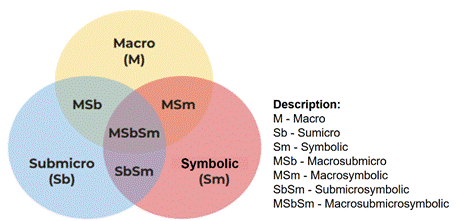
In this way, we agree with Cerdran et al. (2018), who emphatize that Johnstone's proposal focuses on the integration of the three levels. Therefore, the relationships and distinctions between the levels are essential elements in the learning of chemical concepts. In Kiill's (2009) study on the use of images in textbooks, an expansion of Johnstone's (1993) proposal was presented to integrate the concepts, as illustrated in Figure 1.

Figure 1 illustrates the correlations between various aspects of the representational levels. The macrosubmicro (MSb) refers to a representation that exhibits both macro and submicro level characteristics concurrently, such as a photograph of a container containing water and the representation of water molecules in a liquid state.
For Keiner and Graulich (2020), it is crucial to relate interactions at the submicro level to understand phenomena at the macro level. In addition, tests carried out by Habiddin and Page (2021) involving chemical kinetics questions indicate that although students perform well on algorithmic questions, they struggle to identify information from a pictorial representation. This evidence may suggest that students are not accustomed to manipulating or interpreting models and have a limited understanding of chemistry, even at higher levels.
In light of this, Justi and Gilbert (2002) recommend approaches that enable the development and testing of models created by students, including discussions of their functions and limitations. Rodrigues and Machado (2023) also emphasize that it is essential to explicitly incorporate reflection on the nature of representations, particularly in the context of chemistry teaching, where their use is ubiquitous.
METHODOLOGY
The nature of this study is qualitative, as it prioritizes understanding human behavior, giving relevance to the experiences and perspectives of the participants (Bogdan & Biklen, 1994). The research was conducted in a public higher education institution, specifically in a class for a subject offered by the Chemistry degree program, which enrolled four students. On the day of data collection, one student was absent, thus, the research participants were three students: Yohan, Ariadne, and Cecília (fictitious names chosen by the students themselves).
The low number of students enrolled in the course in 2022 was due to the simultaneous offer of another compulsory course, which was interrupted during the pandemic and generated a pent-up demand. Faced with this scheduling conflict, many students chose to enroll in an alternative compulsory subject, resulting in a class with only four students—an atypical situation that continued to be offered during the exceptional post-pandemic period.
This course aimed to reflect on pedagogical practice in the preparation and application of theoretical and experimental chemistry lessons in basic education, and it was taught for 12 weeks, 3 hours a week, in the morning. Although the subject is compulsory for Chemistry undergraduates, as is the case with Ariadne and Cecília, students from other courses could take it. Yohan, for example, was studying Control and Automation Engineering.
It is also important to note that, at the time of the research, the undergraduate students were advanced in the course. They had already studied General Chemistry and some subjects related to the bachelor’s degree in chemistry. Therefore, they had already studied the concept of chemical kinetics. On the other hand, the engineering student had not studied chemistry at university, which placed him at a lower level of experience compared to his classmates. According to Flick (2009), heterogeneity can be beneficial for qualitative research, as it produces diversity within the field of study.
To conduct the research, the ethical parameters involving human subjects were considered, with approval from the Research Ethics Committee. The three participants volunteered for the study by signing the Informed Consent Form.
Description of data collection
The proposed metavisual activity was designed to permeate the three representational levels. The students worked in groups throughout the task, which lasted approximately 120 minutes. The first author acted as the subject's tutor, and the second as the class teacher. However, in this activity, the researchers participated by observing and addressing any procedural doubts. This methodological choice aimed to give students more freedom, allowing them to highlight their conceptual gaps and doubts, as well as to encourage discussion between peers and explore how comparing models can contribute to learning chemistry.
The practice began with a problem situation (Box 1) involving a fictitious dialogue about the behavior of iron in an aqueous solution of sulfuric acid, raising the question of whether temperature would influence the rate and yield of the reaction.

To address the problem, the group of students discussed their hypotheses, developed a work plan, conducted experimental tests to observe the phenomena, drew initial conclusions, and took notes. The materials provided for the tests were: nails (of the same mass), a 1.0 mol/L sulphuric acid solution, a hotplate, beakers and a beaker filled with distilled water. The students were expected to place a) a nail in a sulphuric acid solution at a lower temperature; b) a nail in a sulphuric acid solution at a higher temperature, in order to compare the rate of the reaction in both cases, considering the macro level.
The second part of the activity dealt with the symbolic aspect, in which the group worked out the chemical equation that expressed their experiment. The students then compared and discussed their chemical equation with the one presented by the authors (Fe(s)+ 2H+ (aq) → Fe2+ (aq)+ H2(g) ) making the first metavisual stage of the activity. At this stage, the students were expected to discuss and work out the formulas of the reactants and products of the reaction, since they were not told what the bubbles formed in the phenomenon were. In addition, as these were higher education students, they could also have been expected to discuss the absence of spectator ions and electron transfers in the redox reaction to construct the equation - even though electrochemistry was not the focus of the activity.
Finally, the third part of the activity added the submicro level to the group discussions. The students drew up explanatory models: a) before the reaction took place, i.e., when the reactants came into contact; b) during the reaction; c) at the end of the reaction (considering that the nails in both cases, the system at high temperature and the system at low temperature, had been completely consumed). The group of students was expected to make two models for each item (a, b, and c), one at a lower temperature and the other at a higher temperature.
After completing each step, the group was instructed to compare the model(s) constructed with the corresponding models presented by the authors as a possible explanation (Figure 2), discussing their differences and similarities, these being some more metavisual steps.

Possible explanatory models considering the beginning, during and end of the reaction presented to students
Therefore, the metavisual stage always took place after a model had been created. That is, once the group had finished making a model of an item, they were required to compare it with the one presented by the teacher before proceeding to the next model. The students were expected to discuss aspects such as the difference in energy and agitation between the particles in the two systems (room and high temperatures), the theory of effective collision as an explanation of the model, the yield of the reaction (the same for both systems), the influence of temperature, and other General Chemistry concepts present in the representations, such as the proportion and size of particles, geometry, solvation of ions and electronegativity.
In the models drawn up in Figure 2, H+ was chosen instead of H3O+ in the ionization of sulfuric acid, in order to represent a model closer to a solvated proton (Silverstein, 2014). After discussing these models, Silverstein (2014) recommends the use of the H+ ion instead of the hydroxon ion for the ionization of acids in solution - a recommendation also followed in this study.
During the activity, students were instructed not to consult any material during the activity, except the representations presented to them. A diagram (Figure 3) summarizing the task stages according to representational level is shown below.

Data analysis
The student’s textual, pictorial, and symbolic productions were documented, along with their group discussions, which were recorded and transcribed. The transcript was organized according to excerpts of speech, referred to as units of analysis (UAs). This material was read reviewed multiple times, resulting in 65 UAs.
Each UA begins when a new topic of conversation is introduced and ends when it is interrupted to make way for another subject, following the chronological sequence of events. An example is shown in Box 2:

Once this process was done, the UAs were categorized according to Kiill (2009), in order to identify the representational level of chemistry accessed and/or the level transitions made by the group of students in each UA. Box 3 shows Kiill's (2009) categories and their respective descriptions adapted to the context of this research.

The categorization analysis was based on identifying difficulties in accessing and/or transitioning between representational levels in order to answer the research question. Moreover, data triangulation can provide greater confidence in the evidence and its meanings (Stake, 2011). Thus, the group’s drawings and notes, as well as the researcher's logbook entries, were used to deepen the analysis.
RESULTS AND DISCUSSION
Of the 65 coded UAs, 20 showed no signs of access or transition between levels, as they reflected occasions when the students discussed matters parallel to the activity. Consequently, the remaining 45 UAs were classified according to the categories proposed by Kiill (2009). Graph 1shows the general information for each category according to the three different moments of the activity.

In general, Graph 1 shows that the students accessed or transited through the representational levels in a way that corresponded to the moment of the activity. For example, in the experiment, the group only accessed the macro level, and the symbolic level was mentioned for the first time during the preparation of the chemical equation.
This indicates that the students did not spontaneously access the symbolic or submicro level just by observing the phenomena. According to Locatelli and Arroio (2017), they are not used to manipulating representations at the submicro level, so they need to be encouraged to do so. Therefore, there is a need for activities that encourage learners to work on the other levels that go beyond the macro, as well as the integration of the symbolic and submicro in a reflective way. In other words, students tend to rely on the macro to move forward and (re)think the other levels (Locatelli & Arroio, 2017).
Taking into account all stages of the activity, it can be seen that, contrary to what is commonly reported in the literature (Gilbert & Treagust, 2009; Jaber & Boujaoude, 2012), in which the macro level is more accessed by students, the students in this study predominantly mentioned the submicro level, either by accessing it (Sb) or by transitioning to another level (MSb and SbSm). This result is similar to that found by Fernandes and Locatelli (2021), which can be attributed to the nature of the activity that encourages the construction, comparison and evaluation of models at the submicro level, which already indicates the potential of the strategy used to access this level, considered difficult by the students. However, it is also important to bear in mind that the students Cecília and Ariadne conducted the discussions predominantly at the symbolic and submicro levels (especially in SbSm) because they are more experienced in manipulating representations, which indicates the influence of the knowledge acquired throughout the course on these constructions of knowledge.
Yohan, on the other hand, prevalently brought contributions based on macro aspects (M, MSb and MSm) through observation of the experiment or everyday situations to propose explanations, similar to what was found in a study with primary school students (Locatelli & Arroio, 2017), which was to be expected, considering that he had not reviewed chemistry concepts since the entrance exam.
According to Fernandes and Locatelli (2021), students need to access and transition between levels; however, there is a need to reflect on the quality of these transitions, which can lead to an understanding of the inherent obstacles to student learning that this process presents. Although Graph 1 indicates that students moved between all the levels at least once, in the following sections we present examples of how these transitions occurred and the challenges associated with this process.
Into support the presentation of the results in the next section, colors have been used in the excerpts where the students speak to make the representational levels mentioned explicit. We have highlighted the macro-level passages in dark yellow, the submicro-level passages in blue, and the symbolic level in red.
4 Experimental stage
To address the problem situation, in the first stage of the activity, the group of students chose to test the behavior of the nail in two systems: an aqueous sulfuric acid solution and distilled water, both at room temperature and at high temperature. As expected, Graph 1 shows that only macro aspects (M) were mentioned in 9 UAs by the students during the experiment. At this stage, the students made notes on the observed phenomena, such as the formation of bubbles and their intensity, and observations on the state of the nails at the end of the procedure, as exemplified in an excerpt from UA 11:
Cecília: (...) the (nail in acid) that was heated is more (corroded) than the one that wasn't heated... in relation to the appearance of the (nail) that remained in the water, I don't see any significant changes.
Ariadne: (....) it (nail in acid at high temperature) has changed color.
Cecília: It's changed color and it's peeled off much more than this one (nail in acid at room temperature), it's almost lost its shape (...)
Yohan: It's even removed the rust... it's thinner too.
In general, this was the stage in which the students had the least difficulty, and there was active participation from all group members, according to the excerpt from UA 11, which can be attributed to the tangible nature of the macro level, which allows for easier access (Johnstone, 1993; Jaber & Boujaoude, 2012).
5. Chemical equation
During the preparation and comparison of the chemical equation, according to Graph 1, the students not only accessed the symbolic level (Sb) in 3 UAs, but also the macrosymbolic level (MSb) in 5 and the macrosubmicrosymbolic level (MSbSm) in 1. UA 15 exemplifies the students' discussions on the symbolic level:
Cecília: So, for example, the reaction would be water. Aqueous H 2 SO 4 + metallic (Fe)? “s” (solid) here... that (water) would be... aqueous, wouldn't it? liquid! Liquid H 2 O!
Ariadne: Liquid H 2 O!
Cecilia: Aqueous H 2 O is difficult in my head.
In this excerpt, the students refer to the state of matter associated with the reactant in the construction of the chemical equation, indicating a certain mastery in the use of symbolism. In addition, there is an evaluation of water, in which the students rethink and change ‘aqueous’ to ‘liquid’, attributing that ‘H2O(aq)’ would be incorrect.
The relationship between symbology and the macro level proved to be a challenging task for the students, as evident in the MSm transitions in Graph 1, where they began at the macro level to validate the symbolic. In other words, they rely on what they have seen to arrive at a possible representation (Fernandes & Locatelli, 2021). In this case, the students evaluated the behavior of the nails in water and an aqueous solution of sulfuric acid in order to propose the chemical equations for the two situations, as exemplified in an excerpt from UA 16:
Cecília: (...) Aqueous H 2 SO 4 + Fe turning into... something. But here, for example, water + Fe, we haven't observed anything (nails in water)... so I don't even know if this equation makes sense...
Yohan: But then there must be some reaction, even if it's over time, for example the Titanic rusts, right? underwater.
Cecília: (...) that, it's just that here, for example (in water), we didn't see anything happening, but something happened.
In the excerpt, the student expresses uncertainty about the reaction of the nail in water, since no apparent changes were observed in the metal. However, Yohan cites the “Titanic”, exemplifying that there is a chemical reaction with long-term evidence. Although the oxidation of the nail in contact with water and oxygen is not the focus of the activity, it is interesting to note that the student starts from the macro level, from phenomena that are closer to his daily life, to seek articulation with the other level, as suggested by Locatelli and Arroio (2017).
Concerning MSbSm transition, one occurrence was identified during the development of the possible equation of the nail in an aqueous solution of sulphuric acid. The transition between the three levels is considered a difficult task for students (Johnstone, 1993; Jaber & Boujaoude, 2012; Gilbert & Treagust, 2009; Keiner & Graulich, 2020), which may justify the low incidence of this transition in the activity. In the following excerpt, from UA no. 19, the MSbSm transition is identified:
Ariadne: (...) what are the bubbles?
Cecília: Oxygen, because rust is iron oxide, so the bubbles would be this “oxide” coming out.
Ariadne: So it (oxygen) has to come out.
Cecília: So this would be... this part (of the equation) with Fe + O 2 (...).
In this excerpt, there was a transition between elements at the macro level (a reference to the bubbles, assuming they were oxygen bubbles), the submicro level (where the formation of bubbles would be the breaking of the iron oxide bonds), and the symbolic level (represented by the oxygen formula, O2). The group concluded that, in the reaction between the nail and the acid, the main gas released was oxygen, based on their observation of a greater bubble intensity in the area where the nail had been oxidized. This is a common alternative conception, as the main gas involved in this reaction is hydrogen gas.
However, it is important to note that bubbles were only observed in the oxidized region of the nail when it was submerged in water. In the reaction involving nails and acid, bubbles were observed all over the metal. It is possible that the students found it difficult to organize and consider the most relevant information from the experiment recorded in their notes. As a result, they may have become confused or fixated on the idea of metal oxidation, leading them to interpret that the same phenomenon observed in the nail in water would also have occurred in the nail in acid.
The MSbSm transition occurred during the process of knowledge construction. This suggests that transitions, when they occur, do not necessarily lead to the desired scientific construction; however, it is a valid and valuable construction in the learning process, as it indicates that students were able to access and move between levels, even if they needed help to better understand the concepts. In this sense, Gkitzia et al. (2020) suggest that activities involving transitions between levels are a useful tool for teachers to identify conceptual difficulties and information about what students understand about certain content.
6. Submicro models
According to Graph 1, Figure 4 illustrates the moment during the activity when the submicro models were developed and compared, considering the start, during, and end of the reaction. This stage involved 10 accesses at Sb level (submicro), 5 transitions at MSb (macrosubmicro), and 12 transitions at SmSb (submicrosymbolic) in the UAs.

Models made (before[a[, during[b[, and at the end[c[ of the chemical reaction between solid iron and aqueous sulphuric acid solution)
The students' discussion began on how to represent the metallic reagent at the submicro level, resulting in the MSb transition, as indicated in an excerpt from UA 27:
Cecília: (...) so the nail... The submicro so we draw the nail.
Ariadne: We don't draw the nail, we draw the iron!
Cecilia: Oh, no... oh, no! Yes, yes, yes, you're right. (...) Yes, you can already make little balls... it's the iron.
Ariadne: OK, let's draw some dots to symbolize the iron.
Cecília: It's just that in the other (subject) activity we drew the fire (as a submicro) and she (the teacher) said: “okay? but it's not showing submicroscopically”. (Explaining the context to Yohan)
It is common to attribute a characteristic at the macro level to represent the submicro (Chandrasegaran et al., 2007; Jaber & Boujaoude, 2012). In this case, Cecília initially proposed drawing the nail, believing it to be a submicro representation, but shift to a more conceptual approach after Ariadne's intervention.
In addition, in her final statement, Cecília, explains to Yohan that their reasoning was influenced by recalling the memory of the “bonfire” activity that had taken place weeks earlier in the course, in which Yohan had not taken part. In this activity, the students represented the three levels of chemistry in the burning of wood, and, for the submicro level, they drew a bonfire with some symbolic elements, such as H2 and CO2 - i.e., a macro and symbolic representation. It is therefore interesting to note the influence of this first approach on the students' rethinking of the submicro representation.
Another recollection of previous activities involving modeling in the submicro, experienced by the group members, was used to justify a possible representation of aqueous sulfuric acid. Given that the students were unable to reach a consensus on the model of the sulphuric acid molecule, the two students opted to represent it based on experiences from another subject, as in the excerpt from UA 38:
Cecília: What if we don't do it like the (other) teacher? That last activity we did with modeling clay... I can't remember what the reaction was, but it was a “big” reaction that we did “separately”, we didn't do it all together... I think we just did the water and...
Ariadne: So, I was thinking of doing H + ... SO 4 2- , you know? But I'm stuck on how to draw it... I don't need to draw dots, just write it down, right?
Cecília: I think the idea is that we make dots and not write.
Ariadne: It goes back to the geometry problem. I don't know how to draw that.
Cecília: I'd do it like this: SO 4 and the two balls of H. (...) Then in the middle there's (the sulphur), and on the side each (ball) oxygen.
The excerpt is an example of the SbSm transition (submicrosymbolic), in which, starting from the symbolic, students consider how to represent ions as “balls” in the submicro. Ariadne's remark — “I don't know how to draw that” — represents the challenges seen in other SbSm transitions throughout the process, where students rely on symbolic elements for modeling but remain stagnant in terms of how to draw and how these ions would be arranged in the representation, indicating difficulties in the transition between the symbolic and submicro levels (Fernandes & Locatelli, 2021; Gibin & Ferreira, 2010; Gkitzia et al., 2020). According to Cakmakci (2010), students have difficulties associating representations at the symbolic level with models, which suggests a shallow understanding of these concepts. In addition, according to Taber (2009), chemical formulas are complex to understand and represent a high cognitive demand, which may justify students' difficulties in understanding chemical symbology and relating it to other levels, specifically the submicro level.
Despite the difficulties faced while constructing the first model (Figure 4a), the students took care to represent the number of sulphate ions and H+ ions proportionally (1:2), correctly assigning the geometry of the anion and inserting a legend. However, it is important to note that Figure 4a shows H atoms instead of H+ ions. In their speeches, the group indicated that the intention was to draw H+ in the representation, even though they often referred to the cations as “hydrogen” or “H”. The same situation occurred with the sulphate anion, which the students called ‘SO4’ and not “SO4 2-”. This data is similar to that found in the research by Keiner and Graulich (2020), in which the students cited “chlorine” while showing the chloride ion in their drawing. The authors state that the misunderstanding of symbolic terminology reminds teachers of the importance of communicating accurately with their students at this level to avoid confusing concepts.
Still on the subject of ions, Figure 4b shows the H+ cations being solvated by water (Silverstein, 2014), which may indicate that, in meta-visual stage 2 (comparison of the model of the start of the reaction), the students took into account the representation of the water molecules and their orientation in relation to the cations when constructing the second model (Figure 4b). However, the solvation of SO4 2- anions was not represented, nor was Fe2+ cations in Figure 4C, which may indicate a partial understanding of the activity of ions in aqueous solutions (Gkitzia et al., 2020).
Furthermore, in Figure 4b, the H2 molecules have been illustrated as two hydrogen atoms slightly apart from each other, and the representation of the H+ ion has been kept as hydrogen atoms. The difficulty of making suitable submicro models is common for most students at all levels of education (Gkitzia et al., 2020), including postgraduate courses (Gibin & Ferreira, 2010). On the other hand, in contrast to Figure 4b, Figure 4c shows that the atoms of the hydrogen gas molecule are joined together to form the hydrogen molecule, indicating a metavisual rethinking of the representation after comparing the models (Shimada & Locatelli, 2023). However, there are no records in which the students discuss the subject, so it is possible that this change is just a replication of what was seen in the teacher's model, suggesting the primary strategy of imitation (Chang, 2022).
Another issue discussed by Shimada and Locatelli (2023) is the representation of the sulphate ion as a participant in the reaction and not a spectator, since the overall reaction (Fe(s)+ H2SO4(aq) → FeSO4(aq)+ H2) was considered, based on the so-called simple-exchange reaction method, when drawing up the explanatory model. In Figure 4b, the students drew the sulpha that te ion reacting with solid iron. In other words, instead of forming Fe2+ (aq), the students' representation indicates the formation of FeSO4, as Ariadne says in the passage: “(...) we thought about the reaction with sulphuric acid itself, considering sulphide, and then we thought about sulphide interacting with iron”.
This representation once again reveals the difficulty in interpreting the global chemical equation (symbolic level), which impacts on the transition to the submicro level and the understanding of what is happening in the chemical reaction. We understand that, when considering the overall reaction, FeSO4 in aqueous solution forms Fe2+ and SO4 2- ions, which could be a naming error when Ariadne refers to “sulphide”. However, it is important to point out that the students' difficulty was in stating that the sulphate ion took part in the reaction.
This confusion may stem from the idea that the reaction was a simple exchange reaction, i.e., the hydrogen in the sulfuric acid would “exchange places” with the iron, resulting in an iron-sulfate interaction. This mechanical approach to the formation of chemical reactions, “in addition to not explaining the formation of ions, also does not make clear the role of the chemical species that react in solution” (Shimada & Locatelli, 2023, p.145), which shows that the use of the term simple exchange can hinder the understanding of chemistry, since there is no exchange in a chemical reaction, but rather interaction between particles in the reaction medium.
In this sense, we pointed out the possibility that if the students had been directed towards more complex thinking, encompassing the three levels, they might have realized that this was not the case, since in the reaction, there was no formation of a solid, only the consumption of the nail and the formation of bubbles.
Additionally, the students repeatedly referred to the sulphate ion as “sulphide”, revealing confusion in anion nomenclature. Jaber and BouJaoude (2012) state that learning the levels in a fragmented way develops students who can solve problems systematically and algorithmically. However, they do not fully understand the chemical meanings and inaccurately comprehend the phenomena.
It is also important to note that, as in the case of H+ ions, Fe2+ cations were represented as Fe atoms (Figure 4c), which indicate that the students may not distinguish the representation of H and Fe atoms with their respective ions. According to Gkitzia et al. (2020), some students do not fully understand the meaning of chemical symbology, which may explain the conflicting relationship they establish between the symbolic representations and the drawings in the submicro.
Unlike the first model (Figure 4a), in Figure 4c the ions were not represented in the stoichiometric proportions (1:1) of the products Fe2+ and H2. Instead, the ratio of 1:2 was considered, i.e., for every 1 Fe2+ ion formed, 2 H2 molecules were formed. In the excerpt from UA 61, in which the Q6 transition occurs (submicrosymbolic), the only dialogue referring to this is present.
Yohan: (...) what I was saying is: one iron for one H 2, two balls (of hydrogen) for each iron (Fe2+ formed).
Ariadne: Yes, but there could be more (hydrogen gas), because there's a lot more H 2 in the system, understand?
Yohan: Hm, here (in their drawing) there's even more.
Yohan suggested following the proportion in the chemical equation. However, Ariadne argued that there is more hydrogen gas in the system. One supposition as to why she had this thought is that the formation of H2 gas is experimentally visible. In contrast, the formation of Fe2+ is not, which could lead to the understanding that more gas is formed in the system than the cation. Chandrasegaran et al. (2007) point out that students tend to arbitrarily extrapolate properties from the macro level to the submicro level, since their ideas are strongly influenced by sensory information.
It was also expected that the students would use chemical reaction modeling to explain how temperature influences the rate of the reaction. However, the students did not represent (Figure 4b and 4c). They did not mention the theory of collisions, even after metavisual stage 3 (comparison of the model during the reaction), at which point the students even mention the actual collisions, but do not discuss it and do not consider it for the subsequent model, which is in line with the studies by Habiddin and Page (2019) and Marani et al. (2017), showing that although students know that temperature generally increases the rate of the reaction, they are unable to use the theoretical model to construct their explanations of how the phenomenon occurs using submicro subsidies. According to Habiddin and Page (2019), this difficulty may be associated with the students' lack of clarity in relating the rate of the reaction to the theory of collisions, i.e. obstacles in the transition between macro and submicro. Finally, it is worth noting that the progress made by students is important for their learning, as it is a continuous process.
FINAL CONSIDERATIONS
To conclude this article, we return to the research question: What challenges did a group of higher education students face in accessing and transitioning between representational levels in a metavisual activity about the effect of temperature on the rate of a chemical reaction?
Macro access enabled students to move on to other levels, such as MSb (macrosubmicro), MSm (macrosymbolic), and MSbSm (macrosubmicosymbolic). It was noted that it was important for students to utilize subsidies from the macro level to support their ideas on the other levels, an activity primarily carried out by Engineering students, as seen in MSm. However, it was also identified that there is a tendency for students to arbitrarily transpose phenomenological notions to the particulate level. Furthermore, an MSbSm transition led to a conceptual error, which we emphasize as an important part of the learning process and the construction of knowledge.
The results showed a weak understanding at one level of a given concept leads to a domino effect, where students fail to understand the other levels as a result of their initial misunderstanding. For example, by not understanding the simplified reaction equation, the students developed a conceptually incorrect representation at the submicro level, with problems in the submicrosymbolic transition (SbSm). This highlights the importance of moving between levels to understand chemical phenomena, illustrating the dependence between levels, as suggested by Johnstone's triangle.
It is important to note that, in general, the SbSm transition accounted for the most significant number of UAs. However, although they were quantitatively prevalent, qualitatively they were full of doubts and superficial concepts of chemistry. The students struggled to produce models based on chemical symbology, the molecular geometry of the reactant and the products of the reaction, and the representation of the H+ and Fe2+ ions as H and Fe atoms.
Additionally, the students did not understand the explanation of how temperature influences the rate of the reaction and the dynamic activity of ions in solution, which demonstrates the difficulty in the submicro level. This work also highlights the importance of students developing their own models, as these representations reveal the barriers to understanding the concepts.
The results also indicate that the pictorial representations - especially in relation to the first model - were developed and originated from the students' memories of past activities. This emphasizes the relevance of the knowledge acquired throughout the students' course in developing the activity.
Acknowledgements
To the Federal University of ABC, the São Paulo State Research Foundation(FAPESP), processes 2023/18177-6and 2022/16395-3, for funding the research project, and to the students who participated in this study.
References
- Araújo Neto, W. (2009). N. Formas de uso da representação estrutural no ensino superior de química (Tese de doutorado). Universidade de São Paulo, Faculdade de Educação, São Paulo. 2009.
-
Cakmakci, G. (2010). Identifying alternative conceptions of chemical kinetics among secondary school and undergraduate students in Turkey. Journal of Chemical Education, 87(4), 449-455. https://doi.org/10.1021/ed8001336
» https://doi.org/10.1021/ed8001336 -
Cakmakci, G., Leach, J., & Donnelly, J. (2006). Students' ideas about reaction rate and its relationship with concentration or pressure. International Journal of Science Education, 28(15), 1795-1815. https://doi.org/10.1080/09500690600823490
» https://doi.org/10.1080/09500690600823490 - Cedran, D. P., Cedran, J. C., & Kiouranis, N. M. M. (2018). A importância da simbologia no ensino de Química e suas correlações com os aspectos macroscópicos e moleculares. Revista de Ensino de Ciências e Matemática, 9(4), 38-57.
-
Chandrasegaran, A. L., Treagust, D. F., & Mocerino, M. (2007). The development of a two-tier multiple-choice diagnostic instrument for evaluating secondary school students’ ability to describe and explain chemical reactions using multiple levels of representation. Chemistry Education Research and Practice, 8(3), 293-307. https://doi.org/10.1039/B7RP90006F
» https://doi.org/10.1039/B7RP90006F -
Chang, H. Y. (2022). Science teachers’ and students’ metavisualization in scientific modeling. Science Education, 106(2), 448-475. https://doi.org/10.1002/sce.21693
» https://doi.org/10.1002/sce.21693 -
Chittleborough, G., & Treagust, D. (2008). Correct interpretation of chemical diagrams requires transforming from one level of representation to another. Research in Science Education, 38, 463-482. https://doi.org/10.1007/s11165-007-9059-4
» https://doi.org/10.1007/s11165-007-9059-4 -
Fernandes, B. G., & Locatelli, S. W. (2021). Acesso e Transição nos Níveis Representacionais durante a Construção de Modelos Explicativos acerca de Interações Intermoleculares. Revista Brasileira de Pesquisa em Educação em Ciências, 21, 1-29. https://doi.org/10.28976/1984
» https://doi.org/10.28976/1984 - Ferreira, P. M., & Justi, R. (2008). Modelagem e o “fazer ciência”. Química Nova na Escola, 28, 32-36.
- Flick, U. (2009). Desenho da pesquisa qualitativa. Porto Alegre: Artmed/Bookman.
-
Gibin, G. B., & Ferreira, L. H. (2010). A formação inicial em química baseada em conceitos representados por meio de modelos mentais. Química Nova, 33(8), 1809-1814. https://doi.org/10.1590/S0100-40422010000800033
» https://doi.org/10.1590/S0100-40422010000800033 -
Gilbert, J. K. (2005). Visualization: A metacognitive skill in science and science education. In J. K. Gilbert (Ed.), Visualization in science education (pp. 9-27). Dordrecht: Springer. https://doi.org/10.1007/1-4020-3613-2_2
» https://doi.org/10.1007/1-4020-3613-2_2 -
Gilbert, J. K., & Treagust, D. (2009). Macro, submicro and symbolic representations and the relationship between them: Key models in chemical education. In J. Gilbert & D. Treagust (Eds.), Multiple representations in chemical education (pp. 1-8). Dordrecht: Springer. https://doi.org/10.1007/978-1-4020-8872-8_1
» https://doi.org/10.1007/978-1-4020-8872-8_1 -
Gkitzia, V., Salta, K., & Tzougraki, C. (2020). Students’ competence in translating between different types of chemical representations. Chemistry Education Research and Practice, 21(1), 307-330. https://doi.org/10.1039/C8RP00301G
» https://doi.org/10.1039/C8RP00301G -
Habiddin, H., & Page, E. M. (2019). Development and validation of a four-tier diagnostic instrument for chemical kinetics (FTDICK). Indonesian Journal of Chemistry, 19(3), 720-736. https://doi.org/10.22146/ijc.39218
» https://doi.org/10.22146/ijc.39218 -
Habiddin, H., & Page, E. M. (2021). Examining students’ ability to solve algorithmic and pictorial style questions in chemical kinetics. International Journal of Science and Mathematics Education, 19, 65-85. https://doi.org/10.1007/s10763-019-10037-w
» https://doi.org/10.1007/s10763-019-10037-w -
Jaber, L. Z., & Boujaoude, S. (2012). A macro-micro-symbolic teaching to promote relational understanding of chemical reactions. International Journal of Science Education, 34(7), 973-998. https://doi.org/10.1080/09500693.2011.569959
» https://doi.org/10.1080/09500693.2011.569959 - Johnstone, A. H. (1982). Macro-and micro-chemistry. School Science Review, 64, 377-379.
- Johnstone, A. H. (1991). Why is science difficult to learn? Things are seldom what they seem. Journal of Computer Assisted Learning, 7(2), 75-83.
-
Johnstone, A. H. (1993). The development of chemistry teaching: A changing response to a changing demand. Journal of Chemical Education, 70(9), 701-705. https://doi.org/10.1021/ed070p701
» https://doi.org/10.1021/ed070p701 -
Johnstone, A. H. (2000). Teaching of chemistry - Logical or psychological? Chemistry Education: Research and Practice in Europe, 1(1), 9-15. https://doi.org/10.1039/A9RP90001B
» https://doi.org/10.1039/A9RP90001B -
Junqueira, M., & Maximiano, F. (2020). Interações intermoleculares e o fenômeno da solubilidade: Explicações de graduandos em química. Química Nova, 43(1), 106-117. https://doi.org/10.21577/0100-4042.20170449
» https://doi.org/10.21577/0100-4042.20170449 -
Justi, R., & Gilbert, J. (2002). Models and modeling in chemical education. In J. Gilbert, O. de Jong, R. Justi, D. Treagust, & J. Van Driel (Eds.), Chemical education: Towards research-based practice (pp. 47-68). Dordrecht: Springer. https://doi.org/10.1007/0-306-47977-X_3
» https://doi.org/10.1007/0-306-47977-X_3 - Keiner, L., & Graulich, N. (2020). Transitions between representational levels: Characterization of organic chemistry students’ mechanistic features when reasoning about laboratory work-up procedures. Chemistry Education Research and Practice, 21(1), 469-482. https://doi.org/10.1039/C9RP00241C
- Kiill, K. B. (2009). Caracterização de imagens em livros didáticos e suas contribuições para o processo de significação do conceito de equilíbrio químico (Tese de Doutorado). Universidade Federal de São Carlos.
- Labarca, M. (2009). Acerca de la naturaleza de la química: Algunos comentarios. Educación en la Química - Revista de la Asociación de Docentes en la Enseñanza de la Química de la República Argentina, 15(2).
- Locatelli, S. W., & Arroio, A. (2017). Dificuldades na transição entre os níveis simbólico e submicro - repensar o macro pode auxiliar a compreender reações químicas? Enseñanza de las Ciencias, n.o extraordinário, 4239-4244.
- Locatelli, S.W.; Yeung, A.; Mocerino, M.; Treagust, D. (2025). Student-generated diagrams showing salt dissolution: patterns of levels of representation and an assessment rubric. International Journal of Science Education, (no prelo).
-
Mahaffy, P. (2004). The future shape of chemistry education. Chemistry Education Research and Practice, 5(3), 229-245. DOI https://doi.org/10.1039/B4RP90026J
» https://doi.org/10.1039/B4RP90026J - Marani, P. F., Oliveira, T. A. L. de, & Sá, M. B. Z. (2017). Concepções sobre Cinética Química: A influência da Temperatura e da Superfície de Contato. ACTIO, 2(1), 321-341.
-
Meneses, F. M. G., & Nunez, I. B. (2018). Errors and difficulties of high school students' learning in the interpretation of the chemical reaction as a complex system. Ciência & Educação, 24(1), 175-190. https://doi.org/10.1590/1516-731320180010012
» https://doi.org/10.1590/1516-731320180010012 - Mortimer, E. F., Machado, A. H., & Romanelli, L. I. (2000). A proposta curricular de química do estado de Minas Gerais: Fundamentos e pressupostos. Química Nova, 23(2), 273-283.
-
Nkomo, S., & Bly, A. (2024). Developing a Threshold Concept Assessment Rubric: Using the Johnstone’s Triangle Framework for Understanding Intermolecular Forces. Journal of Chemical Education, 101(11), 4694-4703. https://doi.org/10.1021/acs.jchemed.4c00236
» https://doi.org/10.1021/acs.jchemed.4c00236 - Puggian, C., & Lopes, C. V. N. B. (2012). Ensino de reações químicas em laboratório: Articulando teoria e prática na formação e ação docente. Investigações em Ensino de Ciências, 17(3), 697-708.
-
Rodrigues, M. G., & Machado, J. (2023). A Natureza da representação a partir do referencial de Bas van Fraassen e a atribuição de sentido ao conhecimento químico escolar. Ensaio Pesquisa em Educação em Ciências (Belo Horizonte), 25, 1-15. https://doi.org/10.1590/1983-21172022240154
» https://doi.org/10.1590/1983-21172022240154 - Santos, J. A. (2016). Objetos educacionais digitais: critérios de avaliação para uso no ensino e na aprendizagem de Química. 145 f. 2016. Tese (Doutorado) -Instituto de Física, UFBA. Programa de Pós-Graduação em Ensino, Filosofia e História das Ciências. Salvador, 2016.
-
Shimada, M., & Locatelli, S. (2023). A evocação do pensamento metavisual em uma atividade sobre o efeito da temperatura na rapidez de uma reação. Indagatio Didactica, 15(4), 131-150. https://doi.org/10.34624/id.v15i4.31834
» https://doi.org/10.34624/id.v15i4.31834 -
Silverstein, T. P. (2014). The Aqueous Proton Is Hydrated by More Than One Water Molecule: Is the Hydronium Ion a Useful Conceit? Journal of Chemical Education, 91(4), 608-610. https://doi.org/10.1021/ed400559t
» https://doi.org/10.1021/ed400559t - Stake, R. E. (2011). Qualitative research: Studying how things work. New York: Guilford.
- Taber, K. S. (2002). Chemical misconceptions: Prevention, diagnosis and cure. London: Royal Society of Chemistry.
-
Taber, K. S. (2009). Learning at the symbolic level. In J. Gilbert & D. Treagust (Eds.), Multiple representations in chemical education (pp. 75-105). Dordrecht: Springer. https://doi.org/10.1007/978-1-4020-8872-8_5
» https://doi.org/10.1007/978-1-4020-8872-8_5 -
Talanquer, V. (2010). Macro, Submicro, and Symbolic: the many faces of the chemistry triplet. International Journal of Science Education, 33(2), 179-195. https://doi.org/10.1080/09500690903386435
» https://doi.org/10.1080/09500690903386435 -
Wu, H. K., & Shah, P. (2004). Exploring visuospatial thinking in chemistry learning. Science Education, 88(3), 465-492. https://doi.org/10.1002/sce.10126
» https://doi.org/10.1002/sce.10126
-
7
CECIMIG would like to thank CNPq (National Council for Scientific and Technological Development) and FAPEMIG (Research Support Foundation of the State of Minas Gerais) for funding the publication of this article.
-
Data Availability Statement
The research dataset is not available due to confidentiality issues.
The research dataset is not available due to confidentiality issues.

 Source: Adapted from
  Source: The authors
 Source:
  Source: The authors
 Source: the authors
 Source: Adapted from
  Source: The authors
 Source: Authors' collection