
 THE MISSING PIECE: A Comparative Analysis of Content on the Clitoris and Penis in Science Textbooks from the 2024 PNLD
ABSTRACT:
Given that bodies labeled as feminine are underrepresented in various areas of society, including education, this study aimed to elucidate how textbooks from the 2024 National Textbook Program (PNLD) represent the homologous organs, clitoris and penis. To do so, seven textbook collections were analyzed in terms of the presence of three aspects: volume of discussion, visual representation, and written representation of these organs. The results highlight the underrepresentation of the clitoris compared to the penis across all analyzed collections, in both written and visual aspects. None of the collections presented the full structure of the clitoris in an explicit and identifiable manner. Additionally, there was a notable tendency to associate the penis with reproductive function and the clitoris with sexual pleasure, along with reinforcement of cisheteronormative perspectives. This discussion led us to recognize the need for a more comprehensive approach to the clitoris, aiming for a science education that embraces bodily, sexual, and gender diversities.
Key words:
Sexuality; Sex/Gender; Sex Education
RESUMO:
Tendo em vista que os corpos ditos femininos são sub-representados em vários âmbitos da sociedade, incluindo o educativo, o estudo buscou elucidar como livros do Programa Nacional do Livro Didático (PNLD) de 2024 representam os órgãos homólogos clitóris e pênis. Para tanto, analisou-se sete coleções didáticas quanto à presença de três aspectos: volume de discussão, representação imagética e representação escrita desses órgãos. Como resultados, destaca-se a sub-representação do clitóris frente ao pênis em todas as coleções analisadas, seja nos aspectos escritos ou imagéticos. Nenhuma coleção apresentou a estrutura completa do clitóris de maneira explícita e identificada. Ainda, foi marcante a relação do pênis com função reprodutiva e clitóris com função de prazer sexual, além do reforço de posturas cisheteronormativas. A partir dessa discussão, percebemos a necessidade de uma abordagem mais abrangente sobre o clitóris, visando uma educação em ciências que contemple as diversidades corporais, sexuais e de gênero
Palavras-chave:
Sexualidade; Sexo/Gênero; Educação Sexual
RESUMEN:
Teniendo en cuenta que los cuerpos denominados femeninos están subrepresentados en varios ámbitos de la sociedad, incluido el educativo, este estudio buscó esclarecer cómo los libros de texto del Programa Nacional del Libro de Texto (PNLD) de 2024 representan los órganos homólogos, clítoris y pene. Para ello, se analizaron siete colecciones de libros de texto en cuanto a la presencia de tres aspectos: volumen de discusión, representación visual y representación escrita de estos órganos. Los resultados destacan la subrepresentación del clítoris en comparación con el pene en todas las colecciones analizadas, tanto en aspectos escritos como visuales. Ninguna colección presentó la estructura completa del clítoris de manera explícita e identificada. Además, fue notable la asociación del pene con la función reproductiva y del clítoris con el placer sexual, junto con el refuerzo de posturas cisheteronormativas. Esta discusión nos llevó a reconocer la necesidad de una aproximación más amplia sobre el clítoris, con el objetivo de una educación científica que contemple las diversidades corporales, sexuales y de género
Palabras-clave:
Sexualidad; Sexo/Género; Educación Sexual
INTRODUCTION
In public basic education, the work of teachers is crossed by policies such as the National Textbook Program (PNLD), through which the government purchases a range of textbooks for schools, either physical or digitally, to be selected by teachers. In this process, teachers are responsible for choosing the textbook to be used as supplementary material by students, which requires the establishment of exclusion and selection criteria for these works.
In the context of discussions of gender and sexuality in science textbooks, the subject of the clitoris is still scarcely explored. Furthermore, the few studies that mention the presence (or not) of the organ in these materials are mostly foreign. In the Dutch context, for example, studies by Karen Hollewand (2022) point out that biology textbooks that dealt with the complete anatomy of the clitoris were distributed only in 2021, even though it has been known in great depth for over two hundred years. Maria Eduarda Melo et al. (2024) point out that the clitoris is under-represented in science teaching collections, as well as in videos that claim to be lessons.
From there, the question arises as to what extent its homologous1 organ, the penis, is covered in a more comprehensive way or whether it is also invisible. Beforehand, we hypothesized that there would be more information, whether imagery or writing, about the penis than about the clitoris. This is because previous studies have pointed to the clitoris being erased in relation to the penis in textbooks, for example (Lisa Moore & Adele Clarke, 1995; Hellen O'Connel et al., 2005; Marilia Machado et al., 2023).
Furthermore, the interest in the object of research arose from the process of analyzing, selecting and/or using teaching materials that arose from the authors' professional teaching practice. This practice has led to the perception that the materials present a certain uniformity in the way they approach the subject of genital systems, as well as the valuation and, consequently, devaluation of certain themes. In this sense, these questions arise: How are the clitoris and its counterpart, the penis, being approached in textbooks in the area? To what extent is sexual difference and male chauvinism expressed in science textbooks, especially when it comes to the clitoris/penis pair?
In an international literature review carried out by the authors of this study, the term “epistemological clitoristectomy” was coined to refer precisely to the removal of the clitoris from knowledge production in the area of education/teaching research (Maria Eduarda Melo et al., 2025). After several searches of the literature, no study was found that dealt with the clitoris in a central way in the investigation, and there were very few that dealt with the topic in a marginal way. However, to what extent is what was found for the research areas (the epistemological clitoristectomy) present in the teaching materials? And how is the genital system approached? Which aspects are covered, and which are excluded?
With this in mind, the aim of this investigation was to analyze how the clitoris and penis are represented in textbooks from the 2024 National Textbook Program, in order to discuss elements related to the invisibility of the clitoris in these materials. To this end, in the following section, we discuss the relationship between sexual diversity and sexism and their relationship, albeit contradictory, in biology teaching. The next section, entitled “Getting to know the clitoris better: a bit of cliterature”, brings together references from the biological and medical sciences to discuss the clitoris - particularly its anatomical and physiological aspects. Next, we present the methodological aspects of the research, as well as the results of the study and the discussions undertaken.
GENITAL BIOLOGY, SEXUAL DIVERSITY AND SEXISM
Clitoris and penis are two configurations of genital organs that arise from the process of differentiation of the same ambisexual structure called the genital tubercle (Vincent Di Marino & Hubert Lepidi, 2014; Laurence Baskin et al., 2018). The differentiation of the genital tubercle into a clitoris or penis (or other) has long been associated solely with a person's genetic inheritance, specifically the presence or absence of the Y chromosome (XX or XY). However, research has shown that this is a much more complex process and is associated with the molecular diversity of each individual (Anne Fausto-Sterling, 2012; Carolina Barros & Maíra Silva, 2023).
In this sense, the human genitalia have different configurations depending on certain and diverse genetic, epigenetic, hormonal, cellular, molecular and/or environmental situations (Baskin et al., 2018). Thus, the premise that the definition of a certain “binary biological sex”2 is linked solely to certain genetic information provided by an active gamete, the spermatozoon, is minimally a biological reductionism that reinforces a sexist stance (Shay Rodriguez, 2019).
The differentiation of the genital tubercle (Figure 1) is closely related to the presence of certain steroid hormones, which must be present in certain concentrations and at certain times during embryonic life and is also associated with the presence of specific cell receptors for these hormones (Baskin et al., 2018). However, taking human diversity as a paradigm, it is certain that the anatomical structures produced from the differentiation of the genital tubercle will be diverse, and will not necessarily fit into the clitoris/penis dichotomy, and intermediate structures may originate (Baskin et al., 2018; Felipe Bastos, 2019).

Anatomical and histological homology of the human external genitalia in embryonic development.
Although we recognize these differences in sexual development (Bastos, 2019; Bruno Tavares, 2022b), the clitoris and penis are the focus of this investigation, because to a certain extent they refer to the female/male division that is foundational in our society, being ingrained in the social fabric (Fausto-Sterling, 2012), and also generating a series of sex/gender disparities and violence (Judith Butler, 2017).
In biology teaching and in society itself, the female/male division, as well as other binary segmentations (such as penis and clitoris), misses out on multiplicity and difference and relegates many deviant bodies to invisibility (Bastos, 2019; Fabiana Carvalho, 2021; Tavares, 2022b). Nevertheless, it is undeniable that these dualisms 3 are structural in our society and consequently impact the way people know, recognize and communicate with each other. With this in mind, Bruno Tavares (2022a) proposes that, in the context of science and biology teaching:
[...] we could think of a strategic dualism. In other words, perhaps we can recognize the anti-dualist criticisms, but understand that in some contexts we will be dualists. But, as a strategic stance, it demands constant criticism and debate, and should not end in a dualist position, but rather mobilize it strategically (Tavares, 2022a, p. 122).
The female/male divide is one of the pairs to be rethought based on this strategic dualistic stance. Therefore, we mobilize this pair, as well as the clitoris/penis pair, but not without constant criticism about its limits and contexts of use This is because we live in a structurally sexist society, in which the “masculine” is commonly exalted, while the “feminine” is subjugated (Helio Hintze, 2020) and, therefore, this pair must be constantly re-evaluated. In this context, society is organized in such a way as to sustain patriarchal domination, in which so-called masculine values are exalted over feminine ones (Hintze, 2020). In this respect, the author states that:
[...] As a system of female oppression, structural sexism, while praising “masculine” values and the subjects we conventionally call “men”, produces a brutal demand for their masculinity, stimulating and demanding behaviors that often cause them profound psychological damage - in ways and proportions that are different from the damage caused to “women”. Furthermore, structural sexism places all genders that escape any binary and dichotomous classification (male <> female) as aberrations and relegates them to invisibility (Hintze, 2020, p. 13).
Along these lines, the superiority of the “masculine”, the situation of ontological dependence of the “feminine” in relation to the “masculine” and the invisibilization and domination of the “feminine”, are some of the traits of the sexist perspective that “undermines the possibilities of building a society with gender equity, with the necessary respect for all human beings” (Hintze, 2020, p. 15).
This sexist and patriarchal perspective is sustained by the naturalization of the female/male pair, so that it is reiterated in various social spheres and in the biomedical sciences (Lucas Tramontano, 2017). Thomas Laqueur (2001) points out that this perspective, which reaffirms sexual difference and the incommensurability between female and male bodies, comes from paradigmatic changes in the sciences from the 18th century onwards, under the influence of changes in social contexts.
This stance of exacerbating sexual differences was identified by Tramontano (2017) in his analysis of scientific textbooks commonly used in undergraduate courses in the areas of health in Brazil in relation to the topic of steroid hormones (so-called sex hormones). A similar result was published by Swiech and Heerdt (2019) in their analysis of eight biology textbooks, which presented concepts reinforcing sexual and gender differences based on steroid hormones. Thus, it is clear that sexual difference is reinforced from a “hormonal perspective”, but it is worth questioning:
[...] Exactly where in the body is the differentiating factor? This question is answered in different ways, according to the paths taken by scientific thought from the 18th century onwards. The difference has already been in the bones, muscles and “nerves”, to name a few examples (Schiebinger, 1987). Nowadays, it seems to be in the brain, as well demonstrated by the research of Marianne van den Wijngaard (1997) and Marina Nucci (2010). But what seems to have finally answered this question, and which remains “true” to this day, is that the difference occurs at a hormonal level (Tramontano, 2017, p. 166).
This reinforcement of sexual difference is anchored in a cisheteronormative conception of sex/gender and is based on a reproductive bias (Butler, 2017). This reproductive focus, combined with the reinforcement of cisheteronormativity, has been denounced in studies that have looked at the themes of gender and sexuality in science and biology textbooks (Paula Ribeiro et al., 2016; Reis et al., 2019; Ferreira et al., 2020). In this context, sexual and gender diversity, as well as female representations, are under-represented, both in the written text and even in the images (Olinto, 2013).
It is with this in mind that it seems reasonable to consider that the clitoris could be yet another example of the erasure of the feminine in relation to the masculine in the context of science textbooks. This is because the clitoris is historically associated with the so-called female body, while the penis is associated with the male body. However, recognizing this historical association between the genitals and the male/female pair should not close off bodily, sexual and gender possibilities to just two paths, given that if we consider the clitoris to be a uniquely female structure, without any critical perspective in relation to this, we will be erasing the possibilities of intersex and even trans existence.
GETTING TO KNOW THE CLITORIS BETTER: A BIT OF CLITERATURE 4
Although the clitoris and penis are the focus of this investigation, it's notable that in society, these organs are represented and discussed in very different ways. In this respect, Ramos (2018, p. 80) points out that “the silencing and lack of information about the clitoris generates the concealment of pleasure [...] and, consequently, a repression of the sexuality of these bodies [considered female]”. It is understood that by not presenting and discussing the clitoris, people who have this organ5 have their bodies limited in the sense of knowing and exploring it.
In contemporary times, the textbooks that underpin the field of anatomy reinforce the omission of detailed clitoral structure (O'connel et al., 2005; Machado et al., 2023). Along the same lines, a Greek study investigated the level of knowledge of postgraduate students in the field of educational sciences about genital anatomy and physiology and found that they were unaware of the clitoris (Georgios Ampatzidis et al., 2019). This scenario shows that the clitoris and the contents constructed about this organ are poorly disseminated in society in general and even among specialists.
In Brazil, even among science teachers in training, who hypothetically should be confronted with this subject as a teaching object in their professions, there is widespread misinformation and ignorance about the complete clitoral anatomy (Mariela Ramos, 2018). Despite the recent foreign advances in the approach to this organ in teaching, the practically complete clitoral structure had already been well described by science since the 1840s, with works by the anatomist Georg Ludwig Kobelt (Di Marino & Lepidi, 2014; O'connell et al., 2005).
According to anatomist and activist Jessica Pin (2022) about medical knowledge of the clitoris:
Since 1844, ignorance [about the clitoris] has not been a question of what is known, but a question of what is taught. There's a belief that the anatomy of the clitoris simply isn't that important and doesn't need to be included because it's not clinically relevant and people feel uncomfortable with this anatomy because it's involved with female sexual pleasure. So basically, it's been omitted because of taboo, it's censorship and this affects real [cis] women.
In a study that analyzed some elements of the history of science on the clitoris, Melo et al. (2024, p. 373) point out that:
[...] it can be seen that scientific knowledge about the clitoris has gone through several phases, including periods when its anatomy was uncertain and incomplete and, later, periods when even though its anatomy was known, knowledge about the organ was ignored. The history of scientific knowledge about the clitoris seems to be another example that emphasizes the non-neutrality of science and the strong correlation between society and its ethical and moral values in what is known, what is disseminated and what is taught.
Despite having been obscured at various times in history (Di Marino & Lepidi, 2014), it is now understood that the human clitoris is a multiplanar organ measuring approximately 11 centimeters and that most of its structure is located inside the body (Di Marino & Lepidi, 2014). It is made up of the clitoral glans, the body of the clitoris, two roots and two clitoral bulbs (Di Marino & Lepidi, 2014) (Figure 2):

In the clitoris, only the glans and a small part of the body are external and are located in the region of the vulva, more specifically in the upper part of the union of the labia minora (Di Marino & Lepidi, 2014). As the glans is the most visible and accessible terminal portion of the organ, it is also the most well-known part. It consists of an extension of the body of the clitoris and takes the form of a “button”6 (O’connell et al., 2005 but it is important to emphasize the great morphological variation that this region of the organ can present (Di Marino & Lepidi, 2014).
There are many nerve endings on the clitoral glans which are closely associated with pleasure, either through direct or indirect stimulation. At the base of the glans there is a large number of sebaceous glands that produce a whitish substance called smegma and at its distal end there is no orifice (Di Marino & Lepidi, 2014). The glans region may be covered by a layer of skin, the clitoral hood, which protects it and has various shapes and variations (Di Marino & Lepidi, 2014). Also, in situations of stimulation, the clitoris can go through a process of erection and increase in size (Di Marino & Lepidi, 2014).
The erection and consequent increase in size also occurs in its homologous organ, the penis. This is because both have a common embryonic origin and are formed by structures capable of filling with blood in situations of stimulation (corpora cavernosa and spongiosum) (Di Marino & Lepidi, 2014; Baskin et al., 2018). Also, distally, the clitoris and penis have a glans and similar neurovascular anatomy (Baskin et al., 2018). A striking difference between these organs is their relationship with the urethra, since in the penis the urethra passes through its entire interior, and in the case of the clitoris, the urethra does not pass through the organ, but opens in another region of the vulva (Di Marino & Lepidi, 2014).
Another issue worth highlighting is the anatomical position of these organs: while the clitoris has most of its structure inside the body, the penis has its structure more externalized. This point is highlighted in figure 3, which also points out the tissue and embryological similarity between certain structures of these organs.

Considering the clitoris-penis homology and the history of anatomical, scientific and social erasure of the clitoris, we question whether, as has been seen in other areas, there is an under-representation of the clitoris in relation to the penis in Brazilian science textbooks. With this question in mind and based on the understanding that sexism is a structuring factor in our society, as well as cisheteronormativity, we hypothesize that there is an erasure of the clitoris in these materials.
METHODOLOGICAL ASPECTS
In this qualitative study, the textual and imagery content referring to the penis and clitoris in science textbooks from the 2024 PNLD was comparatively analyzed. Thus, the methodological stages consisted of identifying and selecting the collections and volumes, constructing the analytical form based on the analysis items, reorganizing the form based on a pilot analysis and, finally, actually analyzing the selected volumes.
The textbooks of PNLD are written by authors or publishing groups, target public basic education and are materials that historically and socially have great credibility in school teaching. Despite having a common objective, these materials cannot be understood as homogeneous, neutral and finished objects, holders of unquestionable truth, but rather as pedagogical resources from which we can reflect on social reality in the classroom (Bandeira & Velozo, 2019).
Of the 14 collections in the 2024 PNLD for the subject of sciences, 7 collections were selected to make up the corpus of analysis, since at the time of identification, only these had the digital volumes available in full on the online pages of their respective publishers. A search of the collections revealed that only the volume for the 8th year of elementary school contained topics related to reproduction and human sexuality - where content related to the penis and clitoris is expected, so only this volume was analyzed within each collection. This finding is closely aligned with the National Common Core Curriculum for the subject of sciences, which requires these topics to be developed in this specific year (Brazil, 2017).
Throughout the text, the volumes have been identified as LD1 to LD7. It is also important to mention that only the content aimed at students was analyzed. Pedagogical guidelines on the edges of the pages, exercises and proposed activities were not included in the analysis.
The analytical criteria were created in order to elicit results that would enable discussions about the quantity and quality of content on the penis and clitoris, which are homologous organs, in order to explore an issue already indicated in previous work (Melo et al., 2024) - the absence of the clitoris in science textbooks.
In order to carry out a more detailed analysis of the content of the clitoris and penis, an analytical form was constructed, divided into three aspects of analysis: volume of discussion, image representation and written representation (Box 1). The three aspects were divided into a total of eleven analysis items.

Aspects and items of analysis: comparison between clitoris and penis in textbooks from the PNLD 2024.
The first aspect of analysis, volume of discussion, sought to indicate how much the penis and clitoris were referenced throughout the text. The first item in this aspect sought to measure the number of repetitions of the terms “clitoris” and “penis” and their suffixal derivations (e.g. clitoral/penile). The second item in this aspect sought to measure the number of paragraphs containing the terms clitoris/penis and their suffixal derivations. In this aspect of analysis, texts contained in images were not considered.
The second aspect of analysis, image representations, has items linked to the analysis of elements present in the images in the textbooks. The number of images item sought to measure the number of images depicting the clitoris and/or penis. The internal anatomy item sought to indicate, in images, the internal anatomical parts of the penis and/or clitoris, such as the corpora cavernosa, corpora spongiosa and clitoral bulb, for example. In this item, the urethra was not considered as part of the internal anatomy of the penis, since this organ is not restricted to the penis, but also has a membranous and prostatic segment. The external anatomy item looked for images of external anatomical parts of the penis and/or clitoris, such as the foreskin and glans. The fourth and final item in the analysis of this aspect sought to assess the presence of images depicting anatomical sections of the clitoris and/or penis and the type of section represented. It is important to note that for the first three items of analysis of this aspect, only the information that was indicated in writing on the image was considered, since images without identification are not intentional enough to be considered in the intended analysis.
The third aspect of the analytical form, written representation, brought the focus of the analysis to the written content about anatomophysiological elements related to the clitoris and/or penis. The first item refers to the presence or absence of mention and/or discussion of homology between the penis and the clitoris. The second item of analysis sought to identify whether, in the text, the reproductive and/or pleasurable functions are attributed to the clitoris and/or the penis. The reproductive function has the acronym “RE”, while the pleasurable function has the acronym “PR”, when there is an explicit mention of this function in the text. The third and fourth items sought to understand the content on internal anatomy and external anatomy present in the text about the penis and clitoris. Finally, the fifth item in this aspect of the analytical sheet sought to identify whether the presence of irrigation (IR) and/or innervation (IN) of the clitoris and/or penis was mentioned in the text.
To analyze the items, the files' internal search engine (ctrl + f) was used and the words “clit-”, “peni-” and “pêni-” were used to locate the terms in the text. During the construction of the data, the searches in the volumes were carried out simultaneously by two of the researchers, while the systematization and confirmation of the data was the responsibility of the third researcher. The data was systematized using an analysis sheet containing passages relevant to the discussion which were inserted throughout the text as necessary. It is also important to point out that the analytical process was taken as a rigorous but not rigid process, since it was a complex process that involved moving back and forth through the analytical form, theoretical framework and analysis material.
RESULTS AND DISCUSSION
In general, we identified an under-representation of the clitoris compared to the penis in the seven teaching collections analyzed. In order to discuss this issue, we will return to the three aspects that highlight this situation: the volume of discussion related to the penis and clitoris, the imagery and written representation of these organs.
The seven collections analyzed showed a pattern when it came to mentioning the terms “penis” and “clitoris”: even though they are homologous, the clitoris was mentioned less than the penis, so that it was mentioned 11 times, and the penis was mentioned 74 times. In addition, compared to the penis, the clitoris was mentioned in a more restricted and punctual way in all the collections, limited to 10 paragraphs, while mentions of the penis were spread over 54 paragraphs.
With regard to imagery, with the exception of LD2, which has five images of the penis and one of the clitoris, the images of both organs appear in similar proportions (1 clitoris: 1 penis). However, despite having images of the clitoris, none of the books analyzed explicitly identified any part of its internal or external anatomy. As an example of this, figure 4shows a compilation of sagittal cross-sectional images of the female genital system in which there is: total absence of imagery of the clitoris (LD1); clitoris is present but not pointed out (LD7) and finally an image of the clitoris in which it is only pointed out (LD4). None of the LDs showed images with the complete anatomy of the clitoris explicitly identified, i.e. containing the glans, body, roots and bulbs.

Images of the female genital system (sagittal section) shown in LD1, LD7 and LD4, respectively.
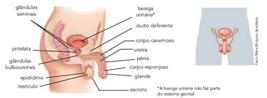
In the case of the penis, the scenario was different, since most of the books analyzed indicated elements of the external anatomy of the organ (such as glans and/or foreskin) - with the exception of LD3 and LD7 - and some of them - LD1, LD2 and LD4 - indicated elements of the internal anatomy of the penis, such as corpora cavernosa and corpora spongiosa. Figure 5 shows an example of the situation described, where LD4 presents the penis with an indication of its internal and external parts.
This limited image representation of the clitoris in relation to the penis is in line with studies that identify and denounce the absence of the clitoris in didactic-pedagogical materials (Louisa Allen, 2004; Melo et al., 2024) and its lack of knowledge among undergraduate students in biological sciences (Ramos, 2018) and postgraduate students in educational sciences (Ampatzidis et al., 2019). We noticed that among the textbooks analyzed, as seen by Allen (2004) in the context of sex education, the clitoris is sometimes left unidentified: either completely when the organ is omitted from images in anatomical sections, or partially when it is there, but with no indication that allows it to be identified, or even when it is there, it is identified, but its parts are not indicated.
The images of the internal anatomy of these organs were mostly represented in sagittal anatomical sections 7 (Figures 4 and 5) and in the case of the penis, also presented a cross section8 of the organ (Figure 6). The cross-section of the genitals, which usually allows for the identification and detailing of their constituent internal tissues, is not present in any of the textbooks analyzed to depict the clitoris. This reinforces the neglect of the clitoris in science textbooks, both in terms of its internal anatomical structure, which comprises its largest portion, and its external structure.

Image of the male genital system represented in LD1, highlighting the sagittal and cross sections of the penis.
In the case of the penis, all the books analyzed showed sagittal sections of the organ and, in the case of the clitoris, only LD4, LD5 and LD6 showed this section, although without any identification of the internal parts that make up the organ, such as the body, bulbs and roots (Di Marino & Lepidi, 2014).
If we consider the three-dimensional anatomy of the clitoris and its anatomical position, it is clear that this multiplanar organ (Di Marino & Lepidi, 2014) is not adequately represented and explained by the sagittal anatomical section, prioritized by most textbooks in the internal representation of the genital organs. Given that the clitoris protrudes in various directions or planes, the sagittal section is a limitation in understanding its full anatomy. Alternatively, the use of three-dimensional images, cross-sections or even manipulative materials can help to elucidate the structure of the organ in order to present its complexity, as already presented in a previously proposed didactic sequence (Melo et al., 2024).
Note that in the sagittal sections of the female genital system, when the clitoris was represented, it appeared as a “comma” (Figure 4), the result of the anatomical section chosen. In this way, the textbooks don't present the complete anatomy - the rare images of the clitoris only show its external part as a “button” and the sagittal sections highlight a small portion of the body, without mentioning it. Therefore, in contrast to such imagery exclusions, we argue that the textbook should contain images through which students can recognize their own bodies, and this also includes representation of the clitoris, which has internal and external portions.
Within this discussion, it is worth pointing out that images alone, even if they show the structure of the clitoris, are not self-evident, i.e. an intentional discussion is needed based on them, since they do not convey a single meaning (Henrique Silva et al., 2006). With this in mind and taking into account their role in the teaching-learning process, it should be emphasized that
An image can help learning because of its ability to mobilize, even if it does not necessarily lead to understanding of the concept on its own (Carneiro, 1997). The understanding of images is not immediate, and their use in the pedagogical context of the classroom requires the teacher to know how to do this, i.e. they can help the student to perceive, among other aspects, the constituent elements of the image in question (Silva et al., 2006, p. 220).
Therefore, even though some of the textbooks analyzed have images of the clitoris, they are not identified in their entire anatomical structure, so that a more effective discussion of the organ in question will depend on the mobilization carried out by the teachers, when they are present in the teaching materials. However, as shown in a study by Ramos (2018), the initial training of science and biology teachers is deficient in terms of discussions about the clitoris, which hinders a broader and more contextualized approach to the organ in question. As we'll see below, this pattern also extends to the written content related to the internal and external anatomy of the clitoris.
Box 2shows examples of the content written about the clitoris and the penis in the textbooks analyzed, again showing an under-representation of the clitoris when compared to its homologous organ.

Excerpts from the textbooks analyzed that exemplify the aspects written about the penis and clitoris.
As for the clitoris-penis homology, it should be noted that it was not presented in any of the textbooks analyzed. As a result, opportunities are missed for an explicit approach to equality in relation to human sex/gender, based on the idea that we have similar structures in histological and embryological terms, even though they have anatomical and functional differences.
At this point, the concept of “curricular hooks” (Bastos, 2019) can be fruitful for rethinking the place of the clitoris in science and biology education. For example, from the anatomical and physiological aspects of the organ, broader discussions can be “hooked”, bringing aspects related to the history of science behind this organ, as well as the gender issues imbricated in this process, as already mentioned by Melo et al. (2024). In addition, the rigid female/male binary and the incommensurable sexual difference could be problematized from the perspective of the homology between penis and clitoris, instead of reinforcing the complementarity between penis and vagina, for example.
Regarding the functional aspects of these organs, it was clear that the textbooks analyzed attribute different functions to them: all the textbook collections presented some function for the penis, primarily associating it with reproduction (chart 2). With regard to the clitoris, only three of the seven textbooks mentioned some function of the organ, relating it to sexual pleasure (as can be seen from the excerpts in chart 2). In short, these focuses (penis-reproduction, clitoris-pleasure) leave out other functional elements of these organs that are important for understanding them in their entirety. It is in this vein that
The historical privilege enjoyed by the biological-reproductive approach in school sex education can be pointed to as an important factor, not only in legitimizing heterosexuality as the hegemonic pattern of relationships, but also in the almost total absence, in school textbooks, of an affective and loving approach to intimate relationships in general (Furlani, 2008, p. 115).
The penis-reproduction link allows for an understanding that this organ has an exclusively reproductive function, missing out on rich opportunities to explore the relationship between this organ and pleasure. Rodriguez (2019) mentions that one of the traits of hegemonic masculinity is precisely the understanding that in men (white, cis, heterosexual, strong, virile) there is a requirement to control emotions and silence feelings, and that “eroticism is avoided, but penile erection, the aesthetics of the phallus, the volume of the penis are favored, and in sex there is room for penetration” (Rodriguez, 2019, p. 278).
Regarding the clitoris, it is important to mention that four of the books analyzed did not attribute a function to this organ, which can be considered worrying. In her reflections on pleasure and sexual desire in education, Allen (2004) emphasizes that students are often presented with desexualized bodies, so that: "bodies are constructed as insensitive to the extent that their capacity for desire and pleasure is often ignored [...]. The ultimate effect of these representations is to de-eroticize the body and disassociate it from the embodied feelings of desire and pleasure." (Allen, 2004, p. 155). In textbooks, to represent the clitoris without highlighting its physiological aspects linked to the pleasure of bodies is to reinforce a tone that has historically repressed the sexuality and pleasure of cisgender women and bodies with this organ.
The clitoris has historically been associated with cisgender women and the so-called female sex (Laqueur, 2001), and these existences have been strongly linked to reproduction (Silvia Federici, 2023), so that sexual pleasure has become secondary. Within this discussion, Laqueur (2001) states that over the centuries, the concept of the need for female orgasm was disassociated, and scholars such as Freud relegated a secondary role to the clitoral orgasm in favor of the vaginal one, so that “the clitoris supposedly gives up its role in a woman's sex life in favor of an ‘opposite organ’, the vagina” (Laqueur, 2001, p. 278).
In addition, recent studies suggest that, in addition to its function associated with pleasure, the clitoris also has a possible reproductive function, albeit indirectly, by modifying physiological parameters that optimize fertilization (Roy Levin, 2019). Thus, it can be seen that the textbooks analyzed under-represent the clitoris when they do not allow for possible scientific discussions about the functions of the clitoris.
Understanding that the clitoris and penis are organs with pleasurable and reproductive possibilities, restricting the penis to reproduction and the clitoris to pleasure is to reduce the potential for discussion about the functioning of these organs and reinforce the tone of hegemonic masculinity (Rodriguez, 2019) and the erasure of female pleasure in favor of reproductive work (Federici, 2023). It is therefore necessary for pedagogical practices about these organs to make it clear that both have pleasurable and reproductive functions, even if the relationship between the clitoris and reproduction is still under discussion and occurs indirectly (Levin, 2019).
Analyzing the written text on the anatomy of these organs, it is clear that both are presented insufficiently, with the clitoris being even more invisible. To express this situation, we would like to point out that three textbook collections - LD1, LD2 and LD4 - explain the internal anatomy of the penis in the text, while none do so in relation to the clitoris (table 2). With regard to its external anatomy, four textbooks - LD1, LD4, LD5 and LD6 - provide textual information about the penis and only LD4 addresses this item for the clitoris (table 2).
Along these lines, it is worrying that crucial aspects of the physiology of these organs, such as pleasure, erection and their relationship with the organ's innervation, are so little discussed in the works analyzed. The difference between the penis and the clitoris when it comes to the innervation and irrigation of these organs is also notorious. In general, the textbooks only mentioned the aspect relating to the irrigation of the penis, while the clitoris had its innervation given more priority in the written texts, although two books - LD4 and LD6 - also address its irrigation. These data show that the textbooks in question miss out on rich opportunities to broaden discussions about the penis and do so more strongly in relation to the clitoris, in its anatomical and physiological aspects presented in the images and even in the written text.
In short, the observations made so far reinforce data from previous studies that have analyzed science and biology textbooks, showing cisheteronormative perspectives in these contexts (Ribeiro et al., 2016; Reis et al., 2019; Ferreira et al., 2020). The naturalization of sexual differences allied to cisheterosexual coitus was the norm in the books analyzed, as can be seen in passages that mention the sexual act allied to reproduction, highlighting, for example, that "human reproduction involves the penetration of the erect penis into the vagina during sexual intercourse. With arousal, the man ejaculates and the semen is deposited in the vagina." (LD5, p. 155).
We understand that this approach, in the context of science and biology teaching, is limiting in the sense that: 1) it disregards other forms of reproduction, such as assisted and in vitro reproduction; 2) it ties penis-vagina penetration to reproduction, which does not take into account the fact that the advent of the contraceptive pill has made it possible to disassociate reproduction and sexual intercourse; 3) it uses penis and vagina as rules, making invisible other sexual practices and other bodies that are not based on cisheterosexuality; and 4) it determines that penis-vagina penetration summarizes the sexual act.
This study identifies a pattern that has long been discussed in gender and sexuality studies, with regard to the radicalization of sexual difference, especially since the 18th century (Laqueur, 2001). At this point, it's worth noting that sexual difference is sought incessantly and reaches anatomical, hormonal and even molecular levels (Tramontano, 2017). The mobilization of a false homology between penis and vagina and the reinforcement of their complementarity serve the purpose of maintaining a compulsory cisheterosexuality (Butler, 2017). Therefore, we agree with Butler (2017) for whom:
The heterosexualization of desire requires and institutes the production of discriminated and asymmetrical oppositions between “feminine” and “masculine”, in which these are understood as expressive attributes of ‘male’ and “female”. The cultural matrix through which gender identity becomes intelligible requires that certain types of “identity” cannot “exist” - that is, those in which gender does not derive from sex and those in which the practices of desire do not “derive” from either ‘sex’ or “gender”.
In addition, we stress that this heterosexualization of desire and reinforcement of the binary is implicated in the hierarchy that places the masculine as dominant in relation to the feminine and that, therefore, attempts to shake up this structure must start by questioning the feminine/masculine pair itself, as Butler (2017) reinforces, from a post-identitarian perspective. However, we also agree with Federici (2023) that maintaining the category of woman, for example, is important in our political struggles and, in our case, in scientific research and teaching. The author argues that the patriarchal and capitalist system has marked these bodies and subjugated them and that this oppressive structure still persists and, therefore, erasing the category of woman or the feminine would be a way of erasing the oppressions that affect these bodies (Federici, 2023).
Finally, we argue that the invisibilization of the clitoris in the most diverse spheres of society could be made explicit from a biology oriented by feminist assumptions, seeking to denounce gender stereotypes in scientific research and produce new meanings about bodies, embracing sexual/generic diversity (Carvalho, 2021; Tavares, 2022a). And part of this task, in the context of Science and Biology Education, involves building pedagogical practices that challenge the watertight separation between male/female, for example, based on the theme of the clitoris and its homology with the penis.
In short, in order to question the invisibilization of the clitoris in the most varied spheres of society, and in this case, in biology textbooks, we need a constant feminist critique of the ways of doing biology, but also of teaching it. Clues as to how to produce pedagogical practices in this context have been highlighted in this text, emphasizing the fact that we need to question the male/female binary as the only perspective, the hierarchies between “male <> female” and the violence that results from these perspectives, for a feminist critique that aims to embrace the diversity of bodies, genders and sexualities.
FINAL THOUGHTS
The aim of this text was to carry out a comparative analysis of the penis and the clitoris in science textbooks from the 2024 PNLD. Based on three aspects of analysis: volume of discussion, imagery and written representation, an under-representation of the clitoris in relation to its counterpart, the penis, was revealed. There are far fewer mentions of the clitoris, as well as a more limited representation of its image. The same was seen in relation to the written content.
In addition, during the analysis, it was also noted that the male genital system was presented first in all the collections, rather than the female genital system. This order cannot be seen as a mere coincidence. Always presenting the male first takes the male as a reference for explaining and understanding the female, reinforcing an ontological dependence of the female on the male, a sexist perspective discreetly imputed in the textbooks. Other elements that reinforce this sexist perspective is the disassociation between the penis and pleasure, with the materials clearly linking this organ solely to reproduction. It's important to reiterate that, from an anti-male perspective, science teaching can contribute to men's (cisgender) bodies being understood as sensitive and feeling pleasure.
Furthermore, although the penis is an organ that is evidently more related to reproduction (due to its role in expelling gametes), this function should not be understood as a justification for greater social, scientific and pedagogical interest in this organ compared to its counterpart, the clitoris. The erasure of the clitoris, as already mentioned, is located socio-historically and is related to a repression of female sexuality (Melo et al., 2024). One possible way to help overcome this erasure in science teaching is to include in textbooks a greater amount and diversity of textual information about the clitoris, such as its anatomical-physiological and historical-epistemological aspects, to include images that favor full visualization of the organ, with possible cross-sections to visualize its internal anatomy as well as indicating, in the images, the external and internal structures that make up the organ. Examples of how more comprehensive images of the clitoris have been included in textbooks were described by Hollewand (2022) in the Dutch context.
In summary, we argue that, from a strategic dualistic stance, which initially emphasizes the clitoris/penis and male/female pair, but which is not restricted to it, we can address diversities beyond these binaries, as in the case of some intersex people, who have diverse genital structures, as well as non-binary existences, which blur the boundaries of male/female. Thus, a more complete approach to the clitoris and also the penis can enrich our pedagogical practices in the classroom, both in scientific and social terms, considering the importance of overcoming the oppressions faced by people of sexual, bodily and gender diversity.
ACKNOWLEDGEMENTS
The authors would like to thank the Coordination for the Improvement of Higher Education Personnel - CAPES for its financial support (Funding Code 001).In addition, this study was supported by the UNIEDU/SED-SC Program, through a Research Grant.
References
- Allen, L. (2004). Beyond the birds and the bees: Constituting a discourse of erotics in sexuality education. Gender and Education, 16(2), 151-167. https://doi.org/10.1080/09540250310001690555
-
Ampatizidis, G., Georgakopolou, D., & Kapsi, G. (2019). Clitoris, the unknown: What do postgraduate students of educational sciences know about reproductive physiology and anatomy? Journal of Biological Education, 55(3), 254-263. https://doi.org/10.1080/00219266.2019.1679658
» https://doi.org/10.1080/00219266.2019.1679658 - Bandeira, A., & Velozo, E. L. (2019). Livro didático como artefato cultural: Possibilidades e limites para as abordagens das relações de gênero e sexualidade no Ensino de Ciências. Ciência & Educação, 25(4), 1019-1033.
-
Barros, C. M. M. de, & Silva, M. B. e. (2023). Biológico e social andam juntos: Como a genética pode nos ajudar a entender a complexidade da constituição de sexo/gênero. Genética na Escola, 18(1), 7-14. https://doi.org/10.55838/1980-3540.ge.2023.481
» https://doi.org/10.55838/1980-3540.ge.2023.481 -
Baskin, L., Shen, J., Sinclair, A., Cao, M., Liu, X., Liu, G., Isaacson, D., Overland, M., Li, Y., & Cunha, G. R. (2018). Development of the human penis and clitoris. Differentiation, 103, 74-85. Recuperado de https://www.sciencedirect.com/science/article/abs/pii/S0301468118300938?via%3Dihub
» https://www.sciencedirect.com/science/article/abs/pii/S0301468118300938?via%3Dihub - Bastos, F. (2019). “Eu fico meio sem saber como eu vou falar isso assim, do nada”: Currículo, diversidade sexual e ensino de biologia. In P. P. Teixeira, R. D. V. L. de Oliveira, & G. R. P. C. Queiroz (Orgs.), Conteúdos cordiais: Biologia humanizada para uma escola sem mordaça (pp. 1-17). Editora Livraria da Física.
- Brasil. Ministério da Educação. (2017). Base Nacional Comum Curricular Brasília: MEC.
- Butler, J. (2017). Problemas de gênero: Feminismo e subversão da identidade (15 ed.). Rio de Janeiro: Civilização Brasileira.
- Carvalho, F. A. (2021). Marcando passos, a(r)mando lutas: O(s) feminismo(s) e outras “bio-logias” na compreensão dos gêneros e sexualidades. Revista de Ensino de Biologia, 14(1), 427-452.
-
Di Marino, V., & Lepidi, H. (2014). Anatomic study of the clitoris and the bulbo-clitoral organ Springer. Recuperado de https://link.springer.com/book/10.1007/978-3-319-04894-9
» https://doi.org/10.1007/978-3-319-04894-9 - Fausto-Sterling, A. (2012). Sex/gender: Biology in a social world Routledge.
- Federici, S. (2023). Calibã e a bruxa: Mulheres, corpo e acumulação primitiva (2 ed.). São Paulo: Elefante.
-
Ferreira, B., Machado, L. A., & Pedreira, A. J. L. A. (2020). O tema sexualidade humana nos livros didáticos de Biologia mais distribuídos pelo Programa Nacional do Livro Didático 2015. Educação em Perspectiva, 11(00), e020036. https://doi.org/10.22294/eduperppgeufv.v11i00.8726
» https://doi.org/10.22294/eduperppgeufv.v11i00.8726 - Furlani, J. (2008). Mulheres só fazem amor com homens? A educação sexual e os relacionamentos entre pessoas do mesmo sexo. Pro-Posições, 19(2), 111-131.
- Hintze, H. (2020). Desnaturalização radical do machismo estrutural - primeiras aproximações. In H. Hintze(Org.), Desnaturalização do machismo estrutural na sociedade brasileira (pp. 1-140). Paco Editorial.
-
Hollewand, K. (2022). De complete clitoris: Ontdekt, vergeten en genegeerd? Jaarboek Nederlandse Boekgeschiedenis, 29(1), 179-216. https://doi.org/10.5117/JNB2022.007.HOLL
» https://doi.org/10.5117/JNB2022.007.HOLL - Laqueur, T. (2001). Inventando o sexo: Corpo e gênero dos gregos à Freud Rio de Janeiro: Editora Relume Dumará.
-
Levin, R. J. (2019). The clitoris: An appraisal of its reproductive function during the fertile years. Clinical Anatomy, 33, 136-145. Recuperado dehttps://pubmed.ncbi.nlm.nih.gov/31691374/
» https://pubmed.ncbi.nlm.nih.gov/31691374/ -
Machado, M. de S., Almeida, R. O. de, & Paiva, A. de S. (2023). Os manuais didáticos e seu papel na formação de professores: Uma análise das teorias biológicas por meio da crítica feminista à ciência. Revista de Ensino de Biologia da SBEnBio, 16(n. esp.1), 430-451. https://doi.org/10.46667/renbio.v16inesp.1.1084
» https://doi.org/https://doi.org/10.46667/renbio.v16inesp.1.1084 -
Melo, M. E., Schmitt, M., & Tavares, B. (2024). A parte que falta: Clitóris e sua (sub)representação na ciência e na educação. Investigações em Ensino de Ciências, 29(2), 365-393. https://doi.org/10.22600/1518-8795.ienci2024v29n2p365
» https://doi.org/https://doi.org/10.22600/1518-8795.ienci2024v29n2p365 - Melo, M. E., Tavares, B., & Schmitt, M. (2025). A parte que falta: estado do (des)conhecimento sobre o clitóris nas áreas de pesquisa em educação e em ensino. No prelo.
- Moore, L., & Clarke, A. (1995). Clitoral conventions and transgressions: Graphic representations in anatomy texts. Feminist Studies, 21, 255-302.
- O’Connel, H. E., Sanjeevan, K. V., & Hutson, J. M. (2005). Anatomy of the clitoris. Journal of Urology, 174, 1189-1195.
- Olinto, M. M. (2013). Um olhar sobre educação sexual e reprodução humana no ensino de ciências: O que dizem os livros didáticos?Monografia (Trabalho de Conclusão de Curso em Ciências Biológicas), UFSC, Florianópolis.
-
Pin, J. (2022, 26 de maio). Updating Cliterature with Jessica Pin [Vídeo]. YouTube. https://www.youtube.com/watch?v=BKju5S8Djv8
» https://www.youtube.com/watch?v=BKju5S8Djv8 - Ramos, M. C. (2018). Precisamos falar sobre o clitóris na escola: Investigando representações de estudantes de graduação em biologia acerca do clitóris Trabalho de Conclusão de Curso de Licenciatura em Ciências Biológicas, UFSC, Florianópolis.
- Reis, H. J. D. A., Duarte, M. F. S., & Sá-Silva, J. R. (2019). Os temas “corpo humano”, “gênero” e “sexualidade” em livros didáticos de ciências do ensino fundamental. Investigações em Ensino de Ciências, 24(1), 223-238.
- Ribeiro, P. R. C., Magalhães, J. C., Silva, E. P. Q., & Vilaça, T. (2016). O ensino de Biologia e suas articulações com as questões de corpos, gêneros e sexualidades. Bio-grafía: Escritos sobre la Biología y su Enseñanza, 9, 77-86.
- Rodriguez, S. de los S. (2019). Um breve ensaio sobre a masculinidade hegemônica. Diversidade e Educação, 7(2), 276-291.
-
Silva, H. C. da, Zimmermann, E., Carneiro, M. H. da S., Gastal, M. L., & Cassiano, W. S. (2006). Cautela ao usar imagens em aulas de ciências. Ciência & Educação, 12(2), 219-233. https://doi.org/10.1590/S1516-73132006000200008
» https://doi.org/10.1590/S1516-73132006000200008 - Swiech, M. J., & Heerdt, B. (2019). Hormônios esteroides e as questões de gênero: Uma análise dos livros didáticos de Biologia. Revista Brasileira de Ensino de Ciência e Tecnologia, 12, 54-68.
-
Tavares, B. (2022a). A biologia que não ousa dizer seu nome: Olhares pós-dualistas para pesquisas nos temas gênero e sexualidade na Educação em Ciências (Dissertação de Mestrado, Universidade Federal de Santa Catarina). https://repositorio.ufsc.br/bitstream/handle/123456789/240925/PECT0514-D.pdf?sequence=-1&isAllowed=y
» https://repositorio.ufsc.br/bitstream/handle/123456789/240925/PECT0514-D.pdf?sequence=-1&isAllowed=y -
Tavares, B. (2022b). “Eu, intersexo…”: reflexões sobre intersexualidade a partir da escrita de cartas. Revista interdisciplinar em ensino de ciências e matemática, 2(2), 99-111. https://doi.org/10.20873/riecim.v2i2.14849
» https://doi.org/10.20873/riecim.v2i2.14849 -
Tramontano, L. (2017). A fixação e a transitoriedade do gênero molecular. Horizontes Antropológicos, 23(47), 163-189. https://doi.org/10.1590/S0104-71832017000100006
» https://doi.org/https://doi.org/10.1590/S0104-71832017000100006
-
1
The term homology refers to the fact that the clitoris and penis have a common embryonic origin, as will be discussed below, and also have histological, anatomical and functional similarities. In previous research on the clitoris, we argued that "the clitoris and penis can be considered homologous organs, not in the phylogenetic sense, but a sexual homology (Mourão, 2016), since they are made up of similar spongy and cavernous erectile bodies, have a glans distally and have the same embryonic origin (Baskin et al., 2018), 2018), however, the human clitoris is not cut by a tubular urethra, which is the case with the penis (Baskin et al., 2018)." (Melo et al., 2024, p. 379).
-
2
Biological sex can be understood as the layers that make up the body, such as hormones, chromosomes, internal and external genitalia, as proposed by John Money and fellow researchers (Fausto-Sterling, 2012).
-
3
Dualisms or dualities are being understood as systems of pairs commonly treated in opposition (Fausto-Sterling, 2012).
-
4
Cliterature was a word used in the context of the US news program “Daily Show” to describe the action of anatomist and activist Jessica Pin to demand that publishers of anatomy books, medical societies, professional councils, teaching materials for medical education, etc. be changed to include and/or better describe vulvar and clitoral anatomy.
-
5
In order to conceptualize the relationship between sex/gender and the body in an expanded way beyond the cisheterosexual experience, we would like to point out that not everyone who has a clitoris claims femininity, in other words, they are not necessarily women or perform femininity, as is the case with trans men, some non-binary people and transmasculine people. Furthermore, some women, such as trans women, do not have a clitoris. However, this organ has historically been associated with the so-called female body, so this sometimes oppressive history of concealing pleasures (Ramos, 2018) needs to be marked and highlighted, otherwise we will continue to obscure these relations of oppression.
-
6
The term “button” needs to be used with care when talking about the clitoris. The glans of the clitoris is very rich in nerve endings and therefore the sensations produced by various forms of stimulation of the area can also be very intense. If “button” is referring to a piece of technology that is triggered by physical touch and instantly emits some kind of response, this is not a good term to use to refer to the clitoral glans. Nevertheless, the term “button” is often used to refer to the external region of the organ.
-
7
The sagittal section corresponds to the division into sections parallel to the body's median plane, that is, the plane that divides the body into left and right sides.
-
8
In the case of the transverse section, the body is divided into sections parallel to the superior and inferior planes of the body.

 Source: Adapted and translated from Human genitalia - development 1.png. In. Wikimedia Commons, 2022.
 Source: Adapted and translated from Clitoris inner anatomy-hr.png. In. Wikimedia Commons, 2006.
 Source: Adapted and translated from Clitoris Penis Homology 1.png In. Wikimedia Commons, 2024.

 Source: Taken from LD1, 2024, p. 59; LD7, 2024, p. 146; LD4, 2024, p. 153.

 Source: Taken from LD1, 2024, p. 58.
