
 Professional development of Early Childhood Education teachers: metasearch in the field of teacher training
Abstract
The qualitative research presented, characterized as meta-research, analyzed the professional development of Early Childhood Education teachers in Brazil, based on theses and dissertations available on the platform of the Coordination for the Improvement of Higher Education Personnel and on Laurence Bardin's content analysis methodology. We identified a predominance of qualitative studies, with a variety of data collection methods, and an under-exploration of the Northern region. The analysis highlighted the influence of initial and continuing training, the challenges of starting teaching and working conditions, as well as pointing to a gap in the conceptual definition of teacher professional development, indicating the need for further theoretical study. We emphasize that meta-research such as this contributes significantly to the debate on teacher professional development by highlighting the relevance of theoretical reflection and the formulation of new concepts and categories.
Keywords
teacher professional development; initial and continuing training; Early Childhood Education teacher; teaching working conditions.
Resumo
A pesquisa qualitativa apresentada, caracterizada como metapesquisa, analisou o desenvolvimento profissional dos professores da Educação Infantil no Brasil, com base em teses e dissertações disponíveis na plataforma da Coordenação de Aperfeiçoamento de Pessoal de Nível Superior e na metodologia de análise de conteúdo de Laurence Bardin. Identificaram-se a predominância de estudos qualitativos, com variados métodos de coleta de dados, e uma subexploração da região Norte. A análise evidenciou a influência da formação inicial e continuada, os desafios do início da docência e as condições de trabalho, além de apontar uma lacuna na definição conceitual do desenvolvimento profissional docente, indicando a necessidade de maior aprofundamento teórico. Ressalta-se que metapesquisas como esta contribuem significativamente para o debate sobre o desenvolvimento profissional docente, ao destacar a relevância da reflexão teórica e da formulação de novos conceitos e categorias.
Palavras-chave
desenvolvimento profissional docente; formação inicial e continuada; professor da Educação Infantil; condições do trabalho docente.
Resumen
La investigación cualitativa presentada, caracterizada como meta-investigación, analizó el desarrollo profesional de los profesores de Educación Infantil en Brasil, a partir de tesis y disertaciones disponibles en la plataforma de la Coordinación para el Perfeccionamiento del Personal de Enseñanza Superior y de la metodología de análisis de contenido de Laurence Bardin. Se identificó un predominio de estudios cualitativos, con variedad de métodos de recolección de datos, y una subexploración de la región norte. El análisis puso de relieve la influencia de la formación inicial y continua, los retos de empezar a enseñar y las condiciones de trabajo, además de señalar una laguna en la definición conceptual del desarrollo profesional docente, lo que indica la necesidad de realizar más estudios teóricos. Se subraya que una metainvestigación como ésta contribuye de manera significativa al debate sobre el desarrollo profesional docente, al poner de relieve la pertinencia de la reflexión teórica y la formulación de nuevos conceptos y categorías.
Palabras clave
desarrollo profesional docente; formación inicial y continua; maestro de Educación Infantil; condiciones de trabajo docente.
1 Introduction
Teaching work in Early Childhood Education is characterized by a diversity of working conditions, including varied remuneration and a historical predominance of women, although the male presence is gradually growing in this field (Vieira; Baptista, 2023). This teaching includes, inseparably, the education and care of babies and young children, requiring from teachers’ knowledge related to the process of child development, health, food, safety, multiple languages, games and plays. This scenario reinforces the need for quality teacher training, adequate working conditions and a continuous process of professional development.
In order to enrich the debate on the professional development of Early Childhood Education teachers, we present, in this article, the results of a metasearch. Our objective was to analyze studies that investigated the professional development of these teachers, seeking to deepen the understanding of the aspects involved in this process.
Although the concept of teacher professional development is not recent, it continues to be the subject of discussion in the field of teacher training (Diniz-Pereira, 2019). For Marcelo García (2009), this process is dynamic and permanent, influenced by beliefs, values and pedagogical practices, as well as by the willingness to learn. In line with this, Oliveira-Formosinho (2011) emphasizes that teacher professional development is a continuous process, based on practice and focused on the construction of new knowledge in real learning contexts.
Marcelo García (2009) argues that the term “development” is more appropriate than “training”, as it denotes evolution and continuity, overcoming the dichotomy between initial and continuing education. He points out that this process involves the expansion of knowledge, the construction of innovative pedagogical practices and the development of the critical and reflective capacity of teachers, elements that are integrated into the daily activities of teaching.
2 Methodology
The research we present in this article is qualitative in nature and is characterized as meta-research (Mainardes, 2018). Our objective was to carry out a systematic analysis of studies on the professional development of Early Childhood Education teachers, aimed at investigating their own academic production in this field. This approach, as described by Mainardes (2018), strategically organizes and analyzes the available studies on the subject. In addition, according to Mainardes (2021), metasearches promote intense reflection and theoretical debate, assisting in the formulation of new concepts and categories.
The methodological process was structured in stages that included the definition, selection, organization and systematization of the data, followed by systematic reading of the complete works and content analysis (Mainardes, 2021). The data were composed of theses and dissertations, considering the period from 2000 to 2022 as a temporal criterion. This delimitation, common in studies of this nature, allowed a broad and detailed analysis, allowing the identification of trends and gaps in the field, without compromising the feasibility of the investigation. Data were collected in the database of the Coordination for the Improvement of Higher Education Personnel (Capes) during the second half of 2022, during which time we collected research data.
We chose, methodologically, not to include scientific articles published in high-impact journals, although we recognize their relevance for metasearch. For future studies, we suggest that complementary analyses consider the inclusion of scientific articles in order to broaden perspectives and strengthen contributions to the area.
To identify the works, we used the descriptors “Professional Development” AND “Teacher” AND “Early Childhood Education” in the Capes database, resulting in 73 productions. During data collection, we faced challenges such as the exclusion of 10 papers due to the absence of abstracts and full texts. Prior to deletion, we conducted intensive searches on other platforms to locate these documents. However, in many cases, only the titles and authors were available, making their inclusion in the analysis unfeasible.
The data were systematized in subsequent steps. Initially, we read the titles of the remaining 63 papers, which contained abstracts, applying the inclusion and exclusion criteria previously defined. Among the criteria, we highlight the obligation that the professional development of teachers should be the object of study and that the focus should be on Early Childhood Education. After applying these criteria, 39 productions were excluded, leaving 24 works for in-depth analysis.
The selected studies were organized in a digital database and subjected to systematic reading. During this stage, we collect detailed information about the geographic distribution, level and modality, institution, year of defense, theorists adopted, types of research, data collection instruments, results and conclusions. For the analysis of themes and results, we used the content analysis methodology proposed by Bardin (2011). This method allowed us to categorize the data into four main themes: initial training, challenges faced by beginning teachers, continuing education and teaching work conditions.
3 Results and discussion
The analysis of the geographical distribution of the 24 productions revealed a significant concentration in the Southeast region, with 14 records. Next, we identified five productions in the Northeast and three in the Midwest. The South region presented only two records, while no research was located in the North region. These data show a regional imbalance in academic production.
This scenario highlights the need to expand investigations in under-explored regions, such as the North and South of the country. The strengthening of academic production in these areas can contribute to a more comprehensive and diverse understanding of the educational realities and demands of Early Childhood Education teachers in different Brazilian contexts. In the following map, we illustrate the distribution of surveys by region, state and institution.

The results indicated a significant concentration of studies in the Southeast region, with emphasis on São Paulo, which presented 11 of the 24 productions analyzed. Minas Gerais, Mato Grosso and Rio Grande do Sul contributed with two studies each, while the Northeast and Midwest regions presented five and three productions, respectively. The North region did not register studies originating from local institutions, but Rolim de Moura was identified as a research locus, offering some representation.
The cities identified as research loci in our research were Araraquara (SP), Ribeirão Preto (SP), São Caetano do Sul (SP), Uberlândia (MG), Jequié (BA), Primavera do Leste (MT), Rolim de Moura (RO), Mossoró (RN) and Fortaleza (CE).
As for the level and modality of research, we identified 17 master's dissertations, 14 academic master's and three professional masters. In addition, seven doctoral theses were found. The productions cover the period from 2000 to 2022, with the years 2010 and 2017 presenting the largest number of surveys, totaling three each year. In 2018, four surveys were carried out. There were no productions in 2001, 2002, 2004, 2005, 2006, 2009, 2014 and 2019.
The analysis of research approaches revealed a predominance of qualitative studies. Of the 24 productions examined, 22 were classified as qualitative and two as mixed, with no exclusively quantitative research. Among the types of research, the approaches of document analysis (seven studies), narratives (four studies), action research (three studies), ethnographic studies (two studies), participant research (two studies), bibliographic research (two studies), case studies (two studies), state of knowledge (one study) and clinical method (one study) stood out.
The instruments used for data collection were varied, covering interviews (fourteen studies), including variations such as semi-structured, narrative and reflective interviews. Other instruments frequently used were observations (nine studies), class and field diaries (six studies), questionnaires (five studies), focus groups (four studies), videographic records (three studies), study cycles (two studies), biographical ateliers (two studies), portfolios (one study), photographs/videos (one study) and bibliographic survey (one study).
The most referenced authors in academic productions include Gimeno Sacristán, Lee Shulman, Michael Huberman, Emília Freitas de Lima, Júlia Oliveira- Formosinho, António Nóvoa, Francisco Imbernón, Maurice Tardif and Cilene Ribeiro de Sá Leite Chakur. The analyzed productions discuss the social, political and cultural factors that influence teaching, the challenges faced by beginning teachers and the specificities of Early Childhood Education, in addition to exploring the relationships between teaching knowledge, pedagogical practice and cognitive development.
However, the analysis of the 24 studies evaluated reveals a significant conceptual gap in relation to teacher professional development. About 15 of these papers do not present a clear definition of the term, while approximately seven do not even mention it. We also note that, in cases where the concept is addressed, it is often limited to continuing education, ignoring that continuing education and professional development are not synonymous. This limitation reinforces the need for greater theoretical depth, especially with regard to the professional development of Early Childhood Education teachers.
3.1 The professional development of Early Childhood Education teachers based on Capes' productions
Based on the content analysis performed, we built categories that reflect the purposes, results and conclusions of the identified research. These categories were organized for discussion in the following order: initial training of Early Childhood Education teachers, challenges faced by beginning teachers, continuing teacher training and working conditions in Early Childhood Education.
3.2 The initial training of the Early Childhood Education teacher
Of the 24 productions analyzed, nine (Albuquerque, 2008; Barros, 2015; Cardoso, 2013; Gomes, 2012; Godeguez, 2016; Oliveira, M. N., 2018; Silva, R., 2018; Silva, 2021; Pimenta, 2007) discussed initial training in the Pedagogy course as a central element for the professional development of Early Childhood Education teachers. These studies show both the relevance and the weaknesses of this formative process.
M. N. Oliveira (2018) pointed out that initial training in the Pedagogy course contributes significantly to the construction of knowledge essential to teaching practice in Early Childhood Education, emphasizing the role of academic experiences in this process. Gomes (2012) reinforced that place of training and academic experiences directly influence the professional trajectories of teachers, while Barros (2015) pointed out that the theoretical basis acquired during graduation is fundamental to sustain pedagogical practices. R. Silva (2018) added that this stage favors the construction of specific knowledge, in addition to promoting autonomy and professional identity.
However, our analysis of the productions revealed weaknesses in the initial training process. Studies such as those by Barros (2015), Pimenta et al. (2017) and Silva (2021) show significant gaps in preparation for work in daycare centers and preschools. These gaps include the lack of preparation of teacher trainers for the context of Early Childhood Education and the limited theoretical approach to Early Childhood Education in the curricula of Pedagogy courses.
Barros (2015) pointed out that the teachers participating in his research considered initial training insufficient, which resulted in a restricted understanding of teaching at this level of education. Silva (2021), in turn, emphasized the urgent need to review the curricula of Pedagogy courses, expanding content aimed at early childhood, in order to better meet the demands of this educational context
Pimenta et al. (2017) also emphasized the prioritization of teacher training focused on the early years of elementary school, to the detriment of early childhood education. This emphasis reflects both the vagueness of the pedagogical field and the dispersion of professional practices related to this level of education. These studies converge in the defense of a curricular reformulation that meets the specific demands of Early Childhood Education, promoting more qualified pedagogical practices and aligned with the needs and particularities of this level of education.
3.3 The challenges of beginning teachers
We identified, in the studies analyzed, specific challenges faced by beginning teachers in Early Childhood Education, which directly impact the professional development of these teachers. Works such as those by Barros (2015), Cardoso (2013) and Godeguez (2016) highlight that many beginning teachers report insecurity in relation to pedagogical practice. This insecurity is often attributed to insufficient initial training and lack of experience in the context of Early Childhood Education, manifesting itself in doubts about what and how to teach babies and young children, in addition to the difficulty in dealing with the demands of everyday school life.
During the first years of teaching, professionals realize the need to acquire new knowledge and skills to face the challenges of the classroom. André et al. (2017) point out that many beginning teachers experience a mismatch between the theory learned during training and the practical reality of the school, which generates frustration and reinforces the demand for additional learning that enables a more confident performance and aligned with the needs of the educational context.
Interpersonal relationships also present challenges for novice teachers. André et al. (2017) investigated the role of interactions in institutional daily life and showed that relationships with families, children, managers and more experienced colleagues play a significant role in the constitution of teaching professionalism, directly impacting the professional identity of these teachers (André et al., 2017).
Cardoso (2013) investigated the professional development of beginning teachers in Early Childhood Education, highlighting the tensions faced in the context of public school. The study points out that, in the first years of their careers, these teachers experience dilemmas between enchantment and disenchantment with the profession, highlighting the importance of teaching initiation programs for a more effective integration with educational practice. In addition, Barros (2015) reinforces the centrality of the initial phase of the career, marked by learning and challenges, and emphasizes the need for continuous training and institutional support for professional development.
The research by Godeguez (2016) investigated the contributions of the Early Childhood Educator Table Program, coordinated by the Orsa Foundation and adapted locally. In São Caetano do Sul (SP), the program focused on the professional development of Early Childhood Education teachers, promoting collaborative and reflective practices. Moments of collective reflection and exchange of experiences allowed teachers to analyze and improve their practices. With an emphasis on mathematics teaching, the methodological support met the specific demands of beginning teachers, strengthening their confidence and overcoming gaps in initial training.
Other factors that positively contribute to the professional development of beginning teachers, identified in our research, include the active posture in the search for alternatives to improve pedagogical practice, the appreciation of previous experiences in the classroom and internships, the knowledge built during initial training, identification with the teaching segment and the practice of self-assessment. In addition, peer socialization stands out as a fundamental element, favoring enriching exchanges that promote greater security and strengthen the teaching and learning process.
3.4 The continuing education of Early Childhood Education teachers
In our research, we identified continuing education as central to the professional development of Early Childhood Education teachers. Studies such as those by Callil (2010) and P. Silva (2018) highlight the relevance of training in context, centered on the school, for reconfiguring meanings, strengthening teacher involvement and improving pedagogical practices. Callil (2010) emphasizes the interaction between peers and managers as essential to enrich the teaching experience, while P. Silva (2018) emphasizes the articulation between reflection, criticism and action, based on the teachers' previous knowledge, as a strategy for advances in pedagogical practice.
Oliveira-Formosinho (2009) presents school-centered training as a practical process that integrates the continuous training and professional development of educators. Based on knowledge built by experience, this approach seeks to transform work contexts to promote significant changes in teaching practice. The author also highlights the importance of participatory training and articulation with real work situations, favoring contextualized and collaborative professional development.
The research by P. Silva (2018) highlights the importance of collaboration and dialogue between peers in school-centered training, essential for teacher development and teaching improvement. The author emphasizes that this process should encompass the analysis, reflection and criticism of practice, based on the teachers' prior knowledge. In this context, the institution becomes an integrated space for professional and personal development, promoting self-knowledge and reflection on teaching practice.
Continuing education programs and activities play an important role in teacher professional development. The study by Oliveira (2011) investigated the meanings attributed by teachers of Early Childhood Education of Mossoró (RN) to these activities, revealing that the participants highlighted the search for professional updating and the improvement of the quality of Early Childhood Education.
In addition, training activities were associated with self-fulfillment and coping with the daily difficulties of teaching practice. However, Oliveira (2011) points out that the offer of these initiatives is still limited, with some exceptions, such as the National Plan for the Training of Basic Education Teachers (Parfor), the Reading and Writing Support Program (Praler), the technical meetings of the National Program for Restructuring and Acquisition of Equipment of the Public Early Childhood Education School Network (ProInfância), as well as initiatives of the Municipal Secretariat of Education of Mossoró (RN) and private social projects.
In our analysis, we identified effective training tools, such as class diaries, pedagogical projects, portfolios, biographical workshops and reflective writing. Souza (2011) highlighted class diaries as instruments to analyze teacher thinking. Leitão (2011) pointed out pedagogical projects as strategies that promote autonomy and innovation, although they present challenges related to teaching protagonism. Santos (2018) highlighted biographical workshops as spaces to reconstruct memories, reframe experiences and strengthen the professional voice in the school environment.
In addition, methodologies such as questionnaires, interviews and reflective meetings were highlighted as valuable tools to analyze pedagogical practices and elaborate contextualized training proposals. In this sense, we consider continuing education a strategic space that integrates care and education, promoting professional development sensitive to the singularities of children and the demands of the educational field.
Institutional culture and management support play a key role in the success of continuing education. Barros (2015) pointed out that a favorable institutional culture promotes significant changes in teaching practice, while Leitão (2011) pointed out the importance of internal training and the availability of adequate material resources. Allied to a collaborative environment, these elements strengthen professional development and the quality of teaching.
In this context, Batista and Paiva (2024) emphasize that meaningful training depends on understanding teachers' demands and translating them into actions aligned with school realities, integrating planning, evaluation and resources. Thus, we recognize that continuing education must meet real needs, identified through critical reflections on teaching practices.
3.4 The conditions of teaching work
Our research revealed that the working conditions faced by Early Childhood Education teachers directly influence their professional development. Among the main difficulties, we highlight the precarious working conditions, the scarcity of pedagogical materials, the lack of professionals in the classroom, the accumulation of functions and job insecurity. Inadequate environments, such as overcrowded rooms and lack of resources, compromise both the quality of work with children and the professional improvement of teachers. The overload of functions, resulting from the absence of institutional support, often forces teachers to assume multiple roles, negatively affecting their continuing education and well-being.
Godeguez's (2016) dissertation investigated working conditions in Early Childhood Education, revealing significant challenges, such as working up to ten hours a day, often reconciled with distance continuing education courses. Among the participants' reports, the impact of the high number of children per room, the performance of assistants without specific training and the inclusion of children with disabilities without adequate support stood out. In addition, a teacher mentioned the insufficient physical structure and inadequacy of pedagogical materials, such as tables and chairs provided by the city of São Caetano do Sul (SP).
These factors, added to the frequent replacement of teachers and the lack of time for continuing education, hinder teacher professional development. Bernardes' research (2017) reinforces these observations, highlighting the need for interventions that improve working conditions in Early Childhood Education.
We identified job insecurity as a factor that aggravates teachers' stress and anxiety, impairing their professional development. Job instability creates an environment of uncertainty that negatively impacts teacher motivation and performance. On the other hand, job stability is recognized as a non-pecuniary benefit, playing an important role as a motivating factor (Costa; Arraes; Guimarães, 2015). According to these authors, their influence goes beyond the individual level, directly reflecting on the quality of education. When investigating the relationship between teacher stability and student performance in Brazilian public schools, Costa, Arraes and Guimarães (2015) found that the lack of stability is associated with lower academic performance, highlighting the relevance of stable conditions for the strengthening of teaching and for the improvement of education.
4 Final considerations
In this metasearch, we analyze the geographical and institutional distribution of investigations on the professional development of Early Childhood Education teachers in Brazil. The results revealed a significant concentration of studies in the Southeast region, while the North region was not representative. This imbalance highlights the need to broaden the focus of research to less explored contexts, which would contribute to a more comprehensive understanding of the topic.
We observed the predominance of qualitative studies that employ different research methods and data collection instruments. However, we identified a relevant conceptual gap, especially in the context of Early Childhood Education, related to the absence of clear definitions about teacher professional development. This lack highlights the need for a theoretical deepening that delimits and better understands the concept.
The analysis also revealed central factors that influence professional development, such as initial training, continuing education, the challenges of starting teaching and working conditions. We recognize that training in context, by meeting the real needs of teachers, promotes engagement, reflection and pedagogical improvement. Initiatives such as meetings, guidance and institutional courses are fundamental to strengthen teaching practices and align professional development with the specific demands of Early Childhood Education.
This study contributes to the literature by offering a detailed view of the field and suggesting directions for future investigations. Metasearches stand out as a relevant strategy to deepen the understanding of this theme, subsidizing more effective training policies and practices. We recommend that future research include broader databases, which will allow representative analyses that strengthen conclusions and expand knowledge about teacher professional development.
-
How to cite this article (ABNT):
JARDIM, Nayara Macedo de Lima; ARAÚJO, Regina Magna Bonifácio de. Professional development of Early Childhood Education teachers: metasearch in the field of teacher training. Educação & Formação, Fortaleza, v. 10, e13865, 2025. Available at: https://revistas.uece.br/index.php/redufor/article/view/e13865
-
DATA AVAILABILITY
The entire dataset supporting the results of this study has been published in the article itself.
References
- ALBUQUERQUE, M. O. A. Reflexão crítica e colaboração: articulação teoria e prática no desenvolvimento da atividade docente. 2008. Dissertação (Mestrado em Educação) - Programa de Pós-Graduação em Educação, Fundação Universidade Federal do Piauí, Teresina, 2008.
-
ANDRÉ, M.; CALIL, A. M. G. C.; MARTINS, F. P.; PEREIRA, M. A. L. O papel do outro na constituição da profissionalidade de professoras iniciantes. Revista Eletrônica de Educação, São Carlos, v. 11, n. 2, p. 505-520, 2017. Disponível em: http://educa.fcc.org.br/scielo.php?pid=S1982-71992017000200505&script=sci_abstract Acesso em: 20 ago. 2024.
» http://educa.fcc.org.br/scielo.php?pid=S1982-71992017000200505&script=sci_abstract - BARDIN, L. Análise de conteúdo 3. ed. 5. reimp. Tradução: Luís Antero Reto e Augusto Pinheiro. São Paulo: 70, 2011.
- BARROS, B. C. Ser professora iniciante na Educação Infantil: aprendizagens e desenvolvimento profissional em contexto de enfrentamentos e superações de dilemas. Dissertação (Mestrado em Educação Escolar) - Programa de Pós-Graduação em Educação Escolar, Universidade Estadual Paulista Júlio de Mesquita Filho, Araraquara, 2015.
-
BATISTA, G. S.; PAIVA, M. C. L. Necessidades de formação dos professores da pré- -escola: evidências das pesquisas. Educação & Formação, Fortaleza, v. 9, e13619, 2024. DOI: https://doi.org/10.25053/redufor.v9.e13619
» https://doi.org/10.25053/redufor.v9.e13619 - BERNARDES, A. A. A formação continuada em serviço dos professores da Educação Infantil na escola de tempo integral da rede municipal de ensino de Campo Grande/MS 2017. Dissertação (Mestrado em Educação) - Programa de Pós-Graduação em Educação, Universidade Católica Dom Bosco, Campo Grande, 2017.
- CALLIL, M. R. S. Formar e formar-se no berçário: um projeto de desenvolvimento profissional no contexto de um Centro de Educação Infantil. 2010. Dissertação (Mestrado em Educação) - Programa de Pós-Graduação em Educação, Universidade de São Paulo, São Paulo, 2010.
- CARDOSO, S. Professoras iniciantes da Educação Infantil: encantos e desencantos da docência. 2013. Dissertação (Mestrado em Educação) - Programa de Pós-Graduação em Educação, Universidade Federal de Ouro Preto, Mariana, 2013.
-
COSTA, L. O.; ARRAES, R. A.; GUIMARÃES, D. B. Estabilidade dos professores e qualidade do ensino de escolas públicas. Economia Aplicada, São Paulo, v. 19, n. 2, p. 261-298, 2015. Disponível em: https://www.scielo.br/j/ecoa/a/h9DNjRykpmfM9SfTdgsCQLG/#. Acesso em: 1º out. 2022.
» https://www.scielo.br/j/ecoa/a/h9DNjRykpmfM9SfTdgsCQLG/ - DINIZ-PEREIRA, J. E. Desenvolvimento profissional docente: um conceito em disputa. In: IMBERNÓN, F.; SHIGUNOV NETO, A.; FORTUNATO, I. (org.). Formação permanente de professores: experiências iberoamericanas. São Paulo: Hipótese, 2019. p. 65-74.
- GODEGUEZ, A. D. O Programa Mesa Educadora e as suas contribuições para a formação dos professores da Educação Infantil em São Caetano do Sul 2016. Dissertação (Mestrado em Educação) - Programa de Pós-Graduação em Educação, Pontifícia Universidade Católica de São Paulo, São Paulo, 2016.
- GOMES, M. Q. Trilhas profissionais na Educação Infantil: os sentidos atribuídos ao lugar de atuação pelas professoras da rede municipal de ensino de Porto Alegre. 2012. Tese (Doutorado em Educação) - Programa de Pós-Graduação em Educação, Universidade Federal do Rio Grande do Sul, Porto Alegre, 2012.
- LEITÃO, F. M. A. S. O trabalho com projetos e o desenvolvimento profissional dos professores de Educação Infantil 2011. Tese (Doutorado em Educação) - Programa de Pós-Graduação em Educação Brasileira, Universidade Federal do Ceará, Fortaleza, 2011.
- MAINARDES, J. (org.). Metapesquisa no campo da política educacional Curitiba: CRV, 2021.
-
MAINARDES, J. Metapesquisa no campo da política educacional: elementos conceituais e metodológicos. Educar em Revista, Curitiba, v. 34, n. 72, p. 303-319, 2018. Disponível em: https://www.scielo.br/j/er/a/L4GSjqQfPYz4whXWwHYmYgv/?format=pdf⟨=pt Acesso em: 21 ago. 2024.
» https://www.scielo.br/j/er/a/L4GSjqQfPYz4whXWwHYmYgv/?format=pdf⟨=pt - MARCELO GARCÍA, C. Desenvolvimento profissional docente: passado e futuro. Revista de Ciências da Educação, Feira de Santana, n. 8, p. 7-22, 2009.
- OLIVEIRA, M. C. A Educação Infantil pública de Campinas e a formação continuada de professores: de qual formação falamos?. 2011. Dissertação (Mestrado em Educação) - Programa de Pós-Graduação em Educação, Pontifícia Universidade Católica de Campinas, Campinas, 2011.
- OLIVEIRA, M. J. Percursos da formação do professor para uso da documentação pedagógica como registro histórico 2018. Dissertação (Mestrado em Educação: Formação de Formadores) - Programa de Pós-Graduação em Educação: Formação de Formadores, Pontifícia Universidade Católica de São Paulo, São Paulo, 2018.
- OLIVEIRA, M. N. S. A formação continuada e sua significação para professoras da Educação Infantil 2018. Dissertação (Mestrado em Educação) - Programa de Pós-Graduação em Educação, Universidade do Estado do Rio Grande do Norte, Natal, 2018.
- OLIVEIRA-FORMOSINHO, J. Desenvolvimento profissional de professores: aspectos conceituais e curriculares. In: NÓVOA, A. (org.). Formação de professores e profissão docente 2. ed. Lisboa: Dom Quixote, 2009.
- OLIVEIRA-FORMOSINHO, J. O desenvolvimento profissional das educadoras de infância: entre os saberes e os afetos, entre a sala e o mundo. In: MACHADO, M. L. (org.). Encontros e desencontros em Educação Infantil São Paulo: Cortez, 2011. p. 133-168.
- PIMENTA, J. I. P. B. Necessidades formativas e estratégias de formação contínua de professores: observação e análise de um programa de formação de professores. 2007. Dissertação (Mestrado em Educação) - Programa de Pós-Graduação em Educação, Universidade Estadual Paulista, Araraquara, 2007.
- SANTOS, A. O. A formação continuada do professor de Educação Infantil numa perspectiva da autoria por meio de ateliês biográficos 2018. Dissertação (Mestrado em Educação: Formação de Formadores) - Programa de Pós-Graduação em Educação: Formação de Formadores, Pontifícia Universidade Católica de São Paulo, São Paulo, 2018.
- SILVA, P. S. Formação de professores centrada na escola: uma reflexão sobre a experiência nas escolas de educação infantil da rede pública municipal de Primavera do Leste. 2018. Dissertação (Mestrado em Educação) - Programa de Pós-Graduação em Educação, Universidade Federal de Mato Grosso, Rondonópolis, 2018.
- SILVA, R. A. G. O desenvolvimento da profissionalidade docente dos professores de Educação Infantil no curso de Pedagogia com o apoio de projetos de formação e de supervisão 2018. Tese (Doutorado em Educação) - Programa de Pós-Graduação em Educação, Universidade Estadual Paulista Júlio de Mesquita Filho, Presidente Prudente, 2018.
- SILVA, W. M. Necessidades formativas do professor iniciante no Centro de Educação Infantil: apontamentos para a formação. 2021. Dissertação (Mestrado em Educação: Formação de Formadores) - Programa de Pós-Graduação em Educação: Formação de Formadores, Pontifícia Universidade Católica de São Paulo, São Paulo, 2021.
- SOUZA, L. M. Desenvolvimento profissional de professor(a) e reflexividade na Educação Infantil: diário de aula e reflexão da ação pedagógica. 2011. Dissertação (Mestrado em Educação) - Programa de Pós-Graduação em Educação, Universidade Federal de Sergipe, Aracaju, 2011.
- VIEIRA, L. F.; BAPTISTA, M. C. Educação Infantil. São Paulo: Contexto, 2023.
Edited by
-
Responsible editor: Lia Machado Fiuza Fialho
The entire dataset supporting the results of this study has been published in the article itself.

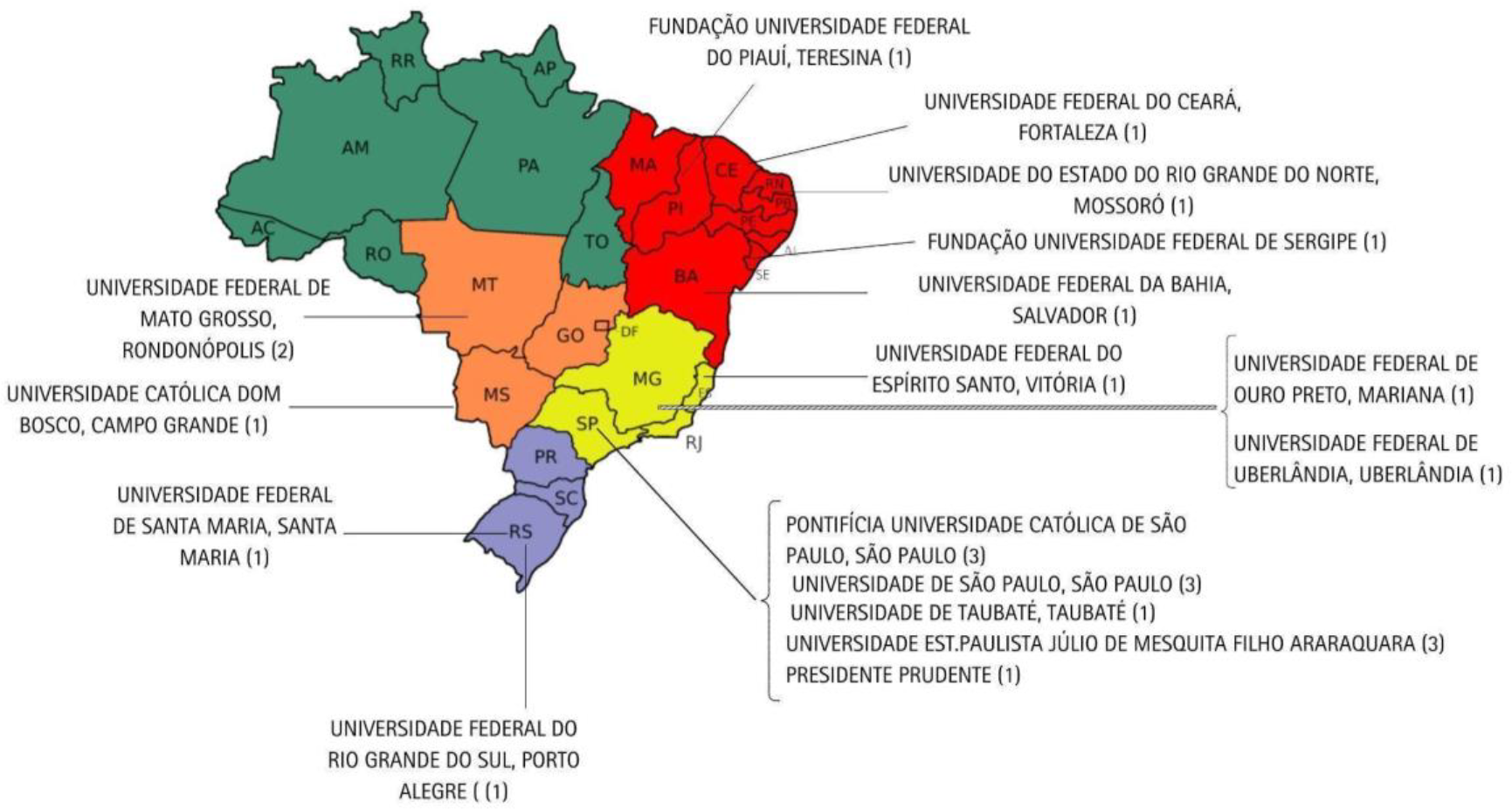 Source: Prepared by the researchers (2022).