
 From Conflict to Compromise: How Resilience Links Job Satisfaction and Faculty Retention
Abstract
Introduction. The shortage of teachers and high dropout rates highlight the central role of job satisfaction in teacher retention. This study critically analyzes how intrinsic and extrinsic factors interact to generate conflicts in the teaching profession.
Methodology. A systematic review was conducted in accordance with the Preferred Reporting Items for Systematic Reviews and Meta-Analyses 2020 guidelines, with methodological evaluation using the Mixed Methods Appraisal Tool. Twenty empirical studies published between 2020 and 2024, with high citation impact, were selected from the Scientific Electronic Library Online, Web of Science, Education Resources Information Centre, and Scopus databases. Results. Recurring associations were identified between administrative support and higher satisfaction, while work overload and low appreciation emerged as consistent predictors of stress and burnout. Resilience emerges not as an isolated attribute but as a mediating process conditioned by working conditions, determining whether conflicts foster professional growth or intensify burnout.
Discussion. A conceptual model is proposed in which faculty retention depends on the coordinated regulation between personal and institutional dimensions, challenging individualistic approaches to attrition.
Keywords
teacher job satisfaction; resilience; teacher attrition; Prisma; MMAT.
Resumo
Introdução. A escassez docente e as altas taxas de evasão revelam a centralidade da satisfação profissional para a permanência na carreira. Este estudo analisa criticamente como fatores intrínsecos e extrínsecos se articulam na produção de conflitos no trabalho docente.
Metodologia. Realizou-se revisão sistemática orientada pelo Preferred Reporting Items for Systematic Reviews and Meta-Analyses 2020, com avaliação metodológica via Mixed
Methods Appraisal Tool. Foram selecionados 20 estudos empíricos publicados entre 2020 e 2024, com alto impacto de citação, nas bases Scientific Electronic Library Online, Web of Science, Education Resources Information Centre e Scopus.
Resultados. Identificaram-se associações recorrentes entre apoio administrativo e maior satisfação, enquanto sobrecarga de trabalho e baixa valorização figuram como preditores consistentes de estresse e burnout. A resiliência emerge não como atributo isolado, mas como processo mediador condicionado pelas condições de trabalho, definindo se os conflitos favorecem fortalecimento profissional ou intensificam o desgaste.
Discussão. Propõe-se um modelo conceitual no qual a permanência docente depende da regulação articulada entre dimensões pessoais e institucionais, problematizando abordagens individualizantes da evasão.
Palavras-chave
satisfação profissional docente; resiliência; evasão docente; Prisma; MMAT.
Resumen
Introducción. La escasez docente y las altas tasas de abandono evidencian la centralidad de la satisfacción profesional en la permanencia en la carrera. Este estudio analiza críticamente cómo factores intrínsecos y extrínsecos se articulan en la generación de conflictos laborales.
Metodología. Se realizó una revisión sistemática orientada por Preferred Reporting Items for Systematic Reviews and Meta-Analyses 2020, con evaluación metodológica mediante el Mixed
Methods Appraisal Tool. Se seleccionaron 20 estudios empíricos de alto impacto, publicados entre 2020 y 2024 en Scientific Electronic Library Online, Web of Science, Education Resources Information Centre y Scopus.
Resultados. Se identificaron asociaciones recurrentes entre el apoyo administrativo y mayor satisfacción, mientras que la sobrecarga laboral y la baja valoración se presentan como predictores consistentes de estrés y burnout. La resiliencia emerge no como rasgo aislado, sino como proceso mediador condicionado por las condiciones de trabajo, definiendo si los conflictos favorecen el fortalecimiento profesional o intensifican el desgaste.
Discusión. Se propone un modelo conceptual en el que la permanencia docente depende de la regulación articulada entre dimensiones personales e institucionales, problematizando enfoques individualizantes del abandono.
Palabras clave
satisfacción laboral; deserción docente; educación básica; Prisma; MMAT.
1 Introduction
The shortage of teachers is increasingly recognized as a global challenge for the coming decades, with documented consequences in various countries around the world (UNESCO, 2024). In this context, there is a lack of interest in the teaching profession, with fewer young people inclined to pursue this career and the departure of professionals already in the field (i.e., teacher attrition) (Ingersoll, 2004).
This topic has been extensively explored in recent studies (Worth; Van den Brande, 2020), and although initial training is relevant, a growing body of evidence points to job satisfaction as a decisive factor in teachers’ retention in the profession over time (Madigan; Kim, 2021). In Brazil, for example, teacher distress associated with emotional issues and the excessive use of technology (technostress) have been identified as key factors within this context (Demboski; Silva; Costa, 2024; Santos; Machado, 2024) .
Teacher job satisfaction is a multidimensional construct involving intrinsic factors, such as self-efficacy and a sense of purpose, and extrinsic factors related to institutional working conditions, including professional recognition, organizational support, and compensation (Baroudi; Tamim; Hojeij, 2022). Although there are exceptions, increased teacher satisfaction is also strongly related to student performance (Hoque et al., 2023). Data from the 2018 Programme for International Student Assessment (PISA) showed a positive association between teacher and student well-being. In another study, a mixed-methods survey of students and teachers revealed that student engagement has a positive connection with their teachers (Nalipay; King; Cai, 2024).
When these criteria are not met, dissatisfaction can lead to stress, burnout, and eventual teacher attrition, negatively affecting students, schools, and educational systems (Ibragimov et al., 2021). Although these challenges predate the pandemic, studies indicate that the COVID-19 crisis has intensified them through increased workload, emotional pressure, and professional isolation (Li; Yu, 2022), adding urgency to discussions about teacher well-being.
An important mediator of teacher job satisfaction appears to be resilience in dealing with workplace conflicts (i.e., educators’ ability to adapt to adversity while maintaining their professional commitment). This characteristic is strongly associated with experienced teachers who remain in the profession (Bayrakci & Kaya, 2024). The literature, however, still lacks reviews that examine how resilience may or may not contribute to job satisfaction on a larger scale.
To analyze this complex body of evidence, systematic reviews offer a robust methodological approach. Among them, the Preferred Reporting Items for Systematic Reviews and Meta-Analyses (PRISMA) provides a structured and transparent framework for selecting, reporting, and synthesizing empirical studies (Page et al., 2021). For the systematic evaluation and description of the selected articles, a suitable option is the Mixed Methods Appraisal Tool (MMAT) (Hong et al., 2018), typically used when the research subject can be analyzed using multiple quantitative, qualitative, and mixed methods.
Given the complex landscape of teacher shortages and the global demand to retain these professionals in their field, it is urgent to analyze what the most relevant recent literature has identified on this topic and how this can contribute to establishing a model that assists researchers and public policymakers in preventing teacher attrition and career abandonment. Thus, this study aims to conduct a systematic review to identify the main intrinsic and extrinsic factors associated with current teacher job satisfaction and how they contribute to professional retention or attrition.
2 Methodology
The study, characterized as a systematic review, sought the most cited works aligned with the outlined objective. To this end, the PRISMA 2020 guidelines were used to guide the process (Page et al., 2021) and the MMAT framework for analyzing the selected articles.
2.1 Data Collection and Analysis
To select references discussing contemporary concerns related to teacher job satisfaction, the time frame was set from 2020 to 2024. To this end, four databases were consulted to cover aspects of job satisfaction in teaching careers and teacher attrition in basic education: Scientific Electronic Library Online (SciELO), Web of Science (WOS), Education Resources Information Centre (ERIC), and Scopus. The specific search parameters and Boolean search terms for each of these databases are provided in Appendix A.
After data collection and the removal of duplicates, Artificial Intelligence (AI) software (ASReview) was used to assist in selecting articles from the initial volume of results. This AI uses active learning-based ranking that prioritizes the most relevant articles, with the researcher responsible for validating each study individually. As a result, relevant articles tend to remain at the top; therefore, after identifying more than 25 consecutive articles classified as irrelevant and having classified more than 35% of the total sample, it is recommended to conclude the screening process (Boetje; van de Schoot, 2024). All files extracted from the databases were exported in RIS format (.ris). Zotero software (v. 6.0.37) was used to retrieve the full records and manage the references.
To obtain the number of citations for each record, a script was created to access the OpenAlex platform (http://openalex.org) and extract these values (Appendix C). A threshold of 100 citations was established to select the most relevant studies from the period. This number was chosen to form a subset of adequate size for further analysis. Upon completion, all reviews were removed from this subset to focus solely on empirical studies.
The MMAT was then used to analyze the selected articles based on their methodology. The articles were discussed among the authors to address the questions posed by the method and establish the main findings. A table was created in accordance with the instrument’s guidelines. The authors tested the tool and reached consensus regarding decisions related to the instrument’s items, and all potential disagreements were resolved through discussion until consensus was achieved. To ensure transparency, the page numbers supporting each decision were incorporated into the table (Appendix D). All appendices of this study are publicly available via the Zenodo platform (zenodo.org, via the link:https://doi.org/10.5281/zenodo.18803038).
3 Results and Discussion
3.1 PRISMA and MMAT Analysis
A total of 5,948 records were initially identified for the analyzed period. Of these, 729 duplicates were removed. ASReview screened a total of 1,028 records from the total set (Appendix B). References whose original files could not be extracted by Zotero were removed, resulting in 647 records to be analyzed. Twenty-four articles met the established threshold of 100 citations, of which four were removed because they were reviews. Finally, 20 empirical articles were selected for the MMAT (Figure 1).

For the MMAT analysis, the articles were initially categorized as descriptive quantitative (n = 17), quasi-experimental (n = 1), qualitative (n = 1), and mixed-methods (n = 1). All 20 analyzed articles were published from 2020, reinforcing their relevance to the topic. According to the questions posed by the MMAT, an average of 55% of positive results was observed, with the studies that did not meet all requirements being those conducted during the COVID-19 pandemic and/or longitudinal studies that experienced data loss over time. Each article was categorized based on its citation, country, study design, responses to the questions proposed by the MMAT, percentage of “yes” responses, and main findings. Due to the length of the table, the detailed MMAT results are found in Appendix D, while the general results and main findings are discussed below.
3.2 Findings
As will be presented below, the identified studies predominantly used quantitative methods firmly rooted in the social sciences (Structural Equation Modeling - SEM) and/or instruments initially developed in psychology (psychometric instruments, which require factor, exploratory, or confirmatory analyses), which have been used in educational research in recent years. Thus, their main results and conclusions will be presented to highlight the key correlations identified and how they emerge as trends across different countries.
Studies on teacher well-being largely converge on the idea that working conditions, accountability pressures, emotional demands, and personal resources shape outcomes such as burnout, professional engagement, and intention to leave the profession (Capone; Petrillo, 2020) . It is observed, however, that professionals with higher levels of job satisfaction tend to have a more optimistic outlook when facing professional adversities. An example comes from the stress experienced by teachers who teach at multiple schools (Iannucci; Richards; MacPhail, 2021). In this case, the study of 259 Irish physical education teachers used SEM modeling and found excellent model fit (CFI = 0.978; RMSEA = 0.044). The results indicated that professional fulfillment had a moderate direct effect on resilience (β = 0.47; p < 0.001) and that resilience, in turn, significantly reduced conflict associated with teaching multiple subjects ( ; β = -0.22 for status conflict; β = -0.20 for energy expenditure). Furthermore, professional fulfillment had negative indirect effects on stress (β = -0.13). The study, in turn, indicates that professionally satisfied teachers tend to have reduced levels of stress when faced with higher workloads. Other studies that also use SEM and other psychometric instruments demonstrate that interpersonal communication, job security, economic factors, conflict management, leadership, and work motivation have a positive impact on teachers’ job satisfaction (Aryawan et al., 2024).
What becomes apparent is a delicate interplay between intrinsic and extrinsic factors that result in either job satisfaction or the emergence of conflicts. Conflict, however, is not always viewed as negative; in cooperative and competitive contexts, it can have positive effects (Tjosvold, 2006). Nevertheless, despite the points listed above, teachers’ professional lives are increasingly marked by intensifying demands and disorganized expectations which, when combined with accumulated dissatisfaction, can escalate to the other side of the conflict, where negative outcomes for teachers, schools, and students are observed. For example, Drüge et al. (2021) observed in 227 teachers, using the Copenhagen Psychosocial Questionnaire (CPQ), that work demands and conflicts between personal and professional life affect teachers’ satisfaction and health. Similar results are found in other countries, such as Australia (Carroll; Mccoy; Mihut, 2022). Furthermore, during the period analyzed, we experienced significant changes due to the COVID-19 pandemic. During this period, the sense of well-being was significantly reduced (Alves; Lopes; Precioso, 2021) , with intrinsic factors recognized as the main motivators (Panisoara et al., 2020) .
3.3 Common intrinsic and extrinsic factors
The same factors described above are identified in different countries around the world, despite significant cultural and economic differences. The distinctions between them seem to lie in the profiles formed by the positive or negative influence that each of these factors exerts on each aspect. The specific reasons for this are not yet determined, but one hypothesis may be related to social, cultural, and economic differences that lead to other inequalities, ultimately affecting these profiles, as reported in specific countries (Guilherme et al., 2024). For example, a Finnish longitudinal study followed elementary school teachers for six years and assessed, through a semi-structured interview, their intentions to leave the profession. The study found that 49.5% of the interviewed teachers had considered leaving the profession, either temporarily or persistently, with difficulties in dealing with school administration, challenges in social interaction, and workload being the main reasons cited (Räsänen et al., 2020) .
However, whether the motivation is intrinsic (personal fulfillment, sense of purpose) or extrinsic (recognition, career advancement), these factors have been consistently identified as predictors of teacher well-being and performance (Toropova; Myrberg; Johansson, 2021) . Similar findings are reported by Dreer (2021), who assessed 457 German teachers’ perceptions of positive emotions, engagement, professional relationships, meaning, and achievements and found that all these factors showed a moderate or high positive correlation (r2≥ 0.4) with job satisfaction.
However, while some studies highlight that teachers’ job satisfaction appears to be more closely related to intrinsic than extrinsic factors, particularly early in their careers (Ansori et al., 2022), others point to the complex network of interactions between these two dimensions (Kun; Gadanecz, 2022) . While early-career teachers reported higher levels of stress and uncertainty due to classroom routines (i.e., lesson planning and adjusting plans to the routine), more experienced teachers expressed dissatisfaction with institutional barriers, rigid hierarchies, and a lack of career progression (Amitai; Van Houtte, 2022). Especially for early-career teachers, leaders who encourage the development of their emotional intelligence are essential for coping with the profession’s challenges. In this context, the relationship between faculty and school management is one of the key factors contributing to teacher resilience and strengthening the belief in teacher self-efficacy (Gooden; Zelkowski; Smith, 2023). It is also worth noting a study conducted in England, in which accounts from early-career teachers who eventually left the profession identified that, despite their initial motivations, the exhausting workload was one of the main reasons for this decision (Perryman; Calvert, 2020) .
A teacher’s belief in their ability to cope with adversity and perform work tasks (i.e., engage students in proposed activities, develop projects, and handle conflicts) is called self-efficacy (Bandura, 1977). This term has commonly been associated with one of the key elements for ensuring professional satisfaction from an intrinsic perspective. In the context of teaching, the perception of self-efficacy appears to be positively related to teacher enthusiasm and job satisfaction (Buric; Moè, 2020; Ortan; Simut, C.; Simut, R., 2021) . Furthermore, it is evident that other factors, such as teachers’ professional aspirations, achieving career milestones, engaging in innovative practices, and making a lasting impact on students, are intrinsically linked to professional satisfaction. Research indicates that when institutional conditions allow educators to pursue these goals, their resilience and commitment to the profession are strengthened. For example, Chang and Sung (2024) used data from 3,835 teachers in Taiwan provided by the Teaching and Learning International Survey (2018) and identified a strong mediating role of self-efficacy between professional motivation and job satisfaction, reinforcing resilience as an intrinsic factor in professional satisfaction.
Regarding extrinsic factors, professional compensation is an important factor for teacher satisfaction in both public and private schools (León et al., 2021). It has been observed, however, that salary increases may represent only a temporary boost to satisfaction if other criteria are not met (Latif, 2024). For example, a semi-structured interview study with 238 permanent and substitute teachers in the United States found that work arrangements have a significant influence on social engagement with students and job satisfaction (Topchyan; Woehler, 2021) .
One of the most influential extrinsic determinants of teacher job satisfaction is the consistent and meaningful support provided by the administrative staff, including principals, secretaries, and other school leaders (Gooden; Zelkowski; Smith, 2023; Latif, 2024; Maas et al., 2022). This support goes beyond logistical assistance, encompassing emotional encouragement, professional guidance, and the creation of a collaborative school climate. Studies have shown that leadership styles that emphasize open communication, shared decision-making, and recognition of teachers’ contributions foster a sense of belonging and professional value, strengthening resilience and reducing the negative impact of workplace conflicts (Gooden; Zelkowski; Smith, 2023; Maas et al., 2022). Schools where administrators actively mediate disputes, ensure equitable distribution of workload, and promote teacher autonomy tend to exhibit higher levels of satisfaction and retention (Albayrak et al., 2024). Supportive leadership has also been shown to mitigate the effects of high work demands, transforming potentially disruptive conflicts into opportunities for innovation and professional growth (Liu et al., 2025).
Supportive relationships with students’ families can also positively influence teacher satisfaction, fostering collaborative problem-solving and reinforcing the value of the educator’s work. In this context, Maas et al. (2022) sought to correlate education-focused parental self-efficacy with the construct of family-school partnership and found a positive correlation (r2= 0.183). It is concluded that positive family involvement, mediated by school administration, promotes student development and the maintenance of a more welcoming work environment for the teaching staff.
Extrinsic factors of teacher job satisfaction prove decisive in shaping the professional experience. In Latif’s (2024) study, conducted with 500 teachers from public and private secondary schools in Pakistan, statistically significant differences were identified in dimensions directly linked to organizational work conditions, such as salary (t = 4.147; p < 0.001), promotion (t = -5.474; p < 0.001), benefits (t = -4.956; p < 0.001), andl supervision (p = 0.011). These findings reinforce that material rewards, formal recognition, and administrative structur ly constitute central elements in understanding job satisfaction in the school context.
In other more challenging settings, such as special education, intrinsic factors-such as a passion for working directly with students with disabilities and a positive perception of one’s work-appear to have a stronger effect among teachers. Even so, administrative support is identified as an essential part of this group’s persistence (Scott et al., 2022). For special education teachers, resilience plays a fundamental role, especially when considering the teaching barriers that this group of students tends to present more prominently. Zhang, Bai, and Li (2020) demonstrated how resilience acts as a moderating factor in conflict resolution and teacher well-being, but emphasized that, on its own, resilience is not capable of preventing negative mental health symptoms inherent to various teaching barriers. Once again, although mitigated by other factors, such as years of experience, for example, administrative support is identified as a key aspect for teacher well-being, particularly in special education (Aldosiry, 2022).
3.5 Harmonious and disharmonious resolutions
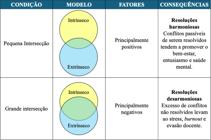
Teaching in K-12 education has become an increasingly complex and demanding profession worldwide (OECD, 2019). If conflict is inherent to the teaching profession-whether with students, administrative staff, or colleagues-it stands to reason that having the tools to better cope with adversity is the most appropriate course of action. Based on the findings in the literature, this article proposes that when teachers face conflicts but have positively aligned intrinsic and extrinsic factors, resilience can help resolve most of the challenges presented and contribute to professional satisfaction. This scenario is proposed here as a harmonious resolution, where conflicts are viewed as positive challenges to be faced, and teachers’ confidence remains unshaken. In harmonious resolutions, not only teachers but also students, colleagues, and administrative staff are, for the most part, collaborative and supportive.
On the other hand, when intrinsic and extrinsic factors are fragile (for example, lack of administrative support and a sense of abandonment on the part of teachers), disharmonious resolutions occur. Over time, this leads to stress, frustration, and, if persistent, to evasion and abandonment of the profession. Furthermore, teachers frequently deal with precarious working conditions, excessive bureaucratic demands, and insufficient institutional support (Gatti, 2010). Professional devaluation, low salaries, and a lack of career development opportunities also contribute to demotivation and high turnover rates, especially in socioeconomically vulnerable regions (Ingersoll, 2004). The emotional burden associated with managing complex social dynamics inside and outside the classroom further impacts teachers’ mental health and professional longevity (Figure 2).
3.6 Proposal of a Model
Teacher resilience is not a new concept; it is frequently linked to studies on persistence in the face of challenges, as well as research on burnout and attrition. Furthermore, resilience is not a static factor; it varies according to personal, relational, and organizational contexts (Gu; Day, 2013). These findings align with what has been discussed regarding professional satisfaction, adding a deeper understanding of well-being and emotional intelligence. However, when working conditions deteriorate, dissatisfaction leads to reduced performance, emotional exhaustion, and burnout, often resulting in temporary or permanent withdrawal from the profession (Madigan; Kim, 2021).
Large-scale studies show that self-efficacy and teacher resilience are positively and moderately correlated with work engagement (r2= 0.574) (Wang; Pan, 2023). In the context of Chinese teachers of English as a foreign language, Zhang (2023) reinforces this finding by identifying that teacher resilience is conceived within a multidimensional framework, which considers quality (i.e., an individual’s ability or capacity to respond quickly to a challenge), outcome (i.e., the ability to adjust plans based on current circumstances and achieve results), and process (i.e., focused on positive adaptation and personal development in the face of challenging conditions).
Based on these studies, which span different methodologies, such as quantitative/qualitative and cross-sectional/longitudinal, a conceptual model is proposed that correlates the role of intrinsic and extrinsic factors in the generation of workplace conflicts and teacher resilience to explain different responses to professional challenges. In this model, when the described factors are well-adjusted and positively regulated and teachers face professional challenges, they are more likely to address these challenges with a positive attitude to overcome them. This reinforces teacher resilience and leads to harmonious resolutions that ultimately contribute to well-being, enthusiasm, and career retention; however, when these same factors are negatively regulated, workplace conflicts cannot be mediated over long periods by teachers’ resilience. This scenario leads to disharmonious resolutions, contributing to stress, burnout, and eventual attrition and/or turnover. External conditions can also mitigate or exacerbate this complex combination of intrinsic and extrinsic factors (Figure 3).
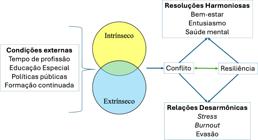
A conflict-centered view aligns these multiple perspectives, considering conflict as part of human social interactions, especially in the workplace. Everyday conflicts (e.g., competing demands, unclear rules, divergent expectations) are constantly generated by the clash between positive or negative attitudes of intrinsic and extrinsic factors, which accumulate over time. Consequently, resilience can mediate the effect of conflict, leading to harmonious resolutions. In schools, resilience has been theorized as a necessary condition for sustained performance under pressure (Gu; Day, 2013). The model presented here offers a new perspective on workplace conflict and resilience, considering the reality of teachers and contrasting it across different scenarios that can positively or negatively influence professional satisfaction and well-being.
4 Limitations
This study proposes a model to understand the complex process of professional satisfaction among elementary school teachers; however, despite relying on robust international and national evidence that contributed to its development, it still needs to be tested and validated with different Brazilian samples, considering the geographic, social, and cultural diversity of the various segments of elementary education.
5 Conclusion
This review synthesizes recent empirical evidence on the interaction between intrinsic and extrinsic factors in teacher job satisfaction, highlighting recurring patterns across different educational contexts, albeit with variations associated with institutional and social conditions. The proposed model conceives of resilience as a dynamic mediator of professional conflict, indicating that teacher retention is favored when intrinsic and extrinsic factors remain balanced, while its weakening can intensify processes of burnout and attrition. Future research can empirically test this model in different Brazilian school contexts, combining psychometric resilience instruments, such as the Connor-Davidson Resilience Scale (CD-Risc), with measures of teacher job satisfaction, contributing to the identification of distinct coping profiles for work-related stressors. In conclusion, retaining qualified and motivated teachers in basic education requires a systemic approach that integrates personal resources and institutional support. By adopting strategies grounded in this integrated model, educational systems can foster environments in which teachers not only remain in the profession but thrive, benefiting students, schools, and society.
How to cite this article (ABNT):
Ad hoc reviewers:
Translated by:
Data Availability:
The research data are available within the document.
References
-
ALBAYRAK, E.; DINÇ, B.; HACIMUSTAFAOGLU, D.; ÖZDEMIR, M.; Does school leadership affect teacher work engagement in Turkish schools? Investigating the mediating effect of teacher job satisfaction: A multilevel structural equation modelling analysis. Educational management administration and leadership, 2024. DOI: https://doi.org/10.1177/17411432241300401 Disponível em: https://journals.sagepub.com/doi/10.1177/17411432241300401 Acesso em: 3 ago. 2025.
» https://doi.org/10.1177/17411432241300401» https://journals.sagepub.com/doi/10.1177/17411432241300401 -
ALDOSIRY, N. The influence of support from administrators and other work conditions on special education teachers. International Journal of Disability, Development and Education, [S.l.], v. 69, n. 6, p. 1873-1887, 2022. DOI: https://doi.org/10.1080/1034912X.2020.1837353 Disponível em: https://www.tandfonline.com/doi/full/10.1080/1034912X.2020.1837353 Acesso em: 2 ago. 2025.
» https://doi.org/10.1080/1034912X.2020.1837353» https://www.tandfonline.com/doi/full/10.1080/1034912X.2020.1837353 -
ALVES, R.; LOPES, T.; PRECIOSO, J. Teachers’ well-being in times of Covid-19 pandemic: Factors that explain professional well-being. International Journal of Educational Research and Innovation, [S. l.], v. 2021, n. 15, p. 203-217, 2021. DOI: https://dx.doi.org/10.46661/ijeri.5120 Disponível em: https://rio.upo.es/entities/publication/31bf1a8a-158b-4cb7-98ab-1d165563c698 Acesso em: 10 ago. 2025.
» https://dx.doi.org/10.46661/ijeri.5120» https://rio.upo.es/entities/publication/31bf1a8a-158b-4cb7-98ab-1d165563c698 -
AMITAI, A.; VAN HOUTTE, M. Being pushed out of the career: former teachers’ reasons for leaving the profession. Teaching and Teacher Education, [S. l.], v. 110, 2022. DOI: https://doi.org/10.1016/j.tate.2021.103540 Disponível em: https://www.sciencedirect.com/science/article/abs/pii/S0742051X21002651 Acesso em: 2 ago. 2025.
» https://doi.org/10.1016/j.tate.2021.103540» https://www.sciencedirect.com/science/article/abs/pii/S0742051X21002651 -
ANSORI, A.; APRIANTO, I.; YUSUP, M.; ANSORI, K.; MARZANI, M. The influence of intrinsic and extrinsic rewards on middle school teachers’ job satisfaction. AL-ISHLAH: Jurnal Pendidikan, [S. l.], v. 14, n. 4, p. 6335-6346, 2022. DOI: https://doi.org/10.35445/alishlah.v14i4.2162 Disponível em: https://journal.staihubbulwathan.id/index.php/alishlah/article/view/2162 Acesso em: 2 ago. 2025.
» https://doi.org/10.35445/alishlah.v14i4.2162» https://journal.staihubbulwathan.id/index.php/alishlah/article/view/2162 -
ARYAWAN, I.; AGUNG, A.; SULINDAWATI, N.; WERANG, B. Exploring the effect of interpersonal communication, conflict management, asta brata leadership style, and motivationon job satisfaction of teachers. Pegem Egitim ve Ogretim Dergisi, [S. l.], v. 14, n. 2, 2024. DOI: https://doi.org/10.47750/pegegog.14.02.39 Disponível em: https://www.pegegog.net/index.php/pegegog/article/view/3190 Acesso em: 2 ago. 2025.
» https://doi.org/10.47750/pegegog.14.02.39» https://www.pegegog.net/index.php/pegegog/article/view/3190 -
BANDURA, A. Self-efficacy: toward a unifying theory of behavioral change. Psychological Review, [S. l.], v. 84, n. 2, p. 191-215, 1977. DOI: https://doi.org/10.1037/0033-295X.84.2.191 Disponível em: https://psycnet.apa.org/record/1977-25733-001 Acesso em: 2 ago. 2025.
» https://doi.org/10.1037/0033-295X.84.2.191» https://psycnet.apa.org/record/1977-25733-001 -
BAROUDI, S.; TAMIM, R.; HOJEIJ, Z. A quantitative investigation of intrinsic and extrinsic factors influencing teachers’ job satisfaction in Lebanon. Leadership and Policy in Schools, [S. l.], v. 21, n. 2, p. 127-146, 2022. DOI: https://doi.org/10.1080/15700763.2020.1734210 Disponível em: https://www.tandfonline.com/doi/abs/10.1080/15700763.2020.1734210 Acesso em: 2 ago. 2025.
» https://doi.org/10.1080/15700763.2020.1734210» https://www.tandfonline.com/doi/abs/10.1080/15700763.2020.1734210 -
BAYRAKCI, M.; KAYA, E. The relationship between teachers’ psychological resilience and job satisfaction levels. Political Economy and Management of Education, [S. l.], v. 5, n. 1, p. 1-19, 2024. Disponível em: https://dergipark.org.tr/en/pub/peme/article/1458916 Acesso em: 2 ago. 2025.
» https://dergipark.org.tr/en/pub/peme/article/1458916 -
BOETJE, J.; VAN DE SCHOOT, R. The SAFE procedure: a practical stopping heuristic for active learning-based screening in systematic reviews and meta-analyses. Systematic Reviews, [S. l.], v. 13, n. 1, p. 81, 2024. DOI: https://doi.org/10.1186/s13643-024-02502-7 Disponível em: https://link.springer.com/article/10.1186/s13643-024-02502-7 Acesso em: 2 ago. 2025.
» https://doi.org/10.1186/s13643-024-02502-7» https://link.springer.com/article/10.1186/s13643-024-02502-7 -
BURIC, I.; MOÈ, A. What makes teachers enthusiastic: The interplay of positive affect, self-efficacy and job satisfaction. Teaching and Teacher Education, [S. l.], v. 89, 2020. DOI: https://doi.org/10.1016/j.tate.2019.103008 Disponível em: https://www.sciencedirect.com/science/article/abs/pii/S0742051X1930647X Acesso em: 2 ago. 2025.
» https://doi.org/10.1016/j.tate.2019.103008» https://www.sciencedirect.com/science/article/abs/pii/S0742051X1930647X -
CAPONE, V.; PETRILLO, G. Mental health in teachers: Relationships with job satisfaction, efficacy beliefs, burnout and depression. Current Psychology, [S. l.], v. 39, n. 5, p. 1757-1766, 2020. DOI: https://doi.org/10.1007/s12144-018-9878-7 Disponível em: https://link.springer.com/article/10.1007/s12144-018-9878-7?utm_source=researchgate.net&utm_medium=article Acesso em: 10 ago. 2025.
» https://doi.org/10.1007/s12144-018-9878-7» https://link.springer.com/article/10.1007/s12144-018-9878-7?utm_source=researchgate.net&utm_medium=article -
CARROLL, E.; MCCOY, S.; MIHUT, G. Exploring cumulative disadvantage in early school leaving and planned post-school pathways among those identified with special educational needs in Irish primary schools. British Educational Research Journal, [S. l.], v. 48, n. 6, p. 1065-1082, 2022. DOI: https://doi.org/10.1002/berj.3815 Disponível em: https://bera-journals.onlinelibrary.wiley.com/doi/full/10.1002/berj.3815 Acesso em: 2 ago. 2025.
» https://doi.org/10.1002/berj.3815» https://bera-journals.onlinelibrary.wiley.com/doi/full/10.1002/berj.3815 -
CHANG, T.; SUNG, Y. Does teacher motivation really matter? Exploring the mediating role of teachers’ self-efficacy in the relationship between motivation and job satisfaction. Asia-Pacific Education Researcher, [S. l.], v. 33, n. 6, p. 1315-1325, 2024. DOI: https://doi.org/10.1007/s40299-023-00803-4 Disponível em: https://link.springer.com/article/10.1007/s40299-023-00803-4 Acesso em: 3 ago. 2025.
» https://doi.org/10.1007/s40299-023-00803-4» https://link.springer.com/article/10.1007/s40299-023-00803-4 -
DEMBOSKI, G.; SILVA, R.; COSTA, C. A formação docente como estratégia para prevenir o tecnoestresse e a violação de limites trabalho-família em professores da educação básica. Educação & Formação, Fortaleza, v. 9, e13479, 2024. DOI: https://doi.org/10.25053/redufor.v9.e13479 Disponível em: https://revistas.uece.br/index.php/redufor/article/view/13479 Acesso em: 10 ago. 2025.
» https://doi.org/10.25053/redufor.v9.e13479» https://revistas.uece.br/index.php/redufor/article/view/13479 -
DREER, B. Teachers’ well-being and job satisfaction: the important role of positive emotions in the workplace. Educational Studies, [S. l.], v. 50, n. 1, p. 61-77, 2021. DOI: https://doi.org/10.1080/03055698.2021.1940872 Disponível em: https://www.tandfonline.com/doi/full/10.1080/03055698.2021.1940872 Acesso em: 3 ago. 2025.
» https://doi.org/10.1080/03055698.2021.1940872» https://www.tandfonline.com/doi/full/10.1080/03055698.2021.1940872 -
DRÜGE, M.; SCHLADITZ, S.; WIRTZ, M.; SCHLEIDER, K. Psychosocial burden and strains of pedagogues - using the job demands-resources theory to predict burnout, job satisfaction, general state of health, and life satisfaction. International Journal of Environmental Research and Public Health, [S. l.], v. 18, n. 15, 2021. DOI: https://doi.org/10.3390/ijerph18157921 Disponível em: https://pubmed.ncbi.nlm.nih.gov/34360214/ Acesso em: 3 ago. 2025.
» https://doi.org/10.3390/ijerph18157921» https://pubmed.ncbi.nlm.nih.gov/34360214/ -
GATTI, B. Formação de professores no Brasil: características e problemas. Educação & Sociedade, Campinas, v. 31, p. 1355-1379, 2010. DOI: https://doi.org/10.1590/S0101-73302010000400016 Disponível em: https://www.scielo.br/j/es/a/R5VNX8SpKjNmKPxxp4QMt9M/?format=html⟨=pt Acesso em: 3 ago. 2025.
» https://doi.org/10.1590/S0101-73302010000400016» https://www.scielo.br/j/es/a/R5VNX8SpKjNmKPxxp4QMt9M/?format=html⟨=pt -
GOODEN, C.; ZELKOWSKI, J.; SMITH, F. A systematic literature review on factors of stress, burnout and job satisfaction of secondary grades teachers at time of professional crisis. The Clearing House: A Journal of Educational Strategies, Issues and Ideas, [S. l.], v. 96, n. 5, p. 162-171, 2023. DOI: https://doi.org/10.1080/00098655.2023.2238880 Disponível em: https://www.tandfonline.com/doi/full/10.1080/00098655.2023.2238880 Acesso em: 4 ago. 2025.
» https://doi.org/10.1080/00098655.2023.2238880» https://www.tandfonline.com/doi/full/10.1080/00098655.2023.2238880 -
GU, Q.; DAY, C. Challenges to teacher resilience: conditions count. British Educational Research Journal, [S. l.], v. 39, n. 1, p. 22-44, 2013. DOI: https://doi.org/10.1080/01411926.2011.623152 Disponível em: https://bera-journals.onlinelibrary.wiley.com/doi/10.1080/01411926.2011.623152 Acesso em: 4 ago. 2025.
» https://doi.org/10.1080/01411926.2011.623152» https://bera-journals.onlinelibrary.wiley.com/doi/10.1080/01411926.2011.623152 -
GUILHERME, A.; ARAUJO, J.; SILVA, L.; BRITO, R. Two ‘Brazils’: socioeconomic status and education performance in Brazil. International Journal of Educational Research, [S. l.], v. 123, p. 102287, 2024. DOI: https://doi.org/10.1016/j.ijer.2023.102287 Disponível em: https://www.sciencedirect.com/science/article/abs/pii/S0883035523001507 Acesso em: 4 ago. 2025.
» https://doi.org/10.1016/j.ijer.2023.102287» https://www.sciencedirect.com/science/article/abs/pii/S0883035523001507 -
HONG, Q.; FÀBREGUES, S.; BARTLETT, G.; BOARDMAN, F.; CARGO, M.; DAGENAIS, P.; GAGNON, M.; GRIFFITHS, F.; NICOLAU, B.; O'CATHAIN, A.; ROUSSEAU, M.; VEDEL, I.; PLUYE, P. The Mixed Methods Appraisal Tool (MMAT) version 2018 for information professionals and researchers. Education for Information, [S. l.], v. 34, n. 4, p. 285-291, 2018. DOI: https://doi.org/10.3233/EFI-180221 Disponível em: https://journals.sagepub.com/doi/10.3233/EFI-180221 Acesso em: 4 ago. 2025.
» https://doi.org/10.3233/EFI-180221» https://journals.sagepub.com/doi/10.3233/EFI-180221 -
HOQUE, K.; WANG, X.; QI, Y.; NORZAN, N. The factors associated with teachers’ job satisfaction and their impacts on students’ achievement: a review (2010-2021). Humanities and Social Sciences Communications, [S. l.], v. 10, n. 1, 2023. DOI: https://doi.org/10.1057/s41599-023-01645-7 Disponível em: https://www.nature.com/articles/s41599-023-01645-7 Acesso em: 4 ago. 2025.
» https://doi.org/10.1057/s41599-023-01645-7» https://www.nature.com/articles/s41599-023-01645-7 -
IANNUCCI, C.; RICHARDS, K.; MACPHAIL, A. The relationships among personal accomplishment, resilience and teachers’ experience of teaching multiple school subjects role conflict. European Physical Education Review, [S. l.], v. 27, n. 3, p. 613-635, 2021. DOI: https://doi.org/10.1177/1356336X20980777 Disponível em: https://journals.sagepub.com/doi/10.1177/1356336X20980777 Acesso em: 4 ago. 2025.
» https://doi.org/10.1177/1356336X20980777» https://journals.sagepub.com/doi/10.1177/1356336X20980777 -
IBRAGIMOV, I.; MATVIEVSKAYA, E.; EZHOVA, T.; SULEIMANOVA, A.; KOCHNEVA, L.; TARARINA, L.; SOKOLOVA, T. The effect of teacher turnover on students’ learning. Revista on line de Política e Gestão Educacional, São Carlos, v. 25, p. 3753-3765, 2021. DOI: https://doi.org/10.22633/rpge.v25iesp.6.16136 Disponível em: https://doaj.org/article/04e9999fe9634fa881724b86cfb16715 Acesso em: 4 ago. 2025.
» https://doi.org/10.22633/rpge.v25iesp.6.16136» https://doaj.org/article/04e9999fe9634fa881724b86cfb16715 -
INGERSOLL, R. Why do high-poverty schools have difficulty staffing their classrooms with qualified teachers?. Renewing our schools, securing our future: A national task force on public education; joint initiative of the center for american progress and the institute for america’s future, [S. l.], n. 493, 2004. Disponível em: https://cdn.americanprogress.org/wp-content/uploads/kf/ingersoll-final.pdf Acesso em: 8 ago. 2025.
» https://cdn.americanprogress.org/wp-content/uploads/kf/ingersoll-final.pdf -
KUN, A.; GADANECZ, P. Workplace happiness, well-being and their relationship with psychological capital: A study of Hungarian Teachers. Current Psychology, [S. l.], v. 41, n. 1, p. 185-199, 2022. DOI: https://doi.org/10.1007/s12144-019-00550-0 Disponível em: https://link.springer.com/article/10.1007/s12144-019-00550-0 Acesso em: 10 ago. 2025.
» https://doi.org/10.1007/s12144-019-00550-0» https://link.springer.com/article/10.1007/s12144-019-00550-0 -
LATIF, M. Differences in job satisfaction of male and female teachers in private and public secondary schools. Discover Psychology, v. 4, n. 1, 2024. DOI: https://doi.org/10.1007/s44202-024-00221-7 Disponível em: https://link.springer.com/article/10.1007/s44202-024-00221-7 Acesso em: 4 ago. 2025.
» https://doi.org/10.1007/s44202-024-00221-7» https://link.springer.com/article/10.1007/s44202-024-00221-7 -
LEÓN, H. C. R. et al. Job satisfaction factors in secondary school teachers, public and private institutions in a Peruvian Region. Cypriot Journal of Educational Sciences, [S. l.], v. 16, n. 6, p. 3317-3328, 2021. DOI: https://doi.org/10.18844/cjes.v16i6.6566 Disponível em: https://un-pub.eu/ojs/index.php/cjes/article/view/6566 Acesso em: 4 ago. 2025.
» https://doi.org/10.18844/cjes.v16i6.6566» https://un-pub.eu/ojs/index.php/cjes/article/view/6566 -
LI, M.; YU, Z. Teachers’ satisfaction, role, and digital literacy during the Covid-19 pandemic. Sustainability, [S. l.], v. 14, n. 3, p. 1121, 2022. DOI: https://doi.org/10.3390/su14031121 Disponível em: https://www.mdpi.com/2071-1050/14/3/1121 Acesso em: 4 ago. 2025.
» https://doi.org/10.3390/su14031121» https://www.mdpi.com/2071-1050/14/3/1121 -
LIU, G.; NAMAZIANDOST, E.; REZAI, A.; HEYDARNEJAD, T. Unveiling the influence of emotion regulation on job satisfaction, job effectiveness, and psychological well-being in iranian university EFL teachers: a SEM analysis. International journal of applied linguistics, [S. l.], v. 35, n. 2, p. 729-744, 2025. DOI: https://doi.org/10.1111/ijal.12654 Disponível em: https://onlinelibrary.wiley.com/doi/10.1111/ijal.12654 Acesso em: 4 ago. 2025.
» https://doi.org/10.1111/ijal.12654» https://onlinelibrary.wiley.com/doi/10.1111/ijal.12654 -
MAAS, J.; SCHOCH, S.; SCHOLZ, U.; RACKOW, P.; SCHÜLER, J.; WEGNER, M.; KELLER, R. School principals’ social support and teachers’ basic need satisfaction: The mediating role of job demands and job resources. Social Psychology of Education, [S. l.], v. 25, n. 6, p. 1545-1562, 2022. DOI: https://doi.org/10.1007/s11218-022-09730-6 Disponível em: https://link.springer.com/article/10.1007/s11218-022-09730-6 Acesso em: 4 ago. 2025.
» https://doi.org/10.1007/s11218-022-09730-6» https://link.springer.com/article/10.1007/s11218-022-09730-6 -
MADIGAN, D.; KIM, L. Towards an understanding of teacher attrition: A meta-analysis of burnout, job satisfaction, and teachers’ intentions to quit. Teaching and Teacher Education, [S. l.], v. 105, 2021. DOI: https://doi.org/10.1016/j.tate.2021.103425 Disponível em: https://www.sciencedirect.com/science/article/abs/pii/S0742051X21001499 Acesso em: 5 ago. 2025.
» https://doi.org/10.1016/j.tate.2021.103425» https://www.sciencedirect.com/science/article/abs/pii/S0742051X21001499 -
NALIPAY, M.; KING, R.; CAI, Y. Happy teachers make happy students: The social contagion of well-being from teachers to their students. School Mental Health, [S. l.], v. 16, n. 4, p. 1223-1235, 2024. DOI: https://doi.org/10.1007/s12310-024-09688-0 Disponível em: https://link.springer.com/article/10.1007/s12310-024-09688-0 Acesso em: 5 ago. 2025.
» https://doi.org/10.1007/s12310-024-09688-0» https://link.springer.com/article/10.1007/s12310-024-09688-0 -
OECD. PISA 2018 Results (Volume I): What students know and can do. Paris: OECD, 2019. Disponível em: https://www.oecd-ilibrary.org/docserver/5f07c754-en.pdf?expires=1715554263&id=id&accname=guest&checksum=9479B83602911422561344C7048BD7F3 Acesso em: 30 out. 2023.
» https://www.oecd-ilibrary.org/docserver/5f07c754-en.pdf?expires=1715554263&id=id&accname=guest&checksum=9479B83602911422561344C7048BD7F3 -
ORTAN, F.; SIMUT, C.; SIMUT, R. Self-efficacy, job satisfaction and teacher well-being in the K-12 educational system. International Journal of Environmental Research and Public Health, [S. l.], v. 18, n. 23, 2021. DOI: https://doi.org/10.3390/ijerph182312763 Disponível em: https://pmc.ncbi.nlm.nih.gov/articles/PMC8656960/ Acesso em: 10 ago. 2025.
» https://doi.org/10.3390/ijerph182312763» https://pmc.ncbi.nlm.nih.gov/articles/PMC8656960/ -
PAGE, M.; McKENZIE, J.; BOSSUYT, P.; BOUTRON, I.; HOFFMAN, T.; MULROW, C.; SHAMSEER, L.; TETZLAFF, J.; AKL, E.; BRENNAN, S.; CHOU, R. MOHER, D. The PRISMA 2020 statement: An updated guideline for reporting systematic reviews. BMJ, [S. l.], v. 372, n71, 2021. DOI: https://doi.org/10.1136/bmj.n71 Disponível em: https://www.bmj.com/content/372/bmj.n71 Acesso em: 4 ago. 2025.
» https://doi.org/10.1136/bmj.n71» https://www.bmj.com/content/372/bmj.n71 -
PANISOARA, I.; LAZAR, I.; PANISOARA, G.; CHIRCA, R.; URSU, A. Motivation and continuance intention towards online instruction among teachers during the Covid-19 pandemic: The mediating effect of burnout and technostress. International Journal of Environmental Research and Public Health, [S. l.], v. 17, n. 21, p. 1-29, 2020. DOI: https://doi.org/10.3390/ijerph17218002 Disponível em: https://www.mdpi.com/1660-4601/17/21/8002 Acesso em: 10 ago. 2025.
» https://doi.org/10.3390/ijerph17218002» https://www.mdpi.com/1660-4601/17/21/8002 -
PERRYMAN, J.; CALVERT, G. What motivates people to teach, and why do they leave? Accountability, performativity and teacher retention. British Journal of Educational Studies, [S. l.], v. 68, n. 1, p. 3-23, 2020. DOI: https://doi.org/10.1080/00071005.2019.1589417 Disponível em: https://www.tandfonline.com/doi/full/10.1080/00071005.2019.1589417 Acesso em: 10 ago. 2025.
» https://doi.org/10.1080/00071005.2019.1589417» https://www.tandfonline.com/doi/full/10.1080/00071005.2019.1589417 -
RÄSÄNEN, K.; PIETARINEN, J.; PYHÄLTÖ, K.; SOINI, T.; VÄISÄNEN, P. Why leave the teaching profession? A longitudinal approach to the prevalence and persistence of teacher turnover intentions. Social Psychology of Education, [S. l.], v. 23, n. 4, p. 837-859, 2020. DOI: https://doi.org/10.1007/s11218-020-09567-x Disponível em: https://link.springer.com/content/pdf/10.1007/s11218-020-09567-x.pdf Acesso em: 10 ago. 2025.
» https://doi.org/10.1007/s11218-020-09567-x» https://link.springer.com/content/pdf/10.1007/s11218-020-09567-x.pdf -
SANTOS, P.; MACHADO, L. Professores readaptados em escolas públicas: adoecimento e perspectivas de retorno à sala de aula. Educação & Sociedade, Fortaleza, v. 9, e12619, 2024. DOI: https://doi.org/10.25053/redufor.v9.e12619 Disponível em: https://revistas.uece.br/index.php/redufor/article/view/12619 Acesso em: 11 ago. 2025.
» https://doi.org/10.25053/redufor.v9.e12619» https://revistas.uece.br/index.php/redufor/article/view/12619 -
SCOTT, L.; TAYLOR, J.; BRUNO, L.; PADHYE, I.; BRENDLI, K.; WALLACE, W.; CORMIER, C. Why do they stay? Factors associated with special education teachers’ persistence. Remedial and Special Education, [S. l.], v. 43, n. 2, p. 75-86, 2022. DOI: https://doi.org/10.1177/07419325211014965 Disponível em: https://www.researchgate.net/publication/352096273_Why_Do_They_Stay_Factors_Associated_With_Special_Education_Teachers'_Persistence Acesso em: 5 ago. 2025.
» https://doi.org/10.1177/07419325211014965» https://www.researchgate.net/publication/352096273_Why_Do_They_Stay_Factors_Associated_With_Special_Education_Teachers'_Persistence -
TALIS. 2018 Results 2018. v. 1. Disponível em: https://www.oecd.org/en/publications/talis-2018-results-volume-i_1d0bc92a-en.html Acesso em: 29 abr. 2025.
» https://www.oecd.org/en/publications/talis-2018-results-volume-i_1d0bc92a-en.html -
TJOSVOLD, D. Defining conflict and making choices about its management: Lighting the dark side of organizational life. International Journal of Conflict Management, [S. l.], v. 17, n. 2, p. 87-95, 2006. DOI: https://doi.org/10.1108/10444060610736585 Disponível em: https://www.emerald.com/ijcma/article-abstract/17/2/87/124996/Defining-conflict-and-making-choices-about-its?redirectedFrom=fulltext&utm_source=researchgate.net&utm_medium=article Acesso em: 5 ago. 2025.
» https://doi.org/10.1108/10444060610736585» https://www.emerald.com/ijcma/article-abstract/17/2/87/124996/Defining-conflict-and-making-choices-about-its?redirectedFrom=fulltext&utm_source=researchgate.net&utm_medium=article -
TOPCHYAN, R.; WOEHLER, C. Do teacher status, gender, and years of teaching experience impact job satisfaction and work engagement?. Education and Urban Society, [S. l.], v. 53, n. 2, p. 119-145, 2021. DOI: https://doi.org/10.1177/0013124520926161 Disponível em: https://journals.sagepub.com/doi/10.1177/0013124520926161 Acesso em: 11 ago. 2025.
» https://doi.org/10.1177/0013124520926161» https://journals.sagepub.com/doi/10.1177/0013124520926161 -
TOROPOVA, A.; MYRBERG, E.; JOHANSSON, S. Teacher job satisfaction: The importance of school working conditions and teacher characteristics. Educational Review, [S. l.], v. 73, n. 1, p. 71-97, 2021. DOI: https://doi.org/10.1080/00131911.2019.1705247 Disponível em: https://www.tandfonline.com/doi/full/10.1080/00131911.2019.1705247 Acesso em: 11 ago. 2025.
» https://doi.org/10.1080/00131911.2019.1705247» https://www.tandfonline.com/doi/full/10.1080/00131911.2019.1705247 -
UNESCO. Global report on teachers: addressing teacher shortages and transforming the profession Genebra: Unesco, 2024. Disponível em: https://www.unesco.org/en/articles/global-report-teachers-addressing-teacher-shortages-and-transforming-profession Acesso em: 10 abr. 2025.
» https://www.unesco.org/en/articles/global-report-teachers-addressing-teacher-shortages-and-transforming-profession -
WANG, Y.; PAN, Z. Modeling the effect of chinese efl teachers’ self-efficacy and resilience on their work engagement: a structural equation modeling analysis. SAGE Open, [S. l.], v. 13, n. 4, 2023. DOI: https://doi.org/10.1177/21582440231214329 Disponível em: https://journals.sagepub.com/doi/10.1177/21582440231214329 Acesso em: 5 ago. 2025.
» https://doi.org/10.1177/21582440231214329» https://journals.sagepub.com/doi/10.1177/21582440231214329 -
WORTH, J.; VAN DEN BRANDE, Jens. Teacher autonomy: how does it relate to job satisfaction and retention?. National Foundation for Educational Research, [S. l.], 2020. Disponível em: https://eric.ed.gov/?id=ED604418 Acesso em: 22 abr. 2025.
» https://eric.ed.gov/?id=ED604418 -
ZHANG, L. Reviewing the effect of teachers’ resilience and wellbeing on their foreign language teaching enjoyment. Frontiers in Psychology, [S. l.], v. 14, 2023. DOI: https://doi.org/10.3389/fpsyg.2023.1187468 Disponível em: https://www.frontiersin.org/journals/psychology/articles/10.3389/fpsyg.2023.1187468/full Acesso em: 5 ago. 2025.
» https://doi.org/10.3389/fpsyg.2023.1187468» https://www.frontiersin.org/journals/psychology/articles/10.3389/fpsyg.2023.1187468/full -
ZHANG, M.; BAI, Y.; LI, Z. Effect of resilience on the mental health of special education teachers: Moderating effect of teaching barriers. Psychology Research and Behavior Management, [S. l.], v. 13, p. 537-544, 2020. DOI: https://doi.org/10.2147/PRBM.S257842 Disponível em: https://www.dovepress.com/effect-of-resilience-on-the-mental-health-of-special-education-teacher-peer-reviewed-fulltext-article-PRBM Acesso em: 5 ago. 2025.
» https://doi.org/10.2147/PRBM.S257842» https://www.dovepress.com/effect-of-resilience-on-the-mental-health-of-special-education-teacher-peer-reviewed-fulltext-article-PRBM

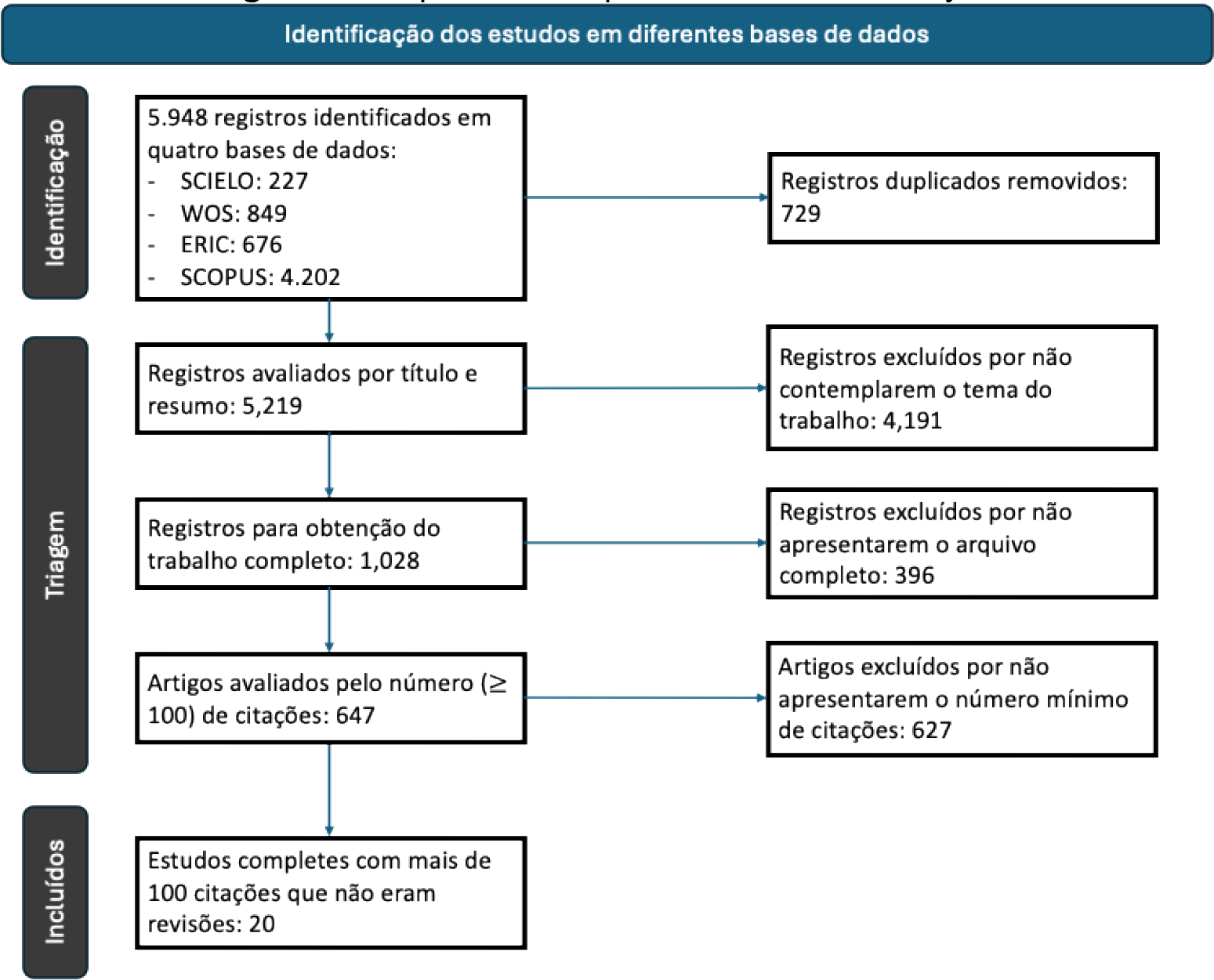 Source: Authors’ own elaboration (2025).
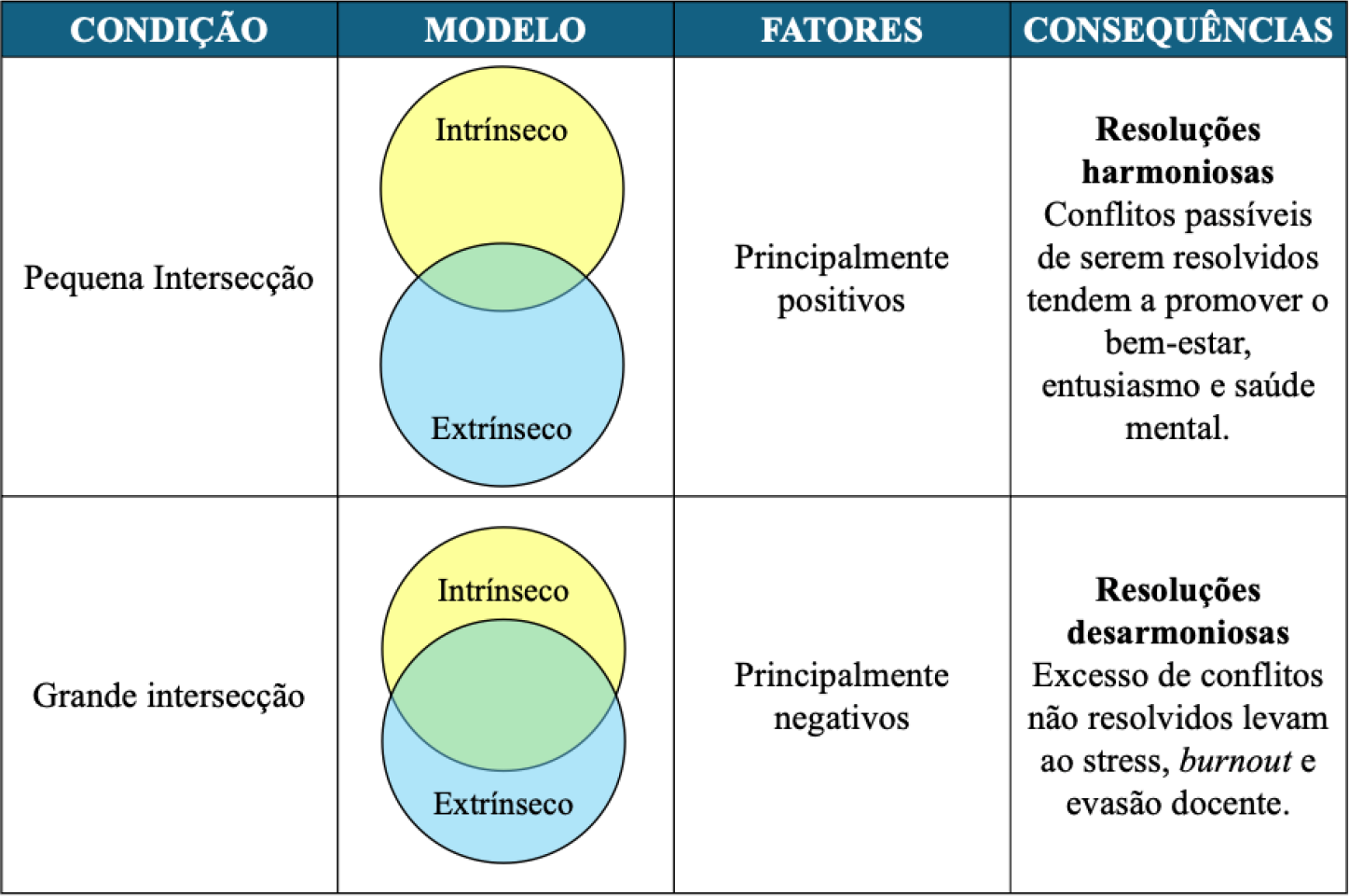 * The intensity of workplace conflict is represented by the shaded intersection between the two circles, where the size of the area is directly related to the intensity of the conflict. When intrinsic and extrinsic factors are positively regulated, the area is small, and thus there is less conflict.Source: Authors’ own elaboration (2025).
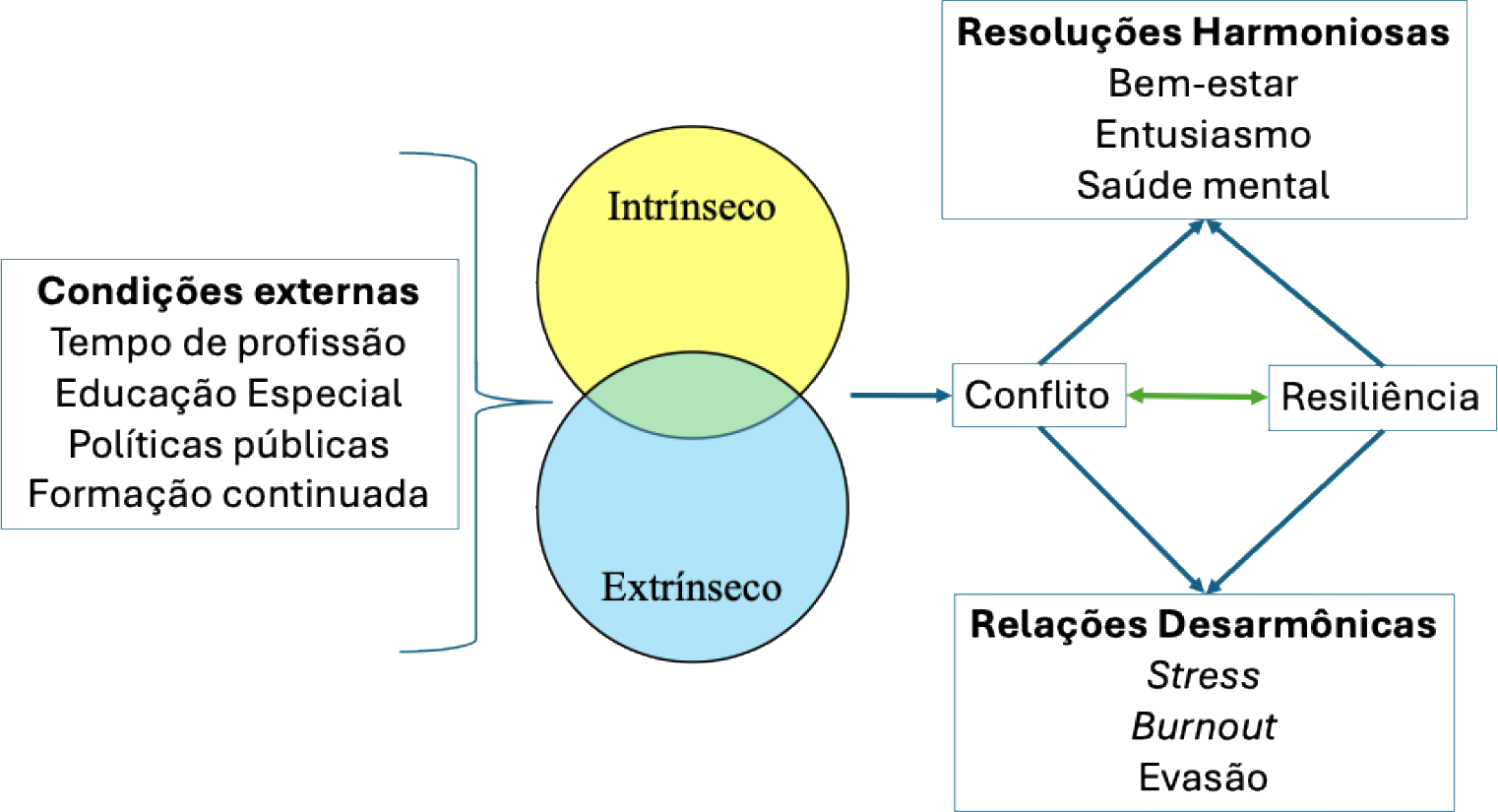 * The proposed model illustrates how conflict emerges from the interaction between intrinsic and extrinsic factors. Whether this conflict follows a harmonious or disharmonious path depends on the combination of the factors presented, the influence of external conditions, and the mediating role of resilience.Source: Authors’ own elaboration (2025).