
 Inclusive Practices Using Assistive Technologies and DUA in the Inclusion of Students with Autism: A Systematic Review
Abstract
Introduction. This study conducted a systematic review on the use of Assistive Technologies, based on Universal Design for Learning, in the teacher training process for school inclusion.
Methodology. The research sought to understand how Brazilian scientific literature addresses this topic, adopting a qualitative, descriptive, and exploratory approach based on the protocol by Senra and Lourenço (2016).
Discussion. Searches conducted in the Thesis and Dissertation Catalog of the Coordination for the Improvement of Higher Education Personnel between 2020 and 2025 identified 103 works, of which 17 met the inclusion criteria. The analysis identified three central categories: continuing education and teachers’ perceptions of inclusive practices; the use of Assistive Technologies in pedagogical practice; and technologies as learning supports.
Results. The results show that the integration of Assistive Technologies and Universal Design for Learning promotes flexible curricula, enhances student autonomy, and strengthens teaching practice, although challenges persist, such as gaps in initial training, the absence of consistent public policies, and insufficient institutional support.
Keywords
inclusive education; Universal Design for Learning; teacher training; autism spectrum disorder.
Resumo
Introdução. Este estudo realizou uma revisão sistemática sobre o uso de Tecnologias Assistivas, pautadas no Desenho Universal para Aprendizagem, no processo de formação docente para a inclusão escolar.
Metodologia. A pesquisa buscou compreender como a produção científica brasileira aborda essa temática, adotando abordagem qualitativa, de caráter descritivo e exploratório, fundamentada no protocolo de Senra e Lourenço (2016).
Discussão. As buscas, realizadas no Catálogo de Teses e Dissertações da Coordenação de Aperfeiçoamento de Pessoal de Nível Superior entre 2020 e 2025, identificaram 103 trabalhos, dos quais 17 atenderam aos critérios de inclusão. A análise apontou três categorias centrais: formação continuada e percepção docente sobre práticas inclusivas; uso das Tecnologias Assistivas na prática pedagógica; e tecnologias como apoio à aprendizagem.
Resultados. Os resultados evidenciam que a articulação entre Tecnologias Assistivas e Desenho Universal para Aprendizagem favorece currículos flexíveis, potencializa a autonomia estudantil e fortalece a prática docente, embora persistam desafios como lacunas na formação inicial, ausência de políticas públicas consistentes e insuficiência de apoio institucional.
Palavras-chave
educação inclusiva; Desenho Universal para Aprendizagem; formação docente; transtorno do espectro autista.
Resumen
Introducción. Este estudio realizó una revisión sistemática sobre el uso de Tecnologías de Apoyo, basadas en el Diseño Universal para el Aprendizaje, en el proceso de formación docente para la inclusión escolar.
Metodología. La investigación buscó comprender cómo la producción científica brasileña aborda esta temática, adoptando un enfoque cualitativo, de carácter descriptivo y exploratorio, fundamentado en el protocolo de Senra y Lourenço (2016).
Discusión. Las búsquedas, realizadas en el Catálogo de Tesis y Disertaciones de la Coordinación de Perfeccionamiento del Personal de Nivel Superior entre 2020 y 2025, identificaron 103 trabajos, de los cuales 17 cumplieron con los criterios de inclusión. El análisis señaló tres categorías centrales: formación continua y percepción docente sobre prácticas inclusivas; uso de las Tecnologías de Apoyo en la práctica pedagógica; y tecnologías como apoyo al aprendizaje.
Resultados. Los resultados evidencian que la articulación entre Tecnologías de Apoyo y Diseño Universal para el Aprendizaje favorece currículos flexibles, potencializa la autonomía estudiantil y fortalece la práctica docente, aunque persisten desafíos como lagunas en la formación inicial, ausencia de políticas públicas consistentes e insuficiencia de apoyo institucional.
Palabras clave
educación inclusiva; Diseño Universal para el Aprendizaje; formación docente; trastorno del espectro autista.
1 Introduction
This study focuses on the development of strategies for teacher training on the use of Assistive Technologies (AT) from the perspective of Universal Design for Learning (UDL), aimed at the inclusion of students with Autism Spectrum Disorder (ASD).
The process of consolidating inclusive education in Brazil is historically linked to international guidelines. As Prais (2020, p. 2) states, this movement “[...] follows external determinations stemming from global agreements established through declarations.” Based on these influences, the country began to recognize the demands of the population with disabilities, incorporating this commitment into the Federal Constitution, whose Article 205 guarantees education as a right of all and a duty of the State and the family, with the collaboration of society (Brazil, 1988).
Despite these guarantees, special education was, for a long time, associated with stigmatizing conceptions, treating disability as a pathology or punishment, which led to institutional segregation. Diniz (2007, p. 3,067) describes this context by stating that “[...] these people survived in isolation in institutions that, under the pretext of treating them, returned them to their families or to society in a state of normality.” Thus, inclusion occurred in an exclusionary manner, requiring the individual to adapt to the environment, rather than the other way around.
This landscape began to change with the enactment of the National Policy on Special Education from the Perspective of Inclusive Education (Brazil, 2008), which establishes specialized educational services as complementary to general education. Added to this progress is the Salamanca Declaration (UNESCO, 1994), which recognizes inclusive schools as the most effective in guaranteeing the right to education for all.
In the debate between special education and inclusive education, the need to overcome segregating paradigms stands out. The traditional conception of special education, aimed at a specific audience, as pointed out by the national policy itself (Brazil, 2008), supported the creation of special institutions and classes. Inclusive education, however, broadens this perspective beyond the school, involving the whole of society and prioritizing the recognition of differences and equity.
However, there is a contradiction in Brazilian public policies in limiting the target audience of inclusive education to students with special educational needs, contrary to the broader approach proposed by the Salamanca Declaration (UNESCO, 1994). Thus, inclusive education should be understood as a perspective that ensures access, retention, and academic success for all students, with or without disabilities, through inclusive pedagogical practices.
In line with the Statute of Persons with Disabilities (Brazil, 2015), Universal Design (UD) has established itself as a strategy for promoting accessibility and equitable participation. From Cast’s (2020) perspective, UD underpins the DUA ( ) by guiding the creation of accessible environments, products, and services from their conception, without the need for subsequent adaptations. Its pillars-accessible physical infrastructure, collaborative work, adequate resources, and planned pedagogical practices-support a flexible and inclusive curriculum. In this context, curricular flexibility requires that TA integrate pedagogical mediation, rather than being merely an additional resource. As Moura, Wagner, and Reis (2025) highlight, the adaptation of materials and the organization of accessible routines are fundamental to reducing barriers to learning.
Prais (2020) emphasizes that the principles of the DUA constitute an essential foundation for planning inclusive pedagogical practices, which depend on theoretical and practical support for teachers. In this sense, continuing education, especially in the school environment, is fundamental for enhancing teachers’ knowledge, integrating experience, reflection, and context. As Prais and Rosa (2014, p. 369) emphasize, it is necessary to transform “[...] intentions into truly inclusive practices that ensure the quality of teaching and learning for all.”
In the legal sphere, Law No. 13,146/2015 reaffirms the right to education for people with disabilities (Brazil, 2015). The DUA, in turn, proposes a flexible curriculum capable of eliminating barriers to learning, especially for the target audience of special education (PAEE), by planning, from the outset, strategies accessible to all, eliminating the need for subsequent adaptations (Sebastián-Heredero, 2020). Prais (2020) emphasizes that the DUA guides practices based on the use of resources, including digital ones, that expand access to the curriculum. Thus, proposing educational practices grounded in the DUA is a necessary path toward consolidating a truly inclusive school, capable of eliminating barriers and respecting the unique characteristics of all its students.
Scientific studies highlight the need to integrate theory and practice through the DUA and AT, which are fundamental for promoting autonomy, inclusion, and skill development (Bersch, 2017; Prais, 2020; Sebastián-Heredero, 2020). Data from the 2022 School Census (Brazil, 2023) indicate that 94.2% of special education students are in regular classrooms, reinforcing the urgency of inclusive practices. For Soares (2024), inclusion must be understood as a cross-cutting theme, involving schools, research, and teacher training.
In this context, the teacher assumes a central role, with an emphasis on the use of assistive technology (AT) and Augmentative and Alternative Communication (AAC), especially for students with ASD, expanding possibilities for interaction and participation (Bersch, 2017; CAT, 2007; Lemos; Cunha, 2002). The effectiveness of these resources, however, also depends on the work of support professionals, whose training and working conditions still present weaknesses (Moura; Wagner; Reis, 2025).
Understood as a set of tools and strategies ranging from picture exchange cards to speech synthesis software, AAC aims to compensate for severe difficulties in expressive communication, serving as a crucial AT resource for the participation of students without functional speech. Thus, the pedagogical use of AT contributes to making the student an active agent in the learning process; however, the effectiveness of these resources depends on the work of support professionals, such as the second teacher, whose mediation is central. As Moura, Wagner, and Reis (2025) point out, although this professional plays a crucial role, their practice is often limited by insufficient training and precarious working conditions, factors that directly impact the effective application of AT.
Scientific research, according to Lakatos and Marconi (2003), is fundamental to supporting evidence-based pedagogical practices, contributing to a critical and reflective inclusive education. Investing in research strengthens pedagogical actions that respect the unique characteristics of students with ASD and promotes an emancipatory education, as advocated by Freire (1987).
In this context, this article poses the following question: how do Brazilian scientific publications address the use of AT in teacher education? Its objective is to investigate how these publications address the use of AT, analyzing approaches, trends, and gaps.
2 Methodology
This research adopts a qualitative methodological approach, and its objectives are descriptive and exploratory in nature. Regarding technical procedures , we defined research techniques of the systematic review type, following the approach of Senra and Lourenço (2016), which consists of applying a structured protocol to locate, analyze, and interpret relevant studies on the investigated topic. Given the relevance of scientific publications, the research was limited to the Catalog of the Coordination for the Improvement of Higher Education Personnel (CAPES) because it centralizes national stricto sensu production, making it ideal for identifying trends in Brazilian graduate education. Although this choice prioritizes studies of greater theoretical depth (theses and dissertations) over journal articles, it is acknowledged that this methodological approach constitutes a limitation of the research.
The systematic review allows for mapping the state of knowledge on a given topic, as it identifies established findings and gaps in the literature (Senra & Lourenço, 2016). Unlike traditional reviews, this approach uses a standardized and documented logic that reduces selection biases, conferring greater transparency and reliability to the results. In the field of inclusive education, specifically regarding the use of AT from the DUA perspective, this methodology underpins effective practices and training proposals aligned with the school’s actual needs. To conduct this study, we adopted the procedures proposed by Senra and Lourenço (2016), structured in ten stages, detailed in Figure 1.
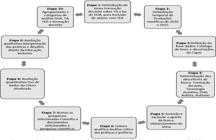
Given the methodological rigor required by the aforementioned stages, the results obtained were organized and interpreted in the following section.
In the first stage, we defined the scope of the study as teacher training on the use of AT in light of the DUA for the inclusion of students with ASD; for the temporal scope, we defined the last five years (2020 to 2025) as the reference period. For the third stage, we used the CAPES Thesis and Dissertation Catalog to collect the scientific works to be analyzed. In the fourth stage, we used descriptors to identify research studies and defined keywords that could broaden search possibilities for the selection of studies after reading the title and abstract of each scientific work.
Thus, as inclusion criteria, we defined: relevance to the research topic; and the design of strategies for teacher training on the use of AT from the DUA perspective, for the inclusion of students with ASD. In addition, our exclusion criteria were: duplicate files; unavailable public access; foreign studies; and relevance regarding proximity to or distance from the topic.
In Table 1 below, we present the search parameters used and the results obtained.
In the selected studies, we conducted an analytical review that highlighted relevant contributions regarding the use of AT in light of UDI for the inclusion of students with autism. The scientific publications available for download were organized by the author into specific folders and stored on her personal computer to facilitate access to and systematization of the information.
Based on the analytical reading of the selected studies, we conducted a quantitative evaluation of the data to systematize the following information: the list of searches performed, the variations in the search terms used, the total number of studies found in each search, and the studies that addressed the proposed topic.
We conducted five searches using different combinations of search terms, resulting in a total of 103 scientific publications identified. Of these, four were excluded because they were duplicates, and another 82 were discarded because they addressed different disabilities or stages of education not consistent with the focus of this study. This step allowed us to map the landscape of academic publications relevant to the topic of this proposal, informing the development of the systematic review.
In summary, we proceeded with a qualitative evaluation of the results obtained in each analyzed study, integrating them in a coherent manner with possible future directions related to the investigated topic. Based on the research problem, we identified evidence in the findings of the selected studies, which were organized to facilitate the presentation and discussion of the most relevant aspects in this work.
3 Results and Discussion
Considering the aspects relevant to the research in question, we will address below key topics to facilitate a better understanding of the analyzed scientific publications, the survey of publication years, the identification of studies related to the topic by region in Brazil, the keywords indicated in this study, and the thematic units with authors’ names and publication years.
a) Bibliometric analysis
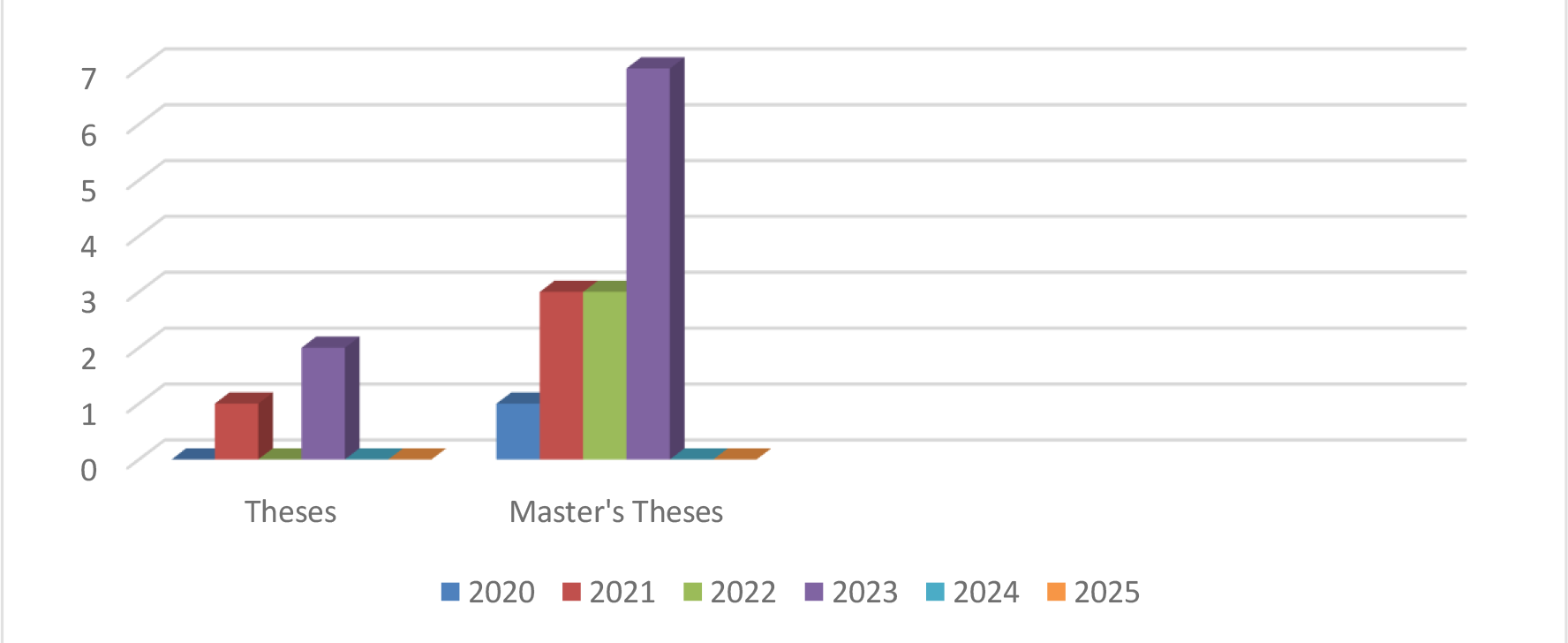
For this systematic review, based on the methodological steps outlined by Senra and Lourenço (2016), we selected 17 studies. Graph 1 shows the publication types of these analyzed studies, with 14 (82.36%) being dissertations and three (17.64%) being theses.

Of the 17 selected studies, despite the time frame spanning 2020 to 2025, we observed that the publication period covers the years 2020 to 2023. The year 2023 accounted for the highest number of publications, totaling nine works. In contrast, the years 2020, 2021, and 2022 had a reduced number of publications. We also note that, at the time of the search (July 2025), we did not find any publications directly related to the topic in question for the years 2024 and 2025. In Figure 2, we present the publications identified for each year.

The concentration of more than 50% of the sample in the year 2023 highlights a recent and growing academic interest in the topic, consolidating a field of research that gained momentum in the post-pandemic period. Having completed the temporal analysis, we sought to identify the geographic distribution of these works.
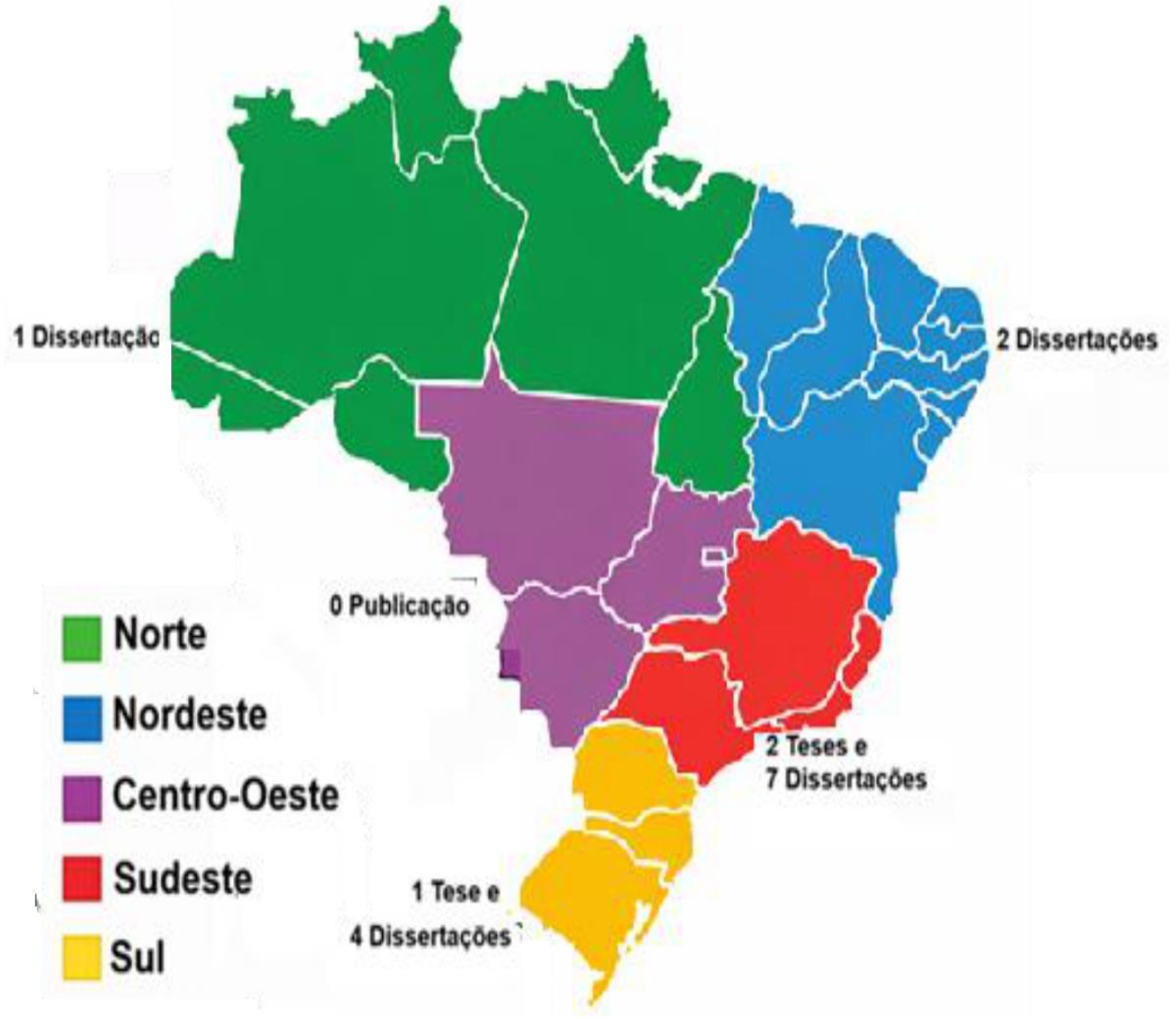
Regarding the location of the research, Figure 2 details the regions where the 17 works were developed. It is observed that the Southeast accounted for the largest volume of publications (nine studies), with the state of São Paulo standing out, having produced two theses and four dissertations, followed by Minas Gerais (two dissertations) and Rio de Janeiro (one dissertation). The South region accounted for five works, distributed among Paraná, with one thesis and two dissertations, and Rio Grande do Sul and Santa Catarina, both with one dissertation each. In the Northeast, two publications were identified, located in the states of Paraíba and Rio Grande do Norte. Finally, the North region recorded only one dissertation, while in the Midwest region, no published research on the topic was found.


There is a concentration of academic output in the Southeast, highlighting inequalities in the distribution of research, the consolidation of graduate programs, and access to scientific funding. This scenario indicates that the research agenda may be centered on specific regional realities, limiting the representation of the country’s other regions.
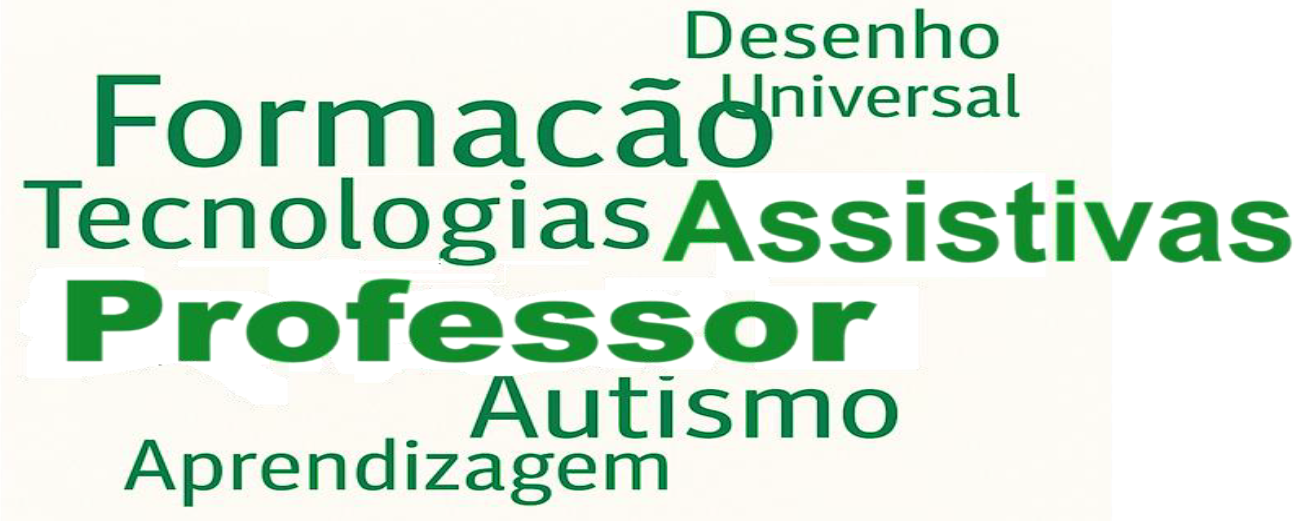
Following the bibliometric analysis, we identified the following as the most frequent keywords: “training,” “teacher,” “Assistive Technologies,” “Universal Design for Learning,” and “autism,” represented according to their frequency.
Finally, we categorized the scientific publications included in the study and organized them according to the themes addressed in each. Thus, we grouped them as shown in Table 2.
Based on the qualitative assessment conducted in stage nine and in line with the criteria defined in stage ten, we organized the three categories of analysis presented above, structured according to the themes addressed and the contributions identified in the works.
In this context, the lack of training mentioned in the analyzed works corroborates the findings of Moura, Wagner, and Reis (2025), who identify a gap between the theory of inclusive education and daily practice. The authors reiterate that, without training that addresses pedagogical mediation specific to ASD, the use of technological resources risks becoming mechanical, losing the potential to promote meaningful and autonomous learning.
b) Continuing education based on teachers’ perceptions for inclusive pedagogical practice
The first category, titled “Continuing education based on teachers’ perceptions for inclusive pedagogical practice,” brings together nine studies that highlight relevant initiatives focused on both initial and continuing education for teachers in regular classrooms and special education. These initiatives aim to strengthen inclusive pedagogical practices through the use of tools and products that contribute to the consolidation of a more accessible and equitable approach.
In examining the theoretical assumptions underlying this category, we identified nine studies, representing approximately 52.94% of the studies selected for this systematic review, namely: Andersen (2022), Andrade (2023), Fausto (2021), Gengo (2023), Lima (2021), Manenti (2021), Novôa (2023), Savioli (2023), and Sousa (2022). Fausto (2021) analyzed the effects of an online course on AT in the training of inclusive education teachers. He highlighted advances in digital literacy, improvements in the teaching of students with special needs, and the creation of an accessible virtual environment.
In Manenti’s (2021) study, he analyzes training in AT as part of the professional development of teachers in specialized educational services (AEE) in public schools in southern Santa Catarina, contributing to inclusion and the reduction of barriers in teaching. He also reveals that teachers value training in AT, although their understanding of assistive technology ( ) is limited, and they face difficulties in using resources, especially high-tech ones, highlighting a need for ongoing training to support AEE teachers in relation to assistive technology.
Lima (2021), in his doctoral thesis, points out shortcomings in teacher training for promoting remote education accessible to all, with a focus on visual impairment, and highlights the scarcity of specialists and the importance of the Inclusive Lectures Project in teacher training to make pedagogical practices more accessible and inclusive.
For Sousa (2022), his research highlighted the need to develop public policies for the training of teachers working with students with ASD, given that there is little training in augmentative and alternative communication (AAC) and low confidence in the school inclusion process among teachers, who demonstrate a certain level of insecurity when working with autistic students.
Andersen (2022) posits in his dissertation that training in AAC should integrate theory, practice, and the use of technologies, based on the experience of special education teachers. He further highlights that AAC promotes inclusion, autonomy, and equity and considers that knowledge and technological resources are essential for teacher training, with the aim of improving their pedagogical practice for teaching.
Andrade (2023) highlights, in her research, concerns regarding pedagogical practices that sometimes restrict students with disabilities from learning processes. Such exclusion is often related to the lack of adequate training for teachers regarding the use of AAC. In this context, the author points out that professional training combined with the effective use of these resources contributes significantly to promoting inclusion, improving the quality of teaching, and encouraging the adoption of accessible pedagogical practices by other teachers.
Novôa (2023) highlights how continuing teacher education on ASD can contribute to special education through the use of digital technologies. Based on this inquiry, she found that teachers, even in the face of challenges encountered in inclusive education, seek to participate in training programs with the aim of transforming their own pedagogical practice, reflecting on the real needs that students with autism present.
In his doctoral dissertation, Savioli (2023) shows that the established partnership and collaborative work among teachers expanded knowledge and contributed significantly to the development of TA, ensuring accessibility and autonomy, as well as promoting greater commitment and collaboration among peers.
Gengo (2023) reveals that the continuing professional development on the use of technologies offered by the school significantly contributed to a transformation in teachers’ classroom practices, in addition to providing opportunities for the exchange of knowledge and the sharing of successful experiences that value and focus on student learning.
In summary, the studies analyzed show that continuing education on assistive technology and inclusive education is essential for improving teaching practice. Studies such as those by Andersen (2022), Fausto (2021), and Manenti (2021) indicate that training programs that integrate theory, practice, and the use of technologies foster inclusion, promote autonomy, and improve learning, especially in special education. Lima (2021) and Sousa (2022) highlight shortcomings in teacher training, the shortage of specialists, and the need for public policies targeting teachers who work with students with visual impairments and autism. Meanwhile, Andrade (2023), Gengo (2023), Novôa (2023), and Savioli (2023) emphasize that professional development and collaborative work contribute to more accessible practices, encourage the use of digital resources, and strengthen pedagogical transformation. Collectively, the studies demonstrate that meaningful training positively impacts school inclusion.
c) The Use of AT in Inclusive Teaching Practice
The second category, titled “The use of Assistive Technology in inclusive teaching practice,” includes six studies that present concrete evidence of its application in everyday school life. The studies indicate that the use of AT has proven fundamental for rethinking pedagogical practices, contributing to the development of more accessible curricula through the creation of resources, tools, and materials suitable for teaching all students.
In this category, we found that the six selected studies account for 35.29%; among them are the works by Angelo (2023), Domingos (2023), Fardim (2023), Moraes (2022), and Silva (2023).
In Freitas’s (2020) study, strategies are proposed to expand the use of AT by teachers in basic and technical education, resulting in a supplementary booklet to serve a broader audience. The data show that AT is a relevant tool in the learning process of students with disabilities and reinforce the importance of continuous and accessible training for teachers.
Moraes (2023), in his research, shows that there are weaknesses in teacher training on AT, from initial to continuing education. As a contribution, he proposed an interactive e-book for AEE teachers, focusing on understanding the structure of the continuing education course on AT. The material includes links and QR codes for supplementary content and recommends the use of Google Classroom as a virtual support environment.
Angelo (2023), through his research, identifies that teachers still associate the use of AT exclusively with students in special education. The results, however, show that the DUA helps broaden this understanding by promoting access and learning for all students, regardless of their conditions. As an educational product, the author developed an e-book featuring an interactive structure with hypertext, links, audio, videos, and images, allowing for non-linear reading. This resource is geared toward teacher training, with a focus on the integration of DUA and AT as strategies for promoting inclusive education.
Domingos (2023), in her research, notes an increase in the use of AT in regular classrooms, but also highlights complexities such as a lack of training, support, and time. She highlights collaboration between teachers and families as fundamental to the educational process. As a result, she develops a training plan based on the perceptions and practices of the participating teachers, as well as on the researcher’s observations, in line with the study’s theme and objectives. The proposal is geared toward teachers’ direct work with PAEE students, seeking to explore possibilities for intervention in the investigated context. The plan can be implemented in person or remotely, using the Google Meet video platform, with the use of assistive technology as a resource to foster inclusive teaching practices.
Silva (2023) identifies the interest of special education teachers in continuing education in assistive technology. The study developed a teaching guide titled “Instructional Design: Training for Inclusive Practice,” which offers assistive technology strategies and resources specifically tailored to students with low vision. In addition to encouraging the use of technologies in everyday school life, the product includes an interactive blog for knowledge sharing, aiming to improve teaching practice and stimulate the creation of new materials that promote learning.
Fardim’s (2023) research analyzes how teachers can stimulate communication in children with ASD using playful approaches and low-cost assistive technology. It highlights the feasibility of these tools in school inclusion and the need for teacher training. Ultimately, the result was an educational e-book, offering guidance on the use of new technologies-particularly low-cost ones-to support teachers working with students with disabilities.
In this context, the studies grouped in this category reinforce that the use of AT, combined with continuing education, plays a key role in enhancing inclusive pedagogical practices. The educational products developed-such as workbooks, teaching guides, training plans, and e-books-demonstrate the researchers’ commitment to translating scientific knowledge into accessible training initiatives, promoting inclusion through viable, contextualized resources applicable to the school setting.
d) Technologies as a support for the learning of students with learning disabilities
In the final category, titled “Technologies as support for the learning of students with learning disabilities,” only two studies addressed research analyzing the implementation of technologies in instructional planning and practice. These studies account for approximately 11.77% of the studies selected for this category. Among these studies are the investigations by Rosa (2021) and Vaz (2021).
Rosa (2021), in her review of theses and dissertations, identifies progress in publications related to the use of Digital Information and Communication Technologies (DICT) in the education of students with learning disabilities, especially following the enactment of the Statute of Persons with Disabilities. She notes, however, a decline in publications in 2020 due to the COVID-19 pandemic. The author emphasizes the need to expand research that integrates neuroscience, DICT, assistive technology (AT), and learning disabilities to support more effective and inclusive pedagogical practices.
Vaz’s (2021) research highlights challenges in inclusive special education, emphasizing the importance of teacher training and the use of AAC to support communication for children with speech difficulties. It underscores the need for trained professionals and inclusive educational environments aligned with current legislation.
Based on the studies analyzed, it is concluded that advances in research on TDIC, AAC, and LD reveal a growing interest in more inclusive pedagogical practices, especially in serving students with learning disabilities. There are still, however, significant gaps related to teacher training and the integration of theory and practice. It is urgent to invest in continuing education and public policies that encourage the development of inclusive environments.
In summary, the results of the studies in this category indicate that the use of these resources has proven effective in facilitating communication for students with learning disorders, with AAC standing out in particular as the most frequently used AT. Both studies demonstrated significant advances in children’s learning, reaffirming the importance of this resource in the context of inclusive education.
For a better understanding of the results obtained in this study, it is necessary to revisit the guiding question of the research: how do Brazilian scientific publications address the use of AT in teacher training? Based on this line of inquiry, the main findings indicate that continuing teacher education, linked to the use of AT, constitutes a fundamental element for qualifying, innovating, and strengthening inclusive pedagogical practices. This convergence between the findings of this review and the recent studies by Rosa, Silva, and Azevedo (2025) confirms that teacher training cannot be an isolated or merely prescriptive event, but rather an ongoing process built “within” the school context.
The integration of theory, practice, and technological resources has proven effective, especially in the context of special education, with AAC standing out as one of the main assistive tools for improving communication among students with ASD. As Nóvoa (2009) points out, feedback regarding teacher training is what allows AT resources and the principles of DUA to cease being merely abstract concepts and begin serving as effective mediators of learning. By recognizing the teacher as an active agent, in-service training enables the selection and adaptation of AT to be guided by the unique characteristics of each student, in accordance with the need for high predictability and visual support, transforming pedagogical practice into an exercise in investigation and response to barriers to inclusion.
The analyzed studies also highlight the urgency of public policies and accessible training initiatives, expressed through educational products such as workbooks and e-books. Such products embody the need for reflective and collaborative training, advocated by Rosa, Silva, and Azevedo (2025) as essential for bridging the gap between what is researched in academia and what actually reaches the daily reality of ordinary classrooms.
It is worth noting that, among the studies reviewed, only one presented the principles and guidelines of the DUA in a systematic manner. This gap reinforces the importance of training models that, in line with Nóvoa’s (2009) perspective, value the collective dimension of teaching work. This perspective invites teachers to rethink their classroom practice, especially during planning and when selecting or adapting teaching aids-whether lowor high-cost-while considering the unique characteristics of all students.
This research analyzed 17 studies published between 2020 and 2025, which identified, via the CAPES Catalog, a decline in output beginning in 2023. This gap contrasts with the growing demand in schools for support for neurodivergent students, requiring teachers and researchers to integrate teaching, research, and extension to enhance contemporary educational responses. Building an inclusive school requires professionals committed to recognizing the student as an active agent. In this sense, it is up to teacher-training institutions to promote spaces for scientific initiation that foster a critical and ethical view of education. Thus, academic research establishes itself as an instrument for transforming teaching practice in favor of a democratic and accessible school environment.
How to cite this article (ABNT):
Ad hoc reviewers:
Data availability:
The research data are available in the body of the document.
References
- ANDERSEN, A. C. S. Uma proposta de formação continuada para professores da educação especial com ênfase na comunicação aumentativa e alternativa 2022. Dissertação (Mestrado Profissional em Educação: Teoria e Prática de Ensino) - Programa de Pós-Graduação em Educação: Teoria e Prática de Ensino, Universidade Federal do Paraná, Curitiba, 2022.
- ANDRADE, R. D. Práticas pedagógicas com auxílio da Tecnologia Assistiva: um estudo com professores da educação básica numa escola do Semiárido Potiguar. 2023. Dissertação (Mestrado em Ensino) - Programa de Pós-Graduação em Ensino, Universidade do Estado do Rio Grande do Norte, Mossoró, 2023.
- ANGELO, F. M. A Tecnologia Assistiva no âmbito da educação inclusiva: aproximação com as diretrizes do desenho universal para aprendizagem. 2023. Dissertação (Mestrado Profissional em Docência e Gestão Educacional) - Programa de Pós-Graduação em Docência e Gestão Educacional, Universidade Municipal de São Caetano do Sul, São Caetano do Sul, 2023.
- BERSCH, R. Introdução à tecnologia assistiva Porto Alegre: Assistiva/Tecnologia da Educação, 2017.
- BRASIL. Censo Escolar de 2022 Brasília, DF: Inep, 2023.
- BRASIL. Constituição de 1988. Constituição da República Federativa do Brasil. Diário Oficial [da] República Federativa do Brasil, Poder Executivo, Brasília, DF, 5 out. 1988.
- BRASIL. Lei nº 13.146, de 6 de julho de 2015. Institui a Lei Brasileira de Inclusão da Pessoa com Deficiência (Estatuto da Pessoa com Deficiência). Diário Oficial [da] República Federativa do Brasil, Poder Executivo, Brasília, DF, 7 jul. 2015.
- BRASIL. Política nacional de educação especial na perspectiva da educação inclusiva Brasília, DF: Ministério da Educação, 2008.
-
CAST. Universal Design for Learning: Guidelines version 2.2, 2020. Disponível em: https://udlguidelines.cast.org Acesso em: 11 maio 2025.
» https://udlguidelines.cast.org - CAT. Ata da Reunião VII, de dezembro de 2007 Curitiba: Corde, 2007.
- DINIZ, D. O que é deficiência? São Paulo: Brasiliense, 2007.
- DOMINGOS, A. C. P. A. Uso da Tecnologia Assistiva na sala regular para a educação inclusiva 2023. Dissertação (Mestrado Profissional em Educação) - Programa de Pós-Graduação em Educação, Universidade de Taubaté, Taubaté, 2023.
- FARDIM, C. M. O uso de tecnologias assistivas na educação infantil como ferramenta para a promoção da comunicação em crianças com transtorno do espectro autista 2023. Dissertação (Mestrado Profissional em Novas Tecnologias Digitais na Educação) - Programa de Pós-Graduação em Novas Tecnologias Digitais na Educação, Centro Universitário Carioca, Rio de Janeiro, 2023.
- FAUSTO, I. R. S. A infobetização dos profissionais da educação para o uso das Tecnologias Assistivas em sala de aula: uma abordagem formativa. 2021. Dissertação (Mestrado Profissional em Educação Escolar) - Programa de Pós-Graduação em Educação Escolar, Universidade Federal de Rondônia, Porto Velho, 2021.
- FREIRE, P. Pedagogia do oprimido 17. ed. Rio de Janeiro: Paz e Terra, 1987.
- FREITAS, R. Q. A importância da tecnologia assistiva na autonomia escolar de pessoas com deficiência 2020. Dissertação (Mestrado Profissional em Educação Profissional e Tecnológica) - Programa de Pós-Graduação em Educação Profissional e Tecnológica, Instituto Federal de Educação, Ciência e Tecnologia da Paraíba, João Pessoa, 2020.
- GENGO, P. L. G. O. Ação docente, formação em serviço e metodologias ativas com o uso das TDIC em tempos de pandemia 2023. Dissertação (Mestrado Profissional em Educação: Currículo) - Programa de Pós-Graduação em Educação: Currículo, Pontifícia Universidade Católica de São Paulo, São Paulo, 2023.
- LAKATOS, E. M.; MARCONI, M. A. Fundamentos de metodologia científica 5. ed. São Paulo: Atlas, 2003.
- LEMOS, A.; CUNHA, P. (org.). Olhares sobre a cibercultura Porto Alegre: Sulina, 2002.
- LIMA, E. C. A formação de professores para a educação inclusiva e a contribuição da área de educação inclusiva da Fundação Dorina Nowill para Cego 2021. Tese (Doutorado em Educação) - Programa de Pós-Graduação em Educação, Pontifícia Universidade Católica de São Paulo, São Paulo, 2021.
- MANENTI, D. S. Tecnologia Assistiva e a formação continuada dos docentes do Atendimento Educacional Especializado Dissertação (Mestrado em Tecnologias da Informação e Comunicação) - Programa de Pós-Graduação em Tecnologias da Informação e Comunicação, Universidade Federal de Santa Catarina. Florianópolis, 2021.
- MORAES, M. R. Tecnologia Assistiva como recurso pedagógico: concepções dos docentes das salas de recursos multifuncionais. 2022. Dissertação (Mestrado Profissional em Educação Inclusiva) - Programa de Pós-Graduação em Educação Inclusiva, Universidade Estadual do Paraná, Presidente Prudente, 2022.
-
MOURA, D.; WAGNER, F.; REIS, E. S. R. O segundo professor e a aprendizagem de estudantes com Transtorno do Espectro Autista. Educação & Formação, Fortaleza, v. 10, e15476, 2025. DOI: https://orcid.org/10.25053/redufor.v10.e15476 Disponível em: https://revistas.uece.br/index.php/redufor/article/view/15476 Acesso em: 19 mar. 2026.
» https://orcid.org/10.25053/redufor.v10.e15476» https://revistas.uece.br/index.php/redufor/article/view/15476 - NÓVOA, A. Professores: imagens do futuro presente. Lisboa: Educa, 2009.
- NOVÔA, J. Formação continuada para professores e tecnologias digitais: um olhar na ação pedagógica do atendimento educacional com ênfase no autismo. 2023. Tese (Doutorado em Educação) - Programa de Pós-Graduação em Educação, Universidade Federal do Paraná, Curitiba, 2023.
- PRAIS, J. L. S. Formação de professores para o desenvolvimento de práxis inclusivas baseadas no Desenho Universal para a Aprendizagem: uma pesquisa colaborativa. Tese (Doutorado em Educação) - Programa de Pós-Graduação em Educação, Universidade Estadual de Londrina, Londrina, 2020.
-
PRAIS, J. L. S.; ROSA, V. F. Organização da atividade de ensino a partir do Desenho Universal de Aprendizagem: das intenções às práticas inclusiv as. Revista Polyphonía, Goiânia, v. 25, n. 2, p. 359-374, 2014. Disponível em: http://www.revistas.ufg.br/index.php/sv/article/view/38148/19305 Acesso em: 20 jul. 2025.
» http://www.revistas.ufg.br/index.php/sv/article/view/38148/19305 -
ROSA, K. N. S.; SILVA, C. C. C.; AZEVEDO, F. M. O. Formação continuada de professores e Educação Especial: a elaboração do Estado da Questão. Educação & Formação, Fortaleza, v. 10, e14831, 2025. DOI: https://orcid.org/0009-0008-8649-7711 Disponível em: https://revistas.uece.br/index.php/redufor/article/view/e14831 Acesso em: 18 mar. 2026.
» https://orcid.org/0009-0008-8649-7711» https://revistas.uece.br/index.php/redufor/article/view/e14831 - ROSA, R. V. As tecnologias digitais e a neurociência inclusiva em favor do processo de aprendizagem de pessoas com transtornos de aprendizagem: uma revisão de teses e dissertações. 2021. Dissertação (Mestrado em Educação Tecnológica) - Programa de Pós-Graduação em Educação Tecnológica, Centro Federal de Educação Tecnológica de Minas Gerais, Belo Horizonte, 2021.
- SAVIOLI, M. D.C. Formação docente por meio da aprendizagem baseada em projetos: a construção de tecnologia assistiva para a inclusão dos estudantes público-alvo da educação especial. 2023. Tese (Doutorado em Educação) - Programa de Pós-Graduação em Educação, Universidade do Oeste Paulista, Presidente Prudente, 2023.
-
SEBASTIÁN-HEREDERO, E. Diretrizes para o Desenho Universal para a Aprendizagem (DUA). Revista Brasileira de Educação Especial, Bauru, v. 26, n. 4, p. 733-768, 2020. Disponível em: https://www.scielo.br/j/rbee/a/F5g6rWB3wTZwyBN4LpLgv5C/?format=pdf⟨=pt Acesso em: 16 jun. 2025.
» https://www.scielo.br/j/rbee/a/F5g6rWB3wTZwyBN4LpLgv5C/?format=pdf⟨=pt - SENRA, L. X.; LOURENÇO, L. M. A importância da revisão sistemática na pesquisa científica. In: BAPTISTA, M. N.; CAMPOS, D. C. Metodologias de pesquisas em Ciências: análises quantitativas e qualitativas. 2. ed. Rio de Janeiro: LTC, 2016.
- SILVA, F. C. F. Formação do professor de apoio para uso de Tecnologias Assistivas 2023. Dissertação (Mestrado Profissional em Educação) - Programa de Pós-Graduação em Educação, Universidade Federal de Lavras, Lavras, 2023.
- SOARES, F. C. Pesquisa-ação e inclusão nos caminhos formativos de professores das salas de recursos multifuncionais: instrumentalização teórica e prática no atendimento ao estudante com Transtorno do Espectro Autista. 2024. Dissertação (Mestrado Profissional em Educação Tecnológica) - Programa de Pós-Graduação em Educação Tecnológica, Instituto Federal do Triângulo Mineiro, Uberaba, 2024.
- UNESCO. Declaração de Salamanca sobre princípios, políticas e práticas na área das necessidades educativas especiais Paris: Unesco, 1994.
- SOUSA, R. N. Percepção dos professores sobre a comunicação alternativa aumentativa com os estudantes com transtornos do espectro autista 2022. Dissertação (Mestrado em Educação) - Programa de Pós-Graduação em Educação, Universidade Ibirapuera, São Paulo, 2022.
- VAZ, C. Desafios na implementação da Comunicação Aumentativa e Alternativa para crianças com Transtorno do Espectro do Autismo na educação infantil da Rede Municipal de Educação do município de Esteio/RS 2021. Dissertação (Mestrado Profissional em Informática a Educação) - Programa de Pós-Graduação em Informática a Educação, Instituto Federal de Educação, Ciência e Tecnologia do Rio Grande do Sul, Bento Gonçalves, 2021.

 Source: Author’s own work (2025), based on
  Source: Author’s own work (2025).
 Source: Author’s own work (2025).
 Source: Author’s own work (2025).
 Source: Prepared by the authors (2025) using the WordArt® tool.