 Pharmacokinetics/pharmacodynamics study of different doses of tramadol in goats (Capra hircus) for the control of post-surgical pain
ABSTRACT:
We compared the analgesic efficacy and pharmacokinetics of 2 and 4 mg·kg-1 tramadol in goats undergoing surgical castration. Twenty-two adult goats were randomly assigned to three premedication groups: six animals received 2 mg·kg-1 of tramadol, eight received 4 mg·kg-1, and the control group consisted of eight animals that received 5 mL of saline solution intravenously. Analgesia was evaluated using the Adami pain scale. Rescue analgesia (2 mg·kg-1 ketoprofen) was intravenously administered. Venous blood samples were collected from all groups to determine the drug pharmacokinetics at 0, 5, 15, 30, and 45 minutes, and at 1, 2, 4, 6, 7, 8, 9, 10, 12, 16, and 24 h. Analysis of variance was used (P < 0.05) for statistical analyses. Overall, animals treated with tramadol exhibited lower pain scores than those in the control group, indicating that tramadol undergoes rapid metabolization and clearance. Pharmacodynamic and pharmacokinetic assessments demonstrated that 2 and 4 mg·kg-1 tramadol were effective in relieving pain in goats undergoing castration and should be administered every 6 (half-life = 2.71 ± 0.38 h) and 8 (half-life = 3.75 ± 0.36 h) hours, respectively. These data serve as a basis for further research into analgesic use and provide information on prescribing tramadol in ruminants.
Key words:
analgesia; small ruminants; opioids; pain
RESUMO:
Comparou-se a eficácia analgésica e a farmacocinética do tramadol nas doses 2 e 4 mg·kg-1 em caprinos submetidos à castração cirúrgica. Vinte e dois caprinos adultos foram distribuídos aleatoriamente em três grupos de pré-medicação: seis animais receberam 2 mg·kg-1 de tramadol, oito receberam 4 mg·kg-1 e, no grupo controle, oito receberam 5 mL de solução salina, por via intravenosa. A analgesia foi avaliada pela escala de dor de Adami. Analgesia de resgate (2 mg·kg-1 de cetoprofeno) foi administrada por via intravenosa. Amostras de sangue venoso foram coletadas de todos os grupos para determinar a farmacocinética do tramadol em 0, 5, 15, 30 e 45 minutos e em 1, 2, 4, 6, 7, 8, 9, 10, 12, 16 e 24 horas. Para análise estatística, a análise de variância foi utilizada (P < 0,05). No geral, os animais tratados com tramadol apresentaram escores de dor mais baixos do que aqueles no grupo controle, com tramadol mostrando rápida metabolização e eliminação. Avaliações farmacodinâmicas e farmacocinéticas demonstraram que 2 e 4 mg·kg-1 de tramadol foram eficazes no alívio da dor em caprinos submetidos à castração e devem ser administrados a cada 6 (meia-vida = 2,71 ± 0,38 horas) e 8 (meia-vida = 3,75 ± 0,36 horas) horas, respectivamente. Esses dados servem como base para pesquisas futuras sobre o uso de analgésicos e fornecem informações sobre a prescrição de tramadol em ruminantes.
Palavras-chave:
analgesia; dor; pequenos ruminantes; opioides
INTRODUCTION
Tramadol hydrochloride is a centrally acting analgesic considered an atypical opioid due to its dual mechanism of action: weak interaction with µ (MOP) opioid receptors and inhibition of norepinephrine and serotonin reuptake (HABIBIAN et al., 2011). Therefore, it can block impulses in the spinal cord through a mixed action. It differs from other opioid agonists by promoting few cardiorespiratory changes, constipation, or sedation. It is commonly prescribed for the treatment of mild to moderate pain, showing analgesic action for somatic and visceral pain (BALLANTYNE, 1998; BLOOR et al., 2012; RUEL et al., 2019). In humans, clinical analgesia is observed at tramadol plasma concentrations between 100 and 300 ng·mL-1 when dosed eight hourly (CURTICAPEAN et al., 2008).
The use of tramadol in small animals has been described for different routes of administration, doses, and clinical and experimental indications, producing significant analgesia associated with stable hemodynamic and cardiorespiratory parameters in these species (CURTICAPEAN et al., 2008). Despite knowledge about the analgesic effects and safety of tramadol, its use in production animals remains poorly reported because few studies have determined the appropriate analgesic dose and efficacy of the drug in these animals (SOUSA et al., 2008; HABIBIAN et al., 2011; AJADI et al., 2012; DEHKORDI et al., 2012; BORTOLAMI et al., 2015; MOUTA et al., 2021). In sheep, the pharmacokinetic and nociceptive effects of tramadol and O-desmethyltramadol (M1) following intravenous administration have been described at doses of 4 and 6 mg·kg-1. Tramadol and M1 plasma levels decreased rapidly in the systemic circulation, with both being undetectable after 6 h following drug administration. Side effects were noticed in all animals in the dose of 6 mg·kg-1 and in four animals in the 4 mg·kg-1 dose. These included tremors, muscle fasciculation, ataxia, agitation, urination, and defecation, lasting for a maximum of 10 min. The authors concluded that despite tramadol and M1 concentrations in plasma were above the human minimum analgesic concentration after both treatments, no mechanical antinociceptive effects of tramadol were reported (BORTOLAMI et al., 2015).
The use of tramadol in goats has been reported in experimental studies in which the drug was administered via the epidural route, demonstrating prolonged analgesic activity without adverse effects (AJADI et al., 2012; DEHKORDI et al., 2012). It is therefore a treatment option for postoperative pain in surgical cases and varied clinical situations that culminate in pain in this species (AJADI et al., 2012; DEHKORDI et al., 2012). However, its systemic analgesic efficacy in goats has not yet been established. In a study that investigated absolute bioavailability of tramadol in goats after intravenous and oral administration at a dose of 2 mg·kg-1, tramadol and its metabolites showed insufficient plasma concentrations to induce analgesia when administered orally. In contrast, following intravenous administration, concentrations above 100 ng·ml-1 were observed but only for a short period (SOUSA et al., 2008). The authors suggested doubling the dose to ensure achieving and maintaining analgesic concentrations despite the lack of clinical study data.
The pharmacokinetics and pharmacodynamics are very important areas in pharmacology. The pharmacokinetics provides a valuable insight into the biologic behavior of medications, refers to the path that the drug takes in the body, encompassing the processes of absorption, distribution, metabolism, and excretion, while the pharmacodynamics is the study of how the drug affects the body, deals with the biological effects and mechanism of action of the drug (CURRIE, 2018). Researching both areas in a study on goats can provide relevant information regarding the dose regimen, administration intervals, analgesics and adverse effects, since there are not many studies on ruminants.
Considering the aforementioned findings, we hypothesized that tramadol induces analgesia at therapeutic plasma concentrations in goats following doses of 2 and 4 mg·kg-1. The doses used were based on the study by SOUSA et al. (2008). To this end, this study compared the analgesic efficacy and pharmacokinetic profile of 2 and 4 mg·kg-1 of tramadol in goats undergoing surgical castration.
MATERIALS AND METHODS
Twenty-two adult male goats (Capra hircus), weighing an average of 40 kg, with no defined breed and considered healthy by physical evaluation, were enrolled. Complementary complete blood count and biochemical evaluation of renal and hepatic function were performed. The selection of the group of animals for the study was based on convenience, focusing on individuals with specific health, age, weight, and body height characteristics to form homogeneous groups, facilitating an accurate analysis of the studied effects and minimizing confounding variables. Sample size was determined to optimize pharmacodynamic and pharmacokinetic analyses. The pharmacokinetic parameters evaluated had very large effect sizes (Cohen’s d > 2.8), with statistical power exceeding 99% even with the small sample sizes of 6 to 8 animals per group. The estimated sample size required to detect such differences with 80% power ranged from 2 to 10 animals, confirming the robustness of the pharmacokinetic findings. The owner of the animals signed informed consent forms to have them participate in the study. All the animals came from the same owner, i.e. the same property. Even so, they were acclimatized 30 days before the study to minimize significant changes in management and avoid interfering with the research.
The goats had restricted access to food and water for 24 and 12 h, respectively, before beginning the experiment and, subsequently provided food and water 4 h after treatment administration. The animals were randomly distributed into three experimental groups in a double-blind manner: Group 2 mg - six goats received tramadol intravenously, at a dose of 2 mg·kg−1; Group 4 mg - eight animals received tramadol at a dose of 4 mg·kg-1 by the same route; and Control Group - eight animals received 5 mL of 0.9% NaCl, also intravenously. In all groups, the treatment was diluted by a third party in a 0.9% NaCl solution until a total volume of 5 mL was reached, so that the evaluator was unaware of the treatment being used.
After 30 minutes of treatment, 7 mg·kg-1 lidocaine without a vasoconstrictor was administered subcutaneously along the spermatic cord and in the distal portion of the scrotal sac. After 10 min, the goats underwent an orchiectomy. All surgical procedures were performed using the same technique and by the same surgeon in approximately 10 min. The goats received 30.000 IU·kg-1 penicillin intramuscularly in the immediate postoperative period and 48 h later.
Pharmacodynamic assessment
Immediately after surgery, the animals were evaluated using the pain scale developed for goats by ADAMI et al. (2011). The pain scale (Table 1) included the following categories: numerical rating scale (NRS), general behavior, interactive behavior, and physiological parameters [heart rate (HR) and respiratory rate (RR), both by auscultation]. For the NRS, the observer estimated the degree of pain by assigning a score ranging from 0 to 3, with 0 representing no pain and 3 representing severe pain.
General behavior was assessed using a binary system, observing the presence or lack of the following behaviors: abnormal posture, frequent changes in posture, vocalization, teeth grinding, facial expressions of experiencing pain with fixed ears, lethargy, or depression. A score of 1 was assigned to each of the present behaviors. When no behavior was observed, the score was 0.
For interactive behavior, 0 indicated normal behavior and a score of 3 indicated the most significant behavioral change (0 = alert and responsive; 1 = approaches after two calls; 2 = approaches after four calls; 3 = no reaction, does not approach when called, or is aggressive). For physiological parameters, 0 meant no or minimal changes in HR and RR (changes < 10% of baseline), 1 indicated an increase of 11-30% in baseline parameter values, 2 represented an increase of 31 - 50%, and 3 meant an increase of more than 50% compared with pretreatment values. The sum of the scores from these three categories was defined as the total pain score. Ketoprofen 2 mg·kg-1 was administered intravenously as rescue analgesia if the animals had a total pain score ≥8.
Evaluations were performed from the immediate postoperative period until 24 h after treatment administration (1 (immediately after surgery), 2, 4, 6, 7, 8, 9, 10, 12, 16, and 24 h after administration of tramadol or 0.9% NaCl). All evaluations were performed by the same observer who was not aware of the treatment administered.
Statistical pharmacodynamic analysis
The data had a normal distribution (Shapiro-Wilk test) and are expressed as mean and standard deviation, evaluated using SigmaPlot version 12.0. After analyzing the parametric assumptions, the data underwent a logarithmic transformation, and differences between and within groups were determined by analysis of variance (two-way ANOVA) followed by the Tukey test. Statistical significance was set at P < 0.05. Data collected after the animals received the rescue treatment was excluded from the statistical analyses.
Analytical method and pharmacokinetic analysis
Blood samples (3 mL) were collected from all animals to determine the plasma concentrations of tramadol and the pharmacokinetic variables. Each sample was packed in tubes containing ethylenediaminetetraacetic acid (EDTA) and centrifuged at 2000 g for 10 min to obtain plasma, which was kept at -80 ºC for further analysis. Prior to blood sampling, the skin on the jugular vein of each animal was cleaned and an 18G-calibre catheter coupled to a 3-way tap was inserted. Blood samples were collected at time 0 (before tramadol administration), 5, 15, 30, and 45 min, and 1, 2, 4, 6, 7, 8, 9, 10, 12, 16, and 24 h after administration.
Plasma tramadol concentrations were analyzed using a high-performance liquid chromatography system (Varian ProStar model HPLC; Varian, USA), including a quaternary pump (ProStar model 240), autoinjector (ProStar model 410), PDA variable wavelength detector (ProStar model 335), and a thermostated two-column compartment.
The analytical method used was based on a previous study SOUSA et al. (2008), with modifications made to suit the conditions of our laboratory equipment, and validated based on the criteria described by the International Conference on Harmonization (ICH, Q8R1).
Chromatographic separations were performed using an ACE C18 column (150 mm × 4.6 mm, 5 µm, ECA, USA) coupled to an RP ACE C-18 pre-column (4 mm × 4.6 mm, 5 µm, ECA, USA) (Columbia, MD, USA) maintained at room temperature (25 ºC). The samples were eluted using isocratic conditions with a mobile phase of 0.015 M phosphate buffer and acetonitrile (82:18) at pH 3 (adjusted using phosphoric acid). The mobile phase flow rate was 1.5 mL/min, with an injection volume of 20 µL. The ultraviolet detector was set to a fixed wavelength of 220 nm. Chromatogram scans were performed in the 200-400 nm spectral region. Secnidazole (10 µg/mL) was used as an internal standard. The integration of the peak area and internal pattern was performed using the Galaxie Chromatography Data System software version 1.9.302.530. This software allowed us to analyze the purity of the peaks by calculating the similarity index between the drug present in the standard solution and that in the collected samples.
The plasma was thawed naturally and vortexed before drug extraction. Next, liquid-liquid extraction was performed in which 50 µL of secnidazole solution and 100 µL of 0.25 M sodium hydroxide solution were added to 500 µL of plasma and vortexed for 30 s. Subsequently, 3 mL of tert-Butyl methyl ether was added and centrifuged at 2500 g, at 4 °C, for 10 min, removing the organic phase, which was placed in a water bath (40 ºC) and dried with nitrogen gas. The sample was then reconstituted with 250 µL of the mobile phase, filtered through 0.45 µm pore size nylon membranes, and injected into the HPLC system.
After processing all the samples, the data was analyzed using a non-compartmental model. Analysis was performed using pharmacokinetic evaluation software (WinNolin 6.3 and PKSolver), with the Gauss-Newton method, to determine the model as the best-suited for tramadol compared to the non-compartmental, one-and-two-compartment models. The plasma concentration extrapolated to time zero (C0p) was obtained directly from the data. The distribution volume was calculated by dividing the amount of tramadol injected by the plasma concentration of tramadol. Half-life (t½) was determined using the formula 0.693/Ke. The clearance was calculated using the formula Cl = k. Vd/t½. The bioavailability (AUC0-t) was obtained using the trapezoidal rule.
Statistical pharmacokinetic analysis
ANOVA was performed after transforming the data into logarithmic values (ln). The 95% confidence intervals (CI) were calculated using the variance of error (S2) obtained from the analysis of variance.
RESULTS
The administration of tramadol at either dose did not result in any adverse effects. Physiological parameters of the animals were maintained.
Table 2 shows the median and minimum-maximum values of the pain scores of goats in the three groups: control, 2 mg·kg-1, and 4 mg·kg-1, and Table 3 presents the elapsed time, in hours, between treatment administration and rescue dosing in the different groups.
Number of animals that received rescue analgesia at each time in the three groups: control (n = 8), 2 mg·kg-1 (n = 6), and 4 mg·kg-1 (n = 8).
The pain scores in animals treated with the opioid were lower, especially in the immediate postoperative period, and rescue medication was required later than in the control group. On average, the control group received rescue analgesia for 2.8 ± 1.8 hours, and tramadol provided analgesia for 6.7 ± 1.8 hours and 8.0 ± 3.7 hours after treatment at doses of 2 and 4 mg·kg-1, respectively (Table 2, Table 3 and Table 4).
Mean and standard deviation (SD) values of the time elapsed between the administration of treatments and the administration of rescue medication in the three groups: control (n = 8), 2 mg·kg-1 (n = 6), and 4 mg·kg-1 (n = 8).
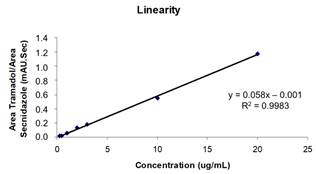
The method used to determine tramadol concentrations in goat plasma demonstrated linearity, showing a correlation coefficient (R2) of 0.9983 with an equation of the line of y = 0.058 x - 0.001 (Figure 1). Precision and accuracy were determined at three concentrations: high (20 µg·mL-1), intermediate (2 µg·mL-1), and low (0.25 µg·mL-1) (Table 5 and Table 6). The deviations (%) obtained were within the limits of Brazilian legislation and the ICH. The experimental conditions allowed us to recover 97.79% of tramadol and secnidazole.

Accuracy results for high (20 µg·mL-1), intermediate (2 µg·mL-1), and low (0.25 µg·mL-1) concentrations of tramadol obtained using HPLC.
Accuracy results for high (20 µg·mL-1), intermediate (2 µg·mL-1), and low (0.25 µg·mL-1) concentrations of tramadol obtained using high-performance liquid chromatography.
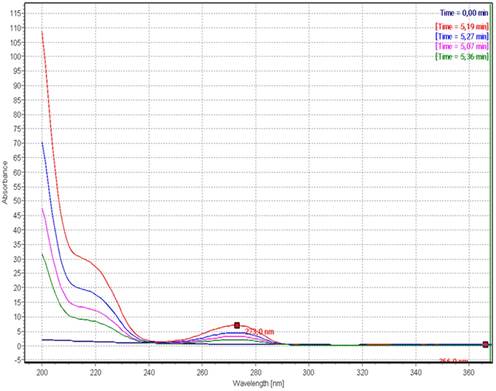
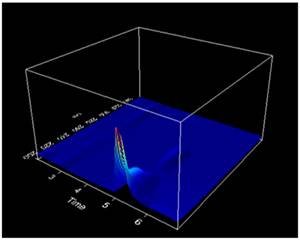
Regarding selectivity, the spectra obtained at the four peak points in the tramadol chromatograms were similar (Figure 2). A peak purity of 999.4 was observed when the similarity index of tramadol in plasma and tramadol in the standard library was calculated. Further, tramadol absorption was verified using three-dimensional vision without interference (Figure 3). Using this technique, tramadol and the internal standard secnidazole were eluted with 5 and 2.7 min, respectively, with a quantification limit of 0.25 µg·mL-1.

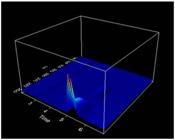
Three-dimensional visualization of the tramadol spectrum in goat plasma, demonstrating no interference from other components of the biological matrix.
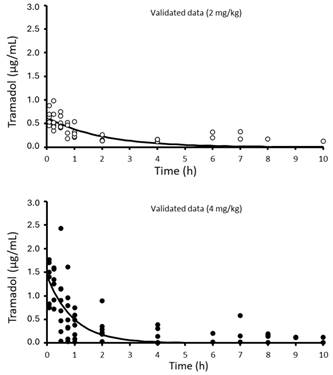
The non-compartmental model best described the plasma concentrations of tramadol at both doses. Figure 4 presents the distribution of tramadol concentrations over time, following a non-compartmental model, for of the 2 and 4 mg·kg-1 doses. Table 7 shows the pharmacokinetic parameters (mean ± standard error) of tramadol in goats administered at doses of 2 and 4 mg·kg-1. There was a significant difference in the dose-dependent pharmacokinetic variables between both groups.
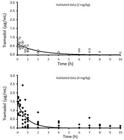
Distribution of tramadol concentrations over time, following the non-compartmental model, for doses of 2 and 4 mg·kg-1.
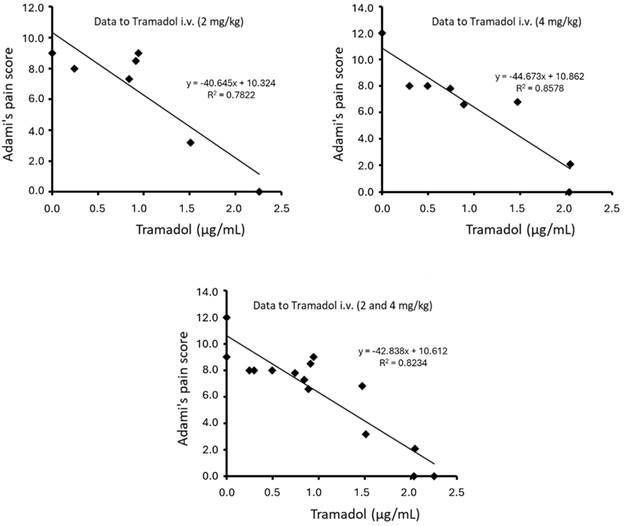
A negative correlation was observed between the numerical pain scale and plasma tramadol concentrations, indicating that the effectiveness of pain treatment in goats was directly related to the concentration of tramadol in plasma (Figure 5).
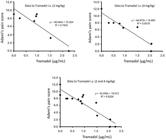
Correlation between PD response (y: Adami’s pain score) and PK results (x: tramadol plasma concentration) following intravenous administration of tramadol 2 mg·kg-1 (A), tramadol 4 mg·kg-1 (B) and results for both doses (C). Correlation equations and linear coefficients are shown (y = ax+b; R2).
DISCUSSION
Tramadol is widely used for pain management in humans and routinely used in small animal clinics (RUEL et al., 2019). Despite knowledge of its efficacy in providing analgesia in domestic animals, no studies have determined the clinically effective systemic dose for the prevention and treatment of pain in goats or the clinical and behavioral effects of its administration in this species. This is therefore a pioneering study in this regard.
In the current study, opioid administration in goats did not result in adverse effects such as intense salivation, muscle tremor, or deleterious alterations in cardiovascular and respiratory functions. In addition, constipation, tympanism, or any other gastrointestinal alterations did not occur. Tramadol administration in goats proved safe, confirming previously reported results in goats (SOUSA et al., 2008; AJADI et al., 2012; DEHKORDI et al., 2012) dogs (MASTROCINQUE & FANTONI, 2003; VETTORATO et al., 2010; PAOLOZZI et al., 2011), donkeys (GIORGI et al., 2009) and horses (DHANJAL et al., 2009).
Although, the difficulty in assessing pain in ruminants is well documented, the pain scale used herein ADAMI et al. (2011) was effective in combining subjective behavioral analysis, and assessing general and interactive behaviors with objective physical examination findings, such as increased heart and respiratory rates, which made it possible to evaluate and determine the pain score presented by the goats.
In this study, surgical castration was used as a pain stimulus. This stimulus was selected because it represents specific pain. The animals were subjected to a clinical-surgical situation in which the use and efficiency of analgesics were necessary. Although, some studies have used other means of representing pain stimuli, such as thermal transducers or electrical, chemical, or mechanical stimuli (VARCOE-COCKS et al., 2006; DHANJAL et al., 2009), these methods are limited because they do not provide a reliable specific response to those encountered when a particular pain stimulus is applied.
The doses used in the present study were based on those used in previous ruminant studies (SOUSA et al., 2008; COX et al., 2011, EDMONDSON et al., 2012). The results obtained demonstrated the analgesic efficacy of tramadol when administered intravenously. Animals treated with the drug showed marked and prolonged pain relief compared with the control group (Table 2 and Table 3). Opioid administration via the parenteral route has also been shown to be safe and efficacious in dogs. Studies comparing the effects of tramadol and morphine in this species reported similar pain relief provision following administration of the two agents (MASTROCINQUE & FANTONI, 2003; KONGARA et al., 2012).
Although, the antinociceptive effect of tramadol after epidural administration has been previously described (AJADI et al., 2012; DEHKORDI et al., 2012), its analgesic effect after intravenous application has not been described for goats.
Regarding the period of analgesia, 2 and 4 mg·kg-1 doses were effective for 6.7 ± 1.8 and 8.0 ± 3.7 h, respectively. This duration of analgesic action is similar to that reported in male and female dogs, ranging from 6 to 8 h (MASTROCINQUE & FANTONI, 2003; RUEL et al., 2019). The period of analgesia from intravenous tramadol administration in this study was higher than that described for the drug following epidural administration in goats (235 ± 18 min), lamb (318.6 ± 5.08 min), and cattle (306.8 ± 8.58 min) (BANIADAM et al., 2010; HABIBIAN et al., 2011; DEHKORDI et al., 2012).
In the control group, most goats required ketoprofen recovery therapy 2 h after initial saline treatment. On average, ketoprofen was administered to this group after 2.8 ± 1.8 h. This analgesic period can be attributed to lidocaine infiltrating locally into the spermatic cord and the incision line, since the need for rescue occurred after the local anesthetic had worn off (SKARDA & TRANQUILLI, 2013). A limitation of the present study is the administration of ketoprofen only for analgesic rescue, as this approach does not accurately reflect clinical practice, in which NSAIDs are considered essential for the management of inflammatory pain, especially after surgical procedures.
The present study confirmed and extends the current knowledge on the kinetics of tramadol by demonstrating the pharmacokinetic parameters of the drug administered to goats at a clinically proven effective dose. In addition, the study elucidates pharmacokinetic and pharmacodynamic data of the drug, inferring its safety, appropriate dose, and administration interval.
The method for determining and quantifying tramadol in goat plasma using HPLC (SOUSA et al., 2008) was optimized, demonstrating the ability of its use in accurately analyzing and quantifying the collected blood samples. Despite the inherent limitations of the PDA detector, the method was selective and sensitive. Abnormalities in tramadol quantification were observed only at points close to the lower limit of quantification, which did not compromise its use in elucidating the pharmacokinetic profile.
During method validation, the analysis of seven different concentrations to evaluate linearity showed a correlation coefficient of 0.9979, which showed suitability of the method to determine the opioid content in a biological matrix, according to the ICH (ICH Q8R1). In addition, precision and accuracy results were within the recommended specifications. Regarding selectivity, no co-elution or interference was observed when identifying the analytes. Thus, the method demonstrated linearity, specificity, precision, and accuracy, following current legislation.
Plasma tramadol concentrations over time were best described using a non-compartmental model. Based on Akaike’s goodness-of-fit criterion, it was determined that non-compartments better represented the behavior of tramadol concentrations over time up to 10 h, disregarding interferents possibly quantified at the lowest concentrations after this time.
This model assumed that tramadol is administered directly into the central compartment, which is represented by organs with the highest perfusion. Based on its physicochemical properties, it is not distributed in the peripheral compartments. Its decay follows upon reaching equilibrium and is related to its clearance. After distribution, the drug is eliminated via the central compartment (FERNANDES & ISMAEL, 2006). The non-compartmental pharmacokinetic model used in this study was previously described to represent the kinetics of tramadol in goats (SOUSA et al., 2008), dogs (KUKANICH & PAPICH, 2004; MCMILLAN et al., 2008), horses (DHANJAL et al., 2009), cats (PYPENDOP et al., 2009), camels (ELGHAZALI et al., 2008), and donkeys (MOUTA et al., 2021).
As expected, increasing the dose led to an increase in plasma concentration. Therefore, C0p values of 730 ng·mL-1 and 1479 ng·mL-1 were obtained in goats treated with 2 and 4 mg·kg-1, respectively. hours after administration of the two doses. A similar finding was previously described in dogs and horses subjected to increasing doses of tramadol. The authors observed that an increase in the plasma concentration and time of identification of the drug in plasma was positively related to dose increments (MCMILLAN et al., 2008; KNYCH et al., 2013). However, in sheeps, the tramadol and M1 was undetectable after 6 h. These findings may be related to differences between species and the detector used.
In the present study, bioavailability (AUC 0-t) was dose-dependent: 1717 ± 86 ng/mL*h for the 2 mg·kg-1 dose and 2388 ± 165 ng/mL*h for 4 mg·kg-1. However, when evaluating drug availability per dose, we observed 858.5 ± 43 ng/mL*h/mg of tramadol for the of 2 mg·kg-1 dose and 597 ± 41 ng/mL*h/mg for 4 mg·kg-1, demonstrating that the ratio of available drug per mg of tramadol administered was lower at the highest dose, justified by the higher clearance observed at this dose (Cl: 2 mg·kg-1, 0.18 ± 0.14 L/h*kg; 1.06 ± 0.19 L/h*kg), possibly by activation of additional metabolic pathways in tramadol biotransformation and elimination processes.
In veterinary medicine, despite the widespread use of tramadol in analgesic therapy, primarily in domestic animals, no studies have determined the minimum effective concentration (MEC) of opioids necessary to ensure clinical analgesia. In humans, research reports wide variability in MECs among patients, attributed to variations in tramadol metabolism by cytochrome P450 (STAMER et al., 2003). Despite this, analgesic efficacy is observed at plasma concentrations of at least 100 ng·mL-1 (MALONNE et al., 2004). In our research, after tramadol administration, the MEC of 100 ng·mL-1 was attained for 9 and 10 h in animals treated with 4 and 2 mg·kg-1 of the opioid, respectively. However, we demonstrated clinical analgesia in animals treated with 2 and 4 mg·kg-1 for 6.7±1.8 and 8.0±3.7 h, indicating different MECs within species.
Higher tramadol plasma concentrations were observed for the 4 mg group than the 2 mg up to 1 h after drug administration. After this, drug concentrations in both groups were equal, suggesting an initial intensification in drug diffusion through the membranes and increased drug metabolism at the highest dose, obeying the principles of thermodynamics and Frick’s laws.
The rapid clearance in the plasma concentration of tramadol after its administration at a dose of 4 mg·kg-1 and its possible extensive metabolism are of great importance since research has indicated that most opioid-induced analgesia is a consequence of the active metabolites of these agents (GIORGI et al., 2007; GIORGI et al., 2009). Several tramadol metabolites have been identified in the liver following the action of P450 enzymes. Metabolite M1 (O-desmethyl tramadol - ODT) is the most active (HENNIES et al., 1988) and responsible for the analgesic activity of the drug, with two to four times higher analgesic potency and 200 times greater affinity for the µ (MOP) opioid receptor than the unchanged drug (DE LEO et al., 2009). However, when analyzing the plasma concentrations of M1 tramadol in donkeys, the concentrations of tramadol were found to exceed those of M1 exponentially. Therefore, it is possible that the unchanged drug also exerts analgesic activity, adding to its confirmed activities in the reuptake of norepinephrine generated by sensitization of µ (MOP) receptors (MOUTA et al., 2021), behaviors also observed in dogs (KUKANICH & PAPICH, 2004) and goats (SOUSA et al., 2008).
Thus, although plasma concentrations and pharmacokinetic variables did not differ between the two treatment groups throughout in this study, we believe that the analgesic superiority of 4 mg·kg-1 tramadol compared to the lower dose was due to the formation of more M1. To clarify this phenomena, kinetic data for M1 are necessary, which is a limitation of this study.
The half-life of tramadol was 2.71 ± 0.38 and 3.75 ± 0.36 h for 2 and 4 mg·kg-1, respectively, corroborating with the dose range proposed by the data of the analgesic effect observed in the pharmacodynamic study. However, there is disagreement with previous data regarding the same dose and route of administration, possibly due to inter- or intra-species variations or analytical limitations (SOUSA et al., 2008).
In both doses investigated herein, tramadol showed a high volume of distribution (Vd 11.68 ± 0.34; 23.02 ± 1.52 L/kg, for doses of 2 and 4 mg·kg-1, respectively), which denotes broad affinity and distribution by tissues. Previous data on the Vd of tramadol in goats (SOUSA et al., 2008), horses (DHANJAL et al., 2009; KNYCH et al., 2013), humans (LEWIS & HAN, 1997), and dogs (KUKANICH & PAPICH, 2004) corroborate this result.
Put together, these results suggested tramadol as treatment option in relieving postoperative pain in goats, even in the presence of its active metabolites, since the unchanged drug can attain concentrations higher than M1 in different species at different doses. These findings advance our knowledge of the pharmacokinetics and pharmacodynamics of tramadol in goats and may have significant implications for the treatment of pain in this species, suggesting a probable plasma MEC in the range of 57.17 - 64.06 ng·mL-1 (60.74 ± 3.45 ng·mL-1), below the range recommended for humans (100-300 ng·mL-1) (SOUSA et al., 2008).
CONCLUSION
Herein, tramadol is effective for pain control in goats. It is suggested that it be administered intravenously at doses of 2 and 4 mg·kg-1 in animals that undergo surgical castration every 6 and 8 h, respectively, based on PK/PD study data.
The data from this study serve as a basis for further research and provide important information for the appropriate use of the drug in the studied species. Future studies investigating tramadol metabolites, with an emphasis on M1, can be carried out to clarify more information about the doses used.
ACKNOWLEDGMENTS
We sincerely thank Professor Maria das Graças Almeida from the Universidade Federal do Rio Grande do Norte for providing access to HPLC-DAD, which was essential for our analyses. The present research was conducted with the financial support of Conselho Nacional de Desenvolvimento Científico e Tecnológico (CNPq) - Project No. 474936/2013-9 and Coordenação de Aperfeiçoamento de Pessoal de Nível Superior (CAPES), which granted a master’s scholarship.
REFERENCES
-
ADAMI, C. et al. Sciatic-femoral nerve block with bupivacaine in goats undergoing elective stifle arthrotomy. The Veterinary Journal, v.188, p.53-57, 2011. Available from: <Available from: https://www.sciencedirect.com/science/article/abs/pii/S1090023310000663?via%3Dihub >. Accessed: Oct. 06, 2025. doi: 10.1016/j.tvjl.2010.02.008.
» https://doi.org/10.1016/j.tvjl.2010.02.008.» https://www.sciencedirect.com/science/article/abs/pii/S1090023310000663?via%3Dihub -
AJADI, R. A. et al. Effect of epidural tramadol and lignocaine on physiological and behavioural changes in goats subjected to castration with a high tension band. New Zealand Veterinary Journal, v.60, p.344-348, 2012. Available from: <Available from: https://www.tandfonline.com/doi/abs/10.1080/00480169.2012.696576 >. Accessed: Oct. 06, 2025. doi: 10.1080/00480169.2012.696576.
» https://doi.org/10.1080/00480169.2012.696576.» https://www.tandfonline.com/doi/abs/10.1080/00480169.2012.696576 -
BALLANTYNE, J. Tramadol: its role in acute pain management. Acute Pain, v.1, p.5-6, 1998. Available from: <Available from: https://www.sciencedirect.com/science/article/abs/pii/S1366007198800016?via%3Dihub >. Accessed: Oct. 06, 2025. doi: 10.1016/S1366-0071(98)80001-6.
» https://doi.org/10.1016/S1366-0071(98)80001-6.» https://www.sciencedirect.com/science/article/abs/pii/S1366007198800016?via%3Dihub -
BANIADAM, A. et al. Analgesic effects of tramadol hydrochloride administered via caudal epidural injection in healthy adult cattle. American Journal of Veterinary Research, v.71, p.720-725, 2010. Available from: <Available from: https://avmajournals.avma.org/view/journals/ajvr/71/7/ajvr.71.7.720.xml >. Accessed: Oct. 06, 2025, doi: 10.2460/ajvr.71.7.720.
» https://doi.org/10.2460/ajvr.71.7.720.» https://avmajournals.avma.org/view/journals/ajvr/71/7/ajvr.71.7.720.xml -
BLOOR, M. et al. Tramadol in pregnancy and lactation. International Journal of Obstetric Anesthesia, v.21, p.163-167, 2012. Available from:<Available from:https://www.obstetanesthesia.com/article/S0959-289X(11)00123-3 >. Accessed: Oct. 06, 2025. doi: 10.1016/j.ijoa.2011.10.008.
» https://doi.org/10.1016/j.ijoa.2011.10.008.» https://www.obstetanesthesia.com/article/S0959-289X(11)00123-3 -
BORTOLAMI, E. et al. Pharmacokinetics and antinociceptive effects of tramadol and its metabolite O-desmethyltramadol following intravenous administration in sheep. The Veterinary Journal, v.205, n.3, p.404-409, 2015. Available from: <Available from: https://www.sciencedirect.com/science/article/abs/pii/S1090023315001537?via%3Dihub >. Accessed: Oct. 06, 2025. doi: 10.1016/j.tvjl.2015.04.011.
» https://doi.org/10.1016/j.tvjl.2015.04.011.» https://www.sciencedirect.com/science/article/abs/pii/S1090023315001537?via%3Dihub -
COX, S. Pharmacokinetics of intravenous and intramuscular tramadol in Llamas. Journal of Veterinary Pharmacology and Therapeutics, v.34, p.259-264, 2011. Available from: <Available from: https://onlinelibrary.wiley.com/doi/10.1111/j.1365-2885.2010.01219.x >. Accessed: Oct. 06, 2025. doi: 10.1111/j.1365-2885.2010.01219.x.
» https://doi.org/10.1111/j.1365-2885.2010.01219.x.» https://onlinelibrary.wiley.com/doi/10.1111/j.1365-2885.2010.01219.x -
CURRIE, G. M. Pharmacology, Part 1: Introduction to Pharmacology and Pharmacodynamics. Journal Nuclear Medicine Technology, v.46, n.2, p.81-86, 2018a. Available from: <Available from: https://tech.snmjournals.org/content/46/2/81 >. Accessed: Oct. 06, 2025. doi: 10.2967/jnmt.117.199588.
» https://doi.org/10.2967/jnmt.117.199588.» https://tech.snmjournals.org/content/46/2/81 -
CURTICAPEAN, A. et al. Optimized HPLC method for tramadol and O-desmethyl tramadol determination in human plasma. Journal of Biochemical and Biophysical Methods, v.70, p.1304-1312, 2008. Available from: <Available from: https://www.sciencedirect.com/science/article/abs/pii/S0165022X07002047?via%3Dihub >. Accessed: Oct. 06, 2025. doi: 10.1016/j.jprot.2008.01.012.
» https://doi.org/10.1016/j.jprot.2008.01.012.» https://www.sciencedirect.com/science/article/abs/pii/S0165022X07002047?via%3Dihub -
DE LEO, M. et al. Evaluation of tramadol and its main metabolites in horse plasma by high-performance liquid chromatography/fluorescence and liquid chromatography/electrospray ionization tandem mass spectrometry techniques. Rapid Communications in Mass Spectrometry, v.23, p.228-236, 2009. Available from: <Available from: https://analyticalsciencejournals.onlinelibrary.wiley.com/doi/10.1002/rcm.3870 >. Accessed: Oct. 06, 2025. doi: 10.1002/rcm.3870.
» https://doi.org/10.1002/rcm.3870.» https://analyticalsciencejournals.onlinelibrary.wiley.com/doi/10.1002/rcm.3870 -
DEHKORDI, S. H. et al. Evaluation of anti-nociceptive effect of epidural tramadol, tramadol-lidocaine and lidocaine in goats. Veterinary Anaesthesia and Analgesia, v.39, p.106-110, 2012. Available from: <Available from: https://dx.doi.org/10.1111/j.1467-2995.2011.00655.x >. Accessed: Oct. 07, 2025. doi: 10.1111/j.1467-2995.2011.00655.x.
» https://doi.org/10.1111/j.1467-2995.2011.00655.x.» https://dx.doi.org/10.1111/j.1467-2995.2011.00655.x -
DHANJAL, J. K. et al. Intravenous tramadol: effects, nociceptive properties, and pharmacokinetics in horses. Veterinary Anaesthesia and Analgesia, v.36, p.581-590, 2009. Available from: <Available from: https://www.vaajournal.org/article/S1467-2987(16)30744-9/abstract >. Accessed: Oct. 08, 2025 doi: 10.1111/j.1467-2995.2009.00492.x.
» https://doi.org/10.1111/j.1467-2995.2009.00492.x.» https://www.vaajournal.org/article/S1467-2987(16)30744-9/abstract -
EDMONDSON, M. A. et al. Pharmacokinetics of tramadol and its major metabolites in alpacas following intravenous and oral administration. Journal of Veterinary Pharmacology and Therapeutics, v.35, p.389-396, 2012. Available from: <Available from: https://dx.doi.org/10.1111/j.1365-2885.2011.01332.x >. Accessed: Oct. 08, 2025. doi: 10.1111/j.1467-2995.2009.00492.x.
» https://doi.org/10.1111/j.1467-2995.2009.00492.x.» https://dx.doi.org/10.1111/j.1365-2885.2011.01332.x -
ELGHAZALI, M. et al. The pharmacokinetics, metabolism and urinary detection time of tramadol in camels. The Veterinary Journal, v.178, p.272-277, 2008. Available from: <Available from: https://www.sciencedirect.com/science/article/abs/pii/S1090023307002468?via%3Dihub >. Accessed: Oct. 06, 2025. doi: 10.1016/j.tvjl.2007.07.008.
» https://doi.org/10.1016/j.tvjl.2007.07.008.» https://www.sciencedirect.com/science/article/abs/pii/S1090023307002468?via%3Dihub - FERNANDES, F.; ISMAEL, P. D. Conceitos farmacocinéticos fundamentais. In: CANGIANI L. M. et al. (Eds), Tratado de Anestesiologia SAESP. 6th ed. Atheneu, São Paulo, Brasil, 2006. p.217-218.
-
GIORGI, M. et al. Pharmacokinetics of tramadol and its metabolites M1, M2 and M5 in horses following intravenous, immediate release (fasted/fed) and sustained release single dose administration. Journal of Equine Veterinary Science, v.27, p.481-488, 2007. Available from: <Available from: https://www.sciencedirect.com/science/article/pii/S0737080607003425?via%3Dihub >. Accessed: Oct. 08, 2025. doi: 10.1016/j.jevs.2007.10.004.
» https://doi.org/10.1016/j.jevs.2007.10.004.» https://www.sciencedirect.com/science/article/pii/S0737080607003425?via%3Dihub -
GIORGI, M. et al. Pharmacokinetics of tramadol and its Metabolites M1, M2 and M5 in Donkeys after Intravenous and Oral Immediate Release Single-Dose Administration. Journal of Equine Veterinary Science, v.29, p.569-574, 2009. Available from: <Available from: https://www.sciencedirect.com/science/article/abs/pii/S0737080607003425?via%3Dihub >. Accessed: Oct. 08, 2025. doi: 10.1016/j.jevs.2007.10.004.
» https://doi.org/10.1016/j.jevs.2007.10.004.» https://www.sciencedirect.com/science/article/abs/pii/S0737080607003425?via%3Dihub -
HABIBIAN, S. et al. Comparison of lidocaine, tramadol, and lidocaine-tramadol for epidural analgesia in lambs. Research in Veterinary Science, v.91, p.434-438, 2011. Available from: <Available from: https://dx.doi.org/10.1016/j.rvsc.2010.09.023 >. Accessed: Oct. 08, 2025. doi: 10.1016/j.rvsc.2010.09.023.
» https://doi.org/10.1016/j.rvsc.2010.09.023.» https://dx.doi.org/10.1016/j.rvsc.2010.09.023 - HENNIES, H. H. et al. Receptor binding, analgesic and antitussive potency of tramadol and other selected opioids. Arzneimittelforschung, v.38, p.877-880, 1988.
-
KNYCH, H. K. et al. Pharmacokinetics and selected pharmacodynamic effects of tramadol following intravenous administration to the horse. Equine Veterinary Jourmal, v.45, p.490-496, 2013. Available from: <Available from: https://dx.doi.org/10.1111/j.2042-3306.2012.00688.x >. Accessed: Oct. 08, 2025. doi: 10.1111/j.2042-3306.2012.00688.x.
» https://doi.org/10.1111/j.2042-3306.2012.00688.x.» https://dx.doi.org/10.1111/j.2042-3306.2012.00688.x -
KONGARA, K. et al. Effects of tramadol, morphine or their combination in dogs undergoing ovariohysterectomy on peri-operative electroencephalographic responses and post-operative pain. New Zealand Veterinary Journal, v.60, p.129-135, 2012. Available from: <Available from: https://www.tandfonline.com/doi/abs/10.1080/00480169.2011.641156 >. Accessed: Oct. 08, 2025. doi: 10.1080/00480169.2011.641156.
» https://doi.org/10.1080/00480169.2011.641156.» https://www.tandfonline.com/doi/abs/10.1080/00480169.2011.641156 -
KUKANICH, B. et al. Pharmacokinetics of tramadol and the metabolite O-desmethyltramadol in dogs. Journal of Veterinary Pharmacology and Therapeutics, v.27, p.239-246, 2004. Available from: <Available from: https://onlinelibrary.wiley.com/doi/10.1111/j.1365-2885.2004.00578.x >. Accessed: Oct. 08, 2025, doi: 10.1111/j.1365-2885.2004.00578.
» https://doi.org/10.1111/j.1365-2885.2004.00578.» https://onlinelibrary.wiley.com/doi/10.1111/j.1365-2885.2004.00578.x -
LEWIS, K. S.; HAN, N. H. Tramadol: A new centrally acting analgesic. American Journal Health-System Pharmacy, v.54, p.643-652, 1997. Available from: <Available from: https://academic.oup.com/ajhp/article-abstract/54/6/643/5155228?redirectedFrom=fulltext >. Accessed: Oct. 08, 2025. doi: 10.1093/ajhp/54.6.643.
» https://doi.org/10.1093/ajhp/54.6.643.» https://academic.oup.com/ajhp/article-abstract/54/6/643/5155228?redirectedFrom=fulltext -
MALONNE, H. et al. Efficacy and tolerability of sustained-release tramadol in the treatment of symptomatic osteoarthritis of the hip or knee: a multicenter, randomized, double-blind, placebo-controlled study. Clinical Therapeutics, v.26, p.1774-1782, 2004. Available from: <Available from: https://dx.doi.org/10.1016/j.clinthera.2004.11.005 >. Accessed: Oct. 08, 2025. doi: 10.1016/j.clinthera.2004.11.005.
» https://doi.org/10.1016/j.clinthera.2004.11.005.» https://dx.doi.org/10.1016/j.clinthera.2004.11.005 -
MASTROCINQUE, S.; FANTONI, D. T. A comparison of preoperative tramadol and morphine for the control of early postoperative pain in bitches submitted to ovariohysterectomy. Veterinary Anaesthesia and Analgesia, v.30, p.220-228, 2003. Available from:<Available from:https://dx.doi.org/10.1046/j.1467-2995.2003.00090.x > . Accessed: Oct. 08, 2025. doi: 10.1046/j.1467-2995.2003.00090.x.
» https://doi.org/10.1046/j.1467-2995.2003.00090.x.» https://dx.doi.org/10.1046/j.1467-2995.2003.00090.x -
MCMILLAN, C. J. et al. Pharmacokinetics of intravenous tramadol in dogs. Canadian Journal of Veterinary Research, v.72, p.325-331, 2008. Available from: <Available from: https://pmc.ncbi.nlm.nih.gov/articles/PMC2442675/pdf/cjvr72_pg325.pdf >. Accessed: Oct. 08, 2025. PMID: 18783021.
» https://pmc.ncbi.nlm.nih.gov/articles/PMC2442675/pdf/cjvr72_pg325.pdf -
MOUTA, A. N. et al. Pharmacokinetic properties of tramadol and M1 metabolite in Northeast Brazilian donkeys (Equus asinus). Journal of Veterinary Pharmacology and Therapeutics, v.44, p.318-325, 2021. Available from: <Available from: https://dx.doi.org/10.1111/jvp.12935 >. Accessed: Oct. 08, 2025, doi: 10.1111/jvp.12935.
» https://doi.org/10.1111/jvp.12935.» https://dx.doi.org/10.1111/jvp.12935 -
PAOLOZZI, R. J. et al. Diferentes doses de tramadol em cães: ações analgésicas, sedativas e sobre o sistema cardiorrespiratório. Ciência Rural, v.41, p.1417-1423, 2011. Available from: <Available from: https://dx.doi.org/10.1590/S0103-84782011000800019 >. Accessed: Oct. 08, 2025. doi: 10.1590/S0103-84782011000800019.
» https://doi.org/10.1590/S0103-84782011000800019.» https://dx.doi.org/10.1590/S0103-84782011000800019 -
PYPENDOP, B. H. et al. Effects of tramadol hydrochloride on the thermal threshold in cats. American Journal of Veterinary Research, v.70, p.1465-1470, 2009. Available from: <Available from: https://dx.doi.org/10.2460/ajvr.70.12.1465 >. Accessed: Oct. 08, 2025. doi: 10.2460/ajvr.70.12.1465.
» https://doi.org/10.2460/ajvr.70.12.1465.» https://dx.doi.org/10.2460/ajvr.70.12.1465 -
RUEL, H. L. M. et al. Adjuvant Analgesics in Acute Pain Management. Veterinary Clinics of North America: Small Animal Practice, v.49, n.6, p.1127-1141, 2019. Available from: <Available from: https://www.sciencedirect.com/science/article/abs/pii/S019556161930107X?via%3Dihub >. Accessed: Oct. 08, 2025. doi: 10.1016/j.cvsm.2019.07.005.
» https://doi.org/10.1016/j.cvsm.2019.07.005.» https://www.sciencedirect.com/science/article/abs/pii/S019556161930107X?via%3Dihub - SKARDA, R. T.; TRANQUILLI, W. J. Anestésicos locais, In: TRANQUILLI, W. J. et al. (Eds). Lumb & Jones Anestesiologia e Analgesia Veterinária. 4th ed., Roca, São Paulo, Brasil, 2013. p.428-454.
-
SOUSA, A. B. et al. Pharmacokinetics of tramadol and o-desmethyltramadol in goats after intravenous and oral administration. Journal of Veterinary Pharmacology and Therapeutics, v.31, p.45-51, 2008. Available from: <Available from: https://onlinelibrary.wiley.com/doi/10.1111/j.1365-2885.2007.00916.x >. Accessed: Oct. 08, 2025. doi: 10.1111/j.1365-2885.2007.00916.x.
» https://doi.org/10.1111/j.1365-2885.2007.00916.x.» https://onlinelibrary.wiley.com/doi/10.1111/j.1365-2885.2007.00916.x -
STAMER, U. M. et al. Impact of CYP2D6 genotype on postoperative tramadol analgesia. Pain, v.105, p.231-238, 2003. Available from: <Available from: https://journals.lww.com/pain/abstract/2003/09000/impact_of_cyp2d6_genotype_on_postoperative.28.aspx >. Accessed: Oct. 08, 2025. doi: 10.1016/S0304-3959(03)00212-4.
» https://doi.org/10.1016/S0304-3959(03)00212-4.» https://journals.lww.com/pain/abstract/2003/09000/impact_of_cyp2d6_genotype_on_postoperative.28.aspx -
VARCOE-COCKS, K. et al. Pressure algometry to quantify muscle pain in racehorses with suspected sacroiliac dysfunction. Equine Veterinary Journal, v.38, p.558-562, 2006. Available from: <Available from: https://beva.onlinelibrary.wiley.com/doi/abs/10.2746/042516406X154804 >. Accessed: Oct. 08, 2025. doi: 10.2746/042516406X154804.
» https://doi.org/10.2746/042516406X154804.» https://beva.onlinelibrary.wiley.com/doi/abs/10.2746/042516406X154804 -
VETTORATO, E. et al. Pharmacokinetics and efficacy of intravenous and extradural tramadol in dogs. The Veterinary Journal, v.183, p.310-315, 2010. Available from: <Available from: https://www.sciencedirect.com/science/article/abs/pii/S1090023308003791?via%3Dihub >. Accessed: Oct. 06, 2025. doi: 10.1016/j.tvjl.2008.11.002.
» https://doi.org/10.1016/j.tvjl.2008.11.002.» https://www.sciencedirect.com/science/article/abs/pii/S1090023308003791?via%3Dihub
BIOETHICS AND BIOSECURITY COMMITTEE APPROVAL
-
CR-2025-0158.R2
-
This study was carry out in strict accordance with the recommendations of the Ethics Committee on the Use of Animals of the Universidade Federal Rural do Semi-Árido (CEUA-UFERSA opinion no. 04/2013).
-
DATA AVAILABILITY STATEMENT
Research data is only available upon request.
-
DECLARATION OF USE OF ARTIFICIAL INTELLIGENCE
In accordance with Ciência Rural guidelines, the authors declare that artificial intelligence tools were not used it.
Edited by
-
ASSOCIATE EDITOR:
Rudi Weiblen (0000-0002-1737-9817)
-
SCIENTIFIC EDITOR:
Rudiger Daniel Ollhoff (0000-0002-7972-9472)
Research data is only available upon request.