
 International academic mobility: a bibliometric and integrative review of the literature between 2005 and 2022
Abstract
Academic mobility is a widely studied topic in different fields. The aim of this article is to analyse the literature on International Academic Mobility (IAM), both inbound and outbound, identifying research collaboration networks, the most influential authors and journals, as well as the interest groups portrayed and students, highlighting topics and theoretical approaches. A bibliometric and integrative literature review was carried out from 2005 to 2022 on the Web of Science (WoS) academic database, resulting in a bibliometric analysis of 851 articles and an integrative review of the 42 most cited articles among the authors highlighted. The results showed relationships between publications, authors, and themes, highlighting some central authors and journals that have been both productive and relevant. With the integrative review, the main topics were identified ‒ motivations and outcomes of the MAI, labour market and career, socio-economic aspects, educational policies of the countries and management of higher education institutions (HEIs), inequalities in the MAI, brain circulation and the impact of COVID-19 ‒, the most used theories ‒ human capital, social capital, rational choice, push-pull motivations, vocational education and training, types of international mobility ‒ and the interest groups portrayed in the publications ‒ students, graduates, teachers, researchers, higher education institutions and governments of the countries. Studies are suggested that integrate subjects and organisations participating in the process, with a focus on educational and social policies, finding solutions to reduce inequalities and enabling changes in the political, economic, and social context to be monitored.
Keywords:
International academic mobility; Management of academic mobility; Bibliometric review; Integrative literature review; Inbound and outbound mobility
Resumo
A mobilidade acadêmica é um tema amplamente estudado em diferentes áreas. O objetivo deste artigo é analisar a literatura sobre a mobilidade acadêmica internacional (MAI), nas modalidades inbound e outbound, identificando redes de colaboração de pesquisa, autores e periódicos mais influentes, bem como grupos de interesse retratados e estudantes, destacando tópicos e abordagens teóricas. Foi realizada uma revisão de literatura bibliométrica e integrativa, no período de 2005 a 2022, na base de dados acadêmica Web of Science (WoS), resultando na análise bibliométrica de 851 artigos e na revisão integrativa dos 42 artigos mais citados entre os autores destacados. Como resultados, foram mostradas relações entre publicações, autores e temas, com destaque para alguns autores centrais e periódicos que têm sido, simultaneamente, produtivos e relevantes. Com a revisão integrativa, foram identificados os principais tópicos ‒ motivações e resultados da MAI, mercado de trabalho e carreira, aspectos socioeconômicos, políticas educacionais dos países e gestão de Instituições de Ensino Superior (IES), desigualdades na MAI, circulação de cérebros e impacto da COVID-19 ‒, as teorias mais usadas ‒ capital humano, capital social, escolha racional, motivações push-pull, educação e treinamento vocacional, tipos de mobilidade internacional ‒ e os grupos de interesse retratados nas publicações ‒ estudantes, graduados, docentes, pesquisadores, instituições de ensino superior e governos dos países. Sugerem-se estudos que integrem sujeitos e entidades participantes do processo, com foco em políticas educacionais e sociais, tendo soluções para diminuição das desigualdades e permitindo acompanhar as mudanças de contexto político, econômico e social.
Palavras-chave:
Mobilidade acadêmica internacional; Gestão da mobilidade acadêmica; Revisão bibliométrica; Revisão integrativa de literatura; Mobilidade inbound e outbound
Resumen
La movilidad académica es un tema ampliamente estudiado en diferentes campos. El objetivo de este artículo es analizar la literatura sobre Movilidad Académica Internacional (MAI), tanto entrante como saliente, identificando las redes de colaboración en investigación, los autores y revistas más influyentes, así como los grupos de interés retratados y los estudiantes, destacando temas y enfoques teóricos. Se llevó a cabo una revisión bibliográfica bibliométrica e integradora, desde 2005 hasta 2022, en la base de datos académica Web of Science (WoS), que resultó en el análisis bibliométrico de 851 artículos y en la revisión integradora de los 42 artículos más citados entre los autores destacados. Los resultados mostraron relaciones entre publicaciones, autores y temas, destacando algunos autores y revistas centrales que han sido productivos y relevantes. Con la revisión integradora, se identificaron los principales temas ‒ motivaciones y resultados de la MAI, mercado de trabajo y carrera profesional, aspectos socioeconómicos, políticas educativas de los países y gestión de las instituciones de enseñanza superior, desigualdades en la MAI, circulación de cerebros e impacto de la COVID-19 ‒, las teorías más utilizadas ‒ capital humano, capital social, elección racional, motivaciones push-pull, educación y formación profesional, tipos de movilidad internacional ‒ y los grupos de interés retratados en las publicaciones ‒ estudiantes, graduados, profesores, investigadores, instituciones de enseñanza superior y gobiernos de los países ‒. Se proponen estudios que integren a los sujetos y organizaciones participantes en el proceso, con especial atención a las políticas educativas y sociales, que busquen soluciones para reducir las desigualdades y permitan hacer un seguimiento de los cambios en el contexto político, económico y social.
Palabras clave:
Movilidad académica internacional; Gestión de la movilidad académica; Revisión bibliométrica; Revisión bibliográfica integradora; Movilidad entrante y saliente
INTRODUCTION
International academic mobility (IAM) is not a recent topic in the literature and has attracted the attention of different areas of knowledge and interest groups, such as teachers and researchers seeking partnerships for the development and dissemination of knowledge, as well as higher education institutions (HEIs) in the process of internationalization and also those responsible for educational and development policies of countries (Gümüş et al., 2020; Shen et al., 2022). The objectives of the internationalization of organizations and the geographic mobility of people can be of different natures, given the insertion of countries into a more borderless and integrated world: from the solidarity point of view, as defended by organizations such as the United Nations Educational, Scientific and Cultural Organization (Unesco); or, from the capitalist and mercantilist perspective, as a growth strategy for HEIs, which seek to occupy spaces and meet demands that local institutions cannot meet (Altbach & Knight, 2007; R. B. Pessoni & A. Pessoni, 2021).
When international academic mobility programs are effective, they justify investments, as they open up new markets, leverage the development and sharing of knowledge and technologies, as well as strengthen partnerships and develop intercultural competence necessary for the training and more complete performance of teachers and students (Luce et al., 2016; Stallivieri, 2017). From the point of view of scientific knowledge, the discussion on actions and forms of evaluating the results of academic mobility is broadening, bringing it closer to the field of intercultural competence studies, considering different perspectives and stakeholders, such as public authorities, funding bodies, higher education institutions, teachers, students and researchers (R. B. Pessoni & A. Pessoni, 2021; Stallivieri, 2017).
The debate on academic mobility is also a point that is part of the world’s geopolitical composition, affecting and composing the global brain circulation, the generation and dissemination of knowledge, in addition to its results for the countries involved (Oldac, 2022; Ramos & Velho, 2011; Shen et al., 2022), with all its biases and imbalances, as in the comparison between countries in the global North and South. For example, based on data from the Organization for Economic Co-operation and Development (OECD), Latin American countries inserted peripherally, with low reception rates but with a high number of students sent to rich and developed countries (Altbach & Knight, 2007; R. B. Pessoni & A. Pessoni, 2021).
There are already several literature reviews on IAM, which presents as a common fact the focus on student mobility and represents the largest volume of this type of movement (Abdullah et al., 2014; Gümüş et al., 2020; Shen et al., 2022). Each type of review contributes with specific sections, such as analysis of cultural adaptation, learning experiences, and perceived benefits (Abdullah et al., 2014; Gümüş et al., 2020), with few involving bibliometric analysis to show an overview of publications, research collaboration networks, co-authorship and citations, main topics covered, among other relevant data to understand this field of knowledge (Gümüş et al., 2020).
Therefore, a research gap became apparent: the need for a more comprehensive literature review. With this in mind, the following question was formulated: in general, what is the panorama of academic production on IAM?
To answer this question, a literature review was carried out, combining bibliometric and integrative studies, with the aim of analyzing the literature on IAM, in both inbound and outbound modalities, identifying the networks formed for research collaboration, the most influential authors and the main topics studied, taking into account the different interest groups portrayed, in addition to students, such as those responsible for educational and development policies, higher education institutions, teachers and researchers, to then highlight the themes and theoretical approaches. Inbound mobility is understood as the flow of students, teachers, and researchers arriving in a country, while outbound mobility is the flow of these individuals leaving for academic mobility in educational institutions of other countries (Shen et al., 2022).
The data was collected by delimiting the search period between 2005 and 2022 in the Web of Science (WoS) academic database. As pointed out by Abdullah et al. (2014), Gümüş et al. (2020), and Shen et al. (2022), there has been a significant leap in academic production on the subject since 2005, explained, in part, by the increased number of people with experience of academic mobility, the interest of other areas of knowledge (beyond Education) and the strong impetus for the internationalization of HEIs. As a contribution, we hope to present a comprehensive and integrative overview of research in the analyzed period, observing the trajectory of the topic, authorship and collaboration networks, as well as interest groups portrayed, to point out advances, gaps, missing issues and to suggest a research agenda.
THEORETICAL-EMPIRICAL FRAMEWORK
Interest in IAM is not recent and dates back to the 1950s, with the massification of higher education that occurred shortly after World War II (Gümüş et al., 2020; Shen et al., 2022). However, there has been a notable growth since the 1980s (Altbach & Knight, 2007; Gümüş et al., 2020), and more recently, since 2005, with attention to the subject given by different areas of knowledge such as Sociology, Social Psychology, Economics and Administration, adding to the area of Education, which is a reflection of the increase in the flow of this type of international mobility allied to the impetus for the internationalization of higher education institutions (Gümüş et al., 2020; Shen et al., 2022). One of the basic objectives of IAM is to help promote socio-cultural development and multicultural coexistence (Knight, 2012); for this reason, it is one of the strategic aspects for the development of countries, being a relevant element in the definition of educational guidelines, in public policies and in the direction of funding agencies (Oldac, 2022; R. B. Pessoni & A. Pessoni, 2021).
Academic mobility can be understood as the process involving the displacement of students, researchers, and teachers between educational institutions, which can be intra or international, face-to-face or virtual, with or without funding from the educational institutions and with a variable duration, depending on the objectives involved (Unesco, 2019). In a review of academic production on the subject between 1980 and 2013, Abdullah et al. (2014) found that most studies dealt with face-to-face, academic and social experience of students, and that many of the responsibilities for managing this type of mobility were in charge of universities and their respective teaching staff.
From the perspective of HEIs, the academic mobility of students, researchers, teachers, and international partnerships drives development (R. B. Pessoni & A. Pessoni, 2021). The internationalization of these institutions also takes place through academic mobility, which precedes other more complex actions, such as dual degrees, unification of curricula, cooperation in research, among others (Altbach & Knight, 2007; Luce et al., 2016). Therefore, one of the assumptions of the internationalization of an HEI is to promote respect for differences and acknowledgment of cultural identity, as well as contribute to the socialization of knowledge, generating new job opportunities, among other positive aspects rising from this process (Luce et al., 2016; R. B. Pessoni & A. Pessoni, 2021; Stallivieri, 2009).
From the point of view of capitalist and mercantilist logic, the internationalization of HEIs is a strategy for growth beyond its borders, occupying spaces and meeting demands that local institutions cannot meet. Consequently, this movement, led by the global North, tends to reproduce and increase the inequalities generated by the concentration of wealth, knowledge and power (Altbach & Knight, 2007), since institutions in rich countries have and receive more resources, they are able to attract and retain different students, teachers, and researchers, not to mention intellectual and cultural dominance, given the geopolitical and economic interests involved (Lima & Maranhão, 2009).
From an economic perspective, the IAM has an impact on countries and regions, as it generates significant amounts of money due to the growing competition to attract and retain students, teachers, and researchers, as well as the investments made by governments and educational institutions in preparing for and sending students on this international experience (Oldac, 2022). Countries alternate in the ranking of most sought-after, with the most developed and English-speaking countries (the United States, the United Kingdom, and Australia) being the main hosts, while Asian countries with emerging economies (China, South Korea, India, and Saudi Arabia) have been the main places for sending students (Gümüş et al., 2020; Moscaritolo et al., 2022). Some factors, including the COVID-19 pandemic and increased xenophobia, have led to some changes in this flow, especially in East Asia (Mok & Zhang, 2022; Mok et al., 2022).
Data from the International Association of Educators (Nafsa) show that international students contributed more than 36 billion dollars to the US economy in 2016, while Brazil invested more than 1.5 billion dollars between 2011 and 2016 in paying foreign HEIs to host Brazilian students (Pessoni & Pessoni, 2021). In 2017, there were around 5.2 million internationally mobile students in the world, an increase of more than 60% compared to 2000, when the total number of students reached 2 million (Moscaritolo et al., 2022). Thus, the internationalization of HEIs is an instrument for reproducing inequalities between countries, reinforcing the disproportion between North and South (Brooks, 2015; Lima & Maranhão, 2009; R. B. Pessoni & A. Pessoni, 2021).
HEIs create and maintain IAM programs, whether or not they are related to other internationalization actions, with their own initiatives of bilateral and multilateral agreements, or in association with other institutions and government bodies. An IAM program can be revised and expanded throughout its existence and involve different stages and people responsible. The most common stages are preparation; sending/receiving students, teachers, and researchers; their return to their country of origin (Luce et al., 2016; Melo et al., 2021). Discussing and proposing improvements to academic mobility programs contributes not only to students, teachers, and researchers in general but also to consolidating the internationalization of HEIs, which is why interest has been growing (Melo et al., 2021). There are many actions for cooperation between them, aiming, among other things, to increase their international presence and relevance (Luce et al., 2016).
IAM can focus only on the outbound of individuals from their academic community, the inbound, or both (Shen et al., 2022). Lima and Maranhão (2009) call these two types of internationalization as active and passive. The first is when the institution receives students, teachers, and visiting researchers through policies and programs to attract these profiles for academic mobility and publication of studies in its dissemination vehicles. The second is characterized by students, teachers, and researchers moving to other HEIs in different countries and publishing their academic community’s research in the media of these foreign institutions.
A relevant aspect of IAM programs concerns the elements and forms of their conception and evaluation (Luce et al., 2016; Melo et al., 2021). To this end, it is necessary to look at the discussion and development of public policies aimed at this experience, its objectives and goals, including the specific actions of HEIs and the measurement of the effectiveness of mobility results for the purpose of internationalization. From the students’ point of view, it is important to understand the context of origin, the different needs for preparation and follow-up, as well as observe the various types of results and effects that this experience can bring (Brook, 2015; Melo et al., 2021; Pessoni & Pessoni, 2021).
Because it is a topic of interest to different groups and fields of knowledge, IAM has been studied through various theoretical lenses, being the push-pull theory - reasons that lead to leaving the country of origin and choosing the destination - one of the most used, especially in research that analyzes the bias of individuals in mobility and educational institutions. On the other hand, studies on the process and results of IAM have adopted approaches from cultural psychology to deal with intercultural adaptation and the development of intercultural competences; theories from the field of sociology, such as human capital, to analyze brain circulation; or social capital theory to explore the relationships developed with international mobility, in addition to perspectives from migration studies, the formation of cooperation networks, among others (Shen et al., 2022).
Even with distortions and inequalities, with more restrictive policies and episodes, as was the case during the COVID-19 pandemic, most authors remained in favor of the IAM, emphasizing the gains that the experience can bring to individuals, institutions, and countries, with the need for advances and improvements, such as the creation and expansion of public policies focused on interculturality, solidarity, respect and knowledge sharing (Gümüş et al., 2020; Lima & Maranhão, 2009; Oldac, 2022; R. B. Pessoni & A. Pessoni, 2021).
METHODOLOGICAL PROCEDURES
When a topic is expanding in its academic production, it becomes difficult to keep up with its publication landscape, the state-of-the-art, which is why a literature review becomes one of the most relevant research methods (Torraco, 2005; Snyder, 2019). For this study, a bibliometric literature review was carried out in the first stage, complemented by an integrative review.
The bibliometric review allows to observe a certain field of knowledge using statistical software to explore parameters and elements of publications (Paul & Criado, 2020), such as the performance of articles, journals and authors, collaboration patterns and research constituents, in order to demonstrate the intellectual structure on the analyzed subject (Donthu et al., 2021) and highlighting the theoretical and methodological influences between authors (Vogel & Guttel, 2013). The co-citation and bibliographic coupling analysis methods demonstrate whether there is textual parity between the articles through the referential behavior of the authors and the establishment of intertextual relationships between the publications (Vogel & Guttel, 2013). Bibliographic coupling measures the relationship between two documents based on the number of common references, while cocitation analysis measures the relationship between two articles based on the number of times they are cited concurrently, determining the most influential contributions (Grácio, 2016).
The integrative review aims to criticize and synthesize the content of academic production, review existing theories and promote new approaches and foundations. It is driven by critical evaluation that deconstructs the scientific literature in a given field of study on several fronts, thereby identifying the contributions and problematic aspects represented in the literature (Snyder, 2019). An integrative review can focus on the most mature topics on the subject, emerging topics, or both. They are appropriate when there is contradictory evidence, change in direction and in the way a phenomenon is reported, as well as when research on the topic emerges in different fields (Torraco, 2005).
A number of steps were followed for the literature review, starting with the research question: “In general, what is the panorama of international academic production on the IAM?”. Next, the WoS database was chosen, as it is recognized and frequently used for review studies in the fields of higher education (Abdullah et al., 2014; Gümüş et al., 2020). In the third stage, which is a longitudinal study, the period to be researched was defined: from 2005 to 2022. The initial year was chosen because it was the year in which there was a leap in academic production on the subject, thanks to the increase in the number of people in academic mobility, the interest of other areas of knowledge and the strong impetus for the internationalization of HEIs (Abdullah et al., 2014; Shen et al., 2022).
As a fourth step, the keyword international mobility was chosen to carry out the initial search in a more comprehensive way, a choice made in line with the objective of this research as well as with the literature, since this term incorporates concepts of scientific mobility, organizations, researchers and students (Shen et al., 2022). In addition, other searches were carried out using single and combined terms, in the singular and plural: international migration of students, international students mobility, international educational exchange, global student, global academic mobility and international higher education.
In terms of the production distribution over the years and the main authors cited, the results found were very similar, and for the most part, the different articles dealt more with other aspects, such as careers and employability, or focused solely on students, already mentioned in other reviews, such as those made by Abdullah et al. (2014) and Gümüş et al. (2020). For this reason, the results of the initial search using the term international mobility was chosen for the next steps.
Then, we applied the filters areas of interest, period and type of documents. The areas of interest were: business, management, sociology, education, educational research, anthropology, geography, social psychology, cultural studies, public administration, and educational psychology. In previous research, it was observed that the area with the highest concentration of publications on the subject was education, but other areas that also represent different interest groups on IAM were included, within the broad areas of applied social sciences and humanities, to try to capture a broader view of production on the subject. We left out areas related to health, technology and engineering, which also have publications on IAM, but with different scopes and objectives. As a document type parameter, only full-length, review and early access articles were considered.
The fifth stage was data collection, which took place in June 2022, resulting in 2,013 articles. Subsequently, in January 2023, an additional search was carried out to complement the collection of articles from 2022, adding 248 to the initial count, totaling 2,261 articles. The sixth stage was obtaining and sorting the data. The WoS database was exported to MS-Excel format, with the full record option for each record, guaranteeing organization and verifying data standardization. The articles were then screened by reading the titles and abstracts in two stages by different members of the research team, resulting in a final list of 851 articles with main focus on international academic mobility.
The seventh stage was the bibliometric analysis of the articles using Microsoft Office Excel to examine and present the frequency distribution of the data, while the analysis of citations, co-citations, bibliographic coupling and co-occurrence of keywords was carried out using the VOSviewer software, chosen for being a freeware project, containing extensive documentation on its operation, having a robust graphical interface and being compatible with the WoS database.
Box 1provides a summary of the bibliometric indicators analyzed in this review.

The eighth and final stage was the integrative review. To define the literature for this review, we considered the grouping of authors with the following parameters: at least 5 publications and at least 100 citations, observing the data on scientific mapping and the social network of authors demonstrated by the bibliometric review. Based on the analysis of these parameters, 42 articles were chosen for the integrative review. No analysis categories were defined a priori, but an attempt was made to identify and analyze the main topics covered in these articles, the theoretical approaches used, and the interest groups portrayed. As a result, it was possible to understand the different perspectives on international academic mobility, relating them to the types of flow (inbound and outbound) over the period analyzed.
PRESENTATION AND ANALYSIS OF RESULTS
1st stage: bibliometric analysis
Figure 1 shows publications over time and the trend line. It is noted that publications have grown. The last 5 and 10 years represent, respectively, 72.15% and 91.42% of the total number of publications in the analyzed period. Between 2005 and 2010, the average number of articles was 3.5 per year. Between 2011 and 2020, it was 36 per year, jumping to 176 per year in the last 2 years.

These results confirm the work of Gümüş et al. (2020) and Shen et al. (2022) on the fact that this topic is on the rise, especially in the last 10 years. Another factor that could justify the greater interest in this area is the number of authors involved in IAM studies, as will be discussed below in Figure 4. Another explanation for this increase could be the interest in new areas, but that was not proven, as the results showed that more than 80% of the articles dealing with IAM as a central theme continue to be from the area of education, with management and sociology representing 5% each, with growth in the last 5 years of the survey.
The number of citations is an indicator of the relevance of productions, authors and journals, so that one can better understand the academic production. Box 2lists the 10 most cited articles between 2005 and 2022.

Figure 2 analyzes the number of citations per article, which are represented by the main author’s surname and the year of publication. Those with a number equal to or greater than 50 citations are in a large group formed by several clusters. These groupings are formed by the strength of the links thanks to the proximity and thematic/methodological complementarity between the authors. The larger the size of the circle depicted, the greater the number of citations, and the colors, per se, have no meaning; they only demonstrate the formation of different clusters, which present publications aimed at investigating the academic mobility of higher education students, covering motivations, experiences, flows, direction (inbound or outbound), as well as exploring the management of policies applied to international students in mobility programs. The left-most part of Figure 2 shows a larger representation of these clusters.

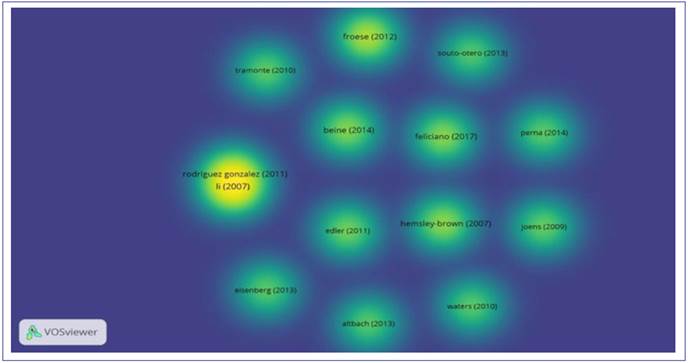
In Figure 3, the heat map shows the publications by Froese (2012), Gonzalez et al. (2011), and Li and Bray (2007), as the most cited in the period: 298, 192 and 166, respectively, as already presented in Box 2.

Regarding the content of the 3 most cited articles, Li and Bray’s (2007) work addresses the driving and limiting factors in the flow of Chinese higher education students in Hong Kong and Macau; that of Gonzalez et al. (2011), the determinants of the flow of international student mobility in the European Erasmus program; that of Froese (2012), the motivations and intercultural adaptation of academic self-expatriates in South Korea. When viewing the heat map, it can be seen that Froese’s article (2012), despite being one of the most cited, is not linked to others.
In contrast, the articles by Gonzalez et al. (2011) and Li and Bray (2007) are linked to each other, placing them very close together on the heat map, thus increasing their brightness and size in the figure. The total number of authors in the period went from 1,803 to 851 articles, an average of 2.12 per article, which suggests co-authorship. Figure 4 shows the distribution of the number of authors per year, highlighting that there has been an increase in the interest of more researchers in the subject. Between 2018 and 2022, 69.61% of the total number of authors is concentrated, in line with the data on growth of publications per year.

Figure 5 shows authors with at least 1 publication and 50 citations or more, with no links between them, as can be seen in the rightmost part of the figure. But there are clusters, shown in the central part, which confirms links between those who have produced more articles and the most cited articles.

Thus, applying the parameter of 5 publications per author, it was possible to visualize these groupings on the left in the same figure, arriving at the number of 13 authors, which represents 9.52% of the total number of publications in the period. As for the citations these authors had, they correspond to 12.31% of the total count. Those with the highest number of publications, with a total of 8 each, are: Ka Ho Mok, Nicolai Netz, Ly Thi Tran, and Jannecke Wiers-Jenssen. Despite the same number of articles, there is a disparity when considering the number of citations, with the most cited being: Ly Thi Tran, Nicolai Netz, and Rachel Brooks, which shows the importance of using different indicators for scientific mapping (Donthu et al., 2021).
Figure 6 shows the number of publications by the 13 most prolific authors and the total number of citations.

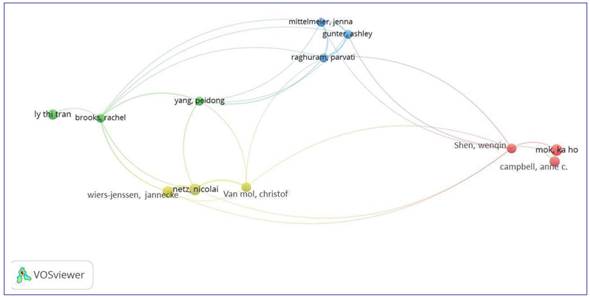
Figure 7 shows the 4 clusters of the most prolific authors - those with the highest number of publications in the period - and their authorship partnerships, as well as strong sub-theme links. The first cluster, formed by Jenna Mittelmeier, Ashley Gunter, and Parvati Raghuraman, despite their joint production, have published individually on internationalization of higher education in the context of the global South and South Africa. The second, formed by Nicolai Netz, Christof van Mol, and Jannecke Wiers-Jenssen, covers studies of European student mobility, exploring the post-mobility trajectory and the construction of relationship networks, the labor market, income and others.
In the third cluster, Ly Thi Tran, Rachel Brooks, and Peidong Yang talk about the intercultural experience of students, teachers and researchers from a more subjective point of view, with sociological and psychosocial approaches. The fourth cluster, composed by Wenqin Shen, Ka Ho Mok and Anne C. Campbell, looks at more current issues, such as the COVID-19 pandemic, sustainability, social aspects and studies aimed at Chinese students’ IAM.

As for the journals, 248 journals published 851 articles and obtained a total of 11,930 citations. Box 3shows the 14 most cited journals. When comparing the data on the number of publications with the number of citations per journal, it is possible to notice asymmetries, such as the Journal of Studies in International Education, which published the largest number of articles (91) but is second in terms of citations. The journals Economics of Education and Educational Researcher published 2 articles each, but have more than 200 citations, which may indicate different degrees of acknowledgement between the journals and the authors who publish in each one. The 14 most cited journals account for 65.08% of the total number of citations and only 38.5% of the total number of articles published.

As for the research approach, according to Figure 8,413 articles (48.9% of the total) are qualitative, 353 (41.8% of the total) are described as quantitative and 78 (representing 9.2% of the total) are described as mixed-approach research. The distribution of the research approach in the period from 2005 to 2022 shows a constant increase in the 3 forms, but the qualitative approach stands out from 2017, with a drop in 2019, growing again the following year and remaining so until 2022. This shows the importance, in a bibliometric analysis, of understanding how the authors researched that phenomenon, looking for subjective and in-depth factors or measurable and objective factors. This will give clues as to what can be found in the literature on the subject.

In order to analyze the intertextual relationships between the publications, we will look at co-citations and bibliographic coupling, which are relevant for tracing the intellectual interactions and structural connections of the research. As for co-citations, which are the pairs of publications most cited concurrently, references with at least 20 citations were selected, as shown in Figure 9. Among the clusters formed, i.e. among the publications with the greatest linkage strength, two clusters contain the most cited publications, as shown in the cutout in the same figure.
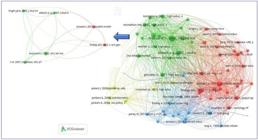
The first cluster is formed by the publications of Altbach and Knight (2007), Knight (2004), Li and Bray (2007), and Mazzarol and Soutar (2002), while the second cluster is formed by Brooks and Waters (2011), and Finlay et al. (2012). It stands out, once again, the relevance of the article by Li and Bray (2007), the most cited and co-cited in the period.
For the bibliographic coupling analysis, which determines the number of bibliographies in common in a group of articles, those with at least 50 similar citations were selected. Figure 10 shows the articles that made the most use of bibliographies in common and shows the formation of several interconnected clusters with greater binding force due to their similarity and thematic and methodological complementarity. Once again, it is confirmed that the most cited publications, Gonzalez et al. (2011) and Li and Bray (2007), have a strong connection with each other, while the work by Froese (2012), despite using bibliographical references in common, is isolated and has little connection with the rest of the articles published in the analyzed period.

As for the keywords, a parameter of at least 5 appearances was set in VosViewer. In Figure 11, the term higher education is a central point and is related to the most different clusters of publications, such as the one that concentrates terms like strategic institutional management. Words similar to each other, such as student mobility, international student mobility and international student, also have significant representation, given the search term used (international mobility), reinforcing the proximity of the search results in the WoS database.
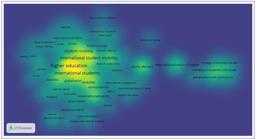
The terms that refer to countries or regions where this type of mobility occurs stand out - for example, East Asia, Chinese students, Europe, Australia, Malaysia, Vietnam and Korea - both as origin and destination, evidencing research interest in Asian countries.
The longitudinal analysis of the frequency of keywords between 2016 and 2022 showed a concentration of words between 2018 and 2020. Figure 12, which shows the use of terms over time, confirms the change, even though several of them are synonyms. There are few links with earlier years, indicating that publications were primarily focused on the study of the IAM and the internationalization of higher education as a single process.

Very recently there has been an increase in the plurality of words such as international students, higher education and international student mobility, linked to other terms such as transnational education, identity, gender, social mobility, as well as references to East Asian countries such as Vietnam and China. This confirms the growth of academic production, with a concentration of publications related to students from different perspectives and contexts, with fewer publications dealing with educational institutions, teachers and other researchers.
As shown in Figure 13, when analyzing the most current section, the terms with the highest occurrence were COVID-19 pandemic, COVID-19, systematic review and short-term mobility, which indicates that environmental factors have had an impact on IAM and shows a tendency for publications to focus on short-term experiences.
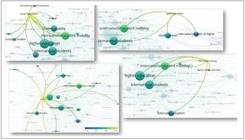
By restricting the parameter in VosViewer to 10 occurrences, an analysis of the formation of thematic clusters was carried out, highlighting the links between the terms, as shown in Figure 14. Five thematic clusters were formed, the three main ones (1, 2, and 3) being the most strongly interconnected. Cluster 4 has its strength with cluster 1, while cluster 5 is more isolated, having weak links with clusters 1 and 2 and none with cluster 3.

Clusters 1 and 2 are linked to the internationalization of education via academic mobility, migration, transnationalization and globalization process, from geographical and social aspects, portraying the shift of interests from one continent or country to another. Cluster 3, on the other hand, is more of an institutional one, focusing on the process of academic mobility with a scope on internationalization of education - especially higher education -, teaching and learning processes, as well as student, researcher and knowledge exchange programs. Cluster 4 includes themes related to transnational education and the development of intercultural competences involved, while cluster 5 encompasses recent themes relating to research carried out in the context of the pandemic.
2nd stage: integrative analysis
Analysis of the data from the bibliometric review helped to identify the articles for the integrative review, taking into account the most prominent authors with at least 5 publications and 100 citations. Based on these analyses, 6 main authors and 42 articles authored by them with other researchers were identified and selected for the integrative review. They include Ka Ho Mok, Rachel Brooks, Nicolai Netz, Ly Thi Tran, Peidong Yang, and Jannecke Wiers-Jenssen. As already mentioned, no categories of analysis were defined a priori, but an attempt was made to examine the main topics covered, the theoretical approaches used and the interest groups portrayed.
Initially, a point identified was that many academic studies and institutions that provide official data on IAM do not differentiate between the type of student in international mobility, which confuses and blurs the understanding of what the real problems and challenges of each group may be - for example, between undergraduate and graduate students. As expected, there is a greater focus on inbound mobility studies by authors from the global North or whose research deals with rich, developed countries. On the other hand, authors and studies focusing on the reality of emerging and southern countries pay more attention to outbound mobility issues.
Regarding the topics most often covered, a classification was made into 7 main ones, understanding that they are often present and combined in the different articles analyzed. These 7 topics were nominated as: motivations and results of the IAM; labor market and careers; socio-economic aspects; educational policies of the countries and the management of HEIs; inequalities in the context of the IAM; IAM in brain circulation; the impact of COVID-19.
The different factors linked to IAM motivations and outcomes are the main topic in some studies or the background to others, but they are issues present in all of them. Regarding this topic and the job market and career, for Chinese students, studying abroad results in employability and being valued by employers and society, to the detriment of those with national diplomas (Mok, 2018). Therefore, the commitment to encourage and finance their children in well-regarded foreign universities is understandable, causing the largest flow of students in international outbound mobility: China to the United Kingdom and the United States (Mok, 2018; Mok et al., 2020).
Wiers-Jenssen (2008) shows that students who undertook international mobility and returned from abroad with a degree have more opportunities for their first job than those who did not. On the other hand, when analyzing non-ethnic Norwegians with study abroad experience, Storen and Wiers-Jenssen (2010) point out that taking the IAM does not significantly influence the risk of unemployment at the start of a career and the skills mismatch of Norwegian graduates. In Germany et al. (2018) point out that IAM experiences lead to work in international contexts and the establishment of networks abroad. They also noted that such individuals are more likely to change employments and work for large companies and multinationals to bargain for a salary. Netz (2021) points to salary growth after international experience in the medium term. This is due to individual characteristics of self-selection, rather than international experience per se.
Another aspect is that mobile students from higher social backgrounds benefit more than students from lower backgrounds in terms of employability. Furthermore, the positive results of increased income are only perceived by students from higher social backgrounds, so they have not had a significant effect among low-income graduates (Netz & Gruettner, 2021). This has already been realized by low-income students themselves. Löerz et al. (2016) state that, for these students, a stay abroad is less beneficial and there is rarely any intention of an IAM. Another aspect is that this group is more sensitive to the cost of mobility, not just the economic and financial cost. Therefore, social class influences international mobility, and previous contact with foreign countries leads to a predisposition to move abroad, also highlighting socio-economic aspects in their analysis.
In the same vein, Netz and Jaksztat (2017) argue that high-income students are more exposed to the international factor and that based on cumulative experiences abroad, the psychological, emotional and informational costs involved in IAM become lower for them. This is confirmed in more recent works, such as those by Mok and Zhang (2022) and Brooks and Waters (2022), concerning student IAM functioning as a means of reproducing social inequalities, which is more problematic in countries where there is public funding for mobility. This confers many responsibilities on IAM policy makers and HEI managers, confirming the issues of inequalities in the context of IAM.
On this topic, Yang (2020) takes a more pessimistic view of the return on investment from international student mobility, defining it as increasingly uncertain and dependent on social markers of inequality and the absorption capacity of the labor market in the countries of origin and destination. Other research in the European context has analyzed the returns on public investment in IAM, in addition to the direct return for the students involved. Hovdhaugen and Wiers-Jenssen (2021) point out the influence of the risk of unemployment at the start of a career and the incompatibility of skills of Norwegians in a disadvantaged social condition, compared to other Norwegian students in a better social condition, pointing to the need for effective public policies for inclusion. One factor limiting international mobility is age. In research conducted in both European countries (Netz, 2015) and China (Yang, 2022), it was found that IAM is being carried out by younger and younger students.
On the other hand, the question of the financial cost of studying abroad had different perspectives depending on where the income came from, from their own resources or third parties. One issue raised by Netz (2015) is that children under the age of 18 are identified as limiting factors for IAM. On the other hand, those who have children and are willing to do the IAM are strongly influenced by gender roles, which is a notable factor of inequality in the female experience abroad. In Brooks’ research (2015), female student-parents abroad are more likely to take on childcare in parallel with their studies, in a shared way with their partners. The student-parents were able to devote themselves entirely to their studies, as their partners were responsible for childcare.
Other socio-economic aspects can make up the motivation-reward relationship expected from international mobility. This is the case with students from the United Kingdom, a hub country for inbound mobility, i.e. a central point of attraction and concentration for students and researchers. There, students are not motivated by employability and social mobility; they only use this experience to perpetuate their privileges (Waters & Brooks, 2010). They want personal experiences, the opportunity to postpone the start of their careers and prolong their student life. Tran (2016) illustrated the perspectives of international students in Australia who interpret the IAM as a resource to help them become the kind of person, professional, or citizen they aspire to be.
Brooks and Waters (2009) surveyed British students at elite universities in the United States and found that they expected a second chance at success, which they did not get in the UK. In their research, Tran and Pham (2016) explored the vision of the “self” in the intercultural engagement of these students, the balance between their individual identities and the desire for experience that potentially generates reciprocity of ideas, exchanges of knowledge, among others.
Brooks and Waters (2009) also analyze the effects of collective interests with the IAM driven by public policies and financial incentives as opposed to the interests of individuals from some rich and developed countries in the North, relating socio-economic aspects to issues analyzed in the context of brain circulation between countries. In the same vein, Tran and Vu (2018) comment on the IAM and the possibility of brain drain, an issue that is not only limited to personal interests, but also collective ones, thanks to the enormous potential of the cultural and intellectual resources of those involved. Several policies try to encourage students to return: bonding agreements, advantageous repatriation terms and conditions, and moral arguments emphasizing their obligations to their nation-state (Brooks & Waters, 2021).
For some authors, brain circulation, more specifically brain drain, is not perceived as disadvantageous for countries, as pointed out by Wiers-Jenssen (2008). The author argues that there is an enrichment, either in the internationalization of the destination country’s human capital or in the subsequent return to the country of origin bringing international experiences, networks, and partners abroad, understanding that the brain drain, in some cases, can be temporary. In China, the perceived guarantees of returning to the country discourage brain drain and are understood positively as representing Chinese soft power (Mok, 2016), bringing another perspective linked to the countries’ educational policies and the management of HEIs.
In addition to the question of the return of students and researchers, some studies address preparation for the IAM as a responsibility of teachers, HEIs, and governments. Tran (2013) presents the need for teachers and students to adapt to education and vocational training as a starting point for preparing both to receive and to send people to IAM. For Tran and Bui (2021), it is necessary to analyze the social impacts of Australian diplomacy of the IAM of students from the New Colombo Plan Students program. In this same program, Tran et al. (2022) focus on preparation for outbound mobility with the approach of knowing, acting and becoming an internationally mobile student in East Asian countries.
In the view of authors from developed countries, such as Brooks and Waters (2021), the motivations for policies that encourage students to return do not come from liberal democracies, but from so-called quasi-authoritarian countries, based on different ideas about national identity, political and economic motivations and short- and long-term objectives, a view that can be questioned, since countries like Brazil establish rules for returning to the country when financial aid is granted through scholarships, for example.
The most recent global situation, shaped by the impacts of COVID-19 and by anti-global and anti-China movements, especially in the West, has changed the international mobility scenario established in recent decades. The traditional East-West flow has been pondered by Chinese students, who now see a new alternative in top East Asian universities (Mok, 2022; Mok et al., 2021). Uncertainties and cultural and geographical proximity have been the main factors in the choice of destination, according to research by Mok et al. (2022). This shift could have several consequences for the global distribution of academic mobility, with its established inbound hubs, and could prompt a review of policies for attracting international students (Wiers-Jenssen, 2023).
Some authors do not state a theoretical approach or a reference theory. Those who do, end up relying on well-known and established theories, such as push-pull and its models on motivations for IAM - in some cases, with the theory of rational choices. Human capital theory, on the other hand, is the basis for studies that focus more on labor market and career issues, with discussions about HEI management and brain attraction and retention policies. One of the most widely used theories, either as a counterpoint to those mentioned above or to explore the socio-economic and inequality aspects linked to the IAM, is Pierre Bourdieu’s social capital. These findings corroborate the results of Shen et al. (2022). In addition, some theoretical approaches were identified involving international pedagogy, intercultural interactions, agency, and ethical issues.
Regarding the interest groups in the IAM, all the studies included other actors besides the students on mobility, even when it came to factors relating to the motivations and results of this type of mobility. Aspects inherent to the job market and career were analyzed involving students, graduates, HEIs, companies, and governments. As for socio-economic aspects, inequality in the context of the IAM and the impacts of COVID-19, the studies examined the role of students, HEIs and governments from the institutional and social perspectives. Finally, the management of HEIs and educational and social policies aimed at the IAM and brain circulation involved the interests of educational institutions and country governments.
CONCLUSION
This article analyzed the academic production on IAM from 2005 to 2022 in the WoS database. To do this, a bibliometric review was carried out in conjunction with an integrative literature review. The results provide an overview of academic production with scientific mapping and a collaboration network between authors, showing that the field is already mature, with some prominent journals and established thematic and collaboration groupings.
The integrative review made it possible to identify the main topics of the studies by the most prolific and cited authors, such as motivations and results of the IAM, labor market and career, socioeconomic aspects, educational policies of the countries, and management of HEIs, as well as inequalities in the IAM, brain circulation, IAM and the impact of COVID-19. These topics have been studied through different theoretical lenses, with human and social capital theories standing out, as well as rational choice related to the push-pull theory. Even though undergraduate students are the main target group for IAM, the studies have taken other interest groups into account, confirming the importance and impact of this type of mobility for companies, educational institutions, and countries.
There is still a widespread understanding among authors that academic mobility and the internationalization of HEIs reproduce inequalities, and this is more problematic in countries where there is public funding. This gives responsibilities to educational policy makers and public policies aimed at mobility and strategies for managing the internationalization process of HEIs. Depending on the country and region, IAM can be part of a broader educational policy, with the expectation of returning to the country of origin - as in the case of Asian countries, especially China - unlike countries in the South, such as those in Africa and South America, whose mobility experience can be an opportunity for a new life and job, driving brain drain to a greater extent than in developed countries.
Finally, for a future research agenda, suggestions were made according to the main topics founds in the integrative review, shown in Box 4.

About the limitations of this research, it must be considered that the classifications in areas made by the WoS database are dynamic and undergo changes over the months - for example, one of the areas chosen was called business and is currently called business economics, which could lead to other results. For future studies that intend to develop systematic reviews of the literature, we suggest combinations of other terms, areas and databases, as well as other analysis techniques, tools and software, making it possible to explore other important results to broaden perspectives on the subject.
References
- Abdullah, D., Aziz, M. I. A., & Ibrahim, A. L. M. (2014). A research into international student-related research: (re)visualizing our stand? Higher Education, 67(3), 235-253.
- Altbach, P., & Knight, J. (2007). The internationalization of higher education: motivations and realities. Journal of Studies in International Education, 11(3-4), 290-305.
-
Brooks, R.(2015). International students with dependent children: the reproduction of gender norms. British Journal of Sociology of Education, 36(2), 195-214. https://doi.org/10.1080/01425692.2013.820128
» https://doi.org/10.1080/01425692.2013.820128 -
Brooks, R., & Waters, J. (2009). A second chance at success: UK students and global circuits of higher education. Sociology, 43(6), 1085-1102. https://doi.org/10.1177/0038038509345713
» https://doi.org/10.1177/0038038509345713 - Brooks, R., & Waters, J. (2011). Student mobilities, migration and the internationalization of higher education Palgrave MacMillan.
-
Brooks, R., & Waters, J. (2021). International students and alternative visions of diaspora. British Journal of Educational Studies, 69(5), 557-577. https://doi.org/10.1080/00071005.2021.1948501
» https://doi.org/10.1080/00071005.2021.1948501 -
Brooks, R., & Waters, J. (2022). Partial, hierarchical, and stratified space? Understanding the international in studies of international student mobility. Review of Education, 48(4), 518-535. https://doi.org/10.1080/03054985.2022.2055536
» https://doi.org/10.1080/03054985.2022.2055536 -
Donthu, N., Kumar, S., Mukherjee, D., Pandey, N., & Lim, W. M. (2021). How to conduct a bibliometric analysis: An overview and guidelines. Journal of Business Research, 133(1), 285-296. https://doi.org/10.1016/j.jbusres.2021.04.070
» https://doi.org/10.1016/j.jbusres.2021.04.070 -
Findlay, A. M., King, R., Smith, F. M., Geddes, A., & Skeldon, R. (2012). World class? an investigation of globalisation, difference and international student mobility. Transactions of the Institute of British Geographers, 37(1), 118-131. https://doi.org/10.1111/j.1475-5661.2011.00454.x
» https://doi.org/10.1111/j.1475-5661.2011.00454.x - Donthu, N., Kumar, S., Mukherjee, D., Pandey, N., & Lim, W. M. (2021). How to conduct a bibliometric analysis: an overview and guidelines. Journal of Business Research, 133(1), 285-296.
- Findlay, A. M., King, R., Smith, F. M., Geddes, A., & Skeldon, R. (2012). World class? An investigation of globalisation, difference, and international student mobility. Transactions of the Institute of British Geographers, 37(1), 118-131.
- Grácio, M. C. C. (2016). Acoplamento bibliográfico e análise de cocitação: revisão teórico-conceitual. Encontros Bibli. Revista Eletrônica de Biblioteconomia e Ciência da Informação, 21(47), 82-99.
-
Gümüş, S., Gök, E. E., & Esen, M.(2020). A review of research on international student mobility: science mapping the existing knowledge base. Journal of Studies in International Education, 24(5), 495-517. https://doi.org/10.1177/1028315319893651
» https://doi.org/10.1177/1028315319893651 -
Hovdhaugen, E., & Wiers-Jenssen, J. (2021). Those who leave and those who stay: features of internationally mobile vs. domestic students. Journal of International Students, 11(3), 687-705. https://doi.org/10.32674/jis.v11i3.2199
» https://doi.org/10.32674/jis.v11i3.2199 - Knight, J. (2004). Internationalization remodelled: definition, approaches, and rationales. Journal of Studies in International Education, 8(1), 5-31.
-
Knight, J. (2012, 06 de novembro). Cinco verdades sobre internacionalização. International Higher Education https://www.revistaensinosuperior.gr.unicamp.br/international-higher-education/cinco-verdades-a-respeito-da-internacionalizacao
» https://www.revistaensinosuperior.gr.unicamp.br/international-higher-education/cinco-verdades-a-respeito-da-internacionalizacao -
Kratz, F., & Netz, N. (2018). Which mechanisms explain monetary returns to international student mobility? Studies in Higher Education, 43(2), 375-400. https://doi.org/10.1080/03075079.2016.1172307
» https://doi.org/10.1080/03075079.2016.1172307 - Lima, M. C., & Maranhão, C. M. S. A. (2009). O sistema de educação superior mundial: entre a internacionalização ativa e passiva. Avaliação, 14(3), 583-610.
- Luce, M. B., Fagundes, C. V., & Mediel, O. G. (2016). Internacionalização da educação superior: a dimensão intercultural e o suporte institucional na avaliação da mobilidade acadêmica. Avaliação, 21(2), 317-339.
- Mazzarol, T., & Soutar, G. N. (2002). “Push-pull” factors influencing international student destination choice. International Journal of Educational Management, 16(2), 82-90.
-
Melo, J. L. L., Bueno, J. M., & Domingues, C. R. (2021). As dimensões do cross-cultural competence inventory como estruturantes do desenvolvimento de competência intercultural em programas de mobilidade acadêmica internacional. Revista de Gestão e Secretariado, 12(1), 26-52. https://doi.org/10.7769/gesec.v12i1.1221
» https://doi.org/10.7769/gesec.v12i1.1221 -
Mok, K. H. (2016). Massifying and internationalising higher education, changing labour markets and social mobility: challenges for education and urban governance. Journal of Higher Education Policy and Management, 38(3), 233-241. https://doi.org/10.1080/1360080X.2016.1174402
» https://doi.org/10.1080/1360080X.2016.1174402 -
Mok, K. H. (2018). Does internationalisation of higher education still matter? Critical reflections on student learning, graduate employment, and faculty development in Asia. Higher Education Quarterly, 72(3), 183-193. https://doi.org/10.1111/hequ.12170
» https://doi.org/10.1111/hequ.12170 -
Mok, K. H., Lang, S., & Xiao, H. (2020). The quest for global talent for changing economic needs: a study of student mobility and job prospects for returnees in China. Globalisation, Societies and Education, 18(1), 79-96. https://doi.org/10.1080/14767724.2019.1690734
» https://doi.org/10.1080/14767724.2019.1690734 -
Mok, K. H., Xiong, W., & Ke, G. (2022). Reimagining higher education in the post-covid-19 era: Chinese students’ desires for overseas learning and implications for university governance. Higher Education Policy, 35, 591-609. https://doi.org/10.1057/s41307-022-00273-1
» https://doi.org/10.1057/s41307-022-00273-1 -
Mok, K. H., & Zhang, Y. (2022). Remaking international higher education for an unequal world. Higher Education Quarterly, 76(2), 230-246. https://doi.org/10.1111/hequ.12366
» https://doi.org/10.1111/hequ.12366 -
Moscaritolo, L. B., Perozzi, B., Schreiber, B., & Luescher, T. M. (2022). The impact of covid-19 on international student support: a global perspective. Journal of International Students, 12(2), 324-344. https://doi.org/10.32674/jis.v12i2.3625
» https://doi.org/10.32674/jis.v12i2.3625 -
Netz, N. (2015). What deters students from studying abroad? Evidence from four European countries and its implications for higher education policy. Higher Education Policy, 28, 151-174. https://doi.org/10.1057/hep.2013.37
» https://doi.org/10.1057/hep.2013.37 -
Netz, N. (2021). Who benefits most from studying abroad? A conceptual and empirical overview. Higher Education, 82, 1049-1069. https://doi.org/10.1007/s10734-021-00760-1
» https://doi.org/10.1007/s10734-021-00760-1 - Netz, N., & Grüttner, M. (2021). Does the effect of studying abroad on labour income vary by graduates’ social origin? Evidence from Germany. Higher Education, 82, 1195-1217.
-
Netz, N., & Jaksztat, S. (2017). Explaining scientists’ plans for international mobility from a life course perspective. Research in Higher Education, 58, 497-519. https://doi.org/10.1007/s11162-016-9438-7
» https://doi.org/10.1007/s11162-016-9438-7 - Oldac, Y. I. (2022). The contributions of study abroad to home countries: an agential perspective. High Education, 86(6), 1471-1487.
-
Pessoni, R. B., & Pessoni, A. (2021). Internacionalização do ensino superior e a mobilidade acadêmica. Educação, 46(1), 1-32. https://doi.org/10.5902/1984644443070
» https://doi.org/10.5902/1984644443070 -
Paul, J., & Criado, A. R. (2020). The art of writing literature review: what do we know and what do we need to know? International Business Review, 29(4), 101717. https://doi.org/10.1016/j.ibusrev.2020.101717
» https://doi.org/10.1016/j.ibusrev.2020.101717 - Ramos, M. Y., & Velho, L. (2011). Formação de doutores no Brasil e no exterior: impactos na propensão a migrar. Educação & Sociedade, 32(117), 933-951.
-
Shen, W., Xu, X., & Wang, X. (2022). Reconceptualising international academic mobility in the global knowledge system: towards a new research agenda. Higher Education, 84, 1317-1342. https://doi.org/10.1007/s10734-022-00931-8
» https://doi.org/10.1007/s10734-022-00931-8 -
Snyder, H.(2019). Literature review as a research methodology: an overview and guidelines. Journal of Business Research, 104, 333-339. https://doi.org/10.1016/j.jbusres.2019.07.039
» https://doi.org/10.1016/j.jbusres.2019.07.039 - Stallivieri, L. (2009). As dinâmicas de uma nova linguagem intercultural na mobilidade acadêmica internacional (Tese de Doutorado). Universidad del Salvador, Ciudad Autónoma de Buenos Aires, Caba, Argentina.
- Stallivieri, L. (2017). Compreendendo a internacionalização da educação superior. Revista de Educação do Cogeime, 26(50), 15-36.
- Torraco, R. J. (2005). Writing integrative literature reviews: guidelines and examples. Human Resource Development Review, 4(1), 356-367.
-
Tran, L. T. (2016). Mobility as becoming: a Bourdieuian analysis of the factors shaping international student mobility. British Journal of Sociology of Education, 37(8), 1268-1289. https://doi.org/10.1080/01425692.2015.1044070
» https://doi.org/10.1080/01425692.2015.1044070 -
Tran, L. T., & Pham, L. (2016). International students in transnational mobility: intercultural connectedness with domestic and international peers, institutions, and the wider community. Compare: A Journal of Comparative and International Education, 46(4), 560-581. https://doi.org/10.1080/03057925.2015.1057479
» https://doi.org/10.1080/03057925.2015.1057479 -
Tran, L. T., & Vu, T. T. P. (2018). Agency in mobility: towards a conceptualisation of international student agency in transnational mobility. Educational Review, 70(2), 167-187. https://doi.org/10.1080/00131911.2017.1293615
» https://doi.org/10.1080/00131911.2017.1293615 - Vogel, R., & Güttel, W. H. (2013). The dynamic capability view in strategic management: a bibliometric review. International Journal of Management Reviews, 15(4), 426-446.
- Waters, J., & Brooks, R. (2010) Accidental achievers? International higher education, class reproduction and privilege in the experiences of UK students overseas. British Journal of Sociology of Education, 31(2), 217-228.
-
Wiers-Jenssen, J.(2008). Does higher education attained abroad lead to international jobs? Journal of Studies in International Education, 12(2), 101-130. https://doi.org/10.1177/1028315307307656
» https://doi.org/10.1177/1028315307307656 -
Wiers-Jenssen, J. (2023). International students in Norway: satisfaction, coping and social networks. Journal of Studies in International Education, 27(3), 447-467. https://doi.org/10.1177/10283153221082720
» https://doi.org/10.1177/10283153221082720 -
Yang, P. (2020). China in the global field of international student mobility: an analysis of economic, human, and symbolic capitals. Compare: A Journal of Comparative and International Education, 52(2), 308-326. https://doi.org/10.1080/03057925.2020.1764334
» https://doi.org/10.1080/03057925.2020.1764334 -
Yang, P. (2022). Rethinking international student mobility through the lens of “crisis” at a juncture of pandemic and global uncertainties. Asia Pacific Journal of Education, 42(1), 20-33. https://doi.org/10.1080/02188791.2022.2031872
» https://doi.org/10.1080/02188791.2022.2031872
-
DATA AVAILABILITY
The entire dataset supporting the results of this study is available on request from the corresponding author (Janaína Maria Bueno). The dataset is not publicly available because it is part of a larger study that is still ongoing and contains information that may compromise the privacy of research participants.
ACKNOWLEDGMENTS
The entire dataset supporting the results of this study is available on request from the corresponding author (Janaína Maria Bueno). The dataset is not publicly available because it is part of a larger study that is still ongoing and contains information that may compromise the privacy of research participants.

 Source: Elaborated by the authors based on
  Source: Research data.
 Source: Elaborated by the authors.
 Source: Research data.
 Source: Research data.
 Source: Research data.
 Source: Research data.
 Source: Research data.
 Source: Research data.
 Source: Research data.
 Source: Research data.
 Source: Research data.
 Source: Research data.
 Source: Research data.
 Source: Research data.
 Source: Research data
 Source: Research data.
 Source: Elaborated by the authors.