
 The Office Key Opens the Door to my Home! And Now, Can I (Dis)connect? Quality of Life in Teleworking: Routes, Challenges and Opportunities
Abstract
This article aims to analyze scientific production on the subject of quality of life in the context of teleworking, in order to present the current panorama of studies, by identifying the itineraries of international scientific production that inspired the proposal of an agenda with new challenges for further research. A systematic literature review was carried out using the Scopus and Web of Science databases, with no time frame, to cover all the publications. The still incipient field of studies on Quality of Life at Work (QWL) expresses the urgency of updating research and proposals that have practical implications for individuals, organizations, and society, with special attention to the complex scenario imposed by Covid-19, already glimpsing the post-pandemic context. QWL is becoming an agenda in the creation of strategies, policies, and practices that advocate humanized and productive work environments, so that the routes of scientific production and research agendas portrayed here bring inputs towards an increasingly strategic and sustainable human resource management.
Keywords:
Quality of Life in Telework (QOLT); Systematic Literature Review; International Production
Resumo
O presente artigo se propõe a analisar a produção científica na temática qualidade de vida no contexto do teletrabalho, de modo a apresentar o panorama atual dos estudos, por meio da identificação dos itinerários da produção científica internacional que inspirou a proposição de uma agenda com novos desafios para pesquisas ulteriores. Realizou-se uma revisão sistemática da literatura, utilizando as bases de dados Scopus e Web of Science, sem recorte temporal para abranger a totalidade das publicações. O ainda incipiente campo de estudos a respeito da QVTe expressa premência na atualização das pesquisas e propostas que tenham implicações práticas para os indivíduos, organizações e sociedade, com especial atenção ao complexo cenário imposto pela Covid-19, já vislumbrando também o contexto pós-pandêmico. A QVTe torna-se pauta na criação de estratégias, políticas e práticas que preconizam ambientes laborais humanizados e produtivos, de forma que os itinerários da produção científica e agenda de pesquisa aqui retratados trazem insumos rumo a uma gestão de pessoas cada vez mais estratégica e sustentável.
Palavras-chave:
Qualidade de Vida no Teletrabalho (QVTe); Revisão Sistemática da Literatura; Produção Internacional
1. INTRODUCTION
Working from home is not a new phenomenon, and has impacted individuals regardless of their location or role. By changing the nature of work, and linking professional activities with people at home, the challenge in both pre-industrial and industrial societies has been to maintain quality of life in both the personal and professional spheres, even though it is still an unfamiliar term. Conceptually, quality of life at work (QWL) first appeared in the late 1960s with the study of the impact of work on personal and general health (Chanana & Gupta, 2016).
Historically, since the pre-industrial context, many people have worked at home or in nearby locations, whether in craft establishments or on local land. From the industrial revolution onwards, workers began to move between home and centralized workplaces, for example factories and offices (Baruch, 2000). Consequently, in industrial societies, for a large part of the population, the home became a refuge, a private space, a place for domestic work or unpaid activities (Ojala et al., 2014). However, technological advances have changed the nature of work, creating opportunities to work in different places, including from the home (Grant et al., 2013; Vayre et al., 2022).
QWL can be observed as the members of a work organization manage to satisfy important personal needs through their experience in the organization (Chanana & Gupta, 2016). This movement happens when those involved, at all levels, are allowed to actively participate in shaping the organization, environment, methods, and results.
The active participation of everyone has only been made possible by the use of Information and Communication Technologies (ICTs), which have already caused transformations in organizations dealing with new technological and economic revolutions, as well as the uniqueness of the workforce and family structures (Abdullah & Ismail, 2012; Figueira et al., 2023). In addition, working in alternative locations using ICTs, while maintaining the employment relationship, also known as teleworking, poses challenges for management and contemporary working practices (Diamond, 2008; Figueira et al., 2023; Perissé et al., 2021), both in public organizations and private companies (Pereira et al., 2021).
During the pandemic caused by Covid-19 and its new variants, which have persisted, demanding a rapid expansion in the adoption of teleworking by various organizations (Anthonysamy, 2022; Berry et al., 2022; Perissé et al., 2021), impacting all aspects of life (Morilla-Luchena et al., 2021), ICTs have become even more relevant and indispensable for carrying out activities (Figueira et al., 2023). Due to social isolation due to the pandemic, many workers have taken up compulsory teleworking (Berry et al., 2022), facing challenges in adapting and discovering new ways of carrying out their professional practice (Oliveira et al., 2022), deconstructing myths of certainty and control (Berry et al., 2022); problematizing teleworking as an attractive flexible arrangement (Figueira et al., 2023).
Despite the increase in research into teleworking as a result of the pandemic period (Covid-19) (Anthonysamy, 2022), investigations have presented diverse and sometimes contradictory results (Vayre et al., 2022). This new way of working has also created a new challenge of developing and maintaining quality of life in teleworking (QWL) (Oliveira et al., 2022), a term that has so far been little researched in the scientific field, but which is relevant and urgent in the relationship between the world of work and new technologies (Anthonysamy, 2022; Pereira et al., 2021), especially in the public sector, which is still little researched in this area (Berry et al., 2022; Gastearena-Balda et al., 2021; Pereira et al., 2021).
In the 2000s, scientific research already signaled that studies on teleworking should focus on the environmental, political, economic and social implications of teleworking, especially the impacts on the quality of life of teleworkers (Mitter, 2000). Despite the limitations in the scientific literature on QWL (Abdullah & Ismail, 2012), especially in the post-pandemic context (Anthonysamy, 2022), the field of study should seek to promote safe teleworking, ensuring quality of life and well-being for those who carry it out (Figueira et al., 2023; Pereira et al., 2021; Tresierra & Pozo, 2020).
Because the home space has been shaped by ICTs (and the pandemic context), the house, the home, are still necessary spaces for private life, requiring spatial-temporal reorganization and family dialogue (Ojala et al., 2014; Prodanova & Kocarev, 2022).
The positive impact of increased internet access and ICT skills development training programs on teleworking is seen in the growth of labor productivity and wages (Avram et al., 2021). However, questions arise regarding employee morale and motivation (Manko, 2021), the impact of the human factor on the security of companies' information resources (Kobis & Karyy, 2021), and work-life balance itself (Palumbo et al., 2022), among other issues.
Based on these gaps, this article aims to present the current panorama of studies on quality of life in the context of teleworking, through a systematic review of the literature with a view to identifying the routes of international scientific production that inspired the proposal of an agenda with new challenges for further research; striving to contribute theoretically to advances in the areas of Human Resource Management (HRM) and positive organizational behavior.
In terms of practical and managerial implications, this study can help managers move towards a more humanized and healthy organization, with the creation of strategies, policies, and practices that advocate for productive and sustainable work environments. Notably, the results gathered so far can contribute to promoting quality of life in the context of teleworking, which will generate insights for decision-making towards increasingly strategic and effective HRM.
2. QUALITY OF LIFE AT WORK: THE RESEARCH CONTEXT
Since the topic emerged in the 1960s, various studies have been carried out to understand how this phenomenon occurs in the workplace. The focus was on both the quality of the human experience in the workplace (Walton, 1973) and the relationship with specific tools in the environment (Graen et al., 1977). However, in addition to the physical environment, the concept has also been circumscribed to the intrinsic aspects of work and the organizational and career domains (Boisvert, 1977), seeking to investigate the underlying structure of the QWL construct (Taylor, 1978).
Understanding that QWL directly influences the execution of organizational strategies, research has been carried out aimed at managers to develop implementation strategies with a view to organizational performance and managerial strategy (Wacker & Nadler, 1980). In this context, a conceptual adjustment of QWL was necessary (Levine et al., 1984) so that evaluations of the effects of industrial relations systems and efforts to improve QWL on organizational effectiveness were effective (Katz et al., 1985).
In the 1990s, the routinization of the work context and work content in relation to employees' QWL came to the forefront (Baba & Jamal, 1991) and was also evaluated through production structures (Dhondt & Benders, 1998). The research had in common the search for an understanding of performance and QWL (Pruijt, 2000), whether from the point of view of the impact of lean production on QWL indicators (Lewchuk et al., 2001) or the cross-national comparison of the evaluation of the institutionalization of quality from the perspective of workers (Korunka et al., 2003) with a view to high-performance work systems (Danford, et al., 2008).
In this context, research on organizational immersion in the relationship between QWL and turnover has become relevant (Dechawatanapaisal, 2017). This is justified because, until then, little was known about the level of employee engagement, specifically considering how the daily use of skills triggers this process of generating quality of life (Cullinane et al., 2017). The need for an integrated and normative approach to QWL was then observed in order to promote well-being, engagement, low turnover, and the emancipation of workers (Grote & Guest, 2017).
Therefore, constructs such as organizational commitment, employee diversity (El Badawy et al., 2018), corporate social responsibility (Kim et al., 2018), the impact of corruption and regional crises (Adisa et al., 2019), as well as global economic crises (Chatrakul Na Ayudhya et al., 2019) have been related to QWL. These factors influence professional engagement (Hamzah et al., 2021) and demonstrate the need for proper attention to the worker with a practical approach that involves not only voluntary actions by the company, but statutory standards (Warhurst & Knox, 2022) that can be managed by qualified leaders.
2.1. QUALITY OF LIFE IN TELEWORKING (QOLT)
Quality of life in teleworking ("QOLT") is the intersection of two concepts: Quality of life at work (QWL) and teleworking. Since the time of the oldest civilizations, the subject of quality of life at work (QWL) has been seen as an object of investigation (Pereira et al., 2021). From a historical and paleontological perspective, human beings have produced tools, artifacts, and methods with the aim of reducing the wear and tear resulting from work and transforming it into a pleasurable activity (Pereira et al., 2021).
In the organizational context, QWL is gaining ground in the debate as a result of research into the psychosocial, motivational, and behavioural aspects of workers (Oliveira et al., 2022; Pereira et al., 2021). In fact, the development and contributions of HRM theories, such as the human relations school, theories on leadership and motivation, and the socio-technical view of organizations, are fundamental to the evolution of QWL studies (Pereira et al., 2021). Thus, the strengthening of QWL as a subject of study was based on the individual-work-organization triad, highlighting the impact of work on the different spheres of workers' lives, and should not be confused with quality of life (QoL) (Oliveira et al., 2022; Pereira et al., 2021).
The discussion on QWL is also based on the analysis models proposed by different scholars, such as: (a) Richard Walton, in 1973 - eight categories and factors of QWL; (b) Hackman and Oldham, in 1975 - obtaining positive work and personal results, based on the basic dimensions of the task; (c) William Westley, in 1979 - the psychological, sociological, economic, and political dimensions of QWL; (d) Werther and Davis, in 1983 - the behavioural, organizational, and environmental factors that influence QWL (Pereira et al. , 2021).
When considering the complex interactions between individuals and organizations, QWL presents itself as multidimensional and subjective, emphasizing the humanization of work, satisfaction, and well-being of workers, which contribute to increased productivity and consequent achievement of organizational goals (Anthonysamy, 2022; Figueira et al., 2023; Oliveira et al., 2022; Pereira et al., 2021). It can be understood as a movement that questions the rigor of Taylorist methods and puts the leading role of workers back on the stage, encouraging participation in decision-making processes and problem-solving in the workplace (Pereira et al., 2021).
QWL integrates the perspectives of organizations and workers in an interdependent way, agreeing on interest in living conditions at work, highlighting aspects such as well-being, training to perform tasks, guaranteeing mental, social, and physical health and safety (Oliveira et al., 2022; Pereira et al., 2021). In this sense, the conceptualization of QWL encompasses the human and ethical conditions of work, highlighting occupational risks, ideological implications, formal and informal power relations, wage protection, social integration, psychological, economic, sociological, and political factors, as well as the meaning attributed to the work performed (Pereira et al., 2021). Thus, the perception that workers build, based on the work context to which they are inserted, contributes to the production of QWL, influencing attitudes and behaviours in organizations (Figueira et al., 2023).
It should be noted that the implementation of teleworking and the ways in which it is practiced must be concerned, for example, with: the intensification of work, social isolation (Figueira et al., 2023; Vayre et al., 2022), the extension of working hours (Vayre et al., 2022), excessive control by managers (Figueira et al., 2023), new psychosocial risks, increased stress levels among workers, accidents at work, causes of occupational illnesses and, consequently, quality of life at work (Tresierra & Pozo, 2020). In addition, the dysfunctions of occupational risks are related to the characteristics of: (i) the task (rhythm, quantity, automation, monotony); (ii) the organization (hierarchical structure, communication channels, interpersonal relationships, specification of competences); (iii) working time (type of work, organization of breaks and shifts); and (iv) employment (salary, physical conditions, and work layout) (Tresierra & Pozo, 2020).
Furthermore, balancing a professional career with the demands of personal life is a major challenge for workers, especially those who wish to have quality of life at work (Abdullah & Ismail, 2012; Berry et al., 2022; Figueira et al., 2023; Oliveira et al., 2022). In this way, the organizational context characterized by the technological advances of the 21st century is also marked by the needs and expectations of workers who want more than rewards, as the priority should be: work-life balance (WLB) (Abdullah & Ismail, 2012; Vayre et al., 2022), which makes it possible to achieve a healthy balance between personal and professional life (Anthonysamy, 2022), to build good relationships and cooperation with co-workers, as well as the physical, mental (Figueira et al., 2023) and psychological health of teleworkers (Anthonysamy, 2022).
In this sense, the adoption of Flexible Work Arrangements (FWA), such as teleworking, makes it possible to attract, motivate (Abdullah & Ismail, 2012) and retain workers (Abdullah & Ismail, 2012; Figueira et al., 2023), guaranteeing their well-being (Figueira et al., 2023), stimulating a reduction in turnover and an increase in productivity (Abdullah & Ismail, 2012). In this sense, organizations must adopt laws and regulatory policies when implementing and executing teleworking, shaping the communication flows between teleworkers and managers, ensuring that this arrangement does not become a marginal, fragile, and unregulated practice (Figueira et al., 2023). Furthermore, teleworking is influenced by HRM programs, strategies, policies, and practices that reflect QWL, impacting behaviors, experiences, organizational culture (Abdullah & Ismail, 2012), and competitive advantage itself (Figueira et al., 2023; Oliveira et al., 2022).
The term teleworking was proposed by American physicist Jack Nilles in the 1970s (Tresierra & Pozo, 2020; Ulate-Araya, 2020), in the midst of the oil crisis and the global advance of telecommunications (Ulate-Araya, 2020). Teleworking emerged as a response to the scarcity of oil-based products, since the displacement of workers represented an increase in the consumption of fossil fuels; in addition, it integrated organizational processes through the use of telecommunications by multinationals, reducing costs and increasing flexibility (Ulate-Araya, 2020). Etymologically, the prefix "tele" comes from the Greek and means "at a distance", informing that teleworking is a type of work carried out in another location different from the usual physical organizational space (Mitter, 2000; Ulate-Araya, 2020), based on a written or oral agreement between teleworker and employer (Ojala et al., 2014) that will establish the employment relationship (Pereira et al., 2021), Teleworking involves the use of information and communication technologies (ICTs) remotely, with temporal and spatial flexibility, reinventing the world of work (Figueira et al., 2023; Pereira et al., 2021; Tresierra & Pozo, 2020; Ulate-Araya, 2020; Van Sell & Jacobs, 1994), transforming society and synchronizing ways of living (Morilla-Luchena et al., 2021).
The replacement of physical material by the transfer of bits reflects the modern environment of teleworking (Baruch, 2000), also known as home office, telework, teleworking, telecommuting, coworking (Baruch, 2000; Pereira et al., 2021; Perissé et al, 2021; Tresierra & Pozo, 2020), which can be carried out at home, in mobile centers, decentralized locations (Baruch, 2000; Mitter, 2000; Pereira et al., 2021), satellite offices and telecentres (Mitter, 2000; Pereira et al., 2021), on a part-time or full-time basis (Messenger et al., 2018; Pereira et al., 2021). Teleworking can also be defined as a flexible working arrangement that has various implications (Gastearena-Balda et al., 2021). In this sense, the dynamics of teleworking, which has advantages and disadvantages (Table 1), is not limited to the use of ICTs with flexibility of location and time but is about people and the way they relate to technology (Abdullah & Ismail, 2012; Figueira et al., 2023).
In short, teleworkers and organizations are susceptible to unpredictable circumstances, whether due to natural disasters, pandemics, economic and political crises, or unexpected events, so guaranteeing the execution of work activities is seen as a benefit of teleworking, even if it is compulsory (Green et al., 2017; Pantoja et al., 2020). However, it should not be forgotten that QWL is being able to perform one's duties while valuing the well-being, mental and physical health (Klein & Pereira, 2019) of workers. In this sense, it is necessary to implement improvements in organizational environments, valuing the well-being and health of teleworkers as a prerequisite for increasing productivity (Vilarinho et al., 2021), based on the promotion of quality of life, whether at work (QWL) or in telework (QWLtelework or QWLte).
3. METHODOLOGICAL PATH
In order to map scientific production, this descriptive, qualitative study adopted a documentary research strategy called a systematic literature review (SLR). According to Tranfield et al. (2003), a systematic review is a study based on secondary data, using evidence from a sample of published articles in order to synthesize the scientific evidence on a given topic. In the field of management, systematic reviews, which are essentially qualitative, are carried out to generate knowledge on a topic, to identify fields of research and to guide researchers in further developments (Tranfield et al., 2003).
In turn, bibliometric analysis promotes a quantitative examination of the scientific production of a topic, introducing a measure of objectivity in the evaluation of literature by increasing rigor and mitigating researcher bias (Zupic & Čater, 2015). Thus, according to Zupic and Čater (2015), the combination of systematic review and bibliometric analysis promotes a more reliable literature review. The protocol chosen was that of Templier and Paré (2015), consisting of six stages, described in Figure 1.

Once the research problem (i) had been formulated, which deals with describing the scenario of scientific production regarding quality of life in teleworking, the Scopus and Web of Science (WoS) databases were used to carry out the literature search (ii). The databases were selected and used because of the number of journals indexed (Scopus) and the quality and time span of the journals (Web of Science) (Aria & Cuccurullo, 2017; Chadegani et al., 2013).
When searching for articles, we used the Boolean operators “and” and “or” by topic (TS) in WoS, and by Title-abs-key in Scopus, for the sequence of characters: (("telework" OR "home office" OR "remote work" OR "teleworking" OR "telecommuting") AND ("quality of work life" OR "quality of working life" OR "quality of life at work" OR "quality of work-life" OR "quality of professional life" OR "quality of life in the workplace" OR "work-life quality")).
Once the search for journals was completed in April 2023, 39 documents from the Scopus database and 17 documents from the WoS database were returned. After screening for the inclusion and exclusion of articles (iii), the filter by type of document (article) was applied, excluding 17 documents from Scopus and one document from WoS, which were not articles, resulting in a total of 38 scientific articles from the two databases used. After checking for duplicates in the two databases, 09 articles were identified and, from this, 29 articles remained. Language and time filters were not applied in order to achieve greater comprehensiveness in the results.
Consequently, the stage of assessing the quality of the literature (iv) is usually characterized by the use of the Journal Impact Factor (JIF) to filter journal articles, based on two indicators that are currently considered the most relevant: the WoS impact factor and the CiteScore on the Scopus database (Aguinis et al., 2020). However, as the corpus of this review was already restricted to 29 articles, and to keep this review as comprehensive as possible, it was decided not to filter by JIF and CiteScore. As for the deliberation stage on the relevance of the articles (v), 05 articles were excluded after checking whether they really dealt with quality of life in teleworking or whether they only touched on the subject tangentially. Thus, the final corpus for the systematic review was 24 articles.
Finally, the data analysis and synthesis stage (vi) is characterized by the use of the free RStudio software to carry out bibliometric analyses of the 24 articles obtained. By running the 'bibliometrix' package in the RStudio software, it was possible to import the bibliographic data generated by WoS and Scopus, producing information for bibliometric analysis (Aria & Cuccurullo, 2017; Rodríguez-Soler et al., 2020), in order to make it possible to achieve the objectives of this study, which are to outline the research routes on the topic and build an agenda for future research, identifying new possibilities and challenges.
4. RESEARCH ITINERARY SCENARIO
Considering the analysis of the 24 articles that make up this review, it was possible to classify the corpus into: (i) research approach or nature - qualitative (42%), quantitative (50%) and mixed (8%), signaling an opportunity for multi-method studies (qualitative-quantitative); (ii) framework - theoretical (12.5%) and theoretical-empirical (87.5%); (iii) sectors researched - 28.5% of the theoretical-empirical studies were carried out in the public and private sectors, 19% in the private sector, 14% in the public sector, 9.5% in the public, private and third sectors, 5% in the public and third sectors, and 24% did not state the sectors researched. It should be noted that 29% of the studies dealt with the topic of QWL in the context of Covid-19 (Anthonysamy, 2022; Berry et al., 2022; Horton & Jacobs, 2022; Huls et al., 2022; Morilla-Luchena et al., 2021; Oliveira et al., 2022; Tresierra and Pozo, 2020).
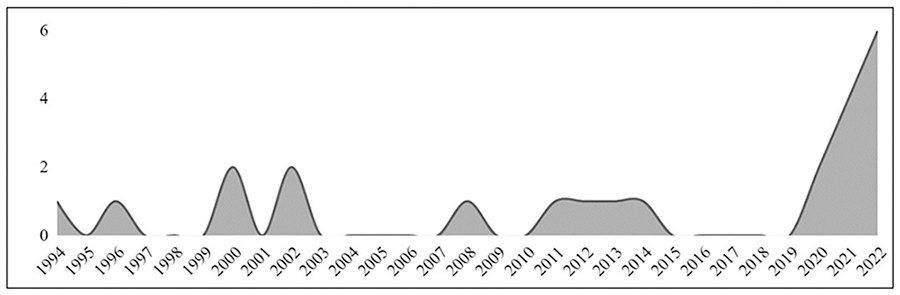
Furthermore, 22 journals published the 24 articles, with only New Technology Work and Employment and Work-A Journal of Prevention Assessment & Rehabilitation publishing 2 articles each. As for annual scientific production, shown in Figure 2, it was observed that the publications show a scarce scenario, with significant time gaps (2003 to 2007; 2015 to 2019).
However, in the years 2020 to 2022, there was a sharp increase, accounting for 50% of publications. It should be emphasized that these are studies that discuss QWL from the point of view of fatigue, the mental burden of teleworking (Tresierra & Pozo, 2020), productivity (Ulate-Araya, 2020), job satisfaction (Anthonysamy, 2022; Figueira et al., 2023; Gastearena-Balda et al., 2021; Ulate-Araya, 2020), working conditions (Gastearena-Balda et al., 2021; Morilla-Luchena et al., 2021), work-life balance (Anthonysamy, 2022; Berry et al., 2022; Figueira et al., 2023; Gastearena-Balda et al., 2021; Vayre et al., 2022), contribution of teleworking to QWL (Pereira et al., 2021; Perissé et al., 2021), and social approval perceived from the use of ICTs, (Perissé et al., 2021); signaling the main themes that mark the current context of QWL.
In addition to the pandemic, contextual elements justify this increase in publications on the subject. Examples include access to an expanded labor supply, project-based work contracts, flexible working hours, cost and time savings, as well as the need to pay due attention to workers with a practical approach that involves not only voluntary actions by the company, but also statutory standards (Warhurst & Knox, 2022). Considering that all the practices implemented by organizations aim to urgently meet the demands raised by the pandemic, research in the period considered post-pandemic (late 2022 and early 2023) already presented practical and executed responses.

The 24 articles were written by a total of 59 authors, 37.5% of whom were single authors and 62.5% multiple authors, revealing the growing number of research partnerships. Only the authors Satu Ojala (Ojala, 2011; Ojala et al., 2014) who was affiliated with the School of Social Sciences and Humanities, University of Tampere - Finland and Émilie Vayre, affiliated with the Pole of Social Psychology, University Lumière Lyon - France (Perissé et al., 2021; Vayre et al., 2022) had more than one publication. The representativeness of the country by author indicates that the United States has the largest number of publications (17%), followed by Brazil and the United Kingdom (12.5% each), Spain, Finland, France, Malaysia (8.3% each), Australia, Canada, Costa Rica, the Netherlands, India, and Peru (with 4.1% each). With the exception of the theoretical studies carried out by Ulate-Araya (2020) (Costa Rica), Tresierra and Pozo (2020) (Peru), and the literature reviews by Barton (2002) (Canada) and Van Sell and Jacobs (1994) (United States), the geographical location of the main author also represents where the research was carried out, with no partnerships observed between countries.
With regard to the citation of the articles analyzed, Table 2 shows a ranking, ordered by the number of citations (NC), with the titles, authors, year of publication, journals and number of citations in the WoS and Scopus databases of the 7 most cited articles. It is worth noting that the most cited article, by Baruch (2000), explores the topic of QWL from the perspective of workers, while the second most cited article, by Grant et al. (2013), analyzes effectiveness at work, work-life balance, and well-being.
It was possible to identify that 100% of the most cited articles are theoretical-empirical, with only the studies by Baruch (2000), Ojala (2011) and Morilla-Luchena et al. (2021) receiving funding; in addition, the three most cited articles are studies carried out in the UK: Baruch (2000), Grant et al. (2013) and Baines (2002). In fact, the study by Baines (2002) emphasized that most homes in the UK were not designed for teleworking, highlighting the importance of developing research into this practice in the home environment.
Furthermore, the research by Morilla-Luchena et al. (2021) is the only one that addresses the pandemic context (Covid-19), standing out in the ranking of the most cited articles. It is an investigation carried out in the public and private sectors in Spain, which discusses teleworkers' perceptions of working conditions during social isolation, warning of the psychosocial risks that can occur as a result of teleworking, especially compulsory teleworking. The studies by Ojala (2011) and Ojala et al. (2014) used data from the Finnish QWL Survey (2003-2008) carried out with teleworkers from the public and private spheres.
In addition, the literature review by Van Sell and Jacobs (1994) shows that, on the one hand, although teleworking offered greater productivity at a lower cost to organizations, managers found it difficult to trust that teleworkers would use their time productively. On the other hand, it was observed that the flexibility of time and space for teleworkers made it possible to reduce stress, have a greater sense of loyalty to the organization, give greater control over work, and reduction of time management conflicts / flexibility in the personal-professional-family life relationship. This is the only literature review found on the subject of QWL based on the corpus analyzed, with a significant time bottleneck, indicating the scarcity of RSLs, making it the driving force behind this study.
Based on the proposal by Cobo et al. (2011) for scientific mapping of research fields, it was possible to identify clusters that make up the strategic diagram or thematic map of the studies (Cobo et al., 2011; Rodríguez-Soler et al., 2020; Santana & Cobo, 2020). Using the abstracts of the articles as a unit of analysis, Figure 3 shows a set of research themes, based on the two-dimensional strategic mapping proposed by Cobo et al. (2011). The diagram is structured by two parameters called centrality (degree of relevance axis) and density (degree of development axis) (Cobo et al., 2011), which are responsible for classifying the themes (abstracts) into four groups (driving themes, basic themes, emerging or declining themes and niche themes) (Cobo et al., 2011). In addition, the centrality axis indicates the degree of interaction between clusters, while the density axis shows their internal cohesion (Cobo et al., 2011; Rodríguez-Soler et al., 2020; Santana & Cobo, 2020).

The strategic thematic map, shown in Figure 3, is organized by: (a) cluster 1 - life, employees, data, time, and analysis; cluster 2 - quality, research, study, findings, and job - as motor themes located in the upper right quadrant, asserting themselves as well-developed and significant in outlining the field of research, characterized by strong centrality and high density (Cobo et al., 2011). These are potential themes for future studies focused on analyzing data on the time management and way of life of teleworkers, as well as the experiences that produce QWL.
(b) cluster 3 - covid, home, pandemic, objective, and perceived; cluster 4 - results, teleworking, telework, balance, and teleworkers - are basic themes positioned in the lower right quadrant and, despite not being developed, are important for the field of research, as they are general themes, which are basic and cross-cutting (Cobo et al., 2011). In this sense, it is worth noting that clusters 3 and 4 are consistent with this study, as they indicate that the topic of QoL needs to be placed on the research agenda, especially in the context of the Covid-19 pandemic, its variants and post-pandemic effects. Special attention should be paid to the themes of work-life balance and studies that value the perceptions of teleworkers, including those who have not been able to telework in the post-pandemic period.
(c) cluster 5 - work-life, public sector, positive, and workplace; these are emerging or declining themes, considered marginal, with low centrality and density. In this sense, research investigating QWL and the positive impacts on working environments, particularly in the public sector, is welcome, as they are emerging themes.
(d) cluster 6 - impact, paper, employment, aspects, and negative; cluster 7 - based, information, remote, social and health - are niche themes, arranged in the upper left quadrant, constituting peripheral or very specialized themes, with well-developed internal connections. The importance of teleworking for society, organizations, and teleworkers cuts across themes that are already well-developed, indicating, for example, the negative aspects of social isolation and work overload for health. It is worth noting that cluster 1 also appears in the basic themes quadrant, as does cluster 3 in the emerging or declining themes quadrant, concluding the scientific mapping of research fields.
The more a person enjoys their work and the environment in which they work, the more QWL they will have. The possibilities result from the opportunities and limitations that each person has in their life and reflect the interaction of personal and environmental factors. Figure 4 proposes a conceptual model for analyzing QWL, considering content, process and context.
The model is based on the premise that QWL can be analyzed with a focus on the family context, life stories, technological factors, and cultural aspects that influence personal life, professional development, experiences in an environment of companionship with staff, managers and family, and the possibility of contributing to the creation of real value for clients and the surrounding world through one's work. In this process, QWL is influenced by and influences different variables, as illustrated in Figure 4.

5. DISCUSSION OF RESULTS AND NEW RESEARCH CHALLENGES
On one hand, the centrality of management can be considered fundamental to the success of teleworking in a given period. On the other hand, the inability of managers to support flexible working arrangements can lead to the closure of activities (Diamond, 2008).
By this logic, excessive control and lack of trust make managers resistant to the new flexible working arrangements (Van Sell & Jacobs, 1994). However, teleworking can offer improvements in quality of life, but it requires strategic vision, especially on the part of managers (Oliveira et al., 2022; Pereira et al., 2021), who should encourage the professional development of teleworkers based on mutual trust, continuous communication, recognition, and reward, promoting a sense of belonging (Figueira et al., 2023).
The effectiveness of implementing teleworking can improve the QWL of teleworkers, as long as there is a greater sense of control over the roles played, as well as collaboration between peers, career advancement, and a good work-family balance (Abdullah & Ismail, 2012). Another factor that should be taken into account is teleworkers' life histories, which influence the achievement of work-life balance, due to the inadequacy of the physical space at home for the development of work, lack of training, and professional qualification, professional isolation, tension, and family conflicts (Baines, 2002; Figueira et al., 2023; Van Sell & Jacobs, 1994).
In addition to considering the family context, the life history of teleworkers, and technological factors, it is coherent to observe cultural aspects, since, in order to contribute to sustainable development, organizations (whether private, public, or operating in the third sector) must consider the social, economic, and cultural contexts that shape the lives of the people involved, especially traditionally disadvantaged groups (Mitter, 2000).
There is no teleworking without ICTs, so understanding the relationship between social acceptance, ICT use and their impact on the work-life balance of teleworkers can provide moments of disconnection, as well as the development of support and supervision schemes. The use of ICTs by teleworkers resulted in increased work autonomy and organizational commitment, with positive effects on work-life balance. However, the frequency of tablet and laptop use has been associated with work addiction, with excessive tablet use increasing internet addiction, prompting reflection on the risks of intensive ICT use and its relationship with improving organizational performance (Perissé et al., 2021).
Thus, in order to avoid work addiction and achieve better levels of satisfaction, management should pay more attention to teleworking as an institutional program, making working hours more flexible and directing resources towards training and facilities (Gastearena-Balda et al., 2021).
Ojala et al. (2014) investigated the flexibility of teleworking and the extra informal work that is done from home. The study found that informal overtime worked from home not only puts workers' health and well-being at risk, but also has a negative impact on the work-family interface (Ojala et al., 2014). In this sense, Ojala (2011) problematizes informal flexibility, based on teleworking at home, during time that should be free. The study shows that teleworkers, in principle, feel the need to separate the workplace from their personal lives, even if this takes place at home; however, few clearly maintain the boundaries (Ojala, 2011).
In line with the studies by Morilla-Luchena et al. (2021), the profile of teleworkers drawn up by Ojala (2011) shows that married women and people with children are more likely to experience quality of life when teleworking, confirming the contributions of Van Sell and Jacobs (1994). In this sense, women who are mothers of young children tend to value remote work, as they see it as an opportunity to closely monitor the upbringing and development of their children (Figueira et al., 2023). On the other hand, women, with their unique and particular accumulation of demands, have reported more stress (Horton & Jacobs, 2022), psychological distress, and dissatisfaction with the reduction in paid working hours (Huls et al., 2022). Women who don't have children and telework also feel overloaded when it comes to doing household chores (Huls et al., 2022).
It should be noted that three decades after the pioneering studies carried out by Van Sell and Jacobs (1994), gender inequality in labor relations is still a decisive factor in the adoption of teleworking by women, calling into question the role of the male gender in the daily care of children and other dependents, as well as the division of domestic tasks (Anthonysamy, 2022; Huls et al., 2022; Oliveira et al., 2022; Vayre et al., 2022). In addition to gender inequality in teleworking having been intensified during the Covid-19 pandemic crisis (Oliveira et al., 2022; Vayre et al., 2022), other inequalities have been exacerbated and have disproportionately affected many black, indigenous, and poor people, especially women (Berry et al., 2022).
Furthermore, better rates of organizational performance and QWL are related to the appreciation of organizational culture, the relationship of trust between leaders, subordinates, and peers, as well as the definition of roles, self-discipline, motivation, the availability of space at home and the management of activities (Baruch, 2000; Figueira et al., 2023).
Teleworkers demonstrate adaptive behaviors and skills in (self-)managing telework effectively, emphasizing communication and the trusting relationship they maintain with leaders and peers; impacting the well-being of teleworkers (Grant et al., 2013). Despite the improvement in teleworkers' work-life balance, constant access to technology makes it difficult for them to completely disconnect from work and set limits (Grant et al., 2013), contributing to the discussions by Morilla-Luchena et al. (2021) and Ojala (2011) in this vein. Overwork affects the well-being and health of teleworkers and can cause burnout, giving managers the responsibility of ensuring communication and checking the workload, as well as performance and well-being (Grant et al., 2013), ultimately promoting quality of life in telework.
Teleworking is effective when related to job satisfaction and positively affects the productivity of teleworkers, as long as the organization supports its implementation and execution, including by valuing cybersecurity (Anthonysamy, 2022; Ulate-Araya, 2020). Thus, the teleworking program must be formulated based on ethical standards, in addition to guiding QWL for teleworkers (Ulate-Araya, 2020).
Based on telephone interviews with French teleworkers in the private sector, Vayre et al. (2022) pointed out the positive (flexibility, professional autonomy, greater concentration at work, work-life balance) and negative (difficulties in time management and socio-professional integration) effects of teleworking. Consequently, the authors suggest that organizations value and draw inspiration from the results of scientific research in order to design and implement strategies, policies, and GP practices which support the implementation of sustainable teleworking in the post-pandemic era (Vayre et al., 2022). In this sense, Figueira et al. (2023) discuss telework management practices, stating that it is essential for organizations to establish organizational telework policies, complying with government policies, and providing communication plans and skills for teleworkers.
Figueira et al. (2023) also consider the urgency of developing (flexible) GP practices for teleworking, which is in line with the studies by Vayre et al. (2022). In addition, technological support, a relationship of mutual trust with leadership, work-life balance, negotiation of goals and work plans, well-being and professional integration are fundamental to the satisfaction and sense of belonging of Brazilian teleworkers. It should be noted that the studies by Figueira et al. (2023) and Vayre et al. (2022) were written during the Covid-19 pandemic, but the data was collected in earlier periods.
The study by Tresierra and Pozo (2020) makes a rich contribution to the topic of telework QoL by problematizing the mental burden and fatigue in telework, notably by considering the pandemic context caused by Covid-19. As such, Tresierra and Pozo (2020) note that psychosocial risks - mentioned by Morilla-Luchena et al. (2021) and Barton (2002) - are inherent to transformations in the world of work and compromise the QWL, calling for special attention to be paid to the mental health of people who have been placed in compulsory teleworking due to the global pandemic (Tresierra & Pozo, 2020). Along these lines, many Dutch workers perceived that they worked less during social isolation and considered that they were less productive (Huls et al., 2022).
Regarding working conditions, Morilla-Luchena et al. (2021) observed that compulsory teleworking due to Covid-19 had a strong impact on face-to-face work. The adoption of ICTs made it possible to adapt work in times of crisis, creating greater flexibility and work-life balance, reorganizing administrative activities that proved to be more effective in a non-face-to-face format (Morilla-Luchena et al., 2021).
However, teleworkers perceived an increase in working hours and the feeling of not being able to disconnect from work, signaling attention to possible psychosocial risks arising from this teleworking situation (Morilla-Luchena et al., 2021), or even substance abuse problems such as alcohol and illicit drugs, which also have an impact on QWL (Barton, 2002). In addition, the research reveals that the predominant profile for a possible teleworking program in the Spanish social service would be married or divorced people with children, the elderly and civil servants (Morilla-Luchena et al., 2021), problematizing the interest of the private sector and single people in adopting teleworking.
When examining the implications of the pandemic (Covid-19) on the quality of life of American civil servants, Berry et al. (2022) observed that increased work demands, emotional tension, more bureaucratic environments and resource restrictions are lessons learned through challenges and difficulties, which should guide leaders in redesigning more reflective and people-centered HRM practices. In this way, results on the intensification of work (impacting on QWL), such as those presented by Oliveira et al. (2022), need to be studied further. This is a group of Brazilian public education managers who feel satisfied and fulfilled with their home office activities, even though they have seen an increase in the workload (Oliveira et al., 2022).
Still in the educational context, the research by Horton and Jacobs (2022) observes that a teleworking program in the hybrid format is the most suitable for Americans who are teachers in higher education. The feeling of increased control over time to carry out activities and quality of life at work, as well as reduced stress, were results that support the findings of Horton and Jacobs (2022) and strengthen the hybrid teleworking model.
To sum up, research on QWL in the post-pandemic context can be found in Anthonysamy's (2022) study of Malaysian information technology teleworkers. The teleworkers expressed satisfaction with the teleworking experience based on autonomy and work-life balance but showed anxiety about the permanence of teleworking after the end of social isolation or post-pandemic. In addition, planning for the transition of work environments to the hybrid format is recommended, considering the specificities of each organization (Anthonysamy, 2022), corroborating the studies by Horton and Jacobs (2022).
It is essential to recognize the methodological limitations of this study in focusing exclusively on the international databases Scopus and Web of Science, as well as considering only scientific articles published in journals. Considering the small number of articles found, although all the articles in these databases were represented because there was no time cut-off, it is not possible to certify that the state of the art has been synthesized, so it is suggested that the discussion on the subject be expanded using other databases, but keeping the focus on scientific articles. Theses, dissertations, and articles published at conferences are works in progress and therefore not recommended for literature reviews.
Based on the corpus analyzed, it was possible to identify that the field of studies on quality of life in teleworking expresses urgency in updating research and proposals that have practical implications for individuals, organizations, and society, with special attention to the complex scenario imposed by Covid-19, already also glimpsing the post-pandemic context. From this perspective, the scarcity of longitudinal, quantitative, and multi-method research on QWLW is evident, indicating publication gaps for further studies.
Considering the suggestions for future research presented by the articles analyzed, it is worth highlighting topics such as: (i) well-being, performance, personality, family support, positive and negative effects of communication and interpersonal relationships of teleworkers, the management of telework in the pandemic context (Morilla-Luchena et al., 2021); (ii) occupational health, organizational communication, the relationship between QWL and productivity in telework (Huls et al., 2022; Pereira et al., 2021); (iii) the relationship between teleworking and sedentary lifestyles, the impact of teleworking on divorce rates, chronic health conditions caused by inadequate body posture during teleworking such asd low back pain and carpal tunnel syndrome (Ulate-Araya, 2020), increased risks of musculoskeletal disorders (Horton & Jacobs, 2022; Vayre et al., 2022) among other diseases; (iv) occupational health, organizational communication, the relationship between QWL and productivity in teleworking (Huls et al., 2022; Pereira et al., 2021), among other illnesses; (iv) satisfaction, impact of teleworking on the mental and physical health of teleworkers (Huls et al., 2022); (v) effects of ICTs in the context of remote and informal working practices (Perissé et al., 2021).
Finally, this discussion concludes by proposing themes and questions that translate into challenges to inspire new research opportunities, namely: (i) workers' perception of QWL (comparative research between the public, private and third sectors); (ii) the relationship between QWL and leadership mediated by GP practices; (iii) how does family perception of teleworking impact the QWL of teleworkers? (iv) What are the ergonomic implications that affect QWL? (v) What are the psychosocial risks that have most affected workers who have experienced compulsory teleworking due to Covid-19? (vi) What were the biggest challenges that impacted on QWL during social isolation in the context of the pandemic? (vii) What were the best findings and advantages of adopting compulsory teleworking? (viii) How can QWL be promoted after the pandemic? (ix) Do we have the right to disconnect? (x) what are the impacts and strategies for promoting QWL with a focus on teleworkers who care for children, the elderly or other dependents? (xi) how are diversity and inequalities (gender, race, age, ethnicity, nationality, people with disabilities, etc.) shaped and impacted by teleworking? And what are the implications for these people's QWL and organizational policies?
6. CONCLUSION
By analyzing the international literature on quality of life in the context of teleworking, portraying the research routes, as well as drawing up an agenda for future studies, based on the new challenges and opportunities listed, the objective of this systematic review has been achieved. Considering the lack of research that has reviewed the literature on QWLW, this article represents a seminal effort to bring together these scientific productions, revealing new possibilities for investigating and understanding the phenomenon.
If QWL was already considered an important object of study in the times of ancient civilizations, in the pandemic and post-pandemic contexts, QWL has become a fundamental theme in the creation of programs, policies and practices in the GP sector, (de)organizing the rigid and controlling structures that insist on remaining in the past. This study shows that QWL is a crucial topic for different areas of research, such as administration, economics, philosophy, psychology, sociology, occupational health, public health, and clinical research.
Finally, QWL is an essentially multidisciplinary issue, involving workers, managers, students, researchers, academics, and other members of society interested in promoting quality of life in (tele)work, based on the individual-work-organization triad, focusing on health and well-being, towards an increasingly strategic, humanized and sustainable management of people.
References
-
Abdullah, H., & Ismail, N. (2012). Quality of work and life balance in teleworking. International Business Management, 6(2), 119-130. https://doi.org/10.3923/ibm.2012.119.130
» https://doi.org/10.3923/ibm.2012.119.130 -
Adisa, T. A., Gbadamosi, G., Mordi, T., & Mordi, C. (2019). In search of perfect boundaries? Entrepreneurs’ work-life balance. Personnel Review, 48(6),1634-1651. https://doi.org/10.1108/PR-06-2018-0197
» https://doi.org/10.1108/PR-06-2018-0197 -
Aguinis, H., Ramani, R. S., & Alabduljader, N. (2020). Best-practice recommendations for producers, evaluators, and users of methodological literature reviews. Organizational Research Methods, 26(1), 46-76. https://doi.org/10.1177/1094428120943281
» https://doi.org/10.1177/1094428120943281 -
Anthonysamy, L. (2022). Continuance intention of IT professionals to telecommute post pandemic: A modified expectation confirmation model perspective. Knowledge Management & E-Learning, 14(4), 536-558. https://doi.org/10.34105/j.kmel.2022.14.027
» https://doi.org/10.34105/j.kmel.2022.14.027 -
Aria, M., & Cuccurullo, C. (2017). Bibliometrix: An R-tool for comprehensive science mapping analysis. Journal of Informetrics, 11(4), 959-975. https://doi.org/10.1016/j.joi.2017.08.007
» https://doi.org/10.1016/j.joi.2017.08.007 - Avram, A., Avram, M., Avram, C. D., Popescu, L., Sitnikov, C., & Raluca Guse, G. (2021). Teleworking and its impact on labour productivity and wage income. Transformations in Business & Economics, 20(3), 372-386.
-
Baba, V. V., & Jamal, M. (1991). Routinization of job context and job content as related to employees' quality of working life: A study of Canadian nurses. Journal of Organizational Behavior, 12(5), 379-386. https://doi.org/10.1002/job.4030120503
» https://doi.org/10.1002/job.4030120503 -
Bae, K. B., & Kim, D. (2016). The Impact of Decoupling of Telework on Job Satisfaction in U.S. Federal Agencies. The American Review of Public Administration, 46(3), 356-371. https://doi.org/10.1177/0275074016637183
» https://doi.org/10.1177/0275074016637183 -
Baines, S. (2002). New technologies and old ways of working in the home of the self-employed teleworker. New Technology, Work and Employment, 17(2), 89-101. https://doi.org/10.1111/1468-005X.00096
» https://doi.org/10.1111/1468-005X.00096 -
Barton, S. S. (2002). Aspects of the effect of substance use on health, wellness and safety of employees and families in northern remote work sites. Social Indicators Research, 60, 263-274. https://doi.org/10.1023/A:1021221300586
» https://doi.org/10.1023/A:1021221300586 -
Baruch, Y. (2000). Teleworking: Benefits and pitfalls as perceived by professionals and managers. New Technology, Work and Employment, 15(1), 34-49. https://doi.org/10.1111/1468-005X.00063
» https://doi.org/10.1111/1468-005X.00063 -
Berry, S., Trochmann, M. B., & Millesen, J. L. (2022). Putting the Humanity Back Into Public Human Resources Management: A Narrative Inquiry Analysis of Public Service in the Time of COVID-19. Review of Public Personnel Administration, 44(1), 0734371X2110696. https://doi.org/10.1177/0734371X211069656
» https://doi.org/10.1177/0734371X211069656 -
Boisvert, M. P. (1977). The quality of working life: An analysis. Human Relations, 30(2), 155-160. https://doi.org/10.1177/001872677703000204
» https://doi.org/10.1177/001872677703000204 -
Chadegani, A., Salehi, H., Yunus, M., Farhadi, H., Fooladi, M., Farhadi, M., & Ale Ebrahim, N. (2013). A comparison between two main academic literature collections: Web of Science and Scopus databases. Asian Social Science, 9(5), 18-26. https://doi.org/10.48550/arXiv.1305.0377
» https://doi.org/10.48550/arXiv.1305.0377 -
Chakrabarti, S (2018). Does telecommuting promote sustainable travel and physical activity? Journal of Transport & Health, 9, 19-33. https://doi.org/10.1016/j.jth.2018.03.008
» https://doi.org/10.1016/j.jth.2018.03.008 -
Chanana, M., & Gupta, S. K. (2016). Quality of work life and its impact on job performance: a study of SBI & HDFC banking professionals. International Research Journal of Management, IT and Social Sciences, 3(5), 16-24. https://doi.org/10.21744/irjmis.v3i5.12
» https://doi.org/10.21744/irjmis.v3i5.12 -
Chatrakul Na Ayudhya, U., Prouska, R., & Beauregard, T. A. (2019). The impact of global economic crisis and austerity on quality of working life and work‐life balance: A capabilities perspective. European Management Review, 16(4), 847-862. https://doi.org/10.1111/emre.12128
» https://doi.org/10.1111/emre.12128 -
Cobo, M. J., Lopez-Herrera, A. G., Herrera-Viedma, E., & Herrera, F. (2011). An approach for detecting, quantifying, and visualizing the evolution of a research field: A practical application to the Fuzzy Sets Theory field. Journal of Informetrics, 5(1), 146-166. https://doi.org/10.1016/j.joi.2010.10.002
» https://doi.org/10.1016/j.joi.2010.10.002 -
Cullinane, S. J., Bosak, J., Flood, P. C., & Demerouti, E. (2017). Job crafting for lean engagement: The interplay of day and job-level characteristics. European Journal of Work and Organizational Psychology, 26(4), 541-554. https://doi.org/10.1080/1359432X.2017.1320280
» https://doi.org/10.1080/1359432X.2017.1320280 -
Danford, A., Richardson, M., Stewart, P., Tailby, S., & Upchurch, M. (2008). Partnership, high performance work systems and quality of working life. New Technology, Work and Employment, 23(3), 151-166. https://doi.org/10.1111/j.1468-005X.2008.00210.x
» https://doi.org/10.1111/j.1468-005X.2008.00210.x -
Dechawatanapaisal, D. (2017). The mediating role of organizational embeddedness on the relationship between quality of work life and turnover: Perspectives from healthcare professionals. International Journal of Manpower, 38(5), 696-711. https://doi.org/10.1108/IJM-12-2015-0205
» https://doi.org/10.1108/IJM-12-2015-0205 -
Dhondt, S., & Benders, J. (1998). Missing links: Production structures and quality of working life in the clothing industry. International Journal of Operations & Production Management, 18(12), 1189-1204. https://doi.org/10.1108/01443579810236629
» https://doi.org/10.1108/01443579810236629 -
Diamond, C. (2008). Telework management and work practices: The case of an Australian telecentre. International Journal of Services Technology and Management, 9(2), 93-102. https://doi.org/10.1504/IJSTM.2008.018422
» https://doi.org/10.1504/IJSTM.2008.018422 -
El Badawy, T. A., Chinta, R., & Magdy, M. M. (2018). Does ‘gender’ mediate or moderate the relationship between ‘quality of work life’ and ‘organizational commitment’? Evidence from SMEs in Egypt. Gender in Management, 33(4), 332-348. https://doi.org/10.1108/GM-04-2017-0050
» https://doi.org/10.1108/GM-04-2017-0050 -
Figueira, A. S., Costa, S. R. R., Rampasso, I., Ferraz, F. T., & Resende, D. (2023). An analysis of teleworking management practices. Work-A Journal of Prevention Assessment & Rehabilitation, 74(3), 1135-1148. https://doi.org/10.3233/WOR-211401
» https://doi.org/10.3233/WOR-211401 -
Filardi, F., Castro, R. M. P. de, & Zanini, M. T. F. (2020). Vantagens e desvantagens do teletrabalho na administração pública: análise das experiências do Serpro e da Receita Federal. Cadernos EBAPE.BR, 18(1), 28-46. https://doi.org/10.1590/1679-395174605
» https://doi.org/10.1590/1679-395174605 -
Gastearena-Balda, L., Ollo-López, A., & Larraza-Kintana, M. (2021). Are public employees more satisfied than private ones? The mediating role of job demands and job resources. Journal of the Iberoamerican Academy of Management, 19(3/4), 231-258. https://doi.org/10.1108/MRJIAM-09-2020-1094
» https://doi.org/10.1108/MRJIAM-09-2020-1094 -
Graen, G., Cashman, J. F., Ginsburg, S., & Schiemann, W. (1977). Effects of linking-pin quality on the quality of working life of lower participants. Administrative Science Quarterly, 22(3), 491-504. https://doi.org/10.2307/2392185
» https://doi.org/10.2307/2392185 -
Grant, C. A., Wallace L. M., & Spurgeon P. C. (2013). An exploration of the psychological factors affecting remote e-worker’s job effectiveness, well-being and work-life balance. Employee Relations, 35(5), 527-546. https://doi.org/10.1108/ER-08-2012-0059
» https://doi.org/10.1108/ER-08-2012-0059 - Green, N., Tappin, D., & Bentley, T. (2017). Exploring the Teleworking Experiences of Organisations in a Post-Disaster Environment. New Zealand Journal of Human Resources Management, 17(1), 1-19.
-
Grote, G., & Guest, D. (2017). The case for reinvigorating quality of working life research. Human Relations, 70(2), 149-167. https://doi.org/10.1177/0018726716654746
» https://doi.org/10.1177/0018726716654746 -
Hamzah, S. R. A., Musa, S. N. S., Muda, Z., & Ismail, M. (2021). Quality of working life and career engagement of cancer survivors: The mediating role of effect of disease and treatment. European Journal of Training and Development, 45(2/3), 181-199. https://doi.org/10.1108/EJTD-02-2020-0015
» https://doi.org/10.1108/EJTD-02-2020-0015 -
Horton, N., & Jacobs, K. (2022). How Does the Working Environment Transition Impact Perceived Work-related Quality of Life for Postsecondary Teachers Within the United States? Work-A Journal of Prevention Assessment & Rehabilitation, 71(2), 417-421. https://doi.org/10.3233/WOR-210819
» https://doi.org/10.3233/WOR-210819 -
Huls, S. P. I., Sajjad, A., Kanters, T. A., Roijen, L. H., Brouwer, W. B. F., & Exel, J. V. (2022). Productivity of Working at Home and Time Allocation Between Paid Work, Unpaid Work and Leisure Activities During a Pandemic. PharmacoEconomics, 40, 77-90. https://doi.org/10.1007/s40273-021-01078-7
» https://doi.org/10.1007/s40273-021-01078-7 -
Katz, H. C., Kochan, T. A., & Weber, M. (1985). Assessing the effects of industrial relations and quality of working life on organizational performance. Academy of Management Journal, 28(3), 509-527. https://doi.org/10.5465/256111
» https://doi.org/10.5465/256111 -
Kim, H., Woo, E., Uysal, M., & Kwon, N. (2018). The effects of corporate social responsibility (CSR) on employee well-being in the hospitality industry. International Journal of Contemporary Hospitality Management, 30(3), 1584-1600. https://doi.org/10.1108/IJCHM-03-2016-0166
» https://doi.org/10.1108/IJCHM-03-2016-0166 -
Klein, L. L., & Pereira, B. A. D., Lemos, R. B. (2019). Qualidade de vida no trabalho: Parâmetros e avaliação no serviço público. Revista de Administração Mackenzie, 20(3), eRAMG190134. https://doi.org/10.1590/1678-6971/ERAMG190134
» https://doi.org/10.1590/1678-6971/ERAMG190134 -
Kobis, P., & Karyy, O. (2021). Impact of the human factor on the security of information resources of enterprises during the COVID-19 pandemic. Polish Journal of Management Studies, 24(2), 210-227. https://doi.org/10.17512/pjms.2021.24.2.13
» https://doi.org/10.17512/pjms.2021.24.2.13 -
Korunka, C., Carayon, P., Sainfort, F., Scharitzer, D., & Hoonakker, P. (2003). Quality in the public sector from an employee's perspective: Results from a transnational comparison. Total Quality Management & Business Excellence, 14(5), 541-552. https://doi.org/10.1080/1478336032000053573
» https://doi.org/10.1080/1478336032000053573 -
Levine, M. F., Taylor, J. C., & Davis, L. E. (1984). Defining quality of working life. Human Relations, 37(1), 81-104. https://doi.org/10.1177/001872678403700105
» https://doi.org/10.1177/001872678403700105 -
Lewchuk, W., Stewart, P., & Yates, C. (2001). Quality of working life in the automobile industry: A Canada‐UK comparative study. New Technology, Work and Employment, 16(2), 72-87. https://doi.org/10.1111/1468-005X.00078
» https://doi.org/10.1111/1468-005X.00078 -
Manko, B. A. (2021). Considerations in the use of work-from-home (wfh) for post-pandemic planning and management. Management, 25(1), 118-140. https://doi.org/10.2478/manment-2019-0062
» https://doi.org/10.2478/manment-2019-0062 - Messenger, L., Llave, O. V., Gschwind, L., Boehmer, S., Vermeylen, G., & Wilkens, M. (2018). In Eurofound and the International Labour Office (Org.). Working anytime, anywhere: The effects on the world of work (pp. 1-80). Publications Office of The European Union.
-
Mitter, S. (2000). Teleworking and teletrade in India: Combining diverse perspectives and visions. Economic and Political Weekly, 35(26), 2241-2252. https://doi.org/10.2307/4409444
» https://doi.org/10.2307/4409444 -
Morilla-Luchena, A., Muñoz-Moreno, R., Chaves-Montero, A., & Vázquez-Aguado, O. (2021). Telework and social services in Spain during the COVID-19 pandemic. International Journal of Environmental Research and Public Health, 18(2), 725. https://doi.org/10.3390/ijerph18020725
» https://doi.org/10.3390/ijerph18020725 -
Ojala, S. (2011). Supplemental work at home among finnish wage earners: Involuntary overtime or taking the advantage of flexibility? Nordic Journal of Working Life Studies, 1(2), 77-97. https://doi.org/10.19154/njwls.v1i2.2346
» https://doi.org/10.19154/njwls.v1i2.2346 -
Ojala, S., Nätti, J., & Antilla, T. (2014). Informal overtime at home instead of telework: Increase in negative work-family interface. International Journal of Sociology and Social Policy, 34(1/2), 69-87. https://doi.org/10.1108/IJSSP-03-2013-0037
» https://doi.org/10.1108/IJSSP-03-2013-0037 -
Oliveira, A. A. R., Lucena, N. N. N., Damascena, L. C. L., Albuquerque, R. L., & Silva, L. B. G. (2022). Impactos da Pandemia da Covid-19 na Qualidade de Vida no Trabalho dos Gestores do IFPB, campus João Pessoa, em Atividades Home Office. Revista Ciências Administrativas, 28(Esp), e13039. https://doi.org/10.5020/2318-0722.2022.28.Esp.e13039
» https://doi.org/10.5020/2318-0722.2022.28.Esp.e13039 -
Palumbo, R., Flamini, G., Gnan, L., Pellegrini, M. M., Petrolo, D., & Fakhar Manesh, M. (2022). Disentangling the implications of teleworking on work-life balance: a serial mediation analysis through motivation and satisfaction. Journal of Organizational Effectiveness: People and Performance, 9(1), 68-88. https://doi.org/10.1108/JOEPP-08-2020-0156
» https://doi.org/10.1108/JOEPP-08-2020-0156 -
Pantoja M. J., Andrade L. L. S., & Oliveira M. A. (2020). Qualidade de Vida no Teletrabalho Compulsório: percepções de trabalhadores de uma organização pública brasileira. Revista da UI_IP Santarém, 8(4), 80-94. https://doi.org/10.25746/ruiips.v8.i4.21975
» https://doi.org/10.25746/ruiips.v8.i4.21975 -
Pereira, L. J., Oliveira, A. C., Silva, L. P., & Mendonça, C. M. C. (2021). Teletrabalho e qualidade de vida: Estudo de caso do poder judiciário em um estado do norte do Brasil. Revista Gestão e Desenvolvimento, 18(1), 222-245. https://doi.org/10.25112/rgd.v18i1.2283
» https://doi.org/10.25112/rgd.v18i1.2283 -
Perissé, M., Vonthron, A. M., & Vayre, É. (2021). Nomadic, Informal and Mediatised Work Practices: Role of Professional Social Approval and Effects on Quality of Life at Work. Sustainability, 13(22), 12878. https://doi.org/10.3390/su132212878
» https://doi.org/10.3390/su132212878 -
Prodanova, J., & Kocarev, L. (2022). Employees' dedication to working from home in times of COVID-19 crisis. Management Decision, 60(3), 509-530. https://doi.org/10.1108/MD-09-2020-1256
» https://doi.org/10.1108/MD-09-2020-1256 -
Pruijt, H. (2000). Performance and quality of working life. Journal of Organizational Change Management, 13(4), 389-400. https://doi.org/10.1108/09534810010339077
» https://doi.org/10.1108/09534810010339077 -
Rodríguez-Soler, R., Uribe-Toril, J., & Valenciano, J. P. (2020). Worldwide trends in the scientific production on rural depopulation, a bibliometric analysis using bibliometrix R-tool. Land Use Policy, 97, 104787. https://doi.org/10.1016/j.landusepol.2020.104787
» https://doi.org/10.1016/j.landusepol.2020.104787 -
Santana, M., & Cobo, M. J. (2020). What is the future of work? A science mapping analysis. European Management Journal, 38(6), 846-862. https://doi.org/10.1016/j.emj.2020.04.010
» https://doi.org/10.1016/j.emj.2020.04.010 - Taylor, F. W. (1978). Princípios de administração científica Atlas.
-
Templier, M., & Paré, G. (2015). A framework for guiding and evaluating literature reviews. Communications of the Association for Information Systems, 37(1), 6. https://doi.org/10.17705/1CAIS.03706
» https://doi.org/10.17705/1CAIS.03706 -
Tranfield, D., Denyer, D., & Smart, P. (2003). Towards a methodology for developing evidence‐informed management knowledge by means of systematic review. British Journal of Management, 14(3), 207-222. https://doi.org/10.1111/1467-8551.00375
» https://doi.org/10.1111/1467-8551.00375 -
Tresierra, C. E. V., & Pozo, A. C. L. (2020). La fatiga y la carga mental en los teletrabajadores: A propósito del distanciamiento social. Revista española de salud pública,, 94(9), e202010112. https://dialnet.unirioja.es/servlet/articulo?codigo=7721498
» https://dialnet.unirioja.es/servlet/articulo?codigo=7721498 -
Ulate-Araya, R. (2020). Teletrabajo y su impacto en la productividad empresarial y la satisfacción laboral de los colaboradores: Tendencias recientes. Tecnología en Marcha, 33(7), 23-31. https://dialnet.unirioja.es/servlet/articulo?codigo=7654566
» https://dialnet.unirioja.es/servlet/articulo?codigo=7654566 -
Van Sell, M., & Jacobs, S. M. (1994). Telecommuting and quality of life: A review of the literature and a model for research. Telematics and Informatics, 11(2), 81-95. https://doi.org/10.1016/0736-5853(94)90033-7
» https://doi.org/10.1016/0736-5853(94)90033-7 -
Vayre, É., Morin-Messabel, C., Cros, F., Maillot, A.-S., & Odin, N. (2022). Benefits and Risks of Teleworking from Home: The Teleworkers’ Point of View. Information, 13(11), 545. https://doi.org/10.3390/info13110545
» https://doi.org/10.3390/info13110545 -
Vilarinho, K. P. B., Paschoal, T., & Demo, G. (2021). Teletrabalho na atualidade: Quais são os impactos no desempenho profissional, bem-estar e contexto de trabalho? Revista do Serviço Público, 72(1), 133-162. http://repositorio.enap.gov.br/handle/1/6273
» http://repositorio.enap.gov.br/handle/1/6273 -
Wacker, G., & Nadler, G. (1980). 7 Myths About Quality of Working Life. California Management Review, 22(3), 15-23. https://doi.org/10.2307/41164872
» https://doi.org/10.2307/41164872 - Walton, R. E. (1973). Quality of working life: what is it. Sloan Management Review, 15(1), 11-21.
-
Warhurst, C., & Knox, A. (2022). Manifesto for a new Quality of Working Life. Human relations, 75(2), 304-321. https://doi.org/10.1177/0018726720979348
» https://doi.org/10.1177/0018726720979348 -
Zupic, I., & Čater, T. (2015). Bibliometric methods in management and organization. Organizational Research Methods, 18(3), 429-472. https://doi.org/10.1177/1094428114562629
» https://doi.org/10.1177/1094428114562629
Edited by
-
EDITOR-IN-CHIEF
Talles Vianna Brugni https://orcid.org/0000-0002-9025-9440
-
ASSOCIATE EDITOR:
Bruno Felix https://orcid.org/0000-0001-6183-009X

 Source: prepared by the authors
 Source: elaborated by the authors
 Source: elaborated by the authors Using bibliometrix (
 Source: Authors of this study