
 Nursing consultations for the elderly: investigating the competencies of advanced practice nurses
Abstract
Objective To analyze nursing consultations (NC) with elderly people in Primary Health Care (PHC), investigating the care management competencies proposed for Advanced Practice Nurses (APN).
Methods A multicenter study with a quantitative-qualitative approach, conducted through the filming of 24 NCs and analysis of the respective health records, conducted by 13 nurses in three regions of Brazil. The quantitative analysis verified compliance with the stages of the Nursing Process (NP), and NCs with compliance equal to or greater than 40% were analyzed qualitatively based on the care management competencies proposed for APN.
Results The NCs presented weaknesses in the data collection stage, lack of multidimensional assessment, and low application of the NP. It was observed that, even in the face of chronic diseases such as hypertension and diabetes, care was fragmented, with no coordination between diagnosis, planning, and intervention. Only six NCs achieved 40% or greater compliance with the NP. The care management competencies proposed for APN were mostly absent and, when present, only partially so.
Conclusion The nursing consultations for older adults in the PHC investigated present technical weaknesses and a distance from the competencies required for APN in PHC. The findings reinforce the need for professional qualification strategies and strengthening of the scope of practice of nurses in PHC to ensure qualified care, and for the implementation of APN in Brazilian PHC, there is a need for specific guidelines for the training of the expected competencies.
Descriptors:
Advanced practice nursing; Nursing consultation; Aging; Aged; Health of the elderly; Primary health care
Resumo
Objetivo Analisar as consultas de enfermagem (CE) à pessoa idosa na Atenção Primária à Saúde (APS), investigando as competências de gestão do cuidado proposta para Enfermeiro de Prática Avançada (EPA).
Métodos Estudo multicêntrico com abordagem quantiqualitativa, realizado por meio de filmagens de 24 CE e análise dos respectivos registros em prontuário, conduzidas por 13 enfermeiros em três regiões do Brasil. A análise quantitativa verificou o cumprimento das etapas do Processo de Enfermagem (PE) e as CE com cumprimento igual ou maior a 40% de foram analisadas qualitativamente com base nas competências de gestão do cuidado propostas para EPA.
Resultados As CE apresentaram fragilidades na etapa de coleta de dados, ausência de avaliação multidimensional e baixa aplicação do PE. Observou-se que, mesmo diante de doenças crônicas como hipertensão e diabetes, o cuidado foi fragmentado, sem articulação entre diagnóstico, planejamento e intervenção. Apenas seis CE atingiram o valor maior ou igual a 40% de cumprimento do PE. As competências de gestão do cuidado propostas para EPA estavam majoritariamente ausentes e quando presentes, de forma parcial.
Conclusão As consultas de enfermagem à pessoa idosa na APS investigadas apresentam fragilidades técnicas e distanciamento das competências exigidas para EPA na APS. Os achados reforçam a necessidade de estratégias de qualificação profissional e fortalecimento do escopo de atuação dos enfermeiros na APS para garantir cuidado qualificado, e para implementação da EPA na APS brasileira há necessidade de direcionamentos específicos para a formação das competências previstas.
Descritores:
Prática avançada de enfermagem; Consulta de enfermagem; Envelhecimento; Idoso; Saúde do idoso; Atenção primária à saúde
Resumen
Objetivo Analizar las consultas de enfermería (CE) a la persona adulta mayor en la Atención Primaria de Salud (APS), investigando las competencias de gestión del cuidado propuestas para el Profesional de Enfermería de Práctica Avanzada (EPA).
Métodos Estudio multicéntrico con enfoque cuantitativo-cualitativo, realizado mediante la filmación de 24 CE y el análisis de los respectivos registros en historias clínicas, llevado a cabo por 13 profesionales de enfermería en tres regiones de Brasil. El análisis cuantitativo verificó el cumplimiento de las etapas del Proceso de Enfermería (PE) y las CE con un cumplimiento igual o superior al 40 % se analizaron cualitativamente en función de las competencias de gestión del cuidado propuestas para el EPA.
Resultados Las CE presentaron deficiencias en la etapa de recopilación de datos, ausencia de evaluación multidimensional y baja aplicación del PE. Se observó que, incluso ante enfermedades crónicas como la hipertensión y la diabetes, la atención era fragmentada, sin articulación entre el diagnóstico, la planificación y la intervención. Solo seis CE alcanzaron un valor igual o superior al 40 % de cumplimiento del PE. Las competencias de gestión del cuidado propuestas para el EPA estaban en su mayoría ausentes y, cuando estaban presentes, lo estaban de forma parcial.
Conclusión Las consultas de enfermería a la persona adulta mayor en la APS investigadas presentan deficiencias técnicas y se alejan de las competencias exigidas para la EPA en la APS. Los hallazgos refuerzan la necesidad de estrategias de cualificación profesional y fortalecimiento del ámbito de actuación de los profesionales de enfermería en la APS para garantizar una atención cualificada, y la implementación de la EPA en la APS brasileña necesita orientaciones específicas para la formación de las competencias previstas.
Descriptores:
Enfermería de práctica avanzada; Enfermería de consulta; Envejecimiento; Anciano; Salud del anciano; Atención primaria de salud
Résumé
Objectif Analyser les consultations infirmières (CI) auprès des personnes âgées dans les soins de santé primaires (SSP), en étudiant les compétences de gestion des soins proposées pour les infirmiers praticiens avancés (IPA).
Méthodes Étude multicentrique avec une approche quantitative et qualitative, réalisée à partir de l›enregistrement vidéo de 24 CI et de l’analyse des dossiers médicaux correspondants, menée par 13 infirmiers dans trois régions du Brésil. L’analyse quantitative a vérifié le respect des étapes du processus infirmier (PI) et les CI avec un respect égal ou supérieur à 40% ont été analysées qualitativement sur la base des compétences de gestion des soins proposées pour les IPA.
Résultats Les CI ont présenté des faiblesses dans l’étape de collecte des données, l’absence d’évaluation multidimensionnelle et une faible application du PI. Il a été observé que, même face à des maladies chroniques telles que l’hypertension et le diabète, les soins étaient fragmentés, sans articulation entre le diagnostic, la planification et l’intervention. Seules six CI ont atteint une valeur supérieure ou égale à 40% de conformité au PI. Les compétences de gestion des soins proposées pour IPA étaient majoritairement absentes et, lorsqu’elles étaient présentes, elles l’étaient de manière partielle.
Conclusion Les consultations infirmières auprès des personnes âgées dans les soins de santé primaires étudiés présentent des faiblesses techniques et un éloignement des compétences requises pour les soins infirmiers aux personnes âgées dans les soins de santé primaires. Les résultats renforcent la nécessité de stratégies de qualification professionnelle et de renforcement du champ d’action des infirmiers dans les soins de santé primaires afin de garantir des soins qualifiés. Pour la mise en œuvre des soins infirmiers aux personnes âgées dans les soins de santé primaires brésiliens, des orientations spécifiques sont nécessaires pour la formation des compétences prévues.
Descripteurs:
Pratique infirmière avancée; Consultation infirmière; Vieillissement; Personnes âgées; Santé des personnes âgées; Soins de santé primaires
Introduction
The expansion of the scope of nursing practice has gained prominence in the national and international context, especially in Primary Health Care (PHC), as one of the responses to the challenges faced by Health Systems. In this context, the growing aging population intensifies the challenges in providing access and quality comprehensive care, especially in PHC. The increase in chronic diseases and the demand for continuous care require specific preparation of professionals, and nursing has in the nursing consultation a powerful tool in the work process for assessment, early detection of worsening conditions, and planning of interventions that promote autonomy and quality of life for the elderly.(1) Thus, Advanced Practice Nurses (APNs) have been incorporating expanded clinical competencies, with specialized training focused on autonomy and quality of health care as a strategy to improve PHC and expand access to services.(2-4)
APNs are professionals, usually with a master’s degree in advanced practice, with a foundation of specialized knowledge, the ability to make complex decisions, and clinical competencies to work in the field of Advanced Nursing Practice, incorporating professional leadership, autonomy, clinical practice, education, and research into their practice, so that their professional performance includes relevant knowledge, critical thinking, complex decision-making, autonomous, effective, and safe practice, integrated into the interprofessional team, contributing to the management of user care.(5) There are global movements at different stages of evolution throughout history, some that have been implemented for over 50 years and other countries that are debating the inclusion of APN in the health system.(6) International experiences, such as in Portugal, indicate that implementation is relevant and necessary, although its feasibility depends on strong leadership, political commitment, and consensus among stakeholders.(7)
Thus, in Brazil, the debate on APN involves divergences, interests, doubts, and questions about whether the advanced practice is already being performed by PHC nurses, with consensus among the different fronts that this role should be to strengthen the principles of the Unified Health System (SUS). Thus, Brazilian scientific production on the subject has been advancing to support the process of regulation, training, and implementation with evidence in the Brazilian context.(8-12) Thus, this study aims to analyze nursing consultations with older adults in PHC, investigating the care management competencies proposed for Advanced Practice Nurses (APN).
Methods
This is a multicenter, exploratory, cross-sectional study with a quantitative and qualitative approach, which is part of the project “Advanced practice competencies in care management in nursing consultations in primary care: situational diagnosis and training proposal” with funding from CAPES/COFEN.
The study was conducted in two stages. The first stage consisted of a quantitative analysis of the performance of NC for the elderly based on compliance with the stages of the nursing process (NP) and their respective records in health records. In the second stage, a qualitative approach was used to investigate the presence of care management competencies proposed for APN in PHC.(1,2)
The study was conducted in four municipalities located in the Southeast, North, and Northeast regions of Brazil. Data were collected from 54 Family Health Strategy teams allocated to 17 Basic Health Units (BHUs) distributed across: six BHUs in the North region (state of Amazonas – municipality A), seven BHUs in the Northeast region (two BHU in Alagoas – municipality B – and five BHU in Rio Grande do Norte – municipality C) and four BHU in the Southeast region (São Paulo – municipality D).
Considering the multisectoral context of the study, each location has different characteristics related to the organization of care for the elderly in PHC, namely: Municipality D has 11,451,245 inhabitants(13,14) and follows the guidelines of the National Health Policy for Older Adults (PNSPI)(15), applying protocols and instruments developed for the Health Care Network for Older Adults known as AMPI (multidimensional assessment of older adults); Municipality A, with 2,094,391 inhabitants, follows the PNSPI and uses the older adult’s health booklet (CNSPI);(16) Municipality B, with 8,999 inhabitants, and municipality C, with 21,499 inhabitants, follow the PNSPI guidelines without institutionalizing specific municipal instruments or protocols.
To select the BHUs, a convenience sample was used, which occurred after the research project was presented to the municipalities, followed by an invitation to the BHU nurses. The selection considered the number of nurses who agreed to participate in the research, as well as the number of family health teams, population covered, service structure, and demographic characteristics that could promote PHC practices and challenges in different contexts in Brazil. This initial stage of inviting and mapping the BHUs that agreed to participate in the research was crucial, as it allowed us to establish an adequate logistical plan for data collection, aligning the research needs with the operational realities of the BHUs.
Data collection was carried out from May to July 2022. Nurses were invited to participate in the research in an online meeting with the researchers, who presented the research and the data collection procedure. The nurses included in the study were required to have at least one year of professional experience and to work directly in user care in PHC. It was not necessary for them to have specialized in gerontology or elderly health. Those who were absent from their duties on the day of data collection and nurse managers who do not provide direct care were excluded.
People using the BHUs were invited by the researchers while they were waiting in the waiting room to see the nurse. Those who sought nursing care at the BHU, aged 60 years or older, were included, and elderly people who were unable to communicate verbally were excluded.
The professionals and users who agreed to participate in the research signed the Free and Informed Consent Form (FICF), the authorization form for the use of images and voice, and responded to the characterization instrument through the REDCap link.(17)
Data collection took place in three stages: pilot study, direct observation, and analysis of health records. The pilot was conducted in December 2021 at a BHU in São Paulo to test the applicability of the instruments and the collection flow, considering the approach to users, the positioning of equipment, and the completion of forms. After adjustments, a second pilot study was conducted in April 2022, resulting in the development of a standardized protocol for researchers.
Direct, non-participatory observation was performed by two researchers. The first approached users in the waiting room, explained the study, and obtained consent. Participants were identified by colored wristbands. The second researcher filmed the consultations using two GoPro® cameras and a lapel microphone, with one camera installed in the office and the other attached to the nurse’s uniform. Recordings were started and ended as participants entered and left, and stored in an institutional cloud (Vimeo®), with access restricted to researchers.
Data from the health records of the filmed consultations were collected after the consultation, from physical or electronic records, with the aid of a standardized checklist on the RedCap platform.
For quantitative analysis, the NCs performed on older adults in PHC were extracted from video recordings using instruments developed by the researchers, considering the recommendations for the nursing process (NP) present in Cofen Resolution 358/2009,(18) clinical communication assessment proposed by the Calgary-Cambridge Guide to the Medical Interview – Communication Process;(19)National Health Policy for Older Adults (PNSPI),(15) and the older adult’s health record.(16) In addition, a checklist covering the stages of the PE, adapted for records in SOAP format, was used to analyze the health records.(20)
In the quantitative analysis, a univariate analysis was performed covering all the variables collected, using measures of central tendency (mean and median) and measures of dispersion (interquartile range and standard deviation), in addition to calculating frequencies. The Kolmogorov–Smirnov test was used to assess the distribution of variables. The chi-square test or, when necessary, Fisher’s test was used to assess differences between groups, considering a p-value less than 0.05 as the criterion for identifying statistically significant associations.
Content analysis was used in the qualitative analysis.(21) The interpretation considered predefined categories related to the dimensions of the APN competency profile in care management, categories derived from the care management competency model for Latin American and Caribbean APNs in PHC settings, as described by Cassiani et al.(12) This model is structured in three dimensions: focus of care, assessment and diagnosis, and care provision, covering twenty competencies. The collected material was explored, identifying excerpts that evidence the presence of competencies, even if only partially. These excerpts were transcribed in scene and speech format, representing the nurse-user interaction. Next, we present the frequency of the categories, classifying the competency as present (P), partially present (PP), or absent (A).
The study complied with ethical publication standards and was approved by the Research Ethics Committee of Hospital Israelita Albert Einstein (CAAE: 56255622.2.0000.0071) (Opinion: 6980800).
Results
Twenty-four nursing consultations (NC) with elderly people were analyzed, conducted by 13 nurses in municipalities D (46%), A (37.5%), B (4.17%), and C (12.5%). Among the users, females predominated (62.5%), with a mean age of 68 years. Most were mixed-race (58%), had some source of income (67%), had elementary school education (71%), and lived with family members (75%). Although 58% did not have partners, 42% had four or more children. Chronic diseases were prevalent, especially systemic arterial hypertension (65.5%) and diabetes mellitus (42%). Mental health diagnoses, including stressors, were present in 67% of users. Among the symptoms, difficulty sleeping stood out (42%).
Of the 13 nurses, 73% were women, with 54.5% having between 6 and 10 years of training. Most graduated from public institutions (64%), and 56% had specialization in Family, Collective, or Public Health. Although 73% reported having an exclusive room for consultations, interruptions were observed in 70% of consultations via video recording. About 62% mentioned difficulties in performing the NC, despite using Ministry of Health protocols (69%) and Primary Care Booklets (62%).
The average consultation time was 20.66 minutes (±13.36). Only in municipality D were there interconsultations with physicians, mainly for cases of chronic diseases and acute complications, with referrals and prescriptions. Health records were identified in 87.5% of the consultations, 90% of which were in electronic format and organized according to the SOAP model.
Analysis of the records showed subjective data in 57.1% and objective data in 90% of the health records. Assessments were present in 85.7% and physical examinations in 57.1%. Nursing diagnoses appeared in only 33.3% of cases, of which 4.7% were linked to nursing history. In 95% of the health records, the International Classification of Primary Care (ICPC-2) was used, although not related to the clinical history. Planning with defined goals and outcomes was recorded in only 23.8% of the health records, with 4.7% linked to the nursing diagnosis. Prescriptions were recorded in 85.7% of cases, but 71% were not associated with goals and outcomes. The implementation stage was absent in 80.9% of cases, and the final evaluation was not recorded in 38%.
Based on the analysis of the videos, only 25% of the consultations achieved 40% or more compliance with the stages of the Nursing Process (NP), evidencing weaknesses in the systematic execution of care actions. Table 1 summarizes the application of the NP in the NCs analyzed.
Description of the NP stages in the NCs (Cofen Resolution 358/2009)(18) for the elderly in PHC
Additionally, the graphical analysis showed that longer consultations and those involving users with systemic arterial hypertension (SAH), diabetes mellitus (DM), or both conditions (SAH/DM) showed greater compliance with the steps of the Nursing Process (NP), as illustrated in Figures 1A to 1D.
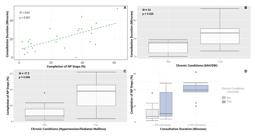
Assessment of the relationship between compliance with the Nursing Process and the duration of Nursing Consultations with elderly people and the presence of chronic conditions
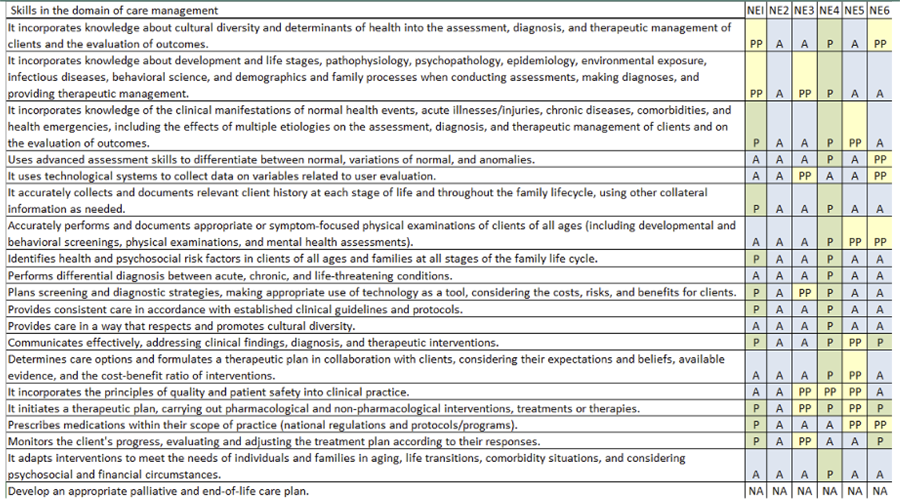
When analyzing the care management competencies proposed for APN in PHC(12) in NC with greater compliance with the NP, these are still incipient and mostly absent, according to the categories presented in Figure 2.
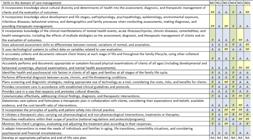
Care management competencies assessed qualitatively in nursing consultations with older adults with more than 40% compliance
It was found that, although the NC2 consultation achieved more than 40% compliance with the Nursing Process (NP), none of the competencies expected for Advanced Practice Nursing (APN)(12) were identified (Table 1). In this consultation, there was no comprehensive approach to the elderly person, nor was there any coordinated planning or execution. Performance in the NP was favored by the use of the Elderly Person’s Health Booklet (EPHB)(22), which guided the collection of personal, social, family, and lifestyle data, allowing for specific guidance on nutrition, immunization, and oral health. However, no specific interventions based on these findings were observed.
The analysis also revealed flaws in the diagnosis and implementation stages, as well as difficulties in addressing sensitive topics such as those related to sexuality. Only two NCs mentioned the topic, and in one of them, the demand came from the user and was not accepted by the nurse.
The analysis of the frequency of APN care management competencies(12) revealed that these are still incipient in the NC for older adults in PHC. The most frequent category was “Care Provision” (25.9%), and partially in 18.5%. The focus on care was identified in 22% of the NCs, and partially in 27.8%. The assessment and diagnosis dimension was present in 21.4% of the records, with partial occurrence in 14.3%.
The implementation of care proved to be fragile, with gaps in the collection of essential information and guidelines. User follow-up was superficial, even in consultations with good performance in conditions such as SAH and DM. The absence of nursing diagnoses may reflect flaws in clinical reasoning and in the application of the skills expected of PHC nurses.
In a NC that achieved 49% compliance with the Nursing Process (NP), 78% of the care management competencies expected for the APN(12)were identified. The nurse conducted the care clearly, considering cultural aspects and health determinants. They performed a complete assessment, with qualified data collection and clinical reasoning directed at effective interventions. The implementation of the NP stages was highlighted, with assertive communication and interpretation of clinical and socio-family findings.
Description of the scene: The nurse kindly welcomes the elderly patient and asks her to sit down at the table. While typing on the computer, she begins the consultation in a calm and welcoming tone, asking about the complaints that motivated the visit to the unit.
Description of the dialogue:
E3: “Mrs. A., how can I help you today?”
U15: “Well, I haven’t been to the bathroom in about three days, and I’ve had back pain for a while now.”
E3: “Okay, great. Let me ask you, did you bring the prescriptions for the medications you take?”
U15: “Let me see if I brought them.”
E3: “Mrs. A.C.S., right?”
U15: “That’s right.”
E3: “Can you confirm your date of birth for me?”
E3: “Who do you live with?”
U15: “I live with my daughter and grandson, but I take care of my 15-year-old granddaughter. My daughter works all week,”
E3: “Okay. Are you retired?”
U15: “No. I’m a pensioner.”
E3: “When did you have some tests done?”
U15: “Hmm, I don’t remember.”
E3: “Do you smoke?”
U15: “No.”
E3: “Have you ever drunk alcohol?”
U15: “I quit, I’m an evangelical Christian now,”
E3: “Regarding your vaccinations, everything is up to date, okay? How long has it been since you last had a bowel movement?”
U15: “I did yesterday, but I had to take medicine.”
E3: “Did you work?”
U15: “Yes, as a manicurist, then as a housekeeper and caregiver,”
E3: “How is your diet?”
U15: “I used to feel like eating, but now I have no appetite. I drink Nescafé, I can’t eat butter and cheese, they give me stomach pain. For lunch, I eat beans, rice, meat, whatever there is. Yesterday I had oxtail, my daughter made it. I can’t eat fried food, I like vegetables and salad.”
E3: “And after lunch?”
U15: “I make vegetable soup, blend it in a blender, and eat it all week. Some days I feel nauseous and only eat bread. I like bananas and tangerines. My stool is neither soft nor hard, but when I eat papaya, I can go. Oh, and my eyesight is very poor.”
E3: “Has it been a while since you’ve been to the ophthalmologist?”
U15: “Yes, it’s been a while.”
E3: “Are the glasses you’re wearing weak?”
U15: “Yes.”
E3: “Are you feeling this?”
U15: “Yes,”
E3: “Have you had COVID?”
U15: “No,”
E3: “Can I ask you a favor? Could you take off your shirt so I can check your blood pressure? Do you need to pee?”
U15: “No, I have a bad bladder, you see, my dear.”
E3: “Did you take your medication today?”
U15: “Yes, I did.”
E3: “Your blood pressure is fine. 130/80. Since I’m going to measure your height and weight, could you take off your hat and shoes?”
U15: “Yes, I can.”
E3: “Hold my hand. Weight: 71.350 and height: 147. Sit here on the stretcher, I’ll help you.” (nurse performs auscultation and pulmonary assessment and performs auscultation and palpation of the abdomen).
E3: “I’ll come visit you, okay? I’ll schedule it. I’ll talk to the doctor. Tell me what else is bothering you today? This pain in your stomach. I’ll talk to the doctor, okay?”
[discussing the case outside the office with the doctor]
Scene description: The nurse enters the office, where the doctor is at his desk. She stands next to him and reports the case objectively. The doctor, attentive, consults the health records and listens to the patient’s complaints, waiting for guidance to proceed with the consultation.
Description of dialogue:
E3: “I’m seeing a lady who complains of chest pain for over five years, discomfort in her vision, had cataract surgery, and said she has stomach pain. I did a physical exam on her, she has abdominal pain, pain on light palpation, and she is also losing urine, but what is bothering her is the abdominal pain. Can you take a look?”
M3: “Okay, let’s go. The doctor says: there’s a lot to deal with, and this abdominal pain has been going on for two years. I think today we can see the abdominal pain and chest pain. Ask her to come here and I’ll see her after I see the patient in front of her.”
Discussion
Nursing practice in primary care clinics for the elderly faces challenges in ensuring comprehensive care centered on the needs of the user. The application of the NP, although essential to guide care, still has weaknesses. There is a fragmented approach, with the absence of multidimensional assessment and a weak approach to issues such as sexuality, autonomy, and the rights of the elderly, making it difficult to identify their needs and compromising the development of adequate care plans for quality and autonomous aging.
Although recommended by the Ministry of Health, the low implementation of EPHB in the NC analyzed reflects the difficulty in incorporating these practices into the routine of PHC.(22) This is aggravated by the absence of essential practices for the longitudinal care of older adults, such as multidimensional assessment (MDA) and the approach to falls, which are crucial elements for assessing the functional status of older adults, allowing for the early identification of risks and the planning of targeted, person-centered care, so that functional damage and loss of autonomy can be avoided.(23)
Studies conducted in 2010 already showed the challenges faced by nurses in conducting nursing consultations with older adults in the Family Health Strategy, such as the difficulty in obtaining reliable data, problem-solving capacity, and family support, highlighting that training was still seen as insufficient to deal with the specificities of aging.(24) However, with an aging population, nursing care for the elderly in PHC is essential for the sustainability of the health system and access to care. However, in the present study, nursing care for the elderly does not present partial and limited competencies, which highlights the need for targeted training if Brazil seeks to advance the implementation and development of the transformative potential of a role such as APN in the reality of care for the elderly.
Thus, there are movements, such as the reflection article produced by Brazilian researchers who discuss the role of assessment in advanced competency-based gerontological nursing practice, reinforcing the importance of a comprehensive, multidimensional, interdisciplinary, and planned assessment, so that advanced practice gerontological nurses (APGNs) demonstrate clinical competencies, collaborative practices, continuity of care management, health literacy, and evidence-based practice.
What is the role of PHC nursing in the healthcare system’s response to an aging population? Researchers argue that systematic, user-focused, evidence-based approaches are essential for implementing and evaluating the role of advanced practice nursing, in order to inform national and global policies that enable these functions to achieve the best care and guarantee the right to health. Thus, research plays a fundamental role in the theoretical, practical, and political evolution of the role of nursing in society. Much of this research on APN is concentrated in North America, the United Kingdom, Europe, and Australia, where these roles have been implemented for longer, but it is necessary to advance investigations related to the contextual factors that determine the implementation of advanced nursing roles.(2)
Thus, the development of competencies for APN in Brazil can be built according to the needs of the health system and the characteristics of the training process and workforce of Brazilian PHC. For example, in Belgium, co-creative processes were used in the formulation of educational and professional policies involving health professionals, educators, and policymakers to develop a competency framework for APN, identifying and validating essential competencies covering areas such as specialized clinical practice, leadership, research, education, and interprofessional collaboration.(26)
Finally, this study has limitations that include possible observation bias due to the presence of cameras, which may have altered the behavior of professionals and users. Although the sample is from different regions of the country, the findings do not allow for generalizations for the entire national territory, but they do provide input for the debate on nursing practice in the care of the elderly population in PHC.
Conclusion
The nursing consultations with older adults in PHC investigated present technical weaknesses and a distance from the competencies required for APN. The findings reinforce the need for professional qualification strategies and strengthening the scope of practice of nurses in PHC to ensure qualified care for older adults. To implement APN in Brazilian PHC, there is a need for specific guidelines for the development of the required competencies, policies produced in a collaborative and participatory manner, and evidence to support the process of discussion, planning, implementation, and training so that we can then move forward in responding to the weaknesses in nursing practice and the needs of users.
References
- 1 Mrejen, M, Nunes L, Giacomin, K. Envelhecimento populacional e saúde dos idosos: O Brasil está preparado? Estudo Institucional n. 10. São Paulo: Instituto de Estudos para Políticas de Saúde; 2023.
- 2 Martin-Misener R. Evidence-based approaches to supporting advanced practice nursing [editorial]. JBI Evid Synth. 2021;19(4):749-50.
-
3 International Council of Nurses (ICN). Guidelines on Advanced Practice Nursing 2020. Geneva: ICN; 2020 [cited 2025 May 23]. Available from: https://www.icn.ch/resources/publications-and-reports/guidelines-advanced-practice-nursing-2020
» https://www.icn.ch/resources/publications-and-reports/guidelines-advanced-practice-nursing-2020 - 4 Bryant-Lukosius D, Valaitis R, Martin-Misener R, Donald F, Peña LM, Brousseau L. Advanced practice nursing: a strategy for achieving universal health coverage and universal access to health. Rev Lat Am Enfermagem. 2017;25:e2826.
-
5 Conselho Federal de Enfermagem (COFEN). Nota Técnica Nº 2/2023. Nota Técnica sobre Práticas Avançadas de Enfermagem no Brasil (PAE): contexto; conceitos; ações empreendidas, implementação e regulação. Brasília (DF): COFEN; 2023 [citado 2025 Maio 23]. Disponível em: https://www.cofen.gov.br/nota-tecnica-cofen-no-001-2023/
» https://www.cofen.gov.br/nota-tecnica-cofen-no-001-2023/ - 6 Torrens C, Campbell P, Hoskins G, Strachan H, Wells M, Cunningham M, et al. Barriers and facilitators to the implementation of the advanced nurse practitioner role in primary care settings: a scoping review. Int J Nurs Stud. 2020;104:103443.
- 7 Nunes PF, Almeida A, Tavares M, Gomes L, Soares H. Prática avançada de enfermagem em Portugal - em que ponto estamos? Rev Port Investig Comport Soc. 2024;10(2):338.
- 8 Miranda Neto MV, Almeida LY, Bonfim D, Rewa T, Oliveira MA. Implementation of advanced practice nursing in Brazilian Primary Health Care: methodological path. Rev Bras Enferm. 2022;75(5):e20210614.
- 9 Reis KG, Serranegra NV, Varela AL, Almeida PA, Carrer MO, Barreto CP, et al. Child health nursing consultation and competencies for Advanced Practice Nurses. Rev Esc Enferm USP. 2024;58:e20230269.
- 10 Almeida PA, Almeida LY, Vesga-Varela AL, Barreto CP, Carrel MO, Reis KG, et al. Consultas de enfermagem em saúde mental na atenção primária brasileira: análise das competências propostas para enfermeiros de prática avançada. BMC Prim Care. 2025;26:66.
- 11 Dantas AC, Araújo MG, Araújo JN, Medeiros AB, Santos PH, Borges BE, et al. Advanced practice nursing in Brazil: bibliometric analysis of dissertations and theses. Rev Esc Enferm USP. 2025;58:e20240253.
- 12 Cassiani SH, Aguirre-Boza F, Hoyos MC, Barreto MF, Peña LM, Mackay MC, et al. Competências para a formação do enfermeiro de prática avançada para atenção básica de saúde. Acta Paul Enferm. 2018;31(6):572-84.
- 13 Fundação Sistema Estadual de Análise de Dados (SEADE). População da cidade de São Paulo aumenta 20 vezes em 100 anos. São Paulo: SEADE; 2021 [citado 2025 Mai 7]. Disponível em:
- 14 Secretária Municipal de Saúde de São Paulo. Área Técnica de Saúde da Pessoa Idosa. São Paulo: Secretária Municipal de Saúde de São Paulo; 2024 [citado 2025 Maio 7]. Disponível em:
- 15 Brasil. Ministério da Saúde. Política Nacional de Saúde da Pessoa Idosa. Brasília (DF): Ministério da Saúde; 2020.
- 16 Brasil. Ministério da Saúde. Caderneta de Saúde da Pessoa Idosa. 5ª ed. 1ª reimpressão. Brasília (DF): Ministério da Saúde; 2020.
- 17 Harris PA, Taylor R, Minor BL, Elliott V, Fernandez M, O'Neal L, et al. The REDCap consortium: Building an international community of software platform partners. J Biomed Inform. 2019;95:103208.
-
18 Conselho Federal de Enfermagem (COFEN). Resolução Cofen nº 358/2009. Dispõe sobre a Sistematização da assistência de enfermagem e a implementação do processo de enfermagem em ambientes públicos ou privados. Brasília (DF): COFEN; 2009 [citado 2025 Maio 7]. Disponível em: https://www.cofen.gov.br/resoluo-cofen-3582009/
» https://www.cofen.gov.br/resoluo-cofen-3582009/ - 19 Kurtz S, Silverman J, Benson J, Draper J. Marrying content and process in clinical method teaching: enhancing the Calgary-Cambridge guides. Acad Med. 2003;78(8):802-9.
- 20 Queiroz MJ. SOAP revisitado. Rev Port Med Geral Fam. 2009;25(2):221-7.
- 21 Bardin L. Análise de conteúdo. Lisboa: Edições 70; 1977.
- 22 Dias CA, Silva D. A utilização da caderneta de saúde da pessoa idosa pelos profissionais de saúde como instrumento de assistência integral. Rev Saúde Digit. 2022;11(4):e27205.
- 23 Marques GC, Rodrigues JS, Rodrigues SG, Souza MR, Barros OS, Borges CJ. Profissional Enfermeiro: Competências e habilidades para a avaliação multidimensional da pessoa idosa. Rev Kairós-Gerontol. 2018;21(2):307-6.
- 24 Oliveira JC, Tavares DM. Atenção ao idoso na estratégia de Saúde da Família: atuação do enfermeiro. Rev Esc Enferm USP. 2010;44(3):774-81.
- 25 Ferretti-Rebustini RE, Souza-Talarico JN, Fhon JR, Greenberg SA. The role of assessment in competence-based gerontological advanced practice nursing. Rev Esc Enferm USP. 2022;56(spe):e20220072.
- 26 Van Hecke A, Decoene E, Embo M, Beeckman D, Bergs J, Courtens A, et al. Development of a competency framework for advanced practice nurses: a co-design process. J Adv Nurs. 2025;81(1):353-65.
-
Data availability:
The authors did not make the data from this article available in repositories prior to submission.
Edited by
-
Invited associate editor:
Marcia Barbieri (https://orcid.org/0000-0002-4662-1983) Escola Paulista de Enfermagem, Universidade Federal de São Paulo, São Paulo, SP, Brazil
The authors did not make the data from this article available in repositories prior to submission.

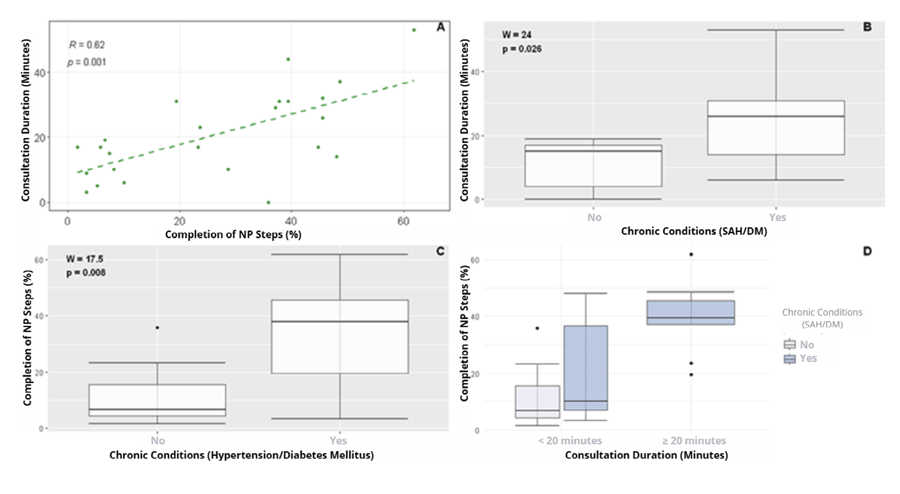
 A=Absent; P=Present; PP=Partially present; NA=Not applicable; NC=Nursing consultation