The Impact of Anxiety on Patients Referred for Transesophageal Echocardiography
Abstract
Background Anxiety is an important factor that influences patient experience during medical procedures. Transesophageal echocardiography (TEE) is an exam that requires sedation, which can exacerbate anxiety and affect its practice.
Objective To assess variables that influence the degree of anxiety experienced by patients undergoing TEE and its correlation with sedation.
Methods We assessed patients of both sexes, age >18 years, referred for TEE. We applied an anxiety questionnaire (none, mild, moderate, and high) and collected demographic, clinical, and physiological data. For comparison purposes, patients were divided into the following 2 groups: no/mild anxiety and moderate/severe anxiety.
Results We studied 63 patients, 41 (66%) of whom were male. The majority were White (87.3%), and the mean age was 52.5 ± 14.7 years. Only 35% of patients had comorbidities, the most frequent being hypertension (63.6%), and 70% patients were undergoing TEE for the first time. The main indication for TEE was valvular disease (30%). The majority of patients (62%) reported some degree of anxiety, as follows: 25 (40%) mild, 10 (16%) moderate, and 4 (6%) severe. Patients with moderate/severe anxiety (p = 0.03) and younger patients (p = 0.001) required higher doses of midazolam for sedation.
Conclusion Anxiety was common in patients referred for TEE, and it appeared to be less influenced by clinical variables. However, we concluded that more anxious and younger patients required higher doses of sedation.
Echocardiography; Anxiety; Conscious Sedation

Resumo
Fundamento A ansiedade é um fator importante para experiência do paciente durante procedimentos médicos. O ecocardiograma transesofágico (ETE) é um exame que necessita sedação, podendo exacerbar a ansiedade e influenciar sua prática.
Objetivo Verificar variáveis que influenciam o grau de ansiedade experienciado por pacientes submetidos ao ETE e sua correlação com a sedação.
Metodologia Avaliamos pacientes encaminhados para ETE, de ambos os sexos e idade > 18 anos. Foi administrado um questionário de ansiedade (nenhuma, leve, moderada e alta) e coletados dados demográficos, clínicos e fisiológicos. Para efeito de comparação, os pacientes foram divididos em dois grupos: sem ansiedade/ansiedade leve e ansiedade moderada/severa.
Resultados Estudamos 63 pacientes, 41 (66%) do sexo masculino, a maioria brancos (87,3%), com idade de 52,5 ± 14,7 anos. Somente 35% dos pacientes apresentavam comorbidades, sendo a mais frequente hipertensão arterial (63,6%), e 70% dos pacientes realizavam o ETE pela primeira vez. A principal indicação para sua realização foi valvopatia (30%). A maior parte dos pacientes (62%) apresentava algum grau de ansiedade: 25 (40%) apresentavam ansiedade leve, 10 (16%) moderada e 4 (6%) de alto grau. Pacientes com ansiedade moderada/severa (p = 0,03) e pacientes mais jovens (p = 0,001) necessitaram maior dose de midazolam para sedação.
Conclusão A ansiedade em pacientes referendados para ETE é comum e parece ser menos influenciada por variáveis clínicas. Porém, concluiu-se que pacientes mais ansiosos e mais jovens necessitam de maior quantidade de sedação.
Ecocardiograma; Ansiedade; Sedação Consciente
Introduction
Transesophageal echocardiography (TEE) is a widely used tool in cardiology; due to the anatomical proximity between the heart and the esophagus, it allows the assessment of functional and/or structural cardiac alterations with high accuracy,1 for example, valvular heart disease, thrombi and masses, aortopathies, among other diseases.2 It is considered a semi-invasive examination, as it requires the introduction of an esophageal probe; in order to provide comfort to patients, light or moderate sedation is performed,3 generally using benzodiazepines (midazolam) in combination with an opioid (fentanyl). It is important to emphasize that the examination is not without risks, which are often associated with sedation itself. The most common complications include hypoventilation, hypoxemia,4 and hypotension.5 Furthermore, some factors associated with the patient or the examination may contribute to an increased level of anxiety related to medical procedures; non-White ethnicities,6 female sex,7 and history of chronic diseases7 have been related to the development of anxiety in the general population. Higher anxiety levels have also been related to prolonged duration of medical procedures and eventual use of higher sedative doses.8 Therefore, it is important to define factors that could influence the level of anxiety related to TEE and its impact on sedation, in order to optimize patient management during examination.
Objectives
The objectives of this study were to determine the prevalence of anxiety related to TEE, to assess factors related to the examination and/or patients that could influence the degree of anxiety experienced by patients, and to verify whether the amount of anesthetic administered during the procedure could correlate with the degree of anxiety and/or other clinical variables.
Methods
Patients
This study prospectively assessed patients aged 18 years or older of both sexes who were referred for TEE, as outpatients or inpatients at a tertiary hospital located in the South Zone of the city of São Paulo, Brazil. We only included patients who provided written informed consent via a free and informed consent form.
Regarding the exclusion criteria, this study excluded patients with contraindications to TEE, patients with impaired cognition, and patients who required sedation under anesthesiologist supervision.
TEE and sedation
After the routine transthoracic examination, TEE was performed in the routine manner, with the prescribed sedation and under the guidance of the cardiologist and echocardiographer responsible for performing the examination. Following oropharyngeal anesthesia with lidocaine spray, with patients in the left lateral decubitus position, sedation with intravenous fentanyl (50 or 100 mcg) was performed, followed by intravenous midazolam in an initial dose of 1 to 2 mg, with additional doses of 1 mg administered for conscious sedation. If necessary, additional doses of midazolam could be administered to continue the examination.9
Anxiety questionnaire
To assess the level of anxiety, we used a mini-questionnaire adapted from Cao,10 consisting of a simple visual self-assessment scale, to analyze each study participant’s anxiety level. Patients were asked to choose among facial drawings showing different levels of anxiety, marking the one that described their state of anxiety at that time ( Figure 1 ). For comparative purposes, the patients were divided into 2 groups, one including patients with no/mild anxiety and the other with moderate/high levels of anxiety.

Clinical variables
We recorded data such as blood pressure, heart rate, respiratory rate, and oximetry. The presence of comorbidities (diabetes, hypertension, cardiovascular diseases, and others), routine use of anxiolytics, and the indication for the examination were also recorded.
Statistical analysis
The variables were described based on absolute and relative frequencies, means and standard deviations, or medians and quartiles. Comparisons of patient characteristics with anxiety levels were performed using Student’s t test or Mann-Whitney test for quantitative variables, according to their distribution, and chi-square or Fisher’s exact test were used for qualitative variables. Data normality was assessed using the Shapiro-Wilk test. To correlate variables with sedative dose, we used Pearson or Spearman correlation, as appropriate. Analyses were performed using SPSS statistical software, version 26.0. Study data were entered into a data storage platform dedicated to REDCap research for later analysis.11 This study is part of a research project aimed at evaluating music therapy as an adjunct measure to sedation in patients referred to TEE. The study received approval from the institutional research ethics committee.
Results
We assessed 65 patients, 2 of whom were excluded (1 due to refusal to participate and 1 due to contraindication to TEE), leaving 63 patients who fulfilled the inclusion criteria and signed the free and informed consent form. Most patients were male (65%). The mean age was 52 ± 14 years, and the majority were White (87%). The majority of patients had completed secondary education (95%). Regarding origin of patients, only 11 were hospitalized at the time of the examination, while the remainder underwent the examination on an outpatient basis. Comorbidities were infrequent (35% of patients), the most frequent being systemic arterial hypertension. For 66% of patients, the examination was being performed for the first time. For 24%, it was the second time, and only 10% had undergone more than 2 examinations. Regarding indications, valvular heart disease was the most frequent (30%), followed by stroke (20%), arrhythmias (13%), and suspected endocarditis (9.5%). Other less frequent indications included investigation of patent foramen ovale, cardiac masses, and evaluation of the aorta. When asked, almost all patients (95%) confirmed that they had received detailed instructions about the examination, including about complications. None of the patients who had previously undergone the examination reported a negative previous experience with TEE, and only 11% used routine anxiolytics. Table 1 displays the patients’ characteristics.
Anxiety level and influence of patient-related variables
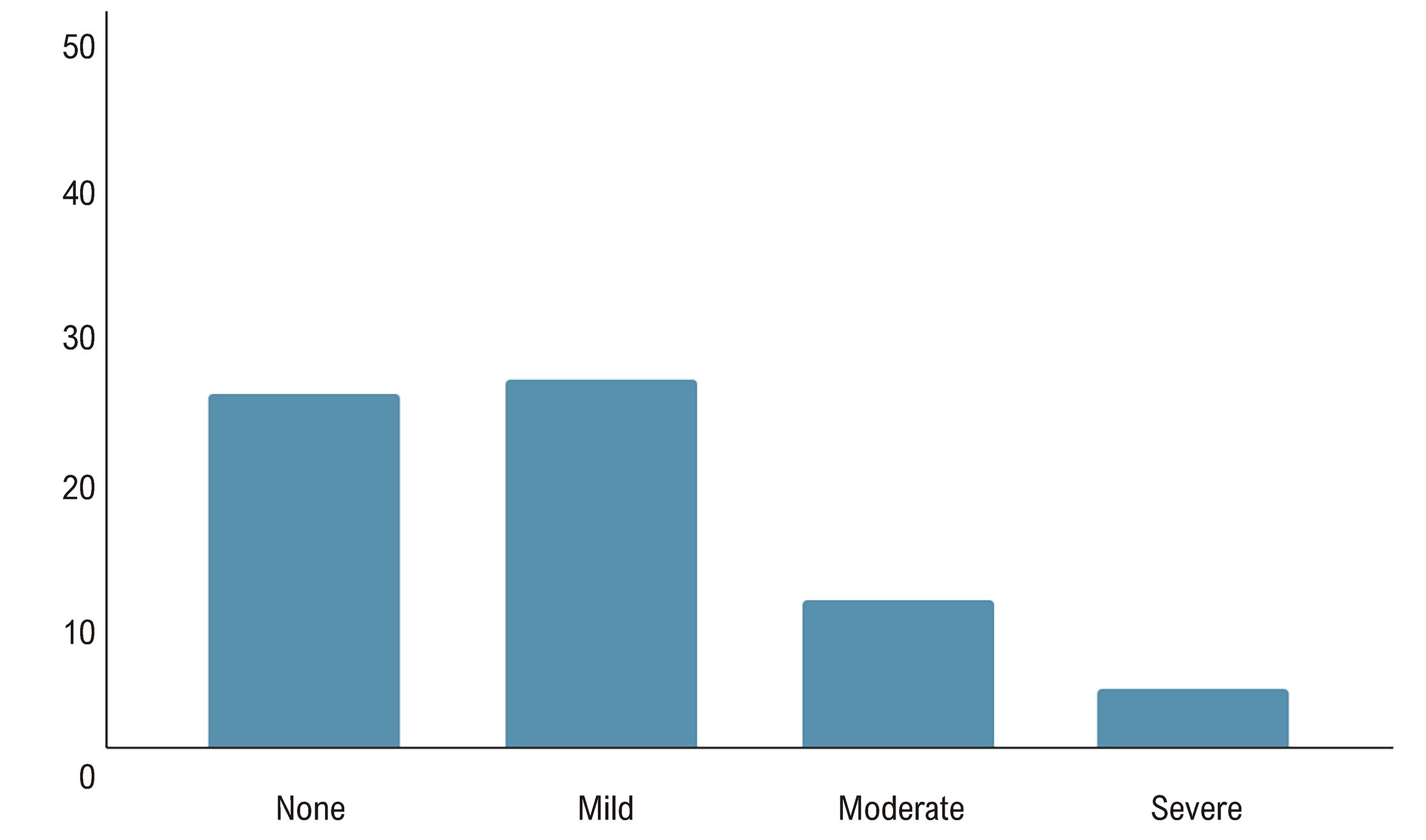
Regarding anxiety level, the majority of patients (62%) were anxious before the procedure, with mild anxiety in 40%, moderate anxiety in 16%, and high anxiety in 6% ( Figure 2 ). We did not observe any correlation between demographic variables (sex, age, and ethnicity), education level, indication for the examination, routine use of anxiolytics, or patient origin with the presence of anxiety before TEE.

Comparison between sedative dose used, anxiety level, and variables related to the examination
The mean fentanyl dose was 55.5 ± 17.6 mcg. The mean initial dose of midazolam was 4.8 ± 2.2 mg, and the mean additional midazolam dose was 1.32 ± 1.6 mg. The midazolam doses required for sedation were similar for men and women. No difference was observed between the midazolam dose and education level or ethnicity. On the other hand, patients with comorbidities required lower midazolam doses for sedation (p = 0.04), whereas outpatients required higher sedative doses when compared to inpatients (p = 0.01). These findings are displayed in Figure 3 .

Regarding the sedative dose used, when comparing the subgroups of patients with no anxiety/mild anxiety and patients with moderate/high anxiety, a significant difference was observed only for the additional dose of midazolam required for sedation (p = 0.03). Patients with moderate/high anxiety levels used a larger additional amount of midazolam (2 mg [2 to 3 mg]) compared to those with mild/no anxiety (1.5 mg [1 to 2 mg]), as shown in Figure 4 . There was no difference between anxiety levels and variables such as instructions received, indication for the examination, routine use of anxiolytics, or the number of transesophageal examinations previously undergone. Only 2 patients required anesthesia to complete the procedure; therefore, there was no difference between groups for this variable.
Correlation between sociodemographic variables and anesthetic dose administered
The variables that showed a significant correlation with the total dose of midazolam were age, with a moderate negative correlation (r = −0.41, p = 0.001); oximetry, with a moderate positive correlation (r = 0.39); and respiratory rate, with a slight negative correlation (r = −0.28). Table 2 displays these data.
Discussion
TEE is a widely used tool in cardiology; it is a semi-invasive technique, as it requires the introduction of an esophageal probe. In order to provide comfort to patients, it is often accompanied by mild or moderate sedation, generally using benzodiazepines (midazolam) in combination with an opioid (fentanyl). TEE is not without risks, which are often associated with sedation itself. The most common complications are hypoventilation, hypoxemia, and hypotension. It is known that the anxiety experienced by patients is a determining factor for additional difficulties in performing procedures, requiring greater management skills and more time from the team to perform the procedure.12 Furthermore, in addition to the resulting technical difficulties, anxiety could contribute to negative patient experience during the procedure. The quality of the examination is also directly related to the quality of the sedation performed. In this sense, when we evaluated the relationship between factors related to the exam/patient and the level of anxiety reported, we observed that the dose required for sedation was higher for outpatients when compared to inpatients. One possible explanation might be exposure to the hospital environment, which is unfamiliar to the patient, causing greater anxiety, whereas inpatients, in addition to being previously exposed to the environment, are often using sedative medications. We also noted that patients with comorbidities required lower sedation doses when compared to patients without comorbidities. In patients referred for endoscopic procedures, it was observed that those with higher American Society of Anesthesiologists (ASA) classification for pre-anesthesia surgical risk require less sedation. Since the ASA class increases according to the number of comorbidities presented, this could explain the correlation with comorbidities found in our study.12
It is known that non-White ethnicities,6 female sex, and history of chronic diseases7 are risk factors for the development of anxiety. However, in this study, we did not observe a correlation between anxiety and these variables. One possible explanation for the lack of correlation is that anxiety in a social context presents different risk factors compared to anxiety related to a medical examination, as in the case of TEE. Moreover, other authors, when studying patients undergoing endoscopic procedures (similar to TEE), also did not find a correlation between sex and anxiety.8
Regarding the correlation between the variables and sedative doses, we observed that age presented a negative correlation coefficient; in other words, the younger the patient, the higher the dose of midazolam required for sedation, a finding already reported in the literature.8 Furthermore, it is known that elderly patients are more sensitive to the use of medications due to pharmacokinetic and pharmacodynamic changes resulting from age;13 consequently, they have greater adverse effects with the use of sedation. Accordingly, given that elderly patients are more sensitive, the physician responsible for sedation would be expected to be more cautious, administering a lower dose of sedative.
Finally, in relation to anxiety and the dose of anesthetic administered, we observed that the additional midazolam dose was higher in patients with moderate/high anxiety level (p = 0.033). Although some authors have reported no correlation between the level of pre-procedure anxiety and the sedative dose used,14 similar to our findings, other studies have shown that the anesthetic dose required to perform the procedure may increase according to the anxiety level.15 A possible explanation would be greater activation of the neuroaxis due to the increased release of adrenocorticotropic hormone and corticosteroids in anxious patients,16 thus requiring greater anesthetic doses to achieve the same level of sedation as non-anxious patients for the same procedure.14
Limitations
It is worth noting the main limitation inherent to this study. The study sample was small, restricting the possible influence of other factors, such as sex or ethnicity, on the level of anxiety presented. However, we were able to identify other factors that were significantly related to anxiety level, even with the sample studied.
Conclusion
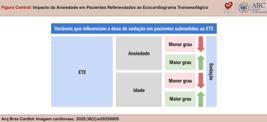
Anxiety is a common symptom in patients referred for TEE. As a result of this study, we have understood that more anxious and younger patients required higher doses of sedation to perform the procedure ( Central Figure ).
References
-
1 Bruijn SF, Agema WR, Lammers GJ, van der Wall EE, Wolterbeek R, Holman ER, et al. Transesophageal Echocardiography is Superior to Transthoracic Echocardiography in Management of Patients of Any Age with Transient Ischemic Attack or Stroke. Stroke. 2006;37(10):2531-4. doi: 10.1161/01.STR.0000241064.46659.69.
» https://doi.org/10.1161/01.STR.0000241064.46659.69 -
2 Mansour IN, Lang RM, Furlong KT, Ryan A, Ward RP. Evaluation of the Application of the ACCF/ASE Appropriateness Criteria for Transesophageal Echocardiography in an Academic Medical Center. J Am Soc Echocardiogr. 2009;22(5):517-22. doi: 10.1016/j.echo.2009.02.009.
» https://doi.org/10.1016/j.echo.2009.02.009 -
3 Aeschbacher BC, Portner M, Fluri M, Meier B, Lüscher TF. Midazolam Premedication Improves Tolerance of Transesophageal Echocardiography. Am J Cardiol. 1998;81(8):1022-6. doi: 10.1016/s0002-9149(98)00083-6.
» https://doi.org/10.1016/s0002-9149(98)00083-6 -
4 Bailey PL, Pace NL, Ashburn MA, Moll JW, East KA, Stanley TH. Frequent Hypoxemia and Apnea after Sedation with Midazolam and Fentanyl. Anesthesiology. 1990;73(5):826-30. doi: 10.1097/00000542-199011000-00005.
» https://doi.org/10.1097/00000542-199011000-00005 -
5 Stoddard MF, Longaker RA. The Safety of Transesophageal Echocardiography in the Elderly. Am Heart J. 1993;125(5 Pt 1):1358-62. doi: 10.1016/0002-8703(93)91007-2.
» https://doi.org/10.1016/0002-8703(93)91007-2 -
6 Smolen JR, Araújo EM. Race/Skin Color and Mental Health Disorders in Brazil: A Systematic Review of the Literature. Cien Saude Colet. 2017;22(12):4021-30. doi: 10.1590/1413-812320172212.19782016.
» https://doi.org/10.1590/1413-812320172212.19782016 -
7 Costa CO, Branco JC, Vieira IS, Souza LDM, Silva RA. Prevalence of Anxiety and Associated Factors in Adults. J Bras Psiquiatr. 2019;68(2):92-100. doi: 10.1590/0047-2085000000232.
» https://doi.org/10.1590/0047-2085000000232 -
8 Gürbulak B, Üçüncü MZ, Yardimci E, Kirli E, Tüzüner F. Impact of Anxiety on Sedative Medication Dosage in Patients Undergoing Esophagogastroduodenoscopy. Wideochir Inne Tech Maloinwazyjne. 2018;13(2):192-8. doi: 10.5114/wiitm.2018.73594.
» https://doi.org/10.5114/wiitm.2018.73594 -
9 Silva CE, Tasca R, Weitzel LH, Moisés VA, Ferreira LD, Tavares GM, et al Standardization of Equipment and Techniques for Conducting Echocardiographic Examinations. Arq Bras Cardiol. 2004;82(Suppl 2):1-10. doi: 10.1590/S0066-782X2004000800001.
» https://doi.org/10.1590/S0066-782X2004000800001 -
10 Cao X, Yumul R, Lazo OLE, Friedman J, Durra O, Zhang X, et al. A Novel Visual Facial Anxiety Scale for Assessing Preoperative Anxiety. PLoS One. 2017;12(2):e0171233. doi: 10.1371/journal.pone.0171233.
» https://doi.org/10.1371/journal.pone.0171233 -
11 Harris PA, Taylor R, Minor BL, Elliott V, Fernandez M, O'Neal L, et al. The REDCap Consortium: Building an International Community of Software Platform Partners. J Biomed Inform. 2019;95:103208. doi: 10.1016/j.jbi.2019.103208.
» https://doi.org/10.1016/j.jbi.2019.103208 -
12 Silva MRA, Espírito Santo ACG. Intervenção Dialógica e Atenuação da Ansiedade no Exame de Endoscopia Digestiva Alta [cited 2025 Mar 29]. Available from:. https://www.ufpe.br/documents/1192056/0/Interven%C3%A7%C3%A3o+dial%C3%B3gica+e+a+atenua%C3%A7%C3%A3o+da+ansiedade+no+exame+de+endoscopia+digestiva+alta.pdf/e51da22f-6b09-4d03-8d7f-9a02aa519a80 .
» https://www.ufpe.br/documents/1192056/0/Interven%C3%A7%C3%A3o+dial%C3%B3gica+e+a+atenua%C3%A7%C3%A3o+da+ansiedade+no+exame+de+endoscopia+digestiva+alta.pdf/e51da22f-6b09-4d03-8d7f-9a02aa519a80 -
13 Luca E, Schipa C, Cambise C, Sollazzi L, Aceto P. Implication of Age-Related Changes on Anesthesia Management. Saudi J Anaesth. 2023;17(4):474-81. doi: 10.4103/sja.sja_579_23.
» https://doi.org/10.4103/sja.sja_579_23 -
14 Chung KC, Juang SE, Lee KC, Hu WH, Lu CC, Lu HF, et al. The Effect of Pre-Procedure Anxiety on Sedative Requirements for Sedation During Colonoscopy. Anaesthesia. 2013;68(3):253-9. doi: 10.1111/anae.12087.
» https://doi.org/10.1111/anae.12087 -
15 Kil HK, Kim WO, Chung WY, Kim GH, Seo H, Hong JY. Preoperative Anxiety and Pain Sensitivity are Independent Predictors of Propofol and Sevoflurane Requirements in General Anaesthesia. Br J Anaesth. 2012;108(1):119-25. doi: 10.1093/bja/aer305.
» https://doi.org/10.1093/bja/aer305 -
16 Graeff FG. Anxiety, Panic and the Hypothalamic-Pituitary-Adrenal Axis. Braz J Psychiatry. 2007;29(Suppl 1):S3-6. doi: 10.1590/s1516-44462007000500002.
» https://doi.org/10.1590/s1516-44462007000500002
-
Study Association:
This article is part of the undergraduate thesis submitted by João Afonso Astolfi Martins, from Faculdade Israelita de Ciências da Saúde Albert Einstein.
-
Ethics Approval and Consent to Participate:
This study was approved by the Ethics Committee of the Hospital Israelita Albert Einstein under the protocol number 64738222.7.0000.0071. All the procedures in this study were in accordance with the 1975 Helsinki Declaration, updated in 2013. Informed consent was obtained from all participants included in the study.
-
Use of Artificial Intelligence:
The authors did not use any artificial intelligence tools in the development of this work.
-
Availability of Research Data and Other Materials:
The underlying content of the research text is contained within the manuscript.
-
Sources of Funding:
There were no external funding sources for this study.
Edited by
-
Editor responsible for the review:
Maria Otto
The underlying content of the research text is contained within the manuscript.

 TEE: transesophageal echocardiography.