
 Systematic Review: Mineralocorticoid Receptor Antagonists in Heart Failure with Preserved and Mildly Reduced Ejection Fraction
Abstract
Heart failure with preserved ejection fraction (HFpEF) or mildly reduced ejection fraction (HFmrEF) is a prevalent condition associated with significant morbidity and mortality, and the benefits of mineralocorticoid receptor antagonists (MRAs) remain unclear. To develop a systematic review on the use of MRAs in patients with HFpEF or HFmrEF, a systematic review and meta-analysis were conducted using a broad search strategy in the following databases: MEDLINE, Embase, and Cochrane Central Register of Controlled Trials (CENTRAL). Randomized controlled trials that evaluated the use of MRAs in patients with HFpEF compared to control groups were included. The quality of evidence and the strength of the recommendation were assessed according to the Grading of Recommendations Assessment, Development, and Evaluation (GRADE) methodology. Eight studies were included. No statistically significant differences were observed for the outcomes of overall mortality and cardiovascular mortality compared to the control group for any of the MRAs. A benefit was observed with a reduced risk of hospitalization for heart failure (relative risk: 0.87; 95% confidence interval: 0.79 to 0.96; moderate certainty of evidence) and of worsening heart failure events (relative risk: 0.83; 95% confidence interval: 0.77 to 0.89; high certainty of evidence). The results of the meta-analysis indicate a significant benefit from MRAs, spironolactone or finerenone, to reduce hospitalizations and worsening heart failure events in patients with HFpEF or HFmrEF. Mineralocorticoid Receptor Antagonists; Diastolic Heart Failure; Systolic Heart Failure; Systematic Review; Meta-Analysis.
Keywords:
Mineralocorticoid Receptor Antagonists; Diastolic Heart Failure; Systolic Heart Failure; Systematic Review; Meta-Analysis

: Systematic Review: Mineralocorticoid Receptor Antagonists in Heart Failure with Preserved and Mildly Reduced Ejection Fraction
eGFR: estimated glomerular filtration rate; HFmrEF: heart failure with mildly reduced ejection fraction; HFpEF: heart failure with preserved ejection fraction; LVEF: left ventricular ejection fraction.
Resumo
A insuficiência cardíaca com fração de ejeção preservada (ICFEp) ou levemente reduzida (ICFElr) é uma condição prevalente associada à significativa morbidade e mortalidade em que os benefícios dos antagonistas dos receptores de mineralocorticoides (ARMs) ainda não são claros. Nosso objetivo foi desenvolver uma revisão sistemática sobre o uso de ARMs em pacientes com ICFEp ou ICFElr. Foi realizada uma revisão sistemática com metanálise, utilizando uma estratégia de busca ampla nas bases de dados MEDLINE, Embase e Cochrane Central Register of Controlled Trials (CENTRAL). Foram incluídos ensaios clínicos randomizados que avaliaram o uso de ARMs em pacientes com ICFEp, comparados a grupos controle. A qualidade da evidência e a força da recomendação foram avaliadas segundo a metodologia Grading of Recommendations Assessment, Development, and Evaluation (GRADE). Oito estudos foram incluídos. Não foram observadas diferenças estatisticamente significativas para os desfechos de mortalidade geral e mortalidade cardiovascular em comparação ao grupo controle para qualquer dos ARMs. Identificou-se benefício na redução do risco de hospitalização por insuficiência cardíaca (risco relativo: 0,87; intervalo de confiança de 95%: 0,79 a 0,96; certeza da evidência moderada) e piora da insuficiência cardíaca (risco relativo: 0,83; intervalo de confiança de 95%: 0,77 a 0,89; certeza da evidência alta). Os resultados da metanálise indicam significativo benefício dos ARMs, espironolactona ou finerenona, para redução de hospitalizações e eventos de piora da insuficiência cardíaca em pacientes com ICFEp ou ICFElr.
Palavras-chave:
Antagonistas de Receptores de Mineralocorticoides; Insuficiência Cardíaca Diastólica; Insuficiência Cardíaca Sistólica; Revisão Sistemática; Metanálise

: Revisão Sistemática: Antagonistas dos Receptores de Mineralocorticoides na Insuficiência Cardíaca com Fração de Ejeção Preservada e Levemente Reduzida
FEVE: fração de ejeção do ventrículo esquerdo; ICFElr: insuficiência cardíaca com fração de ejeção levemente reduzida; ICFEp: insuficiência cardíaca com fração de ejeção preservada; TFGe: taxa de filtração glomerular estimada.
Introduction
In patients with heart failure with reduced ejection fraction, the use of steroidal mineralocorticoid receptor antagonists (MRAs), namely spironolactone and eplerenone, has clearly demonstrated a reduction in the risk of death and hospitalization. Evidence for this effect is derived from two pivotal clinical trials, the Randomized Aldactone Evaluation Study (RALES)1 and the Eplerenone in Mild Patients Hospitalization and Survival Study in Heart Failure (EMPHASIS-HF).2 Accordingly, international guidelines put forth strong and consistent recommendations for the use of these MRAs in patients with heart failure with reduced ejection fraction.3
In contrast, the efficacy of these medications for treating heart failure with mildly reduced ejection fraction (HFmrEF) or preserved ejection fraction (HFpEF) remains uncertain. Until recently, a single multicenter randomized clinical trial (RCT), Treatment of Preserved Cardiac Function Heart Failure with an Aldosterone Antagonist (TOPCAT),4 had tested the effect of spironolactone in patients with left ventricular ejection fraction (LVEF) > 45%. In this study, spironolactone did not significantly reduce the primary composite endpoint of first hospitalization for heart failure, resuscitated cardiac arrest, or cardiovascular death. However, analysis of the components of the primary outcome showed a reduction in hospitalizations for heart failure, indicating a potentially significant effect of spironolactone.4 Additionally, subsequent analyses suggested explanations for the study’s neutral result, observing that a considerable portion of the patients enrolled at sites in Russia and Georgia may not have had heart failure, given that the rate of observed events was much lower than that seen in patients enrolled in 4 countries in North and South America (United States, Canada, Brazil, and Argentina).5 Another post-hoc analysis indicated that many patients may not have taken the assigned medication, as no metabolite of the drug was detected in the urine of many patients randomized to spironolactone, indicating a possible benefit in patients who actually used it.6 As a consequence of these controversial aspects, recommendations for the use of MRAs in HFmrEF and HFpEF are weak or nonexistent.7
Recently, the Finerenone Trial to Investigate Efficacy and Safety Superior to Placebo in Patients With Heart Failure (FINEARTS-HF) evaluated the efficacy of finerenone, a non-steroidal MRA, in patients with LVEF > 40%, demonstrating a significant reduction in the risk of the primary composite outcome of worsening heart failure and cardiovascular death in patients with HFpEF and HFmrEF.8
Given the growing evidence suggesting potential benefits of MRAs in patients with heart failure with non-reduced ejection fraction, a systematic review was conducted with the objective of identifying, assessing, and summarizing the available scientific evidence regarding the efficacy and safety of these drugs in patients with HFpEF and HFmrEF.
Methods
In order to develop this systematic review from the Brazilian Society of Cardiology (SBC), a rapid systematic review was conducted, following the Cochrane criteria.9 The review protocol was registered on the Open Science Framework platform, under number 10.17605/OSF.IO/MVB75. This study is reported in accordance with the Preferred Reporting Items for Systematic Reviews and Meta-Analyses (PRISMA) guidelines.10
The research question, structured in PICO format, sought to evaluate the efficacy and safety of the use of MRAs in patients with HFpEF and HFmrEF when compared to usual treatment or optimized medical therapy.
The inclusion criteria were as follows: (1) RCTs; (2) patients diagnosed with HFpEF (LVEF ≥ 40%); (3) symptomatic patients classified in New York Heart Association functional class II, III, or IV; (4) studies evaluating the use of MRAs as an intervention and including a control group using placebo or standard treatment for HFpEF.
The following exclusion criteria were applied: (1) patients with an estimated glomerular filtration rate < 25 mL/min/1.73 m2; (2) patients with serum potassium levels > 5.0 mmol/L; (3) studies that did not report an adequate comparator group (placebo or standard treatment); (4) narrative reviews, case reports, editorials, and preclinical studies (in animals or in vitro).
The primary efficacy outcomes included overall mortality, cardiovascular mortality, hospitalization for heart failure, worsening heart failure, and quality of life. The safety outcomes analyzed were hyperkalemia and worsening renal function.
Initially, a search for systematic reviews on the topic was conducted on February 26, 2025, in the following 3 databases: Embase, MEDLINE (via PubMed), and Cochrane Library. Details on the methodology and search strategies are available in the supplementary material (Chart 1S). However, due to the absence of methodologically high-quality systematic reviews to support the recommendations, a new search for RCTs was carried out in the same databases, including a complementary manual search, based on the systematic reviews selected in the first stage. The supplementary material (Table 2S and Figure S1) display details about the search for systematic reviews.
The search for RCTs was restricted to studies published in English or Portuguese. Details on the search strategy are described in the supplementary material (Table 3S). Study selection was carried out using the Rayyan11 reference manager and evaluated by a single reviewer. The same reviewer conducted full-text screening. Data extraction was carried out by one reviewer using a previously tested form and validated by a second reviewer.
Statistical analysis
Data were synthesized in narrative form; when possible, a meta-analysis was conducted for each outcome of interest, summarizing the results obtained in the RCTs.
Meta-analyses were performed using a random-effects model, with data from the included RCTs. For dichotomous outcomes, the relative risk (RR) was used as a measure to estimate the effect size. For continuous outcomes, the mean difference (MD) was used. A 95% confidence interval (CI) was considered. Heterogeneity was assessed using the I2 value, with values above 50% indicating significant heterogeneity. Meta-analyses were conducted using R software, version 4.4.3, with the meta package, version 8.0-2.12
Subgroup analyses were planned for the primary outcomes, provided data were available from the included studies. Sensitivity analyses for the primary outcomes were also planned, in the event that there were a sufficient number of methodologically homogeneous studies, excluding those that presented at least one domain assessed as having a high risk or some concerns of bias. However, these analyses were not necessary, given that the included studies showed low methodological and outcome heterogeneity. Publication bias assessment would have been performed through visual inspection of funnel plots if at least 10 studies had been grouped in a meta-analysis.
Risk of bias assessment and certainty of evidence
Eligible systematic reviews were assessed for methodological quality using the AMSTAR-2 tool.13 The risk of bias of individual RCTs was assessed using the Cochrane Collaboration Risk of Bias 2.0 (RoB 2.0) tool.14 The overall certainty of evidence and the strength of recommendation were analyzed according to the approach developed by the Grading of Recommendations Assessment, Development, and Evaluation (GRADE) Working Group.15
Results
Recommendation
The results of the meta-analysis show that there was no statistically significant difference in overall and cardiovascular mortality outcomes, with moderate certainty of evidence. Regarding quality of life, the certainty of evidence was low, with no statistically significant difference. On the other hand, there was a significant increase in the incidence of hyperkalemia, with high certainty of evidence. Nonetheless, when considering the body of evidence, the panel assigned greater weight to the benefits observed in the clinical outcomes considered most relevant to patients, such as reduced hospitalizations for heart failure and clinical worsening, judging that these benefits outweigh the identified risk of hyperkalemia. However, it is worth emphasizing that patients’ values and preferences should be included in the decision-making process.
Summary of evidence
Initially, a search for systematic reviews was conducted, resulting in the identification of 168 references in the databases. After removing 5 duplicate records, 163 references were analyzed by title and abstract, and 13 were selected for full reading. At the end of this stage, 2 references were included,16,17 as shown in Figure 1S.
The assessment of the risk of bias of these two systematic reviews, using the AMSTAR-2 tool, revealed significant methodological limitations in both studies (Table 1S). Therefore, a decision was reached to conduct a new search for RCTs that evaluated the efficacy and safety of MRAs in patients with HFpEF.
The search for RCTs identified 522 records. After excluding 22 duplicate records and 475 studies based on title and abstract, 27 references were selected for full-text reading. Finally, 8 studies reported in 11 publications were included in the systematic review and meta-analysis (Figure 2S). The lists of excluded studies and their respective justifications are detailed in the supplementary material (Chart 3S).
Of the 8 RCTs included, 5 compared spironolactone versus placebo, 2 eplerenone versus placebo, and 1 finerenone versus placebo.4,5,8,18-26 The follow-up time of the studies ranged from 6 to 60 months.
Table 1 displays the characteristics of the included studies whose results were identified.
Overall mortality
The use of MRAs did not result in a significant difference in the outcome of overall mortality when compared to the control group (RR: 0.93; 95% CI: 0.85 to 1.02; n = 10,215; 8 RCTs; I2 = 0%; moderate certainty of evidence; Figure 1 and Table 2S). The certainty of evidence was considered moderate due to imprecision of the data, with the CI including both a reduction of up to 15% and an increase of 2% in the risk of overall mortality.

– Effect of mineralocorticoid receptor antagonists versus control for the outcome of overall mortality. CI: confidence interval; MRAs: mineralocorticoid receptor antagonists; RR: relative risk. Source: the authors.
A subanalysis was performed by replacing the TOPCAT (2014) study with data from the subpopulation enrolled in the Americas, as described by Pfeffer et al. (TOPCAT 2015),5 due to the significant heterogeneity among the regions participating in the original study. The decision was based on the low event rate observed in the Russia/Georgia cohort, which compromises the external validity of the overall results. The clinical characteristics and response to intervention in the Americas subpopulation were more compatible with the other studies included in the meta-analysis. With this substitution, the use of MRAs continued to show no significant difference for the outcome of overall mortality when compared to the control group (RR: 0.91; 95% CI: 0.83 to 1.00; n = 8,537; 8 RCTs; I2 = 0%; Figure 2), maintaining moderate certainty of evidence.

– Subanalysis of the effect of mineralocorticoid receptor antagonists versus control for the outcome of overall mortality. CI: confidence interval; MRAs: mineralocorticoid receptor antagonists; RR: relative risk. Source: the authors.
Cardiovascular mortality
The use of MRAs did not result in a significant difference in the outcome of cardiovascular mortality when compared to the control group (RR: 0.92; 95% CI: 0.81 to 1.05; n = 9,446; 2 RCTs; I2 = 0%; moderate certainty of evidence; Figure 3 and Table 2S). The certainty of evidence was considered moderate, with a wide CI, encompassing a 19% reduction to a 5% increase in risk, reflecting imprecision in the findings.
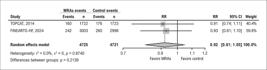
– Effect of mineralocorticoid receptor antagonists versus control for the outcome of cardiovascular mortality. CI: confidence interval; MRAs: mineralocorticoid receptor antagonists; RR: relative risk. Source: the authors.
In the subanalysis replacing the TOPCAT (2014) study with data from the subpopulation enrolled in the Americas, as described by Pfeffer et al. (TOPCAT 2015),5 the use of MRAs continued to show no significant difference in the outcome of cardiovascular mortality compared to the control group (RR: 0.85; 95% CI: 0.70 to 1.05; n = 7,768; 2 RCTs; I2 = 48.1%; Figure 4), maintaining moderate certainty of evidence.

– Subanalysis of the effect of mineralocorticoid receptor antagonists versus control for the outcome of cardiovascular mortality. CI: confidence interval; MRAs: mineralocorticoid receptor antagonists; RR: relative risk. Source: the authors.
Hospitalization
The use of MRAs resulted in a difference in the outcome of cardiovascular hospitalization when compared to the control group (RR: 0.87; 95% CI: 0.79 to 0.96; n = 10,040; 6 RCTs; I2 = 18.4%; moderate certainty of evidence; Figure 5 and Table 2S). The certainty of evidence was considered moderate, with a wide 95% CI, encompassing a 4% to 21% reduction in risk.

– Effect of mineralocorticoid receptor antagonists versus control for the outcome of hospitalization for heart failure. CI: confidence interval; MRAs: mineralocorticoid receptor antagonists; RR: relative risk. Source: the authors. The data from FINEARTS-HF refer to the effect of finerenone compared to placebo for initial worsening heart failure events.21
The STRUCTURE study evaluated 64 patients in the intervention group and 67 patients in the control group. After 6 months of treatment, 3 hospitalizations for cardiac causes were recorded in the MRA-treated group (4.7%) and 4 hospitalizations in the control group (6.0%). However, the authors did not detail the diagnostic or clinical criteria used to define hospitalization for cardiac causes; therefore, the study was not included in this meta-analysis.
In the subanalysis replacing the TOPCAT (2014) study with data from the subpopulation enrolled in the Americas, as described by Pfeffer et al. (TOPCAT 2015),5 the use of MRAs continued to show the same significant difference for the outcome of cardiovascular hospitalization compared to the control group (RR: 0.87; 95% CI: 0.79 to 0.96; n = 8,362; 6 RCTs; I2 = 17.4%; Figure 6), maintaining moderate certainty of evidence.

– Subanalysis of the effect of mineralocorticoid receptor antagonists versus control for the outcome of cardiovascular hospitalization. CI: confidence interval; MRAs: mineralocorticoid receptor antagonists; RR: relative risk. Source: the authors. The data from FINEARTS-HF refer to the effect of finerenone compared to placebo for initial worsening heart failure events.21
Worsening heart failure
The use of MRAs resulted in an 18% reduction in the risk of worsening heart failure when compared to the control group (RR: 0.82; 95% CI: 0.77 to 0.89; n = 6,467; 3 RCTs; I2 = 0%; high certainty of evidence; Figure 7 and Table 2S). A sensitivity analysis was performed excluding the Aldo-DHF study, as the population had relatively stable heart failure (without elevated NT-proBNP). In this analysis, the use of MRAs maintained a significant risk reduction (RR: 0.82; 95% CI: 0.76 to 0.88; 2 RCTs; n = 6,045), reinforcing the robustness of the findings.

– Effect of mineralocorticoid receptor antagonists versus control for the outcome of worsening heart failure. CI: confidence interval; MRAs: mineralocorticoid receptor antagonists; RR: relative risk. Source: the authors.
The included studies adopted varying definitions to characterize worsening heart failure. The RAAM-PEF study (2011) defined worsening as hospitalization for heart failure or the need for intensified treatment, including aMDinistration of intravenous diuretics or an increase in the dose of oral diuretics. The Aldo-DHF study (2013) considered worsening criteria as intensifying dyspnea, as well as worsening or onset of edema. The FINEARTS-HF study (2024) defined worsening heart failure as the occurrence of unplanned hospitalization, whether initial or recurrent, or an urgent visit due to the condition.
Quality of life
The outcome of quality of life was assessed using the Minnesota Living With Heart Failure Questionnaire (MLHFQ), Kansas City Cardiomyopathy Questionnaire (KCCQ), EQ5D Visual Analog Scale (VAS), and 36-Item Short Form Health Survey (SF-36).
In the analysis of studies that used the MLHFQ, the use of MRAs did not result in a significant difference in outcome of quality of life compared to the control group (MD: −1.17; 95% CI: −3.10 to 0.76; n = 505; 3 RCTs; I2 = 0%; moderate certainty of evidence; Figure 8 and Table 2S). The certainty of evidence was considered moderate due to imprecision of the data, with a CI ranging from a possible mild improvement (3.1 points) to a minimal worsening (0.76 points). Additionally, the 2017 study by Upadhya et al.23 assessed the emotional and physical domains of the MLHFQ, and no significant differences were observed between the spironolactone and placebo groups after 6 months of treatment.

– Mean difference between mineralocorticoid receptor antagonists and control for the outcome of quality of life assessed by the MLHFQ. CI: confidence interval; MD: mean difference; MRAs: mineralocorticoid receptor antagonists; SD: standard deviation. Source: the authors.
Among the studies that used the KCCQ Overall Summary Score, no significant difference was observed between the groups (MD: 3.62; 95% CI: −1.85 to 9.10; n = 7,659; 3 RCTs; I2 = 92%; moderate certainty of evidence; Figure 9 and Table 2S). The certainty of the evidence was considered moderate due to imprecision, with a wide CI ranging from a slight worsening (−1.85 points) to a modest improvement (9.10 points). Similar results were observed for the Clinical Summary Score (MD: −3.33; 95% CI: −9.59 to 2.94; 2 RCTs, n = 92; I2 = 0%; Figure 10 and Table 2S), with low certainty, however, due to the small sample size and imprecision of the results, where the CI ranged from a possible worsening (−9.59) to a benefit (2.94) (Table 2S).

– Mean difference between mineralocorticoid receptor antagonists and control for the outcome of quality of life assessed by the KCCQ Overall Summary Score. CI: confidence interval; MD: mean difference; MRAs: mineralocorticoid receptor antagonists; SD: standard deviation. Source: the authors.

– Mean difference between mineralocorticoid receptor antagonists and control for the outcome of quality of life assessed by the KCCQ Clinical Summary Score. CI: confidence interval; MD: mean difference; MRAs: mineralocorticoid receptor antagonists; SD: standard deviation. Source: the authors.
The 2016 TOPCAT study also assessed quality of life using the EQ5D VAS. No statistically significant difference was observed in the mean score variation between the groups treated with spironolactone (mean variation: 9.04; standard error: 0.96) and placebo (mean variation: 8.67; standard error: 0.86) over 60 months of follow-up.
In the 2013 Aldo-DHF study, the use of spironolactone did not result in a significant improvement in the quality of life outcome assessed by the SF-36 Physical Functioning (adjusted difference of 1 point; 95% CI: −2 to 4; p = 0.62) and SF-36 Global Self-Assessment (adjusted difference of 0.0; 95% CI: −0.1 to 0.1; p = 0.79) when compared to the placebo group after 12 months of treatment.
Hyperkalemia
The results demonstrated that the use of MRAs increased the risk of hyperkalemia compared to the control group (RR: 2.16; 95% CI: 1.89 to 2.47; n = 9,654; 5 RCTs; I2 = 0%; high certainty of evidence; Figure 11 and Table 2S). The CI indicated that MRA treatment increased the risk of hyperkalemia, with an estimated increase ranging from 89% to 147%.

– Effect of mineralocorticoid receptor antagonists versus control for the outcome of hyperkalemia. CI: confidence interval; MRAs: mineralocorticoid receptor antagonists; RR: relative risk. Source: the authors.
In the subanalysis replacing the TOPCAT (2014) study with data from the subpopulation enrolled in the Americas, as described by Pfeffer et al. (TOPCAT 2015),5 the use of MRAs continued to show an increased risk of hyperkalemia compared to the control group (RR: 2.54; 95% CI: 2.09 to 3.08; n = 7,976; 5 RCTs; I2 = 0%), maintaining moderate certainty of evidence (Figure 12).

– Subanalysis of the effect of mineralocorticoid receptor antagonists versus control for the outcome of hyperkalemia. CI: confidence interval; MRAs: mineralocorticoid receptor antagonists; RR: relative risk. Source: the authors.
Worsening renal function
Analysis revealed that the use of MRAs showed a trend towards worsening renal function compared to the control (RR: 1.53; 95% CI: 0.96 to 2.45; n = 6,554; 3 RCTs; I2 = 0%; moderate certainty of evidence; Figure 13 and Table 2S). The certainty of evidence was considered moderate due to imprecision of the data; although the RR suggests a potential increase of 53%, the wide CI encompasses a marginal reduction of 4% to a significant increase of 145%.

– Effect of mineralocorticoid receptor antagonists versus control for the outcome of worsening renal function. CI: confidence interval; MRAs: mineralocorticoid receptor antagonists; RR: relative risk. Source: the authors.
Risk of bias and certainty of evidence
The risk of bias of the RCTs was assessed across all outcomes. The Aldo-DHF, TOPCAT (2014), and FINEARTS-HF (2024) studies did not show bias in any of the domains assessed, corresponding to 34% of the included studies. Of the 9 publications included, 4 (44%) were classified as having a high risk of bias, whereas 2 studies (22%) had some concerns regarding the risk of bias in their overall assessment. Figure 3S displays a chart with the details of the judgments made for each domain.
The certainty in the final body of evidence was assessed using the GRADE approach for all outcomes of comparison, considering only the longest follow-up time points and the overall sample (Table 2 and Table 2S).
Discussion
This systematic review evaluated the efficacy and safety of MRAs in patients with HFpEF and HFmrEF, demonstrating a consistent clinical benefit in terms of disease progression. Although the impact on mortality was limited, a statistically significant reduction in hospitalizations for heart failure was observed, indicating a relevant effect on patient morbidity. This benefit was present for both spironolactone and finerenone.
It is worth underscoring that, in the original publication of the TOPCAT study results, the analysis of the primary outcome component of hospitalizations for heart failure also demonstrated a benefit for spironolactone, with a hazard ratio of 0.83 (95% CI: 0.69 to 0.99; p = 0.04). Similarly, although the FINEARTS-HF study achieved a statistically significant reduction in the occurrence of the primary composite outcome of cardiovascular death or worsening heart failure events (first or recurrent unplanned hospitalization for heart failure or emergency room visit for heart failure), only the worsening heart failure component of the primary outcome showed a significant reduction with the use of finerenone (hazard ratio: 0.82; 95% CI: 0.71 to 0.94; p = 0.006), with a neutral impact on cardiovascular death (hazard ratio: 0.93; 95% CI: 0.78 to 1.11).
These results are similar to those of other studies testing treatments in patients with HFpEF or HFmrEF, showing benefits in reducing heart failure hospitalizations and events, yet without impact on overall or cardiovascular mortality, as observed in studies with SGLT2 inhibitors.26,27 Several analyses have suggested that the lack of impact on mortality outcomes in HFpEF or HFmrEF is due to the particular characteristics of this population, for example, advanced age and multiple comorbidities; as a result, the main cause of death is non-cardiovascular.28
In relation to quality of life, no statistically significant differences were identified between groups across the different scales assessed (MLHFQ, KCCQ, EQ5D-VAS, and SF-36). These results may suggest that MRAs have little impact on patients’ perceived well-being, even when other clinical parameters improve. This lack of effect may be attributed to variations in follow-up periods and differences in patients’ clinical characteristics among the included studies.
From a safety standpoint, therapy with MRAs has been associated with important adverse events, particularly a significant increase in the risk of hyperkalemia (with high certainty of evidence) and a trend toward worsening renal function (with moderate certainty of evidence). These findings highlight the need for careful individualized assessment of the risk-benefit ratio, especially in populations with a greater predisposition to electrolyte and renal disorders (for example, elderly patients and patients with chronic kidney disease). Likewise, the clinical management of these patients should include rigorous monitoring of serum creatinine and potassium levels.29
This systematic review followed a rigorous and transparent methodology, with broad and sensitive search strategies across multiple databases to identify relevant studies. Reviewers independently performed full-text selection and data extraction, reducing the risk of bias. The methodological quality of the RCTs was assessed using the RoB 2.0 tool, which allowed for detailed analysis of potential risks of bias in different domains, with outcome-based evaluation. Furthermore, the certainty of the evidence was classified according to the GRADE approach, reinforcing confidence in the findings and contributing to more informed clinical decision-making based on high-quality evidence.
The limitations of this study include a lack of standardization in the assessment of some outcomes, such as quality of life and worsening heart failure events, making direct comparison between studies difficult. Furthermore, as it is a rapid review, screening was performed by one reviewer and checked by a second reviewer, instead of independent double review, which may increase the risk of bias in the selection and extraction of data.
Conclusion
The results of this meta-analysis support the recommendation to use MRAs, spironolactone or finerenone, in patients with HFpEF or HFmrEF to reduce hospitalizations and heart failure events (Central Illustration).
Supplemental Materials
Material Suplementar
Acknowledgements
The authors would like to thank Verônica Colpani for conducting the meta-analysis that supports the review presented.
References
-
1 Pitt B, Zannad F, Remme WJ, Cody R, Castaigne A, Perez A, et al. The Effect of Spironolactone on Morbidity and Mortality in Patients with Severe Heart Failure. Randomized Aldactone Evaluation Study Investigators. N Engl J Med. 1999;341(10):709-17. doi: 10.1056/NEJM199909023411001.
» https://doi.org/10.1056/NEJM199909023411001 -
2 Zannad F, McMurray JJ, Krum H, van Veldhuisen DJ, Swedberg K, Shi H, et al. Eplerenone in Patients with Systolic Heart Failure and Mild Symptoms. N Engl J Med. 2011;364(1):11-21. doi: 10.1056/NEJMoa1009492.
» https://doi.org/10.1056/NEJMoa1009492 -
3 Heidenreich PA, Bozkurt B, Aguilar D, Allen LA, Byun JJ, Colvin MM, et al. 2022 AHA/ACC/HFSA Guideline for the Management of Heart Failure: A Report of the American College of Cardiology/American Heart Association Joint Committee on Clinical Practice Guidelines. Circulation. 2022;145(18):e895-e1032. doi: 10.1161/CIR.0000000000001063.
» https://doi.org/10.1161/CIR.0000000000001063 -
4 Pitt B, Pfeffer MA, Assmann SF, Boineau R, Anand IS, Claggett B, et al. Spironolactone for Heart Failure with Preserved Ejection Fraction. N Engl J Med. 2014;370(15):1383-92. doi: 10.1056/NEJMoa1313731.
» https://doi.org/10.1056/NEJMoa1313731 -
5 Pfeffer MA, Claggett B, Assmann SF, Boineau R, Anand IS, Clausell N, et al. Regional Variation in Patients and Outcomes in the Treatment of Preserved Cardiac Function Heart Failure with an Aldosterone Antagonist (TOPCAT) Trial. Circulation. 2015;131(1):34-42. doi: 10.1161/CIRCULATIONAHA.114.013255.
» https://doi.org/10.1161/CIRCULATIONAHA.114.013255 -
6 Denus S, O'Meara E, Desai AS, Claggett B, Lewis EF, Leclair G, et al. Spironolactone Metabolites in TOPCAT - New Insights into Regional Variation. N Engl J Med. 2017;376(17):1690-2. doi: 10.1056/NEJMc1612601.
» https://doi.org/10.1056/NEJMc1612601 -
7 Marcondes-Braga FG, Moura LAZ, Issa VS, Vieira JL, Rohde LE, Simões MV, et al. Emerging Topics Update of the Brazilian Heart Failure Guideline - 2021. Arq Bras Cardiol. 2021;116(6):1174-212. doi: 10.36660/abc.20210367.
» https://doi.org/10.36660/abc.20210367 -
8 Solomon SD, McMurray JJV, Vaduganathan M, Claggett B, Jhund PS, Desai AS, et al. Finerenone in Heart Failure with Mildly Reduced or Preserved Ejection Fraction. N Engl J Med. 2024;391(16):1475-85. doi: 10.1056/NEJMoa2407107.
» https://doi.org/10.1056/NEJMoa2407107 -
9 Garritty C, Gartlehner G, Nussbaumer-Streit B, King VJ, Hamel C, Kamel C, et al. Cochrane Rapid Reviews Methods Group offers Evidence-Informed Guidance to Conduct Rapid Reviews. J Clin Epidemiol. 2021;130:13-22. doi: 10.1016/j.jclinepi.2020.10.007.
» https://doi.org/10.1016/j.jclinepi.2020.10.007 -
10 Page MJ, McKenzie JE, Bossuyt PM, Boutron I, Hoffmann TC, Mulrow CD, et al. The PRISMA 2020 Statement: An Updated Guideline for Reporting Systematic Reviews. BMJ. 2021;372:n71. doi: 10.1136/bmj.n71.
» https://doi.org/10.1136/bmj.n71 -
11 Ouzzani M, Hammady H, Fedorowicz Z, Elmagarmid A. Rayyan-a Web and Mobile App for Systematic Reviews. Syst Rev. 2016;5(1):210. doi: 10.1186/s13643-016-0384-4.
» https://doi.org/10.1186/s13643-016-0384-4 -
12 Balduzzi S, Rücker G, Schwarzer G. How to Perform a Meta-Analysis with R: A Practical Tutorial. Evid Based Ment Health. 2019;22(4):153-60. doi: 10.1136/ebmental-2019-300117.
» https://doi.org/10.1136/ebmental-2019-300117 -
13 Shea BJ, Reeves BC, Wells G, Thuku M, Hamel C, Moran J, et al. AMSTAR 2: A Critical Appraisal Tool for Systematic Reviews that Include Randomised or Non-Randomised Studies of Healthcare Interventions, or Both. BMJ. 2017;358:j4008. doi: 10.1136/bmj.j4008.
» https://doi.org/10.1136/bmj.j4008 -
14 Sterne JAC, Savovic J, Page MJ, Elbers RG, Blencowe NS, Boutron I, et al. RoB 2: A Revised Tool for Assessing Risk of Bias in Randomised Trials. BMJ. 2019;366:l4898. doi: 10.1136/bmj.l4898.
» https://doi.org/10.1136/bmj.l4898 -
15 Guyatt GH, Oxman AD, Vist GE, Kunz R, Falck-Ytter Y, Alonso-Coello P, et al. GRADE: An Emerging Consensus on Rating Quality of Evidence and Strength of Recommendations. BMJ. 2008;336(7650):924-6. doi: 10.1136/bmj.39489.470347.AD.
» https://doi.org/10.1136/bmj.39489.470347.AD -
16 Fukuta H, Goto T, Wakami K, Kamiya T, Ohte N. Effects of Mineralocorticoid Receptor Antagonists on Left Ventricular Diastolic Function, Exercise Capacity, and Quality of Life in Heart Failure with Preserved Ejection Fraction: A Meta-Analysis of Randomized Controlled Trials. Heart Vessels. 2019;34(4):597-606. doi: 10.1007/s00380-018-1279-1.
» https://doi.org/10.1007/s00380-018-1279-1 -
17 Berbenetz NM, Mrkobrada M. Mineralocorticoid Receptor Antagonists for Heart Failure: Systematic Review and Meta-Analysis. BMC Cardiovasc Disord. 2016;16(1):246. doi: 10.1186/s12872-016-0425-x.
» https://doi.org/10.1186/s12872-016-0425-x -
18 Edelmann F, Wachter R, Schmidt AG, Kraigher-Krainer E, Colantonio C, Kamke W, et al. Effect of Spironolactone on Diastolic Function and Exercise Capacity in Patients with Heart Failure with Preserved Ejection Fraction: The Aldo-DHF Randomized Controlled Trial. JAMA. 2013;309(8):781-91. doi: 10.1001/jama.2013.905.
» https://doi.org/10.1001/jama.2013.905 -
19 Kosmala W, Rojek A, Przewlocka-Kosmala M, Wright L, Mysiak A, Marwick TH. Effect of Aldosterone Antagonism on Exercise Tolerance in Heart Failure with Preserved Ejection Fraction. J Am Coll Cardiol. 2016;68(17):1823-34. doi: 10.1016/j.jacc.2016.07.763.
» https://doi.org/10.1016/j.jacc.2016.07.763 -
20 Kurrelmeyer KM, Ashton Y, Xu J, Nagueh SF, Torre-Amione G, Deswal A. Effects of Spironolactone Treatment in Elderly Women with Heart Failure and Preserved Left Ventricular Ejection Fraction. J Card Fail. 2014;20(8):560-8. doi: 10.1016/j.cardfail.2014.05.010.
» https://doi.org/10.1016/j.cardfail.2014.05.010 -
21 Lewis EF, Kim HY, Claggett B, Spertus J, Heitner JF, Assmann SF, et al. Impact of Spironolactone on Longitudinal Changes in Health-Related Quality of Life in the Treatment of Preserved Cardiac Function Heart Failure with an Aldosterone Antagonist Trial. Circ Heart Fail. 2016;9(3):e001937. doi: 10.1161/CIRCHEARTFAILURE.114.001937.
» https://doi.org/10.1161/CIRCHEARTFAILURE.114.001937 -
22 Mak GJ, Ledwidge MT, Watson CJ, Phelan DM, Dawkins IR, Murphy NF, et al. Natural History of Markers of Collagen Turnover in Patients with Early Diastolic Dysfunction and Impact of Eplerenone. J Am Coll Cardiol. 2009;54(18):1674-82. doi: 10.1016/j.jacc.2009.08.021.
» https://doi.org/10.1016/j.jacc.2009.08.021 -
23 Upadhya B, Hundley WG, Brubaker PH, Morgan TM, Stewart KP, Kitzman DW. Effect of Spironolactone on Exercise Tolerance and Arterial Function in Older Adults with Heart Failure with Preserved Ejection Fraction. J Am Geriatr Soc. 2017;65(11):2374-82. doi: 10.1111/jgs.14940.
» https://doi.org/10.1111/jgs.14940 -
24 Deswal A, Richardson P, Bozkurt B, Mann DL. Results of the Randomized Aldosterone Antagonism in Heart Failure with Preserved Ejection Fraction trial (RAAM-PEF). J Card Fail. 2011;17(8):634-42. doi: 10.1016/j.cardfail.2011.04.007.
» https://doi.org/10.1016/j.cardfail.2011.04.007 -
25 Cunningham JW, Chatur S, Claggett BL, Vaduganathan M, Desai AS, Jhund PS, et al. Finerenone and Outpatient Worsening Heart Failure with Mildly Reduced or Preserved Ejection Fraction: A Secondary Analysis of the FINEARTS-HF Randomized Clinical Trial. JAMA Cardiol. 2025;10(4):370-8. doi: 10.1001/jamacardio.2025.0016.
» https://doi.org/10.1001/jamacardio.2025.0016 -
26 Peikert A, Martinez FA, Vaduganathan M, Claggett BL, Kulac IJ, Desai AS, et al. Efficacy and Safety of Dapagliflozin in Heart Failure with Mildly Reduced or Preserved Ejection Fraction According to Age: The DELIVER Trial. Circ Heart Fail. 2022;15(10):e010080. doi: 10.1161/CIRCHEARTFAILURE.122.010080.
» https://doi.org/10.1161/CIRCHEARTFAILURE.122.010080 -
27 Anker SD, Butler J, Filippatos G, Ferreira JP, Bocchi E, Böhm M, et al. Empagliflozin in Heart Failure with a Preserved Ejection Fraction. N Engl J Med. 2021;385(16):1451-61. doi: 10.1056/NEJMoa2107038.
» https://doi.org/10.1056/NEJMoa2107038 -
28 McDowell K, Kondo T, Talebi A, Teh K, Bachus E, de Boer RA, et al. Prognostic Models for Mortality and Morbidity in Heart Failure with Preserved Ejection Fraction. JAMA Cardiol. 2024;9(5):457-65. doi: 10.1001/jamacardio.2024.0284.
» https://doi.org/10.1001/jamacardio.2024.0284 -
29 Rohde LEP, Montera MW, Bocchi EA, Clausell NO, Albuquerque DC, Rassi S, et al. Diretriz Brasileira de Insuficiência Cardíaca Crônica e Aguda. Arq Bras Cardiol. 2018;111(3):436-539. doi: 10.5935/abc.20180190.
» https://doi.org/10.5935/abc.20180190
-
Study Association:
This study is not associated with any thesis or dissertation work.
-
Ethics Approval and Consent to Participate:
This article does not contain any studies with human participants or animals performed by any of the authors.
-
Availability of Research Data
The underlying content of the research text is contained within the manuscript.
-
*Supplemental Materials
For additional information, please click here.
-
Sources of Funding:
There were no external funding sources for this study.
Edited by
-
Editor responsible for the review:
Marcio Bittencourt
The underlying content of the research text is contained within the manuscript.


