 Association of CHA2DS2-VASc Score with No-Reflow Phenomenon after PCI: A Systematic Review and Meta-Analysis
Abstract
Background The no-reflow (NR) phenomenon is a serious complication of percutaneous coronary intervention (PCI), associated with poor clinical outcomes. The CHA2DS2-VASc score, originally developed to assess thromboembolic risk in atrial fibrillation, has shown potential in being associated with adverse cardiovascular events, but its predictive value for NR remains uncertain.
Objective To evaluate the association between the CHA2DS2-VASc score and the occurrence of NR in patients undergoing PCI through a systematic review and meta-analysis.
Methods A systematic review of the literature was performed across Cochrane, EMBASE, and PubMed databases to identify studies examining the relationship between the CHA2DS2-VASc score and the occurrence of NR following PCI. A random-effects meta-analysis was conducted, using odds ratios (ORs) and 95% confidence intervals (CIs) as the measures of effect size. Heterogeneity was calculated by using Cochran’s Q test and Higgins’ I2 statistics.
Results A total of 10 studies including 6,557 patients (1,068 NR cases and 5,489 non-NR cases) were analyzed. An elevated CHA2DS2-VASc score was strongly associated with a higher risk of NR occurrence after PCI (OR, 1.86; 95% CI, 1.51–2.29; p < .00001; I2 = 85%).
Conclusion This meta-analysis supports that the CHA2DS2-VASc score may be a useful tool for identifying patients at increased risk of NR during PCI. Further prospective studies are required to validate these findings and optimize risk stratification approaches.
Keywords:
Percutaneous Coronary Intervention; Meta-Analysis

Resumo
Fundamento O fenômeno de não-refluxo (NR) é uma complicação grave da intervenção coronária percutânea (ICP), associada a desfechos clínicos desfavoráveis. O escore CHA2DS2-VASc, originalmente desenvolvido para avaliar o risco tromboembólico na fibrilação atrial, demonstrou potencial para estar associado a eventos cardiovasculares adversos, mas seu valor preditivo para NR permanece incerto.
Objetivo Avaliar a associação entre o escore CHA2DS2-VASc e a ocorrência de NR em pacientes submetidos a ICP por meio de uma revisão sistemática e metanálise.
Métodos Foi realizada uma revisão sistemática da literatura nas bases de dados Cochrane, EMBASE e PubMed para identificar estudos que examinassem a relação entre o escore CHA2DS2-VASc e a ocorrência de NR após ICP. Uma metanálise de efeitos aleatórios foi conduzida, utilizando razões de chances (ORs) e intervalos de confiança (ICs) de 95% como medidas do tamanho do efeito. A heterogeneidade foi calculada utilizando o teste Q de Cochran e a estatística I2 de Higgins.
Resultados Um total de 10 estudos, incluindo 6.557 pacientes (1.068 casos de NR e 5.489 casos sem NR), foram analisados. Um escore CHA2DS2-VASc elevado foi fortemente associado a um maior risco de ocorrência de NR após ICP (OR, 1,86; IC 95%, 1,51–2,29; p < 0,00001; I2 = 85%).
Conclusão Esta metanálise corrobora a hipótese de que o escore CHA2DS2-VASc pode ser uma ferramenta útil para identificar pacientes com risco aumentado de NR durante ICP. Estudos prospectivos adicionais são necessários para validar esses achados e otimizar as abordagens de estratificação de risco.
Palavras-chave:
Intervenção Coronária Percutânea; Metanálise

Introduction
After percutaneous coronary intervention (PCI), a critical issue known as the no-reflow (NR) phenomenon may occur, potentially resulting in severe complications such as increased hospital stay, myocardial infarction, and death.1 Its multifactorial mechanisms include distal embolization, microvascular dysfunction, and reperfusion injury, highlighting the need for reliable predictors.2
The CHA2DS2-VASc score, originally designed to assess the likelihood of thromboembolic events in individuals with atrial fibrillation(AF), has been explored for its broader cardiovascular predictive value.3 Given its components, hypertension, diabetes, and vascular disease, its potential association with NR in PCI patients is gaining attention.4
Studies on this association have yielded inconsistent results. This meta-analysis synthesizes available data to determine whether the CHA2DS2-VASc score is reliably associated with NR, potentially aiding risk stratification and clinical decision-making.
Methods
Search strategy
This meta-analysis was conducted in compliance with the PRISMA 2020 checklist for systematic reviews and meta-analyses, as well as the MOOSE guidelines for meta-analyses of observational studies.5,6 We registered our protocol in the International Prospective Register of Systematic Reviews (PROSPERO) database under the registration ID “CRD42025640659”. A systematic literature review was performed by screening the Cochrane, EMBASE, and PubMed databases (Central Illustration). The reference lists of eligible studies and systematic reviews were reviewed to detect further relevant research. Detailed search strategies for each database are provided in the Supplemental Material. The database search was performed up to February 15, 2025.
Eligibility criteria, data extraction, and outcome of interest
For this meta-analysis, only studies that met the following eligibility criteria were included: (1) observational studies, either prospective or retrospective, that (2) compared patients with NR after PCI with those who did not develop NR, and (3) conducted multivariate regression analyses to determine if the CHA2DS2-VASc score is associated with NR. We excluded studies with overlapping patient populations, conference abstracts, case reports, or case series, and studies not published in English.
Three investigators independently conducted the data search, selected the studies, and extracted relevant data from the included studies. Conflicts were addressed through consensus among the authors, following a review of the full article and eligibility criteria in consultation with the senior author.
Quality assessment
The Risk of Bias in Non-Randomized Studies of Interventions (ROBINS-I) tool was employed to assess potential biases for observational studies.7 Two independent investigators performed risk of bias assessment for the included studies. Conflicts were settled in consultation with the senior author.
Data analysis
We conducted the data analysis following the recommendations outlined by Cochrane.8 We analyzed binary endpoints utilizing the Mantel-Haenszel test with a random-effects model, reporting the odds ratio (OR) and 95% confidence interval (CI) as measures of effect size. All studies analyzed the CHA2DS2-VASc score as a continuous variable in the multivariate analysis, and ORs were extracted to reflect the change in outcomes per 1-unit increase in the CHA2DS2-VASc score (Central Illustration). Heterogeneity was calculated by using Cochrane’s Q statistic and the I2 statistic by Higgins and Thompson. P values below 0.10 and I2 values exceeding 25% were deemed indicative of substantial heterogeneity. We performed sensitivity analyses using the “leave-one-out” approach. We assessed for publication bias using funnel plot analysis. Statistical analyses were conducted using R Software version 4.2.2 (R Foundation for Statistical Computing, Vienna, Austria) and Review Manager 5.4 (The Nordic Cochrane Centre, The Cochrane Collaboration, Denmark).
Results
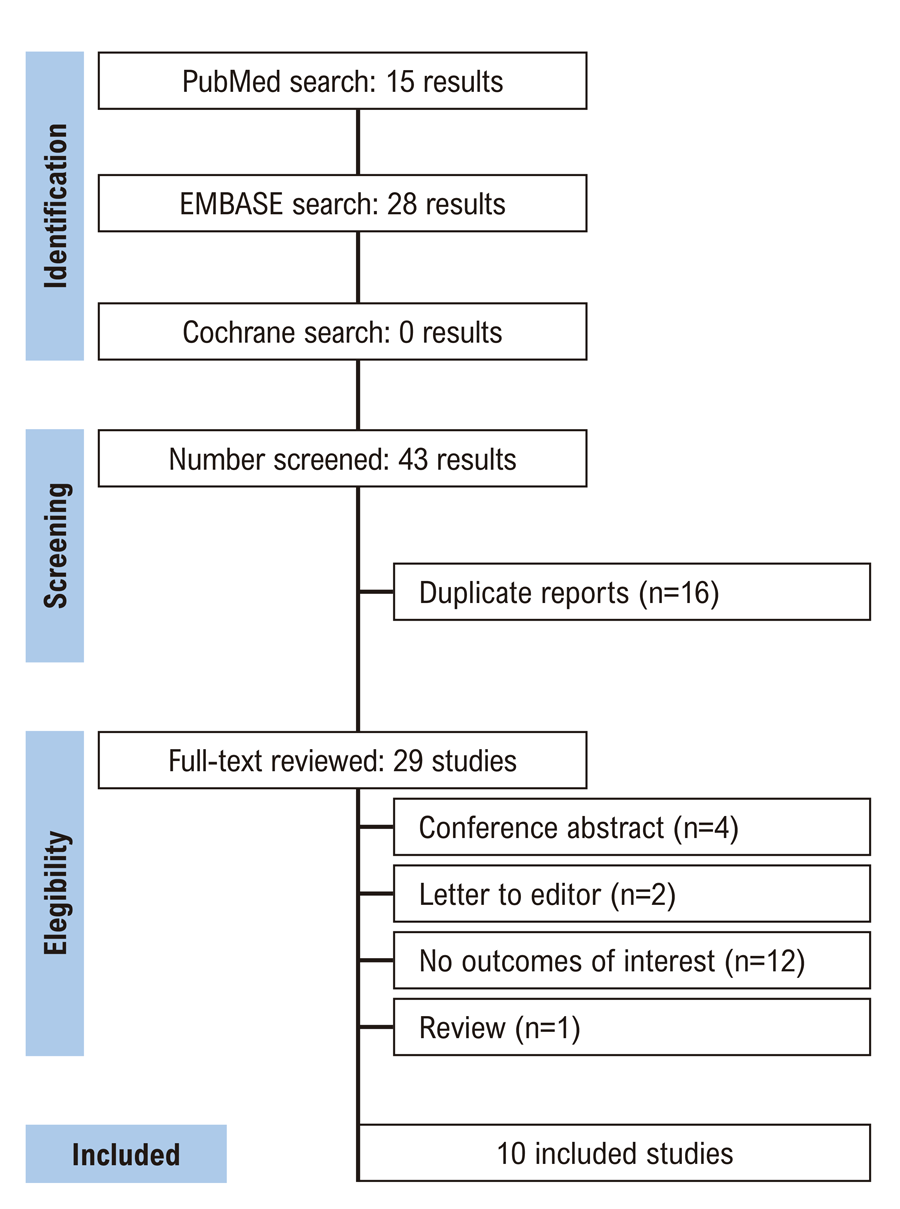
As shown in Figure 1, our initial search identified 43 records. After the removal of duplicate reports, 29 studies were reviewed in full text. Ten studies met our inclusion criteria,9-18 comprising 6,557 patients, of whom 1,068 (16.3%) were in the NR group, and 5,489 (83.7%) were in the no-NR group, as summarized in the Central Illustration. All studies were within the last ten years. Seven studies included patients with acute ST-segment elevation myocardial infarction (STEMI),9,11-16 one study included patients with non-ST-segment elevation myocardial infarction (NSTEMI),17 and two studies focused on patients undergoing PCI of saphenous vein graft (SVG).10,18 Kanal et al. examined elective PCI cases for SVG,18 while Gurbak et al. investigated NSTEMI patients undergoing PCI for SVG.10 Additional details about the included studies are provided in Table 1.

A pooled analysis of 1,068 patients with NR and 5,489 without NR showed a significantly higher rate association of NR with higher CHA2DS2-VASc score in patients undergoing PCI (OR, 1.86; 95% CI, 1.51 to 2.29; p< 0.00001; I2= 85%; Figure 2) (Central Illustration). We performed subgroup analysis for patients with acute STEMI, which also demonstrated a significantly higher rate association of NR with higher CHA2DS2-VASc score in patients undergoing PCI (OR, 1.82; 95% CI, 1.40 to 2.36; p< 0.00001; I2= 89%; Figure 3). Three studies had a considerably higher effect size compared to the others, with ORs of 6.52, 6.32, and 3.06.12,13,17 Subgroup analysis, after removing those studies, also showed a significantly higher association of NR with a higher CHA2DS2-VASc score. (OR, 1.50; 95% CI, 1.34 to 1.67; p< 0.00001; I2= 43%; Figure 4). A subgroup analysis was conducted following the exclusion of studies involving patients undergoing SVG PCI.10,18 This analysis continued to demonstrate a significant association between a higher CHA2DS2-VASc score and the occurrence of the NR phenomenon (OR, 2.02; 95% CI, 1.57 to 2.61; p< 0.00001; I2= 65%; Figure 5).
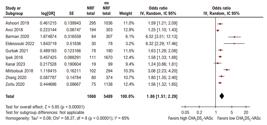
– A higher CHA2DS2-VASc score had a significantly higher rate association of no-reflow in patients undergoing percutaneous coronary intervention.

– Subgroup analysis of acute STEMI patients demonstrated a significantly higher rate of association of NR with higher CHA2DS2-VASc score in patients undergoing percutaneous coronary intervention. a: indicates the confidence interval (CI) calculated using the Wald-type method; b: indicates Tau2 calculated using the restricted maximum-likelihood (REML) method.

– Subgroup analysis, after excluding the studies with higher effect sizes, showed a significantly higher association of NR with a higher CHA2DS2-VASc score. a: shows the confidence interval CI calculated using the Wald-type method; b: indicates Tau2 calculated using the restricted maximum-likelihood (REML) method.

– Subgroup analysis, after excluding the studies including patients undergoing SVG PCI, showed a significantly higher association of NR with a higher CHA2DS2-VASc score. a: shows the confidence interval CI calculated using the Wald-type method; b: indicates Tau2 calculated using the DerSimonian and Laird (DL) method.
The overall risk of bias in observational studies was classified as moderate (Table S4). The funnel plot analysis indicated the presence of a small-study effect due to publication bias, as studies with comparable weights were asymmetrically distributed relative to their standard errors, and outliers were observed in the funnel plot (Figure S1). In the leave-one-out analysis, the CHA2DS2-VASc score showed a consistent risk effect (Supplementary Figure S2).
Discussion
This meta-analysis, comprising 10 studies and 6,557 patients, compared those who developed NR following PCI to those who did not. The main finding from our pooled analyses was that a higher CHA2DS2-VASc score was associated with a significantly higher rate of NR development in patients undergoing PCI. This association was also observed in a subgroup analysis with only acute STEMI patients. Furthermore, even after excluding studies with larger effect sizes, the CHA2DS2-VASc score continued to be significantly associated with an increased probability of NR occurrence. As depicted in the Central Illustration, this consistent association reinforces the potential utility of the CHA2DS2-VASc score in PCI-related NR risk.
The CHA2DS2-VASc scoring system, widely utilized in contemporary clinical practice, serves as a simple yet clinically significant tool for assessing thromboembolic risk in patients with AF.3 This scoring system incorporates multiple clinical parameters, including congestive heart failure (HF), hypertension (HT), age, diabetes mellitus (DM), stroke, gender, and vascular disease, all of which are closely linked to the pathophysiological mechanisms underlying atherosclerosis. Consequently, recent research has explored the utility of the CHA2DS2-VASc score in risk stratification for various cardiovascular conditions and its role as a marker associated with adverse clinical outcomes, independent of AF.4 Several studies have revealed a significant association between the CHA2DS2-VASc score and cardiovascular prognosis in HF, Takotsubo syndrome, and acute coronary syndrome (ACS) patients.19-22
NR development is multifactorial, with its exact etiology yet to be fully elucidated.2 The pathophysiology of NR involves several factors, including distal plaque and thrombus embolization, reperfusion injury due to the reactive oxygen species, microvascular damage, myocardial necrosis, vasoconstriction resulting from elevated alpha-adrenergic activity, and activated tissue factor from disrupted plaque.23-25 The NR is associated with HF, myocardial necrosis, and poor cardiac prognosis, characterized by recurrent myocardial infarction, arrhythmias, and increased mortality, irrespective of infarct size.14 Therefore, it is crucial to identify risk factors for NR.
All the studies we included similarly report that the CHA2DS2-VASc score may be a useful scoring tool for identifying patients at increased risk of the NR phenomenon in patients undergoing PCI, except for Kanal et al.18 They did not find any association between the CHA2DS2-VASc score and NR, likely due to a small sample size with lower statistical power. Additionally, there was no independent predictor of NR, including stent length and diameter, after multivariate analysis, likely for the same reason.18 Otherwise, reduced left ventricular ejection fraction (LVEF), triple vessel disease, longer lesion length, lower stent diameter, reference luminal diameter with smaller size, lower thrombolysis in myocardial infarction (TIMI) flow, and high thrombus burden on presentation have been demonstrated as predictors of NR in PCI patients.2,26-28 Ipek and Zorlu et al also found stent length and diameter as independent predictors of NR, as in the previous studies.9,15Kanal et al. was the only study that excluded ACS patients.18
To assess the strength of our findings, a sensitivity analysis using the leave-one-out method was conducted. The results demonstrated that removing any of the studies did not significantly change the pooled OR, which consistently remained between 1.70 and 2.09, even when Barman et al study was omitted, the OR decreased to 1.70 [1.40, 2.07], and I2 reduced to 78.8%. We also performed subgroup analysis for the studies that only included acute STEMI patients. However, the I2 value for this subgroup remained high at 89%. Furthermore, to address the high heterogeneity in the pooled analysis, we performed a subgroup analysis after removing those studies by Barman, Eldessouki, and Mirbolouk et al., as they reported considerably higher ORs compared to the other studies.12,13,17As a result, heterogeneity significantly dropped from 85% to 43%. One caveat about those studies is that they have a relatively smaller study population compared to the other included studies. In addition, Barman et al. did not include TIMI flow or reference luminal diameter in their multivariate analysis, which may have resulted in relatively higher ORs compared to other studies. Furthermore, Mirbolouk et al. did not include reference luminal diameter and stent length in their multivariate analysis, which may have also contributed to the relatively increased ORs. However, even after excluding those studies with higher effect sizes,12,13,17 a higher CHA2DS2-VASc score remained associated with NR development.
To further enhance the robustness of our findings and minimize heterogeneity related to graft interventions, we conducted a subgroup analysis excluding studies that focused on patients undergoing SVG PCI.10,18 This exclusion was based on the fact that SVG lesions typically exhibit a greater atherosclerotic burden, friable plaque morphology, and an increased risk of distal embolization, all of which may independently predispose patients to the NR phenomenon.29,30 After excluding these studies, the association between a higher CHA2DS2-VASc score and NR remained statistically significant, with an OR of 2.02 (95% CI, 1.57–2.61; p < 0.00001; I2 = 65%). This finding reinforces the association of the CHA2DS2-VASc score in native coronary artery PCI populations and suggests that its prognostic utility extends beyond specific procedural contexts.
Our meta-analysis revealed that a higher CHA2DS2-VASc score was associated with an increased likelihood of NR development in patients following PCI. One potential explanation is the association of microvascular dysfunction with each component of the CHA2DS2-VASc score. Microvascular dysfunction is also a key factor in the underlying mechanisms of the NR phenomenon. Thus, as components of the CHA0DS2-VASc score, hypertension, diabetes mellitus, and female sex have been shown to be associated with impaired microcirculatory perfusion after PCI.23,31 In most studies, diabetes was found to be significantly more prevalent in the NR group .9,12,15,17,18
Despite the various methodological approaches and the use of multivariate adjustments in the included studies, it is important to acknowledge that all were observational in nature. As such, these studies are inherently susceptible to residual and unmeasured confounding. Factors such as procedural technique, operator experience, use of adjunctive pharmacotherapies, and lesion or stent length were not uniformly reported or adjusted for across studies and may have influenced the observed associations. Moreover, the CHA2DS2-VASc score incorporates multiple clinical components associated with adverse cardiovascular outcomes, which could introduce confounding. Therefore, the association between a higher CHA2DS2-VASc score and the NR phenomenon should be interpreted with caution. Ultimately, prospective validation in well-designed, adequately powered studies is essential before considering the CHA2DS2-VASc score for routine clinical use in risk stratification of PCI-related NR.
Conclusion
This meta-analysis found a strong relationship between higher CHA2DS2-VASc scores and the risk of NR in patients undergoing PCI. Our results suggest that a higher CHA2DS2-VASc score is associated with an increased likelihood of NR after PCI. Since NR has multiple causes and serious effects, the CHA2DS2-VASc score could help identify high-risk patients. This is visually summarized in the Central Illustration. Additional research is necessary to validate these findings and evaluate their impact on clinical decision-making.
Limitations
Our meta-analysis has some limitations. First, all included studies were observational, which introduces the possibility of residual confounding despite multivariate adjustments. Second, significant heterogeneity was observed across studies, which may reflect variations in study populations. Third, funnel plot analysis suggested publication bias, indicating a potential small-study effect. Fourth, the included studies did not consistently adjust for all known predictors of NR, such as stent length, stent diameter, and thrombus burden, which could influence the observed association. Fifth, the retrospective nature of most included studies may introduce selection bias. Lastly, none of the studies included in this meta-analysis investigated the impact of the CHA2DS2-VASc score on clinical outcomes such as mortality, heart failure, or long-term major adverse cardiovascular events, limiting the scope of our findings to the association with the NR phenomenon alone. Thus, large-scale prospective studies are required to corroborate our results and improve risk stratification models incorporating CHA2DS2-VASc in PCI patients.
Supplemental Material
Supplemental Material
References
-
1 Rezkalla SH, Stankowski RV, Hanna J, Kloner RA. Management of No-Reflow Phenomenon in the Catheterization Laboratory. JACC Cardiovasc Interv. 2017;10(3):215-23. doi: 10.1016/j.jcin.2016.11.059.
» https://doi.org/10.1016/j.jcin.2016.11.059 -
2 Huyut MA, Yamac AH. Outcomes in Coronary No-Reflow Phenomenon Patients and the Relationship between Kidney Injury Molecule-1 and Coronary No-Reflow Phenomenon. Arq Bras Cardiol. 2021;116(2):238-47. doi: 10.36660/abc.20190656.
» https://doi.org/10.36660/abc.20190656 -
3 Hindricks G, Potpara T, Dagres N, Arbelo E, Bax JJ, Blomström-Lundqvist C, et al. 2020 ESC Guidelines for the Diagnosis and Management of Atrial Fibrillation Developed in Collaboration with the European Association for Cardio-Thoracic Surgery (EACTS): The Task Force for the Diagnosis and Management of Atrial Fibrillation of the European Society of Cardiology (ESC) Developed with the Special Contribution of the European Heart Rhythm Association (EHRA) of the ESC. Eur Heart J. 2021;42(5):373-498. doi: 10.1093/eurheartj/ehaa612.
» https://doi.org/10.1093/eurheartj/ehaa612 -
4 Inan D, Genc D, Simsek B, Tanik O, Akdeniz E, Korkmaz B, et al. Relationship between CHA 2 DS 2 -VASc Score on Admission and in-Hospital Major Adverse Cardiovascular Events in Patients Diagnosed with ST-Elevation Myocardial Infarction. Angiology. 2025;76(4):330-9. doi: 10.1177/00033197241273382.
» https://doi.org/10.1177/00033197241273382 -
5 Stroup DF, Berlin JA, Morton SC, Olkin I, Williamson GD, Rennie D, et al. Meta-Analysis of Observational Studies in Epidemiology: A Proposal for Reporting. Meta-Analysis Of Observational Studies in Epidemiology (MOOSE) Group. JAMA. 2000;283(15):2008-12. doi: 10.1001/jama.283.15.2008.
» https://doi.org/10.1001/jama.283.15.2008 -
6 Page MJ, McKenzie JE, Bossuyt PM, Boutron I, Hoffmann TC, Mulrow CD, et al. The PRISMA 2020 Statement: An Updated Guideline for Reporting Systematic Reviews. BMJ. 2021;372:n71. doi: 10.1136/bmj.n71.
» https://doi.org/10.1136/bmj.n71 -
7 Sterne JA, Hernán MA, Reeves BC, Savovic J, Berkman ND, Viswanathan M, et al. ROBINS-I: A Tool for Assessing Risk of Bias in Non-Randomised Studies of Interventions. BMJ. 2016;355:i4919. doi: 10.1136/bmj.i4919.
» https://doi.org/10.1136/bmj.i4919 - 8 Higgins JPT, Thomas J, Chandler J, Cumpston M, Li T, Page MJ, editors. Cochrane Handbook for Systematic Reviews of Interventions. Version 6.4 (Updated AUGUST 2023). London: Cochrane; 2023.
-
9 Ipek G, Onuk T, Karatas MB, Gungor B, Osken A, Keskin M, et al. CHA 2 DS 2 -VASc Score is a Predictor of No-Reflow in Patients with ST-Segment Elevation Myocardial Infarction Who Underwent Primary Percutaneous Intervention. Angiology. 2016;67(9):840-5. doi: 10.1177/0003319715622844.
» https://doi.org/10.1177/0003319715622844 -
10 Gürbak I, Panç C, Sahin AA, Dervis E, Yildiz I, Güler A, et al. CHA 2 DS 2 -VASc Score as a Predictor of No-Reflow Phenomenon after Saphenous Vein Graft Percutaneous Coronary Intervention in Patients with Non-ST-Segment Elevation Acute Coronary Syndromes. Kardiol Pol. 2020;78(11):1129-36. doi: 10.33963/KP.15603.
» https://doi.org/10.33963/KP.15603 -
11 Ashoori A, Pourhosseini H, Ghodsi S, Salarifar M, Nematipour E, Alidoosti M, et al. CHA 2 DS 2 -VASc Score as an Independent Predictor of Suboptimal Reperfusion and Short-Term Mortality after Primary PCI in Patients with Acute ST Segment Elevation Myocardial Infarction. Medicina. 2019;55(2):35. doi: 10.3390/medicina55020035.
» https://doi.org/10.3390/medicina55020035 -
12 Mirbolouk F, Gholipour M, Salari A, Shakiba M, Kheyrkhah J, Nikseresht V, et al. CHA 2 DS 2 -VASc Score Predict No-Reflow Phenomenon in Primary Percutaneous Coronary Intervention in Primary Percutaneous Coronary Intervention. J Cardiovasc Thorac Res. 2018;10(1):46-52. doi: 10.15171/jcvtr.2018.08.
» https://doi.org/10.15171/jcvtr.2018.08 -
13 Eldessouki A, Yossof MM, Soliman AW, Wadie M. CHADS-VASc Score as a Predictor of No Reflow Phenomenon in ST-Elevation Myocardial Infarction Patients Undergoing Primary Percutaneous Coronary Intervention. NeuroQuantology. 2022;20(15):3689-95. doi: 10.14704/NQ.2022.20.15.NQ88368.
» https://doi.org/10.14704/NQ.2022.20.15.NQ88368 -
14 Avci E, Yildirim T, Aydin G, Kiris T, Dolapoglu A, Kadi H, et al. Combining Clinical Predictors to Better Predict for the No-Reflow Phenomenon. Eur Rev Med Pharmacol Sci. 2018;22(15):4987-94. doi: 10.26355/eurrev_201808_15639.
» https://doi.org/10.26355/eurrev_201808_15639 -
15 Zorlu Ç, Köseoglu C. Comparison of RCHA 2 DS 2 -VASc Score and CHA 2 DS 2 -VASc Score Prediction of No-Reflow Phenomenon in Patients with ST-Segment Elevation Myocardial Infarction. Turk Kardiyol Dern Ars. 2020;48(7):664-72. doi: 10.5543/tkda.2020.90140.
» https://doi.org/10.5543/tkda.2020.90140 -
16 Zhang QY, Ma SM, Sun JY. New CHA 2 DS 2 -VASc-HSF Score Predicts the No-Reflow Phenomenon after Primary Percutaneous Coronary Intervention in Patients with ST-Segment Elevation Myocardial Infarction. BMC Cardiovasc Disord. 2020;20(1):346. doi: 10.1186/s12872-020-01623-w.
» https://doi.org/10.1186/s12872-020-01623-w -
17 Barman HA, Kahyaoglu S, Durmaz E, Atici A, Gulsen K, Tugrul S, et al. The CHADS-VASc Score is a Predictor of No-Reflow in Patients with Non-ST-Segment Elevation Myocardial Infarction. Coron Artery Dis. 2020;31(1):7-12. doi: 10.1097/MCA.0000000000000781.
» https://doi.org/10.1097/MCA.0000000000000781 -
18 Kanal Y, Balci KG, Yaman NM, Yakut I, Ozbay MB, Maden O. The Relationship between CHA 2 DS 2 -VASc Score and Reperfusion Success in Elective Percutaneous Saphenous Vein Graft Interventions. Int J Cardiovasc Sci. 2023;36:e20230027. doi: 10.36660/ijcs.20230027.
» https://doi.org/10.36660/ijcs.20230027 -
19 Kiliszek M, Szpakowicz A, Filipiak KJ, Koltowski L, Poludniewska D, Szymanski F, et al. CHA 2 DS 2 -VASc and R2CHA 2 DS 2 -VASc Scores Have Predictive Value in Patients with Acute Coronary Syndromes. Pol Arch Med Wewn. 2015;125(7-8):545-52. doi: 10.20452/pamw.2965.
» https://doi.org/10.20452/pamw.2965 -
20 Parodi G, Scudiero F, Citro R, Silverio A, Bellandi B, Zito C, et al. Risk Stratification Using the CHA 2 DS 2-VASc Score in Takotsubo Syndrome: Data from the Takotsubo Italian Network. J Am Heart Assoc. 2017;6(9):e006065. doi: 10.1161/JAHA.117.006065.
» https://doi.org/10.1161/JAHA.117.006065 -
21 Yoshihisa A, Watanabe S, Kanno Y, Takiguchi M, Sato A, Yokokawa T, et al. The CHA 2 DS 2 -VASc Score as a Predictor of High Mortality in Hospitalized Heart Failure Patients. ESC Heart Fail. 2016;3(4):261-9. doi: 10.1002/ehf2.12098.
» https://doi.org/10.1002/ehf2.12098 -
22 Chua SK, Lo HM, Chiu CZ, Shyu KG. Use of CHADS2 and CHA 2 DS 2 -VASc Scores to Predict Subsequent Myocardial Infarction, Stroke, and Death in Patients with Acute Coronary Syndrome: Data from Taiwan Acute Coronary Syndrome Full Spectrum Registry. PLoS One. 2014;9(10):e111167. doi: 10.1371/journal.pone.0111167.
» https://doi.org/10.1371/journal.pone.0111167 -
23 Kaul S. The "No Reflow" Phenomenon Following Acute Myocardial Infarction: Mechanisms and Treatment Options. J Cardiol. 2014;64(2):77-85. doi: 10.1016/j.jjcc.2014.03.008.
» https://doi.org/10.1016/j.jjcc.2014.03.008 -
24 Saylik F, Çinar T, Tanboga IH. The Predictive Value of the Inflammatory Prognostic Index for Detecting No-Reflow in ST-Elevation Myocardial Infarction Patients. Arq Bras Cardiol. 2024;121(4):e20230644. doi: 10.36660/abc.20230644.
» https://doi.org/10.36660/abc.20230644 -
25 Matos LCV, Carvalho LS, Modolo R, Santos S, Silva JCQE, Almeida OLR, et al. Gensini Score and Thrombus Burden Add Predictive Value to the SYNTAX Score in Detecting No-Reflow after Myocardial Infarction. Arq Bras Cardiol. 2021;116(3):466-72. doi: 10.36660/abc.20200045.
» https://doi.org/10.36660/abc.20200045 -
26 Carrick D, Oldroyd KG, McEntegart M, Haig C, Petrie MC, Eteiba H, et al. A Randomized Trial of Deferred Stenting versus Immediate Stenting to Prevent No- or Slow-Reflow in Acute ST-Segment Elevation Myocardial In farction (DEFER-STEMI). J Am Coll Cardiol. 2014;63(20):2088-98. doi: 10.1016/j.jacc.2014.02.530.
» https://doi.org/10.1016/j.jacc.2014.02.530 -
27 Fajar JK, Heriansyah T, Rohman MS. The Predictors of no Reflow Phenomenon after Percutaneous Coronary Intervention in Patients with ST Elevation Myocardial Infarction: A Meta-Analysis. Indian Heart J. 2018;70(Suppl 3):S406-S418. doi: 10.1016/j.ihj.2018.01.032.
» https://doi.org/10.1016/j.ihj.2018.01.032 -
28 Aggarwal P, Rekwal L, Sinha SK, Nath RK, Khanra D, Singh AP. Predictors of No-Reflow Phenomenon Following Percutaneous Coronary Intervention for ST-Segment Elevation Myocardial Infarction. Ann Cardiol Angeiol. 2021;70(3):136-42. doi: 10.1016/j.ancard.2021.04.004.
» https://doi.org/10.1016/j.ancard.2021.04.004 -
29 Nishihira K, Kuriyama N, Shibata Y. Ruptured Lipid-Rich Plaque in a Saphenous Vein Graft Causing No-Reflow Phenomenon: Insights from Near-Infrared Spectroscopy, Optical Coherence Tomography, and Histopathological Analysis. Eur Heart J Case Rep. 2021;5(7):ytab276. doi: 10.1093/ehjcr/ytab276.
» https://doi.org/10.1093/ehjcr/ytab276 -
30 Mori H, Kurita T, Takasaki A, Dohi K. Plaque Characterization of a Saphenous Vein Graft by Near-Infrared Spectroscopy and Histopathology in a Patient with a Percutaneous Coronary Intervention. Catheter Cardiovasc Interv. 2023;101(6):1071-3. doi: 10.1002/ccd.30641.
» https://doi.org/10.1002/ccd.30641 -
31 Niccoli G, Scalone G, Lerman A, Crea F. Coronary Microvascular Obstruction in Acute Myocardial Infarction. Eur Heart J. 2016;37(13):1024-33. doi: 10.1093/eurheartj/ehv484.
» https://doi.org/10.1093/eurheartj/ehv484
-
Study association:
This study is not associated with any thesis or dissertation work.
-
Ethics approval and consent to participate:
This article does not contain any studies with human participants or animals performed by any of the authors.
-
Use of Artificial Intelligence:
The authors did not use any artificial intelligence tools in the development of this work.
-
Data Availability Statement:
The underlying content of the research text is contained within the manuscript.
-
Sources of funding:
There were no external funding sources for this study.
-
*Supplemental Materials
For additional information, please, click here.
Edited by
-
Editor responsible for the review:
Henrique Ribeiro
The underlying content of the research text is contained within the manuscript.

 Ícones por Health Icons e Freepik.
 Icons by Health Icons and Freepik.