Spatio-temporal variation in the diversity of social wasps (Vespidae: Polistinae) in the tropical dry forest of the Colombian Caribbean
ABSTRACT
The temporal variation in the diversity of Polistinae was analyzed in three fragments of tropical dry forest (TDF) in the Colombian Caribbean (Reserva Campesina la Montaña = RCM, Reserva La Flecha = RCF and Finca La Clarita = FLC). Three transects, each measuring 250 × 20 m and spaced 200 m apart, were established per site. Within each transect, six collection points were marked, each separated by 50 m. The social wasps were captured using baited traps and entomological nets. A total of 2274 wasps were collected across the three TDF fragments, identified into 11 genera and 24 species. The most diverse genus was Polybia, followed by Polistes and Agelaia. The highest species richness among fragments was recorded at RLF (22), while the lowest was at RCM and FLC (10). Seasonally, RLF exhibited the highest richness (17) during the rainy season, whereas the lowest richness was observed at RCM during the dry season (5). According to diversity profiles, the highest value of the effective number of species (0D) was recorded at RLF during the rainy season (15), and the lowest (2) during the dry season at RCM. This same pattern was observed for the other two orders of diversity (1D and 2D). In terms of beta diversity, a high dissimilarity was observed among the three locations, driven by both nesting and species turnover, while from a temporal perspective (dry-rainy seasons), species turnover was predominant. The diversity variation of the social wasps is associated with changes in humidity due to the onset of the rainy season, demonstrating that seasonal changes in these variables within TDF fragments are crucial in the dynamics of social wasp communities.
KEYWORDS:
Communities; dissimilarity; Hill numbers; season
INTRODUCTION
In the Colombian Caribbean, the tropical dry forest (TDF) is undergoing constant modification due to the exploitation of primary resources (e.g., timber), agricultural production, mining, human settlements, and forest fires, which have led to the loss of native fauna and flora (Janzen 1983, IAvH 1998, Pizano and García 2014). Currently, the TDF is distributed in small, isolated fragments surrounded by agricultural matrices (Rangel-Acosta and Martínez-Hernández 2017). In this region, the departments of Atlántico (5.7%), Bolívar (4.1%), and Magdalena (2.2%) have the highest percentages of TDF coverage, although most of these fragments are not within protected areas (Pizano and García 2014), despite representing the largest TDF coverage in the country.
The TDF is considered a diverse ecosystem at the local level (Amell-Caez et al. 2019), making it essential to understand the dynamics of biological communities, as they could provide crucial information for biodiversity conservation and forest reserve management (Brown 1991, Sarmiento and Sara via 1996, Lewinsohn et al. 2005). In this context, most efforts to observe the impact of forest transformation on diversity in anthropogenic areas have focused on studying groups of invertebrates such as Coleoptera (Martínez et al. 2010a, 2010b, García-Atencia and Martínez-Hernández 2015, García-Atencia et al. 2015, Rangel-Acosta and Martínez-Hernández 2017, Rangel-Acosta et al. 2018, Amell-Caez et al. 2019, García et al. 2021, Sarmiento-Roa et al. 2024), Lepidoptera (Vargas-Zapata et al. 2011, Boom et al. 2013, Mercado et al. 2018, Ahumada et al. 2019), Mantodea (Arteaga et al. 2014), Hemiptera (Román-Garrido et al. 2016), and Hymenoptera (Formicidae) (Guerrero and Olivero 2007, Fontalvo and Domínguez-Haydar 2009, Simanca et al. 2010, Gutiérrez and Domínguez-Haydar 2017). However, few studies have focused on determining the ecological response of social insect communities to TDF transformation in the Colombian Caribbean, despite their importance within this ecosystem.
Among social insects, wasps (Vespidae: Polistinae) play crucial ecological roles such as pollination and the predation of pest insects (e.g., lepidopteran larvae) in biological pest control, making them potential bioindicators of ecosystem quality (West-Eberhard 1975, Souza et al. 2010). Additionally, some species (e.g., Polybia paulista Ihering, 1896) produce venom from which protein components (medicinal resour ces) with cancer-fighting, antimicrobial, and anticonvulsant activities have been extracted, highlighting their significance in providing important environmental services for human well-being (do Couto et al. 2012).
In the world, there are more than 1,050 species of social wasps divided into 25 genera. In Colombia, 21 genera, 224 species, and 25 subspecies of Polistinae have been recorded (Mischocyttarus, Polistes, and 19 genera of Epiponini) (Sarmiento 1997), one of the countries in the neotropical region with the greatest diversity of this taxon. However, there are few studies that estimate the diversity values of social wasps in TDF fragments in the Caribbean departments of Colombia (López et al. 2013a, 2013b), resulting in limited knowledge about the current state of Polistinae diversity in this region. Given the ecological importance of social wasps in critical ecosystems like TDF, it is relevant to understand how the diversity of these insects responds to seasonal dynamics and environmental characteristics of TDF in the Colombian Caribbean. Seasonal variation influences ecological communities through temporal changes in resource availability (e.g., food, habitats), fluctuations in environmental variables (e.g., temperature, humidity), and photoperiod (García and Cabrera-Reyes 2008). Consequently, it is expected that the composition and structure of Polistinae will differ among fragments due to the heterogeneity and seasonality of TDF between the dry and rainy seasons in the Colombian Caribbean.
Considering the above, the spatio-temporal variation in Polistinae diversity in TDF fragments of the Colombian Caribbean and its relationship with environmental variables and canopy cover was analyzed. This research is relevant due to the need to understand the diversity of social wasps in unprotected areas, given the lack of continuous species records and the rapid reduction of TDF fragments.
MATERIAL AND METHODS
Study area
Three forest fragments were selected: Reserva Campesina La Montaña (RCM), Reserva La Flecha (RLF), and Finca La Clarita (FLC), located in the departments of Atlántico, Bolívar, and Magdalena, respectively (Fig. 1, Table 1). These forest formations correspond to TDF, according to the system proposed by Holdridge (1967).
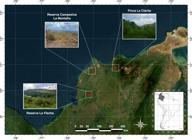
Location of tropical dry forest fragments in the Colombian Caribbean. The map was created using Quantum Geographic Information System (QGIS), v. 3.38.1, Grenoble (https://qgis.org/).
Sampling
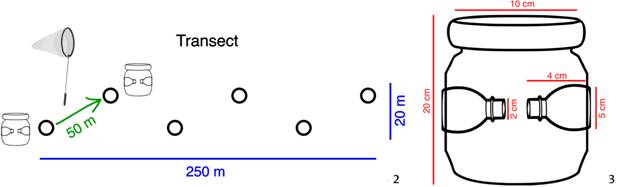
Two sampling sessions were conducted between March and August 2017 for each fragment: one during the dry season (February to April) and another during the rainy season (May to August), to cover periods of low and high precipitation (Guzmán et al. 2014), with a temporal investment of three days (72 hours per sampling). In each TDF fragment, three transects were established, each 250 m long and 20 m wide, separated by 200 m from one another, and six points were marked 50 m apart from each other within each transect (Fig. 2). At each point, wasps were captured using an entomological net and attractive traps (Fig. 3).

Distribution of capture techniques per transect (2) and description of attractive traps (3).
Capture methods
Polistinae individuals were captured using modified attractive traps (necrotraps and fruit traps) based on the NTP-80 model (Morón and Terrón 1984, Márquez 2005), installed at each point. These traps consisted of cylindrical plastic containers 20 cm high with a 10 cm top opening, featuring two side openings with inward-facing funnels of 5 cm external diameter and 2 cm internal diameter (Fig. 3). In the case of the fruit trap (FT), the bait was a homogeneous mixture of panela honey (cane honey) and water at a ratio of 5:1 (panela: water) (Noll and Gómez 2009), with 250 mL per trap. In the necrotraps (NT), the bait consisted of 250 g of fresh marine fish, 200 mL of water, and tuna (Sarmiento and Saravia 1996). The traps were modified for an intersection-attraction model, suspended between one and eight meters above the ground, supported on tree branches, and were active for 72 hours with inspections every 24 hours.
Additionally, wasps were captured using an entomological net (EN) consisting of a 120 cm aluminum handle and a 60 cm diameter metal hoop at one end, covered by a fine mesh fabric cone 70 cm deep (Fig. 2) (Villareal et al. 2004). This technique was performed for 10 minutes per point, for a total of 60 minutes per transect, with transects being surveyed in two sessions, from 8:00 am to 12:00 pm and from 2:00 pm to 6:00 pm.
The collected material was preserved in 70% alcohol in pre-labeled plastic containers and transported to the Ecology and Entomology Laboratory, Universidad del Atlántico. The specimens were mounted on polystyrene sheets and identified using keys proposed by Richards (1978), Cubillos and Sarmiento (1996), Sarmiento (1997), and Sarmiento and Carpenter (2006), using a Leica MC120 HD stereoscope. The species taxo nomic level was determined using speciali zed keys (Richards 1978, Cooper 2000a, 2000b, Pickett and Wenzel 2007, Andena et al. 2009, Dos Santos et al. 2015), in addition to reviewing the collection at the Instituto de Ciencias Naturales de Colombia (ICN), Universidad Nacional de Colombia, Bogotá Campus.
Additionally, at each point, data on light intensity were recorded using a Standard ST-1308 digital lux meter, and ambient temperature and humidity were measured with an Extech RTH10 data logger. Canopy cover was also quantified using a FORE-43887 convex spherical densiometer. Precipitation data were obtained from the website of the Instituto de Hidrología, Meteorología y Estudios Ambientales (IDEAM) (http://www.ideam.gov.co).
Data analysis
The species richness of Polistinae was estimated as the number of species and their abundance in terms of incidence, meaning it was calculated as the sum of the capture incidences of each species per point/transect and season in each fragment (Colwell et al. 2005).
Alpha diversity was calculated using diversity profiles (Hill numbers) (Hill 1973), expressed in units of the effective number of species (Hsieh et al. 2016, Jost 2006): 0D (species richness), 1D (abundant species), and 2D (dominant species), through the interpolation and extrapolation analysis of the sample (Chao et al. 2014) with the iNEXT package (Chao et al. 2016, Hsieh et al. 2016) in RStudio (2021). The values of each diversity order were compared using 95% confidence intervals (Moreno et al. 2011). For beta diversity, the values of turnover and nestedness components were estimated (Baselga 2010, 2012, 2013) using the Jaccard dissimilarity index. This analy sis was performed with the Betapart package in RStudio (Baselga and Orme 2012):
On the other hand, a non-parametric multidimensio nal scaling (nMDS) analysis was conducted to determine the spatiotemporal variation of the social wasp community. The Bray-Curtis dissimilarity index was used for this purpose, as it determines the similar relationships between sites and the ecological distances between communities (Faith et al. 1987). To observe the differences in communities, a permutational multivariate analysis of variance (PERMANOVA) was performed using the adonis2 function from the vegan package (Oksanen et al. 2020) in RStudio.
To determine how seasonality, forest fragments, and environmental variables influenced the abundance and diversity of social wasps, a generalized linear model was applied using the glm function from the lme4 package (Bates et al. 2015). The final models for the response variables were compared against null models, and the most parsimonious model was selected based on the Akaike Information Criterion (AIC) (Akaike 1974). High collinearity among environmental factors was ruled out using a Pearson correlation test (Pearson 1920) with the cor.test function from the stats package in RStudio.
RESULTS
Polistinae diversity
A total of 2274 wasps from Polistinae were collected, grouped into 11 genus and 24 species (Table 2). Polybia Lepeletier, 1836 was the most diverse with seven species, followed by Polistes Latreille, 1802 with four species. In contrast, Mischocyttarus de Saussure, 1853, Apoica Lepeletier, 1836, Synoeca de Saussure, 1852, Brachygastra Perty, 1833, Charterginus Fox, 1898, and Protopolybia Ducke, 1905 were represented by only one species each (Table 2).
Variation in the abundance and composition of the Polistinae community by season (dry and rainy) in three fragments of the tropical dry forest in the Colombian Caribbean. The number of individuals captured is indicated in parentheses.
Agelaia Lepeletier, 1836 was recorded in all three fragments during both climatic seasons (dry and rainy), while Brachygastra, Mischocyttarus, and Synoeca (RLF); Apoica, Polistes, Parachartergus Ihering, 1904 (RCM); and Metapolybia, Parachartergus, Polistes, and Synoeca (FLC) were the least frequent. In the same vein, the most frequent species was Agelaia centralis in all three fragments during both seasons, while the least frequent were Polybia ignobilis, Polistes major colombianus, Polistes billardieri, and Metapolybia docilis (RLF); Polistes rufidens, Parachartergus colobopterus, and Apoica flavissima (RCM); and Polistes myersi (Bequaert 1934) and Protopolybia scutellaris (FLC).
RLF recorded the highest species richness (22 species), followed by RCM and FLC with ten each. Richness peaked in RLF during the rainy season (17 species) and was lowest in RCM during the dry season (5 species). The highest abundance was observed in FLC during the dry season (94 individuals), and the lowest in the same fragment during the rainy season (55).
Alpha diversity (α)
The highest sampling coverage was recorded during the rainy season in RCM (0.9872 ≈ 99%), while the lowest was observed during the dry season in RLF (0.8971 ≈ 90%). In terms of 0D, the highest effective number of species (17 species) was recorded for RLF during the rainy season, while the lowest was observed in RCM during the dry season (5 species). When analyzing species’ richness, no differences were found between sites during the dry season (Fig. 4), but RLF was significantly different from the other two TDF fragments during the rainy period based on confidence intervals (α = 0.05) (Fig. 4). On the other hand, in terms of common species (1D), the highest diversity was observed in RLF during the rainy season (10.27), and the lowest in RCM (2.54) during the dry season; however, no differences were recorded between sites. The diversity of abundant species in the three fragments during the dry season did not show differences. The same pattern was observed for diversity based on dominant species (2D) (Fig. 4).

Variation in diversity in terms of 0D, 1D, and 2D (Hill numbers) of the Polistinae wasp community in forest fragments during the dry and rainy seasons.
Beta diversity (β)
Considering the exclusive species, the highest value (10) was recorded in RLF, and the lowest value (1) in FLC. However, RLF and RCM shared nine species, RLF and FLC eight, and RCM and FLC six, while all three fragments shared five species each. On the other hand, high values of beta diversity (Jaccard dissimilarity) were observed. The highest dissimilarity was recorded between RLF and FLC (0.66), with similar values of nestedness and species turnover (0.33 = 33%); while the lowest dissimilarity was reported between FLC and RCM (0.57), with the net value explained by turnover (Fig. 4). Similarly, when comparing climatic periods (dry and rainy) for each fragment, the highest values were recorded in RCM (0.75 = 75%), where turnover (0.57) was greater than nestedness (0.13). On the other hand, the lowest value of beta diversity (0.40 = 40%) was reported in FLC, of which 0.25 corresponded to species turnover and 0.15 to nestedness (Fig. 5).

Spatial and temporal variation of beta diversity, based on its turnover and nestedness components, in the Polistinae community of the TDF fragments.
Spatial and temporal variation of the Polistinae community
In the non-parametric multidimensional scaling (nMDS) analysis, differences in the composition and structure of the Polistinae community were recorded in spatial and temporal terms. The wasp community was significantly distinct between the three fragments during both the dry and rainy seasons (Fig. 6). However, there was a slight overlap between RCM during the rainy period and FLC and RCM during the dry season (Fig. 6).
According to the results of the PERMANOVA, the differences observed in the nMDS in the composition and structure of the Polistinae community were confirmed for both, the seasons (Df = 1, R2 = 0.09, F = 6.15, p = 0.001), the fragments (Df = 2, R2 = 0.13, F = 4.43, p = 0.001), and the interaction between these two factors (Df = 2, R2 = 0.07, F = 2.29, p = 0.005).

Spatiotemporal variation of the TDF wasp community based on a non-parametric multidimensional scaling analysis with the Bray-Curtis distance index. Abbreviations: FLC: Finca La Clarita; RCM: Reserva Campesina La Montaña; RLF: Reserva La Flecha.
Relationship between Polistinae diversity and explanatory variables
The generalized linear model showed that the abundance of Polistinae responds to climatic periods (p-value < 0.001), while there are no significant differences between forest fragments (p-value = 0.118). However, the interaction between climatic periods and fragments was found to be influential in the variation of abundance (p-value = 0.023). Additionally, the abundance of Polistinae was influenced by relative humidity and its fluctuation among the three fragments (Table 3).
Significance level of explanatory variables on the attributes of the Polistinae community (abundance and diversity 0D, 1D, and 2D) based on a generalized linear model. *Indicates significant level.
On the other hand, neither climatic periods nor fragments influenced the variation in species richness (0D), nor their interaction. However, ambient humidity is a factor affecting the variation of this attribute in the Polistinae community (Table 3). Additionally, the variation in the diversity of abundant species (1D) and dominant species (2D) is influenced by climatic periods, as well as ambient humidity and its respective changes across the three locations (Table 3). Canopy cover was not relevant to the variation of the attributes of the Polistinae community in the three fragments.
DISCUSSION
This work represents the first study on social wasps for the TDF of the Colombian Caribbean, contributing to the understanding of the ecology and biology of this group. The number of species (24) represents 9.6% of the species for Colombia (Sarmiento and Saravia 1996, Sarmiento 1997). This highlights the importance of evaluating the conservation value of forest fragments, as they may harbor a portion of the local and national Polistinae fauna. This is particularly significant given the limited number of protected areas in this ecosystem within the national system.
Considering the list of social wasp species for the Colombian Caribbean, this study presents new country records such as Agelaia centralis. Regionally, it reports new records for the expansion of the distribution of Agelaia pleuralis in Bolívar, Agelaia panamensis in Atlántico and Bolívar, and Protopolybia scutellaris in Magdalena. Additionally, species reported for the first time in Bolívar include Polybia parvulina, Polybia diguetana, Polistes major colombianus, Polistes rufidens, Parachartergus fraternus, and Metapolybia docilis. Some species reported in the literature for Atlántico, such as Charterginus carinatus and Metapolybia aztecoides, were not found in the RCM forest fragment but were present in the RLF (Bolívar). Finally, the record of Protopolybia scutellaris in Magdalena expands its distribution in the country, as it had previously been reported only for Chocó. Comparing the species richness found in RLF with the list of social wasps recorded by López et al. (2013), suggests that a representative sample for this fragment was obtained, as evidenced by the high sampling coverage achieved.
The highest diversity in the genera Polybia, Polistes, and Agelaia respectively aligns with studies conducted on this subfamily in the Neotropical region (Sarmiento and Saravia 1996, Sarmiento 1997, Carpenter and Marques 2001, Souza and Prezoto 2006, Prezoto and Clemente 2010, López et al. 2013). For Agelaia, this can be attributed to the high capacity of wasps in this genus to exploit various resources and adapt to anthropogenic effects, considering them disturbance-tolerant species. Similarly, Polybia species are also generalists (Sarmiento and Saravia 1996, López et al. 2013a). Polistes species have a dietary preference for Lepidoptera larvae (Martin and Belloti 1986, Prezoto et al. 2006), which increase their abundance during the rainy season (Wolda 1988), presenting a greater availability of resources that Polistes wasps can exploit in the TDF in the Colombian Caribbean. In general, nests of species belonging to the tribe Epiponini can contain millions of individuals in their colonies, whereas nests of Mischocyttarini and Polistini typically have a few dozen individuals per colony (Richards 1978, Ross and Mathews 1991, Sakagami et al. 1996); a characteristic that allows their representatives to establish colonies more effectively and exploit new ecological niches. The genus-level results are similar to those described by Sarmiento (1997) in Colombia and Carpenter and Marques (2001) in Brazil, who also identify Polybia and Polistes as the most abundant.
Variability in the structure of the Polistinae community was determined by the differential contribution of species to abundance in the fragments. For example, wasps of the genus Polistes exhibit greater flight range (Gobbi 1978, Santos et al. 2000, Prezoto and Gobbi 2005, da Cruz et al. 2006, Ribeiro-Junior et al. 2008, Hernández et al. 2009, López et al. 2015), indicating a high likelihood of colonizing new areas and exploiting new resources for establishment, which also increases the chances of being captured. An example is the higher presence of generalist species such as Agelaia centralis and Polybia occidentalis (Sarmiento and Saravia 1996, López et al. 2013), which exhibit greater ecological tolerance, allowing them to adapt to environmental and phenological changes in the forest associated with temporal variability.
Differences in diversity may be related to the conservation status of the three forest fragments. Community ecology theory suggests that Polistinae diversity is greater in structurally complex environments; greater structural heterogeneity allows for the establishment of richer and more diverse communities due to the availability of resources, nesting sites, and protection (Giller 1984, Santos et al. 2007, 2009). Thus, both the abundance and diversity of social wasps (Polistinae) are attributes of the community determined by the relationship between the structural complexity of vegetation in the tropical dry forest and the availability of food resources (Barros-Henriques et al. 1992, Santos et al. 2009). Additionally, species tolerance to physical conditions and interactions with other organisms must be considered, as some wasps increase their abundance and interactions with other arthropod species during the rainy season, contributing to the seasonality of these social insects (Santos et al. 2007).
The lower number of species recorded in the RCM and FLC fragments can be attributed to the loss of forest cover in these areas, due to the clearing of surrounding vegetation associated with agricultural and mining activities. The higher diversity in the RLF can be attributed to the greater plant hete rogeneity in this locality, as much of the primary vegetation is preserved in this fragment. This is due to local practices that prevent extensive logging of timber trees within the forest and adjacent to streams. This is consistent with the high canopy cover values, which indicate greater resource availability that supports the establishment of colonies with a high number of individuals (Richards 1978, Ross and Mathews 1991, Sakagami et al. 1996). Additionally, plant heterogeneity can enhance the coexistence of a greater number of species, such as Angiopolybia pallens (Lepeletier, 1836) and Synoeca cyanea (Fabricius, 1975), which are only recorded in environments with specific nesting conditions (Marques 1996). It is also suggested that the higher conservation status of this fragment is possibly due to its difficult access and its history as a conflict zone in Colombia. This latter factor acted as a barrier to human activities that would otherwise reduce the complexity of the tropical dry forest fragments in the area.
The higher diversity observed during the rainy season in RLF can be attributed to specific characteristics of seasonal dry forests between the dry season and the onset of the first rains, as there is a direct relationship between this variable and the phenological cycles of the forest (Berdugo and Rangel 2015). Adult Polistinae feed on nectar from flowers and fruits, as well as on the excretions of Hemiptera (Auchenorrhyncha) insects and larvae from the Lepidoptera order and other arthropods that are potential prey for these predators (West-Eberhard et al. 1995). These resources increase with the arrival of the rains in the tropical dry forest in the Colombian Caribbean, allowing the coexistence of many species at a local level.
In RCM, it was observed that much of the vegetation is surrounded by monoculture and agricultural systems, and even the presence of cattle and horses in water bodies within the forest. This indicates a degree of intervention in this fragment, which affects the reduction of understory plant species that could be used as resources by some species with specific habits. In the case of FLC, it is located in a regeneration zone of a former stone quarry; such activities directly impact the ecosystem by removing the soil’s vegetation layer and affecting species interactions. Consequently, the diversity observed in this area aligns with the low species richness found in regenerating environments, likely because these phytophy siognomies have open areas with weed growth, leading to less diverse habitats, microhabitats, and food resources-conditions crucial for the establishment and success of different species of social wasps (Graham et al. 2009).
Considering beta diversity, it is evident that the composition of social wasps in the Colombian Caribbean is quite diverse. Although none of the fragments share at least 50% of the species, they showed a tendency to be occupied by very frequent and common species. The species that are shared among the fragments are the most abundant or common (e.g., A. centralis, Po. occidentalis), which have a higher likelihood of colonizing more habitats, compared to species with lower densities in the fragments (e.g., Polistes major, Polybia chrysothorax, Po. diguetana, Po. parvulina) as indicated by the data from this study. High dissimilarity values in terms of species composition of Polistinae among the three sites are due to many species being exclusive to a single fragment, likely explained by the local presence of non-generalist species or those with narrower ecological ranges, or due to past geological events, as these sites do not share the same biogeographic history. Spatial heterogeneity can also cause geographic variation in species distribution (Baselga 2012, 2013, Leibold and Geddes 2005, Calderón et al. 2012).
On the other hand, the high beta diversity among the three fragments is due to turnover and nestedness, as few species were shared between the sites, reflecting a loss of species at the local level. The high turnover values between RCM and FLC could be attributed to biogeographic history as a result of spatial arrangement or historical constraints (Baselga 2010, 2012, 2013), with a low number of shared species despite these fragments have high similarity in their plant composition. For FLC, the wasp community is likely more influenced by the Sierra Nevada de Santa Marta (SNSM) due to its orogenic development, which affects the establishment of species not shared with other fragments. The fact that some species recorded in RCM are also found in RLF suggests that RCM is a subset of the more diverse RLF, with a loss of species possibly due to the reduction and fragmentation of TDF patches.
When comparing wasp composition between the two seasons in the three fragments, less than half of the total species were shared, suggesting that the high turnover of Polistinae species in the TDF of the Colombian Caribbean is related to temporal changes. Additionally, it is possible that many insects living in environments with marked seasona lity, such as the TDF, have an emergence and activity period that synchronizes their life cycle with the season that offers a higher number of specific resources for each species. During the rainy season, species seek certain environmental conditions such as optimal temperatures, high vegetation cover, relative humidity, nutrients, and specific sites for building nests. Wasps recorded during the dry season correspond to species active throughout the year, indicating that they have more than one annual generation (multivoltine) or have adaptations necessary to survive during this period when water stress occurs. Although foliage decreases during this time, there is still the availability of food resources such as carrion, exudates, and mammal feces in the forest fragments, which are utilized by generalist species (e.g., A. centralis).
On the other hand, changes in the abundance and diversity of Polistinae between seasons can be attributed to phenological changes in vegetation and environmental variables (such as increased relative humidity) due to rainfall. This leads to increased canopy cover, reactivation of leaf and fruit production processes, nutrient dynamics in TDF plants, and the emergence of new ecological niches (Jaramillo et al. 2011). Additionally, the floristic composition has a direct influence on the fundamental and effective niches of social wasp species, providing them with nesting substrates and carbohydrate resources (Clemente et al. 2012), which are utilized by Polistinae for reproduction and colony maintenance. In these fragments, we can infer that precipitation has a direct effect on the distribution of abundances and diversity of these wasps, as a higher proportion of individuals from different species were found during the rainy season.
Finally, ambient humidity and the respective changes between seasons and fragments were among the variables that best explained changes in the abundance and diversity of frequent and very frequent social wasp species. This aligns with the findings of Coutinho et al. (2014), who conducted a study in the Atlantic Forest of the Ubatuba region, Brazil, where relative humidity was one of the best predictors for changes in Polistinae diversity. This can be explained by the ecological tolerance observed in some species of certain genera. For example, nests of Po. occidentalis exhibit high foraging activity at low relative humidity (Hernández et al. 2009). Similar behavior was observed in A. centralis and Parachartergus colobopterus under comparable conditions described by these authors. It is suggested that A. centralis is one of the species that responds most effectively to seasonal changes in this region, contributing to the understanding of the biology of these wasps in the TDF of the Colombian Caribbean. It is important to note that species’ preferences for habitats or certain environmental conditions are not only due to the resources provided by these factors for their survival but also likely represent an evolutionary response developed to coexist and reduce competition.
The results obtained in this study demonstrate that social wasp species exhibit seasonality in the TDF fragments, with many species showing a positive response in abundance and diversity with the arrival of the rains. This is attributed to the ecological requirements and behavior of different social wasp species, which exploit various resources and are more selective in their nesting habitats, resource foraging, adaptability to habitat changes, and environmental variables in the TDF fragments of the Colombian Caribbean.
ACKNOWLEDGMENTS
CMCP and NJMH would like to thank specialist Carlos Eduardo Sarmiento Monroy (Institute of Natural Sciences, National University, Bogotá D.C. campus) for his time and collaboration in the taxonomic identification of Polistinae at the Institute of Natural Sciences (ICN). CMCP extends gratitude to Manuel Antonio Camacho Murillo and his family for their hospitality, cooperation, and support during the fieldwork at Finca La Clarita in the San Pablo district, Zona Bananera, Magdalena. CMCP, JDSR, and NJMH thank Santiago Conrado and Rafael Conrado for their support during the stay at RCM, and likewise to Oscar Caro and Adalberto García at the Atardecer Gaitero farm (RLF). CMCP and NJMH also appreciate the members of the Neoptera research group for their assistance during the field phase.
LITERATURE CITED
-
Ahumada DC, Segovia A, Navas GR (2019) Butterflies (Lepidoptera: Papilionoidea) of Montes de María sub-region: Preliminary list of species from El Carmen de Bolívar (Bolívar, Colombia). Revista de la Academia Colombiana de Ciencias Exactas, Físicas y Naturales 43(168): 521-530. https://doi.org/10.18257/raccefyn.808
» https://doi.org/10.18257/raccefyn.808 -
Akaike H (1974) A New Look at the Statistical Model Identification. IEEE Transactions on Automatic Control 19(6): 716-723. https://doi.org/10.1109/TAC.1974.1100705
» https://doi.org/10.1109/TAC.1974.1100705 -
Amell-Caez Y, Decastro-Arrazola I, García H, Monroy J, Noriega JA (2019) Spatial diversity of dung beetle assemblages (Coleoptera: Scarabaeidae: Scarabaeinae) in five ecoregions from Sucre, Colombian Caribbean coast. Revista Colombiana De Entomología 45(2): e7963. https://doi.org/10.25100/socolen.v45i2.7963
» https://doi.org/10.25100/socolen.v45i2.7963 -
Andena SR, Carpenter JM, Pickett KM (2009) Phylogenetic analysis of species of the Neotropical social wasp Epipona Latreille, 1802 (Hymenoptera: Vespidae, Polistinae, Epiponini). ZooKeys 20: 385-398. https://doi.org/10.3897/zookeys.20.79
» https://doi.org/10.3897/zookeys.20.79 - Arteaga LA, De la Parra AC, Medellín MC, Martínez NJ (2014) Mantidofauna (Insecta: Mantodea) en fragmentos de bosque seco tropical (Bs-T) en el departamento del Atlántico (Colombia). Boletín Científico Centro de Museos Museo Historia Natural Universidad de Caldas 18(2): 243-262.
- Barros-Henriques RP, Rocha IRD, Kitayama K (1992) Nest density of some social wasp species in Cerrado Vegetation of Central Brazil (Hymenoptera: Vespidae). Entomologia Generalis 17(4): 265-268.
-
Baselga A (2010) Partitioning the turnover and nestedness components of beta diversity. Global Ecology and Biogeography (19): 134-143. https://doi.org/10.1111/j.1466-8238.2009.00490.x
» https://doi.org/10.1111/j.1466-8238.2009.00490.x -
Baselga A (2012) The relationship between species replacement, dissimilarity derived from nestedness, and nestedness. Global Ecology and Biogeography 21: 1223-1232. https://doi.org/10.1111/j.1466-8238.2011.00756.x
» https://doi.org/10.1111/j.1466-8238.2011.00756.x -
Baselga A (2013) Multiple site dissimilarity quantifies compositional heterogeneity among several sites, while average pairwise dissimilarity may be misleading. Ecography 36: 124-128. https://doi.org/10.1111/j.1600-0587.2012.00124.x
» https://doi.org/10.1111/j.1600-0587.2012.00124.x -
Baselga A, Orme D (2012) Betapart: an R package for study of beta diversity. Methods in Ecology and Evolution 2012(3): 808-812. https://doi.org/10.1111/j.2041-210X.2012.00224.x
» https://doi.org/10.1111/j.2041-210X.2012.00224.x -
Bates D, Mäechler M, Bolker B, Walker S (2015) “Fitting Linear Mixed-Effects Models using lme4”. Journal of Statistical Software 67(1): 1-48. https://doi.org/10.18637/jss.v067.i01
» https://doi.org/10.18637/jss.v067.i01 -
Berdugo-Lattke ML, Rangel-Ch JO (2015) Fenología de especies arbóreas dominantes del bosque tropical seco del santuario “los besotes” (Valledupar, Cesar, Colombia). Colombia Forestal 18(1): 87-103. https://doi.org/10.14483/udistrital.jour.colomb.for.2015.1.a05
» https://doi.org/10.14483/udistrital.jour.colomb.for.2015.1.a05 - Boom-Urueta C, Seña-Ramos L, Vargas-Zapata M, Martínez-Hernández N (2013) Mariposas Hesperioidea y Papilionoidea (Insecta: Lepidoptera) en un fragmento de bosque seco tropical, Atlántico, Colombia. Boletín Científico del Museo de Historia Natural 17(1): 149-167.
- Brown K (1991) Conservation of Neotropical environments: insects as indicators. In: Collins N, Thomas J (Eds) Conservation of insects and their environments. Imperial College, London, 350-401.
-
Calderón-Patrón JM, Moreno CE, Zuria I (2012) Diversidad beta: medio siglo de avances. Revista Mexicana de Biodiversidad 83: 879-891. https://doi.org/10.7550/rmb.25510
» https://doi.org/10.7550/rmb.25510 - Carpenter JM, Marques OM (2001) Contribuição ao estudo dos vespideos do Brasil (Insecta, Hymenoptera, Vespoidea, Vespidae). Universidade Federal da Bahia, Cruz das Almas, vol. 2, version 1.0, 147 pp.
- Chao A, Gothelli NJ, Hsieh TC, Sander EL, Ma KH, Colwell RK, Ellison AM (2014) Rarefaction and extrapolation whit Hill numbers: a framework for sampling and estimation in species diversity studies. Ecological Monographs 84(1): 45-67.
-
Chao A, Ma KH, Hsieh TC (2016) iNEXT (iNterpolation and EXTrapolation): Software for interpolation and extrapolation of species Diversity. Program and User’s Guide. http://chao.stat.nthu.edu.tw/wordpress/software_download/
» http://chao.stat.nthu.edu.tw/wordpress/software_download/ - Clemente MA, Prezoto F, Campos NR, Corrêa Barbosa B, Del-Claro K, Amaral CD, et al. (2012) Amplitud de nicho de avispas sociales en la Sabana Neotropical brasileña. Mesoamericana 16(2): 181.
- Colwell RK, Chao A, Chazdon RL, Shen TJ (2005) Un nuevo método estadístico para la evaluación de la similitud en la composición de especies con datos de incidencia y abundancia. In: Halffter G, Soberón J, Koleff P, Melic A (Eds) Sobre diversidad biológica: el significado de las diversidades alfa, beta y gamma. Monografías Tercer Milenio, Zaragoza, 85-96.
- Cooper M (2000a) A new species of Parachartergus R. von Ihering (Hymenoptera, Vespidae, Polistinae) with a key to the members of the Fulgidipennis group and notes. Entomologist’s Monthly Magazine 136(1632/1635): 121-126.
- Cooper M (2000b) Five new species of Agelaia Lepeletier. (Hymenoptera, Vespidae, Polistinae) with a key to members of the genus, new synonymy and notes. Entomologist’s Monthly Magazine 136(1636/1639): 177-197.
-
Coutinho O, de Almeida G, Giannotti E, Silveira OT (2014) The Social Wasp Community (Hymenoptera, Vespidae) in an Area of Atlantic Forest, Ubatuba, Brazil. Check List 10(1): 10-17. https://doi.org/10.15560/10.1.10
» https://doi.org/10.15560/10.1.10 - Cubillos W, Sarmiento C (1996) Avispas sociales de Colombia (Hymenoptera: Vespidae: Polistinae). In: Andrade MG, Amat G, Fernández F (Eds) Insectos de Colombia, estudios escogidos. Academia Colombiana de Ciencias Exactas, Físicas y Naturales, Santafé de Bogotá, 271-342.
- da Cruz JD, Giannotti E, Santos GMM, Bichara Filho CC, da Rocha AA (2006) Nest site selection and flying capacity of neotropical wasp Angiopolybia pallens (Hymenoptera: Vespidae) in the Atlantic Rain Forest, Bahia, Brazil. Sociobiology 47(3): 739-750.
-
do Couto LL, dos Anjos LC, Feitosa Araujo MF, Alves Mourão C, Schwartz CA, Brandão Ferreira L, Mortari MR (2012) Anticonvulsant and anxiolytic activity of the peptide fraction isolated from the venom of the social wasp Polybia paulista Pharmacognosy Magazine 8(32): 292-299. https://doi.org/10.4103/0973-1296.103657
» https://doi.org/10.4103/0973-1296.103657 -
Dos Santos JNA, Silveira OT, Carpenter JM (2015) Phylogeny of Protopolybia Duke, 1905 and taxonomic revision of the Protopolybia exigua species group (Hymenoptera, Vespidae, Polistinae), with description of four new species. Zootaxa 2: 151-182. https://doi.org/10.11646/zootaxa.3956.2.1
» https://doi.org/10.11646/zootaxa.3956.2.1 -
Faith DP, Minchin PR, Belbin L (1987) Compositional dissimilarity as robust meansure of ecological distance. Vegetatio 69: 57-68. https://doi.org/10.1007/BF00038687
» https://doi.org/10.1007/BF00038687 - Fontalvo-Rodríguez L, Domínguez-Haydar Y (2009) Ectatoma ruidum (Roger) como indicador de diversidad de hormigas cazadoras (Hymenoptera, Formicidae) y relación con estructura vegetal en parches de Bosque Seco del Caribe colombiano. Revista Intropica 4: 29-39.
-
García A, Cabrera-Reyes A (2008) Estacionalidad y estructura de la vegetación en la comunidad de anfibios y reptiles de Chamela, Jalisco, México. Acta Zoológica Mexicana 24(3): 91-115. https://doi.org/10.21829/azm.2008.243910
» https://doi.org/10.21829/azm.2008.243910 -
García K, Martínez-Hernández NJ, Botero JP (2021) Diversity of longhorned beetles (Coleoptera: Cerambycidae) in the Caribbean region of Colombia: temporal variation between two fragments of tropical dry forest. Biota Neotropica 21(3): 1-10. https://doi.org/10.1590/1676-0611-BN-2020-1136
» https://doi.org/10.1590/1676-0611-BN-2020-1136 - García-Atencia S, Martínez-Hernández NJ (2015) Escarabajos fitófagos (Coleoptera: Scarabaeidae) del departamento del Atlántico. Acta Zoológica Mexicana 31: 89-96.
-
García-Atencia S, Martínez-Hernández NJ, Pardo-Lorcano LC (2015) Escarabajos fitófagos (Coleoptera, Scarabaeidae) en un fragmento de bosque seco tropical del departamento del Atlántico, Colombia. Revista Mexicana de Biodiversidad 86: 754-763. https://doi.org/10.1016/j.rmb.2015.07.009
» https://doi.org/10.1016/j.rmb.2015.07.009 -
Giller P (1984) Community structure and the niche. Springer Science & Business Media, New York, 176 pp. https://doi.org/10.1007/978-94-009-5558-5
» https://doi.org/10.1007/978-94-009-5558-5 - Gobbi N (1978) Determinação do raio de vôo de operárias de Polistes versicolor (Hymenoptera, Vespidae). Ciencia e Cultura 30(7): 364-365.
-
Graham JH, Krzysik AJ, Kovacic DA, Duda JJ, Freeman DC, Emlen JM, et al. (2009) Species richness, equitability, and abundance of ants in disturbed landscapes. Ecological Indicators 9: 866-877. https://doi.org/10.1016/j.ecolind.2008.10.003
» https://doi.org/10.1016/j.ecolind.2008.10.003 - Guerrero RJ, Olivero DY (2007) Nuevos registros de hormigas del Caribe colombiano, incluyendo claves taxonómicas para Acanthoponera, Heteroponera y Platythyrea. Revista Colombiana De Entomología 33(2): 139-196.
-
Gutiérrez-Rapalino BP, Domínguez-Haydar Y (2017) Contribución de Pheidole fallax y Ectatomma ruidum (Hymenoptera: Formicidae) en la dispersión y germinación de semillas en áreas rehabilitadas de la mina de carbón del Cerrejón, Colombia. Revista de Biología Tropical 65(2): 575-587. https://doi.org/10.15517/rbt.v65i2.24639
» https://doi.org/10.15517/rbt.v65i2.24639 - Guzmán D, Ruíz JF, Cadena M (2014) Regionalización de Colombia según la estacionalidad de la precipitación media mensual, a través de Análisis de Componentes Principales (ACP). Grupo de modelamiento de tiempo, clima y escenarios de cambio climático, Subdirección de Meteorología, Bogotá DC.
- Hernández J, Sarmiento CE, Fernández H (2009) Actividad de forrajeo de Polybia occidentalis venezuelana (Hymenoptera, Vespidae). Revista Colombiana de Entomología 35(2): 230-234.
-
Hill MO (1973) Diversity and evenness: A unifying notation and its consequences. Ecology 54(2): 427-432. https://doi.org/10.2307/1934352
» https://doi.org/10.2307/1934352 - Holdridge LR, Tosi JA (1967) Life Zone Ecology. Tropical Sience Center, San Jose, Costa Rica, 149 pp.
-
Hsieh TC, Ma KH, Chao A (2016) iNEXT: an R package for rarefaction and extrapolation of species diversity (Hill numbers). Methods in Ecology and Evolution 7(12): 1451-1456. https://doi.org/10.1111/2041-210X.12613
» https://doi.org/10.1111/2041-210X.12613 - IAvH (1998) El Bosque seco Tropical (Bs-T) en Colombia. Informe GEMA, Programa de Inventario de la Biodiversidad, Instituto Alexander von Humboldt, Villa de Leyva, Colombia.
- Janzen DH (1983) Seasonal changes in abundance of large nocturnal Cag-beetles (Scarabaeidae) in Costa Rica deciduous forest and adjacent horse pasture. Oikos 41: 274-283.
- Jaramillo VJ, Martínez-Yrízar A, Sanford RL (2011) Primary productivity and biogeochemistry of seasonally dry tropical forest. In: Dirzo R, Young HS, Mooney HA, Ceballos G (Eds) Seasonally Dry Topical Forest. Island Press, Washington DC, 109-128 pp.
-
Jost L (2006) Entropy and diversity. Oikos 113(2): 363-375. https://doi.org/10.1111/j.2006.0030-1299.14714.x
» https://doi.org/10.1111/j.2006.0030-1299.14714.x - Leibold MA, Geddes P (2005) El concepto de nicho en las metacomunidades. Ecología Austral 15(2): 117-129.
-
Lewinsohn TM, Novotny V, Basset Y (2005) Insects on plants: diversity of herbivore assemblages revisited. Annual Review of Ecology, Evolution and Systematics 36: 597-620. https://doi.org/10.1146/annurev.ecolsys.36.091704.175520
» https://doi.org/10.1146/annurev.ecolsys.36.091704.175520 - López Y, Canchila S, Álvarez D (2013a) Listado de avispas sociales (Vespidae: Polistinae) del departamento de Sucre, Colombia. Biota Colombiana 14(2): 108-113.
- López Y, Hernández J, Caraballo P (2013b) Actividad de forrajeo de la avispa social Polybia emaciata (Hymenoptera: Vespidae: Polistinae). Revista Colombiana de Entomología 39(2): 250-255.
- López Y, Vertel M, Caraballo P (2015) Amplitud de vuelo y capacidad de carga de la avispa social Polybia emaciata Lucas, 1879 (Hymenoptera: Vespidae: Polistinae). Entomotropica 30(11): 105-111.
- Marques OM (1996) Vespas sociais (Hymenoptera, Vespidae): Características e importância em agroecossistemas. Insecta 5(2): 18-39.
- Márquez J (2005) Técnicas de colecta y preservación de insectos. Boletín Sociedad Entomológica Aragonesa 37: 385-408.
- Martin CA, Bellotti AC (1986) Biología y comportamiento de Polistes erythrocephalus Ltr. (Hyrnenoptera: Vespidae), predador del “gusano cachón” de la Yuca Erinnyis ello L. (Lepidoptera: Sphingidae). Acta Acta Agronómica 36(1): 63-76.
- Martínez NJ, Cañas LM, Rangel JL, Barraza JM, Montes JM, Blanco OR (2010a) Coleópteros coprófagos (Scarabaeidae: Scarabaeinae) en un fragmento de bosque seco tropical en el departamento del Atlántico, Colombia. Boletín del Museo Entomológico de la Universidad del Valle 11(1): 21-30.
- Martínez NJ, García S, Gutiérrez MJ, Sanjuán S, Contreras C (2010b) Composición y estructura de la fauna de escarabajos (Insecta: Coleoptera) atraídos por trampas de luz en la Reserva Ecológica de Luriza, Atlántico, Colombia. Boletín de la SEA 47: 373-381.
-
Mercado-Gómez YL, Mercado-Gómez JD, Giraldo-Sánchez CE (2018) Mariposas en un fragmento de bosque seco tropical en Montes de María (Colombia). Ciencia En Desarrollo 9(2): 35-45. https://doi.org/10.19053/01217488.v9.n2.2018.7595
» https://doi.org/10.19053/01217488.v9.n2.2018.7595 - Moreno CE, Barragán F, Pineda E, Pavón NP (2011) Reanálisis de la diversidad alfa: alternativas para interpretar y comparar la información sobre comunidades ecológicas. Revista Mexicana de Biodiversidad 82(4): 1249-1261.
- Morón MA, Terrón R (1984) Distribución altitudinal y estacional de los insectos necrófilos en la Sierra Norte de Hidalgo, México. Acta Zoológica Mexicana 3: 1-47.
-
Noll FB, Gomes B (2009) An improved bait method for collecting Hymenoptera, especially Social Wasp (Vespidae: Polistinae). Neotropical Entomology 38(4): 477-481. https://doi.org/10.1590/S1519-566X2009000400006e
» https://doi.org/10.1590/S1519-566X2009000400006e -
Oksanen J, Blanchet FG, Friendly M, Kindt R, Legendre P, Mcglinn D, et al. (2020) Community Ecology Package (2.5-7, “vegan”). https://github.com/vegandevs/vegan
» https://github.com/vegandevs/vegan -
Pearson K (1920) Notes on the history of correlation. Biometrika 13(1): 25-45. https://doi.org/10.2307/2331722
» https://doi.org/10.2307/2331722 - Pickett KM, Wenzel JW (2007) Revision and cladistic analysis of the nocturnal social wasp genus, Apoica Lepeletier (Hymenoptera: Vespidae; Polistinae, Epiponini). American Museum Novitates 2007(3562): 1-30. https://doi.org/10.1206/0003-0082(2007)397[1:RACAOT]2.0.CO;2
- Pizano C, García H (2014) El Bosque Seco Tropical en Colombia. Instituto de Investigación de Recursos Biológicos Alexander von Humboldt, Bogotá DC, 352 pp.
-
Prezoto F, Clemente MA (2010) Vespas sociais do Parque Estadual do Ibiotipoca, Minas Gerais, Brasil. MG Biota 3(4): 22-32. https://periodicos.meioambiente.mg.gov.br/MB/article/view/61/34
» https://periodicos.meioambiente.mg.gov.br/MB/article/view/61/34 -
Prezoto F, Gobbi N (2005) Flight range extension in Polistes simillimus Zikán, 1951 (Hymenoptera, Vespidae). Brazilian Archives of Biology and Technology 48(6): 947-950. https://doi.org/10.1590/S1516-89132005000800011
» https://doi.org/10.1590/S1516-89132005000800011 -
Prezoto F, Santos-Prezoto HH, Machado VLL, Zanuncio JC (2006) Prey captured and used in Polistes versicolor (Olivier) (Hymenoptera: Vespidae) Nourishment. Neotropical Entomology 35(5): 707-709. https://doi.org/10.1590/S1519-566X2006000500021
» https://doi.org/10.1590/S1519-566X2006000500021 -
Rangel-Acosta JL, Martínez-Hernández NJ (2017) Comparación de los ensamblajes de escarabajos copronecrófagos (Scarabaeidae: Scarabaeinae) entre fragmentos de bosque seco tropical y la matriz adyacente en el departamento del Atlántico-Colombia. Revista Mexicana de Biodiversidad 88(2): 389-401. https://doi.org/10.1016/j.rmb.2017.03.012
» https://doi.org/10.1016/j.rmb.2017.03.012 -
Rangel-Acosta JL, Solano-Torres JA, Martínez-Hernández NJ (2018) Variación temporal y vertical de los escarabajos coprófagos (Scarabaeidae: Scarabaeinae) en dos fragmentos de bosque seco tropical en el departamento del Atlántico-Colombia. Boletín Científico Museo de Historia Natural de la Universidad de Caldas 22(1): 179-198. https://doi.org/10.17151/bccm.2018.22.1.15
» https://doi.org/10.17151/bccm.2018.22.1.15 - Ribeiro-Junior C, Elisei T, Guimaraes DL, Prezoto F (2008) Flight range extension in the swarm-Founding wasp Protopolybia exigua (Hymenoptera, Vespidae, Epiponini). Sociobiology 51(1): 173-180.
- Richards W (1978) The social wasps of the Americas, excluding the Vespinae. British Museum (Natural History), London, 585 pp.
-
Román-Garrido MC, Chamorro-Pérez K, Martínez-Hernández NJ (2016) Diversidad de Reduviidae (Hemiptera: Heteroptera) en tres fragmentos de bosque seco tropical (Bs-T) en el departamento del Atlántico, Colombia. Boletín Científico Centro de Museos Museo de Historia Natural 20(2): 250-272. https://doi.org/10.17151/bccm.2016.20.2.19
» https://doi.org/10.17151/bccm.2016.20.2.19 - Ross KG, Matthews RW (1991) The social biology of wasp. Cornell University Press, Ithaca, 678 pp.
-
RStudio T (2021) RStudio: Integrated Development Environment for R (2021.9.0.351). http://www.rstudio.com/
» http://www.rstudio.com/ - Sakagami SF, Zucchi R, Yamane S, Noll FB, Camargo JMP (1996) Morphological caste differences in Agelaia vicina, the Neotropical Swarm-founding Polistine wasp with the largest colony size among social wasps (Hymenoptera: Vespidae). Sociobiology 28(2): 207-223.
-
Santos GMM, da Cruz JD, Marques OM, Gobbi N (2009) Diversidade de Vespas Sociais (Hymenoptera: Vespidae) em Áreas de Cerrado na Bahia. Neotropical Entomology 38(3): 317-320. https://doi.org/10.1590/S1519-566X2009000300003
» https://doi.org/10.1590/S1519-566X2009000300003 -
Santos GMM, Bichara Filho CC, Resende JJ, Cruz JD, Marques OM (2007) Diversity and community structures of social wasp (Hymenoptera: Vespidae) in three ecosystems in Itaparica Island, Bahiba State, Brazil. Neotropical Entomology 36(2): 180-185. https://doi.org/10.1590/S1519-566X2007000200002
» https://doi.org/10.1590/S1519-566X2007000200002 - Santos GMM, Santana-Reis VPG, Resende JJ, De Marco P, Bichara CC (2000) Flying capacity of swarm-founding wasp Polybia occidentalis occidentalis (Olivier, 1791) (Hymenoptera: Vespidae). Revista Brasileira de Zoociências 2(2): 33-39.
- Sarmiento C (1997) Véspidos de Colombia. MSc Thesis, Universidad Nacional de Colombia, Bogotá DC, Colombia.
- Sarmiento C, Carpenter J (2006) Familia Vespidae. In: Fernández F, Sharkey MJ (Eds) Introducción a los Hymenoptera de la Región Neotropical. Sociedad Colombiana de Entomología, Bogotá DC, 539-555.
- Sarmiento-M C, Saravia-P C (1996) Avispas sociales (Vespidae: Polistinae) del Suroccidente Colombiano, departamento de Nariño. Acta Biológica Colombiana 3(2): 81-91.
-
Sarmiento-Roa JD, Arenas-Clavijo A, Martínez-Hernández NJ (2024) Variación espacio-temporal de la diversidad de escarabajos Geadephaga (Coleoptera: Carabidae, Cicindelidae) en el bosque seco tropical del Caribe colombiano. Revista de Biología Tropical 72: e52855. https://doi.org/10.15517/rev.biol.trop..v72i1.52855
» https://doi.org/10.15517/rev.biol.trop..v72i1.52855 - Simanca RM, Martínez NJ (2010) Nueva técnica de captura para evaluar la estratificación vertical de hormigas (Hymenoptera: Formicidae) en el bosque seco tropical, Colombia. Boletín de la Sociedad Entomológica Aragonesa (S.E.A.) 46: 311-318.
- Souza M, Louzada J, Serrão JE, Zanuncio JC (2010) Social wasps (Hymenoptera: Vespidae) as indicators of conservation degree of riparian forests in Southeast Brazil. Sociobiology 56(2): 387-396.
- Souza M, Prezoto F (2006) Diversity of Social Wasp (Hymenoptera: Vespidae) in Semidecidous Forest and Cerrado (Savanna) Regions in Brazil. Sociobiology 47(1): 135-147.
- Vargas-Zapata MA, Martínez-Hernández NJ, Gutiérrez-Moreno LC, Prince-Chacón S, Herrera-Colón V (2011) Riqueza y abundancia de Hesperioidea y Papilionoidea (Lepidoptera) en la Reserva Natural Las Delicias, Santa Marta, Magdalena, Colombia. Acta Biológica Colombiana 16(1): 43-60.
- Villareal H, Álvarez M, Córdoba S, Escobar F, Fagua G, Gast F, et al. (2004) Manual de métodos para el desarrollo de inventarios de biodiversidad. Programa de Inventarios de Biodiversidad, Instituto Alexander von Humboldt, Bogotá DC, 236 pp.
- West-Eberhard MJ (1975) Estudio de las avispas sociales (Hymenoptera, Vespidae) del Valle del Cauca. Cepedecia 4(16): 245-265.
- West-Eberhard MJ, Carpenter JM, Hanson PE (1995) The vespid wasps (Vespidae). In: Hanson PE, Gauld ID (Eds) The Hymenoptera of Costa Rica. Oxford University Press, Oxford, 561-587.
-
Wolda H (1988) Insect seasonality: Why? Annual Review of Ecology, Evolution, and Systematics 19: 1-18. https://doi.org/10.1146/annurev.es.19.110188.000245
» https://doi.org/10.1146/annurev.es.19.110188.000245
ADDITIONAL NOTES
-
Funding
This study was supported by the Fondo Convocatoria del Semillero NEOPTERA 2018.
-
Data Availability
Datasets related to this article will be available upon request to the corresponding author.
-
ZooBank register
https://zoobank.org/36CD9701-2ABF-44BF-BE5C-18F72F27D54D
-
How to cite this article
Perdomo CMC, Sarmiento-Roa JD, Martínez-Hernández NJ (2025) Spatio-temporal variation in the diversity of social wasps (Vespidae: Polistinae) in the tropical dry forest of the Colombian Caribbean. Zoologia 42: e24061. https://doi.org/10.1590/S1984-4689.v42.e24061
-
Published by
Sociedade Brasileira de Zoologia at Scientific Electronic Library Online - https://www.scielo.br/zool
Datasets related to this article will be available upon request to the corresponding author.