
 From Third World Chroniclers to Memory Veterans The Production and Circulation of Internationalist Testimony between Brazil and Mozambique (from the 1970s to the 2020s)
ABSTRACT
The article analyzes the testimonies of Brazilian internationalists who worked in Mozambique during the socialist transition process that began in 1977, examining how their experiences were progressively integrated into transnational memory cultures and contemporary practices of public history. Drawing on oral sources, travel diaries, and digital archives, the text investigates how these voices were mobilized, silenced, or re-signified in different historical and geographical contexts. It argues that such testimonies not only document past experiences but also contribute to the construction of transnational citizenships and to the critical re-elaboration of democratic memory in post-dictatorship Brazil. By articulating individual, institutional, and geopolitical scales, the study highlights the formative role of solidarity internationalism in the era of socialist globalization and proposes a relational reading between oral history, public history, and global social justice.
KEYWORDS:
public history; transnational memory; testimony
RESUMO
O artigo analisa os testemunhos de internacionalistas brasileiros que atuaram em Moçambique durante o processo de transição socialista iniciado em 1977, discutindo como suas experiências foram progressivamente integradas às culturas transnacionais da memória e às práticas contemporâneas da história pública. A partir de fontes orais, diários de viagem e arquivos digitais, o texto investiga de que modo essas vozes foram mobilizadas, silenciadas ou ressignificadas em diferentes contextos históricos e geográficos. Argumenta-se que tais testemunhos não apenas documentam vivências do passado, mas também contribuem para a construção de cidadanias transnacionais e para a reelaboração crítica da memória democrática no Brasil pós-ditadura. Ao articular escalas individuais, institucionais e geopolíticas, o estudo evidencia o papel formativo do internacionalismo solidário na era da globalização socialista e propõe uma leitura relacional entre história oral, história pública e justiça social global.
PALAVRAS-CHAVE:
história pública; memória transnacional; testemunho internacionalista
INTRODUCTION
Paulo Miguez’s inauguration ceremony as rector of the Federal University of Bahia (UFBA) on 5 September 2022 was a moment of political remembrance. In his inaugural speech, Miguez highlighted the involvement of internationalist workers, socialist travellers and Brazilian exiles in the Mozambican socialist transition. The ceremony thereby restated that the Universidade Federal da Bahia (UFBA) is committed to technical and cultural exchanges, which have strengthened ties between Brazil and Portuguese-speaking African countries (Santos, 2014) since the late 1970s (José, 2025).
Miguez intertwined personal memories with a reflection on state socialism in Africa during the 1980s. In recalling his career as a “cooperative worker1” in the People’s Republic of Mozambique (1982–1993) and as an active member of the Associação Brasileira de Solidariedade com o Povo Moçambicano (Brazilian Association of Solidarity with the Mozambican People, ABRASSO, 1981). One of the most moving passages of his speech was when he stated that ‘these were very hard times, extremely hard times. A time of two wars. One fought by workers. The other was waged by soldiers with their bullets, death, horror, and destruction” (Miguez, 2022, § 16).
In his description of the experiences of Brazilian cooperators in Mozambique, he referred to a war ‘on two fronts.’ Firstly, there was the daily battle against underdevelopment, which he experienced when he took up the position of Chief Financial Officer at Telecomunicações de Moçambique (TCM), a state-owned company that played a strategic role in the nationalisation and modernisation of Mozambique’s industrial apparatus, which was fragile at the time. Meanwhile, the civil war that began in 1977 was a complex, protracted and multifaceted conflict. Although marked by internal tensions, a crucial aspect of this conflict was the particular way in which both the Liberation Front of Mozambique (Frelimo) — the ruling single party — and the Mozambican National Resistance Movement (RENAMO) — an anti-communist guerrilla organisation opposed to Frelimo — became involved in global disputes over apartheid. This was also intertwined with the regional instability generated by the succession of power in African states shortly after independence. Thus, the People’s Republic of Mozambique and the international cooperators who engaged in this dual struggle took an active role in the geopolitical disputes of the Cold War in Southern Africa (Shubin, 2008).
Miguez’s responsibilities at both ABRASSO and TCM allowed him to witness ‘terrible epidemiological problems in Mozambique, [the threefold combination of] war, famine and violence’ (Miguez, 2022, § 17). These problems overlapped with layers of meaning and feelings of longing, trauma and solidarity in internationalists’ memories of the early post-colonial period in the African countries where they lived and worked for extended periods, or where they only passed through temporarily (see: Müller, 2014; Schenck, 2020, on the memories of young people in educational exchanges between Mozambique and East Germany; Schenck et al., 2021, on the experiences of labour migrants in the same area) Under these circumstances, internationalist solidarity and technical cooperation have played a pivotal role in the development of networks of activism and exchange between Latin America and Africa, serving as a bridge between two worlds. Miguez’s speech suggests that this connection not only remained in his memory, but also resurfaced with vigour in the Brazilian public sphere at key moments over the last 50 years. Therefore, what does the appearance of these testimonies reveal to us about the disruptions, changes, and continuities of this connection?
We analysed how the Brazilian internationalists’ memory practices reveal multiple experiences of embeddedness, resilience, and solidarity, influencing debates around global social justice. Although our approach centres on their experiences in Mozambique, we also explore their journeys through other African contexts, such as Guinea-Bissau. Our hypothesis holds that the circulation of Brazilian socialist co-operators and travellers during the late Cold War period — and the ongoing reinterpretation of their experiences to the present day — has consolidated a connection between the socio-political transitions in both their places of origin and their places of destination. The particular ways in which their testimonies have been intertwined with the reformulation of democratic memory in the post-dictatorial period can be used to analyse this process. This intertwining becomes relevant when we understand the internationalists’ journey not only as a bridge between two continents, but also as an imaginary link between two transitions: the end of the National Security dictatorships in Latin America and the advancement of institutional reforms driven by progressive expectations awakened by the decline of authoritarianism; and, on the other, the erosion of positive expectations of socialist globalization and Southern Africa’s entry into an era characterized by market liberalization and the weakening of global support for socialist development programmes in Southern Africa.
The current debate on public history, understood as the practice of producing and contesting narratives in dialogue with academia, but also autonomously in instances that influence collective memory beyond academia, is relevant to this reflection. Examining the testimonies of Brazilian internationalists in Mozambique, we are interested in understanding how their memories have been mobilized, silenced, or reframed in various public contexts, thereby helping to build transnational cultures of memory (Pavlaković, 2024). Miguez’s case reveals how his experiences in post-colonial Africa were progressively integrated into the university renewal processes that accompanied Brazilian redemocratisation after 1985. Upon their return, some internationalists assumed key positions in politics, public administration, and the production of historical knowledge in university and research institutions.
The impact of these processes on the so-called progressive shift, characterized by memory policies that are increasingly attentive to social conflicts and inequalities in Brazil — and their interactions with the world — is evident (see: Abreu; Mattos; Dantas, 2010, on affirmative action and historians regarding the slave-owning past; Flores; Fernandes, 2011, on the judicialization of history in the folds between racism and affirmative action; Munanga, 2015, on the teaching of African history as a policy of reparation). Meanwhile, others remained in Mozambique, observing and experiencing the tensions of the peace-building process and the contradictions arising from Frelimo’s continued hold on power: a political party that emerged from an anti-colonial guerrilla movement and saw its legitimacy — based on a revolutionary narrative — weaken dramatically in the post-socialist era. However, for those who supported it, such as the internationalist communities that actively participated in the socialist transition (1977–1984/86), legitimacy remained virtually inseparable not only from Frelimo’s identity but also from these individuals’ own identification as members of an imagined community that defended its political legacy “throughout” time and “through” the processes and changes they witnessed (Mora Silva, 2025).
BETWIXT SOCIALIST TRAVELLERS AND THIRD WORLD CHRONICLERS: THE INTERNATIONALIST TESTIMONY AT THE END OF THE COLD WAR
Within left-wing militant circles, first-person testimonies were considered reliable sources on post-colonial reality and African socialism, in contrast to the smear campaigns promoted by the counter-revolutionary media (Clough, 1992). Produced by internationalists — conceived as agents of solidarity who acted as cultural, political, and technical bridges between the socialist bloc and the Third World (Mark; Marung, 2022)—these accounts took the form of a narrative genre aimed at educating the external public about the “new world” that was emerging with the processes of independence in the Afro-Asian space (Burton et al., 2023). They were generally presented as promising and optimistic narratives, intended to strengthen ideological ties between like-minded writers and readers and to inspire solidarity with the transformations and revolutions underway, even from a distance.
These testimonies were shared with a young audience in Latin America who were somewhere between curious and politically active, but who shared an interest in subversion, revolutionary insurgency, and socialism. The “letters to the editor” published in Tempo magazine — an official publication of the Ministry of Information (MINFO, 1980) of the People’s Republic of Mozambique (Council of Ministers, 1975), which promoted socialist propaganda in Southern Africa through colourful editions focused on socialist development policies in Mozambique and their connections with the world — reveal some evidence of this interest. A message from Petrônio Lucas Azevedo to the magazine’s management, published in issue no. 484 on 20 January 1980, exemplifies this point by warning:
[...] An 18-year-old Brazilian who is very interested in your country [Mozambique. And who…] would like to find several friends there to exchange correspondence with. I would also like to exchange postcards. This is my address: Rua Córrego de Mata, 63, Horto, 30000, Belo Horizonte, MG – Brazil (Azevedo, 1980, p. 51).
The Brazilian cooperators themselves acknowledge that in their youth, before going into exile or applying for jobs in Mozambique, they ‘read articles published in alternative newspapers of the time, such as Opinião e Movimento, about the national liberation struggles in the then Portuguese colonies in Africa; they also knew the poems of Agostinho Neto [the main leader of the MPLA-Popular Movement for the Liberation of Angola]; and they enthusiastically watched a film about Mozambique’s independence entitled 25, produced by Brazilians Zé Celso Martinez Corrêa and Celso Lucas” (Miguez, 2022, § 15). The latter was censored in Brazil by the Intelligence Division of the Federal Police Department and the National Information Service during the military regime, since “the desire of its filmmakers was to produce a decolonizing audiovisual work that would confront the Brazilian dictatorial regime” (Serva Pereira, 2024, p. 393) and was considered by the Brazilian authorities to be an instrument of political upheaval until the end of the 1970s.2
The Latin American audience is closely interested in testimonial literature and fits the reader profile described by authors such as Eric Burton, Zoltán Ginelli, James Mark, and Nemanja Radonjić (2023), in the case of the socialist bloc, when analysing the printed accounts of European travellers who visited the newly independent African countries and the circulation of these testimonies in cities in the GDR, Yugoslavia, Czechoslovakia, Hungary, Poland, and Romania. However, the reality that gave rise to the publication of printed testimonies by Brazilian internationalists who were in Africa between the late 1970s and early 1980s was quite different from the Eastern European context. Travellers from Eastern Europe had the support of ruling parties that provided funding and institutional links, allowing select groups of mass organizations to translate and communicate how the socialist experience was lived in the post-colonial African world to their own contexts of origin.
Brazilians and internationalists from other Latin American countries, such as Chile, Argentina, and Uruguay, who contributed specialized technical labour in Mozambique and arrived on the African continent largely motivated by exile and other forms of forced displacement, within the context of the implementation of the Doutrina de Segurança Nacional (National Security Doctrine) across much of the American continent (Ayala; Pérez Haristoy, 2023). The publication of these testimonies was therefore situated on the borderline between what was permitted and what was censored by the state. Their dissemination depended largely on the political networks of progressive publishers who were constantly monitored by the Brazilian dictatorship’s intelligence agencies, as were journalists and artists. Such productions were openly regarded by these agencies as a form of “left-wing ideological propaganda”.3
Three publishers released printed testimonies about the experiences of Brazilians in Lusophone countries in Africa between 1977 and 1980. They were presented as impressionistic essays or travel diaries and were a personal glimpse of the national liberation struggles and the socialist transition in the region. Margem Editora was the first to launch books of this genre and published Moçambique: primeiras machambas (Mozambique: first machambas) by Sónia Corrêa and Eduardo Homem in 1977.4 The work was part of a catalogue focused on analyses of the international situation and liberation struggles in the so-called Third World. Editora Versus also released Diário da Libertação (‘Guinea-Bissau in the New Africa’), by Licínio Azevedo and Maria da Paz Rodrigues, that same year. Versus was a spin-off of the monthly magazine of the same name that established itself in the second half of the 1970s as one of the main outlets for the Brazilian alternative press, attracting activists from organizations such as Convergência Socialista (Socialist Convergence) and Liga Operária (Workers’ League). According to Bernardo Kucinski (2001), this content expressed a broader process of ‘Leninisation’ of the alternative press in the region whereas Roberto da Silva Rodrigues (2018) saw it primarily as an attempt to build a national coalition aimed at spreading socialist ideals in the context of the democratic transition that was then approaching in Brazil.
Global Editora released a third book in 1980, entitled Moçambique: com os mirage sul-africanos a 4 minutos (Mozambique: with South African mirages 4 minutes away), also written by Azevedo. According to the editorial line, this book was part of an intellectual project that sought to expand Brazilians’ access to political literature and social criticism.
Case No. 100.936/77, instituted by Ordinance No. 903-B of the Brazilian Ministry of Justice in 1977, determined the monitoring of public activities related to the book by Sónia Corrêa and Eduardo Homem. The Security and Information Division of the ministry recorded that on April 25, 1977, the book launch of ‘[...] with about 400 participants, mostly young people’ took place at the Casa Grande Theatre (Leblon, Rio de Janeiro), with the highlight of the event being ‘the display of slides depicting different stages of the struggle of the Mozambican people for their independence’.5 The Ministry of Justice notified the Intelligence Division of the Federal Police Department in September of that same year, that unlike the film 25, there were ‘no restrictions on the circulation’ of this book and that ‘there was nothing discreditable about the authors of the work’.6 Thus, it can be said that the alleged ‘subversive past’ of the authors, in addition to the content of their publications, had a decisive influence on the records kept by the police and military surveillance agencies throughout the period.
The essays produced by Brazilians who were in Africa during this initial period of testimony production had the dual purpose of serving as memoirs and scientific works. They aimed not only to develop a transnational audience more sensitive to the importance of creating and absorbing a type of knowledge shared on both sides of the Atlantic, but also sought to break the cycle of invisibility, silencing, and misrepresentation that characterized these historical processes. Internationalists saw the circulation of testimonies as a fundamental task in strengthening Brazil’s self-awareness as a player connected to the realities of the Third World.
The political objectives of the Mozambican state echoed this vision. The Associação Moçambicana de Amizade e Solidariedade com os Povos (AMASP) [Mozambican Association of Friendship and Solidarity with Peoples] emphasized the importance of testimonies in the global struggle against apartheid and the new forms of colonialism that had fallen upon the country after independence. Mozambique had the privilege of counting on cooperators and collaborators of diverse nationalities, capable of contributing to “spreading the history of the Mozambican popular struggle among other peoples of the world” (MINFO, 1980).
Corrêa and Homem’s book was born from the encounter between an architect interested in anthropology and a journalist motivated by the desire to understand the realities of the Third World. Amidst a Latin American scenario scarred by the fear of the definitive loss of specific cultural knowledge and discomfort with an intellectual order that legitimized liberalism, an opening emerged for interdisciplinary perspectives, favouring more horizontal dialogues between testimonies and anthropological and historical analyses. Journalism allowed travellers to record previously inaccessible aspects of other societies, whilst the commitment to cultural preservation inherent in anthropology, enabled them to enhance the narrative genre of progressive journalism with data and arguments in the name of ‘scientific knowledge’. Corrêa and Homem spent four months in Mozambique documenting topics such as ‘popular democracy’ in communal villages and mass organizations, the tensions between socialist development policies and traditional practices, the persistence of racial divisions, and the climate of paranoia towards foreign interventionism, especially from South Africa, which became widespread in the early stages of the civil war and particularly problematic given the presence of numerous internationalists who supported Frelimo’s political project.
An article entitled ‘Dois brasileiros na luta de Moçambique’ (Two Brazilians in the struggle in Mozambique), published in Folha de São Paulo (April 26, 1977), highlighted that Corrêa and Homem’s book was “[…] educational material unprecedented in a country like Brazil, so lacking in bibliography on Africa and its struggles, […] where many translated works did not even bother to disguise their Eurocentrism” (see Figure 1). Even so, it is worth asking whether the testimonies of these internationalists managed to escape the spectre of Eurocentrism that they so often denounced when developing educational strategies aimed at their foreign audiences.

: [Newspaper clipping] “Dois brasileiros na luta de Moçambique” (Two Brazilians in the struggle in Mozambique)
Corrêa and Homem’s book Moçambique: primeiras machambas (Mozambique: First Machambas) analyses the dilemmas faced by Frelimo in its attempts to establish a more just and egalitarian order in a contradictory scenario still permeated by neocolonial attitudes among internationalists who declared themselves to be socialists. Their accounts reveal a continuous effort at self-control, to avoid statements that could be politically controversial or exposed to the ethical judgement of readers. However, this caution was not always enough to prevent contradictions from surfacing. Despite the intention by the authors to break with the exoticization of postcolonial Africa, there are tensions in the text between their good intentions and the lingering colonial mentalities: a compulsive need to categorize when describing local relational dynamics; an almost obsessive curiosity to uncover the secrets of the natives’ ritual practices, even in the face of resistance from some Mozambican interlocutors; a teleological reading that positioned scientific socialism as the culminating stage in the history of the African continent; and the implicit belief that more brutal colonial experiences, although ‘effective,’ would have produced precocious anticolonial elites.7 This latter interpretation ultimately reduced the complexity of resistance in Portuguese territories and pointed to an alleged disadvantage with regard towards national liberation movements emerging in former British and French colonies:
In these circumstances [referring to the small number of assimilated individuals8], the [Portuguese] civilizing enterprise seemed almost a failure. The British and French colonial territories, in particular, showed early on how a stratum of wealthier and better-informed men stood out from the native population to join forces with the colonial power and speak out against them. But these individuals took longer to appear in Angola, Guinea and Mozambique (Corrêa; Homem, 1977, p. 176).
The optimism that presented internationalists as players supposedly free from Eurocentrism, there are aspects that highlighted their own weaknesses. Narratives show that some became convinced that they were seen as allies in the struggles for national liberation and transition to socialism, while others began to record multiple insecurities, with valuable testimonies about the ambiguities of this experience. With some regret, Corrêa and Homem recognized the impossibility of escaping the hallmarks of their social class: ‘[…] as’ Brazilian middle-class ’imbued with socialist theory and its practice within a capitalist society, we faced many difficulties in our adaptation and interpretation [of the Mozambique reality, albeit always in a well-intentioned manner]’ (Corrêa; Homem, 1977, p. 185).
The testimonial literature produced by internationalists at this early stage was marked by constant exercises in self-confrontation, although the character and focus varied according to the subjectivity of each author. Corrêa and Homem attributed the contradictions of their experience to their middle-class origins, the journalists Azevedo and Paz Rodrigues highlighted their ‘status as white men and women.’ These journalists’ stresses with postcolonial realities partly came from how they saw themselves and felt they were treated because of their differences. In Diário da Libertação (Liberation Diary), they reveal the micro-stresses caused by the complicated relationship between white internationalists and a predominantly black African population, who were challenged—or rather, expected—to take the lead in overcoming the persistent colonial order.
There were divergent perceptions in this field of contradictions: some local people considered white internationalists to be unreliable allies, fearing that they might take the place of new bosses or colonizers; whereas others welcomed them enthusiastically, greeting them with cries of ‘Viva Frelimo (Long live Frelimo)’ as a sign of confidence in their achievements.
Azevedo and Paz Rodrigues’ first contact with African post-colonial reality took place in Guinea-Bissau in 1977. Both recognize that they were overcome by a feeling of “paternalism that [at that time they believed to be] inevitable for any white foreigner from a city in the Western world” (Azevedo; Rodrigues, 1977, p. 21). This discomfort appears in their descriptions of the environment after independence: ‘the Soviet, Cuban, and French cooperators, and we ended up occupying the empty beds that had been used by the white Portuguese soldiers until recently’, those who had abandoned ‘the Quartel da Marinha (Navy Barracks), now taken over by the black army of the African Party for Guinea and Cape Verde Independence’ (Azevedo; Rodrigues, 1977, p. 17). Realizing that they were physically and psychologically close to the place once occupied by the colonizers, the authors recount unsettling experiences, such as feelings of guilt about being white. Overcoming this barrier to “establishing equal relationships” was an initially complex process, as they admit — “even insulting or arguing with them, as we would with any comrade or close friend” (Azevedo; Rodrigues, 1977, p. 21). Therefore, these internationalists’ testimonies show that the search for horizontality in the emerging post-colonial world was a daily challenge.
These writings describe the authors’ confrontation with their own privileged position in the social asymmetries inherited from colonialism. This process is depicted as an exhausting experience for some internationalists, mainly because privilege was difficult to recognize considering their recent backgrounds. The self-criticism surrounding the comparative advantages of Brazilian socialist cooperators or travellers — mostly white, literate, and middle class — compared to the local population in Africa — mostly black, illiterate and disadvantaged — contrasted with those Brazilians who did not voluntarily leave their countries but arrived on the African continent as displaced persons or exiles. Conversely, the latter perceived themselves as austere individuals, marked by successive experiences of suffering and tragedy. For example:
Daniel de Andrade Simões, a Brazilian exiled in Paris [before leaving for Mozambique], had only one pair of shoes with holes in them. As he was unable to endure the cold penetrating through the holes in his shoes during winter, he stole a pair and was arrested, requiring the assistance of CIMADE [a refugee support agency] to secure his release [There was also Brazilian] Nemésio García, who settled in Mozambique after wandering through several countries. He survived by teaching crafts until he died in a car accident. His truck fell into a hole in the road [common during the Mozambican civil war] and he was thrown out, and hit his head on a tree on impact (Patterson, 2011).
The book Moçambique: com os Mirage sul-africanos a 4 minutos (Mozambique: with the South African Mirage jets 4 minutes away) shifted the focus to the cross-border war between Mozambique and the racist regimes still in power in Southern Africa. Azevedo’s opportunity to witness first-hand the atrocities committed by the Rhodesian and South African governments was more extensive and profound than that of Corrêa and Homem, whose four-month stay in the country resulted in a more fleeting impression of the postcolonial context. He was convinced that all atrocities should be denounced without mitigation — whether the supposed ‘efficiency’ of colonialism or any attempt to relativize its effects — and refused the temptation of ranking different forms of colonialism according to degrees of cruelty or benevolence, which was common at the time. Even so, his journalistic work presented him with a recurring dilemma: the painful testimonies of Mozambicans recounting their experiences under Portuguese rule9 led him to recognize that ‘it was impossible to say that this colonialism was crueller than that one’. However, he also had to admit that it was difficult to resist the feeling that Portuguese colonialism had been “the worst and most inhumane of all, as its condemnation circulated in testimonies of all kinds that were heard throughout the country” (Azevedo, 1980, p. 19).
The Brazilian audience’s interest in African issues has been marked since the 1960s by a tension between insurgent narratives that challenged white and European supremacy and reactionary accounts that legitimized colonial endeavours, particularly those of Portugal. The publication of Frantz Fanon’s Os Condenados da Terra (The Wretched of the Earth) by Editora Civilização Brasileira in 1968 played a key role in spreading anti-colonial thinking in Brazil (Fanon, 1968). Fanon’s ideas resonated with intellectuals and activists in socialist circles and the black movement, where his works became a central reference for questioning colonialism and racism. Fanon became a reference point for the revolutionary opposition, which found in his thinking a tool for rethinking the structures of oppression shared between the African and Latin American continents (Silva, 2013). Fanon’s influence revitalized critical production against the military dictatorship, mobilizing debates on African decolonization to redirect political discussion towards race and racial inequalities, thereby refuting the idea that the Portuguese empire had been unusually benevolent (Lehmann, 2008; Schneider, 2013).
This approach not only resonated with the Brazilian audience, who enthusiastically welcomed the internationalists’ testimonies on African independence processes, but also influenced the perception of the socialist travellers themselves. Corrêa e Homem’s diary includes references to Fanon that reveal attempts to articulate psychoanalytic criticism of African postcolonial realities and the persistent colonial legacies in Brazil. However, the circulation of Fanon’s works in Mozambique seems to have been more restricted, given the absence of local reissues during the period. Although there was no formal ban, as in neighbouring South Africa under apartheid, Frelimo maintained an apparatus of ideological control that regulated access to books and speeches. In this context, the link between liberation struggles and racial tensions — defined by Fanon as the result of the internalization of the colonial gaze, which demeans black people and leads them to adopt “masks” in order to be accepted into white society (Fanon, 2008, p. 28) — was often considered a biased interpretation, at odds with the project of national unity based on the protagonism of the working and peasant classes.
As Azevedo warns in Moçambique: com os Mirage sul-africanos a 4 minutos (Mozambique: with South African Mirages 4 minutes away), exclusively racial interpretations of conflicts in Southern Africa were perceived by the government as a symptom of the difficulty certain sectors of Mozambican society had in “evolving from a narrow nationalist approach to a revolutionary and universalist stance” (Azevedo, 1980, p. 64). Thus, it is very possible that references to Fanon in these diaries were more directly related to Brazilian intellectual disputes than to public debate in the Mozambican context.
Similar to the Yugoslavs, who ‘argued that their history of liberation from the Ottoman and Austro-Hungarian empires made them more informed and sensitive to African struggles’ (Burton et al., 2023, p. 240), Brazilian black movement activists maintained that their fight against racism was equivalent to a liberation struggle comparable to that waged by the peoples of Southern Africa against apartheid (Dávila, 2011). A significant portion of the transnational left certainly shared the conviction that they were engaged in a global battle against fascism, colonialism, and imperialism—interconnected oppressive forces that historian Leslie James described as a true “blood brotherhood” (Mark, 2022, p. 637). However, these comparisons were not universally welcomed.
Corrêa and Homem argued that the gap between Brazil’s independence (1822) and Mozambique’s (1975) made a direct link between the abolitionist and anti-colonial struggles unfeasible. According to them, the rapprochement between Latin America and Southern Africa stemmed more from a universal commitment to justice and equality than from strict historical causality. However, this approach was at odds with the ideas defended by the Movimento Negro Unificado (MNU, or Unified Black Movement), whose activists saw the shared experience of slavery and colonialism as the basis for a transatlantic cultural and political connection. These arguments circulated in forums such as Cadernos do Terceiro Mundo, an international publication whose Portuguese edition was widely distributed in Brazil, Portugal, and Mozambique (see Figure 2). The notion that drawing such connections was not only possible but also a matter of political priority in order to keep alive the trajectories of struggle between the two continents—both in the academic field, with the strengthening of a critical historiography focused on structural inequalities, and in the field of social movements, with the strengthening of a critical historiography focused on structural inequalities, and in the collective memory field through multifaceted activism increasingly present in the Brazilian public sphere, as we will see in the following section.
FROM REVOLUTIONARIES TO VETERANS: THE EVOLUTION OF INTERNATIONALIST TESTIMONY IN THE 21ST CENTURY
The transition from the 20th to the 21st century marked a turning point in how internationalists came to represent themselves and be represented. They were described in records ranging from “literate professional” to “curious traveller” and “revolutionary idealist”, until the end of the last century. However, a new identity marker emerged at the turn of the millennium: the ‘veteran of memory.’ This category was a sort of implicit social honour, combined with cosmopolitanism and conferring on internationalists a triple authority – ethical, political and intellectual – to intervene in events of the recent past, of which they were privileged witnesses. It is a place of enunciation shaped by work experiences acquired in the Socialist Development Support Programmes in Southern Africa, coupled with memories that evoke sacrifice, self-denial, loss, pride of belonging, and a militant commitment to passing on this legacy to future generations (Jacob; Karner, 2020).
In the context of Latin American redemocratisation, this figure of the veteran brought with it a wide range of ways and platforms for sharing their testimonies of post-colonial African experiences. In Brazil, this expansion was driven by two specific factors:
-
The testimonies of former internationalists (cooperators, volunteers, and socialist travellers), many of them exiles, began to complement the institutional efforts promoted by the ‘Comissões Nacionais da Verdade’ (National Truth Commissions, CNV) and satellite policies focused on the field of public history. The back-and-forth between personal testimony and memory policies focused on redressing the wrongs caused by political repression becomes evident in this memorial activism, also in this new phase. The life stories of veterans allow us to recover dimensions that are invisible in the documentation produced by repressive Latin American bureaucracies—the documentary basis for many reparatory policies (Camargo, 2016). This complementarity lies precisely in the ability of testimony to raise public awareness about other facets of exile, highlighting its intersection with labour migration, Third World cosmopolitanism, and the links between forced or voluntary mobility and broader dynamics of the global Cold War (Aprea, 2015).
-
An additional dimension relates to the evolution of the testimonial genre towards a multimedia format (Gutman; Sodaro; Brown, 2010). Although travel diaries were the preferred medium for narrating internationalist experiences in the last century, in recent decades we have witnessed the appearance of a more diverse archive of memories, driven by the democratization — or perhaps decentralization — of information, alongside the decline of the press’s hegemony and the rise of the internet. Digitized photographs, video interviews, and other audiovisual resources have been added to written testimony, in order to produce a more open, widespread, and dynamic documentary constellation. Although travel diaries have lost their former prominence — partly due to questions about their colonialist overtones — the autobiographies of these veterans persist, reinventing the printed testimonial genre through new strategies of awareness and recording.
Teresa Basile and other authors have characterised this movement as an example of the shifts in testimony in Latin America, alluding to an often unstable, asymmetrical, and incomplete change from rhetoric based on revolutionary epics to more revisionist viewpoints linked to the defence of human rights (Basile, 2024).
A tangible expression of these memorial revolts can be found in the photographic archive produced by photographer Daniel de Andrade Simões and his partner Stella Petrasi, both Brazilian cooperators exiled in Mozambique since the 1970s. They created an online blog called Saitica, where they shared unpublished photographs of their past in Mozambique, in the late 2000s. Figure 3 shows a composition that allows us to identify the overlapping meanings in two distinct moments. Photograph (a) shows records of the civil war described by Miguez. Here, Andrade Simões and Petrasi stand alongside soldiers from the Forças Populares de Libertação de Moçambique (FPLM), proclaiming themselves as active participants in the African liberation struggles of the late 1970s.

Photograph (b) is an example of the second war described by Miguez, the fight against underdevelopment. In it, Andrade Simões is seen alongside Frelimo militants, to whom he taught photography techniques in the early 1980s. Both images express the revolutionary rhetoric typical of the first moment of production of these testimonies. Meanwhile, photograph (c) belongs to a later stage, marked by the recovery of the exiles’ memories. Andrade Simões is seen reunited with an identity document belonging to Reginaldo Leite, the pseudonym he used during his exile in France to circumvent the Brazilian repressive forces operating abroad. It was captured in 2014, during the III Fórum do Pensamento Crítico: Autoritarismo e Democracia no Brasil e na Bahia (1964–2014) (Third Forum on Critical Thinking: Authoritarianism and Democracy in Brazil and Bahia (1964–2014)), held on the occasion of the fiftieth anniversary of the 1964 coup d’état in Brazil that established the military dictatorship. Other cooperators were present at the event, including Miguez himself.
In 2017, the publication of the testimonial book entitled Kanimambo (“thank you” in the Changana language) allowed for an intimate look into the daily lives of cooperators in Mozambique. Former communist militant João Massena does not resort to a narrative entirely marked by loss in this autobiography, but rather highlights the legacy of positive experiences that international solidarity left in those who lived it (Massena, 2017). Critical reviews of the work highlight a change in social function compared to previous testimonies: while between the 1970s and 1990s they were part of disputes over historical veracity in the context of the Cold War, recent accounts take on a more introspective and therapeutic approach (Prestes Filho, 2017). It doesn’t mean going from ‘ideology’ to some sort of ‘neutrality,’ but rather inserting internationalist testimony into a new ideological horizon that values Brazilian democracy as a legacy of the traumas of repression. It is a teleological narrative that connects the shared sorrows and struggles of Brazilians and other peoples, now considered on a global scale. In this regard, experiences that were previously treated as fragments of individual memory become key to reinscribing exile and internationalism in the universal vocabulary of human rights and transnational justice (Badan Ribeiro, 2014).
This framework also allows us to discuss a notion that gained traction in the late 1970s, in the debates that preceded the Amnesty Law: the idea that ‘Brazilians in exile were not outside, but inside the history of contemporary Brazil’ (Uchôa Cavalcanti; Ramos, 1976, p. 10). At that time, this approach sought to nationalize the experience of exile, turning it into a memorial heritage exclusively linked to the “national culture” of origin and, therefore, distinguishing it from the places that welcomed the political diaspora. On the contrary, some contemporary readings emphasize that exile and internationalism also constituted a dialogue with the host countries, offering useful elements today to justify Brazil’s alliances and ties as a key player in the Global South (see: Kreuz, 2020, for the case of Brazilian exiles in Algeria).
The change in the testimonial genre can be analysed from a multilevel perspective, i.e., considering the different levels of impact of reports on solidarity internationalism in the 21st century. At the party level, former aid worker Beluce Bellucci observed that many activists who had spent time in Mozambique sought to consolidate an Africanist stance within the left-wing parties to which they belonged, especially during the process of institutional reorganization that followed the military dictatorship. According to Bellucci, who worked as an economist for over a decade on development projects in Mozambique, between the 1980s and 1990s, this experience was little used by the Brazilian Workers’ Party (‘Partido dos Trabalhadores’, PT), founded in 1980 (Bellucci, 2012).
The party was more focused on internal challenges and regional coordination in Latin America at the time, even though it had established formal ties with organizations like the South African ANC in the final years of the fight against apartheid:
There were several experiences, both political and professional, [of Brazilian left-wing activists] in newly independent countries such as Algeria, Mozambique, Angola, Cape Verde, and Guinea-Bissau, which were led by left-wing parties that had spearheaded the national liberation struggles. These activists brought with them both empirical and theoretical knowledge, arriving up to date on what was happening on the African continent. Its main contradictions, immediate demands, difficulties and needs, but also its values and potential. At the time, these experiences fuelled the vigour of the liberation struggles in Lusophone countries, led by Amílcar Cabral, Agostinho Neto and Samora Machel, who were present in the imagination of those who fought against the military dictatorship in Brazil [our emphasis] (Bellucci, 2012, § 1-2).
When the PT came to government at the beginning of the 21st century, it transformed the legacy of solidarity linked to Brazilian exile in Africa into a strategic asset, making a consistent institutional commitment to technical and cultural exchanges with African countries (Okamotto, 2025). Bellucci’s distinction between the empirical and theoretical knowledge acquired by internationalists in Mozambique offers a relevant key to understanding the different levels of impact of solidarity-based internationalism on Brazil’s democratic reconstruction process. Although it is difficult to measure the tangible effects of this repertoire of experiences and knowledge on the policies implemented by Brazilian institutions in recent decades—which is not our objective—the symbolic power it has acquired in recent testimonies from this community is striking. A significant example was Miguez’s inauguration speech as rector in 2022, when he linked his ability to manage budgetary constraints to his experience as a cooperator in an African country marked by resource scarcity and bureaucratic inefficiency. This gesture can be seen as a critical response to Bellucci’s thesis of ‘underutilization’: Miguez presents his experience in Mozambique as political capital capable of providing tools to face the challenges imposed by the critical scenario of former President Jair Bolsonaro’s administration (2019–2022) — a far-right government that denied the military dictatorship and attacked the inclusion policies of public universities both politically and budgetarily (Amaral, 2019).
In terms of public political discourse, the experiences of Brazilian internationalists in Mozambique were part of a context of growing symbolic and practical involvement of Latin America in the broader Third World movement. This latter was marked by “non-alignment,” the reorganization of progressive forces, and the strengthening of anti-imperialist activism that was increasingly attentive to racial issues and the inclusive agendas promoted by the New Left movement (Westad, 2020). These internationalists’ contact with the contradictions of the post-colonial period—in which ideals of emancipation coexisted with authoritarian practices, such as censorship of dissent and the partiality of the judicial system in Mozambique—generated a legacy that transcended Brazilian borders. These conflicts stimulated self-criticism about the limits of real socialism at the end of the Cold War and, at the same time, fostered learning processes that went beyond automatic adherence to rigid and unnuanced revolutionary rhetoric.
In this process, the work of Brazilian Valdemir Zamparoni stands out. Although he was not an exile or cooperator, he conducted research at the Centro de Estudos Africanos da Universidade Eduardo Mondlane (CEA/UEM) in the 1980s. His career shows how these veterans incorporated their experiences into historiographical debates aimed at reinterpreting both the colonial past and social struggles on both continents. After his return, alongside other Brazilians such as Bellucci and Wilson do Nascimento Barbosa, Zamparoni contributed to the renewal of African studies in Brazil. His early work, carried out in collaboration with colleagues from CEA/UEM, showed that the so-called “assimilated” did not constitute a homogeneous group of collaborators with colonialism.10 On the contrary, they revealed the complexity of the colonial experience, dismantling the Manichean interpretations that prevailed in sectors of the Mozambican public administration. The research showed that many assimilated people resisted colonial methods in different ways, even if they did not openly declare themselves to be anti-colonialists; others were coerced by their fragile social position, fearing, for example, that a possible annexation of Mozambique by South Africa would bring even harsher conditions than those under Portuguese rule. Although some did indeed defend colonialism, the findings presented a much more nuanced picture than the official Frelimo narrative (Zamparoni, 2007b).
In a recent interview, Zamparoni acknowledged the theoretical and political value of this research, reporting that its findings had reached the ears of important figures such as presidential adviser Aquino de Bragança. In the mid-1980s, both public discourse and media coverage of the assimilated in Mozambique became less hostile, at least partly reflecting the impact of the more nuanced positions of these foreign researchers on state policies:
I am curious to know whether the academic texts and reports we produced had any influence on the change in Frelimo’s policy. It was “almost a coincidence” that, a year after we began studying these issues, Frelimo began to reach out, holding meetings to reintegrate these people. Then, the last time someone important in the government mentioned the word ‘assimilated’ was Marcelino dos Santos at a meeting in Beira with international aid workers. There he told them that these assimilated people were nationalists (referring to those people from the early 20th century) [referring to the African editors of emblematic newspapers such as “O Africano” and “O Brado Africano”]. After that event, I don’t remember anyone talking about it (Zamparoni, 2024).11
In 1981, while Zamparoni and his team continued to investigate the issue of assimilation, the newspaper Jornal do Brasil published a full-page report on this subject, interviewing Luís Bernardo Honwana, then director of the Office of Studies of the Presidency of the People’s Republic of Mozambique. He characterised assimilation as “[…] a terrible violence against the Mozambican people”, emphasizing that it was not a free choice, but yet another imposition of the colonial regime. Although his words still reflected traces of a victim mentality, they can be read as an indication of a change in mindset that proved useful in the peace-building processes in Mozambique. As a hypothesis rather than a definitive conclusion, it is possible to consider that this article in the Brazilian press signalled the indirect influence of academic debates promoted by Brazilian and Mozambican researchers on Mozambican politics. Probably aware of these debates, Honwana would have seen an opportunity to publicly address an issue that was damaging the image of the Frelimo government in one of Brazil’s most widely circulated newspapers. At that time, Mozambique’s problems were not seen in Brazil as distant or irrelevant, but as part of a shared field of reflection continuously fuelled by technical, political and intellectual exchanges between the two sides of the Atlantic.
CONCLUSION
The testimonies of Brazilian internationalists in postcolonial Africa not only constitute a privileged source for rethinking relations between Latin America and Africa during the Cold War, but also shed light on nested processes of historical transition, in which the crisis of global socialism intersects with Latin American democratic reconfigurations in the face of the end of institutionalized repression by the National Security doctrine. These memories are produced from often marginal positions and offer alternative narratives that complement and even go beyond the analytical framework of exile (when considered exclusively through the prism of historiographical nationalism), opening up space for the conception of a transnational citizenship founded on ethical and political commitment to different emancipatory causes.
These testimonies are far from being a homogeneous story; they are articulated on multiple scales—individual, institutional, and geopolitical—while maintaining relative autonomy from official narratives. By reanimating, reframing, or silencing certain passages from the past, these voices are helping to reshape transnational cultures of memory and solidarity, which are intertwined with contextual tensions and the asymmetries inherent to their translocal nature. Accounts of the postcolonial experience in Mozambique highlight the circulation of these stories in different registers: (i) as public rhetoric, legitimized by the fact that they were perceived as allies of Frelimo in the struggle against apartheid and neocolonialism in Southern Africa; and (ii) as anti-public rhetoric, rendered invisible by the anti-communism that had taken hold in Brazil. Only after redemocratisation did they find breeding ground for their dissemination and recognition in Brazil, while in Mozambique they fell into relative ostracism, given the visibility they had enjoyed in previous decades.
In this regard, solidarity-based internationalism extended beyond bridging continents, and also became a connecting hub between two experiences of political transformation: the crisis of African socialism and the Latin American redemocratisation processes following the end of military dictatorships. The return of many internationalists to their countries marked their insertion into the university field, in the production of historical knowledge and institutional reconstruction, and their personal trajectories and collective memories—as a lasting imagined community—acquired new symbolic, technical, and political value.
Therefore, the memories of these actors were not limited to recording experiences but constitute a form of memorial activism that continues to challenge the present through critical awareness and an ethic of solidarity linked to Socialist Globalization. The legacy of these testimonies shows that solidarity-based internationalism was not a peripheral episode of the Cold War, but rather a far-reaching formative experience, whose resonances still active today, allowing us to reimagine the struggles for global social justice and shape institutional strategies aimed at this goal. Consequently, they transformed the cosmopolitan experience of Third Worldism into a lasting empirical and intellectual reference point, with a translocal impact and influence on the ethical, political, and institutional directions of spaces in which many continue to exercise advisory, leadership, and management functions.
References
- ABRASSO. Editorial. Boletim da ABRASSO, São Paulo, ano 1, n. 1, maio de 1981.
- ABREU, Martha; MATTOS, Hebe; DANTAS, Carolina. Em torno do passado escravista: As ações afirmativas e os historiadores. Antíteses, v. 3, n. 5, p. 21-37, 2010.
- AMARAL, Nelson. Las Universidades Federales en Brasil bajo ataque del gobierno Bolsonaro. Propuesta Educativa, n. 52, p. 127, 2019.
- APREA, Gustavo. Documental, testimonios y memorias: Miradas sobre el pasado militante. Buenos Aires: Ediciones Manantial, 2015, p. 128.
- AYALA, Mario; PÉREZ HARISTOY, Ricardo. South America's Transnational Solidarity with Southern Africa: Chilean and Argentine Exiles as Cooperators in Mozambique, 1976-1986. Journal of Global South Studies, v. 40, n. 2, p. 418-420, 2023.
- AZEVEDO, Licínio. Moçambique: Com os Mirage sul-africanos a 4 minutos. São Paulo: Global, 1980.
- AZEVEDO, Licínio; RODRIGUES, Maria da Paz. Diário da Libertação (A Guiné-Bissau da Nova África). São Paulo: Editora Versus, 1977. (Coleção Testemunhos)
- AZEVEDO, Petrônio Lucas. "Pedidos de correspondência", Tempo (Maputo), n. 484, 20 de janeiro de 1980, p. 51.
- BADAN RIBEIRO, Maria Claudia. Exílio político brasileiro e circulação revolucionária internacional: um olhar para a Rede Solidariedade. Kamchatka, n. 8, p. 183-207, 2016.
- BASILE, Teresa. Vueltas y revueltas del testimonio en América Latina: De la Revolución a los Derechos Humanos. Buenos Aires: CLACSO, 2024, p. 13.
-
BELLUCCI, Beluce. Todo projeto de poder deve saber considerar o outro. Lula, 2012. Disponível em: https://lula.com.br/todo-projeto-depoder -deve-saber-considerar-o-outro-diz-pesquisador-beluce-bellucci- sobre-relacao/ Acesso em: 4 mar. 2025.
» https://lula.com.br/todo-projeto-depoder -deve-saber-considerar-o-outro-diz-pesquisador-beluce-bellucci- sobre-relacao/ - BURTON, Eric et al. The travelogue: Imagining spaces of encounter-travel writing between the colonial and the anti-colonial in socialist eastern Europe, 1949-1989. In: ROTH-EY, Kristen (ed.). Socialist Internationalism and the Gritty Politics of the Particular. [S.l.]: Bloomsbury Academic, 2023. p. 237-260.
- CAMARGO, Alessandra. O dever de memória do Estado no processo de justiça de transição no Brasil. Ideias, v. 7, n. 1, p. 249-270, 2016.
- CLOUGH, Michael. Free at last? U.S. policy toward Africa and the end of the Cold War. New York: Council on Foreign Relations Press, 1992.
- CONSELHO DE MINISTROS (República Popular de Moçambique). Decreto-Lei n.º 17/75: Define as condições em que os estrangeiros poderão ser contratados para prestar serviço ao Estado na República Popular de Moçambique. Boletim da República, 9 out. 1975, p. 191-192.
- CORRÊA, Sónia; HOMEM, Eduardo. Moçambique: Primeiras machambas. Rio de Janeiro: Margem Editoria, 1977.
- DÁVILA, Jerry. Entre dois mundos: Gilberto Freyre, a ONU e o Apartheid sul-africano. História Social, v. 14, n. 19, p. 136, 2011.
- FANON, Frantz. Os condenados da terra. Rio de Janeiro: Civilização Brasileira, 1968.
- FANON, Frantz. Pele negra, máscaras brancas. Salvador: EDUFBA, 2008.
- FLORES, Elio Chaves; FERNANDES, Eduardo. A judicialização da História: tempo presente, as dobraduras de racismo e ações afirmativas. Sæculum - Revista de História, v. 25, p. 235-242, 2011.
- FRANÇA, Alex Santana. "Voltam os que não morreram, vão embora os que aqui ficaram. Ai, esta dança, minha mãe, até as crianças dançam?": Experiências migratórias e diaspóricas na trajetória pessoal e na obra de Licínio Azevedo. 2018. Tese (Doutor em Literatura e Cultura) - Universidade Federal da Bahia, Salvador, 2018.
- GONÇALVES, Thaísa Antunes. A inevitabilidade do conflito na interculturalidade: Um olhar sobre o documentário Desobediência, de Licínio Azevedo. 2017. Dissertação (Mestrado em Processos e Manifestações Culturais) - Universidade Feevale, Novo Hamburgo, 2017.
- GUTMAN, Yifat; SODARO, Amy; BROWN, Adam. Introduction: Memory and the Future, Why a Change of Focus is Necessary. In: GUTMAN, Yifat; BROWN, Adam; SODARO, Amy (eds.). Memory and the Future: Transnational Politics, Ethics and Society. London: Palgrave Macmillan, 2010, p. 2.
- JACOB, Frank; KARNER, Stefan. War and Veterans: An Introduction. In: JACOB, Frank; KARNER, Stefan (eds.). War and Veterans. Leiden: Bill, 2020, p. 1-19.
-
JOSÉ, Emiliano. Desafios de Moçambique. Revista Raça. Disponível em: https://revistaraca.com.br/desafios-de-mocambique/ Acesso em: 24 jan. 2025.
» https://revistaraca.com.br/desafios-de-mocambique/ - KREUZ, Débora Strieder. O exílio brasileiro na Argélia (1964-1979): Breves notas para o debate. Revista de la Red Intercátedras de Historia de América Latina Contemporánea, Córdoba, n. 13 (Dossiê Exilios y asilos en/desde América Latina y el Caribe), 2020.
- KUCINSKI, Bernardo. Jornalistas e revolucionários: Nos tempos da imprensa alternativa. São Paulo: EDUSP, 2001.
- LEHMANN, David. Gilberto Freyre: a reavaliação prossegue. Horizontes Antropológicos, v. 14, p. 370-375, 2008.
- MARK, James; MARUNG, Steffi. Origins. In: MARK, James; BETTS, Paul (ed.). Socialism goes global: The Soviet Union and Eastern Europe in the age of decolonization. Oxford: Oxford University Press, 2022. p. 37-98.
- MASSENA, João. Kanimambo. Autobiografia. São Paulo: Letra Capital Editora, 2017, p. 75-90.
-
MIGUEZ, Paulo. Univerisidade Federal da Bahia (UFBA). Discurso de Posse do professor Paulo Miguez como Reitor da UFBA. UFBA em pauta. Disponível em: https://ufba.br/ufba_em_pauta/cerimonia-de -posse-discurso-do-reitor-paulo-miguez Acesso em: 19 jan. 2025.
» https://ufba.br/ufba_em_pauta/cerimonia-de -posse-discurso-do-reitor-paulo-miguez - MINFO. Conferência Constitutiva da Associação Moçambicana de Solidariedade com os Povos, Maputo, 11 e 13 de junho de 1980. Centro de Estudos Africanos da Universidade Eduardo Mondlane (CEAUEM), Moçambique, caixa 74F, cota 67.9, 10 f.
- MORA SILVA, Julimar. Socialist globalization in Mozambique: a cosmopolitan perspective on technical-labor internationalism in the late Cold War era. International Review of Social History, First View, p. 1-35, 16 jun. 2025.
- MÜLLER, Tanja. Legacies of Socialist Solidarity: East Germany in Mozambique. Lanham: Lexington Books, 2014.
- MUNANGA, Kabengele. Por que ensinar a história da África e do negro no Brasil de hoje? Revista do Instituto de Estudos Brasileiros, n. 62, p. 21-31, 2015.
- OKAMOTTO, Paulo. Apresentação. In: POMAR, Valter (org.). PALOP: Cinco décadas de independência e percurso dos Países Africanos de Língua Oficial Portuguesa. São Paulo: Fundação Perseu Abramo; Fundação Rosa Luxemburgo, 2025. p. 7-9.
- PATTERSON, Rui. Quem Samba Fica: Memória de um Ex-guerrilheiro. Bahia: Egba, 2011.
- PAVLAKOVIC, Vjeran. Internationalizing the Revolution: Veterans and Transnational Cultures of Memory and Solidarity between Yugoslavia and Algeria. International Review of Social History, v. 69, suplemento 32, p. 139-158, 2024.
-
PRESTES FILHO, Luiz Carlos. Gracias. O Saquá. Disponível em: https://www.osaqua.com.br/2017/05/10/gracias-autobiografia-dejoao-massena/ Acesso em: 21 fev. 2025.
» https://www.osaqua.com.br/2017/05/10/gracias-autobiografia-dejoao-massena/ - RODRIGUES, Roberto da Silva. O jornal Versus: Metamorfoses de um periódico alternativo (1975-1979). 2018. Dissertação (Mestrado em História) - Universidade Estadual de Maringá, Maringá, 2018.
- SAID, Edward W. Orientalismo: O Oriente como invenção do Ocidente. São Paulo: Companhia das Letras, 2007.
- SANTOS, Vanicléia Silva. Brasil e Moçambique nos anos 1974-1986: Economia e política externa no diálogo sul-sul. Revista de Ciências Humanas, v. 14, n. 2, p. 335-355, 2014.
- SCHNEIDER, Alberto Luiz. Charles Boxer (contra Gilberto Freyre): Raça e racismo no Império Português ou a erudição histórica contra o regime salazarista. Estudos Históricos, v. 26, p. 253, 2013.
- SCOTT, James C. Seeing Like a State: How Certain Schemes to Improve the Human Condition Have Failed. New Haven: Yale University Press, 2020.
- SERVA PEREIRA, Matheus. Algazarras ensurdecedoras: conflitos em torno da construção de um espaço urbano colonial (Lourenço Marques - 1900-1920). In: MORAIS, Carolina Maíra Gomes; PEREIRA, Matheus Serva; MATTOS, Regiane Augusto de (org.). Encontros com Moçambique. Rio de Janeiro: Editora PUC-Rio, 2016. p. 37-68.
- SERVA PEREIRA, Matheus. O passado, os arquivos e a construção de um futuro imagético pós-colonial (Moçambique e Brasil 1974-2023). In: ALFAGALI, Crislayne; FLORES, Marilda; LIMA, Priscila; WEBER, Priscila; NASCIMENTO, Washington (org.). Brasil e Áfricas: R edes, circulação cultural e trânsitos artísticos. Rio de Janeiro: Autografia, 2024. p. 363-401.
- SCHENCK, Marcia C. Small strangers at the School of Friendship: Memories of Mozambican school students to the German Democratic Republic. Bulletin of the German Historical Institute, v. 15, p. 41-59, 2020.
- SHUBIN, Vladimir. The Hot "Cold War": The USSR in Southern Africa. London: Pluto Press, 2008.
- SCHENCK, Marcia. Socialist solidarities and their afterlives: Histories and memories of Angolan and Mozambican migrants in the German Democratic Republic, 1975-2015. 2017. Tese (Doutorado em História) - Princeton University, Princeton, 2017.
- SILVA, Mário Augusto Medeiros da. Frantz Fanon e o ativismo político-cultural negro no Brasil: 1960/1980. Estudos Históricos, v. 26, p. 157-172, 2013.
- STOLER, Ann Laura. Along the Archival Grain: Epistemic Anxieties and Colonial Common Sense. Princeton: Princeton University Press, 2008.
- UCHÔA CAVALCANTI, Pedro Celso; RAMOS, Jovelino. Memórias do Exílio: Brasil 1964-19?? (vol. 1 - Muitos Caminhos). Lisboa: Arcádia, 1976.
- WESTAD, Odd Arne. The Third World in Latin America. In: FIELD Jr., Thomas C.; KREPP, Stella; PETTINÀ, Vanni (eds.). Latin America and the Global Cold War. Chapel Hill: The University of North Carolina Press, 2020, p. 394.
- ZAMPARONI, Valdemir. A África e os Estudos Africanos no Brasil: Passado e futuro. Ciência e Cultura, v. 59, n. 2, p. 48, 2007a.
- ZAMPARONI, Valdemir. De escravo a cozinheiro: Colonialismo & racismo em Moçambique Salvador: EDUFBA, 2007b.

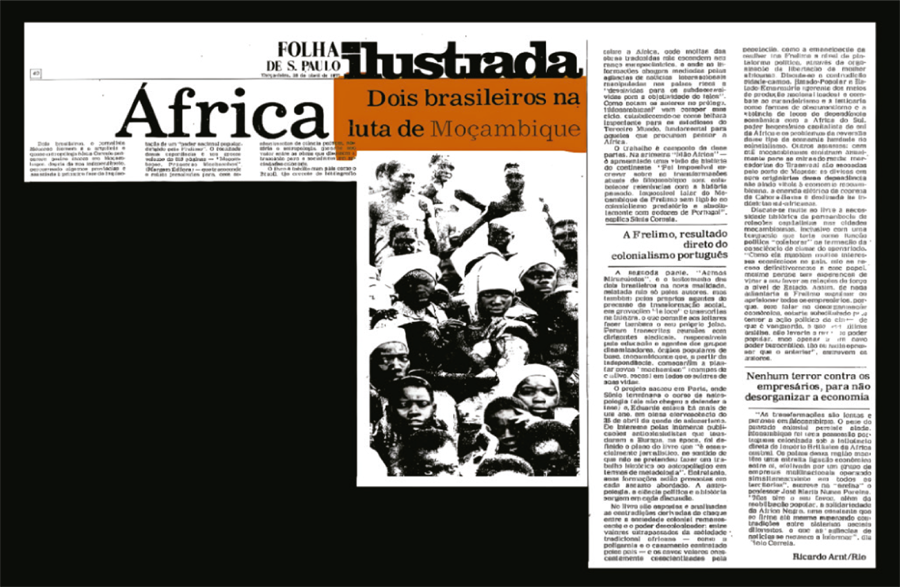 Source: Folha de São Paulo (São Paulo), April 26, 1977, p. 42.
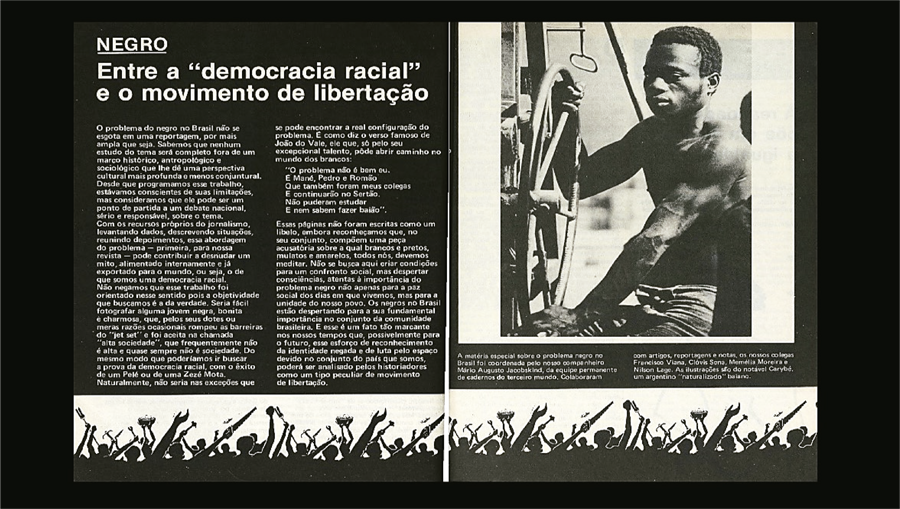 Source: Cadernos do Terceiro Mundo (Rio de Janeiro), IV, no. 41, January 1982, p. 14
 Source: Daniel de Andrade Simões. Available at: