
 Between Projects and Reality: The Romanian-Brazilian Direct Maritime Connection
ABSTRACT
This study explores the potential impact of the establishment of a Romanian-Brazilian shipping company on facilitating emigration from Romania to Brazil and tacitly supporting the Latin eugenics project. Aside from reinterpreting some information known to researchers of Romanian-Brazilian relations, which was previously published in volumes subject to the rigors of communist historiography, we aim to shed light on new findings from Romanian archives. The processing of archival sources has allowed us to write a new chapter in the history of trade relations between Brazil and Romania. Long-distance trade is an efficient method of making profit, but not everyone can afford it. The question of a direct route between the ports of South America and the Black Sea was a pressing matter on the agenda of the governments in Rio de Janeiro and Bucharest during the interwar period. However, despite the lobby of the business community and diplomats of the two countries, the issue of implementing such a shipping line more often than not kept the Romanian Ministry of Finance’s coffers mostly empty.
Black Sea; Danube; navigation
RESUMO
Este trabalho explorar o potencial impacto do estabelecimento de uma companhia de navegação romeno-brasileira no incentivo à emigração da Romênia para o Brasil e no apoio tácito à implementação do projeto latino de eugenia. Além de reinterpretar algumas informações conhecidas dos pesquisadores das relações romeno-brasileiras, previamente publicadas em volumes submetidos aos rigores da historiografia comunista, pretendemos trazer à tona novas informações identificadas nos arquivos romenos. O processamento das fontes de arquivo nos permitiu escrever um novo capítulo na história das relações comerciais entre o Brasil e a Romênia. O comércio de longa distância é um método eficiente de obter lucro, mas nem todos podem pagar seu preço. A rota direta entre os portos da América do Sul e o Mar Negro era uma questão premente na agenda dos governos do Rio de Janeiro e de Bucareste durante o período entreguerras. Na maioria das vezes, contudo, apesar do lobby da comunidade empresarial e dos diplomatas dos dois países, o problema da implementação de tal linha de navegação manteve os cofres do Ministério das Finanças romeno quase vazios.
Mar Negro; Danúbio; navegação
INTRODUCTION
In the last decades of the 19th century, Brazilian economy underwent profound transformations, marked by wage labor expansion, formation of regional agricultural complexes with the specific purpose of satisfying exports, railways expansion, and urbanization. These changes resulted in the expansion of trade flows at home and abroad. River and sea navigation and the introduction of railways replaced the old roads designed by European settlers during the Age of Explorations, becoming the backbone of the Brazilian transportation system. On the one hand, the development of business in the last quarter of the 19th century required the diversification and multiplication of the bastions involved in coastal transport, where capital investment was lower, creating the necessary framework for a strong presence of local and regional shipping companies. On the other hand, in long-distance shipping, used for exports and imports of goods and labor, which required more substantial capital investment, only foreign shipping companies could make their presence felt on the Brazilian market (Burlamaqui, 1918).
In this context, the Brazilian vice-admiral Baron of Jaceguay published a project for a shipping company in Revista Marítima in 1886. The company was supposed to carry out regular voyages between Brazilian and European ports, reinforcing the idea of establishing a large shipping enterprise as a reserve of the Brazilian Navy. Jaceguay proposed that Lloyd Brasileiro be formed by merging all national shipping companies based in Rio de Janeiro. All existing regional lines were to be maintained, but two transoceanic lines were to be created: one for the ports of western and northern Europe and the other for some Mediterranean ports (Jaceguay, 1888, p. 15). Initially, the policy of stimulating maritime transport in the young Brazilian Republic, proclaimed in 1889, was the same as in the old Brazilian Empire: the development of the railway system was the priority. The outlook partly changed during the interwar period.
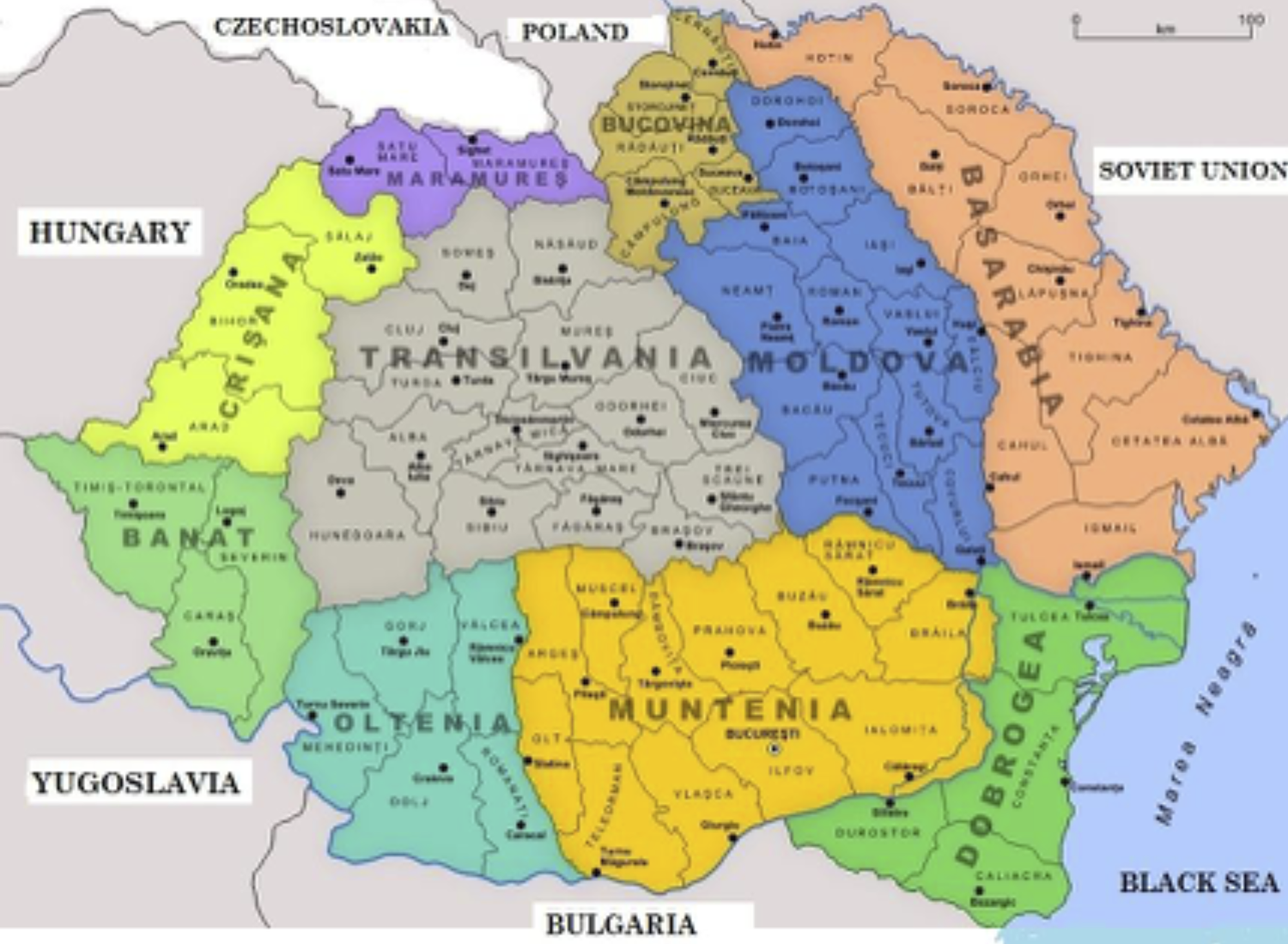
The achievement of Romania’s state unity at the end of World War I broadened the horizon of mutual knowledge of the diplomatic and economic ideals of the South American countries and those promoted by the authorities in Bucharest. “Knowing the other” was the basis for the initiation and development of economic relations, which led to concluding or developing new diplomatic relations. These in turn gave impetus to cultural and economic relations. At the beginning of the interwar period, despite some hesitation, Romania drew closer to Latin American countries. Diplomatic relations between Romania and the South American countries were primarily aimed at fostering trade, but this was not always an attainable goal. A number of factors delayed the emergence of bilateral trade institutions: the integration of regional economies into the global economic systems, considerable geographical distances, costly transportation, non-complementary economies, etc. However, diplomatic relations between Romania and Brazil date back to the autumn of 1880, when a Romanian diplomatic mission, led by Colonel Sergiu Voinescu, was accredited to Emperor Pedro II of Brazil.1
One of the aims of this paper is to evoke relevant episodes in the history of trade relations between Romania and the South American states, which became two emerging markets for the world agricultural-food economy. Researchers have so far focused on the study of diplomatic and cultural connections between the two regions that speak Romance languages. Another issue widely debated by the communist historiography and taken up again, with a critical sense, after the historiographical trigger of December 1989, was the analysis of the situation of Romanian emigration to Latin America. While this article is not intended as an exegesis of the issues debated by historians Virgil Cândea and Constantin Turcu (1970), Lavinia Dacia Dumitraşcu (2004), Doru Bratu (2000), and Pavel Moraru (2018, p. 183-202), the information they provided is used here to underline the context in which the issue of the establishment of companies and a navigation line, created to regularize the flows of goods and passengers between Brazilian and Romanian ports, arose at the level of the governments in Rio de Janeiro and Bucharest.
The present study draws on information from unpublished documents found in the custody of the Arhiva Diplomatică a Ministerului Afacerilor Externe al României [Diplomatic Archive of the Romanian Ministry of Foreign Affairs] in Bucharest, mainly from the Problem 68, fund (River, sea and air navigation companies: Romanian and foreign). The data in this archive are supplemented by information from the files available at the Serviciul Arhive Naţionale Istorice Centrale ale Arhivelor Naţionale ale României [Central National Historical Archives Service of the National Archives of Romania] in Bucharest and from Fond 680 [Fund 680], preserved at the Agenţia Naţională a Arhivelor Republicii Moldova [National Agency of the Republic of Moldova].
With a few exceptions, foreign shipping companies that operated in Romanian ports on the Danube and the Black Sea have been scarcely studied (Constantin, 2020; Mitea, 2022). Therefore, this scholarly approach is limited to the evocation of the initiatives of setting up shipping companies and itineraries between Romanian and South American ports, without the possibility of subjecting these entrepreneurial actions to thorough comparative analyses with other similar companies.
This process should be read against the backdrop of major changes in the situation in Romania. The Great Union of 1918 changed the geopolitical status of Romania. The state at the mouth of the Danube became the tenth largest country in Europe, with an area that grew from 138,000 km2 before the First World War to 295,049 km2afterwards. Romania’s population almost doubled to 14.7 million in 1919, compared with only 7.9 million in the Old Kingdom statistics of 1915 (Scurtu, 2003, p. 31-79). In a recent work, Alberto Basciani (2020) analysed in concrete terms the reactions of the ruling classes in Bucharest and Sofia to the great transformations in southeastern Europe after the First World War. The Italian scholar revealed the weakness of the economic and social structures of all Balkan nation-states, both victors and defeated in the first world conflagration.
The substantial changes that characterised the interwar European economy were determined both by the damage caused by the World War I and by the new political organisation of the world after the Paris Peace Conference (1919-1920). On the other hand, the limits of interwar development proved considerable for the Balkan states. The impact of the war, the scarcity of capital, the extremely unfavourable agricultural situation, political errors inspired by economic nationalism, and the conservatism of social structures limited the ability of the peripheral states to accelerate their economic modernisation. Under these auspices, predominantly agricultural and rural states such as Romania, Yugoslavia, and Bulgaria have fallen further behind most other European countries and the world average (Mitrany, 1936; Lampe; Jackson, 1982; Palairet, 1997; Murgescu, 2010, p. 205-314).
Emigration from Central and Eastern Europe to the American continent began as early as the second half of the 19th century and entailed the movement of a contingent of white people to the west coast of the Atlantic Ocean. Until the autumn of 1918, the historic Romanian province of Transylvania was an integral part of the Austro-Hungarian Empire. From 1876 until the outbreak of World War I, some 3.5 million citizens of the Dual Monarchy emigrated to the New World, 3 million of whom chose the United States. During this period, approximately 1.4 million Hungarian citizens emigrated to the United States, 6,056 to Canada, 264,460 to Argentina, and 8,500 to Brazil. 3.5 million migrants belonged to other nationalities under the rule of Austria-Hungary. The exodus of Europeans took place against the backdrop of the Brazilian authorities’ desire to populate their vast area with a predominantly white population, a project which involved covering the transport costs for the Eastern European emigrants. In this context, around 100,000 citizens from the Tsarist Empire and the Austro-Hungarian Empire boarded transatlantic liners bound for Brazilian ports from 1890 onwards. Worried by the large outflows of Hungarians and Romanians from Transylvania, the government in Budapest was forced to ban emigration to Brazil completely at the end of 1900 (Zahra, 2016).

TRADE, FAMILY NETWORKS, AND DIPLOMACY
Trade led to the establishment of new diplomatic relations, which, in turn, contributed to a more functional and pragmatic development of economic relations. The considerable distance between Eastern Europe and South America did not allow for setting up partnership relations as intense as those Romania had established with countries in Europe and the Near East. Most of the time, trade and cooperation initiatives were taken by Latin American states. The authorities in Bucharest were more hesitant (Gheorghe, 2008, p. 91-105). The trade between Greater Romania and all South American states accounted for about 0.5% of the Romanian foreign trade in the interwar period. This explains why most of the initiatives of Latin American companies and governments could not be implemented in Romania (Bratu, 2000).
Romania opened its first honorary consulate in Brazil, in Rio de Janeiro, on May 1, 1921. The Romanian emigrant Ioan Artur Wraubek served as an honorary consul for eight years. I. A. Wraubek had arrived in Brazil at the end of the 19th century and had been carrying out an intense diplomatic activity since the mandate of the foreign affairs minister Take Ionescu.2 The Romanian consul in Rio de Janeiro and his friend, Brazilian Marshal Egydio Tallone, were the main contributors of Brazilian artefacts to the Muzeul Naţional de Istorie Naturală „Grigore Antipa” [Grigore Antipa National Museum of Natural History] (Petrescu; Petrescu, 2015, p. 201-206).
The appointment of D. M. Popovici, in 1920, as Romania’s commercial attaché for Latin America, residing in Buenos Aires, was the most important step in establishing partnership relations between Bucharest and the capitals of South American states.3 The Romanian representatives began to carry out an intense activity in Argentina and Brazil. Together with D. M. Popovici, Ioan Artur Wraubek stood out.4 In 1921, the two Romanian diplomats supported the private entrepreneurial initiative of setting up the [South-American Office] company in Bucharest, which organized the first exhibition of Romanian products in South America in the same year. I. A. Wraubek was appointed the company’s managing director for Brazil. The initiative was short-lived, being disbanded after only two years of its existence.5
Starting his appointment in October 1920, commercial attaché D. M. Popovici insisted that the authorities in Bucharest facilitate the export of fir, oak, lime, and ash wood to Latin American countries in exchange for Brazilian and Argentinian products (Gheorghe, 2008, p. 101). At the same time, the Romanian commercial attaché conducted negotiations with commercial and political circles in the federal capital of Brazil, proposing the establishment of a permanent warehouse of Brazilian goods on Romanian territory, with the aim of re-exporting them to the Near East. The negotiations addressed several issues, such as granting a 1 billion lei loan to Romania, establishing a Romanian-Brazilian Chamber of Commerce, providing support for the emergence of the cotton and rubber industries in Romania, and organizing a steamship line with a direct link to Romanian ports.6 The problem of negotiating a Brazilian loan to Romania for 3-10 years, with an interest rate of 7-10%, lasted until 1924 (Cândea; Turcu, 1970, p. 59).
On September 1, 1921, Azevedo Marques, Brazilian Minister of Foreign Affairs, gave a public speech during the official inauguration of the first exhibition of Romanian products in South America. He stated that its [Romania’s] exceptional position as regards the distribution of products in the Orient is of the greatest interest to the Brazilian state.
According to the Romanian consul I. A. Wraubek, Rio de Janeiro represented “the political center of South America and the interests of Romanian citizens in Brazil had to be defended, as well as those related to the prospects of economic relations between the two countries”7 (Cândea; Turcu, 1970, p. 75). The Romanian diplomat Nicolae Titulescu played an important role in advocating for the establishment of a Romanian legation in Brazil and. At the same time, on December 21, 1927, he supported in the Romanian Parliament a bill for the creation of the legation in Rio de Janeiro. Caius Brediceanu was appointed head of the Romanian legation in Brazil following the approval of the Brazilian government on January 8, 1928. He took office on April 25, 1928, and presented his credentials on May 10, 1928.8
The first Brazilian consulate in Romania was set up in Bucharest on March 19, 1915, under the direction of Jules Borel, a Swedish citizen. During the interwar period, Brazilian interests on the Lower Danube were supported by diplomats with extensive connections in the European political and economic world. After the Great War, in the attempt to bring the two countries closer together, the United States of Brazil also set up a consulate in Galaţi in 1919, with Oscar Paranhos da Silva as its head. The diplomat arrived in Galaţi in January 1920.9 On February 11, 1921, the federal authorities in Rio de Janeiro upgraded the diplomatic mission in Galaţi to the rank of consulate general, appointing Oscar Paranhos as consul (Cândea; Turcu, 1970, p. 53). The Consulate General functioned in Galaţi until 1923, when it was relocated to Bucharest, to return to the Danube port after only one year.10
Although he did not remain long in office, the most eloquent case is that of Christopher Macri,11 appointed consul of Portugal in Galaţi in 1927 (Constantin, 2014, p. 265-277). He was the son of Nicolae Macri and Elena Climis, married in 1889 (Caşu, 2004, p. 4). Like his sister, Alexandra, Christopher Macri was born in Constantinople, where their father was a volunteer physician. In May 1919, Christopher Macri was awarded a bachelor’s degree in physical and chemical sciences by the Université de Genève. After his return to Romania, he interned for half a year at Crissoveloni Bank. His diplomatic career was linked to his sister’s marriage to Martinho Nobre de Melo in 1921. Christopher Macri’s brother-in-law was a prominent Portuguese lawyer and politician, son of a former governor of the Cape Verde Islands. By serving as Portugal’s minister of justice, Melo was able to facilitate a diplomatic career for his relatives (Bodea, 2010). Christopher Macri’s marriage in Galaţi to Carolina Johanna Anneliesel Ost was yet another opportunity for him to achieve a higher social status. The kinship with Carolina Johanna’s family brought economic stability and the support of an influential family in the international economic environment. His wife was the daughter of the representative of the English companies Bessler, Waechter & Co. Ltd. Lincoln in Galaţi, managing director of the United Metallurgical Works, Titan, Nădrag, Călan S.A.R. (Bodea, 2010). Against the backdrop of the Portuguese interests in directing the policy of their former South American colony, Christopher Macri also briefly held Brazil’s consular duties in Galaţi, before being appointed Portuguese consul in the city on the banks of the Danube (Constantin, 2014, p, p. 276; 2017, p. 70-71; p. 90-93).
Alfredo Polzin was appointed head of the Brazilian consulate in Galaţi in April 1929, and transferred to Belgrade in March 1931 (Constantin, 2017, p. 70-71). The Brazilian interests at the Lower Danube were also defended by diplomats Osório Dutra, George Dahrouge and Victor Bassili.12 Osório Dutra was described by the journalists from Galaţi as a “publicist and bibliophile”, having authored two poetry volumes, with a “beautiful echo in Latin America and Europe”.13 But, as his contemporaries noticed, he lacked the entrepreneurial spirit required to establish sound economic relations between Brazil and Romania (Lăzărescu; Volbură, 1929, p. 76).
The consulates emerged as an expression of the growing interest in cultivating economic ties between the interested states. Two factors explain the relative delay in establishing trade links and the inconsistent operation of the offices created: the economic interests of both states were under the control of the great empires until the beginning of the 20thcentury; a detrimental role was played by the great distance and expensive means of communication and transport. Mutual exchanges of labor had been almost non-existent until the interwar period.
UNDER THE SCRUTINY OF ROMANIAN INTELLIGENCE AGENTS: THE PROBLEM OF BESSARABIANS ON THE FAZENDA
The scarcity of available land in Bessarabia made the region’s peasants particularly vulnerable to the seductive propaganda of big shipping and trade agencies. After the Great Union of 1918, the flow of emigrants from Bessarabia to South America increased substantially. Most Bessarabian peasants chose to work on the large farms of Latin America, settling, at least for a time, in Argentina, Brazil, Uruguay and Paraguay. So for almost a decade, South America was a kind of “El Dorado” for Romanian peasants who were eager to raise large sums of money to invest when they returned to their homeland. For many of them it remained just a hope (Dumitraşcu, 2004, p. 20).
This scenario raises several key questions: What was the context of Romanian emigration to Brazil after the First World War? Did the Romanian emigrant meet the requirements of the Brazilian authorities?
After World War I, eugenics became a mainstream concern of the political class in many Latin countries, with a war being waged in the ideological realm between nationalists and fascists. Both sides proposed population management with eugenics-specific measures and enjoyed the support of the dominant Christian church in society: Catholic in Italy and Orthodox in Romania. Thus, intense diplomatic relations with the two European states mentioned, both with dominant fascist sympathies and orientations in the years leading up to the Second World War, became a priority for South American governments. For example, the leaders in Rio de Janeiro were interested in “the export of young white females” from Latin European countries, in a desire to refresh the blood of the local white race and for the natural, gradual elimination of the black and mestizo population from its vast territory. As early as the 19th century, there were similarities between Romania and the non-Latin-speaking countries of the American continent, as their economies were dominated by the agricultural sector. From this point of view, the integration of Romanian immigrants should not have been a hindrance (Love, 1996; Enache, 2013).
As we shall see in the following lines, the Romanian authorities encouraged the implementation of the Latin project of eugenics. The leaders in Bucharest tacitly supported the emigration of Romanian citizens, mainly from a rural-agricultural region such as Bessarabia, who were supposed to make up for the shortage of agricultural workers on the Brazilian large estates and replace the natives of African descent (Turda, 2007; 2016; Turda; Gillette, 2014, p. 237-249). The process of eugenics in Romania is part of the trend prevalent at that time in Central and Eastern Europe, which has been extensively documented by researchers such as Maria Bucur (2002) and Marius Turda (2015).
Statistics is a relative science and sometimes, especially in economically underdeveloped countries, was side-lined by authorities preoccupied with the more pressing problems of the state they were running. Under these circumstances, there were times when, for example, the Romanian authorities and statisticians failed to support conclusive statistical approaches to migration. Romanian sociologists and historians have been looking at the issue recently. The migration of Romanian citizens during the interwar period has been analysed in terms of numbers, country of origin in the case of immigrants and country of destination in the case of emigrants, age, gender, and profession of foreigners entering or leaving Romania.
On April 20, 1925, the Bucharest authorities issued a law regulating migration, which declared that emigration and immigration were free, with certain restrictions imposed by the Romanian state. Sabin Manuilă, the head of the Institutul Român de Statistică [Romanian Statistics Institute] around the time of the Second World War and a promoter of eugenics, based on statistics from the Romanian administration, claimed that around 200,000 people, mainly from Transylvania, chose to leave the borders of the Romanian state in the first decade of the interwar period, many ethnic Hungarians leaving for Hungary (Cutcutache, 1931, p. 32; Prozan, 2018).
Beyond the problem of population exchange with neighbouring Hungary, the peak of Romanian migration in the interwar period was reached in 1926, when 21,681 people left Romania. Sorin Negruțiu’s (2017) research on the 1926-1936 period shows that 79,906 Romanian citizens left their homeland, most of them heading for the American continents, particularly for countries such as Canada (29%), Brazil (23%), the United States of America (14%), Argentina (12%). According to the centralised data for the period mentioned above, 18,497 Romanian citizens hoped to start a new life in Brazil, but, as we shall see, many repatriated shortly afterwards. The majority of Romanian emigrants were young: 72% of them were aged between 15 and 55, and those over 55 accounted for only 3% of all those who left Romania. Males (55%) predominated among Romanian migrants. A cursory analysis shows the low professional background of those who chose to leave Romania, with 31% of emigrants having no profession, 30% being agricultural workers, 22% domestic workers, 14% skilled industrial workers, 6% unskilled industrial workers, 2% liberal professions, and less than 1% civil servants or other professions. Women migrants predominantly had no profession or held domestic occupations, while 88% of agricultural workers, 84% of skilled industrial workers, 75% of unskilled industrial workers and 95% of those in liberal professions were male (Negruţi, 2017, p. 216-218; Trebici, 1987).
From 1926 to 1936, 22,447 Romanian citizens were repatriated to Romania. The biggest waves were recorded in 1928 and 1930, against the background of international economic problems, culminating in the Wall Street Crash of 1929. Around 90% of all Romanian citizens who returned to the country were repatriated from the American continent, mainly from the United States (43%), Brazil (24%), Argentina (8%), and Canada (8%). An essential aspect for understanding the wider international context should be noted. Some 72% of the Romanian immigrants who returned to their country of origin were in the 15-55 age group, and over 56% of all immigrants were male. However, after such a long transatlantic journey to reach the promised land advertised by the authorities of the countries of adoption, these percentages indicate the impossibility of the Romanian citizens to adapt to the realities encountered on the American continent, the disillusionment experienced on the estates and in the factories of the countries of adoption. Statistics of the time show that 25% of those who returned to Romania had no profession, 19% were agricultural workers (plus 20% with domestic professions), 14% were unskilled industrial workers, 12% were skilled industrial workers, 8% had liberal professions and only less than 1% were civil servants or had other professions. Over half (57%) of those without a profession were female, while over 92% of agricultural workers, industrial workers (skilled and unskilled), and those in liberal professions were male (Negruţi, 2017, p. 218-221; Trebici, 1987). We believe that the professional percentages of the general migration of Romanian citizens are reflected similarly in the case of Romanian immigration from Brazil, although Romanian statistics leave room for interpretation for particular cases.
As can be seen, professionally, the Romanians covered the necessary range of the interwar Brazilian economy and were indispensable for the implementation of the Latin eugenics project. Nonetheless, beyond these favourable premises, explanations of the relatively small Romanian exodus to the Brazilian territories and of the return of many of the emigrants must be sought in the accounts they gave to the press and in the notes of the special intelligence service of the Romanian Police (Negruţi, 2017, p. 218-221; Turda; Gillette, 2014).
The height of Romanian emigration to Brazil took place between 1923 and 1926, and one of the pioneering promoters of this idea was Ioan Artur Wraubek, Romania’s honorary consul in Rio de Janeiro.14 He played an important role in the development of relations between Romania and Brazil. Between 1923 and 1926, 40,142 emigrants from Romania arrived to work on farms in Brazil. Most of them were ethnic Bulgarians, Ruthenians, Russians, Ukrainians, and Poles, settled in the historic Romanian provinces of Bessarabia, Bukovina, Transylvania, and Banat. To better understand the regional situation of Romanian emigration to the South American estates, it should be noted that approximately 82% of all Romanian citizens who arrived in Brazil during 1926 came from Bessarabia (Bratu, 2000, p. 358-359).
Yearning for a better life, the Bessarabian emigrants hastily sold all their possessions in order to accumulate the capital needed to purchase travel documents and pay for transportation to South American ports. Most of them, having reached their destination, found the farms of Latin America totally different from what they had been told. Deeply disappointed, they returned to Romania, poor and exhausted, asking for help from the Romanian authorities (Moraru, 2018; Gheorghe, 2008).
According to the information of the time, the propaganda created around emigration by South American farmers’ envoys urged the Bessarabian peasants to leave for Latin America. Only in the Brazilian state of São Paulo worked, mostly unqualified, more than 40,000 Romanians. Several hundred other peasants placed in inhumane conditions in the Colombian plains added to this number (Bratu, 2000, p. 347).
Labor immigration was state policy for the Brazilian authorities and, as in Argentina, co-opting agricultural workers from the ranks of the European peasantry proved effective. To facilitate the presence of foreign workers in the South American estates, the federal government in Rio de Janeiro financed organizations that attracted immigrants and concluded contracts with shipping companies. The latter recruited migrants from Europe through their own networks of agencies. Apparently, Romanians were highly valued for their seriousness and hard work (Stăvărache, 2001, p. 418). The transport of migrants across the Atlantic Ocean was facilitated by foreign shipping companies, which in the 1920s had eight branches in the city of Chişinău alone.15
The Romanians from Bessarabia emigrated under the terms of the contracts concluded with foreign-owned shipping companies. Historian Pavel Moraru (2018, p. 185), based on research in the archives of the Republic of Moldova, points out that during the mass emigrations of 1923-1925, the transportation costs of emigrants were borne by Brazilian farmers. The transportation debts to Brazil were paid by the Bessarabian farm workers through work on the South American estates. From 1927 onwards, this system was replaced by one whereby emigrants had to prove that they had sufficient financial means to reach their destination and to buy the plots of land necessary for agricultural activities.16
Information from the Bessarabians who returned from Latin America was increasingly reaching the ears of the agents of the Romanian secret service, Siguranţa Statului. The returnees claimed that the Brazilian cities “were teeming with workers walking around jobless”. So, in the public opinion expressed by one of the returned emigrants, “it was all lies”, and the propagandists who told the Bessarabians that “in Brazil they would give you 100 hectares [of] land and other aid” were doing so just to fill their pockets. Moreover, several Bulgarians and Gagauz repatriated in 1927-1928 claimed to Romanian intelligence agents that they had paid the Romanian consular agent in São Paulo for repatriation documents and transport to Romania. The Romanian diplomatic agent allegedly disappeared with 300,000 lei, and the victims had to stay in Brazilian territory in order to work and collect the capital needed for repatriation.17
Similar observations were reported to superiors by Siguranţa Statului agents in Bessarabian localities.18 Against the backdrop of the precarious state of life of the workers on the large farms and of the insurgencies of the Brazilian army, starting in 1927, for about three years, 4,664 people returned from Brazil to Romania (Bratu, 2000, p. 358-359). The Romanian press devoted ample space to this repatriation issue, and even sent journalists across the Atlantic Ocean. Mihai Negru, correspondent of the daily newspaper Universul, arrived in Brazil in 1927, and described in his articles how the Brazilian state did everything for the welfare and integration of Romanian emigrants.19 But, just one year later, the same Bucharest newspaper published articles about the harsh working conditions, the meagre payment for Romanian farm workers, the growing shortage of jobs in South America, and the punishments inflicted on those who fled the fazenda [farm].20
The Romanian authorities attempted to put an end to the ordeal of their citizens who had gone to work on the estates of Latin America. “Observers” sent to Brazil by the Romanian state confirmed the Romanian migrants’ inhuman living and working conditions. As described in their official letters, daily life on the Brazilian estates was nothing like the “promised land” advertised by labor recruiters.21
Despite the measures taken by the authorities in Bucharest, the newspaper Dimineaţa of February 13, 1930, in an article titled Emigranţi întorşi din Brazilia [Emigrants returned from Brazil], reported how several Bessarabian peasants returned from Brazil, where they had emigrated in 1924, arrived in Chişinău: “the wretched people ended up in a state of physical and moral misery, for which suitable words are difficult to find”. The returnees told of “the extremely hard work they were subjected to”, and because they did not have money for the journey, the Romanian authorities decided to send them from Chişinău to Cetatea Albă County, where they were originally from, by means of transportation provided by the Chişinău Police Headquarters.22
An official report by the authorities in Bucharest in 1928, based on information provided by Romanian consulates in South American cities, stated that approximately 33,000 Romanian citizens were living in Brazil; 25,000 of them were from Bessarabia and almost 8,000 were Hungarians from Transylvania. Just one year later, statistics show that about 20,000 emigrants from Romania were living in the Brazilian state of São Paulo, of which only 1-2% were ethnic Romanians from the territory of the Old Kingdom, The others were Hungarians, Russians, and Jews from Bessarabia and Bukovina, Germans from Transylvania and Bessarabia. A peculiarity of these statistics is the insignificant number of Romanian citizens, only ten people, who emigrated to Brazil between 1926 and 1928.23
DRAFTS, PROPAGANDA, AND MEDIOCRE PERFORMANCE
Essentially, according to Romanian and South American diplomats, the trade between Romania and the South American states did not have the results expected on both sides because of two major drawbacks: the great distance and the similarity of production.24 In order to better understand the realities of direct trade between the South American states and Romania, it should be noted that, in 1926, despite the efforts of Romanian diplomats D. M. Popovici and I. A. Wraubek, only one Brazilian ship arrived in the port of Galaţi (Gheorghe, 2008, p. 101-102). Propaganda for the establishment of intense trade relations between South American states and Romania was not only limited to the translation of works on the Agrarian Reform of 1921 and the Mining Law of 1924, implemented by the authorities in Bucharest, but also through the publication of articles in the Brazilian press. Translations of Romanian legislation were made available to interested Brazilians through Marcos Samovici, the Romanian consul in Argentina, and his counterpart in Rio de Janeiro. For example, the periodical Jornal do Brasil published the article Os interesses do Brasil na Rumania: Os progressos daquele país e a nossa expansão no Oriente Europeu [Brazilian Interests in Romania: The progress of That Country and our Expansion in the European Orient]25, which presented Romania’s upward trajectory after the First World War and the absorption capacity of Brazilian products on the Black Sea market.
In the early 1920s, at the height of the Romanian emigration to South American territories, D. M. Popovici and I. A. Wraubek were the architects of a direct maritime line between Romanian ports and those of South America. In order to prove the importance of these initiatives, the Romanian Honorary Consul in Rio de Janeiro drafted and sent to the Central Office in Bucharest a document titled Memoriu asupra înfiinţării unei linii maritime pentru transportul de mărfuri de la porturile Dunării în Brazilia [Memorandum on the Establishment of a Maritime Line for Shipping Goods from the Ports of the Danube to Brazil.26
The project was not considered feasible by the Romanian authorities although it had the advantage of being the only line that would transport products of basic necessity for the two countries directly, without the involvement of intermediaries nor the need of performing transshipments in various European ports. According to the memorandum drawn up by I. A. Wraubek, the Romanian ships were to leave Galaţi for the ports of Istanbul, Piraeus, Algiers, Rio de Janeiro, Santos, and Buenos Aires. The return itinerary included stops in the ports of Las Palmas, Algiers, Alexandria, Izmir, Piraeus, Salonika, Istanbul, Constanţa, and Galaţi. As river transport was much cheaper than the railway rates, the Romanian diplomat’s plan was that, once in Romanian territory, the Brazilian goods could be transported quickly on the Danube to Rusk, Belgrade, Budapest, and Vienna.27
As early as the summer of 1921, the Brazilian government intended to set up a maritime line between South American and Romanian ports. However, in one of his notes to Bucharest, the Romanian consul in Rio de Janeiro stated that the Brazilian authorities were interested in creating a free and permanent warehouse for Brazilian goods in one of the Romanian ports.28
The Romanian Government, led by Marshal Alexandru Averescu, gave their consent for the port of Galaţi to be opened to direct Brazilian ships.29 Brazilian President Epitácio da Silva Pessoa followed through on initiatives to connect Brazil to Romania by means of a shipping line, but made this contingent on a minimum support from the Romanian authorities.30 Government changes in Bucharest and the procrastination in changing the warehouse status of the storehouses in the port of Galaţi made the project unfeasible.
The increase in Romanian emigration to Latin American countries and the growth of diplomatic and trade relations between Romanian and South American companies required the creation of a permanent maritime connection between the Romanian ports and, in particular, those of Argentina and Brazil. The Brazilian economic and political environment struggled to persuade the Romanian authorities to support the establishment of a shipping company that would connect the ports of the Danube and Constanţa to Santos and Rio de Janeiro. Through such a company, controlled by the two governments, it would have been possible to regulate the travel conditions, as well as the amounts and methods of payment of transportation costs incurred by Romanian emigrants wishing to settle on Brazilian territory. First of all, we should look at the Brazilian authorities’ ability to support their own shipping companies.
The Lloyd Brasileiro or Loide Brasileiro shipping company was created in 1890 by a contract signed between the Brazilian Ministry of Agriculture, Commerce and Public Works and the citizens Barão de Jaceguai, Antonio Paulo de Mello Barreto and Commander Manoel José da Fonseca, with the aim of bringing together shipping companies subsidized by the Brazilian state, supporting the maritime defense of the Brazilian Republic and keeping in service maritime personnel capable of performing war service. Financial problems arose from the early years of operation. That is why, since the end of the 19th century, several periods of restructuring, insolvency and nationalization followed for the company (Silva, 1902; Burlamaqui, 1918; Lobo, 1922; Mendonça, 2001; Goularti Filho, 2009). The company was dissolved in October 1997, during the mandate of Brazilian President Fernando Henrique Cardoso, when the national privatization plan was implemented, and was officially dismantled by a December 11 2002, decree (Goularti Filho, 2009, p. 27).
Brazil, as a co-belligerent in World War I and a victor in World War II, incorporated German-flagged ships received as reparations after the Great War and confiscated during World War II into its state fleet (Lobo, 1922). The ships were sold by the Brazilian government at the end of the 20th century.
From December 28, 1920, to June 11, 1937, the company operated under the name Companhia de Navegação Lloyd Brasileiro. Shortly after the incorporation of Lloyd Brasileiro into the Brazilian national patrimony, in 1913, under the responsibility of the Ministry of Finance, federal authorities in Rio de Janeiro made two unsuccessful attempts to charter the company to private investors. However, the difficulties of the shipping company were widely known to Brazilian capitalists, and no one ventured to take over the company’s assets and liabilities. World War I allowed Lloyd Brasileiro to make a productive leap forward and balance its finances. At the end of the war, the recruitment of merchant navy ships of the defeated belligerent nations, especially transatlantic ships belonging to the Second Reich, opened a new and profitable chapter for the Brazilian shipping company. Lloyd Brasileiro began to prosper and develop its transatlantic lines with the signing of the Treaty of Compiegne (November 11, 1918) and the return to normality in the international trading system. The goods carried by the company rose from 451,315 tons in 1914 to 949,631 tons in 1918 and fell back to 490,230 tons in 1920.
The fleet enlargement with former German-flagged ships brought a considerable increase in maintenance costs. These shortcomings were complicated by the obsolescence of the ships, maintenance of several unprofitable routes, and low freight and passenger fares imposed by the international market. The 1920s represented for Brazil a period of transition from an economy based on a model of accumulating considerable incomes from agricultural exports, whose main income factor was the coffee complex, to a new accumulation model, based on industrial capital, and generated the necessary conditions for the rupture promoted by the Brazilian Revolution of 1930 (Aureliano, 1981). Brazilian researchers consider that the trajectory of the shipping company Lloyd Brasileiro is consistent with the dynamic fluctuations of the Brazilian economy in the 20th century (Goularti Filho, 2009, p. 27).
Two Brazilian entrepreneurial initiatives to connect South American ports to the Romanian ones can be identified amid the documents in the custody of Arhiva Diplomatică a Ministerului Afacerilor Externe al României in Bucharest. During 1924, after a series of ideas tested by the Romanian and Brazilian economic and diplomatic circles, the interested parties in Rio de Janeiro outlined the project of setting up a direct navigation line between Brazil and Romania, using ships of the Lloyd Brasileiro Company. The Brazilian shipping company had a number of former German liners in reasonable technical condition and capable of servicing the route planned by the South Americans. The main reason why a shipping line between Brazilian and Romanian ports was not set was the lack of a commercial company that could guarantee its existence. The enterprising Romanian consul I. A. Wraubek managed to find a way to get the entrepreneurial circles in the Brazilian capital moving and, following the publication of his work Um intercâmbio de grande e absoluta vantagem para o Brasil [An exchange of great and absolute advantage for Brazil], a group of capitalists in Rio de Janeiro decided to found a company, Associação de Intercâmbio Brasil – Próximo Oriente [Exchange Association Brazil – Near East], through which the foundations for direct commercial links between Brazil and Romania were to be laid.31 Brazilian business circles set up this company on the basis of the concession made by the Romanian Government in 1921, virtually admitting the creation of a free warehouse for Brazilian goods in either Galaţi or Constanţa. Under these conditions, Romania could become a re-export center for all neighboring countries.32
Starting with the summer of 1924, the ships of the Lloyd Brasileiro shipping company were commandeered by the Brazilian Ministry of War to transport troops fighting against the rebels, who had retreated to the most remote corners of this vast country. The Paulista uprising took place mainly around São Paulo between July 5 and 28, 1924. The insurgents were commanded by General Isidoro Dias Lopes. The uprising involved several Brazilian army officers who were dissatisfied with the standard of living and the politics of the Brazilian president. More than 500 people died and around 5,000 were injured in street riots. The rebellion caused the temporary migration of more than 250,000 inhabitants of São Paulo state to other regions of Brazil, and armed struggles continued at least until the so-called 1930 Revolution (Corrêa, 1976; Segatto, 1987).
The shipping line between Brazil and Romania was intended to lower the price of all high necessity products and articles of tropical origin, which were expensive due to the many intermediaries interposed between the South American producer and the consumer in the Lower Danube area. Opening a direct shipping line between the South American and Romanian ports would have created an outlet for many industries and for the main soil and subsoil products of the Carpathian-Danubian-Black Sea area. Romanian industry would have benefited, at reasonable prices, from the raw materials required to increase its production.
Being certain of the importance of creating a maritime connection between Romania and Brazil, I. A. Wraubek continued to support the efforts of the entrepreneurs and politicians interested in a South America-Black Sea navigation line. In December 1924, the newspaper Universul from Bucharest published excerpts from the paper Um intercâmbio de grande e absoluta vantagem para o Brasil, signed by the Romanian consul in Rio de Janeiro, and stressed that “the direct link between these two Latin countries, situated on two different continents is indeed a necessity that both sides admit”.33 The Romanian diplomat’s plan envisaged that the port of Brăila should become the terminus of a transatlantic itinerary, as a commercial hub for the Balkan states. The project was abandoned by the Romanian side because of its very high implementation costs (Cândea; Turcu, 1970, p. 62-63).
Over the summer of 1927, the Romanian engineer Carol Sontag, from Bucharest, gave several lectures to economic institutions, including the Sociedade Rural Brasileira [Brazilian Rural Society], as well as to the Associação Comercial de Santos [Santos Trade Association]. He mentioned the importance of the Danube traffic for Central Europe and, indirectly, the benefits for Brazilian trade that a navigation line connecting the country with the ports of Constanţa, Galaţi and Brăila could foster. The conciseness of the Romanian engineer’s presentations and his thorough documentation left a very good impression on the Brazilian authorities and business environment, and the local press commented favorably on the new theory announced by the Romanian speaker: a new project of a permanent navigable route between Brazilian and Romanian ports.34
The new initiative was based on the Romanian government’s attempts to support direct trade with Brazil. In 1926, the authorities in Bucharest set up permanent warehouses with the privilege of “free port” for Brazilian goods arriving in the port of Galaţi, which were destined for Romania and Central and Eastern Europe. The use of these warehouses would have brought a 30% reduction in prices. However, prices increased for transit and storage taxes.35
Another favorable context for Romanian-Brazilian trade relations appeared in 1927. On July 28, 1927, on the initiative of some Brazilian parliamentarians, a bill was submitted to the Chamber of Deputies in Rio de Janeiro, requesting that the Brazilian government subsidize a regular ship line between the ports of Santos and Galaţi. This once again showed that there was a long way between project and reality. The July 1927 request was doomed to fail.36
Despite the conclusion of several Romanian-Brazilian trade agreements, adopted in the spirit of the recommendations of the League of Nations, the efforts to establish a direct maritime link between Brazilian and Romanian ports became mere illusions after the 1929 Wall Street Crash and in the context of the increasing interference of totalitarian regimes in the Lower Danube region throughout the 1930s. Despite these shortcomings, in 1934, a Romanian-Brazilian company (ROBRA) was set up in Bucharest, mainly with the aim of eliminating the intermediary trading houses in Amsterdam, Trieste, and Hamburg for exporting Brazilian coffee to the Romanian market. During the same period the company BRANIA was created, through which small quantities of oil were exported from Romania to Brazil.37
CONCLUSIONS
The initiatives to set up shipping companies and a permanent line between the Brazilian and Romanian ports were part of the new international economic and diplomatic conjuncture of the first decade of the interwar period. The effervescence of the Romanian national ideal, the dissolution of the great empires around Romania, and technological developments created the conditions for a better connection between the area west of the Black Sea and the western shore of the Atlantic Ocean. If the first years following the Great War were characterized by a substantial Romanian migration to the Brazilian territories, the testimonies of the first adventurers in the South American agricultural “El Dorado” produced, at the end of the 1920s, a stagnation in the departure of Romanian citizens to the plantations of South America and, implicitly, a decline in passenger traffic from the ports on the Danube and from Constanţa to Rio de Janeiro and Santos.
Under these circumstances, there was also a decline in the interest of the Brazilian political and business circles in developing shipping companies as Associação de Intercâmbio Brasil – Próximo Oriente, founded on the shores of the Atlantic Ocean in 1924. The extensive media revelations about the deplorable working and living conditions of the Romanian workers in Latin America finally provided the excuse for the political class in Bucharest to halt its efforts. This made it much easier for them to ignore the South American partners’ calls to dialogues that could lead to the offering economic facilities on Romanian soil. The initiatives to create a direct maritime line between Brazilian and Romanian ports were also discontinued. In any case, the outline of partially materialized projects for the creation of shipping companies and direct lines between the ports of the extended Black Sea area and those of Brazil was an essential point in the process of “knowing the other”, creating premises for dialogue for future entrepreneurial opportunities between the two Latin peoples.
References
- AURELIANO, Liana Maria. No limiar da industrialização São Paulo: Brasiliense, 1981.
- BASCIANI, Alberto. Growth Without Development: The Post-WWI Period in the Lower Danube. Perspectives and Problems of Romania and Bulgaria. The Journal of European Economic History, v. 49, n. 3, p. 139-164, 2020.
- BODEA, Valentin. Casa Macri. Dunarea de Jos, a. 9, n. 99, p. 44-45, Mai. 2010.
- BRATU, Doru. Istoria relatiilor latino-americane. Bucareste: Luminalex, 2000.
- BUCUR, Maria. Eugenics and Modernization in Interwar Romania Pitsburgo: University of Pittsburgh Press, 2002.
- BURLAMAQUI, Armando. A marinha mercante brazileira Rio de Janeiro: Imprensa Nacional, 1918.
- CÂNDEA, Virgil; TURCU, Constantin I.. România si America Latina: Traditii si actualitate. Bucareste: Politica, 1970.
- CASU, Ion N.. Consulatul Portugaliei - Casa Macri. Alta Viata Magazin, a. V, n. 4540, p. 4, out. 2004.
- CONSTANTIN, Cristian. Câteva informatii cu privire la interesele Portugaliei la Dunarea de Jos (1919-1940). Danubius, v. XXXII, n. 1, p. 265-277, 2014.
- CONSTANTIN, Cristian. Activitatea consulara la Braila si Galati (1919-1940). Iasi: PIM, 2017.
- CONSTANTIN, Cristian. O istorie a companiilor de navigatie straine de la Dunarea de Jos Bucareste: Etnologica, 2020.
- CORRÊA, Anna Maria Martinez. A rebelião de 1924 em São Paulo São Paulo: Hucitec, 1976.
- CUTCUTACHE, Constantin D.. Un mare conflict international: Optantii unguri ai Transilvaniei si reforma agrara din România. Bucareste: Revistei Geniului, 1931.
- DUMITRASCU, Lavinia Dacia. Secolul XX: Latinii din Carpati si din Anzi. Contributii la istoria relatiilor României cu Argentina si Brazilia (1900-1930); România si Columbia (1965-2000). Constança: Ovidius University Press, 2004.
- ENACHE, George. The Lower Danube and the Rio de la Plata Region in the Modern Age: Contrasted Perspectives on their Economic and Political Evolution. Transylvanian Review, v. XXII, Supplement n. 2, p. 204-215, Jan. 2013.
- GHEORGHE, Lavinia Dacia. Relatiile României cu unele tari din America Latina în primul deceniu dupa desavârsirea unitatii sale de stat. Analele Universitatii „Ovidius ": Seria Istorie, v. 5, p. 91-105, 2008.
- GOULARTI FILHO, Alcides. Companhia de navegação Lloyd brasileiro: Uma trajetória de déficit financeiro e desenvolvimento econômico. História Econômica & História de Empresas, v. 12, n. 2, p. 5-36, 2009.
- JACEGUAY, Barão de. Companhia nacional de navegação a vapor entre o Brasil e a Europa Rio de Janeiro: G. Leuzinger & Filhos, 1888.
- LAMPE, John R.; JACKSON, Marvin R.. Balkan Economic History, 1550-1950: From Imperial Borderlands to Developing Nations Bloomington: Indiana University Press, 1982.
- LAZARESCU, Petrica; VOLBURA, Radu. Siluete galatene. Galati: s.n., 1929.
- LOBO, Ubaldo. Notícia histórica e avaliação dos bens do Lloyd Brasileiro. Rio de Janeiro: Empreza Brasil, 1922.
- LOVE, Joseph. Crafting the Third World: Theorizing Underdevelopment in Romania and Brazil. Berkeley: Stanford University Press, 1996.
- MENDONÇA, Lauro Nogueira Furtado de. História naval brasileira. V. 4. Rio de Janeiro: Serviço de Documentação da Marinha, 2001.
- MITEA, Ionel Constantin. Companii de navigatie la gurile Dunarii (1830-1939) Târgoviste: Cetatea de Scaun, 2022.
- MITRANY, David. The Effect of the War in Southeastern Europe New Haven: Yale University Press, 1936.
- MORARU, Pavel. Monitorizarea politieneasca a emigrarii basarabenilor în America, în perioada interbelica. In: XENOFONTOV, Ion Valer; CORLATEANU-GRANCIUC, Silvia (Ed.) Reconstituiri istorice: Civilizatie, valori, paradigme, personalitati. In honorem academician Valeriu Pasat. Chisinau: Biblioteca Stiintifica sectia editorial-poligrafica, 2018, p. 183-202.
- MURGESCU, Bogdan. România si Europa: Acumularea decalajelor economice (1500-2010) Iasi: Polirom, 2010.
- NEGRUTI, Sorin. Cetatenie si migratie în România în perioada 1865-1938. Revista româna de sociologi e, v. XXVIII, n. 3-4, p. 201-226, 2017.
- PALAIRET, Michael. The Balkan Economies: Evolution without Development 1800-1914 Nova Iorque: Cambridge University Press, 1997.
- PETRESCU, Iorgu; PETRESCU, Angela. Donatori ai colectiilor etnografice ale Muzeului National de Istorie Naturala ,,Grigore Antipa". Cibinium, v. 15, p. 201-206, 2015.
- PROZAN, Mircea Dumitru. The Echoes of the Biggest Agrarian Reform in Europe after First World War, the Issue of the Optants from Transylvania. In: BOLDEA, Iulian; SIGMIREAN, Cornel; BUDA, Dumitru-Mircea (Ed.). The Challenges of Communication: Context and Strategies in the World of Globalism. History, Political Science, International Relations. Targu Mures: Arhipelag XXI, 2018, p. 231-238.
- SCURTU, Ioan (Ed.). Istoria Românilor. V 8 - România Întregita (1918-1940) Bucareste: Enciclopedica, 2003.
- SEGATTO, José Antônio. Os jovens militares e a velha República. História & Energia, n. 4, p. 4-17, 1987.
- SILVA, Francisco Romano Stepple (org.). Resumo histórico das companhias de navegação a vapor subvencionadas e privilegiadas nos Estados Unidos do Brasil de 1808 a 1900. Rio de Janeiro: Typ. da Estatistica, 1902.
- STAVARACHE, Dumitru. Repere ale prezentei românesti în Brazilia. In: DAMASCHIN, Ioan (Ed.) Omagiu istoricului militar Jipa Rotaru. Constança: Comandor, 2001, p. 411-428.
- TREBICI, Vladimir. Populatia României dupa nationalitate si religie. Bucareste: Publishing House of the Romanian Academy, 1987.
- TURDA, Marius. The Nation as Object: Race, Blood, and Biopolitics in Interwar Romania. Slavic Review, v. 66, n. 3, p. 413-441, 2007.
- TURDA, Marius (Ed.). The History of East-Central European Eugenics, 1900-1945: Sources and Commentaries Londres: Bloomsbury, 2015.
- TURDA, Marius. Romanian Eugenic Sub-Culture and the Allure of Biopolitics, 1918-39. Acta Poloniae Historica, v. 114, p. 29-58, 2016.
- TURDA, Marius; GILLETTE, Aaron. Latin Eugenics in Comparative Perspective Londres: Bloomsbury, 2014.
- VOLBURA, Radu. Anuarul general al orasului Galati si judetului Covurlui: Edit?ia 1930-1931. Braila: "Dunarea" Institut de Arte Grafice, 1931.
- VOLBURA, Radu. Anuarul general al orasului Galati si judetului Covurlui: 1936-1938. Galati: "Dunarea" Institut de Arte Grafice, 1938.
- ZAHRA, Tara. The Great Departure: Mass Migration from Eastern Europe and the Making of the Free World. Nova Iorque; Londres: W.W. Norton & Company, 2016.
-
1
ARHIVA DIPLOMATICĂ A MINISTERULUI AFACERILOR EXTERNE AL ROMÂNIEI (AMAE), Bucharest. Misiuni diplomatice, 18 Dec. 1880. Fund Războiul de Independenţă, v. 93, f. 151r. See also: Cândea; Turcu (1970, p. 42-43).
-
2
AMAE, Bucharest. Decretul nr. 1832, 23 Apr. 1921. Fund Problema 75, v. 10, f 1r.
-
3
SERVICIUL ARHIVE NAŢIONALE ISTORICE CENTRALE ALE ARHIVELOR NAŢIONALE ALE ROMÂNIEI (SANIC), Bucharest. Decret, 20 Feb. 1920. Fund Ministerul Industriei şi Comerţului, Direcţia Generală a Comerţului, Serviciul Secretariat, file 27/1920, f. 1r-2r; f. 221r; f. 236r; AMAE, Bucharest. Decizia nr. 32819, 31 Aug. 1920. Fund Problema 75, v. 10, f. 1r.
-
4
AMAE, Bucharest. Raportul lui I. A. Wraubek din Rio de Janeiro, 11 June 1921. Fund Problema 75, v. 10, f 63r.
-
5
AMAE, Bucharest. Adresa nr. 12701, 24 May 1921. Fund Problema 75, v. 10, f. 1r.
-
6
AMAE, Bucharest. Decizia nr. 32819, 31 Aug. 1920. Fund Problema 75, v. 10, f. 3r-8r.
-
7
Freely translated by the author: “centrul politic al Americii de Sud şi trebuiau apărate interesele cetăţenilor români din Brazilia, precum şi cele legate de perspectivele relaţiilor economice dintre cele două ţări”.
-
8
Caius Brediceanu was the son of the great Romanian lawyer and politician Coriolan Brediceanu. He graduated from the Faculty of Law at the Universität Wien, where he obtained a doctorate in law and political science. At the same time, he studied philosophy at the Université de Paris. After graduating, Caius Brediceanu returned to Banat and began his political career, participating in the Great National Assembly of Alba Iulia on December 1, 1918, and being elected member of the Great Romanian National Council. In 1919 he was appointed Undersecretary of State at the Ministry of Foreign Affairs and was elected Romanian delegate to the Paris Peace Conference, representing the interests of Banat. In 1921, he joined Take Ionescu’s cabinet as Minister of State for Transylvania and Banat, and was appointed minister plenipotentiary in Rio de Janeiro in 1928, after serving as ambassador to the Vatican in 1927. Between 1930 and 1931 he was Minister Plenipotentiary to Austria. At home, he was elected deputy in 1919 and between 1926 and 1927. He was a member of the National Peasant Party. See: AMAE, Bucharest. Personal files of Caius Brediceanu, file 77, lit. B, n. 62/1919, f. 48r.
-
9
AMAE, Bucharest. Consul Brazilia la Galaţi, 10 Jan. 1920. Fund Reprezentanţi, file 22, S 6, f. 1r.
-
10
Through a note dated March 18, 1924, the Brazilian consul, Oscar Correia, informed the Romanian authorities that, according to “a recent state decision” in Rio de Janeiro, the Brazilian consulate had been moved again to Galaţi, and Osorio Dutra had been appointed as its head. AMAE, Bucharest. Note 1, from Oscar Correia, 18 Mar. 1924. Fund Representatives, file 22, C2; D 2.
-
11
Several forms of his name appear in documents: Christophe/ Christopher/ Christofer Macry/Macri.
-
12
SERVICIUL JUDEŢEAN GALAŢI AL ARHIVELOR NAŢIONALE ALE ROMÂNIEI (SJAN GL), Galaţi. Numiri consuli, 14 Apr. 1929. Fund Primăria oraşului Galaţi, file 2/1929, f. 8r. See also: Volbură (1931, p. 73; 1938, p. 17-18).
-
13
Freely translated by the author: “frumos răsunet în America Latină şi Europa”.
-
14
Ioan Arthur Wraubek, published a volume about Romanian-Brazilian economic relations; see: ŞTIRI. Universul, Bucharest, 8 Sept. 1924, p. 4; UN ROMÂN brazilian la Bucureşti. De vorbă cu d. Wraubek, fost consul general al României, la Rio de Janeiro. Universul, Bucharest, 3 Sept. 1930, p. 3.
-
15
The following foreign shipping companies were based in Chişinău: Hamburg-Südamericanische-Dampf-Schiffahrts-Ghesellsccaft; Tranzit; Lloyd-ul Regal Olandez; Atlanta; Hamburg America Line; Chargeis Reunis Georges Galanter; Gattorno; Nord Deutsche Lloyd. AGENŢIA NAŢIONALĂ A ARHIVELOR REPUBLICII MOLDOVA (ANRM), Chişinău. Raport, 29 Jan. 1927. Fund 680, inv. 1, file 3464, f. 9r). See: Moraru (2018, p. 184).
-
16
ANRM, Chişinău. Report by agent Cocoşanu, 26 March 1928. Fund 680, inv. 1, file 3464, f. 9r-11r.
-
17
ANRM, Chişinău. Raport by agent Cocoşanu, 26 March 1928. Fund 680, inv. 1, file 3464, f. 28r-28v. Freely translated by the author: “sunt ticsite de lucrători care se plimbă fără lucru”;“toate sunt minciuni”; “în Brazilia se dă câte 100 [de] hectare [de] pământ şi multe alte ajutoare”.
-
18
The main information appeared in the Russian-language newspaper Бессарабское Слово [Bessarabian Word], but also in Dimineaţa, Universul, Viitorul, published in Romanian. See the case studies in the article by Pavel Moraru (2018).
-
19
CURIER judiciar: Afacerea emigranţilor spre Brazilia. Universul, Bucharest, 27 Oct. 1925, p. 2; UN REDACTOR al ziarului “Universul” în Brazilia. Universul, Bucharest, 21 May 1927, p. 7; NEGRU, Mihai, Problemele emigranţilor români în Brazilia. Constatările unei cercetări la faţa locului, în America de Sud. Universul, Bucharest, 21 Oct. 1927, p. 1; NEGRU, Mihai, Problema emigranţilor români în Brazilia (II). Universul, Bucharest, 22 Oct. 1927, p. 1; NEGRU, Mihai, Emigranţii români în Brazilia. Constatări făcute în urma unei cercetări la faţa locului (III). Universul, Bucharest, 28 Oct. 1930, p. 7; NEGRU, Mihai, Trista soartă a emigranţilor români în Brazilia. Constatări făcute cu prilejul unei cercetări la faţa locului. Universul, Bucharest, 9 Nov. 1927, p. 7.
-
20
NEGRU, Mihai, Ce a contribuit la nenorocirea emigranţilor români din Brazilia. Escrocheria secretarului consulatului român din São Paulo. Universul, Bucharest, 5 Dec. 1927, p. 7; SE INTORC emigranţii basarabeni din Brazilia. Universul, Bucharest, 1 Jan. 1928, p. 7.
-
21
UN REDACTOR al ziarului “Universul” în Brazilia. Universul, Bucharest, 21 May 1927, p. 7; PERIPETIILE tragice ale unui emigrant “brazilian”. Universul, Bucharest, 18 Jan. 1928, p. 5; ALTI EMIGRANTI brasilieni au revenit în ţară. Universul, 27 Jan. 1928, p. 1.
-
22
NEGRU, Mihai. Emigranţi întorşi din Brazilia. Dimineaţa, Bucharest, 13 Feb. 1930, p. 2; IAR DESPRE EMIGRANŢII români din Brazilia!. Universul, Bucharest, 21 Feb. 1930, p. 1; TRAGEDIA emigranţilor români din Brazilia. Universul, Bucharest, 22 Feb. 1930, p. 5; ANRM, Chişinău. Raport, 29 Jan. 1927. Fund 680, inv. 1, file 3464, f. 87r. Freely translated by the author:
-
“nenorociţii au ajuns într-un hal de mizerie fizică şi morală, pentru care cu greu se pot găsi cuvinte potrivite”;
-
“muncile extrem de grele la care au fost supuşi”.
-
23
D., I. Moldovenii din judeţul Orheiul emigrează în Brazilia. Trebue luate măsuri de oprire a acestui pericol naţional. Universul, Bucharest, 24 March 1926, p. 1; SENZAŢIONALELE escrocherii ale lui Enrico Harry Gold în ţară şi în străinătate. Universul, Bucharest, 27 Apr. 1929, p. 8.See also: Deutsche Zeitung, Rio de Janeiro, 15 and 18 March 1929; Gheorghe (2008, p. 95).
-
24
SANIC, Bucharest. Raportul consulului argentinian Ricardo Julio Gallardo la încheierea mandatului în România, 1928. Fund Ministerul Propagandei Naţionale, file 14/1928-1934, f. 115r.
-
25
OS INTERESSES do Brasil na Rumania: Os progressos daquele país e a nossa expansão no Oriente Europeu. Fala ao “Jornal do Brasil” o Dr. Osorio Dutra, nosso consul em Galatn (sic). Jornal do Brasil, Rio de Janeiro, 27 June 1928, p. 8. See also: Gheorghe (2008, p. 102).
-
26
AMAE, Bucharest. Report by I. A. Wraubek, sent from Rio de Janeiro: “Memoriu asupra înfiinţării unei linii maritime pentru transportul de mărfuri de la porturile Dunării în Brazilia”, 11 June 1921. Fund Problem 75, v. 10, f. 1.r.
-
27
AMAE, Bucharest. Report by I. A. Wraubek, sent from Rio de Janeiro: “Memoriu asupra înfiinţării unei linii maritime pentru transportul de mărfuri de la porturile Dunării în Brazilia”, 11 June 1921. Fund Problem 75, v. 10, f. 2.r.-3r.
-
28
AMAE, Bucharest. Report by I. A. Wraubek, sent from Rio de Janeiro, 11 June 1921. Problem 75, v. 10, f. 13.
-
29
Monitorul Oficial, Bucharest, 23 June. 1921, p. 773.
-
30
AMAE, Bucharest. Report by I. A. Wraubek, sent from Rio de Janeiro, 14 Mar. 1922. Problem 75, v. 10, f. 1r-3r.
-
31
AMAE, Bucharest. Report by Jorge de Para Meira, sent from São Paulo, 24 Aug. 1927. Fund Problema 68, Societăţi de navigaţie fluvială, maritimă, aeriană: române şi străine, v. 9, Brazilia, f. 1r.
-
32
AMAE, Bucharest. Report by I. A. Wraubek, sent from Rio de Janeiro, 28 Nov. 1924. Fund Problema 68, Societăţi de navigaţie fluvială, maritimă, aeriană: române şi străine, v. 9, Brazilia, f. 2r.
-
33
LEGĂTURA directă România-Brazilia. Brăila, cap de linie transatlantică! Un valoros proiect al d-lui I. A. Wraubek, consulul general al României în Brazilia. Universul, Bucharest, 3 Dec. 1924, p. 4. Freely translated: “legătura directă între aceste două ţări latine, situate pe două continente deosebite”. See also: “Văduva Estera Francisc Molnar […] s-a prezentat poliţiei reclamând pe Petru Pavel că, după c ear fi escrocat-o cu 13.000 lei, a luat drumul spre Brazilia, pentru care avea paşaport. Poliţia cercetează cazul”(ESCROCHERIE. Universul, Bucharest, 17 Dec. 1924, p. 2).
-
34
AMAE, Bucharest. Report by Romanian Consul in São Paulo, 24 Aug. 1927. Fund Problema 68, Societăţi de navigaţie fluvială, maritimă, aeriană: române şi străine, v. 9, Brazilia, f. 1r.
-
35
UN ROMÂN brazilian la Bucureşti. De vorbă cu d. Wraubek, fost consul general al României, la Rio de Janeiro. Universul, Bucharest, 3 Sept. 1930, p. 3. Se also: Cândea; Turcu (1970, p. 56-74).
-
36
AMAE, Bucharest. Report by Romanian Consul in São Paulo, 24 Aug. 1927. Fund Problema 68, Societăţi de navigaţie fluvială, maritimă, aeriană: române şi străine, v. 9, Brazilia, f. f. 3r.
-
37
AMAE, Bucharest. Report from Rio de Janeiro, 28 March 1934. Fund 71, Brazilia, v. 1, f. 56r-60r; See also: Cândea; Turcu (1970, p. 66-69).
-
Responsible Editor:
Georg Fischer

 Source: Map of Greater Romania (1919-1939). Available at https://en.wikipedia.org/wiki/Greater_Romania