
 CONCENTRATION AND DISPERSION OF TOURISM IN CHAPADA DIAMANTINA WITHIN THE CONTEXT OF THE TOURISM REGIONALIZATION PROGRAM (2004-2024)
Abstract:
Objective - This research aims to analyze the performance of the tourism sector in the regional economy of Chapada Diamantina during the implementation period of the Tourism Regionalization Program (PRT) (2004-2024), focusing on the processes of concentration and dispersion of tourism activity and its contribution to regional development.
Design/methodology/approach - This is an exploratory study with a quantitative approach, using regional analysis measures through the calculation of the Location Quotient (LQ).
Results - The results show that over two decades, Lençóis has fulfilled the role of a tourism-inducing hub, and its area of influence has primarily encompassed nearby municipalities. The study contributes theoretically by demonstrating how regionalization policies shape patterns of tourism concentration and dispersion on an intra-municipal scale.
Practical implications - The Chapada Diamantina tourist region, in the state of Bahia, is composed of 40 municipalities. In the 1990s, tourism in the region was concentrated exclusively in the municipality of Lençóis. In this context, it is pertinent to question whether, over a 20-year period, regionalization policies have succeeded in promoting the dispersion of tourism across the municipalities that make up the Chapada Diamantina region.
Originality/value - The research contributes to the construction of tourism knowledge focused on Chapada Diamantina, which, although already the subject of previous studies, has not been examined in the manner proposed by the present work.
Research limitations - The LQ is a sectoral indicator that focuses on the spatial location of activities among municipalities, seeking to identify patterns of spatial concentration or dispersion of the selected variable. Therefore, it is useful for identifying spatial patterns and trends in regional studies, but it does not enable the causes of these patterns, or the factors that influence their changes, to be explained.
Keywords:
Tourism Regionalization Program; Chapada Diamantina; Tourism; Dispersion; Regional Economy; Concentration
Resumo:
Objetivo - O objetivo da pesquisa é analisar o desempenho do setor de turismo na economia regional da Chapada Diamantina, no período de implementação do PRT (2004-2024), tendo como foco o movimento de concentração e dispersão da atividade turística e sua contribuição para o desenvolvimento regional.
Desenho/metodologia/abordagem - Essa é uma pesquisa exploratória, com abordagem quantitativa, utilizando medida de análise regional através do cálculo de quociente locacional (QL).
Resultados - Os resultados demonstram que Lençóis/BA cumpriu, ao longo de duas décadas, o papel de polo indutor do turismo e sua área de influência abarcou principalmente municípios próximos. O estudo contribui teoricamente ao demonstrar como políticas de regionalização moldam padrões de concentração e dispersão do turismo em escala intrarregional.
Implicações práticas - A região turística Chapada Diamantina, no estado da Bahia, é composta por 40 municípios. Na década de 1990, o turismo na região era concentrado apenas no município de Lençóis. Nesse sentido, cabe questionar se, ao longo de 20 anos, as políticas de regionalização conseguiram promover a dispersão do turismo pelos municípios que compõem a região da Chapada Diamantina.
Originalidade/valor - A pesquisa integra a construção do conhecimento em turismo voltado para a Chapada Diamantina, que apesar de já ter sido foco de estudos, não foi tratada da forma como a presente pesquisa se propõe a fazer.
Limitações da pesquisa - O indicador QL é de natureza setorial e foca na localização das atividades entre os municípios, procurando identificar padrões de concentração ou dispersão espacial da variável escolhida e, por isso, são úteis para identificar padrões espaciais e tendências em estudos regionais, mas não permitem explicar as causas desses padrões, nem os fatores que influenciam suas mudanças.
Palavras-chave:
Programa de Regionalização do Turismo; Chapada Diamantina; turismo; dispersão; economia regional; concentração
Resumen:
Objetivo - El objetivo de la investigación es analizar el desempeño del sector turístico en la economía regional de la Chapada Diamantina durante el período de implementación del Programa de Regionalización del Turismo (PRT) (2004-2024), con énfasis en los procesos de concentración y dispersión de la actividad turística y su contribución al desarrollo regional.
Diseño/metodología/enfoque - Se trata de una investigación exploratoria, con enfoque cuantitativo, que utiliza medidas de análisis regional mediante el cálculo del Cociente de Localización (CL).
Resultados - Los resultados muestran que Lençóis ha desempeñado, a lo largo de dos décadas, el papel de polo inductor del turismo, y su área de influencia ha abarcado principalmente municipios cercanos. El estudio contribuye teóricamente al demostrar cómo las políticas de regionalización moldean los patrones de concentración y dispersión del turismo a escala intrarregional.
Implicaciones prácticas - La región turística Chapada Diamantina, en el estado de Bahía, está compuesta por 40 municipios. En la década de 1990, el turismo en la región se concentraba exclusivamente en el municipio de Lençóis. En este sentido, cabe cuestionar si, a lo largo de 20 años, las políticas de regionalización lograron promover la dispersión del turismo entre los municipios que conforman la región de la Chapada Diamantina.
Originalidad/valor - La investigación contribuye a la construcción del conocimiento en turismo orientado a la Chapada Diamantina, que, aunque ya ha sido objeto de estudios previos, no había sido abordada de la forma en que lo propone la presente investigación.
Limitaciones de la investigación - El CL es un indicador de naturaleza sectorial que se centra en la localización de las actividades entre los municipios, con el objetivo de identificar patrones de concentración o dispersión espacial de la variable seleccionada. Por ello, es útil para identificar patrones espaciales y tendencias en estudios regionales, pero no permite explicar las causas de dichos patrones ni los factores que influyen en sus cambios.
Palabras Clave:
Programa de Regionalización Turística; Chapada Diamantina; Turismo; Dispersión; Economía Regional; Concentración
INTRODUCTION
The Brazilian federal government, through its political-institutional framework and the structure of the federal pact, has played a leading role in promoting tourism development and fostering its diffusion throughout the national territory (Cruz, 2020; Fonseca, Todesco, & Silva, 2022). Consequently, numerous studies have focused on the process of tourism institutionalization in Brazil, examining key policies and their socio-spatial repercussions, including Cruz (2000), Beni (2006), Becker (2006), Trentin and Fratucci (2012), Todesco (2013), Silva (2020), Lopes and Panosso Neto (2023), among others.
The main federal tourism programs examined in the literature are the National Tourism Municipalization Program (PNMT), implemented from 1994 to 2002, and the Tourism Regionalization Program (PRT), in place since 2004. Both programs focus on tourism management and are grounded in the constitutional principle of decentralization. The PNMT, then coordinated by the Brazilian Tourism Institute and guided by World Tourism Organization directives, primarily aimed to raise awareness and train local actors within municipal organizational structures. The aim was to ensure that these stakeholders to understand the significance of tourism and its participatory planning for generating employment and income, strengthening tangible and intangible culture, environmental preservation, and improving the population’s quality of life (Brusadin, 2005; Trentin & Frattucci, 2012; Paula & Moesch, 2013).
Despite the progress made under the PNMT, the establishment of the Ministry of Tourism in 2003 led to its replacement by the PRT. The PRT sought to promote decentralized, integrated, and shared management of activities, projects, and proposals among municipalities within the same region. It aimed to discourage intra-municipal competition by promoting complementarity and partnerships among municipalities, with an emphasis on regionalized tourism development to reduce regional disparities (Brasil, 2007b). Since then, regionalization has been the Brazilian Ministry of Tourism’s principal strategy (at least rhetorically) for planning and fostering tourism development across Brazil.
The transition from municipalization to regionalization has significantly shaped tourism planning and management in Brazil. Whereas tourism planning had previously been primarily the domain of local governments, since the 2000s, the region has become the central primary arena of action. Accordingly, planning, management, structuring, promotion, and marketing are now expected to be conceived at the regional level through regional governance bodies, under the principle that destinations should have a regional rather than merely municipal scale (Paula & Moesch, 2013).
Regionalization seeks to strengthen inter-municipal itineraries by integrating tourist, natural, and cultural assets from multiple, often neighboring, municipalities that share geographic and historical-cultural identities, thereby attracting greater investment and flows. As a result, planning, management, promotion, and marketing activities are targeted at regions rather than isolated municipalities, reinforcing the idea that destinations should be known by region rather than by municipality.
Studies such as those of Ragagnin and Pereira (2021), which analyzed tourism’s spatial distribution in Brazil, Ribeiro and Santos (2021), which examined tourism characteristic activities (TCAs), and Ribeiro, Moura, and Montenegro (2024), which investigate the effects of specialization, urbanization, and diversification externalities on tourism employment in Brazilian microregions, have advanced macro-structural understanding of the sector, this article contributes by introducing an analytical innovation: interpreting the location quotient (LQ) in the context of tourism regionalization policies. By jointly examining economic indicators and policy guidelines, this study addresses dimensions often overlooked in national analyses, particularly the historical, institutional, and territorial specificities of Chapada Diamantina.
Accordingly, this study focuses on the Chapada Diamantina tourist region, which comprises 40 municipalities in central Bahia (northeastern Brazil). In terms of population, land area, and number of municipalities, it is Brazil’s second-largest tourist region. According to the State Government (Bahia, 2022), the region is a destination for ecotourism, adventure tourism, extreme sports, wine production, and events.
Chapada Diamantina is recognized for its biodiversity and natural and cultural attractions. Tourism in the region dates back to the 1970s, initially concentrated in the municipality of Lençóis (Brito, 2005; Ganen & Viana, 2006; Serrer, 2019). Subsequently, through the National Municipalization Program (1994-2002), the Tourism Development Program in Northeastern Brazil (Prodetur NE) (1994-2020), and the PRT (2004-present), the federal government began actively promoting tourism as a catalyst for regional development, bringing with it the promise of jobs, income, and opportunities for local communities.
Chapada Diamantina is one of the few inland tourist destinations in northeastern Brazil that is firmly established in the national tourism market, attracting steady flows from other states. However, from the 1970s through the 1990s, tourist flows and public and private investment were heavily concentrated in Lençóis (Bahia, 2000; Brito, 2005; Ganen & Viana, 2006; Serrer, 2019; Rodrigues, 2022).
Following the implementation of regionalization policies (e.g., the PRT and Prodetur NE) in the 21st century, this study examines whether the regional tourism scenario has changed over the past two decades (2004-2024). Given that the PRT and Prodetur NE, especially in their second phases, aimed to promote region-wide investment in management, planning, infrastructure, training, and promotion, one would expect tourism activity to have dispersed among the municipalities that make up the tourist region. This leads to the central research question: Following the implementation of regionalization policies in Chapada Diamantina, has tourism, heavily concentrated in Lençóis until the late 1990s, begun to disperse among the region’s municipalities, thereby contributing to regional economic development?
Analyzing the historical process of tourism’s socio-spatial concentration in Chapada Diamantina and assessing the extent to which regionalization policies have facilitated or hindered its dispersion is essential for examining and addressing intra-municipal inequalities. This research therefore contributes to tourism knowledge focused on Chapada Diamantina, an area previously studied, but not through the analytical lens proposed here.
The primary objective of this study is to analyze the performance of the tourism sector in the regional economy of Chapada Diamantina during the implementation of the PRT (2004-2024), with particular attention to the concentration and dispersion of tourism activity and its contribution to regional development. Specifically, we identify the municipalities that have specialized in the tourism sector, using the LQ indicator.
The research adopts the Chapada Diamantina tourist region as its empirical setting, as it serves as an emblematic case of how tourism develops at varying levels of concentration, exposing tensions between the ideal of territorial integration and the persistence of intra-municipal disparities.
THEORETICAL REFLECTIONS ON REGIONAL DEVELOPMENT AND ECONOMICS
Until the mid-20th century, theoretical work in regional economics was shaped by two major schools of thought, both influenced by the impacts of the industrial revolution (Cavalcante, 2007). The first encompasses classical location theories, which seek to explain the locational choices of firms or, more broadly, the locational behavior of economic agents. The second involves regional development theories, emphasizing agglomeration effects (i.e., the concentration of firms in particular areas or regions to obtain advantages unattainable in isolation).
Regional development theories are grounded in the notion of an exogenous driving force capable of influencing other economic activities and stimulating growth (Madureira, 2015; Oliveira & Lima, 2003). For Madureira (2015) and Cavalcante (2007), the regional development theories of Perroux, Myrdal, and Hirschman introduced an interdisciplinary approach to topics previously treated exclusively from an economic perspective. Box 1 lists the theoretical contributions of these authors to regional development.

Regional development theories seek to explain how subnational spaces can achieve economic growth and development. Perroux, Myrdal, and Hirschman each offer distinct approaches: Perroux focuses on growth poles driven by key industries and territorial agglomeration effects, Myrdal discusses the virtuous and vicious cycles of development, and Hirschman emphasizes the strategic role of productive chains.
Capone and Boix (2008) argue that local development takes myriad forms, shaped by each territory’s environmental characteristics and historical trajectory. Similarly, Centinaio, Comerio, and Pacicco (2023) noted that while tourism can be a driver of economic dynamism, structural inequalities between the beneficiary territories are present from the outset. Lazzeretti, Francesco, and Capone (2009) further note that tourism systems located near dynamic regions tend to develop more robustly, whereas those located in slower-growth contexts tend to reproduce existing structural deficits.
Building on these insights, Romão and Nijkamp (2018), drawing on evolutionary economic geography, contended that smart specialization strategies are essential for guiding tourism development in line with the endogenous capacities of each region. Likewise, Yang and Fik (2014) demonstrate that regional tourism growth is influenced by both spatial spillover effects and spatial heterogeneity. Zhang, Xu, and Zhuang (2011) add that a city’s tourism performance is intrinsically linked to development in neighboring localities, indicating spatial interdependence as a structuring force in the sector.
In Brazil, economist Celso Furtado made significant contributions to debates on development and underdevelopment, both in academia and as a State actor concerned with regional inequalities. According to Furtado (1974), economic development is not a model that can simply be replicated from “developed countries” to “underdeveloped countries.” Furtado (1974) argues that main challenges faced by peripheral (agricultural) countries stem from their limited ability to coordinate domestic policies, a limitation reinforced by international arrangements that privilege negotiations with core (industrialized) countries. Peripheral nations struggle to assert themselves in these negotiations due to the power of large foreign corporations. For Furtado (1974), the growing prevalence of foreign firms may stimulate growth in some regions and expand access to consumption, but it also generates social tensions that require state intervention; without state coordination, social development cannot advance.
A central challenge of a regional development policy is to induce economic growth alongside social development. According to Oliveira and Lima (2003, p. 31), regional development must involve “the participation of local society in ongoing planning of territorial occupation and distribution of growth benefits,” resulting to improvements in health, income, education, and other dimensions that affect quality of life.
The concept of regional development, grounded in growth pole theories and economic specialization, has underpinned a broad range of sectoral policies, including tourism. In northeastern Brazil, according to Cavalcanti and Paiva (1993, p. 53), “tourism came to be conceived as a regional development policy based on the occupation of the coastal strip-considered a major tourist attraction. Thus, urban-tourism plans were initiated” in the 1970s. This emphasis on tourism as a growth engine was attributable to a) lower capital costs compared to industry, since tourism does not demand high expenditures on machinery and equipment; b) a faster return on investments relative to other economic activities; and c) the use of local material, human, and financial resources.
Tourism came to be viewed as a more strategic activity than industry for stimulating regional development, particularly in areas with attractive landscapes and/or environmental constraints, such as the Chapada Diamantina region. Regional development theories strongly influenced the design of the Prodetur NE (I and II) and the PRT. The PRT, in particular, is intended to foster regional development through tourism, based on the premise that tourism can stimulate the regional economy. Within this framework, anchor destinations, like Lençóis in Chapada Diamantina, can stimulate the economies of surrounding municipalities by decentralizing tourist flows and the supply of goods and services, thereby redistributing employment, income, and other benefits across the region.
Understanding these dynamics requires attention to the forces that shape the concentration and dispersion of economic activities. Santos and Silveira (2008) describe the territorial distribution of resources and activities as shaped by forces concentration and dispersion, or centripetal and centrifugal forces, which generate areas of agglomeration and rarefaction, thereby establishing regional hierarchies and inequalities. The territory tends to function within a “[...] combined model in which certain places attract resources and activities, leading to agglomerative phenomena, while others experience the opposite. Intermediate scenarios also exist. These processes give rise to statistical and functional hierarchies across a country or region, marked by nodes of inequality, rarefaction, and zones of varying levels of dynamism” (Santos & Silveira, 2008, p. 303).
Specialization can also be understood as the concentration of activities in particular sectors. Santos (2006) argues that specialization reflects the territorial, regional, and international division of labor. For Santos (1988), the proliferation of transportation and communication infrastructure enabled productive specialization by reducing the need for regions to produce all the goods necessary for subsistence; functional specialization thus became possible through intensified movement and exchange. In this context of new productive specializations (including tourism), new forms of production of goods and space emerge. Based on these premises, Santos (2006, p. 248) posits that “places specialize in accordance with their natural potential, technological context, and social advantages.” This process generates hierarchical trends and introduces vertical influences, as regions adopt competitive practices and often import external models that may override local logics and reconfigure horizontality (Santos, 2006; Santos & Silveira, 2008).
Silva and Andraz (2004) and Mattei and Mattei (2017) underscore the importance of a solid theoretical framework for understanding a region’s characteristics, productive structure, developmental trajectory, and unique features. Within this context, Haddad (1989) highlights the relevance of regional analysis techniques, particularly methods that employ measures of location and specialization to identify behavioral patterns of sectors within and across regions.
Building on these premises, to analyze the concentration and dispersion of tourism, and the resulting specialization of the tourism sector in Chapada Diamantina’s regional economy, we calculated Location Quotients (LQs) for two points in time: 2004 and 2023. This twenty-year comparison enabled us to evaluate shifts in tourism concentration and to understand the how tourism has become embedded within the structure of the Chapada Diamantina region. It also clarifies the sector’s role in regional development, especially in light of 21st-century tourism policies.
REGIONALIZATION OF TOURISM IN CHAPADA DIAMANTINA
The Chapada Diamantina tourist region accounts for 37.7% of the tourist municipalities in Bahia. Here, “tourist municipalities” refers to those officially designated on the Brazilian Tourism Map, in accordance with PRT inclusion criteria. In terms of the number of municipalities, it is Brazil’s second-largest tourist region, surpassed only by the Trilha do Rio Doce region in Minas Gerais State, which comprises 52 municipalities.
According to the “Bahia Tourism Strategy,” published in 2020, Chapada Diamantina is promoted as a destination for ecotourism, adventure tourism, extreme sports, wine production, and events. Located in central Bahia, Chapada Diamantina encompasses 61,496.774 km2 - an area larger than Paraíba State and even some countries, like Croatia. Its 40 municipalities collectively house a population of 922,972, exceeding that of several other Brazilian states, such as Roraima, Amapá, and Acre. Given its extensive territory, the region’s municipalities have been grouped into four microregions, known as “circuits” (Figure 1), to facilitate planning, highlight historical and cultural features, and identify unique characteristics (Rodrigues, 2022).

Chapada Diamante (blue) comprises 17 municipalities: Andaraí, Barra da Estiva, Boa Vista do Tupim, Boninal, Ibicoara, Iramaia, Iraquara, Itaberaba, Itaeté, Ituaçu, Lençóis, Mucugê, Nova Redenção, Palmeiras, Seabra, Souto Soares, and Wagner. Chapada Norte (green) includes 10 municipalities: Campo Formoso, Miguel Calmon, Morro do Chapéu, Quixabeira, Pindobaçu, Senhor do Bonfim, Saúde, Bonito, Jacobina, and Jaguarari. Chapada Ouro (yellow) covers 7 municipalities: Abaíra, Dom Basílio, Érico Cardoso, Jussiape, Paramirim, Piatã, and Rio de Contas. Chapada Velha (brown) comprises 6 municipalities: Barro Alto, Barra do Mendes, Gentio do Ouro, Oliveira dos Brejinhos, Ourolândia, and Xique-Xique. This configuration reflects the regionalization process initiated in the early 2000s through Chapada Diamantina’s Integrated Sustainable Tourism Development Plan (2004), under Prodetur NE II, which initially proposed a three-micro-region division: Chapada Diamante, Chapada Norte, and Chapada Ouro.
The growth and integration of Chapada Diamantina’s tourist municipalities thus mirror the evolution and operational dynamics of the Brazilian Tourism Map and the PRT, along with their shifting inclusion criteria. The formation of tourism regions has been shaped by both inter-municipal competitiveness and the pursuit of regional identity (Fonseca, Todesco & Silva, 2022). In the case of Chapada Diamantina, the number of participating municipalities has remained high; however, the internal division into tourism circuits emerged as a strategy to facilitate more dynamic planning and management at the microregional level by establishing a Technical Chamber (Câmara Técnica) for each circuit.
METHODOLOGY
This study examined the concentration and dispersion of tourism in the Chapada Diamantina region and its role in regional development. It is characterized as exploratory research with a quantitative approach, based on information collected through a case study. The regional economy method was applied to characterize the behavior of tourism activity in Chapada Diamantina, using employment data in the tourism sector to calculate the LQ.
The LQ measures whether a sector is more specialized in a given location compared to the same sector in a reference region (Figueiredo, 2020a). According to Vidigal, Campos, and Rocha (2009, p. 38), “it is an index used to determine the degree of specialization of a region or municipality in a specific activity.” To assess the behavior of the tourism sector over a 20-year period, LQ was calculated using employment data from the Annual Social Information Report (RAIS) for 2004 and 2023. For 2023, Tourism Characteristic Activities (TCAs) were identified using National Classification of Economic Activities (CNAE) 2.0; for 2004, TCAs from CNAE 1.0 were used.
The LQ was calculated using Equation 1:
Where Eki is the employment in sector k in location i, Ei is the total employment in location i, Ek is employment in sector k in the reference region, and E is the total employment in the reference region.
Values of LQ > 1 indicate that a location is relatively more specialized in this sector than the reference region, whereas LQ < 1 indicates lower representation in this sector (Figueiredo, 2020a). In this study, LQ > 1 means that a municipality is relatively more specialized in the tourism sector compared to the collective of municipalities comprising the Chapada Diamantina region, while LQ < 1 indicates lower representation. The following scale was adopted: 0.0 ≤ LQ < 0.5 for low specialization; 0.5 ≤ LQ < 1.0 for medium specialization; 1.0 ≤ LQ < 5.0 for high specialization; and 5.0 ≤ LQ ≤ 10.1 for very high specialization.
The study covers the period from 2004 to 2024, spanning two decades during which Chapada Diamantina municipalities participated in the PRT as well as the second phase of the Prodetur NE. The definition of “region” varies according to spatial scale, and theoretical work on regional development has long grappled with the absence of a universal concept of region (Cavalcante, 2007; Souza & Theis, 2009; Corrêa, Silveira & Kist, 2019). Thus, multiple definitions are possible, with the most appropriate depending on the study’s objectives. In this research, the region corresponds to the spatial division established by tourism planning and management policies, coordinated across the three levels of government. This resulted in the 2024 Brazilian Tourism Map, under the PRT, focusing specifically on the Chapada Diamantina tourist region, comprised of 40 municipalities.
Porsse and Vale (2020) emphasize that different economic activities exhibit distinct locational patterns and productive structures within territorial units. The authors pose the following questions: “How are the various economic activities distributed in space? Are the activities dispersed or concentrated in certain locations? If concentrated, in which regions? How are the productive structures of each territorial unit characterized? Are they diversified or specialized?” (Porsse & Vale, 2020, p. 3). These questions can be addressed using metrics of location and specialization for territorial units.
Location measures incorporate the LQ, the location coefficient, and the redistribution coefficient (Haddad, 1989; Vidigal, Campos & Rocha, 2009; Amaral Filho, 2001). According to Mattei and Mattei (2017), these indicators are sectorial, focusing on the spatial distribution of activities and seeking to identify patterns of concentration or dispersion of variables. Measures of specialization, such as the specialization coefficient and the restructuring coefficient, analyze the productive structure of each region (Haddad, 1989; Mattei & Mattei, 2017; Porsse & Vale, 2020).
This study employed the LQ as a location measure to reveal both the specialization and significance of tourism employment across the municipalities of Chapada Diamantina, highlighting the concentration (or lack thereof) of the sector in specific municipalities. The analysis focuses on the intra-municipal economy. Municipalities are the primary units of analysis; the reference region is the Chapada Diamantina region (the collective of 40 municipalities); and the sector examined is tourism, based on formal employment data. Thematic cartography was used as an analytical tool.
RAIS provided data on the number of formal jobs per municipality within Chapada Diamantina. For a temporal analysis, employment data from the tourism sector were collected for the years 2004 and 2023, the most recent year available at the time. In addition, the RAIS, a platform maintained by the Ministry of Labor and Employment, offers reliable information that supports indicators of geographic concentration, location, or regional specialization of firms (Mattei & Mattei, 2017; Figueiredo, 2020b).
THE BEHAVIOR OF THE TOURISM SECTOR IN CHAPADA DIAMANTINA (2004-2023)
The analysis of the tourism economic sector in Chapada Diamantina drew on Sakowski (2013), whose work outlines the methodological aspects of the Integrated System of Information on the Labor Market in Tourism, developed through the Technical Cooperation Agreement between the Institute of Applied Economic Research and the Ministry of Tourism. Sakowski identifies two principal methods for measuring tourism-related employment:
The first includes all occupations classified as TCAs, regardless of whether they are directly linked to tourism consumption. The second considers only “employment strictly related to goods and services purchased by visitors,” although it is not limited to TCAs (Sakowski, 2013, p. 8). As a result, the first method encompasses all sectoral jobs, while the second only includes those directly connected to tourism consumption, representing a narrower subset. Although the latter, despite offering a more precise view of the tourism labor market size, it requires data on tourist consumption (tourism service coefficients) that are unavailable at the municipal level.
Given these constraints, this study employed the first method, incorporating all TCA occupations by municipality. This approach overestimate sectoral employment, as some jobs, particularly in areas such as food, transportation, culture, and leisure, may not be attributable to tourist consumption. The activities most closely aligned with tourist consumption are hospitality and travel agencies (Sakowski, 2013). A further methodological challenge related to the scope of TCAs, given the complexities of inclusion or exclusion criteria; to address this, we utilized the TCA classification proposed by the Institute of Applied Economic Research (Sakowski, 2013), which follows the World Tourism Organization recommendations and is grounded in the CNAE. The CNAE, officially adopted by the National Statistical System, classifies activities into sections, divisions, groups, classes, and subclasses. In general, TCAs encompass activities in transportation, food, hospitality, travel agency, culture, and leisure. Table 1 presents the LQ results by municipality for Chapada Diamantina in 2004 and 2023.
In 2004, the region recorded a total of 1,197 jobs in the tourism sector, representing 3% of overall regional employment. Ten municipalities reported no tourism-related employment, and in twelve municipalities, the number of tourism-related jobs was fewer than five. As shown in Table 1, in 2004, Lençóis had the highest LQ in the region (LQ = 11.7), making it the most specialized municipality in tourism within Chapada Diamantina and indicating a very high concentration of activity, as illustrated in Figure 2. In Lençóis, this specialization in the hospitality sector primarily contributed to the high LQ, confirming significant tourism concentration in this municipality.
Other municipalities with high tourism sector concentration in 2004 included Andaraí (LQ = 4.9), Seabra (LQ = 4.3), Itaberaba (LQ = 1.9), Morro do Chapéu (LQ = 1.4), Rio de Contas (LQ = 1.3), Campo Formoso (LQ = 1.2), Palmeiras (LQ = 1.2), and Jacobina (LQ = 1.1). With the exception of Palmeiras, Morro do Chapéu, and Campo Formoso, high LQ values in these municipalities were driven by sectors such as food, not hospitality. In particular, passenger road transport was the main contributor to the LQ values observed in Itaberaba and Seabra.
After two decades under the PRT, the tourism landscape in Chapada Diamantina has undergone notable changes. The 2023 municipal LQ values for the tourism sector are presented in Table 1. Between 2004 and 2023, tourism employment increased from 1,197 to 3,422 jobs-an growth of 187%, while overall regional employment rose by 142%, from 41,518 to 100,601. Tourism employment therefore grew at a faster rate than total employment. The 2023 LQ results indicate that special concentration in the tourism sector persists, with specialization patterns remaining broadly similar to those observed in 2004.
The number of municipalities with low specialization (0.0 ≤ LQ < 0.5) remained significant and includes: Abaíra (LQ = 0), Barro Alto (LQ = 0), Boa Vista do Tupim (LQ = 0), Boninal (LQ = 0), Saúde (LQ = 0), Wagner (LQ = 0), Pindobaçu (LQ = 0.1), Bonito (LQ = 0.1), Piatã (LQ = 0.1), Dom Basílio (LQ = 0.1), Barra do Mendes (LQ = 0.1), Quixabeira (LQ = 0.1), Ibicoara (LQ = 0.2), Paramirim (LQ = 0.2), Miguel Calmon (LQ = 0.2), Itaeté (LQ = 0.2), Souto Soares (LQ = 0.2), Barra da Estiva (LQ = 0.3), Gentio do Ouro (LQ = 0.3), Nova Redenção (LQ = 0.3), Ourolândia (LQ = 0.4), and Ituaçu (LQ = 0.5).
These areas are characterized by a scarcity of tourism enterprises and employment, reflecting patterns of rarefaction. They are typically located outside operator-marketed itineraries, with Ibicoara being a notable exception. Temporal comparison reveals several important shifts: (I) Palmeiras increased its tourism specialization substantially, from LQ 1.2 in 2004 to LQ 3.6 in 2023. (II) Mucugê strengthened its specialization, rising from LQ 0.9 to LQ 1.1. (III) The most pronounced changed occurred in Iraquara, which increased from LQ 0.0 to LQ 1.3. Conversely, Seabra’s LQ declined from 4.3 in 2004 to 2.1 in 2023, although it remains among the highly specialized municipalities. In both years, the high LQ is attributed to the road transport sector. Lençóis continued to be the most specialized municipality in tourism, with an LQ of 10.1 and maintaining the highest concentration, albeit with a slight reduction from 2004 (11.7).
Andaraí, which was highly specialized in 2004, moved to medium specialization by 2023 (LQ = 0.8). Its sectoral LQ is driven exclusively by the hospitality and travel agency sectors. This decline may be linked to structural changes in the local economy. Figure 3 illustrates the uneven spatial distribution of tourism sector activity in 2023, highlighting its concentration in certain municipalities of Chapada Diamantina.

According to Figure 3, municipalities with very high concentration include Lençóis (LQ = 10.1). High concentration municipalities include Palmeiras (LQ = 3.6), Seabra (LQ = 2.1), Jussiape (LQ = 1.8), Rio de Contas (LQ = 1.4), Senhor do Bonfim (LQ = 1.3), Iraquara (LQ = 1.3), Morro do Chapéu (LQ = 1.1), Mucugê (LQ = 1.1), and Oliveira dos Brejinhos (LQ = 1.0). Of these, four are in Chapada Diamante (44.4%), two in Chapada Ouro (22.2%), two in Chapada Norte (22.2%), and one in Chapada Velha (11.1%).
Notably, Seabra, Jussiape, Senhor do Bonfim, and Oliveira dos Brejinhos are not included in tourism itineraries marketed by agencies. Jussiape and Seabra exhibit high LQ due to the transportation sector. As Pimentel and Kunz (2022) observe, transportation companies tend to locate near tourist destinations to reduce real estate costs. High LQ in Senhor do Bonfim and Oliveira dos Brejinhos can be attributed to food-related sectors, potentially driven by other predominant local economic activities, not necessarily linked to tourism consumption.
Lençóis, Palmeiras, Iraquara, and Mucugê appear frequently in itineraries marketed by receptive agencies and tour operators. These municipalities concentrate hospitality and receptive services, reinforcing their roles as the principal tourism hubs in the region. Thus, the decentralization of Brazilian tourism remained uneven: while a few municipalities have emerged as centers of attraction, others remain at the periphery, despite policies to promote integration and decentralization.
Over these two decades (2004-2023), Lençóis has functioned as a hub for tourist flows to neighboring municipalities within the Chapada Diamante microregion, facilitating the spread of tourism toward Palmeiras, Iraquara, and Mucugê and increasing sectoral concentration in these four municipalities. These findings indicate that, despite policy frameworks such as the PRT promoting territorial integration and economic decentralization, the implementation of tourism regionalization in Chapada Diamantina reflects the persistence of spatial dynamics outlined by classical regional development theorists. The continued prominence of Lençóis as the central hub, alongside growing specialization in neighboring municipalities, illustrates Perroux’s agglomeration effects and Myrdal’s cumulative causation, suggesting that decentralization policies may reinforce preexisting advantages (Madureira, 2015; Cavalcante, 2007).
Additionally, the selective pattern of dispersion aligns with Santos’ (1988) concept of functional specialization, demonstrating that regionalization did not homogenize the tourism landscape but instead, accentuated intra-municipal hierarchies. This study therefore advances theoretical debate by demonstrating that tourism regionalization operates as a hybrid process in which state mechanisms interact with preexisting structures, producing outcomes characterized by both restricted diffusion and persistent concentration.
The following section presents the final considerations of the research, highlighting its contributions to tourism knowledge, discussing challenges encountered during the research, identifying the remaining gaps, and proposing avenues for future research.
FINAL CONSIDERATIONS
This study was motivated by an interest in understanding the dynamics of the tourism sector in Chapada Diamantina within the context of the PRT, with particular attention to the concentration and dispersion of tourism activities and their position in the regional economy. We applied the LQ indicator, a measure of regional economic specialization, which enabled us to identify whether a municipality is specialized in a particular productive sector relative to the broader region. Our findings revealed that, in 2004, Lençóis had the highest LQ in the region, making it the municipality most specialized in the tourism sector within Chapada Diamantina.
Over the subsequent twenty years, the tourism landscape in the Chapada Diamantina region partially changed. By 2023, Lençóis had largely retained its position, although municipalities such as Palmeiras, Mucugê, and Iraquara significantly increased their concentration of tourism activity, indicating that tourism has expanded its economic impact within these municipalities and, consequently, the region as a whole. These findings support the view that tourism, once concentrated in Lençóis, has dispersed toward neighboring municipalities, facilitated by federal and state investments that have benefited the Chapada Diamantina microregion. However, this influence did not extend to most of the regions’ 40 municipalities. As a result, it can be concluded that during the period of implementation of tourism regionalization policies in Chapada Diamantina, tourism - concentrated in Lençóis until the late 1990s - managed to disperse and become concentrated in five nearby municipalities. This process resulted in a highly specialized area within the tourism sector and contributed to the economy of the Chapada Diamantina microregion.
The research drew on regional development theories and employed regional analysis tools, using the Chapada Diamantina region as a case study. Its contributions to tourism knowledge are significant, as it applied a method that can support research evaluating the PRT. Methodologically, the use of the LQ at the intra-municipal scale proved to be a robust tool for analyzing the economic dynamics of tourism in large and heterogeneous regions. This approach provided a replicable framework for the evaluation of public policies in other tourist regions of the country.
While this research advances the study of tourism regionalization, several gaps remain and may serve as directions for future investigations. Potential areas for further study include the use of regional analysis measures to better understand the tourism sector’s behavior within the economies of Brazilian tourist regions; comparative analyses of Chapada Diamantina and other tourist regions that have received similar investments to identify differences and similarities in the outcomes of regionalization; tourist opinion surveys to explore how visitors select destinations within Chapada Diamantina; and, finally, analyses of the relationship between tourism and rainfall indices in Chapada Diamantina, particularly given the region’s dependence on natural attractions susceptible to prolonged droughts, which directly affect the availability of waterfalls and rivers.
References
- Almeida Filho, P. G. (2014). “Aqui se faz Gostoso”: uma etnografia do turismo em São Miguel do Gostoso/RN Dissertação (Mestrado em Antropologia Social). Natal: Universidade Federal do Rio Grande do Norte.
-
Amaral Filho, J. (2001). A endogeneização no desenvolvimento econômico regional e local. Planejamento e Políticas Públicas, IPEA, 261-285. https://www.ipea.gov.br/ppp/index.php/PPP/article/view/78
» https://www.ipea.gov.br/ppp/index.php/PPP/article/view/78 -
Bahia. (2022). Relatório de Execução do PPA. Ano III, v. 2. https://www.seplan.ba.gov.br/wpcontent/uploads/Relatorio_de_Execucao_do_PPA_2022_Volume_II_27022023.pdf
» https://www.seplan.ba.gov.br/wpcontent/uploads/Relatorio_de_Execucao_do_PPA_2022_Volume_II_27022023.pdf - Becker, B. (2006). Políticas e planejamento do turismo no Brasil. Caderno Virtual De Turismo, 1(1). https://www.ivt.coppe.ufrj.br/caderno/article/view/2.
- Beni, M. C. (2006). Política e Planejamento de Turismo no Brasil São Paulo: Aleph.
- Brasil. (2007b). Ministério do Turismo. Programa de Regionalização do Turismo - Roteiros do Brasil: Introdução à Regionalização do Turismo Brasília: MTur.
- Brito, F. E. M. (2005). Os ecos contraditórios do turismo na Chapada Diamantina Salvador: Universidade Federal da Bahia.
-
Brusadin, L. B. (2005). Estudo da avaliação do Programa Nacional de Municipalização do Turismo - PNMT na gestão do presidente Fernando Henrique Cardoso. Revista Hospitalidade, 2(2), 87-112. https://revhosp.org/hospitalidade/article/view/223
» https://revhosp.org/hospitalidade/article/view/223 -
Cavalcante, L. R. M. T. (2007). Produção teórica em economia regional: uma proposta de sistematização.Associação Regional de Estudos Regionais e Urbanos https://www.revistaaber.org.br/rberu/article/view/12
» https://www.revistaaber.org.br/rberu/article/view/12 -
Cavalcante, K. B., & Paica, M. G. M. V. (1993). Repensando o crescimento do turismo no Nordeste a partir da intervenção do Estado. Revista de Administração Pública (RAP), 29(1), 101-109. https://periodicos.fgv.br/rap/article/view/8294/0
» https://periodicos.fgv.br/rap/article/view/8294/0 -
Capone, F., & Boix, R. (2008). Sources of growth and competitiveness of local tourist production systems: An application to Italy (1991-2001). The Annals of Regional Science, 42(1), 209-224. DOI: https://doi.org/10.1007/s00168-007-0133-7
» https://doi.org/10.1007/s00168-007-0133-7 -
Centinaio, A., Comerio, N., & Pacicco, F. (2023). Arrivederci! An analysis of tourism impact in the Italian provinces. International Journal of Hospitality & Tourism Administration, 24(4), 563-589. DOI: https://doi.org/10.1080/15256480.2021.2025187
» https://doi.org/10.1080/15256480.2021.2025187 -
Corrêa, J. C. S., Silveira, R. L. L., & Kist, R. B. B. (2019). Sobre o conceito de desenvolvimento regional: notas para debate. Revista Brasileira de Gestão e Desenvolvimento Regional, 15(7), 3-15. DOI: https://doi.org/10.54399/rbgdr.v15i7.5255
» https://doi.org/10.54399/rbgdr.v15i7.5255 - Cruz, R. C. A. (2000). Política de turismo e território São Paulo: Contexto.
-
Cruz, R. C. A. (2020) Ensaio sobre a relação entre Estado, políticas públicas de turismo e desenvolvimento regional no Brasil. Confins DOI: 10.4000/confins.26416
» 10.4000/confins.26416 -
Fonseca, M. A., Todesco, C., & Silva, R. (2022). O Programa de Regionalização do Turismo no Brasil e a competitividade espacial. Confins https://journals.openedition.org/confins/44755
» https://journals.openedition.org/confins/44755 - Furtado, C. (1974).O mito do desenvolvimento econômico São Paulo: Círculo do Livro.
- Ganem, S. G., & Viana, M. B. (2006). História ambiental do Parque Nacional da Chapada Diamantina, Bahia Brasília: Biblioteca Digital da Câmara dos Deputados, Centro de Documentação e Informação, Coordenação. file:///C:/Users/hilma/Downloads/historia_ambiental_borattoetalii.pdf.
- Haddad, P. R. (1989). Economia regional: teorias e métodos de análise Fortaleza: BNB. ETENE.
-
Lazzeretti, L., & Capone, F. (2009). Spatial Spillovers and Employment Dynamics in Local Tourist Systems in Italy (1991-2001). European Planning Studies, 17(11), 1665-1683. DOI: https://doi.org/10.1080/09654310903230616
» https://doi.org/10.1080/09654310903230616 -
Lopes, M. M., & Panosso Netto, A. (2023). O turismo no governo de Jair Bolsonaro: políticas públicas e discursos ideológicos. Revista Brasileira de Pesquisa em Turismo, 17(2777), 1-15. https://rbtur.org.br/rbtur/article/view/2777/1563
» https://rbtur.org.br/rbtur/article/view/2777/1563 -
Madureira, E. M. P. (2015). Desenvolvimento regional: principais teorias. Revista Thêma et Scientia, 5(2). https://ojsrevistas.fag.edu.br/index.php/RTES/article/view/671/764
» https://ojsrevistas.fag.edu.br/index.php/RTES/article/view/671/764 -
Mattei, T. F., & Mattei, T. S. (2017). Métodos de análise regional: um estudo de localização e especialização para a região Sul do Brasil. Revista Paranaense de Desenvolvimento, 38(133), 227-243. https://ipardes.emnuvens.com.br/revistaparanaense/article/view/913/1091
» https://ipardes.emnuvens.com.br/revistaparanaense/article/view/913/1091 - Oliveira, G. B., & Lima, J. E. S. (2003). Elementos endógenos do desenvolvimento regional: considerações sobre o papel da sociedade local no processo de desenvolvimento sustentável. Curitiba. Revista FAE, 6(2), 29-37.
-
Paula, A. T. de, & Moesch, M. M. (2013). Pela transversalidade da questão social nas políticas públicas setoriais: um ensaio sobre as políticas públicas de turismo.Caderno Virtual De Turismo ,13(2). https://www.ivt.coppe.ufrj.br/caderno/article/view/726
» https://www.ivt.coppe.ufrj.br/caderno/article/view/726 -
Pimentel, M. R., & Kunz, J. G. (2022). Financiamento Público para Empresas Turísticas: perfil de operações e distribuição espacial de três fundos brasileiros.Revista Turismo Em Análise,33(3), 187-207. DOI: https://doi.org/10.11606/issn.1984-4867.v33i3p187-207
» https://doi.org/10.11606/issn.1984-4867.v33i3p187-207 -
Porsse, A., & Vale, V. (2020). Medidas de Localização, Especialização e Dispersão Núcleo de Estudos em Desenvolvimento Urbano e Regional (NEDUR).https://nedur.ufpr.br/wp-content/uploads/2020/08/04-medidas-de-localizacao-especializacao-e-concentracao.pdf
» https://nedur.ufpr.br/wp-content/uploads/2020/08/04-medidas-de-localizacao-especializacao-e-concentracao.pdf -
Ragagnin Pimentel, M., & Pereira, M. de L. (2021). Tourism spatial distribution in Brazil: A recent assessment using thematic cartography. Journal of Hospitality and Tourism Insights, 4(3), 318-334. DOI: https://doi.org/10.1108/JHTI-03-2019-0051
» https://doi.org/10.1108/JHTI-03-2019-0051 - Ribeiro, L. C. D. S., Santos, M. M. C. D., & Santos, F. R. D. (2021). Assessment of Touristic Activities in Brazil: 2012-2020. Turismo: Visão e Ação, 23, 557-578.
- Ribeiro, L. C. D. S., Santos, F. R. D., De Moura, F. R., Montenegro, R. L. G., & Freitas, E. E. (2024). Determinants of tourist employment in Brazilian microregions: A dynamic panel data approach. Journal of Regional Science, 64(5), 1622-1646.
- Rodrigues, S. M. (2022). Turismo e desenvolvimento na Chapada Diamantina Norte, Bahia reflexões sobre políticas públicas e participação social Dissertação em Turismo, Universidade Federal do rio Grande do Norte, Natal.
-
Romão, J., & Nijkamp, P. (2018). Spatial impacts assessment of tourism and territorial capital: A modelling study on regional development in Europe. International Journal of Tourism Research, 20(6), 819-829. DOI: https://doi.org/10.1002/jtr.2234
» https://doi.org/10.1002/jtr.2234 -
Sakowski, P. A. M. (2013). Aspectos metodológicos do sistema integrado de informações sobre o mercado de trabalho no setor de turismo. Instituto de Pesquisa Econômica Aplicada, Brasília. https://www.ipea.gov.br/extrator/arquivos/160204_td_metodologia.pdf
» https://www.ipea.gov.br/extrator/arquivos/160204_td_metodologia.pdf - Santos, M. (1988). Metamorfoses do espaço habitado, fundamentos teóricos e metodológicos da geografia São Paulo, Hucitec.
- Santos, M. (2006). A natureza do espaço: técnica e tempo, razão e emoção São Paulo, Edusp.
- Santos, M., & Silveira, M. L. (2008). O Brasil - território e sociedade no início do século XXI Rio de Janeiro, Editora Record.
-
Serrer, P. B. (2019). Planejamento estatal do turismo na Chapada Diamantina como administração de crise Geografares https://periodicos.ufes.br/geografares/article/view/24395/16657
» https://periodicos.ufes.br/geografares/article/view/24395/16657 -
Silva, J. A., & Andraz, J. M. (2004). O padrão de especialização e a localização das actividades económicas na região de Algarve. Revista Estudos I, 177-194. http://sapientia.ualg.pt/handle/10400.1/5151
» http://sapientia.ualg.pt/handle/10400.1/5151 - Silva, R. C. da (2020). A interferência parlamentar no orçamento do Ministério do Turismo: discurso e realidade das políticas públicas de turismo no Brasil Tese (Doutorado em Turismo) - Centro de Ciências Sociais Aplicadas, Universidade Federal do Rio Grande do Norte, Natal.
- Souza, C. M. M., & Theis, I. (2009). Desenvolvimento regional: abordagens contemporâneas - uma breve introdução. In: MANSUR, C.; THEIS, I. (org.) Desenvolvimento regional: abordagens contemporâneas Blumenau: Edifurb.
-
Yang, Y., & Fik, T. (2014). Spatial effects in regional tourism growth. Annals of Tourism Research, 46, 144-162. DOI: https://doi.org/10.1016/j.annals.2014.03.007
» https://doi.org/10.1016/j.annals.2014.03.007 - Todesco, C. (2013). Estado e produção terceirizada de políticas públicas de turismo para a Amazônia Legal: uma análise fundada nas dimensões da vida política Tese de Doutorado, Faculdade de Filosofia, Letras e Ciências Humanas, Universidade de São Paulo, São Paulo. DOI:10.11606/T.8.2013.tde-11042013-094137.
- Trentin, F., Fratucci, AC (2012). Política Nacional de Turismo no Brasil: da municipalização à regionalização. Tourism & Management Studies, 839-848.
-
Vidigal, V. G., Campos, A. C., & Rocha, C. B. (2009). Especialização produtiva nos Arranjos Produtivos Locais (APL) de calçados do Brasil, 1995-2006. Estudos do CEPE, 30. http://online.unisc.br/seer/index.php/cepe/article/view/1280
» http://online.unisc.br/seer/index.php/cepe/article/view/1280 - Zhang, Y., Xu, J. H., & Zhuang, P. J. (2011), “The spatial relationship of tourist distribution in Chinese cities”, Tourism Geographies, 13(1), 75-90. DOI: 10.1080/14616688.2010.529931.

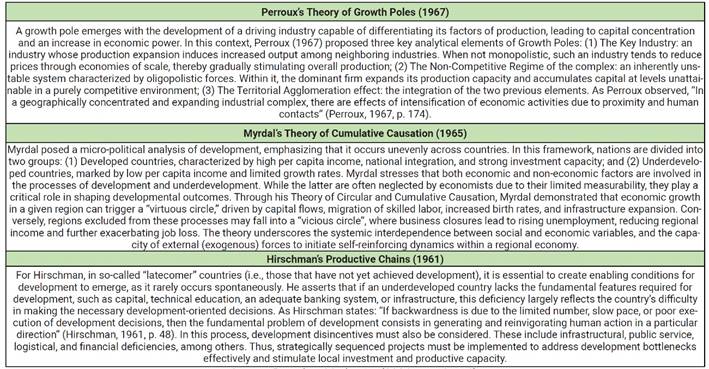 Source: Based on Madureira (2006, pp. 10--16)
 Source: Compiled from Brasil, Ministério do Turismo, Mapa do Turismo Brasileiro (2024)
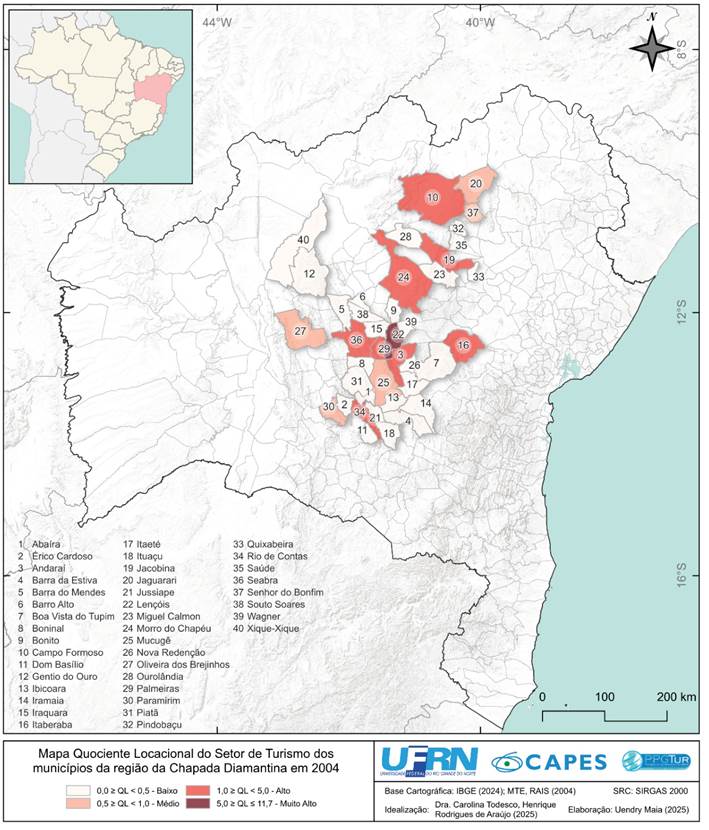 Source: Based on MTE, RAIS (2004)
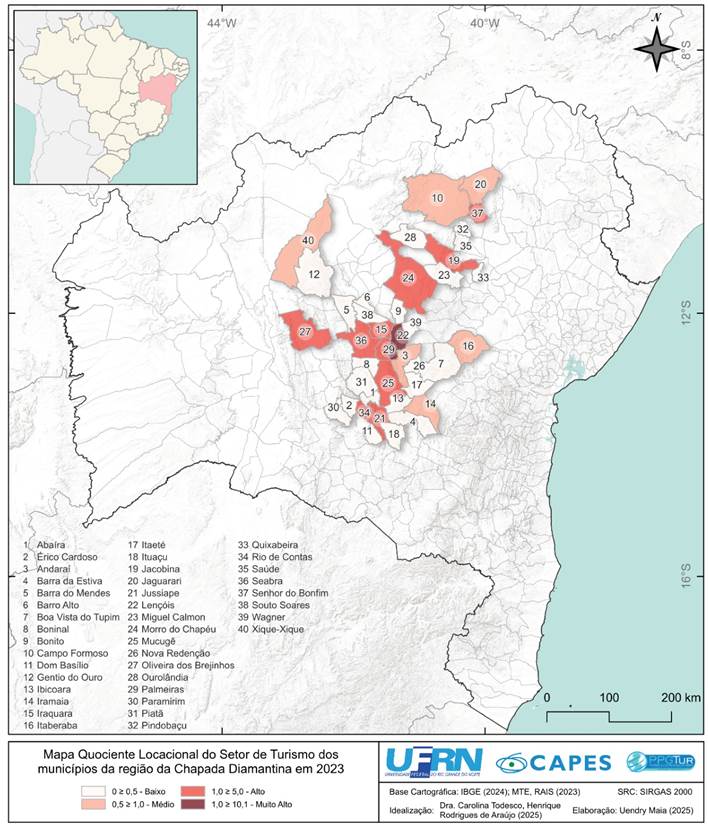 Source: Based on MTE, RAIS (2023)