
 Mindfulness-based intervention and sexuality: a systematic review
Abstract
Objectives: Mindfulness has generated considerable interest in the last 2 decades in clinical and research settings. The efficacy of mindfulness has been evaluated for the sexual dysfunctions recognized by the Diagnostic and Statistical Manual of Mental Disorders, 5th edition (DSM-5) and other sexual problems, such as compulsive sexual behavior disorder (CSBD), also known as sex addiction or hypersexuality. Here, we review the evidence for various mindfulness-based treatments (MBT), such as mindfulness-based cognitive-behavioral treatment or mindfulness-based relapse prevention, for different problems related to sexuality to answer our question: "Are mindfulness-based treatments effective in reducing the symptomatology of sexuality-related disorders?"
Methods: Through a systematic search conducted following the Preferred Reporting Items for Systematic reviews and Meta-Analyses (PRISMA) guidelines, we found 11 studies that met the following inclusion criteria: (I) articles using MBT for sexuality-related problems; (II) clinical population; (III) no date range limits were applied; (IV) only empirical studies were included; (V) language; and (VI) quality of studies.
Results: Evidence shows that mindfulness practice could be effective for some sexual disorders, such as female sexual arousal/desire disorder. However, due to scarcity of studies on other sexual problems such as situational erectile dysfunction, genitopelvic pain/penetration disorder, childhood sexual abuse, or CSBD, the findings cannot be generalized.
Conclusion: There is evidence that mindfulness-based therapies can reduce the symptomatology associated with various sexual problems. However, more studies are needed for these sexual problems. The study concludes with a discussion of future directions and implications.
Keywords:
Sexual disorders; aware; treatments; evidence; sexual dysfunctions
Introduction
Conceptualization of mindfulness
In the last 2 decades, mindfulness has generated considerable interest in clinical and research settings,1–5 It has been defined as "the ability to pay attention in a particular way, in the present moment to the body and mind, with purpose and without judgment."6 From a scientific perspective, mindfulness has been described as a mental function that allows us to keep the focus of our attention on an immediate experience of the present.7 According to Miró,8 mindfulness implies "being free of worries and anticipations. It requires attention to what is happening to us and what is happening, to look and formulate the intention to see."
Mindfulness works through four main mechanisms: attentional regulation, changes in the perspective of oneself, emotional regulation, and body awareness.9 These mechanisms have been used in a wide range of psychiatric disorders, such as depression, stress, insomnia, anxiety, and binge eating disorder, with promising results.10–14
Mindfulness and sexual difficulties
Sexual dysfunctions are a heterogeneous group of disorders that are characterized by a clinically significant disturbance in a person's ability to respond sexually or to experience sexual pleasure.15 The Diagnostic and Statistical Manual of Mental Disorders, 5th edition (DSM-5), covers the following sexual dysfunctions: delayed ejaculation, erectile disorder, female orgasmic disorder, female sexual interest/arousal disorder, genitopelvic pain/penetration disorder, male hypoactive sexual desire disorder, and premature (early) ejaculation.16 However, the categorization of both male and female sexual dysfunctions underwent several modifications in the transition from DSM-IV-TR15 to DSM-5.16 First, two of the disorders, named "female hypoactive desire disorder" and "female arousal disorder" in the DSM-IV-TR,15 were lumped into a single disorder in the DSM-5: "female sexual interest/arousal disorder."16 Another change was to include dyspareunia, vaginismus, and male sexual pain.15 in one disorder called "genitopelvic pain/penetration disorder."16 In addition, a small change was to eliminate the word "male" in the erectile disorder.16 Lastly, the "male orgasmic disorder"15 was modified with "delayed ejaculation."16
The possible effectiveness of mindfulness has been evaluated for the following sexual dysfunctions: female sexual arousal/desire disorder, genitopelvic pain/penetration disorder, and erectile dysfunction (ED). Female sexual arousal/desire disorder is mainly displayed by a reduced interest in sexual activity or by an absence of sexual arousal or pleasure.16 This disorder can be manifest in one of the two following ways: (a) decreased genital sexual response in the absence of genital awareness (physiological) or (b) decreased sexual affect (subjective sexual arousal) with a negative mental engagement during sexual activity.16 Genitopelvic pain/penetration disorder can be presented in a number of ways.16 One of these is known as vestibulodynia (vulvar vestibulitis), which is an increased sensitivity to pain at the vaginal opening (vestibule) to the point that even light touch or stimulation is painful.17 To be more specific, provoked vestibulodynia (PVD) is the term used to describe superficial pain confined to the vulvar vestibule, provoked by touch.18 ED refers to the persistent inability to achieve or maintain an erection or to a reduction in erection rigidity.16 Situational ED therefore, occurs when that disability is due to the situation, couples, or certain types of stimulation, rather than being a generalized disability.16
In addition to the use of mindfulness to address the sexual dysfunctions recognized by the DSM-5,16 the efficacy of mindfulness has also been evaluated for other sexual problems, such as compulsive sexual behavior disorder (CSBD), also known as sex addiction or hypersexuality. With the arrival of the 11th edition of the International Classification of Diseases (ICD-11),19 CSBD was approved as a specific category within impulse control disorder. The defining criteria proposed are the following: (a) repetitive sexual behaviors that become the main focus of the person's life; (b) numerous unsuccessful efforts to control or significantly reduce one's sexual behavior; (c) continuing to engage in sexual conduct despite the adverse consequences; and (d) continuing with sexual behavior even when pleasure is not derived from it or is very little.19
Finally, in the scientific literature, it is already known that both biological and psychological factors are related to sexual dysfunctions. Childhood sexual abuse (CSA) has been identified as a precipitating factor for impaired sexual functioning in adulthood. Although sexual difficulties related to a history of CSA are common, studies that have evaluated effective treatments addressing sexual distress are scarce.20
Distressing sexual interactions may produce negative thoughts and judgments.21 Traditionally, treatments in the field of sexual medicine have tried to increase the connection with the body. Mindfulness complies with these elements, producing changes in the perspective of oneself and body awareness.9 Therefore, mindfulness may be an effective way of re-routing one's focus away from negative memories or anticipated sexual problems and onto the sensations that are unfolding in the moment.21 For this reason, mindfulness has been incorporated into sexual medicine in recent years.22 Based on the first promising results of use of mindfulness in clinical sexology, it seems interesting to review the efficacy of mindfulness-based treatment (MBT) in sexual medicine.
Therefore, the present systematic review was conducted following the Preferred Reporting Items for Systematic reviews and Meta-Analyses (PRISMA) guidelines with the primary aim of assessing the efficacy of MBT for sexual dysfunctions (hypoactive sexual desire, sexual arousal disorders, sexual pain disorders, ED) and other sexual problems (sexual abuse and/or CSBD) in a clinical population comprising both men and women. Our review question was: "Are MBT effective in reducing the symptomatology of sexuality-related disorders?"
Material and methods
Information sources and search strategy
The search was undertaken using the Biblioteca de Universidad de Navarra (UNIKA) metasearch engine. This metasearch includes the multidisciplinary databases Scopus, Web of Science, and Dialnet and also the specialized bibliographic databases PubMed and PsycINFO.
The search terms used in the present systematic review were "Mindfulness" AND ("Sexuality" OR "Sexual dysfunctions" OR "Sex Therapy" OR "Sexual Problems" Or "Sexology" OR "Sexual Difficulties").
Eligibility criteria
This systematic review followed the following eligibility criteria: (I) articles using MBT for sexuality-related problems (sexual dysfunctions included in the DSM-5: hypoactive sexual desire, sexual arousal disorders and orgasmic disorders, CSBD included in ICD-11, and other sex-related problems such as sexual abuse); (II) clinical population: adult (> 18 years old) men and women with sexual problems; (III) no date range limits were applied. The most recent search was conducted on January 8, 2023; (IV) only empirical studies were included; (V) languages: English and Spanish; and (VI) strong or moderate quality, measured by the Quality Assessment Tool for Quantitative Studies.23
Data collection process
A two-step process was used to assess the results of the literature search. First, two reviewers (AMC and AV) screened all potential articles individually using title and abstracts prior to retrieval of full text. For the second level of the screening, articles identified for full review were further screened according to the eligibility criteria. Differences of opinion between the two reviewers were resolved through consensus.
Data items
We extracted article data including the full reference, main aims, sample characteristics and sample size, description of methodology, study design, and results.
Results and discussion
Study selection
A total of 818 records were retrieved from our literature search. After removing 404 duplicates, 363 of the 414 remaining articles were excluded by screening titles and abstracts. The remaining 51 articles were screened at the full-text level. Eleven of the 51 full-text articles screened were ultimately included in the present review (Figure 1).
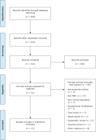
Study characteristics
Table 1 lists the main characteristics of the studies (first author and year of publication, study design, sample and sample size [n], purpose of the study, procedure, measures, and results).
Sexual arousal disorder and sexual desire disorder
Most of the articles included in this systematic review explored the effectiveness of mindfulness in sexual arousal or sexual desire disorder in women. These articles suggest that mindfulness exercises or MBT reduce the symptomatology of these disorders. However, they assessed effectiveness using different psychometric instruments.
Regarding sexual arousal disorder, two types of samples were included: women with sexual arousal disorder and women with sexual arousal disorder following a gynecologic cancer. Mindfulness was effective to improve sexual arousal in these women. In addition, it has been suggested that a psychoeducational intervention including CBT with psychoeducation and mindfulness training may improve subjective sexual arousal.24 Brotto et al.30 used a mindfulness-based sex therapy which integrated psychoeducation, sex therapy, and mindfulness-based skills, and they found that the increase of genital sexual arousal is indirectly related to the increase in subjective sexual arousal after the mindfulness intervention. Therefore, if there is a prior subjective sexual arousal, genital arousal may increase. According to these results, it can be said that mindfulness practice can help increase sexual arousal in women not only directly (increasing genital arousal), but also indirectly (increasing subjective or mental arousal and, consequently, genital arousal).
With regard to sexual desire, significant improvements in sexual desire were described for women survivors of gynecological cancer and for women with low sexual desire in comparison with baseline and with a healthy control group. This finding has been observed in relation to different types of treatment, such as mindfulness-based cognitive-behavioral treatment (MB-CBT) and mindfulness-based cognitive therapy for sexuality.27,28,31 It was also seen that sexual desire, sexual distress, and self-disclosure significantly improved in women with low sexual desire after a mindfulness-based cognitive-behavioral sex therapy (MBCST).34 The sexual function domains (including sexual arousal, lubrication, orgasm, satisfaction) also improved in the intervention group (vs. control group).34
PVD
Brotto et al.29 analyzed a four-session mindfulness-based group treatment for women suffering from PVD. The treatment relied on mindfulness meditation skills with education and cognitive theory. After the brief mindfulness-based group intervention, a significant beneficial effect on vestibular pain and psychological measures of pain was found for women with PVD. Therefore, the MBT not only helped to reduce the sensation of physical pain, but also was effective for reducing subjective pain.
Situational ED
There is no specific MBT for ED. Therefore, Bossio et al.32 implemented an adapted, empirically supported treatment protocol for female sexual dysfunction with men with situational ED. This four-session group treatment integrated elements of mindfulness, sex therapy, and psychoeducation. Comparisons between pretreatment and 6-month posttreatment self-reports suggested that this protocol is promising with regard to erectile function, general sexual satisfaction, and non-judgmental observation of one's own experience.
CSBD
There are few studies that talk about the application of mindfulness in patients with CSBD; two studies talk about the relationship between dispositional mindfulness and hypersexuality, showing that they are inversely and negatively related35,36 and another presents a case study indicating improvements in symptomatology.37 On the other hand, no empirical studies have been conducted to analyze the effectiveness of a treatment based on mindfulness for patients with CSBD. The study included in this review is a pilot study that examined whether MBRP can lead to clinical improvement in 12 males with CSBD.33 The results indicate that after the intervention, participants spent significantly less time engaging in problematic pornography use. The intervention also reduced the symptoms of problematic pornography use, emotional distress, depressive symptoms, and obsessive-compulsive symptoms. However, there was no decrease in time spent in masturbation or dyadic sex. This first study examining MBT in the context of CSBD presents promising preliminary results. Nonetheless, more studies are needed with larger and statistically more powerful samples to yield more reliable and generalizable results.
Sexual abuse
As has been seen throughout this review, there is growing evidence about the benefits of mindfulness in treating sexual difficulties. However, no randomized controlled studies have been done in populations with a history of sexual abuse. A pilot study with women who suffered CSA compared two sessions of MBT (n = 12) with CBT (n = 8), finding that MBT proved to be significantly more effective than CBT in improving the concordance between genital sexual arousal and subjective sexual arousal.26
An analysis based on hierarchical linear modeling to assess changes in concordance between subjective and genital sexual arousal showed that women in the MBT group experienced a significantly higher subjective sexual arousal response compared to the CBT group and to before treatment.26 Additionally, both groups experienced a significant decrease in sexual distress.26 Therefore, this pilot study supports the further study of mindfulness-based approaches in the treatment of sexual difficulties related to history of CSA and characterized by a disconnect between genital and subjective sexual response.
Limitations and future studies
This study has some limitations that should be born in mind. First, most of the studies included focus on women with sexual problems who have sought treatment. Consequently, the findings are not generalizable to women who have not sought treatment. Second, there is limited literature on MBT in men, for which reason future studies could focus on men. Finally, further studies are required for each of the sexual problems included in this review to enable firm conclusions to be drawn about the efficacy of MBT. However, while a limitation, it could also be a strong point for this study that almost all the studies are from the same group, allowing firm conclusions to be drawn for this group.
Conclusion
The present systematic review provides evidence on the efficacy of MBTs to reduce the symptomatology associated with various sexual problems such as sexual arousal disorder and/or sexual desire disorder, PVD, and sexual abuse in women, or situational ED and hypersexuality in men. However, more studies are needed in this line to obtain solid conclusions in this respect.
References
- 1 Fisher NR, Mead BR, Lattimore P, Malinowski P. Dispositional mindfulness and reward motivated eating: The role of emotion regulation and mental habit. Appetite. 2017;118:41-8.
- 2 Jha AP. Being in the now. Sci Am Mind. 2013;24:26-33.
- 3 Davis DM, Hayes JA. What are the benefits of mindfulness? A practice review of psychotherapy-related research. Psychotherapy (Chic). 2011;48:198-208.
- 4 Chiesa A, Serretti A. A systematic review of neurobiological and clinical features of mindfulness meditations. Psychol Med. 2010;40:1239-52.
- 5 Malinowski P. Neural mechanisms of attentional control in mindfulness meditation. Front Neurosci. 2013;7:8.
- 6 Kabat-Zinn J. M Full catastrophe living: Using the wisdom of your body and mind to face stress, pain, and illness. New York: Delacorte; 1990.
- 7 Gonzalez-Santana A. Mindfulness: guía práctica para educadores. 2014.
- 8 Miró Barrachina M. La atención plena (mindfulness) como intervención clínica para aliviar el sufrimiento y mejorar la convivencia. Rev Psicoter. 2006;17:31-76.
- 9 Hölzel BK, Lazar SW, Gard T, Schuman-Olivier Z, Vago DR, Ott U. How does mindfulness meditation work? Proposing mechanisms of action from a conceptual and neural perspective. Perspect Psychol Sci. 2011;6:537-59.
- 10 Hofmann SG, Sawyer AT, Witt AA, Oh D. The effect of mindfulness-based therapy on anxiety and depression: a meta-analytic review. J Consult Clin Psychol. 2010;78:169-83.
- 11 Gong H, Ni CX, Liu YZ, Zhang Y, Su WJ, Lian YJ, et al. Mindfulness meditation for insomnia: A meta-analysis of randomized controlled trials. J Psychosom Res. 2016;89:1-6.
- 12 Katterman SN, Kleinman BM, Hood MM, Nackers LM, Corsica JA. Mindfulness meditation as an intervention for binge eating, emotional eating, and weight loss: a systematic review. Eat Behav. 2014;15:197-204.
- 13 Sharma M, Rush SE. Mindfulness-based stress reduction as a stress management intervention for healthy individuals: a systematic review. J Evidence-Based Complement Altern Med. 2014;19:271-86.
- 14 Baer RA. Mindfulness training as a clinical intervention: a conceptual and empirical review. Clin Psychol Sci Pract. 2003;10:125-43.
- 15 American Psychiatric Association. Diagnostic and statistical manual of mental disorders, 4th Edition, Text Revision. Washington: APA; 2000.
- 16 American Psychiatric Association. Diagnostic and statistical manual of mental disorders, 5th Edition, Text Revision. Washington: APA; 2022.
-
17 Basson R. Manual MSD. Overview of female sexual function and dysfunction. Vestibulodinia provocada (vestibulitis vulvar). 2019. https://www.msdmanuals.com/professional/gynecology-and-obstetrics/female-sexual-function-and-dysfunction/overview-of-female-sexual-function-and-dysfunction
» https://www.msdmanuals.com/professional/gynecology-and-obstetrics/female-sexual-function-and-dysfunction/overview-of-female-sexual-function-and-dysfunction - 18 Lev-Sagie A, Witkin SS. Recent advances in understanding provoked vestibulodynia. F1000Res. 2016:5:2581.
- 19 World Health Organization. ICD-11: International classification of diseases, 11th revision. Geneva: WHO; 2019.
- 20 Pulverman CS, Meston CM. Sexual dysfunction in women with a history of childhood sexual abuse: the role of sexual shame. Psychol trauma theory, Res Pract policy. 2020;12:291-9.
- 21 Brotto LA. Mindful sex. Can J Hum Sex. 2013 Oct 1;22:63-8.
- 22 Brotto LA, Heiman JR. Mindfulness in sex therapy: applications for women with sexual difficulties following gynecologic cancer. Sex Relatsh Ther. 2007;22:3-11.
- 23 Jackson N, Waters E. Criteria for the systematic review of health promotion and public health interventions. Health Promot Int. 2005;20:367-74.
- 24 Brotto LA, Heiman JR, Goff B, Greer B, Lentz GM, Swisher E, et al. A psychoeducational intervention for sexual dysfunction in women with gynecologic cancer. Arch Sex Behav. 2008;37:317-29.
- 25 Brotto LA, Basson R, Luria M. A mindfulness-based group psychoeducational intervention targeting sexual arousal disorder in women. J Sex Med. 2008;5:1646-59.
- 26 Brotto LA, Seal BN, Rellini A. Pilot study of a brief cognitive behavioral versus mindfulness-based intervention for women with sexual distress and a history of childhood sexual abuse. J Sex Marital Ther. 2012;38:1-27.
- 27 Brotto LA, Erskine Y, Carey M, Ehlen T, Finlayson S, Heywood M, et al. A brief mindfulness-based cognitive behavioral intervention improves sexual functioning versus wait-list control in women treated for gynecologic cancer. Gynecol Oncol. 2012;125:320-5.
- 28 Brotto LA, Basson R. Group mindfulness-based therapy significantly improves sexual desire in women. Behav Res Ther. 2014;57:43-54.
- 29 Brotto LA, Basson R, Smith KB, Driscoll M, Sadownik L. Mindfulness-based group therapy for women with provoked vestibulodynia. Mindfulness (N Y). 2015;6:417-32.
- 30 Brotto LA, Chivers ML, Millman RD, Albert A. Mindfulness-based sex therapy improves genital-subjective arousal concordance in women with sexual desire/arousal difficulties. Arch Sex Behav. 2016;45:1907-21.
- 31 Paterson LQP, Handy AB, Brotto LA. A pilot study of eight-session mindfulness-based cognitive therapy adapted for women's sexual interest/arousal disorder. J Sex Res. 2017;54:850-61.
- 32 Bossio JA, Basson R, Driscoll M, Correia S, Brotto LA. Mindfulness-based group therapy for men with situational erectile dysfunction: a mixed-methods feasibility analysis and pilot study. J Sex Med. 2018;15:1478-90.
- 33 Holas P, Draps M, Kowalewska E, Lewczuk K, Gola M. A pilot study of mindfulness-based relapse prevention for compulsive sexual behaviour disorder. J Behav Addict. 2020;9:1088-92.
- 34 Rashedi S, Maasoumi R, Vosoughi N, Haghani S. The effect of mindfulness-based cognitive-behavioral sex therapy on improving sexual desire disorder, sexual distress, sexual self-disclosure and sexual function in women: a randomized controlled clinical trial. J Sex Marital Ther. 2022;48:475-88.
- 35 Shorey RC, Elmquist J, Gawrysiak MJ, Anderson S, Stuart GL. The relationship between mindfulness and compulsive sexual behavior in a sample of men in treatment for substance use disorders. Mindfulness (N Y). 2016;7:866-73.
- 36 Reid RC, Bramen JE, Anderson A, Cohen MS. Mindfulness, emotional dysregulation, impulsivity, and stress proneness among hypersexual patients. J Clin Psychol. 2014;70:313-21.
- 37 Van Gordon W, Shonin E, Griffiths MD. Meditation awareness training for the treatment of sex addiction: a case study. J Behav Addict. 2016;5:363-72.

