 INTEGRATING SUSTAINABILITY INTO PRE-SERVICE LANGUAGE TEACHER EDUCATION: INSIGHTS FROM THE UNIVERSITY OF TEACHER EDUCATION LUCERNE, SWITZERLAND
Abstract
In the face of global environmental challenges, social inequalities, and economic disparities, educational institutions worldwide strive to align their practices with UNESCO’s goals for sustainable development. For language education, research suggests that fostering multilingualism and transculturalism are crucial competencies for the well-being of diverse communities, as they enhance the ability to understand, tolerate, and negotiate culturally different points of view (de la Fuente, 2022). This article reports on an attempt to promote sustainability within a French and English didactics module at the University of Teacher Education Lucerne, Switzerland. Participants were 46 master’s level pre-service teachers of French or English (or both) at lower secondary level. The goal was to sensitize the participants to the topic of sustainability and to show them ways to consider it in their future teaching. To this end, the topic was addressed in a 90-minute session consisting of theoretical input and practice to explore cultural representations and concepts. At the end of the semester, the topic was revisited using examples of the participants’ projects related to sustainability. Furthermore, familiarity with the topic and relevant concepts were self-evaluated. Results indicate that while the module effectively highlighted the relevance of sustainability in language education, half of the participants felt insufficiently prepared to integrate it into their teaching, citing uncertainties about handling stereotypes and a lack of adequate resources. These findings and the fact that only a few participants established explicit links to the topic of sustainable development in their projects suggest that the subject should be addressed in a more in-depth and more diverse manner in future implementations.
Keywords:
education for sustainable development; language teacher education; plurilingualism; multi-/transculturalism; sustainability.
Resumo
Diante dos desafios ambientais globais, das desigualdades sociais e das disparidades econômicas, as instituições educacionais do mundo todo se esforçam para alinhar suas práticas com as metas da UNESCO para o desenvolvimento sustentável. Para o ensino de idiomas, as pesquisas sugerem que a promoção do multilinguismo e do transculturalismo são competências cruciais para o bem-estar de diversas comunidades, pois aumentam a capacidade de compreender, tolerar e negociar pontos de vista culturalmente diferentes (de la Fuente, 2022). Este artigo relata uma tentativa de promover a sustentabilidade em um módulo didático de francês e inglês na Universidade de Formação de Professores de Lucerna, na Suíça. Os participantes eram 46 professores de francês ou inglês (ou ambos) em nível secundário inferior. O objetivo era sensibilizar os participantes para o tema da sustentabilidade e mostrar-lhes maneiras de considerá-lo em seu ensino futuro. Para isso, o tema foi abordado em uma sessão de 90 minutos que consistia em uma introdução teórica e prática para explorar representações e conceitos culturais. No final do semestre, o tópico foi revisado usando exemplos dos projetos dos participantes relacionados à sustentabilidade. Além disso, a familiaridade com o tópico e os conceitos relevantes foram autoavaliados. Os resultados indicam que, embora o módulo tenha destacado com eficácia a relevância da sustentabilidade no ensino de idiomas, metade dos participantes não se sentiu suficientemente preparada para integrá-la em seu ensino, citando incertezas sobre como lidar com estereótipos e a falta de recursos adequados. Essas descobertas e o fato de que apenas alguns participantes estabeleceram vínculos explícitos com o tópico do desenvolvimento sustentável em seus projetos sugerem que o assunto deve ser abordado de forma mais aprofundada e diversificada em implementações futuras.
Palavras-chave:
educação para o desenvolvimento sustentável; formação de professores de idiomas; plurilinguismo; multi/transculturalismo; sustentabilidade.
INTRODUCTION
The integration of sustainability into educational curricula has become increasingly critical in the face of global environmental challenges, social inequalities, and economic disparities (Gosselin et. al, 2013; Rieckmann, 2018). Education for Sustainable Development (ESD) provides a framework that incorporates critical thinking, problem-solving, and intercultural competence; skills essential for addressing sustainability challenges and fostering responsible citizenship (UNESCO, 2014). As institutions of higher education worldwide strive to align their educational practices with UNESCO’s goals for sustainable development1, the University of Teacher Education Lucerne, Switzerland too has adopted a comprehensive strategy that aims to foster ecological, social, and economic sustainability across various disciplines.
Language education plays a key role in fostering sustainability-related competencies. Zygmunt (2016) emphasizes how language learning enhances critical and intercultural awareness, while Yu et al. (2024) show that integrating sustainability into language teaching encourages learners to engage meaningfully with global challenges. As highlighted in recent studies, multilingualism and transculturalism are essential for the well-being of diverse communities, as they promote competencies such as understanding, tolerance, and the ability to negotiate culturally different perspectives (de la Fuente, 2022). These competencies not only enable teachers to navigate cultural diversity but also to integrate sustainability themes effectively into their classrooms. Despite growing recognition of its importance, integrating ESD into pre-service teacher education often faces practical challenges, including limited time, overcrowded curricula, and a lack of subject-specific strategies (Goller & Rieckmann, 2022). This gap is particularly pressing as pre-service teachers often lack structured support to develop the skills needed to incorporate sustainability into their future teaching (Maijala et al., 2023). Addressing this shortfall is critical for enabling educators to foster cultural awareness - i.e. the ability to recognize, understand, and appreciate the influence of culture on people’s beliefs, values, and behaviors, thereby facilitating effective interactions across diverse cultural contexts (Deardoff, 2006) - and responsible global citizenship - the awareness, skills, and commitment required to actively contribute to a more just, inclusive, and sustainable world, recognizing interdependence and respecting cultural diversity (UNESCO, 2015) - among their students, aligning with the broader goals of sustainable education. The goal of this article is to contribute to a better understanding of how ESD can and should be integrated into pre-service language teacher education by reporting on an explorative study conducted at the University of Teacher Education Lucerne, Switzerland. In this study, we integrated the topic of ESD into a synergy module that combines French and English language didactics for future teachers at the lower secondary level, with a particular focus on multi-/transcultural competence. Drawing on multiple sources of data such as audio-recordings of student discussions, auto-evaluations and student feedback, the article attempts to answer the following question: How can ESD be effectively integrated into pre-service language teacher education in the context of a module on French and English language didactics?
1. LITERATURE REVIEW
The integration of sustainability into education, particularly within language teacher education, has garnered significant attention as the global community faces pressing environmental, social, and economic challenges (Rieckmann, 2018). Aligning with the United Nations’ Sustainable Development Goals (SDGs), particularly SDG 4 on Quality Education, ESD aims to ensure learners acquire the knowledge and skills necessary to promote sustainable development. This is specifically outlined in Target 4.7: “By 2030, ensure that all learners acquire the knowledge and skills needed to promote sustainable development, including, among others, through education for sustainable development and sustainable lifestyles, human rights, gender equality, promotion of a culture of peace and nonviolence, global citizenship and appreciation of cultural diversity and of culture’s contribution to sustainable development” (UNESCO, 2016, p. 13). These components form the critical foundation for learners to understand and actively contribute to sustainable development across cultural contexts. Rieckmann (2020; 2022) further emphasizes that such competencies equip educators and learners to understand and navigate global challenges, preparing them to implement transformative changes in their communities.
In this section, we review previous research on the role and integration of ESD into language education. Key concepts for our study, such as multi-/transculturalism as well as plurilingualism, are introduced in more detail in the methodological section (cf. Section 2.1).
1.1 The Role of ESD in Language Education
Language education refers to the teaching and learning practices aimed at developing linguistic and communicative competencies, commonly involving methodologies such as the communicative approach, which emphasizes interaction and meaningful communication in real-life contexts, and task-based language teaching, which prioritizes authentic tasks to promote practical language use (Richards & Rodgers, 2014; Ellis, 2003).
Language education holds an important position within ESD due to its dual role: it not only promotes linguistic proficiency but also cultivates intercultural understanding (Maijala et al., 2023; Zygmunt, 2016). This dual functionality is especially relevant to ESD, as it empowers learners to appreciate diverse cultural perspectives and engage in substantive discussions about sustainability. It needs to be said that, beyond these recognized roles, language education inherently encompasses additional dimensions and goals, such as critical literacy, identity development, social cohesion, global citizenship, creativity, and cognitive and emotional growth, thereby offering diverse pathways and pedagogical approaches for educators to address sustainability comprehensively (e.g. Byram, 2008; Jones & Richards, 2016; Northon & Toohey, 2011). Research indicates that language learning environments are supportive to fostering transcultural understanding because they expose learners to diverse linguistic and cultural resources, thereby enabling learners to relate sustainability topics to broader global issues (Yu et al., 2023). This connection is particularly powerful in multilingual settings where students utilize various linguistic resources. For instance, de la Fuente (2022) demonstrates various content-based instruction strategies to integrate sustainability into foreign language curricula, emphasizing the engagement with social, environmental, and cultural sustainability topics through language learning. Similarly, Maijala et al. (2023) highlight how Finnish pre-service language teachers perceive the integration of sustainability into language teaching, noting their recognition of the importance of social and cultural dimensions and their capacity to address personal environmental actions in the language classroom. By embedding sustainability within language education, educators can guide students in exploring these themes in ways that are culturally sensitive, globally aware, and anchored in authentic communicative contexts (Arıkan & Zorba, 2024).
1.2 Integrating Sustainable Development into Language Education
Yılmaz et al. (2021) explored how pre-service English language teachers in Turkey perceive sustainable development (SD), revealing that their understanding was primarily and narrowly focused on economic growth. This finding highlighted a significant educational gap, as most pre-service teachers lacked any formal training on SD, and their responses did not explicitly link SD concepts with English Language Teaching (ELT). This underscores the urgent need for structured, discipline-specific approaches to ESD within teacher training programs. In response to this deficiency, Yılmaz et al. proposed a specialized course syllabus aimed at integrating SD into ELT, emphasizing interactive and contextualized learning activities that highlight both global and local sustainability issues.
This curriculum approach is designed to broaden pre-service teachers’ understanding of SD and equip them with strategies to effectively integrate sustainability into language teaching, reflecting the critical need to adapt educational practices to diverse student backgrounds as discussed in the findings of Maijala et al. (2023) and the approaches advocated by de la Fuente (2022). These pedagogical innovations aim to prepare educators not only in linguistic competencies but also in the essential capacities to address pressing global challenges through language education. By moving beyond economic or environmental sustainability, to also address social dimensions such as cultural understanding and equity, language lessons can engage students with content on sustainability from multiple viewpoints, thereby fostering a more comprehensive understanding of global citizenship (Dower & Williams, 2002; Rieckmann, 2020; Yu et al., 2024). De la Fuente (2022) supports this view, noting that foreign language learning inherently fosters multilingual and transcultural competence; two critical components of ESD that contribute to students’ abilities to empathize with others and see global connections within local challenges.
Practical approaches are crucial in supporting the integration of sustainability into teacher training programs. Mason et al. (2024) demonstrate the effectiveness of a toolkit (a structured set of resources, strategies, guidelines, and practical instruments developed to support practitioners in implementing evidence-based practices or achieving specific educational or social goals) designed for embedding sustainability within Teaching English as a Foreign Language (TEFL) and Teaching English to Speakers of Other Languages (TESOL) programs. This toolkit enables trainee teachers to develop lesson plans that incorporate local sustainability issues into their language teaching. By engaging with localized examples, pre-service teachers can help students connect sustainability concepts to their own communities, fostering a more personalized understanding of sustainability. This approach allows future educators to integrate ESD in a way that is both relevant and accessible to their students.
De la Fuente (2022) further explores the use of content-based instruction in post-secondary foreign language learning to integrate sustainability topics effectively into foreign language curricula. By employing a variety of approaches, including project-, problem-, and task-based methods as well as fieldwork, debates, and reflective pedagogies, the book demonstrates how these can enhance students’ awareness and engagement with sustainable development issues while acquiring a foreign language. This method not only boosts linguistic and analytical skills but also deepens students’ understanding of sustainability across different cultural and historical contexts, making education more impactful and connected to global realities.
1.3 Enhancing Relevance and Motivation through Sustainability
Integrating sustainability into language education enhances lesson engagement by connecting learning with real-world sustainability applications, making it directly relevant to students’ lives (Bilsborough, 2022). Yu et al., (2024) assert that embedding sustainability within language curricula not only enriches the educational content but also elevates student motivation by linking language learning to real-world challenges. Echoing this, Yılmaz et al. (2021) emphasize the importance of making sustainability in ELT both relatable and interactive. They suggest that pre-service teachers show a positive response to courses featuring contemporary sources and participatory teaching methods, which are echoed in the approaches highlighted by de la Fuente (2022). These methods involve utilizing relevant examples and engaging activities that help students connect their language studies to broader societal issues, thereby creating a learning environment that is both impactful and motivating.
1.4 Addressing the Challenges of ESD Implementation
Despite the recognized value of ESD, its implementation in language teacher education faces several significant challenges. Studies highlight that many teacher education programs struggle to effectively integrate sustainability concepts into their curricula (Goller & Rieckmann, 2022). Common barriers include a lack of resources, insufficient training for educators, and the absence of cohesive strategies for embedding ESD within existing frameworks. Yu et al. (2024) identify practical difficulties such as limited alignment between sustainability themes and language learning objectives, proposing innovative curriculum designs and professional development programs as solutions to these issues.
Furthermore, Mason et al. (2024) demonstrate that localized examples and context-specific teaching tools are vital for making sustainability concepts accessible and relevant to both educators and learners. Casinader (2021) emphasizes the importance of cultural contexts in sustainability education, advocating for transcultural capacity among educators. This critical engagement with different representations of cultures is echoed in the findings of Maijala et al. (2023), who emphasize that structured activities enable pre-service teachers to connect sustainability themes to their teaching practices, fostering both linguistic abilities and global awareness.
1.5 Building a Foundation for Future Educators
Incorporating sustainability in language curricula not only equips future educators to address sustainability-related topics but also empowers them to cultivate an engaged, informed student body that is better prepared to contribute to sustainable development in their communities (Hubscher-Davidson & Panichelli-Batalla, 2015). Despite this broad recognition of the importance of sustainability in education, specific research on how sustainability is embedded in Language Teaching curricula and practices remains limited (Zaimoğlu, 2024). Most relevant studies focus on general education or environmental education frameworks, thereby overlooking the unique intersection of sustainability with language teaching (Zaimoğlu, 2024). This research gap highlights the need for more focused investigations into the integration of sustainability concepts specifically in language teaching, ensuring that language teaching effectively contributes to broader educational and environmental goals.
Ultimately, the integration of ESD into language teacher education programs does more than prepare educators to address sustainability issues in isolation; it fosters a sense of agency among pre-service teachers, equipping them with the knowledge, skills, and confidence necessary to actively contribute to sustainable development. As educational institutions worldwide increasingly recognize the importance of ESD, it becomes clear that language education has a vital role in building bridges between cultures, encouraging critical reflection, and promoting global citizenship (Mouboua et al., 2024). Through targeted training, pre-service teachers can become advocates for sustainable practices, both within and beyond the classroom, helping to shape a more equitable and environmentally conscious future (UNESCO, 2017).
2. METHODOLOGY
The literature review shows that while ESD has increasingly found its way into various educational disciplines, the way it can and should be sensibly integrated into language teaching requires further exploration.
As mentioned in the introduction, we have chosen to explore how ESD can be integrated in the context of a bilingual French and English language didactics module for pre-service teachers at the University of Teacher Education, Lucerne. The goal of this implementation was to find out to what extent the chosen approach is helpful in sensitizing future teachers to different aspects of ESD. This section outlines the module, how it was implemented, what data was collected and how it was analyzed.
2.1 Module Topics
The literature review suggests that the promotion of transcultural understanding is key to a sustainable language education (e.g. Maijala et al., 2023). The following topics were thus chosen as a focus: multi-/transculturalism and plurilingualism. The two topics and key concepts related to them are introduced in the following.
a) Multi-/transculturalism
In a globalized context, culture is an evolving process characterized by the overlay of different spaces and the intermingling of subcultures, which defy straightforward definition (Wolf, 2008). This complexity is reflected in the concept of translingual and transcultural competence, which involves more than the ability to navigate between languages and cultures. As defined by the Modern Language Association (MLA, 2007), it also encompasses the ability to operate between and beyond cultural and linguistic boundaries, to negotiate meaning, construct identity, and engage in critical reflection on one’s own and others’ linguistic and cultural practices. According to Welsch (1999), transculturality challenges traditional, bounded notions of culture by emphasizing their dynamic, hybrid, and interwoven nature, shaped by global interconnections. Rather than implying a harmonious blending, Welsch highlights how cultural formations today are marked by overlapping identities and multiple affiliations that resist fixed categories. Hall’s Iceberg Model (1976) supports this view by illustrating that much of a culture’s depth lies beneath the surface. Byram’s ICC Model (1997) outlines knowledge, attitudes, skills, and values as core to intercultural competence, although it has been criticized for focusing too narrowly on national and territorial definitions. Blell and Doff (2014) suggest revising Byram’s model to include a transcultural dimension that accounts for the dynamic interactions in interand transcultural processes, whether in direct encounters or through media such as literature and film. Essential for fostering an understanding of how cultural nuances influence perceptions of sustainability, this theme ensures that language educators can facilitate more effective and empathetic communication across cultural boundaries, crucial for addressing global sustainability challenges. As the globalized world promotes the growth of heterogeneous and culturally diverse language classrooms, it becomes imperative to assist learners in recognizing that culture is not a monolithic and static construct (Blell & Doff, 2014). In this module, we used the term culture to invite students to critically reflect on the fluid, dynamic, and interconnected nature of cultural identities, aiming to foster awareness of how such complexity matters for sustainable language education. In this context, we also addressed the concepts of cultural awareness and stereotypes. Cultural awareness refers to the recognition and understanding of the differences and similarities between cultures. It entails a reflective and critical stance towards one’s own cultural norms and those of others, with the aim of fostering respectful and effective intercultural communication (Byram, 1997; Deardorff, 2006) According to Brainee (2024), fostering cultural awareness in language education requires educators to recognize different cultural values and beliefs, as well as to respect others’ cultural norms. This involves being aware of individuals’ own cultural biases and adopting a flexible mindset to accept the differences between their own and others’ cultural values, beliefs, and customs (Thapa, 2020). Stereotypes are categorical beliefs about groups that shape perceptions and can lead to discrimination, often resisting counter evidence and homogenizing group characteristics (Lee et al., 2013). Stereotypes, while sometimes containing elements of accuracy, generally provide an oversimplified and often inaccurate portrayal of cultural realities (Lee et al., 2013). Challenging these stereotypes in teaching materials and discussions is crucial, as it fosters a more inclusive and accurate portrayal of cultural diversity.
b) Plurilingualism
Plurilingualism refers to an individual’s dynamic and interconnected linguistic repertoire, where languages are not viewed as separate entities but as an integrated system of resources that language users can flexibly draw upon in different social situations (North et al., 2022). According to the Common European Framework of Reference for Languages (CEFR), a distinction is made between multilingualism (the coexistence of different languages at the social or individual level) and plurilingualism (the dynamic and developing linguistic repertoire of an individual user/learner) (Council of Europe, 2020, p. 30). While the CEFR provides a useful framework, it is important to note that it emerges from a Western European context and has been critiqued for overlooking the diverse linguistic, social, and cultural realities of language users in non-European or postcolonial contexts. From a decolonial perspective, relying solely on CEFR definitions risks reinforcing Eurocentric views of language learning. Nevertheless, the notion of plurilingualism - as a flexible, integrative approach to language use - can be meaningfully expanded to support more inclusive, context-sensitive, and socially just language education practices globally. As such, plurilingualism is increasingly recognized as crucial for addressing global issues and promoting sustainability, as it enhances communication, cultural understanding, and problem-solving skills (Stein-Smith, 2016). By incorporating plurilingualism into language education, the module aims to empower teachers to use multiple languages as tools to discuss and address global and local environmental challenges, thereby broadening the impact and reach of sustainability education. This approach not only broadens the impact of sustainability education but also enriches the pedagogical process, fostering a deeper understanding and appreciation of linguistic diversity as a catalyst for global citizenship and intercultural empathy (Mouboua et al., 2024).
2.2 Module Design
This section outlines the developed module as it was implemented at the University of Teacher Education Lucerne, Switzerland in autumn 2024 with pre-service teachers of French and/or English on the lower secondary level.
The primary focus of this module is on individual specialization within the field of language education, allowing participants to tailor their learning experiences according to their specific interests and future teaching contexts.
The module is an integral part of the Master’s program for students training to become lower secondary school teachers. It takes place during the seventh semester of their studies, with classes scheduled for 90 minutes each week. This module includes a total of 46 students who have chosen to focus on either teaching English (EN), French (FR), or both languages as part of their four selected subjects.
The aim of the module is to provide an individual deepening of subject-specific didactic content related to foreign language teaching, with the possibility of placing a focus on sustainability. Throughout the semester, students engage in two sessions that explore the relationship between sustainability and language education, and they work on individual projects in between.
1. Input Session: Focus on Multi-/Transculturality
This input session lays the groundwork for understanding the critical role sustainability plays in language education. Students are introduced to the concepts of sustainability and its relevance to their future teaching practices. The session emphasizes the importance of cultural understanding in relation to sustainability. Students examine cultural identities and places as integral components of ESD. Activities include analyzing photographs from James Mollison’s “Playground” (2015) where students discuss similarities and differences in playgrounds across various countries, reflecting on how cultural contexts influence children’s experiences. The session encourages students to think about the importance of interand transcultural aspects.
Moreover, the session involves a critical examination of how culture is represented in two mandatory coursebooks that are used in lower secondary education in Switzerland: Dis Donc (Chesini et al., 2019; 2020) for the French classroom and Open World (Williams Leppich & Giancola-Bürer, 2018; 2019; 2020) for English language teaching. Students evaluate these textbooks, identifying how cultural concepts are presented and whether diverse cultural perspectives are represented. There are no specific concepts required; the idea is that students can refer to concepts they have encountered during their studies. They have to record a group discussion and answer the questions: ‘How is culture represented in this example?’ and ‘Do you see any problems or challenges in the way culture is represented here? If so, how would you deal with these challenges in your teaching?’. They discuss challenges and strengths in the materials, considering how these resources might influence students’ perspectives.
2. Individual Projects
Following the first input session, students have the option to choose an individual project with an optional focus on sustainability to work on during the semester. These projects give them the opportunity to explore specific areas of interest, allowing them to apply their learning in a creative and practical way. Students can choose to focus on sustainability issues relevant to their future teaching contexts (it is important to mention that this was optional). This should enable them to tailor their projects to their unique interests and the needs of their prospective students. The project was accompanied by a written paper where students described the project and its theoretical framework.
3. Review Session
Towards the end of the semester, the topic was revisited using some examples of the students’ individual projects related to sustainability. They discussed how the projects were linked to sustainability and whether they targeted knowledge, attitudes and/or skills. Furthermore, they self-evaluated their familiarity with and their preparedness to address some of the discussed concepts (e.g. transculturalism) using competency descriptions with Microsoft Forms. In the end, they evaluated the module for a general impression.
2.3 Goals
The primary goals of the module were:
-
Students deepen their knowledge and skills related to certain themes discussed at the bachelor’s level.
-
Students familiarize themselves with the principles of content-based language teaching and learning in theory and practice.
-
Students experience plurilingualism: creating connections, and making transfers between languages and cultures.
-
Students improve general and profession-related language competencies.
To enhance and incorporate the theme of sustainability more effectively, the following additional objectives were established:
-
Students understand why sustainability should be included in language teaching and learning.
-
Students become familiar with the concepts of transculturalism and plurilingualism.
-
Students can critically analyze various materials used in lower secondary education classrooms.
-
Students deepen their understanding of how to integrate sustainability into language teaching.
-
Students acquire skills to implement sustainable practices and facilitate discussions in their future classrooms.
2.4 Expected Outcomes
We hoped that by the end of the module, participants would not only understand the importance of sustainability in education but also feel equipped and motivated to incorporate these principles into their teaching. It was anticipated that participants’ coursework and projects would reflect a sophisticated grasp of how to approach cultural representations and sustainability themes critically and creatively.
2.5 Data Collection and Analysis
The data collection process involved three main components. First, nine group discussions with three to four students per group were audio-recorded during the input session to capture students’ perspectives and insights during their engagement with cultural analysis tasks. The discussions varied in length: the shortest recording lasted four minutes, and the longest was 26 minutes. The recordings were not transcribed but key takeaways noted. Furthermore, illustrative statements were noted to provide concrete examples of students’ thinking and engagement with the material.
In the review session, two types of data were collected: written feedback from students (in the languages of their choice) and a self-evaluation (in German) conducted using Microsoft Forms. The written feedback on the whole module contained three questions (1. Les aspect positive, 2. What we could/should improve, 3. Autres commentaires). The self-evaluation included competency descriptions related to the module’s learning objectives with five closed questions: 1. The module helped me to make connections between different languages and cultures., 2. The module contributes to an understanding of why ESD plays / should play a role in foreign language teaching., 3. I feel sufficiently familiar with the concepts of culture, transculturality and plurilingualism., 4. I feel sufficiently well prepared to critically analyse cultural forms of representation in teaching materials and to react accordingly., 5. After this module I have an understanding of how sustainability can be integrated into foreign language teaching?, and one open question at the end: What do you feel you are not yet well enough prepared for in terms of ESD in foreign languages?). In total, 24 students filled out the self-evaluation.
Third, the students’ written papers describing their individual projects were reviewed to determine the extent to which ESD themes were integrated into their work. For this purpose, an overview was created in which the papers were assigned to one of the following three categories: explicit link to ESD, implicit link to ESD, no link to ESD. Within the first two categories, subcategories were created based on thematic commonalities.
3. Findings
The following sections present the key findings from the various data sources. A more detailed interpretation and discussion of these results will follow in section 4.
3.1 Audio Recordings of Group Discussions
The analysis of the audio recordings indicate that students were able to apply various concepts such as transculturalism, cultural awareness, and stereotypes to the analysis of cultural representations in the teaching materials. The students’ discussions reflect an awareness of the limitations in current teaching materials and a strong desire to see more nuanced and comprehensive cultural representations. For example, the students noted that the French manual Dis Donc (Chesini et al., 2019; 2020) tends to segregate cultural content at the end of units, which can lead to its omission if time is tight. In contrast, Open World (Williams Leppich & Giancola-Bürer, 2018; 2019; 2020) integrates cultural elements throughout its units, which embeds cultural learning more consistently across the coursebook. However, students expressed concern that both approaches often only scratch the surface.
While they recognized the constraints of coursebook design, their suggestions point toward a growing demand for teaching approaches that not only present culture but also engage students in critical thinking about cultural complexity. One student (12.12.24) noted that the representation of cultures in the teaching material Open World (Williams Leppich & Giancola-Bürer, 2018; 2019; 2020) tends to be superficial, focusing on visible, often stereotypical elements. As an example, this student mentioned that the depiction of India was reduced to icons like “curry, naan, and elephants” (12.12.24). Similar observations were made about the portrayal of the Highland Games, which are often depicted in a way that does not reflect the deeper cultural and historical significance of these events.
During another group discussion, one student (12.12.24) expressed concerns about the “touristic view” of culture presented in textbooks. They discussed the iceberg model of culture (Hall, 1976), which suggests that most aspects of a culture (its core values and beliefs) are hidden beneath the surface. One student (12.12.24) pointed out, “In ‘Open World’, we mostly see the tip of the iceberg. Things like food and festivals, without touching on underlying values or beliefs.”
Some groups proposed various methods to enrich the cultural content in language education, such as incorporating more authentic materials that provide a deeper view of the culture, interviews with native speakers, contemporary local media, and literature, or linking language learning to other subjects, such as history, could provide a more comprehensive understanding of cultural contexts. Discussing the historical significance of the slave trade when teaching about American culture was suggested as an example of how interdisciplinary approaches can enhance cultural education.
The students highlighted the practical difficulties of adequately covering diverse cultures within the constraints of existing curricula. They emphasized the need for teachers to be well-prepared to handle sensitive cultural issues thoughtfully and without perpetuating stereotypes.
Finally, it was interesting to note that all of the discussions took place in the two target languages, French and English. It could be argued that the discussion provided students with an opportunity to apply the concept of plurilingualism, as the students switched freely between the two target languages.
3.2 Self-evaluation
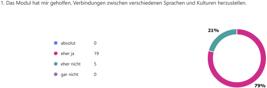
The findings of the self-evaluation show that with the help of the module, the majority of students (79%) felt confident in making connections between different languages and cultures in relation to multi-/transculturalism (Fig. 1).
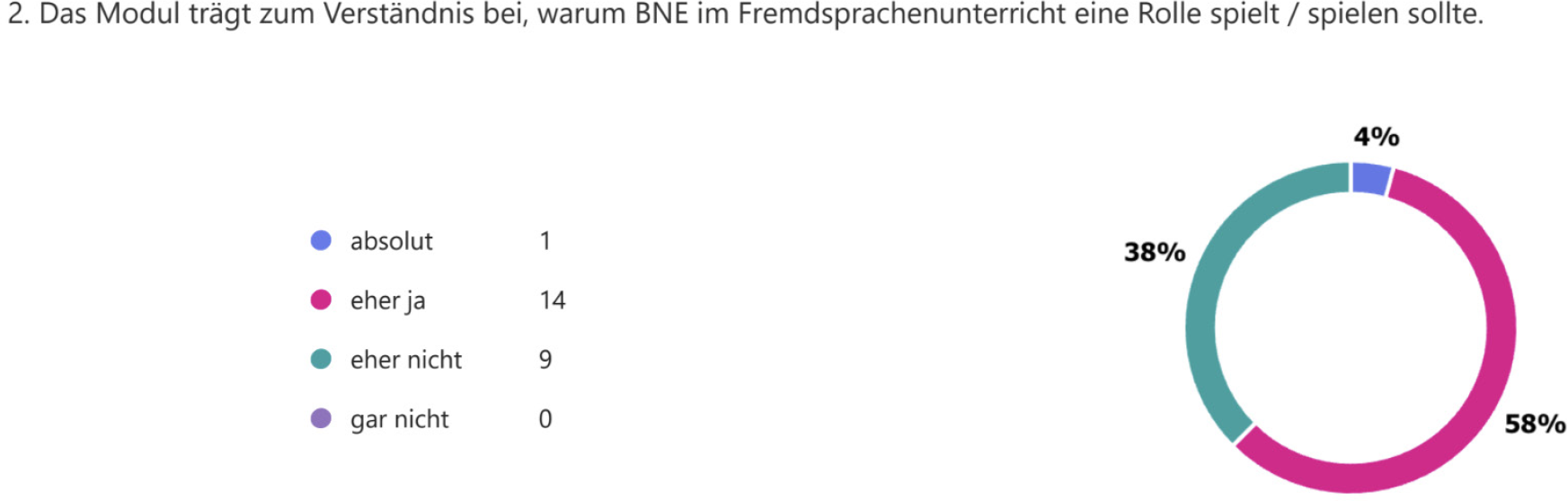
Most students (58%) somewhat felt that the module helped them understand the importance of ESD, while 38% were less convinced, and a very small number (4%) fully acknowledged its role. This indicates a predominantly positive, yet mixed response to the module’s effectiveness in conveying the significance of sustainability in language education (Fig. 2).

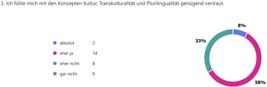
The survey data illustrates students’ familiarity with concepts of culture, transculturality, and plurilingualism. Notably, 58% of students felt somewhat familiar with these concepts, while 33% felt insufficiently familiar. Only 8% felt fully familiar with these topics (Fig. 3). This distribution indicates that while most students had a basic understanding, there was a substantial proportion that might require further education to fully grasp these complex concepts.
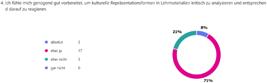
Furthermore, the survey results reveal that a majority of students felt relatively prepared to critically analyze and respond to cultural representations in teaching materials, with 79% of the students feeling sufficiently prepared to analyze cultural representations in coursebooks and respond to them (Fig. 4). Only five students mentioned “rather not” prepared.
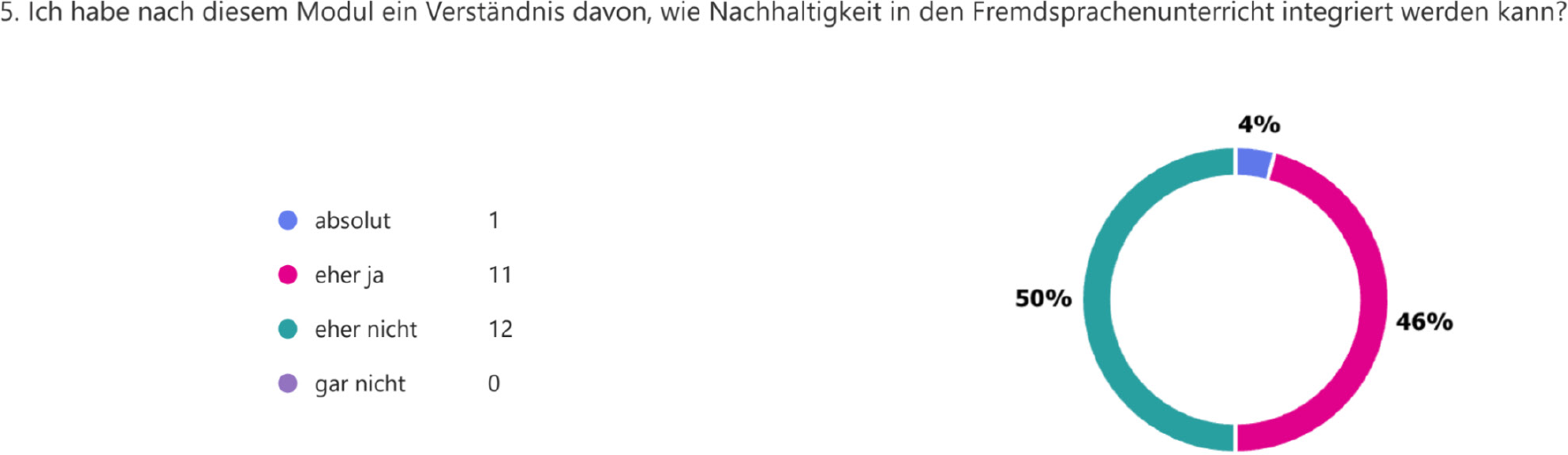
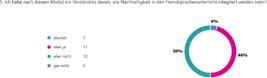
The self-evaluation also shows that half of the respondents did not feel sufficiently prepared to integrate the topic of sustainability into their own foreign language teaching (Fig. 5). Reasons for this included uncertainty in dealing with stereotypes as well as a lack of time and appropriate teaching materials. Three of the students mentioned insecurities in tackling topics like stereotypes or how to address sensitive issues in class.
3.3 Individual Projects
The review of the student projects revealed that many were relevant to the topic of sustainable development. However, the link to sustainability was almost exclusively implicit and related to the target cultures. For example, two projects addressed festivals and traditions in France and in England respectively; with one of them establishing theoretical links to the concept of transculturalism. Another project developed an escape game set in Provence to make pupils discover the cultural particularities of this French region, while another aimed to foster intercultural learning by focusing on stereotypes. One student planned to use a multilingual storyboard to integrate the various languages into the language classroom. In total, 21 projects had implicit links to sustainable development.
It is interesting to note that of all the student projects, only two students explicitly addressed sustainability in their work, and in both cases in relation to environmental issues. One student planned and prepared a CLIL (Content Language Integrated Learning) session on the Aral Sea to discuss environmental issues and another one focused on storytelling with vocabulary related to environmental issues (linked to the topic “The Deep Blue” in the English coursebook). The fact that the only projects that explicitly addressed sustainability did so in relation to environmental aspects suggests that students predominantly associate sustainable development with environmental issues.
This observation highlights a limitation in current perceptions, which is further underscored by the fact that in a large number of the individual projects, the link to ESD was not explicitly made. This suggests that the topic of sustainability in foreign language teaching should be addressed in a more in-depth and also more diverse manner in future implementations, i.e., not only from a cultural perspective.
3.4 Feedback of Module
Insights from the evaluation of the whole module reveal significant progress in understanding and implementing plurilingual strategies. Notably, one student (12.12.24) mentioned: “Links between the two languages are shown explicitly for the first time, even if you don’t teach the two of them. The module reinforces the functional plurilingualism that we are expected to teach.”
Another student (12.12.24) expressed particular appreciation for the bilingual format of the module, stating, “Zweisprachigkeit: I simply adored the two languages in one module. C’était très enrichissant de lier des contenus des deux matières et même les contenus EDD.”
However, it is important to note that these were the only two comments specifically addressing the topic of plurilingualism, suggesting that while there are positive responses, broader feedback on this aspect was limited.
4. DISCUSSION
4.1 Interpretation of Findings
Based on the literature review and the module’s bilingual format, we opted to focus our integration of sustainability on the topics of multi-/transculturalism and plurilingualism. The chosen combination of theoretical inputs and practical analysis of teaching materials aligns with Mason et al.’s (2024) emphasis on the importance of providing teachers with concrete tools and strategies. The positive student feedback on the cultural analysis components suggests that this approach successfully bridges the theory and practice gap that Goller and Rieckmann (2022) identified as a common challenge in ESD implementation.
However, the finding that half of the participants still felt underprepared to integrate sustainability into their teaching practice suggests that the module’s current format may benefit from additional practical components. This aligns with Maijala et al.’s (2023) observation that pre-service teachers often require more structured support and hands-on experience to confidently implement sustainability concepts in their teaching. The two sessions, while efficient in introducing and reviewing key concepts, may need expansion to provide more opportunities for practical application and experimentation with teaching strategies.
The individual project component proved particularly valuable in allowing students to explore sustainability themes within their specific teaching contexts. This personalized approach reflects de la Fuente’s (2022) advocacy for context-specific sustainability integration in language education. However, the observation that many projects did not explicitly reference sustainability suggests the need for more focused guidance to help students make clear connections between language teaching and sustainability concepts. It is important that all dimensions - social, environmental, economics, and, as Payne & O’Neil (2019) suggest, the cultural aspect - are considered. Incorporating these themes throughout the curriculum will not only enhance the relevance of sustainability but also encourage a more integrated approach to understanding and addressing global challenges within educational settings (de la Fuente, 2021).
The finding that 79% of students felt confident in analyzing cultural representations in teaching materials represents an encouraging result regarding our goal of preparing future language teachers for culturally sensitive sustainability education, even if the confidence itself is no guarantee of appropriately handling cultural representations in practice. This is well exemplified by one of the individual projects aiming to raise pupils’ awareness of their own stereotypes about the target cultures, but which would arguably mostly reinforce them or create them in the first place.
The expressed concerns about handling stereotypes reveal an important tension in sustainability education. As highlighted by one student’s reflection on the balancing act of addressing sensitive issues, there remains a challenge in navigating complex cultural discussions. This mirrors findings from Maijala et al. (2023), who identified similar uncertainties among pre-service teachers regarding the treatment of cultural sensitivities in sustainability education.
The finding that half of the participants felt unprepared to integrate sustainability into their teaching warrants particular attention. This hesitation stems from multiple factors: uncertainty in handling stereotypes as mentioned before, time constraints, and a perceived lack of appropriate teaching materials. These challenges align with broader obstacles identified in the literature (Yu et al., 2024; Goller & Rieckmann, 2022), suggesting that these are not isolated issues but systemic challenges in ESD implementation. The lack of appropriate teaching materials, specifically mentioned by participants, reflects a broader challenge in ESD integration. This echoes Mason et al.’s (2024) findings about the importance of developing context-specific teaching tools. The time constraint issue similarly aligns with previous research identifying curriculum overcrowding as a significant barrier to ESD implementation.
The students’ discussions underscore a critical demand for teaching materials that not only present culture but also engage students in critical thinking about cultural complexities. By adopting more comprehensive and nuanced methods, such as integrating authentic materials and employing interdisciplinary strategies, educators can significantly enhance the depth and relevance of cultural education. This would not only address the limitations noted by the students but also equip future educators to foster a more profound and empathetic understanding of global cultures among their students. The student discussions have also proved very valuable in making divergent student attitudes and perceptions visible, both in the context of the analysis of the teaching material and of the discussion about the playground images, as exemplified by a student’s claim, which could be seen as reflecting a certain bias regarding playground standards globally.
Finally, the positive reception of the module’s bilingual delivery format represents a promising direction for ESD in language teacher education. Student comments highlighting the value of connecting content across languages (“c’était très enrichissant”) suggest that the bilingual approach successfully demonstrated the practical application of plurilingual pedagogy. This aligns with recent research emphasizing the importance of multilingual approaches in addressing global sustainability challenges (Mouboua et al., 2024). However, the limited number of specific comments about plurilingualism suggests that this aspect might benefit from more explicit attention in future iterations. The successful instances of language integration demonstrate the potential for multilingual approaches to enhance both language learning and sustainability education, supporting Stein-Smith’s (2016) assertions about the role of multilingualism in addressing global challenges.
4.2 Challenges and Limitations of the Study
This study, while providing valuable insights into the integration of ESD into language teacher education, is subject to several limitations that warrant consideration. One significant challenge is the potential for biases associated with self-reported data. As the study primarily relies on students’ self-assessments and reflections, the accuracy and objectivity of these reports can be influenced by personal biases or social desirability, which may not accurately reflect their true understanding or skills (Podsakoff et al., 2003). Additionally, the reduced number of students that participated in the review session poses another limitation. Furthermore, the audio recordings of the group discussions were not systematically analyzed, as the analysis was limited to the writing down of key takeaways and illustrative examples. It is possible that a more systematic approach to the analysis of the audio recordings would have yielded more nuanced findings. Finally, it should be noted that the study does not take into account students’ prior knowledge on the subject and to what extent other modules that touch on the subject of sustainability might have influenced the collected data, such as the students’ reported estimation of their preparedness to integrate the topic of ESD into their future teaching after this module.
CONCLUSION
This study explored the integration of Education for Sustainable Development (ESD) into pre-service language teacher education through a synergy module combining French and English language didactics. Addressing the initial research question, how can ESD be effectively integrated into pre-service language teacher education in the context of a module on French and English language didactics, our findings provide valuable insights into both the opportunities and challenges of embedding sustainability themes within language teacher education.
The results demonstrate that the cultural analysis of teaching material can serve as an effective entry point for integrating sustainability into language teacher education. The high percentage of students who felt confident in analyzing cultural representations suggests that focusing on cultural aspects provides a tangible way for pre-service teachers to engage with sustainability concepts. Through analysis and critique of cultural representations in language textbooks, the students explored how cultural assumptions and biases can influence pupils’ representations of the target culture. However, as the review of the students’ projects shows, this confidence does not necessarily reflect actual competence in dealing with these issues effectively. Still, the critical examination allowed the students to recognize their responsibility in the development of their students’ cultural awareness. They learned to identify opportunities within their teaching materials to discuss the representation of different cultures.
However, the study also reveals important challenges, particularly the finding that half of participants felt underprepared to integrate sustainability into their teaching practice and the fact that students seemed to primarily associate ESD with environmental issues rather than with cultural aspects. This highlights the need for more comprehensive support structures and a more diversified approach to embedding sustainability across different dimensions of the curriculum.
The plurilingual approach employed in the module shows promise as a method for demonstrating how sustainability themes can transcend language boundaries. Student feedback indicates that this approach not only enriched their understanding of sustainability but also demonstrated practical ways to implement plurilingual teaching strategies.
Based on these findings, we recommend:
-
Extending the number of sessions dedicated to sustainability in language teaching to allow for deeper engagement
-
Developing more specific teaching materials that explicitly connect language learning with sustainability concepts
-
Providing additional support for handling sensitive cultural topics and stereotypes
-
Strengthening the explicit connections between plurilingualism and sustainability education
-
Creating more opportunities for practical application and experimentation with sustainability-focused teaching strategies.
As such, the findings have contributed to a better understanding of how sustainability can be effectively integrated into the context of such a module, while also highlighting the ongoing need for development in this area. As global challenges continue to evolve, preparing language teachers to address sustainability becomes increasingly crucial. The experiences from this module suggest that while our chosen focus on cultural representation in teaching materials provides a valuable entry point, a more comprehensive approach incorporating multiple aspects of sustainability education is needed for future implementations. Through continued refinement of such educational approaches, we can work toward preparing language teachers who are not only linguistically competent but also equipped to contribute to a more sustainable future in their daily classroom practices.
DECLARATION OF AVAILABILITY OF RESEARCH DATA
The research data relating to the participants’ self-evaluation on MS Forms are available via this https://osf.io/hy5ac/?view_only=7f28239250e14498880f25b7752d097d. Students’ individual projects and the audio files of the group discussions cannot be made publicly available due to privacy concerns.
References
-
ARIKAN, A.; ZORBA, M. Raising pre-service English language teachers’ awareness of sustainable development goals through literary texts. International Journal of Sustainability in Higher Education, 2024, pp. 1-15. 10.1108/IJSHE-06-2023-0256.
» https://doi.org/10.1108/IJSHE-06-2023-0256 -
BAKER, W. From intercultural to transcultural communication. Language and Intercultural Communication, 22(3), 2022, pp. 280-293. https://doi.org/10.1080/14708477.2021.2001477
» https://doi.org/10.1080/14708477.2021.2001477 - BILSBOROUGH, K. Sustainability in ELT. Part of the Cambridge Papers in ELT series. Cambridge: Cambridge University Press & Assessment, 2022.
- BLELL, G.; DOFF, S. It takes more than two for this tango: Moving beyond the self/other-binary in teaching about culture in global EFL-classroom. Zeitschrift für Interkulturellen Fremdsprachenunterricht, 19(1), 2014, pp. 77-96.
- Byram, M. From Foreign Language Education to Education for Intercultural Citizenship. Clevedon: Multilingual Matters, 2008.
- BYRAM, M. Teaching and Assessing Intercultural Communicative Competence. Clevedon, UK: Multilingual Matters, 1997.
-
BRAINEE, H. J. Investigating the Impact of Cultural Awareness on Language Learners’ Motivation and Proficiency. Journal of Gender, Culture and Society, 4(1), 2024, pp. 29-38. https://doi.org/10.32996/jgcs.2024.4.1.4
» https://doi.org/10.32996/jgcs.2024.4.1.4 -
CASINADER, N. What Makes Environmental and Sustainability Education Transformative: A Re-Appraisal of the Conceptual Parameters. Sustainability, 13(9), 2021, p. 5100 https://doi.org/10.3390/su13095100
» https://doi.org/10.3390/su13095100 - CHESINI, C., DJURISIC, D., EGLI, I., FISCHER, M.; HUEBER, E. dis donc! 7.: Französischlehrmittel für die 7. Klasse (1. Auflage). LMVZ, 2019.
- CHESINI, C., DJURISIC, D., EGLI, I., FISCHER, M., & HUEBER, E. dis donc! 8.: Französischlehrmittel für die 8. Klasse (1. Auflage). LMVZ, 2020.
-
COUNCIL OF EUROPE. Common European Framework of Reference for Languages: Learning, teaching, assessment - Companion volume Council of Europe Publishing, Strasbourg, 2020. available at: www.coe.int/lang-cefr Accessed on: Dec 2, 2024
» www.coe.int/lang-cefr - DEARDORFF, D. K. Identification and assessment of intercultural competence as a student outcome of internationalization. Journal of Studies in International Education, 10(3), 2006, pp. 241-266.
-
DOWER, N., & WILLIAMS, J. (Eds.). Global Citizenship: A Critical Introduction (1st ed.). Routledge, 2002. https://doi.org/10.4324/9781315023595
» https://doi.org/10.4324/9781315023595 -
DE LA FUENTE, M. (Ed.). Education for Sustainable Development in Foreign Language Learning: Content-Based Instruction in College-Level Curricula (1st ed.). Routledge, 2021. https://doi.org/10.4324/9781003080183
» https://doi.org/10.4324/9781003080183 -
ELLIS, R. Task-based language learning and teaching Oxford University Press.GOLLER, A. & RIECKMANN, M. (2022). What do We Know About Teacher Educators’ Perceptions of Education for Sustainable Development? A Systematic Literature Review. Journal of Teacher Education for Sustainability, 24(1), 2003, pp. 19-34. https://doi.org/10.2478/jtes-2022-0003
» https://doi.org/10.2478/jtes-2022-0003 -
GOSSELIN, D., PARNELL, R., SMITH-SEBASTO, N. J., & VINCENT, S. Integration of sustainability in higher education: Three case studies of curricular implementation. Journal of Environmental Studies and Sciences, 3(3), 2013, pp. 316-330. https://doi.org/10.1007/s13412-013-0130-3
» https://doi.org/10.1007/s13412-013-0130-3 - HALL, E. T. Beyond culture New York: Anchor Press/Double day, 1976.
-
HUBSCHER-DAVIDSON, S.; PANICHELLI-BATALLA, S. Educating for sustainability in language degrees: a tale of 2 case-studies. International Journal of Sustainability in Higher Education, 17(3), 2016, pp. 404-416. https://doi.org/10.1108/IJSHE-10-2014-0146
» https://doi.org/10.1108/IJSHE-10-2014-0146 - JONES, R. H.; RICHARDS, J. C. Creativity in Language Teaching: Perspectives from Research and Practice. New York: Routledge, 2016.
-
LEE, Y.-T.; JUSSIM, L.; MCCAULEY, C. Stereotypes as Categories of Knowledge: Complexity, Validity, Usefulness, and Essence in Perceptions of Group Differences. Advances in Psychological Science. 21 (1). 2013, pp. 1-21. 10.3724/SP.J.1042.2013.00001.
» https://doi.org/10.3724/SP.J.1042.2013.00001 -
MAIJALA, M., HEIKKOLA, L. M., KUUSALU, S.-R., LAINE, P., MUTTA, M.; MÄNTYLÄ, K. Pre-service language teachers’ perceptions of sustainability and its implementation in language teaching. Language Teaching Research, 2023, pp. 1-30. https://doi.org/10.1177/13621688231170682
» https://doi.org/10.1177/13621688231170682 - MASON, M.; SAVVANI, S.; TAYLOR, K. Embedding sustainability into English language teacher-training. Open Scholarship of Teaching and Learning. Vol. 3(2), 2024, pp. 80-95.
-
MLA Ad Hoc Committee on Foreign Languages. Foreign Languages and Higher Education: New Structures for a Changed World. Profession, 2007, pp. 234-245. Available at: https://apps.mla.org/pdf/forlang_news_pdf.pdf Accessed on: November 21, 2024.
» https://apps.mla.org/pdf/forlang_news_pdf.pdf - MOLLISON, J. Playground. Publisher: Aperture Foundation, 2015.
-
MOUBOUA, P. D., ATOBATELE, F. A.; AKINTAYO, O. T. Language as a tool for intercultural understanding: Multilingual approaches in global citizenship education. Magna Scientia Advanced Research and Reviews, 11(1), 2024, pp. 019-030. https://doi.org/10.30574/msarr.2024.11.1.0071
» https://doi.org/10.30574/msarr.2024.11.1.0071 - NORTH, B., PICCARDO, E., GOODIER, T., FASOGLIO, D., MARGONIS, R.; RÜSCHOFF, B. Enriching 21st century language education: The CEFR Companion Volume, examples from practice. Strasbourg: Council of Europe Publishing, 2022.
- NORTON, B.; TOOHEY, K. Identity, language learning, and social change. Language Teaching, 44(4), 2011, pp. 412-446.
-
PAYNE, L.; O’NEIL, J. Cultural sustainability in higher education. In W. Leal Filho (Ed.), Encyclopedia of sustainability in higher education. Berlin: Springer Publishing, 2019. https://doi.org/10.1007/978-3-319-63951-2_109-1
» https://doi.org/10.1007/978-3-319-63951-2_109-1 -
PODASKOFF, P. M., MACKENZIE, S. B., LEE, J.-Y.; PODASKOFF, N. P. Common method biases in behavioral research: A critical review of the literature and recommended remedies. Journal of Applied Psychology, 88(5), 2003, pp. 879-903. https://doi.org/10.1037/0021-9010.88.5.879
» https://doi.org/10.1037/0021-9010.88.5.879 - RICHARDS, J. C.; RODGERS, T. S. Approaches and methods in language teaching (3rd ed.). Cambridge University Press, 2014.
- RIECKMANN, M. Chapter 2 - Learning to transform the world: key competencies in ESD, 2018. pp. 39-59. In: LEICHT, A., J. HEISS, & W. J. BYUN (Hrsg.): Issues and trends in Education for Sustainable Development, Paris: UNESCO.
- RIECKMANN, M. Emancipatory and transformative Global Citizenship Education in formal and informal settings: Empowering learners to change structures. In: Tertium Comparationis. Journal für International und Interkulturell Vergleichende Erziehungswissenschaft 26 (2), 2020, pp. 174-186.
- RIECKMANN, M. Education for sustainable development in teacher education: Perspectives and challenges in practice and research. Conference Paper Universität Vechta, 2022.
-
STEIN-SMITH, K. The Role of Multilingualism in Effectively Addressing Global Issues: The Sustainable Development Goals and Beyond. Theory and Practice in Language Studies, 6(12), 2016, p. 2254. https://doi.org/10.17507/tpls.0612.03
» https://doi.org/10.17507/tpls.0612.03 - THAPA, S., Assessing intercultural competence in teacher education: a missing link. Visions for Intercultural Music Teacher Education 2020, pp. 163-176.
-
UNESCO. Education for Sustainable Development Goals: Learning Objectives, 2017. Available at: https://unesdoc.unesco.org/ark:/48223/pf0000247444 Accessed on: November 29, 2024.
» https://unesdoc.unesco.org/ark:/48223/pf0000247444 -
UNESCO Global Citizenship Education: Topics and learning objectives. Paris: UNESCO, 2015. Available at: https://unesdoc.unesco.org/ark:/48223/pf0000232993 Accessed on: November 29, 2024.
» https://unesdoc.unesco.org/ark:/48223/pf0000232993 -
UNESCO. Roadmap for Implementing the Global Action Programme on Education for Sustainable Development, 2014. Available at: https://unesdoc.unesco.org/ark:/48223/pf0000230514 Accessed on: November 29, 2024
» https://unesdoc.unesco.org/ark:/48223/pf0000230514 -
UNESCO. Unpacking Sustainable Development Goal 4: Education 2030; guide, 2016. Available at: https://unesdoc.unesco.org/ark:/48223/pf0000246300 Accessed on: November 29, 2024
» https://unesdoc.unesco.org/ark:/48223/pf0000246300 - WILLIAMS LEPPICH, L.; GIANCOLA-BÜRER, C. Open World 1 (1. Auflage). Klett und Balmer Verlag, 2018.
- WILLIAMS LEPPICH, L.; GIANCOLA-BÜRER, C. Open World 2 (1. Auflage). Klett und Balmer, 2019.
- WILLIAMS LEPPICH, L., GIANCOLA-BÜRER, C., RAMSEY, G.; KOCHER-KLICKER, J. Open World 3 (1. Auflage). Klett und Balmer, 2020.
- WELSCH, W. Transculturality: The Puzzling Form of Cultures Today. In: Spaces of Culture: City, Nation, World. Eds. Mike Featherstone und Scott Lash. London: SAGE, 1999.
- WOLF, R. Spektrum des Selbst im interkulturellen Kontext. Gloria Anzaldúa: Borderlands/La Frontera. The New Mestiza. Hamburg: Diplomica Verlag, 2008.
-
YILMAZ FINDIK, L., BAYRAM, İ.; CANARAN, Ö. Pre-service English language teachers’ conceptions of sustainable development: a case from Turkish higher education context. International Journal of Sustainability in Higher Education, Vol. 22 No. 2, 2021. pp. 423-456. https://doi.org/10.1108/IJSHE-06-2020-0202
» https://doi.org/10.1108/IJSHE-06-2020-0202 -
YU, B., GUO, W. Y.; FU, H. Sustainability in English Language Teaching: Strategies for Empowering Students to Achieve the Sustainable Development Goals. Sustainability, 16(8), 2024, p. 3325 https://doi.org/10.3390/su16083325
» https://doi.org/10.3390/su16083325 -
ZAİMOĞLU, S. Exploring Research Trends in Sustainability in English Language Education from 2014 to 2024: A Bibliometric Analysis. Journal of Language Research (JLR), 8(2), 2024, pp. 1-18. https://doi.org/10.51726/jlr.1537547
» https://doi.org/10.51726/jlr.1537547 -
ZYGMUNT, T. Language Education for Sustainable Development. Discourse and Communication for Sustainable Education, 7(1), 2016, pp. 112-124. https://doi.org/10.1515/dcse-2016-0008
» https://doi.org/10.1515/dcse-2016-0008