
 PERCEPTIONS OF FAMILY MEMBERS OF ADULT INDIVIDUALS REGARDING PRE-HOSPITAL EMERGENCY CARE: A THEMATIC ANALYSIS
ABSTRACT
Objective: to understand the perceptions of family members of adult patients regarding pre-hospital emergency care, focusing on coping with the emergency situation, emotional experiences, and the support received during care.
Method: this is a descriptive study with a qualitative approach based on the principles of Family Systems Theory and Family-Centered Care, developed with people who accompanied the emergency care of their loved one provided by an advanced support team from the Brazilian Mobile Emergency Care Service (Serviço de Atendimento Móvel de Urgência - SAMU-192). Data collection took place in a municipality in the Southern region of Brazil between September and November 2024, through interviews conducted with the support of a semi-structured script. The data were organized and analyzed using Thematic Analysis.
Results: a total of 12 family members participated. Two themes emerged from the narratives: “Between despair and relief: family perceptions of suffering and care in the pre-hospital context” and “Family members’ perception of the reception and accompaniment of pre-hospital care for a family-centered approach.”
Conclusion: family members reported experiences marked by urgency and suffering, but also perceived SAMU-192 as an essential resource in crisis situations. They experienced feelings such as tranquility, comfort, and security while accompanying the care, although not all care was equally satisfactory. The findings highlight the need for professional training and new protocols which promote pre-hospital emergency care from the perspective of Family-Centered Care.
DESCRIPTORS:
Emergency medical services; Emergency treatment; Family; Family nursing; Family relations
RESUMO
Objetivo: compreender as percepções dos familiares de pacientes adultos sobre o atendimento emergencial pré-hospitalar, com foco no enfrentamento da situação de urgência, nas vivências emocionais e no acolhimento recebido durante o cuidado.
Método: pesquisa descritiva, de abordagem qualitativa, pautada nos princípios da Teoria dos Sistemas Familiares e do Cuidado Centrado na Família, desenvolvida com pessoas que acompanharam o atendimento emergencial de seu ente querido realizado por uma equipe de suporte avançado do SAMU-192. A coleta de dados ocorreu em um município da região Sul do Brasil, entre setembro e novembro de 2024, por meio de entrevistas, conduzidas com o apoio de um roteiro semiestruturado. Os dados foram organizados e analisados à luz da Análise Temática.
Resultados: participaram doze familiares. Das narrativas emergiram dois temas: “Entre o desespero e o alívio: percepções familiares sobre o sofrimento e o socorro no contexto pré-hospitalar” e “Percepção dos familiares acerca do acolhimento e acompanhamento do atendimento pré-hospitalar para uma abordagem centrada na família”.
Conclusão: os familiares relataram experiências marcadas pela urgência e sofrimento, mas também perceberam o SAMU-192 como recurso essencial em situações de crise. Ao acompanhar a assistência, vivenciaram sentimentos como tranquilidade, conforto e segurança, embora nem todos os atendimentos tenham sido igualmente satisfatórios. Os achados evidenciam a necessidade de capacitações profissionais e de novos protocolos que favoreçam a promoção do cuidado pré-hospitalar de urgência sob a perspectiva do Cuidado Centrado na Família.
DESCRITORES:
Serviços médicos de emergência; Tratamento de emergência; Família; Enfermagem familiar; Relações familiares
RESUMEN
Objetivo: comprender las percepciones de los familiares de pacientes adultos sobre la atención de emergencia prehospitalaria, centrándose en el afrontamiento de la situación de emergencia, las experiencias emocionales y el apoyo recibido durante la atención.
Método: investigación descriptiva, con enfoque cualitativo, basada en los principios de la Teoría de Sistemas Familiares y la Atención Centrada en la Familia, desarrollada con personas que acompañaron la atención de emergencia de su ser querido, proporcionada por un equipo de apoyo avanzado del SAMU-192 (Servicio Móvil de Atención de Emergencia Brasileño). La recolección de datos se realizó en un municipio de la región sur de Brasil, entre septiembre y noviembre de 2024, mediante entrevistas realizadas con el apoyo de un guion semiestructurado. Los datos se organizaron y analizaron mediante Análisis Temático.
Resultados: participaron doce familiares. Dos temas emergieron de las narrativas: “Entre la desesperación y el alivio: percepciones familiares del sufrimiento y la asistencia en el contexto prehospitalario” y “Percepción de los familiares sobre la recepción y el acompañamiento de la atención prehospitalaria para un enfoque centrado en la familia”.
Conclusion: los familiares relataron experiencias marcadas por la urgencia y el sufrimiento, pero también percibieron el SAMU-192 como un recurso esencial en situaciones de crisis. Mientras acompañaban la asistencia, experimentaron sentimientos de tranquilidad, comodidad y seguridad, aunque no todos los cuidados fueron igualmente satisfactorios. Los hallazgos resaltan la necesidad de capacitación profesional y nuevos protocolos que promuevan la atención de emergencia prehospitalaria desde la perspectiva de la Atención Centrada en la Familia.
DESCRIPTORES:
Servicios médicos de emergencia; Tratamiento de emergencia; Familia; Enfermería familiar; Relaciones familiares
INTRODUCTION
The presence of family during critical and emergency care has sparked increasing interest among researchers and healthcare professionals in various regions of the world1-5. The literature indicates that family participation in this context can bring numerous benefits to patients, such as feelings of security, comfort, tranquility, emotional support, and affection, favoring coping with the situation1-2. Being present reduces stress and anxiety for family members, and provides emotional relief by knowing that everything possible has been done and by awakening the feeling of “being with” their loved one, including in the dying process2-3,6. In addition, many feel useful by providing relevant information to healthcare professionals, which can be crucial for adequate care2,5. In turn, professionals report that the presence of family helps them remember that the patient is not just a disease, but a person who “belongs to someone”, which contributes to more humanized care and increased satisfaction with the care provided2,4.
Several international organizations7-11 recommend and encourage including family in the care provided to patients in critical and emergency situations. Despite this, the presence of family members during care is still incipient, irregular and poorly systematized, especially for adult patients2 and/or in the pre-hospital context12-13. The fear that family members will act as evaluators of the quality of care stands out among the reasons for this resistance, which could increase the risk of legal liability14. Other arguments include the fear that their presence will interfere with the performance of procedures, cause emotional trauma to family members, compromise confidentiality, hinder teaching students and residents, intensify the stress of the team and amplify the feeling of helplessness in the face of the patient’s death14-15.
However, studies have shown that these concerns are not confirmed in practice2,4-15. It is therefore necessary for professionals in the Mobile Emergency Care Service (Serviço de Atendimento Móvel de Urgência - SAMU-192) to overcome paternalistic and protective discourses which hinder family presence and recognize that emergency situations commonly generate reactions and feelings in families, such as nervousness, despair, sadness, worry, and fear. These experiences reverberate within the family system, interfering with its dynamics, functionality, balance, and homeostasis2,5,15.
Based on the assumptions of Family Systems Theory, it is understood that the family constitutes a complex system whose members dynamically and synergistically interact with each other, allowing us to understand that the illness of one of its members affects the entire unit16. Given this, it becomes essential to consider the family context in patient care, particularly in situations of fragility and uncertainty. Against this backdrop, Family-Centered Care (FCC) emerges as an approach which promotes effectively including the family in the care process, benefiting patients, family members, and professionals17,18.
According to the Institute for Patient- and Family-Centered Care, FCC proposes an innovative approach to planning, executing, and evaluating healthcare based on recognizing the family as a partner in care, respect for diversity, appreciation of individualities, sharing information, and encouraging family support and the support network17,18. Thus, it is expected that healthcare, regardless of context and level of care, will include and involve patients’ families.
The literature has explored the perspective of SAMU-192 healthcare professionals regarding the presence of the family in the direct accompaniment of care12,13. On the other hand, the experiences, perceptions, and needs of family systems remain under-investigated and poorly understood in this specific framework. Given the above, exploring this topic is fundamental to improving healthcare, supporting public policies that are more sensitive to the needs of families, and guiding the (re)formulation of institutional protocols which favor FCC. The study is therefore justified by the identified scientific gap, as well as by its potential to generate concrete transformations in care practice, contributing to improve care and strengthen ties between emergency services and the communities they serve.
Thus, the objective of this study was to understand the perceptions of family members of adult patients regarding pre-hospital emergency care, focusing on coping with the emergency situation, emotional experiences, and the support received during care.
METHOD
This is a descriptive study with a qualitative approach conducted with family members of patients who accompanied the emergency care within the scope of the pre-hospital service provided by SAMU-192. The references of Family-Centered Care (FCC)17 and Family Systems Theory16 were used for theoretical basis. The study was conducted according to the recommendations of the Consolidated Criteria for Reporting Qualitative Research (COREQ)19.
The study was developed in a city which is part of the Health Consortium of Municipalities of Western Paraná (Consórcio de Saúde dos Municípios do Oeste do Paraná - CONSAMU), located in the Southern Region of Brazil. SAMU-192, the headquarters of the investigation, has a fleet composed of four advanced life support units, including an aircraft and eight basic life support units, three of which are motorcycles. The services are conducted in public places or within the home, and account for an average of 3,500 occurrences/month, with the main causes being clinical and traumatic injuries. The study setting in all cases was the home, the location where the emergency care occurred.
The previously defined inclusion criteria were: being a family member and having accompanied the care provided by SAMU-192 to the adult patient in a clinical or traumatic condition, and being 18 years of age or older. The exclusion criteria were: presenting a communication barrier (deaf, dyslalic, immigrant or refugee who did not master the Portuguese language) and/or being emotionally fragile due to the risks of intensifying suffering. It is worth noting that no family member approached was excluded based on these criteria, nor did they refuse to participate in the study.
Data collection was performed between September and November 2024, and was divided into three stages, as detailed in Chart 1.
The recorded interviews were transcribed in full for data analysis, and the audio files were subsequently destroyed. However, the transcripts were not presented to the participants due to time constraints. Therefore, they were asked at the end of each interview if they wished to add further information to the content or object to the analysis of any part of the interview. There were no objections to the complete content analysis, so the methodological process of Thematic Analysis20 was followed, as shown in Chart 2.
The researchers delimited the data collection and analysis stage based on the theoretical saturation of the data. At that point, it was identified that additional interviews were not adding new information relevant to understanding the phenomenon under investigation21. The interviews were conducted by the same researcher to ensure methodological rigor, guaranteeing standardization in the approach to the participants. All statements were audio-recorded and transcribed in full, preserving the fidelity of the narratives. An audit trail was maintained with a view to credibility and confirmability, consisting of systematized records of all stages of the investigative process, from data collection planning to analytical decisions, in order to enable traceability and verification, regardless of the procedures adopted. Reliability was reinforced by the meticulous description of the methodological path, which made it possible to replicate the study in similar situations. Transferability was ensured by the detailed characterization of the scenario and the participants, allowing readers and researchers to assess the applicability of the findings in other realities.
Furthermore, considering that the lead investigator worked as a nurse in the study setting, reflexivity strategies were adopted to mitigate possible biases arising from this prior involvement. Thus, previously constructed perceptions and expectations regarding the phenomenon under study were identified and recorded before and during data collection, and kept in suspense to prevent them from interfering with the approach to the participants and the conduct of the interviews. This reflexive movement was continuously resumed during the data analysis and interpretation, ensuring that understandings primarily emerged from the participants’ narratives, and not from the researcher’s assumptions.
The study followed the ethical precepts contained in Resolutions No. 466/2012 and No. 510/2016 of the National Health Council, and was approved by the Research Ethics Committee with Human Beings of the State University of Maringá (UEM). The following coding was adopted in order to guarantee confidentiality of the participants’ identities: degree of family relationship with the patient, followed by an Arabic numeral (e.g., “Mother 1”; “Father 2”; “Granddaughter 3”; “Son 4”).
RESULTS
A total of 12 family members of adult patients who experienced pre-hospital care in a city in southern Brazil participated in the study. Data regarding the characteristics of the family members can be seen in Figure 1.

Characterization of the family members who accompanied the study during their care. Cascavel, Paraná, Brazil - 2024 (N=12).
The patients attended by SAMU-192 were between 18 and 70 years old, seven of whom were female. The main health problems presented were: stroke, psychiatric episode, cardiorespiratory arrest, seizure, respiratory distress, and decreased level of consciousness. It was observed that all patients were referred to a hospital after their clinical condition stabilized, and no deaths occurred at the scene of the incident.
The following themes emerged from the data analysis: “Between despair and relief: family perceptions about suffering and care in the pre-hospital context” and “Family perceptions about the reception and follow-up of pre-hospital care for a family-centered approach”.
Between despair and relief: family perceptions about suffering and care in the pre-hospital context
The accounts of family members reveal a set of experiences marked by urgency, suffering, and the perception of SAMU-192 as an essential resource in crisis situations. The reports show that the service was largely activated due to the perception of imminent risk to the physical integrity of the patient or the family members themselves, which generated a sense of powerlessness in those involved. Family members describe agitation and aggression episodes which were out of control in cases related to mental disorders, highlighting the seriousness of the moment and the complexity that families experience in daily care. SAMU-192 was called as a last resort after failed attempts to manage the situation on their own.
My son has schizophrenia and doesn’t follow his treatment properly. He stops taking his medication and drinks beer. Because of this, from time to time, he has outbursts, starts to get aggressive, wants to hit us. It’s very complicated. After we managed to get a request for involuntary hospitalization, we called SAMU (Father 10).
My son has been diagnosed with autism since he was little. I was taking him to school when he started to get agitated and aggressive; I had never witnessed a crisis like this before. I believe it must have been something on the street that triggered it. Since I couldn’t calm him down, I had to call SAMU (Mother 7).
It was in the afternoon. We were at home and my daughter-in-law called me because my son was having a meltdown. He uses drugs and mixed them with alcohol. When he does that, he gets very agitated and aggressive. I tried to talk to him, but he wouldn’t let me. That’s when I called SAMU (Father 11).
In clinical emergency episodes, especially involving older mothers, the reports show a sudden deterioration in health status, with signs such as loss of consciousness, respiratory distress, cold skin, and acute neurological changes. In this context, calling SAMU-192 was associated with the urgency of obtaining specialized care, demonstrating the family’s recognition of the severity of the signs and symptoms presented. The narrative of these moments reveals the overall nature of the family system, showing that there was tension and fear among the different members, leading to a rapid decision-making process.
It was after lunch. I was getting ready to go back to work. I went to the bathroom and, when I returned to the living room, I noticed my mother feeling unwell on the sofa. She was lying there. I called her and she didn’t answer. Then she started to get cold, purple, and her breathing was very slow. I immediately called [SAMU-192] (Daughter 8).
We were having lunch as a family when I noticed that my mother started to feel unwell, she had difficulty speaking to us, one side of her body became paralyzed, and her mouth drooped. We were all worried, and that’s when we called SAMU (Daughter 2).
We were at home talking, and my mother was in her room when I heard a very soft voice calling me. I knew it was her. When I arrived, she said she was short of breath, having difficulty breathing, and her skin was turning cold and purple. I was desperate. At that moment, I called SAMU (Daughter 4).
Based on the statements, it is identified that the homeostasis of family systems was threatened by the critical and emergency health situation of one of its members. Thus, the perceptions of the interviewees were marked by a strong emotional charge during the waiting time for the arrival of SAMU-192. The accounts thus highlight the circularity of family relationships, showing that intense feelings of anguish, despair, anxiety, and helplessness were present in the different members in the face of the worsening clinical condition of a loved one.
We were distressed, worried about what had happened to our mother. It was a horrible feeling. I didn’t know how I could help until the team arrived. It was very desperate (Daughter 5).
I was nervous because my mother wasn’t responding and was getting cold and purple. Then, anxiety and despair hit me because I had called for help, but it wasn’t arriving. Until I saw them entering the house to provide care (Daughter 8).
Time was experienced subjectively and in an extended way in these circumstances, described as an “eternity”, revealing how waiting can intensify emotional suffering. The feeling of not knowing how to act or of not having the resources to deal with the situation generated a feeling of vulnerability, especially since it involved close people in a state of acute fragility.
It felt like an eternity until they arrived. I was very worried about my daughter. I don’t know if they arrived quickly or slowly. The first thing I did was pick her up and take her to the paramedics. I was worried, but I tried to calm down as they examined her (Mother 12).
I was distressed. I hadn’t seen my mother in that situation. I felt desperate, and the ambulance still hadn’t arrived. It seemed like it took a long time, until I heard someone calling from afar and I began to calm down and feel relieved (Daughter 2).
At the same time, the narratives point to a symbolic role of the arrival of SAMU-192 as a milestone of emotional transformation. The siren in the distance, the presence of the professionals, and the start of the service brought relief, security, and the perception that specialized help was finally present. This moment served as a breathing point in the family’s experience of the crisis, restoring, albeit partially, the feeling of control over the situation. The statements show that SAMU represented a network of emotional support for family systems beyond technical assistance, acting as a presence that shares the weight of the urgency experienced.
I was worried. It seemed like time wasn’t passing. My grandmother was unwell, and SAMU wasn’t arriving. Until I heard the siren from afar, and I began to feel relieved: I had someone to count on, someone to share that moment with (Granddaughter 3).
Family perceptions about the reception and follow-up of pre-hospital care for a family-centered approach
The accounts reveal the globality of the family system and a profound relational and affective dimension in the experience of family members during pre-hospital care. This thematic core highlights feelings of presence, support, and emotional significance attributed to the act of “being with” the loved one in a moment of vulnerability. Physical presence is not only understood as witnessing the situation, but as a form of active care, a way of communicating protection, solidarity, and love, even in the face of suffering and helplessness from the severity of the clinical picture.
The main thing is being close to her, being able to be present at that moment, even if she wasn’t responding, I was present. I think that, in some way, I can show that I was rooting for her (Daughter 6).
The accounts also express a movement of re-signification of the experience itself: being present is perceived as a gesture of strength, acceptance, and even personal fulfillment. By describing themselves as “fortress” or by stating that they “helped and did good,” the participants attribute meaning to their actions, even if limited from a technical point of view. Thus, circularity of the family bond is reaffirmed as an essential element in emergency situations, functioning as an emotional anchor. It was therefore identified that care transcends the physical and clinical aspect, and takes on symbolic and affective contours that are fundamental to experiencing the critical moment.
I was by my son’s side, giving him confidence and tranquility at that moment, trying to calm him down. I felt like a fortress, a safe haven, so that he could feel protected (Mother 7).
I felt a sense of relief and calm during the consultation. Being able to help someone we love, when they are unable to win the fight against addiction, made me reflect on the good I am doing for them and for myself. It was gratifying (Father 10).
It is worth noting that presence can be understood as a way to improve coping with illness in a loved one in the family system.
It was very good to be by the side of someone we love, even more so in moments of illness, which we never expect to happen to us. I believe that being with our family can bring about better coping during this period of illness, a sense of confidence (Daughter 5).
Another point observed was in situations where there was no family integration during the care due to the unfavorable emotional condition of the family member and/or the clinical condition of the patient.
That day, my son wasn’t feeling very well. I had tried to talk to him numerous times to get him to come for treatment, but without success. When the team arrived, I told them it would be difficult to talk to him, and I stepped away, as my presence could further agitate him and disrupt the treatment (Father 10).
It is also reiterated that the interviewees felt welcomed when the professionals talked about the patient’s clinical condition, explained the treatment, or requested information. Being able to accompany the treatment and inform the health professionals was perceived as rewarding by the family members and promoted a sense of belonging in them.
There were about six paramedics at my house. They were talking to me at all times, telling me what they were doing and explaining each medication administered. It made me feel very calm during the treatment. I felt present (Mother 1).
I was with the team during the treatment, helping with whatever they asked me, to find out what they had doubts about. It was rewarding to be present, because I was with my father, even though he couldn’t speak, I was close (Son 9).
I felt safe, like I belonged during the care. I could see everything they were doing, the assessment they made. It was very good (Daughter 2).
It is also important to note that the participants emphasized the need for a family-centered approach, advocating for the inclusion of the family in decisions and care actions, especially during critical moments. This was understood as relevant, as they highlighted that family presence has an emotional regulation function, both for the patient and for the family member. This reveals the emotional interdependence between family members.
The team that attended my son was very assertive when they allowed me to participate in the care. They knew they would need my presence for him to cooperate with the care. I was serving as support, security, and tranquility for my son, enabling more appropriate care (Mother 7).
Being with him during the care gave me a sense of security, comfort, and closeness. I was helping him in some way. I believe that conducting this care without a family member nearby would not bring as many benefits (Son 9).
DISCUSSION
The results of this study enabled us to identify the main perceptions and experiences lived from the beginning of the health problem until the emergency care from the accounts of family members. It became evident that maintaining family ties during this process is perceived as something necessary and beneficial both for the patient and for the family members, especially when adequate support from the health team is observed during the care.
It was found that the team’s activations predominantly occurred due to disorders of clinical origin, including cardiac, neurological, respiratory, and mental conditions. This corroborates studies conducted in pre-hospital care in Denmark and Sweden, which pointed out that these are the main causes of pre-hospital emergency care22,23.
Family members reported that their presence to provide care in cases of psychiatric episodes acted as the first way to demonstrate love, care, well-being, and protection for both themselves and for the patient. These reports suggest that psychiatric symptoms in crisis situations, aggravated by emotional triggers and the use of substances such as alcohol and drugs, intensify the clinical picture, which is a situation already observed in studies conducted in Canada and the United States24,25.
The reports also showed that the family system as a whole was responsible for the experience by the different family members of negative feelings such as worry, despair, anguish, and nervousness, partly resulting from a lack of understanding of the clinical picture. There was an intensification of these feelings in the moments leading up to the arrival of the SAMU-192 team. There was even a subjective perception of time dilation, as if there were an excessive interval between calling for help and the arrival of the care team. It is known that a lack of understanding or knowledge of the health condition, associated with waiting for care, contributes to develop stress and worry, which interferes with the perception of waiting time for help26.
Feelings of distress were only minimized with the arrival and intervention of professionals, giving way to a perception of calm, control, and relief. The dynamics of family relationships reveal a significant interdependence among its members, which tends to intensify in the face of health problems. In this context, accompanying the care process emerges as a factor which contributes to the reassurance of family members27. Incidentally, being present during the care reinforces the role of the family member as emotional support, facilitating information transmission about the clinical picture to the team and contributing to the acceptance of outcomes, even in cases of death15,27.
On the other hand, it is necessary to consider that the difficulties in implementing FCC in the emergency and pre-hospital setting occur due to a lack of clarity and understanding of the concept on both the part of the teams and the family members themselves. In addition, organizational restrictions and the absence of specific institutional protocols hinder the invitation for families to be present during care28. In contrast, family members who experienced this possibility reported consistent feelings of tranquility, security, and calm, demonstrating that an approach which integrates the patient’s and their family’s needs contributes to improved healthcare.
In this sense, adopting practices based on the FCC philosophy has demonstrated positive results, including in reducing symptoms of anxiety, depression and post-traumatic stress disorder29. Similarly, patients’ families benefit from an attitude of listening, respect and courtesy, facilitating information exchange, sharing decision-making, establishing trusting relationships with the health team and consequently improved care outcomes30.
However, it is necessary to consider that cases involving the participation of family members in decision-making with the health team can lead to facing challenges at times. This is because the desires and demands of families regarding treatment and a cure may differ from the therapeutic prognosis established by professionals. In turn, this reveals the need for teams to be properly trained and for services to develop specific institutional protocols for understanding that families are complex and inseparable systems, leading to the application of FCC in the pre-hospital environment15. Disseminating and deepening this topic is essential for building strategies which enable a systematic incorporation of this approach within the SAMU-192.
This study has limitations. One of them relates to the time interval between the occurrence of the event and the interviews. In some cases, they took place days or even weeks after the experience. This may have introduced a forgetful bias. However, the accounts presented striking and detailed experiences, offering significant contributions to recognizing the importance of family participation in the context of pre-hospital emergency care. Another limitation refers to the fact that most of the interviewees were female, which may impose a gender perspective on the data. However, it is generally women within family systems who are involved in the direct care of people with health needs, so a female predominance was expected. In any case, the researchers endeavored to also add male participants so that their perceptions would be considered to some extent. Finally, the fact that the interviewer was part of the SAMU (Mobile Emergency Care Service) team that provided the care may have influenced the family members’ responses, especially if there was dissatisfaction with any procedure/attitude on the part of the professionals. However, it was emphasized at the beginning of the interview that the information provided would be treated with the utmost confidentiality and would not affect future care, if necessary.
Thus, the results offer timely and critical insights into the family system’s participation in the care provided by SAMU-192, enabling to develop new strategies for approaching patients and their families by pre-hospital health services and their professionals. This highlights the need to expand the training and development of healthcare professionals, as well as to develop protocols which ensure effective implementation of the Family Care Center (FCC) in various care settings.
CONCLUSION
The findings presented herein reveal that activation of SAMU-192 in crisis situations occurs when there is a perceived imminent risk to the life or integrity of the patient and their family. The shared experiences indicate that the service is seen as a fundamental resource when personal and family resources are exhausted. The situations described express a moment of emotional destabilization and helplessness, in which the emergency response represents the beginning of technical care, as well as emotional support in the face of uncontrollable situations.
Family members reported intense experiences of anguish, anxiety, and despair during the waiting time for care, aggravated by the uncertainty and urgency of the situation. The arrival of SAMU-192, symbolically marked by the siren and the presence of the professionals, represented an emotional breakthrough which brought relief, a feeling of being welcomed, and partial restoration of control. Beyond the technical aspects, the presence of the team was perceived as a gesture of shared care, reinforcing the symbolic and affective role of healthcare professionals in critical moments.
Additionally, the possibility of accompanying emergency care was experienced as an act of mutual care, reaffirming the value of the family system’s presence as a support and coping element. The results suggest that practices based on a family-centered approach can promote greater bonding, emotional security, and care. Indeed, it is recommended that future research analyze the impacts of family presence in the pre-hospital care context from a quantitative perspective in terms of professional performance, clinical outcome, and psycho-emotional effects on family members. Finally, the limitations and potential of the active inclusion of family members in the care process in urgent and emergency situations can be explored from a qualitative perspective.
REFERENCES
-
1. Tíscar-González V, Gea-Sánchez M, Blanco-Blanco J, Pastells-Peiró R, Ríos-Briz ND, Moreno-Casbas MT. Witnessed resuscitation of adult and paediatric hospital patients: An umbrella review of the evidence. Int J Nurs Stud [Internet]. 2021 [cited 2025 Jul 10];113:103740. Available from: https://doi.org/10.1016/j.ijnurstu.2020.103740
» https://doi.org/10.1016/j.ijnurstu.2020.103740 -
2. Barreto MS, Garcia-Vivar C, Silva TP, Girardon-Perlini NMO, Marcon SS. A Corbin and Strauss grounded theory on the experiences of patients, relatives, and health professionals about the family presence during emergency care. Adv Nurs Sci [Internet]. 2022 [cited 2025 Jul 10];45(1):E1-14. Available from: https://doi.org/10.1097/ANS.0000000000000390
» https://doi.org/10.1097/ANS.0000000000000390 -
3. Powers K, Duncan JM, Twibell KR. Family support person role during resuscitation: A qualitative exploration. J Clin Nurs [Internet]. 2023 [cited 2025 Jul 10];32(3-4):409-21. Available from: https://doi.org/10.1111/jocn.16248
» https://doi.org/10.1111/jocn.16248 -
4. Douglas CA, Smith MR. Family presence during resuscitation: Perceptions and confidence of intensive care nurses in an Australian metropolitan hospital. Aust Crit Care [Internet]. 2024 [cited 2025 Jul 10];37(2):295-300. Available from: https://doi.org/10.1016/j.aucc.2023.07.007
» https://doi.org/10.1016/j.aucc.2023.07.007 -
5. Abdollahimohammad A, Rahnama M, Firouzkouhi M. Experiences of family members when accompanying patients in intensive care units: A qualitative study. Nurs Crit Care [Internet]. 2024 [cited 2025 Jul 10];29:777-84. Available from: https://doi.org/10.1111/nicc.13058
» https://doi.org/10.1111/nicc.13058 -
6. Afzali Rubin M, Svensson TLG, Herling SF, Jabre P, Møller AM. Family presence during resuscitation. Cochrane Database Syst Rev [Internet]. 2023 [cited 2025 Jul 12];5:CD013619. Available from: https://doi.org/10.1002/14651858.CD013619.pub2
» https://doi.org/10.1002/14651858.CD013619.pub2 -
7. Bradford JY, Camarda A, Gilmore L, Horigan AE, Kaiser J, MacPherson-Dias R, et al. ENA clinical practice guideline synopsis: Family presence during resuscitation and invasive procedures. J Emerg Nurs [Internet]. 2024 [cited 2025 Jul 12];50(3):463-8. Available from: https://doi.org/10.1016/j.jen.2023.09.004
» https://doi.org/10.1016/j.jen.2023.09.004 -
8. Halm MA, Ruppel H, Sexton JR, Guzzetta CE. Facilitating family presence during resuscitation and invasive procedures throughout the life span. Crit Care Nurse [Internet]. 2024 [cited 2025 Jul 15];44(2):e1-13. Available from: https://doi.org/10.4037/ccn2023733
» https://doi.org/10.4037/ccn2023733 -
9. Australian and New Zealand Committee on Resuscitation - ANZCOR. Guideline 10.6 - Family presence during resuscitation [Internet]. 2021 [cited 2025 Jul 15]. Available from: https://www.anzcor.org/assets/anzcor-guidelines/guideline-10-6-family-presence-during-resuscitation-235.pdf
» https://www.anzcor.org/assets/anzcor-guidelines/guideline-10-6-family-presence-during-resuscitation-235.pdf -
10. Oczkowski SJ, Mazzetti I, Cupido C, Fox-Robichaud AE, Canadian Critical Care Society. Family presence during resuscitation: A Canadian Critical Care Society position paper. Can Respir J [Internet]. 2015 [cited 2025 Jul 15];22(4):201-5. Available from: https://doi.org/10.1155/2015/532721
» https://doi.org/10.1155/2015/532721 - 11. Randell R, Wilson S, Honey S, Spilsbury K, Lusignan S, Procter R. A framework for modelling the impact of the electronic health record on patient flow. Health Policy [Internet]. 2021 [cited 2025 Jul 15];125(6):729-37. Available from: https://doi.org/10.1016/j.healthpol.2021.04.005
-
12. Cruz JFM, Gomes JRZ, Barreto MS, Marcon SS. Presença da família durante o atendimento emergencial pré-hospitalar: percepção e vivência dos profissionais. J Nurs Health [Internet]. 2019 [cited 2025 Jul 15];9(2):16189. Available from: https://doi.org/10.15210/jonah.v9i2.16189
» https://doi.org/10.15210/jonah.v9i2.16189 -
13. Dehghan-Nayeri N, Nouri-Sari H, Bahramnezhad F, Hajibabaee F, Senmar M. Barriers and facilitators to cardiopulmonary resuscitation within pre-hospital emergency medical services: A qualitative study. BMC Emerg Med [Internet]. 2021 [cited 2025 Jul 15];21:120. Available from: https://doi.org/10.1186/s12873-021-00514-3
» https://doi.org/10.1186/s12873-021-00514-3 -
14. Bader KW, Smith CR, Gillespie GL. Critical care nurses’ attitudes about family presence during resuscitation: An integrative review. Crit Care Nurse [Internet]. 2023 [cited 2025 Jul 15];43(5):17-31. Available from: https://doi.org/10.4037/ccn2023850
» https://doi.org/10.4037/ccn2023850 -
15. Barreto MS, Garcia-Vivar C, Dupas G, Matsuda LM, Marcon SS. The absence of the family in emergency care contributes to suffering in patients and family members. Enferm Intensiva [Internet]. 2020 [cited 2025 Jul 16];31(2):71-81. Available from: https://doi.org/10.1016/j.enfi.2019.03.003
» https://doi.org/10.1016/j.enfi.2019.03.003 - 16. Shajani Z, Snell D, Wright LM. Wright & Leahey’s Nurses and Families: A guide to family assessment and intervention. 7th ed. Philadelphia, PA(US): F.A. Davis Company; 2019.
-
17. Institute for Patient and Family-Centered Care. Advancing the practice of patient - and family-centered care in hospitals: How to get started [Internet]. Bethesda, MD(US): IPFCC; 2017 [cited 2025 Jul 16]. Available from: https://www.ipfcc.org/resources/getting_started.pdf
» https://www.ipfcc.org/resources/getting_started.pdf -
18. Kreca SM, Albers IS, Musters SCW, van Dijkum EJMN, Tuinman PR, Eskes AM, ARTIS consortium. The effect of family - centered care on unplanned emergency room visits, hospital readmissions and intensive care admissions after surgery: A root cause analysis from a prospective multicenter study in the Netherlands. Patient Saf Surg [Internet]. 2024 [cited 2025 Jul 16];18(1):14. Available from: https://doi.org/10.1186/s13037-024-00399-8
» https://doi.org/10.1186/s13037-024-00399-8 -
19. Souza VRS, Marziale MHP, Silva GT, Nogueira DA. Translation and validation into Brazilian Portuguese and assessment of the COREQ checklist. Acta Paul Enferm [Internet]. 2021 [cited 2025 Jan 20];34:eAPE02631. Available from: https://doi.org/10.37689/acta-ape/2021AO02631
» https://doi.org/10.37689/acta-ape/2021AO02631 -
20. Braun V, Clarke V. Toward good practice in thematic analysis: Avoiding common problems and be(com)ing a knowing researcher. Int J Transgender Health [Internet]. 2023 [cited 2025 Jan 16];24(1):1-6. Available from: https://doi.org/10.1080/26895269.2022.2129597
» https://doi.org/10.1080/26895269.2022.2129597 -
21. Nascimento LCN, Oliveira FCS, Moreno V, Silva LMA, Moraes JRMM. Theoretical saturation in qualitative research: An experience report in interview with schoolchildren. Rev Bras Enferm [Internet]. 2018 [cited 2025 Jul 18];71(1):228-33. Available from: https://doi.org/10.1590/0034-7167-2016-0616
» https://doi.org/10.1590/0034-7167-2016-0616 -
22. Ibsen S, Huss KBB, Níquel CH, Christensen EF, Søvsø MB. Diagnoses and mortality among prehospital emergency patients calling 112 with unclear problems: A population-based cohort study from Denmark. Scand J Trauma Resusc Emerg Med [Internet]. 2022 [cited 2025 Jul 18];30:70. Available from: https://doi.org/10.1186/s13049-022-01052-y
» https://doi.org/10.1186/s13049-022-01052-y -
23. Mugnusson C, Herlitz J, Axelsson C. Patient characteristics, triage utilization, level of care, and outcomes in an unselected adult patient population seen by the emergency medical services: A prospective observational study. BMC Emerg Med [Internet]. 2020 [cited 2025 Jul 16];20:7. Available from: https://doi.org/10.1186/s12873-020-0302-x
» https://doi.org/10.1186/s12873-020-0302-x -
24. Geoffrion S, Beauchamp S, Messier V, Thibodeau M. Psychosocial profiles of patients admitted to psychiatric emergency services: Results from the Signature Biobank Project. Can J Psychiatry [Internet]. 2022 [cited 2025 Jul 18];67(5):380-90. Available from: https://doi.org/10.1177/07067437211018793
» https://doi.org/10.1177/07067437211018793 -
25. Gignac E, Broussard M, Foster L, Jones M, Smith R. Controlled substance use among psychiatric patients in a rural North Carolina emergency department. West J Emerg Med [Internet]. 2019 [cited 2025 Jul 18];20(2):40234. Available from: https://doi.org/10.5811/westjem.2018.11.40234
» https://doi.org/10.5811/westjem.2018.11.40234 -
26. Goode D, Tuckett A, Rowe J, Parahoo K, Mcllroy S. Care experiences of older people with mental health needs and their families in emergency medical services settings. Int J Older People Nurs [Internet]. 2023 [cited 2025 Jul 16];18:e12500. Available from: https://doi.org/10.1111/opn.12500
» https://doi.org/10.1111/opn.12500 -
27. Satchell E, Fildes J, Loughran S, Collis B. Family & bystander experiences of emergency ambulance services care: A scoping review. BMC Emerg Med [Internet]. 2023 [cited 2025 Jul 18];23:68. Available from: https://doi.org/10.1186/s12873-023-00829-3
» https://doi.org/10.1186/s12873-023-00829-3 -
28. McKenna L, Shimoinaba K, Copnell B. Family-centered care and pediatric death in the emergency department: A qualitative study using framework analysis. J Pediatr Nurs [Internet]. 2022 [cited 2025 Jul 16];64:18-23. Available from: https://doi.org/10.1016/j.pedn.2022.01.013
» https://doi.org/10.1016/j.pedn.2022.01.013 -
29. Dijkstra BM, Van Dijk M, Noteboom A, Van Mol M. Family participation in essential care activities in adult intensive care units: An integrative review of interventions and outcomes. J Clin Nurs [Internet]. 2023 [cited 2025 Jul 18];32:5904-22. Available from: https://doi.org/10.1111/jocn.16714
» https://doi.org/10.1111/jocn.16714 -
30. Walsh A, Downey C, Currey J, Jarden RJ. Patient-centered care in the emergency department: A systematic review and meta-ethnographic synthesis. Int J Emerg Med [Internet]. 2022 [cited 2025 Jul 18];15:36. Available from: https://doi.org/10.1186/s12245-022-00438-0
» https://doi.org/10.1186/s12245-022-00438-0
NOTES
-
ORIGIN OF THE ARTICLE
Article extracted from the dissertation: “Presença da família durante o atendimento pré-hospitalar vivências de familiares e profissionais de saúde”, presented to the Postgraduate Program in Nursing of the Universidade Estadual de Maringá, in 2025.
-
APPROVAL OF ETHICS COMMITTEE IN RESEARCH
Approved by the Ethics Committee in Research of the Universidade Estadual de Maringá, opinion no. 6.901.110 and Certificate of Presentation and Ethical Appraisal no. 80145224.5.0000.0104.
-
TRANSLATED BY
Christopher J. Quinn.
-
DATA AVAILABILITY
The data are available upon demand.
The data are available upon demand.

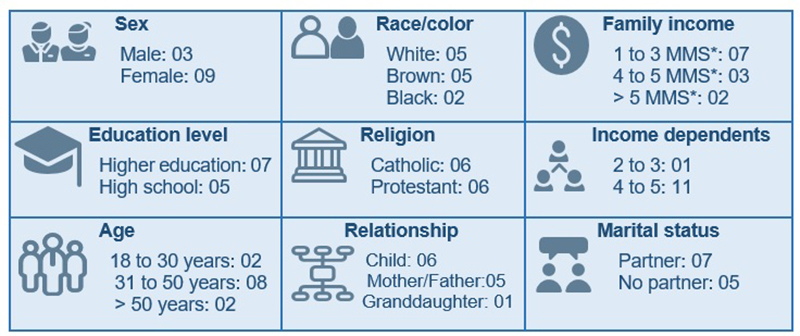 Legend: *MMS: National Minimum Monthly Salary (value of R$1,412.00).


