 Trends in organ- and tissue-specific donation refusals in São Paulo, Brazil, a quantitative cross-sectional study
BACKGROUND The mismatch between the supply and demand for organs and tissues for transplantation is one of the reasons for the high rates of donation refusal. A more recent contributing factor has been the COVID-19 pandemic.
OBJECTIVES To analyze, through the Terms of Donation of Organs and Tissues, the rates and trends of specific refusals for each organ and tissue from brain-dead donors between 2001 and 2020 in an Organ Procurement Organization.
DESIGN AND SETTING This was a cross-sectional, exploratory, and retrospective quantitative study on specific donation refusals conducted in one of the ten Organ Procurement Organizations in São Paulo, Brazil.
METHODS The variables collected included year, age, gender, cause of death, type of hospital, and organs and tissues donated and refused. The data were transferred to Stata software for descriptive and inferential analysis, using generalized linear regression to examine time trends. A significance level of P lt; 0.05 was adopted.
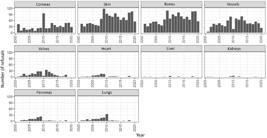
RESULTS Bones and skin had the highest rates of tissue donation refusal, at 56.40% and 55.37%, respectively. Among solid organs, the pancreas (4.05%) and lungs (5.23%) had the highest refusal rates. In the first decade analyzed, there were increasing time trends in refusals of valves, heart, pancreas, and lungs. In contrast, during the second decade, refusals of valves, kidneys, and pancreas showed decreasing trends. In 2020, the number of refusals for all tissues declined.
CONCLUSION To reduce tissue-specific refusals, it is important to address and mitigate family beliefs, myths, and negative attitudes toward organ and tissue donation.
KEYWORDS (MeSH terms):
Tissue and organ procurement; Nursing; Organ transplantation; Transplants; Brain death
AUTHORS KEYWORDS:
Deceased donors; Organ donation; Tissue donation; Family interview; Family consent; Family refusal
 Thumbnail
 Thumbnail
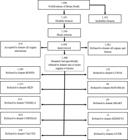
 Brain Death Notifications: notifications sent to the State Transplant Centre of patients with brain death already diagnosed through Resolution of the Federal Council of Medicine number 2.173/2017; Eligible Donors: individuals with brain death already diagnosed without known contraindications; Ineligible Donors: individuals with brain death already diagnosed with known contraindications, such as positive serology (HIV, HTLV, Hepatitis B, Hepatitis C); above the maximum time for withdrawal; with severe infection; with neoplasia; outside the age range; and with other chronic degenerative diseases. Interviewees: interview with family members or people related to the potential donor with the aim of obtaining consent for the donation.
