 Trends in organ- and tissue-specific donation refusals in São Paulo, Brazil, a quantitative cross-sectional study
ABSTRACT
BACKGROUND The mismatch between the supply and demand for organs and tissues for transplantation is one of the reasons for the high rates of donation refusal. A more recent contributing factor has been the COVID-19 pandemic.
OBJECTIVES To analyze, through the Terms of Donation of Organs and Tissues, the rates and trends of specific refusals for each organ and tissue from brain-dead donors between 2001 and 2020 in an Organ Procurement Organization.
DESIGN AND SETTING This was a cross-sectional, exploratory, and retrospective quantitative study on specific donation refusals conducted in one of the ten Organ Procurement Organizations in São Paulo, Brazil.
METHODS The variables collected included year, age, gender, cause of death, type of hospital, and organs and tissues donated and refused. The data were transferred to Stata software for descriptive and inferential analysis, using generalized linear regression to examine time trends. A significance level of P lt; 0.05 was adopted.
RESULTS Bones and skin had the highest rates of tissue donation refusal, at 56.40% and 55.37%, respectively. Among solid organs, the pancreas (4.05%) and lungs (5.23%) had the highest refusal rates. In the first decade analyzed, there were increasing time trends in refusals of valves, heart, pancreas, and lungs. In contrast, during the second decade, refusals of valves, kidneys, and pancreas showed decreasing trends. In 2020, the number of refusals for all tissues declined.
CONCLUSION To reduce tissue-specific refusals, it is important to address and mitigate family beliefs, myths, and negative attitudes toward organ and tissue donation.
KEYWORDS (MeSH terms):
Tissue and organ procurement; Nursing; Organ transplantation; Transplants; Brain death
AUTHORS KEYWORDS:
Deceased donors; Organ donation; Tissue donation; Family interview; Family consent; Family refusal
INTRODUCTION
Transplantation is a specific therapeutic option for patients with end-stage organ or tissue failure.1 While some organs and tissues can be donated by living donors, most transplants are performed using material from deceased donors.
Countries may adopt different consent policies for organ donation. The most common are the opt-in system, where individuals must formally express their wish to donate, and the opt-out system, in which all individuals are presumed donors unless they have registered otherwise.2
In Brazil, the 1997 Transplant Law established the National Transplant System (SNT) to oversee and coordinate transplantation activities. It also created a recipient registry that follows a strict order under the supervision of the Public Prosecution Office and initially implemented an opt-out policy. However, due to a lack of public understanding, the policy was poorly accepted and largely disregarded by healthcare professionals, who continued to seek family consent.3 In 1998, a provisional measure abolished the requirement for non-donors to formally object. By 2001, legislation required spousal or family authorization for donation. In 2017, it was clarified that the final decision rests with the legal guardian (spouse, parents, grandparents, children, grandchildren, or siblings) regardless of any verbal or written permission expressed by the potential donor during their lifetime.4
Brazil’s organ procurement model combines elements from the North American and Spanish systems. At the national level, the National Center for Notification, Procurement, and Distribution of Organs coordinates efforts with State Transplant Centers, which in turn liaise with municipal authorities through regional Organ Procurement Organizations. This is similar to the U.S. system. At the hospital level, Intra-Hospital Organ and Tissue Donation Committees for Transplantation (CIHDOTTs), modeled after the Spanish approach, operate within each institution.
Organ Procurement Organizations are responsible for coordinating donor identification and logistics within their region, collaborating with medical teams across hospitals and institutions. CIHDOTTs oversee in-hospital donation protocols, maintain death registries, provide continuing education on family support for staff, and manage other aspects of the donation and transplant process.1 Trained personnel from both organizations conduct interviews with families of potential donors to determine whether to authorize donation and, if so, which organs and tissues may be retrieved.5
Organ and tissue donation is provided free of charge under Brazil’s Unified Health System (SUS), regardless of whether the institution is public or private, as long as the removal is performed by teams and hospitals authorized and supervised by the Ministry of Health, as required by law.4
Refusal remains a key factor limiting transplant rates. Reasons for refusal often include cultural or religious beliefs, lack of understanding about brain death, fear of family conflict, hope for a miracle or recovery, uncertainty about the donor’s wishes, discomfort with body manipulation, fear of organ trafficking, mistrust in medical care, inappropriate communication from professionals, and delays in the donation process. 6-8
There is a gap in the literature regarding studies that assess refusal rates and trends for specific organs and tissues.
OBJECTIVE
This study aimed to analyze the rates and trends of specific refusals for each organ and tissue from brain-dead donors between 2001 and 2020, based on the Terms of Donation of Organs and Tissue signed by family members, as recorded by an Organ Procurement Organization in the state of São Paulo, Brazil.
METHODS
Design
This was a cross-sectional, exploratory, and retrospective quantitative study on specific refusals of organ and tissue donations from brain-dead donors.
Setting
The study was conducted at the Organ Procurement Organization of the Hospital das Clínicas of the Medical School of the Universidade de São Paulo (USP), which manages the donation process in a catchment area with a population of 5,979,439 and 96 public and private hospitals.
Population
The analysis was based on Terms of Donation of Organs and Tissues signed by family members of deceased donors between 2001 and 2020, which indicate the organs and/or tissues authorized or refused for recovery. The database was requested and received in February 2021.
Data collection
Study variables included: year (2001–2020); donor age (0–11, 12–19, 20–40, 41–59, and over 60 years); sex (female or male); cause of death (cerebrovascular accident, traumatic brain injury, post-cardiopulmonary arrest anoxic encephalopathy, external causes, and others); type of hospital (public or private); and donated and refused organs and tissues (corneas, skin, bones, vessels, valves, heart, liver, kidneys, pancreas, lungs).
Data analysis
Data were entered into Microsoft Excel (version 16.17) and analyzed using Stata (version 15.0). Initial analysis involved descriptive statistics for sociodemographic, clinical, and institutional variables, as well as the distribution of donations and refusals by organ/tissue and by year (2001–2020).
Time trend analysis was conducted using Prais-Winsten generalized linear regression to estimate β1 coefficients, corrected for first-order autocorrelation, with 95% confidence intervals (CIs). The dependent variable was organ/tissue refusal in the general population and subgroups (male donors, public hospitals, and age groups). Annual Percentage Change (APC) and 95% confidence intervals were calculated using the formula by Antunes and Cardoso (2015): APC = [– 1 + 10 b1]* 100%; 95%CI = [– 1 + 10 b1min.]* 100%; [– 1 + 10 b1max.]* 100%. Relative variation was also calculated as the percentage difference in refusal rates between the first and final years, divided by the initial year’s value.9 A 5% significance level was adopted. Trends were interpreted as follows: increasing, positive APC and P lt; 0.05; decreasing, negative APC and P lt; 0.05; and stationary, P gt; 0.05, indicating no significant difference from zero.
Ethical aspects
This study was approved by the Research Ethics Committee of the Hospital das Clínicas of the Medical School of the Universidade de São Paulo (USP) (Plataforma Brasil opinion n. 4.443.700, issued December 7, 2020), in accordance with international guidelines.
RESULTS
A total of 2,447 Terms of Donation were analyzed. Most donors were male (1,438; 58.77%), with a mean age of 41.98 years (Standard Deviation: 16.88), ranging from lt; 1 to 82 years. The 41–59 age group represented the highest number of donors (43.24%), and the most common cause of death was stroke (1,254; 51.25%). Over half of the donors (1,361; 55.62%) were from public hospitals (Table 1).
A comparison of tissue and organ donations revealed that refusal rates were higher for tissues. Each donor had 5 tissue options (bones, skin, vessels, corneas, valves) and 5 organ options (lungs, pancreas, heart, kidneys, liver) for donation. Over the 20-year period, 12,235 tissues and 12,235 organs were eligible for donation. There were 4,514 refusals for tissues and 321 for organs. Notably, both kidneys and corneas were counted as one pair per donor.
Bones and skin were the most frequently refused tissues, with 1,380 (56.40%) and 1,355 (55.37%) refusals, respectively. Among organs, refusal rates were below 6% for all, with the lungs (128; 5.23%) and pancreas (99; 4.05%) having the highest rates (Figure 1).
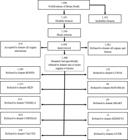
Characterization of notifications, donations and specific refusals of organs and tissues between 2001 and 2020, São Paulo, Brazil, 2024.
From 2009 onwards, refusals for skin, bones, valves, and vessels declined, while cornea refusals rose in 2010. Increases in heart and pancreas refusals were seen in 2007–2008, and refusals for liver, kidneys, and lungs rose in 2010. No organ refusals were recorded in 2019–2020, and tissue refusals also declined during this period (Figure 2).
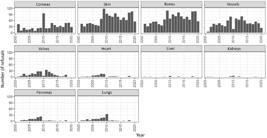
Evolution of specific organ and tissue donation refusals between 2001 and 2020. São Paulo, Brazil, 2024.
Between 2001 and 2009, increasing refusal trends were observed for valves (APC = 330.13; 95%CI = 6.41; 1,479, P = 0.009), heart (APC = 65.06; 95%CI = 2.80; 1,121, P = 0.010), pancreas (APC = 268.15; 95%CI = 49.11; 1,444, P lt; 0.001), and lungs (APC = 28.51; 95%CI = 2.38; 256.03, P = 0.007). From 2010 to 2020, refusal rates declined for valves (APC = -0.97; 95%CI = -0.99; -0.58, P = 0.017), kidneys (APC = -0.27; 95%CI = -0.46; -0.14, P = 0.040), and pancreas (APC = -0.29; 95%CI = -0.49; -0.01; P = 0.038) (Table 2).
Time trend of the percentage of organ and specific tissue donation refusals in two periods: 2001-2009 and 2010-2020. São Paulo, Brazil, 2024
Refusal trends remained stationary over both decades for corneas, skin, bones, vessels, and liver. Kidney refusal rates were stationary from 2001 to 2009, as were lung refusal rates from 2010 to 2020.
DISCUSSION
The analysis of the results shows a decrease over the years in the number of specific refusals to donate organs and tissues for transplantation, as recorded in the Terms of Donation signed by family members. Although this result is encouraging, it is important to note that refusal rates for tissues remain higher than for organs. This discrepancy may be associated with the greater social visibility of organ donation compared to tissues, whose therapeutic use is less familiar to the public.10
Media coverage has played a significant role in shaping public opinion on organ donation in recent decades. Brazilian soap operas, news reports, and advertising campaigns have influenced decisions to donate.11 With their broad reach, soap operas are able to construct long-running narratives that integrate real information about organ donation with dramatic storytelling, generating sustained public engagement. Between 1992 and 2018, six Brazilian soap operas addressed the theme of adult and pediatric transplantation.11
National news reports on transplantation, whether negative or positive, also have a strong impact, especially when combined with soap opera storylines. A notable example occurred in September 2013, when socialite Chiquinho Scarpa buried his Rolls-Royce as part of a campaign titled: “It’s absurd to bury something much more valuable than a Bentley: your organs.”11 This campaign was followed by a decrease in refusal rates for heart, kidney, pancreas, and lung donations that same year.
Publicized incidents involving deaths and subsequent donations have also influenced public attitudes. In 2008, the case of 15-year-old Eloá Cristina Pimentel, who was held captive for 100 hours and fatally shot by her ex-boyfriend, led to a notable response when her mother authorized organ donation. At least six individuals benefited, and the case received considerable attention, correlating with a drop in refusal rates in 2008 and 2009.11 Similarly, the 2011 school massacre in Rio de Janeiro, where families consented to organ donation, had a positive public impact—although refusal rates still increased in 2011 and 2012.11
Since 2013, the Ministry of Health has conducted the annual “Green September” campaign, producing videos, posters, brochures, and other materials targeted at healthcare professionals and the general public. Topics have included notifying families (2014), inspiring stories of transplant-recipient athletes (2015), and testimonials from recipient and donor families (2019). However, the campaigns appear to have limited impact on refusal rates, likely due to deep-rooted mistrust in the public health system and enduring myths.11
Tissue donations, such as skin and bone, have higher refusal rates, which may be linked to a lack of information and concerns among family members about the donor’s post-mortem appearance.12,13 In addition, media campaigns tend to focus more on organ donation, further contributing to this disparity.
In contemporary society, physical appearance holds significant social value, which may lead family members to decline skin donation to preserve the donor’s appearance. A study in Saudi Arabia found that individuals with lower education levels were more likely to oppose skin donation.14 This barrier can limit access to accurate information and hinder discussions on the topic.
TV series, movies, and soap operas often perpetuate misconceptions about skin donation. Decision-making may be compromised when skin removal is equated with the skinning of animals, a perception reinforced by comparisons between surgeons and butchers.13
The reduction in skin donation refusal in 2014 may be associated with the 2013 fire at the Kiss Nightclub in Santa Maria in the southern state of Rio Grande do Sul,15 which resulted in a shortage of skin grafts for victims. This tragedy may have raised public awareness and sensitivity toward skin donation.
The high refusal rate for bone tissue found in this study may stem from concerns about bodily disfigurement, lack of clear communication, and inadequate or absent requests for bone donation by healthcare professionals. This may be due to a general lack of societal awareness regarding the possibility of bone tissue transplantation.12
A Brazilian study found that 62.7% of families approached for organ donation were not asked about bone donation. Among the legal guardians asked about the donation of bone tissue, 92.9% did not receive information about which bones would be removed, and 96.5% were not told how the donor’s body would be reconstructed. Furthermore, 60.7% of families declined bone donation to preserve the donor’s appearance, and 39.3% cited lack of information about the procedure.16
These findings underscore the need for measures to reverse this situation, as bone transplantation is essential in cases of accidents or serious diseases that involve the restoration of this tissue.17 Awareness campaigns remain heavily focused on organ donation, with little emphasis on tissue donation, such as skin and bone. A shift in campaign content and media narratives is essential to educate the public on the types of organs and tissues that can be donated, the donation and graft removal processes, and the uses of donated tissues.
Throughout the study period, organ donation consistently showed lower refusal rates compared to tissues. This trend is mirrored internationally. In the United Kingdom, a 2020 study reported refusal rates of 3.38% for the heart and 2.6% for the lungs.18 In Australia and New Zealand, the refusal rates for common organs were even lower—0% for the liver, 1.35% for the lung, 1.89% for the pancreas, and 3.81% for the heart. In contrast, refusal rates were higher for less commonly transplanted tissues: heart valves (8.55%), stomach and intestines (12.82%), corneas (32.17%), and bones (51.95%).19
In addition to the data available in donation registries, public opinion surveys offer insights into specific refusals. A 2018 German study found that while 72% of respondents were willing to donate, 13% would refuse specific organs or tissues. Of those who would refuse, the specific refusal rate was 56% for the cornea, 27% for the heart, and 11% for the skin.20 In a United States survey, 49% of teenagers expressed willingness to donate their organs after death. Of these, 33% refused to donate the following organs and tissues: eyes (32%), pancreas (13.8%), lungs (12.8%), and heart (9.9%).21
These findings suggest that individual preferences regarding donation are more nuanced than a simple “donor” or “non-donor/refusal” status. National donation registries, national and regional surveys, and social science studies reveal that willingness to donate varies by tissue type, with a higher likelihood of donating vital organs such as kidneys, lungs, livers, and hearts, and less willingness to donate tissues such as skin, bones, valves, vessels, eyes, and corneas.18
Although refusal rates for the pancreas and lungs are relatively low, they are still higher than for other organs, suggesting the need for further investigation. It is hypothesized that the donor’s medical history, such as diabetes for the pancreas and smoking for the lungs, may influence refusal decisions. In addition, a study in China found that religious and cultural beliefs may deter donation of lungs and hearts, as these organs are traditionally considered the seat of the soul.22
Trend analysis reveals that between 2001 and 2009, refusals for the pancreas, heart, and lungs increased. These refusals may have been influenced by the interviewers’ judgments about prior pathologies that would render the organs unusable. In the case of the heart, its symbolic and emotional significance may have contributed to refusal.22
In contrast, from 2010 to 2020, refusal rates for the pancreas and kidneys declined, and the rates for other organs remained stable. This shift may reflect the implementation of a law requiring hospitals within the Organ Procurement Organization’ jurisdiction to assign qualified transplant coordinators.23 The establishment of the National Day of Organ Donation24 and its media promotion may have also contributed to the trend reversal.
Valve refusal significantly increased from 2001 to 2009, possibly due to a lack of trained tissue recovery teams, which discouraged interviewers from requesting valve donation. In contrast, in the period from 2010 to 2020, refusal rates declined, potentially due to the reactivation of tissue recovery teams, which may have encouraged interviewers to request tissue donation.
The family interview plays a crucial role in the donation process. Beyond the interviewer’s approach, factors such an appropriate interview setting, transparent communication, quality care for the potential donor and their relatives during the hospitalization period, and adherence to ethical and legal standards can all affect the decision. Interviewers must use appropriate language, understand the donor’s and family’s background, empathize with their emotional state, and be trained in the science and ethics of donation.25
The Terms of Donation, the sole document authorizing organ and tissue donation, may differ slightly by state. In 2010, the form was restructured to specify refusals instead of listing accepted organs and tissues, thereby making the process more specific. This change may explain the decrease in refusal rates for most tissues in 2010, except for corneas, as shown in a previous study.26
It is noteworthy that refusal rates for corneas, skin, bones, and vessels remained unchanged across both decades studied. These data suggest that no measures were taken to change the situation or that the actions were ineffective, reinforcing the need for targeted education and training efforts.27
In 2020, none of the families who agreed to donate refused the recovery of any organ. This may be partly attributed to the media coverage surrounding the organ and tissue donation of Gugu Liberato, a very popular Brazilian TV presenter who died in November 2019.11 Following this, Google Trends data showed a spike in searches related to “Organ and Tissue Donation” and “Brain Death” across Brazil.
Despite the insights gained, this study has limitations regarding the external validity of the findings and should be replicated in other contexts. In addition, the Terms of Organ and Tissue Donation used in data collection do not include fields for specifying reasons behind individual refusals. Therefore, further qualitative research is necessary to explore these motivations, particularly those related to family characteristics.
Finally, this study highlights the importance of analyzing specific organ and tissue refusals, as well as the need to identify the reasons for refusal. It recommends that the Donation Authorization Form be updated to include a field for documenting reasons for each refusal. Moreover, family interviews should include clear information about the importance and feasibility of tissue donation, alongside organ donation.
CONCLUSION
The data analysis indicates that refusals to donate organs and tissues have decreased over the years. However, non-consent rates for certain tissues remain high. This discrepancy warrants further investigation through targeted studies to better understand the underlying causes, which may be linked to public policies that prioritize organ donation while placing limited emphasis on the importance of tissue donation.
Acknowledgements:
We thank the families who provided the data of their deceased loved ones, sharing the decisions they made at a time of so much pain and suffering
REFERENCES
-
1. Westphal GA, Garcia VD, Souza RL, et al. Guidelines for the assessment and acceptance of potential brain-dead organ donors. Rev Bras Ter Intensiva. 2016;28(3):220-55. PMID: 27737418; https://doi.org/10.5935/0103-507x.20160049.
» https://doi.org/10.5935/0103-507x.20160049 -
2.Davidai S, Gilovich T, Ross LD. The meaning of default options for potential organ donors. Proc Natl Acad Sci USA. 2012;109(38):15201-5. PMID: 22949639; https://doi.org/10.1073/pnas.1211695109.
» https://doi.org/10.1073/pnas.1211695109 -
3. Etheredge HR. Assessing Global Organ Donation Policies: Opt-In vs Opt-Out. Risk Manag Healthc Policy. 2021;14:1985-98. PMID: 34012308; https://doi.org/10.2147/rmhp.s270234.
» https://doi.org/10.2147/rmhp.s270234 -
4. Pimentel W, Sarsur M, Dadalto L. Autonomia na doação de órgãos post mortem no Brasil. Rev Bioét. 2018;26(4):530-6. https://doi.org/10.1590/1983-80422018264271.
» https://doi.org/10.1590/1983-80422018264271 - 5. Moraes EL, Pimentel RRS, Santos MJ. Gerenciamento do cuidado ao potencial doador de órgãos e seus familiares. In: Associação Brasileira de Enfermagem; Vale EG; Peruzzo SA; Felli VEA. (Org.), ed. PROENF Programa de Atualização Em Enfermagem: Gestão: Ciclo 9. 9th ed. Porto Alegre: Artmed Panamericana; 2020. p. 33-71.
-
6. Marinho BBO, Santos ATF, Figueredo AS, et al. Challenges of organ donation: potential donors for transplantation in an area of Brazil’s Northeast. Transplant Proc. 2018;50(3):698-701. PMID: 29661419; https://doi.org/10.1016/j.transproceed.2018.02.055.
» https://doi.org/10.1016/j.transproceed.2018.02.055 -
7. Moraes EL, Massarollo MCKB. Reasons for the family members’ refusal to donate organ and tissue for transplant. ACTA Paul Enferm. 2009;22(2):131-5. https://doi.org/10.1590/S0103-21002009000200003.
» https://doi.org/10.1590/S0103-21002009000200003 -
8. Pessoa JLE, Schirmer J, Roza BA. Avaliação das causas de recusa familiar a doação de órgãos e tecidos. Acta Paulista de Enfermagem. 2013;26(4):323-30. https://doi.org/10.1590/S0103-21002013000400005.
» https://doi.org/10.1590/S0103-21002013000400005 -
9. Antunes JLF, Cardoso MRA. Uso da análise de séries temporais em estudos epidemiológicos. Epidemiol Serv Saúde. 2015;24(3):565-76. https://doi.org/10.5123/S1679-49742015000300024.
» https://doi.org/10.5123/S1679-49742015000300024 -
10. Rodríguez-Villar C, Paredes D, Alberola M, et al. Perception of transplant coordinator regarding relatives’ attitude toward tissue donation request. Transplant Proc. 2012;44(9):2525-8. PMID: 23146443; https://doi.org/10.1016/j.transproceed.2012.09.071.
» https://doi.org/10.1016/j.transproceed.2012.09.071 -
11. Feldens TK, Jacinto, PA. Intervenções midiáticas e doação de órgãos: Uma análise para o Brasil. 2020. Available from: https://www.anpec.org.br/sul/2020/submissao/files_I/i8-0653ab500d0e81b831f56a0d1981e550.pdf Accessed 2025 (April 3).
» https://www.anpec.org.br/sul/2020/submissao/files_I/i8-0653ab500d0e81b831f56a0d1981e550.pdf -
12. Pont T, Gràcia RM, Valdés C, et al. Theoretic rates of potential tissue donation in a university hospital. Transplant Proc. 2003;35(5):1640-1. PMID: 12962740; https://doi.org/10.1016/s0041-1345(03)00702-4.
» https://doi.org/10.1016/s0041-1345(03)00702-4 -
13. Brito ÁN, Santos MJD, Pimentel RRDS. Skin donation for transplantation: Social representations of family members who (do not) give consent for collection. Burns. 2024;50(3):709-16. PMID: 38182452; https://doi.org/10.1016/j.burns.2023.12.004.
» https://doi.org/10.1016/j.burns.2023.12.004 -
14. Gelidan AG. Awareness and attitude of general population regarding allograft skin donation in Riyadh, Saudi Arabia: Cross-sectional study. Burns. 2020;46(7):1700-6. PMID: 32359970; https://doi.org/10.1016/j.burns.2020.04.002.
» https://doi.org/10.1016/j.burns.2020.04.002 -
15. Souto KOL, Pimentel RRS, Brito ÁN, Moraes EL, Santos MJ. Recusa familiar de doação de pele para transplante: tendência e fatores associados. Rev Bras Enferm. 2024;77(3):e20230209. https://doi.org/10.1590/0034-7167-2023-0209pt.
» https://doi.org/10.1590/0034-7167-2023-0209pt -
16. Pompeu MH, Silva SS, Roza BA, Bueno SMV. Fatores envolvidos na negativa da doação de tecido ósseo. Acta Paul Enferm. 2014;27(4):380-4. https://doi.org/10.1590/1982-0194201400063.
» https://doi.org/10.1590/1982-0194201400063 -
17. El Hage S, Santos MJ, Moraes EL, Barros e Silva LB. Bone Tissue Donation: Tendency and Hurdles. Transplant Proc. 2018;50(2):394-6. PMID: 29579811; https://doi.org/10.1016/j.transproceed.2017.11.071.
» https://doi.org/10.1016/j.transproceed.2017.11.071 -
18. Williams NJ, O’Donovan L, Wilkinson S. Presumed Dissent? Opt-out Organ Donation and the Exclusion of Organs and Tissues. Med Law Rev. 2022;30(2):268-98. PMID: 35171293; https://doi.org/10.1093/medlaw/fwac001.
» https://doi.org/10.1093/medlaw/fwac001 -
19. Excell L, Marion V, Hurst K, Russ G. Anzod Registry Report 2012. Adelaide: Australia and New Zealand Organ Donation Registry; 2012. Available from: https://www.anzdata.org.au/report/anzod-annual-report-2012/ Accessed in 2025 (April 3).
» https://www.anzdata.org.au/report/anzod-annual-report-2012/ -
20. Caille-Brillet AL, Zimmerling R, Thais HM. Wissen, Einstellung und verhalten der allgemeinbevölkerung zur organ- und gewebespende: Ergebnisse der Repräsentativbefragung 2018. Köln: Bundeszentrale für Gesundheitliche Aufklärung (BZgA); 2019. Available from: https://www.bioeg.de/fileadmin/user_upload/Bericht_Organspende_2020-web.pdf Accessed in 2025 (April 3).
» https://www.bioeg.de/fileadmin/user_upload/Bericht_Organspende_2020-web.pdf -
21. Baughn D, Rodrigue JR, Cornell DL. Intention to register as organ donors: A survey of adolescents. Prog Transplant. 2006;16(3):264-7. PMID: 17007163; https://doi.org/10.1177/152692480601600313.
» https://doi.org/10.1177/152692480601600313 -
22. Zhao J, Liu D, Huang J, et al. The low utilization rate of donor lungs in China: a single-center experience. Ann Transplant. 2021;26:e931409. PMID: 34373440; https://doi.org/10.12659/aot.931409.
» https://doi.org/10.12659/aot.931409 -
23. Silva VS, Moura LC, Martins LR, et al. In-house coordination project for organ and tissue procurement: social responsibility and promising results. Rev Lat Am Enfermagem. 2016;24:e2773. PMID: 27463111; https://doi.org/10.1590/1518-8345.0841.2773.
» https://doi.org/10.1590/1518-8345.0841.2773 -
24. Brasil. Lei no 11.584. Institui o Dia Nacional da Doação de Órgãos. Brasília: Diário Oficial da União; 2007, November 28. Available from: https://www.planalto.gov.br/ccivil_03/_ato2007-2010/2007/lei/l11584.htm Accessed in 2025 (April 3).
» https://www.planalto.gov.br/ccivil_03/_ato2007-2010/2007/lei/l11584.htm -
25. Santos MJ, Massarollo MCKB, Moraes EL. Entrevista familiar no processo de doação de órgãos e tecidos para transplante. Acta Paul Enferm. 2012;25(5):788-94. https://doi.org/10.1590/S0103-21002012000500022.
» https://doi.org/10.1590/S0103-21002012000500022 -
26. Grossi MG, Prado LB, Souza GPS, et al. Comparative analysis of family consent to tissue donation according to two different donation form structures. Einstein. 2014;12(2):143-8. PMID: 25003916; https://doi.org/10.1590/s1679-45082014ao2555.
» https://doi.org/10.1590/s1679-45082014ao2555 -
27. dos Santos MJ, Leal de Moraes E, Santini Martins M, et al. Trend analysis of organ and tissue donation for transplantation. Transplant Proc. 2018;50(2):391-3. PMID: 29579810; https://doi.org/10.1016/j.transproceed.2017.11.075.
» https://doi.org/10.1016/j.transproceed.2017.11.075
Edited by
-
Editor responsible for the evaluation process:
Paulo Manuel Pêgo Fernandes MD, PhD

 Brain Death Notifications: notifications sent to the State Transplant Centre of patients with brain death already diagnosed through Resolution of the Federal Council of Medicine number 2.173/2017; Eligible Donors: individuals with brain death already diagnosed without known contraindications; Ineligible Donors: individuals with brain death already diagnosed with known contraindications, such as positive serology (HIV, HTLV, Hepatitis B, Hepatitis C); above the maximum time for withdrawal; with severe infection; with neoplasia; outside the age range; and with other chronic degenerative diseases. Interviewees: interview with family members or people related to the potential donor with the aim of obtaining consent for the donation.
