 Geosynthetics in Brazil: historical overview and future developments
Abstract
This article presents the advances in geosynthetic engineering in Brazil in the last 50 years. The topics addressed encompass soil-geosynthetic interaction, reinforced embankments on soft soils, drainage and filtration, the use of vertical drains to accelerate settlements, geosynthetic-encased granular columns for soft soil improvement, structured embankments on soft soils, reinforced walls and geosynthetics in mining. The research activities employed laboratory tests, full-scale field tests, laboratory and geotechnical centrifuge tests on physical models, monitoring of projects and numerical modelling. Several of these academic studies were carried out with the support and cooperation of the geosynthetic industry and have had an important impact on constructive practices, enabling geosynthetic engineering in Brazil to reach the high level of competence and maturity that has been evident in recent years.
Keywords:
Soil-geosynthetic interaction; Reinforced embankments on soft soils; Geosynthetics in mining; Geosynthetic barriers
1. Introduction
Geosynthetic engineering applied to soil mechanics and geotechnical methods began in Brazil in the early 1970’s and has since developed intensively in all segments including the design, construction and academic sectors. This article presents the advances in geosynthetic engineering in Brazil from the point of view of research carried out at universities with a strong link to the infrastructure needs of the country.
Most university research groups in the country have carried out studies on geosynthetics, mainly through undergraduate work, MSc. dissertations and PhD. theses, resulting in many publications throughout the years. The Brazilian experience in this area is represented and summarized in this article through the report of studies and research carried out by nine authors, most of whom have worked on research and studies with geosynthetics for decades.
The topics summarized here cover different functions and applications of geosynthetics in geotechnical and geoenvironmental engineering. The article is organized according to the topic, each one addressing a specific problem related to the use and application of geosynthetics. At the end of each item a summary conclusion is presented.
2. A brief history of geosynthetics in Brazil
Geosynthetics have been used in geotechnical engineering for over 60 years in applications such as soil reinforcement, drainage, filtration, barriers, separation and protection. The main reasons for a widespread acceptance of these materials are that they are easy to transport to construction sites, easy to install, cost-effective and produce solutions that are more environmentally friendly than conventional engineering solutions. Studies by Stucki et al. (2011), Frischknecht et al. (2012) and Damians et al. (2016) have shown significant reductions (usually over 80%) in environmental impacts such as emissions of gases that contribute to global warming, energy consumption, water consumption, acidification etc. with the use of geosynthetics solutions
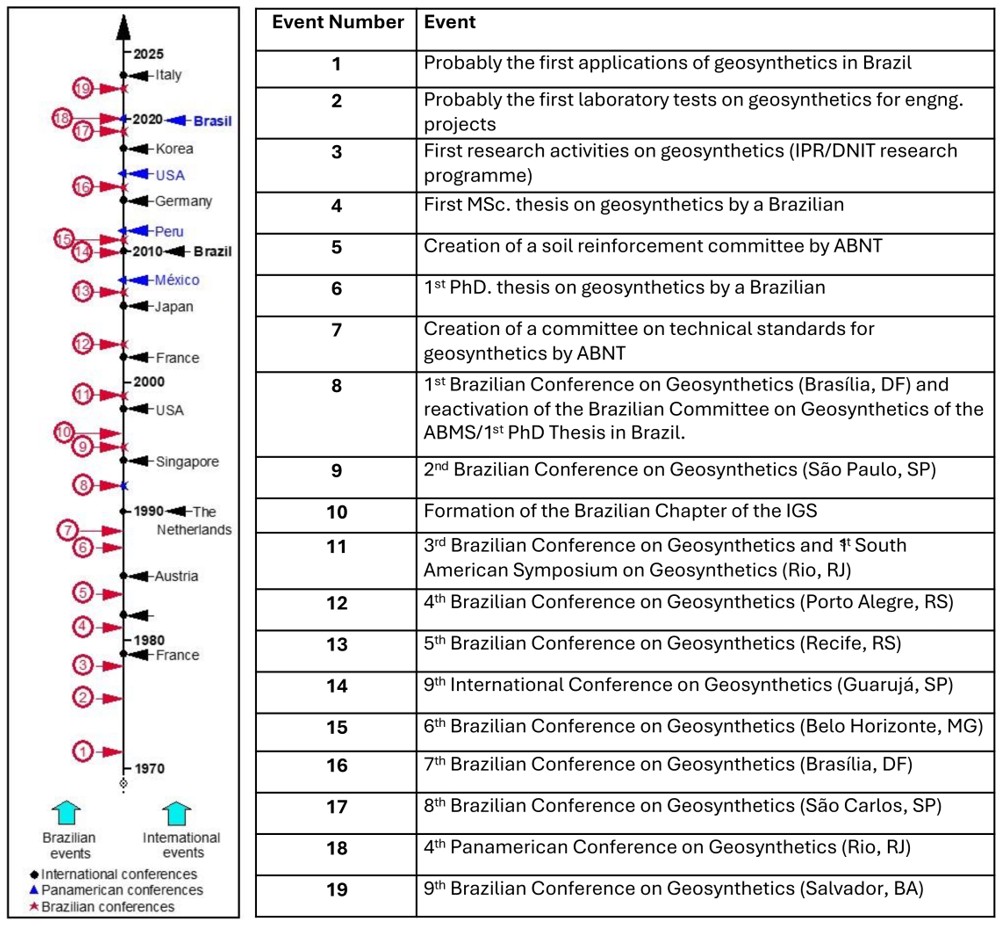
Geosynthetics have been used in Brazil since the early 1970’s, and the first applications were mainly of geotextiles in drainage and filtration and of geomembranes as barriers. Significant increases in the use of geosynthetics as reinforcement began in the early 1980’s, mainly in retaining structures and for the stabilization of steep slopes. Unfortunately, little or no information is available on the pioneer works in Brazil, except for superficial reports from persons who were directly involved with those works. In those days the engineers of geosynthetics manufacturers played a very important role in promoting the use of geosynthetics. Figure 1 shows the landmarks and main events related to the use of geosynthetics in Brazil and in the world.
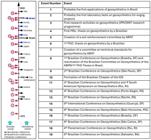
Timeline of events in the use and development of geosynthetics in Brazil and in the world (modified Palmeira 2018).
In the 1970’s, the lack of information (even worldwide) on geosynthetic products, associated with a certain reluctance to accept plastics as construction materials led to a slow start in the use of geosynthetics. Not seldom enough technical information available to convince designers to substitute conventional engineering solutions by solutions incorporating geosynthetics. The lack of technical information and research results for the specific conditions in the country were certainly some of the main causes of the delay in accepting geosynthetics as a new construction material.
Today, the situation is completely different. In the late 1970’s and early 1980’s the acceptance and use of geosynthetics started to increase in Brazil and this is particularly so in the last three decades. The main reasons for such increase are: continuous improvement in the quality of geosynthetics products, geosynthetics cost reduction, solutions that save construction time, better design methodologies and greater availability of research results, success of case-histories, easy transportation of geosynthetics to remote areas or regions were natural construction materials are scarce on have their use prohibited by environmental regulations, cost-effectiveness of solutions with geosynthetics, greater quality and consistency of manufactured products and less impacts to the environment from geosynthetic solutions.
Pioneer tests on geotextiles were carried out by private engineering companies and research institutions (Geomecânica S.A. and Coppe in the mid 1970’s, and Instituto de Pesquisas Tecnológicas de São Paulo) to obtain relevant geotextile properties for designs. The first specific research programme on geosynthetics was conducted by the Brazilian Highway Research Institute (IPR/DNIT) in its experimental site for research on the behavior of embankments on soft soils, in Rio de Janeiro.
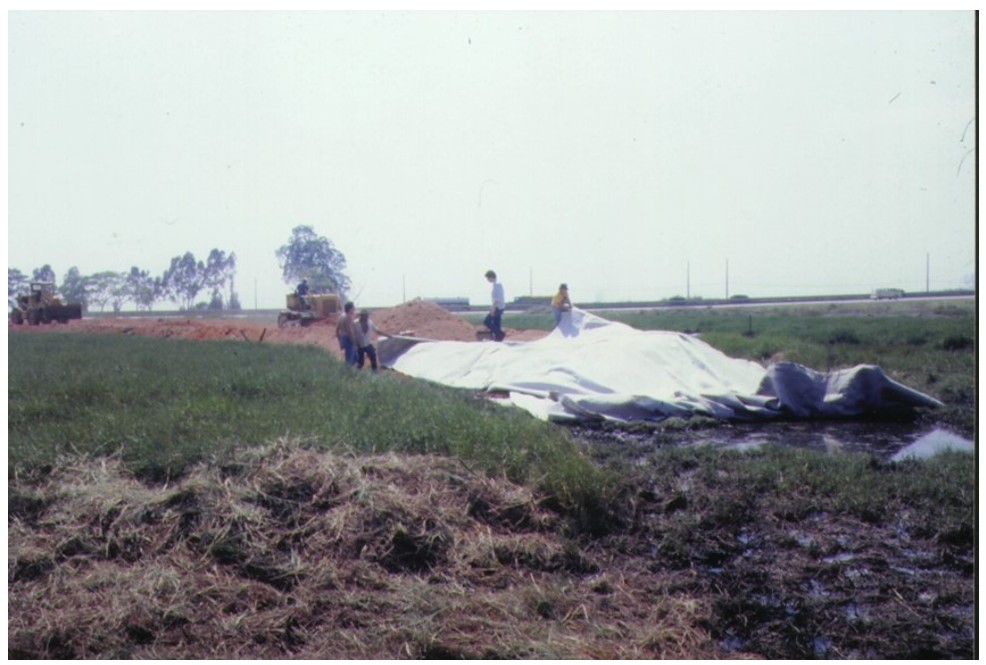
The pioneer research investigated the use of geotextiles as reinforcement of an unpaved access road (Figure 2; Palmeira, 1981; Ramalho-Ortigão & Palmeira, 1982) built for the passage of trucks loaded with fill material for the construction of another experimental embankment on different drainage systems to accelerate the soft soil consolidation. In the latter embankment, the performance of geosynthetic vertical drains was also investigated. Different types of installation of the geotextile were studied in the experimental access road and the main conclusions were that the presence of the geotextile reduced the deformations of the road and fill consumption. Later research on geosynthetic reinforcement in unpaved and paved roads was carried out by Palmeira & Cunha (1993), Ferreira Junior (1995), Montestruque & Rodrigues (1999), Montestruque et al. (2004), Ferreira & Vidal (2010), Palmeira & Antunes (2010), Obando-Ante & Palmeira (2015), Fonseca (2015), Fonseca et al. (2016) and Morais et al. (2016), for instance.
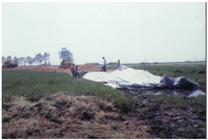
Pioneer research on geosynthetic reinforcement of an unpaved road on soft soil (Palmeira 1981, Ramalho-Ortigão & Palmeira 1982).
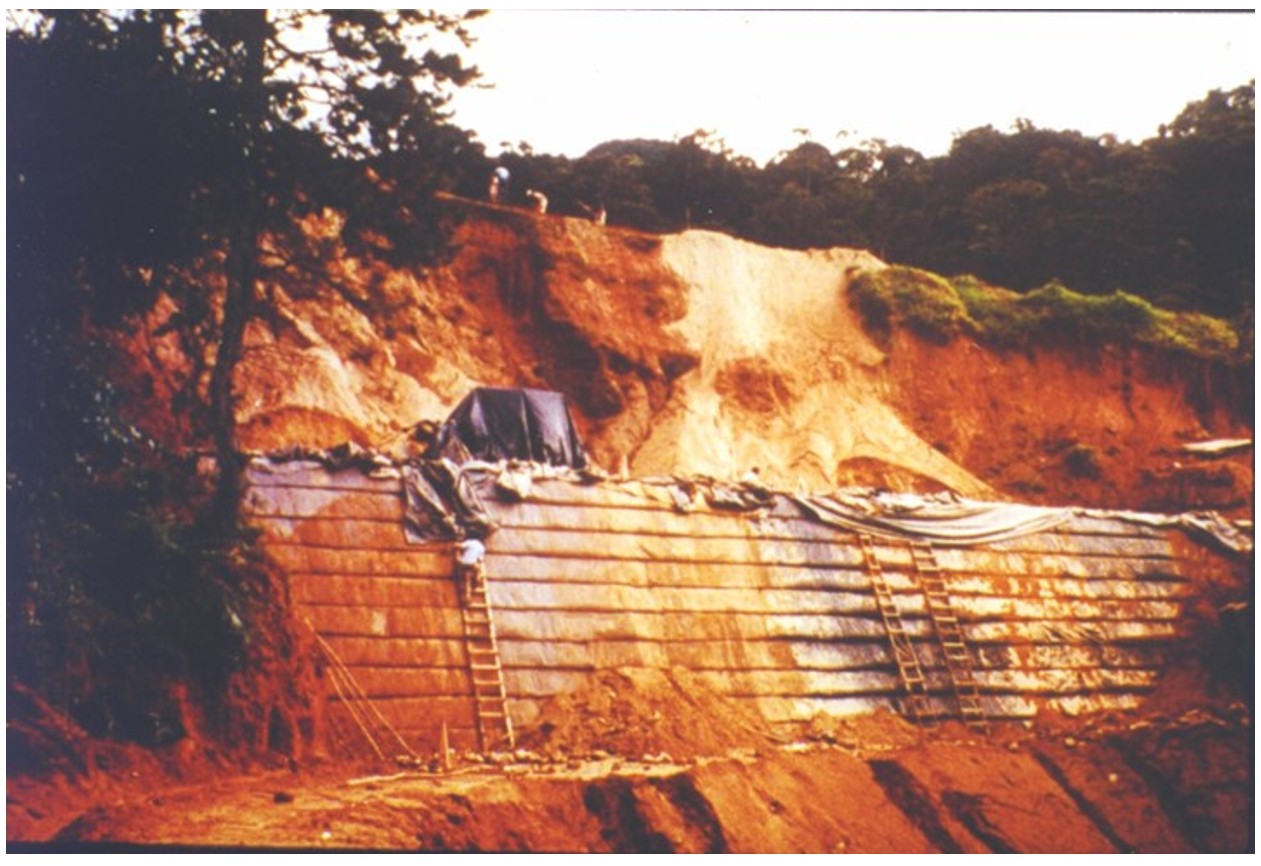
In the 1980’s, the interest in geosynthetics started to grow with still a very limited number of applications in soil reinforcement, although with significant increase in the use in drainage and barriers systems. An important project involving the use of geosynthetic reinforcement was the reinforced steep slope built to repair a highway (SP 123) embankment failure in the state of São Paulo (Figure 3).
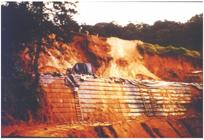
In this work, half of the length of the repaired slope was reinforced with a nonwoven geotextile and the other half with a woven geotextile. Cost-effectiveness analyses showed that the solution with geosynthetic reinforcement was the most economical one compared with conventional retaining structures (Carvalho et al., 1986). Late in the 1980’s the first doctorate thesis by a Brazilian student was concluded (Palmeira, 1987) and research on geosynthetics in Brazil started to take off, also with a significant increase in scientific meetings and conferences on the subject.
A landmark on geosynthetics activities in Brazil was the realization of the 1st Brazilian Conference on Geosynthetics, held in Brasília, DF, Brazil. In this conference, Brazilian engineers and researchers had the opportunity to present their works and studies on different types of applications of geosynthetics. Today, this conference is in its 9th edition. Another important event, which has significantly helped the promotion of geosynthetics in the country, was the formation of the Brazilian Chapter (IGS-Brazil) of the International Geosynthetics Society (IGS). IGS-Brazil has organized several technical and scientific events on geosynthetics in different parts of the country throughout the last 27 years.
An important initiative, which has served as model to other IGS chapters, has been the Educating the Educators (EE) programme (Zornberg et al., 2020, Gardoni et al., 2024). These are 16 to 20 hours courses to educate university lecturers of undergraduate civil engineering courses aiming at encouraging and allowing them to transmit basic principles of geosynthetics to their students. To the present date, EE courses have been delivered 6 times in different regions of Brazil.
The intense technical and research activity on geosynthetics in Brazil made the country worthy of hosting the 9th International Conference on Geosynthetics (9ICG), held in the city of Guarujá, state of São Paulo, in 2010, when, for the 1st time the conference was organized in the southern hemisphere. The conference was a great success. Brazil also hosted the 4th Pan-American Conference on Geosynthetics (GeoAmericas 2020), held in Rio de Janeiro. In this case it was a remote event due to the constraints imposed by the COVID19 pandemics.
For the last 35 years research and technical activities with geosynthetics and the use of such materials in engineering projects has markedly increased in Brazil, as will be presented and discussed in the following sections. It is worth noting that this article is a shorter update version of the Welcome Lecture delivered during GeoAmericas 2020, in Rio de Janeiro, Brazil, and some parts are common to both publications.
3. Soil-geosynthetic interaction
3.1 Traditional and advanced techniques to better evaluate soil-geosynthetic interface shear strength
The interface shear strength between geosynthetics and surrounding materials is an important parameter for an appropriate design. As example, for an adequate project involving geomembranes in landfills, the friction between the waterproofing synthetic material and the above and below components of the system must be such that these interfaces will not fail. Similarly, for the design of geosynthetics reinforced walls, the adhesion and the friction between the reinforcing element and the surrounding soil play an important role in the internal stability of the structure. In this context, laboratory tests must be conducted to obtain accurate interface resistance parameters, and the interface can involve geosynthetic-geosynthetic or soil- geosynthetic contact (Palmeira & Milligan, 1989a; Tupa, 1994; Tupa & Palmeira, 1995).
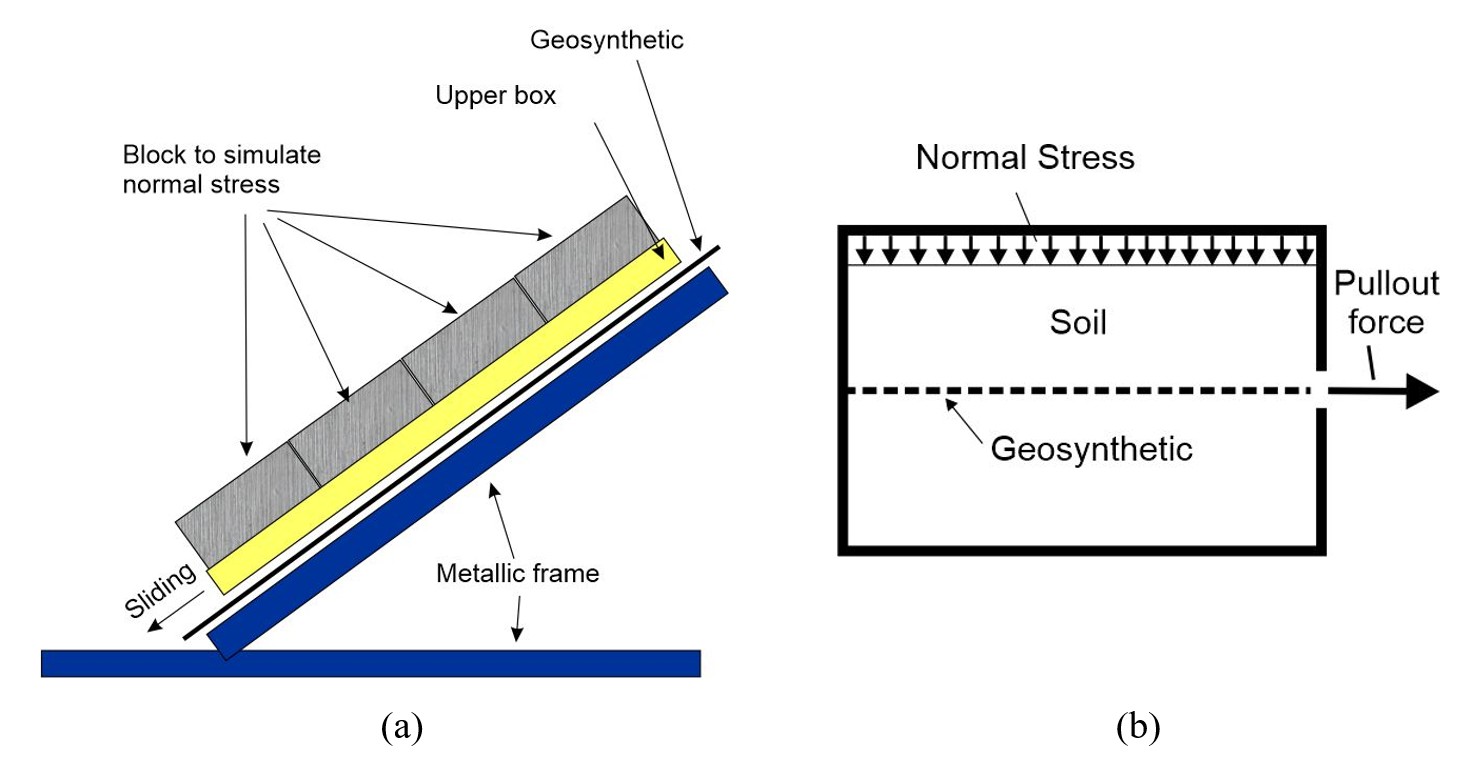
For the interface resistance test with geomembranes, three tests have been commonly utilized: the inclined plane or ramp test (ISO, 2005), pull-out tests and large direct shear tests (ASTM, 2021). The first one is normally used for lower normal stresses and the second one for higher stresses (Palmeira et al., 2002; Palmeira, 2009). Basically, the inclined plane test is composed of a metallic base with a geosynthetic resting over it which can rotate until an upper box slide along the soil-geosynthetic interface. Inside this box and over the geosynthetic either soil or another geosynthetics can be placed. Then, weights are positioned over the material within the box to provide surcharge. The metallic base is then rotated until the box slides over the underlying geosynthetic due to interface failure (Figure 4a).
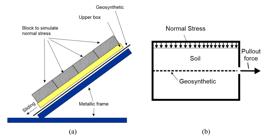
Mechanisms of different interface shear tests: (a) inclined plane test, and (b) pull-out test.
Pullout tests have also been conducted to better estimate the interface friction angle of geosynthetic reinforced walls (Palmeira 1987; Palmeira & Milligan, 1989b). In this type of experiment, the mechanism is different from the inclined plane test and the interaction between the geosynthetic and soil is quantified as a function of a pullout force. The maximum force is measured for different applied normal stresses (simulating different stress levels) to obtain the interface friction angle between the soil and the geosynthetic (Figure 4b). In these tests, it is important for the normal stresses used in the experiments to be compatible with the ones existing in the field and an incorrect interpretation of the test can lead to unsafe designs.
There are several parameters which can influence interface resistance and they also have an influence on each other. For instance, for coarse soils such as sand and gravel, in the case of the interface with geomembranes, the soil friction angle, its specific weight, the average particle size, geomembrane asperity height and polymer, among others, can affect that resistance (Pavanello et al., 2021; Zhao & Tian, 2023, for instance). On the other hand, the interface shear strength from pullout tests can be influenced by the type of geosynthetic (geogrid, woven or non-woven geotextile), geogrid geometry, soil unit weight, soil friction angle, applied stress level, among other factors (Liu et al., 2021; Jia et al., 2023, for instance).
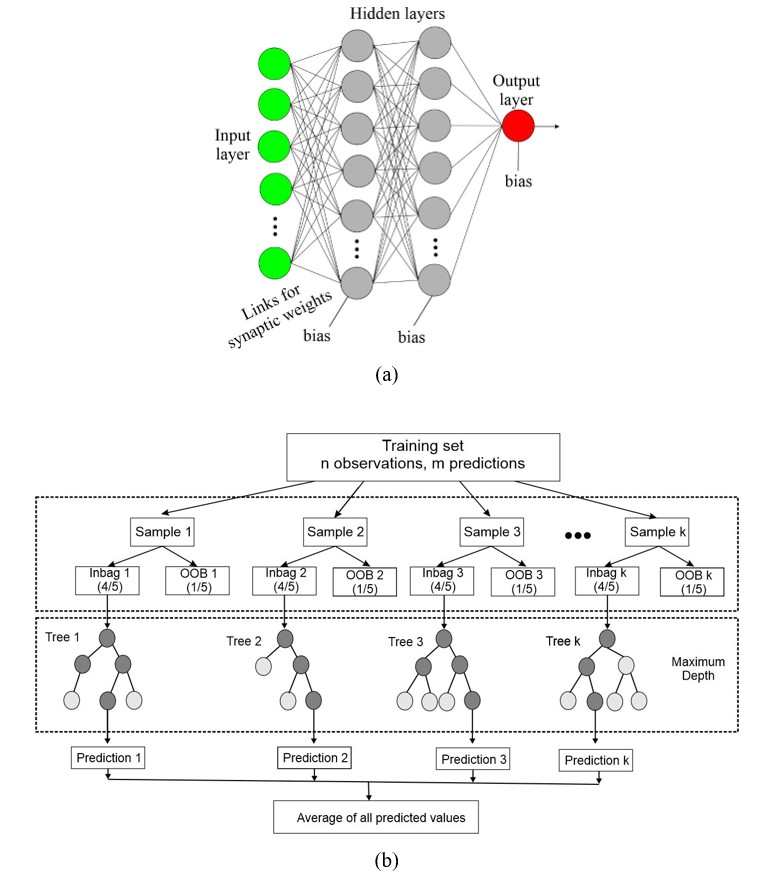
Over the years, some techniques have emerged to understand how the materials’ properties can influence interface strength. Lately, the use of artificial intelligence has helped to identify which properties have the greatest influence on the interface shear strength. Two Machine Learning techniques have been used in different applications in civil and geotechnical engineering (Zhang et al., 2019; Farooq et al., 2020; Silva et al., 2023 for instance): Artificial Neural Network (ANN) and Random Forest (RF) and they differ on the way how the predictions are calculated. Basically, ANN uses an architecture of data organization based on neurons (Figure 5a) and one of the most used architectures is the Multilayer Perception, where the neurons are organized in input, hidden layers and output (Shahin et al., 2008).
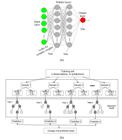
On the other hand, the Random Forest (RF) uses decisions trees (Figure 5b) which are derived from a series of multiple subsamples (Pant & Ramana, 2022). The analyses differ based on equations, which are different for each method, and an interacting process is used to reduce the error. Both techniques utilize two stages: (i) training process, where a fraction of the sample is used to train the Machine Learning Method and (b) prediction process, where the rest of the sample is used to predict the investigated parameter.
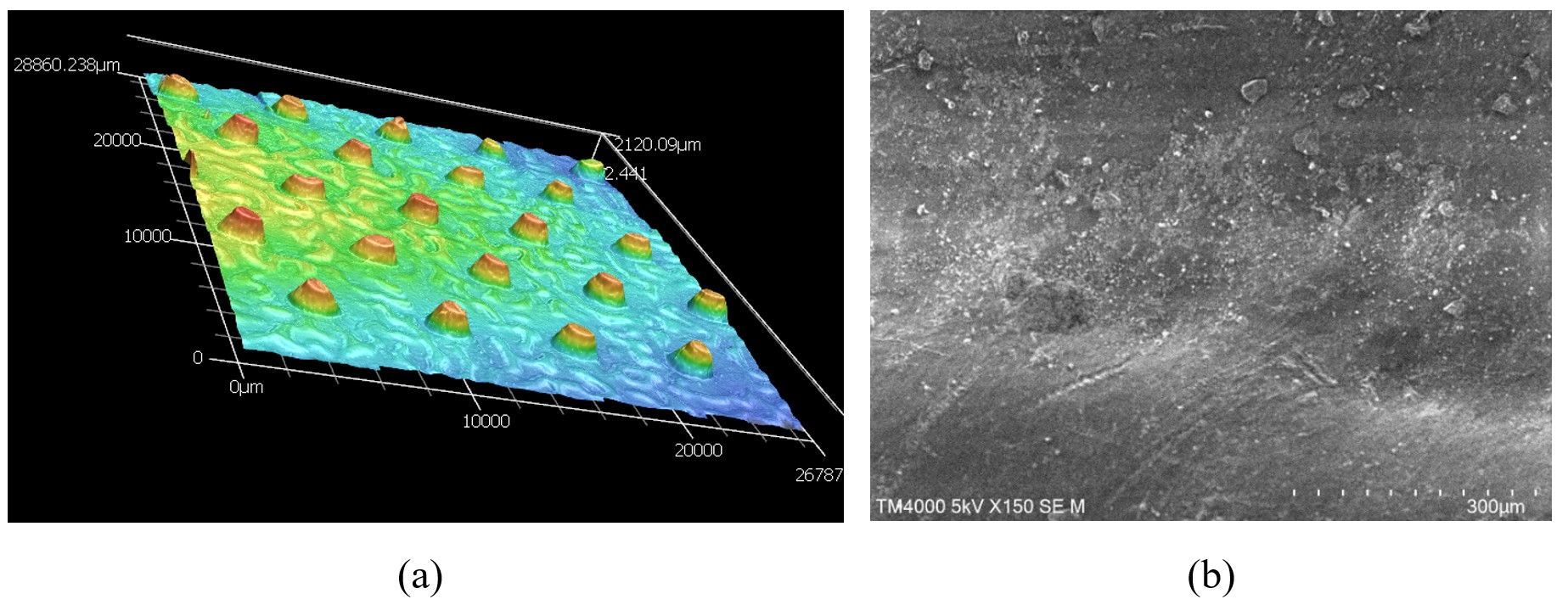
Observing the geomembrane surface by means of an optical microscope can also help to understand differences between obtained interface shear strength values. Araujo et al. (2022) investigated how the geomembrane surface (Figure 6a) can affect soil-geosynthetic friction. The study showed that, in addition to the geomembrane roughness and height, the geomembrane manufacturing process (blown film or flat die) can impact the interface resistance, therefore indicating another property to be observed in the analysis of the interface resistance.
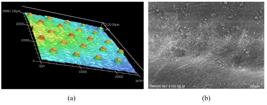
Advanced techniques to investigate soil-geosynthetic interface shear strength: (a) surface roughness analysis and (b) Geomembrane SEM image after ageing.
Tanga et al. (2024) conducted Machine Learning analysis to identify which parameters have the highest influence on the interface resistance between geomembrane and soil. In the study, more than 400 data from inclined plane and direct shear tests were used for training and testing the Random Forest technique used (Breiman, 2001). Therefore, it was possible to determine that the height of the geomembrane roughness plays a key role on the interface resistance but not being the only influential parameter.
Furthermore, the geosynthetic surface can change due to ultraviolet exposure and mechanical damage in the field. Figure 6b shows an SEM image of a geomembrane after several weeks of UV exposure and vehicle traffic over it. This surface change can modify the interface shear strength with the overlying material in comparison with the case of a surface of a virgin geosynthetic.
4. Durability of geomembranes and geosynthetic clay liners (GCL)
4.1 Durability of geomembranes
Ahari et al. (2011), Touze-Foltz et al. (2012) and Mendes et al. (2013, 2014) carried out laboratory studies on the diffusion of phenolic compounds in virgin and aged HDPE geomembranes and virgin GCL and GCL after contact with synthetic leachate with the same composition as that produced in landfills.
The adsorption characteristics of 5 phenolic compounds are reported for geomembranes: 4-chlorophenol (4-CP), 2,4-dichlorophenol (2,4-DCP), 2,4,6-trichlorophenol (2,4,6-TCP), 2,3,5,6-tetrachlorophenol (2,3,5,6-TeCP) and pentachlorophenol (PCP).
The PE films studied herein were produced from the same base resin as commercially available HDPE geomembranes in Europe; namely, a copolymer of polyethyleneoctene that was obtained in the form of pellets containing process stabilizers (antioxidants effective at high temperatures). A diffusion-experiment apparatus for geomembranes consists of two independent cylindrical glass chambers and the specimen of PE film was placed between the two chambers of the apparatus. More information on these studies can be found in Mendes et al. (2014).
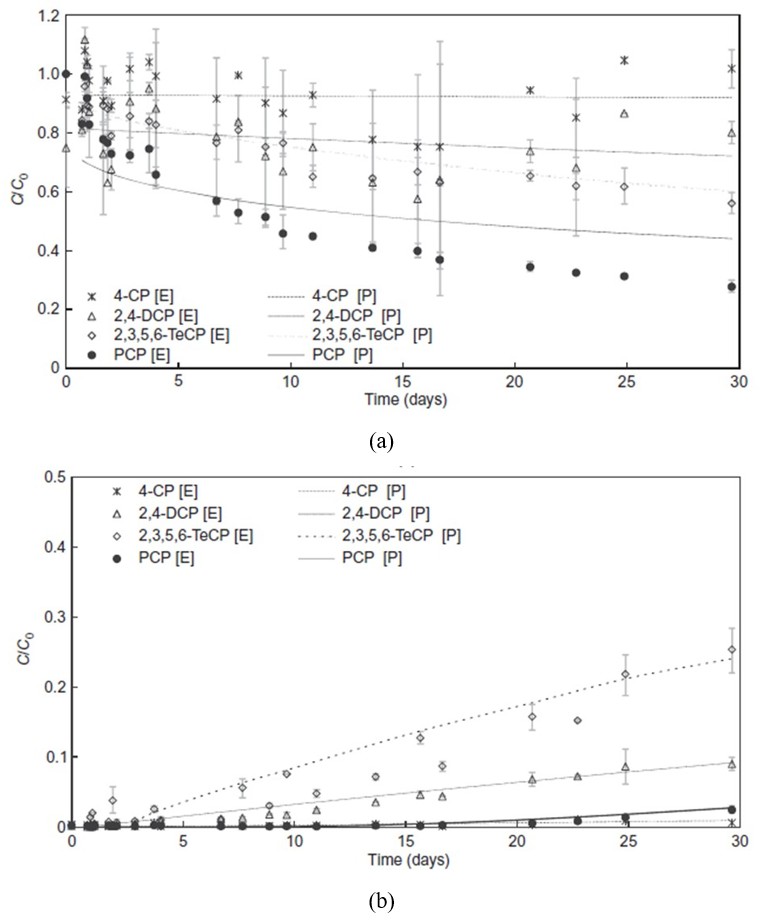
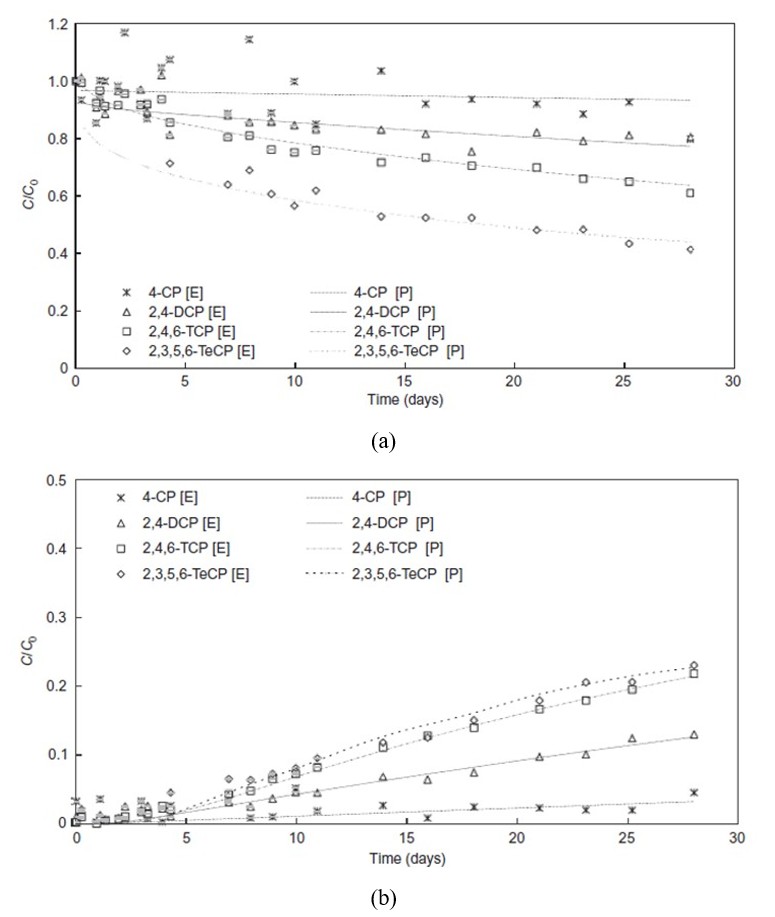
Figures 7 and 8 shows the temporal variation in concentration (normalized by initial concentration where C = final concentration in the source and C0 = initial concentration in the source solution) of chlorophenols in the source and the receptor chambers, respectively, for virgin and aged PE films. The data for aged PE films correspond to a single film specimen. The experimental data are identified by ‘E’ and ‘P’ to theoretical curves modelled in the figures.
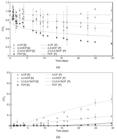
Temporal evolution of chlorophenols concentrations for virgin PE films: (a) source, (b) receptor.
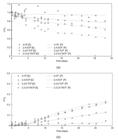
Temporal evolution of chlorophenols concentrations for aged PE films: (a) source, (b) receptor.
The aim of the study was to determine any possible detrimental effect of ageing on the diffusion parameters of PE film. For PE films, most of the diffusion coefficients obtained in the tests showed lower values for the aged samples than for the virgin ones. This reduction in the diffusion coefficient can be explained by the increase in crystallinity caused by the ageing of PE films.
4.2 Durability of geosynthetic clay liners (GCL)
The adsorption of 7 phenolic compounds was studied by Mendes et al. (2013): p-cresol (4-MP), 2,4-dimethylphenol (2,4-DMP), 4-chlorophenol (4-CP), 2,4-dichlorophenol (2,4-DCP), 2,4,6-trichlorophenol (2,4,6-TCP), 2,3,5,6-tetrachlorophenol (2,3,5,6-TeCP) and pentachlorophenol (PCP). The quantification of concentrations of phenolic compounds was performed by HS-SPME-GC-MS (Headspace Solid-Phase-Micro Extraction-Gas Chromatography-Mass Spectrometry) according to analytical method developed by Limam et al. (2010).
For all contaminants studied, an increase in diffusion coefficients for aged specimens compared to virgin specimens was observed in rates varying from 1.3 (2,3,5,6 TeCP and PCP) to 5.0 (4-CP). This maximum rate is the order of magnitude of the increase in the hydraulic conductivity of the aged GCL compared to the virgin one by a factor of 8.7, but smaller.
This means, thus, that the detrimental effect of cation exchange on the hydraulic conductivity of a GCL is discussed on a contaminant basis and will not necessarily be indicative of a detrimental effect on the diffusion coefficient of phenolic compounds through GCLs. The results for variations in concentration (normalized with respect to the initial concentrations where C= final concentration in the source and C0 = initial concentration in the source solution) with time of chlorophenols, in the source and receptor compartments at 23°C for virgin and aged GCL specimens can be found in Mendes et al. (2013).
The concentration of contaminants in the source decreased with time, whereas the concentrations in the receptor increased as the contaminants diffused through the GCL specimens, as usually noticed in diffusion tests. Comparing results obtained for aged and virgin GCLs, an increase in the diffusion coefficients in aged GCLs for all contaminants studied can be noticed. This means that the increase in the hydraulic conductivity due to cation exchange while GCL is percolated by a synthetic leachate leads to an increase in the diffusion coefficients of the phenolic compounds studied. More information on these studies can be found in Mendes et al. (2013, 2014).
5. Reinforcement of embankments on soft soils
5.1 Florianópolis test embankments
In late 2002, three test embankments were taken to failure using similar construction procedures (Almeida et al., 2011; Magnani et al., 2010a). Test Embankment 1 (TE1) incorporated both geosynthetics — woven polyester basal reinforcement layer 200 x 45 kN/m, J = 1.700 kN/m — and vertical drains (Colbonddrain CX 1000) in a triangular array with a spacing of 1.30 m. Test Embankment 2 (TE2) utilized reinforcement only. This section focuses on the two reinforced test embankments, TE1 and TE2 (Magnani et al., 2009; Magnani et al., 2010a).
Due to increasing deformation, the calculated factor of safety (FS) for the 17th lift layer was 1.15 for TE 1 and 1.25 for TE 2. At this layer the mobilized tension in the geosynthetic reached 18 kN/m for TE1 and 14 kN/m for TE2. The analysis revealed that using a constant reinforcement tension in limit equilibrium calculations significantly overestimates the FS. For instance, while a computed FS of 1.4 was based on T = 120 kN/m, the actual FS is much lower, approximately 1.15.
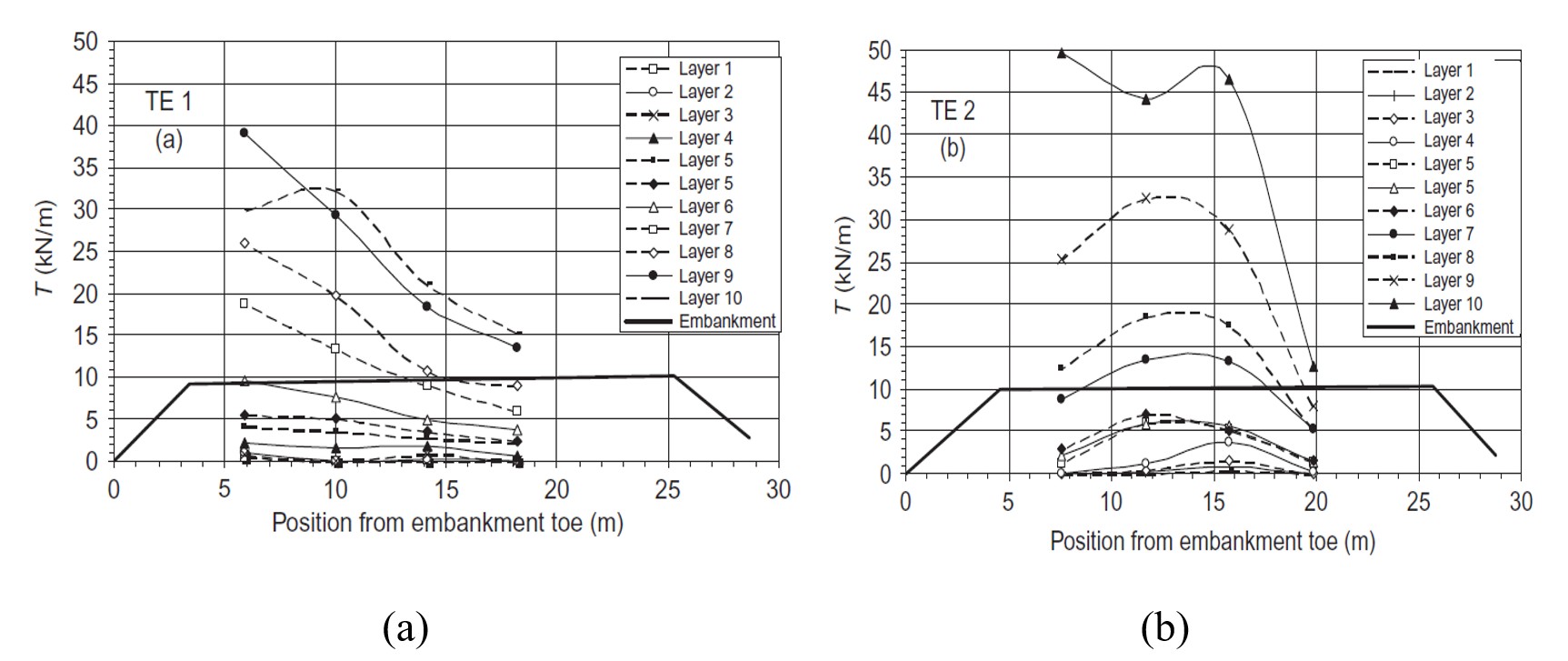
This discrepancy suggests the potential for unforeseen failures, leading to unsafe conditions, because the compatibility strain in the reinforcement has to be taken into account in the analysis. Further insights into this behavior can be found in Magnani et al. (2010b). Figures 9a and 9b illustrate the measured tensile forces mobilized in the geosynthetic for each construction layer for both embankments. Surface cracking observed after the placement of the 10th fill layer indicated the failure of both test embankments.
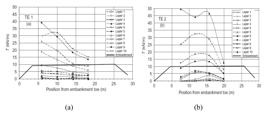
- Measured tensile forces mobilized in the geosynthetic reinforcement (Magnani et al. 2009): a) Test embakment 1; b) Test embankment 2.
In Brazil, prefabricated vertical drains (PVDs) have been utilized primarily in the construction of embankments over soft soils since the 1980s (Almeida & Marques, 2013). The Sarapuí soft soil deposit has been studied over the past fifty years (Almeida & Ortigão, 1988; Almeida & Marques, 2003). This deposit is composed of fluvial and marine sediments.
5.2 Use of prefabricated vertical drains (PVDs) to accelerate settlements
In this research, two test embankments were constructed, one measuring 35 m x 315 m, and was divided into seven instrumented sub-areas. Five of these sub-areas employed different types of vertical drains arranged in a triangular pattern (Almeida et al., 2005). Piezometric measurements (Almeida & Ferreira, 1992) revealed that the sand drains exhibited superior drainage performance compared to the prefabricated drain types. Among the installed prefabricated drains, the geotextile-prefabricated drains outperformed fibro-chemical drains.
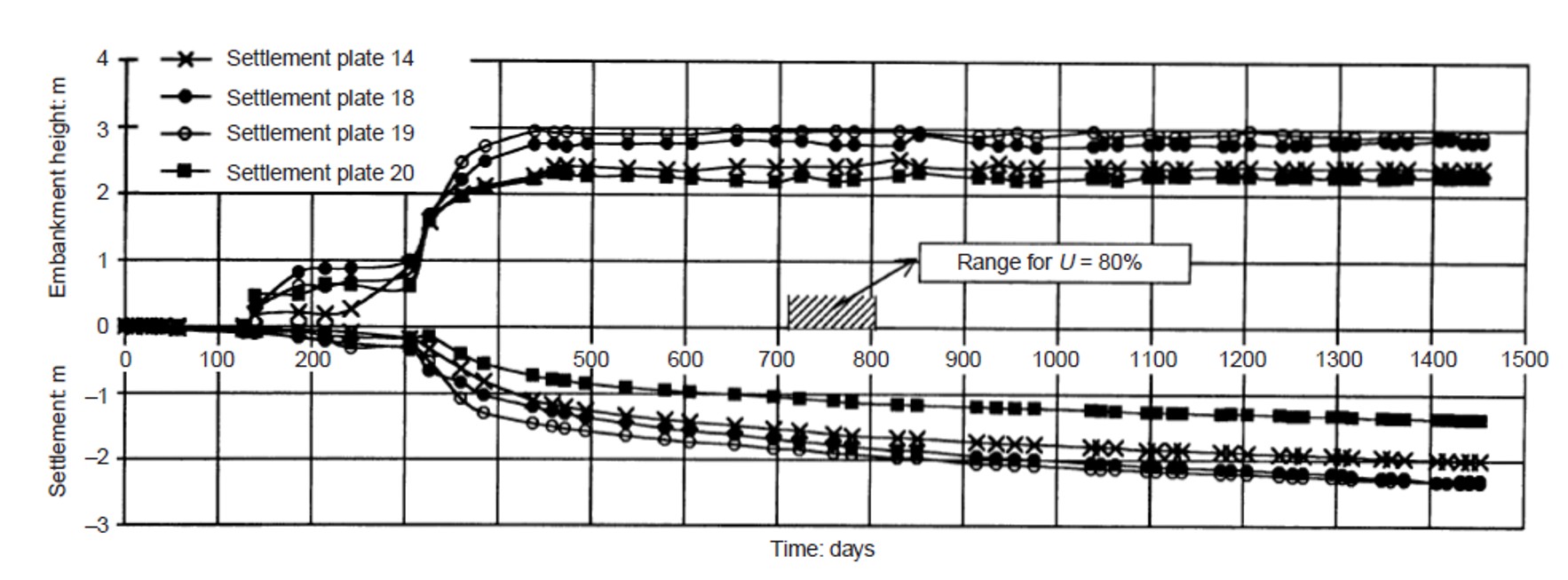
A settlement study was conducted at the Barra da Tijuca site in Rio de Janeiro, where PVDs were installed in a soft soil layer with a thickness of 12 m (Almeida et al., 2001). Settlements were monitored using 20 settlement plates until the degree of consolidation reached 90%. The installed PVDs were measuring 0.1 m by 0.005 m, arranged in a triangular pattern with a spacing of 1.70 m. Figure 10 illustrates the measured settlements and the corresponding embankment heights associated with stabilization.
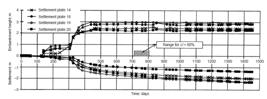
- Measured settlements from select settlement plates and corresponding embankment heights (Almeida et al. 2000).
To evaluate the increase in clay strength at this site, vane tests were conducted before and after the embankment construction (U = 90%). The gain in undrained strength (ΔSu) divided by the increment in effective stress (Δσ’v) yielded an overall ratio ΔSu/Δσ’v = 0.22. Further details can be found in Almeida et al. (2001) and Almeida et al. (2005), which conclude that the PVDs were effective at the Barra da Tijuca test site.
Vacuum consolidation techniques can be categorized into two methods: the membrane method (MM) and a membrane-less method (ML). In the membrane method, commonly used in earlier applications, a vacuum is applied to a drainage blanket located beneath a geomembrane, typically made of PVC. This geomembrane is installed at ground level below the water table within a peripheral trench, effectively confining the vacuum within the soil mass. Notable examples of the MM method are detailed in the work of Marques & Leroueil, (2015). In contrast, the membrane-less method applies vacuum directly to the prefabricated vertical drains (PVDs) without the use of a geomembrane.
5.3 Geosynthetic-encased granular columns (GEC)
Encasing granular columns with geosynthetic material (GEC), has been shown to reduce column bulging and overall displacements of the soft soil and to increase the column load carrying capacity compared to ordinary granular columns.
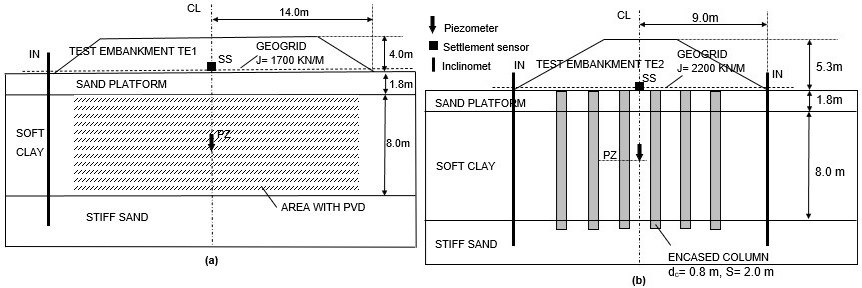
Encasing granular columns with geosynthetic (GECs) have been used to mitigate column bulging and reduce settlements of embankments built on soft soils (Almeida et al., 2018; Hosseinpour et al., 2019). In 2002, a test embankment (TE1) measuring 4.0 m in height was constructed, using PVDs, in Brazil, city of Florianópolis (Magnani et al. 2010a, b). This embankment incorporated basal reinforcement with a stiffness of J = 1700 kN/m and utilized prefabricated vertical drains (PVDs). The maximum load applied by the embankment was 60 kPa. A 5.3 m-high test embankment (TE4) was constructed in 2013 in Rio de Janeiro, Brazil, with a total applied vertical stress of 150 kPa. The test area was stabilized using thirty-six GECs. Figure 11 illustrates a cross-section view for TE1 and TE4.
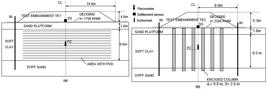
Embankments: (a) un-strengthened foundation TE1; (b) strengthened foundation TE4, (Hosseinpour et al., 2016).
The characteristics of the test embankments TE1 and TE4 are detailed by Hosseinpour et al. (2016) and the geotechnical properties of the clay foundations are presented in both Hosseinpour et al. (2016) and Hosseinpour et al. (2017). TE1 embankment incorporated basal reinforcement with a stiffness of J = 1700 kN/m and utilized prefabricated vertical drains (PVDs). TE4 embankment was stabilized using thirty-six geosynthetic-encased granular columns (GECs), arranged with a center-to-center spacing (S) of 2.0 m. TE1 and TE4 share similar characteristics, enabling a meaningful comparison between the two.
A comparison between TE1 and TE4 reveals that the geosynthetic-encased granular columns (GECs) significantly reduced settlements and horizontal displacements. Variations of the excess pore water pressure Δu measured in the middle of the soft clay indicate that the GECs columns are more effective in dissipating excess pore pressure than PVDs. Araújo (2009) and Araújo et al. (2009) also reported good performance of geosynthetic encased granular columns in the unsaturated collapsible soil of Brasília, Brazil.
6. Piled embankments
A pile-supported embankment was constructed at Barra da Tijuca, city of Rio de Janeiro, Brazil, using square pile caps measuring 0.8 m, combined with a bi-directional polyester geogrid (Almeida et al., 2007). The height of the embankment ranged from 1.08 m to 1.28 m. The experimental site was divided into several sections (Almeida et al., 2007), with a focus on two specific sections: one in a non-excavated condition and the other in an excavated condition. Instrumentation included settlement plates (SP) and strain gauges (DG) to monitor reinforcement deformations. Further details about the strain gauges can be found in Ehrlich et al. (2010).
Notably, the stabilization of settlements at SP03 occurred immediately after completion of the embankment construction. Research conducted by Hartmann et al. (2014) and Almeida et al. (2018) emphasized the effects of pre-tension and the number of geosynthetic layers on the behavior of piled embankments. The results demonstrated good overall performance and detailed project specifics are provided by Almeida et al. (2008).
Studies performed by Blanc et al. (2013, 2014) examined the results of centrifuge models of piled embankments with α < 5% (area replacement ratio) which is not typical in Brazilian practice. Centrifuge tests were employed to simulate scenarios where the soft soil provides no support beneath the geosynthetic (Fagundes et al., 2017). The maximum deflection of the geosynthetic (zd) during the centrifuge tests occurs when the loss of contact between the geosynthetic and the mobile tray happens at Emax (maximum efficiency of the piled embankment) conditions.
According to Fagundes et al. (2017), the loss of contact typically occurs at the mid-point of the diagonal distance between two piles. However, analytical methods calculate the deflection z longitudinally between the piles. Fagundes et al. (2017) and Almeida et al. (2019) suggest adopting the relationship zd/z = √2 based on experimental and numerical models. In this case z is the deflection in the geosynthetic between adjacent piles and zd is the deflection in the geosynthetic at the middle point of diagonal between piles.
The differential settlement at the top of the embankment increases to a maximum point, after which it stabilizes due to the geosynthetic reinforcement. Once the geosynthetic reaches its maximum deflection, it effectively supports the entire load of the embankment. Overall, a good agreement is observed between the experimental and numerical results (Almeida et al., 2019).
7. Experimental, numerical and analytical evaluation of geosynthetic reinforced soil (GRS) walls
7.1 Introduction
A crucial aspect of GRS walls design is predicting the mobilized maximum load (Tmax) in the reinforcements. Traditionally, design methods rely on limit equilibrium or Rankine methods, which estimate Tmax based on local equilibrium of forces but often ignore factors like reinforcement deformability and soil compaction (Leshchinsky & Boedeker, 1989; Ehrlich at al., 2000). To address these limitations, more realistic working stress design methods have been developed (e.g., Allen & Bathurst, 2015).
Ehrlich & Mitchell (1994) introduced an analytical procedure for designing reinforced soil walls under working stress conditions that considers compaction-induced stresses and reinforcement-soil properties. Their method does not account for facing stiffness and inclination. Ehrlich & Mirmoradi (2016) and Ehrlich et al. (2017) later simplified this method by including facing inclination, eliminating the need for iterative calculations and simplifying the equations.
7.2 Numerical analyses
Numerical modeling was conducted using PLAXIS 8, a finite-element program. Three procedures for simulating compaction-induced stress (CIS) were compared:
-
Type I: Uniform vertical stress applied at the top of each backfill layer (e.g. Hatami & Bathurst, 2005).
-
Type II: Distribution load applied at the top and bottom of each soil layer, as suggested by Mirmoradi & Ehrlich (2013, 2014b, 2015a, b, c).
-
Type III: Different widths of strip loads applied to the top of each backfill layer (Mirmoradi & Ehrlich, 2018a).
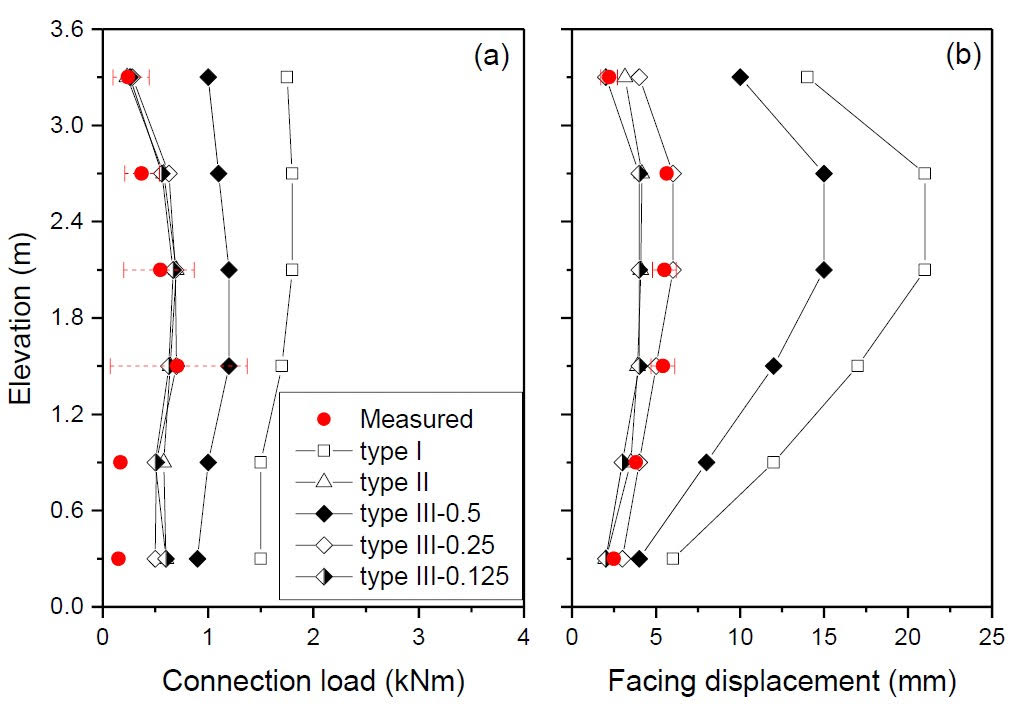
Figure 12 compares the measured connection loads and relative facing displacements with those numerically calculated considering three mentioned procedures for simulation of CIS. The results show that the procedure Type I led to a constant stress increase, which was unrealistic. Procedure Type II provided a more representative stress distribution, while Procedure Type III matched the elastic solution but was more time-consuming. The study recommended Procedure Type II for practical use due to its satisfactory results and efficiency.
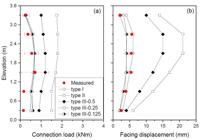
Measured and calculated values of (a) connection loads and (b) horizontal facing displacement.
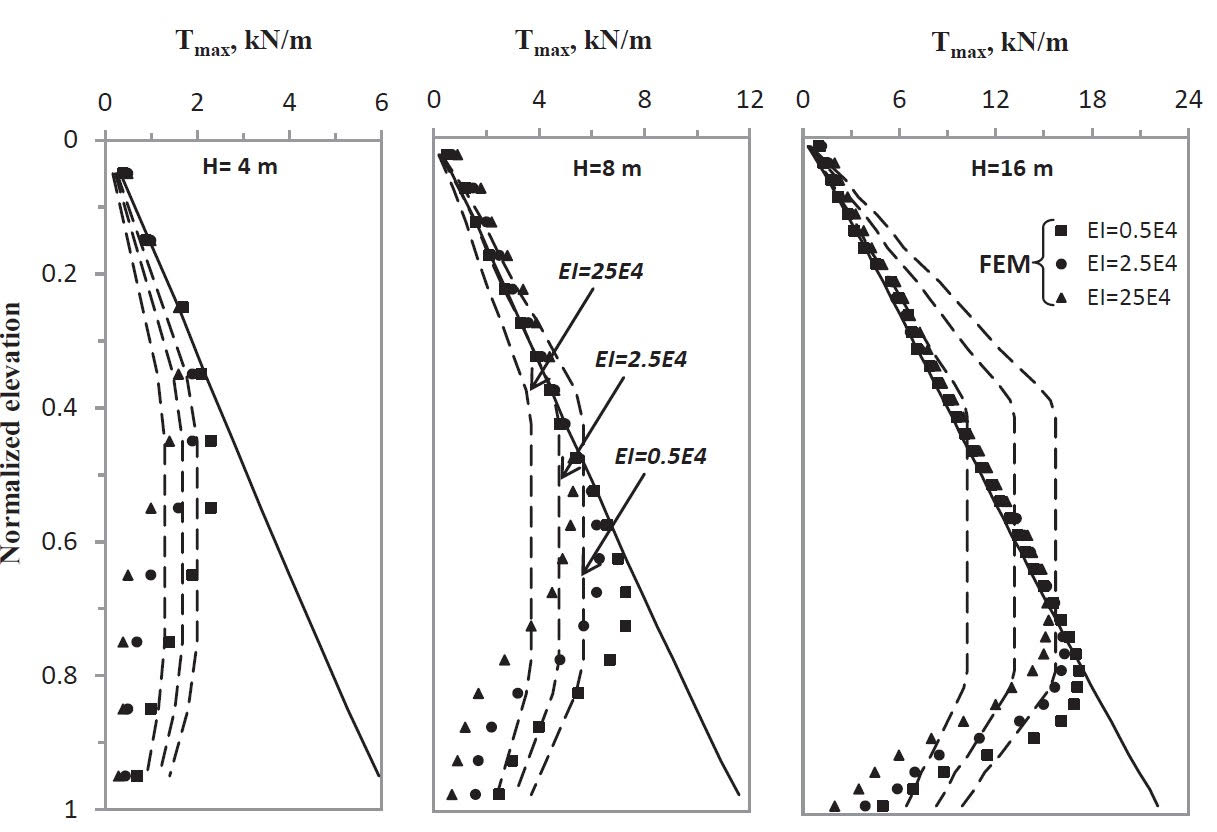
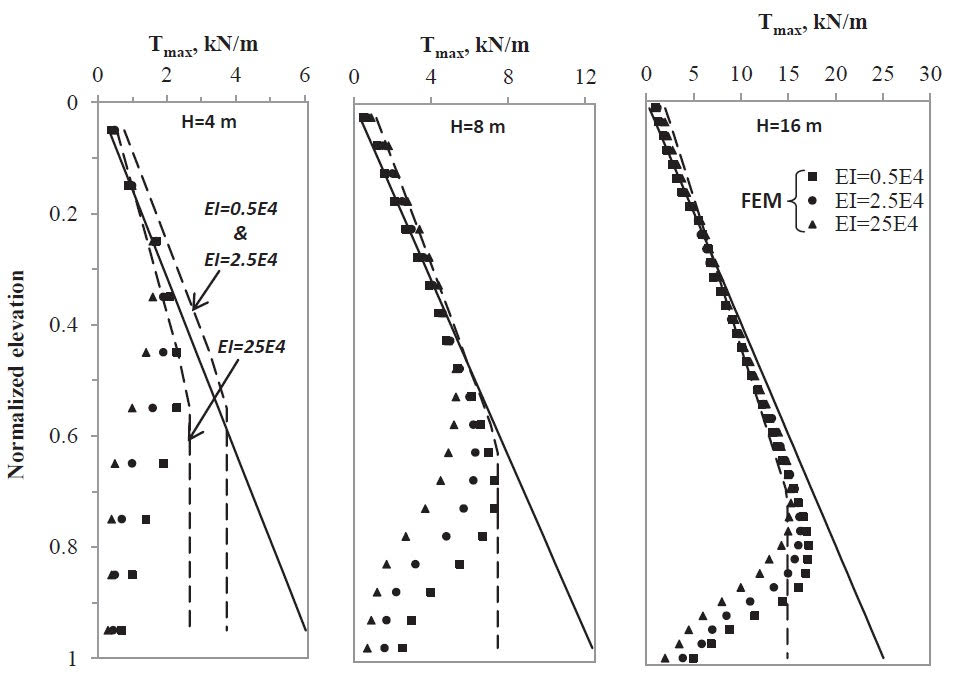
Parametric study was carried out investigating the impact of wall height (H) and facing stiffness (EI). As shown in Figures 13 and 14, the results of the numerical analyses were compared with those predicted using the simplified AASHTO, Ehrlich & Mitchell, K-stiffness, and Simplified stiffness design methods.
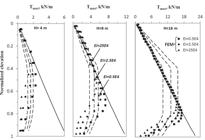
Normalized elevation versus reinforcement load determined by FE analyses (symbols), K-stiffness method (Dashed lines), and EM method (solid lines).
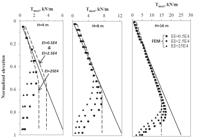
Normalized elevation versus reinforcement load determined by FE analyses (symbols), simplified stiffness method (dashed lines), and AASHTO simplified method (solid lines).
Figure 13 and Figure 14 compare the values of the distribution of the maximum reinforcement load for different wall height and facing stiffness calculated by different methods. The results of the numerical analyses are related to the vertical walls with reinforcement stiffness of 6000 kN/m considering fixed-base conditions (Mirmoradi & Ehrlich, 2017a). The results indicate that: (a) the impact of height and facing stiffness on Tmax is significant up to about 4 m above the base. For taller walls, this effect diminishes; (b) the AASHTO simplified method overestimated Tmax for shorter walls, but its accuracy improved for taller walls; (c) the simplified stiffness method generally performed well across different heights and stiffnesses.
In Figure 13, it is also shown that Ehrlich & Mitchell (1994) showed better accuracy for tall walls, where facing stiffness and toe resistance effects can be minimal. The K-Stiffness method provided accurate predictions for walls with low heights, while for taller walls, its accuracy depends on the combined effects of facing stiffness and the elevation of reinforcement layers. Moreover, the Simplified Stiffness Method generally accurate but overestimated Tmax for low wall heights and certain facing stiffnesses, as shown in Figure 14.
The study confirms that while traditional methods offer simplicity, working stress methods provide more accurate predictions for reinforced soil wall design. Numerical modeling, particularly with Procedure Type II, effectively simulates CIS. The choice of design method should consider wall height, reinforcement stiffness, and facing conditions to ensure accurate Tmax predictions.
7.3 Physical model studies
At the Geotechnical Laboratory of COPPE/UFRJ, various experimental studies were conducted to assess the impact of different factors on GRS walls (Ehrlich et al., 2012; Ehrlich & Mirmoradi, 2013; Mirmoradi & Ehrlich, 2017b. Mirmoradi & Ehrlich, 2018c). Key variables examined included facing type, toe resistance, compaction effort, facing inclination and surcharge width and location.
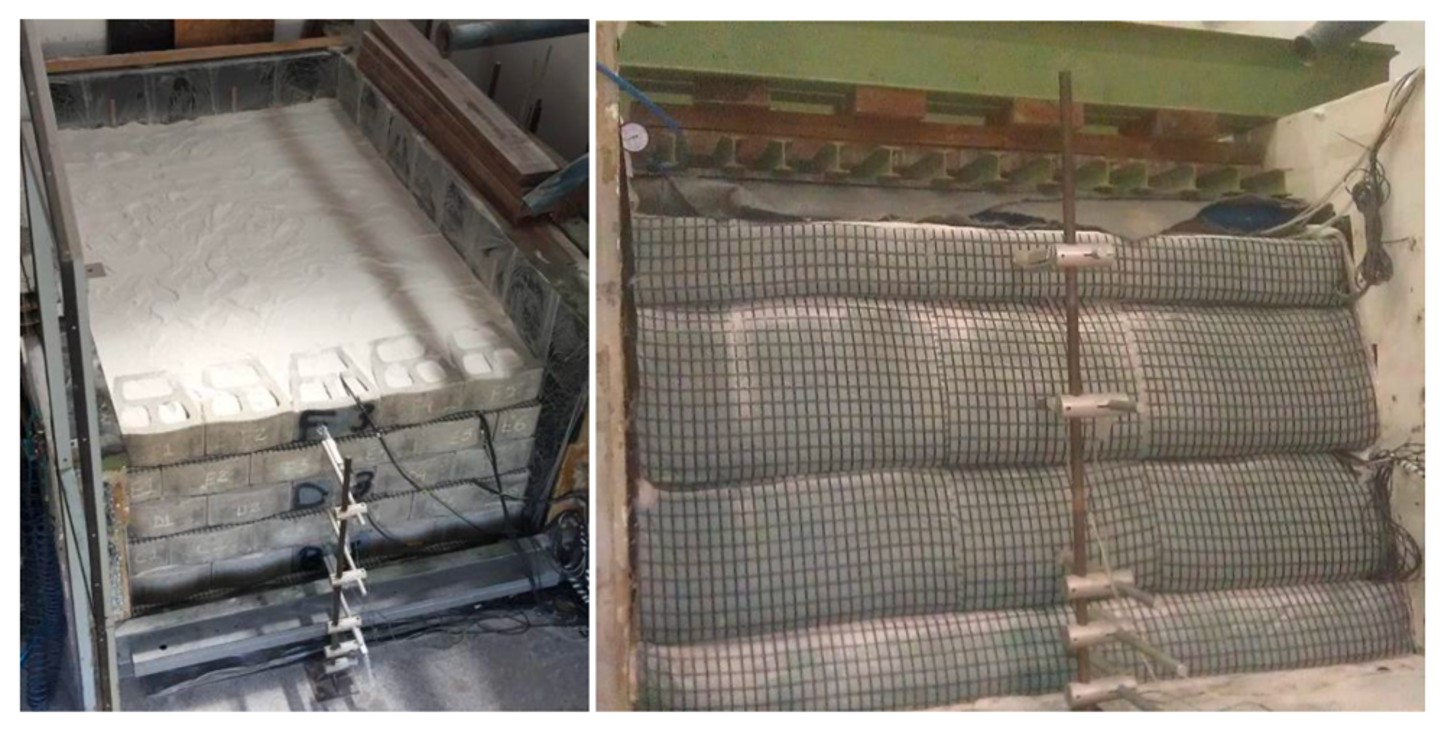
The physical models were constructed in a U-shaped concrete box with dimensions 1.5 m in height, 3.0 m in length, and 2.0 m in width as shown in Figure 15. Reinforcements consisted of polyester geogrids and backfill was compacted using either a light vibrating plate or a vibratory tamper. Figure 15 shows views of a block and wrapped-faced walls. A 1-m wide zone at the bottom of the walls, including the base of the block facing, was lubricated through a sandwich of rubber sheets and silicon grease to allow for movement of the potential failure surface, keeping it away from the wall face.
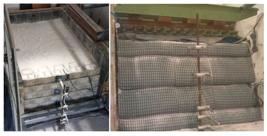
For the fixed-base models, lateral movement of the toe was restricted by a steel beam fixed to the concrete U-shape wall. At the end of the construction of all walls, a vertical surcharge loading of up to 100 kPa was applied to the top of the walls. For the fixed base walls, after the end of construction and applying the surcharge load, it was kept constant on 100 kPa. With the surcharge in place, the toe of the wall was released step by step (0.5 mm horizontal movement allowed in each step).
Using this procedure, the toe of the wall was gradually released to the free base condition (Mirmoradi et al., 2016; Mirmoradi & Ehrlich, 2016, 2019). Measurements included reinforcement tension, toe load, horizontal facing displacement, and vertical displacement at the wall top.
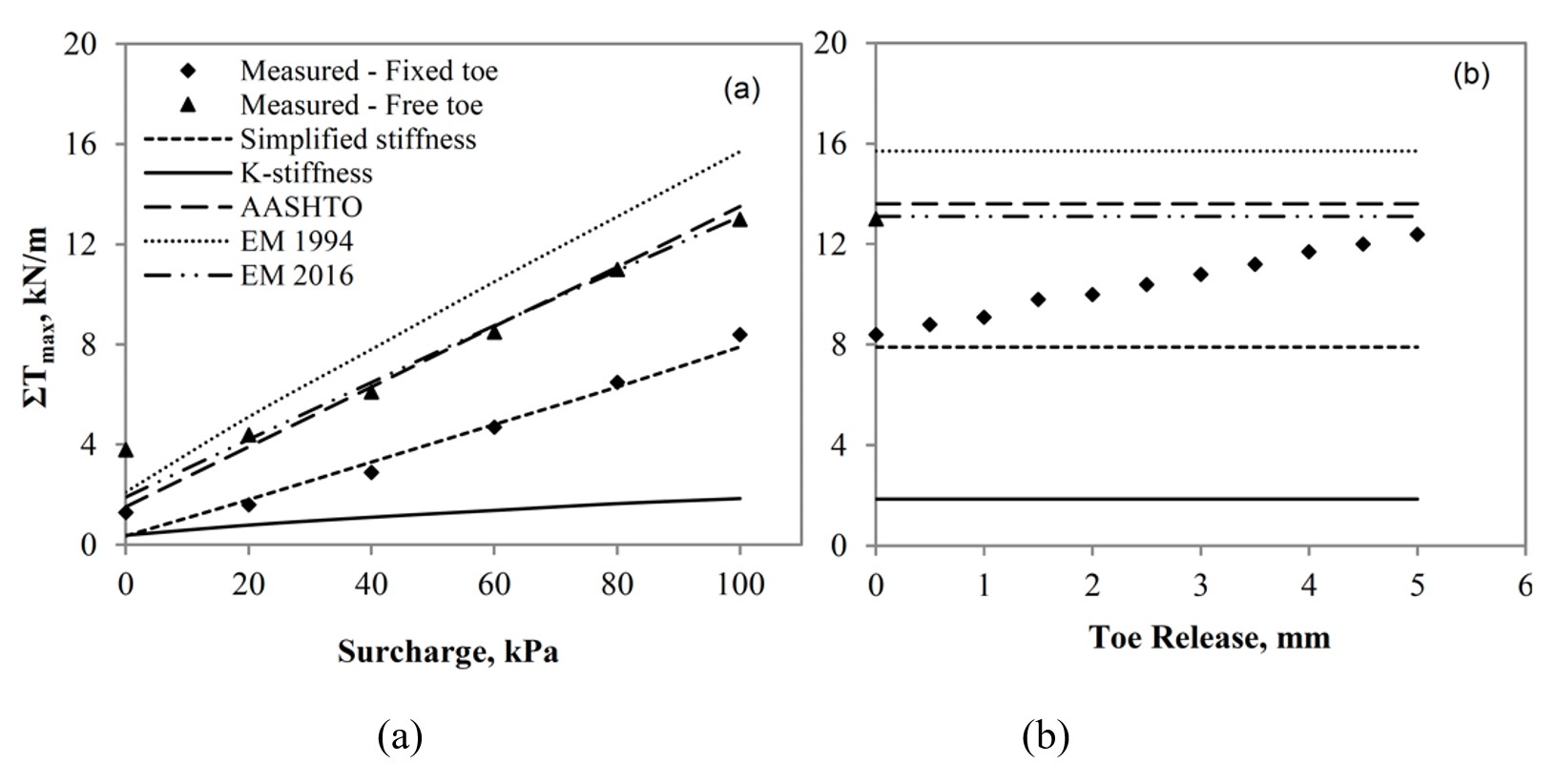
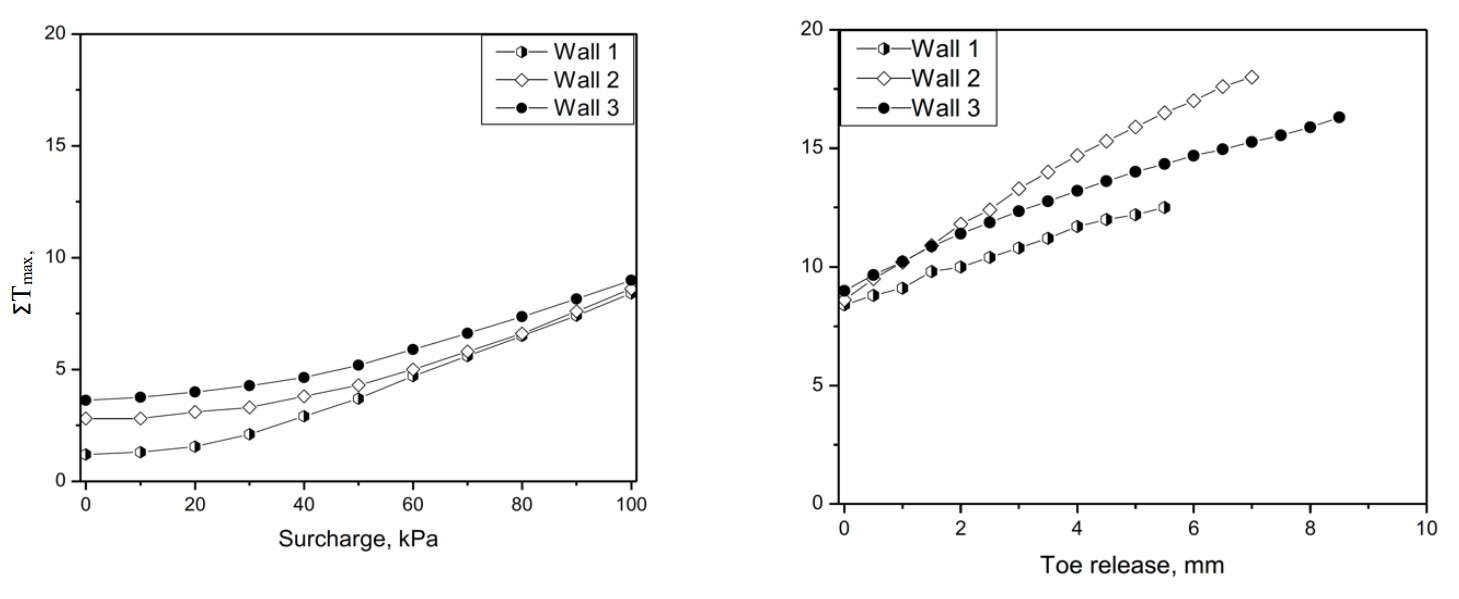
Figure 16 compares measured and calculated values of the summation of Tmax. The results revealed that conventional design methods such as AASHTO (2017), Ehrlich & Mitchell (1994) and Ehrlich & Mirmoradi (2016) often overestimate reinforcement loads during surcharge application, with the extent of overestimation decreasing as toe restraint is removed. The Ehrlich & Mirmoradi (2016) method showed better alignment with experimental data for walls with free bases. The comparison also indicated that conventional methods do not fully account for factors such as facing stiffness and toe resistance, which can lead to discrepancies in reinforcement load predictions.
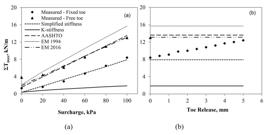
Comparison of the measured and calculated values of ƩTmax using shear resistance soil parameters determined by plane strain tests; (a) surcharge load applications and (b) the toe release.
Figure 17 presents the measured values of the reinforcement loads and horizontal facing displacements for three physical models. The walls were identical except for the compaction conditions. In Wall 1, the entire surface of the backfill layers was compacted using a light vibrating plate only. In Wall 2, first the entire surface of the backfill layers was compacted using a light vibrating plate, and then the backfill, except for 0.5 m from the back of the facing, was compacted using a vibratory tamper. For Wall 3, the entire surface of the backfill layers was compacted using the vibrating plate and vibratory tamper (Mirmoradi & Ehrlich, 2018b).
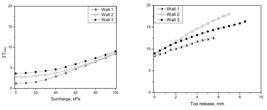
These results indicate that different compaction methods affected reinforcement loads and displacements. Walls with backfill compacted using both light and heavy equipment generally exhibited higher reinforcement loads and horizontal displacements. Heavy compaction resulted in better post-construction behavior, suggesting that thorough compaction, especially within 0.5–1.0 m from the facing, improves wall performance (Ehrlich & Mitchell, 1995; Ehrlich et al., 2012).
These studies evaluate how factors like facing stiffness, toe resistance, compaction effort, reinforcement stiffness and wall height impact reinforced soil walls. Key findings include:
-
1 - The prediction capabilities of design methods (AASHTO simplified, Ehrlich & Mirmoradi (2016), K-stiffness, simplified stiffness) are significantly affected by factors such as facing stiffness, toe resistance, and wall height.
-
2 - For vertical walls with segmental block facing, the effects of facing and reinforcement stiffness, wall height, and toe resistance are limited to about 4 m above the wall base.
-
3 - Compaction anticipates deformation during construction but reduces post-construction settlements and lateral movements.
-
4 - The impact of facing on maximum reinforcement load is also influenced by shear stress at the base interface.
7.4 Geosynthetics and recycled construction and demolition wastes (RCDW)
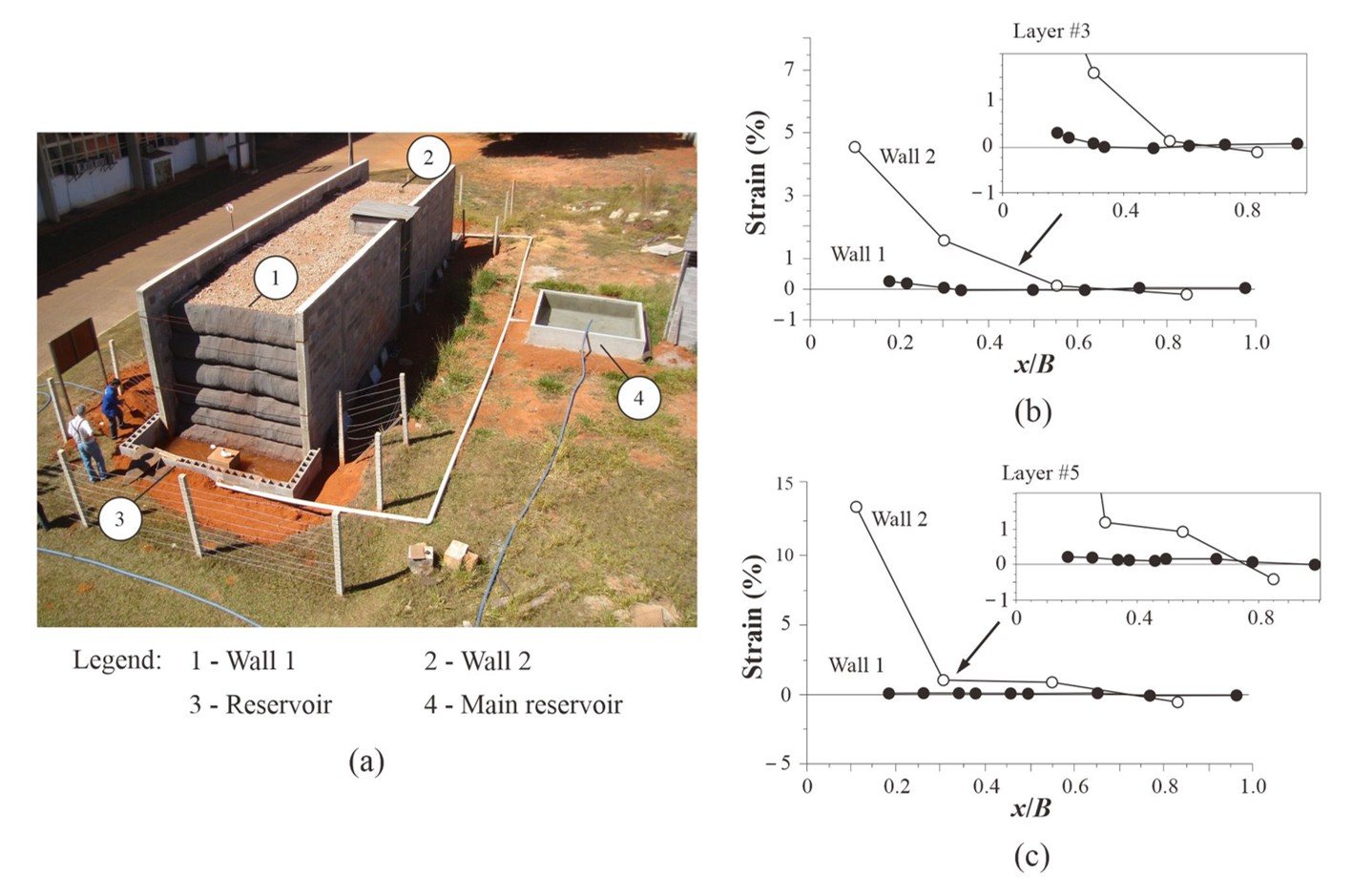
The use of alternative construction materials has increased as a measure to reduce the disposal of waste in landfills as well as environmental impacts. In this context, recycled construction and demolition waste (RCDW) have been used as fill in geosynthetic reinforced structures. Full-scale geosynthetic reinforced walls with RCDW as backfill material were firstly built at the University of Brasília, UnB. Santos et al. (2013, 2014) assessed the performance of reinforced walls constructed with such novel backfill material and the influence of foundation soil collapse on the behaviour of the walls (Figure 18a).
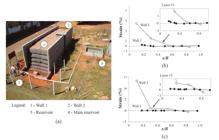
Geosynthetic reinforced walls with RCDW backfill: a) View of test facility; b) Reinforcement strain in Layer #3 (elevation of 1.2 m) after inundation; c) Reinforcement strain in Layer #5 (elevation of 2.4 m) after inundation. Note: x = distance to the wall face, B = reinforcement length. (Modified from Santos et al., 2014).
The RCDW obtained from a local recycling plant was classified as gravely sand, with mass composition consisting of 65% of soil particles smaller than 4.8 mm. The performance of the walls was monitored during an entire rainy season and after an artificial inundation process, the last carried out to achieve the foundation soil collapse by increasing its moisture content by means of infiltration of water from reservoirs (see Figure 18a) at the faces of the walls connected to a drainage layer along their bases.
The wall constructed with a relatively more extensible nonwoven geotextile (in non-confined condition) (Wall 2) showed greater strain at the face – with local bulging and sagging – and the reinforcement close to the wall face than for the nominally identical constructed with the geogrid reinforcement (Wall 1). However, within the wall starting immediately behind the facing the horizontal displacements for both walls and reinforcement strains were similar and less than 1% (Figures 18b and 18c).
Fonseca et al. (2013) used numerical tools to simulate the walls performances and revealed the difficulties of modelling the field conditions. Although the results can be considered conservative, they showed superficial settlements (at the top of walls) and face displacements consisted with the experimental results.
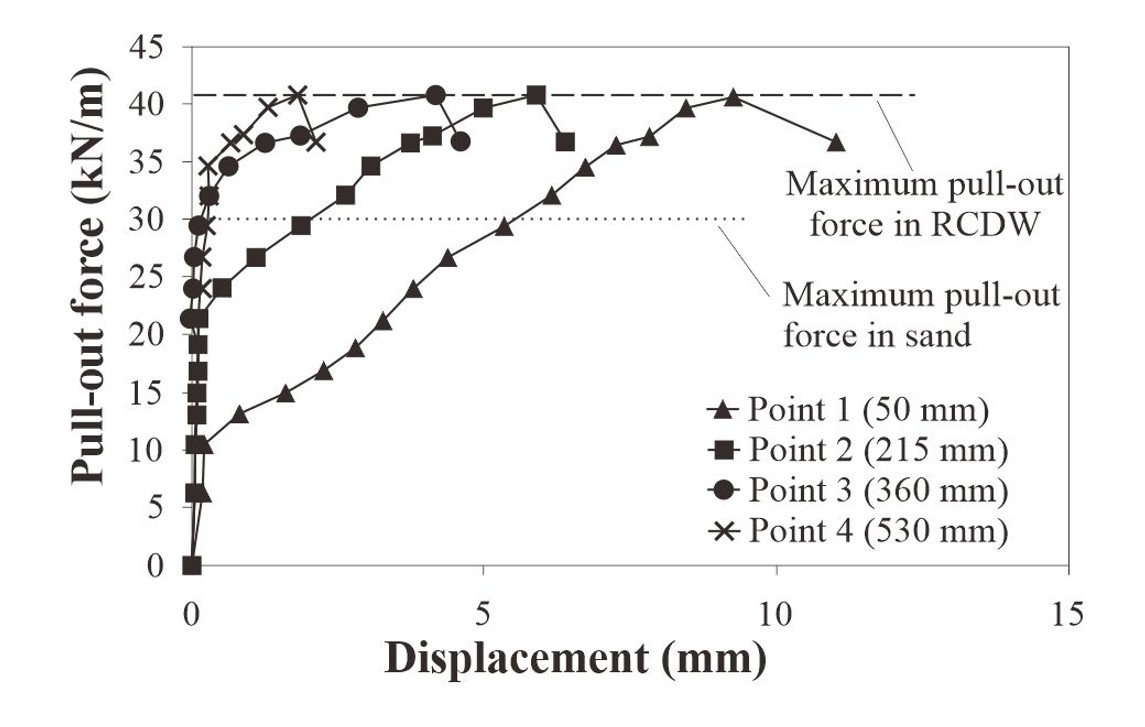
Geosynthetic pull-out testing with recycled construction and demolition waste (RCDW) has started at the São Carlos Engineering School, University of São Paulo, EESC-USP. Santos & Vilar (2008) conducted in-laboratory large-scale pull-out tests on geogrid (polyester core with PVC coating, Tult = 61 kN/m, aperture size of 30 x 20 mm) in RCDW (classified as gravely sand), where Tult is the ultimate tensile strength.
The results of pull-out tests with RCDW have shown that the recycled material yielded a better performance when compared with the standard sand (Figure 19). Oliveira et al. (2024) performed pull-out test on geogrid in recycled sand using a small-scale testing box. The research result revealed the specimens were not pulled out (geogrid rupture occurring outside the testing box) when tested under high values of normal confinement pressure (in this case, ranging from 50 to 100 kPa), a result similar to those reported by Araújo Neto (2010).
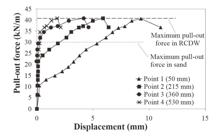
Pull-out force versus displacement curves (RCDW, σ = 50 kN/m2). Note: values in parentheses indicate the distances of each monitoring point to sleeve. (Modified from Santos & Vilar, 2008).
Santos et al. (2012) investigated short-term mechanical damages to geosynthetics caused by RCDW compaction. The research also investigated the environmental effect on mechanically damaged samples. Statistical analysis – using Student’s t-distribution to validate the damage occurrence and calculate the geosynthetics reduction factor (RF) – revealed that geogrid specimens (polyester core with PVC coating, Tult = 20 kN/m, aperture size of 20 x 20 mm, εrup = 12%) submitted to vibratory-hammer compaction presented more severe mechanical damage in comparison with samples compacted with a lightweight roller.
Investigations on the magnitudes of geosynthetic damage due to the launching process of RCDW and compaction method have started at the University of Pernambuco (UPE). Barbosa & Santos (2013, 2014) investigated the effects of different drop heights (0.0, 1.0 and 2.0 m) and compaction method (vibratory-hammer compaction) testing geogrid and geotextile specimens. Fleury et al. (2019) evaluated new damage scenarios in a large-scale in-field test facility at the University of Goiás (UFG).
The results reinforced the importance of carry out investigation of geogrid damage using the specific conditions (material, construction method and loading conditions) of each work and the need of evaluating the occurrence of damage in short- and long-term. Silvestre et al. (2023) conducted in-field investigation on the influence of RCDW saturation conditions on the chemical degradation of mechanically damaged geogrid specimens.
The results of research showed the effects of RCDW-induced chemical degradation on the geogrid characteristics (especially tensile strength and secant tensile stiffness), which emphasizes the need of previous assessment regarding the combination of such mechanisms to obtain adequate design parameters.
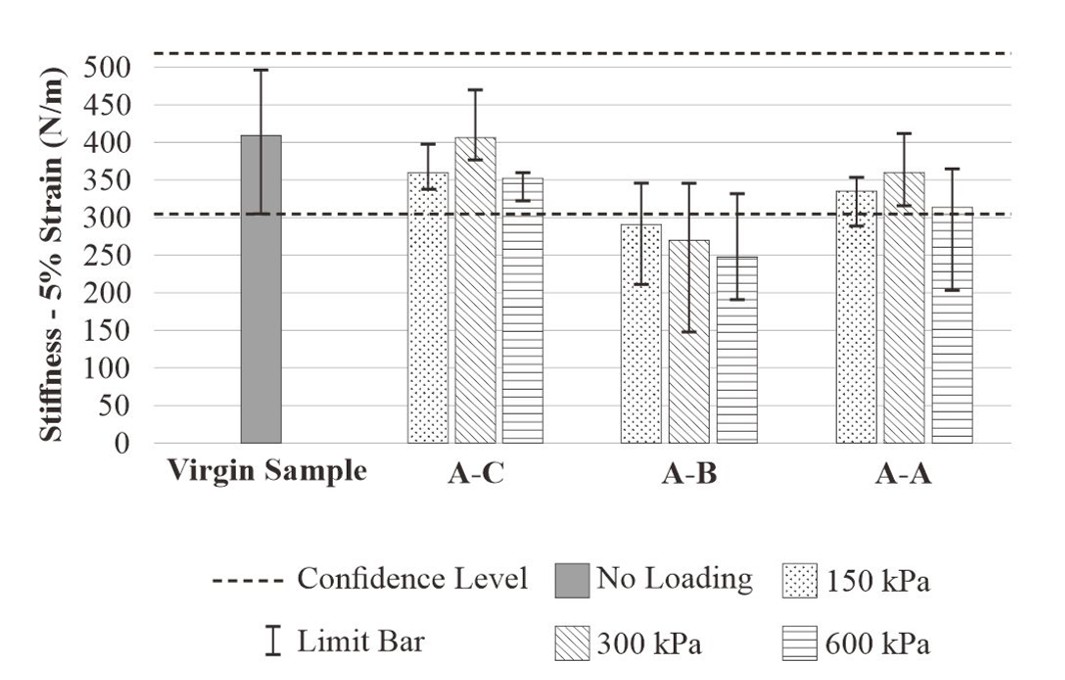
Duarte et al. (2016) conducted laboratory tests at the University of Pernambuco (UPE) to investigate mechanical damage to two woven geotextiles, one of polyester and polyamide (Tult = 100 kN/m, εrup = 10%) and another of polypropylene (Tult = 45 kN/m, εrup = 15%), with a RCDW classified as sandy gravel.
The results of research showed that the grain size distribution and position of particles have an important influence on mechanical damage. Domiciano et al. (2020), using the same testing box and following the loading procedures presented by Duarte et al. (2016), investigated the geogrid damage caused RCDW at the University of Goiás (UFG). The research results revealed that the mechanical damage induced by RCDW did not cause great effects on the average tensile strengths of geogrids but did on their strains at rupture (Figure 20).
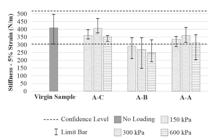
In-laboratory investigation on geosynthetic damage caused by RCDW: stiffness analysis (strain at 5%) of PET geogrid #2. (Modified from Domiciano et al., 2020).
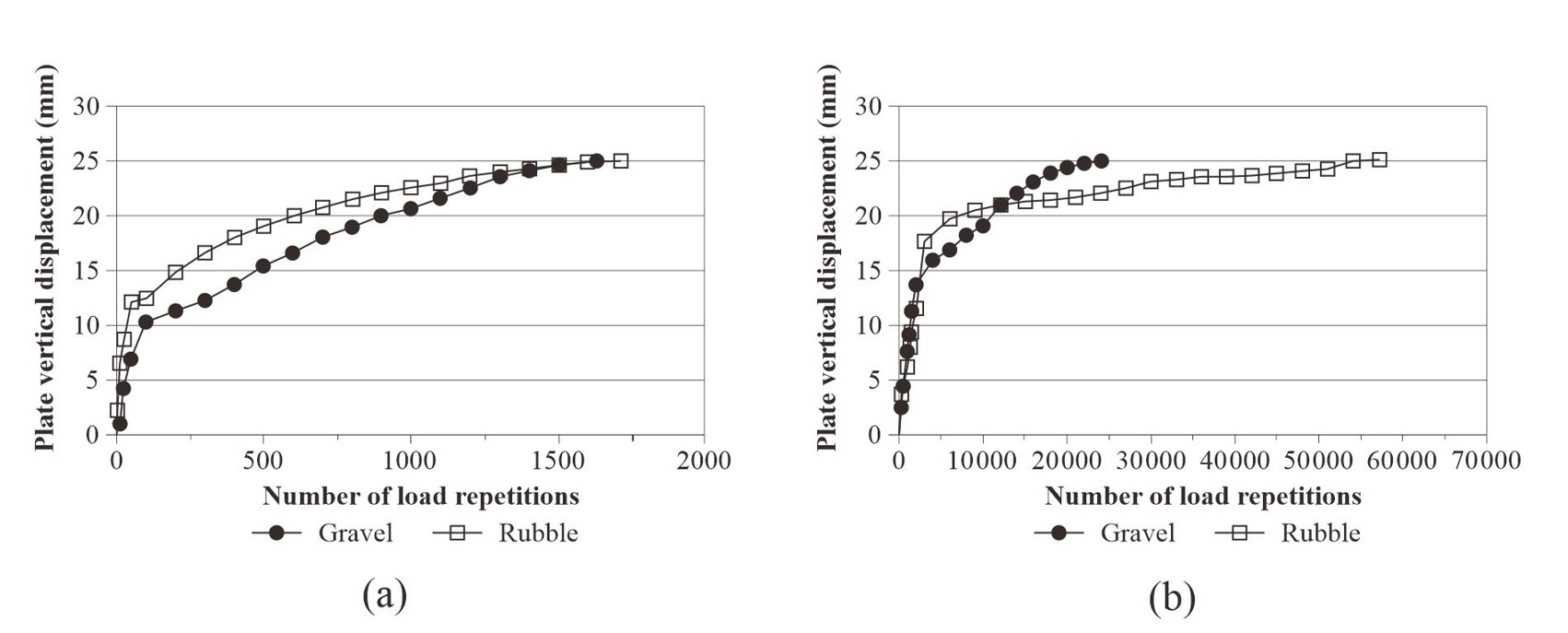
The performance of geosynthetic unreinforced and reinforced unpaved roads constructed with RCDW was investigated by Góngora & Palmeira (2012). Three loading stages were applied in each test, aiming at simulating the road behaviour under virgin conditions and after surface maintenance, as described by Palmeira & Antunes (2010) and Góngora (2011). The results showed that the performance of the geogrid-reinforced rubble fill was comparable to that of the traditional reinforced gravel (Figures 21a and 21b). This result is encouraging regarding the use of alternative low-cost materials in combination with geosynthetic reinforcement in unpaved road construction.
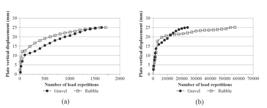
In-laboratory investigation on geosynthetic reinforced unpaved roads constructed with RCDW: a) unreinforced tests, b) reinforced tests. (Modified from Góngora & Palmeira, 2012).
Geosynthetic reinforced walls and unpaved roads with recycled construction and demolition waste fills showed good performance and better tolerance to foundation soil structural collapse than conventional retaining walls.
8. Geosynthetics in mining
8.1 Drainage and filtration using geosynthetics
Geotextiles have been used as drainage and filter materials in geotechnical and environmental works in the past 45 years. Drainage systems in tailings dams or piles may also be subjected to high stress levels. For dams of moderate heights, the stress level can easily overcome 1000 kPa. Research has shown that compression and impregnation of the geotextile by soil particles during fill spreading and compaction or due to the action of seepage forces carrying loose soil particles can markedly increase the geotextile retention capacity (Gardoni, 2000; Palmeira & Gardoni, 2000, 2002; Gardoni & Palmeira, 2002b; Palmeira et al., 2005, 2010, 2019; Palmeira, 2018, 2020, 2024; Moraci et al. 2022).
Gradient ratio filtration tests were carried out and utilized a large instrumented lysimeter to perform tests in iron ore from the Carajás Complex, located in Pará, Brazil. Due to the abundant precipitation in the Amazon Forest, the ore water content reaches 13%, reducing the product competitiveness in the international market due to transportation costs. Regarding the gradient ratio filtration tests, non-woven geotextile filters were utilized and vacuum was applied at the base of the specimen to remove the water from the ore porous structure. Vertical stresses of up to 3000 kPa were applied to simulate field conditions. Regarding the water content reduction tests, the gradient ratio test had a final water content of 6.08%, which was the lowest water content among all tests performed (Gardoni et al., 2010a, b).
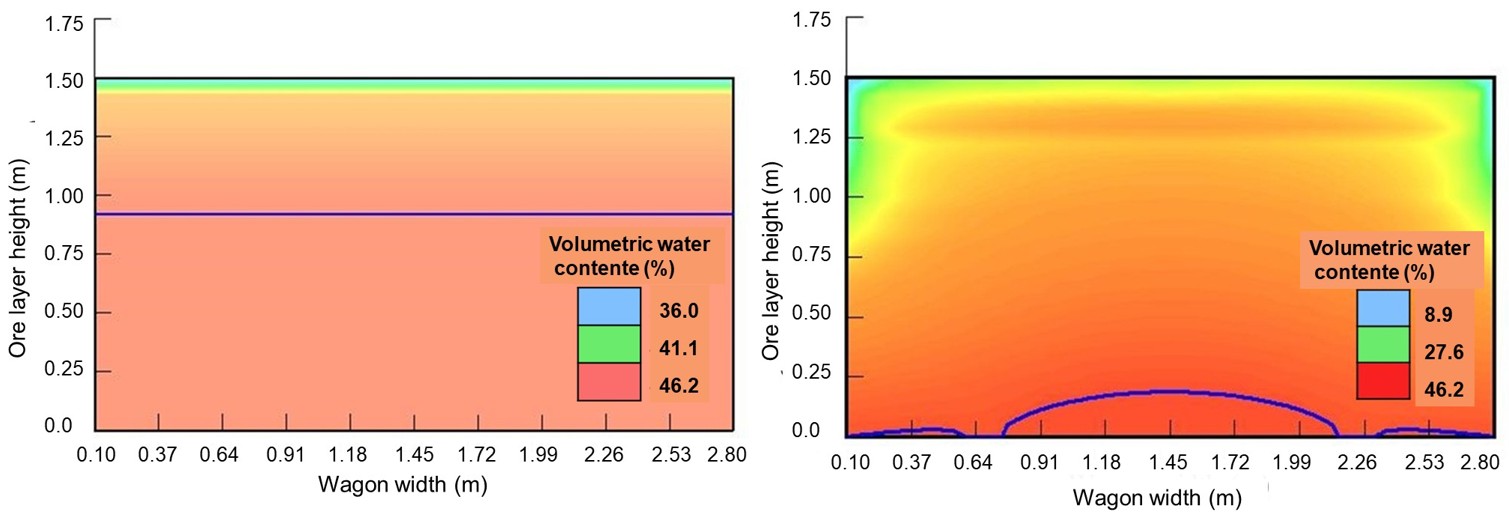
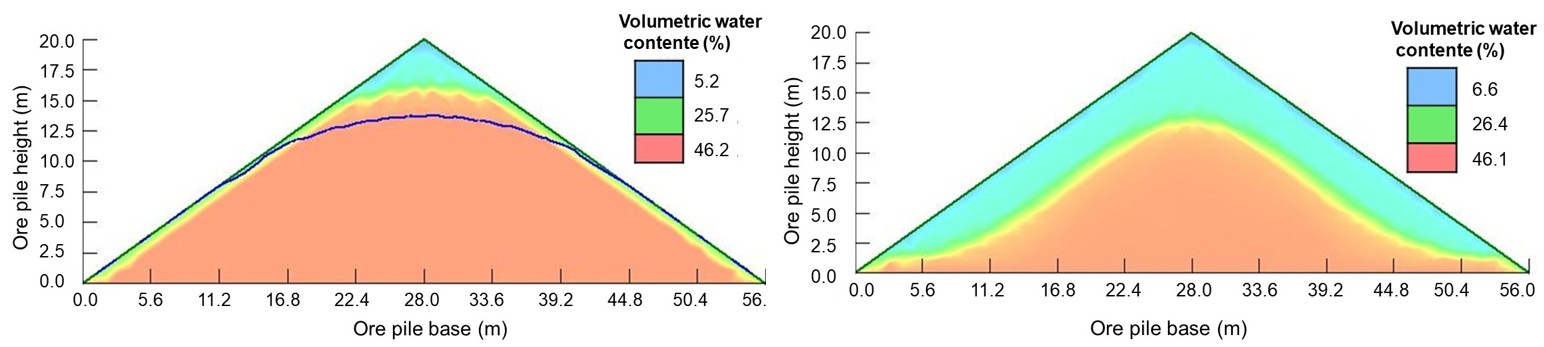
Based on the study described above, a drainage system was designed composed of a non-woven geotextile and a geonet to be installed on the side wall and bottom of the freight train wagons that transported the iron ore to the São Luis port. Numerical analyzes were performed (Moreira, 2011) to evaluate geosynthetic drainage system efficiency; the results showed that the geocomposite filters could decrease the ore water content by up to 6% of the initial value. Figure 22 shows the results of water content on the wagons, before and after draining. Figure 23 shows the results of water content on the storage yards piles before draining and after drainage, respectively.
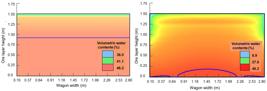
Results of Numerical Analysis - Diagram of water content on the wagons before draining and after drainage. (Moreira, 2011).
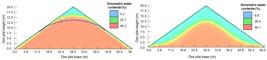
Results of Numerical Analysis - Diagram of water content on the storage yards piles before draining and after drainage (Moreira, 2011).
A field experiment aiming at investigating the performance of HDPE and PVC geomembranes in a gold tailings dam was carried out by Santos (2011); Santos & Gardoni (2014) and Sampaio et al. (2015). In this study, the physical properties of HDPE and polyvinyl chloride PVC geomembranes were evaluated, whose employment was intended to waterproof the tailings dam slopes and foundations of the Fazenda Brasileiro Mining (FBM) and Jacobina Yamana Gold Mining (JYGM), located in the state of Bahia, northeastern Brazil.
Santos & Gardoni (2014, 2016) evaluated the physical properties of HDPE and polyvinyl chloride (PVC) geomembranes which thickness of 1.5 and 0.8 mm, respectively, and were installed over a four-year period, from 2006 to 2010, by Fazenda Brasileiro Mining (FBM). For more information about this study, see Santos & Gardoni (2014).
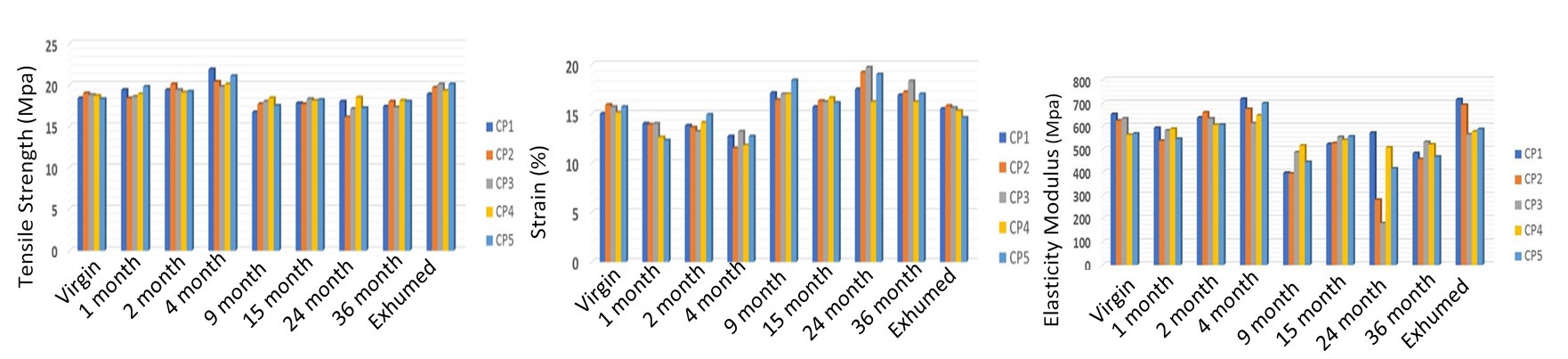
The Jacobina tailings dam owned by Yamana Gold enterprise was built in Brazil in 2008 for storage of the tailings generated over the following 20 years of mine operation. Samples of geomembrane from the Jacobina dam were exhumed and virgin samples were aged for 5 years in a special aging chamber in the Federal University of Minas Gerais (UFMG) laboratory. (Sampaio et al., 2014a, b; Gardoni, 2019). The geomembrane samples remained immersed in cyanide fluid, while being subjected to temperature cycles up to 40 degrees Celsius and UV rays. The results for exhumed and aged samples are shown in Figure 24.
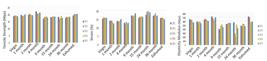
Regarding the decrease in deformability in the elastic range, the HDPE geomembrane samples presented a greater deformability reduction than the PVC ones. Samples of PVC and HDPE showed considerable mass reduction after aging by immersion in fluid containing cyanide, which is directly related to geomembrane degradation. The tensile tests performed on the samples showed a loss of strength of the material.
8.2 Geotextile tubes on mining applications
Since the 1980s, geotextile tube technology has been used to dewater high-moisture content materials in engineering projects around the world for different purposes: erosion in marine environments, dredging contaminated sediments (Yang et al., 2019; Yee & Lawson, 2012; Koerner, 2005; Barrantes et al., 2023), sludge dewatering, for instance, being the dewatering of mining tailings a more recent application. The possibility of using geotextile tube structures as an alternative to the conventional disposal of fine tailings in dams and dikes has been widely discussed in Brazil due to recent failures in upstream dams in Minas Gerais state.
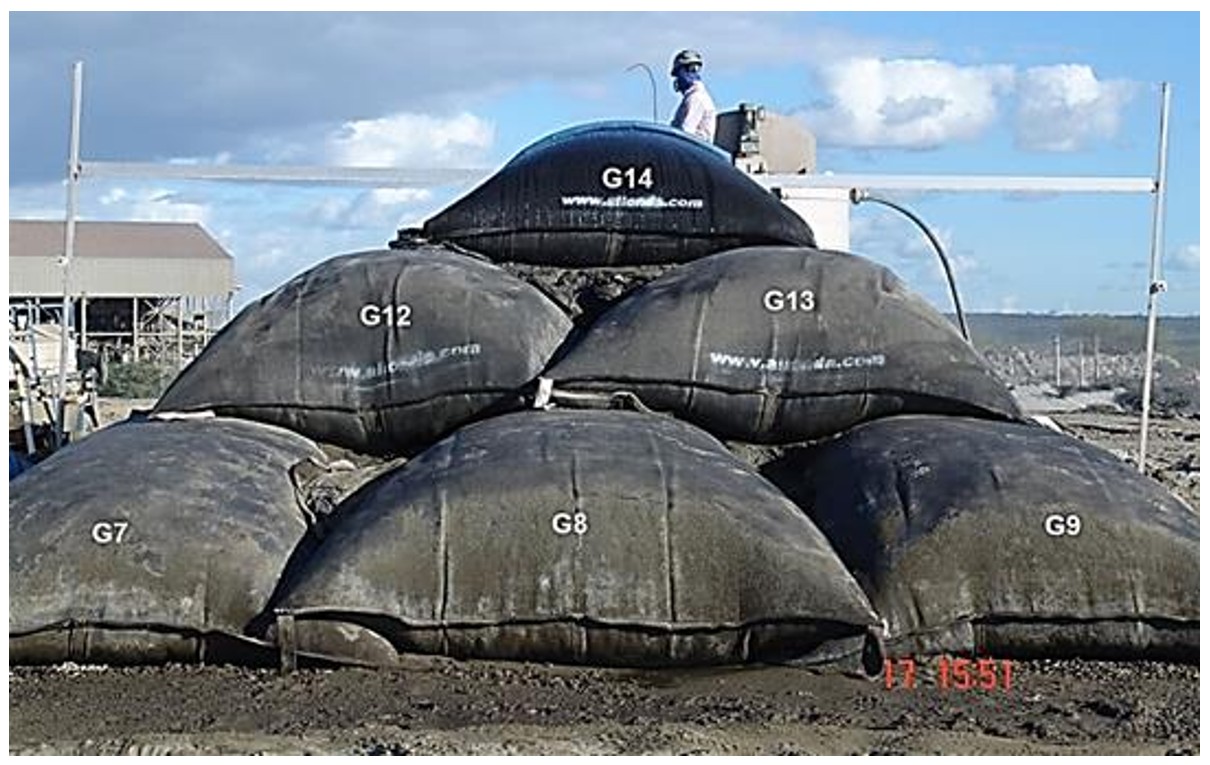
Silva (2017) developed a research project to evaluate the use of woven geotextile tubes to dewater, confine and stack gold ore tailings. A test model was constructed inside the mining area, on the top of a tailings pile and it was monitored for 2 years (Figure 25). Every geotextile tube unit was 2 m in width, 6 m in length and was designed to have a maximum height of 1 m throughout the filling process.
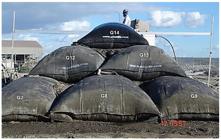
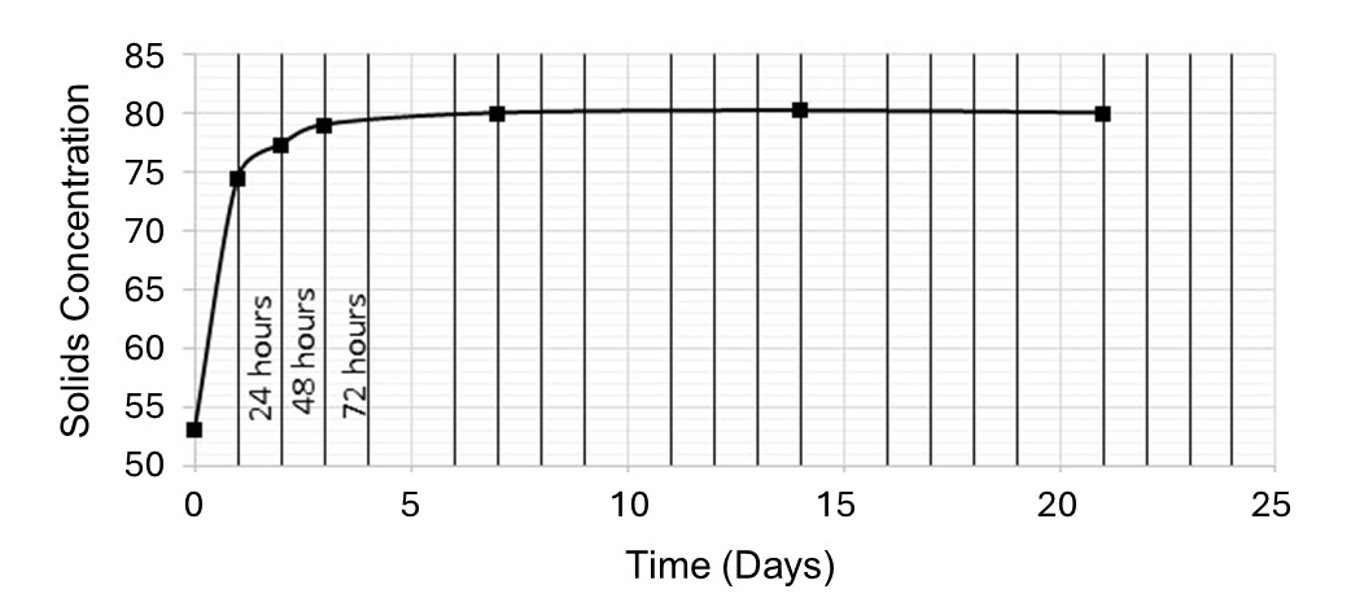
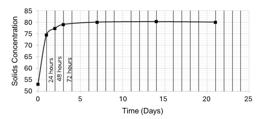
Tailings confined within the geotextile tubes had their solids concentration evaluated by taking samples close to the tube filling port. After the last filling stage, samples were taken after 24 h, 48 h, 72 h, 7 days, 21 days and 28 days (Figure 26). The greatest increase in solids content occurs in the first 24 hours, when the solids concentration goes from 53% to 75%. This data corresponds to a water content of 100% decreasing to 25% in a day. After the first 24 hours, the desiccation rate decreases and the increase in solids content is about 10% in 13 days. Each geotextile tube unit was able to dewater and confine an amount of 5.4 m3 of tailings in a 108 m2 area.
After geotextile tubes filling and stacking assessment, the structure remained at the experimental site for over 24 months. After that period, an exhumation plan was prepared to collect samples to be submitted to an experimental program at the laboratory (Morais et al., 2020).
After 24 months of sludge consolidation inside the tubes, initially containing 50% of solids, it was found that the tailings apparent dry density was 18 kN/m3.
This value corresponds to a final percentage of solids of 83%. Therefore, the result obtained by the consolidation of fine tailings in geotextile tubes proved the exceptional efficiency of this solution for the disposal of fine mining tailings and its feasibility for use as safe mining structures.
The research developed by Silva et al. (2021) covered an evaluation of the stress mobilized and the shape of the woven geotextile tube during the filling process by analytical methods and numerical modelling. Numerical modelling was also able to represent the behavior of the geotextile tube during its filling.
Based on the results of these applications, the use of geotextile tubes for disposal of gold ore tailings is understood as a viable alternative, since in addition to dewatering the tailings, it is possible to reduce the turbidity and heavy metal concentration in the effluent and, consequently, minimize the environmental risks and impacts of mining activities.
8.3 Turbidity curtains in a mine waste dump sedimentation pond
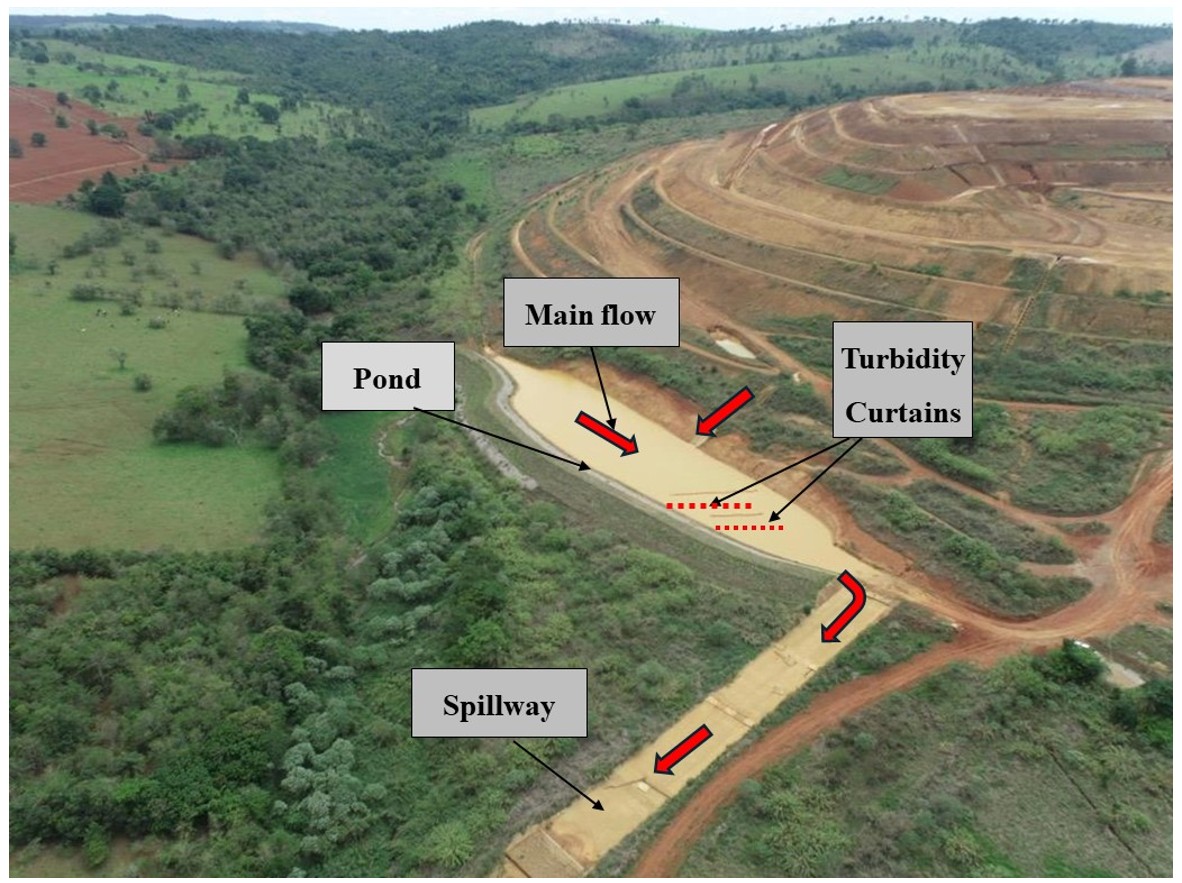
Turbidity curtains were installed in a sedimentation pond of a tailings pile, still under construction, located in a phosphate rock mine in Alto Paranaiba, Minas Gerais, Brazil (Figure 27). The objective of the curtains was to increase the sedimentation of solids in suspension that reached the pond because of the superficial erosion of the tailings pile. Further information about the curtains can be found in Macedo (2023), Macedo et al. (2023a, b).
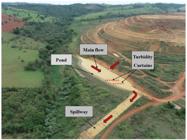
Turbidity curtains installed in the drainage system of a tailings pile, located in a phosphate rock mine in Alto Paranaiba, Minas Gerais, Brazil.
The effluents were conducted by the peripherical channels to an effluent containment structure, called “the pond”, which was approximately 230 m long, 45 m wide in average, with a depth of 9 m and a 15 m wide spillway. The labyrinth configuration of the curtains was which yielded to an installation in a more effective configuration as suggested in the literature (Francingues & Palermo, 2005; Johanson, 1978). The curtains resisted the rainy season without damage and promoted satisfactory turbidity reductions of the effluent generated by the drainage system, which demonstrates the potential of this type of solution.
Non-woven geotextile turbidity curtains can effectively reduce turbidity of the effluents of sterile mining deposits.
9. Geosynthetic barriers
9.1 Introduction
Geosynthetic materials have gained increasing acceptance and application in environmental protection in the last 30 – 40 years. Although all the geosynthetics types can be found in many environmental projects, this item deals with geosynthetics able to act as barriers to liquids and gases, namely geomembranes (GM) and Geosynthetic Clay Liners (GCL).
The success of these applications led to the extension of the concept of geosynthetic barriers into mining, effluents containment, and the re-habilitation of old dumps and residues deposits. This item deals with some aspects of the use of geosynthetics barriers in Brazil, showing examples of applications as well as some results of research but does not address other associated topics such as legislation and standards related to the many aspects of environmental protection.
9.2 Some examples of the use of geosynthetic barriers in Brazil
Probably, one of the first uses of geomembranes in a Municipal Solid Waste (MSW) landfill in Brazil occurred around 1990 at São João landfill, in the city of São Paulo, which received about 7,500 ton of municipal solid waste per day. In this case, a single PVC geomembrane, 2 mm thick was used above a compacted clay liner. Later, the practice of using geomembranes and other geosynthetics spread to landfills that serve medium to large cities and soon the geomembrane of choice began to be HDPE.
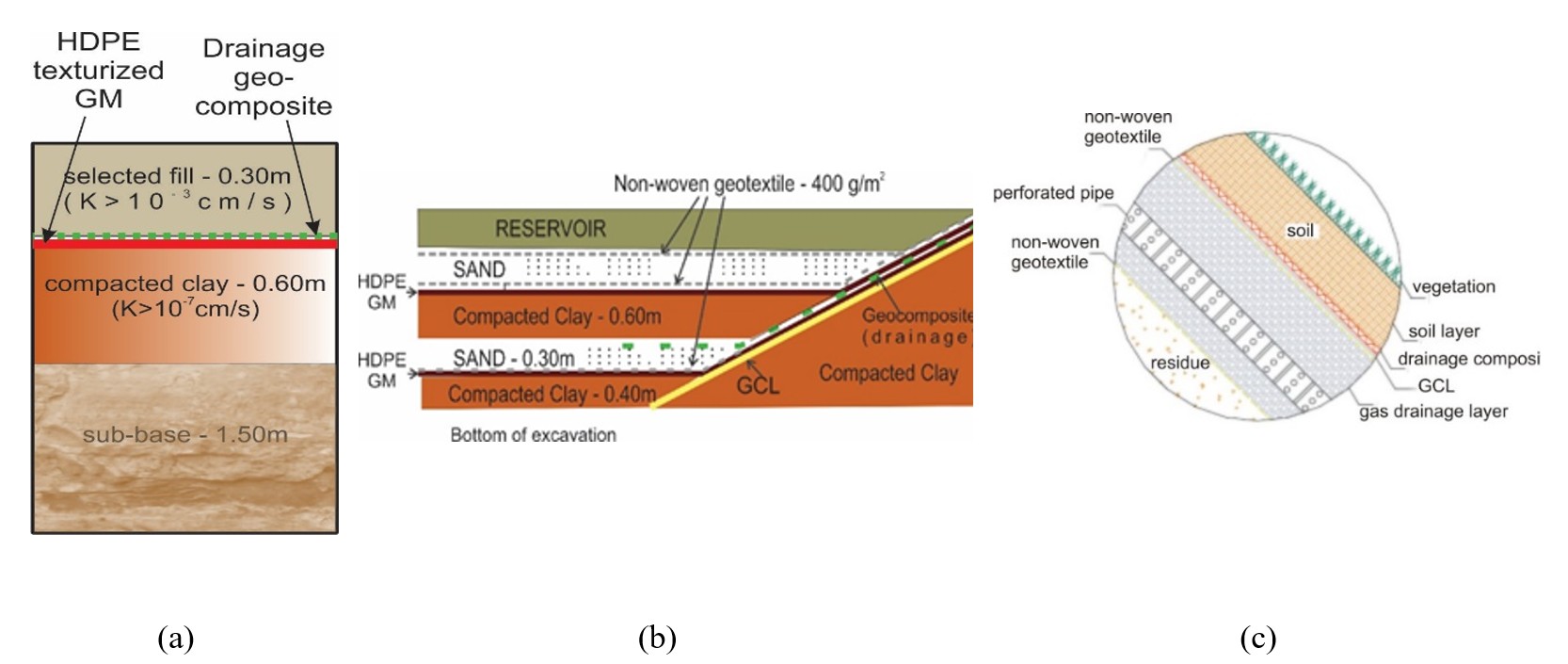
In MSW landfills, solutions depart from the simpler option of geomembrane over compacted clayey soil and reach more elaborated sections, with intensive use of geosynthetics. For instance, Figure 28a shows the liner section designed for non-hazardous landfill (CTR Caieiras), composed by compacted clayey soil, a 2 mm thick HDPE textured geomembrane, a drainage geocomposite for leachate drainage and selected to provide mechanical protection to the liner (Vidal, 2003).
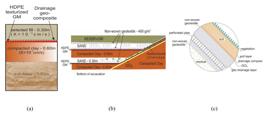
Some configurations of landfill liners and cover used in Brazil. (a) Non-hazardous MSW landfill (adapted from Vidal, 2003); (b) side and bottom liner for hazardous landfill (adapted from VOGBR, 2009); (c) final cover system (adapted from Maccafferri, 2007).
Figure 28b shows a bottom and side composite liner. A coarse granular layer, protected by two non-woven geotextiles, conjugated with a geopipe above the primary geomembrane, serving for drainage for the leachate. Between the primary and secondary geomembranes, there is a leak detection layer composed of a coarse granular layer and geopipe. Inside slope, the granular layer was substituted by a drainage geocomposite above the primary geomembrane liner and a geonet between geomembranes to act as a leak detection layer. GCL was deployed under the secondary GM, completing the composite liner that rests over properly low-permeability compacted soil. Figure 28c shows a cover section of a deposit of waste from the cast iron industry. In this case, there is a gas drainage layer and a gas collecting pipe; non-woven geotextile for separation and protection; a GCL forming a barrier layer and a drainage geocomposite to collect infiltrating water.
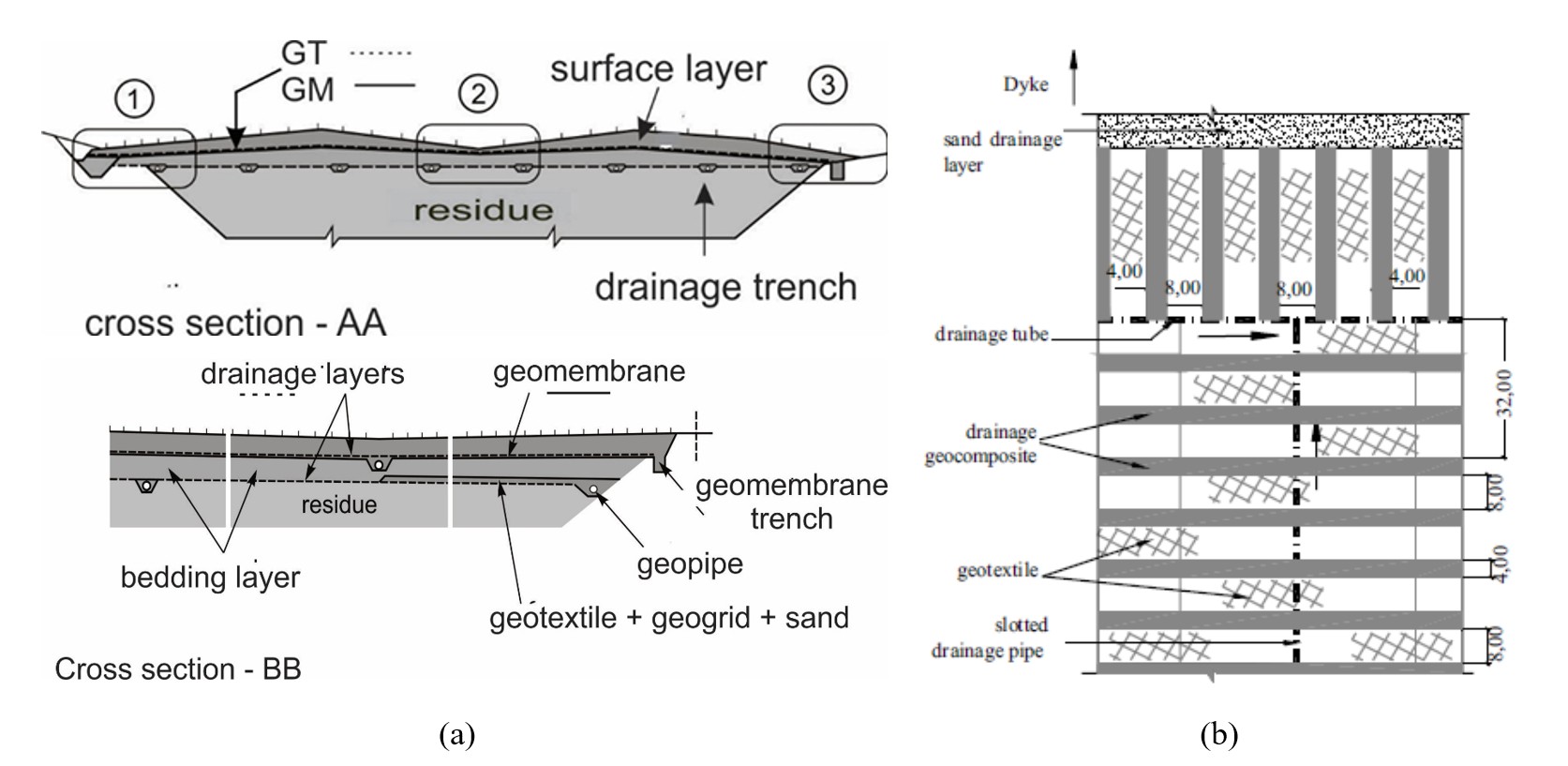
Figure 29 shows two cross sections of the cover configuration and a sketch of the draining layer adopted in the rehabilitation of an old residue deposit from an aluminum plant with pH between 12 and 13 and some heavy metals (Costa Filho et al., 2002). The solution comprised a composite cover, with many components, such as a barrier layer (PVC GM – 0.8 mm thick) and a drainage layer composed by non-woven geotextile; drainage geocomposite and flexible slotted geopipes in ditches apart about 25 m to collect the liquor from residue consolidation.
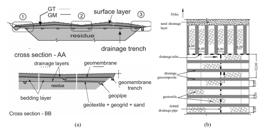
Waste deposit rehabilitation (a) Cross sections; (b) Drainage layer. (adapted from Costa Filho et al., 2002).
9.3 Research on geosynthetic barriers
The subjects of research on geosynthetic barriers have comprised ageing and degradation and mechanical protection of GM; shear strength of interfaces between GM (or GCL) and geosynthetics and soil; permeability and degradation of GCL, among others and have been performed in many Brazilian Universities.
The degradation of geosynthetics, and in special of HDPE and PVC geomembranes, has been a topic of concern among many Brazilian researchers (Maia & Vilar, 2002; Matheus et al., 2004; Silva et al., 2007; Lodi et al., 2013; Lavoie et al., 2021). To some extent, the results of the researchers coincided regarding the ageing effect of common agents such as UV, temperature, and exposition to different kinds of liquids.
Lavoie et al. (2023) suggest that thin (lower than 1.0 mm thick) GM exhumed from effluent lagoons can significantly degrade under the action of sunlight. The investigations are not restricted to measure the variation of mechanical properties between virgin and degraded GM, but also the use of specialized tests such as Thermo-Gravimetric Analysis (TGA), Melting Flow Index (MFI) and Oxidation Induction Time (OIT).
Many researchers such as Nascimento & Palmeira (2002), Rebelo (2008) and Geroto (2008) have addressed the protection of geomembranes. Rebelo (2008) and Geroto (2008) tested many options of geomembrane protection in laboratory and field tests. Geomembranes used were made of PVC, 1.0 mm and 2.0 mm thick, and HDPE, 1.5 mm and 2.0 mm thick. The protective layers were non-woven polyester and polypropylene geotextiles, with masses per unit area ranging from 150 to 600 g/m2, and medium to fine sand and clayey sand. The results of static and dynamic puncture tests and cyclic load tests have shown that the improvement of resistance was related to the mass per unit area of the geotextile but depended on the type of geotextile.
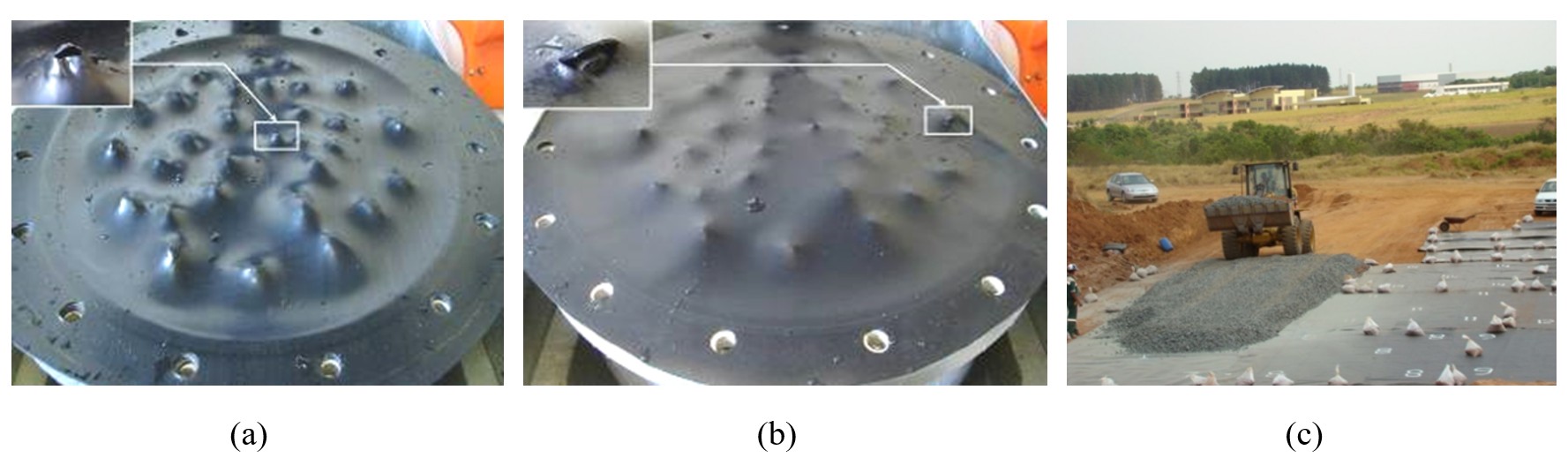
Punching test results variation allowed distinguishing between different failure modes: HDPE geomembrane was more susceptible to punching rupture, commanded by the pointy stones; while the more flexible geomembrane, PVC, tended to fail by tearing like mechanism. Figure 30 shows the different patterns of rupture for HDPE and PVC geomembranes.
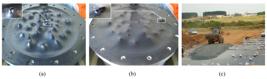
Geomembrane protection. Different rupture features of geomembranes in the hydraulic punching test (Geroto, 2008). (a) HDPE geomembrane; (b) PVC geomembrane; (c). Experimental liner construction (Rebelo, 2008).
The performance of the protection depended on the flexibility of the geotextile and on the different modes of failure observed. Less flexible geotextiles, such as PET 400 and PET 600 tended to fail in a way like that observed for the HDPE, while the more flexible ones followed a rupture pattern compared to the observed for the PVC. The dominant rupture pattern of HDPE was by puncture, and this probably resulted in a more homogeneous behavior of protection. It was observed that the variable that better represented the increase in resistance was the tensile resistance in the transversal direction of the geotextile.
Another point was the different damage experienced by the geomembranes in the field that were larger than what was observed in the lab during cycling loading tests. The occurrence of tangential stresses during machinery operations probably was responsible for these differences and should be considered in the improvement of laboratory tests that intend to study installation damages in geomembranes.
10. Drainage and filtration
Geotextile filters have been used in Brazil for over 45 years. Research on such filters has involved different types of filtration tests, with the use of simple permeameters and gradient ratio test devices (Gardoni, 1995; Palmeira et al., 1996; Gardoni & Palmeira, 1998; Palmeira & Matheus, 2000).
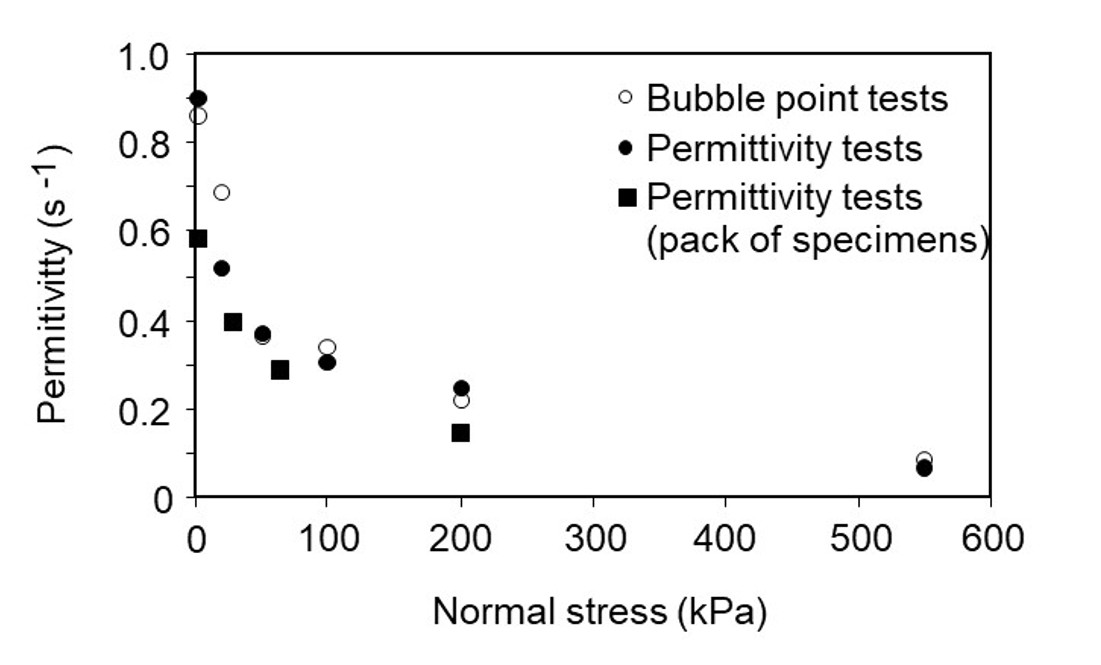
Regarding the evaluation of geotextile permeability, Palmeira & Matheus (2000) conducted tests on partially clogged geotextile filters. Palmeira & Gardoni (2000) investigated the influence of confinement on the permeability coefficient of virgin and partially clogged nonwoven geotextiles, where vertical stresses up to 1000 kPa were applied to the geotextile specimen, whereas Gardoni & Palmeira (2002b) compared permitivity results of tests on confined geotextiles obtained by different experimental techniques (Figure 31).
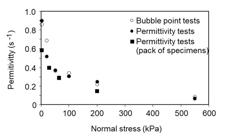
Palmeira & Gardoni (2000) assessed the accuracy of existing methods for the prediction of geotextile permeability under confinement. Colmanetti & Palmeira (2002) and Junqueira et al. (2006) investigated the interaction between geotextile filters and leachate in large laboratory tests and field experimental waste cells, respectively.
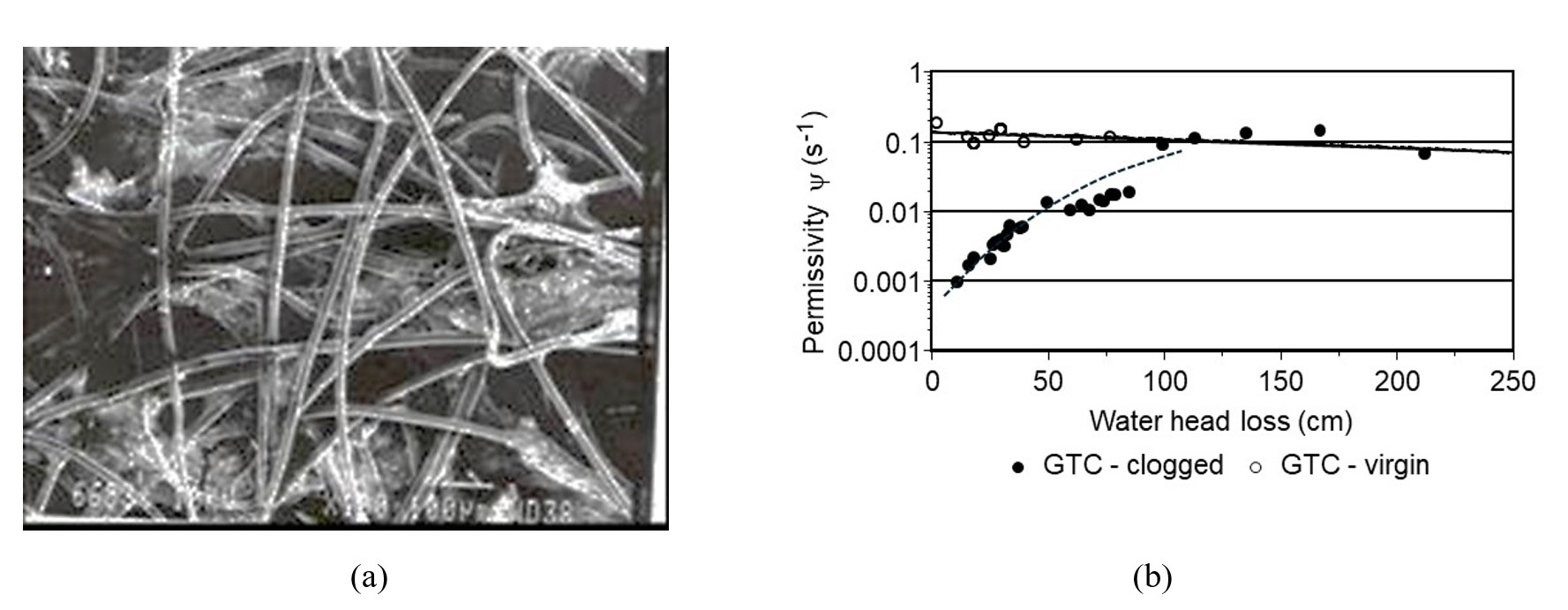
Palmeira et al. (2008) investigated the loss of geotextile permeability due to the flow of leachate from a landfill in the city of Brasilia, Brazil. The height of the mound of leachate accumulated on an initially clogged geotextile necessary to wash out the bacterial films (Figure 32a) in the geotextile pores to the geotextile to recover its initial permittivity was also investigated (Figure 32b).
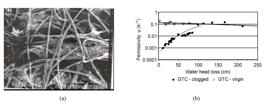
Geotextile permittivity versus water head loss (Palmeira et al., 2008): (a) Geotextile after 90 days of leachate flow; (b) Permittivity vs. water head in washout tests.
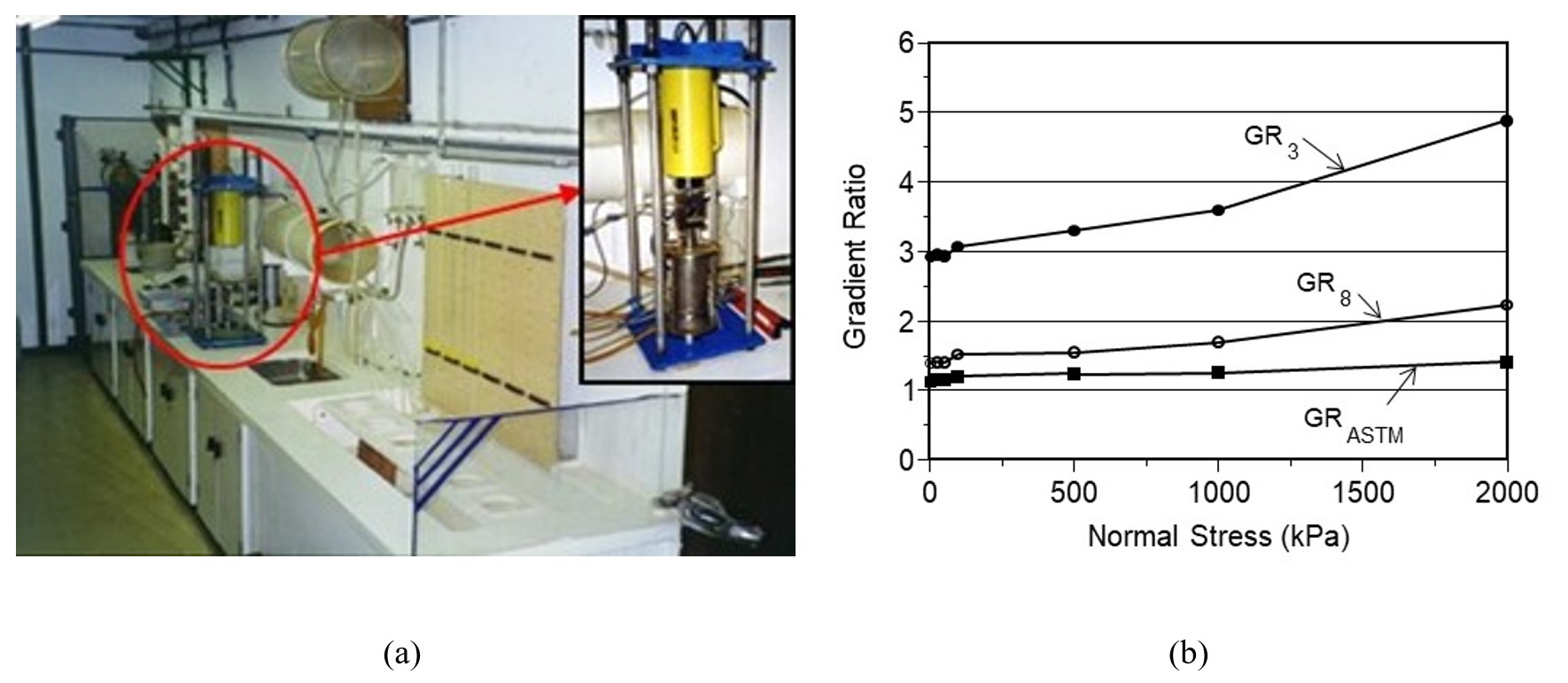
Gardoni & Palmeira (1998) used undisturbed residual soil samples to study soil-geotextile compatibility in gradient tests (GRT). Through the years, more sophisticated and powerful test devices were developed and used, with particular reference to the gradient ratio test. Palmeira et al. (1996), Palmeira & Gardoni (2002) and Palmeira et al. (2005) show results of gradient ratio tests where normal stresses could be applied to the soil-geotextile system to simulate conditions closer to those found in the field (Figure Figure 33a).
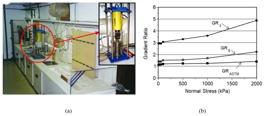
Gradient ratio test experiments and results (Palmeira et al., 2005): (a) Gradient ratio test apparatus; (b) GR versus normal stress.
Some results on the influence of confinement on the value of the gradient ratio are shown in Figure 33b. Microscopic studies of geotextile filters were also carried out using optical and scanning electron microscopy (Gardoni & Palmeira 2002a). Beirigo et al. (2006); Palmeira et al. (2010) and Gardoni et al. (2012)investigated the performance of geotextile filters in contact with mining tailings using the gradient ratio tests. Palmeira et al. (2012) investigated the performance of geotextile filters under confinement on different bedding conditions using the gradient ratio test apparatus.
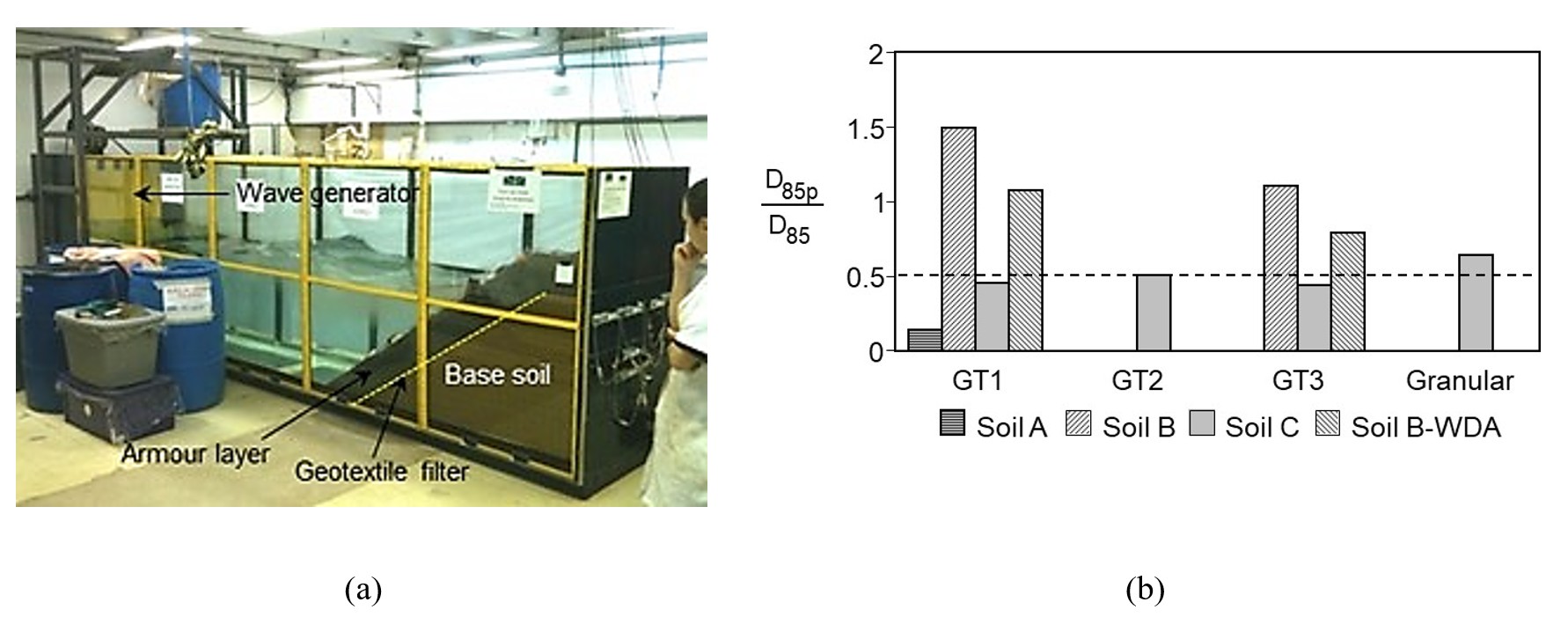
The results showed that the bedding material underneath the geotextile filter influenced its retention capacity. Palmeira & Tatto (2015) investigated the performance of geotextile filters underneath rip-rap armors on slopes subjected to the impact of waves using a large channel Figure 34a). Figure 34 b shows the ratio between maximum diameter (D85p) of the soil particles that piped through the geotextile filter and the maximum base soil particle diameter (D85) for the slope soils tested. It also shows that the condition FOS < 0.5D85, where FOS is the geotextile filtration opening size, was satisfactory for the coarser soils tested (soils A and C).
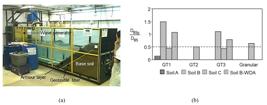
Study on the behaviour of geotextile filters under armours for slope protection against wave impacts (Palmeira & Tatto, 2015): (a) Channel for tests; (b) Ratio between piped and maximum particle diameters.
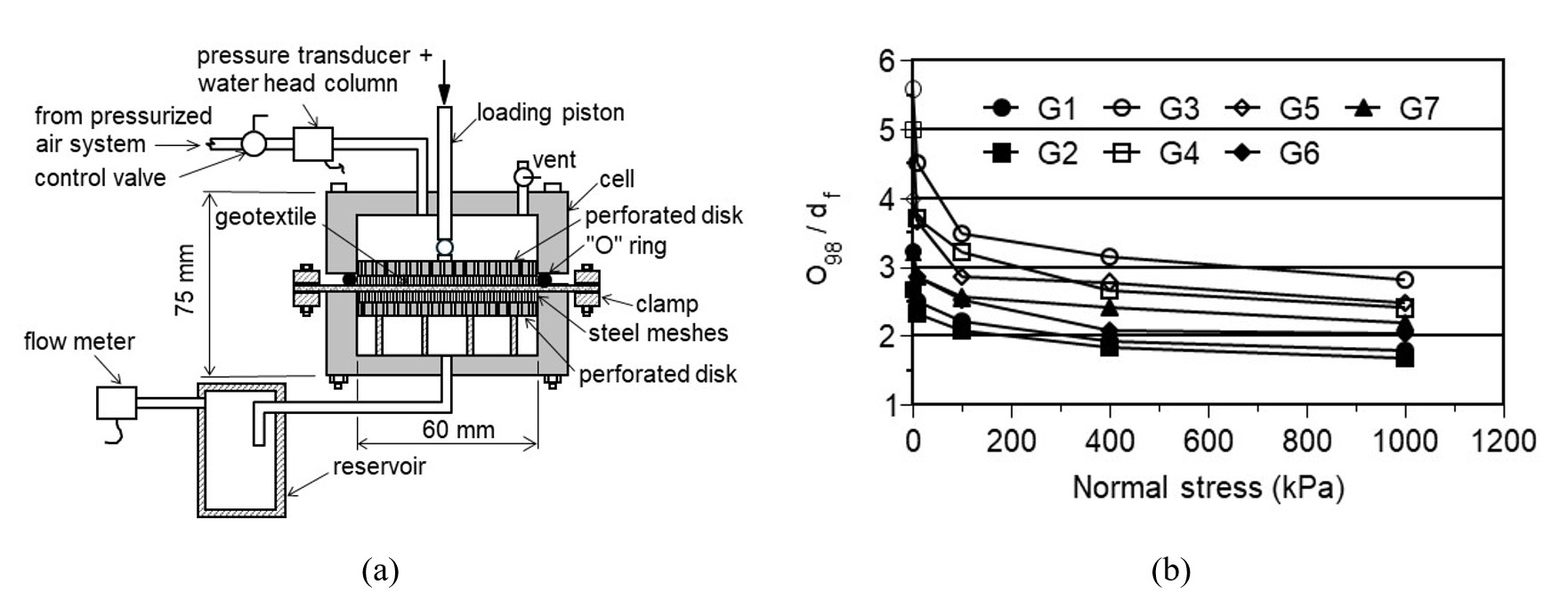
The dimensions of geotextile pores under confined and unconfined conditions were investigated using modified permeameters (Palmeira & Fannin, 1998) and Bubble Point Test (BBP, Figure 35a) (Palmeira & Trejos-Galvis, 2017, 2018; Palmeira et al., 2019). Tests on nonwoven geotextiles subjected to vertical stresses of up to 1000 kPa were carried out following the recommendations of ASTM 6767. The results compared well with those from traditional sieving testing techniques. Tests on partially clogged geotextile specimens were also performed.
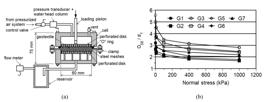
Variation of the filtration opening size of a nonwoven geotextile with confinement (Palmeira & Trejos-Galvis, 2017): (a) BBP apparatus for confined tests; (b) Influence of confinement on O98.
The results show the influence of confinement and partial clogging on the retention capacity of nonwoven geotextiles. Figure 35b shows some of the results obtained regarding the influence of the vertical stress on the filtration opening size (O98) of a geotextile normalized by its fiber diameter (df). However, it was noticed that confinement reduces significantly the detrimental effects of the tensile strains on the geotextile filtration opening size.
11. Conclusions
This paper presented and discussed the historical evolution of geosynthetics research and applications in Brazil in the last 5 decades. The following main conclusions can be drawn:
-
Due to its territory of continental size, there is a huge potential for geosynthetic applications in Brazil.
-
Since the start of geosynthetic use in the country the main areas of application have been in soil reinforcement, particularly in reinforced walls and embankments on soft soils, and as barriers, in landfills and hydraulic works.
-
Several important contributions have been made by Brazilian researchers in subjects such as soil-geosynthetic interaction, filtration, basal reinforcement of embankments on soft soils, embankments on piles or geosynthetic encased granular columns, geosynthetic reinforced walls and steep slopes, barriers in landfills and in hydraulic works as well as in other different environmental applications.
-
Due to the country needs and the increasing consequences of climate changes and environmental constraints, geosynthetics future research and applications are likely to focus not only on the traditional subjects commented above (soil reinforcement, filtration drainage, barriers etc.), but on the development of solutions for minimizing consequences of extreme environmental events, environmental protection and hydraulic works, with special relevance to measures to safeguard existing infrastructure, new construction works and the mining industry, which is very strong in Brazil.
-
New research techniques are already being used and certainly the use of sophisticated modelling (physical and numerical) techniques, powerful statistical solutions, case-history monitoring, combinations of geosynthetic and alternative or low-grade construction materials and artificial intelligence are likely to show significant increases in the coming years.
Geosynthetics are certainly construction materials with a great potential for applications in countries such as Brazil. The authors are sure that these materials will continue to help the country’s development under more sustainable and environmentally friendly conditions.
List of symbols and abbreviations
x: distance from the wall toe (m)
A-A: aggregate A
A-B: aggregate B
A-C: aggregate C
B: reinforcement mass wdith (m)
CIS: compaction-induced stress
CTR: Residues Treatment Center
DG: Deformation gages
EI: facing stiffness
Emax: Maximum efficiency of the geosynthetic in the piled embankment
GCL: Geosynthetic Clay Liners
GM: Geomembranes
H: wall height
J: Stiffness modulus
HDPE: High-density polyethylene
MFI: Melting Flow Index
MSW: Municipal Solid Waste
NW-GTX: Non-Woven Geotextile
OIT: Oxidation Induction Time
PP: Polypropylene
PVC: Polyvinyl Chloride
S: Center-to-center spacing
T: Tension on geosynthetic
Tult: Ultimate tensile strength
TGA: Thermo-Gravimetric Analysis
Tmax: mobilized maximum load in the reinforcements
U: Percentage of consolidation
UV: Ultra-violet radiation
Z: Deflection in the geosynthetic between adjacent piles
Zd: Deflection in the geosynthetic at the middle point of diagonal between piles
α: Area replacement ratio
Data Availability
The datasets generated analysed in the course of the current study are available from the corresponding author upon request.
Acknowledgements
The authors are also indebted to their institutions and to Brazilian research funding agencies (CNPq, CAPES, FAPDF, FAPEMIG, FAPESP, FAPERJ, Finep and CAPES) for their support to the research presented in this paper.
-
Discussion open until November 30, 2025.
-
Declaration of use of generative artificial intelligence
This work wasn´t prepared with the assistance of generative artificial intelligence. The authors assume full responsibility for the content of this publication, which did not utilise the assistance of GenAI.
References
- Ahari, M., Touze-Foltz, N., Maze’as, L., & Guenne, A. (2011). Quantification of the adsorption of phenolic compounds on the geotextile and bentonite components of four geosynthetic clay liners. Geosynthetics International, 18(5), 322-331.
- Allen, T.M., & Bathurst, R.J. (2015). An improved simplified method for prediction of loads in reinforced soil walls. Journal of Geotechnical and Geoenvironmental Engineering, 141(11), 04015049.
- Almeida, M.S.S., & Ferreira, C.A.M. (1992). Field, in situ and laboratory consolidation parameters of a very soft clay. In Predictive soil mechanics: Proceedings of the Wroth Memorial Symposium held at St Catherine's College (pp. 73-93). London: Thomas Telford Publishing.
- Almeida, M.S.S., & Marques, M.E.S. (2003). The behaviour of Sarapuí soft organic clay. Characterisation and Engineering Properties of Natural Soils, 1, 477-504.
- Almeida, M.S.S., & Marques, M.E.S. (2013). Design and performance of embankments on very soft soils (1st ed.). London: CRC Press.
- Almeida, M.S.S., & Ortigão, J.A.R. (1988). Stability and deformation of embankments on soft clays. Civil Engineering Practice, 3, 267-336.
- Almeida, M.S.S., Ehrlich, M., & Spotti, A.P. (2007). Embankment supported on piles with biaxial geogrids. Proceedings of the Institution of Civil Engineers - Geotechnical Engineering, 160(4), 185-192.
- Almeida, M.S.S., Fagundes, D.F., Thorel, L., & Blanc, M. (2019). Geosynthetic-reinforced pile-embankments: numerical, analytical and centrifuge modelling. Geosynthetics International, 19, 1-37.
- Almeida, M.S.S., Magnani, H.M., Dias, D., & Deotti, L. (2011). Behaviour of three test embankements taken to failure on soft clay. Soils & Rocks, 34, 389-404.
- Almeida, M.S.S., Marques, M.E.S., & Spotti, A.P. (2005). Two cases histories of vertical drains in very soft clays. Ground Improvement Case Histories, 3, 145-157.
- Almeida, M.S.S., Marques, M.E.S., Almeida, M.C.F., & Mendonça, M.B. (2008). Performance of two low piled embankments with geogrids at Rio de Janeiro. In Industrial Fabrics Association International, International Geosynthetics Society, North American Geosynthetics Society (Org.), The First Pan American Geosynthetics Conference & Exhibition (pp. 1285-1295). Cancun, Mexico: IFAI/IGS/NAGS.
- Almeida, M.S.S., Riccio, M.V.F., Hosseinpour, I., & Alexiew, D. (2018). Geosynthetic encased columns for soft soil improvement (1st ed.). London: CRC Press/Balkema.
- Almeida, M.S.S., Santa Maria, P.E.L., Martins, I.S.M., Spotti, A.P., & Coelho, L.B.M. (2000). Consolidation of a very soft clay with vertical drains. Geotechnique, 52, 148-154.
- Almeida, M.S.S., Santa Maria, P.E.L., Martins, I.S.M., Spotti, A.P., & Coelho, L.B.M. (2001). Consolidation of a very soft clay with vertical drains. Geotechnique, 52, 148-154.
- American Association of State Highway and Transportation Officials – AASHTO (2017). AASHTO LRFD bridge design specifications (8th ed.). Washington, D.C.: AASHTO.
- Araújo Neto, O.G. (2010) Ensaio de arrancamento de geogrelha com equipamento de pequenas dimensões aplicado a compostos de resíduos de construção [Master’s dissertation]. Universidade de Pernambuco.
- Araújo, G.L.S. (2009). Estudo em laboratório e em campo de colunas granulares encamisadas com geossintéticos [Doctoral thesis]. Universidade de Brasília.
- Araújo, G.L.S., Palmeira, E.M., & Cunha, R.P. (2009). Behaviour of geosynthetic-encased granular columns in porous collapsible soil. Geosynthetics International, 16, 433-451.
- Araujo, G.L.S., Sanchez, N.P., Palmeira, E.M., & Almeida, M.G.G. (2022). Influence of micro and macroroughness of geomembrane surfaces on soil-geomembrane and geotextile-geomembrane interface strength. Geotextiles and Geomembranes, 50(4), 751-763.
- ASTM D5321/D5321M-21. (2021). Standard Test Method for Determining the Shear Strength of Soil-Geosynthetic and Geosynthetic-Geosynthetic Interfaces by Direct Shear ASTM International, West Conshohocken, PA. http://doi.org/10.1520/D5321_D5321M-21.
- Barbosa, F.A.S., & Santos, E.C.G. (September, 2014). Geogrid strength reduction factors due to installation damages caused by recycled construction and demolition wastes (RCDW). In Proc. XVII Brazilian Congress of Soil Mechanics and Geotechnical Engineering, COBRAMSEG (pp 1-7). São Paulo: ABMS (in Portuguese).
- Barbosa, F.A.S., & Santos, E.C.G. (September-October, 2013). Geogrid mechanical damages due to recycled construction and demolition wastes. In R. Cossu (Ed.), Proceedings 14th International Waste Management and Landfill Symposium Sardinia, Italy: Cisa Publisher.
-
Barrantes, M.A.V., Ribeiro, L.F.M., & Palmeira, E.M. (2023). Influence of the filling process on the behaviour of geotextile tubes. Soils and Rocks, 46(3), 1-11. http://dx.doi.org/10.28927/SR.2023.010522.
» https://doi.org/ - Beirigo, E.A., Palmeira, E.M., & Gardoni, M.G.A. (2006). Fitration tests under confinement on geotextiles-tailings systems. In International Geosynthetics Society (Org.), 8 th International Conference on Geosynthetics (pp. 273-279). Yokohama, Japan: IGS.
- Blanc, M., Rault, G., Thorel, L., & Almeida, M.S.S. (2013). Centrifuge investigation of load transfer mechanisms in a granular mattress above a rigid inclusions network. Geotextiles and Geomembranes, 36, 92-105.
- Blanc, M., Thorel, L., Girout, R., & Almeida, M.S.S. (2014). Geosynthetic reinforcement of a granular load transfer platform above rigid inclusions: comparison between centrifuge testing and analytical modelling. Geosynthetics International, 21, 37-52.
- Breiman, L. (2001). Random forests. Machine Learning, 45, 5-32.
- Carvalho, P.A.S., Pedrosa, J.A.B.A., & Wolle, C.M. (1986). Aterros reforçados com geotêxteis: uma opção alternativa para a Engenharia geotécnica. In Proceedings 8º Congresso Brasileiro de Mecânica dos Solos e Engenharia Geotécnica (Vol. 1, pp. 169-178). São Paulo: ABMS.
- Colmanetti, J.P., & Palmeira, E.M. (2002). A study on geotextile-leachate interaction by large laboratory tests. In International Geosynthetics Society (Org.), 7th International Conference on Geosynthetics (pp. 749-752). Nice, France: IGS.
- Costa Filho, L.M., Pacheco, E.B., Paes, G., & Chianello, M. (2002). Extensive use of geosynthetics in the rehabilitation of an old industrial waste deposit. In P. Delmas, J.P. Gourc & H. Girard (Eds.), Proceedings 7th International Conference on Geosynthetics (Vol. 2, p. 705-708). Leiden: Swets & Zeitlinger.
- Damians, I.P., Bathurst, R.J., Adroguer, E.G., Josa, A., & Lloret, A. (2016). Environmental assessment of earth retaining wall structures. Environmental Geotechnics, 4(6), 415-431. http://dx.doi.org/10.1680/jenge.15.00040.
- Domiciano, M.L., Santos, E.C.G., & Lins Da Silva, J. (2020). Geogrid mechanical damage caused by Recycled Construction and Demolition Waste (RCDW): influence of grain size distribution. Soils and Rocks, 43(2), 231-246. http://dx.doi.org/10.28927/SR.432231.
- Duarte, R.L.F., Santos, E.C.G., & Silva, J.L. (October, 2016). Strength reduction factor of woven geotextile due to mechanical damages induced by recycled construction and demolition wastes (RCDW). In Proc. XVIII Brazilian Congress of Soil Mechanics and Geotechnical Engineering, COBRAMSEG (pp 1-7), Belo Horizonte, Brazil. São Paulo: ABMS (in Portuguese).
- Ehrlich, M., & Mirmoradi, S.H. (2013). Evaluation of the effects of facing stiffness and toe resistance on the behavior of GRS walls, J. Geotextiles and Geomembranes, 40, 28-36.
- Ehrlich, M., & Mirmoradi, S.H. (2016). A simplified working stress design method for reinforced soil walls. Geotechnique, 66(10), 854-863.
- Ehrlich, M., & Mitchell, J.K. (1994). Working stress design method for reinforced soil walls. Journal of Geotechnical Engineering, 120(4), 625-645.
- Ehrlich, M., & Mitchell, J.K. (1995). Working stress design method for reinforced soil walls disclosure. Geotechnical Engineering Journal, 121(11), 820-821.
- Ehrlich, M., Almeida, M.S.S., Riccio, M.V.R., Oliveira, H.M., & Souza, H. (2010). Development and performance of load cell systems for reinforced embankment and reinforced soil wall. In 9th International Conference on Geosynthetics (pp. 1869-1874). Guarujá, Brazil: IGS/ABMS.
- Ehrlich, M., Dantas, B.T., Zornberg, J.G., Sitar, N., & Mitchell, J.K. (2000). Limit equilibrium as basis for design of geosynthetic reinforced slopes. Journal of Geotechnical Geoenvironmental Engineering, 126(3), 286–288.
- Ehrlich, M., Mirmoradi, S.H., & Saramago, R.P. (2012). Evaluation of the effect of compaction on the behavior of geosynthetic-reinforced soil walls. Geotextiles and Geomembranes, 34, 108-115.
References
- Ehrlich, M., Mirmoradi, S.H., & Xu, D.S. (2017). A simplified working stress design method for reinforced soil walls. Geotechnique, 67(11), 1029-1032.
- Fagundes, D.F., Almeida, M.S.S., Thorel, L., & Blanc, M. (2017). Load transfer mechanism and deformation of reinforced piled embankments. Geotextiles and Geomembranes, 45, 1-10.
- Farooq, F., Amin, M.N., Khan, K., Sadiq, M.R., Javed, M.F., Aslam, F., & Alyousef, R. (2020). A comparative study of Random Forest and genetic engineering programming for the prediction of compressive strength of High Strength Concrete (HSC). Applied Sciences, 10(20), 7330. http://dx.doi.org/10.3390/app10207330.
-
Ferreira, C.J., & Vidal, D. (May, 2010). Geosynthetics applied to base reinforcement - TBR and LCF parameters evaluation from a real field condition experiment. In 9th International Conference on Geosynthetics (Vol. 3, pp. 1561-1564), Guarujá, Brazil. Retrieved in December 23, 2024, from https://library.geosyntheticssociety.org/proceedings/geosynthetics-applied-to-base-reinforcement-tbr-and-lcr-parameters-evaluation-from-a-real-field-condition-experiment-pdf/
» https://library.geosyntheticssociety.org/proceedings/geosynthetics-applied-to-base-reinforcement-tbr-and-lcr-parameters-evaluation-from-a-real-field-condition-experiment-pdf/ - Ferreira Junior, L.G. (1995). Estudo da influência do reforço geotêxtil nos mecanismos de deformação e ruptura de estradas não-pavimentadas através de modelos físicos [Master’s dissertation]. Universidade de Brasília.
- Fleury, M.P., Santos, E.C.G., Silva, J.L., & Palmeira, E.M. (2019). Geogrid installation damage caused by recycled construction and demolition waste. Geosynthetics International, 26(6), 641-656. http://dx.doi.org/10.1680/jgein.19.00050.
- Fonseca, E.C.A., Santos, E.C.G., & Palmeira, E.M. (October, 2013). Geosynthetic Reinforced Walls Constructed with RCDW for slope stabilization: numerical simulation. In Proc. VI Brazilian Conference on Slopes, COBRAE, Angra dos Reis. São Paulo: ABMS. (in Portuguese).
- Fonseca, L.L. (2015). Avaliação em laboratório do Comportamento de camadas asfálticas reforçadas com geossintéticos [Master’s dissertation]. Universidade Federal de Minas Gerais.
- Fonseca, L.L., Gardoni, M.G.A., & Greco, J.A.S. (October, 2016). Avaliação da resistência a tração na flexão de camadas asfálticas reforçadas com geossintéticos. In XVIII Congresso Brasileiro de Mecânica dos Solos e Engenharia Geotécnica – COBRAMSEG 2016, Belo Horizonte, MG. São Paulo: ABMS.
- Francingues, N.R., & Palermo, M.R. (2005). Silt curtains as a dredging project management practice (ERDC TN-DOER-E21). Vicksburg: Engineer Research and Development Center.
- Frischknecht, R., Stucki, M., Büsser, S., & Itten, R. (2012). Comparative life cycle assessment of geosynthetics versus conventional construction materials. Ground Engineering, 45(10), 24-28.
- Gardoni, M.G. (2000). Hydraulic and filter characteristics of geosynthetics under pressure and clogging conditions [Doctoral thesis]. University of Brasilia (in Portuguese).
- Gardoni, M.G., & Palmeira, E.M. (1998). The performance of a geotextile filter in tropical soil. In 6th International Conference on Geosynthetics (pp. 1027-1032). Atlanta, USA: IGS/IFA.
- Gardoni, M.G., & Palmeira, E.M. (2002a). Microstructure and pore characteristics of synthetic filters under confinement. Geotechnique, 52(6), 405-418. http://doi.org/10.1680/geot.2002.52.6.405.
- Gardoni, M.G., & Palmeira, E.M. (2002b). Desempenho de drenos geotêxteis em condições de serviço. In XII Congresso Brasileiro de Mecânica dos Solos e Engenharia Geotécnica (pp. 823-833). São Paulo, Brazil: ABMS.
- Gardoni, M.G., Palmeira, E.M., & Beirigo, E.A. (May, 2012). Performance of the synthetic filters utilizing electronic microscopy resources. In 2nd Pan American Geosynthetics Conference & Exhibition, Lima, Perú. Austin: International Geosynthetics Society.
- Gardoni, M.G., Zornberg, J.G., Palmeira, E.M., & Touze, N. (2024). An international initiative on geosynthetic education. Soils and Rocks, 47(2), 1-10. http://dx.doi.org/0.28927/SR.2024.003823.
- Gardoni, M.G.A. (1995). Avaliação da aplicabilidade de ensaios de laboratório e critérios de filtro para utilização de geotêxteis em solos do Distrito Federal [Master’s dissertation]. Universidade de Brasília.
- Gardoni, M.G.A. (August, 2019). Evaluation of geomembrane strength aged in laboratory and exhumed from gold tailing dams. In O.M. Vilar & F.H.M. Portelinha (Eds.), Anais do IX Congresso Brasileiro de Geotecnia Ambiental (Regeo 2019) e VIII Simpósio Brasileiro de Geossintéticos, São Carlos, SP. São Carlos: EESC.
- Gardoni, M.G.A., Villar, L.F.S., Ferreira, J.C., & Monteiro, M.C. (2010a). Laboratory study on the performance of geosynthetics drainage systems in contact with ore from Carajás mining. 9th International Conference on Geosynthetics, Guarujá, Brazil. Austin: International Geosynthetics Society (IGS).
- Gardoni, M.G.A., Villar, L.F.S., Ferreira, J.C., & Monteiro, M.C. (October, 2010b). The Behaviour of Geosynthetics on Drainage Systems in Carajás Mining. 6th International Congress on Environmental Geotechnics, New Delhi, India. Salzburg: ICSMGE.
- Geroto, R.E. (2008). Performance of geomembrane protecting layers [Master’s dissertation]. University of São Paulo, (in Portuguese).
-
Góngora, I.A.G. (2011). Utilization of geosynthetics as reinforcement in unpaved roads: Influence of the type of reinforcement and fill material [Master’s dissertation, University of Brasília]. University of Brasília’s repository (in Portuguese). http://repositorio2.unb.br/jspui/bitstream/10482/8418/1/2011_IvonneAlejandraGutierrezGongora.pdf
» http://repositorio2.unb.br/jspui/bitstream/10482/8418/1/2011_IvonneAlejandraGutierrezGongora.pdf - Góngora, I.A.G., & Palmeira, E.M. (2012). Influence of fill and geogrid characteristics on the performance of unpaved roads on weak subgrades. Geosynthetics International, 19(2), 191-199. http://dx.doi.org/10.1680/gein.2012.19.2.191.
- Hartmann, D.A., Almeida, M.S.S., Almeida, M.C.F., Blanc, M., & Thorel, L. (2014), On the influence of pretension and number of geosynthetic layers on piled embankment performance. In 10th Conference of the International Geosynthetics Society, Berlin, Germany.
- Hatami, K., & Bathurst, R.J. (2005). Development and verification of a numerical model for the analysis of geosynthetic reinforced-soil segmental walls. Canadian Geotechnical Journal, 42(4), 1066-1085.
- Hosseinpour, I., Almeida, M.S.S., & Riccio, M.V.F. (2016). Ground improvement of soft soil by geotextile-encased columns. Proceedings of the ICE - Ground Improvement, 169, 297-305.
- Hosseinpour, I., Almeida, M.S.S., & Riccio, M.V.F. (2017). Verification of a plane strain model for the analysis of encased granular columns. AGH Journal of Mining and Geoengineering, 12(4), 97-105.
- Hosseinpour, I., Soriano, C., & Almeida, M.S.S. (2019). A comparative study for the performance of encased granular columns. Journal of Rock Mechanics and Geotechnical Engineering, 11(2), 379-388.
- ISO 12957-2. (2005). Geosynthetics: Determination of Friction Characteristics — Part 2: Inclined Plane Test Genebra: International Organization for Standardization.
- Jia, Y., Zhang, J., Chen, X., Miao, C., & Zheng, Y. (2023). DEM studies on shear behavior of geogrid-soil interfaces subjected to shear in different directions. Computers and Geotechnics, 156, 105302. http://dx.doi.org/10.1016/j.compgeo.2023.105302.
- Johanson, E.E. (1978). An analysis of the functional capabilities and performance of silt curtains Wilmington: JFB Scientific Corporation.
- Junqueira, F.F., Silva, R.L., & Palmeira, E.M. (2006). Performance of drainage systems incorporating geosynthetics and their effect on leachate properties. Geotextiles and Geomembranes, 24(5), 311-324. http://dx.doi.org/10.1016/j.geotexmem.2006.03.008.
- Koerner, R.M. (2005). Designing with geosynthetics (5th ed.). Englewood Cliffs, New Jersey: Pearson Prentice Hall.
-
Lavoie, F.L., Kobelnik, M., Valentin, C.A., Lopes, M.L., Palmeira, E.M., & Silva, J.L. (2023). Service life of some HDPE geomembranes. Case Studies in Construction Materials, 18, e02212. https://doi.org/10.1016/j.cscm.2023.e02212
» https://doi.org/10.1016/j.cscm.2023.e02212 -
Lavoie, F.L., Kobelnik, M., Valentin, C.A., Lopes, M.L., Palmeira, E.M., & Silva, J.L. (2021). Service life of some HDPE geomembranes. Case Studies in Construction Materials, 18, e02212. https://doi.org/10.1016/j.cscm.2023.e02212
» https://doi.org/10.1016/j.cscm.2023.e02212
References
- Leshchinsky, D., & Boedeker, R.H. (1989). Geosynthetic reinforced structures. Journal of Geotechnical and Geoenvironmental Engineering, 115(10), 1459-1478.
- Limam, I., Guenne, A., Driss, M., & Mazeas, L. (2010). Simultaneous determination of phenol, methylphenols, chlorophenols and bisphenol-A by headspace solid-phase microextraction-gas chromatography-mass spectrometry in water samples and industrial effluents. International Journal of Environmental Analytical Chemistry, 90(3-6), 230-244.
- Liu, F.-Y., Ying, M.-J., Yuan, G.-H., Wang, J., Gao, Z.-Y., & Ni, J.-F. (2021). Particle shape effects the cyclic shear behaviour of the soil–geo grid interface. Geotextiles and Geomembranes, 49(4), 991-1003. http://dx.doi.org/10.1016/j.geotexmem.2021.01.008.
- Lodi, P.C., Bueno, B.S., & Vilar, O.M. (2013). The effects of weathering exposure on the physical, mechanical, and thermal properties of high-density polyethylene and poly (vinyl chloride). Materials Research, 16, 1331-1335.
-
Maccafferri. (2007). Cover system of landfill. Retrieved in August 19, 2009, from https://www.maccaferri.com/br/
» https://www.maccaferri.com/br/ - Macedo, L.G.M. (2023). Performance of turbidity curtains in a rainwater drainage system applied to a waste rock pile [Master’s dissertation]. Federal Center of Technological Education of Minas Gerais (in Portuguese).
- Macedo, L.G.M., Gardoni, M.G., & Palmeira, E.M. (2023b). Performance of turbidity curtains applied to the rain drainage system of a sterile pile. In Anais X Regeo/IX Congresso Brasileiro de Geossintéticos (Vol. 1, pp. 52-59), Salvador. São Paulo: IGS-Brasil/ABMS.
- Macedo, L.G.M., Gardoni, M.G.A., & Palmeira, E.M. (2023a). Performance of turbidity curtains in a mine waste dump drainage system. In Proceedings 12th International Conference on Geosynthetics (Vol. 1, pp. 382-390), Roma. Abingdon: Taylor & Francis Group.
- Magnani, H.O., Almeida, M.S.S., & Ehrlich, M. (2009). Behavior of two reinforced test embankments on soft clay. Geosynthetics International, 16, 127-138.
- Magnani, H.O., Almeida, M.S.S., & Ehrlich, M. (2010a). Reinforced test embankments on florianopolis very soft clay. new techniques on soft soils (1st ed., pp. 65-76). São Paulo: Oficina de Textos.
- Magnani, H.O., Ehrlich, M., & Almeida, M.S.S. (2010b). Embankments over soft clay deposits: contribution of basal reinforcement and surface sand layer to stability. Journal of Geotechnical and Geoenvironmental Engineering, 136, 260-264.
- Maia, I.S., & Vilar, O.M. (2002). The influence of some urban waste degradation agents on the mechanical properties of geomembranes. In 7th International Conference on Geosynthetics Balkema (pp. 765-768). Lisse: AA Balkema Publishers.
- Marques, M.E.S., & Leroueil, S. (2015), Vacuum consolidation and vacuum consolidation with heating. In B. Indraratna, J. Chu & C. Rujikiatkamjorn (Eds.), Ground improvement series: chemical, electrokinetic, thermal and bioengineering (1st ed., pp. 537-554). Amsterdam: Elsevier.
- Matheus, E., Palmeira, E.M., & Agnelli, J.A.M. (2004). Degradação de alguns geossintéticos por radiação ultravioleta e variação de temperatura. Soils and Rocks, 27(2), 177-188.
- Mendes, M.J.A., Touze-Foltz, N., Gardoni, M.G., & Mazéas, L. (2014). Diffusion of phenolic compounds through polyethylene films. Geosynthetics International, 21(2), 137-150.
- Mendes, M.J.A., Touze-Foltz, N., Gardoni, M.G., Ahari, M., & Mazéas, L. (2013). Quantification of diffusion of phenolic compounds in virgin GCL and in GCL after contact with a synthetic leachate. Geotextiles and Geomembranes, 38, 16-25.
- Mirmoradi, S.H., & Ehrlich, M. (2013). Numerical evaluation of the behavior of reinforced soil retaining walls. In Proceedings 18th International Conference on Soil Mechanics and Geotechnical Engineering (pp. 773–776), Paris, France. London: International Society of Soil Mechanics and Geotechnical Engineering (ISSMGE).
- Mirmoradi, S.H., & Ehrlich, M. (2014b). Modeling of the compaction-induced stresses in numerical analyses of GRS walls. International Journal of Computational Methods, 11(2), 14.
- Mirmoradi, S.H., & Ehrlich, M. (2015a). Numerical evaluation of the behavior of GRS walls with segmental block facing under working stress conditions. Journal of Geotechnical and Geoenvironmental Engineering, 141(3), 04014109.
- Mirmoradi, S.H., & Ehrlich, M. (2015b). Modeling of the compaction-induced stress on reinforced soil walls. Geotextiles and Geomembranes, 43(1), 82-88.
- Mirmoradi, S.H., & Ehrlich, M. (2015c). Compaction-induced stress: numerical modeling. In XV Pan American Conference on Soil Mechanics and Geotechnical Engineering (pp. 1161-1168), Buenos Aires, Argentina. Amsterdam: IOS Press.
- Mirmoradi, S.H., & Ehrlich, M. (2016). Evaluation of the effect of toe restraint on GRS walls. Transportation Geotechnics, 8, 35-44.
- Mirmoradi, S.H., & Ehrlich, M. (2017a). Effects of facing, reinforcement stiffness, toe resistance, and height on reinforced walls. Geotextiles and Geomembranes, 45(1), 67-76.
- Mirmoradi, S.H., & Ehrlich, M. (2017b). Reinforced soil walls: Experimental and numerical investigation of the effect of toe resistance on the performance. In 19th International Conference on Soil Mechanics and Geotechnical Engineering (pp. 809-812), Seoul, South Korea. London: ISSMGE.
- Mirmoradi, S.H., & Ehrlich, M. (2018a). Numerical simulation of compaction-induced stress for the analysis of RS walls under working conditions. Geotextiles and Geomembranes, 46, 354-365.
- Mirmoradi, S.H., & Ehrlich, M. (2018b). Experimental evaluation of the effect of compaction near facing on the behavior of GRS wall. Geotextiles and Geomembranes, 46(3), 566-574.
- Mirmoradi, S.H., & Ehrlich, M. (2018c). Large-scale physical model GRS walls: evaluation of the combined effects of facing stiffness and toe resistance on performance. Physical Modelling in Geotechnics, 2, 1223-1228.
- Mirmoradi, S.H., & Ehrlich, M. (2019). Experimental evaluation of the effects of surcharge width and location on GRS walls. International Journal of Physical Modelling in Geotechnics, 19(1), 27-36.
- Mirmoradi, S.H., Ehrlich, M., & Dieguez, C. (2016). Evaluation of the combined effect of toe resistance and facing inclination on the behavior of GRS walls. Geotextiles and Geomembranes, 44(3), 287-294.
- Montestruque, G. & Rodrigues, R. (1999). Evaluación del Desempeño en Laboratorio del Geotextil como Capa Anti-Reflexión de Grietas. In 10 Congreso Ibero-Latinoamericano do Asfalto, Sevilla, Spain. Buenos Aires: CILA.
- Montestruque, G., Rodrigues, R., Nods, M., & Elsing, A. (2004) Stop of Reflective Crack Propagation with the Use of Pet Geogrid as Asphalt Overlay Reinforcement. In 5th International RILEM Conference on Cracking in Pavements-Mitigation, Risk Assesment and Prevention (Vol. 1, pp. 231-238). Paris: Rilem Publications.
- Moraci, N., Bilardi, S., & Mandaglio, M.C. (2022). Factors affecting geotextile filter long-term behaviour and their relevance in design. Geosynthetics International, 29(1), 19-42. http://dx.doi.org/10.1680/jgein.21.00019.
- Morais, F.T., Silva, L.C.F., & Gardoni, M.G. (2020). Geotextile tubes to dewater and confine fine gold tailings. In 4th Pan American Conference on Geosynthetics (Vol. 1, pp. 124-132), Rio de Janeiro, RJ, Brazil. Austin: International Geosynthetics Society (IGS).
- Morais, F.T.C., Gardoni, M.G.A., & Balzuweit, K. (2016). Adhesion evaluation between asphalt and geosynthetic layers using microscopy technics. In International Conference on Geo-Engineering Education (SFGE), COBRAMSEG 2016, Belo Horizonte, MG. São Paulo: ABMS (in Portuguese).
- Moreira, T.B.G. (2011). Evaluation of drainage systems with geosynthetics to reduce moisture in iron ore from Serra de Carajás [Master’s dissertation]. Federal University of Minas Gerais (in Portuguese).
- Nascimento, M.T., & Palmeira, E.M. (2002). Analysis of geomembrane damages in landfills. In Proc. XII CBMSEG (Vol. 2, pp. 749-757). São Paulo: ABMS (in Portuguese).
- Obando-Ante, J., & Palmeira, E.M. (2015). A laboratory study on the performance of geosynthetic reinforced asphalt overlays. International Journal of Geosynthetics and Ground Engineering, 1, 1-12.
- Oliveira, P.F.S., Santos, E.C.G., & Palmeira, E.M. (2024). Pull-out response of a geogrid buried in recycled sands. Soils and Rocks, 47(4), 1-14. http://dx.doi.org/10.28927/SR.2024.004723.
- Palmeira, E.M. (1981). Utilização de geotêxteis como reforço de aterros sobre solos moles [Master’s dissertation]. Universidade Federal do Rio de Janeiro.
- Palmeira, E.M. (1987). A study on soil-reinforcement interaction by means of large-scale laboratory tests [Doctoral thesis]. University of Oxford.
- Palmeira, E.M., & Milligan, G.W.E. (1989a). Large scale direct shear test on reinforced sand. Soil and Foundation, 29(1), 18-30.
- Palmeira, E.M., & Milligan, G.W.E. (1989b). Scale and other factors affecting the results of pull-out tests of grids buried in sand. Geotechnique, 39(3), 511-524.
- Palmeira, E.M., & Cunha, M.G. (1993). A Study on the mechanics of unpaved roads with reference to the effects of surface maintenance. Geotextiles and Geomembranes, 12(2), 109-131.
- Palmeira, E.M., Fannin, R.J., & Vaid, Y.P. (1996). A study on the behaviour of soil-geotextile systems in filtration tests. Canadian Geotechnical Journal, 33(6), 899-912. http://dx.doi.org/10.1139/t96-120.
-
Palmeira, E.M., & Fannin, R.J. (1998). A methodology for the evaluation of opening sizes of geotextiles under confining pressure. Geosynthetics International, 5, 347-357. http://doi.org/10.1680/gein.5.0125
» http://doi.org/10.1680/gein.5.0125 - Palmeira, E.M., & Gardoni, M.G. (2000). The influence of partial clogging and pressure on the behaviour of geotextiles in drainage systems. Geosynthetics International, 7, 406-431. http://doi.org/10.1680/gein.7.0178.
- Palmeira, E.M., & Matheus, E. (2000). Gradient ratio tests on artificially clogged nonwoven geotextiles. In Proceedings of Filters and Drainage in Geotechnical and Env. Engineering (Vol. 1, pp. 149-156), Warsaw, Poland. A.A. Balkema.
- Palmeira, E.M., & Gardoni, M.G. (2002). Drainage and filtration properties of non-woven geotextiles under confinement using different experimental techniques. Geotextiles and Geomembranes, 20, 97-115.
- Palmeira, E.M., Lima Júnior, N.R., & Mello, L.G.R. (2002). Interaction between soil and geosynthetic layers in large scale ramp tests. Geosynthetics International, 9(2), 149-187.
- Palmeira, E.M., Gardoni, M.G., & Bessa da Luz, D.W. (2005). Soil-geotextile filter interaction under high stress levels in the gradient ratio test. Geosynthetics International, 12(4), 162-175. http://dx.doi.org/10.1680/gein.2005.12.4.162.
- Palmeira, E.M., Remigio, A.F.N., Ramos, M.L.G., & Bernardes, R.S. (2008). A study on biological clogging of nonwoven geotextiles under leachate flow. Geotextiles and Geomembranes, 26(3), 205-219. http://10.1016/j.geotexmem.2007.10.006.
- Palmeira, E.M. (2009). Soil-geosynthetic interaction: modelling and analysis. Geotextiles and Geomembranes, 27(5), 368-390.
- Palmeira, E.M., & Antunes, L.G. (2010). Large scale tests on geosynthetic reinforced unpaved roads subjected to surface maintenance. Geotextiles and Geomembranes, 28, 547-558.
- Palmeira, E.M., Beirigo, E.A., & Gardoni, M.G. (2010). Tailings-nonwoven geotextile filter compatibility in mining applications. Geotextiles and Geomembranes, 28, 136-148.
-
Palmeira, E.M., Tatto, J., & Araújo, G.L.S. (2012). Sagging and filtration behaviour of nonwoven geotextiles overlying different bedding materials. Geotextiles and Geomembranes, 31, 1-14. http://doi.org/10.1016/j.geotexmem.2011.09.002
» http://doi.org/10.1016/j.geotexmem.2011.09.002 - Palmeira, E.M., & Tatto, J. (2015). Behaviour of geotextile filters in armoured slopes subjected to the action of waves. Geotextiles and Geomembranes, 43, 46-55.
- Palmeira, E.M., & Trejos-Galvis, H.L. (2017). Opening sizes and filtration behaviour of nonwoven geotextiles under confined and partial clogging conditions. Geosynthetics International, 24, 125-138.
- Palmeira, E.M., & Trejos-Galvis, H.L. (2018). Evaluation of predictions of nonwoven geotextile pore size distribution under confinement. Geosynthetics International, 25(2), 230-241.
- Palmeira, E.M. (2018). Geosynthetics in geotechnical and environmental engineering (294 p.). São Paulo: Oficina de Textos. (In Portuguese).
-
Palmeira, E.M., Melo, D.L.A., & Moraes-Filho, I.P. (2019). Geotextile filtration opening size under tension and confinement. Geotextiles and Geomembranes, 47(4), 566-576. http://doi.org/10.1016/j.geotexmem.2019.02.004
» http://doi.org/10.1016/j.geotexmem.2019.02.004 - Palmeira, E.M. (2020). A review on some factors influencing the behaviour of nonwoven geotextile filters. Soils & Rocks, 43(3), http://dx.doi.org/10.28927/SR.433351.
- Palmeira, E.M. (2024). Geotextile filters: from idealization to real behaviour (Giroud Lecture 2023). Geosynthetics International, 32(1), 2-39. https://doi.org/10.1680/jgein.23.00160.
- Pant, A., & Ramana, G.V. (2022). Novel application of machine learning for estimation of pullout coefficient of geogrid. Geosynthetics International, 29(4), 342-355. http://dx.doi.org/10.1680/jgein.21.00021a.
- Pavanello, P., Carrubba, P., & Moraci, N. (2021). The characterisation of geosynthetic interface friction angle by means of the inclined plane test. Geotextiles and Geomembranes, 49(1), 257-275. http://dx.doi.org/10.1016/j.geotexmem.2020.10.027.
- Ramalho-Ortigão, J.A., & Palmeira, E.M. (1982). Geotextile performance at an access road on soft ground near Rio de Janeira. In Proceedings 2nd International Conference on Geosynthetics (Vol. 1, pp. 353-358), Las Vegas, USA. Austin: IGS.
- Rebelo, K.M.W. (2008). Evaluation of protection layers of HDPE and PVC geomembranes [Doctor thesis]. University of São Paulo (in Portuguese).
- Sampaio, S.S., Gardoni, M.G.A., & Palmeira, E.M. (2015). Interface and mechanical damage tests on geosynthetics used in gold tailings dams in Brazil. In 2nd Conferência Internacional Dam World, Lisboa. Lisboa, Portugal: LNEC.
- Sampaio, S.S., Gardoni, M.G.A., Palmeira, E.M., & Park, J.A. (2014a). Stability analysis of Jacobina’s tailings dam based on interface parameters of geomembrane-tailings obtained from laboratory tests. In 10th International Conference on Geosynthetic (pp. 156-164), Berlin, Germany. Essen: Deutsche Gesellschaft für Geotechnik.
- Sampaio, S.S., Gardoni, M.G.A., Palmeira, E.M., & Park, J.A. (2014b). Interface and mechanical damage tests on geosynthetics used in jacobina tailings dam’. In 10th International Conference on Geosynthetic, Berlin, Germany. Essen: Deutsche Gesellschaft für Geotechnik.
- Santos, E.C.G. (2011). Avaliação experimental de muros reforçados executados com resíduos de construção e demolição reciclados (rcd-r) e solo fino [Doctoral thesis]. University of Brasília (in Portuguese).
- Santos, E.C.G., & Vilar, O.M. (2008). Use of recycled construction and demolition wastes (RCDW) as backfill of reinforced soil structures. In Proc. 4th European Conference on Geosynthetics (pp. 199), London, UK. London: IGS-UK.
- Santos, E.C.G., Bueno, B.S., & Palmeira, E.M. (2012). Strength reduction of geosynthetics used in RSW built with RCDW as backfill material. In Proc. 5th European Geosynthetics Congress (Vol. 5, pp. 481-485), Valencia, Spain. Austin: IGS.
- Santos, E.C.G., Palmeira, E.M., & Bathurst, R.J. (2013). Behaviour of a geogrid reinforced wall built with recycled construction and demolition waste backfill on a collapsible foundation. Geotextiles and Geomembranes, 39(1), 9-19.
- Santos, E.C.G., Palmeira, E.M., & Bathurst, R.J. (2014). Performance of two geosynthetic reinforced walls with recycled construction waste backfill and constructed on collapsible ground. Geosynthetics International, 21(4), 256-269.
- Santos, L.S., & Gardoni, M.G.A. (2014). Study of the durability of geomembranes for waterproofing of reservoirs of gold tailings dams in Brazil. In 10th International Conference on Geosynthetic, Berlin, Germany. Essen: Deutsche Gesellschaft für Geotechnik.
- Santos, L.S., & Gardoni, M.G.A. (2016). Evaluation of geomembranes degradation aged of laboratory and exposed to weathering. In 3rd Pan American Conference on Geosynthetics, Miami Beach, USA. Austin: IGS.
- Shahin, M.A., Jaksa, M.B., & Maier, H.R. (2008). State of the art of artificial neural networks in geotechnical engineering. The Electronic Journal of Geotechnical Engineering, 8(1), 1-26.
- Silva, L.C.F. (2017). Geotextile tubes to dewater, confine, and stack fine gold ore tailings [Master’s dissertation]. Federal University of Minas Gerais (in Portuguese).
- Silva, M.T.N., Palmeira, E.M., Silva, F.A.R., & Sales, M.J.A. (2007). Analysis of chemical degradation of geomembranes in environmental protection works. In Anais do 5º Simpósio Brasileiro de Geossintéticos, Recife, PE. São Paulo: ABMS.
- Silva, V.L., Gardoni, M.G.A., & Pimentel, K.C. (2021). Numerical modelling of geotextile tubes filled with gold mining tailings. Geosynthetics International, 28(6), 574-583.
- Silva, V.P., Carvalho, R.D.A., Rêgo, J.H.S., & Evangelista Junior, F. (2023). Machine learning-based prediction of the compressive strength of Brazilian concretes: a dual-dataset study. Materials, 16, 4977. http://dx.doi.org/10.3390/ma16144977.
- Silvestre, G.R., Fleury, M.P., Silva, J.L., & Santos, E.C.G. (2023). Use of Recycled Construction and Demolition Waste (RCDW) in geosynthetic-reinforced roadways: influence of saturation condition on geogrid mechanical properties. Sustainability, 15(12), 9663.
- Stucki, M., Büsser, S., Itten, R., Frischknecht, R., & Wallbaum, H. (2011). Comparative life cycle assessment of geosynthetics versus conventional construction materials Zurich: Swiss Federal Institute of Technology.
- Tanga, A.T.S., Araújo, G.L., & Evangelista Junior, F. (2024). A comparison between geomembrane-sand tests and machine learning predictions. Geosynthetics International, 32(2), 180-193.
- Touze-Foltz, N., Ahari, M., Mendes, M., Barral, C., Gardoni, M.G.A., & Mazéas, L. (2012). Diffusion of phenolic compounds through an HDPE geomembrane. Geotechnical Engineering Journal of the SEAGS & AGSSEA, 43, 19-29.
- Tupa, N. (1994). Estudo da aderência e interação solo-geossintético [Master’s dissertation]. Universidade de Brasília.
- Tupa, N., & Palmeira, E.M. (1995). Estudo da interação entre geossintéticos e solos finos e entre diferentes tipos de geossintéticos. Solos & Rochas, 18(2), 31-41.
- Vidal, I.G. (2003). CTR Caieiras – Landfill for Class II residues. In Proc. Congresso Brasileiro de Geotecnia Ambiental – REGEO 2003, Porto Alegre. São Paulo: ABMS (in Portuguese).
- VOGBR. (2009). Side and bottom liner for hazardous landfill [personal information]. VOGBR.
- Yang, Y., Wei, Z., Cao, G., Yang, Y., Wang, H., Zhuang, S., & Lu, T. (2019). A case study on utilizing geotextile tubes for tailings dams’ construction in China. Geotextiles and Geomembranes, 47, 187-192.
- Yee, T.W., & Lawson, C.R. (2012). Modelling the geotextile tube dewatering process. Geosynthetics International, 19(5), 339-353.
- Zhang, W., Wu, C., Li, Y., Wang, L., & Samui, P. (2019). Assessment of pile drivability using random forest regression and multivariate adaptive regression splines. Georisk: Assessment and Management of Risk for Engineered Systems and Geohazards, 15(10), 27-40. http://dx.doi.org/10.1080/17499518.2019.1674340.
- Zhao, H., & Tian, K. (2023). Shear strength of HDPE smooth geomembrane/bentonite-polymer geosynthetic clay liner interface. Geotextiles and Geomembranes, 51(6), 73- 86. https://doi.org/10.1016/j.geotexmem.2023.08.006.
- Zornberg, J.G., Touze, N., & Palmeira, E.M. (2020). ”Educate the Educators”: An international initiative on geosynthetics education. In Proceedings of the GEE 2020 - Conference on Geotechnical Engineering Education Athens, Greece: Geo-education TC306.
Edited by
-
Editor:
Renato P. Cunha https://orcid.org/0000-0002-2264-9711