
 Origin of the Campinaranas and Ecological Resilience Patterns: Analysis in Silves-Amazonas - Brazil
Abstract
The research addresses the origin of the Campinaranas and the primary characteristics of this Amazonian landscape. The results presented herein are part of a doctoral thesis entitled: The Relationship between the Campinaranas Forests and the Ecological Resilience Process (Amazon, Brazil). The Campinaranas are atypical landscapes in the Amazon, dispersed in the Dense Ombrophilous Forest. They have sandy soils and small-scale vegetation. Various methodological procedures were used to evidence the Campinaranas' origin, based on field research, in which five sample collection points were selected in the Sanabani river basin in Silves, Amazonas - Brazil. These samples enabled an understanding of the main particularities of the Campinaranas (soil, vegetation, and human interventions) through soil analysis (soil chemistry and physics), comparative analysis, a vegetation inventory, and classification of the environment. The main objectives were: 1) To quantify the soil and vegetation variables of the Campinaranas in the study area; 2) To identify the fundamental interventions in the Campinaranas areas and the origin of this environmental system. The results demonstrate that the Campinaranas are diverse environments resulting from the forest's ecological resilience after an intervention event. The analyses verify that environmental changes modify the soil granulometry and, consequently, the entire ensuing structure.
Keywords:
Genesis; Amazon; Landscape Change
Resumo
A pesquisa aborda a origem das Campinaranas e as principais características dessa paisagem amazônica. Os resultados desse trabalho são parte de uma tese de doutoramento, intitulado: Relação entre as Florestas de Campinaranas e o Processo de Resiliência Ecológica (Amazônia, Brasil). As Campinaranas são paisagens atípicas na Amazônia, ocorrem de forma dispersa em meio a Floresta Ombrófila Densa, apresentando um solo arenoso e uma vegetação de pequeno porte. Foram utilizados alguns procedimentos metodológicos para evidenciar a origem das Campinaranas, a metodologia utilizada baseou-se em pesquisa de campo, no qual separou-se cinco pontos de coleta de amostras na bacia hidrográfica do rio Sanabani, em Silves, Amazonas - Brasil. Essas coletas possibilitaram compreender as particularidades principais das Campinaranas (solo, vegetação e intervenções humanas) através de análise do solo (química e física do solo), análise comparativa, inventário da vegetação e classificação do ambiente. Os principais objetivos foram: 1) Quantificar as variáveis (solo e vegetação) das Campinaranas da área de estudo; 2) Identificar as principais intervenções nas áreas de Campinaranas e a origem desse sistema ambiental. Os resultados demonstram que as Campinaranas são ambientes diversificados e resultantes da resiliência ecológica da Floresta após um evento de intervenção, que como verificado nas análises, as alterações no meio modificaram a granulometria do solo e consequentemente, todo estrutura a ser desenvolvida.
Palavras-chave:
Gênese; Amazônia; Paisagens Modificadas
INTRODUCTION
Given the significance of the Amazonian natural environment and the minimal information base about the region, the present research sought to understand the small vegetable enclaves in the middle of the Amazonian Dense Ombrophilous Forest known as the Amazonian Campinaranas. Ab'Saber (2000) characterized these areas as open vegetation of little environmental diversity on quite sandy soil, which he named enclaves.
According to Abreu (2023), Campinaranas result from the Amazon's ecological resilience processes since these areas had been used and left bare of vegetation and with unprotected soils, leading to leaching processes, which transported the light materials (silt and clay), thus concentrating sand sediments. For a long time, the origin of these areas was uncertain, although some research (Prance, 1975; Prance and Schubart, 1978) pointed to human intervention as a contributing factor in the emergence of the Campinaranas. For Lisboa (1975), the Campinaranas resemble "islands" inserted in the immense dense forest. Mafra et al. (2002) emphasize that little is known about this vegetation type in the region. Mendonça et al. (2015) point to the scarcity of literature on Amazonian Campinaranas; many discussions and controversies regarding their origin exist. Guimarães and Bueno (2016) report that little is known about this environment's origin, evolution, and dynamics in the Amazon.
Understanding the Campinaranas' geoenvironmental characteristics is essential to comprehend the Amazon Forest complex and the global ecological relevance of its diversity. Thus, the research sought to: 1- Quantify the variables (soil and vegetation) of the Campinaranas in the study area; 2- Identify the main interventions in the Campinaranas areas and the origin of this environmental system.
The evidence generally points to a profound anthropic influence on the landscape. Furthermore, the location of the Campinaranas, archaeological remains, vegetation analysis in different years, and analysis of laboratory data indicating changes in soil granulometry highlight the process of ecological resilience, which, coupled with environmental persistence after human intervention, influenced the emergence of Campinaranas areas.
MATERIAL AND METHODS
Study Area
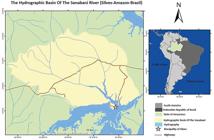
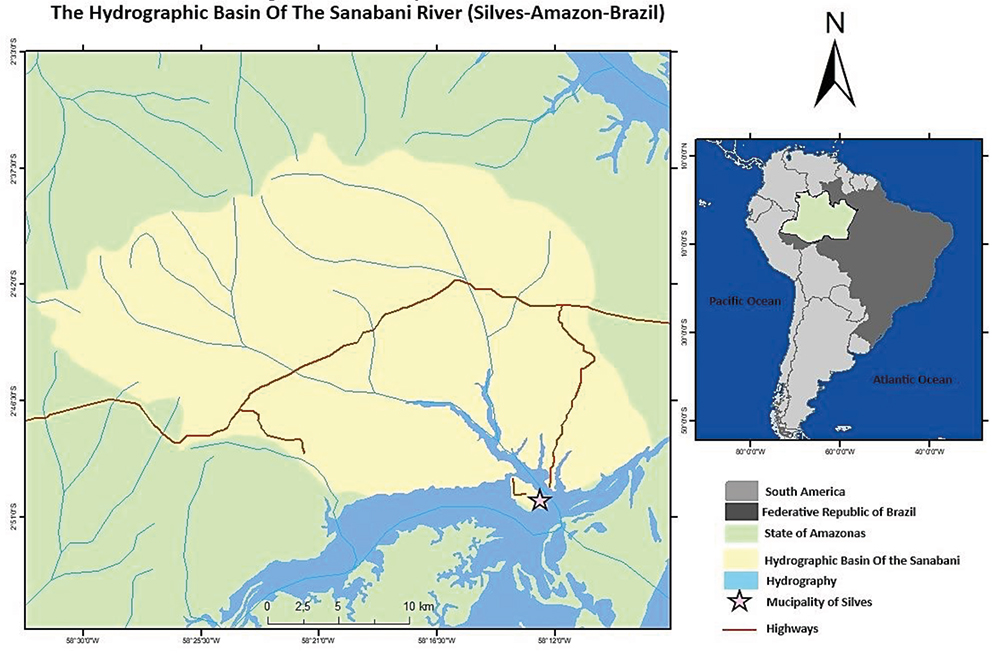
The area in the Sanabani river basin, in Silves, Amazonas - Brazil, was selected because it has great diversity and composes a plural and poorly characterized landscape (Figure 1).
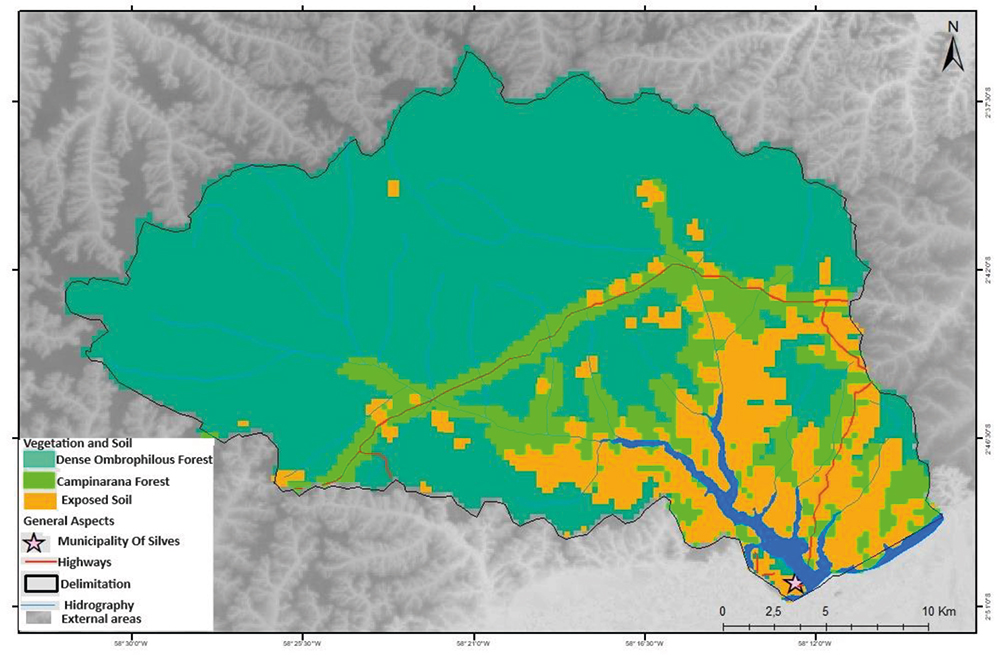
Campinaranas in the study area often occur in the middle of the Dense Ombrophilous Forest (closed Forest). (Figure 2).
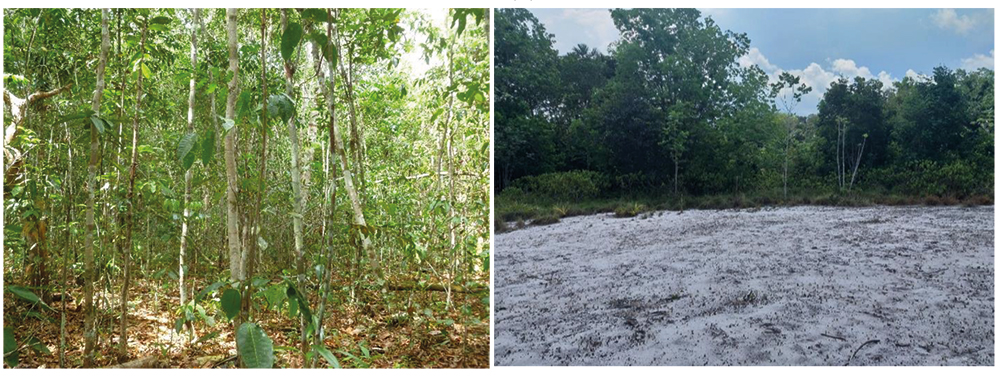
The research sought parameters to characterize the Campinaranas areas (Figure 3), which have small trees, little dense vegetation, and sandy textured soil.

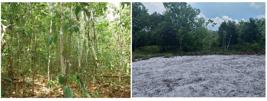
Physical characteristics of the Amazonian Campinaranas. In (A) inside the Campinaranas near roads. In (B) the Campinaranas near rivers.
Methodology
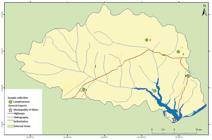
Five field analysis and collection points were selected, and a vegetation inventory was carried out (Figure 4).
Soil and vegetation samples were also collected and submitted to a laboratory analysis. The specific objectives were to:
Quantify the soil and vegetation variables in the Campinaranas in the study area
To this end, field research, the delimitation of inventories, and laboratory research of chemical and physical analysis of the soil and carbon potential of the vegetation were performed. Soil samples were obtained at each of the five points; however, the definition of carbon production plots and species recognition were only done at two collection points.
Each environment's vegetation was analyzed in the field according to the plot method. This quantitative method aims to classify vegetation as arboreal, arborescent, shrub, subshrub, and herbaceous and identify vegetation species. The classification of the vegetation and arboreal size was carried out in all five Campinaranas areas. The identification of each vegetation population only took place in two Campinaranas areas, as classifying the vegetation in all the plots in the analysis points was unfeasible due to the time-consuming nature of such an analysis in the field and the logistics in the Amazon.
The plant species classification in the plots was done by a botanist from the Instituto Nacional de Pesquisas da Amazônia - INPA, (National Institute for Amazonian Research). In addition to identifying the vegetation distribution, the size of plant communities, and identifying species, leaves were collected in the field to determine the forest's biomass and carbon capacity. Biomass and carbon concentration were calculated for the vegetation variable. This method consisted of obtaining samples of leaf litter in the field in an 11 m plot, as performed by Luizão et al. (2004); samples were obtained at three different levels (valley, slope, and plateau). The leaves were weighed and then dried in an oven for 36 hours. Once dry, they were reweighed.
The soil was collected from 10(10 plots within the selected areas. Soil was collected from all five sampling points. Augerboring was used with a standard collection of up to 1.5 m; however, in some very compacted points or close to the rock, the collection depth was 1 m. Next, the soil samples' physical (texture) and chemical structure (macronutrients and micronutrients) were analyzed in the laboratory.
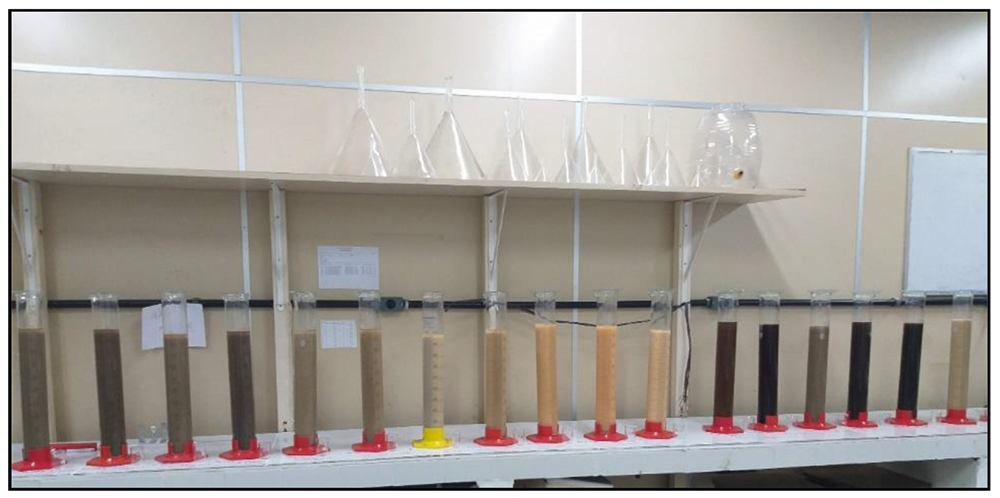
The chemical analysis was performed in the Universidade Federal do Amazonas - UFAM, (university federal in Amazon), Agronomy laboratory. Results were obtained for pH, CaCl, Al³, Mg², K, P, Fe, Zn, and Mn. The physical analysis was performed using EMBRAPA's pipetting method (EMBRAPA, 1997) in the UFAM Geography Laboratory to obtain the texture data (Figure 5).

Identify the main interventions in the Campinaranas areas
The results of the field research were used to identify the main interventions in the Campinaranas areas. The table below (Chart 1) was produced to characterize the use of this area.
DISCUSSION
The Origin of the Campinaranas
Lisboa (1975) highlights the differences in tree height between Campinas and Campinaranas; small Campinas and Campinaranas have trees between 10 and 20 m tall. Mendonça et al. (2015) characterize Campinaranas as areas with Spodosol-type and Quartzarene Neosol soils, with the latter predominating.
Several other studies emerged after the works of Lisboa (1975), Prance (1975), and Prance and Schubart (1978), many of which struggled with the nomenclature. The principal studies report numerous origins for the Campinaras: paleochannels (Ferreira, 2009), soil evolution (Bueno, 2009), and river deposition (Mendonça, 2011). Even more recent studies reflect the difficulty in calling the environment Campinarana. The factors addressed in the leading studies are Soil Evolution (Latosol-Spodosol), Fluvial Deposition (Seasonality), Paleochannels (Geological Event), and Anthropic Origin.
When observing charcoal and indigenous ceramics samples in soil profiles, Prance (1975) and Prance and Schubart (1978) considered the anthropic factor.
Recent research (Abreu; Vieira, 2019; Abreu, 2023) evidenced this premise. They considered ecological resilience to be active in the change process, a form of environmental adaptation that does not return to the original state but rebalances itself according to the permitted conditions.
Thus, the earliest research (Spruce, 1908; Ducke; Black, 1954; Klinge, 1965; Lisboa, 1975) to the most current studies (Ferreira, 2009; Bueno, 2009; Mendonça, 2011; Mendonça et al., 2015; Abreu; Vieira, 2019) state that the origin of Campinaranas is not known for sure.
RESULTS
The field research, soil and vegetation samples, and analysis of satellite images produced the following results:
Quantification of variables (soil and vegetation) of Campinaranas
Samples were collected in different river basin areas, as shown in Figure 4. The samples from the Campinaranas were initially submitted to granulometric examination followed by chemical analysis. The physical soil analysis shows that, predominantly, the soil has a sandy texture with values above 70% (Table 1). Of the five areas verified, four had values above 90%. According to Abreu (2023), compared to degraded areas and Dense Ombrophilous Forest environments, the values of degraded areas of former Dense Ombrophilous Forest areas are similar to those of Campinaranas, demonstrating that the degraded areas have strongly similar patterns to Campinaranas areas.
The soil's granulometric analysis confirms that Campinaranas emerged from the soil's exposure to the river's seasonality. The data collected from the degraded areas influenced by water flows presented different soil characteristics, tending to contain more sand than clay or silt. Furthermore, the presence of iron in both areas and aluminum in points 2, 3, and 5 hinders the leaching process.
Thus, anthropic influences, the river regime, and the leaching processes in the unprotected soil contribute to the origin of the Campinaranas. Ecological factors facilitate the process, but most action starts from human intervention that, by leaving the soil unprotected, makes it susceptible to the transport of light materials (silt and clay), leading to a predominance of the heaviest material, sand. Hence, ecological change begins with changes in particle size.
The chemical soil analysis shows that at two different points in some areas, the phosphorus (P) levels were medium and very low. Iron (Fe) levels are very low at points 2, 3, and 5 and medium at point 1, with low levels predominating. Aluminum (Al) levels are very low in points 1 and 4 and medium in points 2, 3, and 5. Zinc (Zn) levels are low and very low. Predominantly, average pH levels were found at all points. The values of Calcium (Ca), Magnesium (Mg), Potassium (K), and Manganese (Mn) are very low. (Table 2)
Vegetation analyses related to abundance and dominance reveal that the study area has an arboreal percentage of up to 25%. However, this value was only identified in two points since the arboreal extract was absent in the other collection points. The arborescent extracts were 5% to 35%, shrub from 15% to 25%, subshrub from 10% to 25% and herbaceous between 5% to 10%. In general, the arborescent extract is the most abundant when referring to crown coverage, with a percentage of up to 35% predominance (Table 3).
Campinaranas have low levels of carbon in relation to the Amazonian normal. For each hectare of Forest, the data show that there would be an average of 1.89 tons of Carbonic potential (Table 4).
A significant diversity of vegetation was identified in the inventory, with the predominant species in the Herbaceous extract, followed by the Shrub (Table 5).
The systematization of the variables' general characteristics investigated in each of the five analysis points is shown in Table 6, giving a panoramic view of each study point.
Identification of the main interventions in the Campinaranas areas and the origin of the environmental system
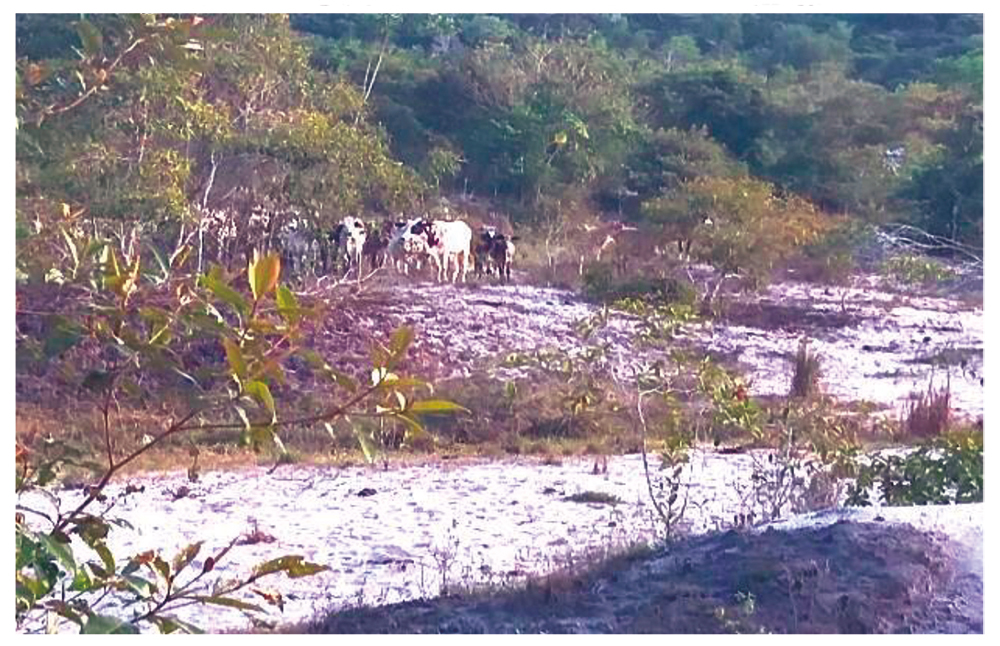
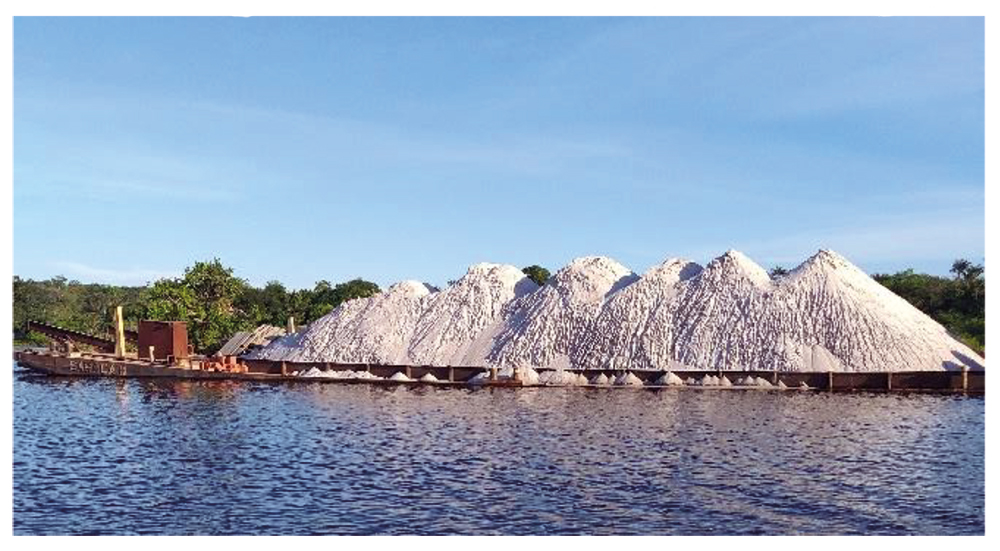
In the Campinaranas areas, some changes in the landscape are due to different types of use; the two principal interventions are cattle breeding and the extraction of sand for civil construction. These activities provided new sources of income for residents and some companies (Figure 6).
The surrounding vegetation is preserved, with cattle grazing among the vegetation. The soil has been modified and is more compacted.
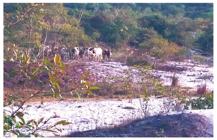
The exploitation of sand for civil construction has increased in these areas. Once extracted, the sand is usually placed on rafts (Figure 07) and transported to a location from where it is transported by land. It is sold by small and medium-sized companies; nonetheless, residents benefit from the trade.

Genesis of the Campinaranas and the Patterns of Ecological Resilience
Each variable's potential in relation to the emergence of Campinaranas indicates anthropic interventions as a starting point to influence changes and ecological resilience as a process by which transformation is conditioned and balanced (Chart 2).
Table 7 demonstrates the importance of anthropic aspects and declivity. Another factor leading to the potential of granulometric changes in the emergence of the Campinaranas is the approximation of the Campinaranas to the hydrographic networks.
In summary, the influencing factors and the degree of relevance of each element to the emergence of Campinaranas have been considered. The existence of relevant factors was detected precisely and measurably, pinpointing human actions as a major contribution to environmental changes in the short and long term. According to Abreu (2023), satellite images show that 5 to 10 years after deforestation, it is possible to observe the reconstruction of recent forests. Direct observations reveal that the famous "capoeira" forest reported by local residents is evidence of a readaptation process of the natural system. Moreover, there are numerous reports on anthropic influence in the Amazon prior to European colonization (Diegues, 2008; Roosevelt, 2014). This led to the theory of ecological resilience argued by Holling (1973), who points out that when nature goes through a stage of disturbance (anthropic intervention), the entire system will tend to be restructured after the impact.
In this study, ecological resilience is not the simple fact that nature returns to an initial stage, but rather, it balances and rebuilds itself from the traces that remain after an intervention. Resilience has a limit; when this limit is exceeded, the system changes quickly and does not return to the natural stage. It transitions from the resilience process to a search for stability, achieved according to the physical characteristics after the system is disturbed. Therefore, the degree of impact determines resilience and stability. Systemic and ecological resilience theories unanimously affirm the need for a factor outside the system. Transformation does not happen out of nowhere. A disruptive factor is required, as evidenced in the research.
The contribution of the variables to the genesis of Campinaranas was classified as high influence, medium influence, moderate influence, and low influence. These values were systematized based on the analysis of the five collection points; this classification considered the results of the variables regarding changes in the landscape and the characteristics of the Campinaranas (Chart 3).
Campinaranas and ecological resilience
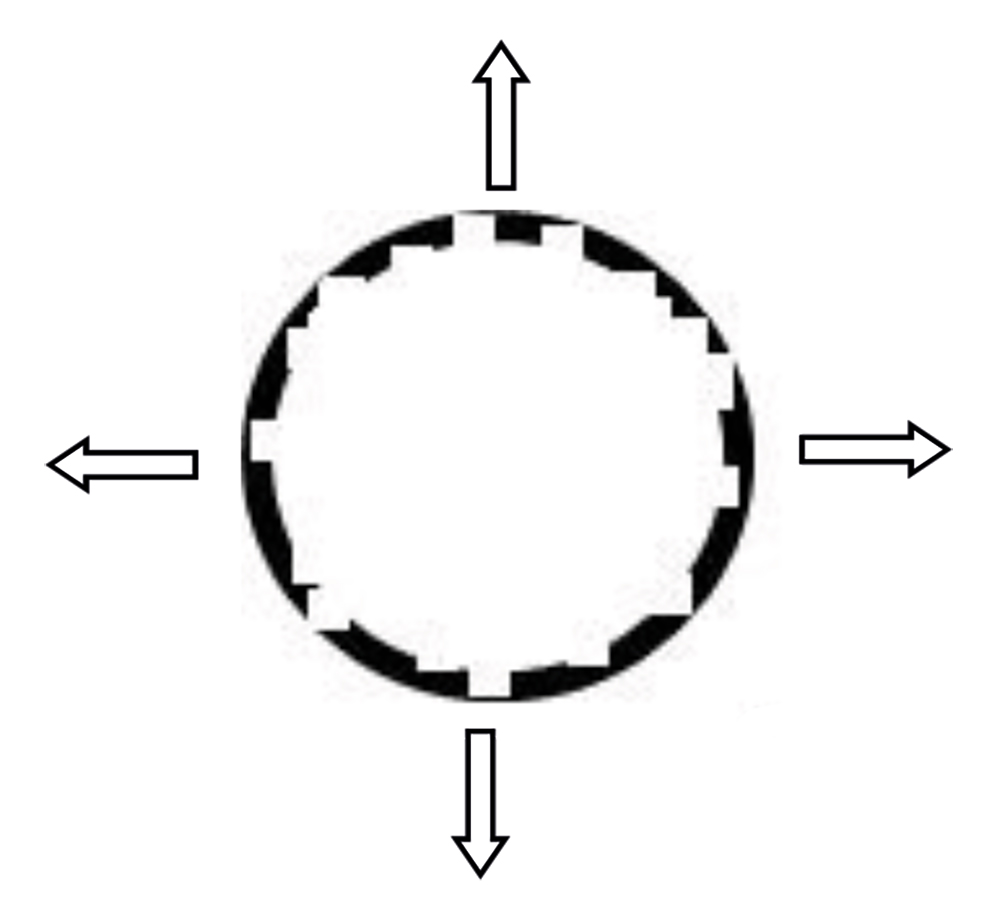
The ecological resilience theory unifies the interconnection of the genesis of Campinaranas with anthropic actions since the natural system recovers from interventions, returning to the initial stage, which is considered a process of resilience. At an extreme level, resilience happens through persistence in the system that does not return it to the initial stage but balances it with new characteristics. From this principle, the natural system is perceived as a circle in a constant transformation process that, in equilibrium, lives in order, even with the presence of society (Figure 8).
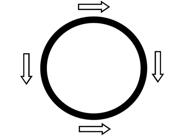
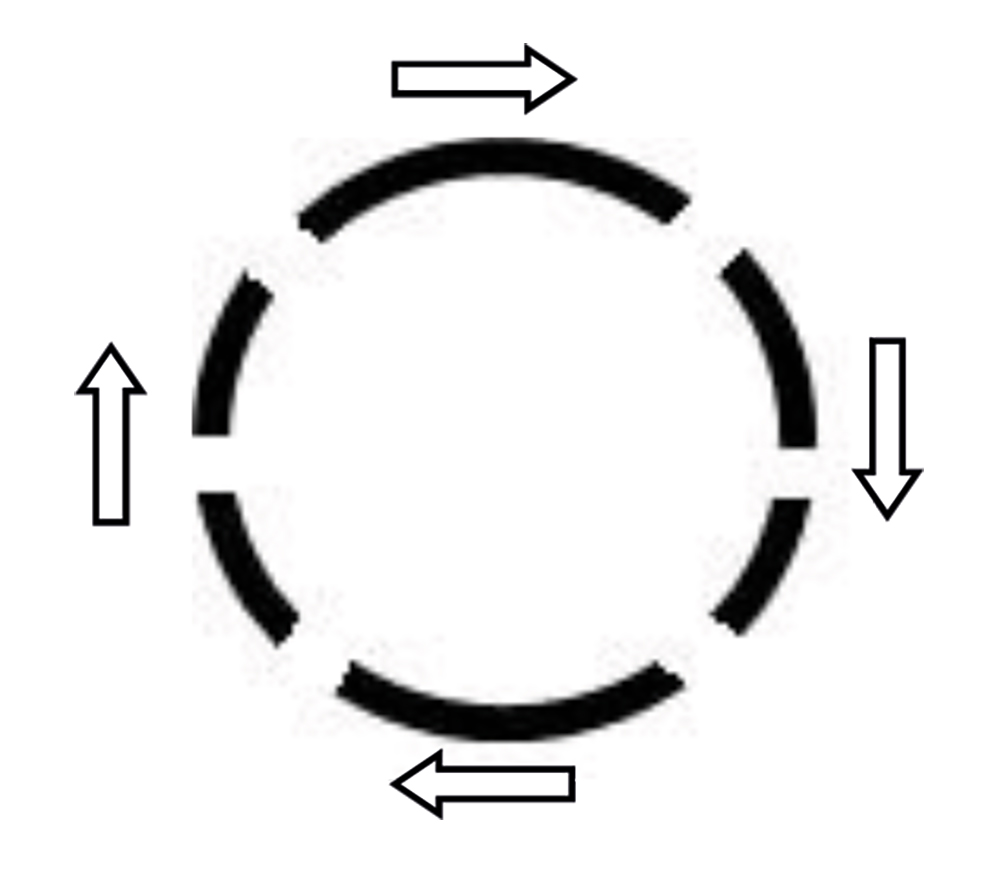
After an interference, the Circle, in which the arrows represent society, undergoes a process of disturbance of its natural system. This modifies its characteristics and deregulates its natural functions, impacting its structure (Figure 9). Deforestation and the use of fire in the study area reveal this pattern of disturbance in the system.

However, while adapting to constant anthropic changes, the system seeks to rebalance itself, connecting all its structures and returning to a perfect one to renew the cycle without impacts and irregular changes in its composition. In a natural system, this return indicates the process of ecological resilience (Figure 10). Historical images of deforestation demonstrate this pattern because when deforested areas were free from interventions, the tendency was to return to the initial state.
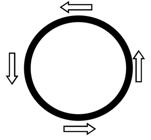
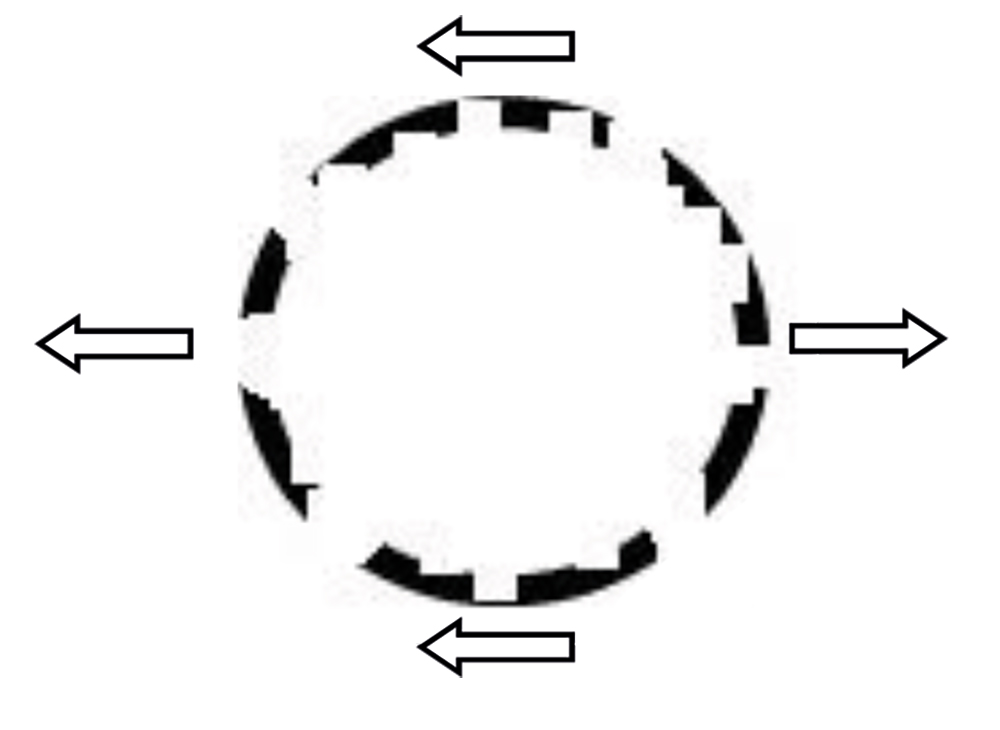
When the impact breaks the natural structures of the system, removing the essential elements that underpin its existence, this seemingly indefinite system will undergo a change in equilibrium persistence, looking for new characteristics according to the resources available (Figure 11). This imbalance is noticeable in areas with erosion and completely unprotected soil.
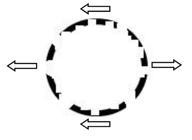
Thus, the structure yearns for balance even when resources are limited and fragmented. The impacted environment does not remain constantly in this state; after seeking rebalancing, the system will reconfigure and transform into a new environment (Figure 12). In the study area, the balance is difficult to achieve when deforestation is constant. In the case of Campinaranas, when deforestation occurs in the lower reliefs and close to the river flood zone, the probability of rebalancing occurring with different natural features is high.

The Campinaranas emerged after intense interference in a given place and after the search for rebalancing, conditioned by ecological resilience, followed by persistence. Despite conflicting theories on which natural process originated the Campinaranas, all the evidence points to anthropic interventions and, consequently, the restructuring of the environment. This evidence includes ancient Amazonian occupations, the location in specific isolated points amid the predominant Dense Forest, the intense cultural transformations in the forest, and the multicriteria analysis, soil and vegetation data that compare aspects of the Campinaranas and the Dense Ombrophilous Forest and consequently the restructuring of the environment.
Accordingly, the present research found evidence of an event motivated by constant anthropic actions in the modified areas, which, in the process of ecological resilience, has persistently sought to rebalance itself. However, the changes in intensity did not allow for the rebalancing of the original features, so the Campinaranas emerged (Figure 13).

Given the evidence of changes to the unprotected soil, the Campinaranas only occur in certain places, surrounded by Dense Ombrophilous Forests and linked to fluvial seasonality. The research contextualizes the Campinaranas' genesis from the ecological resilience principle. The environment undergoes disturbances, and the terrain's declivity often facilitates successive transports of fine materials. So, at the end of the interventions, the environment persistently regenerates.
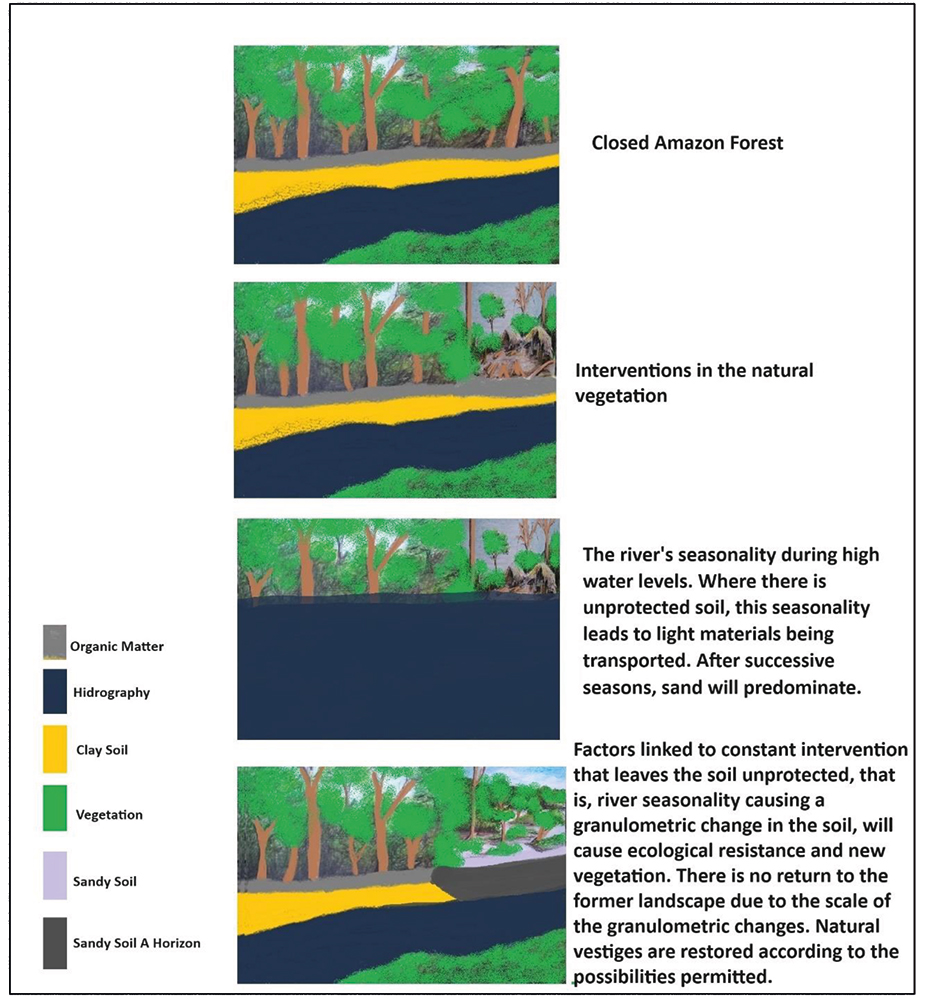
However, once the particle size composition has changed, this regeneration engenders a different landscape from the previous one. In short, the natural environment and environmental disturbances are necessary for the Campinaranas to emerge. In addition to the granulometric evidence, the similarity of iron content in clayey and sandy forest soils is explained by this element's strong resistance to leaching, even after a long process of changes. Furthermore, the particle size analysis shows that degraded areas with erosive incisions had the highest sand values, unlike the areas degraded by burning, revealing that water is a factor that influences the transformation after the soil is exposed (Figure 14). Such evidence (granulometry, leaching, and degraded areas) indicates the ecological resilience process occurring after a disturbance.
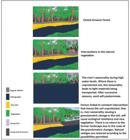
Thus, granulometric changes were observed in soils that had been closed forest. Once exposed, the clayey composition was replaced by a sandy one. If the exposed soil experiences successive seasonal river events, the slope of the land and the transport of the light material will permit regeneration if the environment is spared from further disturbances.
In environments further from rivers, unprotected soil is susceptible to variations in erosive rainfall processes and leaching. As identified in the particle size comparison of degraded areas and the similarity of iron patterns between the two forest areas, these factors lead to a resilient modification, conditioning the creation of new landscapes, such as the Campinaranas.
Limits of ecological resilience
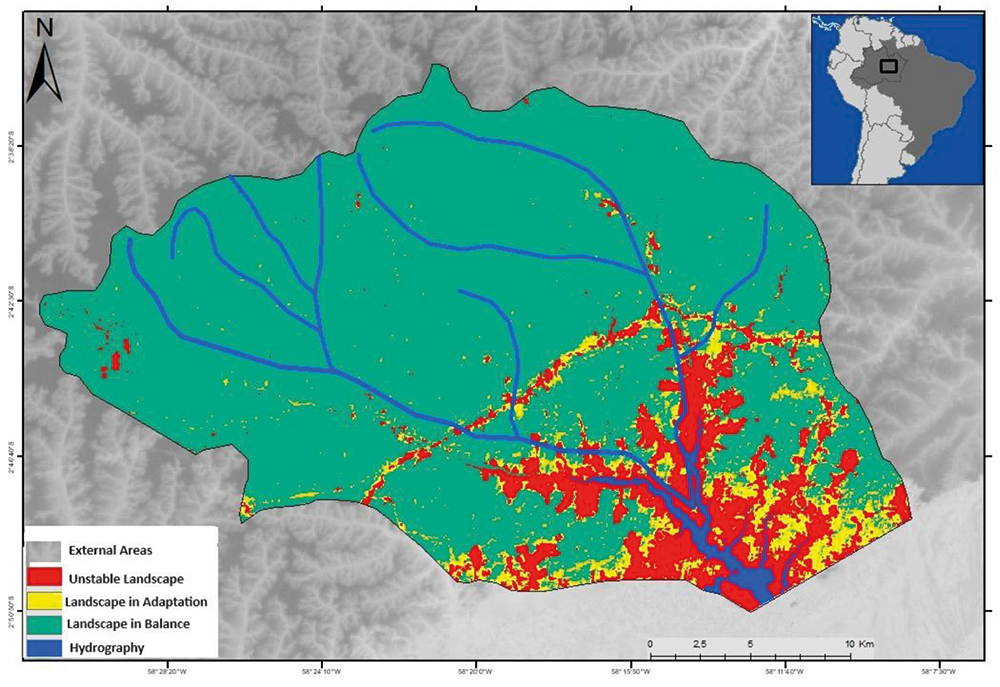
In the research area, three levels of ecological resilience were defined (balanced landscape, unstable landscape, adapted landscape), identifying the sustainable pattern for the balance of nature. In general, it is thought that quantifying the modified landscape will lead to a broader view of the emergence of natural resource management.
Evidence points to anthropic influences as primarily responsible for the emergence of Campinaranas. Based on the results obtained, we argue that after the disturbance in the forest's natural environment, depending on the level of impact, nature rebalances itself, being able to return to the original landscape or create new ecosystems.
In the research area, it was clear that areas with anthropogenic influences are susceptible to change. The multicriteria analysis made it possible to quantify the potential of the influencing variables. Anthropic actions were the most likely to modify the landscape.
Traces such as charcoal in the soil, ceramics from ancient societies, and the existence of Campinaranas ideally proportioned for human occupation support the hypothesis of human influence in changing the landscape, indicating that Campinaranas are the result of this process.
Levels of Ecological Resilience
There is a comprehensive and evident difference between variables of the Campinaranas and Dense Ombrophilous Forest environments that makes it impossible to perceive apparent similarities between the environments as a result of a continuous process from one environment to another, such as an evolution of the landscape.
Regarding their origin, it is apparent that there is no paedogenic point of interconnection evidencing the evolutionary process of the soil. The hydrological variable does not have portions with high turbidity, which allows for a fluvial deposition process. The vegetation has different levels of carbon; the Dense Ombrophilous Forest has a higher potential for carbon emission than the Campinaranas. Of the species identified, only four types of vegetation are present in the Campinaras and the Dense Ombrophilous Forest. The climate and relief are similar in the two forest environments.
The similarities are minor, and it is evident that the Campinaranas are an environmental response to interventions in the Dense Ombrophilous Forest when severe impacts modify the ecological structures.
The Campinaranas break the hegemony of the great Dense Ombrophilous Forest. The richness of the two areas makes the Amazon even more unique, as it reveals that its landscapes have history. Anthropic disturbances in both areas have brought many changes to both environments and have proved to be the main element influencing the emergence of landscapes in the Amazon.
The results have led to a standardized theoretical assumption. Overall, the evidence allows us to state that nature presents a pattern:
where En are the natural elements; S is society and Pe is the balanced landscape.
Disturbances in the natural system can reverse the formula depending on how intensely a system is modified.
With the change in the natural system, there is
where En are the natural elements; S2 is society with accelerated interventions, and Pi is the unstable landscape.
The landscape becomes unstable, but an adaptation will occur over time, becoming
where En are the natural elements; S is society, and Pa is the adapted landscape.
Adaptation can reconstruct previous patterns, or, if an exaggerated disturbance occurs, adaptation to new patterns will arise with a new landscape, always tending to a post-change balance, this latter assumption is the result of all the processes that condition nature to ecological resilience.
Analytical data on soil, relief, vegetation, climate, and hydrography reveal trends in the dynamics of landscape changes. Due to changes, soils can lose their physical characteristics. The climate can have different precipitation, humidity, and temperature patterns at different times. When altered, vegetation undergoes a slow regeneration process.
All elements are susceptible to spatial changes, and all are anthropic factors that are accelerators of change. Natural time factors and cyclical movements demonstrate a potential to alter the structure of the natural system, such as river seasonality, which can alter the soil fertility depending on the season.
Nevertheless, the anthropic factor is undoubtedly the most significant contributor to a change in the system over a short period. The premise identified from the results allowed a map of ecological resilience patterns in the study area to be created (Figure 15).
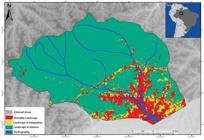
The second law of thermodynamics makes it clear that actions in the system are, by law, irreversible. However, the natural system participates in a resilience process, freeing it from the order-disorder-order.
FINAL CONSIDERATIONS
Campinaranas are atypical environments in the Amazon. The landscape, apparently unique and static, is diverse and dynamic. The Campinaranas break the hegemony of the great Dense Ombrophilous Forest. The richness of the two areas makes the Amazon even more exceptional, as it reveals that its landscapes have history. The anthropic impacts in both areas have hugely altered both environments and have proved to be the main element influencing the emergence of landscapes in the Amazon.
Anthropic influence is constant, making environmental management essential since some activities are traditional and the local inhabitants' only economic income. A true definition of sustainability arises inevitably from understanding the limits of ecological resilience and the landscapes that will be reversible and irreversible when impacted by each activity, thus enabling a short- and long-term understanding of human activities. Actions need a geographical approach in their totality, simultaneously understanding society and nature. Residents report having everything they need from their activities, and this cannot be taken away from them.
The evidence suggests that anthropic influences are responsible for the emergence of the Campinaranas. It was observed that, depending on the level of impact, after the natural forest environment has been disturbed, nature rebalances and can return to the original landscape or create new environments. Thus, the Campinaranas result from the resilience process of the Dense Ombrophilous Forest.
Further study and research are required to understand the potential of changes and the influences on creating new landscapes.
Besides the granulometric data and the aluminum and iron values, the most significant traces of anthropogenic influence are the archaeological evidence of ancient occupations, charcoal in the soil, and the fact that the enclaves are a few meters in size.
The changes need to be accounted for, described, and measured to correlate them with the new landscapes and understand whether they are variable or have created a lower balance than the existing ones. Thus, it is essential to understand the limits of changes and the points that make the landscape irreversible.
ACKNOWLEDGMENTS
We are grateful to the Secretaria de Educação do Amazonas (SEDUC-AM) and Secretaria Municipal de Manaus (SEMED) for supporting the first author's research time.
References
- AB’SABER, A. N. O Domínio Morfoclimático Amazônico. Série: Leituras indispensáveis. São Paulo: Ateliê Editorial, 2000.
-
ABREU, N. R. P.; VIEIRA, A. F. S. G. Análise das Diferenças Florísticas e os Diferentes Tipos de Solo das Rodovias Am 330 e Am 363, em Silves e Itapiranga, Amazonas. Geosaberes, Fortaleza, v. 10, n. 21, p. 1-13, 2019. Doi: 10.26895/geosaberes.v10i21.720.
» https://doi.org/10.26895/geosaberes.v10i21.720. - ABREU, N. R. P. A. Relação entre as Florestas de Campinaranas e Processo de Resiliência Ecológica (Amazônia, Brasil). 2023. Tese de Doutoramento. Universidade de Lisboa. Lisboa, Portugal, 2023.
- BUENO, G. T. Appauvrissement et podzolisation des latérites du baissin du Rio Negro et gênese dês Podzols dans le haut bassin amazonien. 2009, 191p. Doutorado em Geografia. Rio Claro, 2009.
-
DIEGUES, A. C. O Mito Moderno da Natureza Intocada. Editora Hucitec: São Paulo, 6 ed., 2008. Doi: 10.1590/S1678-53202008000100010
» https://doi.org/10.1590/S1678-53202008000100010 - DUCKE, A.; BLACK, G. A. Notas sobre a fitogeografia da Amazónia brasileira. Bol. Técnico do IAN, Belém, p. 1-62, 1954.
- EMBRAPA. Serviço Nacional de Levantamento e Conservação de Solos (Rio de Janeiro, RJ). Manual de métodos de análise de solo. Rio de Janeiro, 1997.
- EMBRAPA. Serviço Nacional de Levantamento e Conservação de Solos (Belém-PA). Avaliação da Aptidão Agrícola do Município de Silves - Estado do Amazonas. Belém, 2003.
- FERREIRA, C. A. C. Análise comparativa do ecossistema campina na Amazônia brasileira. 2009. Tese (doutorado). INPA, Manaus, 2009.
-
GUIMARÃES, F.S; BUENO, G.T. As Campinas e Campinaranas Amazônicas. Caderno de Geografia, São Paulo, v. 26, n. 45, p. 113, 2016. Doi: 10.5752/P.23182962.2016v26n45p113.
» https://doi.org/10.5752/P.23182962.2016v26n45p113. -
HOLLING, C. S. Resilience and stability of ecological systems. Annual Review of Ecological Systems, p. 1-23. 1973. Doi: 10.1146/annurev.es.04.110173.000245
» https://doi.org/10.1146/annurev.es.04.110173.000245 - IBGE - Instituto Brasileiro de Geografia e Estatística. Manual técnico da vegetação brasileira: Sistema fitogeográfico: inventário da formações florestais e campestres: técnicas e manejo de coleções botânicas: procedimentos para mapeamentos. Rio de Janeiro: IBGE, 2012. 272 p.
-
JANZEN, D. H. Tropical blackwater rivers, Animals and mast fruiting by the Dipterocarpaceae. Biotropica, p. 69-103, 1974. Doi: 10.2307/2989823
» https://doi.org/10.2307/2989823 -
KLINGE, H. Podzol soils in the Amazon Basin. Journal of Soil Science, p. 95-103, 1965. Doi: 10.1111/j.13652389.1965.tb01423.x
» https://doi.org/10.1111/j.13652389.1965.tb01423.x -
LUIZÃO, R .C. C; LUIZÃO, F. J; PAIVA, R. Q; MONTEIRO, T. F; SOUSA, L. S; KRUIJT, B. Variation of carbon and nitrogen cycling processes along a topographic gradient in a central Amazonian forest. Global Change Biology, p. 692-600, 2004. Doi: 10.1111/j.1529-8817.2003.00757
» https://doi.org/10.1111/j.1529-8817.2003.00757 -
LISBOA, P. L. Observações gerais e revisão bibliográfica sobre as campinas amazônicas de areia branca. Acta Amazônica, v. 5, n. 3, p. 211-223, 1975. Doi: 10.1590/1809-43921975053211
» https://doi.org/10.1590/1809-43921975053211 -
MAFRA, A. L; MIKLOS, A. A. W; VOLKOFF, B.; MELFI, A. J. Pedogênese numa sequência latossolo-espodossolo na região do alto rio Negro, Amazonas. Revista Brasileira de Ciência do Solo, n. 26, p. 381-394, 2002. Doi: 10.1590/S010006832002000200012.
» https://doi.org/10.1590/S010006832002000200012. - MENDONÇA, B. A. F. Campinaranas Amazônicas: Pedogênese e a relação solo-planta, Viçosa-MG, 2011.
-
MENDONÇA, B. A. F.; FERNANDES-FILHO, E. I; SCHAEFER, C. E. G. R; SIMAS, F. N. B; PAULA, M. D. Os solos das campinaranas na Amazônia brasileira: ecossistema arenícolas oligotróficos. Ciência Florestal, Santa Maria, v. 25, n. 4, p. 827-839, 2015. Doi: 10.5902/1980509820581.
» https://doi.org/10.5902/1980509820581. - PRANCE, G. T. Estudos sobre a vegetação das campinas amazônicas-I: Introdução a uma série de publicações sobre a vegetação das campinas amazônicas. Acta Amazônica, v. 5, n. 3, p. 207-209, 1975.
-
PRANCE, A. G.; ALBUQUERQUE, B. W. P. Estudos sobre a vegetação das campinas amazônicas-III: A vegetação lenhosa da campina da reserva biológica INPA-SUFRAMA (Manaus-Caracaraí, Km 62). Acta Amazônica , v. 5, n. 3, p. 225-246, 1975. Doi: 10.1590/1809-43921975053207.
» https://doi.org/10.1590/1809-43921975053207. -
PRANCE, G. T. E.; SCHUBART, H. O. R. Notes on the Vegetation of Amazonia I. A Preliminary Note on the Origin of the Open White Sand Campinas of the Lower Rio Negro. Brittonia, p. 60-63, 1978. Doi: 10.1590/1809-43921975053225.
» https://doi.org/10.1590/1809-43921975053225. -
PRANCE, G. T. The Diversity of the Amazon Flora. Royal Institution Proceedings, p. 169-195, 1992. Doi: 10.2307/2806458.
» https://doi.org/10.2307/2806458. -
ROOSEVELT, A. C. The Amazon and the Anthopocene: 13.000 years of human influence in a tropical raiforest. Anthropocene, v. 4, 2014. p. 2213-3054. Doi: 10.1016/j.ancene.2014.05.001
» https://doi.org/10.1016/j.ancene.2014.05.001 - SPRUCE, R. J. B. Notes of a botanist on the Amazon and Andes. London: R. Wallace, 1908.

 Source: The authors (2023).
 Source:
  Source: The authors (2023).
 Source: The authors (2023).
 Source: The authors (2023).
 Source: The authors (2023)
 Source: The authors (2023).
 Source: The authors (2023).
 Source: The authors (2023).
 Source: The authors (2023).
 Source: The authors (2023).
 Source: The authors (2023).
 Source: The authors (2023).
 Source: The authors (2023).
 Source: The authors (2023).