
 Multidimensional Assessment of Women’s Empowerment in India: A Socio-Spatial Perspective Using NFHS-5 Data
Abstract
Women’s empowerment plays a vital role in advancing socio-economic development and promoting gender equality. In the Indian context, empowerment is shaped by factors such as educational attainment, economic participation, access to healthcare, and decision-making capacity. However, these determinants are unevenly distributed across regions, resulting in notable socio-spatial disparities. This study draws on data from the National Family Health Survey (NFHS-5, 2019-2021) to assess regional variations in women’s empowerment across three core dimensions: freedom of mobility, autonomy in household decision-making, and attitudes toward domestic violence. To quantify these dimensions, three composite measures-the Mobility Index, Household Autonomy Index, and Domestic Violence Attitude Index-were developed and applied across states. The analysis reveals distinct regional patterns. Southern states and several northeastern states exhibit relatively high levels of household autonomy, reflecting stronger educational and socio-economic conditions. However, mobility patterns within these regions show variability: states such as Manipur and Meghalaya display high levels of women’s movement outside the home, whereas some tribal-dominated areas demonstrate restricted mobility due to traditional norms and geographical constraints. Conversely, several northern states show limited mobility despite moderate household decision-making autonomy, suggesting deeply rooted patriarchal structures that constrain women’s public presence. Attitudes toward domestic violence further highlight cultural differences, often diverging from patterns of autonomy or mobility. Acceptance of domestic violence remains comparatively higher in northern and central states, indicating persistent gender norms that hinder empowerment even when other indicators show improvement. Based on the composite indices, states were categorized into high, medium, and low empowerment levels. Kerala, Tamil Nadu, and Goa consistently ranked in the high category, reflecting comprehensive social development. Maharashtra and Gujarat demonstrated intermediate progress, while Uttar Pradesh, Bihar, and Rajasthan remained in the low category. These spatial disparities reinforce the long-standing divide between the southern/northeastern states and the EAG/northern states, underscoring the need for region-specific policies that address structural inequalities, cultural barriers, and institutional gaps.
Keywords:
Women empowerment; Domestic Violence; Autonomy; Mobility; Decision Making
INTRODUCTION
Women’s empowerment has emerged as a major development concern globally, particularly in developing countries where structural inequalities undermine women’s agency. Empowerment is generally understood as the process through which individuals or groups strengthen their capacity to make purposeful decisions and translate them into desired outcomes (Chakrabarti; Biswas, 2012). It encompasses greater control over material and intellectual resources, financial autonomy, health management, and participation in decision-making at household and community levels (Nayak; Mahanta, 2008).
In India, women have long been revered as symbols of power and divinity, yet continue to face persistent discrimination and subordination, reflecting a deep paradox (Nayak; Mahanta, 2008). These contradictions underline that empowerment is a multidimensional, dynamic process rather than a single measurable condition (Batliwala, 2007; Kabeer, 1999). Women’s ability to make independent decisions, especially regarding reproductive health, remains a crucial dimension of empowerment, yet it is often constrained by restricted mobility and limited autonomy (Singh et al., 2020a).
The patriarchal structure of Indian society reinforces gendered norms and values that sustain unequal power dynamics and intergenerational cycles of disadvantage (Kabeer, 2000). NFHS-5 data reveal marked spatial disparities-southern and western states show relatively higher empowerment compared to northern and central regions (Singh; Singh, 2024). Globally, the fifth Sustainable Development Goal (SDG-5) emphasizes eliminating gender inequality and ensuring women’s participation across all spheres as essential for human and societal progress. Despite constitutional guarantees and legislative efforts, gender hierarchies in India remain deeply entrenched, exposing the gap between policy intent and social reality (United Nations, 2015).
Empirical evidence highlights that women with greater decision-making power have better access to healthcare and family planning, while limited autonomy leads to poorer reproductive outcomes (Bloom et al., 2001; Jejeebhoy; Sathar, 2001; Mondal et al., 2020, Bansal et al., 2023; Devaraj et al., 2024; Shruthee et al., 2025). Similarly, women’s control over land and property has been linked to higher empowerment and improved child health outcomes (Allendorf, 2007). However, true empowerment must transcend legal reforms to challenge entrenched socio-cultural norms that restrict women’s agency (Goel; Ravishankar, 2022; Manya Sahni, 2024; Joseph; Madhuri, 2024; Raghuvanshi et al., 2025).
Scholars have conceptualized empowerment through various lenses-status, autonomy, and gender equity-each reflecting its multidimensional nature (Mason; Smith, 2000; Jejeebhoy, 2000; Govindasamy; Malhotra, 1996; Kabeer, 1998). It extends beyond independence to recognize interdependence and contextual agency, encompassing economic opportunities, education, healthcare, freedom of movement, and resistance to violence (Kabeer, 1999; Khader, 2015; Howard-Hassmann, 2011; Banerjee et al., 2020; Ranganathan et al., 2021).
Nevertheless, most studies in India have narrowly focused on education, employment, or health outcomes, overlooking intra-household autonomy and financial decision-making, and their regional interconnections. This study addresses that gap by adopting a multidimensional and socio-spatial approach, focusing on women’s decision-making and financial autonomy across Indian states using NFHS-5 data. It explores how socio-economic and cultural factors shape empowerment, offering evidence-based insights to address existing disparities.
By situating empowerment within its regional and socio-cultural contexts, this research advances both empirical and conceptual understanding of gender equity. It underscores empowerment as a multifaceted, relational, and geographically rooted phenomenon-moving beyond traditional indicators to reveal the lived realities and uneven geographies of women’s agency in India.
DATA
The present study utilised data from the fifth round of the National Family Health Survey (NFHS-5), a nationally representative, household-based survey conducted across 707 districts in 28 states and 8 union territories of India during 2019-2021. The survey was carried out by the International Institute for Population Sciences (IIPS), Mumbai, under the aegis of the Ministry of Health and Family Welfare (MoHFW), Government of India. A total of 636,699 households were successfully interviewed, and individual interviews were completed with 724,115 women aged 15-49 years.
NFHS-5 provides detailed information on health, fertility, nutrition, and socio-economic indicators, with special focus on gender dimensions such as women’s decision-making, autonomy, and attitudes toward domestic violence. This rich dataset allows the measurement of women’s empowerment at both national and state levels.
METHOD
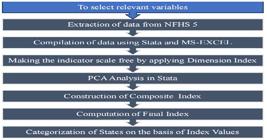
This study evaluates women’s empowerment using composite indices derived from NFHS-5 data to capture regional variations across India. Three indices were constructed: household autonomy, mobility, and attitudes toward wife-beating were analysed as an indicator of women’s acceptance of gender inequality. Relevant variables were recoded into binary responses and aggregated to form composite indices as shown in Figure 1.
Step I: Construction of The Index
Indicators that reflect the autonomy of the household, particularly as it pertains to decision-making, mobility, and violence against women, were selected to construct a composite index of women's empowerment. Before constructing the indices, the data were standardized to eliminate the unit difference among variables. Normalization is important since indicators are expressed on different scales, and scale equivalence will guarantee a meaningful comparison among the states due to ignorance of quantitative variation in the value ranges. Based on the strategy of UNDP in the human development index, the dimension index (DI) method was used as follows:
Where:
-
DIik = Normalized score (dimension index) of the i-th state for the k-th indicator
-
Xik = Actual value of indicator k for unit i
-
min (Xk) = Minimum observed value of indicator k across all units
-
max (Xk) = Maximum observed value of indicator k across all units
The resulting values ranged between 0 and 1, with higher values reflecting greater empowerment.
Step II: Aggregation of Indicators
After normalization, the indicator-wise values were aggregated for each state. Principal Component Analysis (PCA) was employed to derive statistical weights for each indicator, ensuring that the most influential dimensions contributed proportionally to the index. The composite empowerment score for each state was then calculated as:
-
Ii = empowerment index score of state i
-
wj = PCA-derived weight of indicator j
-
DIij = normalized value of indicator j for state i
-
n = total number of indicators
Step III: Categorization of States
The final index values were categorized into three classes of women’s empowerment using the Equal Interval method: (i) High, (ii) Moderate (iii) Low empowerment. This classification enabled the identification of spatial disparities across states.
FINDING AND DISCUSSION
The examination of regional and socio-cultural variations in a few metrics of women's empowerment, as previously stated, is the primary emphasis of this essay. These metrics assess women's influence over a range of facets of their lives and surroundings, including their involvement in decision-making within the home, their financial independence and mobility, and their inclination toward gender-based subjugation of women. The primary focus of this research is the study of regional and socio-cultural variations in a few indicators of women's empowerment, as previously mentioned. These metrics assess how well women manage several facets of their lives and surroundings, including their involvement in decision-making inside the home, their financial independence and mobility, and their attitudes about women's gender-based subordination.
Household autonomy index
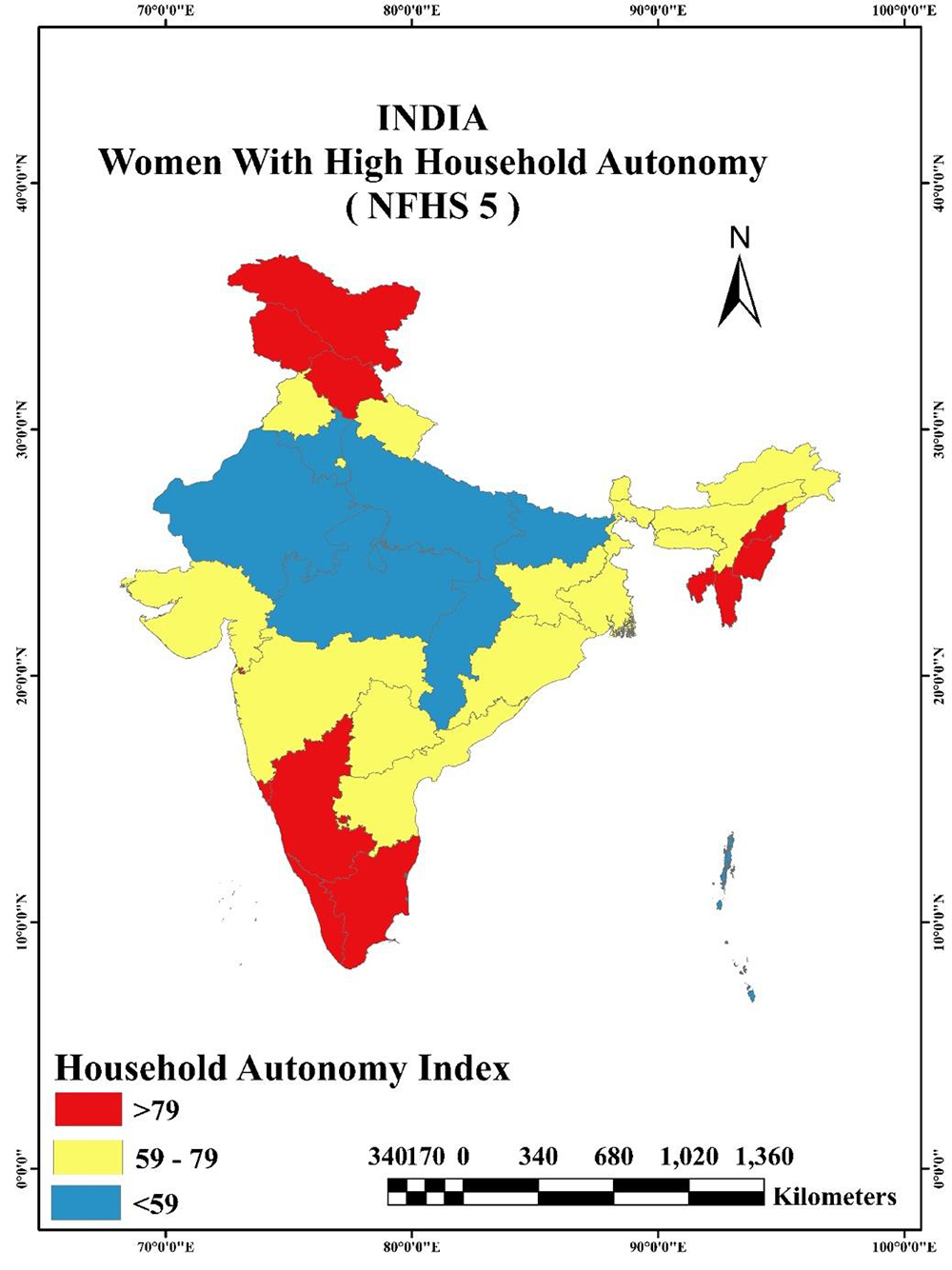
Women’s participation in household decisions shown in Figure 2 such as healthcare, finances, and family matters-is a vital indicator of autonomy, reflecting their influence in everyday life. Studies show that in urban areas, many women actively contribute to decisions about finances, health, and domestic affairs, demonstrating growing empowerment within the household (Pandey et al., 2021). The state-wise distribution of women with significant household autonomy in India, classified into Low (<59), Medium (59-79), and High (>79), highlights substantial regional variations shaped by socio-cultural, economic, and institutional factors (Figure 2). Southern states, particularly Kerala and Tamil Nadu, exhibit the highest autonomy, driven by exceptionally high female literacy rates (Kerala: 99.5%; Tamil Nadu: 91.2%), progressive state policies, gender-sensitive legislation, and the influence of women’s self-help groups (IIPS; ICF, 2021; National Research Council, 2001). In these states, matrilineal systems and comprehensive welfare schemes further enable women to actively participate in family decision-making. Women’s autonomy is a key determinant of reproductive and health outcomes, influencing decision-making in healthcare and family planning (Tayal et al., 2024). Similarly, Goa demonstrates high autonomy due to high literacy (89%), economic independence supported by tourism, smaller family sizes, and targeted gender-prioritization policies such as Laadli Laxmi Yojana, alongside enhanced financial inclusion and resistance to marital coercion (Kumari; Siotra, 2023; Desouza, 2004; Vignitha et al., 2024). Urbanization in India has improved women’s labor market participation and mobility, but challenges remain in financial autonomy and health outcomes (Dhamij et al., 2023).
High household autonomy is also evident in northeastern states such as Manipur, Mizoram, and Nagaland, where tribal customs and matrilineal or matriarchal traditions historically accord women significant roles in community markets, local governance, and domestic decision-making, promoting active participation within households and broader society (Chakma; Pandey, 2022). In contrast, Karnataka, Andhra Pradesh, and Telangana display moderate autonomy, with decision-making power and financial control closer to the national average, though economic productivity does not always translate into household empowerment (Gatha Cognition, 2023; Pandey et al., 2023).
Northern and central states, including Uttar Pradesh, Bihar, Rajasthan, and Madhya Pradesh, generally exhibit low to medium household autonomy, constrained by patriarchal norms, conservative traditions, and limited institutional support (Kumari; Siotra, 2023; Kabeer, 2016). Similarly, among tribal women, low autonomy and restricted access to education are strongly associated with poor health outcomes and reduced empowerment (Manna et al., 2022). Even where health indicators are comparatively better, as in West Bengal and Andhra Pradesh, male-dominated decision-making persists, creating a gap between access to services and actual autonomy (Desai; Andrist, 2010). States like Punjab and Haryana, despite higher per capita income, demonstrate moderate autonomy, reflecting entrenched gender discrimination (Desai; Andrist, 2010; Jejeebhoy; Sathar, 2001). Similarly, Himachal Pradesh shows persistent gendered domestic roles shaped by traditional hill society norms (Allendorf, 2007). Tribal regions in Chhattisgarh and Madhya Pradesh provide relatively higher gender equity and women’s decision-making authority, whereas caste-dominated plains remain restrictive (Dyson; Moore, 1983).

Overall, southern and northeastern states, along with Goa, achieve higher household autonomy due to improvements in education, supportive cultural norms, and proactive policy measures, while northern and central states lag behind due to patriarchal structures, conservative traditions, and weaker socio-economic foundations. These regional disparities underscore a pronounced spatial dichotomy in women’s domestic autonomy across India (Kumari; Siotra, 2023; Desai; Andrist, 2010; Kabeer, 2016; Desouza, 2004).
Mobility Index
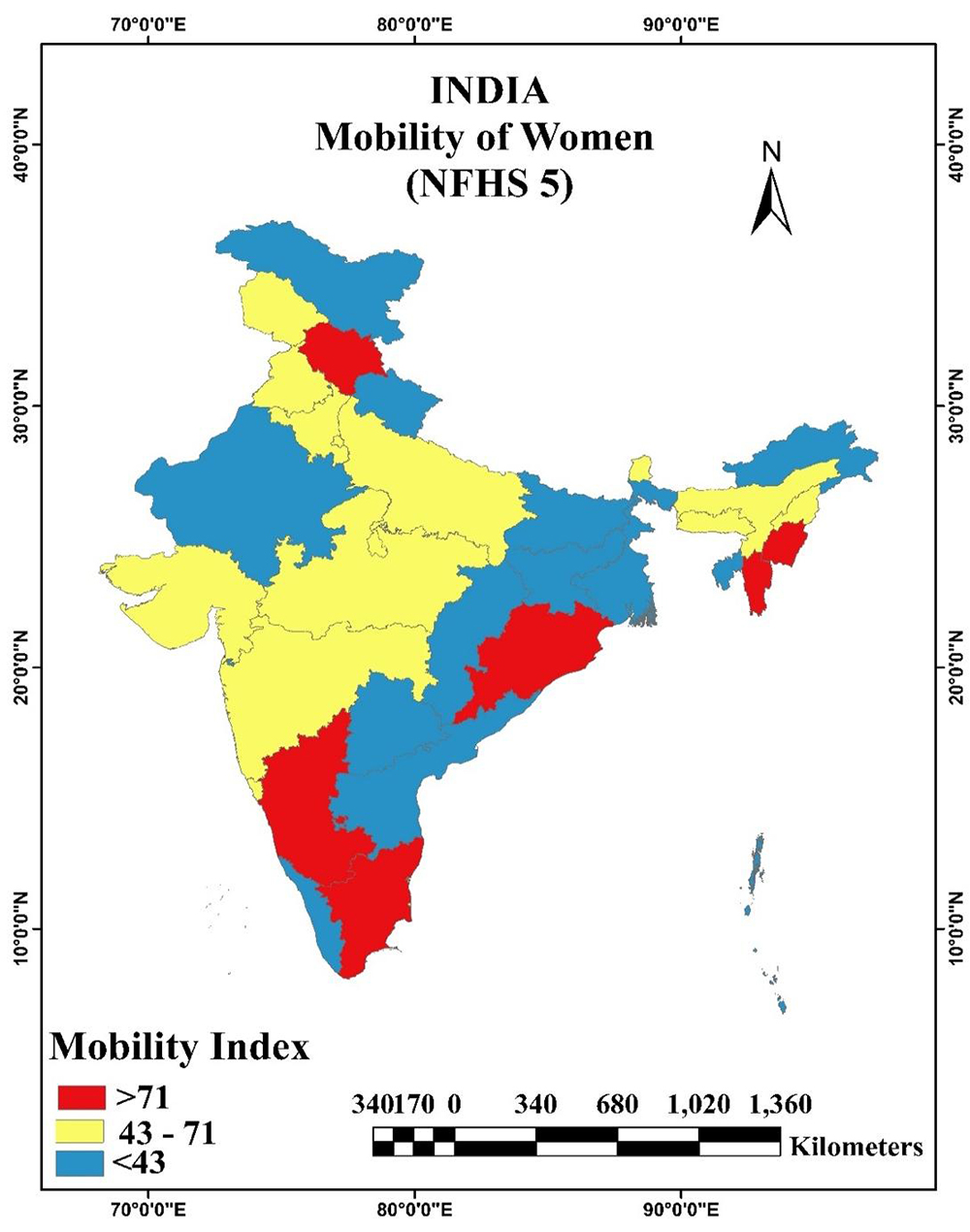
The concept of mobility as used in the empowerment studies measures the freedom of women to move freely in their environment and participate in social, economic, and family subsistence. The Mobility Index shown in Figure 3, which is based on the freedom of women to visit family, markets, or health facilities, has classified states into low (<43), medium (43071), and high (>71) mobility levels. Higher levels of women’s mobility are observed in states such as Tamil Nadu, Telangana, Andhra Pradesh, Chhattisgarh, Odisha, Manipur, Mizoram, and Goa. This pattern can be attributed to relatively liberal social norms, greater female participation in economic activities, and the catalytic role of the self-help group (SHG) movement, which has been shown to significantly enhance women’s income control, decision-making, and overall empowerment (Kumar et al., 2021). The case of Tamil Nadu is particularly noteworthy: according to the Annual Survey of Industries (2019-20), the state accounts for almost 43 percent of India’s female workforce in the formal manufacturing sector, a figure that underscores the positive association between industrial employment and higher levels of women’s mobility (Government of India, 2021). On the same note, Telangana reports one of the highest female labour force participation rates in India: as per the Telangana Socio Economic Outlook 2025 (drawing from PLFS 2023-24), the state's LFPR stands at 52.7%, significantly above the national average of 45.2%, reflecting strong female engagement in the labour market (Telangana Socio Economic Outlook, 2025). In Kerala, elevated levels of female literacy, robust human development indicators, and historically more progressive social structures are linked with enhanced mobility and agency among women, though (Menon, 2020) cautions that structural impediments still limit full realization of this potential Women who are employed in the agricultural and trading sectors have a stronger representation in the community by being in the public sphere in Himachal Pradesh (Tripathi; Singh, 2021).
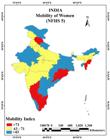
The matrilineal society and markets designed with women like the Ima Keithel in Manipur form the cultural settings that allow and justify female mobility (Singh, 2016). The mobility in Uttar Pradesh, Bihar, Rajasthan, and Madhya Pradesh is least because of patriarchal culture, purdah, and gender restrictions imposed on women in their views in society (Agarwal, 2018; Sharma, 2019; Tripathi, Singh, 2021). Multiple socio-cultural and structural factors shape the extent of women’s mobility in India. In several states, mobility remains constrained due to safety concerns, early marriage, and persistent gendered expectations, despite gradual improvements in female education and workforce participation (UN Women, 2022). Goa presents a different scenario: its higher literacy rates, rapid urbanization, and the influence of tourism foster a socio-cultural environment that is comparatively more supportive of independent female agency (Desouza, 2004). Likewise, tribal communities in states such as Odisha, Manipur, and Mizoram have historically positioned women in market networks and local decision-making processes, enabling relatively greater autonomy compared to patriarchal agrarian societies of northern India (Xaxa, 2004). States exhibiting intermediate mobility, such as Delhi, Maharashtra, Gujarat, Karnataka, and West Bengal, display mixed patterns: women in urban centers often enjoy reduced dependency and enhanced economic opportunities, whereas rural areas continue to impose cultural restrictions (IIPS, 2021; MoHFW, 2021; Kabeer, 2016). Delhi presents a mixed pattern, where improved urban infrastructure such as the Metro has expanded women’s mobility opportunities, yet persistent safety concerns, harassment in public spaces, and entrenched social expectations continue to restrict their independent movement (Kaur et al., 2021; Singh; Ahuja, 2025). According to Gujarat and Maharashtra, economic development is not a prior guarantee of breaking down the cultural shackles because there are still some bounds imposed on the independent mobility of women, especially in rural areas. In the case of other places, such as Jammu & Kashmir, Arunachal Pradesh, Sikkim, Nagaland, and Meghalaya, the level of mobility is classified as low since the geographical remoteness, lack of transport infrastructure, and traditionalism exist as inhibiting factors. Terrain and conservatism in cultures send a warning against women movement in Jammu & Kashmir and Himachal Pradesh (Tripathi; Singh, 2021). The limitations on autonomy caused by rural isolation and security concerns in matrilineal states of the Northeast prove that, like cultural norms, mobility is determined by location and infrastructure.
Domestic Violence Index
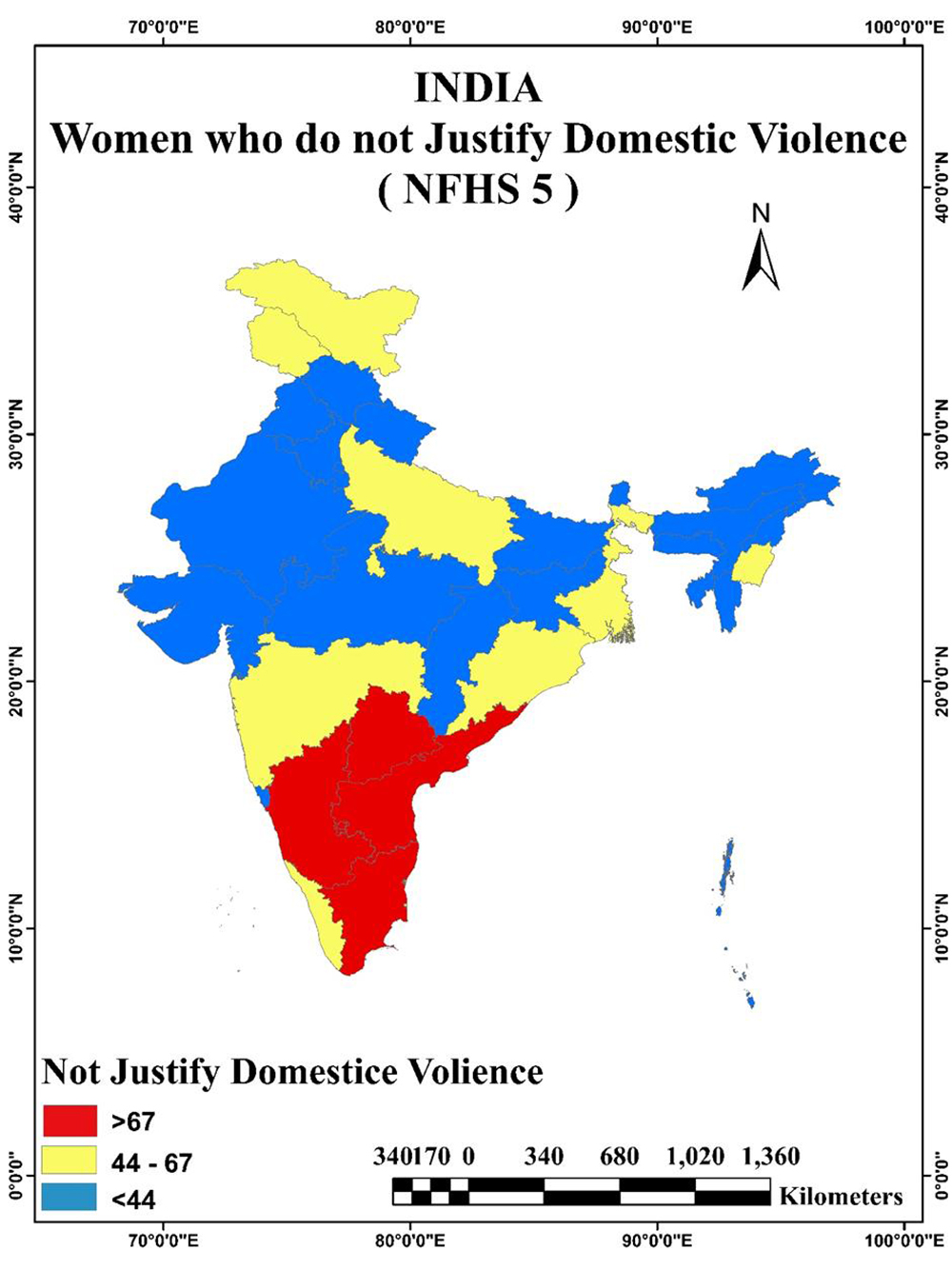
Domestic violence continues to be a serious barrier to women’s empowerment, as it weakens autonomy, dignity, and equality by reinforcing male control within the household (Jejeebhoy; Cook, 1997). Findings from NFHS-5 shown in Figure 4 highlight wide regional differences in the rejection of domestic violence, where states are divided into three categories: high (>67%), medium (44-67%), and low (<44%) rejection levels (IIPS, 2021; MoHFW, 2021). A paradox emerges in several southern states, such as Kerala, Tamil Nadu, Andhra Pradesh, and Karnataka, where rejection levels are low despite progress in literacy and health. This indicates that education alone does not challenge patriarchal norms, as ideas of male authority and marital control remain culturally strong (Shreemoyee et al., 2025; IIPS, 2021; MoHFW, 2021). Similar contradictions are seen in Tamil Nadu and Andhra Pradesh, where socio-economic development has not automatically translated into gender-equitable attitudes.
In contrast, northern and central states such as Uttar Pradesh, Bihar, Rajasthan, and Madhya Pradesh show higher rejection of domestic violence. This suggests that local campaigns, social movements, and awareness programs may play an important role in strengthening women’s resistance to abuse (Ministry of Women; Child Development, 2021). Himachal Pradesh, Punjab, and Uttarakhand also display strong rejection levels, supported by legal awareness drives and civil society initiatives. Northeastern states such as Meghalaya and Manipur demonstrate a different cultural context: matrilineal traditions and women’s active roles in markets and communities contribute to greater visibility and less tolerance of violence (Shreemoyee et al., 2025; Singh, 2019).
States such as Madhya Pradesh and Chhattisgarh present a mixed picture. Here, education and legal reforms coexist with strong patriarchal socialization. In tribal regions of Chhattisgarh, women’s participation in the economy is relatively high, but household structures still support male authority (Tripathi; Singh, 2021).
At the same time, silence around violence persists in many regions due to stigma, fear of rejection, and lack of effective support, which prevents women from seeking help (Jejeebhoy; Cook, 1997). In southern states, cultural norms often justify violence as a way to maintain discipline or resolve disputes, reinforcing obedience as a wifely duty (Shreemoyee et al., 2025; Agarwal, 2018).
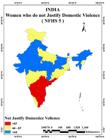
Rajasthan and Bihar highlight the multidimensional nature of empowerment: even though women’s mobility is restricted, rejection of violence is relatively high because of NGO outreach and rights-based campaigns (Ministry of Women; Child Development, 2021). On the other hand, in Tamil Nadu and Karnataka, family hierarchies continue to sustain acceptance of violence despite higher access to education. Maharashtra and Gujarat, which fall in the medium rejection category, show that urban growth has not completely weakened rural patriarchal practices (SINGH et al., 2022).
Taken together, these patterns reveal that rejection of domestic violence is not determined by education alone but is shaped by cultural norms, community activism, social movements, and gender relations at the local level. Thus, reducing domestic violence and strengthening empowerment require more than improvements in literacy and health-they demand cultural change, awareness programs, and active gender sensitization efforts across regions (Menon; Allen, 2024; Biswas et al., 2020).
The comparative assessment of household autonomy, mobility, education, and attitudes toward domestic violence reveals a clear spatial divide in women’s empowerment across India. The results are summarized in Chart 1, which presents the regional patterns of women’s empowerment across key indicators. Southern and western states generally exhibit stronger outcomes, supported by higher literacy rates, progressive policies, and more enabling cultural environments, while northern and central states continue to face deep-rooted patriarchal barriers that limit women’s agency (IIPS; ICF, 2021; Desai; Andrist, 2010; Kabeer, 2016). Meanwhile, states positioned in the middle range highlight the uneven progress of empowerment, with advances in education and health not always translating into greater autonomy or gender-equitable attitudes (Singh et al., 2022).
Taken together, these patterns suggest that women’s empowerment in India cannot be explained by single indicators such as education or income but must be understood through the interaction of socio-cultural norms, institutional support, and regional contexts (Kumari; Siotra, 2023). Addressing these disparities requires regionally tailored strategies that combine legal frameworks, awareness campaigns, and gender-sensitive policies to dismantle structural inequalities and promote more inclusive forms of empowerment (Chakma; Pandey, 2022).
CONCLUSION
Since independence, India has taken significant steps to improve the socio-economic position of women through education, health, and welfare policies. Yet, despite these efforts, women’s empowerment remains highly uneven, shaped by socio-spatial disparities, cultural traditions, and institutional variations across states. Drawing on NFHS-5 data, this study examined empowerment through three critical domains-mobility, household autonomy, and rejection of domestic violence-providing fresh insights into the spatial patterns of women’s agency across India.
The analysis highlights that empowerment is not uniform. Southern and northeastern states generally perform better, supported by stronger investments in social infrastructure and progressive cultural values, while central and northern states continue to face barriers linked to patriarchal norms, restricted opportunities, and social acceptance of inequality. Some states reflect unique contrasts: Kerala, despite its high literacy, does not consistently secure top positions in overall empowerment, whereas Chhattisgarh demonstrates higher levels of agency despite economic challenges. These findings suggest that empowerment is not solely dependent on economic or educational development but is equally shaped by social norms, institutional support, and regional contexts.
Interestingly, empowerment across domains does not always align. For instance, while women in several southern states report higher autonomy and mobility, their rejection of domestic violence remains comparatively lower, suggesting that empowerment in one dimension does not necessarily guarantee progress in another. However, education and employment by themselves do not automatically guarantee equal participation or equitable household dynamics, pointing to the need for simultaneous structural reforms and cultural change. The persistence of disparities calls for targeted interventions that acknowledge both diversity and common challenges.
In conclusion, women’s empowerment in India is a multidimensional and regionally differentiated process. Achieving inclusive empowerment requires sustained investments in education, healthcare, and livelihoods, alongside efforts to transform restrictive gender norms. Women must be recognized not just as recipients of development but as key actors whose participation is central to building an equitable society. Ultimately, empowerment will be realized when every woman-irrespective of region, class, or community-can claim dignity, autonomy, and equal opportunities in all spheres of life.
Ultimately, the true measure of empowerment lies not in comparative statistics but in building a society where every woman, irrespective of region, class, or community, can claim dignity, autonomy, and full participation in social, economic, and political life.
ACKNOWLEDGMENTS
The authors express their sincere gratitude to the International Institute for Population Sciences (IIPS), Mumbai, for providing access to the NFHS-5 dataset, which served as the primary source of data for this research. The authors also acknowledge the valuable guidance and encouragement received from academic mentors and peers during the development of this study.
DATA AVAILABILITY:
The data that support the findings of this study can be made available, upon reasonable request, from the corresponding author [Shrinkhla Pandey].
REFERENCES
-
AGARWAL, B. Capacity building and empowerment of women in climate adaptation: a key to resilient communities. Environmental Research and Sustainability, v. 12, p. 214-230, 2018. https://doi.org/10.1016/j.ers.2018.02.014
» https://doi.org/10.1016/j.ers.2018.02.014 -
ALLENDORF, K. Do women’s land rights promote empowerment and child health in Nepal? World Development, v. 35, n. 11, p. 1975-1988, 2007. https://doi.org/10.1016/j.worlddev.2006.12.005
» https://doi.org/10.1016/j.worlddev.2006.12.005 -
ANDERSON, S. The Complexity of Female Empowerment in India. Studies in Microeconomics, v. 12, n. 1, p. 74-92, 2024. https://doi.org/10.1177/23210222241237030
» https://doi.org/10.1177/23210222241237030 -
BANERJEE, A.; DUFLO, E.; QIAN, N. On the road: Access to transportation infrastructure and economic growth in China. Journal of Development Economics, v. 145, p. 102442, 2020. https://doi.org/10.1016/j.jdeveco.2020.102442
» https://doi.org/10.1016/j.jdeveco.2020.102442 -
BANSAL, A.; KULLU, A.; DIXIT, P. Understanding the healthcare provider role on post-abortion contraception adoption in India using National Family Health Survey-5. Reproductive Health, v. 20, p. 123, 2023. https://doi.org/10.1186/s12978-023-01667-z
» https://doi.org/10.1186/s12978-023-01667-z - BARDHAN, K. Women's work, welfare and status: forces of tradition and change in India. Economic and Political Weekly, v. 20, n. 51, p. 2261-2267, 1985.
-
BATLIWALA, S. Taking the power out of empowerment - An experiential account. Development in Practice, v. 17, n. 4-5, p. 557-565, 2007. https://doi.org/10.1080/09614520701469559
» https://doi.org/10.1080/09614520701469559 -
BISWAS, S.; DAS, U.; SARKHEL, P. Duration of exposure to inheritance law in India: Examining the heterogeneous effects on empowerment. arXiv, 2020. https://doi.org/10.48550/arXiv.2010.11460
» https://doi.org/10.48550/arXiv.2010.11460 -
BLOOM, S. S.; WYPIJ, D.; GUPTA, M. D. Dimensions of women's autonomy and the influence on maternal health care utilization in a north Indian city. Demography, v. 38, n. 1, p. 67-78, 2001. https://doi.org/10.1353/dem.2001.0001
» https://doi.org/10.1353/dem.2001.0001 -
CHAKMA, M.; PANDEY, N. Women identity crisis in Northeast India: With special reference to village council of Mizoram, Nagaland and Meghalaya. International Journal of Health Sciences, v. 6, S5, p. 6094-6104, 2022. https://doi.org/10.53730/ijhs.v6nS5.10192
» https://doi.org/10.53730/ijhs.v6nS5.10192 -
CHAKRABARTI, A. Understanding female autonomy in India through their family headship status. Journal of Population and Social Studies, v. 27, n. 3, p. 266-285, 2019. https://doi.org/10.25133/JPSSv27n3.0017
» https://doi.org/10.25133/JPSSv27n3.0017 -
CHAKRABARTI, S.; BISWAS, C. S. An exploratory analysis of women’s empowerment in India: a structural equation modelling approach. The Journal of Development Studies, v. 48, n. 1, p. 164-180, 2012. https://doi.org/10.1080/00220388.2011.615920
» https://doi.org/10.1080/00220388.2011.615920 -
CHARYA, D. R.; BELL, J. S.; SIMKHADA, P.; VAN-TEIJLINGEN, E. R.; REGMI, P. R. Women's autonomy in household decision-making: a demographic study in Nepal. Reproductive Health , v. 7, p. 15, 2010. https://doi.org/10.1186/1742-4755-7-15
» https://doi.org/10.1186/1742-4755-7-15 -
DESAI, S.; ANDRIST, L. Gender scripts and age at marriage in India. Demography, v. 47, n. 3, p. 667-687, 2010. https://doi.org/10.1353/dem.0.0118
» https://doi.org/10.1353/dem.0.0118 -
DESOUZA, S. Situational Analysis of Women in Goa. New Delhi: National Commission for Women, 2004. Available: Available: http://irgu.unigoa.ac.in/drs/bitstream/handle/unigoa/1815/Situational_Anal_Women_Goa_119.pdf?sequence=1&isAllowed=y Accessed on: sep. 13, 2025.
» http://irgu.unigoa.ac.in/drs/bitstream/handle/unigoa/1815/Situational_Anal_Women_Goa_119.pdf?sequence=1&isAllowed=y -
DEVARAJ, K.; GAUSMAN, J.; MISHRA, R.; McDOUGAL, L.; SILBERMAN, P. S.; RAJ, A. Trends in prevalence of unmet need for family planning in India: patterns of change across 36 States and Union Territories, 1993-2021. Reproductive Health , v. 21, p. 48, 2024. https://doi.org/10.1186/s12978-024-01781-6
» https://doi.org/10.1186/s12978-024-01781-6 -
DHAMIJA, G.; ROYCHOWDHURY, P.; SHANKAR, B. Urbanisation and Women Empowerment: Evidence from India. GLO Discussion Paper, n. 1323, 2023. https://doi.org/10.2139/ssrn.4656859
» https://doi.org/10.2139/ssrn.4656859 -
DIXON, M. R. Population Policies and Women's Rights: Transforming Reproductive Choice. Westport: Praeger, 1993. https://share.google/ZNkQ8ddYKXvLfFCFu Accessed on: aug. 18, 2025.
» https://share.google/ZNkQ8ddYKXvLfFCFu -
DYSON, T.; MOORE, M. On kinship structure, female autonomy, and demographic behavior in India. Population and Development Review, v. 9, n. 1, p. 35-60, 1983. https://doi.org/10.2307/1972894
» https://doi.org/10.2307/1972894 -
GATHA COGNITION. Empowerment of women in India: Insights from decision-making and autonomy indicators (NFHS-4). Gatha Cognition, 2023. Available: Available: https://gathacognition.com/site/htmlview/170/journal_article/open_access_plus Accessed on: sep. 14, 2025.
» https://gathacognition.com/site/htmlview/170/journal_article/open_access_plus -
GOEL, M.; RAVISHANKAR, N. Impact of public policy and legislation on autonomy and empowerment of women in India. Gender Issues, v. 39, n. 3, p. 198-219, 2022. https://doi.org/10.1007/s12147-021-09282-7
» https://doi.org/10.1007/s12147-021-09282-7 -
GOPALAKRISHNAN, L.; EL AYADI, A.; DIAMOND-SMITH, N. The role of community-level men's and women's inequitable gender norms on women's empowerment in India: A multilevel analysis using India's National Family Health Survey-5. PloS One, v. 19, n. 12, e0312465, 2024. https://doi.org/10.1371/journal.pone.0312465
» https://doi.org/10.1371/journal.pone.0312465 -
GOVERNMENT OF INDIA. Annual Survey of Industries 2019-20 (Vol. II). Ministry of Statistics and Programme Implementation, 2021. Available: Available: https://share.google/KkG0x1r2OWiH4omXi Accessed on: jul. 16, 2025.
» https://share.google/KkG0x1r2OWiH4omXi -
GOVINDASAMY, P.; MALHOTRA, A. Women's Position and Family Planning in Egypt. Studies in Family Planning, v. 27, n. 6, p. 328-340, 1996. https://doi.org/10.2307/2138028
» https://doi.org/10.2307/2138028 -
GUPTA, A.; ASHTT, R.; MONGA, A. Perceived Safety of Women in Public Spaces: Analyzing Challenges and Policy Interventions in the NCT of Delhi. International Journal of Environmental Sciences, v. 11, n. 15s, 2025. https://doi.org/10.64252/t4zpe440
» https://doi.org/10.64252/t4zpe440 -
GUPTA, K.; YESUDIAN, P. P. Evidence of women’s empowerment in India: A study of socio-spatial disparities. GeoJournal, v. 65, p. 365-380, 2006. https://doi.org/10.1007/s10708-006-7556-z
» https://doi.org/10.1007/s10708-006-7556-z -
HOWARD-HASSMANN, R. E. Universal women’s rights since 1970: The centrality of autonomy and agency. Journal of Human Rights, v. 10, n. 4, p. 433-449, 2011. https://doi.org/10.1080/14754835.2011.619398
» https://doi.org/10.1080/14754835.2011.619398 -
INDIA. Ministry of Women and Child Development; Development Monitoring and Evaluation Office (DMEO). Sector Report 2021 - Women and Child Development. New Delhi: DMEO, 2021. Available: Available: https://dmeo.gov.in/reports-working/sector-report-2021-women-child-development Accessed on: 2 dez. 2025.
» https://dmeo.gov.in/reports-working/sector-report-2021-women-child-development -
IIPS - International Institute for Population Sciences. ICF. National Family Health Survey (NFHS-5), 2019-21: India report. Mumbai: IIPS, 2021. Available: Available: http://rchiips.org/nfhs/NFHS-5Reports/NFHS-5_INDIA_REPORT.pdf. Accessed on: 2 dez. 2025.
» http://rchiips.org/nfhs/NFHS-5Reports/NFHS-5_INDIA_REPORT.pdf. -
JAISINGH, I. Violence against women: the Indian perspective. In: PETERS, J.; WOLPER, A. (eds.). Women's Rights, Human Rights. New York: Routledge, 2018. Available: Available: https://share.google/D8S2aCEo27w2WjNDt Accessed on: 2 dez. 2025.
» https://share.google/D8S2aCEo27w2WjNDt -
JEJEEBHOY, S. Women's autonomy in rural India: Its dimensions, determinants, and the influence of context. In: PRESSER, H. B.; SER, G. (eds.). Women's empowerment and demographic processes: moving beyond Cairo. New York: Oxford University Press, 2000. https://doi.org/10.1093/oso/9780198297314.003.0009
» https://doi.org/10.1093/oso/9780198297314.003.0009 -
JEJEEBHOY, S. J.; SATHAR, Z. A. Women’s autonomy in India and Pakistan: The influence of religion and region. Population and Development Review , v. 27, n. 4, p. 687-712, 2001. https://doi.org/10.1111/j.1728-4457.2001.00687.x
» https://doi.org/10.1111/j.1728-4457.2001.00687.x -
JEJEEBHOY, S. J.; COOK, R. J. State accountability for wife-beating: the Indian challenge. The Lancet, v. 350, n. 9087, p. 1286-1290, 1997. https://doi.org/10.1016/S0140-6736(97)90004-0
» https://doi.org/10.1016/S0140-6736(97)90004-0 -
JOSEPH, V.; MADHURI, N. V. Mapping Gender Gap in Achieving the Sustainable Development Goals in India. Journal of Rural Development, v. 42, n. 3, p. 183-187, 2024. https://doi.org/10.25175/jrd/2023/v42/i3/173262
» https://doi.org/10.25175/jrd/2023/v42/i3/173262 -
KABEER, N. Gender equality, economic growth, and women’s agency: the “endless variety” and “monotonous similarity” of patriarchal constraints. Feminist Economics, v. 22, n. 1, p. 295-321, 2016. https://doi.org/10.1080/13545701.2015.1090009
» https://doi.org/10.1080/13545701.2015.1090009 -
KAPUR, R.; NARAYAN, S. Women empowerment in India: more needs to be done. ISAS Insights, 2020. Available: Available: https://www.isas.nus.edu.sg/papers/women-empowerment-in-india-more-needs-to-be-done /. Accessed on: sep. 29, 2025
» https://www.isas.nus.edu.sg/papers/women-empowerment-in-india-more-needs-to-be-done -
KABEER, N. Resources, agency, achievements: reflections on the measurement of women's empowerment. Development and Change, v. 30, n. 3, p. 435-464, 1999. https://doi.org/10.1111/1467-7660.00125
» https://doi.org/10.1111/1467-7660.00125 -
KABEER, N. Money can't buy me love? Re-evaluating gender, credit and empowerment in rural Bangladesh. Brighton: Institute of Development Studies, 1998. Available: Available: https://hdl.handle.net/20.500.12413/13879 Accessed on: dez. 2, 2025
» https://hdl.handle.net/20.500.12413/13879 -
KABEER, N. Social exclusion, poverty and discrimination: towards an analytical framework. IDS Bulletin, v. 31, n. 4, p. 83-97, 2000. https://doi.org/10.1111/j.1759-5436.2000.mp31004009.x
» https://doi.org/10.1111/j.1759-5436.2000.mp31004009.x -
KAUR, B.; RAO, N.; CHOUHAN, P. Working Women, Delhi Metro and Covid-19: A Case Study in Delhi-NCR. Journal of Transport & Health, v. 21, 2021. Available: Available: https://pmc.ncbi.nlm.nih.gov/articles/PMC8161715 /. Accessed on: oct. 25, 2025.
» https://pmc.ncbi.nlm.nih.gov/articles/PMC8161715 -
KHADER, S. Beyond Autonomy Fetishism: Affiliation with Autonomy in Women’s Empowerment. Journal of Human Development and Capabilities, v. 17, n. 1, p. 125-139, 2015. https://doi.org/10.1080/19452829.2015.1025043
» https://doi.org/10.1080/19452829.2015.1025043 -
KISHOR, S.; GUPTA, K. Women's Empowerment in India and Its States: Evidence from the NFHS. Economic and Political Weekly , v. 39, p. 694-712, 2004. https://doi.org/10.2307/4414645
» https://doi.org/10.2307/4414645 -
KUMAR, N.; KAUR, N. Impacts of self-help group membership on women’s empowerment in India. World Development , v. 105592, 2021. https://doi.org/10.1080/14754835.2011.619398
» https://doi.org/10.1080/14754835.2011.619398 -
KUMAR, S.; MONDAL, S. Empowerment of women from the experience of Indian states: a reflection of NFHS-5. GeoJournal , v. 89, n. 2, p. 64, 2024. https://doi.org/10.1007/s10708-024-11065-y
» https://doi.org/10.1007/s10708-024-11065-y -
KUMARI, S.; SIOTRA, V. Indian females in the twenty-first century: How have they fared? An analysis using geospatial techniques. GeoJournal , 2023. https://doi.org/10.1007/s10708-023-10865-y
» https://doi.org/10.1007/s10708-023-10865-y -
MALHOTRA, A.; SCHULER, S. R.; BOENDER, C. Measuring women's empowerment as a variable in international development. Paper prepared for the World Bank Workshop on Poverty and Gender: New Perspectives, 2002. Available on: https://www.academia.edu/17726621/Measuring_womens_empowerment_as_a_variable_in_international_development
» https://www.academia.edu/17726621/Measuring_womens_empowerment_as_a_variable_in_international_development -
MALHOTRA, A.; MATHER, M. Do schooling and work empower women in developing countries? Gender and domestic decisions in Sri Lanka. Sociological Forum, v. 12, n. 4, p. 599-630, 1997. https://doi.org/10.1023/A:1022126824127
» https://doi.org/10.1023/A:1022126824127 -
MANNA, S.; GUPTA, V.; SANCHAYA, S.; GARG, A. Inequities in maternal child health, education, and empowerment among tribal population in India. Journal of Family Medicine and Primary Care, v. 11, n. 11, p. 7150-7157, 2022. https://doi.org/10.4103/jfmpc.jfmpc_594_22
» https://doi.org/10.4103/jfmpc.jfmpc_594_22 -
MANYA SAHNI, P. Performance & initiatives of India in achieving SDG5 i.e. gender equality. Educational Administration: Theory and Practice, v. 30, n. 11, p. 2201-2209, 2024. https://doi.org/10.53555/kuey.v30i11.10353
» https://doi.org/10.53555/kuey.v30i11.10353 -
MASON, K. O.; SMITH, H. L. Husbands' versus wives' fertility goals and use of contraception: The influence of gender context in five Asian countries. Demography , v. 37, n. 3, p. 299-311, 2000. https://doi.org/10.2307/2648043
» https://doi.org/10.2307/2648043 -
MCKNELLY, B.; MCCORD, M. Credit with education on women's empowerment impact review n. 1, October 2001. Available: Available: https://share.google/a1ud8YtDbySeMtXDj Accessed on: oct. 23, 2025.
» https://share.google/a1ud8YtDbySeMtXDj -
MENON, N. Women in ‘Kerala Model’: Myths and Realities. In: Mobility as Capability. Cambridge: Cambridge University Press, 2020. https://doi.org/10.1017/9781108836425.004
» https://doi.org/10.1017/9781108836425.004 -
MENON, S. V.; ALLEN, N. E. Domestic violence and community organizing in India. In: PERKINS, J.; ZIMMERMAN, M. (eds.). The Cambridge Handbook of Community Empowerment, p. 83-109. Cambridge: Cambridge University Press , 2024. https://doi.org/10.1017/9781009265013.008
» https://doi.org/10.1017/9781009265013.008 -
MINISTRY OF HEALTH AND FAMILY WELFARE 2021. Available: Available: https://mohfw.gov.in/ Accessed on: dec. 2, 2025
» https://mohfw.gov.in/ -
MONDAL, D.; KARMAKAR, S.; BANERJEE, A. Women's autonomy and utilization of maternal healthcare in India: Evidence from a recent national survey. PloS One , v. 15, n. 12, e0243553, 2020. https://doi.org/10.1371/journal.pone.0243553
» https://doi.org/10.1371/journal.pone.0243553 - NATIONAL RESEARCH COUNCIL. Educating children with autism. Washington, DC: National Academy Press; Division of Behavioral and Social Sciences and Education , 2001.
-
NAYAK, P.; MAHANTA, B. Women empowerment in India. Bulletin of Political Economy, v. 5, n. 2, 2008. https://doi.org/10.2139/ssrn.1320071
» https://doi.org/10.2139/ssrn.1320071 -
PANDEY, N.; KHAN, N.; SHUKLA, N.; PANDEY, R.; DWIVEDI, A. K. Determinants of women empowerment among tribal women in India: Evidence from NFHS-5 (2019-21). Journal of Family Medicine and Primary Care , v. 12, n. 2, p. 287-296, 2023. Available: Available: https://pmc.ncbi.nlm.nih.gov/articles/PMC10041329 /. Accessed on: sep. 23, 2025.
» https://pmc.ncbi.nlm.nih.gov/articles/PMC10041329 -
PANDEY, P.; CHOUBEY, A.K.; RAI, G. The Involvement of Women as the Domestic Decision Maker: A Study of Patna Metropolitan City, Bihar, India. Sociedade & Natureza, v. 33, 2021. https://doi.org/10.14393/SN-v33-2021-62053
» https://doi.org/10.14393/SN-v33-2021-62053 -
RAGHUVANSHI, S.; NIKAM, S.S.; KARNE, M.; KOTHE, S.K. Unmasking inequity: socio-economic determinants and gender disparities in Maharashtra and India's health outcomes - Insights from NFHS-5. arXiv , 2506.08206, 2025. https://doi.org/10.48550/arXiv.2506.08206
» https://doi.org/10.48550/arXiv.2506.08206 -
RAGHUWANSHI, J.; DHENGLE, A. Funds and fears: how crime against women undermines gender equality in India. Asian Women, v. 41, n. 1, p. 141-165, 2025. https://doi.org/10.14431/aw.2025.3.41.1.141
» https://doi.org/10.14431/aw.2025.3.41.1.141 -
RANGANATHAN, M.; KNIGHT, L.; ABRAMSKY, T.; MUVHANGO, L.; NGWATO, T. P.; MBOBELATSI, M.; FERRARI, G.; WATTS, C.; STÖCKL, H. Associations between women’s economic and social empowerment and intimate partner violence: Findings from a microfinance plus program in rural North West Province, South Africa. Journal of Interpersonal Violence, v. 36, n. 15-16, NP8624-NP8650, 2021. https://doi.org/10.1177/0886260519836952
» https://doi.org/10.1177/0886260519836952 -
SAHNI, S.; KAUSHAL, L. A.; GUPTA, P. Gendered differences and strategies for work-life balance: systematic review based on social ecological framework perspective. Acta Psychologica, v. 242, 2025. https://doi.org/10.1016/j.actpsy.2025.105019
» https://doi.org/10.1016/j.actpsy.2025.105019 -
SHARMA, M. Constitution and Gender Justice. International Journal of Law, Management & Humanities, v. 8, n. 2, p. 2602-2606, 2025. https://doij.org/10.10000/IJLMH.119334
» https://doij.org/10.10000/IJLMH.119334 -
SHARMA, P. Digital revolution of Education 4.0. International Journal of Engineering and Advanced Technology, v. 9, p. 3558-3564, 2019. https://doi.org/10.35940/ijeat.A1293.129219
» https://doi.org/10.35940/ijeat.A1293.129219 -
SHREEMOYEE, S.; ROYCHOWDHURY, P.; DHAMIJA, G. Women’s attitudes towards physical intimate partner violence in India: trends, patterns, and determinants. PlosOne, v. 20, p. e0318350, 2025. https://doi.org/10.1371/journal.pone.0318350
» https://doi.org/10.1371/journal.pone.0318350 -
SHRUTHEE, S. G.; SENTHIL, A.; SEENIVASAN, P. Voluntary and rights-based family planning for women: Observations from a community-based study in southern India. Indian Journal of Medical Ethics, 2025. https://doi.org/10.20529/IJME.2025.010
» https://doi.org/10.20529/IJME.2025.010 -
SINGH, A.; CHOKHANDRE, P.; SINGH, A. K.; BARKER, K. M.; KUMAR, K.; McDOUGAL, L.; JAMES, K. S.; RAJ, A. Development of the India Patriarchy Index: Validation and Testing of Temporal and Spatial Patterning. Social Indicators Research, v. 159, p. 351-377, 2022. https://doi.org/10.1007/s11205-021-02752-1
» https://doi.org/10.1007/s11205-021-02752-1 -
SINGH, B.; SINGH, S. K. Evolving dimensions of women's empowerment in India. PloS One , v. 20, n. 7, e0327494, 2025. https://doi.org/10.1371/journal.pone.0327494
» https://doi.org/10.1371/journal.pone.0327494 -
SINGH, D. A literature review on employee retention with focus on recent trends. International Journal of Scientific Research in Science, Engineering and Technology, v. 6, p. 425-431, 2019. https://doi.org/10.32628/IJSRST195463
» https://doi.org/10.32628/IJSRST195463 -
SINGH, M. Sanjoy. Empowerment of women in Manipur - a study based on IMA market introduction. 2016. International Seminar on New Education Policy (NEP) and NAMODI Framework, IGNTU, Amarkantak, 2016. Available: Available: https://share.google/OAnzTXydJzoRncNPY Accessed on: aug. 13, 2025.
» https://share.google/OAnzTXydJzoRncNPY -
SINGH, R.; SINGH, R. K. Women empowerment index for India: A state-wise analysis using NFHS-5 data. Journal of Health, Population, and Nutrition, v. 43, n. 1, p. 1-14, 2024. Available: Available: https://pmc.ncbi.nlm.nih.gov/articles/PMC11346798 /. Accessed on: nov. 25, 2025.
» https://pmc.ncbi.nlm.nih.gov/articles/PMC11346798 - SINGH, R.; RAI, R. K.; SINGH, P. K. Assessing the utilization of maternal and child health care among married adolescent women: Evidence from India. Journal of Biosocial Science, v. 52, n. 1, p. 97-110, 2020a.
-
SINGH, R.; SINGH, P.K.; PARASURAMAN, S. Women’s autonomy and utilization of maternal healthcare in India. Clinical Epidemiology and Global Health, v. 8, n. 3, p. 666-670, 2020b. https://doi.org/10.1016/j.cegh.2019.12.009
» https://doi.org/10.1016/j.cegh.2019.12.009 -
SINGH, S. K.; SHARMA, B.; VISHWAKARMA, D. Inequalities in Women’s Empowerment and Their Vulnerability to HIV in India. Journal of AIDS Clinical Research and STDs, 2016. http://dx.doi.org/10.24966/ACRS-7370/100007
» http://dx.doi.org/10.24966/ACRS-7370/100007 -
SINGH, S.; KUMAR, S. Gender dynamics in household financial decision-making: A socio-economic analysis of urban and rural households in Hamirpur, Himachal Pradesh. International Journal of Law, Management & Humanities , v. 8, n. 2, p. 655-672, 2025. https://doi.org/10.10000/IJLMH.119162
» https://doi.org/10.10000/IJLMH.119162 -
TAYAL, C.; SHARMA, R.; LATA, K. Association between women's autonomy and reproductive health outcomes in India. Journal of Medicine, Surgery and Public Health, v. 4, Suppl C, 2024. https://doi.org/10.1016/j.glmedi.2024.100156
» https://doi.org/10.1016/j.glmedi.2024.100156 -
TSEO - TELANGANA SOCIO-ECONOMIC OUTLOOK. Telangana Socio-Economic Outlook 2025 (Budget Day publication). Government of Telangana, 2025. Available: https://pt.scribd.com/document/841214482/Socio-Economic-Outlook-2025
» https://pt.scribd.com/document/841214482/Socio-Economic-Outlook-2025 -
UN WOMEN. Effective approaches to preventing violence against women in Asia and the Pacific. UN Women Asia and the Pacific, 2022. Available: Available: https://asiapacific.unwomen.org Accessed on: oct. 17, 2025.
» https://asiapacific.unwomen.org -
UNITED NATIONS. Transforming our world: the 2030 Agenda for Sustainable Development. New York: United Nations, 2015. Available on: https://sdgs.un.org/2030agenda
» https://sdgs.un.org/2030agenda -
VIGNITHA, B.; DEBNATH, A.; PVS, A.; SAI, T.K.; CHARAG, S. Women's Empowerment in India: State-Wise Insights From the National Family Health Survey 5. Cureus, v. 16, n. 7, e65509, 2024. https://doi.org/10.7759/cureus.65509
» https://doi.org/10.7759/cureus.65509 -
XAXA, V. Women and gender in the study of tribes in India. Studies in Tribes and Tribals, v. 11, n. 3, 2004. https://doi.org/10.1177/097152150401100304
» https://doi.org/10.1177/097152150401100304

 Source: The authors (2025).
 Source: The authors (2025)
 Source: The authors (2025).
 Source: The authors (2025).