
 Primary Health Care medicines in Brazilian capitals: Analysis of items not included in list of essential medicines
ABSTRACT
Pharmaceutical Services are a core component of Brazil’s Unified Health System (SUS), ensur-ing access to safe and effective medicines in line with the principles of universality, comprehensiveness, and equity. This study analyzed the Municipal Lists of Essential Medicines (REMUMES) from Brazilian state capitals and the Federal District, comparing them with the Basic Component of the National List of Essential Medicines (RENAME), focusing on medicines included locally but not standardized nationally. A document-based analysis of REMUMES was conducted between August and November 2024. Medicines were classified according to the Anatomical Therapeutic Chemical (ATC) system and analyzed regionally. The results showed a high number of local inclusions, especially medicines acting on the nervous system and those for dermatological, anti-infective, and respiratory conditions, with the North region presenting the highest average number of additions. Thirty-one recurrent active ingredients-such as scopolamine, vitamins, codeine, and cinnarizine-were frequently included in REMUMES but absent from RENAME. Despite updates by the National Commission for the Incorporation of Technologies (CONITEC), a mismatch remains between national standardization and local needs. The limited updating of the Basic Component leads to autonomous municipal decisions, affecting financing and planning, and underscores the need for more dynamic updating of RENAME and funding policies.
KEYWORDS
Pharmaceutical Services; Unified Health System; Drugs essential; Health management.
RESUMO
A Assistência Farmacêutica é fundamental no Sistema Único de Saúde (SUS), garantindo o acesso a medicamentos seguros e eficazes, conforme os princípios de universalidade, integralidade e equidade. Analisaram-se as Relações Municipais de Medicamentos Essenciais (Remumes) das capitais brasileiras e do Distrito Federal, comparando-as ao Componente Básico da Relação Nacional de Medicamentos Essenciais (Rename), com enfoque em medicamentos incluídos localmente, mas ausentes na padronização nacional. Realizou-se análise documental das Remumes entre agosto e novembro de 2024, obtidas em fontes oficiais ou nas secretarias municipais. Os dados foram organizados e analisados com base na Classificação Anatômica, Terapêutica e Química (ATC) e em evidências regionais. Os resultados revelaram numerosas inclusões locais, principalmente de medicamentos voltados ao sistema nervoso, dermatológicos, anti-infecciosos e respiratórios, destacando-se a região Norte. Identificaram-se 31 princípios ativos recorrentes, como escopolamina, vitaminas, codeí-na e cinarizina, comuns nas Remumes, mas ausentes na Rename. Apesar das atualizações periódicas da Rename pela Comissão Nacional de Incorporação de Tecnologias no SUS, persiste o descompasso entre a padro-nização nacional e as demandas locais. A baixa atualização do Componente Básico leva a decisões municipais autônomas, com impacto no financiamento e planejamento. Conclui-se que é necessária uma atualização mais dinâmica da Rename, aliada a políticas de financiamento eficazes.
PALAVRAS-CHAVE
Assistência Farmacêutica; Sistema Único de Saúde; Medicamentos essenciais; Gestão em saúde.
Introduction
Pharmaceutical Services (AF) are one of the pillars of Brazil’s Unified Health System (SUS), encompassing a set of actions aimed at health promotion, protection, and recovery through access to safe, effective, and quality medicines1,2. This strategic area of the SUS is grounded in the principles of universality, comprehensiveness, and equity, thereby contributing to the realization of the right to health established in the 1988 Federal Constitution2.
AF extends beyond the mere provision of medicines, seeking to ensure their rational use and, consequently, to promote the health and well-being of the Brazilian population3. It should also be understood as an integral component of health actions, implemented in a decentralized manner and adapted to the specific realities of each territory4,5
To this end, the National Medicines Policy (PNM), a core regulatory framework for AF in Brazil, established several instruments, including the National List of Essential Medicines (RENAME), which is intended to guide the development of stateand municipal-level medicines lists6,7.
Essential medicines lists should inform both prescribing practices in primary health care units (UBS) and local planning and organizational processes in AF. As such, they play a central role in promoting the appropriate use of medicines within the SUS. This approach highlights the need for periodic review of these lists, taking into account scientific evidence and public health priorities8-10.
RENAME serves as a reference for the development of local lists-namely, the State Essential Medicines Lists (RESMES), the Municipal Essential Medicines Lists (REMUMES), and the Essential Medicines List of the Federal District (REME-DF). These instruments guide AF and represent the main output of the medicine’s selection process, supporting both clinical and managerial decision-making1,11-13.
This framework enables states and municipalities to define their own sets of medicines to be made available to the population, in accordance with local epidemiological profiles and specific health needs2,4,9,10,14.
The medicines list, in turn, refers to those included in the components of AF-basic, strategic, and specialized-which structure medicine provision within the SUS. Each component reflects the organization of medicines according to levels of care and complexity, supporting rational resource allocation and responsiveness to population health demands15,16.
The Basic Component of Pharmaceutical Services (CBAF) provides essential medicines for the treatment of common conditions managed by Primary Health Care (PHS), including chronic diseases and infections, as well as contraceptive methods and herbal medicines. Its implementation is decentralized, with shared responsibility among the federal government, states, municipalities, and the Federal District, in line with SUS principles such as decentralization and social participation17.
Against this backdrop, this article aims to compare the basic medicines included in the REMUMES of Brazilian state capitals and the Federal District with those listed in RENAME, in order to assess municipal-level inclusion of medicines not standardized in the national list.
Material and methods
A descriptive and comparative study was conducted using documentary analysis of the REMUMES from Brazilian state capitals and the Federal District, covering the period between August and November 2024, as well as the most recent version of the Basic Component of RENAME published by the Brazilian Ministry of Health17.
The most recent lists of medicines were retrieved from the official websites of state and municipal health departments. When these lists were not available online, municipal health departments (SMS) were contacted by email; if no response was obtained, AF managers were reached via messaging applications2.
The information was compiled into a spreadsheet organized by capital city, Brazil’s region, and year of the REMUME. In total, 27 spreadsheet tabs were created (covering the 26 state capitals and the Federal District). Medicines listed in the REMUMES that were not included in the Basic Component (CBAF) of RENAME 2024 were identified and recorded, along with their pharmaceutical form and dosage, using the Brazilian Common Denomination (DCB) as reference.
Data preparation involved checking for duplicates, correcting typographical errors, and standardizing nomenclature according to the Brazilian Common Denomination (DCB) system. Some lists also included medicines belonging to the Strategic Component, which are distributed through primary health care units (UBS). However, these medicines were not classified as part of the Basic Component (CBAF) at the municipal level, since they reflect distribution logistics rather than municipal formulary inclusion.
In the quantitative analysis, the total number of medicines listed in the capitals’ REMUMES was calculated, along with the number of medicines not included in the Basic Component of RENAME. Medicines were then categorized according to the Anatomical Therapeutic Chemical (ATC) classification system18. For presentation purposes, ATC level 5 data were restricted to medicines appearing in five or more REMUMES.
The choice of state capitals was based on their representative role in relation to other municipalities, given that the lists adopted by capitals tend to influence those used in municipalities elsewhere9,19. In addition, the 27 state capitals are home to 49.3 million inhabitants, accounting for nearly one quarter (23.1%) of the total population20.
For the qualitative analysis, patterns were examined, and the reasons for including medicines not standardized in the Basic Component of RENAME were explored, taking into account potential regional needs. This process also identified which pharmacological groups (such as antibiotics and antihypertensives) were most frequently represented among the medicines included exclusively in REMUMES.
The study was conducted using data from the public domain, available without any access restrictions and not subject to limitations related to privacy, security, or access control mechanisms. Consequently, submission to the Research Ethics Committee/National Research Ethics Commission system was deemed unnecessary, in accordance with the ethical provisions set out in Resolution No. 510 of April 7, 2016, issued by the National Health Council21.
Results
REMUMES were published between 2016 and 2024, with 20 of them released between 2020 and 2024. In 24 state capitals, the lists were available on the websites of the Municipal Health Secretariats; for the remaining capitals, the lists were obtained by contacting the respective Secretariats, as indicated in box 1.
The total number of medicines listed in REMUMES ranged from 344 in Aracaju (capital of Sergipe) to 114 in Fortaleza (capital of Ceará). A total of 547 additions to the basic medicines list were identified across the REMUMES of the state capitals when compared with RENAME. The largest number of inclusions was observed in Aracaju (75), while Fortaleza recorded the lowest number (0). At the regional level, the Northeast showed the highest percentage of included medicines (12.06%), whereas the South exhibited the lowest percentage of inclusion in comparison with RENAME (6.57%), as shown in table 1.
Total number of medicines listed in the REMUMEs of state capitals, and number of medicines included in these REMUMEs that are not standardized in the RENAME
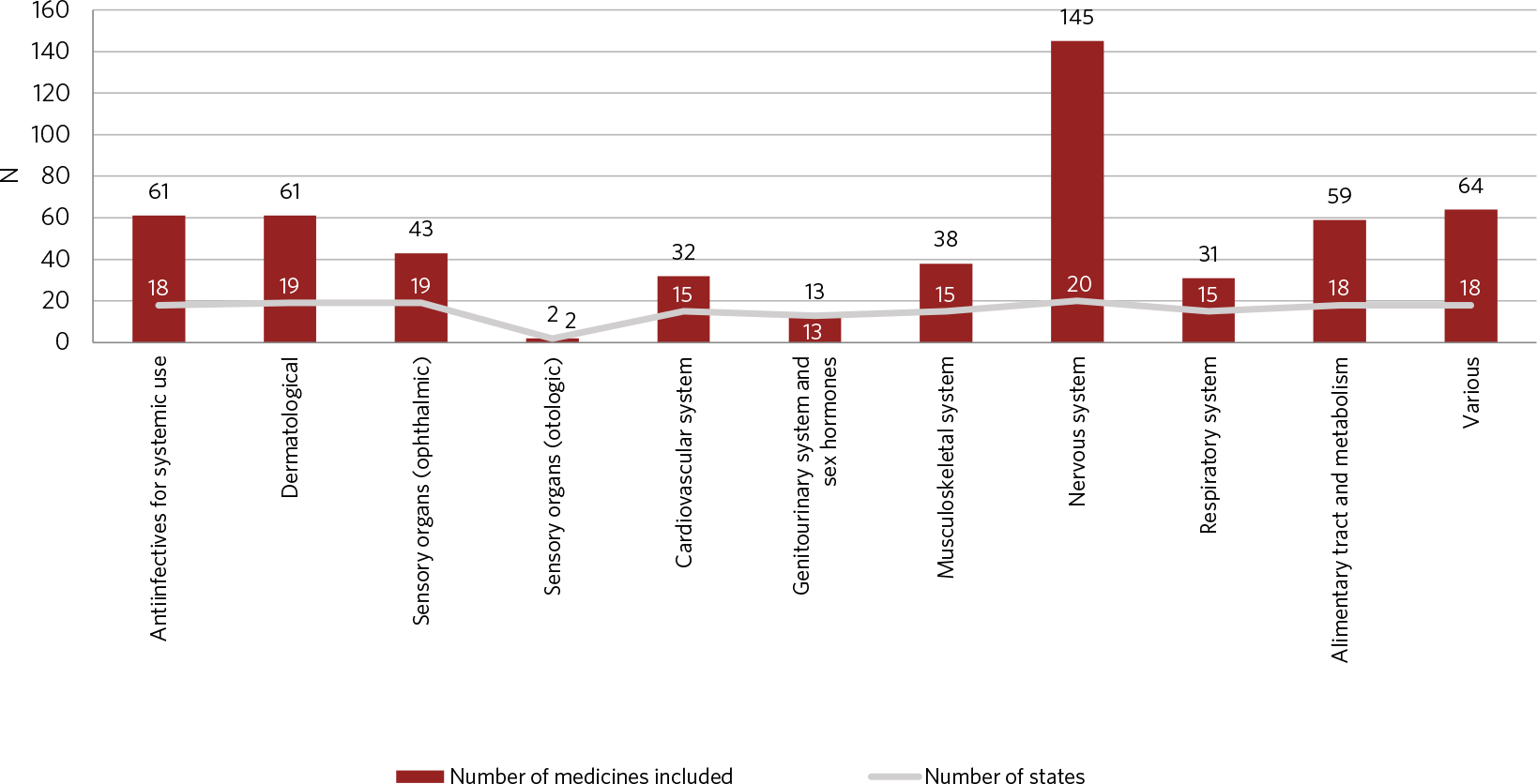
Across the 26 state capitals and the Federal District, 20 included medicines related to the nervous system; 19 included dermatological medicines; 18 covered medicines for the alimentary tract and metabolism, the musculoskeletal system, and systemic anti-infectives; 17 included medicines acting on the sensory organs, including ophthalmological use; 15 listed medicines related to the respiratory and cardiovascular systems; and 13 included medicines acting on the genitourinary system and sex hormones.
Table 2 presents the distribution of inclusions in REMUMES by ATC classification, along with regional totals. Most inclusions involved medicines acting on the nervous system (n = 143; 26.14%). Excluding the ATC group ‘Various’, the least frequent inclusions were medicines acting on the genitourinary system and sex hormones (n = 13; 2.36%).
Medicines included in the REMUMEs of state capitals and not standardized in the RENAME, by ATC classification
The comparison between the number of states that included medicines from the identified ATC groups and the number of medicines included is shown in graph 1.
Alignment between the number of states that included medicines from ATC groups and the number of medicines included by group
The 547 inclusions corresponded to 280 different medicines, comprising 186 active pharmaceutical ingredients. Table 3 presents the distribution of active ingredient inclusions in REMUMES that are not standardized in RENAME. Thirty active ingredients that appeared five times or more across the capitals’ REMUMES were selected; of these, nine were related to the nervous system, while the remaining ones were distributed across other ATC classifications.
Medicines not standardized in the RENAME that appeared in five or more REMUMEs of state capitals
Discussion
This study analyzed medicine lists from Brazilian state capitals and the Federal District, with particular attention to medicines included in these lists that are not part of RENAME.
Since the establishment of the National Commission for the Incorporation of Technologies in the SUS (CONITEC), Brazil has adopted Health Technology Assessment (HTA) as a structured basis for evaluating the incorporation of medicines22. HTA supports decision-making on the incorporation and coverage of health technologies, contributing to more transparent, evidence-based, and socially participatory processes23,24.
Essential medicines are those intended to meet the priority health needs of the population and should be selected based on their public health relevance, supported by evidence of efficacy, safety, and cost-effectiveness25-27.
RENAME is updated biennially, and municipal lists are expected to follow a similar updating cycle9,10. Among the analyzed REMUMES, most were updated after 2020, although five were published more than five years ago, and others did not report a publication date.
In RENAME 2024, Annex I includes 382 medicines corresponding to the National List of Essential Medicines of the Basic Pharmaceutical Care Component (AF)17.
It is also noteworthy that, within the CBAF, only one change was introduced between RENAME 2022 and RENAME 2024: the inclusion of ferric polymaltose for the treatment of iron-deficiency anemia in patients intolerant to ferrous sulfate28. According to the Ministry of Health Management Report (2023), 177 health technologies29 were incorporated into the SUS between 2019 and 2023, of which only 12 (6.8%) belonged to the Basic Component: five anti-infectives, four thyroid hormones, two contraceptives, and one antacid. This indicates a prolonged period with minimal updates to the Basic Component medicines list.
A marked inclusion of medicines related to the nervous system was observed in the lists of state capitals and the Federal District. At the same time, despite the establishment of CONITEC in 2012, no new medicines for this therapeutic area have been incorporated into RENAME, highlighting a persistent gap between national incorporation decisions and local mental and neurological health needs. Notably, no medicines for the treatment of nervous system disorders have been added to RENAME since 2012, despite the growing demand associated with these conditions in primary health care30-32.
Conditions such as anxiety and depression have become increasingly relevant in Brazil’s epidemiological profile, requiring effective and accessible therapeutic options that reflect real-world territorial needs, reinforcing the importance of aligning RENAME updates with local health system realities11,30,32.
Among the most frequently included active ingredients, scopolamine stands out. It is indicated for the relief of gastrointestinal, biliary, urinary, and genital spasms, as well as for the control of involuntary smooth muscle contractions33. Its high frequency across capital REMUMES may be associated with the lack of equivalent therapeutic alternatives in RENAME. A similar explanation may apply to vitamins, simethicone, ophthalmic tobramycin formulations, and dermatological preparations such as papain, neomycin combined with bacitracin, and collagenase.
Other therapeutic classes not included in the Basic Component of RENAME, but present in the lists of state capitals, include weak opioids such as codeine-based compounds, indicated for moderate pain, and cinnarizine, used for migraine prophylaxis and balance disorders, as well as for the management of labyrinthine symptoms such as vertigo, dizziness, tinnitus, nystagmus, nausea, and vomiting, in addition to the prevention of motion sickness34,35.
A similar pattern was also observed for ambroxol, indicated for the treatment of acute and chronic bronchopulmonary conditions affecting the airways and lungs, where it acts by facilitating expectoration. In RENAME, only one expectorant is listed: guaco (Mikania glomerata Spreng)36.
Another group widely included in the capital lists was anti-inflammatory medicines, such as diclofenac and nimesulide, which belong to the same therapeutic class as ibuprofen, the only anti-inflammatory included in RENAME within the Basic Component37. In addition, various anti-infective medicines were included in different pharmaceutical forms.
These findings have important implications for municipal pharmaceutical policy, as the inclusion of these medicines in REMUMES requires either exclusive municipal funding or shared financing arrangements between states and municipalities. In parallel, updated versions of RENAME include a wide range of medicines across other components of AF, without necessarily reflecting local epidemiological needs or priority health problems.
From a financing perspective, the Specialized Component of Pharmaceutical Services (CEAF), the Strategic Component of Pharmaceutical Services (CESAF), and the Brazilian Popular Pharmacy Program have been key drivers of increased expenditure by the Ministry of Health, which has assumed a growing share of the budget for the procurement of these medicines, largely as a consequence of the incorporation of new technologies15,16,38.
Regarding the financing of active ingredients included at the municipal level but not standardized in RENAME, states, the DF, and municipalities are allowed to define complementary medicine lists, provided that each level of government respects its respective financial responsibilities and bears the costs in accordance with intergovernmental agreements.
AF in Brazil are organized under a decentralized financing model shared among the three levels of government-federal, state, and municipal. This arrangement aims to ensure the supply of medicines across all levels of care, addressing region-specific health needs, and is regulated by Consolidation Ordinance No. 6 of 201739.
The CBAF is jointly financed by the federal government, states, and municipalities. Medicines included in this component are intended for the treatment of high-prevalence conditions such as hypertension, diabetes, respiratory infections, and mental health disorders, among others39.
In contrast, the inclusion of non-standardized medicines in RENAME within municipal lists places additional pressure on local health budgets, as these medicines are not covered by federal funding mechanisms40.
As for study limitations, the analysis was restricted to REMUMES from state capitals, which may limit representativeness given the heterogeneity of Brazilian municipalities, particularly smaller ones with distinct health system realities. In addition, the lack of updated information in some REMUMES may have affected the timeliness of the data analyzed.
Overall, the findings reveal a mismatch between identified therapeutic needs and national medicine provision. The lack of significant updates to CBAF, combined with the limited inclusion of medicines for prevalent conditions such as nervous system disorders, pain, respiratory diseases, and inflammatory conditions, compels local governments to fill these gaps with their own resources, thereby widening inequalities and increasing pressure on already constrained local budgets.
Conclusions
The findings highlight the need to consider the importance of updating medicines within the CBAF, which, when compared to the number of new technologies incorporated into other components of AF, remains relatively limited. The analysis of medicines included in REMUMES suggests that some appear with high frequency, indicating a potential pattern of demand across municipalities.
The analysis of municipal medicine lists from Brazilian state capitals and the Federal District revealed the recurrent inclusion of several therapeutic classes in REMUMES. This variation reflects the autonomy of subnational governments in adapting their lists to regional needs, while also seeking to address gaps in CBAF coverage, particularly in relation to medicines for nervous system conditions.
The slow pace of incorporation of new medicines into RENAME, especially within the Basic Component, contrasts with the needs identified in the capitals, resulting in the adoption of non-standardized medicines. This reinforces the need for a more dynamic updating process for RENAME, aligned with local epidemiological and therapeutic demands. The absence of therapeutic alternatives in certain classes may lead municipal administrators to seek local solutions, often with significant financial impact.
Although municipal autonomy allows for greater flexibility in responding to specific local demands, this decentralization should be accompanied by effective financing mechanisms and regular updates to RENAME, ensuring equitable access to essential medicines across the country.
Thus, the persistent lag in updating the CBAF reveals structural limitations within the National Medicines Policy (PNM), particularly regarding financing and technology incorporation. The recurrent need for municipalities to complement their medicine lists not only reflects federative autonomy but also indicates an implicit transfer of financial responsibility to local governments, often without corresponding increases in funding.
From this perspective, the findings of this study are directly related to the field of health policy evaluation and audit. They demonstrate how decisions regarding medicine incorporation and financing within the SUS influence the realization of health rights, the quality of care, and health system efficiency. They also underscore the importance of continuous audit and monitoring mechanisms that consider both technology incorporation and its impacts on equity, financial sustainability, and the capacity of the SUS to respond effectively and fairly to population health needs.
-
Financial support:
This study was supported by the Coordination for the Improvement of Higher Education Personnel - Brazil (CAPES) - Funding Code 001
Data availability:
The research data are contained within the manuscript and is available upon request, as justified in the manuscript
References
-
1 Conselho Nacional de Saúde (BR). Resolução nº 338, de 6 de maio de 2004. Aprova a Política Nacional de Assistência Farmacêutica [Internet]. Diário Oficial da União, Brasília, DF. 2004 maio 20 [acesso em 2025 jun 14]. Disponível em: https://bvsms.saude.gov.br/bvs/saudelegis/cns/2004/res0338_06_05_2004.html
» https://bvsms.saude.gov.br/bvs/saudelegis/cns/2004/res0338_06_05_2004.html -
2 Presidência da República (BR). [Constituição 1988]. Constituição da República Federativa do Brasil de 1988 [Internet]. Diário Oficial [da] República Federativa do Brasil, Brasília, DF. 1988 out 5 [acesso em 2026 jan 9]; Seção 1:1. Disponível em: http://www.planalto.gov.br/ccivil_03/constituicao/constituicao.htm
» http://www.planalto.gov.br/ccivil_03/constituicao/constituicao.htm -
3 Conselho Nacional de Secretários de Saúde. Assistência Farmacêutica no SUS [Internet]. Brasília, DF: Conass; 2007 [acesso em 2026 jan 9]. Disponível em: https://bvsms.saude.gov.br/bvs/publicacoes/colec_progestores_livro7.pdf
» https://bvsms.saude.gov.br/bvs/publicacoes/colec_progestores_livro7.pdf -
4 Presidência da República. Lei nº 8.080, de 19 de setembro de 1990. Dispõe sobre as condições para a promoção, proteção e recuperação da saúde, a organização e o funcionamento dos serviços correspondentes e dá outras providências [Internet]. Diário Oficial [da] República Federativa do Brasil, Brasília, DF. 1990 set 20 [acesso em 2026 jan 9]; Edição 182; Seção I:18055-9. Disponível em: http://www.planalto.gov.br/ccivil_03/leis/L8080.htm
» http://www.planalto.gov.br/ccivil_03/leis/L8080.htm -
5 Ferreira ARF, Fernandes BL, Roque JMO, et al. Assistência farmacêutica: O acesso a medicamentos como garantia dos direitos humanos. Rev Cient FACS [Internet]. 2021 dez 8 [acesso em 2026 jan 9];21(28):16-21. Disponível em: https://c2-wb-06.univale.br/index.php/revcientfacs/article/view/14
» https://c2-wb-06.univale.br/index.php/revcientfacs/article/view/14 -
6 Ministério da Saúde (BR), Secretaria de Políticas de Saúde, Departamento de Atenção Básica. Política nacional de medicamentos 2001 [Internet]. Brasília, DF: Ministério da Saúde; 2001 [acesso em 2026 jan 9]. Disponível em: https://bvsms.saude.gov.br/bvs/publicacoes/politica_medicamentos.pdf
» https://bvsms.saude.gov.br/bvs/publicacoes/politica_medicamentos.pdf -
7 Machline C. A Assistência à Saúde no Brasil [Internet]. In: Storpirtis S, Mori ALPM, Yochiy A, et al. Farmácia Clínica e Atenção Farmacêutica. Rio de Janeiro: Guanabara-Koogan; 2008 [acesso em 2026 jan 9]. p. 3-14. Disponível em: https://farmatecaunicatolica.wordpress.com/wp-content/uploads/2017/12/ciencias-farmaceuticas-farmc3a1cia-clc3adnica-e-atenc3a7c3a3o-farmacc3aautica.pdf
» https://farmatecaunicatolica.wordpress.com/wp-content/uploads/2017/12/ciencias-farmaceuticas-farmc3a1cia-clc3adnica-e-atenc3a7c3a3o-farmacc3aautica.pdf -
8 Matta SR, Bertoldi AD, Emmerick ICM, et al. Fontes de obtenção de medicamentos por pacientes diagnosticados com doenças crônicas, usuários do Sistema Único de Saúde. Cad Saúde Pública. 2018;34(3):e00073817. DOI: https://doi.org/10.1590/0102-311X00073817
» https://doi.org/10.1590/0102-311X00073817 -
9 Barbosa BAS, Costa PA, Silva EV, et al. Análise dos psicotrópicos nas relações de medicamentos essenciais das capitais brasileiras e do Distrito Federal. Hygeia. 2023;19:e1940. DOI: https://doi.org/10.14393/Hygeia1968623
» https://doi.org/10.14393/Hygeia1968623 -
10 Brito AG, Gonçalves LP, Pacheco VCCA, et al. Relações municipais de medicamentos essenciais: revisão de escopo. Rev Contemp. 2024;4(12):e7065. DOI: https://doi.org/10.56083/RCV4N12-224
» https://doi.org/10.56083/RCV4N12-224 -
11 Marin N, Luiza VL, Ososrio-de-Castro CGS, et al., organizadores. Assistência farmacêutica para gerentes municipais [Internet]. Rio de Janeiro: OPAS/OMS; 2003 [acesso em 2026 jan 9]. Disponível em: https://www.cff.org.br/userfiles/84%20-%20MARIN%20N%20ET%20AL%20Assistencia%20Farmaceutica%20para%20gerentes%20municipais_2003.pdf
» https://www.cff.org.br/userfiles/84%20-%20MARIN%20N%20ET%20AL%20Assistencia%20Farmaceutica%20para%20gerentes%20municipais_2003.pdf -
12 Wannmacher L. Seleção de medicamentos essenciais: propósitos e consequências. Tempus [Internet]. 2010 [acesso em 2026 jan 9];4(3):23-9. Disponível em: https://www.tempus.unb.br/index.php/tempus/article/view/875
» https://www.tempus.unb.br/index.php/tempus/article/view/875 -
13 Paixão MNJ, Santos ML, Vítor DN, et al. Análise da utilização da Relação Municipal de Medicamentos Essenciais (Remume) pelos municípios do Estado da Bahia. J Assist Farm Farmacoeconomia. 2024;2(s.1):1-9. DOI: https://doi.org/10.22563/2525-7323.2017.v2.s1.p.9
» https://doi.org/10.22563/2525-7323.2017.v2.s1.p.9 -
14 Presidência da República (BR). Decreto nº 7.508, de 28 de junho de 2011. Regulamenta a Lei nº 8.080, de 19 de setembro de 1990, para dispor sobre a organização do Sistema Único de Saúde - SUS, o planejamento da saúde, a assistência à saúde e a articulação interfederativa, e dá outras providências [Internet]. Diário Oficial da União, Brasília, DF. 2011 jun 29 [acesso em 2026 jan 9]; Edição 123; Seção I:1-3. Disponível em: http://www.planalto.gov.br/ccivil_03/_ato2011-2014/2011/decreto/d7508.htm
» http://www.planalto.gov.br/ccivil_03/_ato2011-2014/2011/decreto/d7508.htm -
15 Ferreira RP, Negrão HCA, Costa BWB, et al. Financiamento da assistência farmacêutica no contexto do Sistema Único de Saúde de 2017 a 2022. Res Soc Dev. 2024;13(2):e7213245023. DOI: http://dx.doi.org/10.33448/rsd-v13i2.45023
» http://dx.doi.org/10.33448/rsd-v13i2.45023 -
16 Piola SF, Vieira FS, Bernardes LCG. Economia da saúde no Brasil: trajetória e contribuições do Ipea para sua institucionalização no setor público [Internet]. Brasília, DF: Ipea; 2025 [acesso em 2026 jan 9]. 62 p.: il. (Texto para Discussão, n. 3058). Disponível em: https://repositorio.ipea.gov.br/bitstream/11058/16171/4/TD_3058_web.pdf
» https://repositorio.ipea.gov.br/bitstream/11058/16171/4/TD_3058_web.pdf -
17 Ministério da Saúde (BR), Secretaria de Ciência, Tecnologia, Inovação e Insumos Estratégicos em Saúde, Departamento de Assistência Farmacêutica e Insumos Estratégicos. Relação Nacional de Medicamentos Essenciais: Rename 2024 [Internet]. Brasília, DF: Ministério da Saúde; 2024 [acesso em 2026 jan 9]. Disponível em: https://bvsms.saude.gov.br/bvs/publicacoes/relacao_nacional_medicamentos_2024.pdf
» https://bvsms.saude.gov.br/bvs/publicacoes/relacao_nacional_medicamentos_2024.pdf -
18 Organização Mundial da Saúde. Anatomical Therapeutic Chemical (ATC) Classification. 2025. In: ATC DDD Toolkit. Geneva: World Health Organization; [data desconhecida] [acesso em 2026 jan 9]. Disponível em: https://www.who.int/tools/atc ddd toolkit/atc classification
» https://www.who.int/tools/atc ddd toolkit/atc classification -
19 Lima LD, Albuquerque MV, Scatena JHG, et al. Arranjos regionais de governança do Sistema Único de Saúde: diversidade de prestadores e desigualdade espacial na provisão de serviços. Cad Saúde Pública. 2019;35:e00094618. DOI: https://doi.org/10.1590/0102-311X00094618
» https://doi.org/10.1590/0102-311X00094618 -
20 Secretaria de Comunicação Social. População do Brasil alcança marca de 213,4 milhões de habitantes, divulga IBGE. Gov.br [Internet]. 2025 ago 28 [atualizado em 2026 jan 24; acesso em 2026 jan 3]; Demografia. Disponível em: https://www.gov.br/secom/pt-br/assuntos/noticias/2025/08/populacao-do-brasil-alcanca-marca-de-213-4-milhoes-de-habitantes-divulga-ibge
» https://www.gov.br/secom/pt-br/assuntos/noticias/2025/08/populacao-do-brasil-alcanca-marca-de-213-4-milhoes-de-habitantes-divulga-ibge -
21 Conselho Nacional de Saúde (BR). Resolução nº 510, de 7 de abril de 2016. Dispõe sobre as normas aplicáveis a pesquisas em Ciências Humanas e Sociais. Diário Oficial da União, Brasília, DF. 2016 maio 24 [acesso em 2026 jan 9]; Edição 98; Seção I:44-46. Disponível em: https://bvsms.saude.gov.br/bvs/saudelegis/cns/2016/res0510_07_04_2016.html
» https://bvsms.saude.gov.br/bvs/saudelegis/cns/2016/res0510_07_04_2016.html -
22 Presidência da República (BR). Lei nº 12.401, de 28 de abril de 2011. Altera a Lei nº 8.080, de 19 de setembro de 1990, para dispor sobre a assistência terapêutica e a incorporação de tecnologia em saúde no âmbito do Sistema Único de Saúde - SUS [Internet]. Diário Oficial da União, Brasília, DF. 2011 abr 29 [acesso em 2026 jan 9]; Seção I:1. Disponível em: https://www.planalto.gov.br/ccivil_03/_ato2011-2014/2011/lei/l12401.htm
» https://www.planalto.gov.br/ccivil_03/_ato2011-2014/2011/lei/l12401.htm -
23 Ministério da Saúde (BR). Conhe ça a CONITEC. Gov.br [Internet]. 2022 maio 26 [atualizado em 2025 dez 3; acesso em 2026 jan 9]; Assuntos. Disponível em: https://www.gov.br/conitec/pt-br/assuntos/a-comissao/conheca-a-conitec
» https://www.gov.br/conitec/pt-br/assuntos/a-comissao/conheca-a-conitec -
24 Rodrigues Filho FJ, Pereira MC. O perfil das tecnologias em saúde incorporadas no SUS de 2012 a 2019: quem são os principais demandantes? Saúde Debate. 2021;45(130):707-19. DOI: https://doi.org/10.1590/0103-1104202113011
» https://doi.org/10.1590/0103-1104202113011 -
25 Organização Mundial da Saúde. Por trás da lista de medicamentos essenciais. OMS [Internet]. 2018 fev 6 [acesso em 2026 jan 9]. Disponível em: https://www.who.int/es/news-room/feature-stories/detail/behind-the-essential-medicines-list
» https://www.who.int/es/news-room/feature-stories/detail/behind-the-essential-medicines-list -
26 Leite MHY, Mendes SJ. Medicamentos essenciais na atenção básica de saúde: uma revisão da literatura. J Manag Prim Health Care. 2023;15(Esp):e023. DOI: https://doi.org/10.14295/jmphc.v15.1329
» https://doi.org/10.14295/jmphc.v15.1329 -
27 Carneiro ISC, Coata PA, Barbosa BAS, et al. Fitoterápicos nas relações de medicamentos essenciais das capitais brasileiras e Distrito Federal. Amaz Sci Health [Internet]. 2024 [acesso em 2026 jan 9];12(2):81-96. Disponível em: https://ojs.unirg.edu.br/index.php/2/article/view/4682
» https://ojs.unirg.edu.br/index.php/2/article/view/4682 -
28 Ministério da Saúde (BR); Comissão Nacional de Incorporação de Tecnologias no SUS. Relatório de recomendação nº 813: Ferripolimaltose para o tratamento de pacientes com anemia por deficiência de ferro e intolerância ao sulfato ferroso [Internet] Brasília, DF: Ministério da Saúde; 2023 [acesso em 2026 jan 9]. Disponível em:https://www.gov.br/conitec/pt-br/midias/relatorios/2023/20230511_relatorio-813-ferripolimaltose_anemia_df.pdf
» https://www.gov.br/conitec/pt-br/midias/relatorios/2023/20230511_relatorio-813-ferripolimaltose_anemia_df.pdf -
29 Tribunal de Contas da União (BR); Ministério da Saúde. Relatório de Gestão 2023 [Internet]. [Brasília, DF]: TCU; 2023 [acesso em 2026 jan 9]. Disponível em: https://bvsms.saude.gov.br/bvs/publicacoes/relatorio_Integral_gestao_tcu_MS_2023.pdf
» https://bvsms.saude.gov.br/bvs/publicacoes/relatorio_Integral_gestao_tcu_MS_2023.pdf -
30 Pereira-Santos R, Teles-Farrapo S, Vaz-Machado A, et al. Variaciones en el consumo de medicamentos para la salud mental en una unidad de atención primaria brasileña: ¿hay influencia de la pandemia? Ars Pharmaceutica. 2024;65(2):116-25. DOI: https://dx.doi.org/10.30827/ars.v65i2.29775
» https://dx.doi.org/10.30827/ars.v65i2.29775 -
31 Coutinho TAL. Guia de medicamentos potencialmente inapropriados para pessoas idosas na atenção primária [trabalho de conclusão de curso na Internet]. Botucatu: Universidade Estadual Paulista; 2024 [acesso em 2026 jan 9]. Disponível em: https://repositorio.unesp.br/entities/publication/1caa6470-258c-4bcb-a27a-3b270339f50f
» https://repositorio.unesp.br/entities/publication/1caa6470-258c-4bcb-a27a-3b270339f50f -
32 Dal Magro MLP, Moesch MCS, Mai AJZ, et al. Saúde mental na Atenção Primária à Saúde no pós-pandemia. Psicodebate. 2025;11(1):477-500. DOI: https://doi.org/10.22289/2446-922X.V11A1A29
» https://doi.org/10.22289/2446-922X.V11A1A29 -
33 Ganem EM, Salem ICF, Fukushima FB, et al. Eficácia da N-butilescopolamina e dipirona sódica associadas ao cetoprofeno no alívio da dor pós-operatória de pacientes submetidas a duas técnicas diferentes de laqueadura por laparoscopia. Rev Bras Anestesiol. 2005;55(4):397-404. DOI: https://doi.org/10.1590/S0034-70942005000400004
» https://doi.org/10.1590/S0034-70942005000400004 -
34 Witkowski ADL, Silveira ECM, Mota GCS, et al. A importância da estrutura química da codeína para sua atividade farmacológica. Mostra de Inovação e Tecnologia São Lucas - Afya Educacional [Internet]. 2022 [acesso em 2026 jan 9];3(2):1-2. Disponível em: https://saolucas.emnuvens.com.br/mit/article/view/2052
» https://saolucas.emnuvens.com.br/mit/article/view/2052 -
35 Bertol CD, Freitas AR, Zanadrea T, et al. Métodos para avaliação da qualidade de comprimidos de cinarizina como proposta de monografia farmacopeica. Rev Eletrônica Farm [Internet]. 2020 [acesso em 2026 jan 9];17(1). Disponível em: https://revistas.ufg.br/REF/article/view/49377
» https://revistas.ufg.br/REF/article/view/49377 -
36 Ramos FAP, Taveira PP, Mezalira TS, et al. Aspectos botânicos, farmacológicos e potencial medicinal das plantas medicinais: práticas integrativas e complementares no âmbito do Sistema Único de Saúde. In: Cordeiro CAM. Tecnologia de alimentos: tópicos físicos, químicos e biológicos. v. 1. p. 196-217, 2020. DOI: https://doi.org/10.37885/200700654
» https://doi.org/10.37885/200700654 -
37 Silva AJ, Silva ML, Teixeira HS. Uso de anti-inflamatórios não esteroidais sendo usado indiscriminadamente pelos moradores de um município do interior da Bahia-Brasil. Res Soc Dev. 2022;11(16):e475111638441. DOI: https://doi.org/10.33448/rsd-v11i16.38441
» https://doi.org/10.33448/rsd-v11i16.38441 -
38 Vieira FS. Evolução do gasto com medicamentos do sistema único de saúde no período de 2010 a 2016 [Internet]. (Texto para discussão nº 2356). Rio de Janeiro: Ipea; 2018 [acesso em 2026 jan 8]. Disponível em: https://repositorio.ipea.gov.br/bitstream/11058/8250/1/TD_2356.pdf
» https://repositorio.ipea.gov.br/bitstream/11058/8250/1/TD_2356.pdf -
39 Ministério da Saúde (BR), Gabinete do Ministro. Portaria de Consolidação nº 6, de 28 de setembro de 2017. Consolidação das normas sobre o financiamento e a transferência dos recursos federais para as ações e os serviços de saúde do Sistema Único de Saúde [Internet]. Diário Oficial da União, Brasília, DF. 2017 out 3 [acesso em 2026 jan 9]: Edição 190, supl; Seção I. Disponível em: https://bvsms.saude.gov.br/bvs/saudelegis/gm/2017/prc0006_03_10_2017.html
» https://bvsms.saude.gov.br/bvs/saudelegis/gm/2017/prc0006_03_10_2017.html -
40 Pinto CDBS, Osorio-de-Castro CGS. Gestão da Assistência Farmacêutica e demandas judiciais em pequenos municípios brasileiros: um estudo em Mato Grosso do Sul. Saúde Debate. 2015;39(Esp):171-83. DOI: https://doi.org/10.5935/0103-1104.2015S005152
» https://doi.org/10.5935/0103-1104.2015S005152
Edited by
-
Editor in charge:
Marcelo Moreira Rasga, Fundação Oswaldo Cruz (Fiocruz), Estratégia Fiocruz para a Agenda (EFA2030), Rio de Janeiro (Rio de Janeiro/RJ), Brasil. Lattes: http://lattes.cnpq.br/7851702065010431, Orcid: https://orcid.org/0000-0003-3356-7153, e-mail: rasgamoreira@gmail.com

 Source: Authors’ elaboration.