
 Analysis of the implementation on National Policy of Comprehensive Health for the Black Population based on state and municipal basic information surveys and its relationship with Primary Health Care
Abstract
This study analyzed the implementation of the National Policy for Comprehensive Health Care for the Black Population (PNSIPN) across Brazilian states and municipalities, examining its association with Primary Health Care (PHC) coverage and the proportion of the Black population using secondary data from the ESTADIC-MUNIC survey (2021). In the state-level analysis, we adopted the K-means cluster analysis to identify implementation profiles. At the municipal level, a fractional logit regression model suitable for proportional outcomes was applied, incorporating all explanatory variables simultaneously. The findings revealed significant regional disparities, with states exhibiting varied combinations of PHC coverage, Black population proportions, and policy implementation levels. At the municipal level, both health plans showed low institutionalization of the PNSIPN. Greater PHC coverage was associated with lower policy implementation levels, regardless of the proportion of the Black population. The PNSIPN remains weakly institutionalized at both state and municipal levels, with actions concentrated in a limited number of territories. A notable gap persists between normative commitments, such as plans and councils, and the effective implementation of actions aimed at racial equity. While PHC expansion may support PNSIPN implementation, structural barriers continue to hinder sustained progress, particularly in areas with a higher proportion of Black residents.
Keywords:
Public Nondiscrimination Policies; Black Population; Organization and Administration; State Health Plans; Brazil.
Resumo
O estudo teve como objetivo analisar a implementação da Política Nacional de Saúde Integral da População Negra (PNSIPN) nos estados e municípios brasileiros, investigando sua associação com a cobertura da Atenção Primária à Saúde (APS) e a proporção de população negra. Trata-se de uma análise quantitativa com dados secundários provenientes da pesquisa ESTADIC-MUNIC (2021). Nos estados, aplicou-se a análise de agrupamento (K-means) para identificar perfis de implementação da política. Nos municípios, empregou-se um modelo de regressão fracionária logit, apropriado para variáveis proporcionais, incluindo simultaneamente as variáveis explicativas. Os resultados revelaram desigualdades regionais importantes, com estados apresentando combinações distintas de cobertura, proporção de população negra e grau de implementação. Nos municípios, tanto os planos mostraram baixa institucionalização da PNSIPN, quanto a maior cobertura da APS esteve associada a menores níveis de implementação da política nos municípios, independentemente da proporção de população negra. Conclui-se que há baixa institucionalização da PNSIPN em níveis estadual e municipal, com concentração das ações em poucos territórios e marcada disparidade entre requisitos normativos (planos e colegiados) e ações efetivas voltadas à equidade racial. Embora a expansão da APS contribua para maior implementação da PNSIPN, persistem barreiras estruturais, especialmente em contextos com alta presença da população negra.
Palavras-chave:
Políticas Públicas Antidiscriminatórias; População Negra; Organização e Administração; Planos Governamentais de Saúde; Brasil.
Introduction
Racism instituted through a set of systems of oppression that impose barriers on the existence of racialized groups and people (Paradies et al., 2015) and fed back by whiteness is a Public Health problem at the global, national, and subnational levels (Paradies et al., 2015). In Brazil, it is grounded in generalizations rooted in the myth of racial democracy and in an exclusionary universalization that intentionally or unintentionally disregards the specificities of the Black population. The different dimensions of structural and institutional racism have been identified as significant barriers to equity, as determinants of worse health outcomes, and as factors that reduce the quality of life of the Black population (Da Silva et al., 2024).
In this study, the terms racialized people and minorities are used in their sociological and political sense, not in a numerical one. Racialized people refer to groups whose social position is produced by historical processes of racialization that organize hierarchies, distribute disadvantages, and structure access to rights, as widely discussed in the antiracist literature (Paradies et al., 2015; Williams; Lawrence; Davis, 2019). The term minorities, in turn, does not indicate lower demographic representation but rather groups subjected to power relations that place them in a condition of institutional, social, and symbolic vulnerability, even when they constitute the population majority, as is the case with the Black population in Brazil (Werneck, 2016). This perspective is essential for understanding how racialized structures shape health inequalities and influence differentiated patterns of care, access, and health outcomes in the SUS.
Racial prejudice in health and health education is a broad and deeply rooted issue that significantly affects the quality, accessibility, and equity of care provided to racial groups and ethnic minorities (Sorice et al., 2025). These groups often face systemic barriers to accessing care and receive lower-quality care in health services compared with White people (Hamed et al., 2022). Biases and stigmas are deeply embedded in systemic inequalities in health institutions (Hamed et al., 2022). They are expressed as disparities in patient treatment, limited access to critical therapies, and worse health outcomes for ethnic minorities or the Black population compared with the White population. In addition, there are inadequate quality-monitoring strategies to detect and resolve these problems (Sorice et al., 2025). Understanding these dynamics is critical to addressing the barriers faced by these subalternized populations in health systems around the world and in Brazil.
Across their different life cycles and generations, the Black population is the major user of the Unified Health System (SUS). It includes people deprived or not deprived of liberty, people experiencing homelessness, people in migratory processes, victims of violence against women or against youth, people living in poverty and hunger, and people with disabilities. They need care for sickle cell disease, for the prevention and treatment of sexually transmitted infections (Brasil, 2023a, 2023b), and for children’s oral diseases (Moura et al., 2025). On the other hand, they are still subjected to the devaluation of their traditional health knowledge (Da Silva et al., 2024). What these Black modes of (in)existence share are the worst (in)experiences in the exercise of the right to health (Brasil, 2023a, 2023b).
The implementation of antiracist policies and the qualification of health professionals in issues related to diversity and inclusion in Primary Health Care (PHC) are indispensable for an effective response. This is because the primary level of the Brazilian health care system is conceptually recognized as a powerful catalyst for a mode of care production centered on the living territory and on the person, as the preferred gateway to this universal, comprehensive, and equitable health system (Starfield, 2005). In this context, its problem-solving role with respect to the most frequent health problems must correspond to the population’s demands (Brasil, 2015).
However, despite advances in PHC scope and coverage shown by the Overview of Brazilian PHC: what the results of the 2024 National Census of PHC Units (UBS) reveal (Brasil, 2025), obstacles that hinder users’ access to basic health services remain, such as the lack of equity (Brasil, 2025). Moreover, care actions are still being developed without prioritizing user participation and the community context in which people live (Brasil, 2025; Da Rosa Tolazzi et al., 2022). Racism is one of the reasons for this setting (Brasil, 2025) and a fundamental cause of adverse mental and physical health outcomes among racialized groups and ethnic minorities, as well as of racial/ethnic health inequities (Williams et al., 2019). Indeed, it constitutes one of the challenges and weaknesses of PHC (Brasil, 2025).
One of the ways to produce more structural changes capable of altering the population’s health situation in general, and that of the Black population in particular, is to mobilize different stakeholders interested in advancing public policies. Such an initiative seeks to promote basic constitutional principles such as citizenship, human dignity, equality, equity, and the struggle against ethnic-racial differences (Brasil, 1988). The Constitution establishes that the right to health is a duty of the State intended for everyone and must be “guaranteed through social and economic policies aimed at reducing the risk of disease and other harms and at universal and equal access to actions and services for its promotion, protection, and recovery” (Brasil, 1988).
Pase et al. (2023) argue that there are administrative responsibilities among the federative entities for the implementation of Public Health policies, with municipalities holding the leading and prevailing competence, since they are responsible for managing and conducting all public health services. Furthermore, the Federal Government, the states, and the Federal District participate, collaborate, supplement, and support other services. We should underscore that Ministry of Health Ordinance N°2.023 of 2004 established that municipalities and the Federal District are “responsible for managing the municipal health system in the organization and execution of primary care actions” (Brasil, 2004).
Despite the political and social relevance of the National Policy for the Comprehensive Health of the Black Population (PNSIPN) in various spheres of society and, indeed, in the struggle for a more equal society, decades after its implementation, the PNSIPN is still incipient in the states and municipalities (Batista; Barros, 2017). This study contributes to understanding possible reasons for its low implementation. To this end, it analyzes its actions in health plans using public digital databases from the Brazilian Institute of Geography and Statistics (IBGE) and aims to understand the current landscape of its implementation at the state and municipal levels.
The search here is for strategies that promote improved access by the Black population to health services and the confrontation of racism in PHC, which is under the responsibility of municipal managers and must be supported by state and federal managers. In this regard, in order to equip them and move forward in a practical manner, the study proposes the creation of a policy implementation rate (PIR) for the PNSIPN to help managers analyze and monitor their actions related to the policy.
The study poses the following research question: To what extent are PNSIPN actions in health plans and in health planning and management instruments at the state and municipal levels, with Strong PHC as the care model and the Black population as the territorial demographic reference? The study assumes the hypothesis that markers of difference, such as territory and race/skin color, directly affect dignified access to health rights. We aimed to identify actions in management instruments at the state and municipal levels, analyze how such actions are coordinated between the state and municipal spheres, and relate them to primary care coverage and to the territory’s demographics, racialized by race/skin color. These markers are linked to greater health vulnerability, which interferes with negative outcomes related to health, disease, and mortality (Werneck, 2016; Batista, Barros, 2017) and justify the assumption of these relationships. After all, when referring to the condition of Black people in Brazil, Milton Santos said: “Tell me where you live, and I will tell you about your health” (Santos, 2003).
Long-standing steps, historical milestones, and possible paths
The PNSIPN was established by the Ministry of Health in 2009, grounded in the constitutional principles of citizenship, human dignity, and equality, ratified by the SUS (Brasil, 2017). Its creation was preceded by important historical events, such as the National Zumbi dos Palmares March in 1995 and the Third World Conference against Racism, Racial Discrimination, Xenophobia, and Related Intolerance, held in South Africa in 2001 and convened by the United Nations (Werneck, 2016; Brasil, 2001).
A crucial document supporting this policy, entitled “Inputs for the debate on the PNSIPN: an issue of equity,” highlighted the higher prevalence of several diseases in the Black population, including sickle cell anemia, glucose-6-phosphate dehydrogenase deficiency, hypertension, diabetes mellitus, malnutrition, violent deaths, high infant mortality, septic abortions, iron-deficiency anemia, STIs/AIDS, occupational diseases, mental disorders resulting from exposure to racism, and disorders related to the abuse of psychoactive substances such as alcoholism and other drugs.
Thus, the PNSIPN emerged from the recognition of racism as a factor generating health inequity and illness (Paradies et al., 2015), seeking a more just society through the reduction of ethnic-racial differences and the promotion of equitable access to health services for the Black population (Brasil, 2017). Decentralized health policies are managed through social participation. At the state and federal levels, health councils and interagency committees monitor the implementation of health programs (Ortega, Pele, 2023). Disclosure of PNSIPN actions in state and municipal health plans is conducted through the IBGE:
-
• The Basic State Information Survey (ESTADIC), initiated in 2012, covers all federative units and the Federal District. It investigates the existence of the State Health Plan, the year it was prepared, the health region design, and whether PNSIPN actions are included in that plan, among other aspects. It also verifies the inclusion of topics on Black population health and combating racism in training courses and processes for health personnel.
-
• The Basic Municipal Information Survey (MUNIC), initiated in 1999, extends to all municipalities in the country. It analyzes the incorporation of the PNSIPN into municipal SUS management, addressing the participation of the health management body in Regional Management Collegial Bodies, the frequency of meetings, the existence and year of preparation of the Municipal Health Plan, and the inclusion of PNSIPN actions in that document. MUNIC also verifies the inclusion of topics such as Black population health and combating racism in training for health professionals, the existence of specific bodies to coordinate and monitor actions for the Black population, and whether training processes include content on combating gender and sexual-orientation discrimination.
These data are crucial for understanding the degree of institutionalization of the policy and its alignment with the principles of equity and inclusion, especially in PHC. PHC should ideally be the main form of access to the health system, associated with access and a more equitable distribution of health (Tasca et al., 2020). Since the implementation of the SUS, the Brazilian PHC has followed the principles of universality, comprehensiveness, and equity, with consistent advances toward universal coverage, especially after the Family Health Strategy (ESF). The number of ESF teams has grown significantly, potentially covering around 130 million people. This increase in coverage is associated with improved service use, health outcomes, reductions in hospitalizations for PHC-sensitive conditions, and in deaths from preventable causes, as well as a decline in infant mortality.
Despite these undeniable achievements, persistent negative health outcomes indicate that a significant part of the population - namely, the Black population - still experiences a situation prior to a more equitable and accessible distribution of health, characterized by the lack of planned actions in management instruments, which is yet another expression of racism (De Souza et al., 2018).
Methods
This quantitative, ecological, descriptive, exploratory, and inferential study used exclusively secondary data available in public databases and analyzed administrative plans of states and municipalities related to the PNSIPN based on ESTADIC and MUNIC, respectively, using 2021 data, the e-Gestor, and the 2022 IBGE census. Resolution N°510/2016, derived from Resolution N°466/2012, establishes specific guidelines for research in the Human and Social Sciences. It exempts submission to a Research Ethics Committee for studies that use publicly accessible information.
ESTADIC was employed to identify actions related to the PNSIPN at the state level. In it, the field “State Health Plan and National Policy for the Comprehensive Health of the Black Population” was selected, under the theme “Health,” in the following actions: 1) Existence of the State Health Plan; 2) Inclusion in the State Health Plan of the actions provided for in the PNSIPN; and 3) Inclusion of the topics Black population health and combating racism in training courses and processes for personnel employed in the Health sector.
In MUNIC, which refers to the municipal level, the field related to the “Regional Management Collegial Body, Municipal Health Plan, and PNSIPN” was selected, in the following actions: 1) Participation of the health management body in a Regional Management Collegial Body; 2) Existence of the Municipal Health Plan; 3) Inclusion of actions provided for in the PNSIPN in the Municipal Health Plan; 4) Inclusion of the topics Black population health and combating racism in training courses and processes for personnel employed in the Health sector; 5) Existence of a specific body to conduct, coordinate, and monitor health actions directed at the Black population in the municipality; and 6) Inclusion of combating gender and sexual-orientation discrimination in training courses and processes for personnel employed in the Health sector.
In addition to the geospatial distribution of plans related to the PNSIPN according to ESTADIC and MUNIC, the data gathered considered PHC coverage based on the concept of STRONG PHC (Tasca et al., 2020), which categorized it as present when the reference for potential territorial coverage was above 63%. Finally, the geospatialization of PHC coverage and of race/skin color was obtained, and a relationship between Strong PHC and the race/skin color population was established.
Construction of the National Policy for the Comprehensive Health of the Black Population Implementation Index (PIR-PNSIPN)
To assess the degree of implementation of the PNSIPN across the different federative spheres, a Policy Implementation Rate (PIR) was constructed, based on information reported by federative units and municipalities in the ESTADIC and MUNIC surveys, respectively.
For the states, we selected variables that encompass normative, operational, and training components of the policy, such as the inclusion of the PNSIPN in state plans, the existence of specific actions, and the incorporation of the racial theme into training processes. For municipalities, were also adopted indicators that relate to the existence of plans and specific bodies, participation in collegial bodies, and training actions with a racial focus.
All variables were recoded, assigning the value 1 to affirmative responses (“Yes”) and 0 to negative (“No”) or missing responses. The crude index score was obtained by summing the recoded variables for each federative unit or municipality. For result standardization and comparability, the scores were normalized on a continuous 0-to-1 scale, in which 0 represents total lack of implementation, and 1 indicates full implementation. Based on this normalization, units were classified into three performance levels according to the empirical distribution tertiles: Low (< 0.28): low implementation; Moderate (0.28 - < 0.65): intermediate implementation; High (> 0.65): high implementation.
The rate was calculated in R software (version 4.3.3). The internal consistency of the state-level rate was assessed through item-total correlation, with all items showing a positive correlation above 0.30, indicating unidimensionality.
Data analysis
Data were analyzed using descriptive and inferential statistics. The dichotomized “Yes” and “No” responses for each aspect related to PNSIPN implementation in ESTADIC and MUNIC were associated when appropriate. The analysis was performed in R Studio, version 4.0, at a 5% significance level.
For both states and municipalities, the binomial test was applied at a 5% significance level to assess whether the proportion of “Yes” responses differed significantly from 50%. The choice of 50% as the reference proportion was adopted because it is a neutral null hypothesis, appropriate for situations in which no theoretical or normative parameter has previously been established. This test allows us to verify whether the frequency of positive responses is statistically different from what would be expected by chance under a setting of equal probability between the options.
The association between policy implementation (standardized index between 0 and 1), PHC coverage, and the proportion of the Black population in the Brazilian states was also analyzed. Initially, several traditional statistical approaches were applied, including Pearson correlation, multiple linear regression, logistic models (including ordinal), fractional logit models, and polynomial regressions. However, due to the small number of federative units (N=27), these techniques evidenced limitations regarding statistical power.
Given this setting, an exploratory approach based on cluster analysis was employed to identify similar profiles among states, considering policy implementation rate, PHC coverage, and the proportion of Black people simultaneously. The selected technique was the K-means algorithm, widely used for classifying continuous data into mutually exclusive groups based on the proximity between observations in a multidimensional space.
The K-means algorithm starts from a predefined number of groups (in this study, K=3) and seeks to minimize intragroup variability and maximize between-group variability. To ensure comparability across variables with distinct scales, the data were standardized beforehand (z-score). Each state was then allocated to the cluster whose centroid represented the greatest similarity, considering the three indicators. The resulting groups were subsequently characterized according to the mean of each variable, allowing the identification of distinct profiles of policy implementation in different social contexts and care coverage levels.
For municipalities, the analysis also considered the association between the policy implementation index, PHC coverage, and the proportion of the Black population. Initially, the index was treated as a continuous proportional variable ranging from 0 to 1 and modeled using a fractional logit regression (quasi-binomial model with a logit link function), which is appropriate for proportional variables. The model was fitted in a multivariable form, meaning that PHC coverage and the proportion of the Black population were simultaneously included as independent variables. To account for the hierarchical structure of the data - with municipalities nested within states - robust standard errors clustered by federative unit were used, ensuring reliable estimates even in the presence of intragroup correlation. This approach allowed us to estimate the independent effects of each explanatory variable on the implementation rate while controlling for the others.
Results
Data relative to the 27 states and the 5,570 municipalities were accessed on the ESTADIC and MUNIC websites, respectively. Table 1 shows isolated and grouped actions related to the PNSIPN.
Absolute and relative distribution with comparisons between the presence and lack of PNSIPN actions in ESTADIC and MUNIC, 2021.
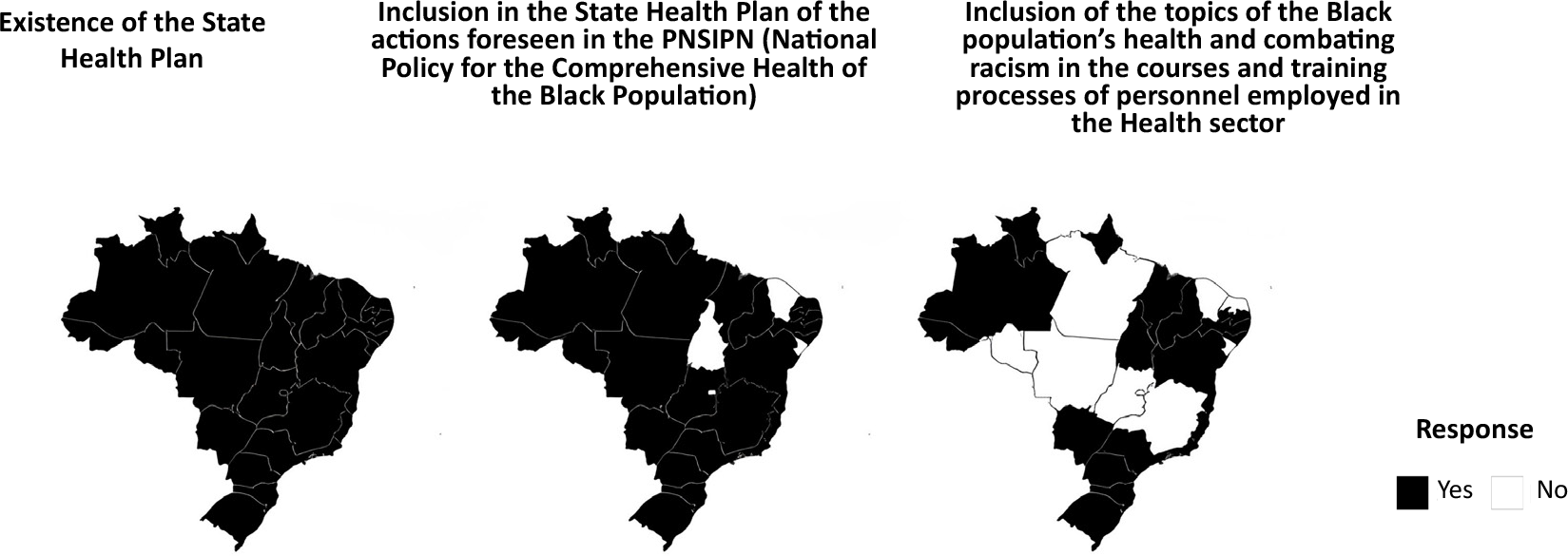
Among the 26 states and the Federal District (N=27) analyzed, universal compliance was observed regarding the existence of a State Health Plan, constituting a fulfilled normative requirement. Approximately 85% of the federative units reported the inclusion of PNSIPN actions in state plans (95% CI: 67.5%-94.1%), a value significantly higher than the 50% reference point (two-sided binomial test, p=0.0003). By contrast, 67% of the states reported addressing Black population health and combating racism in training courses and processes for health personnel, but this proportion did not differ statistically from 50% (95% CI: 47.8%-81.4%; p=0.1220), which prevents us from affirming that this action is nationally consolidated (Table 1).
When considered jointly, only 59% of the states simultaneously met all three actions (95% CI: 40.7%-77.8%; p=0.44), likewise without statistical evidence of difference from the reference point. These findings indicate that, although actions are described, they do not constitute a structured and coordinated set of actions for implementing the PNSIPN in state plans. Instead, they are limited to fragmented, dispersed, limited, and heterogeneous actions, especially with regard to the continuing training of health professionals (Table 1).
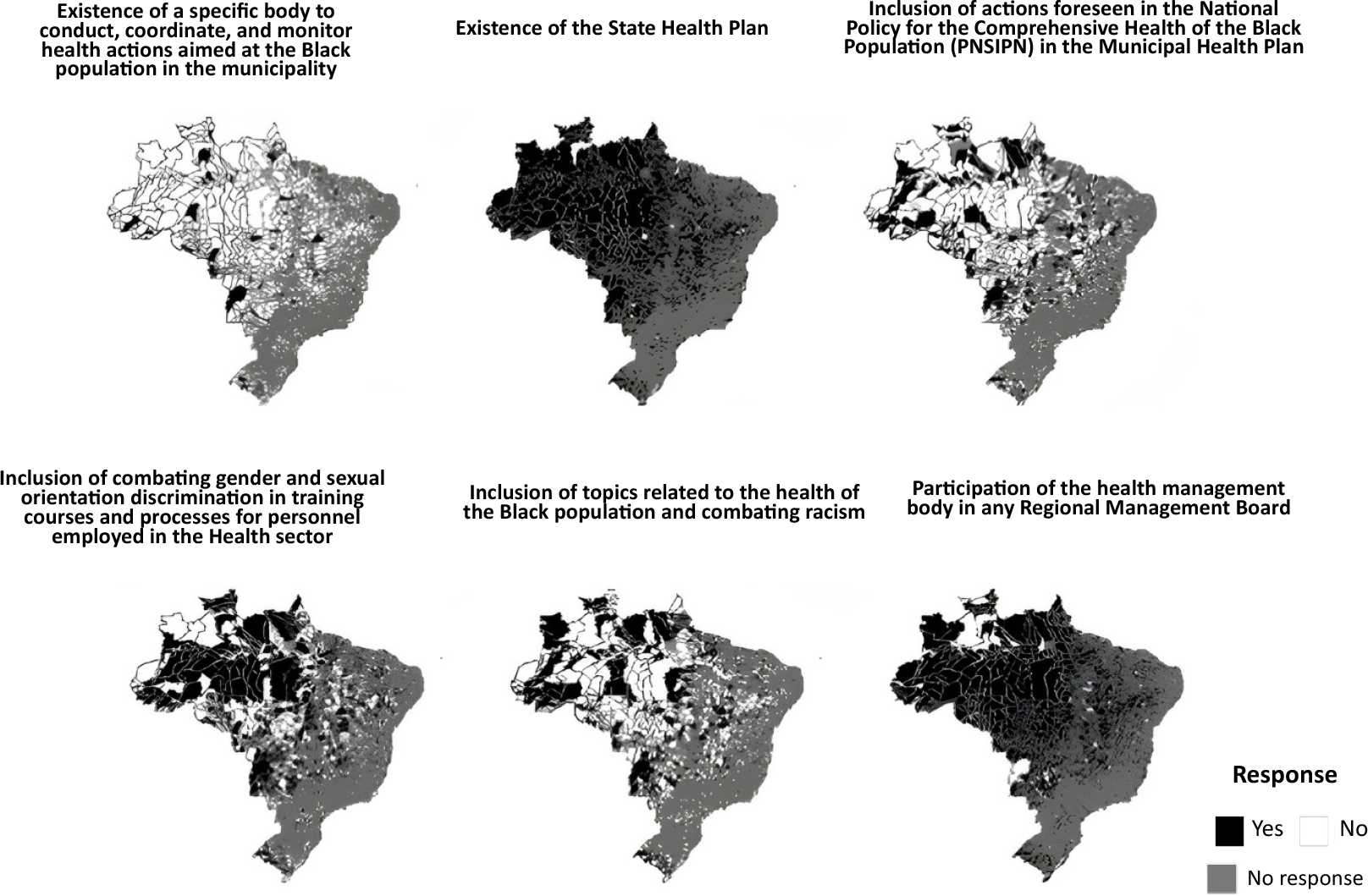
Across the 5,570 municipalities, the presence of normative requirements and governance bodies varied widely. Participation in a Regional Management Collegial Body was high (92%; 95% CI: 91.0%-92.7%; p<0.001), as was the existence of a Municipal Health Plan (99%; 95% CI: 98.6%-99.4%; p<0.001). However, only 32% reported including PNSIPN actions in their plans (95% CI: 30.7%-33.7%), and 31% reported including themes of Black population health and combating racism in professional training (95% CI: 29.5%-32.6%), both proportions significantly below 50% (p<0.001). The existence of a specific body to coordinate the policy was residual (7%; 95% CI: 6.4%-7.6%; p<0.001). Content on combating gender and sexual-orientation discrimination appeared in 51% of municipalities (95% CI: 49.5%-52.6%), a value statistically equivalent to equal probability (p=0.757) (Table 1).
When the six municipal indicators were grouped, only 199 municipalities (3.6%; 95% CI: 3.1%-4.1%) simultaneously met all requirements, a proportion far below 5% (p<0.001). These findings reveal a low PNSIPN institutionalization at the local level, with actions concentrated in a few territories and marked disparity between normative requirements (plans and collegial bodies) and effective actions aimed at racial equity (Table 1). Figures 1 and 2 show the geospatial distribution of the plans in ESTADIC and MUNIC, 2021.
Cluster analysis (K-means, K=3) allowed us to identify three distinct profiles among the federative units, referring to the combination of the policy implementation rate (PIR), PHC coverage, and the proportion of the Black population (Table 2). Cluster 0 (C0) included states such as Rondônia, Amazonas, Pará, Ceará, Rio Grande do Norte, Sergipe, Minas Gerais, Mato Grosso, Goiás, and the Federal District, and was characterized by a low mean implementation index (0.27), strong PHC coverage (close to 93%), and a high proportion of the Black population (68%) (Table 2).
Cluster analysis, typology of Brazilian states according to grouping by primary health care coverage, proportion of Black population and policy implementation level (K-means, K = 3), States and Federal District, 2021.
Cluster 1 (C1) grouped the states of Rio de Janeiro, São Paulo, Paraná, Santa Catarina, and Rio Grande do Sul, with an intermediate implementation rate (0.62), strong PHC coverage (around 82%), and a low proportion of the Black population (36%). This profile may reflect states with greater infrastructure and installed capacity that are still in the process of expanding primary care coverage, which may influence the pace of policy implementation (Table 2).
Cluster 2 (C2) comprised twelve federative units - Acre, Roraima, Amapá, Tocantins, Maranhão, Piauí, Paraíba, Pernambuco, Alagoas, Bahia, Espírito Santo, and Mato Grosso do Sul - and showed the highest mean implementation index (0.85), strong PHC coverage (above 100%), and a high proportion of the Black population (71%). This finding suggests that, even in contexts of high social and demographic vulnerability, some federative units have managed to advance significantly both in expanding PHC coverage and in implementing policies aimed at racial equity (Table 2).
In the multivariable fractional logit regression analysis, greater PHC coverage was associated with lower policy implementation levels in municipalities. Each 10-percentage-point increase in PHC coverage showed a significant reduction in the odds of reaching higher implementation rate values (OR=0.79; 95% CI: 0.72-0.86; p<0.001). The proportion of the Black population showed no statistically significant association with the index after adjustment for PHC coverage (OR=1.00; 95% CI: 0.99-1.01; p=0.27) (Table 3).
Association between primary health care coverage and proportion of the Black population with the policy implementation rate - Brazilian municipalities, 2021.
Discussion
This study shows that, according to ESTADIC and MUNIC, PNSIPN actions are disjointed and not planned in the states and in most of municipalities. In other words, states and municipalities do not have integrated actions, which helps explain the low implementation of the PNSIPN. In addition, it reveals, a priori, a situation of non-access and a lack of effective care production for the health of the Black population. It shows that there are institutional challenges beyond structural ones. These findings are corroborated by earlier studies that showed the low number of municipalities responding to surveys on policy implementation, pointing to a significant difficulty in operationalizing it at the local level (Batista; Barros, 2017; Chehuen Neto et al., 2015; Oliveira; Magalhães, 2022). Notably, the implementation of the PNSIPN as a public policy is an attribution of municipal managers and should be supported by state managers. Its non-operationalization, translated into scarce planned, integrated, and articulated actions, is felt in the weakness or inexistence of indicators for monitoring actions that directly affect the materialization of the PNSIPN, which is understood as an expression of institutional racism (Werneck, 2016). This limits advances toward racial equity in the SUS (Batista; Barros, 2017; Batista et al., 2020). This finding was evidenced in the UBS Census and stands as a challenge to be overcome (Brasil, 2025).
The study introduces an innovation by creating the PNSIPN Implementation Rate (PIR) in PHC. This not only made it possible to analyze the implementation of the PNSIPN practically and objectively, but also enabled comparability between states and municipalities and made it possible to monitor its execution through the lens of territory, using publicly and freely accessible information sources. The implementation rate created for the PNSIPN is, therefore, another public-management tool aimed at contributing to and qualifying PNSIPN implementation. This means that the study did not restrict itself to measuring the existence or non-existence of PNSIPN actions in the management plans of states and municipalities; it also pointed to ways of overcoming shortcomings by signaling gaps and potentialities. The rate is a technical product developed in this study to monitor and evaluate the implementation of the PNSIPN measured distinct implementation profiles, potentially configuring itself as a new equity indicator. This need was identified by the 2024 UBS Census when it recommended new indicators to recalibrate family health teams through the lens of equity and to reduce inequities (Brasil, 2025).
Another fundamental issue highlighted by our study was that PHC coverage was related to lower PNSIPN implementation levels. This situation indicates that the expansion of PHC coverage has not been accompanied by the incorporation of PNSIPN guidelines into planning and management processes. In other words, although most of the Brazilian population self-identifies as Black, this demographic datum has not operated as a guiding parameter for policy implementation, resulting in a PHC that expands without necessarily integrating actions aimed at racial equity. Among the recommendations for strengthening PHC are territorialization, the provision of human resources, and the preparation of professional training plans with emphasis on PHC specificities; a permanent and sustainable strategy for the provision of doctors in PHC in areas with high turnover or difficulty attracting doctors; and the encouragement of PHC’s mediating role in intersectoral actions and participation in acting on social determination, promoting health, and reducing inequalities (Tasca et al., 2020). When the expanded concept of health is considered, the latter recommendation should reorient the PHC model, particularly in settings and contexts where the social production of health - such as in quilombola communities, terreiros, and other healing spaces - is not necessarily delimited by territorial assignment for the allocation and linkage of PHC teams. This produces inequities in health access.
Batista and Barros (2017) affirm that one of the reasons these figures are so low is the advance of conservative forces in the executive, legislative, and judiciary branches. These forces are anchored in conservative fundamentalism, spread prejudice, and attack social rights won by the less favored populations. This can be observed in deaths from preventable causes in sickle cell anemia, which affects 6% to 10% of the Black population; in type II diabetes mellitus, which is about 50% more frequent among Black women than among White women; among the poorest 10%, 76% were Black or Brown and 22.8% White; yet the proportion of people who consulted a doctor in the last 12 months is higher among Whites (74.8%) than among Blacks (69.5%) and Browns (67.8%); in maternal mortality, since 60% of maternal deaths in 2012 were among Black women and 34% among White women; and regarding HIV/AIDS, with a higher detection rate among Black women (12.3/100,000 inhabitants), followed by Brown women (8/100,000 inhabitants) and White women (7.1/100,000 inhabitants) (Brasil, 2017), even after the implementation of the PNSIPN.
Although the Black population constitutes the majority among SUS users, this group still presents the worst social and health indicators and is at a disadvantage compared with the White population (Oliveira and Magalhães, 2022). The lack of adequate professional training and the lack of coordination among managers for the effective monitoring of the policy are hindrances to the implementation of the PNSIPN (Adão; Campos, 2023; Batista et al., 2020). Fairer and more assertive pro-racial-equity strategies, including professional sensitization and intersectoral articulation, are crucial to addressing these barriers and ensuring that the PNSIPN, once implemented, truly meets the demands of the Black population (Chehuen Neto et al., 2015; Adão; Campos, 2023).
On the other hand, health professionals and society are also unaware of the PNSIPN itself, of how to implement it, and of the severe impacts racism has on access to care and health services offered by the SUS to the Black population. In the study conducted by Chehuen Neto et al. (2015), in the five most populous regions of Minas Gerais, 90.5% of respondents reported not knowing the PNSIPN and 52.7% stated that the PNSIPN tends to reinforce racial discrimination. Silva et al. (2022), in research with managers and higherand mid-level health professionals in five family health units (USF) in Bahia, found a common feature across the units: lack of knowledge about the PNSIPN and about practical ways to implement and execute it in the workplace. Low inclusion of themes such as Black population health and combating racism was also found in training courses, both in states and municipalities. This points to the need for greater training, racial literacy, and engagement by professionals in order to reduce racial inequities in the SUS. This training gap has been highlighted as one of the main challenges to the implementation of antiracist health policies. This is discussed by researchers who emphasize the importance of including structural racism as a social determinant of health in training curricula (Silva et al., 2022).
The lack of continuing education on this theme challenges professionals’ understanding of the impacts of racism on the living conditions and health indicators of the Black population, as noted by Batista and Barros (2017). To this end, the inclusion of discussions on race, ethnicity, and gender in training processes is essential for promoting equity-oriented practice, as illustrated by experiences with thematic groups that addressed these topics in an interdisciplinary way (Matos; Tourinho, 2018). Also, studies show that the lack of professional preparation reinforces inequalities by failing to recognize the specificities and vulnerabilities of the Black population, thereby perpetuating inequities that are manifested in access and in the quality of care provided (Werneck, 2016; Oliveira, Magalhães, 2022). Therefore, incorporating these themes into training and professional practice not only sensitizes health workers but also strengthens the implementation of public policies aimed at promoting equitable health and combating institutional racism in the SUS.
The presence of the Black population in the territories does not motivate the development of actions to inform strategic planning and, consequently, management plans on the part of managers, whether at the state or municipal level, to obtain health outcomes that promote the population’s right to health. This dimension of racism compromises the coordination needed to combat institutional racism in the SUS and hinders policy effectiveness (Brasil, 2018; Werneck, 2016). It can, therefore, be seen that implementing the PNSIPN faces significant challenges, especially regarding the existence of specific bodies to coordinate actions directed at Black population health. Although most states have structures to operationalize the PNSIPN, less than 10% of municipalities reported having such bodies. This lack of specific structures in municipalities is evidenced by Ministry of Health data showing that only 7% of municipalities have technical committees on Black population health, in contrast with a more consolidated presence at the state level (Brasil, 2018). The absence of these bodies in municipalities prevents the effective coordination of PNSIPN actions, resulting in difficulties in implementing public policies aimed at promoting racial equity in health. Furthermore, the lack of specific bodies compromises the capacity to monitor and evaluate actions directed at the health of the Black population, thereby perpetuating institutional racism in the SUS (Werneck, 2016).
It is, therefore, imperative to strengthen the creation and performance of specific bodies in municipalities to coordinate PNSIPN actions, ensuring the effective implementation of the policy and promoting the articulation necessary to combat institutional racism in the SUS. The active participation of municipal managers, together with support from state and federal levels, is crucial to overcoming existing barriers and ensuring equity in the health of the Black population (Brasil, 2018; Werneck, 2016).
Participation in collegial bodies proved more expressive at the municipal level. However, this mobilization did not translate into concrete PNSIPN actions, suggesting that participation in decision-making forums has not been sufficient to guarantee significant progress in applying the policy locally. Municipal participation in management collegial bodies has been expressive, especially in the context of the PNSIPN. Recent studies highlight the importance of indicators for monitoring and evaluating PNSIPN implementation, allowing a more precise analysis of actions developed at different management levels (Batista et al., 2020). Moreover, the construction of indicator dashboards has been pointed out as a feasible strategy for supporting the implementation process of the PNSIPN and improving management at the municipal, state, and federal levels (Batista et al., 2020).
The validation of specific indicator plans to assess the implementation of the PNSIPN in Brazilian municipalities has also been the object of research, with the aim of ensuring that indicators are representative of and appropriate to local realities (Batista et al., 2020). These initiatives reflect municipalities’ commitment to participating actively in management collegial bodies and to implementing actions directed at the health of the Black population, thereby contributing to the promotion of racial equity in the SUS.
Notably, although participation in collegial bodies is fundamental, the effectiveness of PNSIPN actions also depends on the existence of specific structures to coordinate these initiatives at the municipal level. The lack of such structures may compromise the coordination needed to combat institutional racism in the SUS (Oliveira; Magalhães, 2022). Therefore, strengthening the creation and functioning of specific bodies in municipalities, combined with active participation in management collegial bodies, is essential to the effective implementation of the PNSIPN and to the promotion of comprehensive health for the Black population (Batista et al., 2020).
The study’s limitations concern the use of secondary data dependent on data completion and insertion, which still need to be improved in order to be made available on websites and support analyses. Also, the 2018-2021 time frame of the health plans related to the PNSIPN entails an anachronism vis-à-vis the present. To overcome these limitations, the PNSIPN implementation rate was created, considering not only plans at the state and municipal levels but also PHC coverage and demographics by race/skin color using updated data. Even so, such limitations should be mitigated through further studies on the topic. The study concluded that states and municipalities do not have integrated and articulated PNSIPN actions in ESTADIC and MUNIC. Moreover, PHC coverage was associated with lower PNSIPN implementation levels.
To improve this setting, the study recommends strengthening PHC (defining its role in registration, reception, therapeutic projects, and coordination of the user pathway), improving monitoring (linking targets to specific and measurable indicators), and broadening the scope of care (integrating mental health, professional training, and intersectoral coordination). Universal coverage is the best way to achieve the right to health, ensuring comprehensive and high-quality access without barriers. Strengthening management and planning is fundamental to overcoming barriers to access, such as prejudice, and securing free access to PHC Units (UBS) (Brasil, 2025). Combating racism is the first step toward achieving this.
References
- ADÃO, A. H.; CAMPOS, M. C. Saúde da população negra: uma investigação sobre a implementação da PNSIPN no município de Rolândia-PR. GeoTextos, Salvador, v. 19, n. 1, p. 57-76, 2023.
- BATISTA, L. E. et al. Indicadores de monitoramento e avaliação da implementação da Política Nacional de Saúde Integral da População Negra. Saúde e Sociedade, São Paulo, v. 29, n. 3, e190151, 2020.
- BATISTA, L. E.; BARROS, S. Enfrentando o racismo nos serviços de saúde. Cadernos de Saúde Pública, Rio de Janeiro, v. 33, supl. 1, e00090516, 2017.
-
BRASIL. [Constituição (1988)]. Constituição da República Federativa do Brasil de 1988 Brasília, DF: Presidência da República, 1988. Disponível em: https://www.planalto.gov.br/ccivil_03/constituicao/constituicao.htm Acesso em: 7 jul. 2025.
» https://www.planalto.gov.br/ccivil_03/constituicao/constituicao.htm -
BRASIL. Conselho Nacional de Secretários de Saúde. Atenção Primária e Promoção de Saúde Brasília, DF: CONASS, 2011. Disponível em: https://www.conass.org.br/bibliotecav3/pdfs/colecao2011/livro_3.pdf Acesso em: 22 jun. 2025.
» https://www.conass.org.br/bibliotecav3/pdfs/colecao2011/livro_3.pdf -
BRASIL. Ministério da Saúde. Manual de gestão para a implementação da Política Nacional de Saúde Integral da População Negra Brasília, DF: Ministério da Saúde, 2018. Disponível em: https://www.gov.br/saude/pt-br/assuntos/saude-sem-racismo/publicacoes/manual-de-gestao-para-implementacao-da-politica-nacional-de-saude-integral-da-populacao-negra Acesso em: 22 jun. 2025.
» https://www.gov.br/saude/pt-br/assuntos/saude-sem-racismo/publicacoes/manual-de-gestao-para-implementacao-da-politica-nacional-de-saude-integral-da-populacao-negra -
BRASIL. Ministério da Saúde. Secretaria de Vigilância em Saúde e Ambiente. Boletim Epidemiológico Saúde da População Negra Brasília, DF, v. 1, n. Especial, out. 2023. Disponível em: https://www.gov.br/saude/pt-br/centrais-de-conteudo/publicacoes/boletins/epidemiologicos/especiais/2023/boletim-epidemiologico-saude-da-populacao-negra-numero-especial-vol-1-out.2023 Acesso em: 11 jul. 2025.
» https://www.gov.br/saude/pt-br/centrais-de-conteudo/publicacoes/boletins/epidemiologicos/especiais/2023/boletim-epidemiologico-saude-da-populacao-negra-numero-especial-vol-1-out.2023 -
BRASIL. Ministério da Saúde. Secretaria de Vigilância em Saúde e Ambiente. Boletim Epidemiológico Saúde da População Negra Brasília, DF, v. 2, n. Especial, out. 2023. Disponível em: https://www.gov.br/saude/pt-br/centrais-de-conteudo/publicacoes/boletins/epidemiologicos/especiais/2023/boletim-epidemiologico-saude-da-populacao-negra-numero-especial-vol-2-out.2023 Acesso em: 11 jul. 2025.
» https://www.gov.br/saude/pt-br/centrais-de-conteudo/publicacoes/boletins/epidemiologicos/especiais/2023/boletim-epidemiologico-saude-da-populacao-negra-numero-especial-vol-2-out.2023 - BRASIL. Ministério da Saúde. Política Nacional de Saúde Integral da População Negra Brasília, DF: Ministério da Saúde, 2017.
- BRASIL. Ministério da Saúde. Portaria nº 2.023, de 23 de setembro de 2004 Define que os municípios e o Distrito Federal sejam responsáveis pela gestão do sistema municipal de saúde. Brasília, DF: Ministério da Saúde, 2004.
-
BRASIL. Ministério da Saúde. Panorama da APS brasileira: o que revelam os resultados do Censo Nacional das UBS 2024? [S. l.: s. n.], 2025. 1 vídeo (3h 25min 01s). Publicado pelo canal TV Abrasco. Disponível em: https://www.youtube.com/watch?v=FXFWSl4vxFU Acesso em: 11 jul. 2025.
» https://www.youtube.com/watch?v=FXFWSl4vxFU - CHEHUEN NETO, J. A. et al. Política Nacional de Saúde Integral da População Negra: implementação, conhecimento e aspectos socioeconômicos sob a perspectiva desse segmento populacional. Ciência & Saúde Coletiva, Rio de Janeiro, v. 20, n. 6, p. 1909-1916, 2015.
- DA SILVA, L. W. S. et al. Saberes de quilombos nas práticas de saúde: um estudo de revisão sistemática de literatura. Odeere, [S. l.], v. 9, n. 3, p. 134-158, 2024.
- DA ROSA TOLAZZI, J.; GRENDENE, G. M.; VINHOLES, D. B. Avaliação da integralidade na Atenção Primária à Saúde através da Primary Care Assessment Tool: revisão sistemática. Revista Panamericana de Salud Pública, Washington, DC, v. 46, p. e2, 2022.
- DE SOUZA, R. R. et al. Relatório de pesquisa: Cenários e desafios do SUS desenhados pelos atores estratégicos
- HAMED, S. et al. Racism in healthcare: a scoping review. BMC Public Health, [S. l.], v. 22, n. 1, p. 988, 2022.
- MATOS, C. C. de S. A.; TOURINHO, F. S. V. Saúde da População Negra: percepção de residentes e preceptores de Saúde da Família e Medicina de Família e Comunidade. Revista Brasileira de Medicina de Família e Comunidade, Rio de Janeiro, v. 13, n. 40, p. 1-12, 2018.
- MOURA, R. N. V. de et al. Social inequities and dental caries in 5-year-old children: a study with results from SB Brasil 2023. Brazilian Oral Research, São Paulo, v. 39, n. suppl. 1, p. e046, 2025.
- OLIVEIRA, L. G. F.; MAGALHÃES, M. Percurso da implantação da Política Nacional de Saúde Integral da População Negra no Brasil. Revista Brasileira de Estudos de População, São Paulo, v. 39, p. e0214, 2022.
-
ORGANIZAÇÃO DAS NAÇÕES UNIDAS (ONU). Declaração de Durban: Relatório da Conferência mundial contra o racismo, discriminação racial, xenofobia e intolerância correlata. [S. l.]: ONU, 2001. Disponível em: https://brasil.un.org/pt-br/150033-declara%C3%A7%C3%A3o-e-plano-de-a%C3%A7%C3%A3o-de-durban-2001 Acesso em: 17 nov. 2025.
» https://brasil.un.org/pt-br/150033-declara%C3%A7%C3%A3o-e-plano-de-a%C3%A7%C3%A3o-de-durban-2001 - ORTEGA, F.; PELE, A. Brazil’s unified health system: 35 years and future challenges. Lancet Regional Health - Americas, [S. l.], v. 28, e100631, 10 nov. 2023.
- PARADIES, Y et al. Racism as a determinant of health: a systematic review and meta-analysis. Plos One, [S. l.], v. 10, n. 9, e0138511, 2015.
- PASE, H. L.; PATELLA, A. P. D; SANTOS, E R. O pacto federativo e a implementação da política pública de saúde no Brasil. Caderno CRH, Salvador, v. 36, e023013, 2023.
- SANTOS, M. Saúde e ambiente no processo de desenvolvimento. Ciência & Saúde Coletiva, Rio de Janeiro, v. 8, p. 309-314, 2003.
- SILVA, S. O. et al. “Na verdade eu nunca participei e nem ouvi falar sobre”: a Política Nacional de Saúde Integral da População Negra na perspectiva de gestores e profissionais da saúde. Saúde e Sociedade, São Paulo, v. 31, n. 4, e210969pt, 2022.
- SORICE, V. et al. The Perpetual Cycle of Racial Bias in Healthcare and Healthcare Education: A Systematic Review. Journal of Racial and Ethnic Health Disparities, [S. l.], p. 1-12, 2025.
- STARFIELD B.; SHI L.; MACINKO J. Contribution of primary care to health systems and health. Milbank Quarterly, New York, v. 83, n. 3, p. 457-502, 2005.
- TASCA, R. et al. Recomendações para o fortalecimento da atenção primária à saúde no Brasil. Revista Panamericana de Salud Pública, Washington, DC, v. 44, p. e4, 2020.
- WERNECK, J. Racismo institucional e saúde da população negra. Saúde e Sociedade, São Paulo, v. 25, n. 3, p. 535-549, 2016.
- WILLIAMS, D. R.; LAWRENCE, J. A.; DAVIS, B. A. Racism and health: evidence and needed research. Annual Review of Public Health, [S. l.], v. 40, n. 1, p. 105-125, 2019.
Edited by
-
Editors:
José Miguel Olivar, Raquel Souzas

 Source: MUNIC, 2021.