 Feeding system and grouping time influence behavior, welfare indicators, and reproductive performance in group-housed sows and gilts
ABSTRACT
This study evaluated the behavior and reproductive parameters of group-housed female swine at two distinct periods of the breeding cycle (PBC) and managed using two different feeding systems (FS) during gestation. A total of 348 gilts and 658 sows were group-housed one day after the last insemination (prior to embryo implantation; PRE) or 35 days later (posterior to embryo implantation; POST). The animals were allocated to the stanchion system (Minibox system - MB; individual access to feed) or the Drop Y (Y) system (no partitions for individual feeding). Notably, a higher occurrence of stereotypies was recorded in the Y system compared to MB on day three of gestation. There was no significant effect of FS, gestation week, or their interaction on the agonistic behavior of gilts and primiparous sows in the PRE group. By day 40 of gestation, more body lesions were observed in the POST group compared to the PRE group, and among all multiparous sows, those in the Y system exhibited more body lesions than those in the MB. By day 101 of gestation, lesion occurrences were lower in primiparous sows from the POST-Y group and in multiparous sows from the PRE-MB group. Furthermore, there was no notable effect of FS, PBC, or their interaction on gilts’ reproductive performance. Sows in the Y group had more piglets born alive and fewer stillbirths compared to those in the MB. Therefore, in small, stable groups, gestating females can be managed with or without individual access to feeders without compromising welfare or overall reproductive outcomes.
Keywords:
animal welfare; group gestation; disputes; stanchion system; sow housing
Introduction
Housing swine females in individual crates significantly limits their behavioral expression and social interactions, leading to negative consequences for animal welfare (Melchior et al., 2012; Greenwood et al., 2019; Bampi et al., 2020). In response to these concerns, several countries have enacted legislation prohibiting the use of individual crates for sows, notably the European Union (Council of the European Union, 2008; Morgan et al., 2018). Germany has banned the use of crates for gestating sows, permitting their use only during the artificial insemination (AI) period and up to five days post-weaning (Verseput, 2020; Federal Ministry of Justice of Germany, 2021; Federal Ministry of Food and Agriculture of Germany, 2023). Additionally, some pig companies in Brazil, such as Seara Alimentos, Pamplona Alimentos, MBRF, have voluntarily adopted internal regulations to enhance animal welfare.
An increasing number of countries are expected to implement similar restrictions in the coming years, particularly regarding the maximum duration for which sows are kept in individual crates. Consequently, a greater number of sows will be housed in groups within pens worldwide (Bortolozzo et al., 2023). Nevertheless, one of the primary concerns and challenges associated with group housing is the potential for conflicts and fights (Dias et al., 2016). Introducing mixed groups of animals often leads to aggressive encounters, resulting in stress and injuries that can adversely affect both productive and reproductive performance (Knox et al., 2014; Salak-Johnson, 2017; Cunha et al., 2018; Lagoda et al., 2021), especially when females are grouped during the critical period before embryo implantation, which occurs between 12 and 15 days (Knox et al., 2014; Cunha et al., 2018).
Fighting among swine is often linked to disputes over food, particularly in systems that use feeders without partitions or in which feed is provided on the floor (Galli et al., 2021; Lagoda et al., 2021). The implementation of open short-stall systems and open crates with lateral partitions in the feeding area (the stanchion system, here referred to as the Minibox), can help reduce stress and injuries resulting from competition during feeding (Manteca and Gasa, 2008). This approach may serve as a viable alternative to minimize disputes in group housing systems, potentially reducing the incidence of embryo loss. However, few studies have investigated the impact of the stanchion/Minibox (MB) feeding system on the behavior and reproductive performance of group-housed females prior to embryo implantation. While group housing is recognized for its benefits to animal welfare and for mitigating stress associated with confinement, it can also heighten social competition, particularly over access to feed. This study aimed to assess the effects of different feeding systems (FS) and the timing of group housing on the behavior and reproductive parameters of female swine.
Materials and Methods
The protocol used in this study was approved by the Committee of Ethics on Animal Use (CEUA) at the Instituto Federal Catarinense – Campus Araquari (protocol: 265/2018). The study was conducted on a commercial farm housing an inventory of 2,500 females (Landrace × Large White, TN70, Topigs-Norsvin) located in southern Brazil (27°03’58.9" S, 52°19’16.6" W, altitude 593 m), an area characterized by a humid mesothermal climate. The farm operated on a 2-week batch farrowing system, with an average weaning age of 21 days.
Animal selection and experimental design
The experiment comprised 348 gilts (≥ 230 days-old, ∼130 kg weight) in their second estrus and 658 sows. The sows were selected based on parity order (PO) (344 sows classified as PO1 and 314 sows as PO5-6), weaning-to-estrus interval (4.1 ± 1.3 days), lactation length (20.9 ± 1.6 days), and total number of weaned piglets (12.4 ± 1.8).
Estrus detection was conducted twice daily (8h00 and 16h00), using boar contact and a 15-minute back-pressure test with a group of ten females. Animals that displayed a standing reflex were considered to be in estrus and were artificially inseminated in 24-hour intervals while remaining in this state. Heterospermic semen doses, each containing 1.2 billion sperm cells in a total volume of 45 mL, were deposited using the post-cervical technique for both gilts and sows.
Following AI, each female category (gilts, sows PO1, and sows PO5-6) were arranged according to a 2 × 2 factorial design, considering two factors: group housing during two different periods of the breeding cycle (PBC) (prior to or post-embryo implantation, termed PRE and POST, respectively) and exposure to either feeding system: MB or Drop Y (Y). Animals in the PRE group were housed in collective pens one day after the last AI, while those in the POST group were kept in individual crates until 35 days after the last AI, when they were moved to group housing in pens. The stanchion/MB system allows simultaneous feeding while maintaining physical separation between animals, enabling individual access to feeders. Each pen was equipped with nine short open stalls (0.48 m long × 0.50 m deep each). Conversely, the Y system provides unrestricted access to feed without physical partitions between the animals (Figure 1).
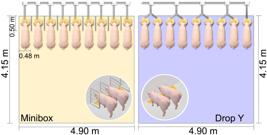
Scheme illustrating the feeding systems (Stanchion/Minibox and Drop Y) used in this study for gilts and sows group-housed in pens during gestation.
Management, housing, and feeding
The gestation facility comprised two types of housing units: individual crates (2.10 × 0.57 m), in which gilts and sows were housed before moving to pens, and group pens with a solid concrete flooring, each measuring 4.15 × 4.90 m, regardless of the feeding system. Each pen accommodated nine females (2.25 m2 per animal). In both FS, animals were fed twice daily (07h00 and 13h30) with feed delivered on the floor via feed drops. Each female received daily 2 kg of a corn and soy-based diet (3,000 kcal metabolizable energy kg−1, 14 % crude protein, and 0.63 % digestible lysine). Water was provided ad libitum through nipple drinkers (one nipple drinker per pen or stall), adjusted to the appropriate height of the animals. The room temperature was maintained automatically through positive-pressure ventilation.
By 110 days of gestation, the animals were moved to farrowing rooms. Each individual farrowing crate (2.4 × 1.6 m) was equipped with a plastic slotted floor, bars to prevent crushing, one nipple drinker, and a feeder connected to a drop system. The farm technicians assisted during the farrowing process, and after farrowing, the sows were provided access ad libitum to both feed and water. The room temperature in the facility was manually controlled using double curtains and air fans as needed.
Agonistic and stereotypic behavior
Agonistic behaviors, including aggression, pushing, biting, and fighting, were evaluated during feeding time among gilts and primiparous sows group-housed one day after the last AI (Roll et al., 2006). A single technician conducted behavioral assessments during weeks 1, 3, 7, 11, and 15 of gestation, focusing on ten pens per group (PRE-MB and PRE-Y). Each assessment comprised two direct visual observations: the first occurred at the time of feed provision, followed by a second observation 2 min later. Stereotypic behaviors were also directly observed and quantified in real time. The average of both evaluations was then used as the overall assessment of agonistic behavior.
By days 3, 30, 39, 75, and 100 of gestation, each female was individually assessed by a single technician for specific stereotypic behaviors: swallowing air, sham chewing, bar biting, tongue rolling, and the presence of white-foamed saliva around the snout. At each evaluation time point, these behaviors were recorded four times at 2-minute intervals (Roll et al., 2006), and the number of animals displaying each stereotypic behavior per pen was documented for further analysis.
Body lesions, reproductive performance, and body condition
By days 5, 31, 40, and 101 after the last AI, all female subjects were examined by the same technician for the presence of lesions (scratches) on their bodies, following the protocol established by Cunha et al. (2018), which was adapted from the Welfare Quality Protocol® for Pigs (2009). Briefly, the examinations focused on the front, middle, and rear regions of the body to identify scratches. Each animal was assigned a score based on the following criteria: 0 = all body regions showed no visible lesions or up to four lesions; 1 = at least one region presented five to ten lesions; 2 = two or more regions exhibited more than ten lesions, or one region with more than 15 scratches.
Pregnancy was confirmed via transabdominal ultrasonography using a portable ultrasound device (SonoScape A5V, Domed Dominium Medical) between 28 and 35 days after the last AI. Additional reproductive parameters were recorded in the farm's management software, including farrowing rate, total number of piglets born, piglets born alive, stillbirths, and mummified fetuses. The body condition for sows and gilts was assessed using a caliper placed over the P2 position during estrus detection (at the first AI), and again on the day the females were moved to the farrowing room (110 days of gestation). Measurements were taken 6.5 cm from the midline of the vertebral column at the level of the last rib, and animals were classified as skinny, ideal, or fat based on the criteria established by Knauer and Baitinger (2015).
Statistical analysis
Statistical analyses were conducted using the GLIMMIX procedure of the Statistical Analysis System (SAS Inst. Inc., version 9.4), following the methodology outlined by Galli et al. (2022; 2023), with a significance level of 5 % (p < 0.05). In this study, the female was treated as the experimental unit for assessing reproductive performance, body lesions, and body condition. Conversely, the pen served as the experimental unit for analyzing agonistic behavior during feeding and stereotypic behavior.
For gilts, the GLIMMIX procedure was employed to evaluate pregnancy rate, farrowing rate, total number of piglets born, and the number of piglets born alive. The model included fixed effects for the breeding cycle period (PRE or POST embryo implantation), feeding system (stanchions/MB or Y), and their interaction. For sows, the GLIMMIX model was similarly used to analyze pregnancy rate, farrowing rate, total number of piglets born, and the number of piglets born alive. The fixed effects considered in this analysis included PO (primiparous or multiparous), feeding system, housing system, and their interactions. A binomial distribution was applied to the variables pregnancy rate and farrowing rate, while a normal distribution was adopted for the total number of piglets born and the number of piglets born alive. Means were compared using the Tukey-Kramer test.
For gilts and sows, stillborn and mummified fetuses were compared using the NPAR1WAY procedure with the Wilcoxon test applied. Additionally, the analysis of body lesion occurrence was conducted using the GLIMMIX procedure, fitting an ordinal multinomial distribution. When assessing stereotypic behavior (over gestation) and agonistic behavior (during feeding time), the pen was designated as the experimental unit, and analyses were conducted using the GLIMMIX procedure. The effect of the feeding system on the stereotypic behavior of gilts was evaluated at each assessment time point (at days 3, 30, 39, 75, or 100 of gestation) for both primiparous or multiparous sows. The agonistic behavior during feeding time of gilts, or primiparous sows, from PRE group was analyzed using repeated measurements, including the feeding system, assessment time points (1, 3, 7, 11, and 15 weeks of gestation), and their interaction as fixed effects. Various covariance structures were assessed, with the Compound Symmetry Heterogeneous structure selected based on model fit criteria.
Results
Agonistic and stereotypic behavior
No significant differences were found in the occurrence of agonistic behavior among females group-housed before embryo implantation, regardless of the feeding system, evaluation time (week of gestation), or their interaction (Figure 2A-B).
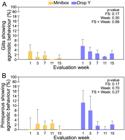
A) Agonistic behavior during the feeding time of gilts and B) primiparous sows group-housed prior to embryo implantation and managed using different feeding systems (FS) during gestation (stanchion/Minibox system or Drop Y system). Week: week of gestation. Agonistic behavior: females exhibiting aggressive behavior, pushing, biting, or fighting. Data are presented as least squares means ± standard error of the mean.
By day 3 after the last AI (Figure 3A), the percentage of gilts exhibiting stereotypies differed by feeding system. Notably, a higher percentage of gilts demonstrated stereotypic behavior in the Y system (28.1 ± 4.2 %) than in the stanchion/MB system (18.7 ± 4.2 %). Additionally, the incidence of stereotypies on day three was affected by the breeding cycle period, with a significantly higher occurrence in the POST phase (34.5 ± 4.1 %) than in the PRE phase (12.2 ± 4.4 %). By day 30 after the last AI, the occurrence of stereotypies in gilts was solely influenced by the breeding cycle period, showing an increase in POST (41.3 ± 5.2 %) compared to PRE (22.8 ± 5.5 %).
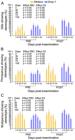
A) Stereotypic behavior in gilts, B) primiparous, and C) multiparous sows according to the period of the breeding cycle (PBC), in which females were group-housed, and the feeding system (FS) where they had access after artificial insemination (stanchion/Minibox system or Drop Y system). Stereotypies: swallowing air, sham chewing, bar biting, tongue rolling, or presence of white-foamed saliva around the snout. PRE = prior to embryo implantation; POST = posterior to embryo implantation. Data are presented as least squares means ± standard error of the mean.
For primiparous sows, the impact of the feeding system and breeding cycle period on the percentage of animals exhibiting stereotypies was assessed on day three after the last AI (Figure 3B). A higher incidence of stereotypies was observed in Y (31.5 ± 3.4 %) compared to stanchion/MB (18.7 ± 4.0 %). Additionally, the POST period showed a higher prevalence (35.9 ± 4.0 %) than the PRE period (20.2 ± 4.4 %). By day 30 after the last AI, stereotypy frequency was affected by the breeding cycle period, with significantly higher values for primiparous sows in POST (48.3 ± 4.5 %) than in PRE (24.5 ± 4.4 %). For multiparous sows (Figure 3C), the frequency of stereotypies on day three after the last AI was affected solely by the breeding cycle period, with the POST group showing a higher rate (40.9 ± 5.3 %) compared to the PRE (26.5 ± 5.8 %). This trend continued by day 30, with stereotypy occurring again more frequently in the POST period (48.3 ± 4.7 %) than in the PRE (36.5 ± 5.1 %).
Body lesions, reproductive performance, and body condition
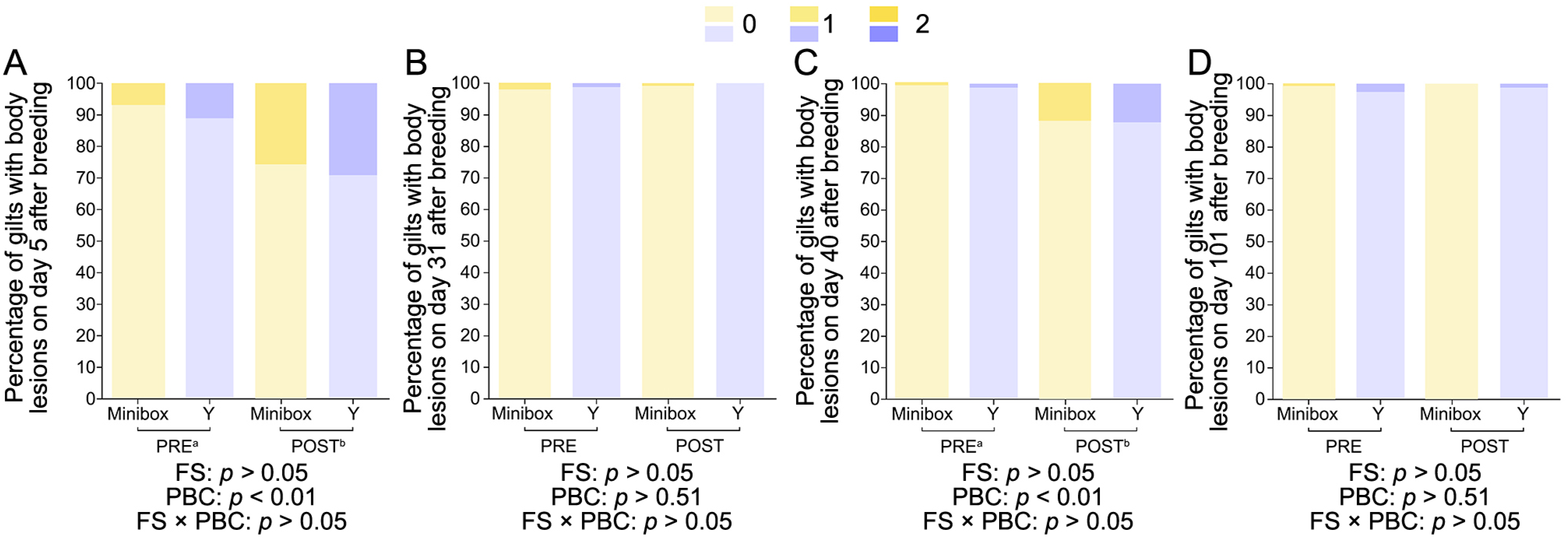
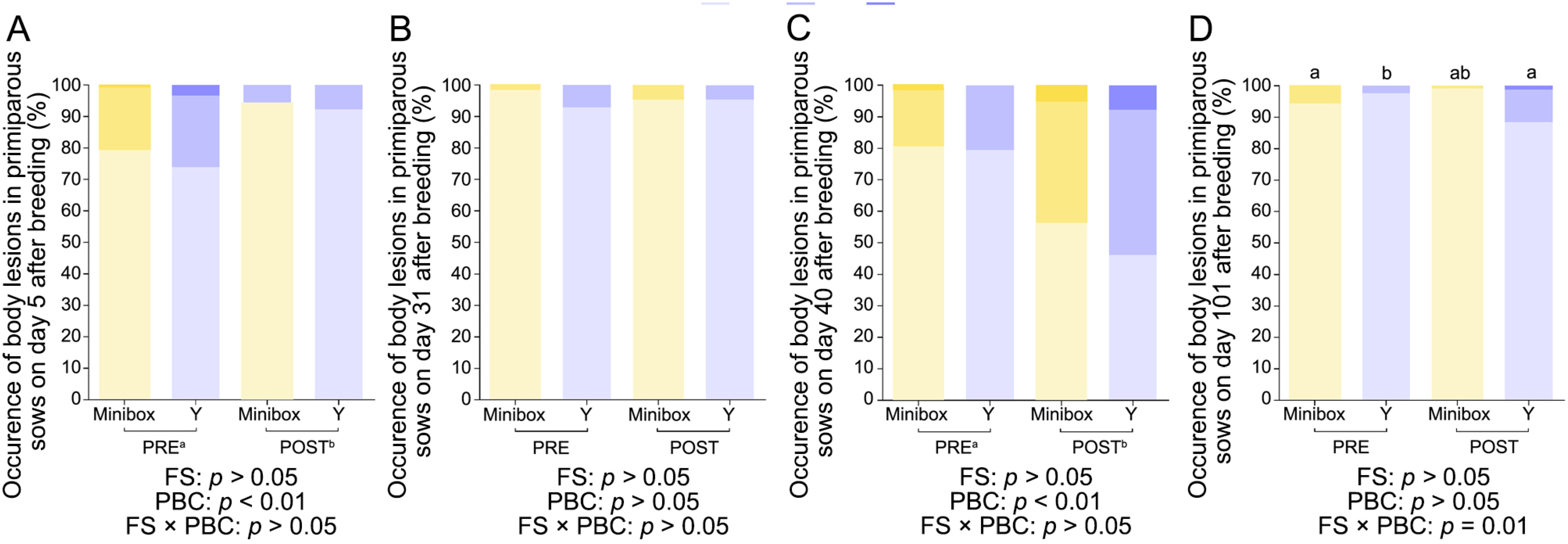
An analysis of the breeding cycle periods on lesion occurrence revealed significant findings by days 5 and 40 after the last AI for gilts (Figure 4A-D). By day five after the last AI, gilts in the PRE group exhibited a higher incidence of body lesions (12.8 %) than those in the POST group (2.3 %). Conversely, by day 40 after the last AI, body lesions were more frequent in the POST group (12.3 %) than in the PRE (1.2 %). In primiparous sows, the breeding cycle period also influenced lesion occurrence, with lesions occurring by days 5 and 40 after the last AI (Figure 5A-D). Specifically, by day five, lesions were more frequent in the PRE group (23.6%) than in the POST group (7.1 %), whereas by day 40, the opposite was true, with the POST group showing a higher incidence (48.9 %) than the PRE group (20.6 %). By day 101 after the last AI, body lesion occurrence was further influenced by the interaction between the breeding cycle period and the feeding system. Notably, the stanchion/MB group had a greater incidence of body lesions compared to Y when primiparous sows were group-housed prior to embryo implantation. However, no significant differences between groups were observed once the animals were housed after embryo implantation (Figure 5A-D).

A) Occurrence of body lesions (scratches) in gilts on days 5, B) 31, C) 40, and D) 101 after the last artificial insemination, according to the period of the breeding cycle (PBC) in which females were group-housed and the feeding system (FS) where they had access after artificial insemination. Minibox = stanchion system; Y = Drop Y system; PRE = prior to embryo implantation; POST = posterior to embryo implantation. abIndicate significant difference (p < 0.05). Scores: 0 = all body regions with no visible or with up to four lesions; 1 = at least one region presenting five to ten lesions; 2 = two or more regions presenting more than ten lesions or one region with more than 15 scratches.

A) Occurrence of body lesions (scratches) in primiparous sows on days 5, B) 31, C) 40, and D) 101 after the last artificial insemination, according to the period of the breeding cycle (PBC) in which females were group-housed and the feeding system (FS) where they had access after artificial insemination. Minibox = stanchion system; Y = Drop Y system; PRE = prior to embryo implantation; POST = posterior to embryo implantation. abIndicate significant difference (p < 0.05). Scores: 0 = all body regions with no visible or with up to four lesions; 1 = at least one region presenting five to ten lesions; 2 = two or more regions presenting more than ten lesions or one region with more than 15 scratches.
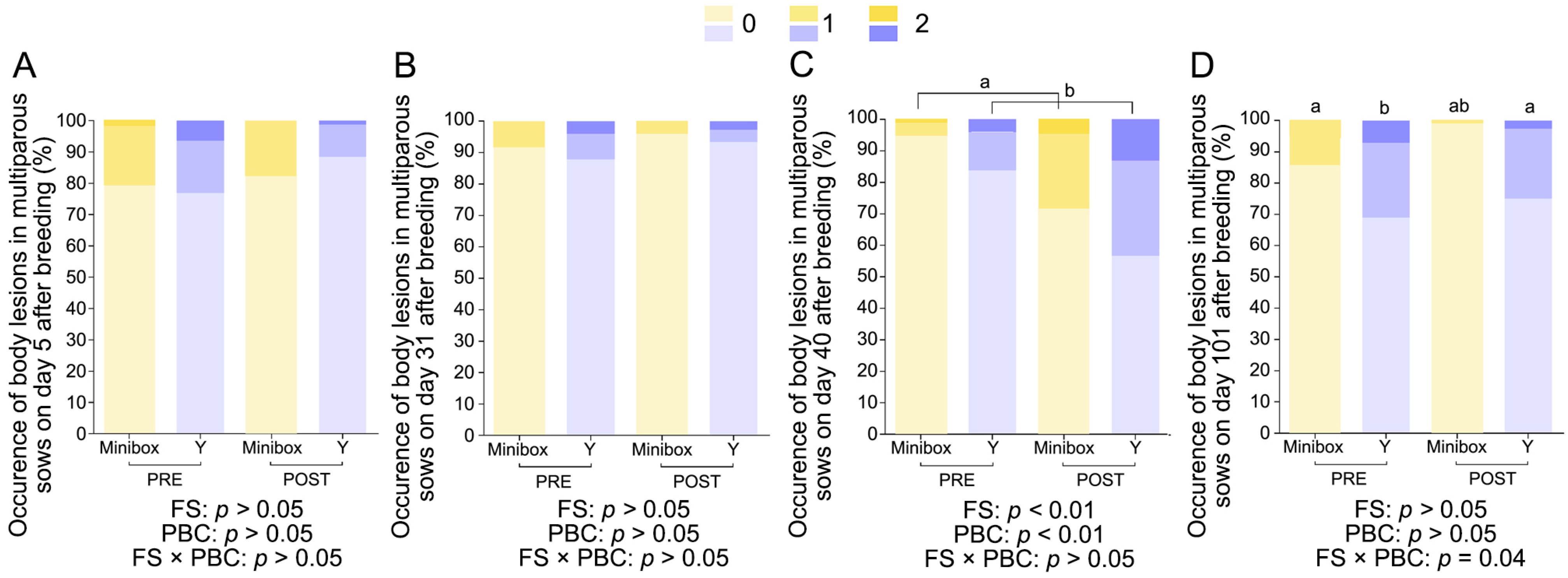
In multiparous sows, the breeding cycle period and the feeding system significantly influenced the occurrence of lesions observed by day 40 after the last AI. A higher percentage of multiparous sows with body lesions was observed in the POST group compared to the PRE group (36.2 % vs 10.6 %). Additionally, lesion occurrence was greater in multiparous sows in the Y system compared to those fed in the stanchion/MB (30.0 % vs 16.7 %). By day 101 after the last AI, an interaction between the breeding period cycle and the feeding system also impacted lesion occurrence in multiparous sows. The stanchion/MB group exhibited a higher incidence of lesion occurrence than the Y group when multiparous sows were group-housed prior to embryo implantation. However, no significant differences between the groups were observed after the embryo implantation phase (Figure 6A-D).
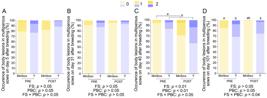
A) Occurrence of body lesions (scratches) in multiparous sows on days 5, B) 31, C) 40, and D) 101 after the last artificial insemination, according to the period of the breeding cycle (PBC) in which females were group-housed and the feeding system (FS) where they had access after artificial insemination. Minibox = stanchion system; Y = Drop Y system; PRE = prior to embryo implantation; POST = posterior to embryo implantation. abIndicate significant difference (p < 0.05). Scores: 0 = all body regions with no visible or with up to four lesions; 1 = at least one region presenting five to ten lesions; 2 = two or more regions presenting more than ten lesions or one region with more than 15 scratches.
No significant effects were observed regarding the feeding system, breeding cycle period, or their interaction on the reproductive performance of gilts (Table 1). However, for sows, no interaction between the feeding system or the breeding cycle period concerning PO was detected (Table 2). As anticipated, PO had an impact on both the total number of piglets born and the number of piglets born alive, with multiparous sows producing greater numbers (15.6 ± 0.3 and 14.1 ± 0.2, respectively) compared to primiparous sows (13.6 ± 0.3 and 12.6 ± 0.2, respectively; p < 0.01). Furthermore, the incidence of stillbirths was higher in multiparous sows (6.9 ± 1.0 %) than in primiparous sows (4.9 ± 1.0 %). In addition, the percentage of mummified fetuses was lower in multiparous sows (2.1 ± 0.4) compared to primiparous sows (3. 5 ± 0.6 %) (Table 2).
Reproductive performance of gilts based on the breeding cycle period and the feeding system (FS) after artificial insemination.
Reproductive performance in sows based on the breeding cycle period and the feeding system (FS) after artificial insemination according to their parity order (PO).
No significant effects of the breeding cycle period, feeding system, or their interaction was observed on pregnancy rate, farrowing rate, or the total number of piglets born in either primiparous or multiparous sows. However, the total number of piglets born alive and the percentage of stillbirths were affected by the feeding system (Y: 13.6 ± 0.2 and 4.8 ± 0.5, respectively; stanchion/MB: 12.9 ± 0.2 and 6.9 ± 0.6, respectively; p < 0.01). The percentage of mummified fetuses was influenced by the interaction between the feeding system and the breeding cycle period. Specifically, the occurrence of mummified fetuses in sows fed with the stanchion/MB system and housed after embryo implantation (POST; 2.0 ± 0.6 %) was lower compared to those housed before this period (PRE; 3.5 ± 0.6 %; Table 2). In contrast, the occurrence of mummified fetuses was similar for sows in the Y system, regardless of whether they were housed before or after embryo implantation (2.4 ± 0.6 vs 2.5 ± 0.6 %).
Regarding body condition (skinny, ideal, or fat), no interaction between the feeding system and the breeding cycle period was observed at the time of AI or before farrowing, for both primiparous and multiparous sows (Figure 7 A-B). Nevertheless, a higher percentage of sows categorized as fat before farrowing was noted in the stanchion/MB system (81.8 %) compared to the Y system (67.1 %; Figure 7B). Additionally, the percentage of stillbirths was not affected by the body conditions of the sows (skinny: 6.2 ± 1.3 %, ideal: 10.2 ± 0.8 %, fat: 8.8 ± 0.4 %).
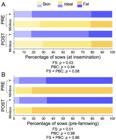
A) Body condition of sows (n = 658) at artificial insemination and B) pre-farrowing according to the period of the breeding cycle (PBC) in which females were group housed and the feeding system (FS) where they had access after artificial insemination. Minibox = stanchion system; Y = Drop Y system; PRE = prior to embryo implantation; POST = posterior to embryo implantation.
Discussion
The stanchion/MB system offers a viable and convenient alternative for reducing disputes over feed among females in group housing systems for gestating gilts and sows. By minimizing stress and injuries, it consequently lowers the likelihood of embryo absorption in females that are group-housed before embryo implantation. To our knowledge, the present study is the first to explore the impact of the stanchion/MB system on the performance of animals group-housed at different breeding cycle periods. Overall, our findings indicate that the use of the stanchion/MB system does not reduce the occurrence of body lesions, aggressive behavior, or stereotypic behavior in gilts and sows, regardless of the breeding cycle period at which they are group-housed. Furthermore, no significant effects of the breeding cycle period, feeding system, or their interaction were observed on most reproductive variables assessed in this study, except for the total number of piglets born alive, stillbirths, and mummified fetuses in both primiparous and multiparous females.
The adverse effects of group-housing animals during early gestation are primarily linked to elevated cortisol levels resulting from stress (Einarsson et al., 2008; Lagoda et al., 2021). In the present study, the occurrence of disputes, stereotypies, or body lesions differed between the PRE and POST groups up to 40 days of gestation. Despite increased aggression, reproductive performance was not adversely affected by the PBC. The size and stability of the group within the pen may influence these findings. Previous studies reporting the negative effects of housing sows in early gestation were conducted with groups containing at least 55 females (Knox et al., 2014; Cunha et al., 2018). Although there is no definitive evidence on an optimal group size to minimize fighting and aggression, some studies suggesting that smaller groups tend to exhibit lower rates of disputes and agonistic behavior (Verdon et al., 2016). The groups of females involved in the present study were small (nine animals) and stable, with no unfamiliar individuals introduced during the study period. This stability likely allowed for the establishment and maintenance of a consistent hierarchy (Brajon et al., 2021).
Furthermore, it is essential to consider group homogeneity. In the present study, animals were categorized into groups (gilts, primiparous, and multiparous sows), with the multiparous sows being relatively homogenous, as they contained only sows in PO5 or PO6. Although there is still no consensus on the PO effect on behavior, previous studies indicate that older sows tend to engage in fights more frequently (Arey, 1999; Strawford et al., 2008; Lagoda et al., 2021). Typically, older sows occupy higher positions within the social hierarchy, a pattern also observed among females with greater body weight (Norring et al., 2019). Consequently, pregnant sows may encounter varied environments based on their PO (Clarke et al., 2018). Additionally, aggressive behavior is a trait with considerable heritability (Koketsu and Iida, 2017), enabling individuals to adopt different behavioral strategies within a group-housing context to establish and maintain their hierarchical status.
The likelihood of disputes over food or hierarchy is significantly reduced in small, homogenous groups. A study comparing the stanchion/MB feeding system to a setup without individual partitions in pens for small groups of gilts (five or six animals) showed a reduction in disputes, although no difference in lesion occurrence was reported (Barnett et al.,1992). Furthermore, a reduction in the aggressive behavior of sows (PO1-6) housed in small groups (six females per pen) was observed when comparing the stanchion/MB to a pen system without partitions (Andersen et al., 1999). These findings suggest that the effects of housing periods and FS on group gestation in swine may vary in larger groups when mixing females across PO. To minimize disputes, it is strongly recommended to segregate animals by their POs (Hoy et al., 2009). Nevertheless, it is important to note that situations in which sows from various POs are mixed still occur on several farms, especially those with smaller breeding groups.
It is important to highlight that the potential impact of the breeding cycle period on reproductive performance remains a debated issue within the swine industry. While some studies have reported reproductive failure in sows housed in groups during early gestation (Knox et al., 2014), other investigations have found no such impairments (Cassar et al., 2008; Perini et al., 2021a, b; Magoga et al., 2023). Similarly, while some studies have indicated a risk of reproductive failure in gilts grouped during early gestation, others have reported no significant effects associated with the timing of group housing (van Wettere et al., 2008; Magoga et al., 2023).
In the present study, animals were group-housed one day after the last AI. Most research on group housing during early gestation varies significantly based on the timing when swine females are grouped after breeding (Cassar et al., 2008; van Wettere et al., 2008; Knox et al., 2014; Cunha et al., 2018; Perini et al., 2021a, b; Magoga et al., 2023). It is also important to recognize that embryo implantation takes several days to complete (Almeida and Dias, 2022). Furthermore, it remains unclear if the stress experienced by swine females is more closely linked to specific physiological events or particular moments within the first 30 days of pregnancy (Magoga et al., 2023).
Interestingly, the feeding system influenced sows' body score condition before farrowing, with a greater proportion of fat females observed in the stanchion/MB group. This finding was unexpected, particularly since the amount of feed provided and the frequency of disputes were consistent across both FS. This phenomenon is likely due to a decrease in physical activity resulting from the establishment of a hierarchy of access to food. Similarly, we did not expect the increased stillbirths among sows in the stanchion/MB group, which negatively affected the number of piglets born alive. The underlying cause of this result remains unclear, as the occurrence of fights was similar between the stanchion/MB and Y groups. While the stillbirth rate was higher in the MB system, no correlation with body condition score was observed. Although having a higher number of fat females during group gestation may be linked to increased stillbirths due to prolonged farrowing duration (Silveira and Zanella, 2014), our study did not observe any impact of sow body condition on the percentage of stillbirths. Thus, we postulate that the provision of birth assistance may significantly influence these findings; nevertheless, further studies are needed to clarify the relationship between the stanchion/MB system, sow body condition, and stillbirth rates.
Overall, the findings indicate that both FS are viable under commercial conditions. These results contribute to the optimization of group-housing management strategies for swine females. In addition, our data suggest that swine females organized into small, homogenous groups can be group-housed either one day after AI or 35 days later with minimal impact on reproductive performance or behavior. However, it remains essential to conduct further investigations to assess the applicability of stanchion/MB systems for larger, heterogeneous groups during group gestation to better understand their influence on the behavior and reproductive performance of swine females.
Declaration of use of AI technologies
Data availability statement
The information and database for this research are not currently on a platform or website. The datasets analyzed in this study are available upon request.
Acknowledgments
The authors wish to thank the Fundação de Amparo à Pesquisa e Inovação do Estado de Santa Catarina (FAPESC), the Conselho Nacional de Desenvolvimento Científico e Tecnológico (CNPq: I. Bianchi, grant #304659/2025-8; V. Peripolli, grant #309770/2023-8; R.R. Ulguim, grant #305415/20220), and the Coordenação de Aperfeiçoamento de Pessoal de Nível Superior (CAPES). The authors are also grateful to Seara Alimentos for providing the animals and facilities.
References
-
Almeida FRCL, Dias ALNA. 2022. Pregnancy in pigs: the journey of an early life. Domestic Animal Endocrinology 78: 106656. https://doi.org/10.1016/j.domaniend.2021.106656
» https://doi.org/10.1016/j.domaniend.2021.106656 -
Andersen IL, Bøe KE, Kristiansen AL. 1999. The influence of different feeding arrangements and food type on competition at feeding in pregnant sows. Applied Animal Behaviour Science 65: 91-104. https://doi.org/10.1016/S0168-1591(99)00058-1
» https://doi.org/10.1016/S0168-1591(99)00058-1 -
Arey DS. 1999. Time course for the formation and disruption of social organisation in group-housed sows. Applied Animal Behaviour Science 62: 199-207. https://doi.org/10.1016/S0168-1591(98)00224-X
» https://doi.org/10.1016/S0168-1591(98)00224-X -
Bampi D, Borstnez KK, Dias CP, Costa OAD, Moreira F, Peripolli V, et al. 2020. Evaluation of reproductive and animal welfare parameters of swine females of different genetic lines submitted to different reproductive management and housing systems during pregnancy. Arquivo Brasileiro de Medicina Veterinária e Zootecnia 72: 1675-1682. https://doi.org/10.1590/1678-4162-11767
» https://doi.org/10.1590/1678-4162-11767 -
Barnett JL, Hemsworth PH, Cronin GM, Newman EA, McCallum TH, Chilton D. 1992. Effects of pen size, partial stalls and method of feeding on welfare-related behavioural and physiological responses of group-housed pigs. Applied Animal Behaviour Science 34: 207-220. https://doi.org/10.1016/S0168-1591(05)80116-9
» https://doi.org/10.1016/S0168-1591(05)80116-9 -
Bortolozzo FP, Zanin GP, Ulguim RR, Mellagi APG. 2023. Managing reproduction in hyperprolific sow herds. Animals 13: 1842. https://doi.org/10.3390/ani13111842
» https://doi.org/10.3390/ani13111842 -
Brajon S, Ahloy-Dallaire J, Devillers N, Guay F. 2021. Social status and previous experience in the group as predictors of welfare of sows housed in large semi-static groups. PLoS One 16: e0244704. https://doi.org/10.1371/journal.pone.0244704
» https://doi.org/10.1371/journal.pone.0244704 - Cassar G, Kirkwood RN, Seguin MJ, Widowski TM, Farzan A, Zanella AJ, et al. 2008. Influence of stage of gestation at grouping and presence of boars on farrowing rate and litter size of group-housed sows. Journal of Swine Health and Production 16: 81-85.
-
Clarke T, Pluske JR, Miller DW, Collins T, Fleming PA. 2018. Parity influences the demeanor of sows in group housing. Journal of Applied Animal Welfare Science 21: 17-26. https://doi.org/10.1080/10888705.2017.1363651
» https://doi.org/10.1080/10888705.2017.1363651 - Council of the European Union. 2008. Council directive 2008/120/EC of 18 December 2008 laying down minimum standards for the protection of pigs (codified version). Official Journal of the European Union L 47: 5-13.
-
Cunha ECP, Menezes TA, Bernardi ML, Mellagi APG, Ulguim RR, Wentz I, et al. 2018. Reproductive performance, offspring characteristics, and injury scores according to the housing system of gestating gilts. Livestock Science 210: 59-67. https://doi.org/10.1016/j.livsci.2018.02.008
» https://doi.org/10.1016/j.livsci.2018.02.008 - Dias CP, Silva CA, Manteca X. 2016. Problemas de bem-estar na gestação. p. 269-280. In: Dias CP, Silva CA, Manteca X. eds. Bem-estar dos Suínos. Londrina, PR, Brazil (in Portuguese).
-
Einarsson S, Brandt Y, Lundeheim N, Madej A. 2008. Stress and its influence on reproduction in pigs: a review. Acta Veterinaria Scandinavica 50: 48. https://doi.org/10.1186/1751-0147-50-48
» https://doi.org/10.1186/1751-0147-50-48 -
Federal Ministry of Food and Agriculture of Germany. 2023. Tierschutzbericht 2023 der bundesregierung: animal protection report 2023 of the Federal Government. Available at: https://www.bmel.de/SharedDocs/Downloads/DE/Broschueren/tierschutzbericht-2023.pdf?__blob=publicationFile&v=9 [Accessed Aug 4, 2024] (in German).
» https://www.bmel.de/SharedDocs/Downloads/DE/Broschueren/tierschutzbericht-2023.pdf?__blob=publicationFile&v=9 -
Federal Ministry of Justice of Germany. 2021. Verordnung zum schutz landwirtschaftlicher nutztiere und anderer zur erzeugung tierischer produkte gehaltener tiere bei ihrer haltung. - § 30 Besondere anforderungen an das halten von jungsauen und sauen. Available at: https://www.gesetze-im-internet.de/tierschnutztv/TierSchNutztV.pdf [Accessed Aug 4, 2024] (in German).
» https://www.gesetze-im-internet.de/tierschnutztv/TierSchNutztV.pdf -
Galli MC, Gottardo F, Contiero B, Scollo A, Boyle LA. 2021. The changing face and associated drivers of research on welfare of the gestating sow. Italian Journal of Animal Science 20: 2174-2187. https://doi.org/10.1080/1828051X.2021.2002732
» https://doi.org/10.1080/1828051X.2021.2002732 -
Galli MC, Boyle LA, Mazzoni C, Contiero B, Stefani A, Bertazzo V, et al. 2022. Can we further reduce the time pregnant sows spend in gestation stalls? Livestock Science 264: 105049. https://doi.org/10.1016/j.livsci.2022.105049
» https://doi.org/10.1016/j.livsci.2022.105049 -
Galli MC, Lagoda ME, Gottardo F, Contiero B, Boyle LA. 2023. Effects of two mixing times post-service on the welfare of sows in a group housing system with free access stalls. Livestock Science 275: 105309. https://doi.org/10.1016/j.livsci.2023.105309
» https://doi.org/10.1016/j.livsci.2023.105309 -
Greenwood EC, van Dissel J, Rayner J, Hughes PE, van Wettere WHEJ. 2019. Mixing sows into alternative lactation housing affects sow aggression at mixing, future reproduction and piglet injury, with marked differences between multisuckle and sow separation systems. Animals 9: 658. https://doi.org/10.3390/ani9090658
» https://doi.org/10.3390/ani9090658 -
Hoy S, Bauer J, Borberg C, Chonsch L, Weirich C. 2009. Investigations on dynamics of social rank of sows during several parities. Applied Animal Behaviour Science 121: 103-107. https://doi.org/10.1016/j.applanim.2009.09.003
» https://doi.org/10.1016/j.applanim.2009.09.003 -
Knauer MT, Baitinger DJ. 2015. The sow body condition caliper. Applied Engineering in Agriculture 31: 175-178. https://doi.org/10.13031/aea.31.10632
» https://doi.org/10.13031/aea.31.10632 -
Knox R, Salak-Johnson J, Hopgood M, Greiner L, Connor J. 2014. Effect of day of mixing gestating sows on measures of reproductive performance and animal welfare. Journal of Animal Science 92: 1698-1707. https://doi.org/10.2527/jas.2013-6432
» https://doi.org/10.2527/jas.2013-6432 -
Koketsu Y, Iida R. 2017. Sow housing associated with reproductive performance in breeding herds. Molecular Reproduction and Development 84: 979-986. https://doi.org/10.1002/mrd.22825
» https://doi.org/10.1002/mrd.22825 -
Lagoda ME, Boyle LA, Marchewka J, Díaz JC. 2021. Mixing aggression intensity is associated with age at first service and floor type during gestation, with implications for sow reproductive performance. Animal 15: 100158. https://doi.org/10.1016/j.animal.2020.100158
» https://doi.org/10.1016/j.animal.2020.100158 -
Magoga J, Vier CE, Mallmann AL, Mellagi APG, Cogo RJ, Bortolozzo FP, et al. 2023. Reproductive performance of gilts and weaned sows grouped at different days after insemination. Tropical Animal Health and Production 55: 31. https://doi.org/10.1007/s11250-022-03444-9
» https://doi.org/10.1007/s11250-022-03444-9 - Manteca X, Gasa J. 2008. Bienestar en el Ganado Porcino. Boehringer Ingelheim, Barcelona, Spain (in Spanish).
-
Melchior R, Zanella I, Lovatto PA, Lehnen CR, Lanferdini E, Andretta I. 2012. Meta-analysis on the relationship among feeding characteristics, salivary and plasmatic cortisol levels, and performance of pregnant sows housed in different systems. Livestock Science 150: 310-315. https://doi.org/10.1016/j.livsci.2012.09.020
» https://doi.org/10.1016/j.livsci.2012.09.020 -
Morgan L, Klement E, Novak S, Eliahoo E, Younis A, Sutton GA, et al. 2018. Effects of group housing on reproductive performance, lameness, injuries and saliva cortisol in gestating sows. Preventive Veterinary Medicine 160: 10-17. https://doi.org/10.1016/j.prevetmed.2018.09.026
» https://doi.org/10.1016/j.prevetmed.2018.09.026 -
Norring M, Valros A, Bergman P, Marchant JN, Heinonen M. 2019. Body condition, live weight and success in agonistic encounters in mixed parity groups of sows during gestation. Animal 13: 392-398. https://doi.org/10.1017/S1751731118001453
» https://doi.org/10.1017/S1751731118001453 -
Perini JEGN, Ludtke CB, Tanure CB, Seixas L, Peripolli V, McManus C. 2021a. Effect of housing system during pregnancy on reproductive parameters of sows. Arquivo Brasileiro de Medicina Veterinária e Zootecnia 73: 123-131. https://doi.org/10.1590/1678-4162-11912
» https://doi.org/10.1590/1678-4162-11912 -
Perini JEGN, Ludtke CB, Carmo N, Peripolli V, Tanure CB, Seixas L, et al. 2021b. Housing system during pregnancy on behavior, reproductive and health parameters of sows. Archivos de Zootecnia 70: 260-269. https://doi.org/10.21071/az.v70i271
» https://doi.org/10.21071/az.v70i271 - Roll VFB, Rech CLS, Xavier EG, Rech JL, Rutz F, Del Pino FAB. 2006. Comportamento Animal: Conceitos e Técnicas de Estudo. Editora Universitária, Pelotas, RS, Brazil (in Portuguese).
-
Salak-Johnson JL. 2017. Social status and housing factors affect reproductive performance of pregnant sows in groups. Molecular Reproduction and Development 84: 905-913. https://doi.org/10.1002/mrd.22846
» https://doi.org/10.1002/mrd.22846 - Silveira PRS, Zanella E. 2014. Assistência ao parto: técnicas e princípios. p. 455-503. In: produção de suínos: teoria e prática. Associação Brasileira de Criadores de Suínos, Brasília, DF, Brazil (in Portuguese).
-
Strawford ML, Li YZ, Gonyou HW. 2008. The effect of management strategies and parity on the behavior and physiology of gestating sows housed in an electronic sow feeding system. Canadian Journal of Animal Science 88: 559-567. https://doi.org/10.4141/CJAS07114
» https://doi.org/10.4141/CJAS07114 -
van Wettere WHEJ, Pain SJ, Stott PG, Hughes PE. 2008. Mixing gilts in early pregnancy does not affect embryo survival. Animal Reproduction Science 104: 382-388. https://doi.org/10.1016/j.anireprosci.2007.07.004
» https://doi.org/10.1016/j.anireprosci.2007.07.004 -
Verdon M, Morrison RS, Rice M, Hemsworth PH. 2016. Individual variation in sow aggressive behavior and its relationship with sow welfare. Journal of Animal Science 94: 1203-1214. https://doi.org/10.2527/jas.2015-0006
» https://doi.org/10.2527/jas.2015-0006